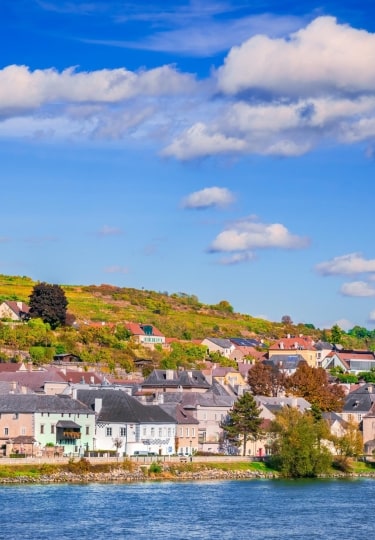
Krems an der Donau is a small Austrian town lining the Danube River and the regional gateway to the UNESCO World Heritage site, the Wachau Valley. Beyond a breathtaking frame of grapevines tiered along the surrounding slopes and riverside castle ruins, Krems is home to an intriguing variety of architectural styles and gastronomic attractions.
This guide covers everything you need to know about planning a river cruise vacation to Krems and what to do during your day in port.
Krems an der Donau at a Glance
Krems an der Donau is a small town sitting on the Lower Austrian Danube riverbanks, often referred to as the gateway to the Wachau Valley. Its reputation as a premier Austrian wine region, its captivating riverside aesthetics, and an impressive contrast between contemporary and medieval architecture are just a few features that put Krems on a traveler’s map.
Here are more reasons to visit as you cruise along the Danube:
- Old-meets-new character: Wandering through Krems Old Town, you’ll notice the juxtaposition of medieval alleyways and Baroque courtyards with striking contemporary buildings like the Landesgalerie Niederösterreich, locally referred to as the “Dancer from Krems.”
- Wine and food culture: Krems is at the doorstep of the Wachau Valley and is globally reputed for its grüner veltliner and riesling wines. Wachau apricots used in jams and brandies, and the Wachauer laberl (a local bread roll), are also compelling reasons to visit.
- Access to scenic river landscapes: Terraced vineyards and hilltop ruins earned the Krems stretch of the Danube UNESCO World Heritage designation.
Explore the Gateway to the Wachau Valley
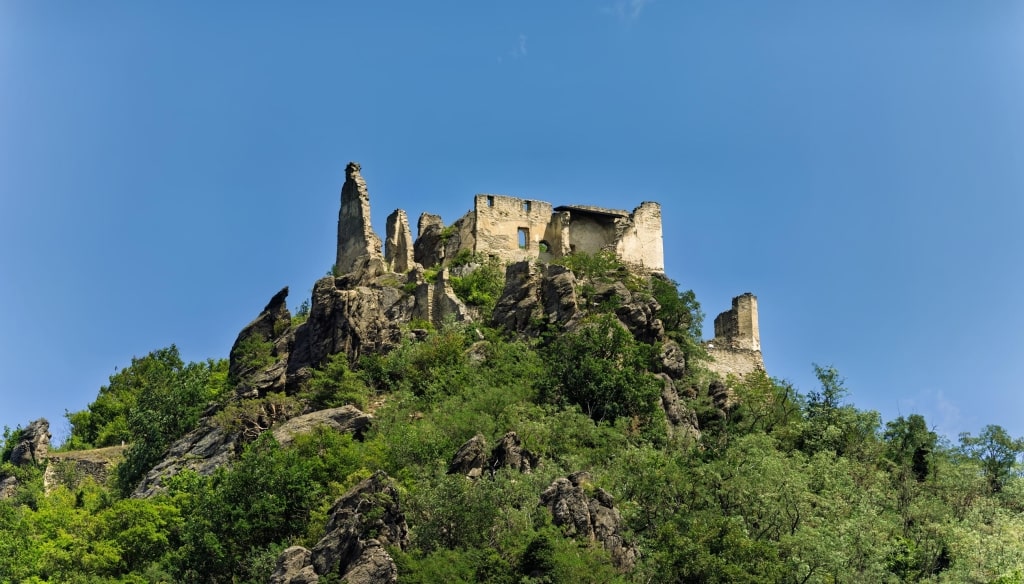
The medieval stone ruins of Dürnstein Castle perch dramatically atop a rocky, forest-clad hill against a clear blue sky.
Krems lies east of the stunning Wachau Valley. Between Krems and Melk to the west, your river cruise will sail through 25 miles of alluring Danube scenery.
The region is most widely acclaimed for its rows of vines graduating up the surrounding hillsides, contained by hand-built dry-stone walls—much like what you’ll find in Lavaux Vineyard Terraces. The countryside phases from verdant green in the springtime to marigold and ochre come fall.
As you enter the Wachau, you’ll find ancient ruins along the rocky ridges—most notably Dürnstein Castle, a ruined medieval rock fortress in Austria remembered for holding captive King Richard the Lionheart. The Wachau Valley earned UNESCO Cultural Landscape recognition for its captivating scenery and long-standing winemaking traditions, making it one of Austria’s best places to visit.
Krems an der Donau serves as the regional keyholder.
Top Things To Do in Krems an der Donau, Austria
A day at the port in Krems is enough to immerse your body and mind alike in the cultures that distinguish the region, namely art, architecture, and gastronomy.
Below are some local attractions worth planning for:
Steiner Tor
Steiner Tor is a well-preserved 15th-century gateway to Krems Old Town and one of the region’s most photographed landmarks. It’s the last of four historical town gates still standing. To place it within the Danube River context, the gates served as military fortifications built in the aftermath of the Hungarian invasion in 1477. The Baroque-style upper tower was added in 1756.
Old Town Streets
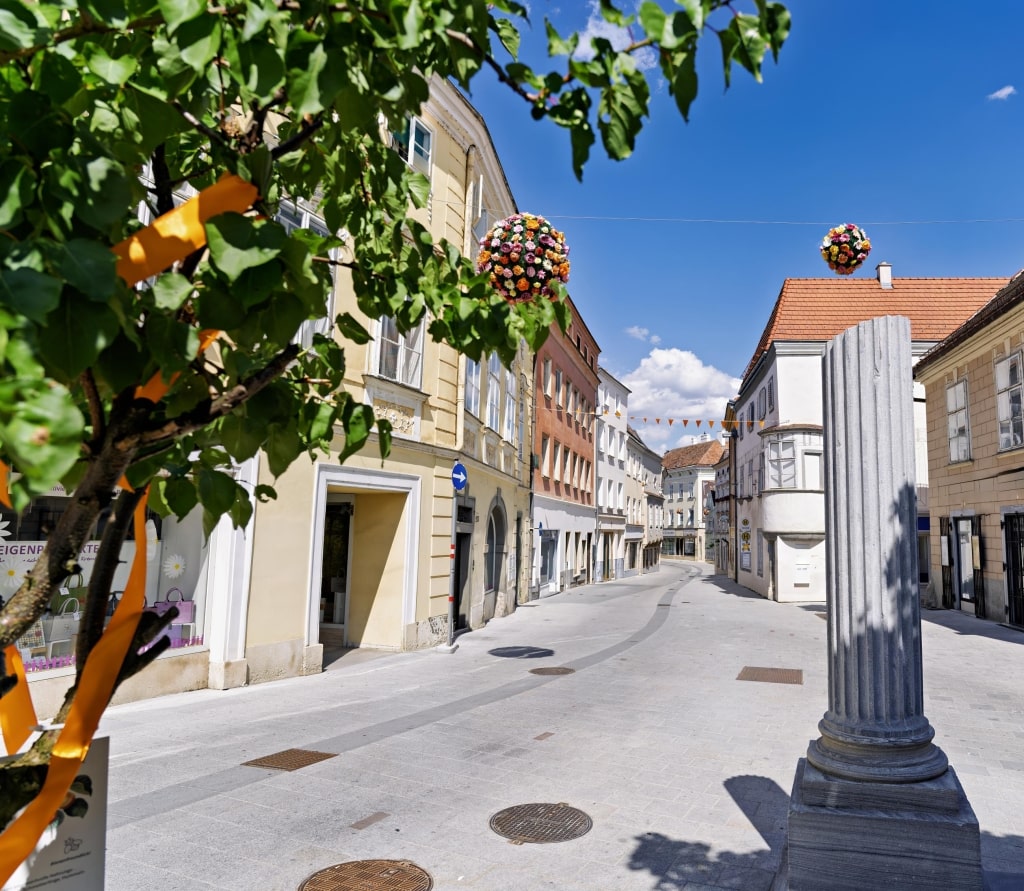
Decorative floral ornaments float above a sunny, historic street in the heart of Old Town Krems.
Medieval alleyways, Baroque courtyards, and Gothic townhouses all meld within Krems Old Town. As one of Austria’s best-preserved historical town centers, it’s an excellent place to satiate curiosity as you wander through cozy cafes, historic churches, and local markets, often held at Rathausplatz, the Town Hall Square.
Kunstmeile Krems
The Kunstmeile, or Art Mile, is an unheralded, sophisticated mile-long strip of local art and exhibition venues that directly contrasts with Old Town’s traditional architecture. Inside, you’ll find:
- Landesgalerie Niederösterreich: A modern architectural marvel and Lower Austria’s most notable art center, known as the “Dancer from Krems”
- Kunsthalle Krems: An unassuming building and top address for international art
- Karikaturmuseum: Austria’s only caricature and critical drawing museum, featuring an eclectic sawtooth roofline
Notable Historic Architecture
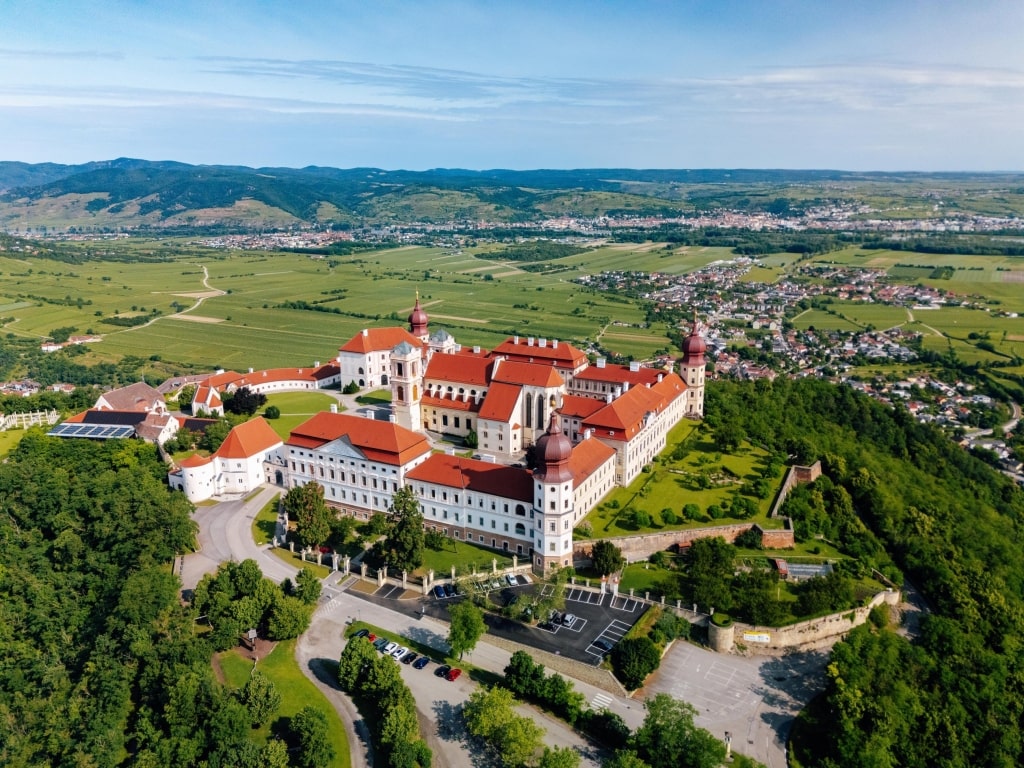
An aerial view captures the majestic, palace-like complex of Göttweig Abbey perched atop a hill surrounded by lush green landscapes.
Atop a hill directly across the Danube from Krems, you’ll see the Stift Göttweig, a historic Benedictine monastery. Its Baroque construction looks like a palace complex, featuring the Kaiserstiege, possibly the most imposing staircase in Austria.
You can also take a guided tour through the Gozzoburg, an early Gothic living and working palace built in the 13th century. Here, you’ll see monumental frescoes dating back to the Middle Ages.
Wine and Gastronomy

Friends toast with glasses of local wine in a sunny vineyard overlooking the scenic Wachau Valley.
Because of its proximity to the Wachau Valley, Krems is an ideal river destination to experience local produce. This wine region is celebrated for its grüner veltliner, one of the most widely planted grapes in Austria, yielding a mineral-rich, full-bodied white.
Riesling is another prominent variety in the area. On a wine tasting or cellar tour, you’ll learn about the regional production techniques, grape varieties, and the local climate that gives the Wachau Valley its pristine reputation.
For bites, the Wachauer marillenknödel, a sweet apricot dumpling made with soft potato dough, showcases the regional orchard harvest. Heuriger fare typically consists of local cold cuts served with young wines, much like Burgundy’s Beaujolais nouveau tradition in France. Both are common during late fall.
Best Time To Visit Krems an der Donau
Krems an der Donau changes dramatically with the seasons, and the best times to visit include spring and fall. Here’s what to expect by season:
Springtime
As a shoulder season, spring brings fewer crowds to Krems than summer. Expect mild weather, with daytime temperatures ranging from 50°F in March to around 70°F in May. You’ll also notice thinner foliage as flora begins to blossom.
Summer
Summer, especially in July and August, is the peak season across Western Europe. You can expect beautiful, sunny days averaging in the mid- to high-70s, lush foliage, and heavier foot traffic throughout Danube River cities. Warm, alfresco dining is at its finest during summer.
Fall
In fall, the daytime temperatures drop back to the mid-50s and low 70s. Tourist numbers decline in step, and the deciduous foliage starts producing stunning golds and yellows as the season progresses. Accordingly, it’s an excellent season for further land exploration in the region.
Winter
A quiet, festive atmosphere overtakes Krems as locals prepare for the Christmas markets, and ski enthusiasts drawn to Austria explore the country beyond the slopes. The region usually sees snowfall in winter, sometimes accompanied by morning fog permeating the land.
Planning Your Krems an der Donau Cruise
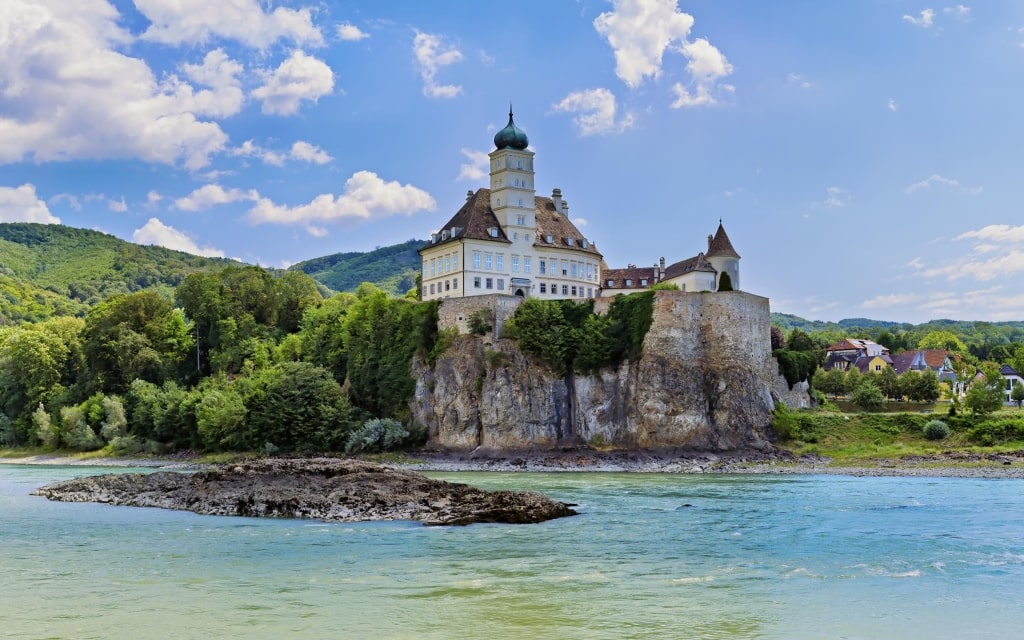
Historic Schönbühel Castle perches on a rocky cliff along the Danube.
Your arrival in Krems opens with picturesque views along the Danube, the town’s spires and surrounding vineyards well within view as you approach. From the port, you’ll find Krems’ well-maintained historic town center a five-minute drive or a 15-minute walk away.
The area is highly accessible on foot, and you can easily wander through the Old Town, taste local food and wine, and discover regional history and art during a single day. If you have time to explore the region before or after your Danube cruise, Vienna is located just an hour’s drive away.
However, the Wachau Valley alone warrants an extended stay to soak up regional winemaking techniques, go hiking in the area, or delve deeper into its historic architecture.
FAQs: Cruising to Krems an der Donau
Where is Krems, Austria?
Krems an der Donau sits in Lower Austria on the Danube River, roughly 50 miles west of Vienna, marking the eastern gateway to the Wachau Valley.
What is Krems known for?
Krems is known for its Wachau Valley wines, medieval old town, Baroque and contemporary architecture, and UNESCO-listed terraced vineyards along the Danube.
Why is Krems called the gateway to the Wachau Valley?
Krems is located at the Wachau Valley’s eastern edge, making it the starting point for exploring the 25-mile stretch of vineyards and ruins toward Melk.
What are the best things to do in Krems an der Donau?
Popular activities include walking through Steiner Tor and the Old Town, visiting the Landesgalerie Niederösterreich, and tasting Wachau wines like grüner veltliner and riesling.
Is Krems worth visiting on a Danube River cruise?
Yes, Krems combines medieval architecture, renowned wine culture, and easy access to Wachau Valley scenery, making it both an aesthetic and culturally rich stop on a Danube cruise.
What makes Krems different from other Danube towns?
Krems blends a working wine region with old-meets-new architecture, including medieval alleyways set beside contemporary landmarks like the “Dancer from Krems” museum.
When is the best time to visit Krems?
Spring and fall are ideal times to visit, bringing mild weather and fewer crowds. Summer is great for alfresco dining, and winter offers festive Christmas markets.
Cruise to the Gateway of the Wachau Valley
When you cruise along the Danube to Krems, there’s no choosing between culture, cuisine and scenery—they’re all accessible within a short 15-minute walk from the pier. Positioned between Vienna and the Wachau Valley, the region also offers excellent attractions for before or after your cruise vacation.
Explore River Cruises to Krems, Austria and discover where the Danube River takes you next.