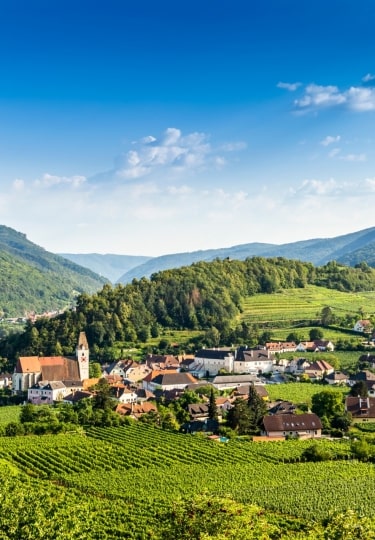
A guide to Austria’s Wachau Valley could be seen as a guide to central Europe in miniature. Threaded together by the Danube, history, nature, food, and wine are brought together against the background of one of the river’s prettiest stretches.
Over just 25 miles, between Melk and Krems, the Wachau may be short on distance but it’s big on experience. You’ll find grand abbeys, medieval forts, terraced vineyards, and tiny villages to explore along the route.
Whether you’re in it for riverside rambles or baroque spectacle, crumbling castles or crisp Grüner Veltliner wines, the Wachau is the kind of place that once visited is never forgotten.
Why Visit the Wachau Valley
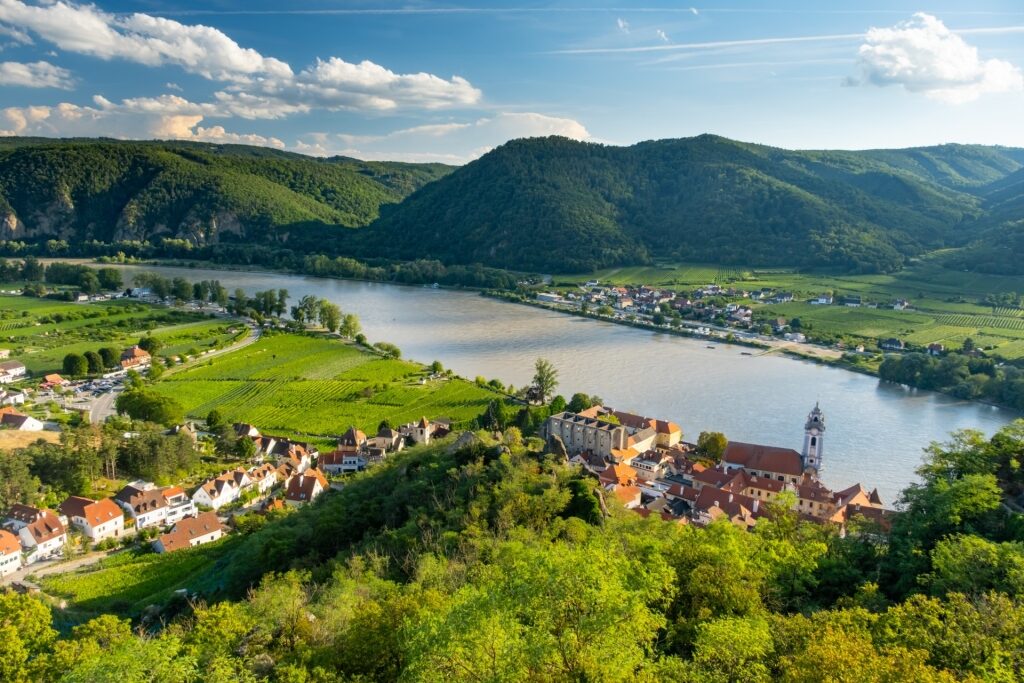
Dürnstein
The mighty Danube is Europe’s second longest river but arguably its most famous as it winds its way over 1,775 miles through the heart of the continent on its course southeast from the Black Forest into the Black Sea. Traveling along it at any point is majestic, but when it comes to Austria’s Wachau Valley it becomes magical.
At just 25 miles long, this stretch of the river between Melk and Krems is celebrated for its picturesque vineyards, apricot orchards, historic medieval towns, and outrageously good scenery that make it one of Austria’s most breathtaking spots. It’s a big claim in a country dominated by the Alps.
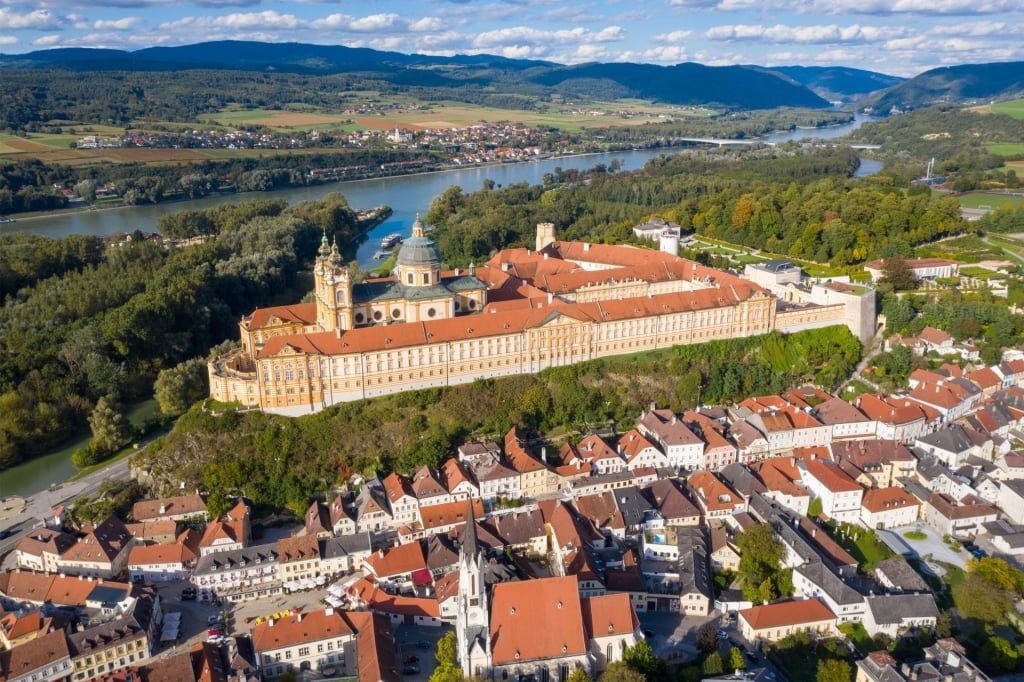
Melk
A UNESCO World Heritage Site, the valley is shaped by the river’s meanderings, its banks lined with forested hills, the ruins of old Austrian castles, and hamlets that could come straight from a fairy tale.
It’s a place where nature runs riot with color. In spring there are almond and apricot blossoms, in summer, sun-drenched vineyards, in fall the fiery gold of turning leaves. In winter, evergreen trees are illuminated with the soft glow of roasting chestnuts at the many Christmas markets.
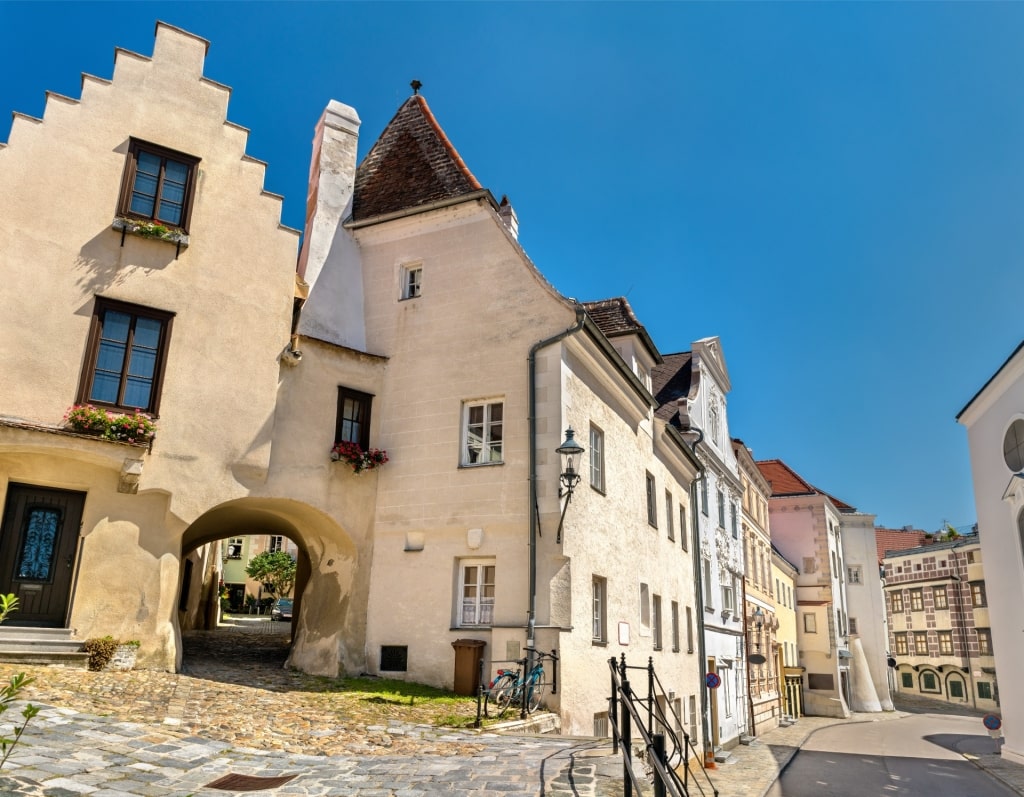
Old Town Krems
There’s history here, too. Melk is home to a monumental Benedictine abbey. Dürnstein Castle is where Richard the Lionheart was held captive, and Krems has a charming medieval Old Town, well-preserved and welcoming.
With amazing food, a microclimate that produces some incredible wines, gorgeous riverside paths, and museums to browse, it’s a perfect place for those who love slow travel.
History & Culture
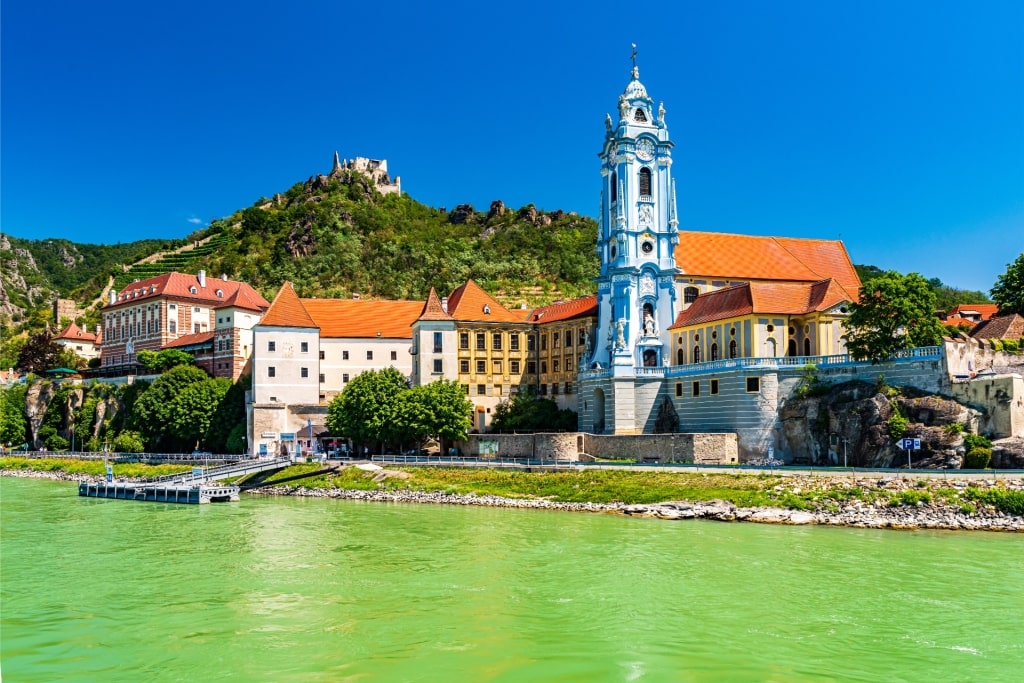
Dürnstein
The Wachau Valley’s history stretches back for tens of thousands of years, in fact so far that it’s home to some of the oldest chapters in central European history. In 1908, a tiny figurine, The Venus of Willendorf, thought to date from some 30,000 years ago, was found here. The ancient limestone fertility symbol now ranks as one of Europe’s most famous archaeological finds as she sits proudly in Vienna’s Natural History Museum.
The medieval period brought much fame and fortune to the region, the Danube serving as a superhighway for everything from trade to pilgrims. Castles sprang up on almost every rocky perch to protect the area, and while many of them today lie in ruins, they are also not without their stories. Take the one above Dürnstein. It was here that in 1192 Duke Leopold V of Austria imprisoned English king, Richard the Lionheart, after they clashed following the Third Crusade.
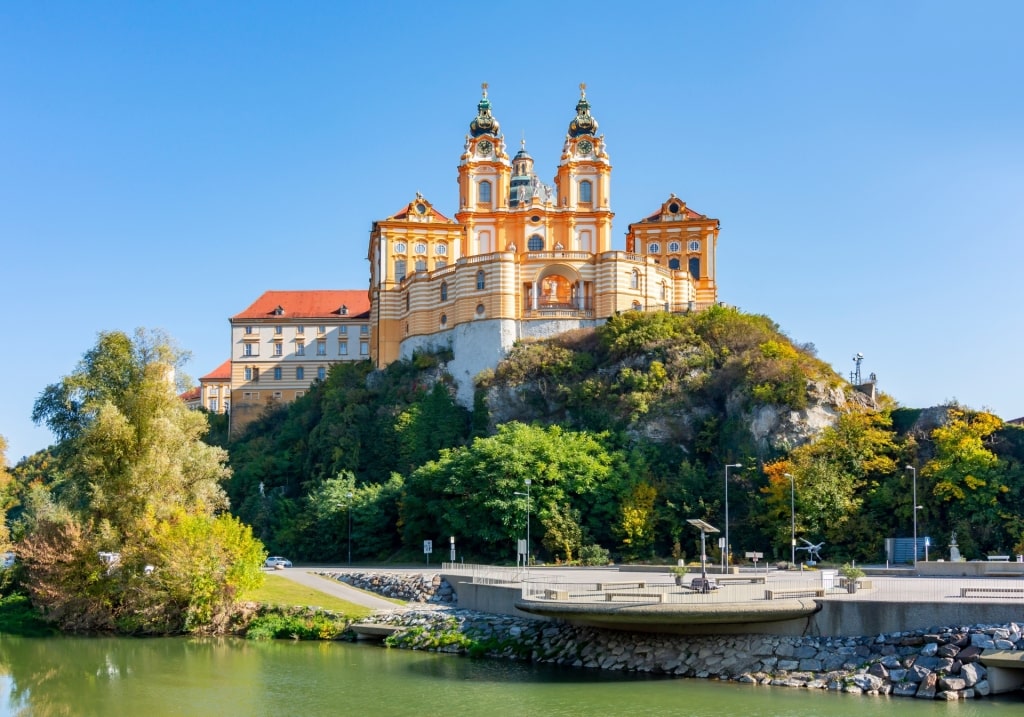
Melk Abbey
The same period also brought much monastic splendor—see the amazing Melk Abbey, a baroque masterpiece perched on the river’s edge. That prosperity continued into the Renaissance and baroque eras with wealthy merchants and the clergy commissioning fine churches lined with elegant frescoes and altarpieces.
Today’s culture is no less impressive with artisan products such as Grüner Veltliner hand-blown glass, and an array of cultural festivals such as the Summer Solstice Festival in June and Alles Marille, or Krems’ Apricot Festival in July.
Wildlife & Nature
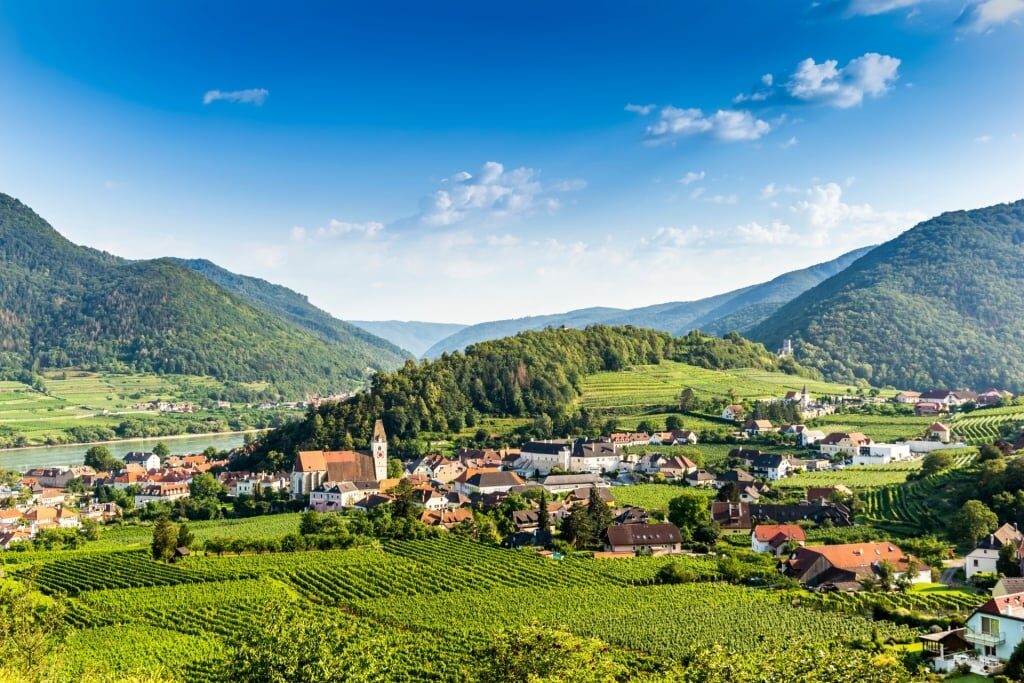
Wachau Valley
The Wachau Valley may be small in scale, but it certainly packs an ecological punch that makes it one of the best places to visit in Austria. Its sheltered setting and mild microclimate shaped by the River Danube have combined to produce a curious mix of Alpine, Central European, and almost Mediterranean vegetation.
In spring, the landscape of forests and rolling farmlands is a riot of pale pinks and whites with almond and apricot blossoms. In summer, the sunbaked vineyards give it a Tuscan feel, and in fall the turning of the leaves streaks the horizon with rusts to rival those seen in New England.
In between, the grasslands, orchards, meadows and woods teem with life. Red deer and foxes are common in the woodlands, while the river is home to beavers, otters, and more than 50 species of fish. You may even see the occasional royal blue flash of a kingfisher. Overhead, buzzards, kestrels, and black kites may be seen riding the thermals.
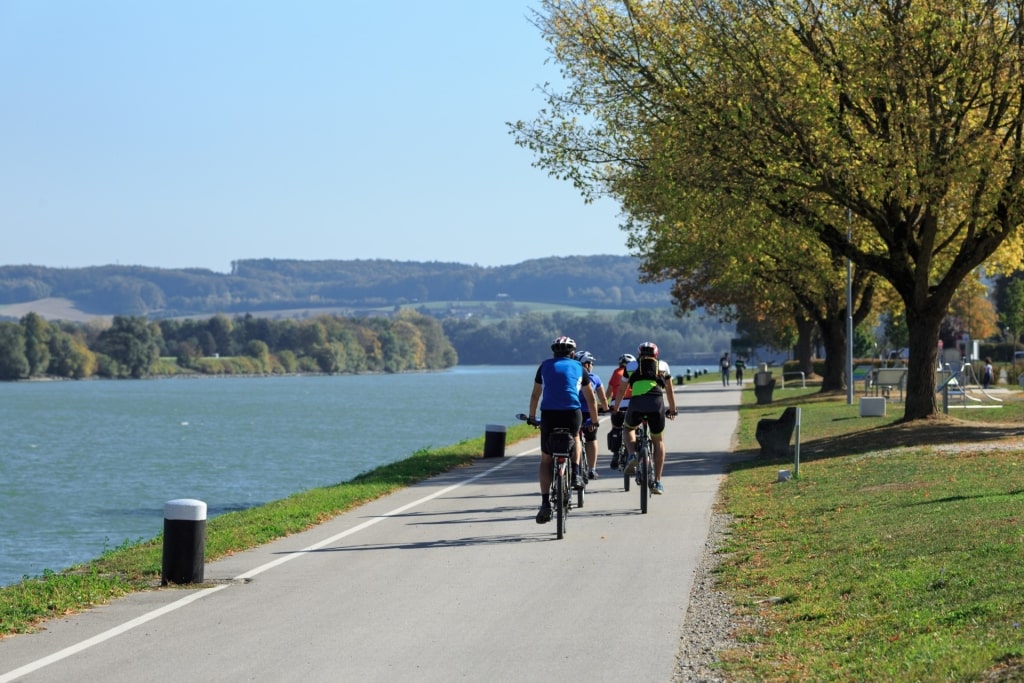
Danube Cycle Path
With much of the region falling under the Natura 2000 conservation network, there’s much to see and do. A network of viewpoints, paths, and ridgelines are stitched together into a 111-mile World Heritage Trail, perfect for walkers.
The Danube Cycle Path, or Donauradweg, meanwhile, is one of the continent’s most scenic cycle routes passing through vineyards and nature reserves along the way. If views are the order of the day, head to Jauerling, the region’s highest peak and part of the Jauerling-Wachau Nature Park.
Tips for Visiting
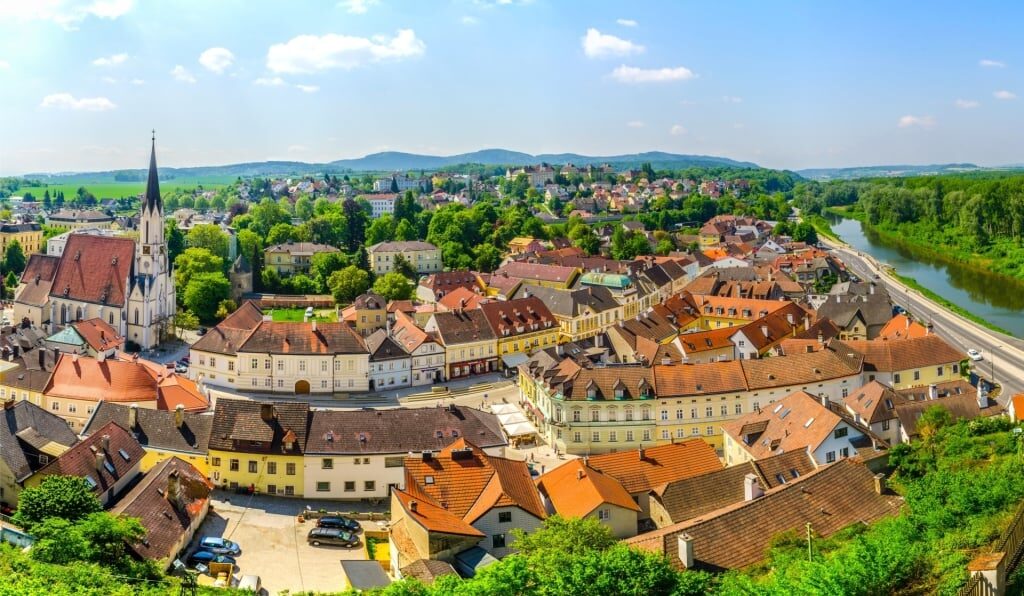
Melk
While the climate can be gloriously sunny in summer, it’s worth remembering that this is central Europe and the weather can change quickly. Dressing in layers is recommended, as is a light raincoat. Even if you’re not a walker, there’s lots to do on foot, from mooching around tiny villages to tackling forest trails, so comfortable walking shoes are essential. Boots may also be desirable depending on your plans.
The currency is the euro and, while cards are widely accepted, some cash may be useful for smaller shops, heurigen wine bars, and tipping.
Given the region’s compact setting, getting around is fairly easy. Sailing along the Danube is a good way to take in many of the main sights. Roads are good for driving, though parking can be a squeeze in smaller towns and villages.
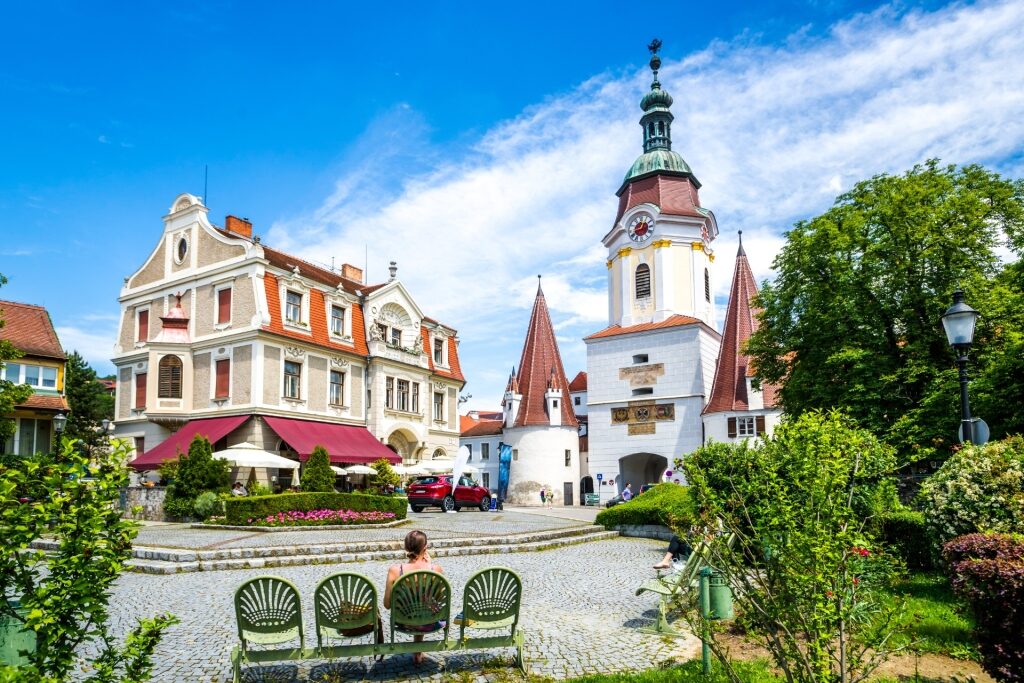
Krems Steiner Tor
Both Krems and Melk are on one of Austria’s main train lines from Vienna to Salzburg—the journey between the two is around 1 hour 45 minutes with other Wachau stops on the way. There are plentiful taxis that can do these journeys quicker but there’s an equivalent price shift.
From an accessibility point of view, most towns offer good access, but some trails and paths to castles can be both steep and uneven.
Things to See & Do
Tour Melk Abbey
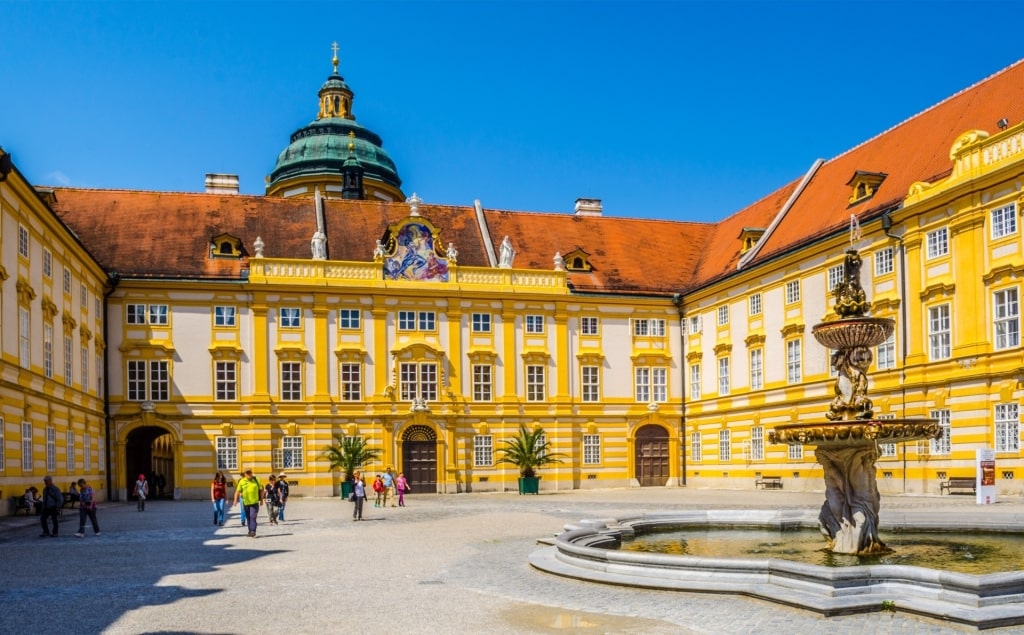
Melk Abbey
Dating from the 11th century and sitting on a rocky outcrop overlooking the Danube, Melk Abbey is one of Europe’s most dazzling baroque showpieces. Its ochre-colored turrets and towers stand proudly against deep blue skies, while its thick walls house dazzling displays of frescoes, marble, and gilding.
Highlights include the library with hundreds of ancient manuscripts and elaborate ceiling art, the tomb of Saint Coloman of Stockerau, and the remains of several members of the House of Babenberg, Austria’s first ruling dynasty. The outside terraces, meanwhile, provide elegant gardens and sweeping Danube views.
Climb to The Ruins of Dürnstein Castle
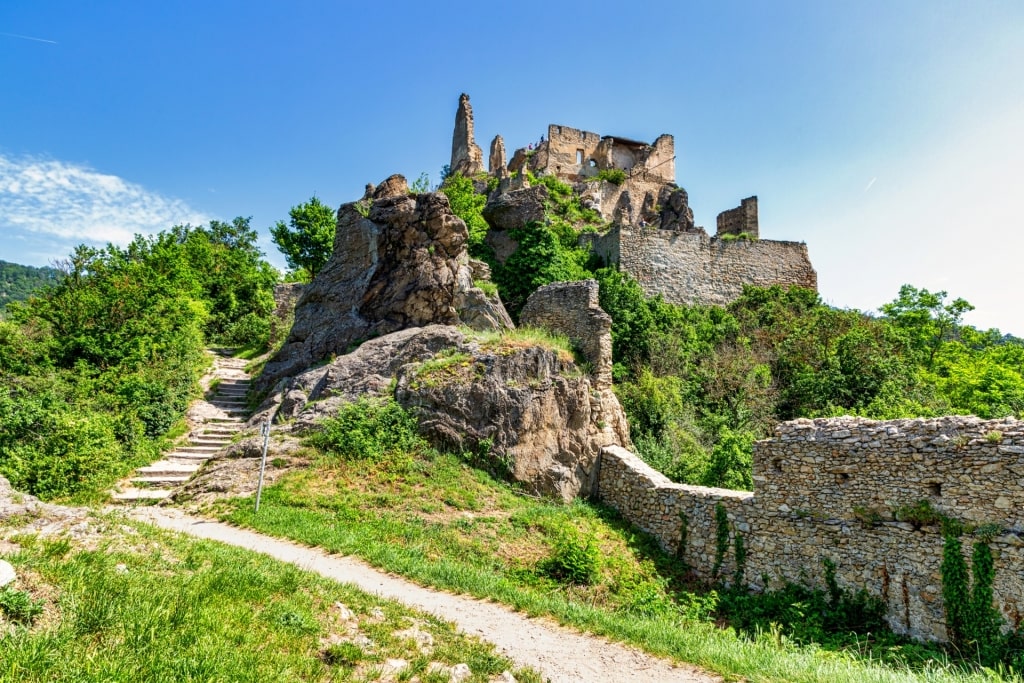
Dürnstein Castle
At some 1,000 feet above sea level, it’s a bit of a hike to Dürnstein Castle but it’s well worth the effort to see where the myth and might of medieval Europe once came together.
Built in the mid-12th century, the castle’s thick walls now lie in ruin but provide the backdrop to one of the era’s most enduring tales, that of Richard the Lionheart. On returning from the Crusades, Richard is said to have refused to share his spoils with Leopold V of Austria who proceeded to imprison him in the castle for two years before a ransom was paid. The now-bucolic setting with the river flowing by and swathes of vineyards is an added bonus to a visit here.
Cycle The Danube Path
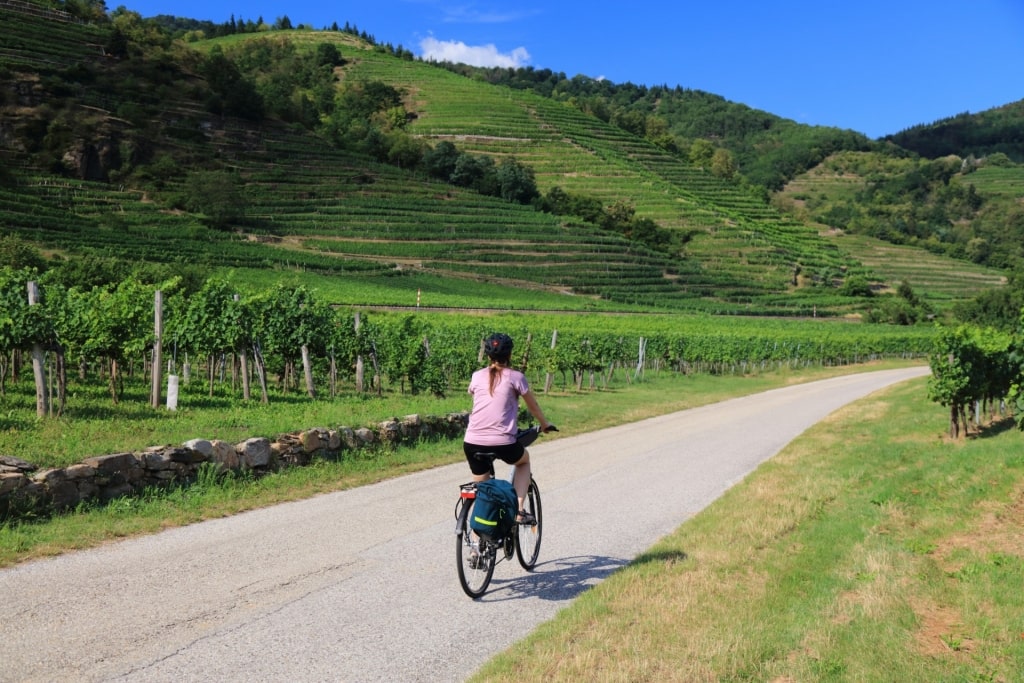
Danube Cycle Path
The full Danube Cycle Path stretches from Germany to the Black Sea to provide one of Europe’s most epic cycle routes. Almost entirely traffic-free, the path through the Wachau is particularly pretty, gliding past vineyards and meadows with wildflowers, and winding around river bends, each revealing another magnificent view. For those who require a little push, e-bike rental is widely available, too.
Visit Göttweig Abbey
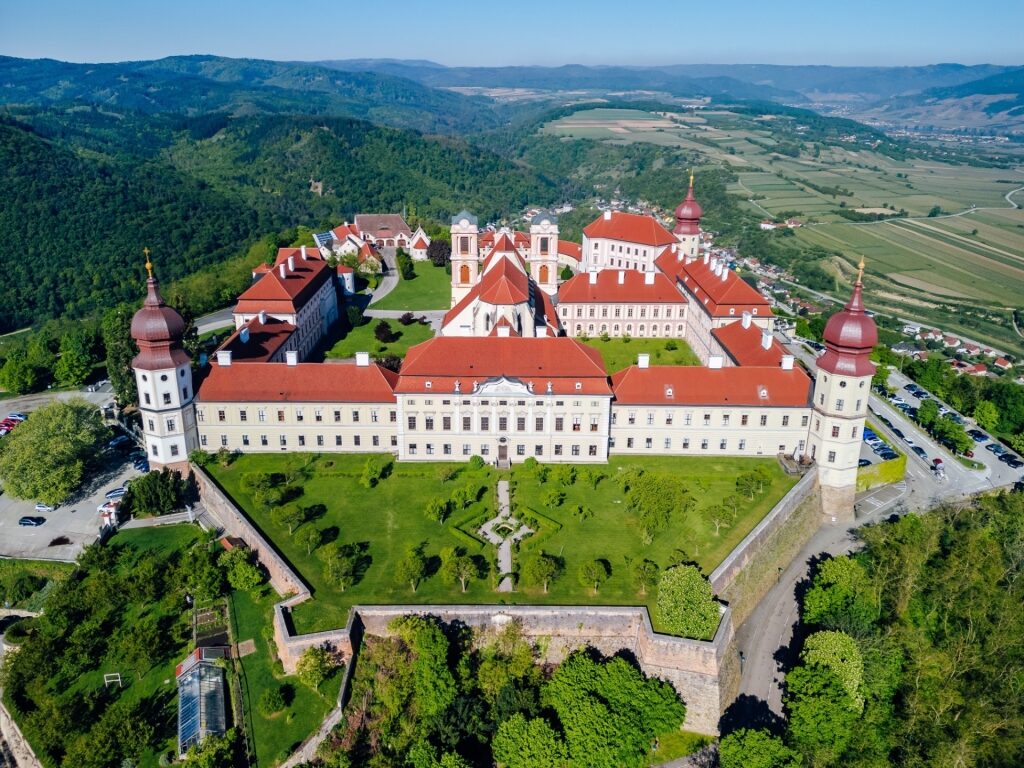
Göttweig Abbey
Since it was ravaged in both 1580 and 1718 by devastating fires, Göttweig Abbey, south of Krems, has undergone several incarnations since it was first founded in 1083 by the Bishop of Passau.
The latest version sees many refer to it as the “Austrian Montecassino” thanks to its resemblance to the world-famous abbey just outside Rome. Still home to a Benedictine community who live within its imposing walls, it houses the largest baroque staircase in Austria, and an incredible library of books, manuscripts, coins, and antiquities. There’s also a restaurant with panoramic views that’s worth visiting.
Wander The Old Town of Krems
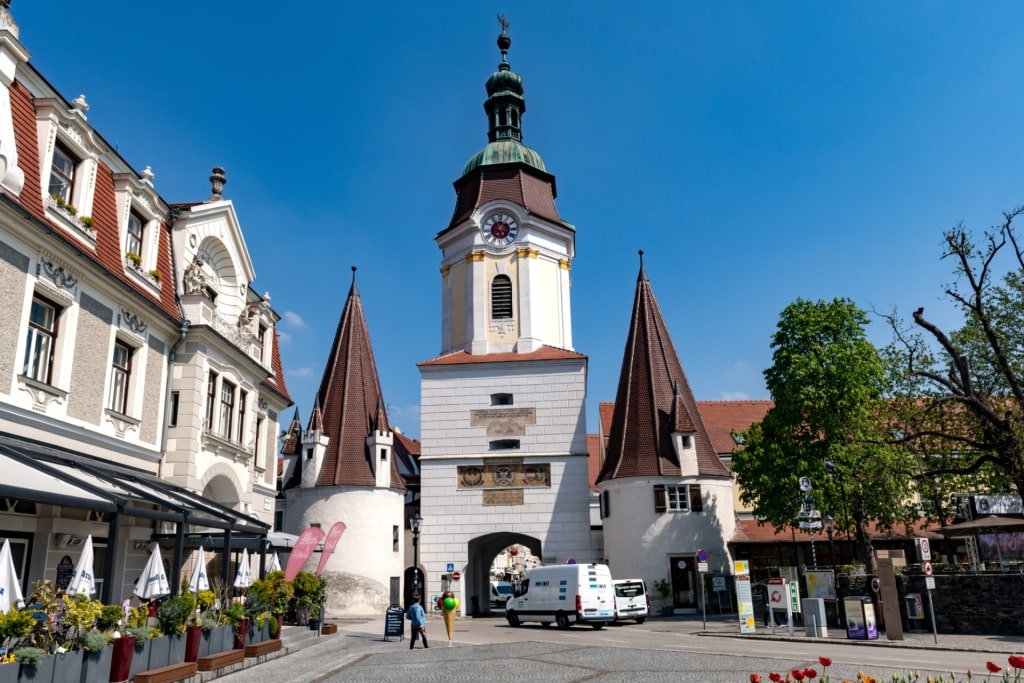
Old Town Krems
The Old Town of Krems, an der Donau, is one of the best-preserved historical town centers in Austria. Wandering around its cobbled streets, lined with medieval architecture and baroque facades, it’s the kind of place to discover artisan bakeries and boutique wine shops, or simply grab a coffee and hang out in a 17th-century courtyard.
While doing so, look out for the Rathausplatz, the town hall square, and the Steiner Tor, the last remaining gate of the city’s medieval fortifications.
Explore the Vineyards of Spitz
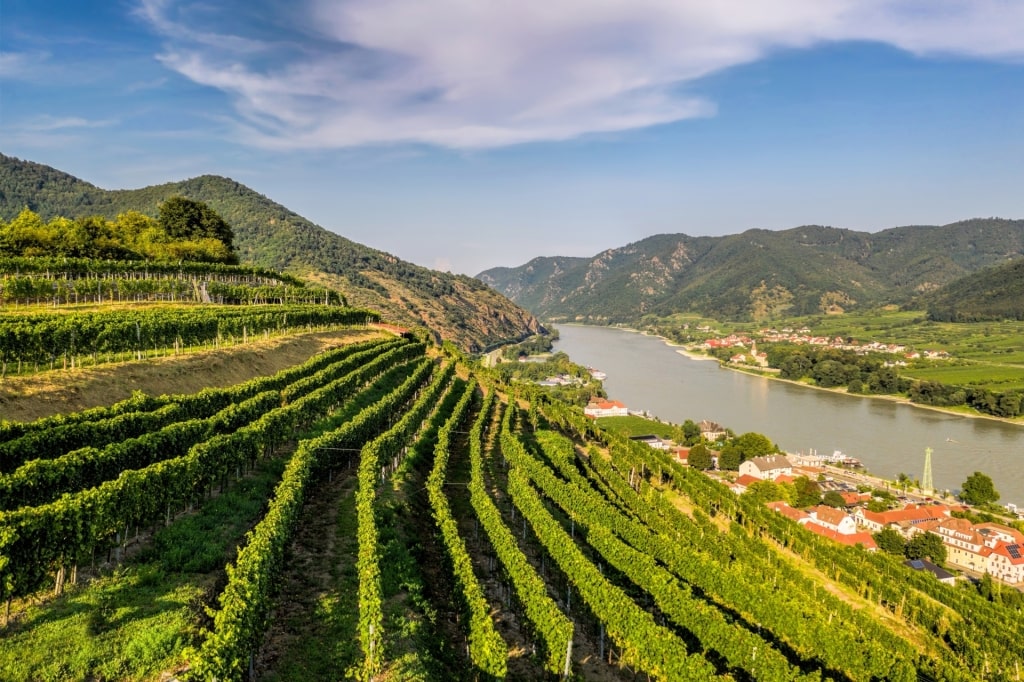
Spitz
The stretch of the Danube around the Austrian town of Spitz creates a unique microclimate with warm days and cool nights, while soils are rocky, mineral-rich, and well-drained. If you wanted to create the perfect setting for viticulture, this would be it. And the Romans did just that some 2,000 years ago, bringing winegrowing to a region that has since flourished in the art.
The setting is idyllic as the banks of the river and the town’s valley location make for a natural amphitheater of terraced vineyards. The wines, crisp Grüner Veltliners and Rieslings from legendary houses such as Franz Hirtzberger, Högl, and Lagler, are even better. During the fall harvest is the best time to visit, but you’ll find gorgeous views and fine wines at any time of year.
Hike the World Heritage Trail
Welterbesteig World Heritage Trail
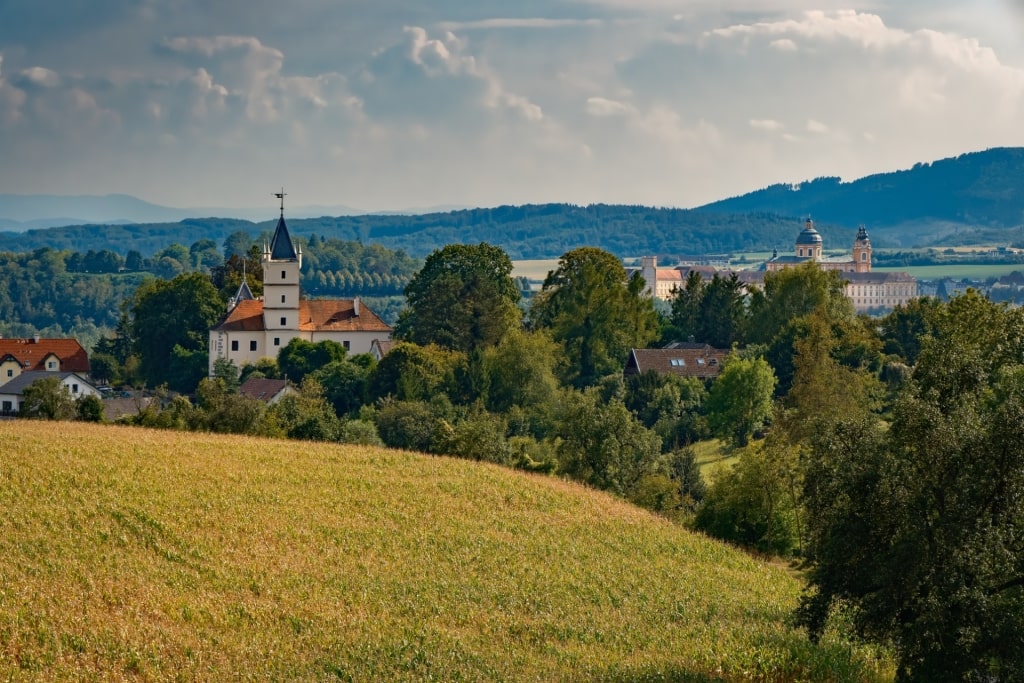
The 111-mile Welterbesteig World Heritage Trail is the Wachau on foot. Looping through the heart of the valley, the trail stitches together 14 towns and villages between Krems and Melk. It’s also been divided into 14 manageable sections that mean even casual hikers can dive in for a mile or two, leaving the more experienced to cover the whole route.
As it winds its way along riverbanks, through forests and alongside wine terraces, the waymarking is excellent with plenty of opportunities to stop and drink in the views, sip on a beer, or pick up a tasty treat from a local bakery.
Food & Drink
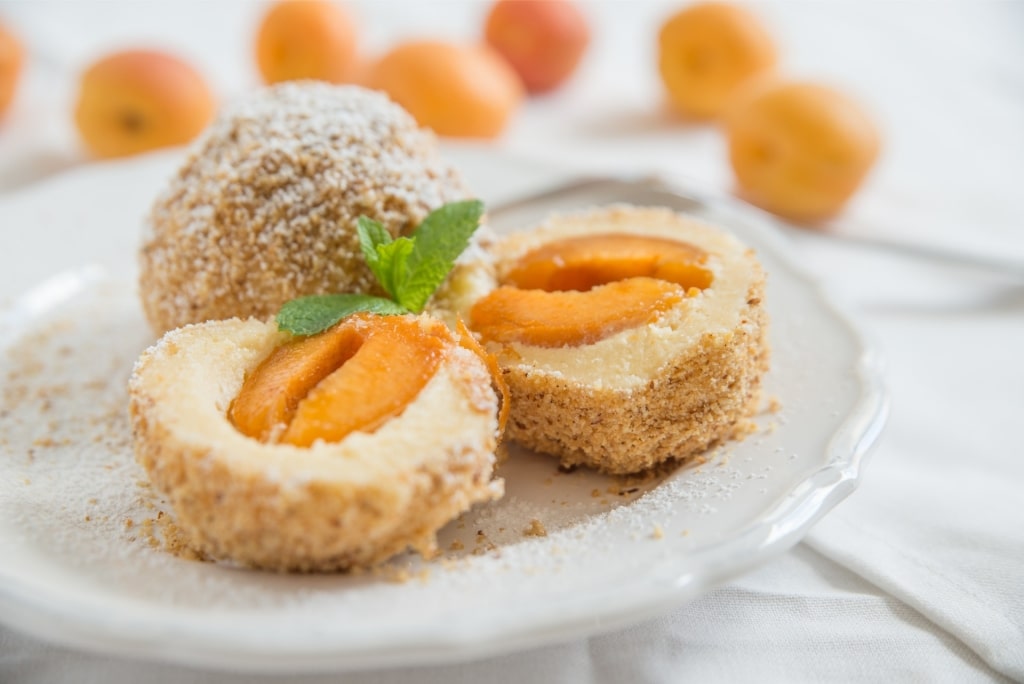
Marillenknödel
Austrian food is not without its highlights—think schnitzel, strudel, dumplings—but it can be quite heavy. In the Wachau it takes on a more elegant spin: local, seasonal, unpretentious, almost Tuscan at times. It’s elegant but not fussy, rustic but not rough.
Pride of the valley is the apricot, the Wachauer Marille, so unique in its flavor that it comes with a stamp of protection from the European Union. You’ll find it eaten by hand, baked into pastries, distilled into schnapps, and in the region’s signature dessert, Marillenknödel.
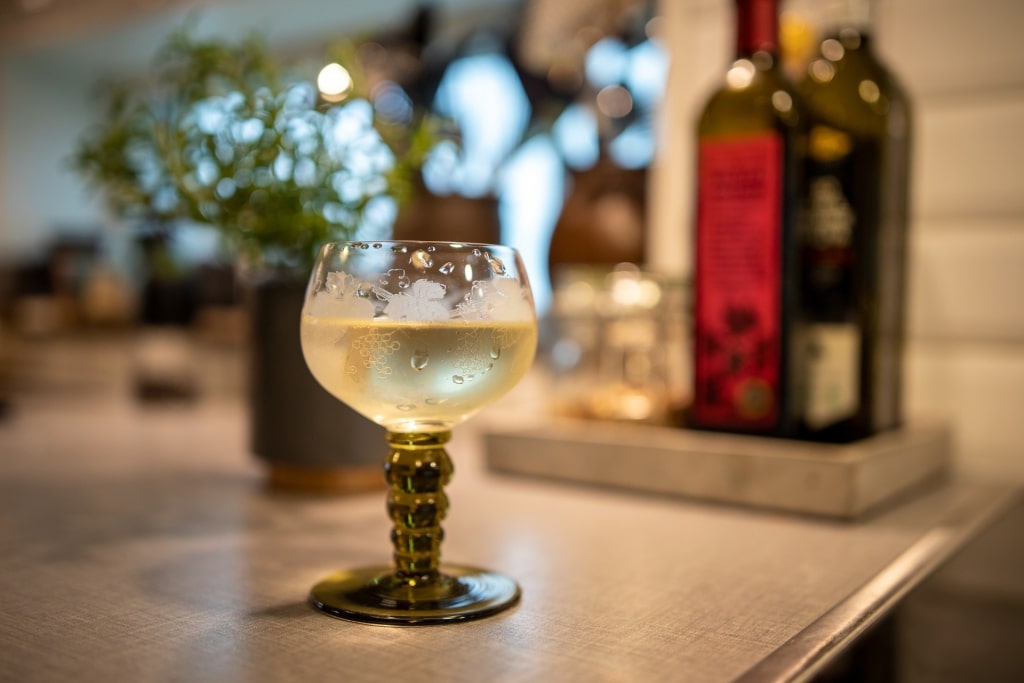
Grüner Veltliner
Breads and pastries are serious business here, with the Wachauer Laberl, a crusty round roll, being the cornerstone in many meals in local Heurigen. You’ll see it served up alongside cold cuts, pickles, sharp cheeses, and spreads, all washed down with a glass of Grüner Veltliner.
The Danube means that freshwater fish such as zander and trout regularly feature on menus, while the forests and hills bring game in autumn. Venison and wild boar in rich sauces start to feature when the leaves start to turn.
Best Time To Visit
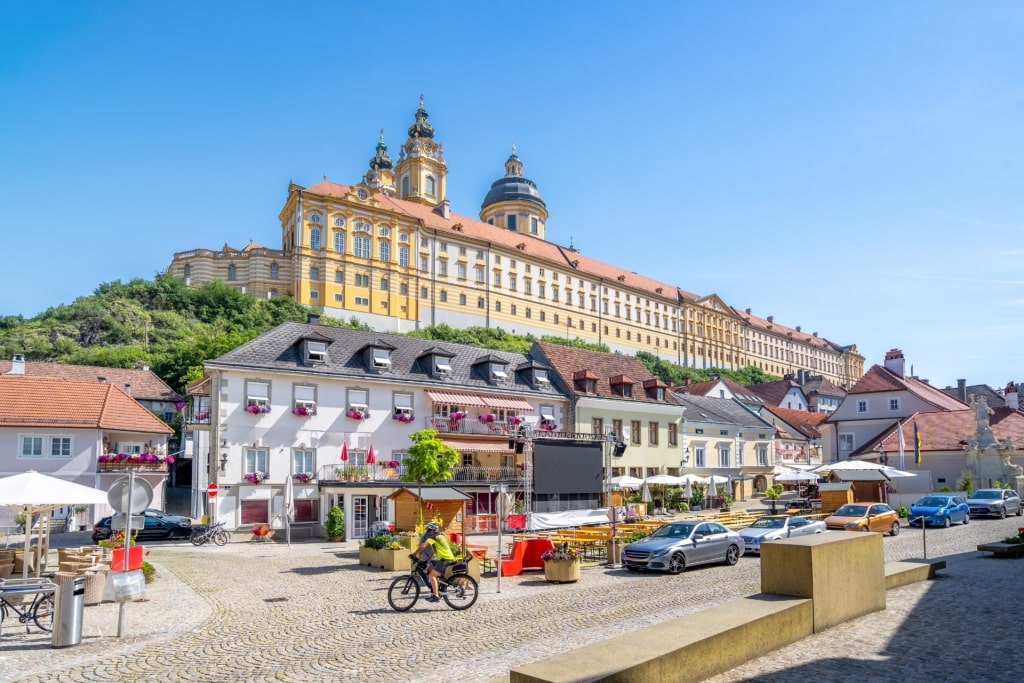
Melk
There’s never really a bad time to visit the Wachau Valley; it’s down to your personal preference as to what you want to do while here. Spring brings with it mild weather and apricot blossoms that steal the show.
The summer is peak season with festivals, open-air concerts, and lazy afternoons by the river—but expect it to be much busier than at other times of year. Fall is stunning as the leaves turn and harvest is in full swing. Winter offers shorter days but atmospheric Christmas markets with a traditional non-commercial feel.
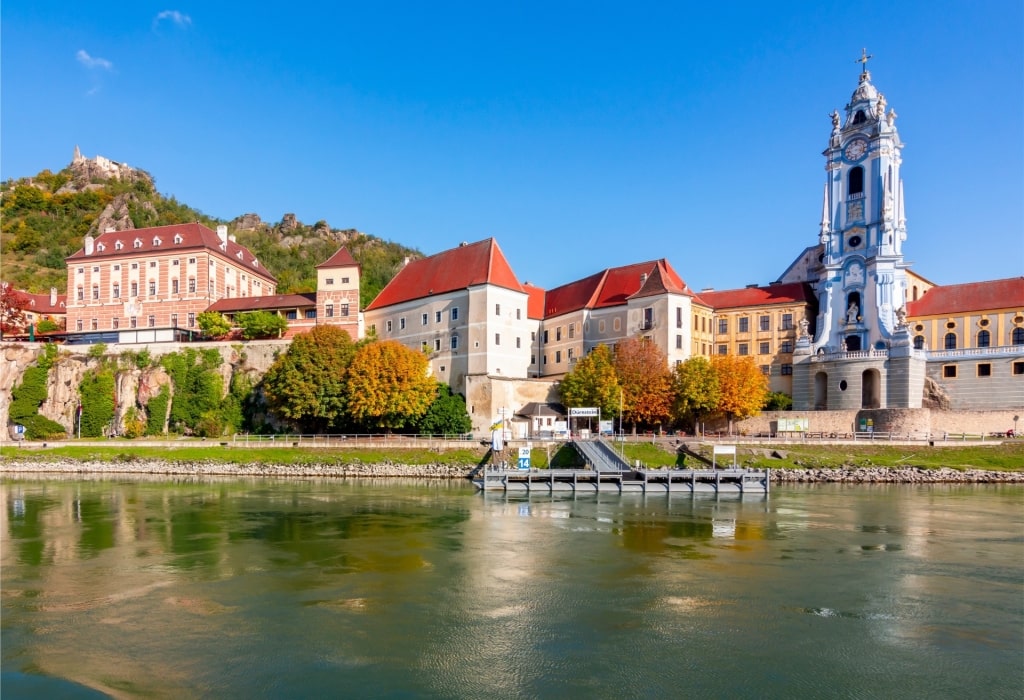
Dürnstein
Swap your daily routine for vineyard views and castle climbs in the Wachau. Browse Celebrity’s Danube river cruises and plan your next great escape.