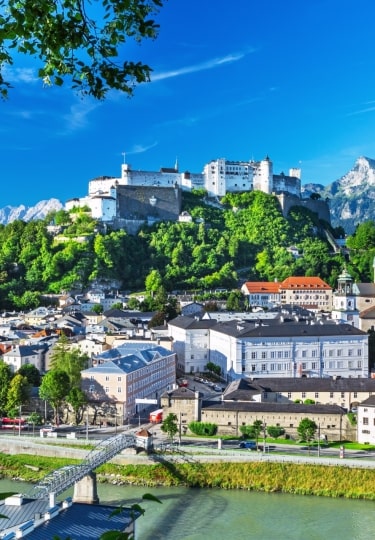
The best places to visit in Austria range from famous cities such as Vienna and Salzburg to quieter towns such as Linz and Dürnstein. There are dramatic clifftop castles and magnificent Baroque abbeys here, as well as imperial history, musical heritage, and beautiful landscapes.
Hiking and cycling are good ways to explore the picturesque Austrian countryside. The Wachau Valley and the gorge of Ötschergräben are only two of many places to enjoy. Here are just some of the best places in Austria to explore on your next visit.
Vienna
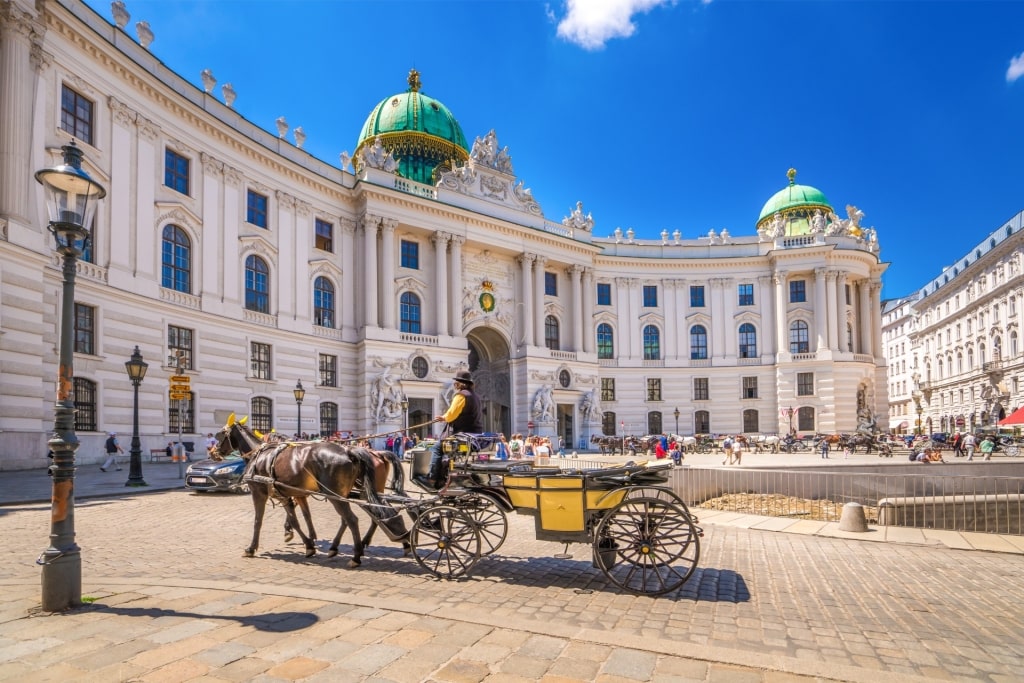
Hofburg Palace, Vienna
Think of Vienna, Austria’s capital, and elegant coffee shops, mouth-watering pastries, and classical music come to mind. This grand city has a worldwide reputation for its civilized way of life.
It lives up to that reputation in reverent art galleries such as the Kunsthistorisches Museum and the Belvedere, home to Klimt’s The Kiss. Its opera houses and concert halls, including the historic Vienna State Opera, are equally impressive.
The city center shows off Baroque architecture in treasures such as Schönbrunn Palace, Hofburg Palace, and St. Stephen’s Cathedral. The Prater amusement park, with its landmark Ferris wheel, and Danube Island are proof that the city also knows how to have fun.
Wachau Valley
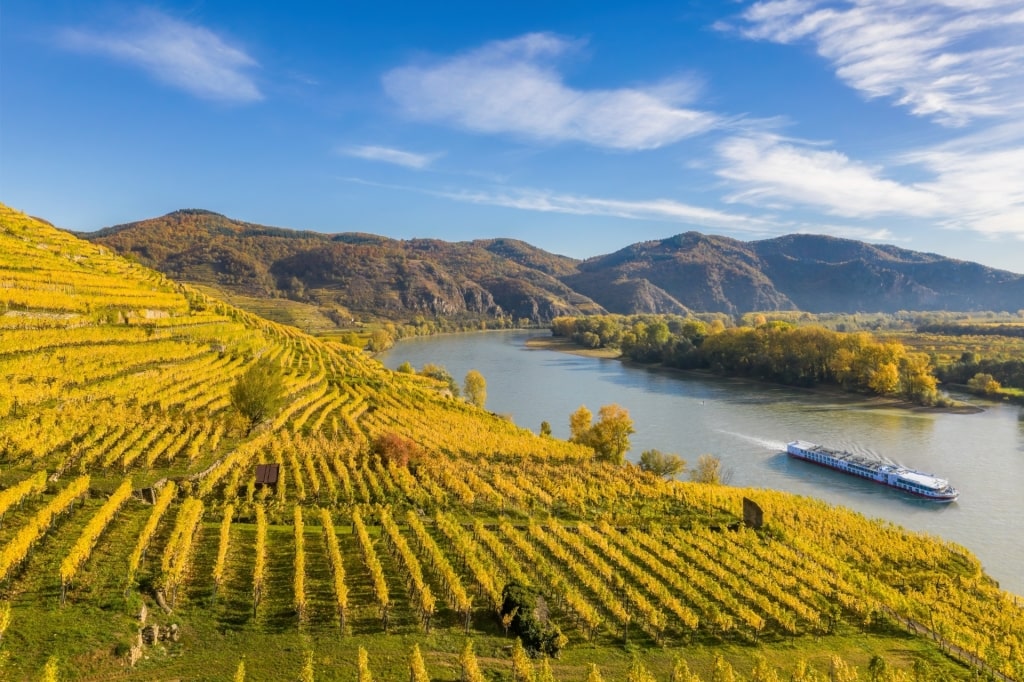
Wachau Valley
The Wachau Valley is a beautiful stretch of the Danube, UNESCO-listed for its vine-covered hills, apricot orchards, and medieval towns. One of the best places to visit in Austria, it can be enjoyed by hiking, cycling on the Danube Bike Path, or by boat.
The town of Spitz is known for its hilltop Hinterhaus Castle and wine terraces. Like nearby Weissenkirchen, it’s a place to taste crisp Grüner Veltliner wines and find apricot products such as marmalade and schnapps.

Weissenkirchen
Weissenkirchen has a picturesque fortified church and the historic Teisenhoferhof wine estate. Follow the World Heritage Trail towards Dürnstein for a short distance to look back on one of the prettiest villages in Austria.
Melk Abbey
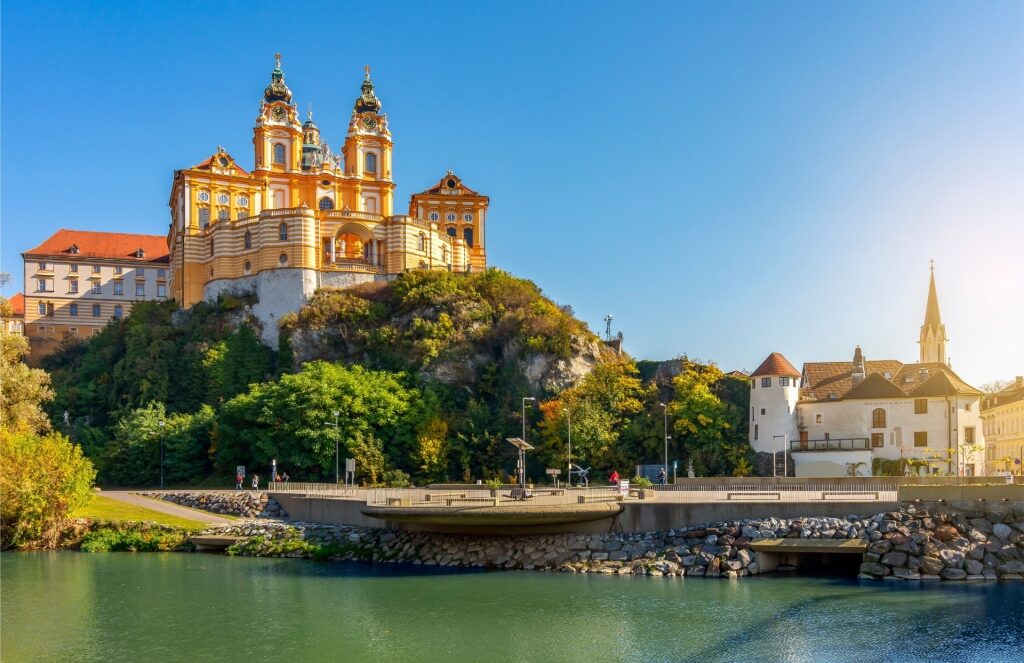
Melk Abbey
High above the Danube, Melk Abbey—said to hold a splinter from the cross of Jesus—is a glorious masterpiece of early 18th-century Baroque architecture. With its golden altar, medieval manuscripts, and frescoes, it’s also a treasure house of art.
The centerpiece is the Marble Hall, whose stucco pillars support an incredible trompe l’oeil ceiling fresco. Above the carved bookcases in the Library is another delightful fresco.
The abbey church, with its ornate pulpit and abundance of gold decor, is one more highlight. Outside, the terrace has sweeping views of the leafy Wachau Valley, one of Austria’s most important wine-growing areas.
Krems
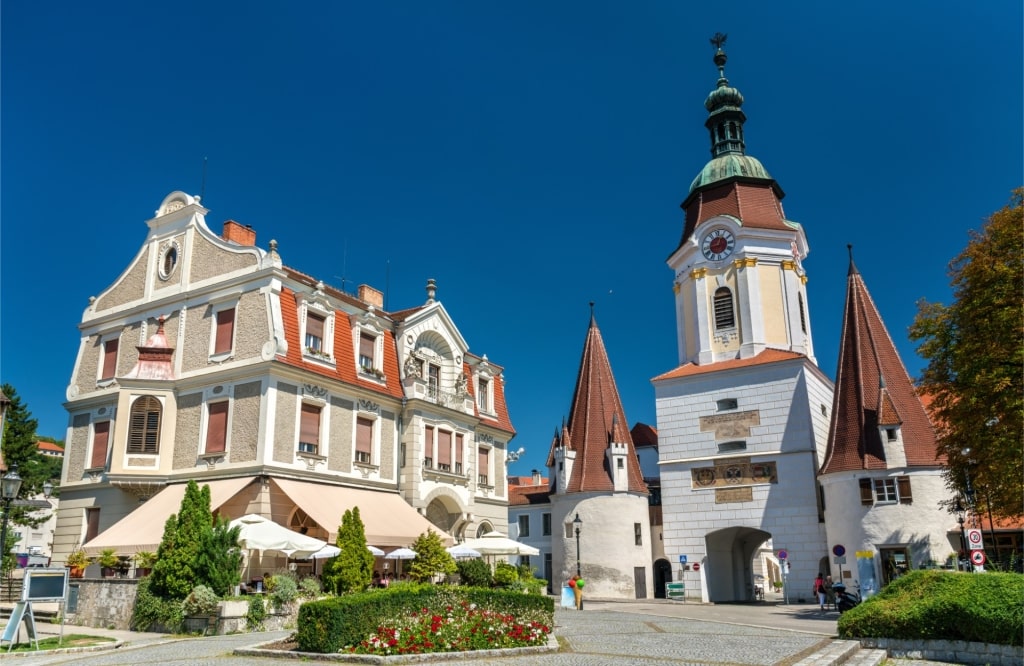
Krems
The picturesque town of Krems on the left bank of the Danube is a gateway to the Wachau Valley. It’s known for its well-preserved medieval center, entered through the 15th-century Steiner Tor, a last remnant of its enclosing walls.
Krems’ Kunstmeile, or “mile of art”, holds galleries such as the Caricature Museum, Kunsthalle, and the strikingly modern Landesgalerie. You’ll also find plenty of heurigen—wine taverns—dedicated to the art of the local Riesling and Grüner Veltliner wines.
Don’t miss the Baroque interior of Pfarrkirche St. Veit, whose tower dominates the town center. A more worldly delight is indulging in Austrian pastries in a local café.
Dürnstein
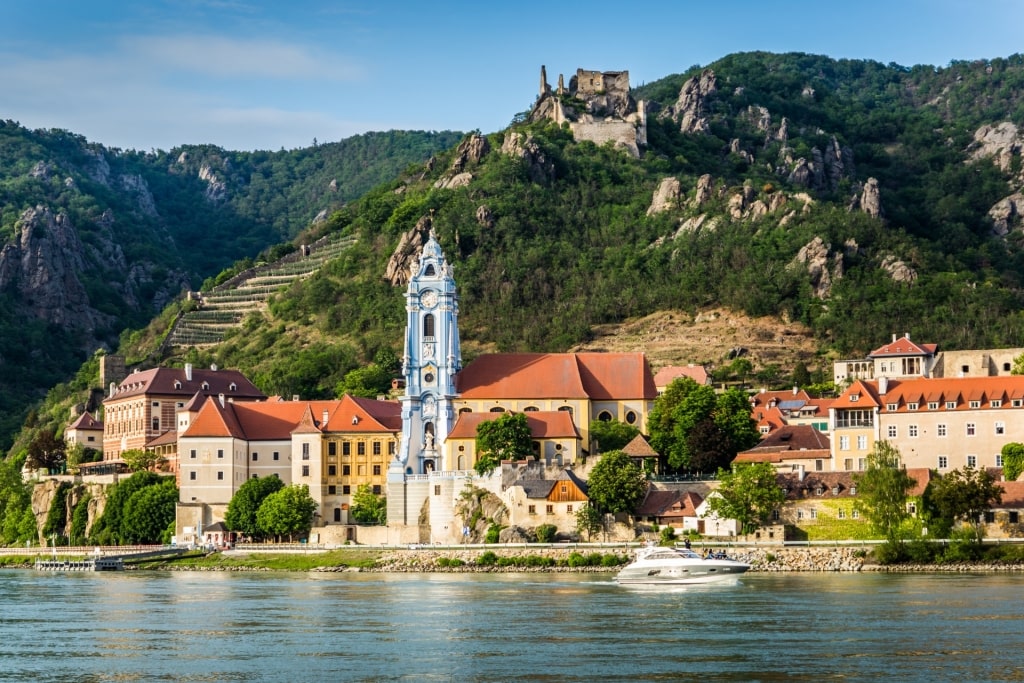
Dürnstein
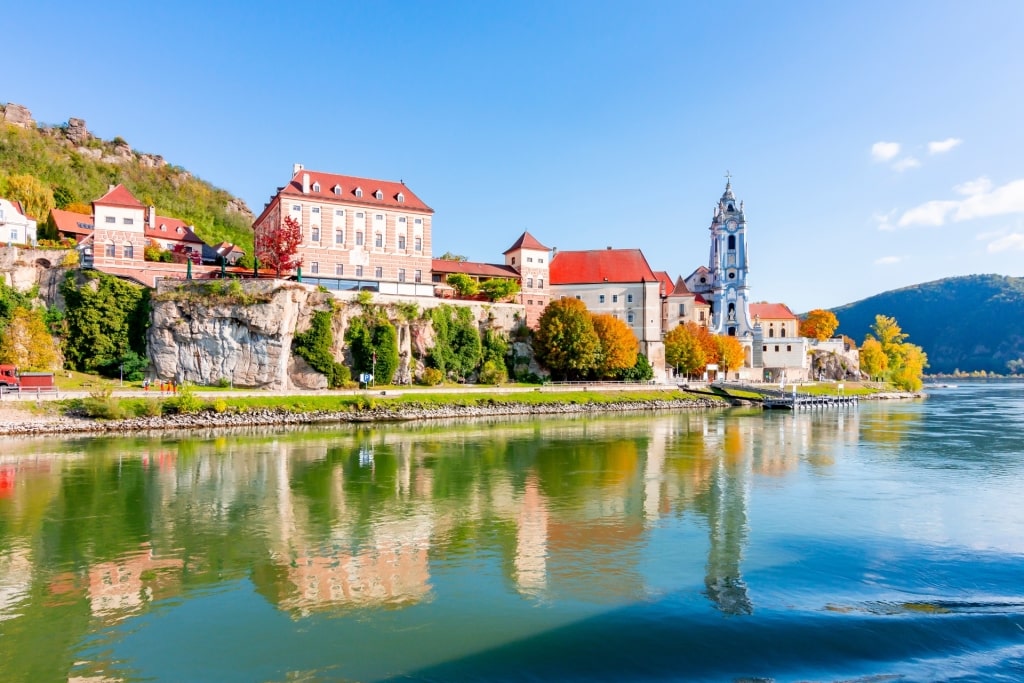
Crammed between vine-covered hills and the River Danube, Dürnstein is a picture-perfect town in the Wachau Valley. It’s famed for its blue Baroque abbey tower and the ruins of Dürnstein Castle, where England’s King Richard the Lionheart was once imprisoned.
The town’s narrow streets have many cozy taverns and interesting shops. Along the Danube, the promenade has quiet views of passing river boats and those terraced vineyards.
There are also great Danube views from the terrace of Dürnstein Abbey, whose splendid Baroque interior is a delight. The steep hike up to the castle will also reward you with a breathtaking valley panorama.
Linz
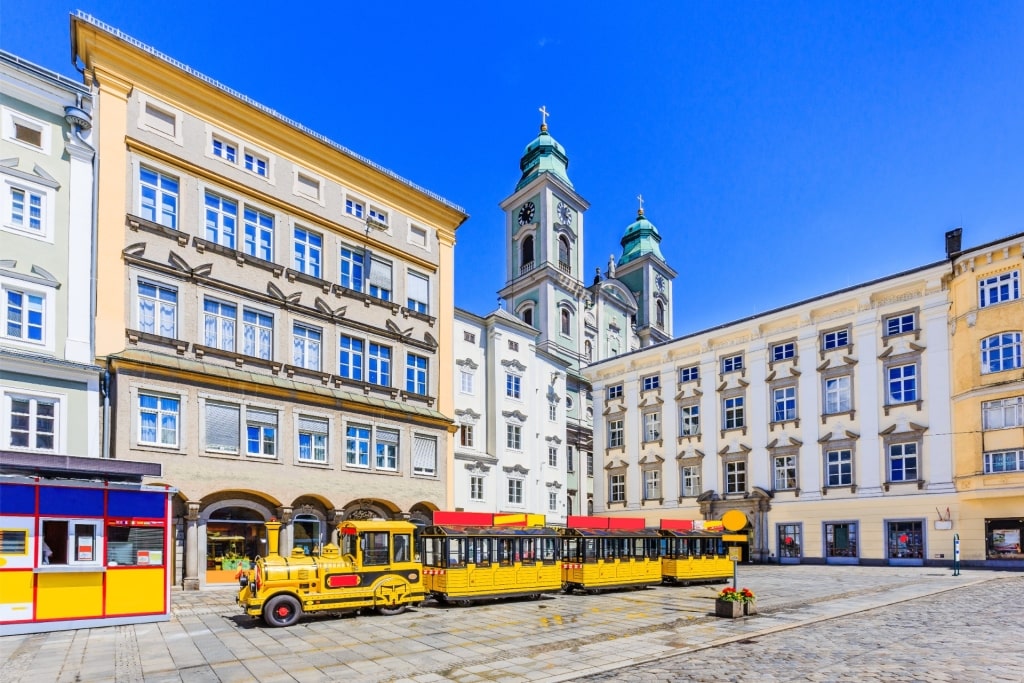
Linz
You have to love any town that has a cake named after it, especially with the world’s oldest recipe. Linzer Torte is a kind of shortbread base topped with fruit and nuts.
Linz itself is Austria’s third-largest city, with a walkable center full of pastel-colored Baroque buildings and cafés. Linz Castle holds a history museum illustrating how the town’s wealth was founded on Danube boat and bridge tolls, as well as wool.
The Ars Electronica Center, Lentos Art Museum, and the Musiktheater am Volksgarten show the city’s more modern side. Take the cog railway up Pöstlingberg Hill for a view as far as the Alps on a clear day.
Salzburg
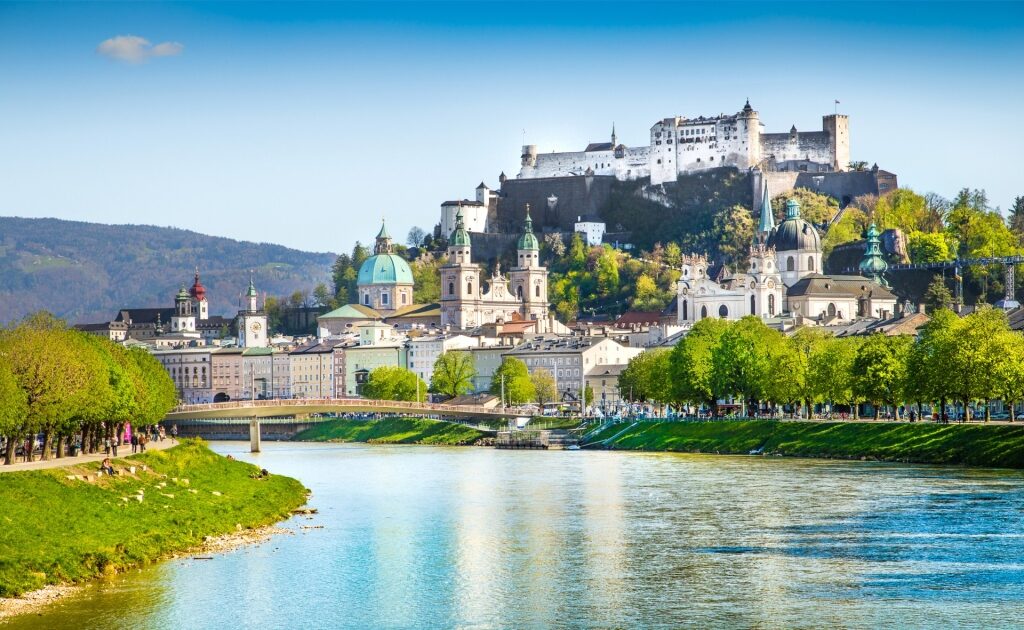
Salzburg
Salzburg is famous for music, partly due to the story of the von Trapp Family, but also because of Mozart. At Hagenauer House, you can see where the composer was born, while rival Mozart chocolates are a popular souvenir.
To find hills alive with the sound of music, take a tour of key filming locations. These include Nonnberg Abbey, where Maria was a novice nun, and St. Peter’s Cemetery, where the von Trapps hid from the Nazis.
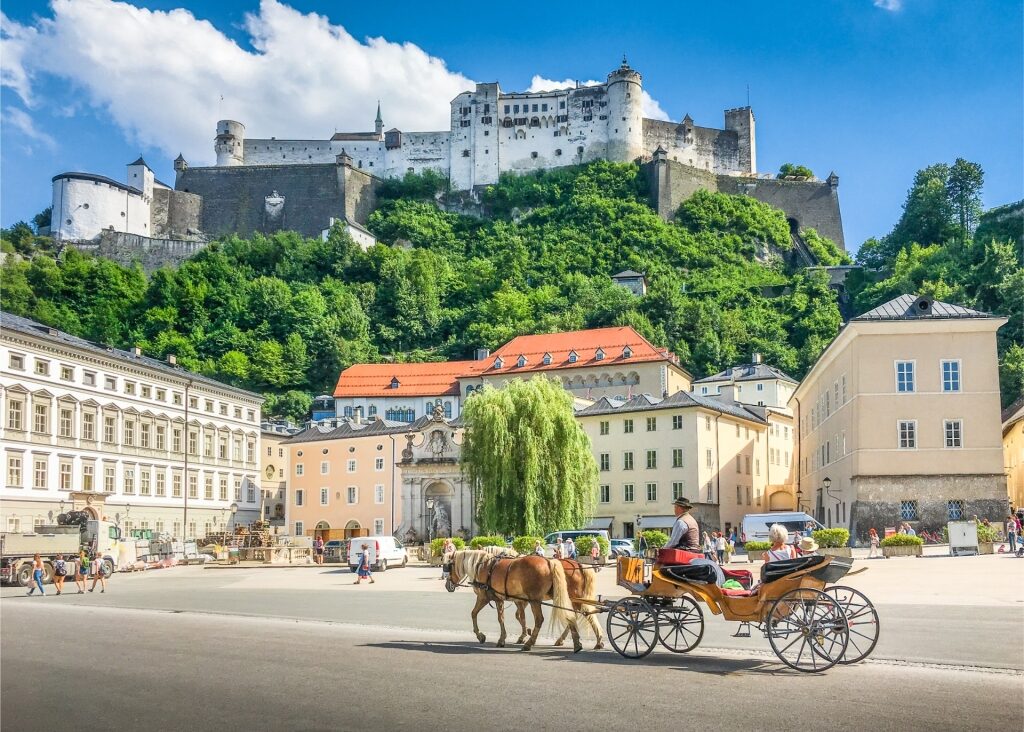
Old Town, Salzburg
Do leave time to visit Salzburg’s other highlights, including the Old Town with its mix of Italian and German influences. Looming overhead is Fortress Hohensalzburg, the largest preserved castle in central Europe, worth visiting if just for the view.
Mauthausen
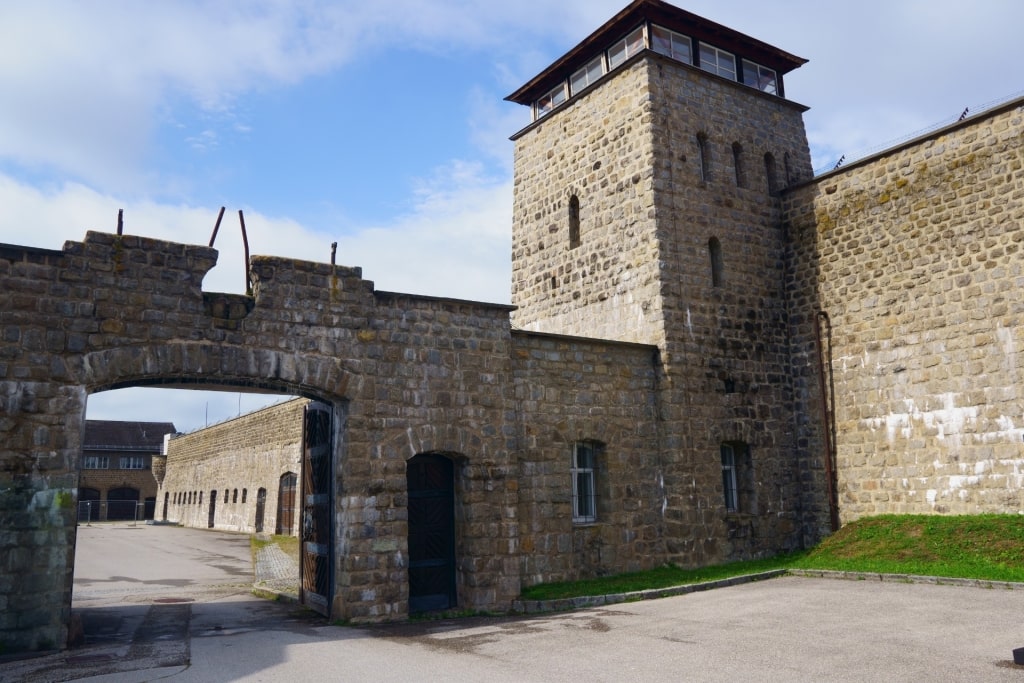
Mauthausen
Mauthausen is infamous as the site of a WWII concentration camp where inmates were worked to death in a stone quarry. The camp’s museum, preserved barracks, and notorious “Stairs of Death” are chilling reminders of its history.
Take a guided tour for a fuller picture of the camp, which held Roma and gay prisoners among many others. At least 90,000 people died here, of which some 14,000 were Jewish.
It’s difficult for any town to escape such a legacy, but Mauthausen’s scenic riverside promenade is a good place to process your thoughts afterward. A bike ride along the Danube to Enns is another way to adjust to normality.
Read: Tipping in Austria
Aggstein Castle
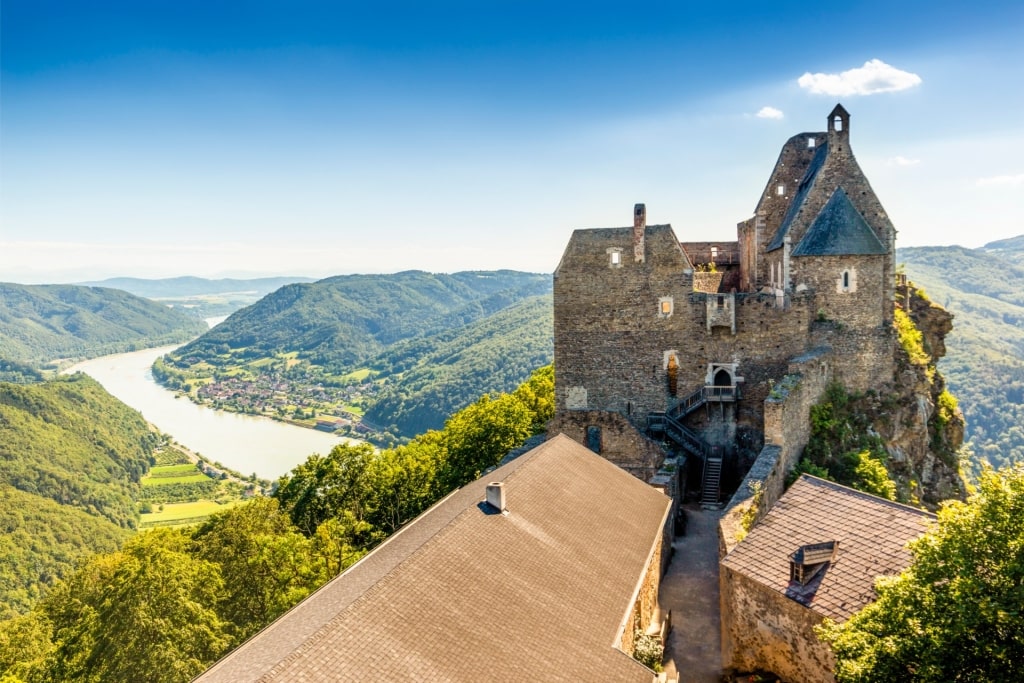
Aggstein Castle
One of the most breathtaking medieval castles in Europe, Aggstein sits on a rock 1,500 feet above sea level. The extensive ruins have plenty of tales to tell—some of them even true.
The most memorable is of the “Rose Garden”, a high ledge where prisoners could supposedly starve or jump to their deaths. The castle owner had the right to impose tolls on river traffic, so local people had a low opinion of the place.
Visitors can see the Knight’s Hall, restored towers, and a chapel while learning about the castle’s 12th-century origins. In summer, there are regular medieval festivals and falconry shows.
Grein
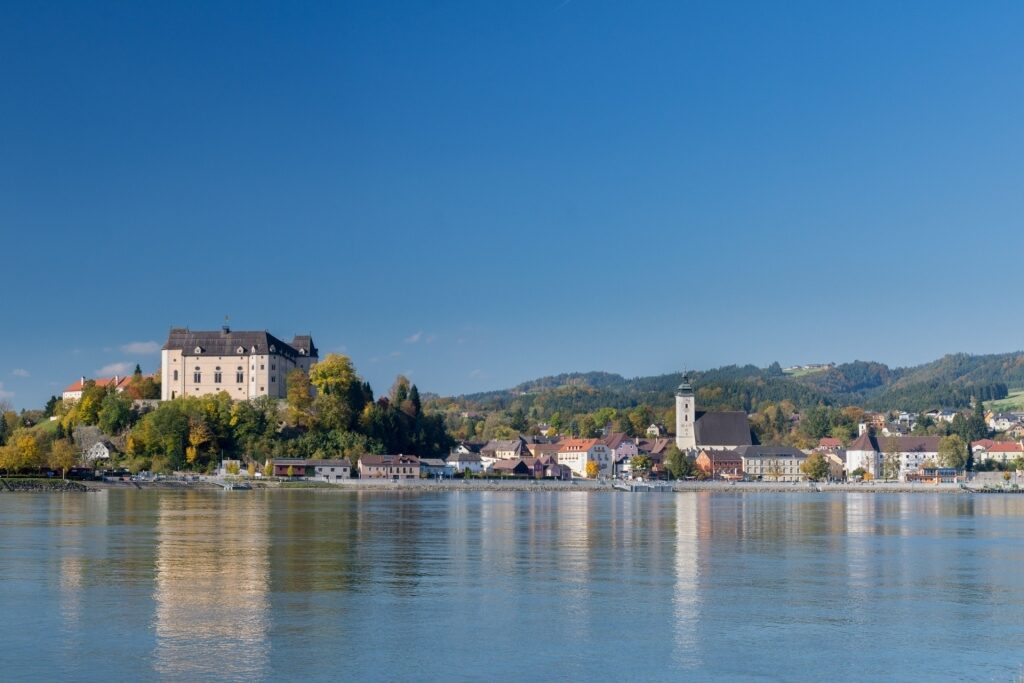
Grein
Sitting on a large bend in the Danube, Grein is a small town known for Austria’s oldest civic theater. The Stadttheater in the central Rathaus—town hall—proudly bears the date of 1791 above its doorway.
Another landmark is Schloss Greinburg, a castle still lived in by its owners but open to visitors. It’s notable for its rococo decor, historic frescoes and a remarkable number of hunting trophies.
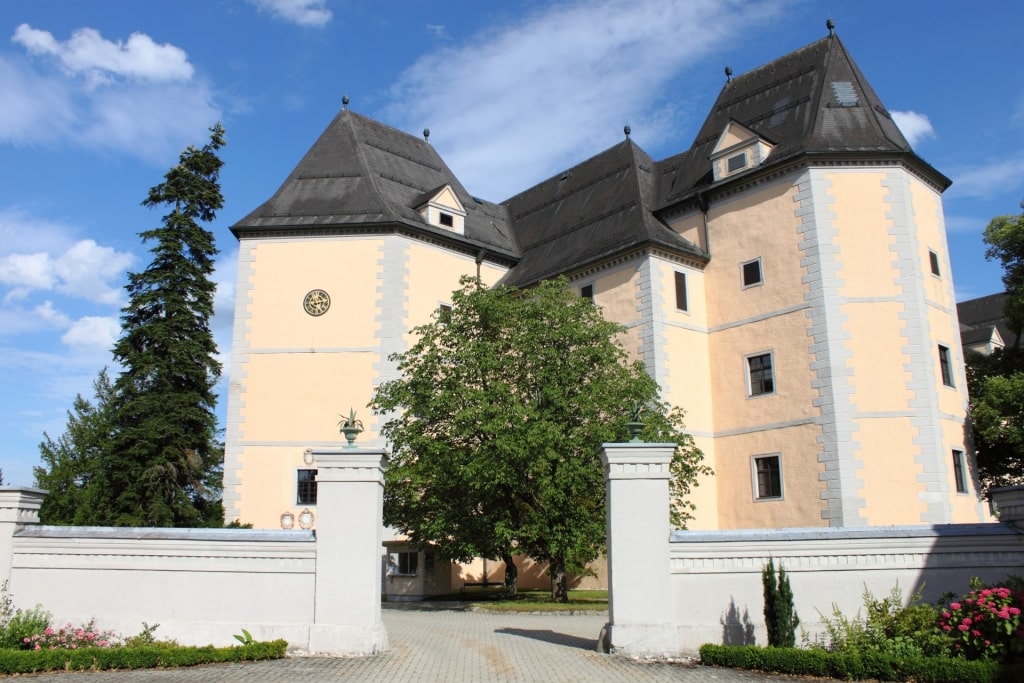
Schloss Greinburg, Grein
The castle also has a Maritime Museum focusing on the Danube’s shipping history. It’s presently being modernized and enlarged to add even more exhibits.
Ybbs an der Donau
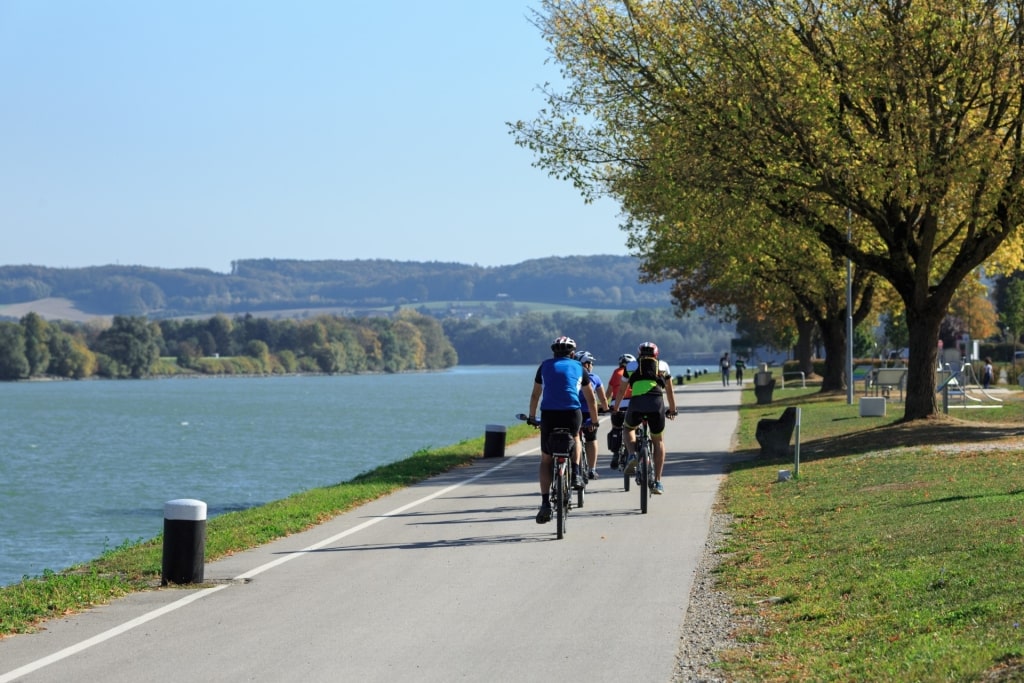
Ybbs an der Donau
Ybbs is a charming medieval town with a pretty promenade alongside the Danube. Besides its own attractions, it’s also a gateway to the scenic Nibelungengau region downstream, popular with hikers and cyclists.
That last hobby is celebrated in the town’s Cycling Museum, with some 300 vintage bikes from original wooden ones to early racing bikes. It also tells the story of cycling’s role in history, such as helping bring independence to women.
At the Ybbs Persenbeug Power Plant, on the Danube cycle path, tours explain the river’s hydroelectric importance. Afterwards, you might want to relax in one of the town’s cafés to sample fresh Austrian pastries.
Donau-Auen National Park
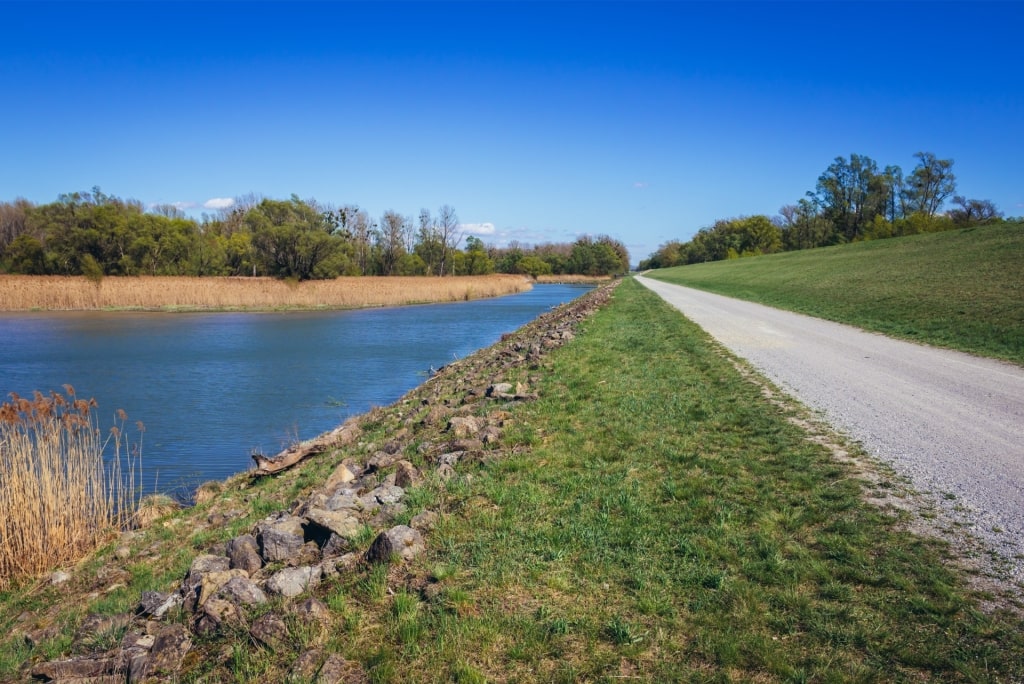
Donau-Auen National Park
The Donau-Auen National Park is one of the few places in Europe—the Wachau is another—where the Danube still looks as it once did. Downstream of Vienna, the river is being restored to the time before canalization and hydro power schemes.
This large floodplain has lowland forests, meadows, wetlands, and narrow channels off the Danube. It was preserved after an environmental campaign in the 1980s blocked plans for a new hydroelectric plant.
Besides helping to regulate flooding, the park is a refuge for wildlife such as beavers and water birds, and rare orchids. Hike, cycle, or take a guided boat tour to discover more.
Hainburg
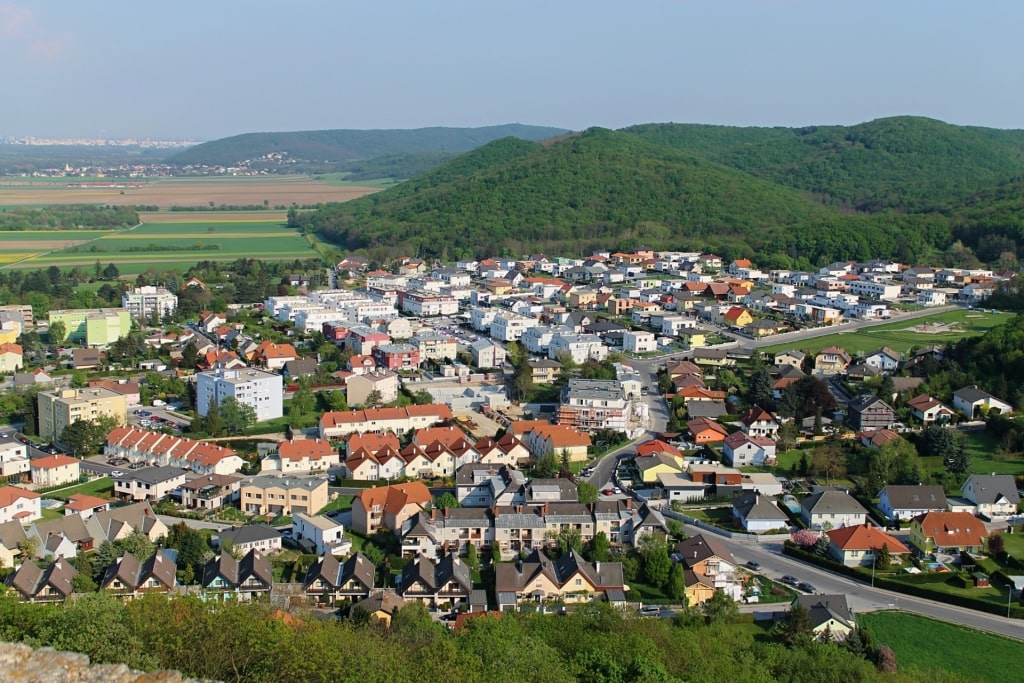
Hainburg
Hainburg’s remarkably preserved city walls and gates date back to the 13th century. Nearby is the Roman town of Carnuntum, whose impressive ruins stand in an archaeological park.
You can see a reconstructed amphitheater and villa, as well as the Heidentor, or Heathens’ Gate. The Museum Carnuntum displays artefacts from what was a major Roman settlement, one where Marcus Aurelius wrote some of his Meditations.
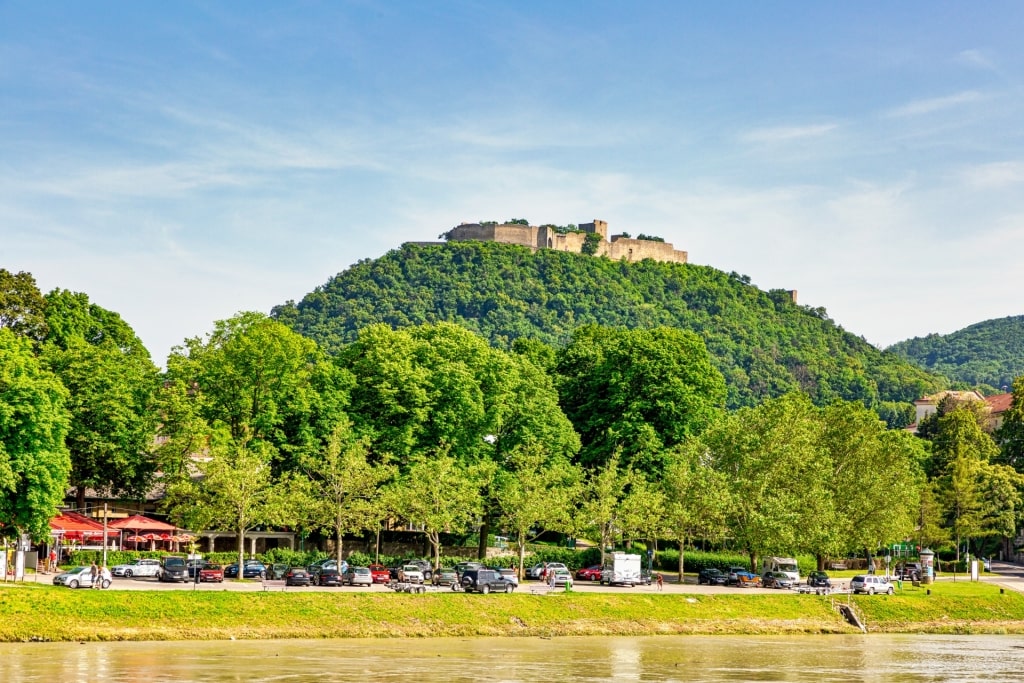
Hainburg Castle
Hainburg has a significant hilltop castle, mostly in ruins, that has lovely views to the Slovakian border. The town is on the popular Roman Wine Route, something to celebrate in a traditional wine tavern.
Engelhartszell Abbey
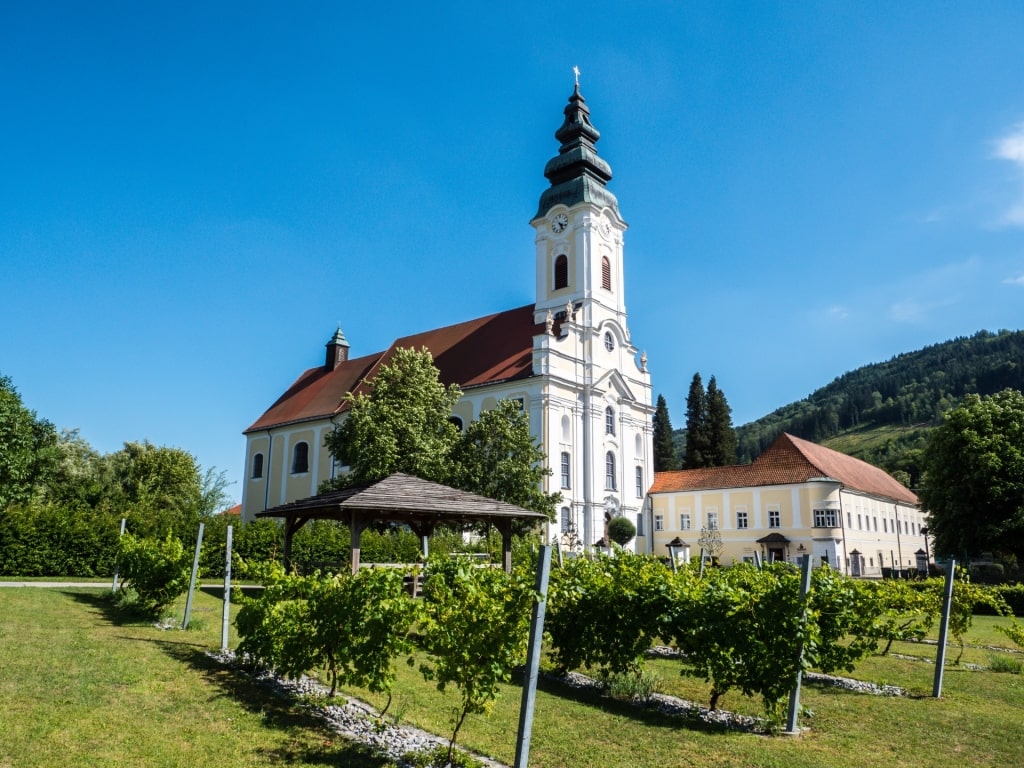
Engelhartszell Abbey
Austria’s only Trappist monastery, Engelhartszell is noted for its herbal liqueurs and artisanal cheeses. You can see how the monks produce both on a tour and, of course, sample them.
If you are there during prayers, the Gregorian chants are deeply moving—although there’s now only a handful of monks. Trappists vow stability, fidelity to monastic life, and obedience—and idle chat is discouraged.
The Baroque abbey has a lovely church, with a magnificent organ. It stands on the Schlögener Schlinge, a scenic looping 180-degree turn in the Danube about halfway between Passau and Linz.
St. Florian Monastery
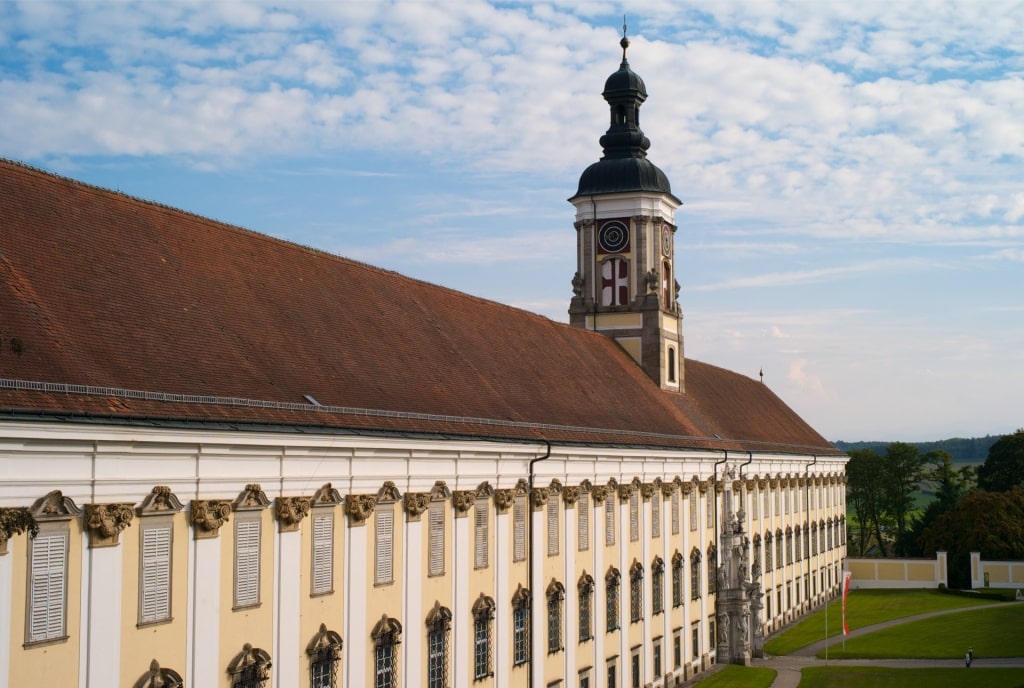
St. Florian Monastery
Founded in the ninth century, St. Florian’s is the world’s oldest Augustine monastery. The present building, dating to 1708, is a Baroque treasure to rival Melk Abbey.
The monastery’s art collection includes works by Renaissance painter Albrecht Altdorfer and other old masters. Its library of some 150,000 volumes includes priceless medieval manuscripts.
St. Florian, a martyred Roman soldier, is the patron saint of firefighters. Beside the monastery is an impressive modern Firefighting Museum with vintage and new fire engines.
Schloss Artstetten
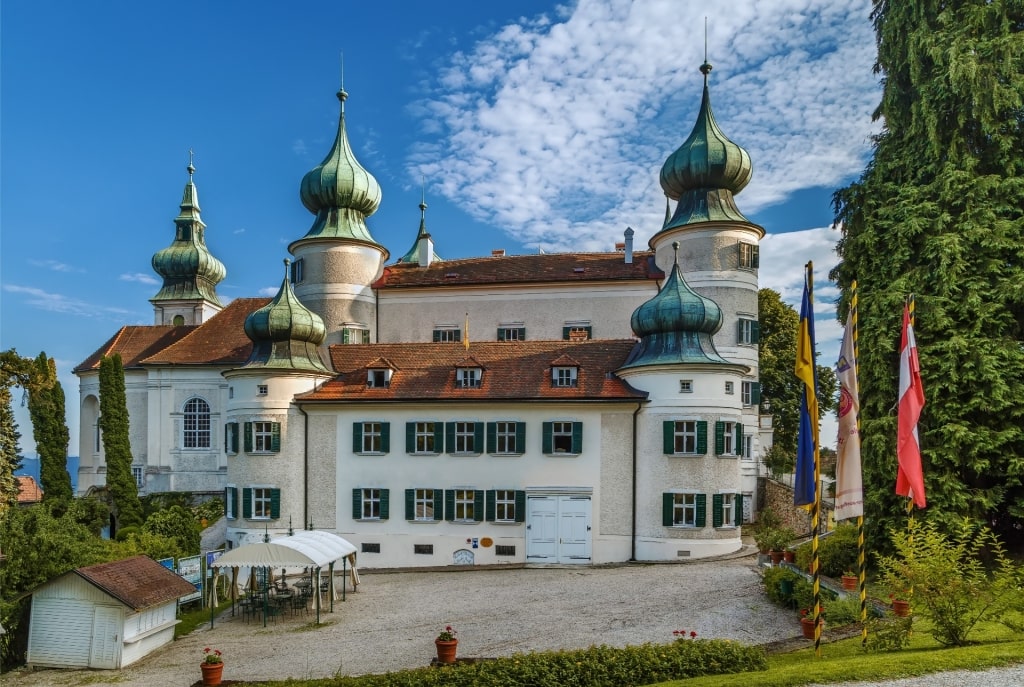
Schloss Artstetten
Schloss Artstetten is still lived in by descendants of former owner Archduke Franz Ferdinand, whose assassination sparked World War I. It holds his crypt and a very personal museum dedicated to his life and the Habsburg Empire.
That museum brings real depth to an already fascinating castle, shaped over the centuries by its different owners. One of them was Franz Ferdinand’s son, Maximilian, whom the Nazis sent to Dachau in 1938 to clean latrines.
The Austrian castle enjoys wonderful views of the Danube Valley and surrounding countryside. Its beautifully tended gardens are also a delight, changing with every season.
Enns
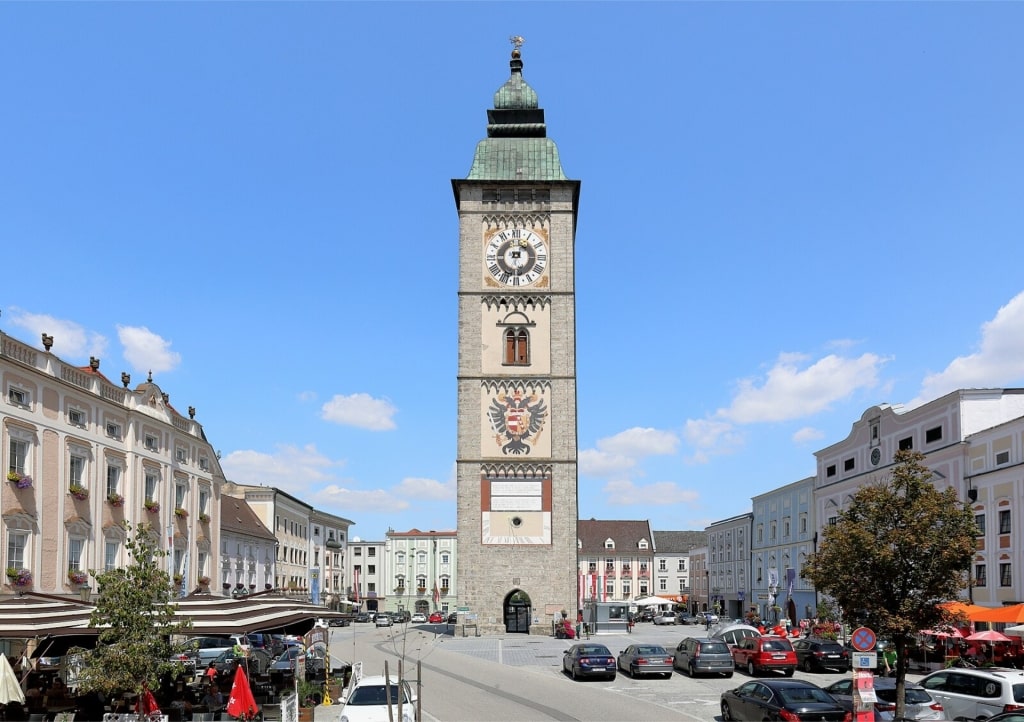
Enns Photo by C.Stadler/Bwag on Wikimedia Commons, licensed under CC BY-SA 4.0
Enns, with a charter dating back to 1212, is Austria’s oldest town. In its main square stands a 200-foot-high Clock Tower from 1568 with views for miles.
Climb the 157 steps to look out on the charming old center, full of colorful Baroque buildings, still enclosed by medieval walls. Its wealth came from trade in wood, wine, iron, and salt, as well as bridge tolls.
The town’s Lauriacum Museum takes history back further, to when Enns was a Roman military outpost. The Basilica of St. Lawrence is built on the site of a Roman temple.
Ötschergräben
Ötschergräben
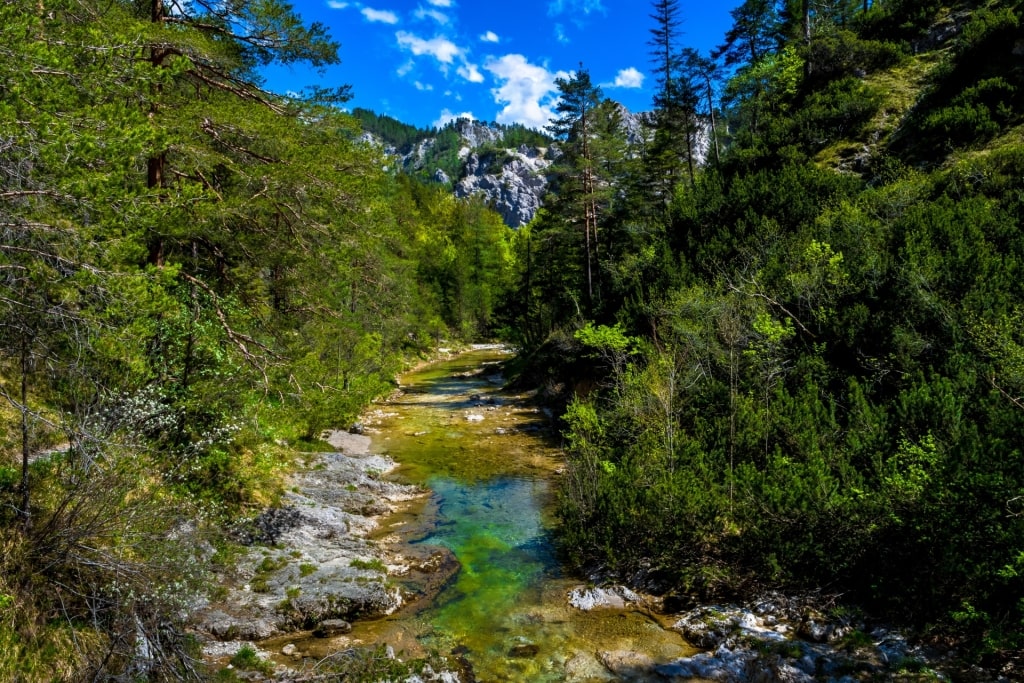
A nickname of “Austria’s Grand Canyon” leaves Ötschergräben with the risk of being underwhelming. That’s a shame, for its gorges and waterfalls really are wonderful in themselves.
One of the best places in Austria for hiking, the gorge trail follows a tumbling mountain stream across pretty wooden bridges. Major sights include the 280-foot-high Mirafall waterfall, reached by a thrilling suspension bridge.
The Ötscher-Tormäuer Nature Park protects a beautiful area that’s part of Austria’s last primeval forest. On its edge is the Erlaufsee, where you can swim or take a boat tour.
Maria Taferl Basilica
Maria Taferl Basilica
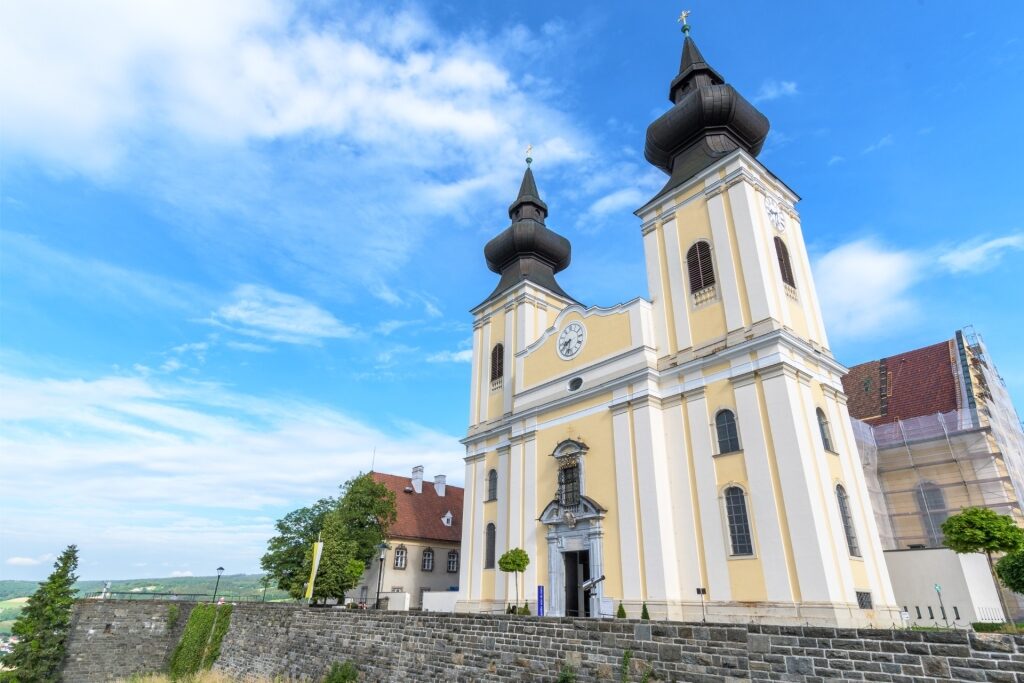
The Basilica of Maria Taferl was built to hold a statue of the Virgin Mary, credited with several miracles. A major Austrian Catholic pilgrimage site, the church is by the same architect as Melk Abbey.
The interior is a dazzling confection of gold leaf and frescoes, with a magnificent high altar. Offerings left by pilgrims, and a memorial to those who died on the way, remind you of its significance.
The view from the basilica takes in the Danube and the Alps. A path through the woods around it, The Way of the Cross, takes you through more beautiful landscapes.
Schallaburg Castle
Schallaburg Castle
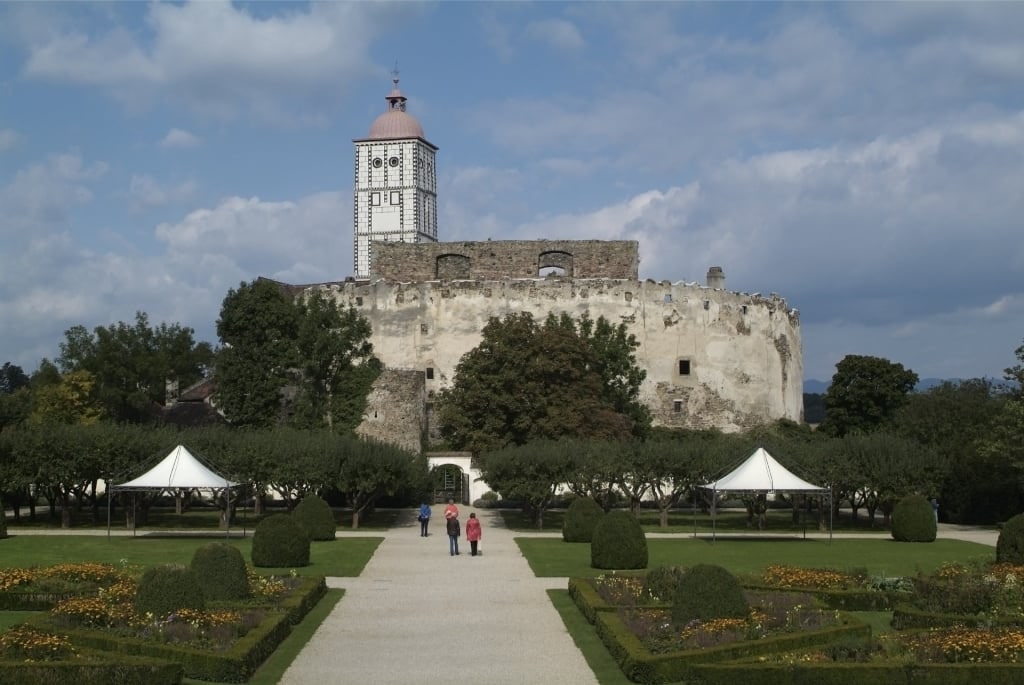
Only 15 minutes from Melk, Schallaburg is a magnificent Renaissance palace with lovely formal gardens. Its beautifully restored interiors are full of period furnishings and interesting objects.
Highlights are some exquisite terracotta decorations and an arcaded courtyard. Its café specializes in dishes using produce from the garden.
However, Schallaburg’s ongoing major attraction is its role as a museum with one comprehensive exhibition that changes every year. Focusing on cultural topics, such as the Renaissance or the Vikings, it’s always superbly curated.
Dürnstein
Has this guide to the best places to visit in Austria tempted you to see them for yourself? Browse Celebrity’s river cruises and book your dream vacation.