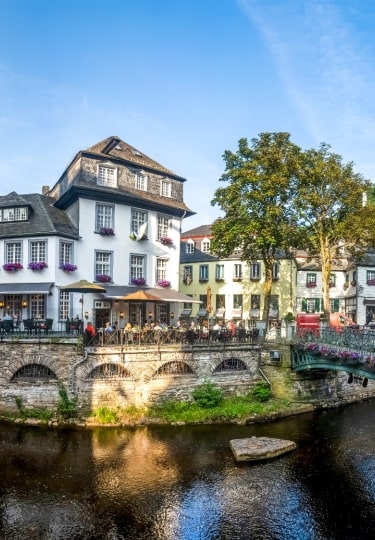
The best places to visit in Germany run the gamut from cute-as-a-button colorful villages and cities steeped in tradition to river towns fringed by vineyards and densely forested mountains.
From the distinct personality of culture-packed Bavaria to Cologne’s towering cathedral, and all the glorious waterways and pristine parks in between, Germany is where culture, cuisine, castles, and classic and contemporary sights combine to create an oversized “wow”. Whether storybook settlements enchant you or you’re drawn to pretty wine regions, these unforgettable places in Germany will leave you spellbound.
Regensburg
Regensburg
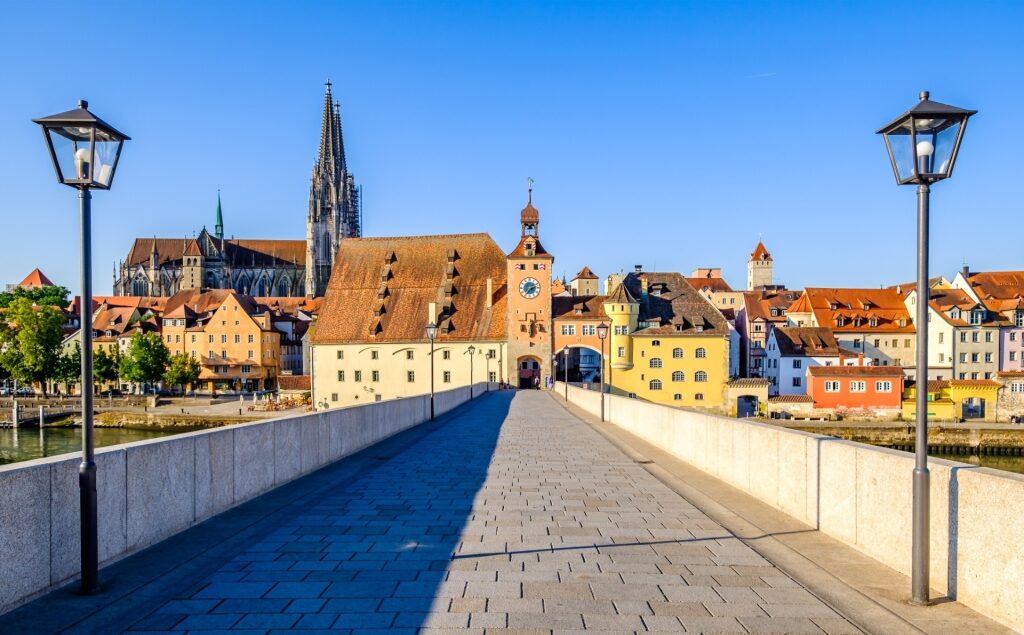
Straddling the northernmost point of the Danube River and linked by the oldest preserved stone bridge in Germany, Regensburg is majestic.
Within its old town, a UNESCO World Heritage Site and medieval trading hub, you’ll encounter countless Romanesque and Gothic churches and pastel-hued patrician houses shading slender cobblestone streets that paint a typically old-world German postcard.
St. Peter’s Cathedral, Regensburg
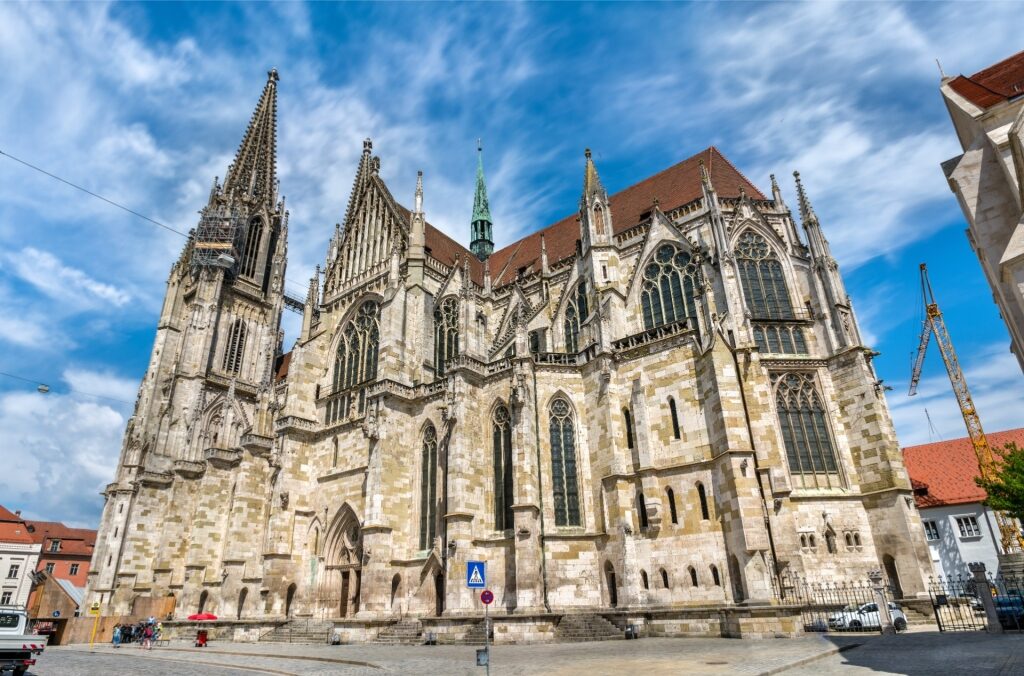
Soaring above it all are the twin spires of St. Peter’s Cathedral, a Gothic masterpiece and one of Germany’s most impressive cathedrals. After appreciating the 344-foot towers—only completed in 1869 after a pause in work for over three centuries—step inside to admire the ribbed vaults, 14th-century stained glass, and the adjacent Cathedral Treasure Museum.
Hungry? There’s one restaurant in Regensburg you shouldn’t skip: the Wurstkuchl. This historic sausage kitchen has been in business since the Middle Ages. It’s considered one of the best places to visit in Germany for traditional sausage and sauerkraut —especially when sampled overlooking the 12th-century stone bridge.
Walhalla Memorial
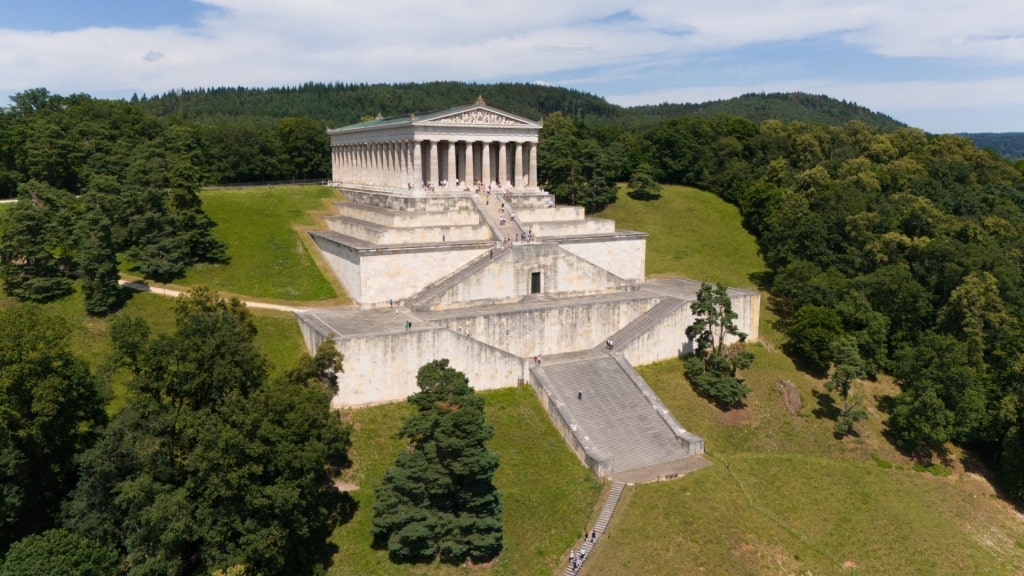
If you’ve time for a short trip out of the city, venture to the Walhalla Memorial. This monumental, Neoclassical building is a temple to distinguished names in the German-speaking world. The collection of notable busts is memorable, but the pink-marble interior shines brightest.
Rothenburg ob der Tauber
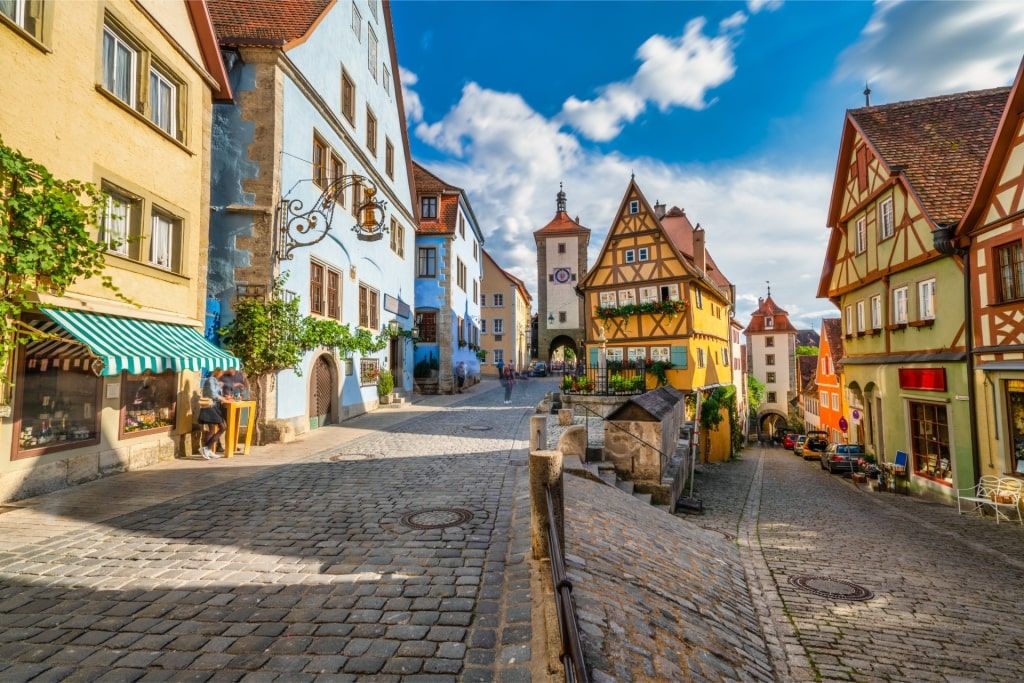
Rothenburg ob der Tauber
Less than two hours from Frankfurt, Rothenburg ob der Tauber is the ultimate pop-up storybook town. Half-timbered medieval houses, walkable defensive walls, and postcard-perfect corners at every turn provide a swoon-worthy backdrop that will take you right back to the Middle Ages.
For a rooftop-level introduction, begin by strolling the 2.5 miles of wrap-around walls. You’ll cross many of the city’s 42 towers along the way, with some—including the Röderturm and St. Mark’s Tower—accessible for loftier vistas.
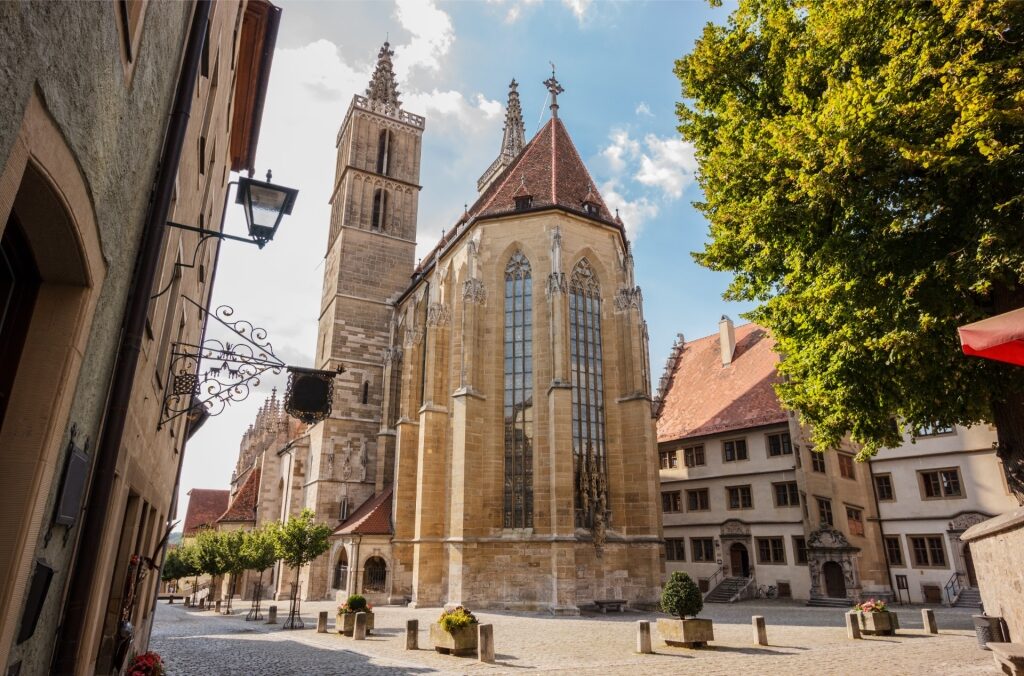
St. James’s Church, Rothenburg ob der Tauber
Back at ground level, prepare yourself for another clutch of photogenic sites. Rothenburg’s poster child, Das Plönlein, is a camera-primed corner consisting of a mustard-hued half-timbered home, pair of towers, and a curving cobbled street. St. James’s Church is astounding for its gilded, apostle-depicting 15th-century Herlin Altar. And the Renaissance Market Square buzzes as it has for centuries. Medieval magic? Absolutely.
Weltenburg Abbey, Kelheim
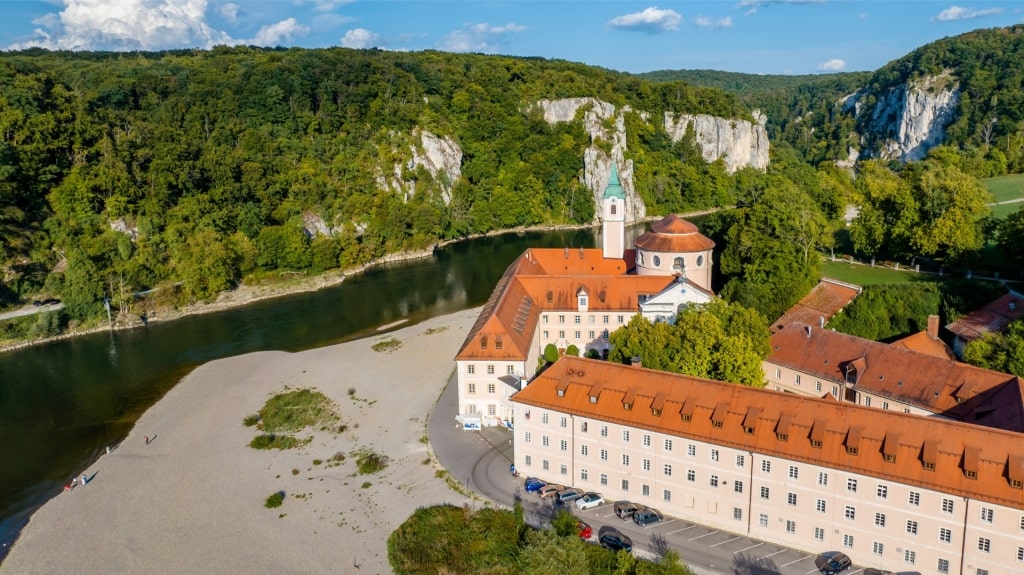
Weltenburg Abbey, Kelheim
Weltenburg Abbey, a short boat ride from Kelheim, is silver-screen worthy. Perched at the edge of a seemingly purpose-designed bend on the Danube, this Benedictine abbey was reportedly founded in the seventh century. However, the colossal building visible today dates to the 18th century.
Thankfully, the stories of Bavaria’s oldest monastery have survived, as has its brewing style. The monastery’s millennium-old dark and hearty beers are still poured in the on-site beer garden.
But before a tasting, spend some time touring the exhibition and church. One of the most remarkable spaces is the hand-hewn Weltenburg Rock Cellar. Here, exhibitions spanning Neolithic amphorae through to the more modern chronology of the current monk residences recount Weltenburg’s impressive history.
Heidelberg
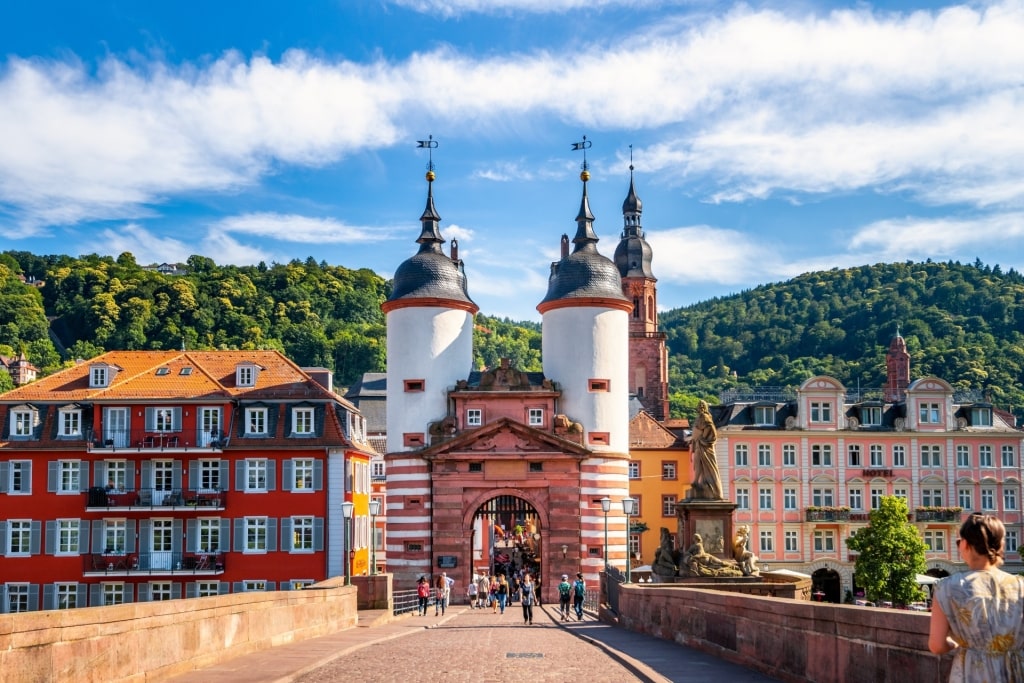
Heidelberg
Just a 30-minute drive from Speyer, Heidelberg is a textbook example of how German cities are shaped by the old and new. Home to Germany’s oldest university, founded in 1386, it remains a prominent education hub today, with students making up an estimated 20 percent of Heidelberg’s population.
This youthful buzz in one of the country’s most romantic and storied settings makes Heidelberg one of the most alluring places in Germany. Take a tour of the University Museum, focused on its Palatine founding, to have a behind-the-scenes peek at this historical education center.
However, for all its university credentials, top billing goes to the well-preserved ruins of Heidelberg Castle. Surveying the old town and the Neckar River from Königstuhl Hill, this palatial Renaissance sandstone complex was where the Palatine Counts ruled their lands.
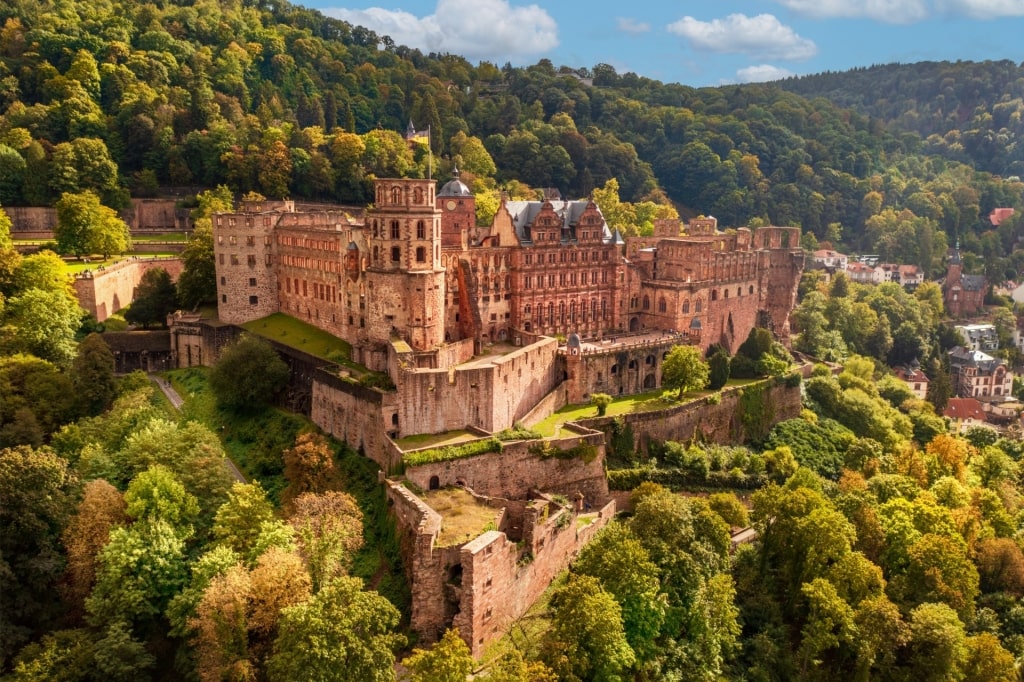
Heidelberg Castle
While heavily damaged in the 17th century under repeated French attacks, what stands today is a true testament to Romanticism. Must-visits include the ornate facade of Ottheinrich’s Wing, embellished with sculptures of emperors and rulers—the interior halls are accessible for exhibitions—and the expansive Hortus Palatinus gardens.
For another pretty vista, cross the post-WWII rebuilt Old Bridge to stroll the Philosophenweg, or Philosophers’ Walk. Hemmed by imported flora and providing a front-row seat to all of Heidelberg’s glory thanks to perfectly placed benches, the panorama is unrivaled.
Rüdesheim am Rhein and the Rheingau Wine Region
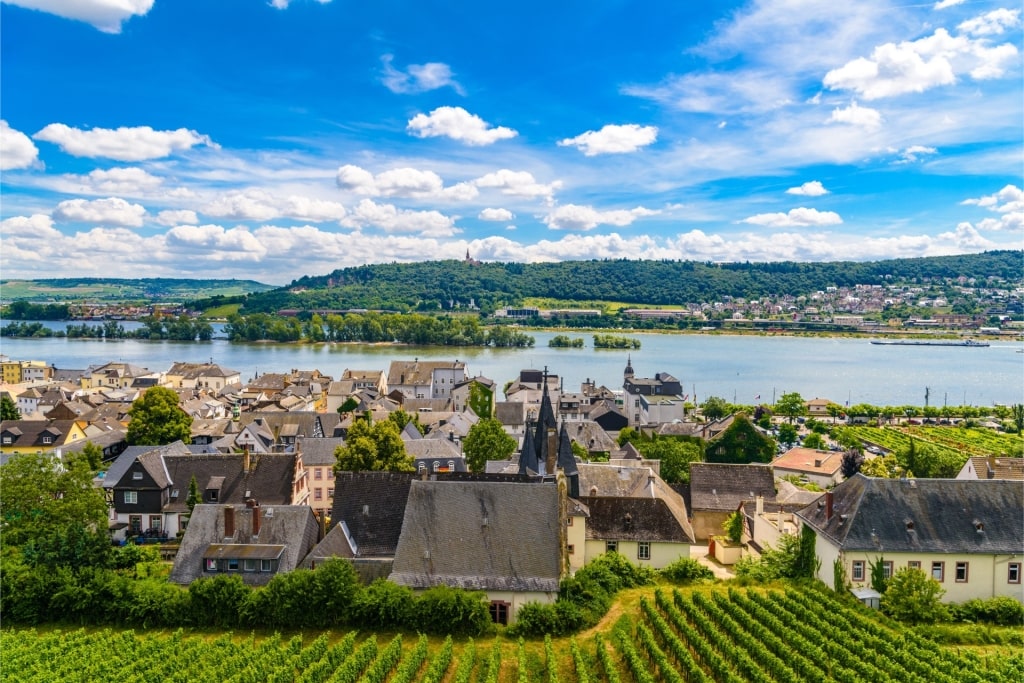
Rüdesheim am Rhein
Rüdesheim is subjectively the Rhine’s quaintest town. Take the brief walk along Drosselgasse, a skinny, half-timbered street lined with atmospheric taverns and souvenir stores, and by the end of it—only 472 feet later—you’ll struggle not to agree.
This pocket-sized town is bursting at the seams with old-world buildings clad with foliage, but the greenery doesn’t end there: it’s also one of the best places to visit in Germany for a wine tasting.
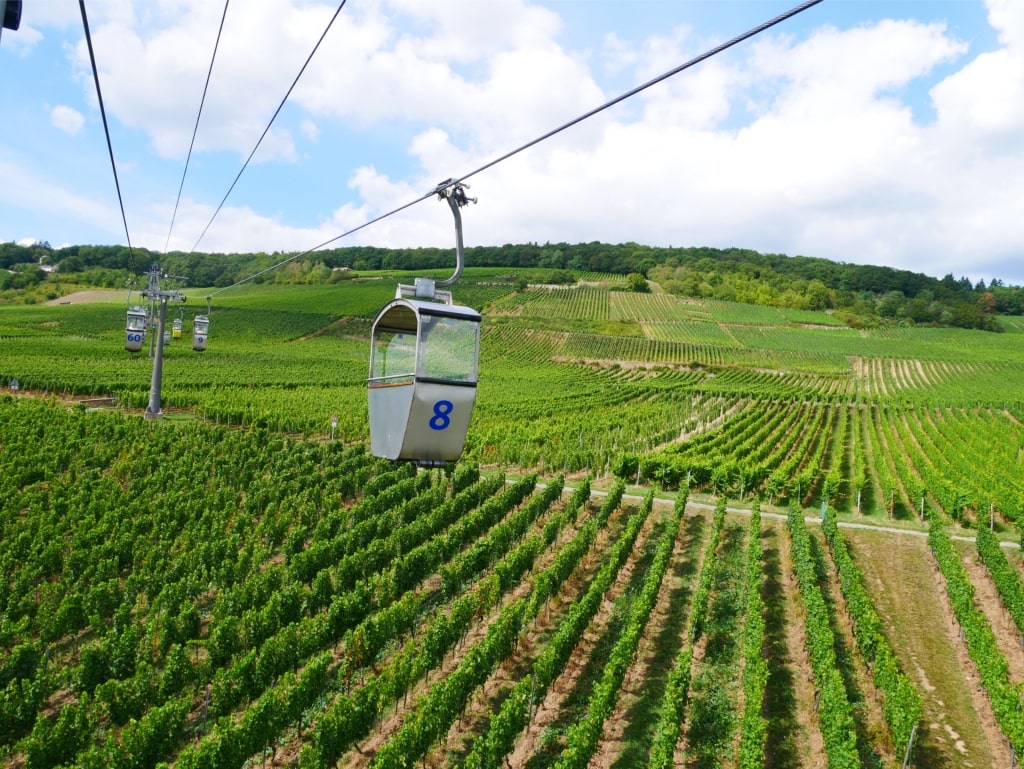
Rüdesheim am Rhein
Extending up, around, and across from Rüdesheim are rows of sloping, scenic Riesling grape vines that form part of the Rheingau wine region, one of Germany’s most distinguished.
For a sober appreciation, ride the Seilbahn Rüdesheim, an open-air chairlift that affords an exquisite bird’s-eye view of the vines. Or head straight to one of the Weinguts or wineries, such as family-run Friesenhahn, for a tasting.
Nuremberg’s Imperial Castle
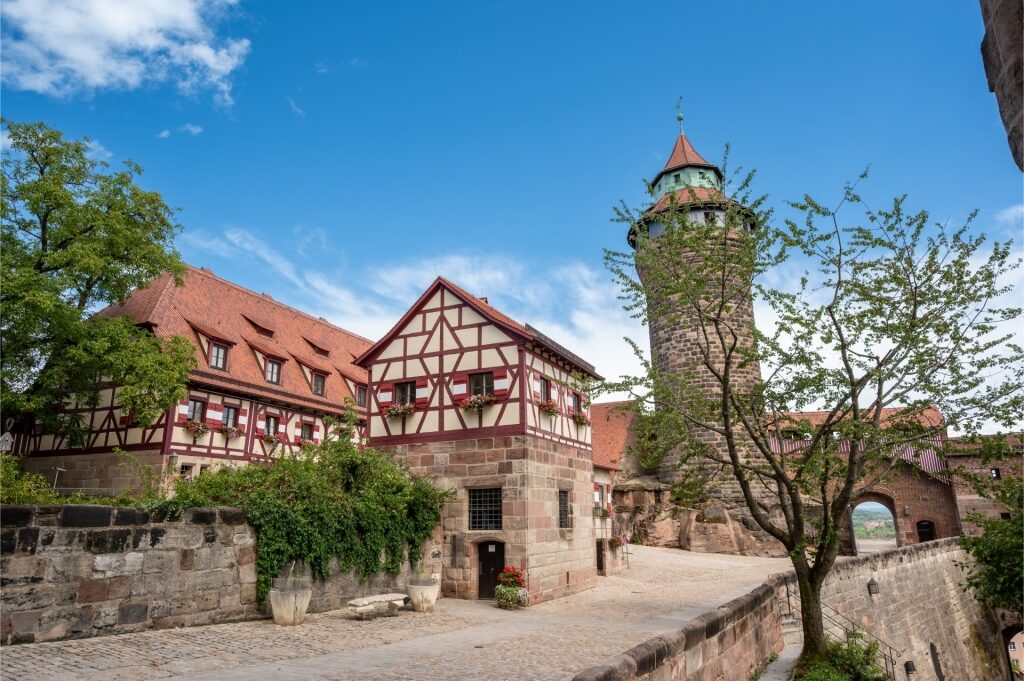
Imperial Castle, Nuremberg
Bavaria’s second-largest city might be most associated with its somber WWII history. But stroll medieval Nuremberg’s pretty canals and half-timbered homes while snacking on the city’s acclaimed Lebkuchen gingerbread and you’ll discover a whole other side to this Franconian city.
Leaving the most lasting impression is the Imperial Castle of Nuremberg. This imposing cluster of fortified structures has played an oversized role in history, having housed the Holy Roman Empire and Bavarian kings, until its story ended in tragedy and ruin after WWII.
Thankfully, the architect Rudolf Esterer oversaw a painstaking restoration project, and some 30 years later, it stood proud once more, now dedicated to history-telling rather than history-shaping.
Bavarian Forest National Park
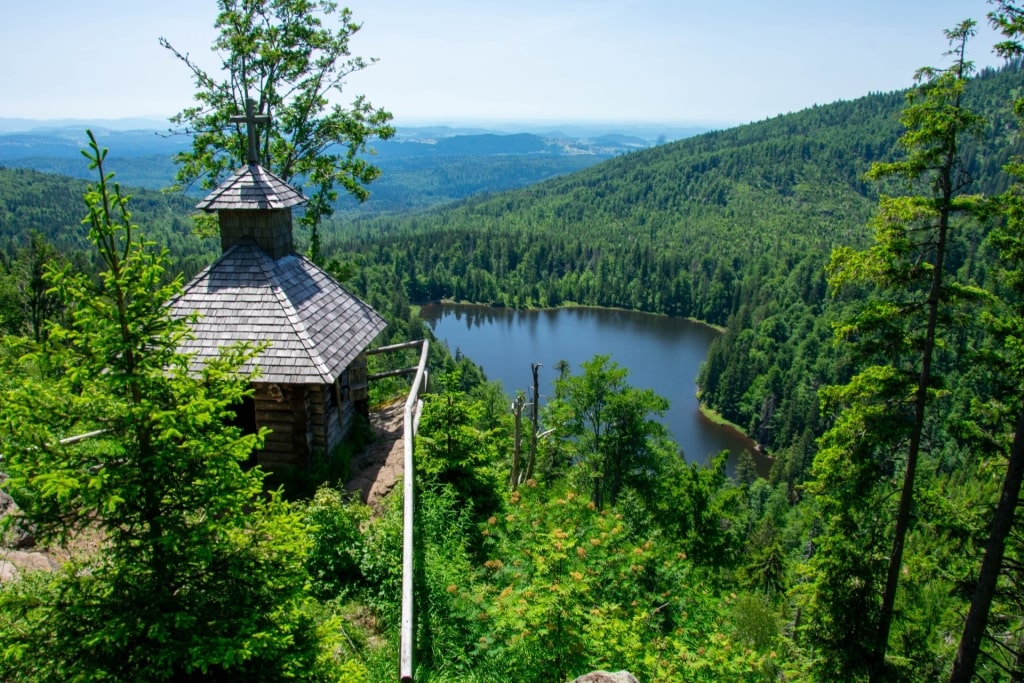
Bavarian Forest National Park
Pushing up against Czechia’s border, the breathtaking Bavarian Forest National Park is Germany’s oldest, earning national park status in 1970. Easily accessed from nearby towns like Deggendorf, this pristine wilderness is a hiker’s paradise. Yet it’s not completely undeveloped.
One of the park’s finest and most unusual walking trails is the human-built Baumwipfelpfad or Treetop Walk. This elevated wooden boardwalk weaves between futuristic yet nature-respecting viewing platforms peeking above the canopy, providing a stellar first-time introduction to the national park.
Munich
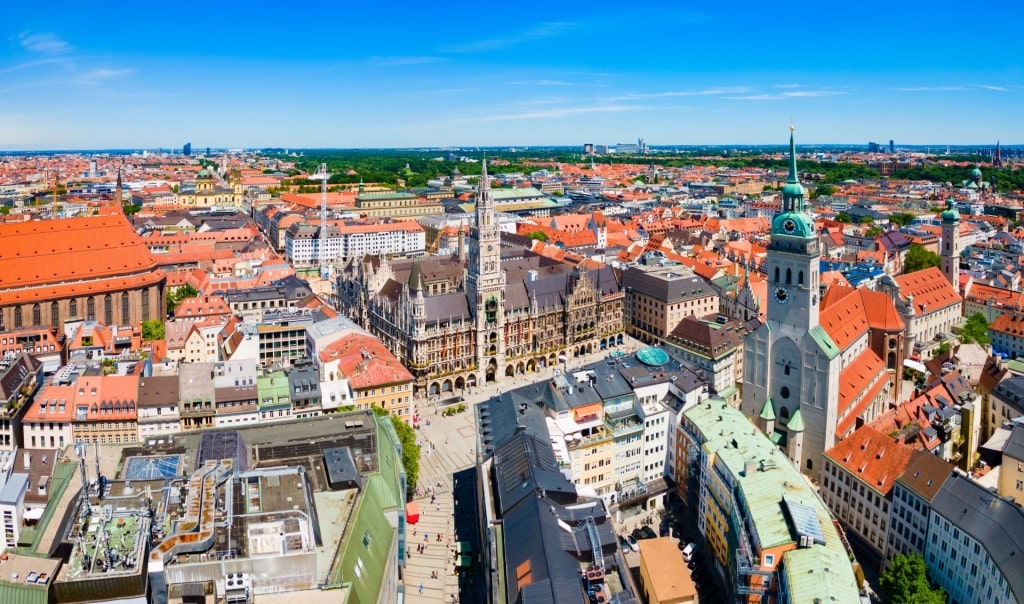
Marienplatz, Munich
Synonymous with Oktoberfest, beer halls, and Bavarian culture, Munich is one of the best places to visit in Germany for an all-round yet laid-back city experience.
This land is where mornings often start with a weisswurst, typical Bavarian white sausages. Lunch is best enjoyed with a stein of beer, and traditional dress, including Lederhosen and Dirndl, is plentiful on festive occasions.
Even if you aren’t traveling during the city’s famous beer festival, you can soak up some of the atmosphere year-round in the Altstadt or Old Town, where landmarks, including the monumental Marienplatz square and Town Hall Glockenspiel, provide an age-old backdrop.
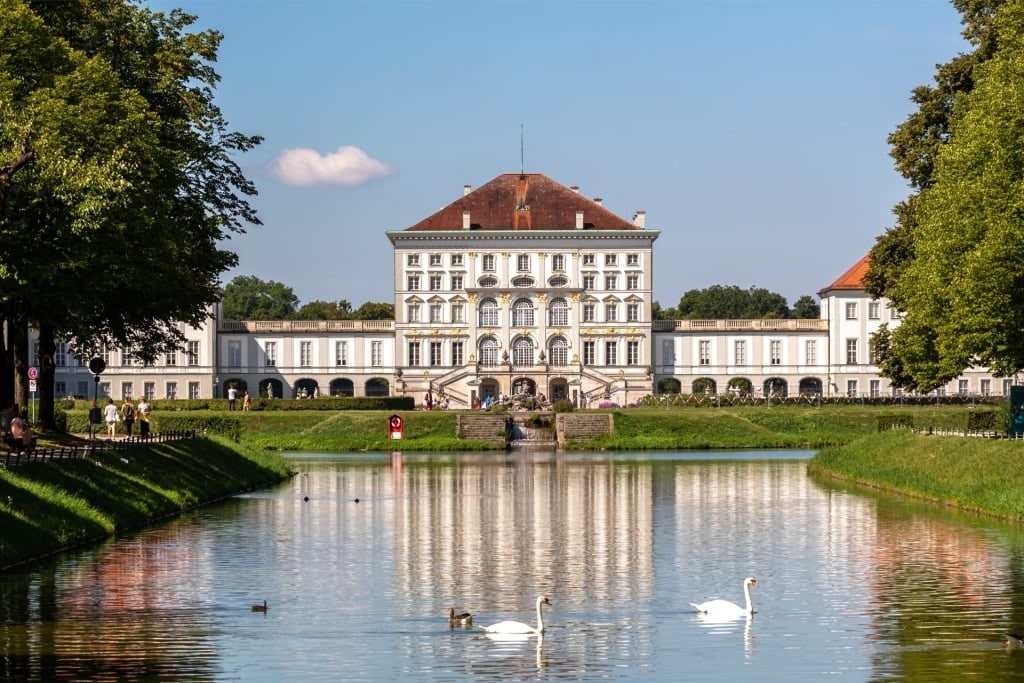
Munich Residence
To glimpse the grander side of Bavarian heritage, visit one of Munich’s opulent former royal residences. Central Residenz München is Germany’s largest city palace, while majestic Nymphenburg Palace is a sprawling summer estate with museums, whimsical lodges, and perfectly manicured lawns.
Neuschwanstein and Hohenschwangau Castles
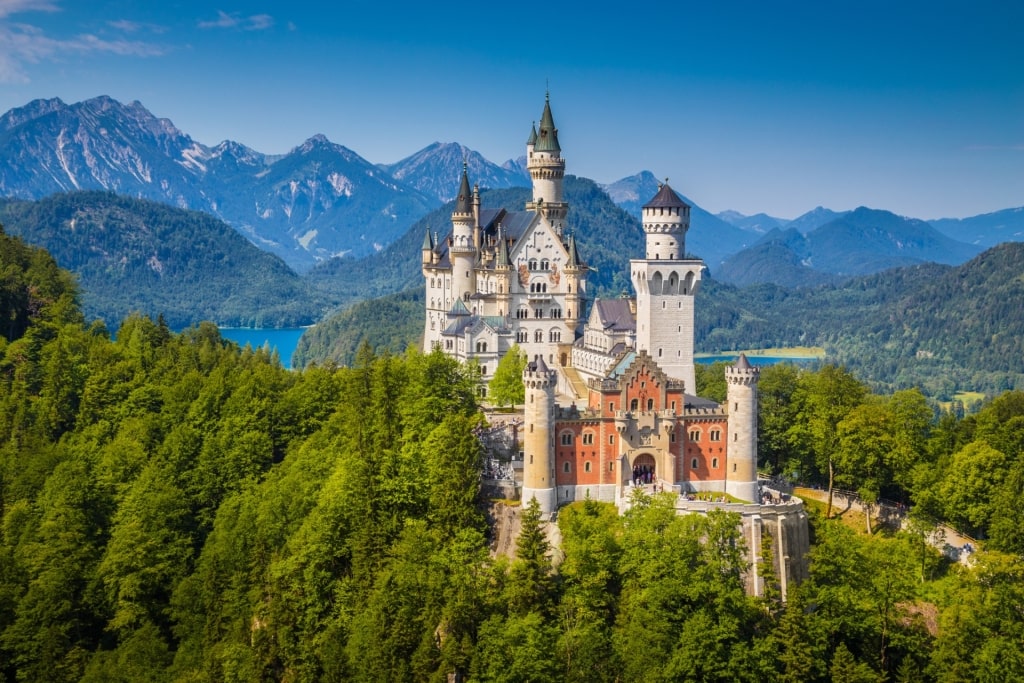
Neuschwanstein Castle
A stone’s throw from the Austrian border and backdropped by outlandish Alpine scenes, fairytale Neuschwanstein Castle is one of the most striking and famous places in Germany.
Crowning a craggy, forested hill, the never-quite-finished 19th-century palace commands awe from every angle. Conceived as a private dwelling for Bavarian king Ludwig II, although he—or no one else, for that matter—ever resided here, the castle-esque complex opened to the public following his death.
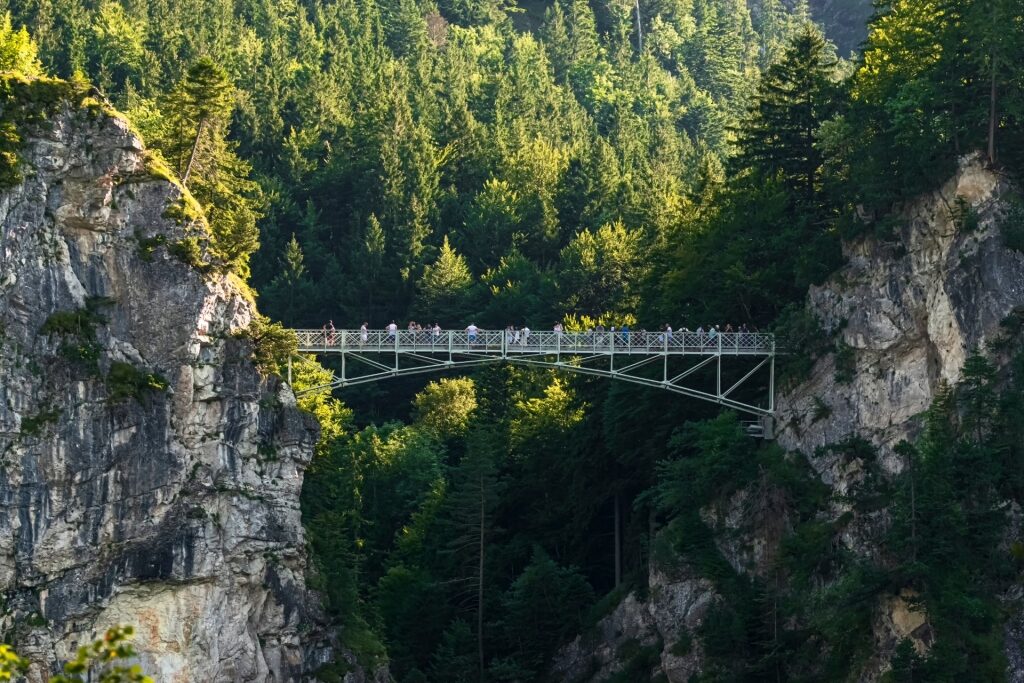
Marienbrücke Bridge
Before venturing inside, make for the gorge-crossing Marienbrücke Bridge to appreciate the palace in all its tower-topped glory. Or ride the Tegelberg Cable Car for an even loftier view.
Guided tours will allow you a peek at the finished rooms inside; only 15 chambers were completed as planned. The lavishly decorated King’s Bedroom, decked in dark wood and intricate murals, and the two-story, Byzantine-inspired Throne Hall steal the show.
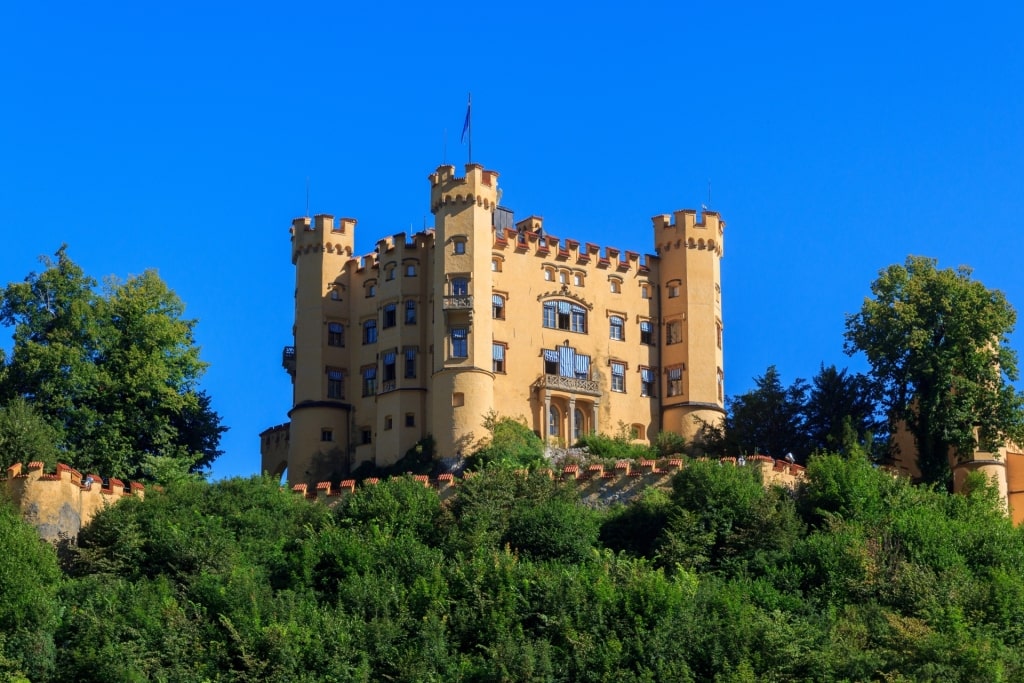
Hohenschwangau Castle
A short walk from Neuschwanstein, Hohenschwangau Castle, the namesake German castle of Hohenschwangau village, makes for an excellent secondary stop. Pre-book a 45-minute tour to see Ludwig II’s less whimsical but equally dashing childhood residence.
Baden-Baden
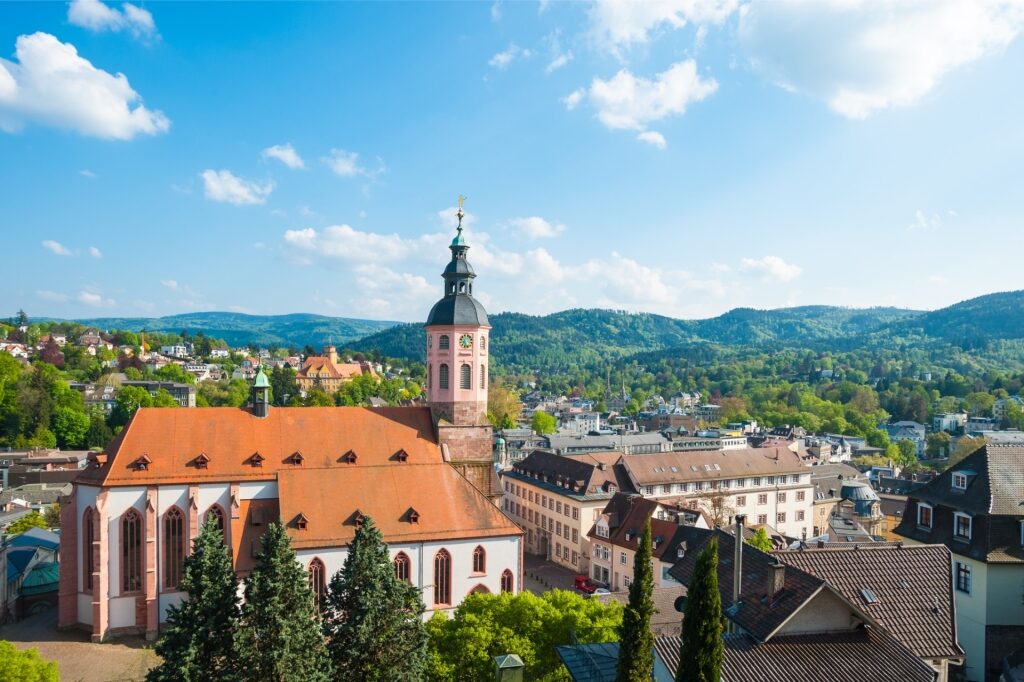
Baden-Baden
Finding fame as a fashionable 18th-century spa town, Baden-Baden is one of the best places to visit in Germany for a thermal water pampering session.
It’s easy to visit for a rejuvenating day retreat; Baden-Baden is just an hour south of Speyer, on the northern edge of the Black Forest. Many of the town’s leading wellness resorts offer full or half-day spa packages.
The most remarkable is the Friedrichsbad Spa, which opened in 1877. A true wellness institution, the centerpiece is the Roman-Irish baths, a decadent, domed delight that will leave you feeling like the aristocracy.
Würzburg Residence
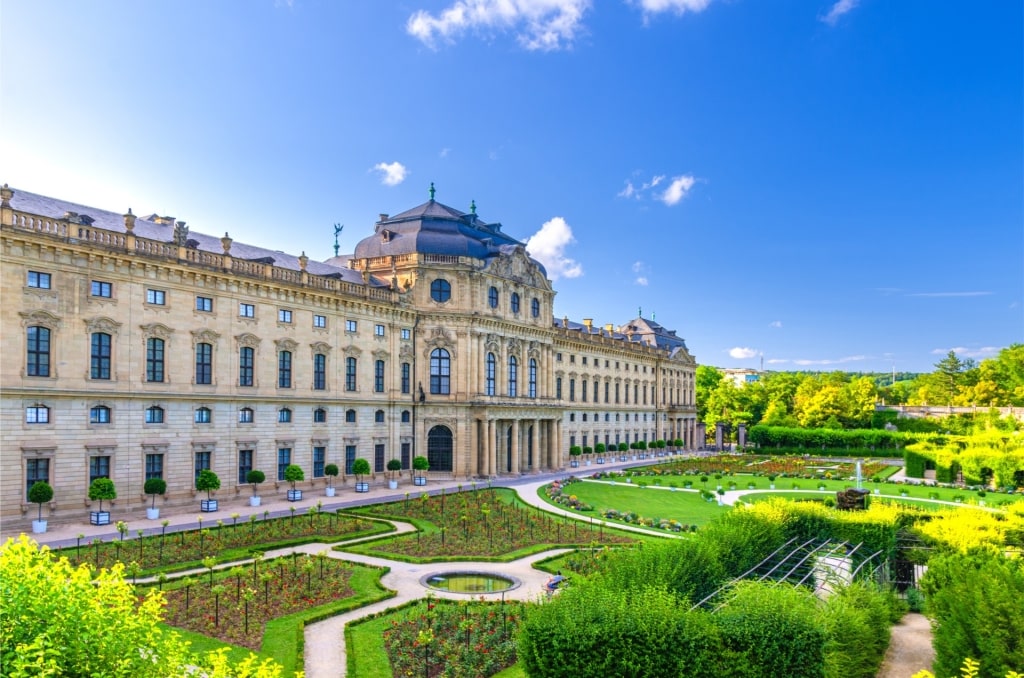
Würzburg Residence
Reachable by rapid rail in under 90 minutes from Frankfurt, Würzburg is a former prince-bishops’ palace and one of the most outstanding highlights of the so-called Romantic Road, a route that links many of Germany’s southern stars.
Designated a UNESCO World Heritage Site in 1981, the extensive complex of some 400 rooms, 40 of which are open to the public, and surrounding symmetrical Court Gardens are a heavenly Baroque sight reminiscent of the finest French chateaux.
Inside the German landmark, expert painters from Germany, France, and Italy—including acclaimed fresco artist Giovanni Battista Tiepolo—left their masterful mark on every inch. From the divine, largest ceiling fresco in the world looking down on the monumental staircase to the gold-embellished, all-mirror cabinet room, the sumptuous staterooms are a lesson in art excellence.
Koblenz and the Upper Middle Rhine Valley
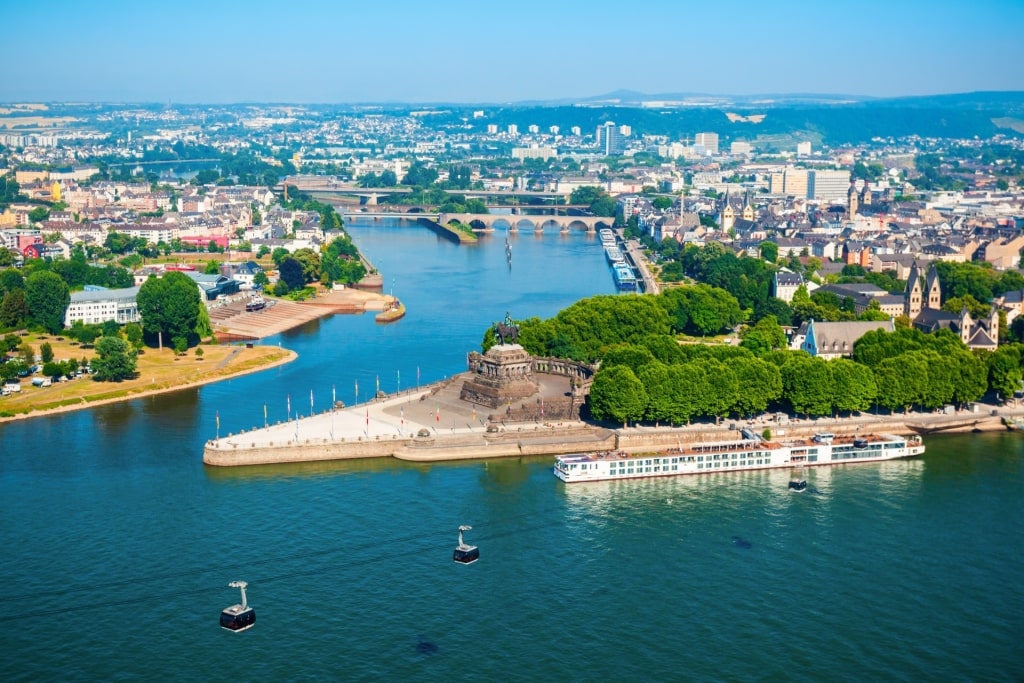
Koblenz
Gateway to the much-lauded Upper Middle Rhine Valley, Koblenz is an excellent jumping-off point to search for sublime castles and the steeply tiered wine terraces that continue until Rüdesheim at the valley’s southern end.
Yet the city itself shouldn’t be overlooked. Koblenz is one of the oldest cities in Germany and has served as both a Roman military outpost and a key negotiation point for the Frankish Empire.
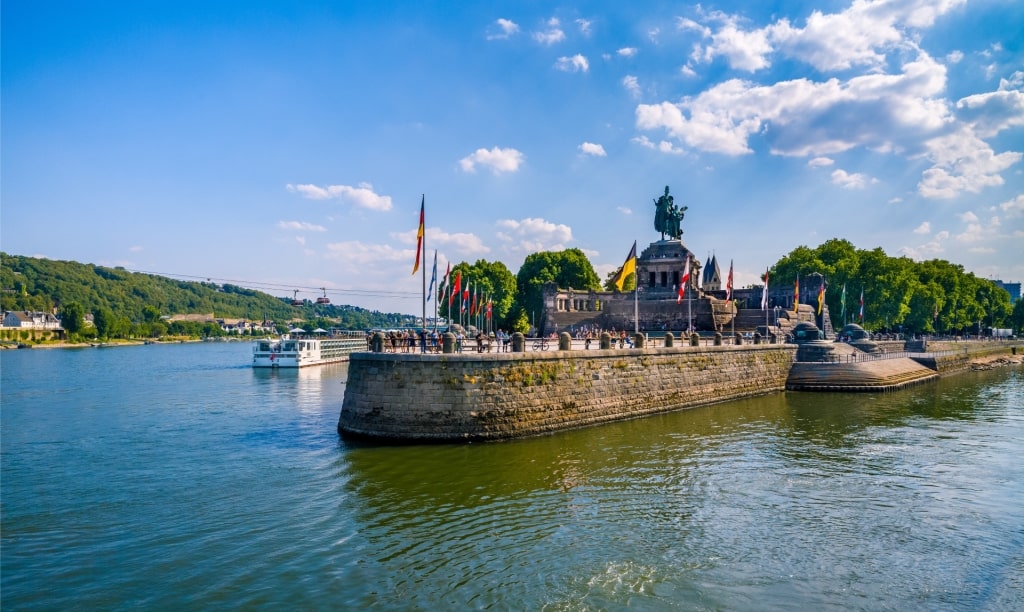
Deutsches Eck, Koblenz
Major landmarks that recount Koblenz’s story are the Deutsches Eck, where a mammoth memorial to Kaiser Wilhelm I, responsible for unifying Germany, surveys the confluence of the Moselle and Rhine, and the 12th-century Basilica of St. Castor.
Don’t leave without riding the contemporary cable car over the Rhine. Not only will you gain an aerial appreciation, but Ehrenbreitstein Fortress—deemed the second largest fortress in Europe—awaits across the other side.
Cologne Cathedral
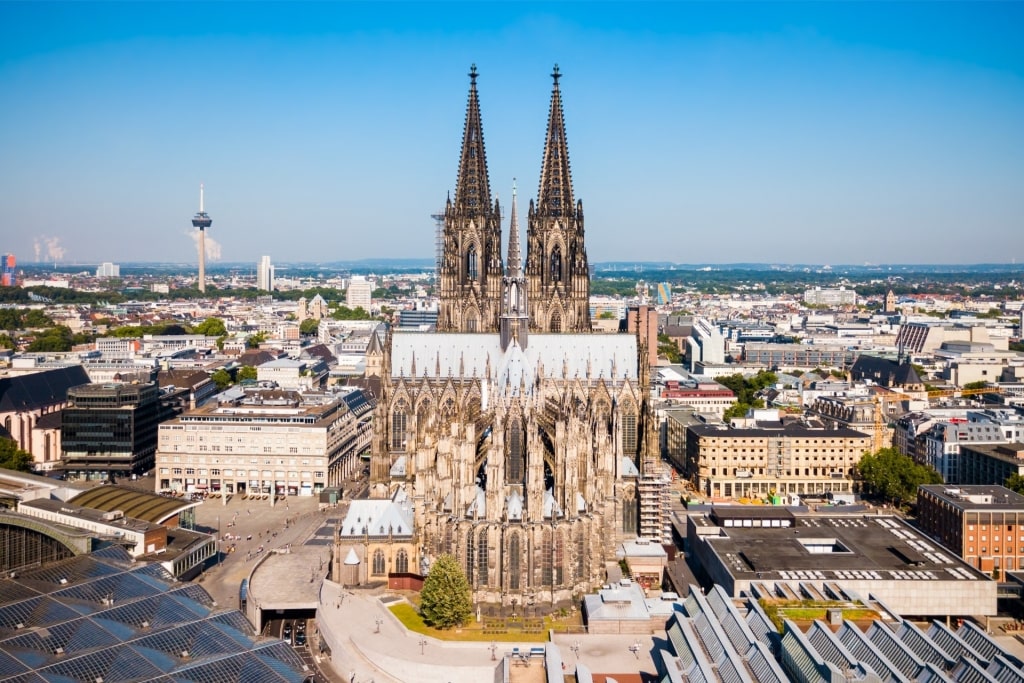
Cologne Cathedral
For many, Cologne means one thing: its cathedral. The Kölner Dom is one of the world’s most famous edifices, a UNESCO marvel and a revered pilgrimage for millions each year who come to see the Shrine of the Three Kings, said to house the relics of the three wise men.
The cathedral is a true testament to patience. Construction commenced in 1248, but it wasn’t until 1880 that it was declared complete and, at that time, the tallest building in the world, thanks to its 515-foot Gothic twin towers. If you’re feeling sprightly, climb the southern tower’s 533 steps for sweeping city views.
Passau
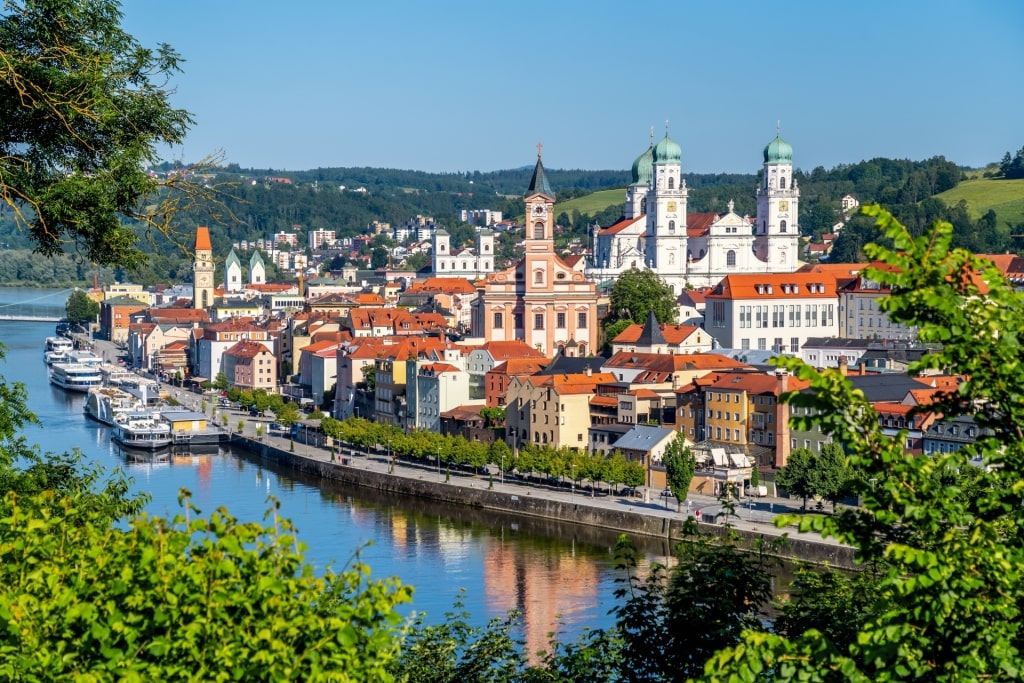
Passau
Known as the Dreiflüssestadt, meaning City of Three Rivers, Passau is one of the most intriguing places to visit in Germany due to the Danube, Inn, and Ilz rivers converging on its doorstep.
To see this phenomenon in all its glory, venture to the Linde Battery’s viewpoint within the grounds of the 13th-century Veste Oberhaus fortifications. From above, the trio of colors—the blue Danube, green Inn, and Murky Ilz—is clear as day, while Austria just beyond adds further photographic appeal.
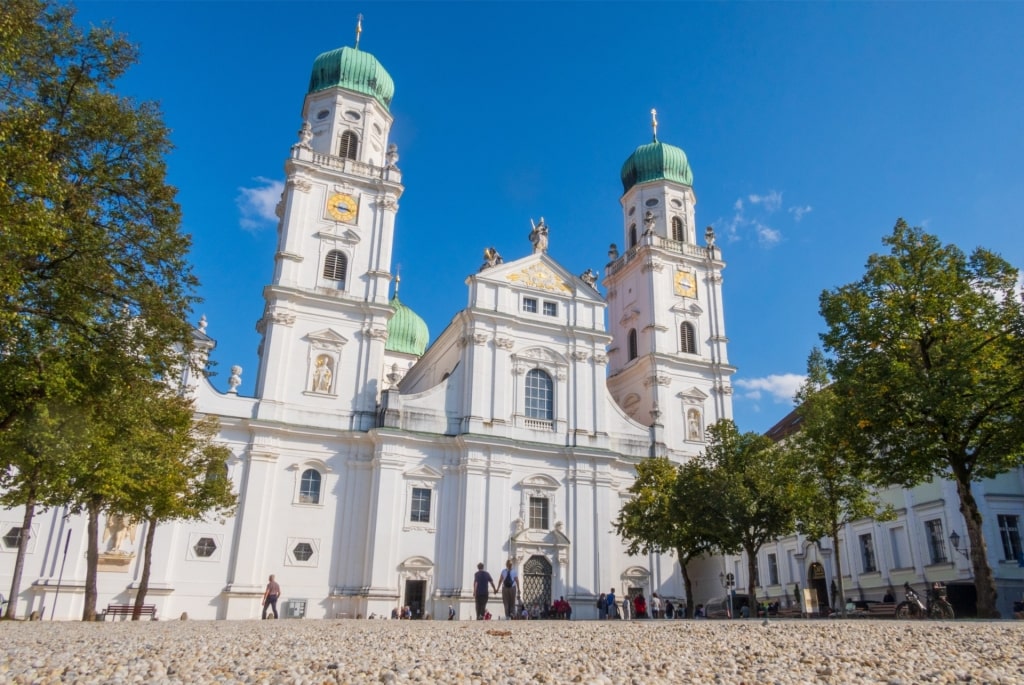
St. Stephen’s Cathedral, Passau
Back down in Passau Old Town, which occupies the peninsula between the Danube and Inn, you’ll find a surprising clutch of architectural styles.
From the Venetian-style Old Town Hall to the striking white Baroque facade of St. Stephen’s Cathedral, home to the world’s largest cathedral organ with a staggering 17,974 pipes, Passau feels like the perfect frontier town.
Fürstenfeld Monastery
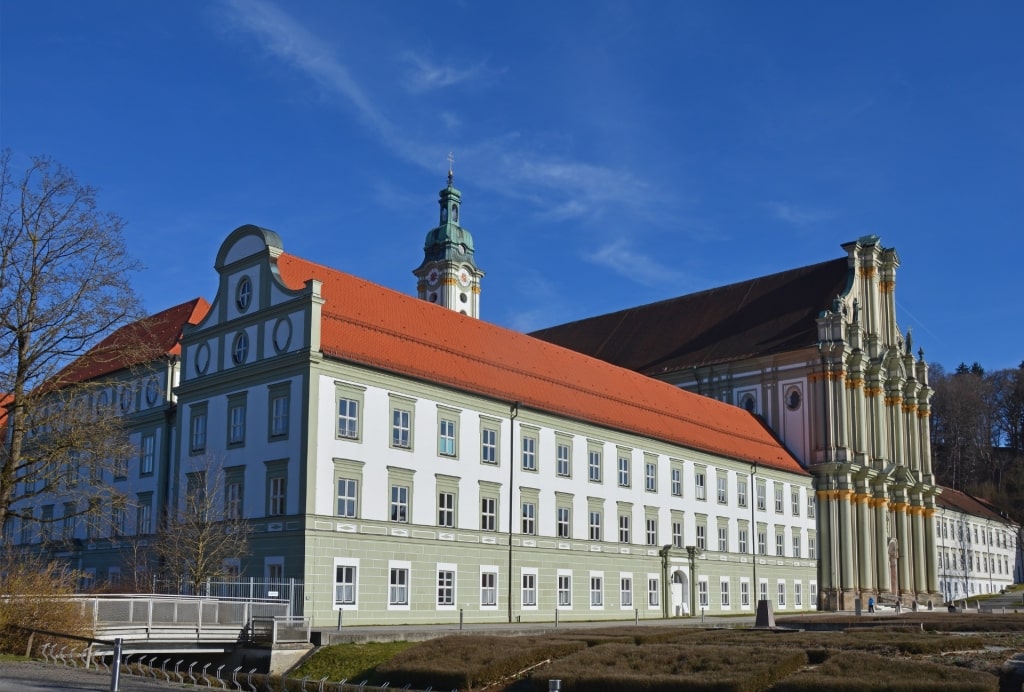
Fürstenfeld Monastery
A short hop from Munich, Fürstenfeld Monastery is a fantastical side trip from Bavaria’s capital city. A bedazzled Baroque masterwork, the sprawling Cistercian Abbey complex is now a cultural institution with classical afternoon concerts often hosted in its manicured gardens.
Yet, for all the verdant splendor of the grounds, the early 18th-century Abbey Church provides the most compelling reason to visit. Designed by the renowned Asam brothers, the church’s highly-ornate frescoes, stucco, and gilded interior will leave your jaw on the floor.
Even if you arrive on one of the days when access is limited to the viewing barrier—it’s less restricted between May and October—the chance to peer inside one of Germany’s finest religious monuments shouldn’t be skipped.
Monschau
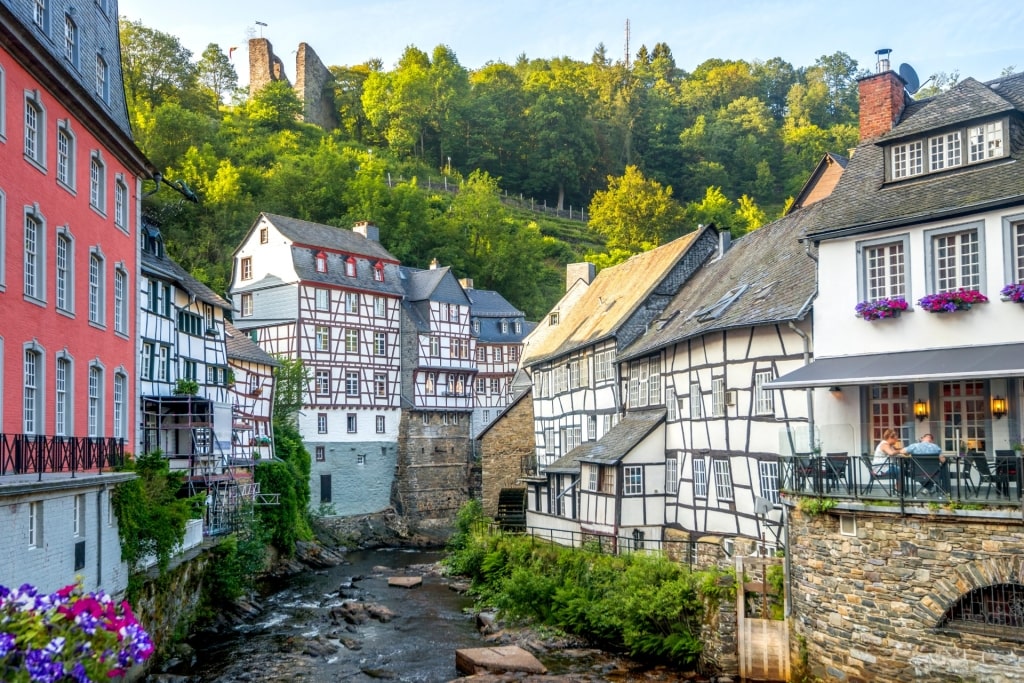
Monschau
Moments from the Belgian border, nature-enveloped Monschau oozes with everything that makes small-town Germany so magical. Timber-framed houses line the River Rur, a formidable, turreted castle looms above, and it’s impossible not to fall in love with Monschau’s tapered cobblestone streets.
Spend an afternoon ambling between the courtyard of 14th-century Monschau Castle, learning about the town’s bourgeois textile industry in the salmon-hued Red House Museum, and sampling the famed local mustards, and you’ll soon forget what century it is.
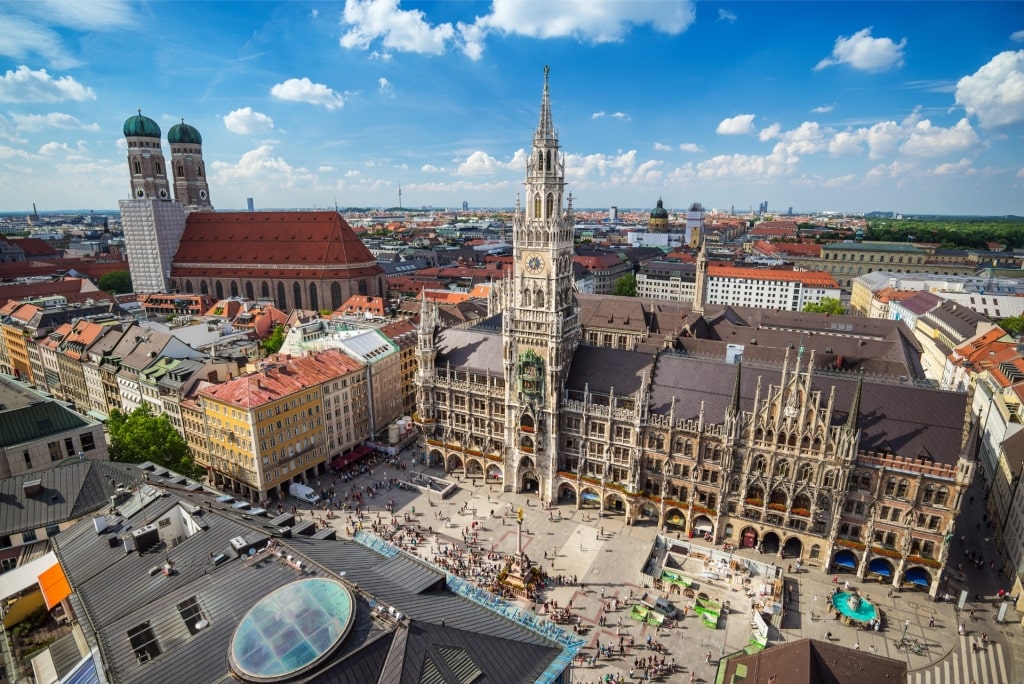
Munich
Browse Celebrity’s river cruises to start planning your perfect vacation along the magnificent Rhine or Danube Rivers.