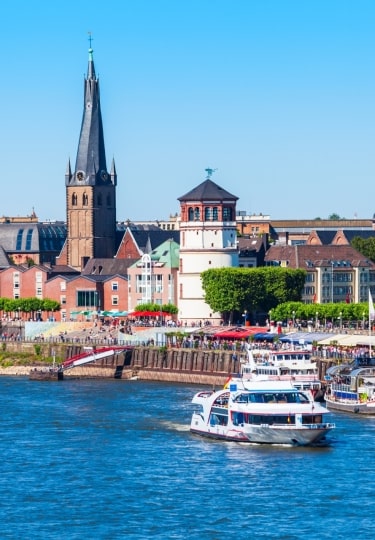
If you’re asking yourself, “Is Düsseldorf worth visiting?” the short answer is “Yes.” From high-end shopping streets and independent designer boutiques to a thriving art scene and impressive modern architecture, there’s plenty to see and do in Düsseldorf.
Düsseldorf’s location on either side of the Rhine allows for outdoor recreation, whether that means taking a stroll along the promenade, stopping for a glass of Altbier, or settling in for a traditional German meal at one of the riverside restaurants.
When it’s time to start planning your trip, here are eight of the top reasons to visit Düsseldorf.
The Walkable Old Town
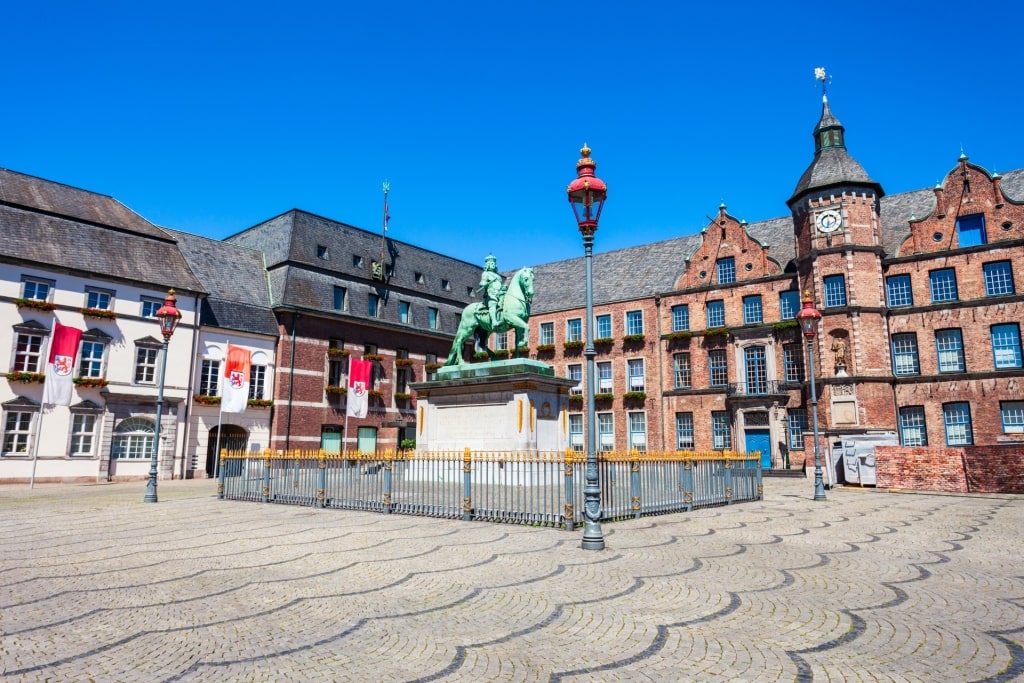
Old Town
First-time visitors to Düsseldorf’s historic Old Town, or Altstadt, will probably notice how compact it is, which can be pretty convenient when you’re only visiting for the day and want to make the most of the time you have.
There are a few historical landmarks worth visiting, such as the Basilica of St. Lambertus. The basilica was built around 1288 A.D., seemingly on top of the remains of an even older church dating back to 1159 A.D. Today, the Basilica of St. Lambertus is both a place of worship for Düsseldorf residents and a historical landmark featuring a blend of Gothic and Romanesque architectural styles.
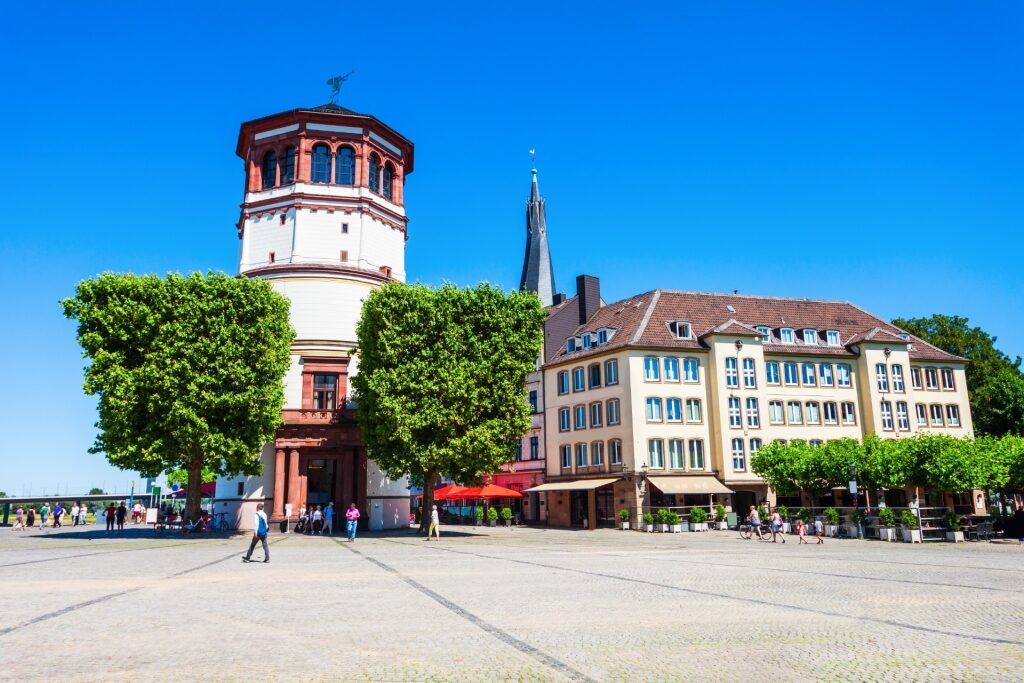
Castle Tower
After visiting the Basilica of St. Lambertus, consider exploring other nearby German landmarks, such as Castle Tower, also known as Schlossturm, and Marktplatz, which is where the Old Town Hall, or Altes Rathaus, is located. As for the buildings in the Old Town, many were reconstructed or rebuilt after World War II. Some were restored in Renaissance style, while others were built from scratch.
A Vibrant Art and Design Scene
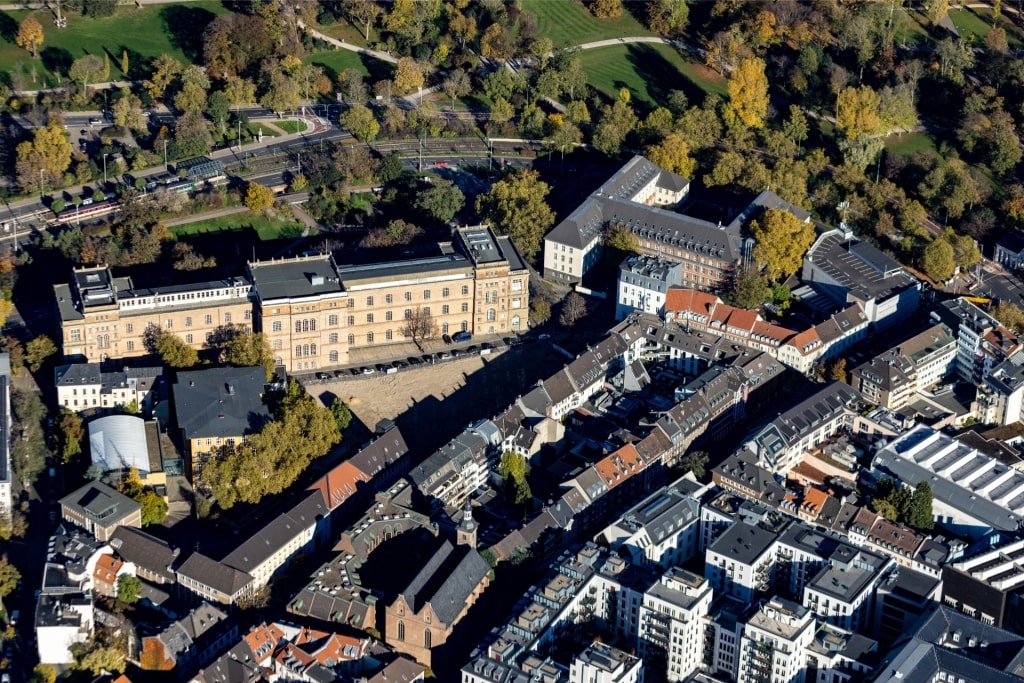
Kunstakademie Düsseldorf
As one of Germany’s most fashion-forward cities, Düsseldorf has a thriving art and design scene that’s worth exploring.
The city’s creative scene really flourished after World War II, when the Kunstakademie Düsseldorf, or “Art Academy,” re-emerged as one of the more progressive art schools in Europe. Joseph Beuys, Gerhard Richter, and Andreas Gursky are just a few artists who studied here and went on to influence the direction of contemporary art.
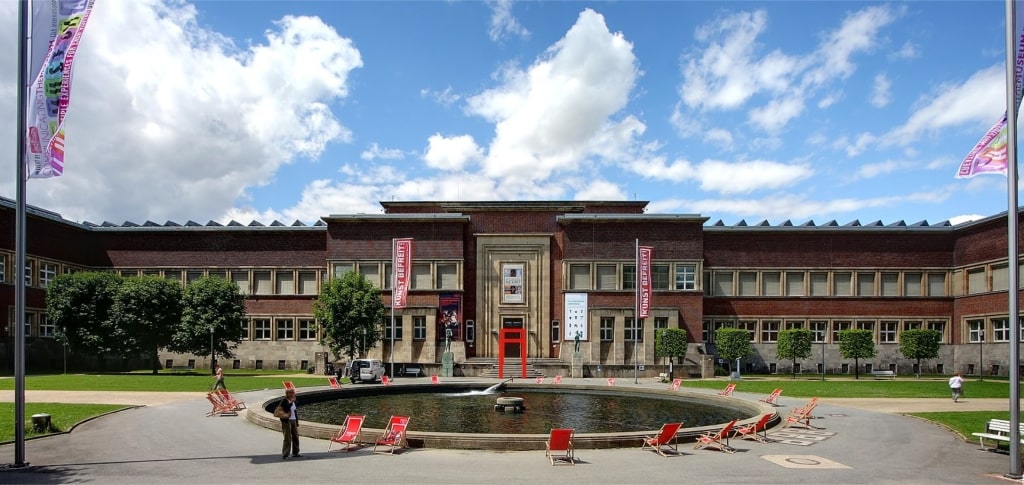
Museum Kunstpalast Photo by Raimond Spekking on Wikimedia Commons, licensed under CC BY-SA 4.0
As an introduction to Düsseldorf’s art scene, plan to visit Museum Kunstpalast, which reopened in 2023 after a major renovation. The museum itself is huge, with more than 53,000 square feet of permanent and rotating exhibits on display. The artwork spans over 10 centuries and houses one of Europe’s largest glass collections, not to mention several works by Rubens. It’s safe to say you’ll want to block off a few hours to get the most from your visit.
Beyond Düsseldorf’s major museums and exhibitions, consider visiting districts like Flingern and Unterbilk, which are home to many independent galleries, designer studios, and concept stores. The vibe in these districts is more relaxed and creative, offering a different side to Düsseldorf’s more polished Old Town.
Striking Modern Architecture
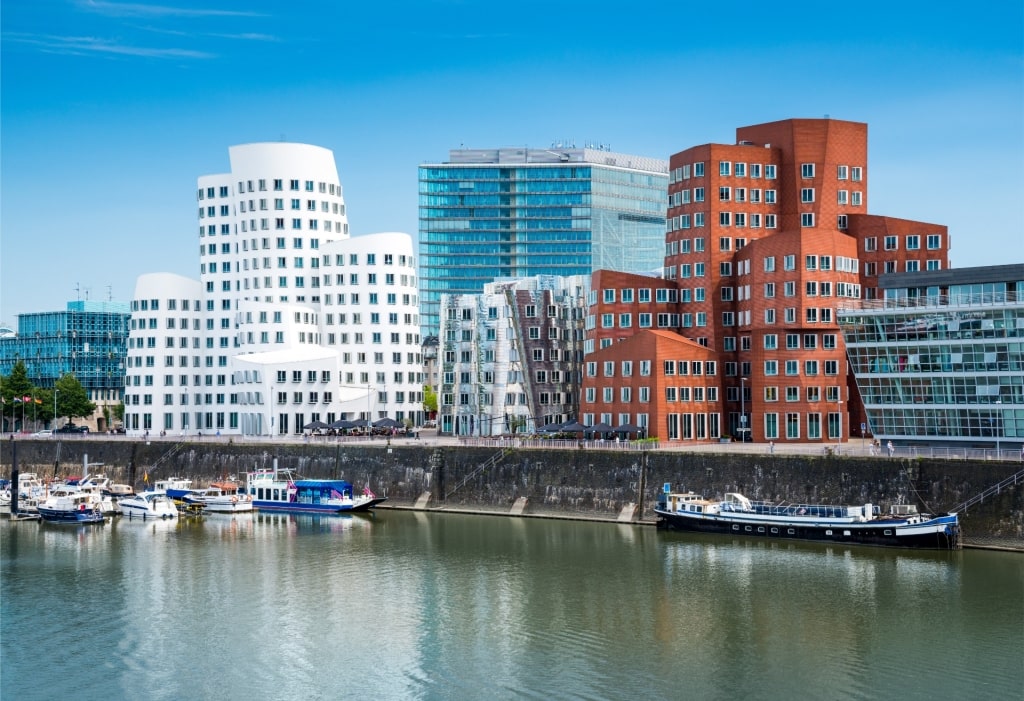
Neuer Zollhof
The first time I had the chance to visit Düsseldorf, I remember being surprised by how modern many of the buildings appeared. I later learned that this is partly due to the bombings during World War II.
As with other German cities, buildings in Düsseldorf had to be reconstructed or entirely rebuilt, which allowed modern materials and styles to reshape the city’s skyline. Today, Düsseldorf features many sleek buildings made of steel and glass, giving it a futuristic look when compared to other European cities.
The Frank Gehry buildings are among the most spectacular architectural highlights in Düsseldorf and perhaps the most recognizable. Officially known as the Neuer Zollhof, this trio of buildings was completed in 1998. Each has a unique facade. One is covered in white plaster, another in shimmering stainless steel, and the third in red brick.
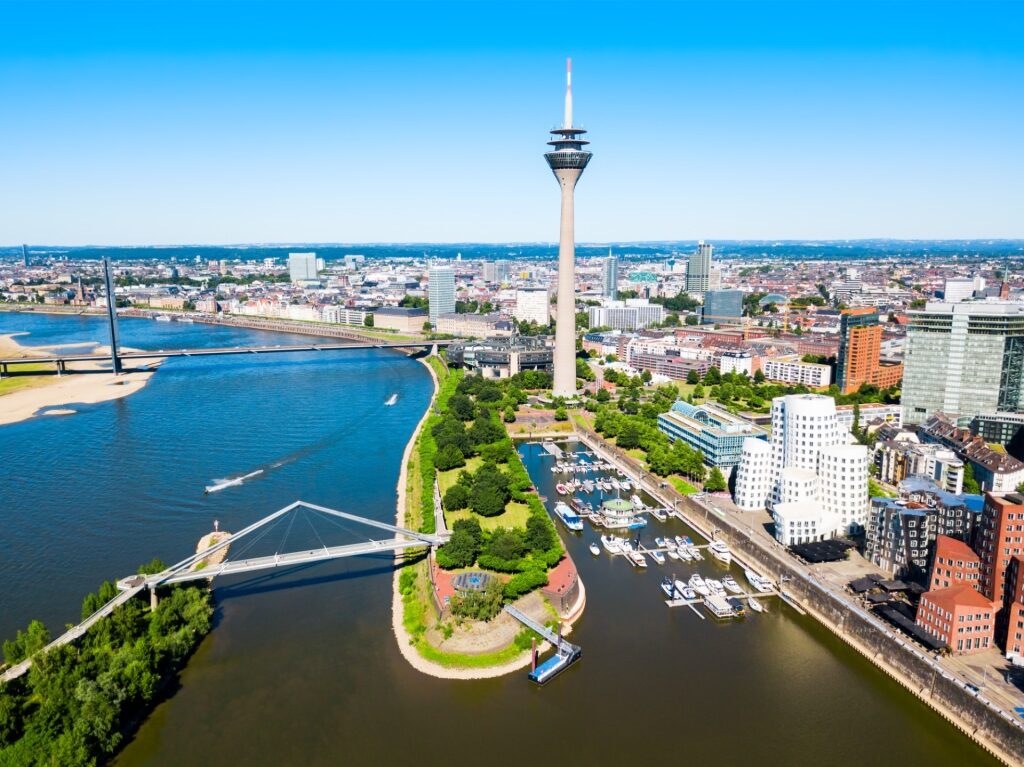
Rhine Tower
The Rhine Tower is another architectural feat and a prominent landmark thanks to its size and height. Architect Harald Deilmann designed the tower, and visitors have the option to head to the observation deck for a panoramic view of the city.
The Lively Japanese District
Before visiting Düsseldorf for the first time, I had no idea that it was home to one of the largest Japanese communities in Europe. In fact, there are more than 15,000 Japanese residents in and around Düsseldorf, especially in Little Tokyo.
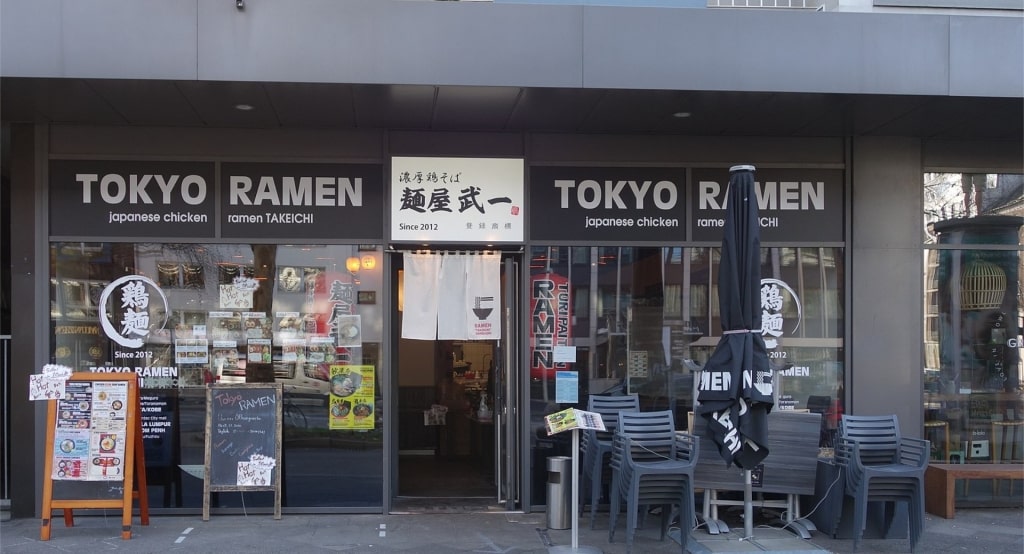
Tokyo Ramen Takeichi Photo by Kürschner on Wikimedia Commons, licensed under CC0 1.0
I actually stumbled upon Little Tokyo by accident, and I’m so glad I did. Having just returned from a trip to Japan, I immediately recognized the smells of ramen bars and enjoyed peeking into the windows of authentic Japanese restaurants. As for where to eat, head to Tokyo Ramen Takeichi for a steaming hot bowl of ramen at affordable prices. For sushi, Kushi-Tei of Tokyo is a great pick.
Riverside Promenade and Parks
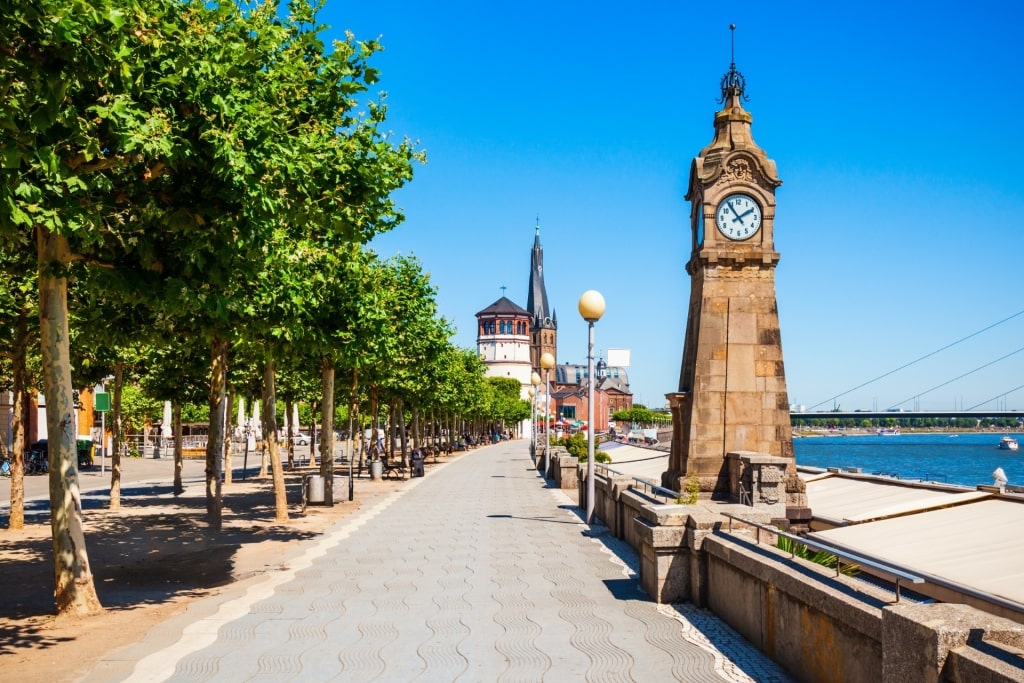
Rheinuferpromenade
When you’re ready to stretch your legs, head to the Rhine promenade for a leisurely walk along the river. The promenade is always a nice place to walk, especially in spring and summer when the sun is out and people are eager to spend their days outdoors.
There’s a lot to do along the river, whether it’s dining at one of the many bars and restaurants lining the promenade, packing your own picnic to enjoy in the Hofgarten, or going for a jog. On busy days, you’ll need to pay attention to where you’re walking, as people are walking, jogging, and rollerblading.
As for where to eat along the river, it depends on what food you’re in the mood for, as well as ambiance. For example, The Duchy is a high-end option, while Brauerei im Füchschen is renowned for its traditional German dishes and Altbier. For panoramic views of the river and a stylish vibe, DOX Restaurant & Bar is a go-to.
A Distinct Local Beer Culture
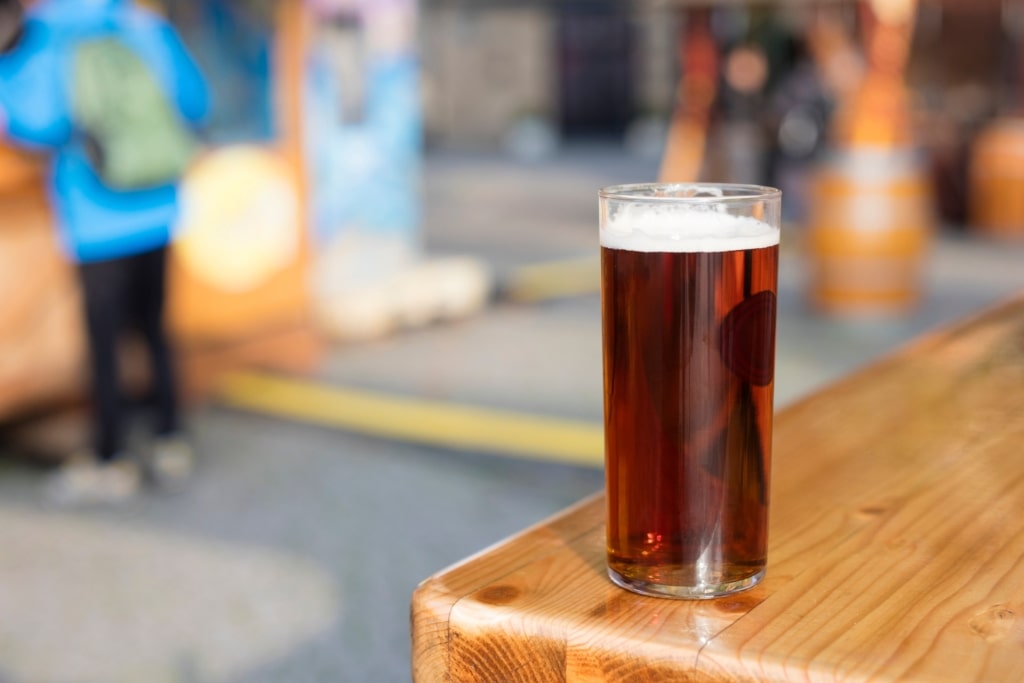
Altbier
Is Düsseldorf worth visiting? If you’re a beer drinker, most certainly. A compelling reason to visit Düsseldorf’s Altstadt is to experience what is often called “the longest bar in the world.” The name can be slightly misleading, however, since it’s not a single, long bar but rather more than 250 pubs, restaurants, and bars all located very close to one another.
The city is also home to the Altbier, a dark, top-fermented beer served from small wooden barrels. Most, if not all, of the bars will serve Altbier, so you’ll have plenty of opportunities to sample this local favorite. Although Altbier is dark in color, it’s fairly light in terms of alcohol, typically between 4.3% and 5.5% ABV.
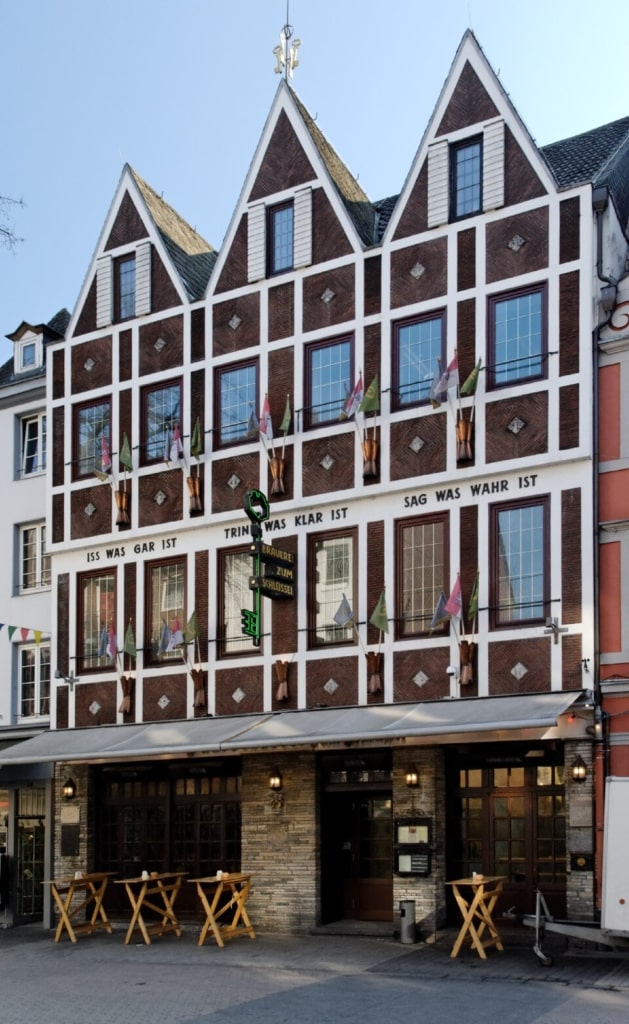
Zum Schlüssel Photo by Wiegels on Wikimedia Commons, licensed under CC BY 3.0
To experience a traditional brewery in the heart of Düsseldorf, head to Zum Schlüssel on the busy Bolker Street, or Bolkerstraße in German.
Famous for its Altbier, which it’s been brewing since 1850, Zum Schlüssel has a laid-back atmosphere and an outdoor beer garden that fills up quickly during the warmer months. While this is certainly a popular hangout spot, there are also plenty of seats, so don’t worry too much about the crowds.
An Interesting Culinary Scene
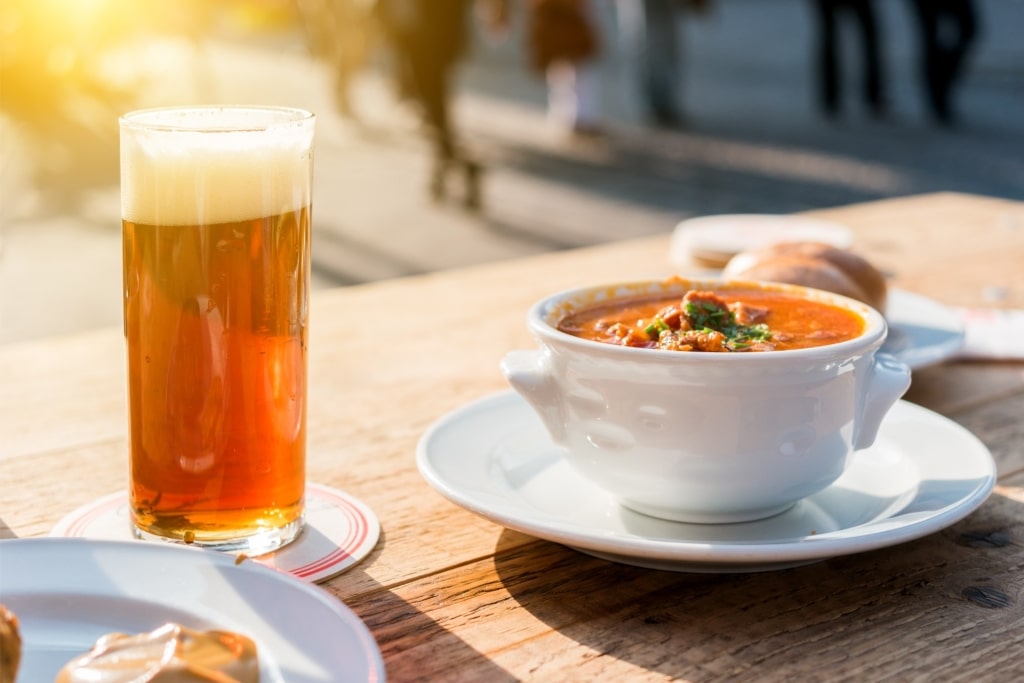
Bräuhaus in Düsseldorf
Aside from vibrant Little Tokyo and Düsseldorf’s famous Altbier, the city offers a diverse mix of traditional German foods as well as modern spins on classic dishes. If you’re visiting Düsseldorf for the first time, it’s helpful to stick around the Old Town, as you’ll have plenty of options and can check out the menus before committing to a spot.
Bräuhauses—traditional German taverns—dot the Old Town, and you can count on these local taverns to serve up hearty German dishes and as much Altbier as you can handle.
Beuys Bar and Im Goldenen Kessel are two popular German pubs to try, while The Oak’s Bar has a slightly cozier atmosphere thanks to its dim lighting and exposed brick walls. Expect hearty fare, including blood pudding, goulash soup, local sausages, pork schnitzel, and roast beef with potato dumplings.
Excellent Shopping
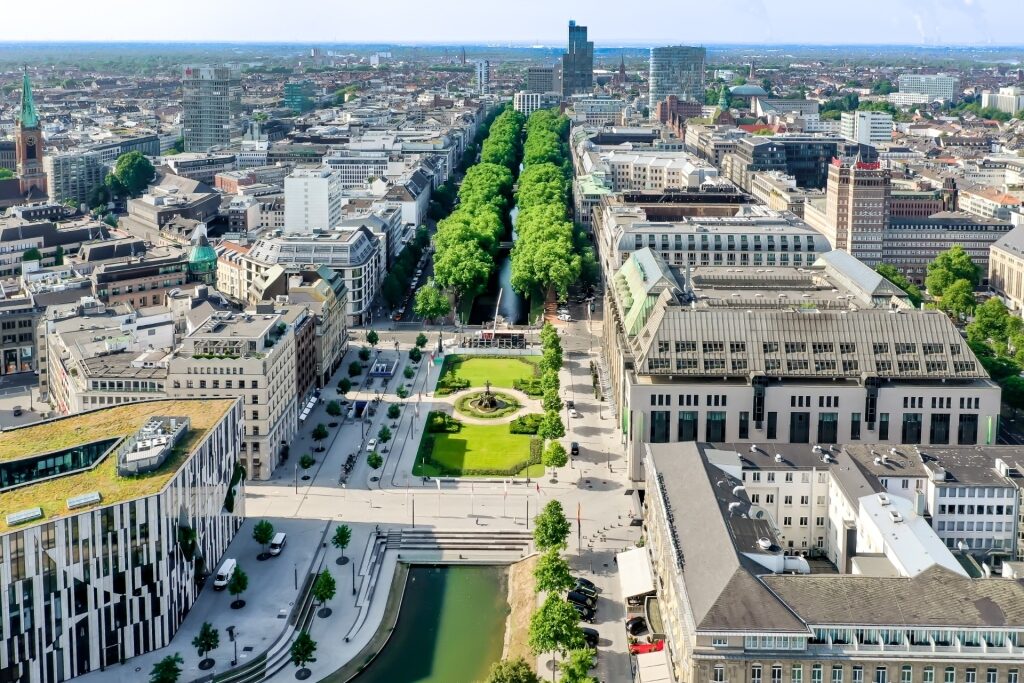
Königsallee
Düsseldorf might not be considered a fashion capital per se, but it’s actually a great city to shop for both high-end luxury items and handmade German souvenirs.
Königsallee, or “the Kö” for short, is the most famous shopping street in Düsseldorf, where major brands like Prada, Louis Vuitton, Chanel, and Gucci all have storefronts.
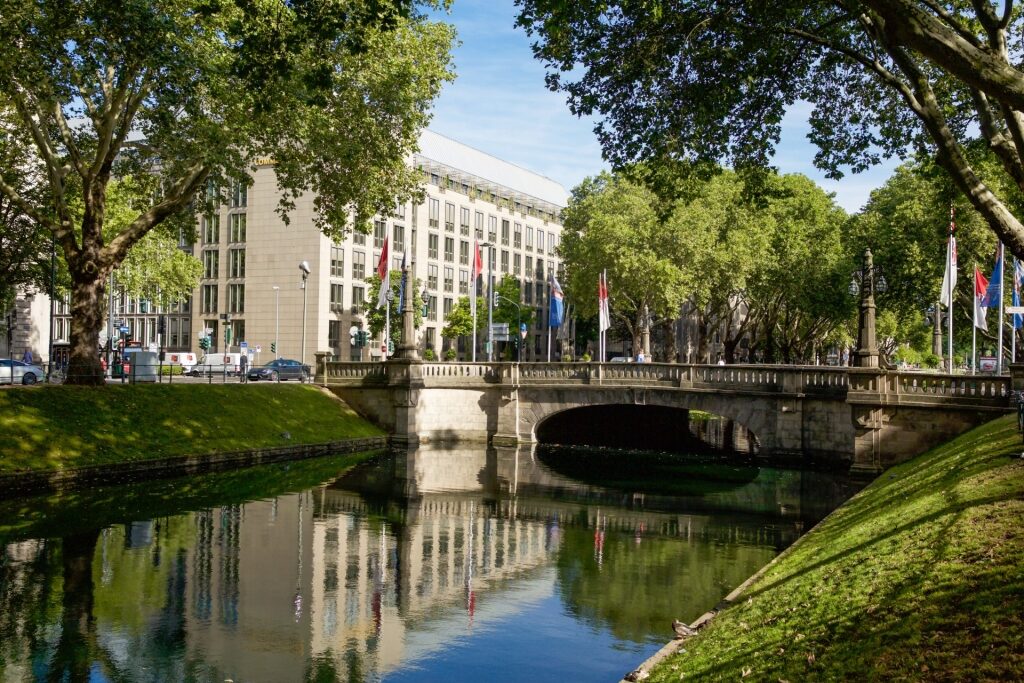
Königsallee
Even if you’re not ready or able to afford one of the high-end items sold at these shops, it’s still a nice experience to stroll along the street, take in the window displays and canal views, and explore the smaller boutiques in the alleys and side streets.
Another great area in Düsseldorf for shopping is the Carlstadt district. While Königsallee is all about legacy brands and high-ticket items, the Carlstadt district is a hub for antique shops, art galleries, and concept stores. On my first visit to Düsseldorf, I popped into Galerie Orfèvre and was impressed by the range of conceptual jewelry and craftsmanship on display.
Exciting Music and Theater Scene
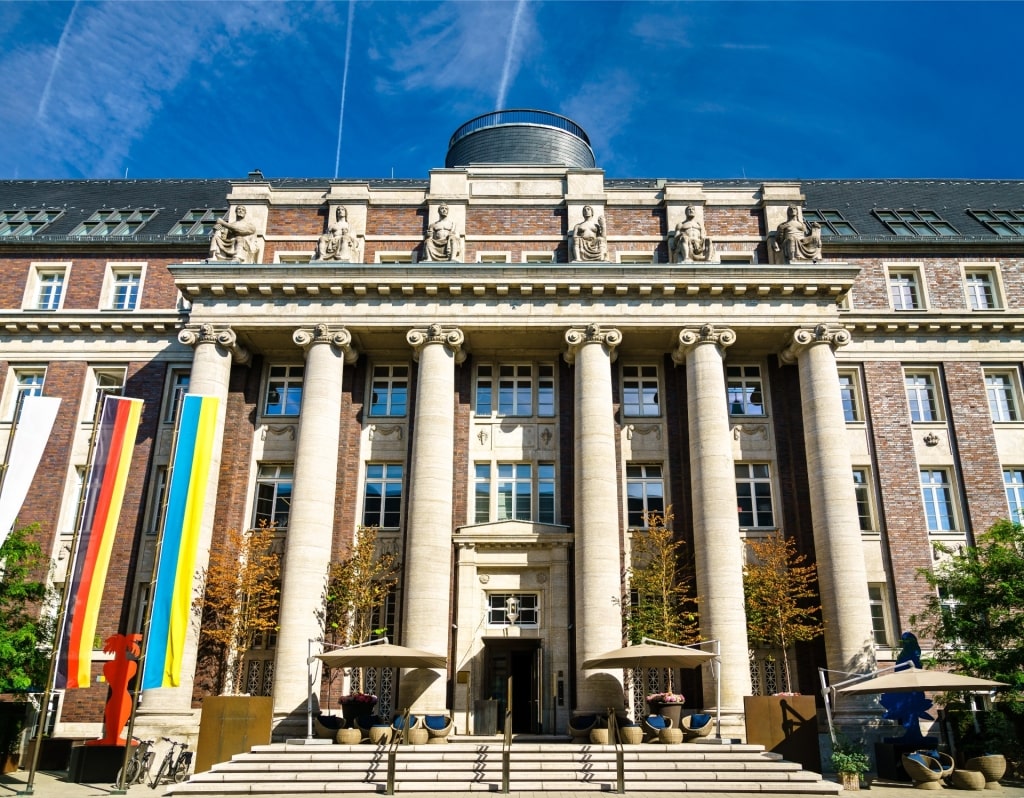
Andreas Quartier
Whether you’re a fan of opera and ballet or more of an indie concert-goer, Düsseldorf does not disappoint.
If your visit happens to coincide with the Festival of Lights, a summer event that draws crowds of more than 10,000 people, you’re in luck. With fireworks, light and water shows, and music from the Düsseldorf Symphony Orchestra, it’s a truly multi-sensory experience.
For year-round live music, venues like Andreas Quartier in the Old Town host local acts most nights. Sometimes, there are daytime sets. Salon des Amateurs, located inside the Kunsthalle area, is another popular spot for electronic and experimental music. Swing by for the artsy vibe or stick around for a live show.
Festivals and Events
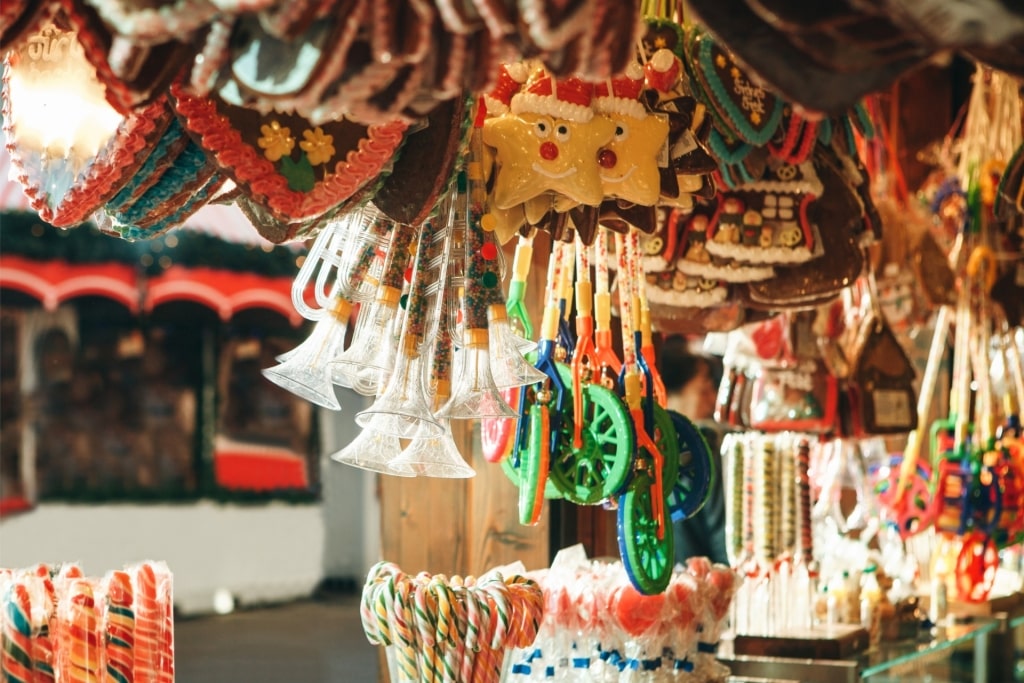
Christmas market in Düsseldorf
Düsseldorf hosts festivals and events year-round, with a few standout celebrations. Leading up to Christmas, the city’s Christmas market takes center stage, with the scent of roasted almonds in the air, twinkling lights, and stalls selling everything from scented candles to baubles, toys, and handicrafts.
Another popular late-fall and winter event is the annual Carnival. The biggest events take place in February, including parades and street carnival activity on Königsallee.
During the warmer months, visitors have plenty to plan around. There’s an annual jazz festival in May, the Düsseldorf Festival every September featuring music, dance, and theater, and a Gourmet Festival in August that brings together more than 200 restaurants and wineries from the region.
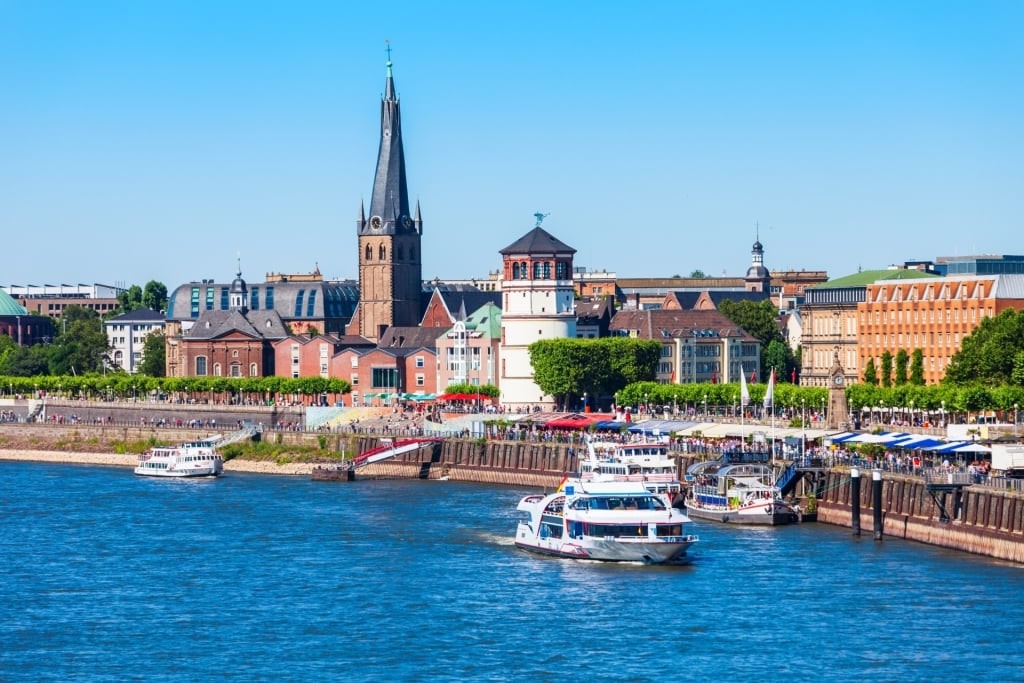
Old Town
Explore Germany’s historic, cultural, and culinary heritage on a river cruise to Düsseldorf. Browse itineraries and plan your visit to this exciting city.