Mention Croatia, and chances are you picture Dubrovnik’s ancient walls rising above the blue Adriatic Sea. But hundreds of miles from the country’s famous coastline, another side of Croatia unfolds along the Danube.
Here in the country’s eastern reaches, the river flows past green countryside and historic towns before reaching Vukovar, a city shaped by centuries of culture, conflict, and life along the water. A Croatia river cruise brings you into this lesser-known landscape as part of a journey along the Lower Danube, connecting Croatia with the storied cities and towns of Central and Eastern Europe.
It’s a side of Croatia many travelers never see—and an entirely different way to experience the country.
Croatia River Cruise vs. Coastal Cruise
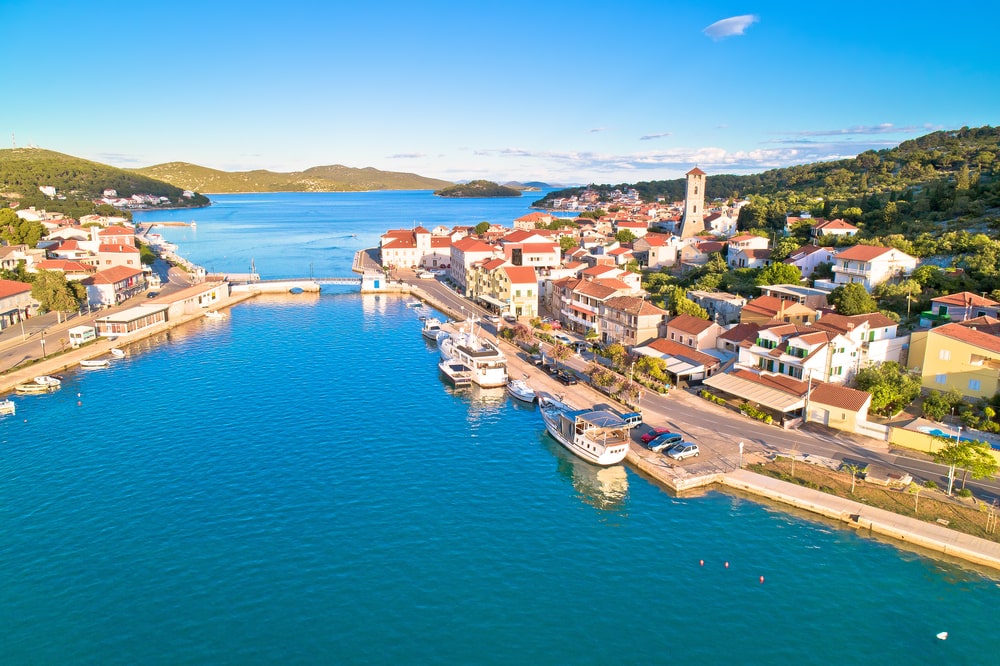
An aerial view of the narrow marine channel, drawbridge, and red-roofed coastal town of Tisno nestled along the turquoise waters of Murter Island, Croatia.
Croatia has more than 1,000 islands and is famously associated with the Adriatic Sea, so it’s easy to assume that a Croatia cruise means sailing along the coast. But a river cruise itinerary explores the country from the opposite side.
Danube river cruises travel through the heart of Europe, following a waterway that passes through or borders 10 countries before reaching the Black Sea. In Croatia, the Danube traces part of the country’s eastern edge and flows past Vukovar.
This style of river cruise is an inland journey, with ships docking close to historic towns and cities. Rather than hopping between islands or sailing long stretches of open sea, much of the scenery is always close at hand. Days combine time ashore with views of riverbanks, villages, farmland, historic landmarks, and cities from the water.
A coastal Croatia cruise, however, sails the Adriatic and may visit destinations such as Split and Dubrovnik. Its landscapes are defined by Mediterranean coastline, beaches, islands, and medieval ports.
The Danube experience also differs from other European rivers. While the Rhine River is known for castle-lined stretches and vineyard landscapes, the Danube links imperial capitals, smaller riverside communities, and the cultural crossroads of Central and Eastern Europe.
Discover Vukovar on the Danube
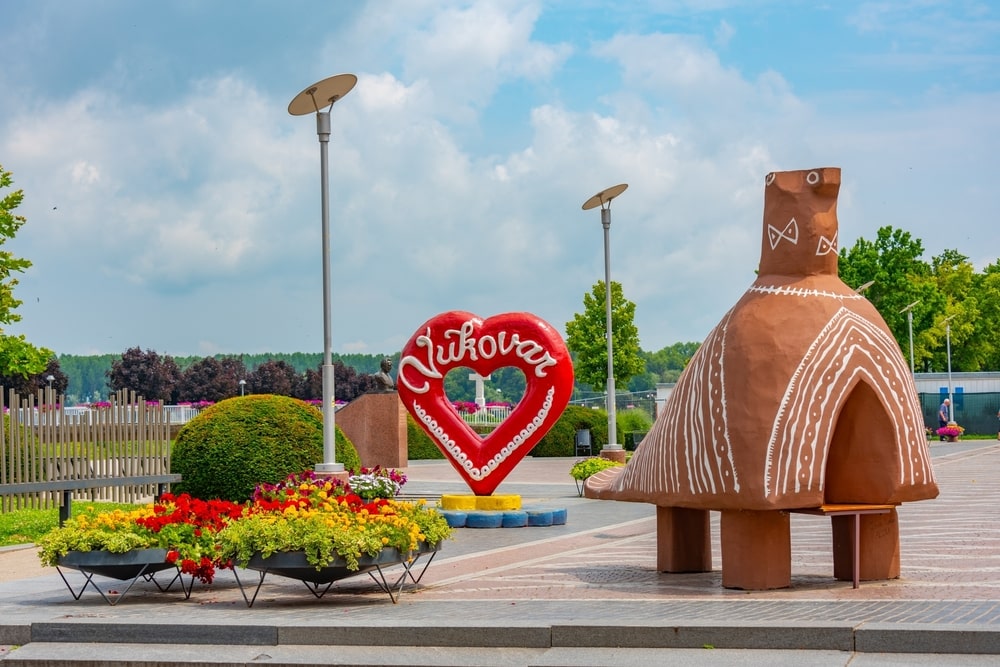
A vibrant riverside promenade featuring a red “I Love Vukovar” heart installation, Vučedol Dove sculpture, and colorful flowerbeds along the Danube in Vukovar, Croatia.
Set on the Danube in eastern Croatia, Vukovar has long been shaped by the river. Baroque buildings recall its past as a thriving port and commercial center, while its museums and memorials tell a much more recent story of destruction and recovery.
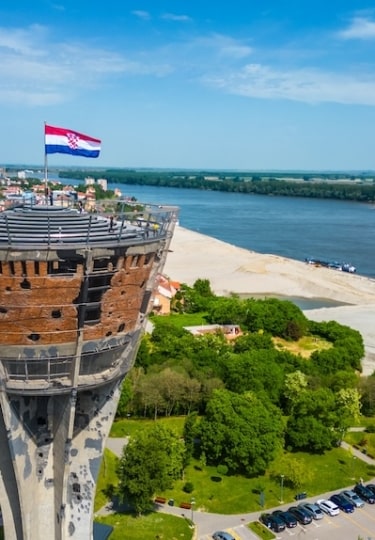
Vukovar bears visible reminders of the Croatian War of Independence and the devastating 1991 Battle of Vukovar. One of the most striking is the Vukovar Water Tower. Hit more than 600 times during the siege, the tower was kept with its battle scars and, after a renovation, reopened in 2020 as a memorial you can climb.
That history is an important part of understanding Vukovar today, but it isn’t its only story. Along the riverfront, cafés overlook the Danube, while the restored Baroque center reflects the city’s earlier architectural heritage. Eltz Manor, an elegant 18th-century estate overlooking the river, now houses the Vukovar City Museum and collections tracing the region’s history.
Just outside the city, the Vučedol Culture Museum explores a sophisticated prehistoric culture that flourished along the Danube thousands of years ago. The archaeological site here has yielded distinctive ceramics and artifacts that reveal how long people have settled along this stretch of the river.
Vukovar’s position also places Croatia in the larger context of the Lower Danube. On Celebrity River Cruises℠ itineraries, the journey may continue to other cities on the Danube, connecting Croatia with destinations across Hungary, Serbia, Bulgaria, and Romania.
For example, a Lower Danube itinerary between Bucharest and Budapest can include Ruse and Vidin in Bulgaria, the dramatic Iron Gates, Donji Milanovac, Golubac, and Belgrade in Serbia, Vukovar in Croatia, and Mohács in Hungary before reaching Budapest.
The result is less a visit to one country than a journey through a part of Europe where borders, empires, languages, and cultures have intersected for centuries. Travelers who want more time in the region can also find plenty of things to do before or after sailing.
The Best Time To Cruise the Danube in Croatia
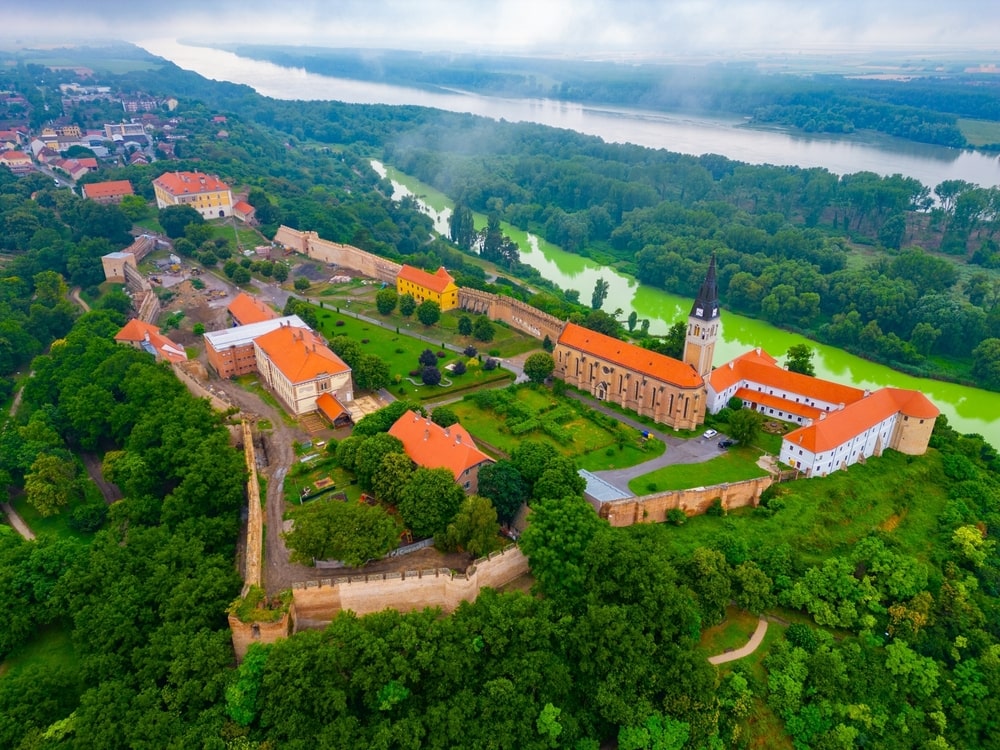
An aerial view of medieval stone walls, orange-roofed buildings, and the Church of Saint John Capistran overlooking the Danube River in Ilok, Croatia.
The Danube changes with the seasons, and so does the experience of sailing through eastern Croatia. Spring brings fresh green landscapes and mild days, summer stretches daylight well into the evening, and fall adds cooler air and changing color along the riverbanks. When you choose a Croatia river cruise, it may come down to the version of the Danube you most want to see.
Spring: Mild Temperatures and Spring Scenery
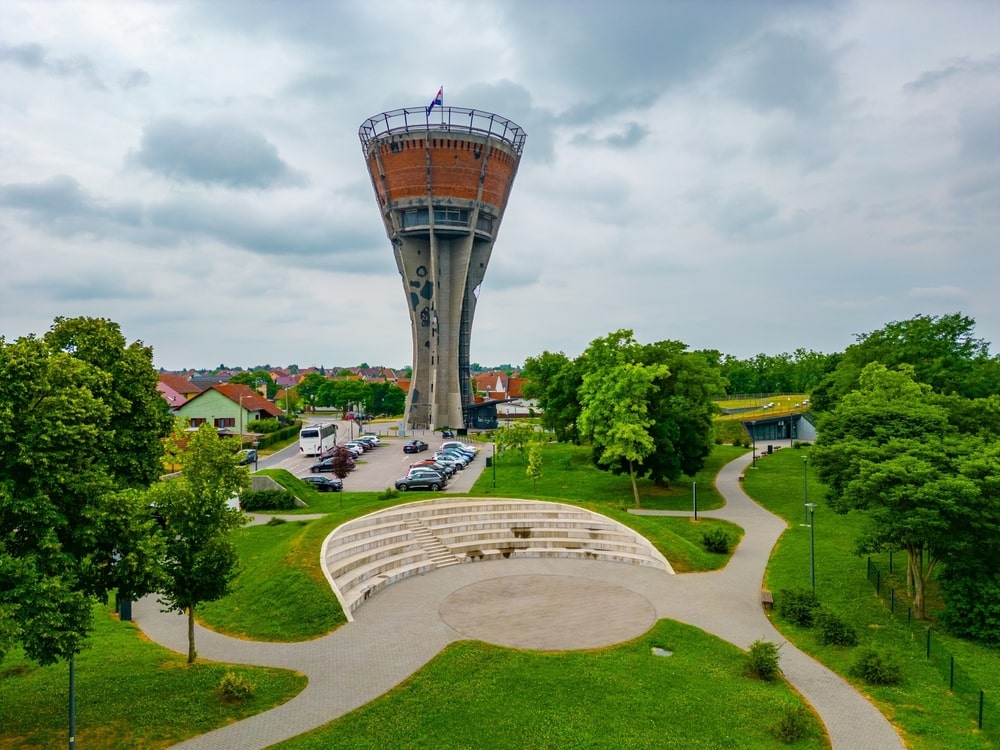
The historic war-damaged water tower rising above a park and circular outdoor amphitheater in Vukovar, Croatia.
Spring brings the Danube back outdoors. As the countryside greens and the days warm up, you can spend more time walking around Vukovar and other riverside towns. The weather can change quickly, so bring a light rain jacket and layers—and find a café terrace when the sun comes out.
Summer: Warm Weather and Long Days
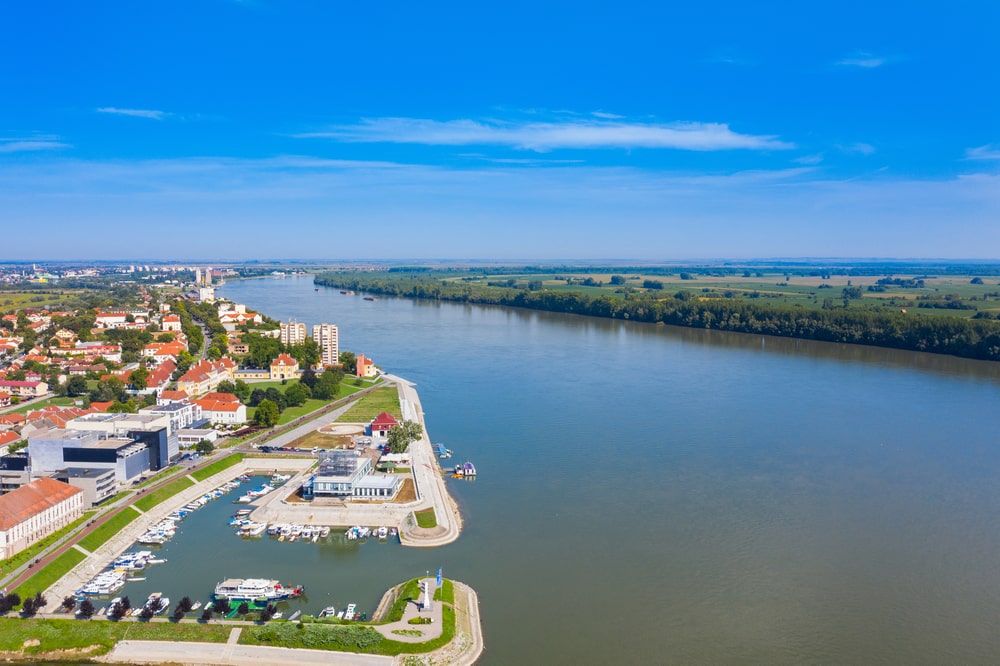
An expansive aerial view of boats docked along the marina promenade beside the wide, sweeping Danube River in Vukovar, Croatia.
Summer days stretch late along the Danube, giving you plenty of time to be outside. Explore Vukovar during the day, then head back on deck and watch the riverbanks slip by as you sail toward your next port.
Fall: Cooler Days and Changing Landscapes
Come fall, the Danube takes on a different look. September often holds onto summer warmth, but the air gets crisper as the season progresses and color creeps into the trees along the river. By October, you’ll be glad to have a jacket when you step outside in the evening.
The Croatia River Cruise Experience
One of the pleasures of seeing Croatia by river is that the journey never disappears between destinations. From your stateroom or the open deck, the scenery is constantly changing—villages appear along the riverbanks, bridges pass overhead, and stretches of countryside give way to historic towns and cities. Then the ship docks, often putting you close to the places you’ve come to explore.
Days on a Croatia river cruise are shaped as much by time ashore as by time on the Danube. Celebrity River Cruises includes one shore excursion each day, offering an introduction to each destination’s history and culture with local guides. In Vukovar, that means the opportunity to look beyond the riverfront and understand the events, people, and traditions that have shaped this corner of Croatia.
Back on board, the destination remains part of the experience. Regional flavors find their way onto menus, while multiple dining venues let you decide how and where you want to eat. Live music and entertainment fill the evenings, all included as you settle into the rhythm of the river and sail toward your next port.
And the journey doesn’t necessarily have to begin or end at the gangway. Itineraries can be paired with cruise and land experiences that add more time in Europe on either side of the sailing. Our Before and After Stays combine hotel accommodations and daily breakfast with transportation and locally led experiences.
Croatia River Cruise FAQs
How long is a Croatia river cruise?
Croatia river cruise itineraries are part of broader Danube journeys rather than cruises limited to Croatia. A Lower Danube option may travel from Romania through Bulgaria, Serbia, Croatia, and Hungary before ending in Budapest. Itineraries and lengths vary by sailing.
Is a Croatia river cruise the same as an Adriatic cruise?
No. A Croatia river cruise sails the Danube in eastern Croatia and calls in Vukovar. An Adriatic cruise sails along Croatia’s western coastline and may visit coastal destinations such as Dubrovnik and Split. The two experiences showcase very different landscapes and regions of the country.
What other countries can you visit on a Danube River cruise?
Depending on the itinerary, Danube River cruises can visit several countries on a single journey. Lower Danube sailings can connect Hungary and Croatia with Serbia, Bulgaria, and Romania, while other Danube itineraries explore destinations farther upriver in countries such as Austria and Slovakia.
What are shore excursions like on a Croatia river cruise?
Excursions introduce travelers to the culture, history, and highlights of each destination with local guides. Guests can also choose upgraded excursions or explore independently while ashore.
Explore Danube River Cruises to Croatia
Croatia may be best known for its Adriatic coastline, but the country looks very different from the banks of the Danube. In Vukovar, centuries of riverside history sit alongside the story of a city that has rebuilt itself while preserving the landmarks and memories of its past.
As part of a Lower Danube itinerary, Vukovar also reveals how naturally Croatia fits into a journey through this part of Europe. One day may bring you to a Serbian fortress or the cliffs of the Iron Gates; another can introduce the towns of eastern Croatia before the Danube carries you onward toward Hungary.
It’s a side of the country many travelers never see, and one you can fully appreciate only from the river.