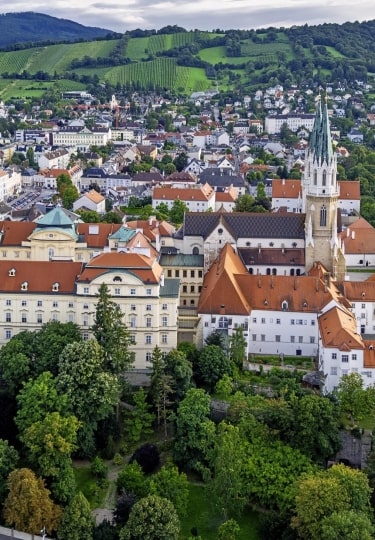
Tulln an der Donau is a Schiele-esque riverside town in Lower Austria, reputed for its ecological landscape design. The small city of about 17,000 residents is locally known as the “City of Flowers” (Blumenstadt). Here, guests cruising the Danube can explore its verdant riverbanks and expansive botanical arrays.
Its proximity to Vienna offers opportunities to immerse yourself in scenery and culture, with easy access for further exploration. This guide explores Tulln’s best attractions and how to plan a port day during your Danube river cruise.
Why Tulln Is Worth Visiting
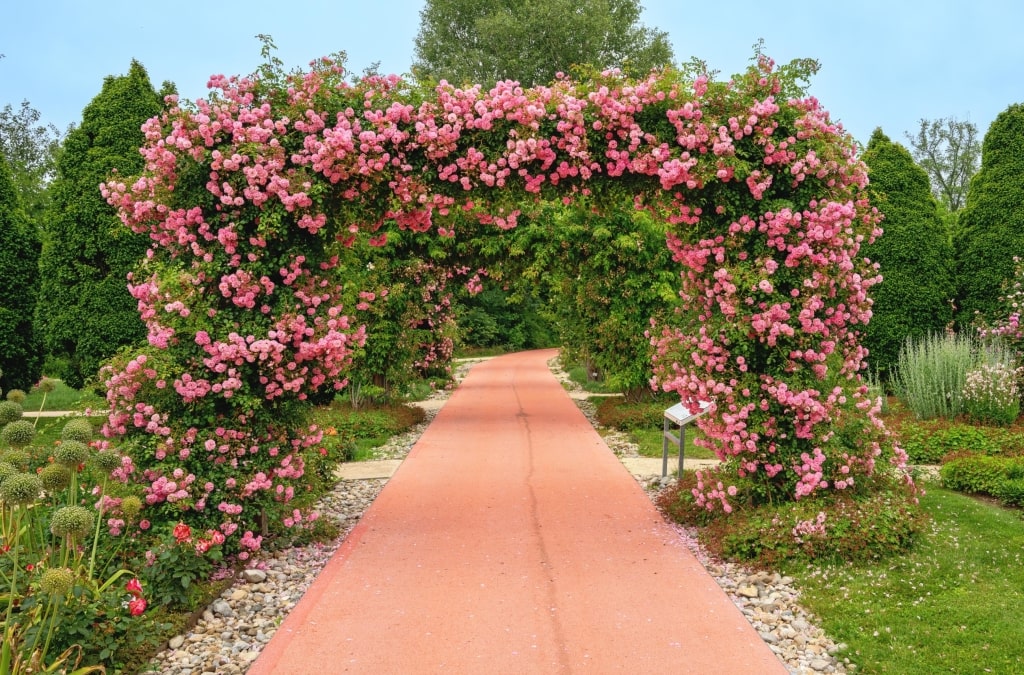
Pink path leading through a plant arch with pink flourishing roses at the Garden Tulln, Austria.
Tulln stretches along the Danube River’s southern banks in the state of Lower Austria. It boasts a prominent garden-city identity, offering river cruise guests a quiet place to unwind amid its riverside blooms.
The city’s top attractions include:
- Die Garten Tulln: Explore ornamental gardens, ponds, pathways, and a treetop walk while taking in views across the banks of the Danube.
- Egon Schiele Museum: Visit a museum dedicated to Austrian Expressionist Egon Schiele and explore exhibitions tracing his early life and artistic development.
- Roman history: Wander through a modern city center partially constructed over the Roman military settlement of Comagena, with ancient structures still visible.
- Riverside setting: Follow the Danube promenade through gardens and community plazas, with walking and cycling paths overlooking the river and passing boats.
- Art connections: Discover Tulln’s connection to Egon Schiele, whose early years in the city influenced the region’s cultural identity.
- Heuriger culture: Taste young wines like a local with fresh tapas-style bites in the grounds of Die Garten Tulln.
- A slower-paced stop: Spend time in a smaller Austrian city where landscapes, riverfront walks, and historic sites offer a low-key contrast to major Danube capitals.
Signature Attractions in Tulln

The Nibelungen Fountain (Nibelungenbrunnen) depicting the historic meeting of Kriemhild and King Etzel along the Danube Promenade.
Around 2,000 years ago, Tulln an der Donau was a strategic Roman military base, known as Fort Comagena. Parts of the modern city center, including Marcus Aurelius Park and its surrounding streets, sit on top of the ancient settlement. You can see original Roman structures, such as the Roman Tower, integrated into the township.
In 2021, these ruins became part of the transnational UNESCO World Heritage Site known as the Frontiers of the Roman Empire—Danube Limes.
Here are a few other sites worth visiting in Tulln:
Die Garten Tulln
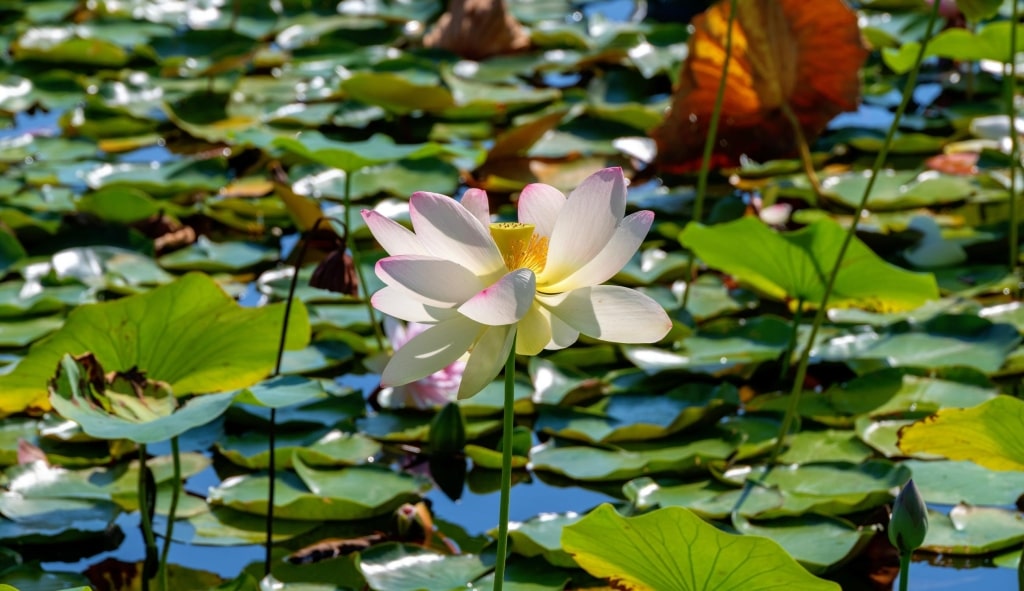
A delicate lotus blossom blooms above vibrant green leaves in a sunlit garden pond at Die Garten Tulln.
Die Garten Tulln is an expansive complex fringing the Danube banks, with more than 70 ornamental gardens prized for their ecological innovation: each is maintained without peat, pesticides, or synthetic fertilizers.
Here, you can stroll along walkways winding between flower beds and ponds, or take a sunny moment on the park benches dispersed around the site to pause and reflect. The park features a treetop walk soaring nearly 100 feet in the air, and you’ll also find a lookout tower offering views across the surrounding countryside.
The gardens form an important aspect of Tulln’s identity as Austria’s garden city and are open to visitors annually from April through October.
Experience Heuriger Culture

A traditional Austrian Brettljause served on a wooden board with cured meats, cold cuts, spreads, and pickled peppers.
The heuriger culture is a traditional Austrian social practice focused around “heurige,” where local winemakers serve their young wines with simple regional dishes like brettljause (a wooden platter of cold cuts) or liptauer (an orange, creamy spread made from sheep’s cheese). The best time to try is during September and October, in line with the harvest season.
On the grounds of Die Garten Tulln, you’ll find a vinotheque called WEIN•GE•NUSS, where you can enjoy a crisp glass of one of around 20 boutique Wagram regional wines and experience heuriger culture like a local.
Egon Schiele Museum
Egon Schiele was an Austrian expressionist painter born in Tulln, acclaimed for his angular, moody figures, intense portraits, and provocative studies of the human body.
He was born in 1890 and spent his early years in the city, where his father worked as a stationmaster, before moving to Klosterneuburg in 1904. Explore his works and history at the Egon Schiele Museum, housed in a former prison building. Exhibitions portray the artist’s early life in Tulln, connecting the region to the spaces and culture that shaped one of Austria’s most recognizable artists.
Danube Riverfront
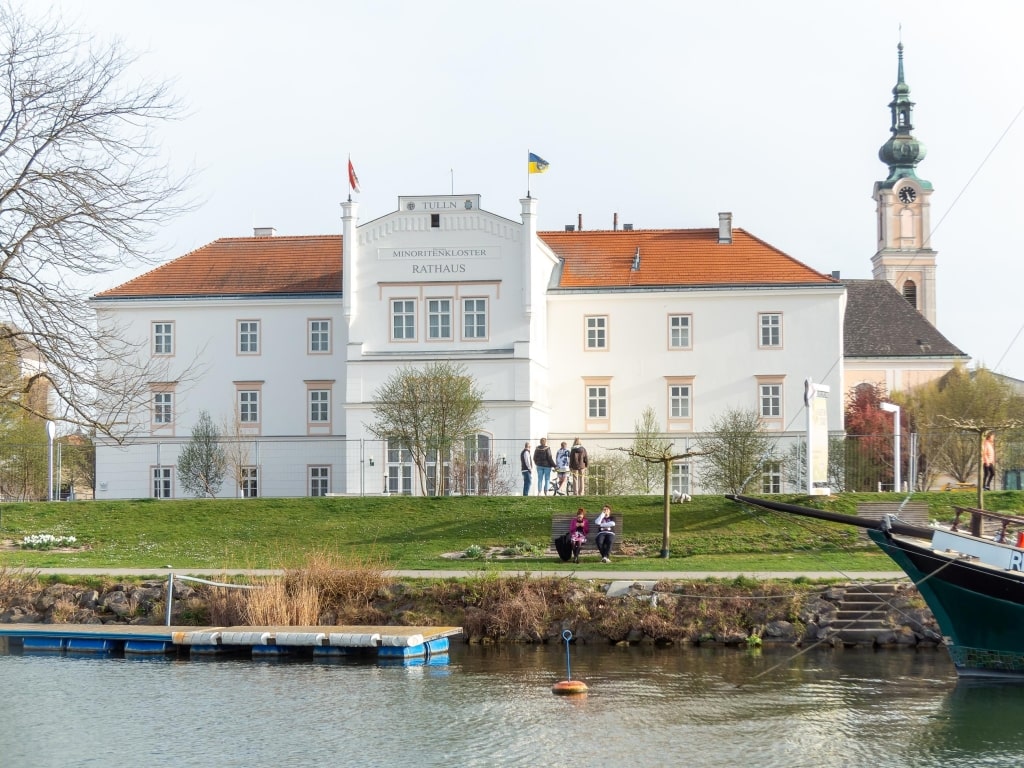
The Minoritenkloster (Rathaus) and church tower viewed from the Danube waterfront promenade.
The Danube River flows along the northern edge of Tulln, where an airy riverside promenade broadens through show gardens and community plazas. As a flat area, it offers walking and cycling paths with views across the river. You’ll also spot boats passing by.
Compared to the Rhine River, the Danube carries significantly less freight and foot traffic. The local riverbanks are a verdant, tranquil space to genuinely slow down and unwind between the capital and one of the country’s premier wine regions.
Where Tulln Is and Its Proximity to Vienna
Geographically, Tulln is tucked between the country’s capital and “City of Music,” Vienna, to the east, and the Wachau Valley wine region to the west. Most river cruise itineraries pass through both, but they make for easy day trips from Tulln, should you feel inspired.
Visiting Vienna From Tulln
Vienna is a prominent destination in Austria and globally, with a rich history of classical compositions and opera performances. The city is a short distance from Tulln, easily reachable during the day by road or train:
- Travel by car: The road distance between Vienna and Tulln is about 28 miles via the A22 highway, and it takes about 45 minutes.
- Travel by train: You can catch a train to Vienna from Tulln’s main train station on Bahnhofstraße, about a 15- to 20-minute drive from the cruise port. The train journey from Tulln to Vienna takes approximately 30 to 40 minutes.
It’s also a popular stop on Danube River cruises, so your journey will likely take you to the Austrian capital before or after your Tulln port stop.
Visit the Wachau Wine Valley
With such proximity, you’ll likely visit the Wachau Valley, one of Austria’s world-class wine regions—and among the most scenic Danube River corridors—during your Tulln cruise.
The Wachau Valley is a 25-mile stretch, sprawling with terraced vineyards and medieval towns. It’s well worth finding a sunny spot on deck with a crisp glass of steinfeder as you cruise through.
Nestled between these prominent Austrian attractions, Tulln presents an excellent opportunity to soak up a greener and more relaxed stop on your Danube journey.
The Best Way To Experience Tulln
Tulln is a flat, compact, and highly walkable city. The historic square and local cafes are no more than a three-minute walk from the river cruise port. The city’s tempo moves more slowly, with an easygoing appeal that contrasts with the larger capitals lining the Danube.
Cruising between river ports makes it easy to both arrive and depart at the same relaxed pace as Tulln. Step ashore, stroll into town, and spend a few hours exploring gardens, museums, Roman history, or the riverfront before returning to the ship and slowly sailing to the next port.
FAQs: Visiting Tulln on a River Cruise
What is Tulln, Austria, known for?
Tulln is known as Austria’s garden city, with landscaped gardens, riverside green spaces, and a long connection to horticulture. The town is structured upon and around Roman ruins, and was the birthplace of Austrian Expressionist artist Egon Schiele.
What are the best things to do in Tulln?
Visit Die Garten Tulln, explore the Egon Schiele Museum, and walk or cycle along the Danube Riverfront. History enthusiasts can also see Roman remains around the town center, including the Roman Tower.
Is Tulln worth visiting?
Yes, Tulln is a visually aesthetic stop for travelers who enjoy roaming through gardens, art, and riverside scenery. Its tight-knit center makes it possible to visit several of the main attractions during a day at port.
How far is Tulln from Vienna?
Tulln sits about 25 miles west of central Vienna. You can visit Vienna from Tulln in about 45 minutes by car or approximately 40 minutes by train.
What makes Tulln different from other Danube stops?
Tulln combines Roman history, garden culture, and Egon Schiele’s artistic legacy in a relatively small town. Its riverfront and extensive gardens also give it a quieter, greener character than larger Danube cities.
Can you visit Tulln as part of a Danube river cruise?
Yes. Tulln is a common stop on Danube river cruise itineraries, giving guests the chance to explore the town and its gardens while traveling between larger destinations along the river.
Experience Austria’s Garden City by Cruise
Tulln blends Roman ruins, a modern, walkable city, and sweeping display gardens into a restful, green sanctuary along the water. With Vienna and the Wachau Valley on either side, Tulln offers a welcome reprieve to take a breath and soak up the quiet ambiance of the Danube River during your cruise.
Explore Tulln cruises and plan your journey to Austria’s garden city.