Danube river cities are among the most impressive in Europe. A voyage along the Danube is so much more than a beautiful, scenic cruise. With four capitals lining its banks—the most on any river—and numerous fascinating cities, it’s a journey through history. Many cities have a legacy dating back to Roman times, still visible today, and others are dominated by soaring medieval cathedrals and grand squares with perfectly preserved architecture.
It’s impossible to see all of them in the space of one vacation, but here are 15 of the best cities on the Danube to help you decide which stretch of the river to explore.
Vienna, Austria
Vienna, Austria
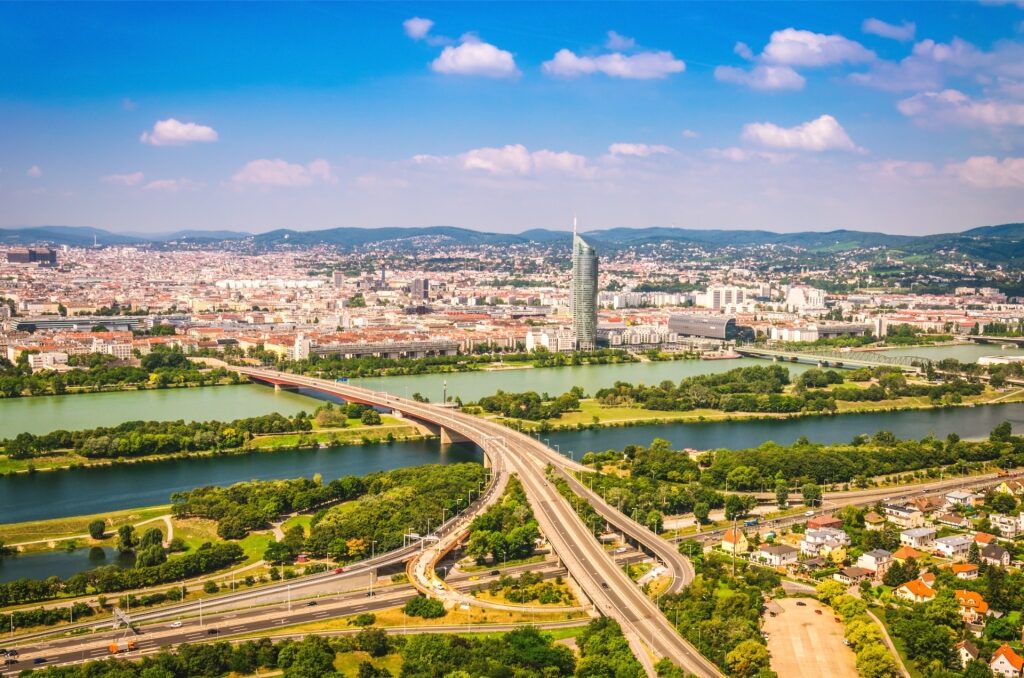
One of the most captivating Danube river cities is Vienna, the elegant and grand Austrian capital. Centered around one of the world’s biggest palace complexes, it’s one of four capital cities flanked by the Danube, the others being Budapest in Hungary, Bratislava in Slovakia, and Belgrade in Serbia.
Vienna is known for its music running through its DNA, and a classical concert is a must-see during your stay. Mozart lived here from 1781 until his death in 1791, composing some of his greatest operas including The Magic Flute, Cosi fan tutte, and The Marriage of Figaro. It was also the lifelong home of Johann Strauss II—whose house is now part of the Vienna Museum—and his graceful Blue Danube Waltz is always a crowd-pleaser in daily recitals held throughout the city.

Hofburg Palace in Vienna, Austria
Architectural highlights include Hofburg Palace, the former seat of the ruling Habsburg dynasty, located in Vienna’s Old Town. It’s made up of nearly 20 buildings, with many now containing museums and historic collections.
At nearby St. Stephen’s Cathedral, it’s worth climbing the 343 narrow, winding stairs to the top of the tower. Once you catch your breath, you’ll be rewarded with panoramic views over Vienna’s red rooftops toward the Danube.
Budapest, Hungary
Budapest, Hungary
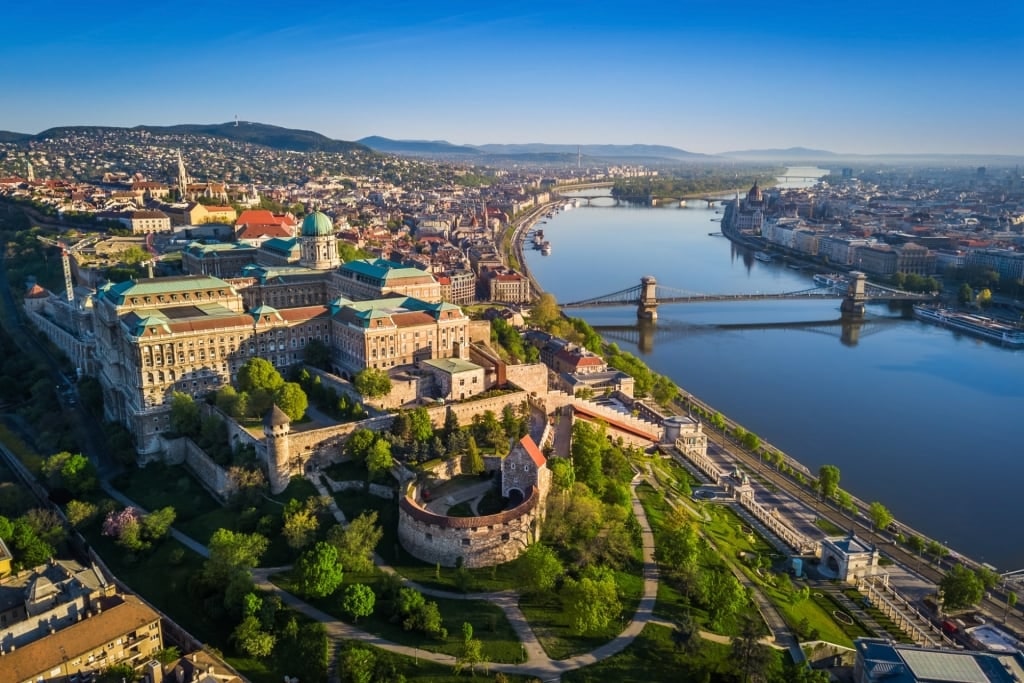
Another majestic capital is Budapest, which is a city of two distinct halves. Bisected by the Danube, the hilly and green Buda district faces busier and flatter Pest. They’re linked by a series of bridges, most notably the recently restored 19th-century Széchenyi Chain Bridge.
While Budapest is a relatively compact and walkable city, it’s neat to ride the metro with its tiny wooden cars. Built between 1894 and 1896, it was the first underground in continental Europe and is the second oldest in the world after London.
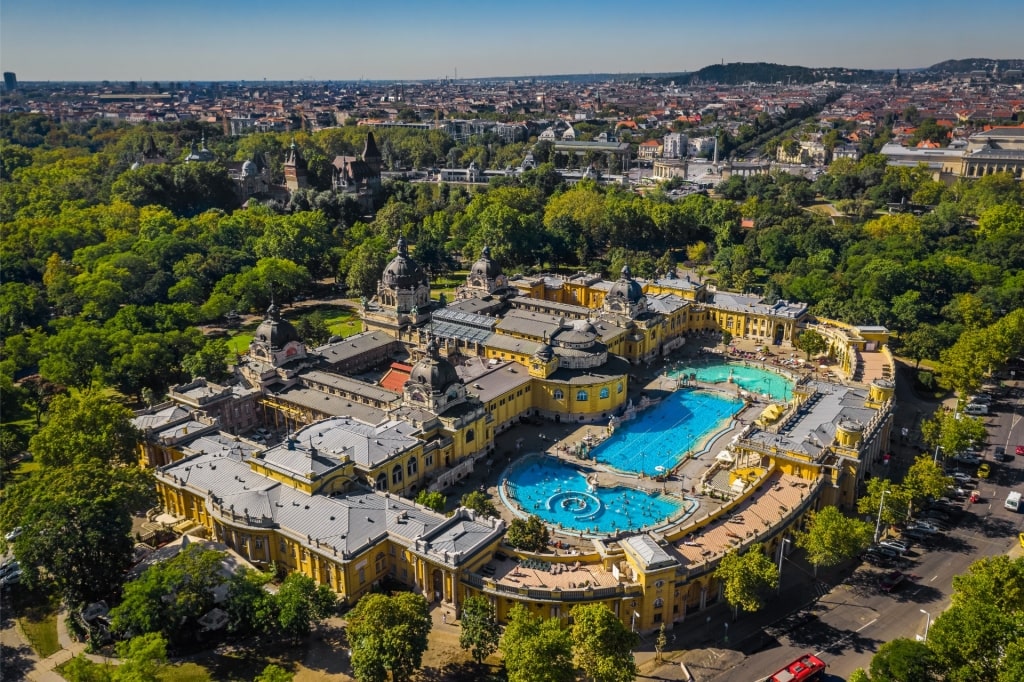
Szechenyi Thermal Bath in Budapest, Hungary
To really soak up the culture, visit one of Budapest’s thermal baths. The city has around 120 hot springs, more than any other capital city in the world, and the mineral-rich waters are revered for their relaxing and restorative properties.
Dürnstein, Austria
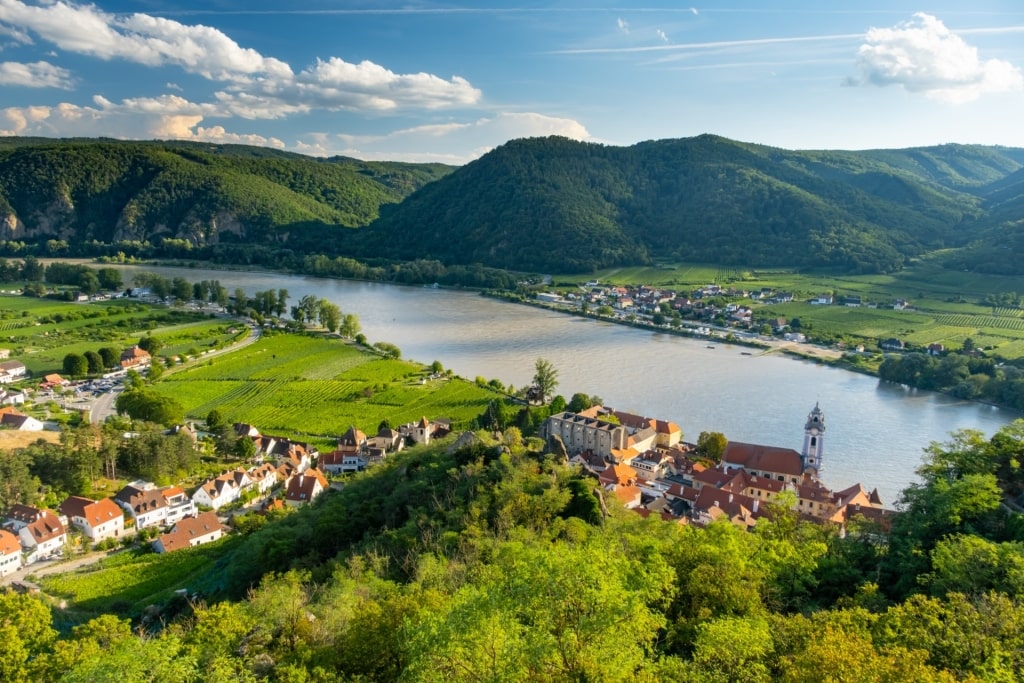
Dürnstein, Austria
Perched in a bend on the Danube, Dürnstein is one of the most photographed spots on the river and justifiably called the “pearl” of the Wachau Valley. The powder blue-and-cream Augustinian Abbey is a standout sight, particularly when it’s reflected in the shimmering water.
A 15th-century stone gateway, once part of the old city walls, leads to the quaint narrow brick and cobbled streets lined with small shops. If you’re feeling energetic, you can take a 30-minute uphill hike to reach the ruins of 12th-century Kuenringer Castle, perched on a rocky outcrop. It’s here that King Richard the Lionheart was imprisoned in 1192 on his way back from the Crusades.
On the way down, stop off for some marillenknödel, apricot dumplings sprinkled with cinnamon, which are a mouthwatering local specialty.
Grein, Austria
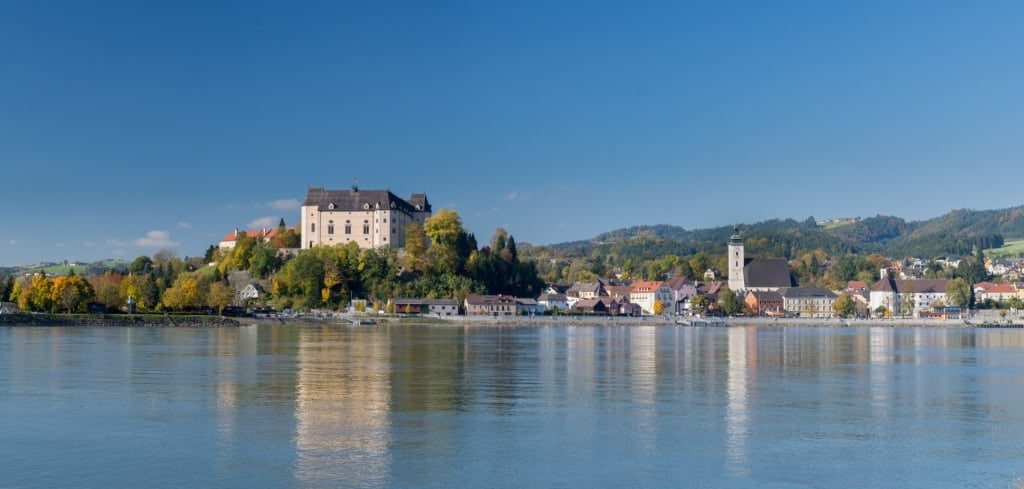
Grein, Austria
When it comes to size and age, the lovely little town of Grein has two very different claims to fame. It’s topped by a huge ocher-colored castle, constructed between 1488 and 1495, which is one of the oldest in Austria. Greinburg Castle has passed through the hands of royal and noble owners, including Queen Victoria of the United Kingdom, as it was previously owned by her late German-born husband Prince Albert of Saxe-Coburg and Gotha, and his brother.
Downtown, an equally intriguing building occupies one side of the tiny square. Grein’s theater was built in 1791 and is Austria’s oldest playhouse still in use today. Tours of the 130-seat auditorium reveal lockable seats, once reserved for the wealthy. At one time, there was a jailhouse next door, and you can also see a small window that allowed inmates to watch performances.
Linz, Austria
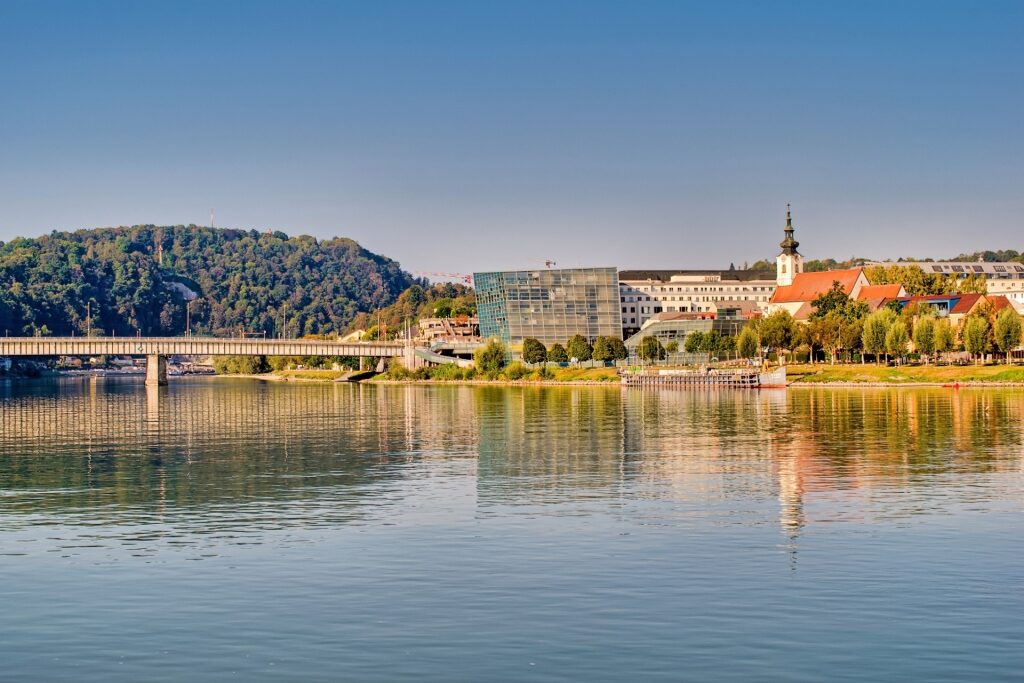
Linz, Austria
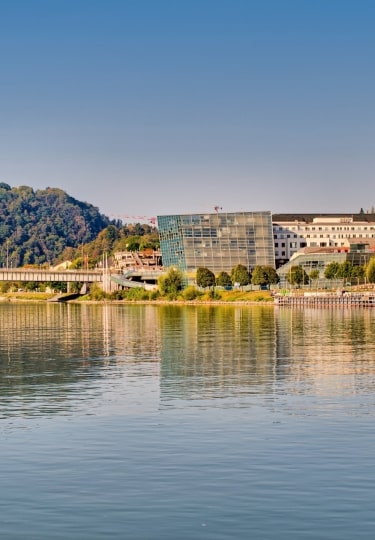
The once industrial “steel city” of Linz has reinvented itself as a trendy hub for arts and innovation. Austria’s third largest city after Vienna and Graz, Linz was crowned European Capital of Culture in 2009 and designated a UNESCO City of Media and Arts in 2014.
Eye-catching modern buildings don’t come any brighter than the cube-like Ars Electronica, a museum dedicated to the future, which is illuminated at night by a kaleidoscope of ever-changing colors.
Another striking structure is the contemporary steel and glass wing of Linz Castle, which belatedly replaced a section of the building that was destroyed by a fire that ripped through the city in 1800. Elsewhere, the steel industry still exists and the legacy can be explored at the Voestalpine Stahlwelt, or Steel World attraction.

Sacher torte
While Vienna has its chocolatey Sacher torte, Linz has its own sweet treat. Linzer torte, which dates back to 1635, is said to be the oldest known cake named after a city. Filled with nuts and thick raspberry jelly, and topped with a pastry lattice, this tasty Austrian dessert is a cross between a cake and a tart. Don’t leave without trying some.
Passau, Germany
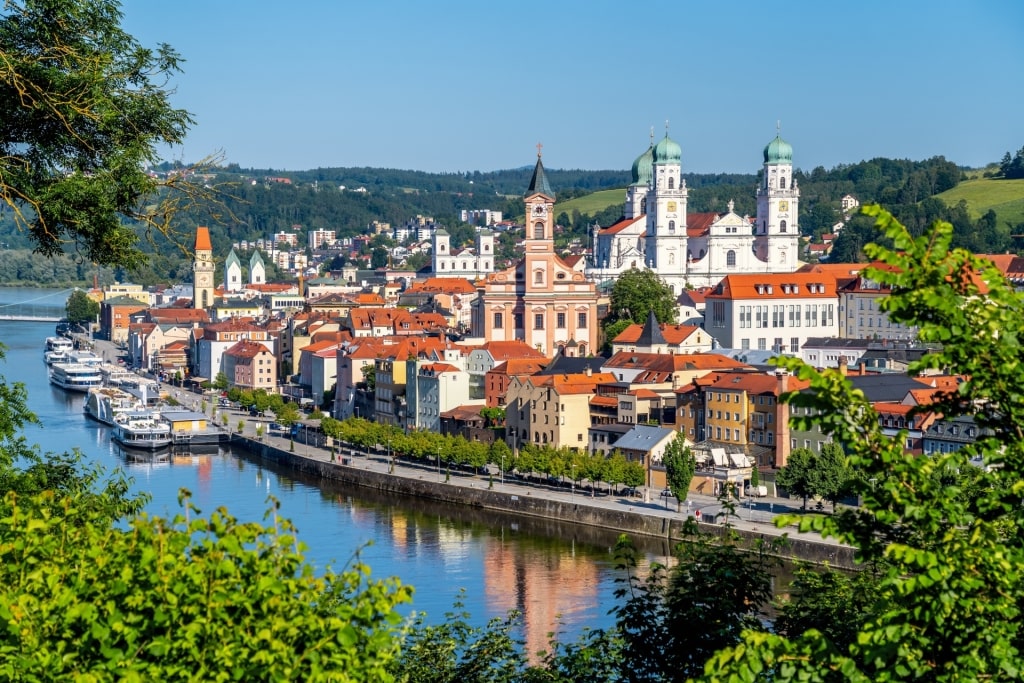
Passau, Germany
When you arrive in Passau, you might think you’d swapped a city on the Danube for one in Italy. At one time the city, which was concentrated on a tapering strip of land, formed part of the Roman Empire. When Passau was engulfed by fire in 1662, it was remodeled in Italian Baroque style, which can be seen in the elaborate facades of buildings surrounding the main square.
Passau is known as the “City of Three Rivers”. This is because it occupies a unique spot at the point where three rivers—the Danube, Inn, and Ilz—meet. Unfortunately, this has also made the city prone to flooding, and marks on the town hall show that in 1954 waters rose to a record 40 feet.
Admire the high arched roof and ornately decorated interior of St. Stephen’s Cathedral, and ideally time your visit for noon. This is when stirring music from the world’s largest cathedral organ—with 17,974 pipes and 233 registers—fills the nave during daily lunchtime concerts.
Vidin, Bulgaria
Vidin, Bulgaria
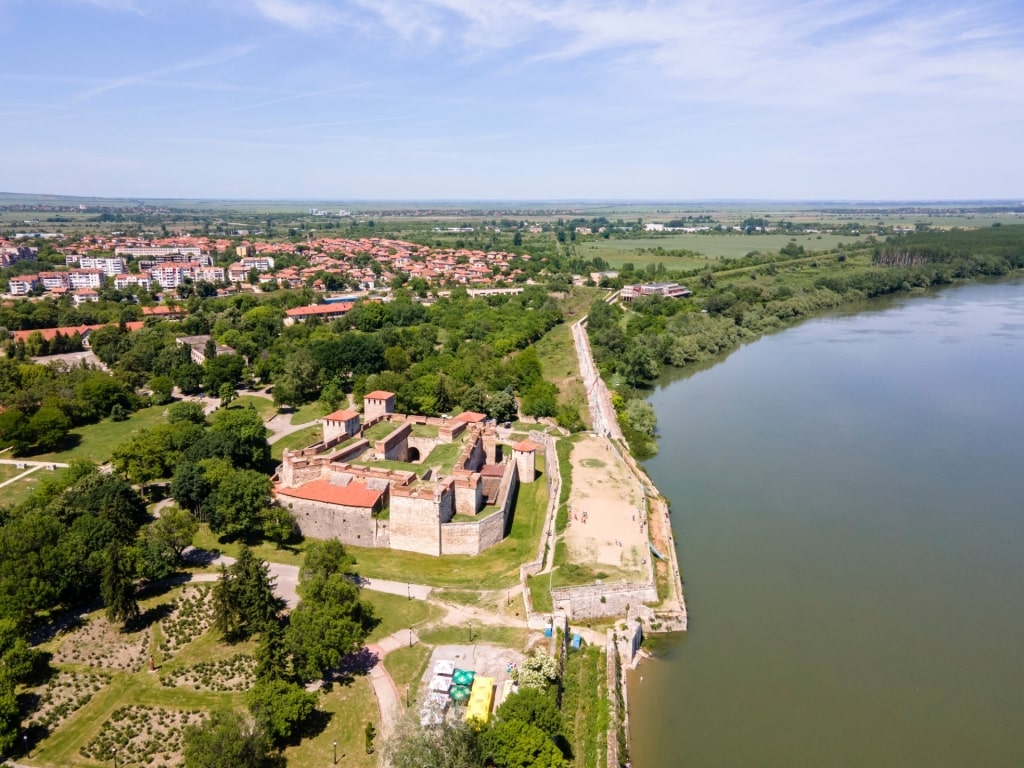
It might be one of the lesser-known Danube river cities, but it’s worth viewing Vidin from both the river and on land.
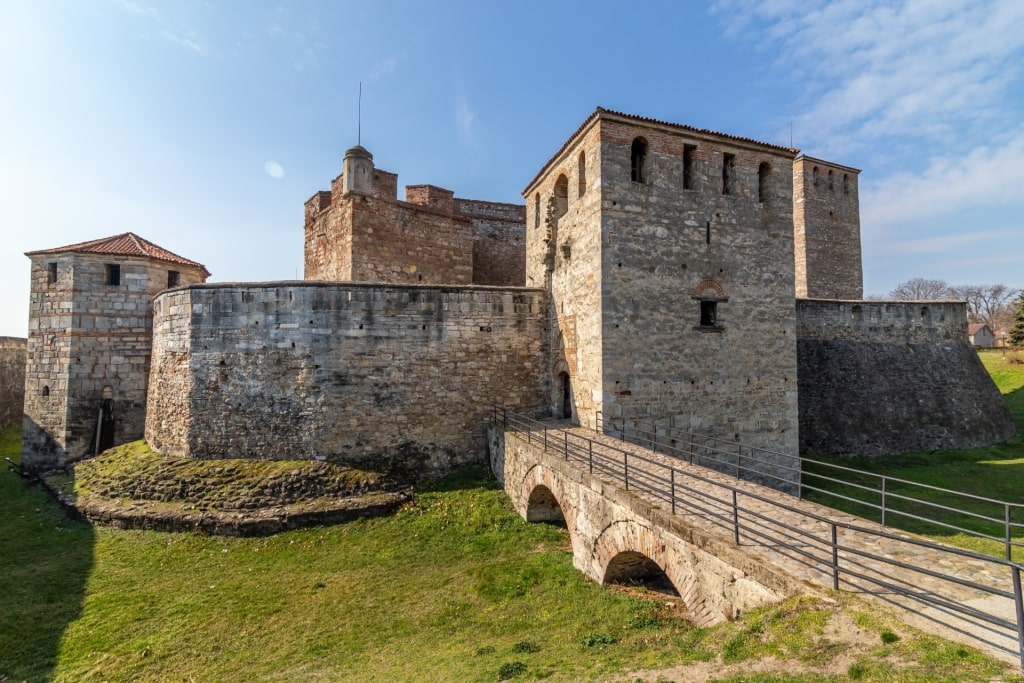
Located on a sweeping curve of the Danube, the Baba Vida fortress is an impressive landmark. The only intact medieval stronghold in Bulgaria, it was built in the 10th century on the site of a Roman garrison and has survived many sieges and attacks.
Baba Vida fortress in Vidin, Bulgaria
These days it’s a peaceful testament to bygone days and the only sound you’ll likely hear is a string orchestra playing for visitors at the foot of the walls. There will probably also be stalls selling fragrant rose oil products, for which Bulgaria is renowned; these make good gifts to take home.
To complete your taste of the city, stop for lunch and sip a glass of local wine produced from the Gamza, or Kadarka, grape. Mainly grown in north-west Bulgaria, the resulting light and fruity red wine goes well with banitsa, a flaky cheese pie.
Novi Sad, Serbia
Novi Sad, Serbia
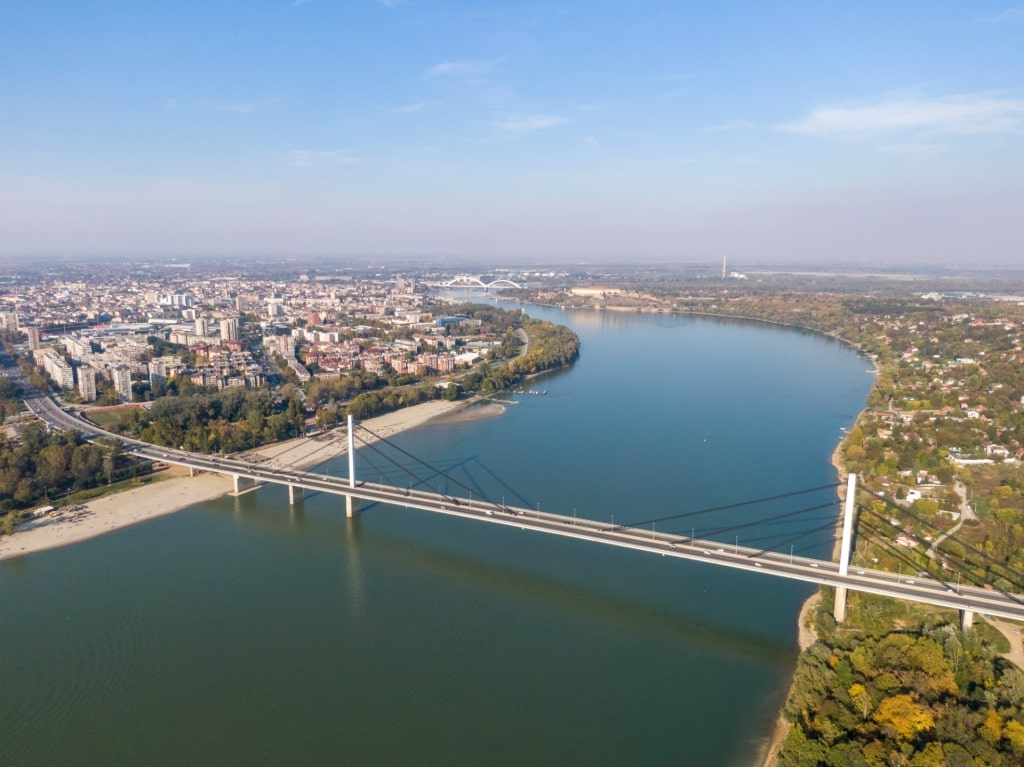
European Capital of Culture in 2022, it’s hard to imagine that Serbia’s second largest city grew out of a small, 18th century fishing village. However, the banks of the river are just as important to locals today; and on sunny days, they spill out onto the Štrand, the sandy beach sloping down to the Danube.
Novi Sad is a very walkable city, with a lively vibe thanks to the 50,000-plus students that attend the university. The traffic-free Zmaj Jovina leads to sights including the red brick Bishop’s Palace, domed Art Nouveau synagogue, and Neo-Gothic Name of Mary Church.
Petrovaradin Fortress in Novi Sad, Serbia
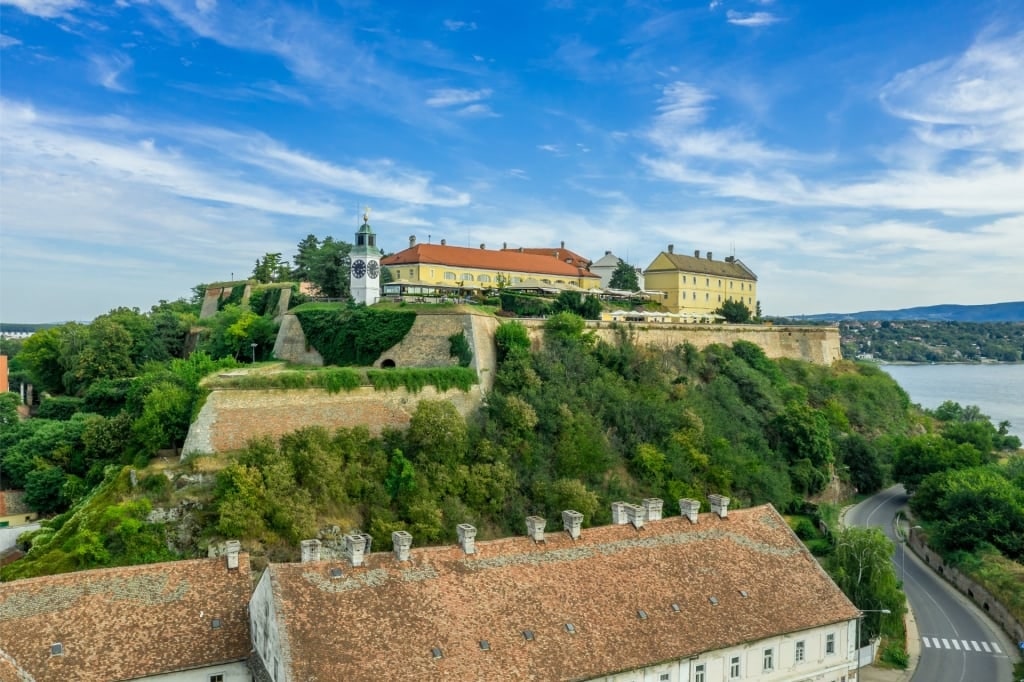
Take a rest at a kafana—a simple, rustic Serbian tavern—or rostilj barbecue restaurant before heading to the hilltop Petrovaradin Fortress. The lofty position of the fortress affords great views of the river. Stroll around the ramparts and visit the old military barracks that have been given a new lease of life as artisan art studios.
Bratislava, Slovakia
Bratislava, Slovakia
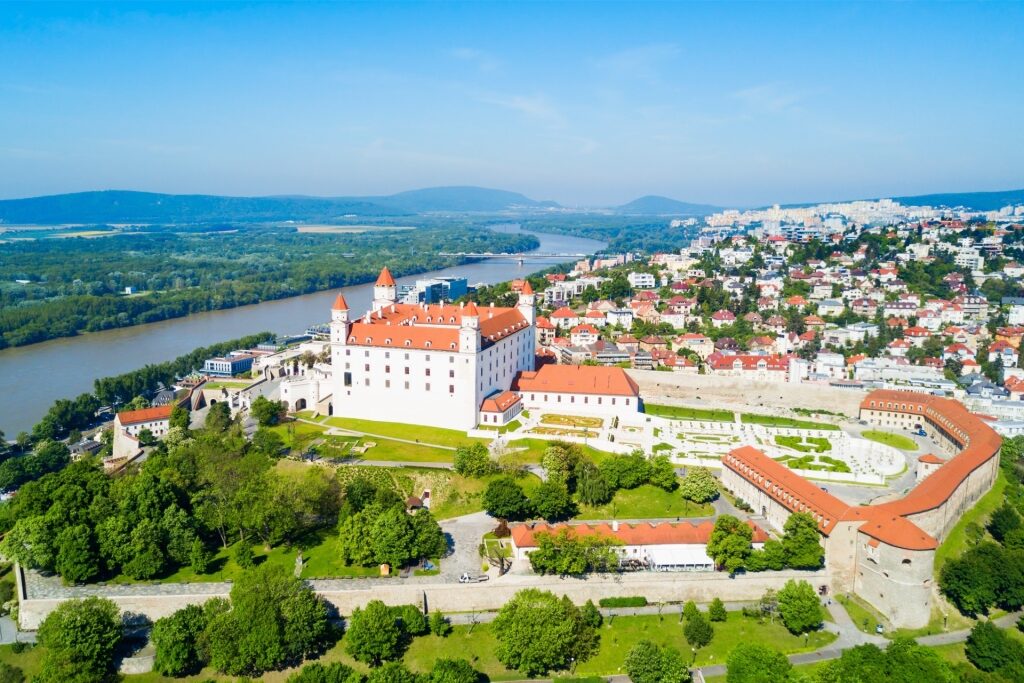
When it comes to capital cities on the Danube, they don’t get any smaller than cute and compact Bratislava, where it’s almost impossible to get lost. While the city has existed for 1,000 years, it’s one of the world’s youngest first cities as it only became a capital in 1993 when Czechoslovakia split into two new countries, the Czech Republic and Slovakia.
From the buzzing main square, surrounded by cafés, streets lead up to 14th-century Michael’s Tower. It’s the only one of the four original town gates still standing. This is a good place to stop at a restaurant and try the local Zlatý Bažant, or Golden Pheasant beer with a plate of bryndzové halušky, the ultimate comfort food of potato dumplings topped with sheep’s cheese and bacon.

Cumil in Bratislava, Slovakia
Bratislava’s streets are filled with quirky artworks and it’s obligatory to stop by the most famous, Cumil, and take a photo of the cheeky bronze figure peeping out of a manhole cover.
Read: Best Things to Do in Bratislava
Melk, Austria
Melk, Austria
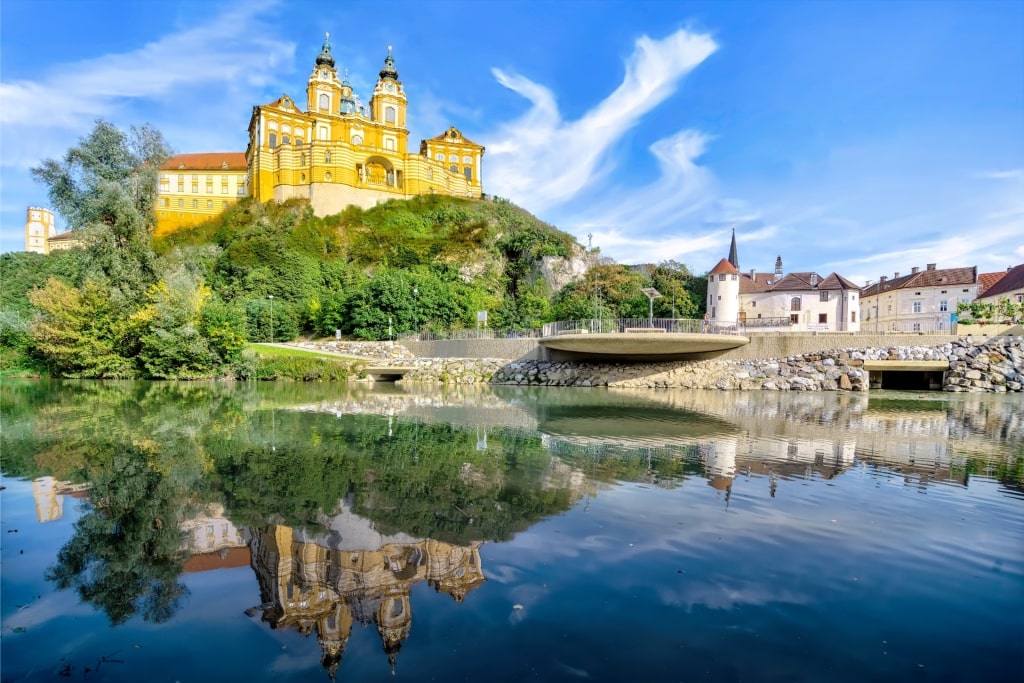
The main reason to visit Melk is clear from the minute you arrive. On the edge of a craggy promontory, 140 feet above the Danube, is the breathtaking Baroque splendor of Melk Abbey.
The Abbey is widely regarded as Europe’s most beautiful monastery. Construction work began in 1702 and it took 34 years to complete. The peaceful, manicured gardens have been a place of reflection for generations of Benedictine monks, and 22 still live at the Abbey. Inside, portraits of Austrian rulers line the imperial corridor while the library, with elaborately painted ceilings, houses a valuable collection of 100,000 historic books.
Regensburg, Germany
Regensburg, Germany
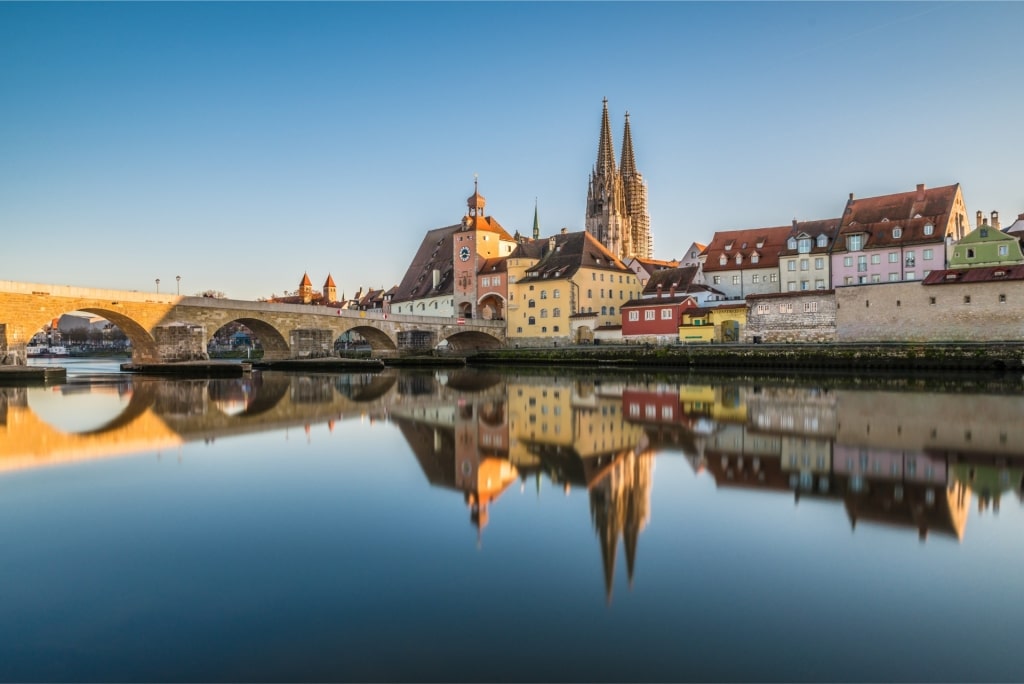
Make sure you’ve worked up a good appetite for both culture and food when you arrive at UNESCO-listed Regensburg. As well as being one of Germany’s best-preserved medieval towns, it also claims the country’s highest concentration of bars.
Next to the 14 arches of the 12th-century stone bridge is the historic Wurstkuchl, the world’s oldest sausage kitchen, first opened to feed Regensburg’s hungry stonemasons and river workers. Today, the juicy pork sausages are still served in portions of six, eight, ten, or 12, with a side of sauerkraut and mustard.
Ruse, Bulgaria
Ruse, Bulgaria
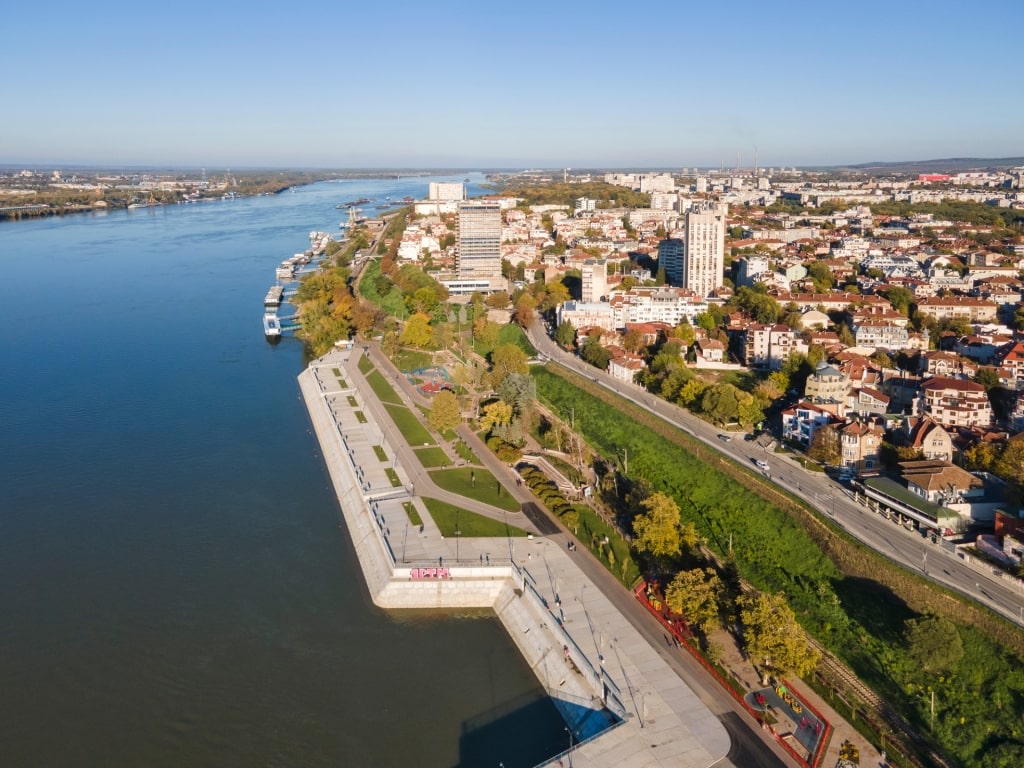
Stylish Ruse, with a vibrant history stretching back more than 2,000 years, is celebrated for its delightful Belle Époque architecture. In fact, you’d be forgiven for thinking you were back in Vienna as you stroll through leafy squares and past buildings with fancy balconies.
The biggest Bulgarian city on the Danube, and the largest Bulgarian river port, Ruse fronts its Romanian neighbor, Giurgiu, on the opposite side of the bank. Until 2013, the so-called Friendship Bridge, from one city to the other, was the only one in the shared Bulgarian and Romanian stretch of the Danube.
After admiring the architecture, take a stroll around the ruins of the Sexaginta Prista Roman fortress, overlooking the river. Railroad fans will be interested in The National Museum of Transport on the site of Bulgaria’s first railway station opened in 1866.
Belgrade, Serbia

Belgrade, Serbia
While Belgrade is one of the Danube river cities that wouldn’t win any prizes in a beauty contest, the Serbian capital emerged from the former Yugoslavia as a vibrant destination.
Trace the country’s rich history in the 17th century Kalemegdan fortress, which keeps a watchful eye over the city from its high lookout point above the confluence of the Danube and Sava rivers.
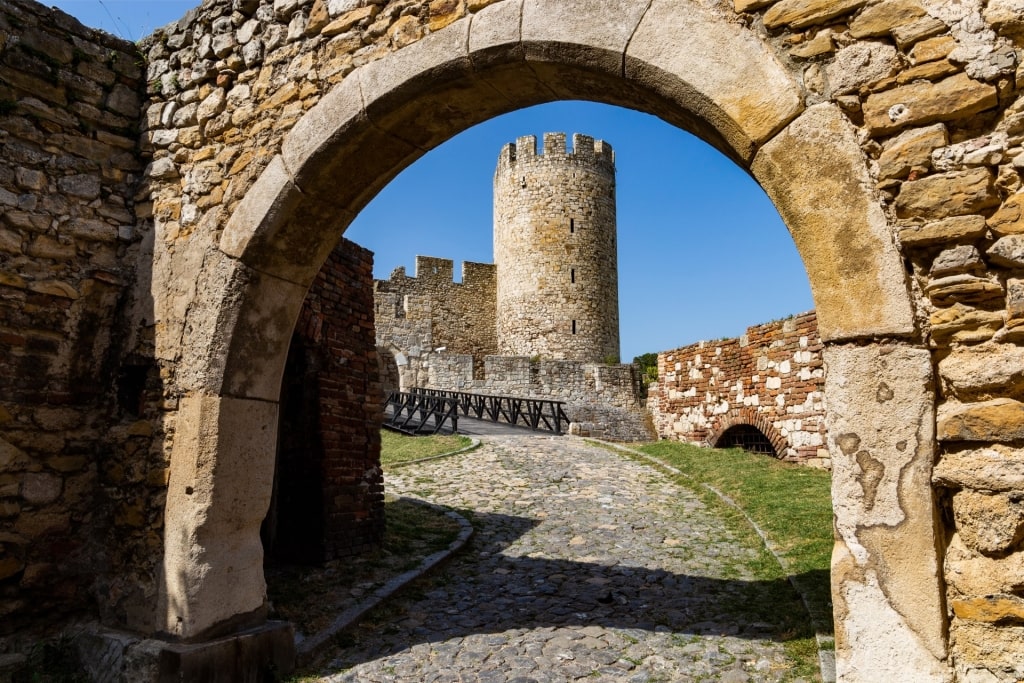
Kalemegdan fortress in Belgrade, Serbia
Downtown, enjoy some retail therapy in Kneza Mihaila pedestrian street and the cobbled bohemian quarter, Skadarlija. Hunt down one of the “secret bars” for a drink.
Tucked away behind city center apartment blocks and unassuming courtyards, these underground bars sprang up during communist times and have now become an attraction. Locals will tell you where to find one.
Ybbs, Austria
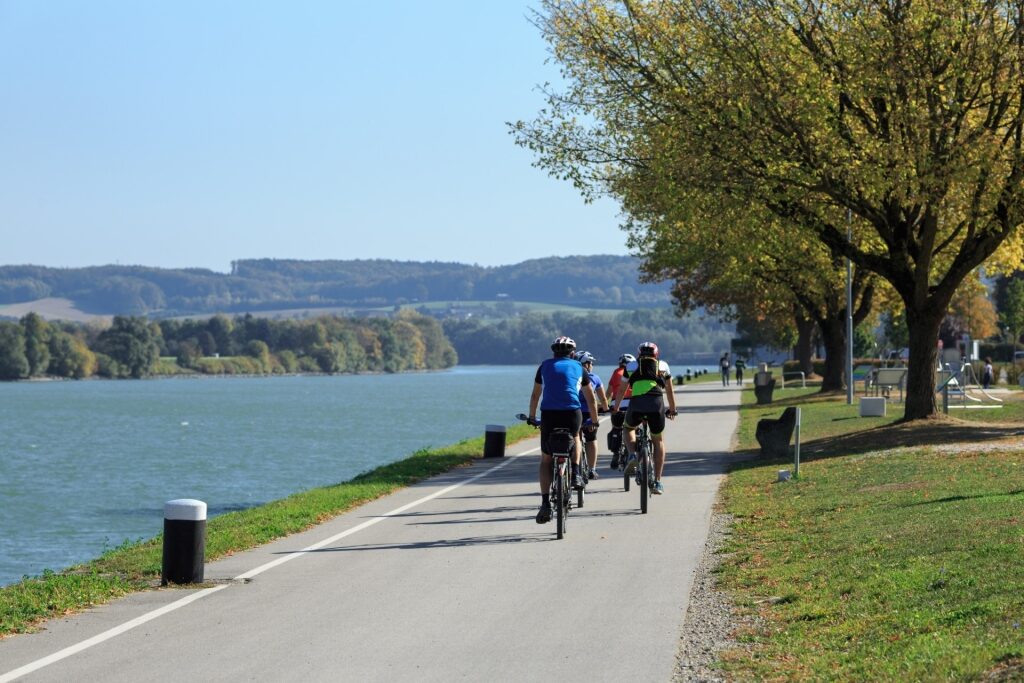
Ybbs, Austria
An offbeat attraction in Ybbs is a tour of the first hydroelectric power plant on the Danube. Discover how the river’s water is harnessed to supply electricity throughout Austria. Afterward, stop for a photo beside one of the old turbine propellers that’s now an industrial art installation on the waterfront.
The Danube Cycle Path runs through Ybbs, so it’s a fitting location for a bicycle museum that takes visitors on a journey through the history of cycling. Curious exhibits include an old wooden bike—with no pedals—which was powered by the rider’s feet and could reach speeds of up to 12 miles per hour, all the more alarming given the rudimentary steering and lack of brakes.
Visegrád, Hungary
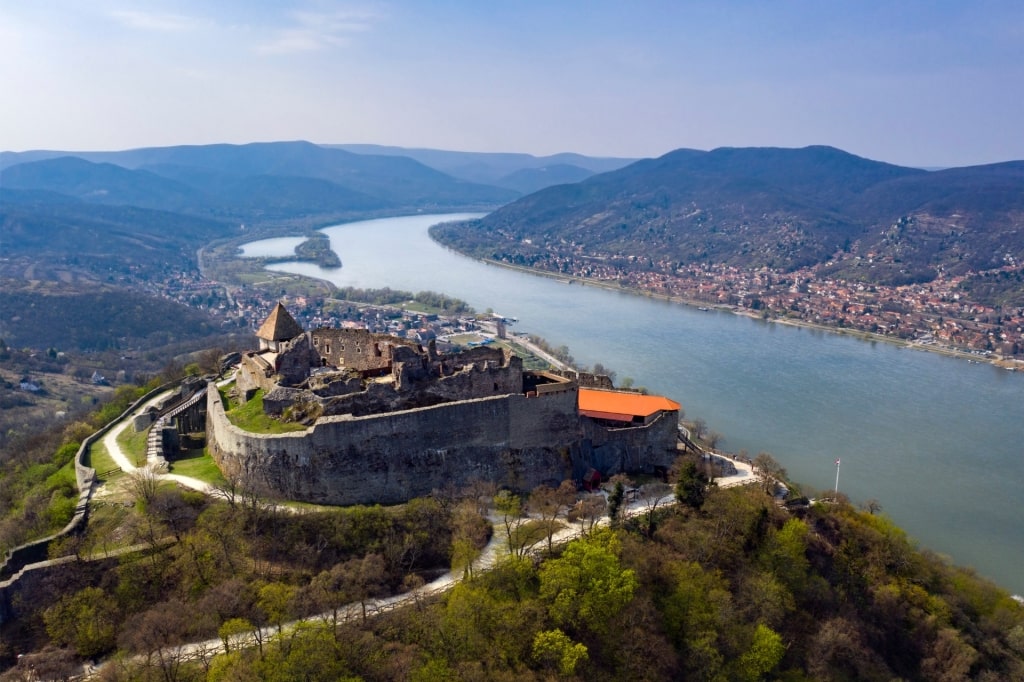
Visegrád, Hungary
North of Budapest is the dramatic sweep of the Danube Bend. Visegrád occupies a prime position on the horseshoe-shaped curve, but for the most jaw-dropping views hike up through the woods to the 15th-century “cloud castle” of Fellegvár Citadel.
Alternatively, take out a canoe rental in Visegrád and enjoy the panorama of the bend from a different perspective. Thrill-seekers can also head to the Visegrád Toboggan Park, where you fly down the mountainside on a cart attached to a track. For something less strenuous, visit Zugfozde Pálinka Museum to learn about—and, of course, taste—Hungary’s fiery fruit brandy.
Read: Rhine vs. Danube River Cruise: Which Is Best for You?
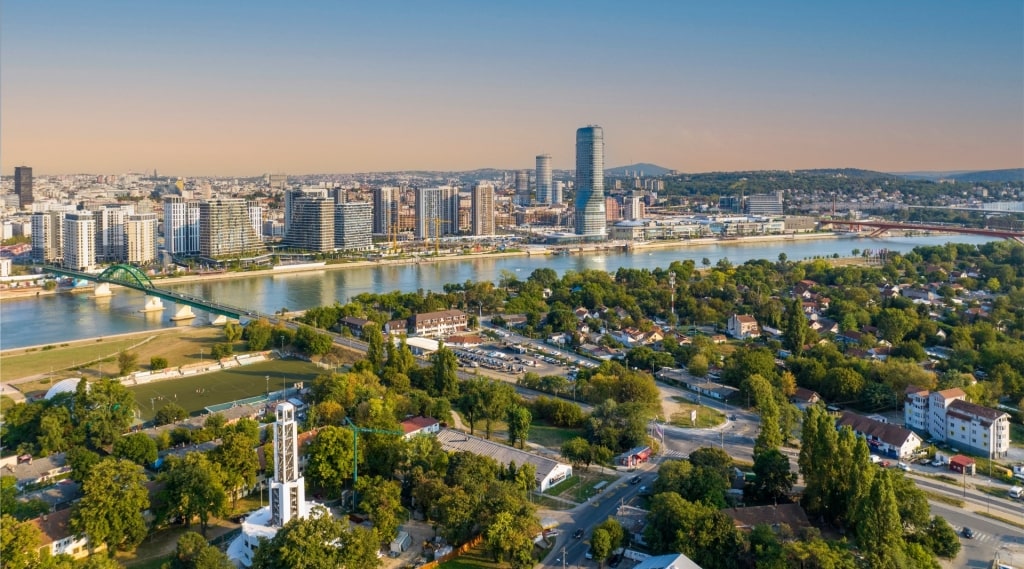
Belgrade, Serbia
Experience all of these cities on one of Celebrity’s Danube river cruises. Browse Danube itineraries and book your vacation on this beautiful river.