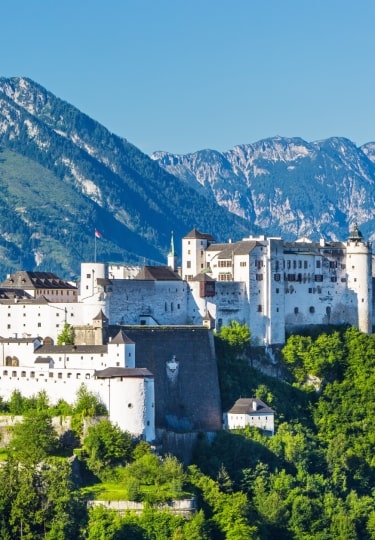
Steeped in sensational baroque architecture and soundtracked by strings, the most apparent answer to the question “What is Salzburg known for?” is its glorious UNESCO-listed Historic Center and being Mozart’s birthplace. Dig a little deeper, and you’ll find Salzburg has some curious claims to fame alongside an intriguing history.
From a globally recognized Christmas carol and the songs from The Sound of Music to world-class breweries and claims of the world’s oldest restaurant, the list of what Salzburg is famous for is fascinating. Read on to discover what makes Austria’s fourth-largest city unique.
Mozart’s Birthplace
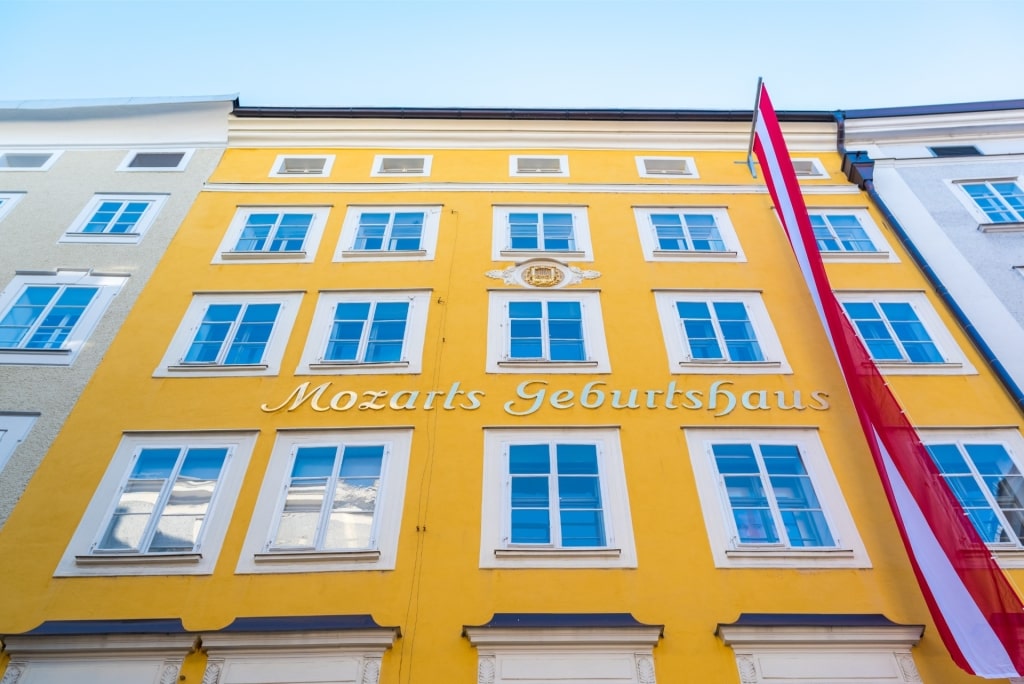
Mozart’s Birthplace
Salzburg’s most famous son is none other than Johannes Chrysostomus Wolfgangus Gottlieb Mozart, the composer and classical musician who is so celebrated, he’s known the world over simply as Mozart.
Born in Salzburg in January of 1756, Mozart’s musical talents appeared at an early age. Some records suggest that he was plucking the harpsichord by the age of three and composing by five, with his first full opera premiering at the age of 11.
Still, it was after relocating to Vienna at the age of 25 that many of Mozart’s most internationally acclaimed symphonies and concertos were written. However, that doesn’t stop an estimated half a million people from visiting Mozart’s birthplace each year.
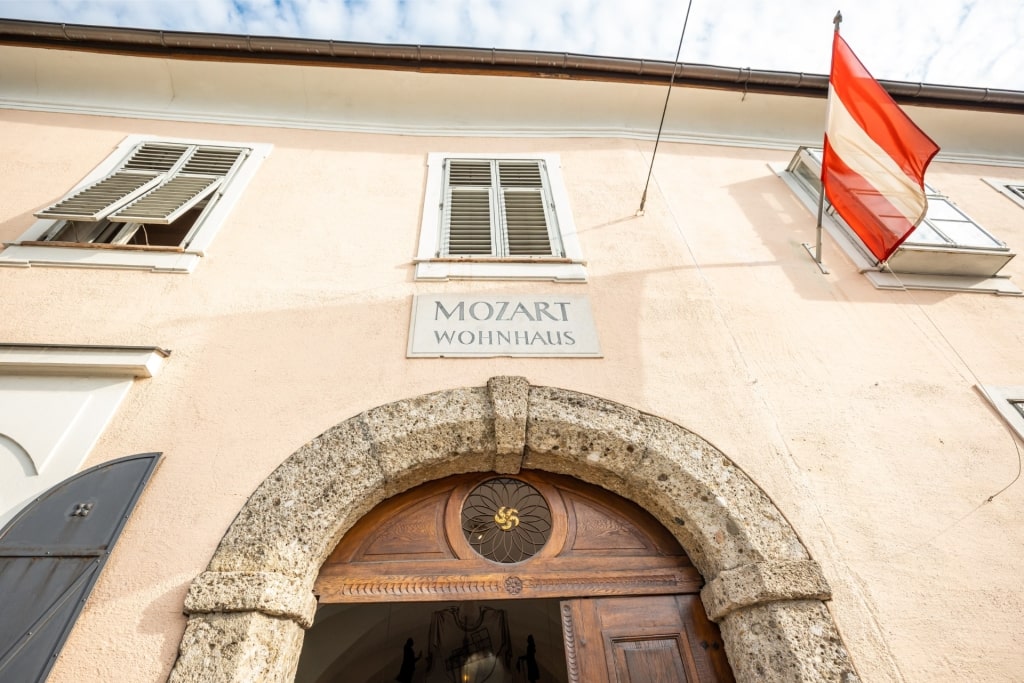
Mozart Residence
Located on Hagenauerplatz, one of the city’s central squares, the humble, third-story apartment where Mozart grew up now serves as a time capsule-like museum.
A second, larger house museum, the Mozart Residence—where he resided from 1773 until his move to Vienna in 1781—also exhibits many of the composer’s documents, and most excitingly, his early piano.
To treat your ears and your eyes, attend a morning or matinee Mozart concert at the Stiftung Mozarteum, the hub of the Salzburg Mozarteum Foundation. The gorgeously gold, intimate, and acoustically-pleasing Großer Saal is one of the city’s finest performance spaces.
The Salzburg Summer Festival
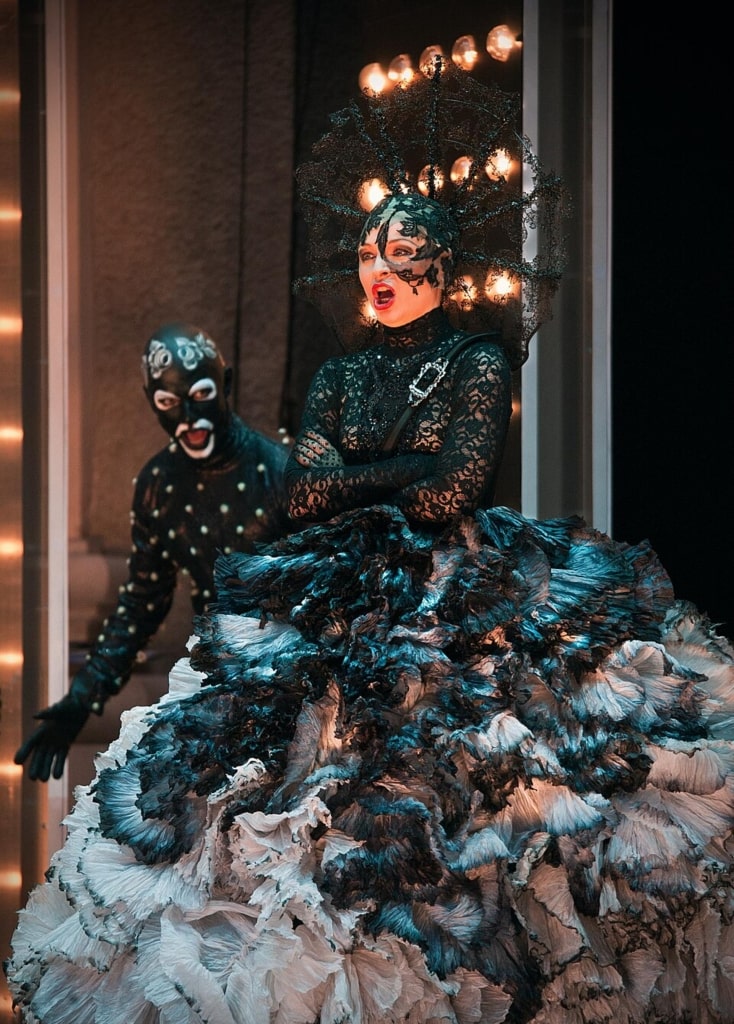
Salzburg Summer Festival Photo by Luigi Caputo on Wikimedia Commons, licensed under CC BY 3.0
The Salzburger Festspiele, also known as the Salzburg Summer Festival, is one of the world’s leading cultural events. From mid-July to late August, the entire city celebrates performing arts in all forms, from opera to drama and classical symphonies.
The festival is recognized globally for its impeccable quality and talented musicians from across Austria and the world have come to play here since its founding in 1920.
Tickets are understandably in high demand as the festival is one of the most significant cultural activities that Salzburg is known for.
Thankfully, the festival’s schedule features numerous mid-morning and matinee performances, offering more opportunities to enjoy the program, even on a day trip. Booking is essential.
Hohensalzburg Fortress
Hohensalzburg Fortress
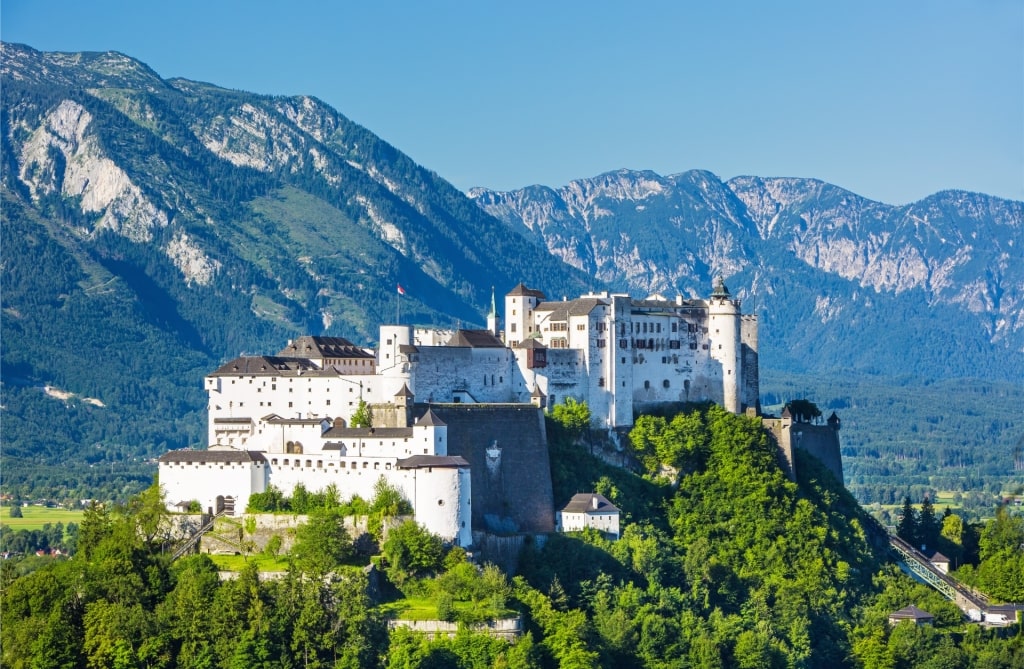
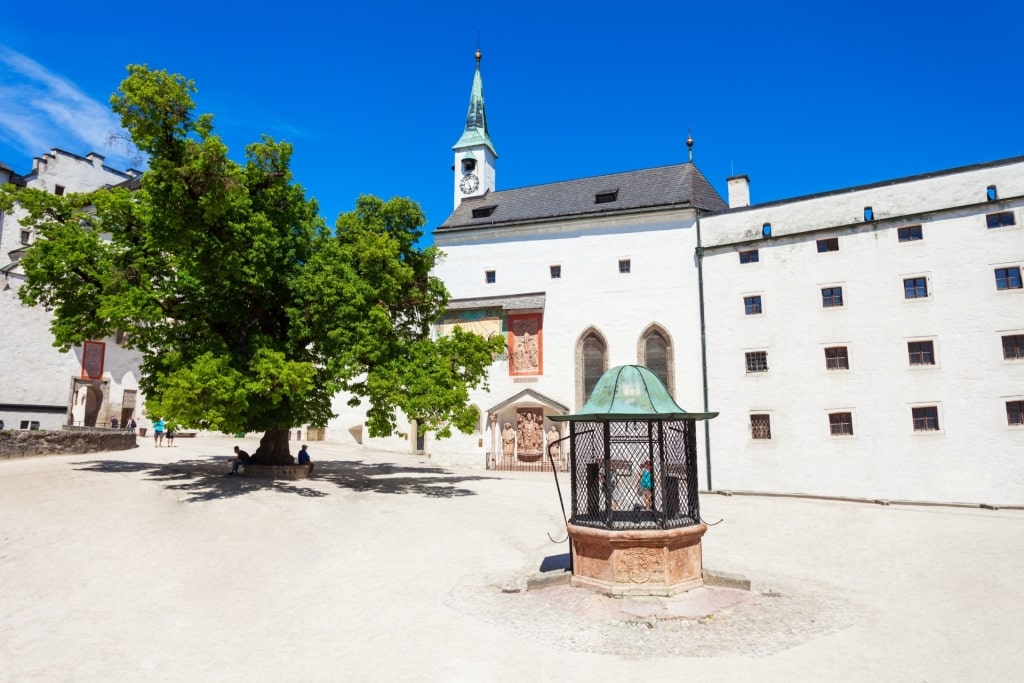
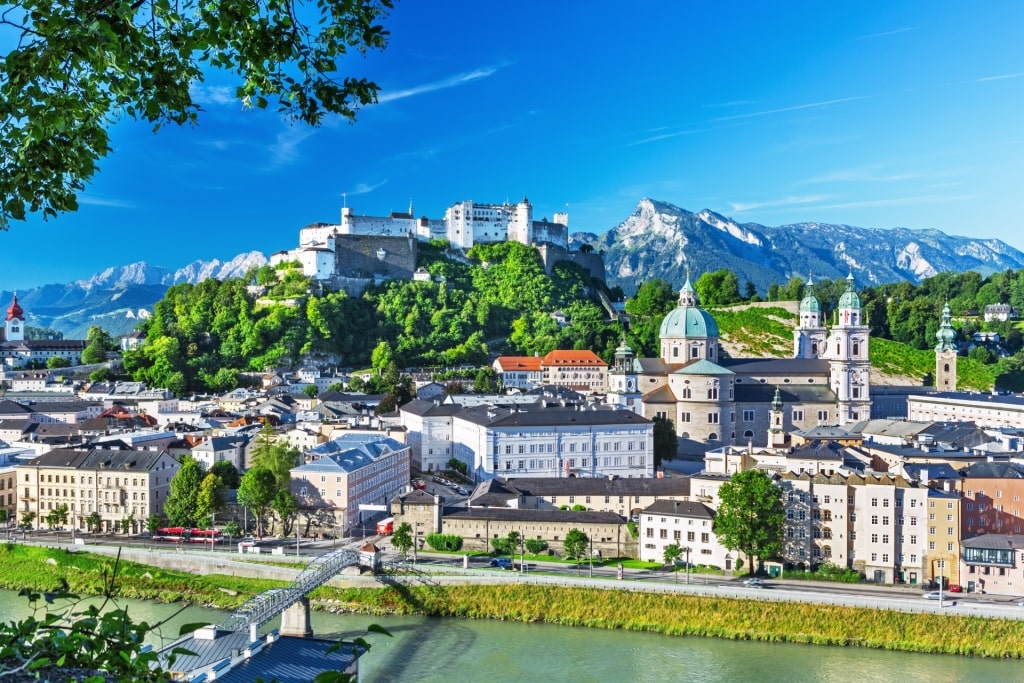
Celebrated as Central Europe’s largest fully preserved castle, the Hohensalzburg Fortress has dominated the skyline of Salzburg since 1077, with further expansions in the centuries that followed.
Serving as both the city’s crowning landmark and providing a key chronology of Salzburg’s growth, a visit to the turreted, white-clad fortress can explain much of the city’s unique history.
Inside, you’ll marvel at medieval military might in the armory and be left speechless by the Gothic and grand Prince’s Chambers, which retain their lavish, early 16th-century furnishings.
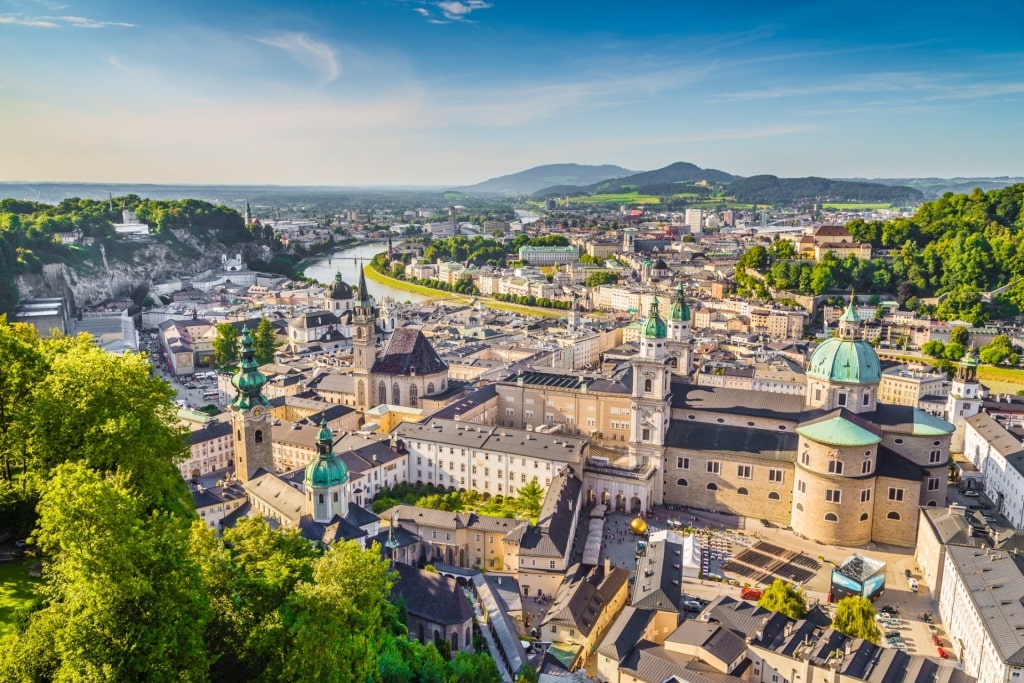
View from Hohensalzburg Fortress
Equally swoon-worthy are the elevated panoramas. Survey the city’s numerous spires, the Salzach River, and the Austrian Alps in the distance from the south terrace, and your camera will be sent into overdrive.
Yet it’s in the Fortress Museum where you’ll learn what Salzburg is known for. Here, Salzburg’s story is explained through timeline exhibitions, which reveal why the city’s appearance is so starkly different from that of much of the rest of Austria.
Hohensalzburg Fortress
Salzburg was an independent principality within the Holy Roman Empire for approximately 500 years, governed by the Prince-Archbishops who constructed Hohensalzburg. The city only became part of Austria in the 19th century.
This, coupled with its location bordering modern-day Germany’s state of Bavaria—for brief stints, the city was also ruled by the Kingdom of Bavaria—meant that most of Salzburg developed independently of the Habsburg Austrian Empire. This is why its architecture is unique in Austria.
UNESCO-listed Old Town
Old Town
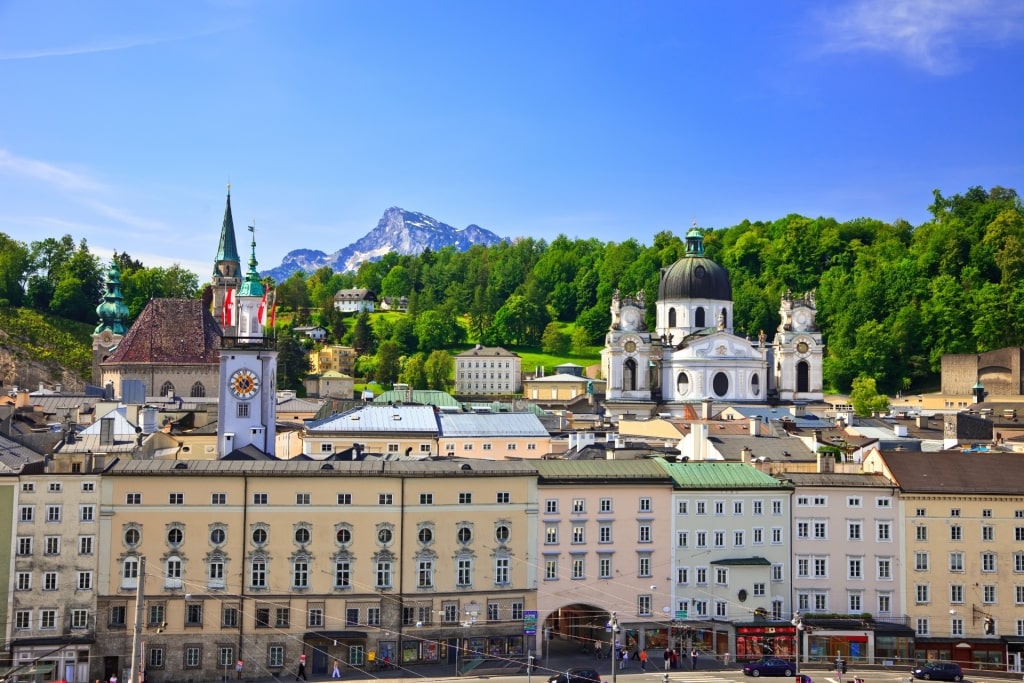
Influenced by the local archbishops’ penchant for Italian baroque, rather than the Imperial style preferred by the Habsburgs, Salzburg’s handsome Altstadt, or Old Town, stands apart from most other Austrian cities.
Much of the city’s elegance is due to the wealth created when it was the booming hub of the prized Austrian Alpine salt trade, hand-mined from the surrounding region. And, with the Archbishops primarily residing in the central Residenz Palace, rather than the Hohensalzburg Fortress, expenditure was spread out across the downtown area.
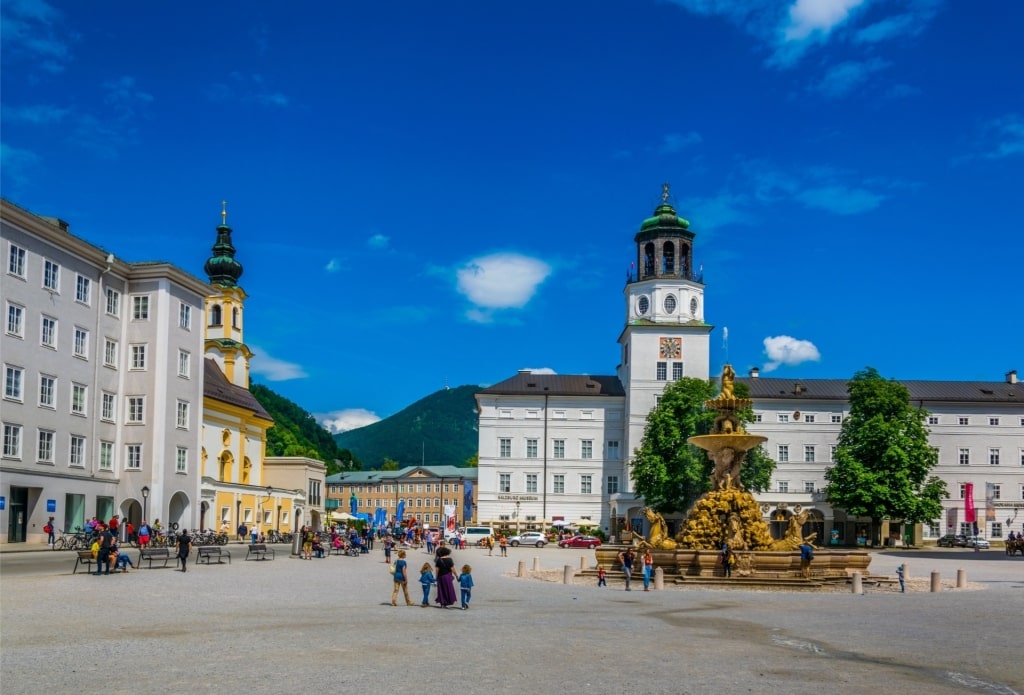
Old Town
Impressive and enchanting, the baroque historical center, much of which avoided WWII bombs, was designated a World Heritage Site in 1996.
Any visit should start with a couple of hours exploring the DomQuartier, consisting of the Residenz Palace, St. Peter’s Abbey—the oldest abbey in Austria—and the domed Salzburg Cathedral.
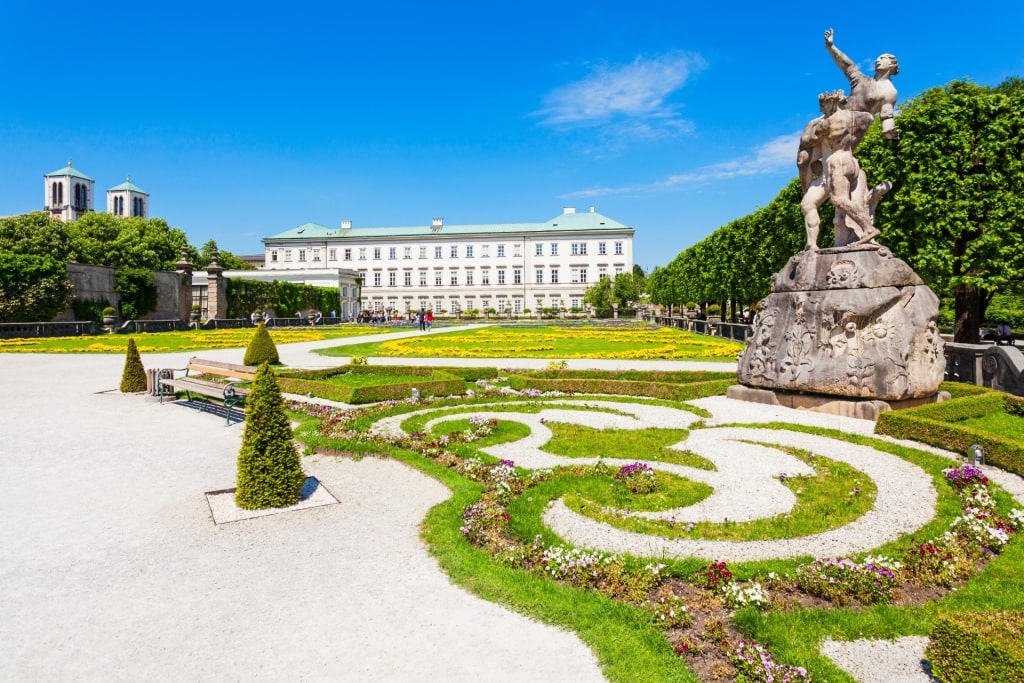
Mirabell Palace and Gardens
Other notable highlights include the Mirabell Palace and Gardens, Getreidegasse, Salzburg’s most famous shopping street, and Karajan Square, where the archbishops’ horses were once groomed, now immortalized in a pond and statue.
Just behind is the Felsenreitschule, or former horse-riding school, which was constructed into the Mönchsberg mountain’s rock in the 17th century. It has since been enclosed, but remains in place, serving as a stage backdrop in the concert hall.
The “World’s Oldest Operating Restaurant”
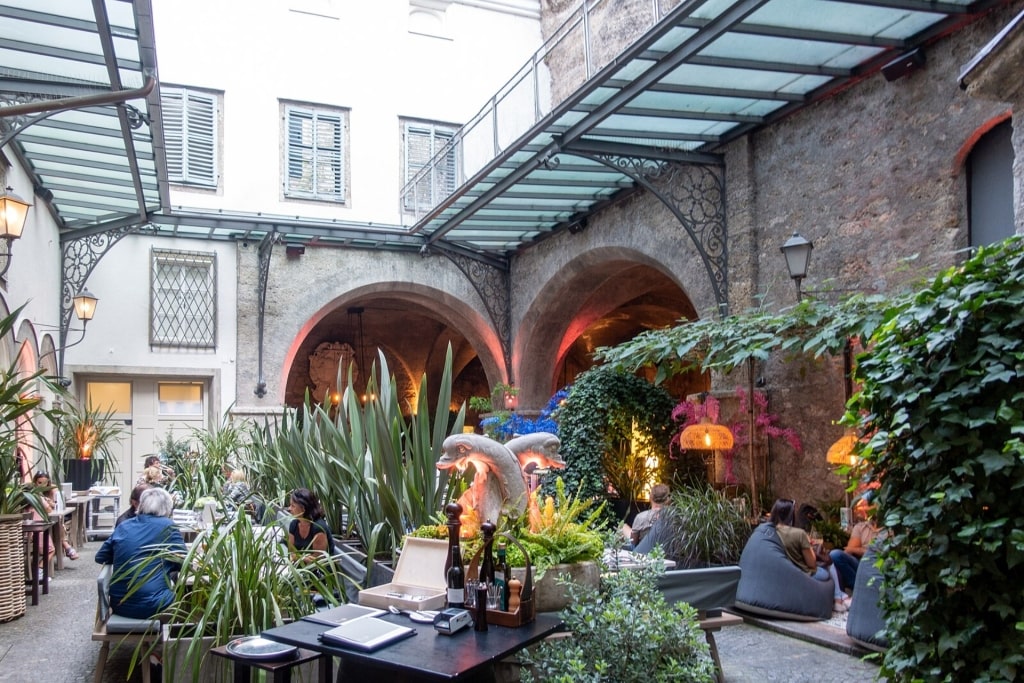
St. Peter Stiftskulinarium Photo by Kent Wang on Wikimedia Commons, licensed under CC BY-SA 2.0
Consult the Guinness World Records, and it will tell you the world’s oldest operating restaurant is in Spain. Ask a Salzburger, though, and you’ll be told it’s right here in the heart of the historical center.
In 803 AD, a building within St. Peter’s Abbey’s walls opened its door as an inn, and has, in some shape or form, been feeding guests for over 1,200 years.
While periods of closure over the last millennium have meant that the dining room isn’t officially the oldest continuously operating restaurant, that doesn’t detract from the experience of enjoying a meal in St. Peter Stiftskulinarium.
The restaurant is spread over 11 different areas including a courtyard, the historical rock-carved dining room, a characterful wine cellar, and more recent additions, such as a concert space. It’s essential to reserve well in advance to guarantee a traditional table.
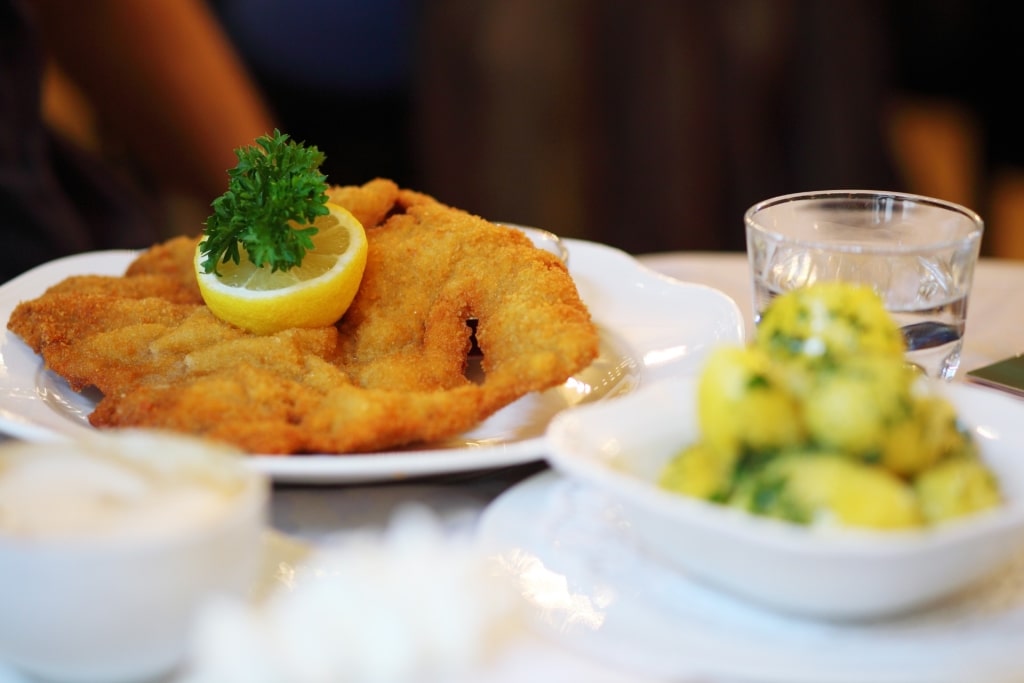
Wiener Schnitzel
Nowadays, St. Peter’s high-end restaurant is celebrated for plating high-quality, traditional Austrian dishes that Salzburg is famous for. Menu highlights include Wiener Schnitzel, a ubiquitous thin, breaded veal cutlet; tafelspitz, a boiled beef dish; and Salzburg’s own Nockerl.
Salzburger Nockerl
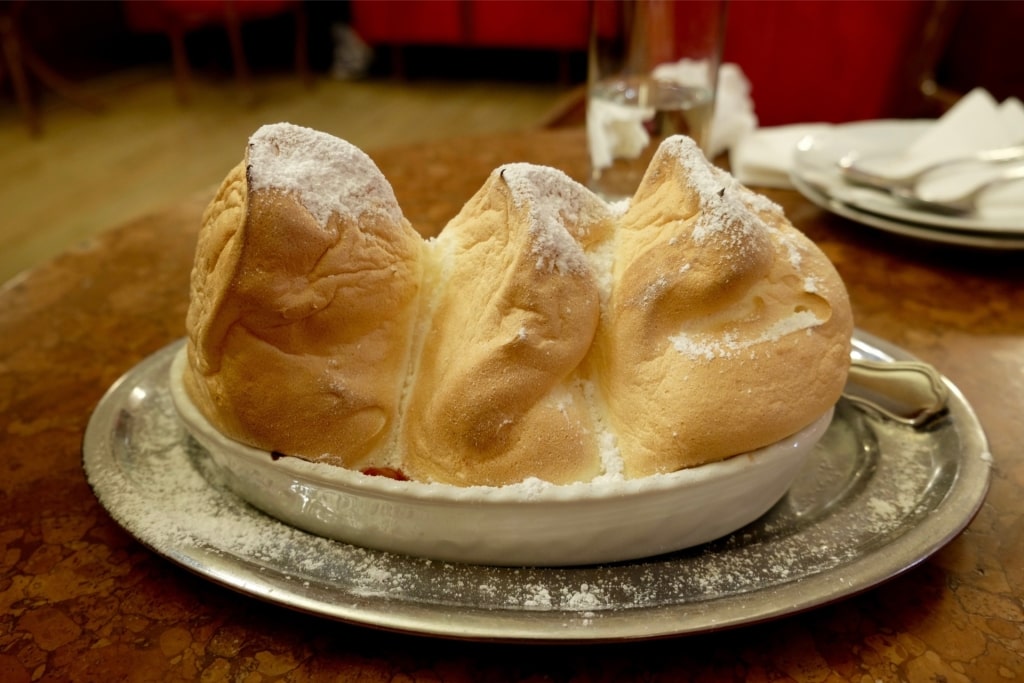
Salzburger Nockerl
The city’s delicious, sweet star is the Salzburger Nockerl. Head into any typical restaurant and you’ll be able to sample this Salzburg-born recipe, which has been a staple of the city’s culinary scene since the 17th century.
Light and airy, the large, traditional dessert is prepared primarily with egg whites and sugar, creating what is essentially a cross between a soft meringue and a soufflé, shaped to resemble Salzburg’s three main mountains.
After baking for around 15 minutes to rise, the Austrian dessert is finished with a sprinkling of snow-representing icing sugar, berry jam and, sometimes, vanilla sauce. Often served theater-style at the table, it’s a decadent treat designed for sharing—a little like the legend of forbidden love it was born from.
The Sound of Music
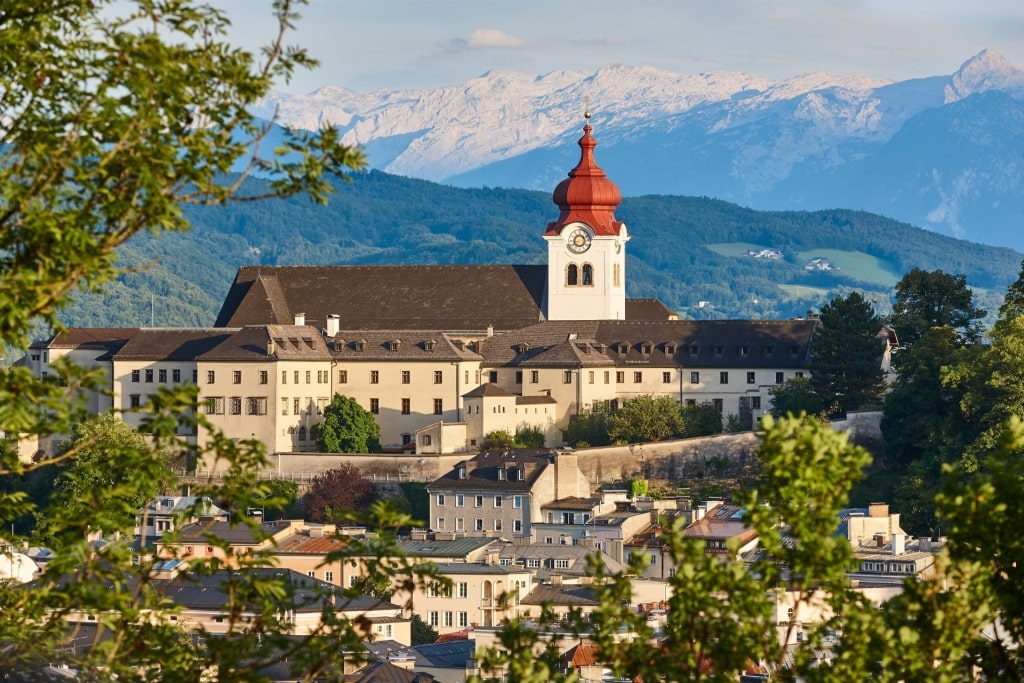
Nonnberg Abbey
If you ask an American or Brit, “What is Salzburg famous for?” chances are the response will be The Sound of Music. The 1959 stage musical followed the life of Maria von Trapp and the movie of the same name went on to become a cult classic. Hundreds of thousands of visitors flock to Salzburg each year to tour locations where the family’s story unfolded.
While you’d need to venture beyond the city’s limits to see some of the mountain settings, the most famous backdrops are right in the city. Don’t miss the chance to visit Benedictine Nonnberg Abbey, where Maria lived before her marriage. The lakeside “family home” was Schloss Leopoldskron, and Schloss Hellbrunn, where the white pavilion, the set for the song Sixteen Going on Seventeen, has since been relocated.
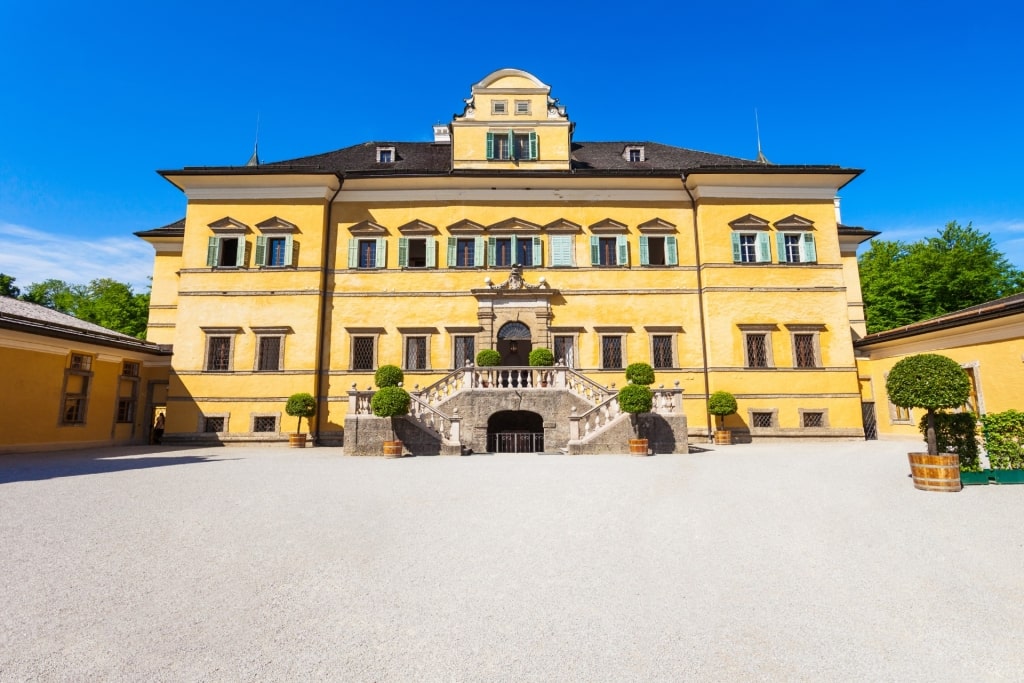
Schloss Hellbrunn
Another of Salzburg’s most famous sights is located in Schloss Hellbrunn’s grounds: the 17th-century trick fountains, featuring water-powered figurines and hidden jets. Though, of course, the most famous filming location is arguably the Mirabell Palace and Gardens.
Read: Best Places to Visit in Austria
Mirabell Palace
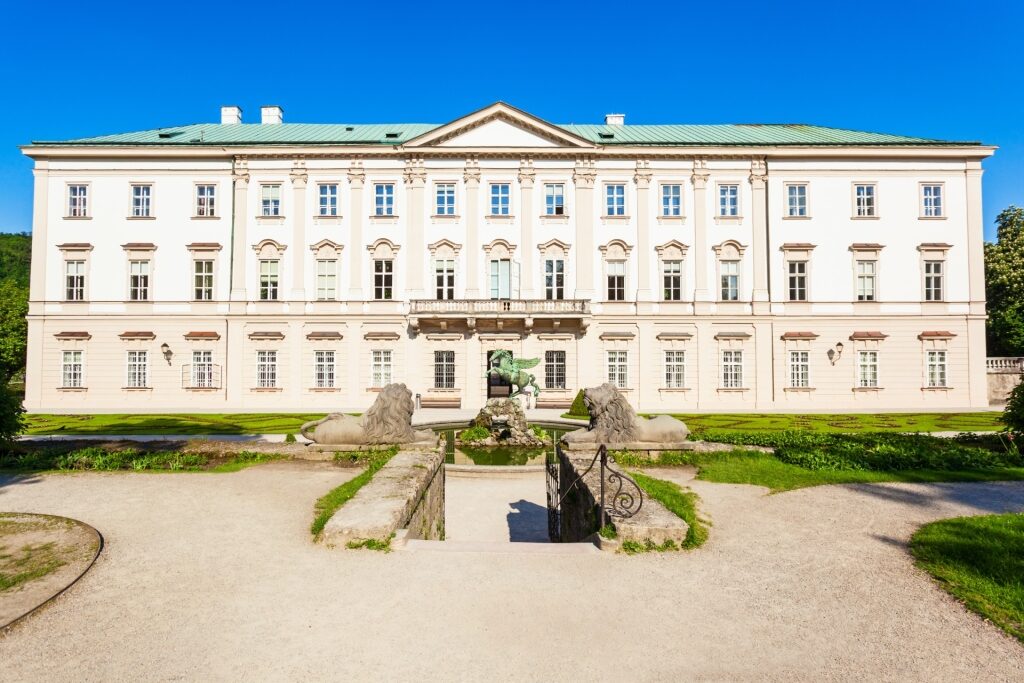
Mirabell Palace and Gardens
Part of Salzburg’s UNESCO listing, yet very much deserving of its own spotlight, the Mirabell Palace and Gardens is an exemplary piece of the grand architecture that Salzburg is known for.
Constructed at the turn of the 17th century, parts of the former Archbishop’s palace are now used for governmental functions. However, some of the grandest chambers, including the stucco-bedazzled and marble-heavy banqueting hall and the staircase, adorned with cherubs, are open to the public.
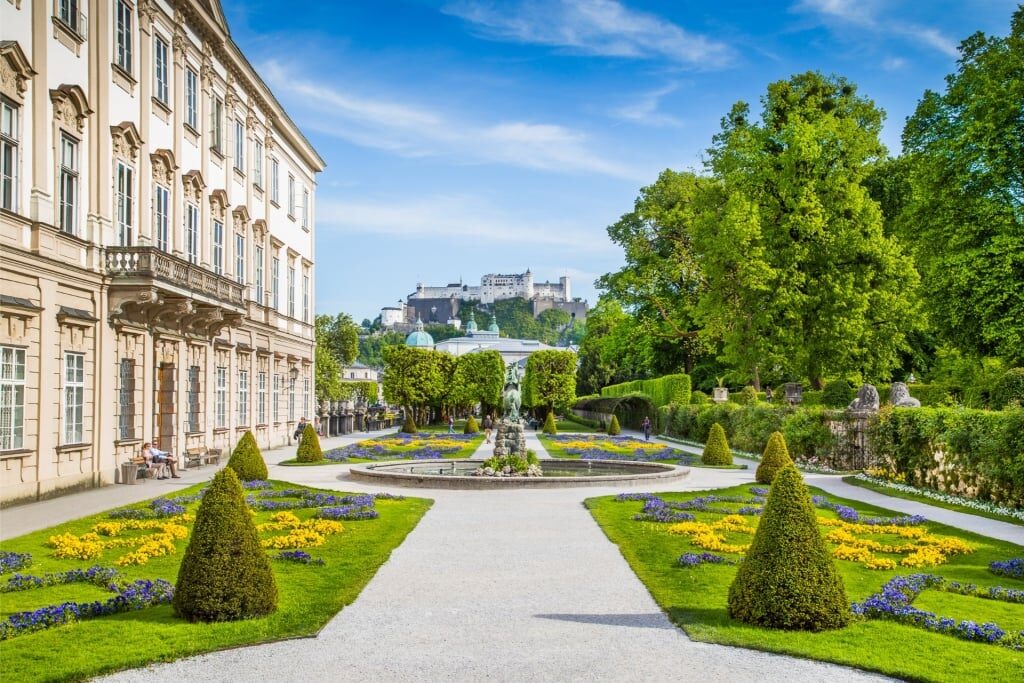
Mirabell Palace and Gardens
Stepping inside, it’s instantly clear why the palace was renamed and given its Italian-inspired title, which means “wonderful and beautiful”.
Equally enchanting are the grounds. Redesigned in 1690 to frame an eye-pleasing view directly towards the Hohensalzburg Fortress, the seasonally rose-scented gardens, fountains, and statues will have your heart singing a rendition of Do-Re-Mi.
Red Bull
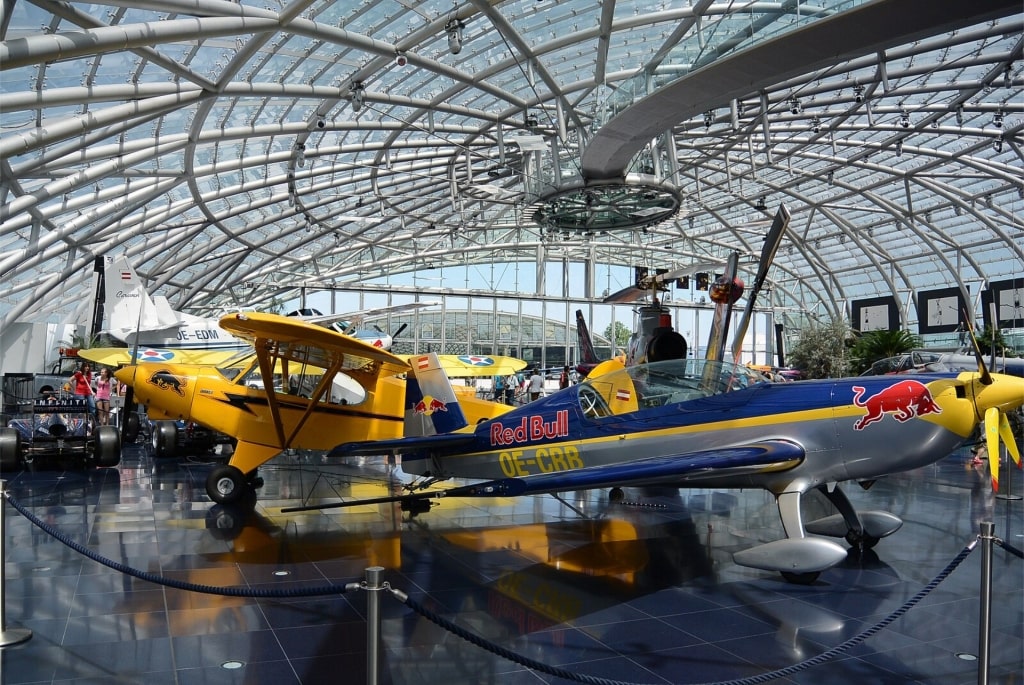
Red Bull Hangar-7 Photo by flightlog on Wikimedia Commons, licensed under CC BY 2.0
As recognizable for its energy drinks as for its sports and event partnerships, Red Bull is one of the most famous Austrian companies and hails from SalzburgerLand. Headquartered in nearby Fuschl am See, the brand has become a worldwide household name since 1984.
Located a short distance from the historical center, the Red Bull Hangar-7 is one of the most contemporary answers to the question, “What is Salzburg famous for?”
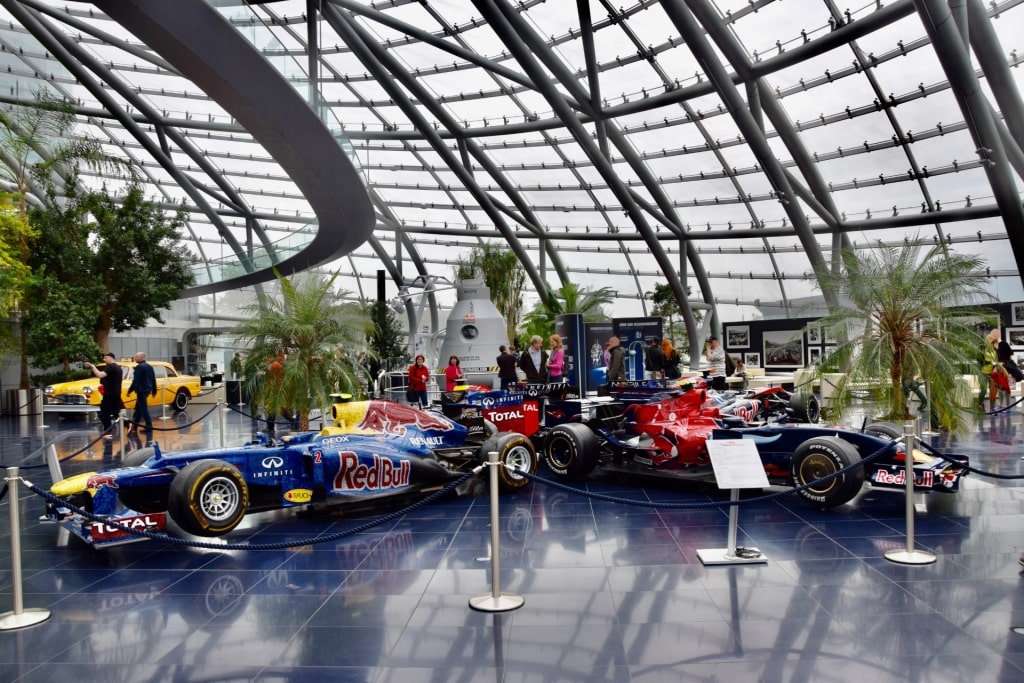
Red Bull Hangar-7 Photo by Ank Kumar on Wikimedia Commons, licensed under CC BY-SA 4.0
Flying and Formula 1 fans will especially appreciate the museum, housed within a striking glass and steel domed building. On display are rare and vintage relics of aviation, including former aerobatic-performing helicopters, a Douglas DC-6B, and other aircraft that collectively form the legendary Flying Bulls collection.
Many of Red Bull’s F1 racing cars are also showcased. A handful of sports cars are on display, including those driven by notable names such as Daniel Ricciardo and Sebastian Vettel.
Breweries & Beer Gardens
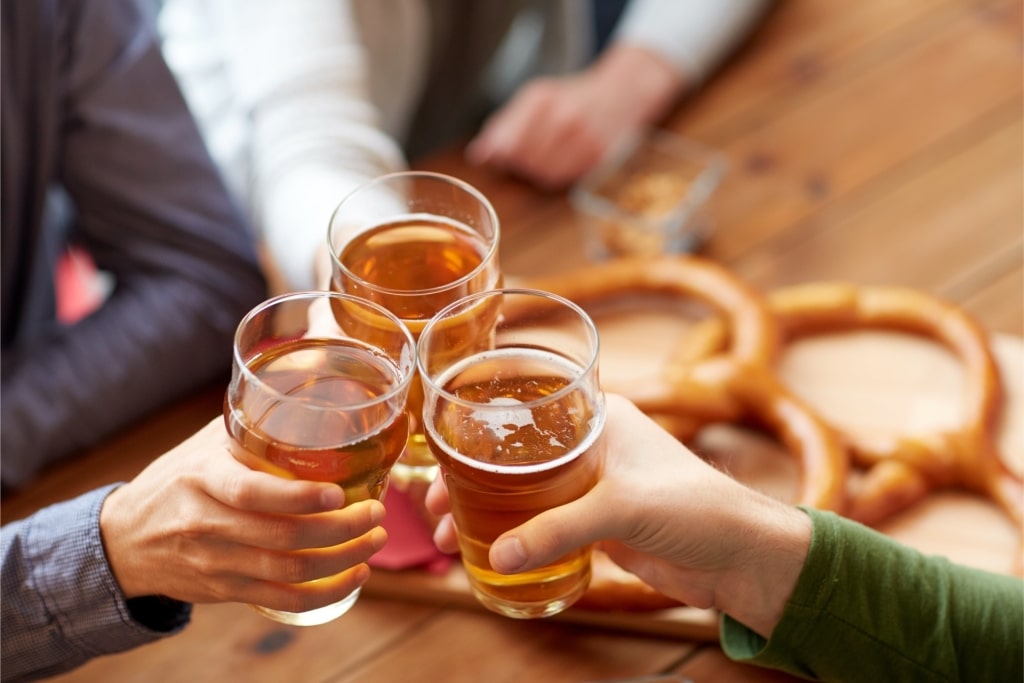
Beer
Vienna may have its café culture—something Salzburg imported in equally grand spaces in the 17th century—but with Bavaria, the home of Oktoberfest, just across the border in Germany, it’s no surprise that Salzburg is better known for its brewing and beer gardens.
In fact, with a dozen breweries in the city and its surroundings, and countless pubs and beer gardens, Salzburg is considered Austria’s beer capital.
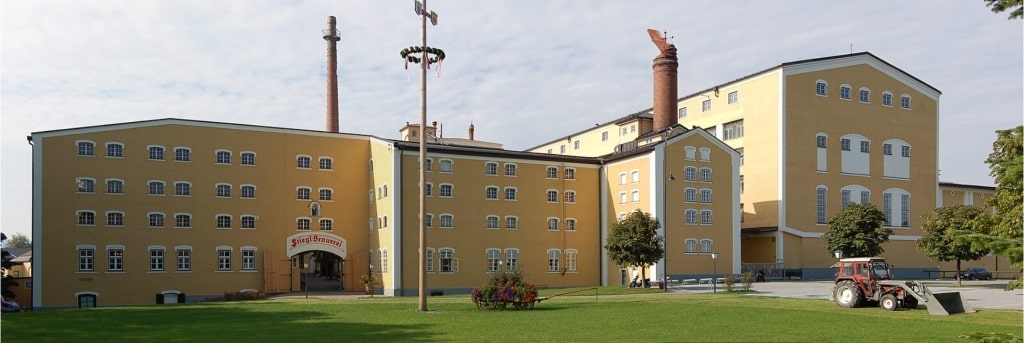
Stiegl Photo by Michael Kranewitter on Wikimedia Commons, licensed under CC BY-SA 4.0
One of the most impressive is Stiegl, located on the city’s fringes, which is acknowledged as Austria’s largest private brewery. Join a tour and tasting to learn more about how the brewing process has evolved since its founding in 1492.
Alternatively, visit Austria’s largest beer hall at Augustiner Bräu, a monastery brewery with over 400 years of history. Drinking the ancestral recipes, poured directly from a wooden barrel, is an unforgettable experience.
Mozartkugeln
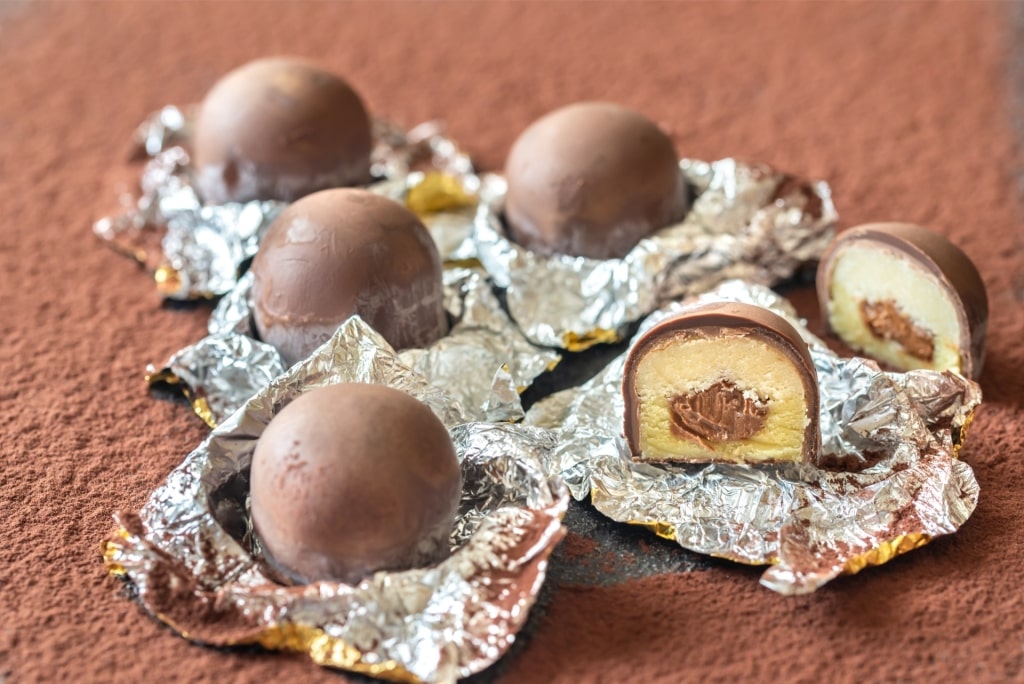
Mozartkugeln
What is Salzburg known for? Spend any time in the city and you’ll quickly conclude, Mozartkugeln, which are on sale absolutely everywhere. Translated, Mozartkugel means Mozart Ball, and while that might sound a little odd, it’s actually a mouthwatering treat of marzipan and pistachio paste wrapped in nougat and dark chocolate.
Invented in 1890 by local confectioner Paul Fürst, it didn’t take long for the award-winning chocolates to be copied by many other confectioners. You’ll now find them being produced nationwide.
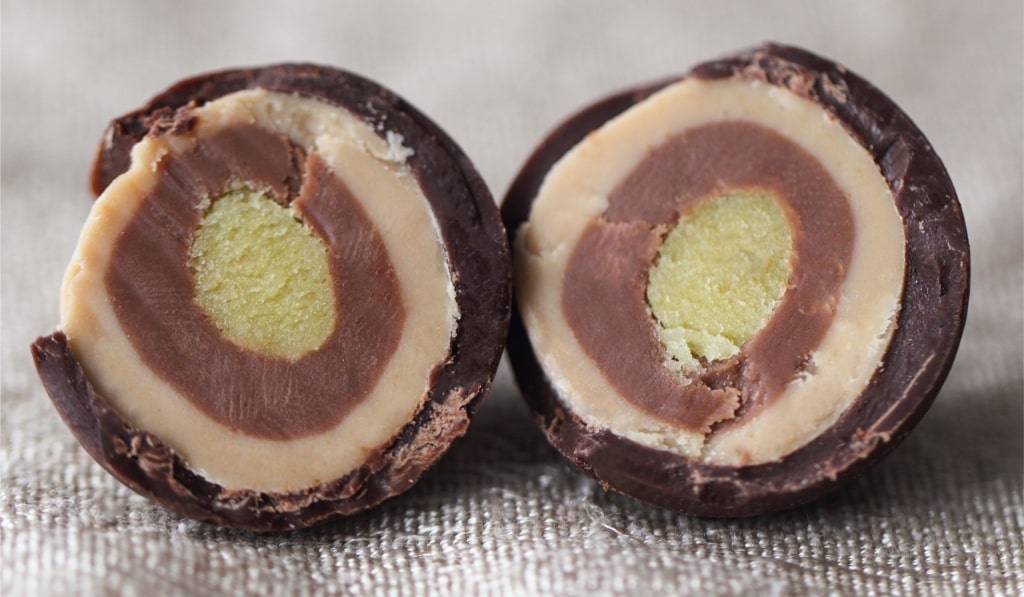
Mozartkugeln
In Salzburg alone, you’ll see Mozartkugeln being sold in countless shops and wrapper styles indicating the dozen local producers, signaling just how popular they have become.
Still, only one version is authorized to use the title of Original Salzburger Mozartkugel, and that’s the recipe still produced by the descendants of Paul Fürst. You can differentiate the original by its blue and silver wrapper, adorned with Mozart’s portrait.
Another sign of quality Mozartkugeln is a slightly irregular shape. Surprisingly, even though millions are produced each year, the original is still made by hand, leaving a slight indent where the chocolate-dunking stick was inserted.
Christmas Celebrations
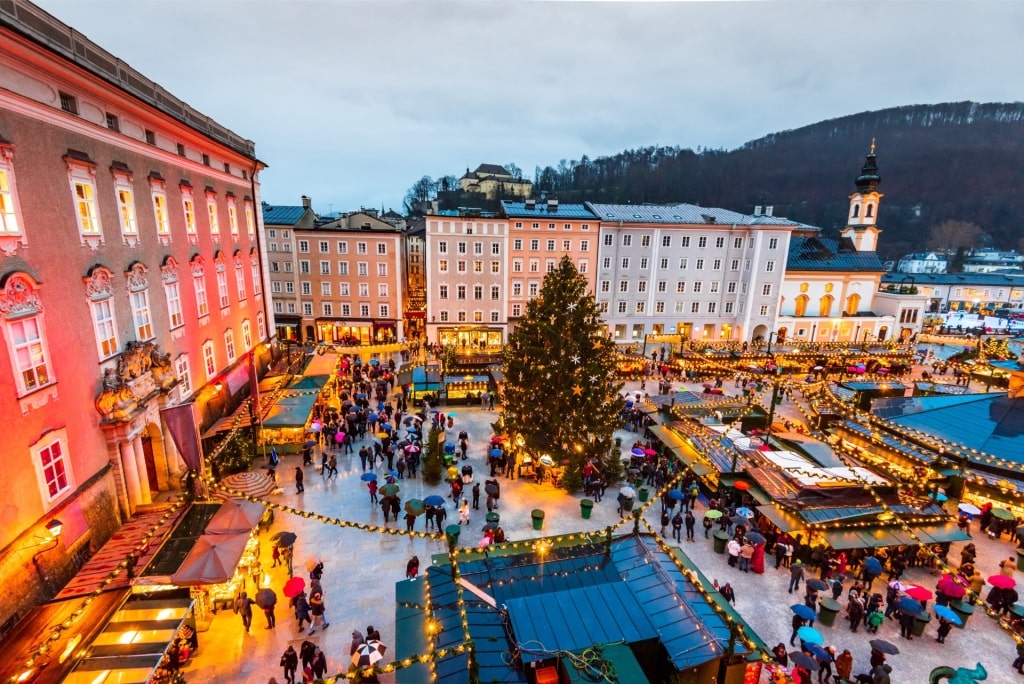
Salzburg Christmas Market
The city’s music credentials aren’t just limited to Mozart and Rodgers and Hammerstein. Salzburg also gifted the world its most famous Christmas carol, Silent Night.
Written and composed in the early 19th century in Salzburg’s Flachgau region, the carol is now one of the region’s most famous cultural exports.
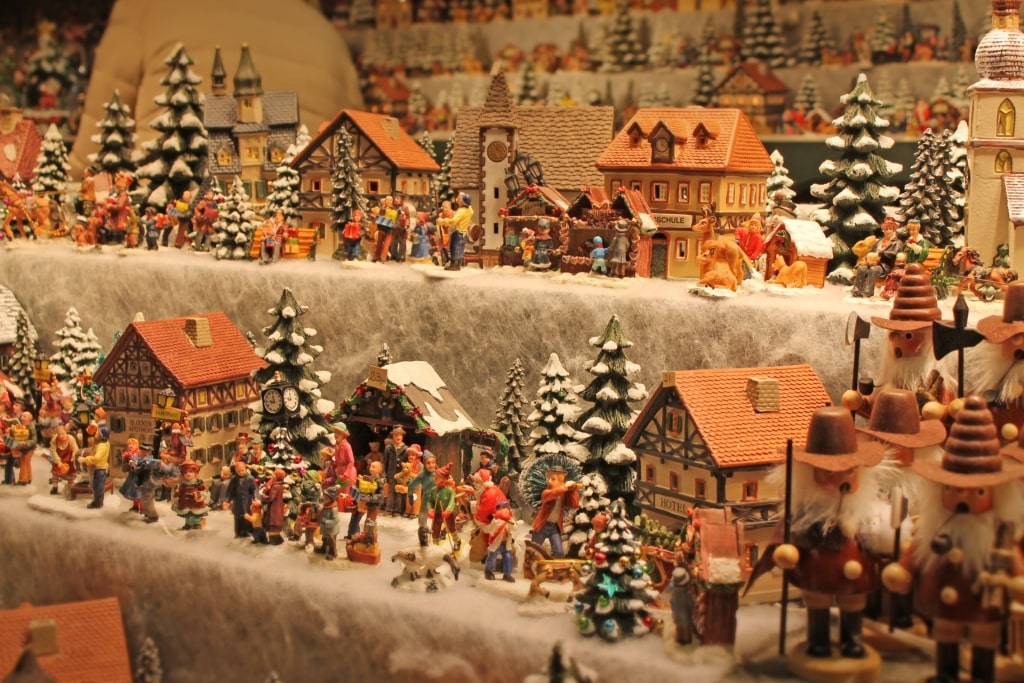
Christmas decorations
Therefore, it shouldn’t be surprising that Salzburg is famous for its Christmas celebrations. Come December, the old town twinkles, the scent of mulled wine flows, and four large Christmas markets spread plenty of festive cheer.
For a taste of the city’s Christmas traditions, no matter the season, visit the Salzburg Christmas Museum. While small, the wholesome exhibition covering Austrian and European toys, decorations, and festive traditions will fill you with seasonal cheer year-round.
Read: Christmas in Austria
Salzburg
Discover this beautiful city for yourself. Browse Celebrity’s river cruises and plan your perfect European vacation.