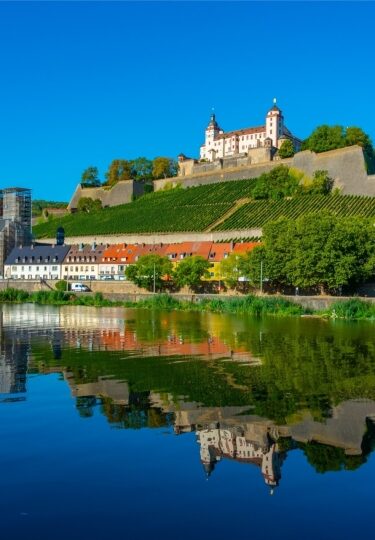
From charming old towns with cobbled streets to castles perched atop hills that feel straight out of a fairy tale, Franconia has something special to offer for every type of traveler. Whether strolling through Nuremberg’s castle district, getting lost in the cobblestone lanes of Rothenburg ob der Tauber, or seeing half-timbered houses in Bamberg, a trip through the region will make you feel like you’ve stepped back in time.
Why Visit Franconia
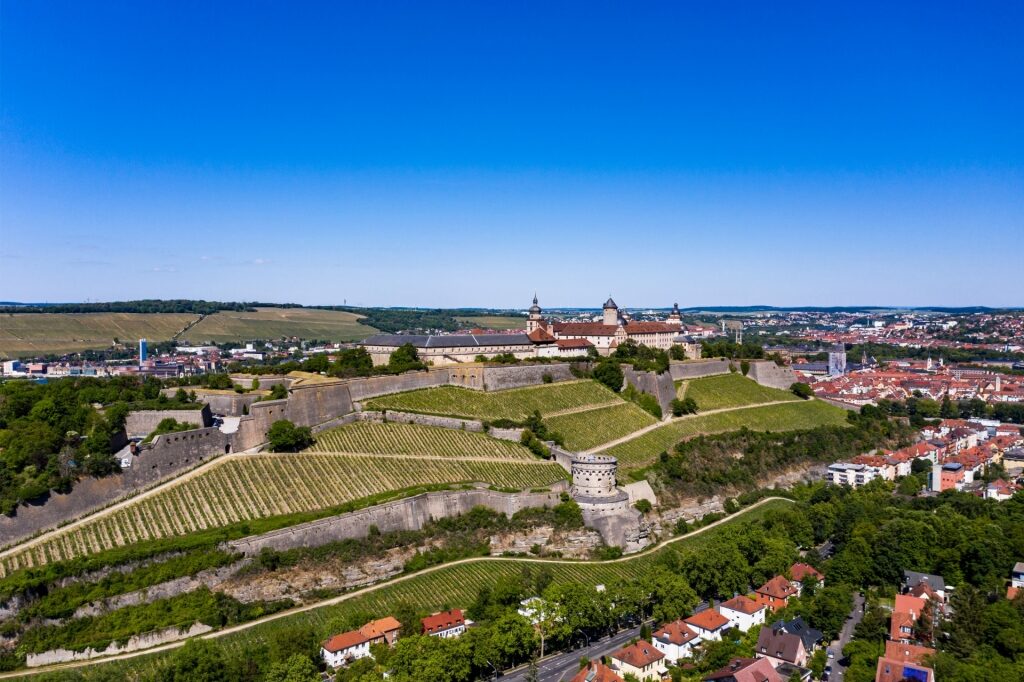
Würzburg
Aside from storybook old towns and centuries-old German castles, Franconia is a worthy food and wine destination by any measure. Savor local wines typically made from the white Silvaner grape, and visit wineries like Juliusspital Winery and Bürgerspital Winery in Würzburg, which offer tours and tastings for visitors. As for dishes, prepare to fuel up with hearty traditional plates like roasted pork shoulder and Nuremberg sausages.
History & Culture
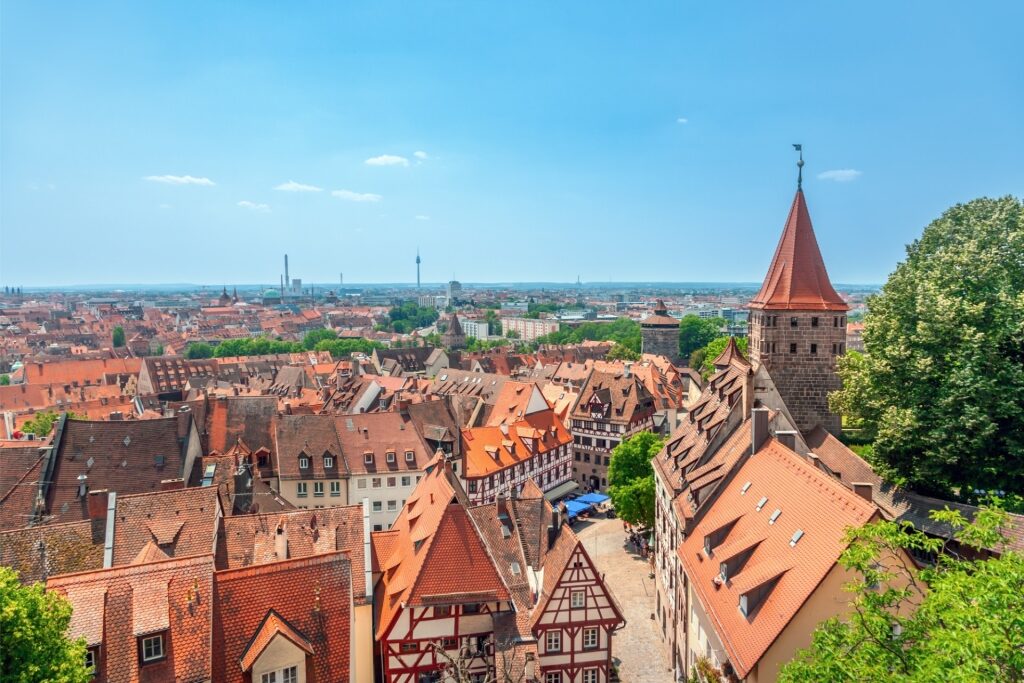
Nuremberg
Franconia has long been considered its own region due to its cultural differences from the rest of Bavaria. In fact, if you speak German, you’ll probably notice that people throughout Franconia use a different dialect than in other parts of the country. The region also played an important role in European history: one of Franconia’s most noteworthy periods was during the Holy Roman Empire, when Nuremberg was one of the region’s most important and powerful cities.
Franconia also has distinct beer and wine traditions, along with local dishes that reflect centuries of regional customs. In terms of architecture, many of Franconia’s old towns retain a strong medieval look and feel, with half-timbered houses in places like Bamberg and castles dating back to the Middle Ages, such as Nuremberg Castle and the Marienberg Fortress in Würzburg.
Wildlife and Nature
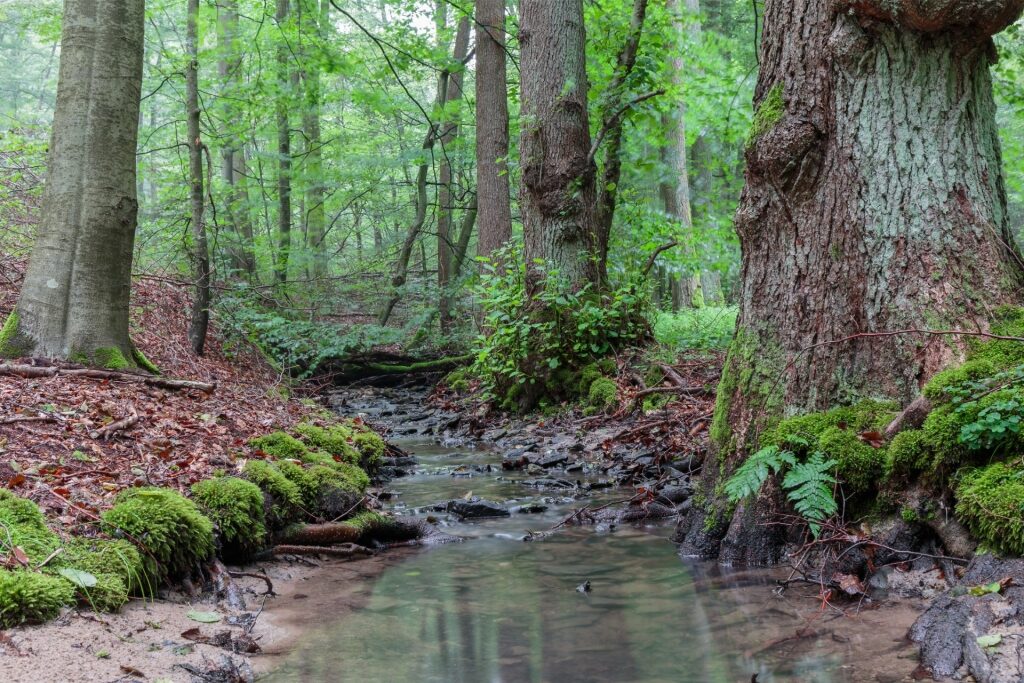
Steigerwald Nature Park
If you’re seeking adventure beyond the old towns, there are plenty of day trips to consider while in Franconia. Located about 40–50 minutes from Würzburg is the Steigerwald Nature Park. On any given day, you’ll find visitors hiking, biking, and walking through the park’s dense forests and vineyards.
Some trails in Steigerwald Nature Park are beginner-friendly, while others are more challenging and may require proper hiking boots. Those who cycle can cover more ground in less time, often breezing past vineyards and stopping for tours or tastings.
For travelers planning to stick close to the city centers, there’s still plenty of nature to explore. In the warmer months, there’s no better way to spend a day in Franconia than with a walk along the Main River. Birdwatchers may also have luck spotting the Penduline Tit, which is often found along rivers in its iconic hanging nests.
Tips for Visiting Franconia
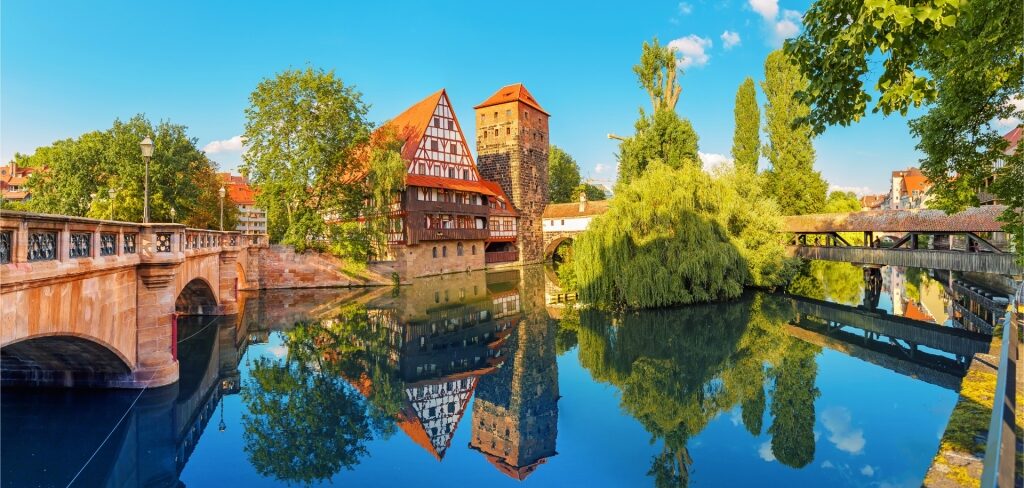
Nuremberg
For the most part, a visit to Franconia will feel calmer and less crowded than major German cities like Berlin or Munich. However, it never hurts to pre-book as much as possible for peace of mind, whether it’s an excursion to a nearby winery for a tour and tasting or securing bike rentals to cycle along the river.
Comfortable footwear is also a must when walking on cobbled streets in the well-preserved old towns in many Franconian cities. Depending on the weather, consider packing a pair of rainboots or sneakers with good grip in case it gets slippery after rainfall. Bringing along a sweater or a lightweight jacket is a good idea during chillier weather, especially since the sun sets earlier in the winter months.
In terms of paying for meals and souvenirs, you’ll find that most vendors accept credit cards and even Apple Pay. That said, it’s a good idea to carry some small change for smaller shops that may prefer cash or for public restrooms that often charge a small entrance fee.
Things to Do & Attractions in Franconia

Old Town, Nuremberg
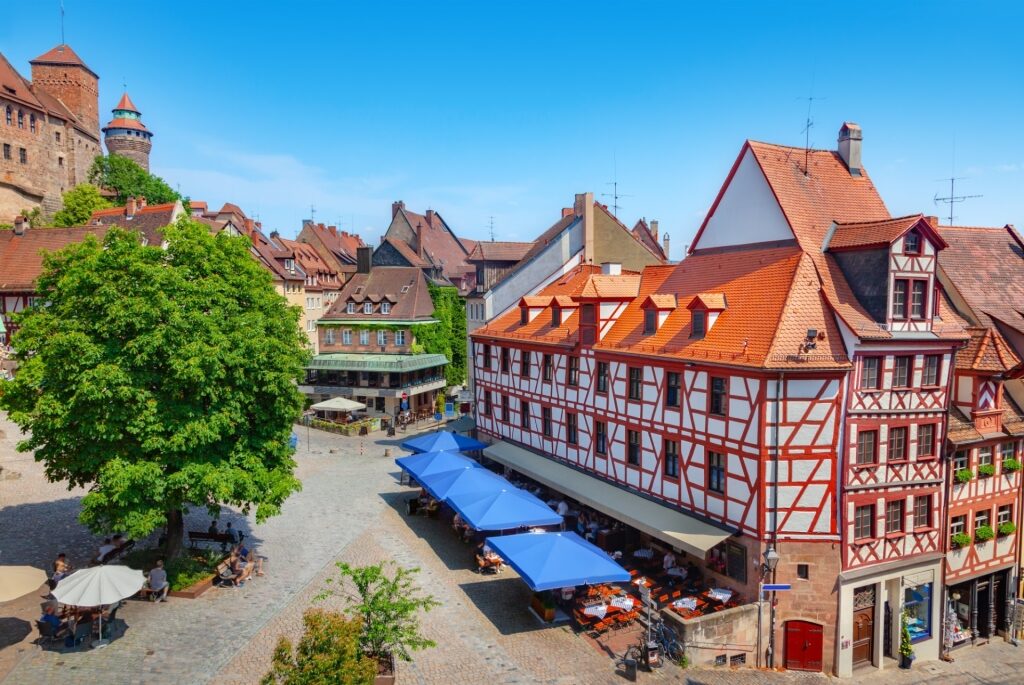
A walk through Nuremberg’s old town, also called Altstadt, is one of the best ways to orient yourself and learn about the city’s history through the centuries. Start with a visit to the Imperial Castle, perched on a hill overlooking Nuremberg and offering panoramic views of the city. The fortress has been standing for nearly a thousand years and once housed the Holy Roman Emperors. After visiting the castle, head over to Hauptmarkt, where you’ll find the famous Schöner Brunnen fountain and other German landmarks such as the Frauenkirche.
Another must-visit attraction is the Würzburg Residence. As beautiful as the facade is, the real highlights are found within the residence itself. The grand staircase is one of the standout Baroque architectural features, and there’s also a massive fresco on the ceiling. The Court Chapel is also very beautiful, as are the Court Gardens located outside.
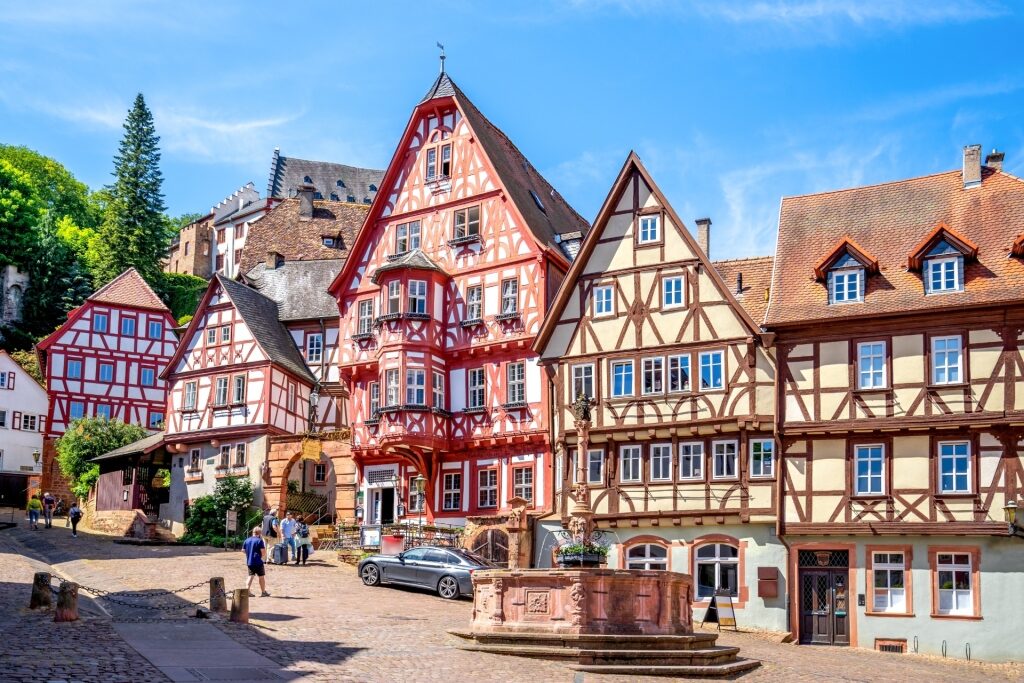
Old Town, Miltenberg
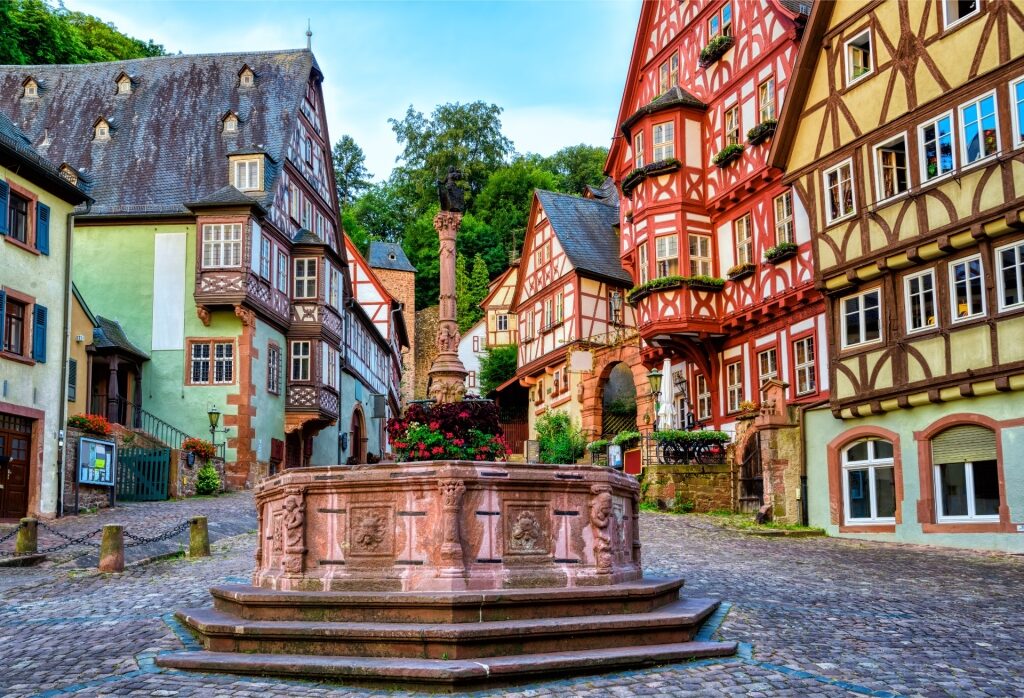
In Miltenberg, you’ll want to have your camera at the ready because the city is full of beautiful sights to capture. The old town feels frozen in time, with preserved half-timbered houses, cozy cafes where you can warm up with a coffee and people-watch, and the bustling Marktplatz main square. If you have time, make your way to Mildenburg Castle for stunning views of the city below.
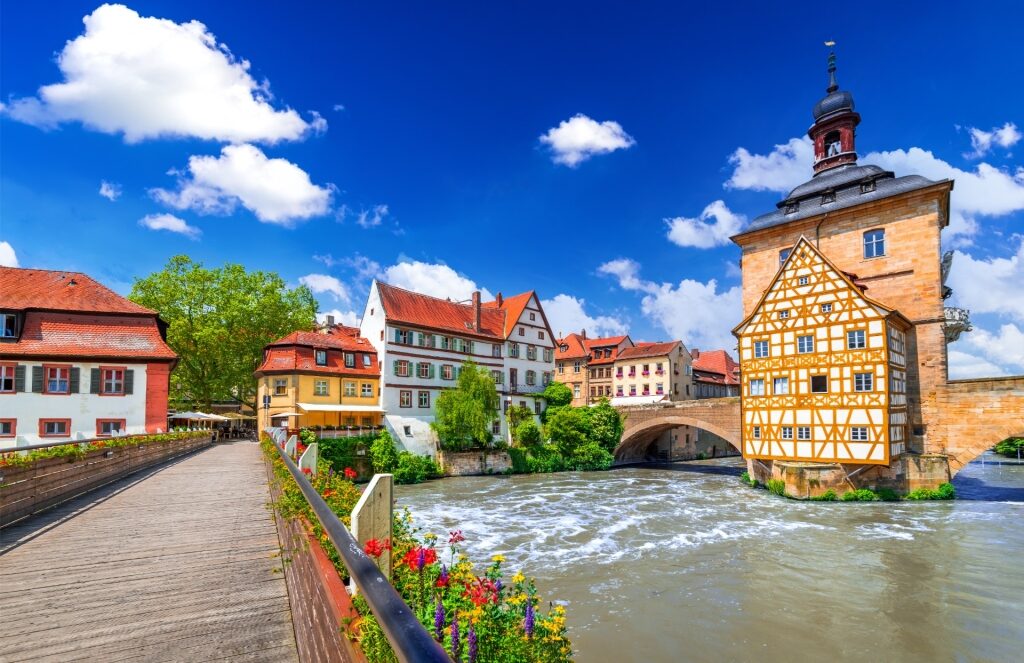
Bamberg
The medieval buildings in Bamberg are just as impressive. In fact, Bamberg’s old town is a UNESCO World Heritage site partly due to its mix of medieval and Baroque architecture. Bamberg Cathedral is one of the most impressive historical sites in Franconia and features four towers that rise to 266 feet. There’s also the old town hall, called Altes Rathaus, located on a bridge over the Regnitz River, which features both Baroque and Rococo detailing.
Beer and Wine Culture
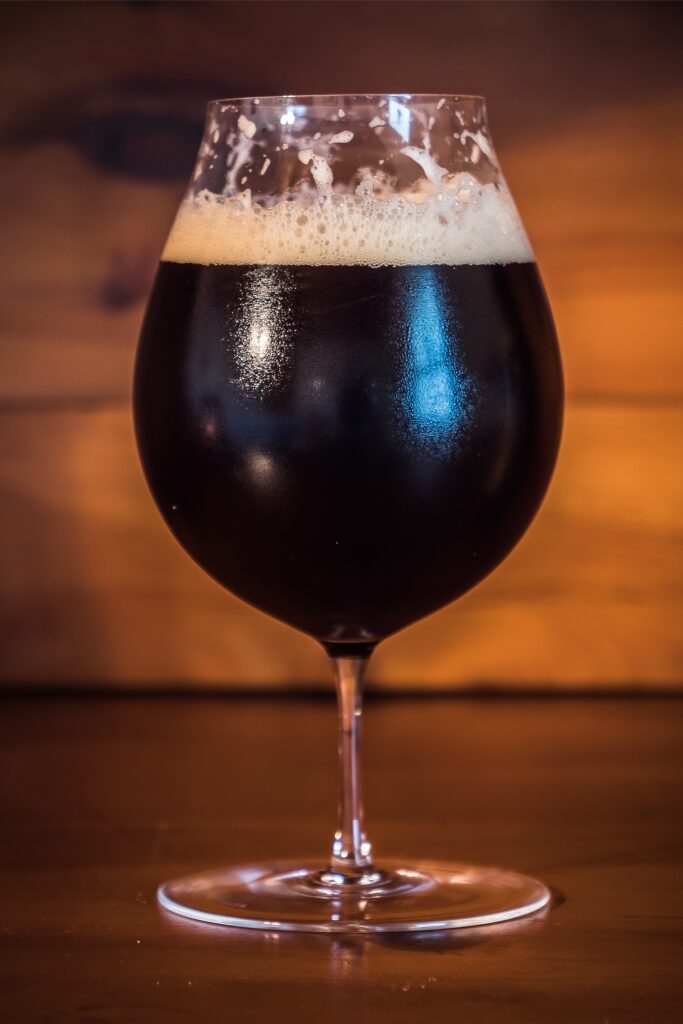
Rauchbier
When it comes to German beer, Franconia is sometimes nicknamed Beer Country for its many breweries. Perhaps the most notable type of beer you’ll find in Franconia—and Bamberg in particular—is the birthplace of Rauchbier, or “smoke beer” in German.
Smoked beers get their name from smoked malt, which gives them a distinctive smoky flavor. An interactive way to learn more about the art of brewing smoke beer is to visit some of the city’s historical breweries, like Schlenkerla or Brauerei Spezial, and sample a few different types of ales.
Wine
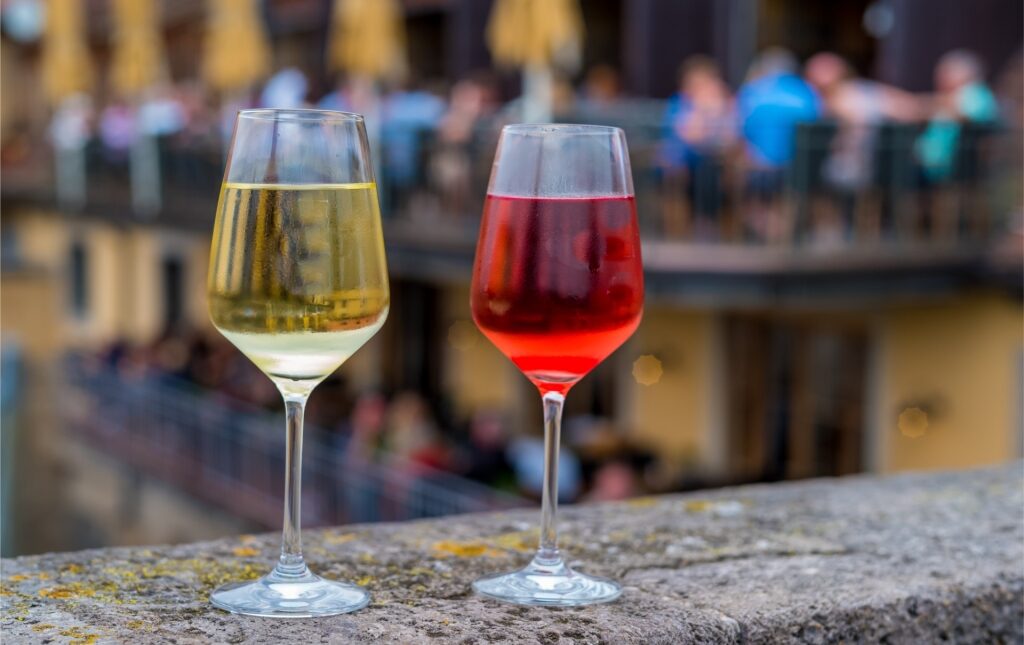
As for wine, many of Franconia’s vineyards are located in northern Bavaria, especially near Würzburg. While sweeter German wines like Rieslings are more commonly associated with areas such as Mosel, Rheingau, and Pfalz, Franconian wines are on the drier side thanks to the high minerality of the soil.
The signature grape in Franconia is Silvaner, and many local wines are traditionally bottled in the Bocksbeutel, a distinctive, bulbous-shaped bottle that’s unique to Franconia. Würzburg is one of the gateways to the Franconian wine region, and several vineyards nearby offer tours and tastings, including Bürgerspital Weingut and Weingut am Stein.
Best Time to Visit Franconia
Nuremberg
When deciding when to visit Franconia, consider what you’re hoping to get from your trip. For example, travelers interested in visiting nearby wineries and vineyards might prefer to visit in the fall, when they can see grapes on the vine and participate in wine harvest activities hosted by wineries.
If you’re looking for outdoor adventure, spring and summer can be great times to visit and make the most of long, sunny days. You’ll have longer hours of daylight, warm weather, and plenty of opportunities for sightseeing. The only thing to keep in mind is that summer coincides with the high season, when there will be many other tourists around, so pre-planning is a must.
Christmas market in Nuremberg
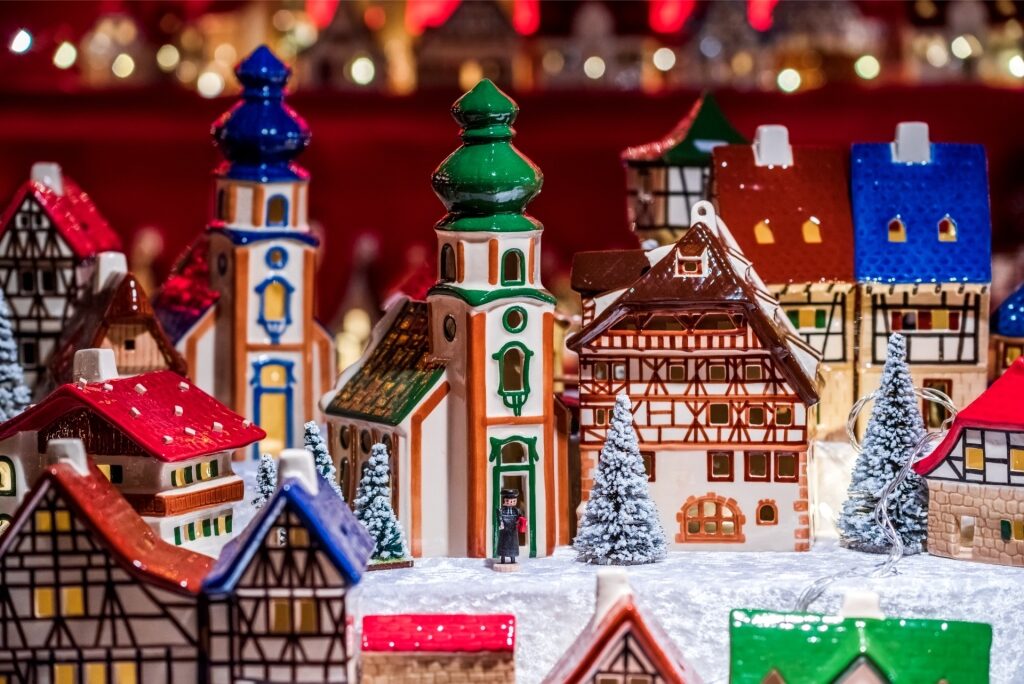
Despite the colder weather, winter is an excellent time to visit Franconia. In fact, some travelers prefer it because it’s the perfect season to hike or cross-country ski. Another reason to visit during the winter months is to experience Franconia’s festive Christmas markets and New Year’s celebrations.
FAQs
What is Franconia known for?
Old Town, Miltenberg
Compared to major German cities like Berlin or Munich, a trip through Franconia often offers first-time visitors a quieter, more manageable travel experience. Many towns along the Main River feature riverfront promenades that are popular spots for dining, biking, and other outdoor activities.
While each major city in Franconia has its own unique appeal, Franconia as a whole is well-known for its breweries, wine regions, and picturesque landscapes. The area is also home to several historic castles and well-preserved old towns, some dating back to the Middle Ages.
What cities are part of Franconia in Germany?
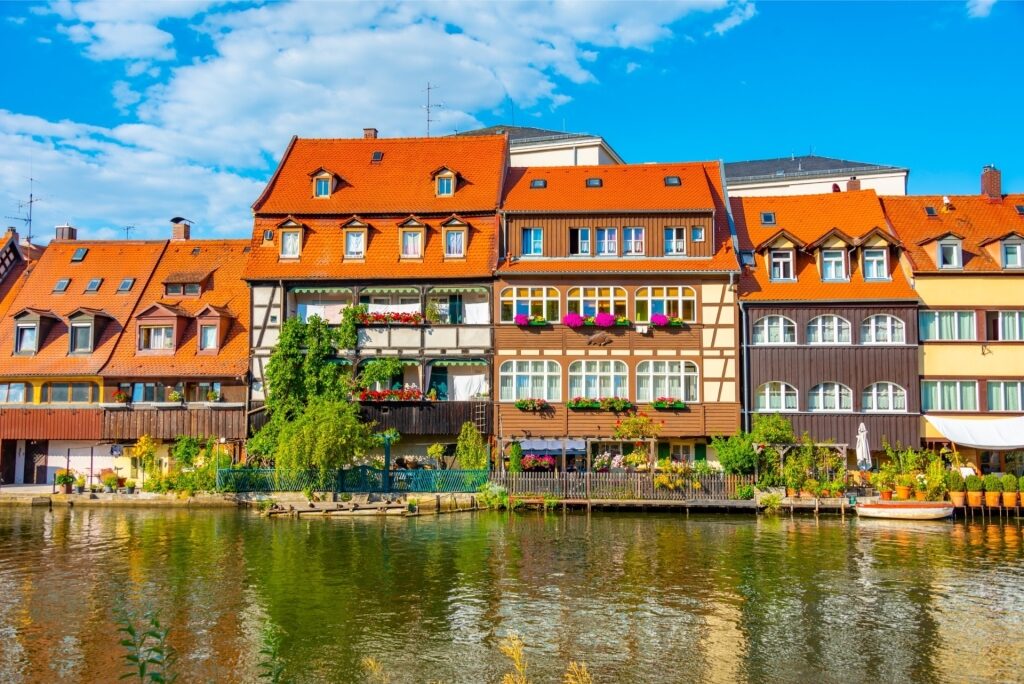
Bamberg
Franconia is not a specific city or town in Germany but rather a region in the southern part of the country. Most of Franconia lies in northern Bavaria and includes cities such as Nuremberg, Fürth, Würzburg, Bamberg, Eichstätt, and Coburg. Geographically, Franconia lies in the center of Europe, just north of the Danube River, with the River Main running through the region.
What traditional foods and drinks come from Franconia?

Schäufele
When it comes to food in Franconia, there’s no shortage of local dishes to try. Nuremberg sausages are a delicious dish to split among your table or even order as street food. Another popular dish is slow-roasted pork shoulder with crispy skin called Franconian Schäufele. It’s one of the heartiest German dishes, and one you’ll want to eat when you’ve really worked up an appetite.
Drink-wise, Franconia is perhaps best known for its Franconian wine, mostly a dry white made from the Silvaner grape. Riesling and Scheurebe are other common varietals you’ll likely see on wine menus across the region. If you’re more of a beer drinker, definitely try Franconian smoked beer, also called Rauchbier. As its name suggests, this German lager has a smoky flavor that really sets it apart from other lagers.
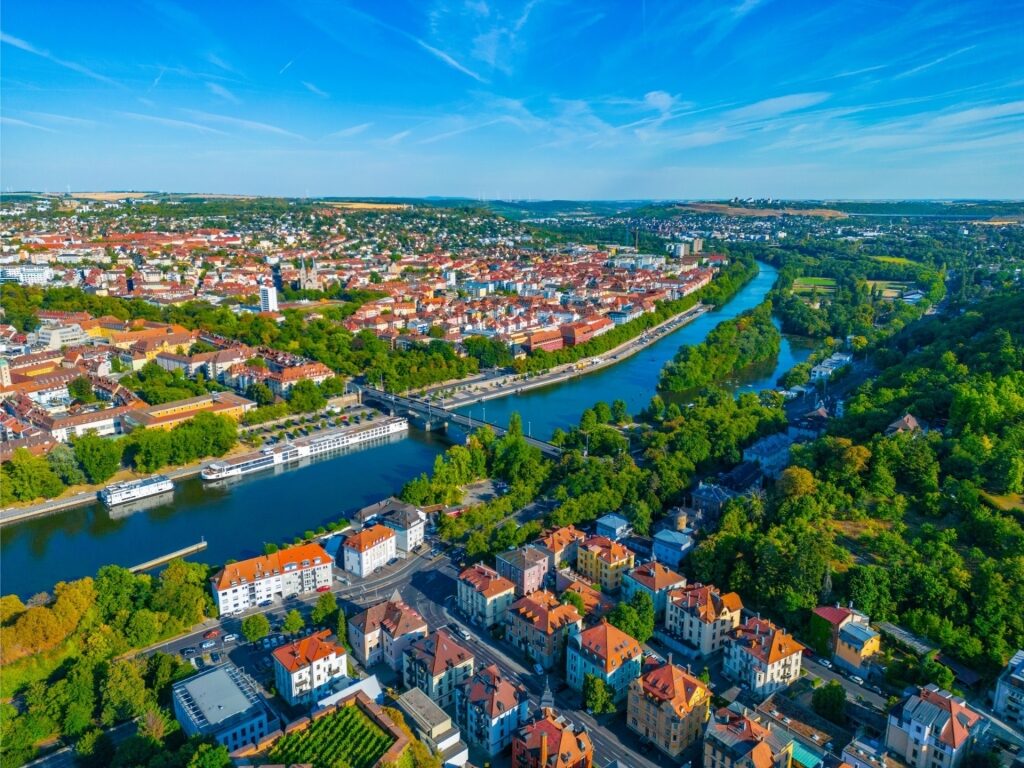
Würzburg
Book one of Celebrity’s river cruises to learn more about Franconia’s unique culture, history, and local traditions.