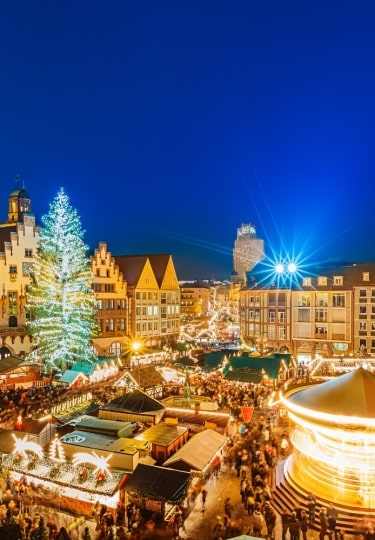
Steeped in history and tradition dating back hundreds of years, the best Christmas markets in Germany are guaranteed to put you in a festive mood. While markets are held in countries throughout Europe, Germany is the shining star of the festive market scene, and is widely regarded as the birthplace of these feel-good annual events.
Attracting visitors from around the world, these winter wonderlands are the highlight of Germany’s yuletide calendar. Wooden chalets adorned with sparkling fairy lights sell a huge variety of decorations, toys, local crafts, gifts, gingerbread, and other foods, and the scent of roasted chestnuts, mulled wine, and spices fills the air to create a magical and memorable ambiance.
Cologne
Cologne
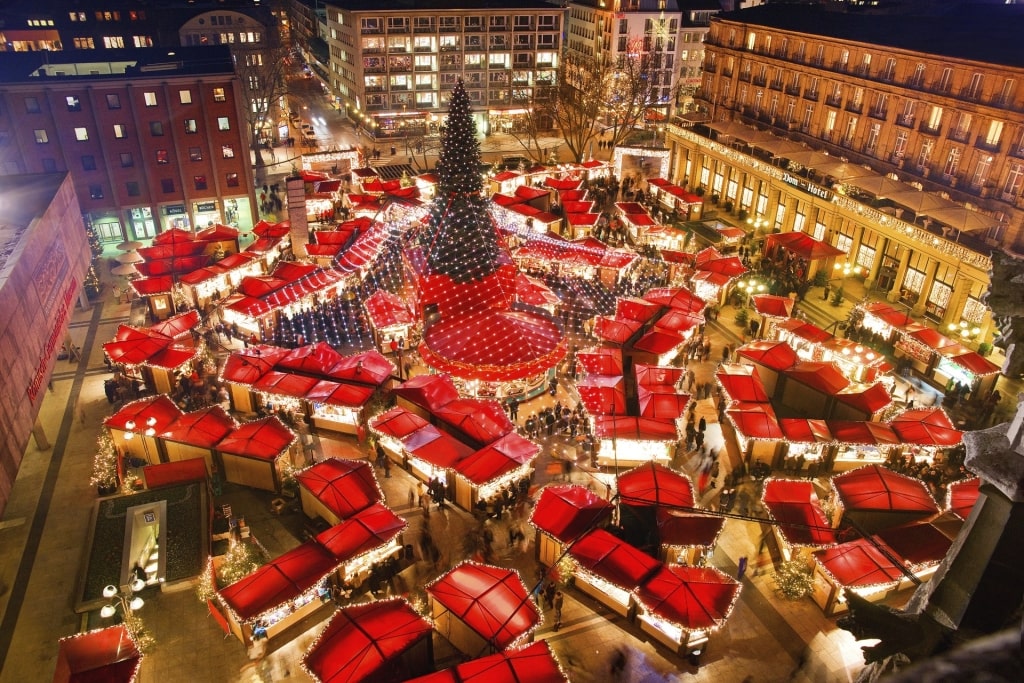
With seven markets to choose from, some of the best German Christmas markets are in Cologne. The most famous is held against the magnificent backdrop of the city’s UNESCO-listed Gothic cathedral.
It’s worth climbing the 533 steps to the top of the tower to get a panoramic view of the marketplace, with a giant decorated Christmas tree in the center, the surrounding cityscape, and the Rhine.
Cologne
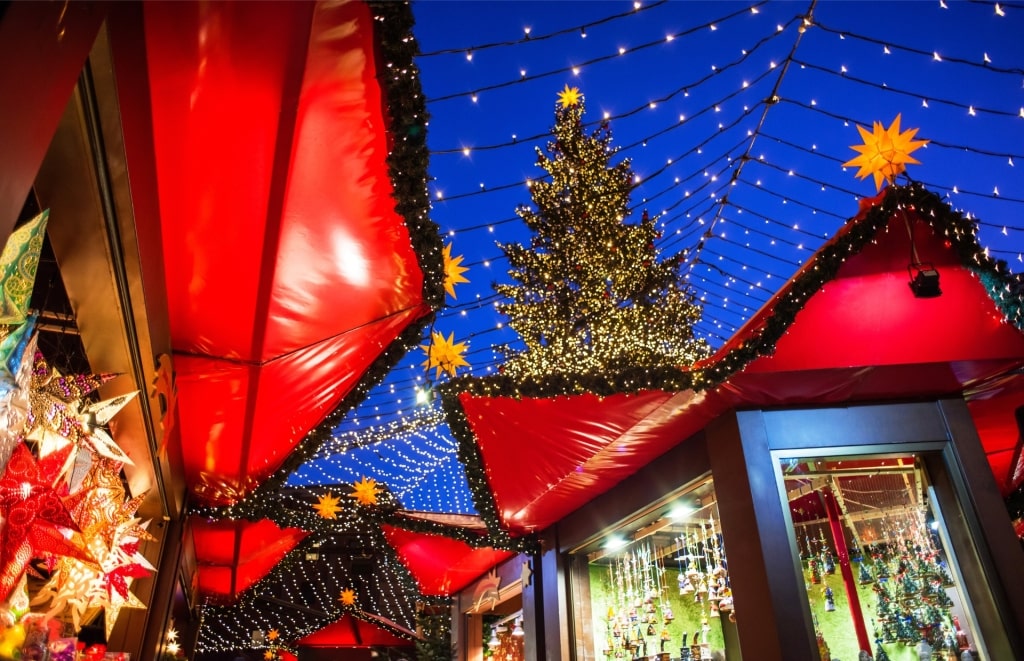
Another enchanting Christmas market in Cologne is the Market of Angels, held at Neumarkt. Here, glowing stars and angels are suspended from the trees. For a different shopping experience still, take a look at Cologne Harbour Christmas Market next to the Chocolate Museum on the banks of the Rhine. Stalls are housed in tents resembling sails and you can board a tall ship and sip mulled wine on the deck.
Nuremberg
Nuremberg
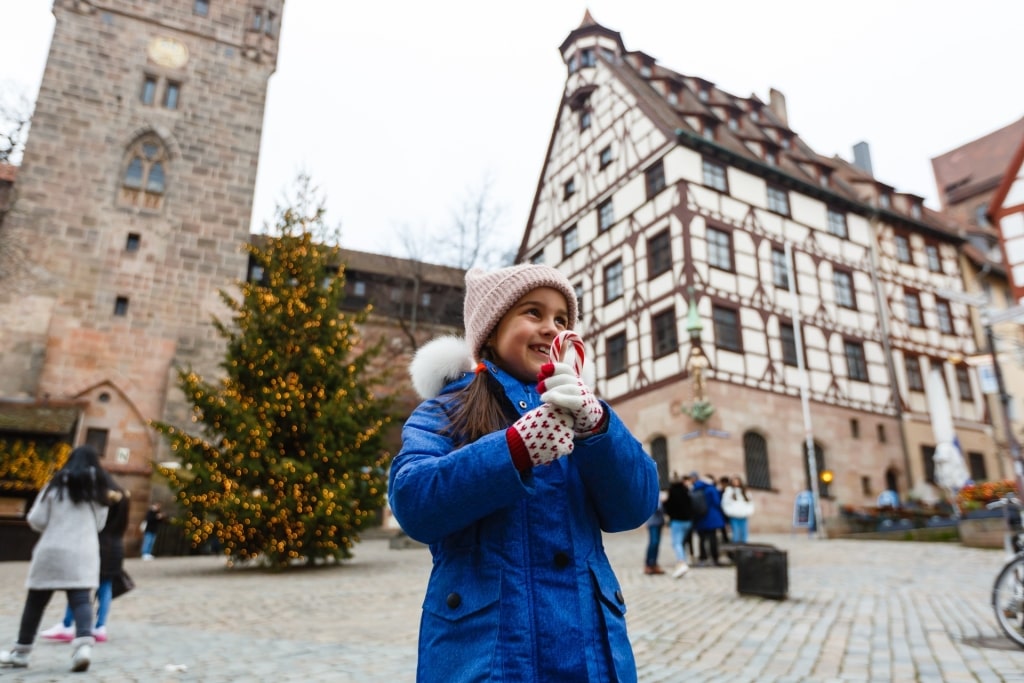
When it comes to the best Christmas markets in Germany, Nuremberg has several reasons to be high on the list.
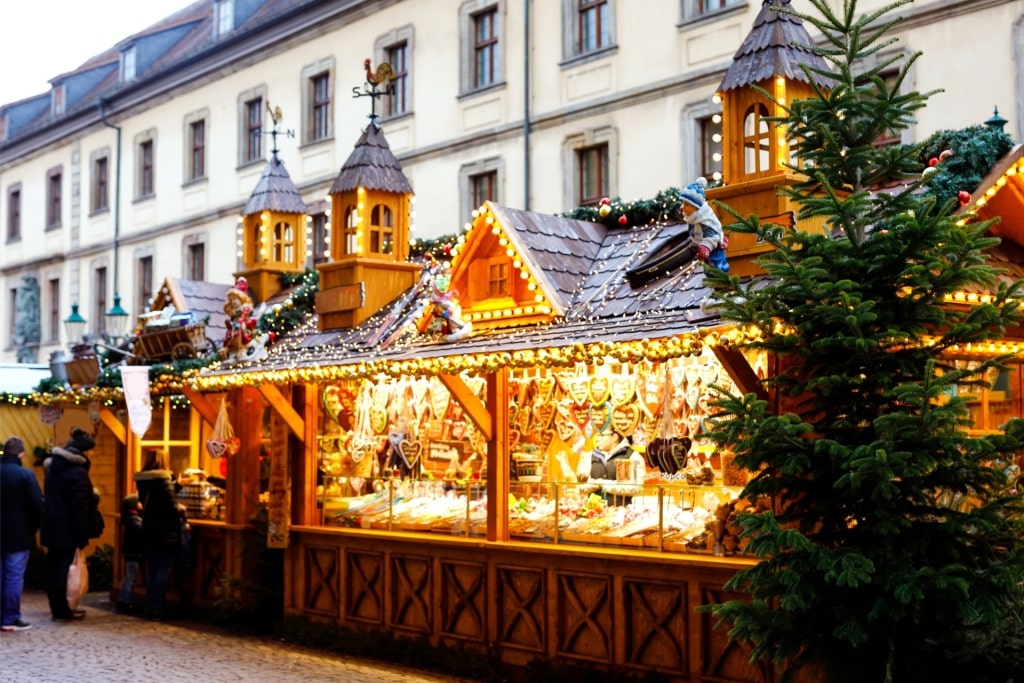
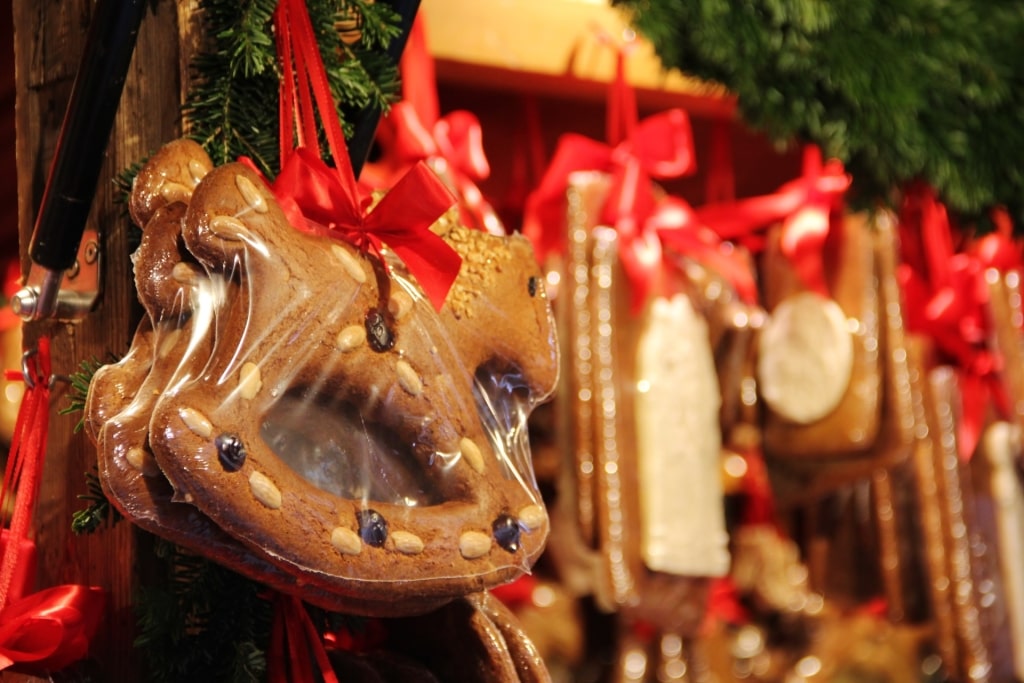
First, the market dates back to the 16th century, making it one of the oldest. Part of this legacy is the fact that Nuremberg is recognized as the world’s gingerbread capital. Lebkuchen—a variety that is softer and spicier than cookie-like gingerbread—was first baked by local monks in the 16th century. It was then adopted by the city’s master bakers, who started creating elaborate gingerbread houses for Christmas.
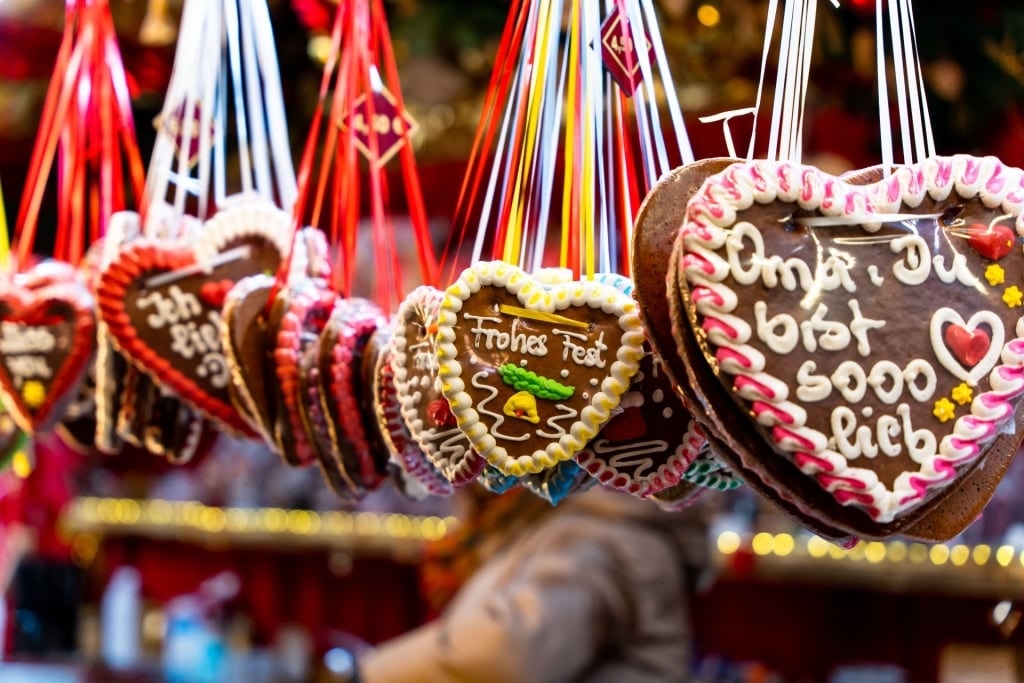
Gingerbread
Second, in the 19th and 20th centuries, Nuremberg was the center of Germany’s toy-making industry, with renowned brands including Schuco, makers of tin cars, and Fleischmann, producing train sets, which are now sold as collector’s pieces in the Christmas markets.
Nuremberg’s other claim to fame is its distinctive pork sausages, much smaller than typical German sausages, which are sold in portions of six, eight, 10, or even 12, with a side of sauerkraut and horseradish sauce.
Read: Christmas in Germany
Rüdesheim
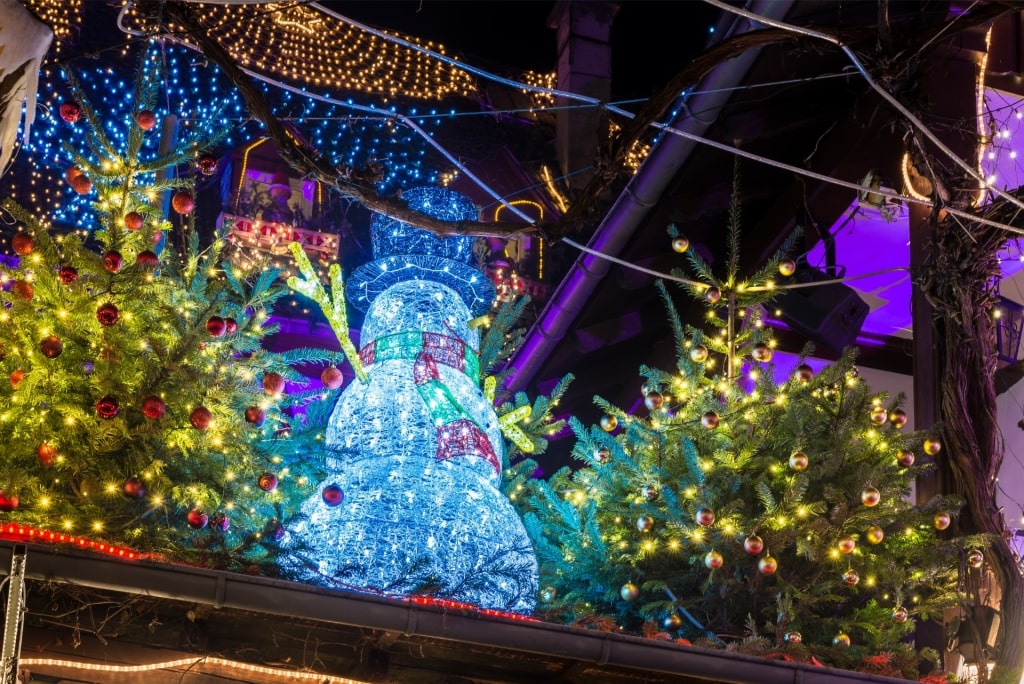
Christmas decors
The best German Christmas markets aren’t all located in large cities. The colorful Christmas Market of Nations resides in the wine-making town of Rüdesheim.
Although there are plenty of stands selling traditional market goods, Rüdesheim ushered in a new era of Christmas markets more than 30 years ago. This is when it turned its quaint, cobbled streets in the old town into an international marketplace hosting vendors from around 16 different countries.
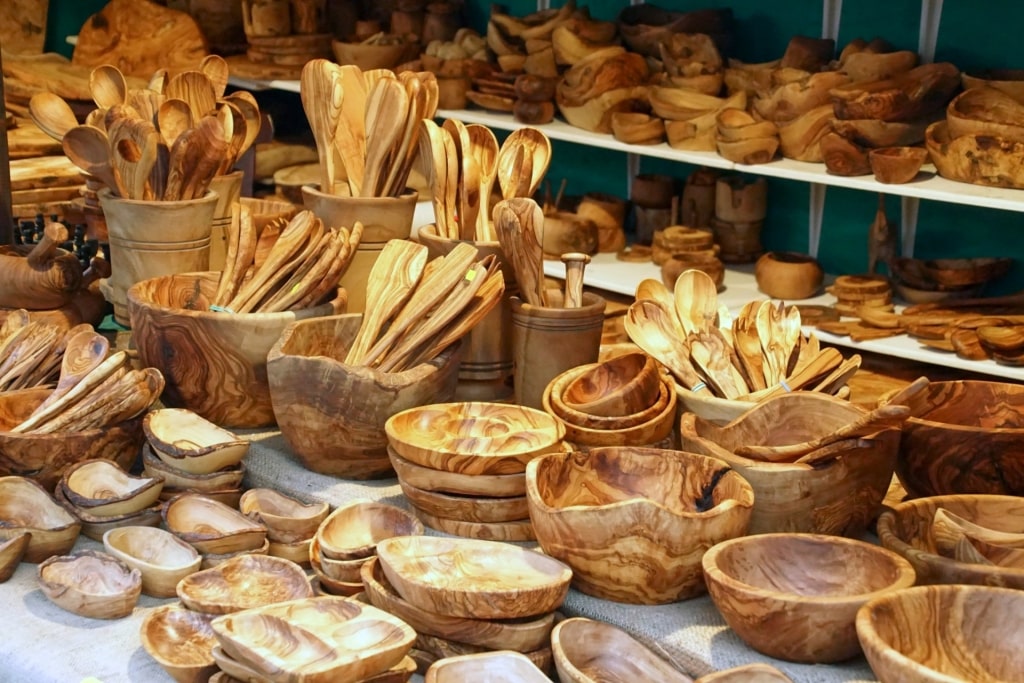
Handcrafted wooden items
Look for exotic wood carvings, ceramics, textiles, and crafts from Europe, Scandinavia, Asia, and other parts of the world, and learn about the Christmas customs in the different nations as you browse the stalls.
Koblenz
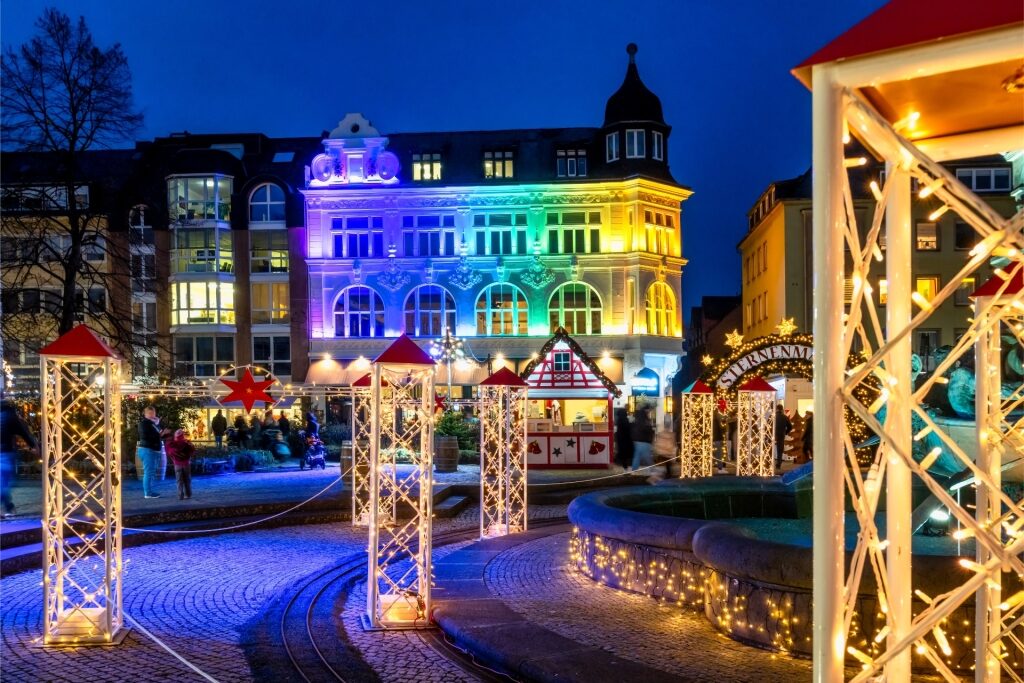
Koblenz
Seven squares in Koblenz are transformed into Christmas markets, which are all within easy strolling distance of each other.
The best place to start is Jesuitenplatz, in the middle of the old town, where you can look up and admire the city’s largest Advent calendar. Each year, 24 windows in the Baroque town hall are numbered to create daily scenes in the countdown to Christmas. From here, other festive shopping options include the Am Plan market, with its Christmas carousel, and the Görresplatz market with choirs and cozy, heated huts where you can take a rest.
The imposing Ehrenbreitstein Fortress, overlooking the city on the opposite side of the Rhine, is the wonderful setting of the Christmas Garden Koblenz. Each year the grounds—entered via a dazzling tunnel of lights—are filled with illuminated festive scenes.
Breisach
Gingerbread
The gateway to the dense and mountainous Black Forest—the setting for fairytales written by brothers Jacob and Wilhelm Grimm—Breisach is another appealing Christmas market destination.
The market takes place in front of the German landmark St. Stephen’s Cathedral which was built between the 12th and 15th centuries in Romanesque and Gothic styles. Shoppers will find a little bit of everything here, including tasty yuletide treats and aromatic glühwein sold in decorated mugs, alongside regional crafts and delicacies.
Cuckoo clocks
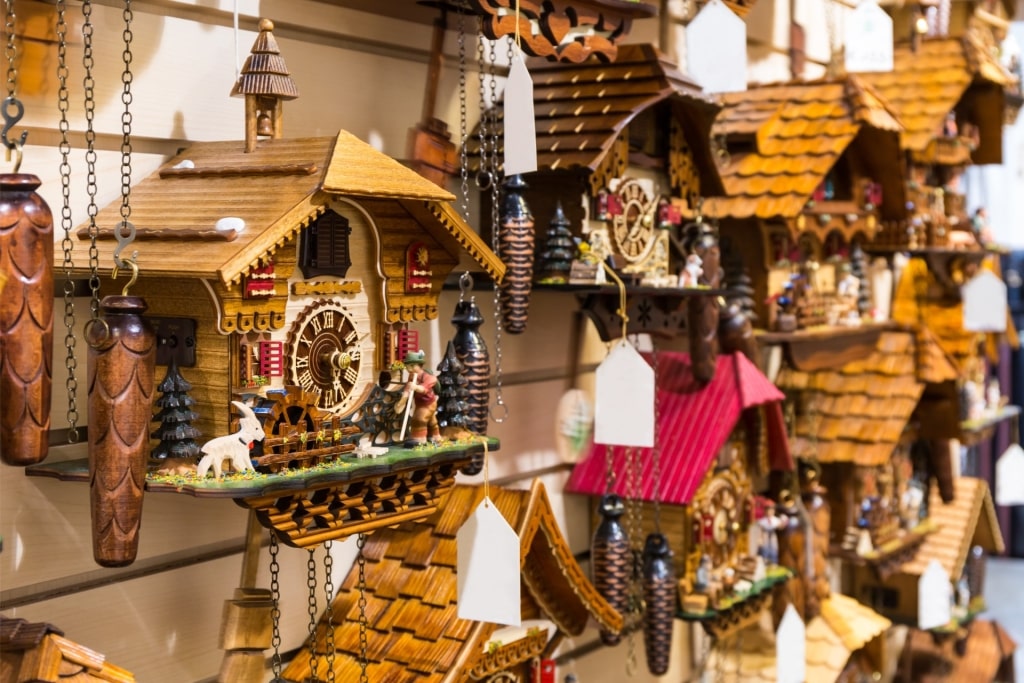
Cuckoo clocks originated in the Black Forest, so if you want a timely souvenir this is the place to buy one. For a change from gingerbread, buy a slice of authentic Black Forest gateau made with rich layers of chocolate, cream, cherries, and a generous splash of cherry liqueur.
Munich
Munich
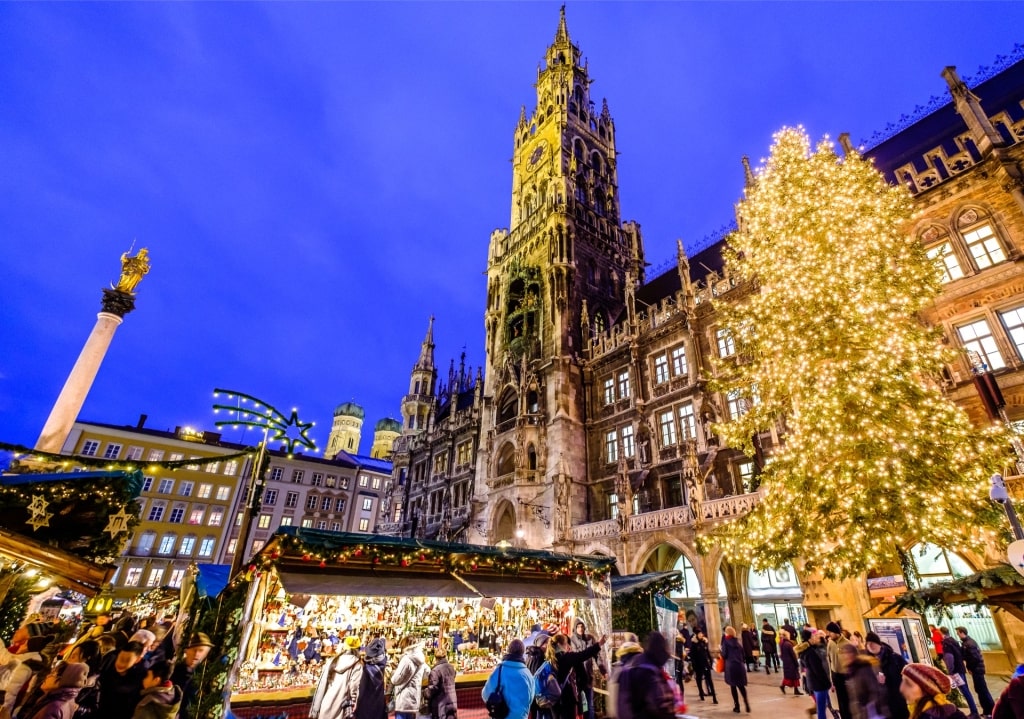
When it comes to the best Christmas markets in Germany, the capital of Bavaria really knows how to celebrate.
There are multiple markets throughout the city, with the original and most historic, dating back to the 14th century, taking place on the Marienplatz square in the old town.
Souvenir items
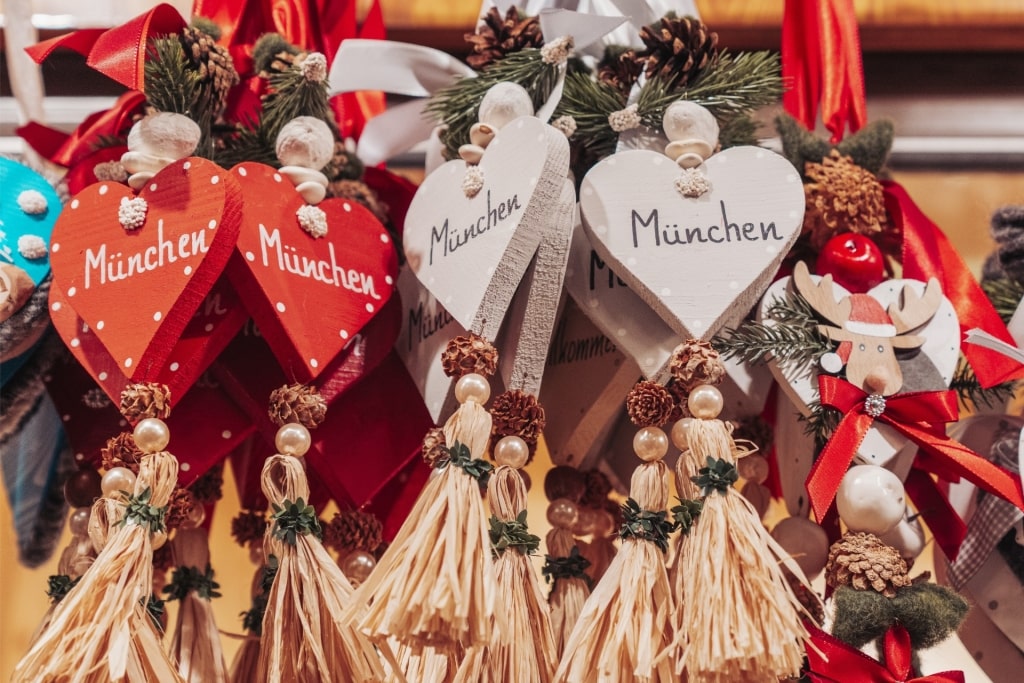
Munich is also noted for its Kripperlmarkt, in nearby Rindermarkt, which is one of the largest in Germany to specialize in cribs and other nativity figures. For families, there’s a dedicated children’s market, plus the largest Christmas ice rink in Bavaria.
Adults can also enjoy a taste of Munich’s renowned beer-making tradition. The city is home to the world’s oldest continuously operating brewery, Weihenstephan, which was first established at a monastery in 1050. Today, there are six large breweries in the city. Each Christmas they produce special advent beers—usually strong, dark, and spicy—and you’ll be able to try them at bars in the Christmas markets.
Frankfurt
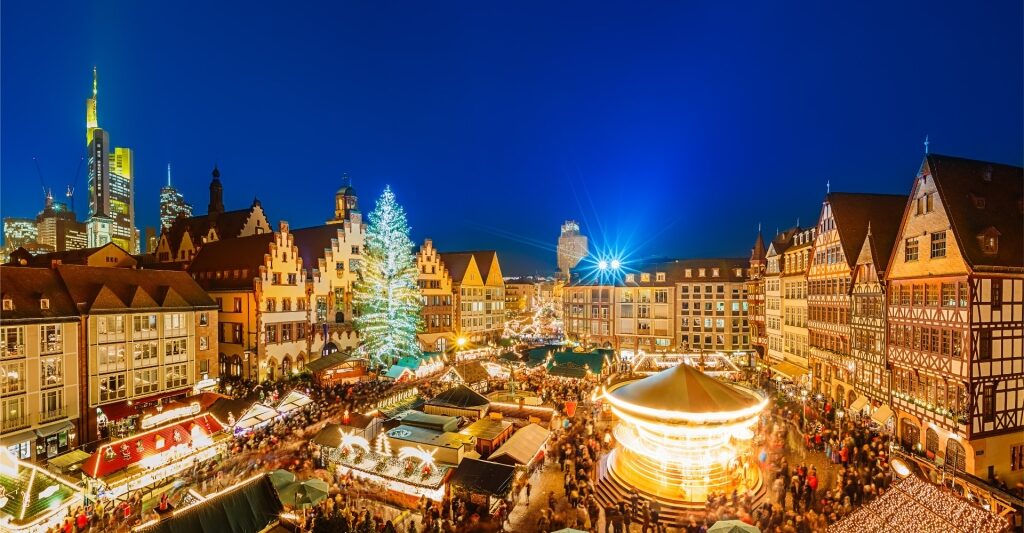
Frankfurt
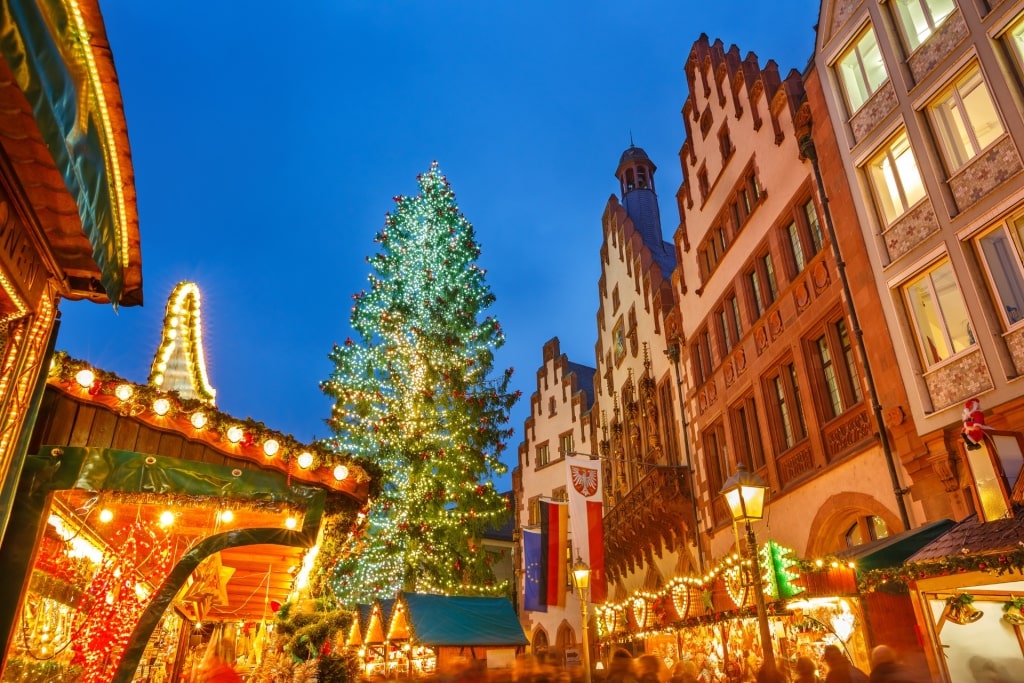
Surrounding a towering Christmas tree, the main market of Frankfurt is held on the large Römerberg and St. Paul’s Square against a backdrop of the city’s modern skyscrapers, which can be seen in the distance.
Like others, the market has evolved from one originally held for locals hundreds of years ago. Today, visitors can find more than 200 stalls, making it one of the largest in Germany. Special things to try include quetschemännchen, little figures—originally a chimney sweep—made from dried fruit and nuts that were said to be a good luck charm.
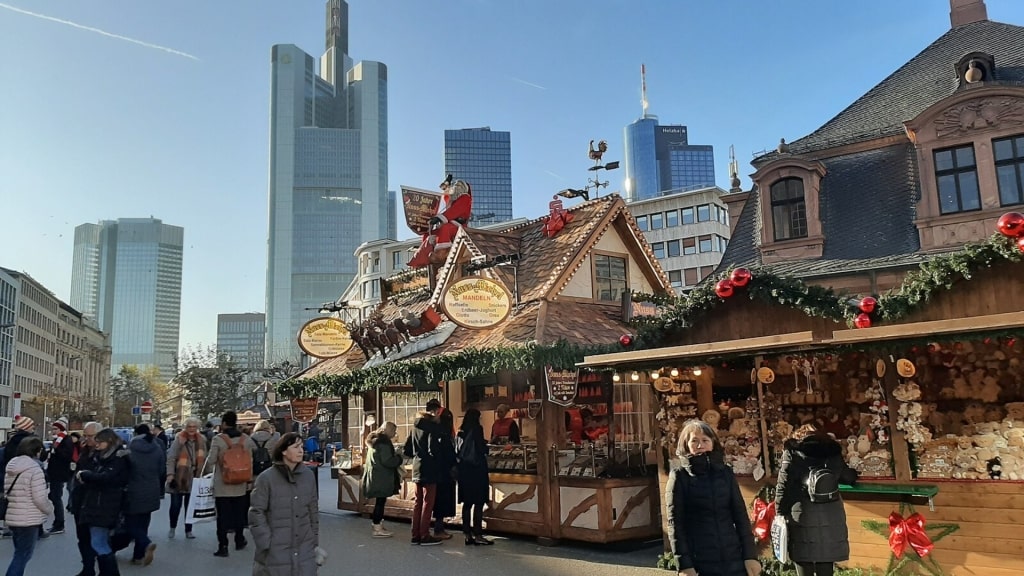
Hauptwache, Frankfurt Photo by FkMohr on Wikimedia Commons, licensed under CC BY-SA 3.0 DE
Other markets include Hauptwache, which is close to the Zeil, Frankfurt’s largest shopping street. This pedestrianized area is lavishly decorated at Christmas, with beautiful window displays in the department stores, and becomes an extension of the Christmas markets.
Speyer
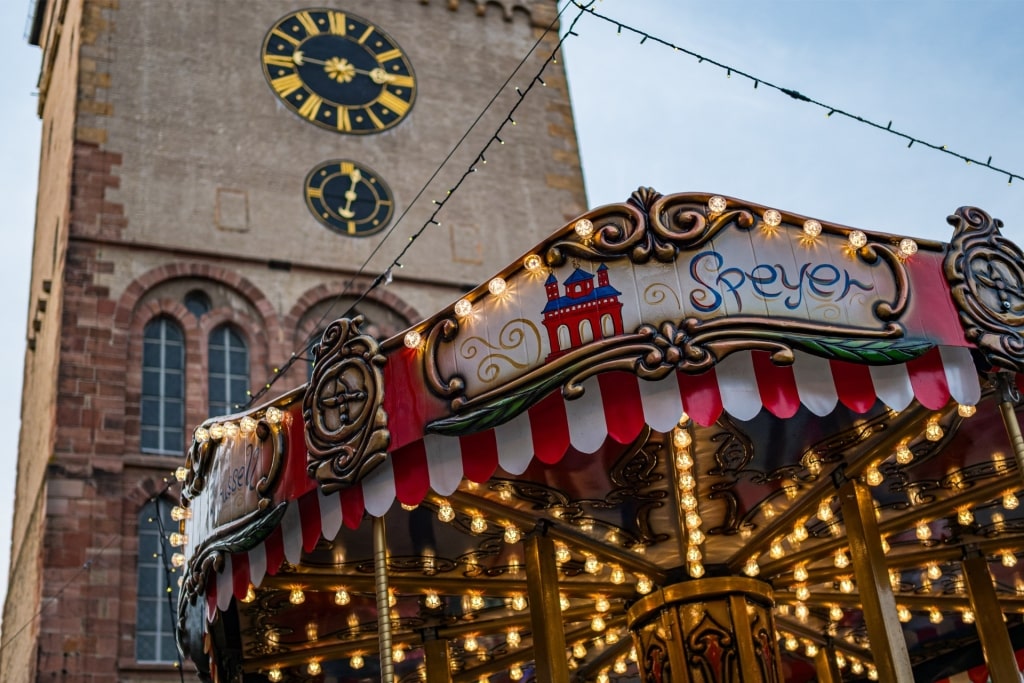
Speyer
If you enjoy large, salty pretzels—or bretzels as they’re often called—then Speyer’s Christmas market is an excellent place to buy them.
Speyer, one of the oldest cities in Germany, claims to have invented the bretzel, and although this is disputed by other towns, the city’s bakers take great pride in making them.
Bretzels aside, the market’s location in front of the impressive four-towered and twin-domed Speyer Cathedral, Europe’s largest Romanesque church, is reason enough to visit. When you’re done with shopping, you can step inside the lofty cathedral that was the burial place of the German emperors for almost 300 years.
FAQs
Why are German Christmas markets so famous?
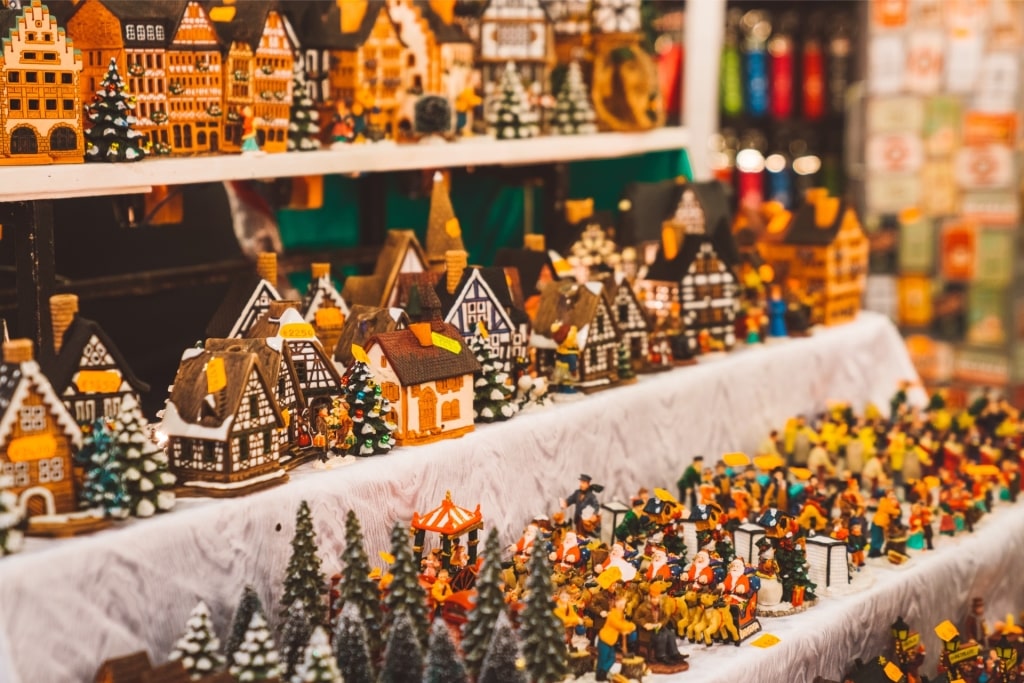
Souvenirs
Germany’s Christmas markets date back to medieval times. They are among the oldest and best-known in Europe and have inspired German-style markets around the world in countries including the U.S., U.K., Japan, and India.
When do the Christmas markets open?
Frankfurt
Traditionally, most markets open on the Friday before the first Sunday of Advent and stay open until December 23 or 24. A few close for December 24 and 25 and then reopen until the New Year.
Which is better: Nuremberg or Munich Christmas market?
Souvenirs
Deciding which are the best Christmas markets in Germany comes down to personal taste and whether you prefer history or a more varied Christmas market experience.
Nuremberg has one main market—Nuremberg Christkindlesmarkt—which is one of the oldest in Germany and is very traditional. Munich is a much larger German city and has multiple markets and, therefore, a larger selection of items on offer.
What German Christmas market is best for families?
Nuremberg
All Christmas markets are family-friendly and will enchant families and multigenerational groups of all ages.
When it comes to the best, it’s a tie for first place between Nuremberg and Munich as they both have dedicated markets for children. Nuremberg’s Kinderweihnacht, held alongside the main Christkindlesmarkt, and Munich’s Märchenbazar, at the city’s Olympic Park, both have miniature merry-go-rounds, rides, and activities for youngsters.
What food should I try?
Glühwein
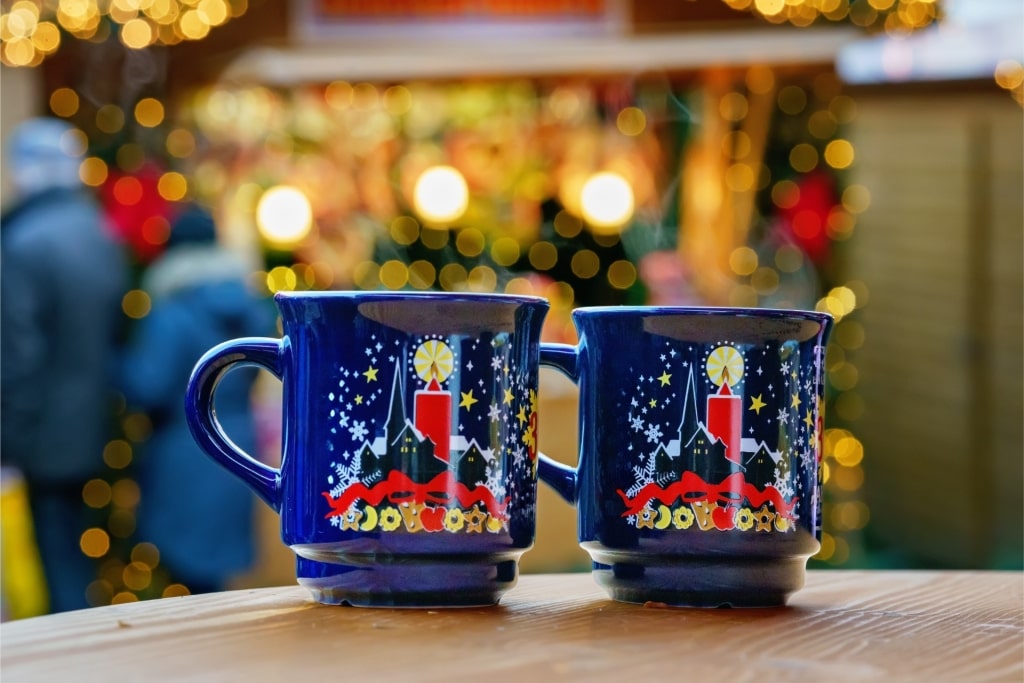
It’s worth visiting the markets for the food and drink alone. Glühwein, warming red wine flavored with cinnamon, cloves, and other spices is the synonymous Christmas market drink. Remember, the price includes a deposit for the decorative mug it’s served in. If you take the mug back to the vendor you’ll get the deposit back; otherwise you get to keep it as a neat souvenir.
If you don’t drink alcohol, order kinderpunsch—fruit juices mixed with spices—hot apple cider, or creamy hot chocolate.
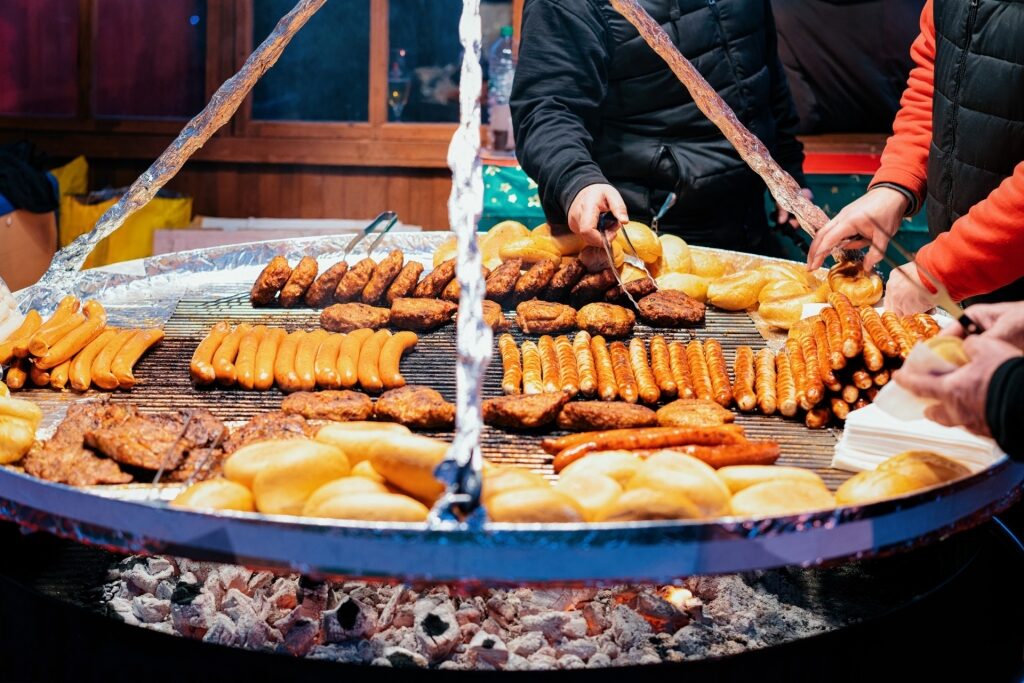
Wurst
Wurst, the generic name for numerous types of German sausage, will be sizzling in booths throughout the markets. Bratwurst, made with pork, is the most popular, but to live like a local, order currywurst, typically, a bratwurst topped with ketchup and curry powder.
Other savory favorites include flammkuchen, a type of pizza with melted cheese, caramelized onions, and bacon, and kartoffelpuffer, crispy, golden potato pancakes served with garlic sour cream or tangy apple sauce.
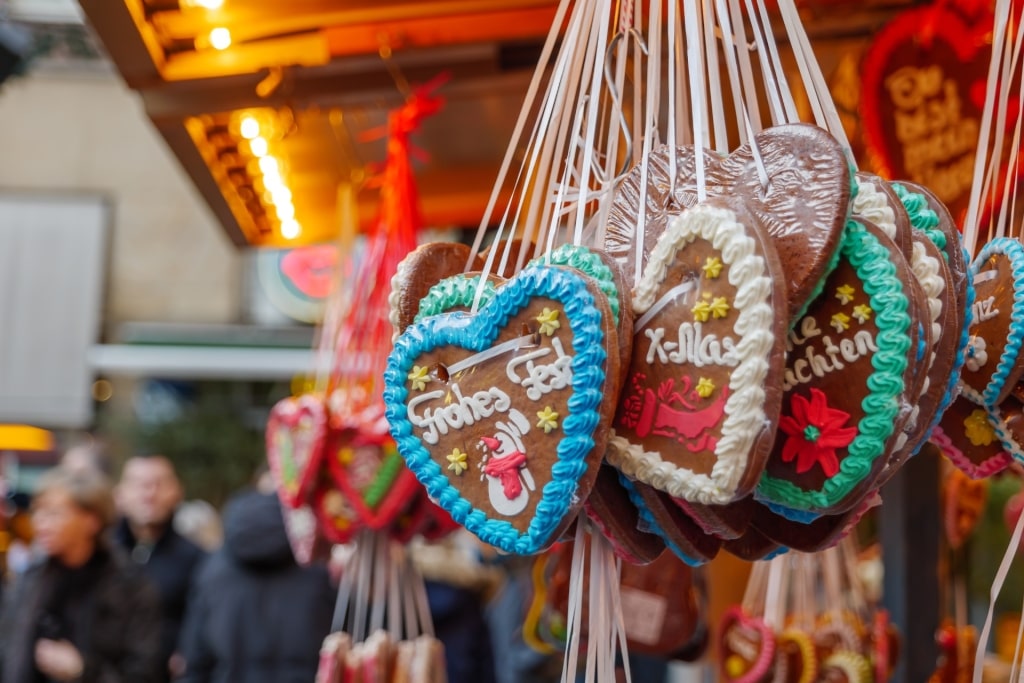
Gingerbread
When it comes to sweet treats, be sure to have some gingerbread—lebkuchen—which is often heart-shaped and iced with a Christmas message. It’s also a great gift to take home. Another festive German specialty is stollen, a fruit bread that is filled with nuts, spices, dried fruit, and marzipan, and sprinkled with powdered sugar.
Are they free to enter?
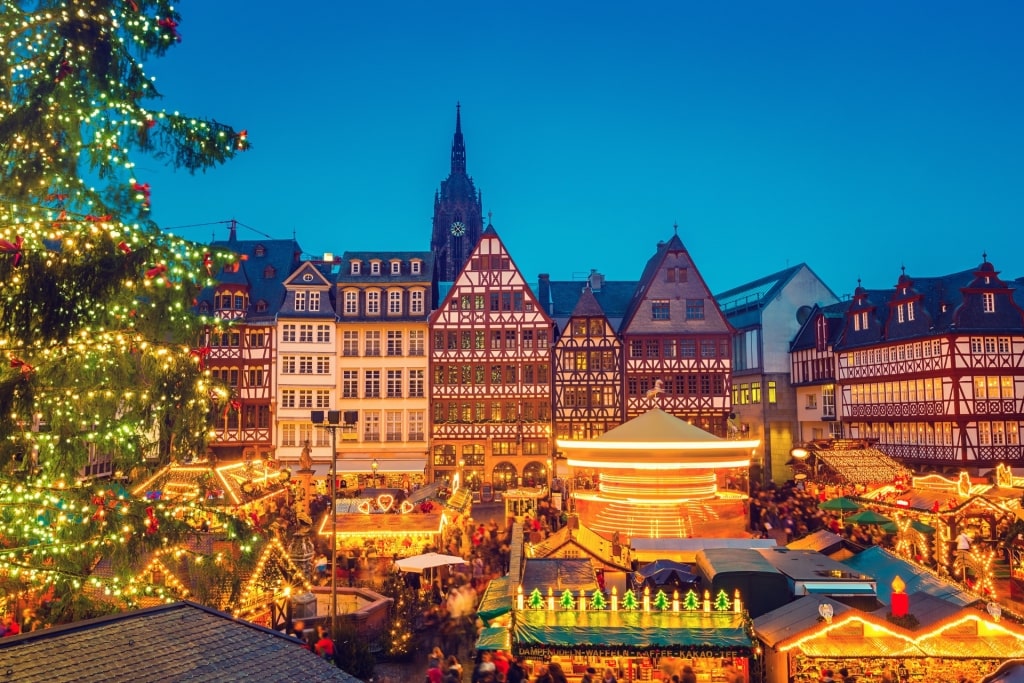
Frankfurt
Most German Christmas markets are free to enter. A few, particularly those in castles or historic buildings, such as the Ehrenbreitstein Fortress in Koblenz, charge a small fee.
What’s the most romantic Christmas market in Germany?
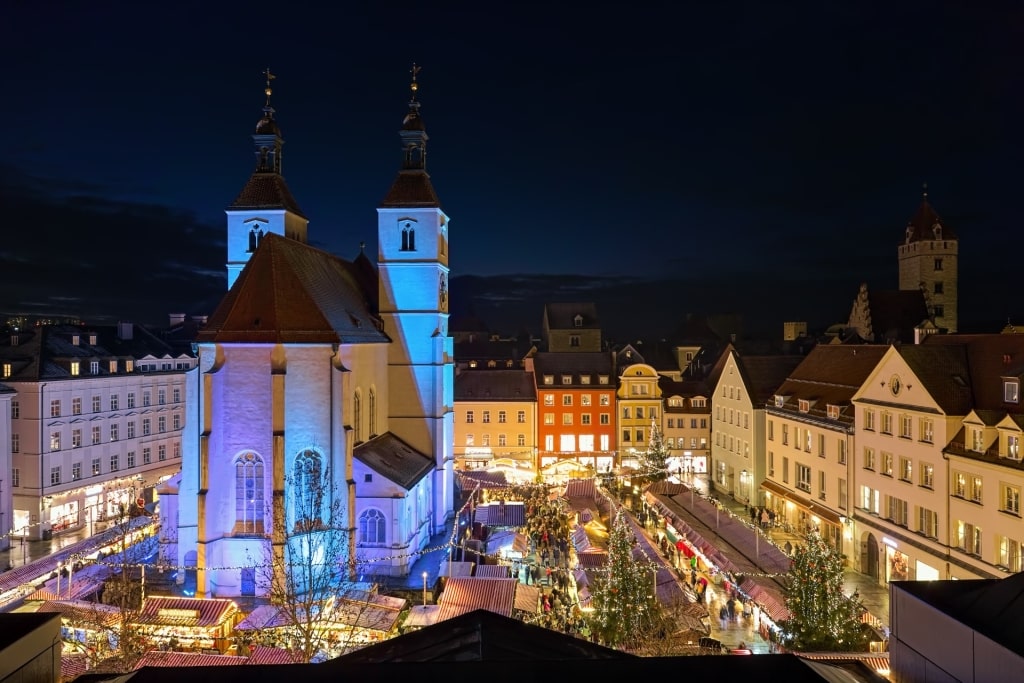
Regensburg
There’s a clue in the name, and Regensburg’s Romantic Christmas Market at Thurn and Taxis Castle justifies the self-styled title. It’s held in the castle courtyard with open fires surrounded by cozy seating and music recitals. You can also stroll around the grounds and find intimate, tucked-away bars.
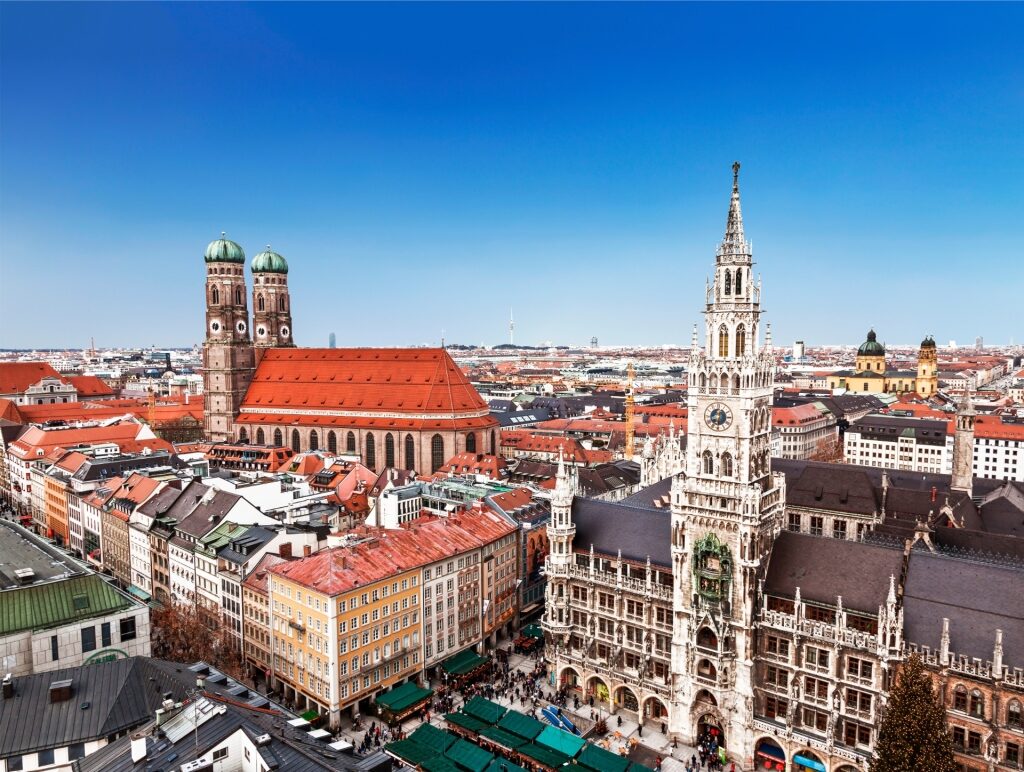
Munich
The country offers an unbeatable choice of Christmas markets and the best way to explore several in one vacation is on one of Celebrity’s river cruises. Browse itineraries and book your festive voyage today.