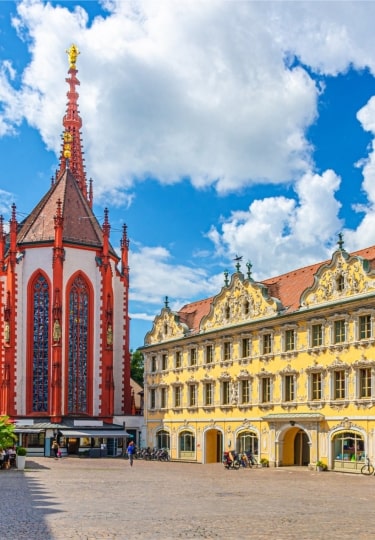
While Würzburg, Germany is sometimes skipped in favor of bigger names, it’s easily one of the country’s most charming small cities. Located in the northern part of Bavaria and set along the banks of the river Main, the city feels like a postcard brought to life, with rolling hills, expansive vineyards, and colorful Baroque buildings.
There’s a lot to see and do in Würzburg, so it’s helpful to plan your visit. The Old Town can be explored in a few hours, while larger attractions, such as the opulent Würzburg Residence, deserve more time. Beyond the city, rolling hills are dotted with wineries where you can tour the cellars or enjoy a guided wine tasting.
Why Visit Würzburg, Germany
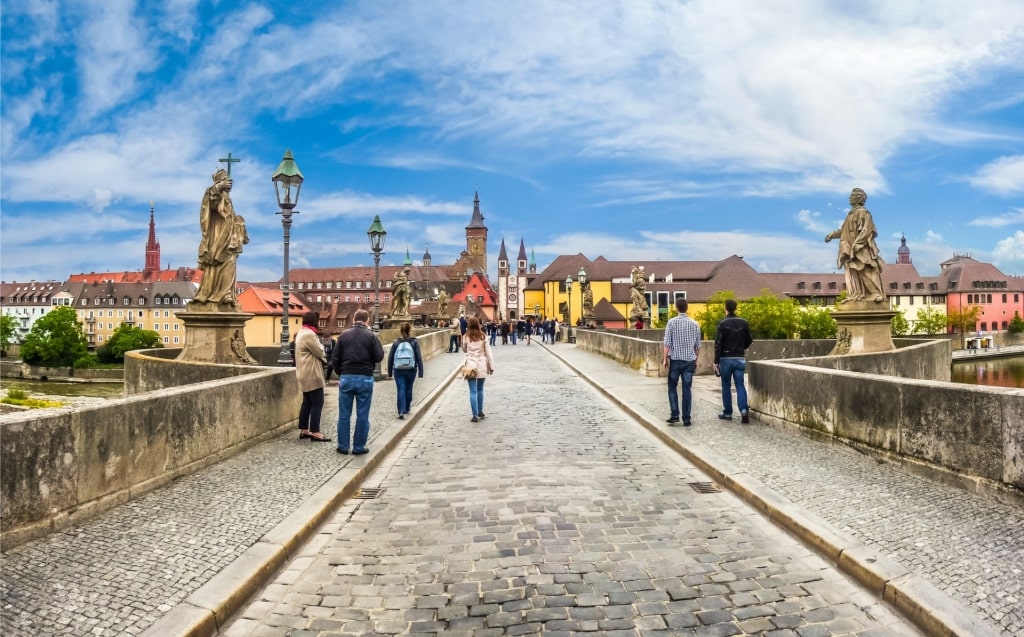
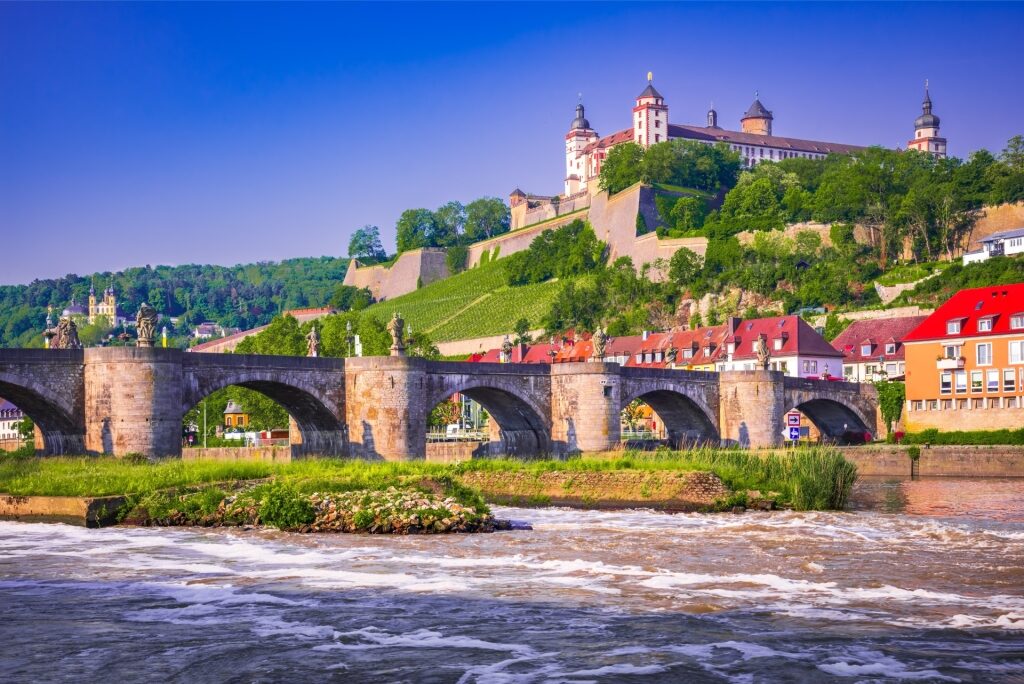
Old Main Bridge
Würzburg may be a small city, but it has numerous historic and cultural attractions worth seeing, not to mention a scenic location on the Main, with rolling hills and vineyards surrounding the urban area. The restored Baroque architecture is beautiful, while the Old Main Bridge, built between 1473 and 1543 and lined with statues of saints, is a must-see.
A tour through the Würzburg Residence is the perfect introduction to the city, followed by the panoramic views from Marienberg Fortress. Adventure seekers will appreciate walking along the Main or cycling to the Franconian vineyards.
History & Culture
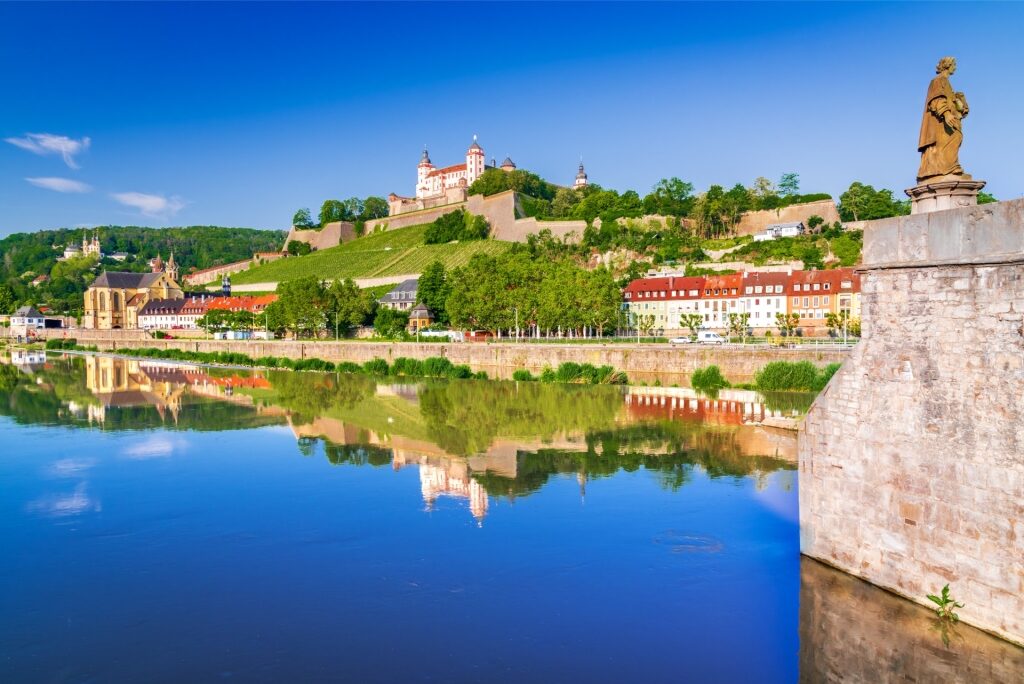
Marienberg Fortress
The history of Würzburg dates back to around 1,000 BCE, although the first written record of the city didn’t emerge until 704 AD. Its earliest origins are Celtic, and a fortress on Marienberg Hill is believed to have been built around 1000 BCE, although the current fortress dates back to the 12th century. By the seventh century, Würzburg had become a significant religious center in Europe, although its history also includes periods of revolt and political upheaval.
Another defining moment in Würzburg’s history occurred in the 20th century during World War II. During a bombing raid in 1945 that lasted only 20 minutes, 80 percent of the city was destroyed. Most of this German town has since been rebuilt, with historic buildings carefully restored to reflect their original Baroque and Rococo architecture.
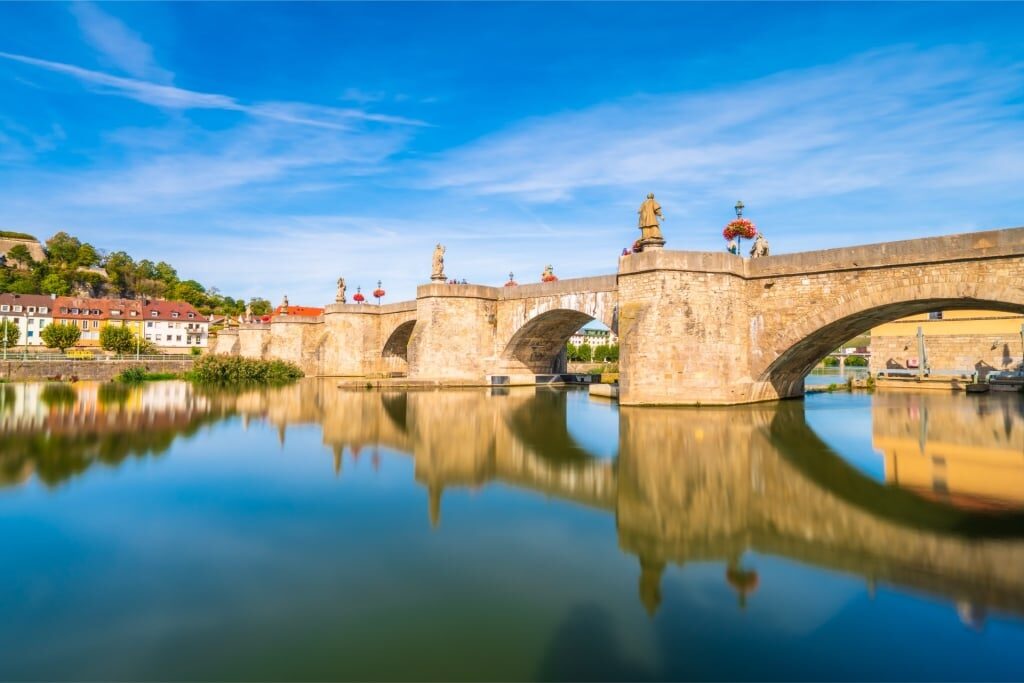
Old Main Bridge
Throughout the year, numerous wine events and festivals take place, while wine tastings are available at nearby wineries and wine bars within the city center. On a warm day, it’s common to see locals enjoying wine with friends on the Old Main Bridge—a tradition known as Brückenschoppen.
As for art, museums such as the Museum im Kulturspeicher showcase contemporary works alongside more traditional pieces. The Mainfranken Theater hosts performances ranging from opera and dance to symphonies and chamber concerts, reflecting the city’s lively cultural life.
Wildlife & Nature
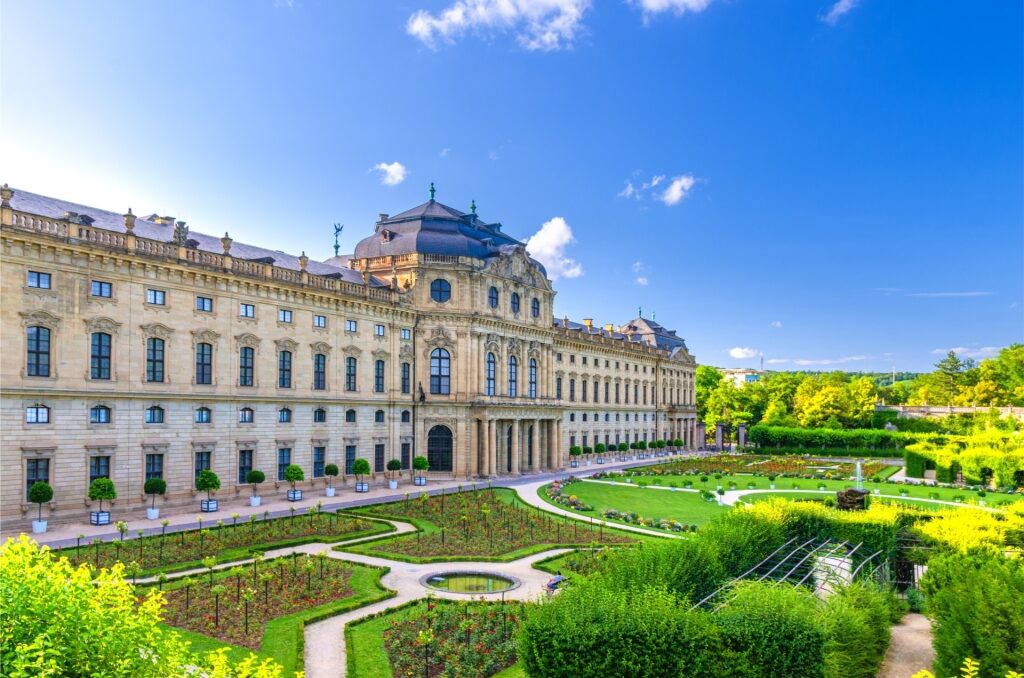
Würzburg Residence
Würzburg may be a city, but there’s plenty of wildlife and nature nearby. During your visit to the Würzburg Residence, make sure to set aside some time to explore the manicured lawns and flowerbeds of the Court Gardens. Even in high season, a stroll through the gardens offers a peaceful reprieve from the more crowded interior, and there are several relaxing areas to sit, take in the views, and enjoy some shade from the sun.
Another peaceful park to explore in Würzburg is Ringpark. Dating back to the 19th century, the ring-shaped park is spacious and features fountains, monuments, and paved paths shaded by towering trees. You won’t see any exotic animals as you stroll, but you may spot squirrels, songbirds like robins and sparrows in the trees overhead, and maybe even a rabbit or hedgehog.
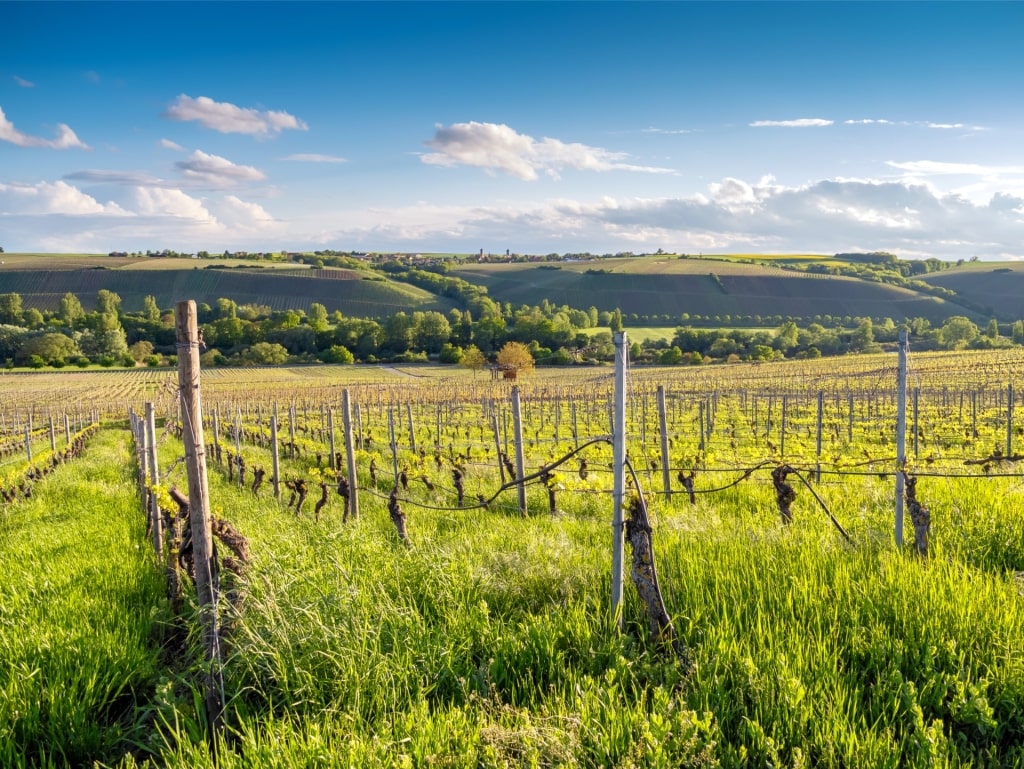
Franconian winery
Beyond Würzburg’s compact city center, lush vineyards, wine trails, and scenic hikes await. Set in the heart of Franconian wine country, Würzburg offers easy access to renowned vineyards located in or near the Old Town, including Bürgerspital Winery, Staatlicher Hofkeller, and Juliusspital Weingut Würzburg.
If time permits, consider renting bikes for the day and taking the Main Cycle Way, which runs along the Main river and leads you through the surrounding Franconian vineyards. Along the way, you can stop at wineries for curated tastings or simply enjoy short strolls through the vineyards.
Tips for Visiting Würzburg
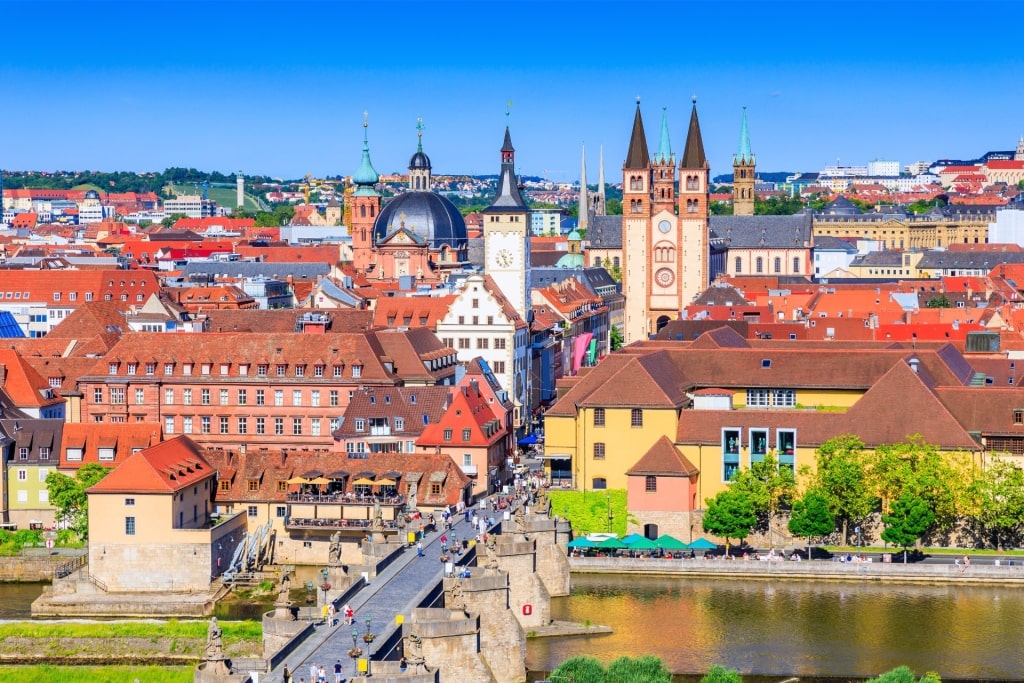
Old Town
One of the great things about visiting Würzburg is that it’s a relatively compact city, making it very walkable, which ultimately allows you to maximize your time without feeling rushed. To explore Würzburg beyond the city center, public transportation is efficient, and there’s also the option of renting a bike to explore the surrounding vineyards and trails.
While an entrance ticket to the Würzburg Residence grants access to more than 40 rooms, it can be helpful to join a guided tour for a deeper historical context and to spot better decorative details that might otherwise be overlooked. Tickets are sold at the on-site cash desk, so if you’re visiting during the busy summer season, allow extra time in case there’s a line.
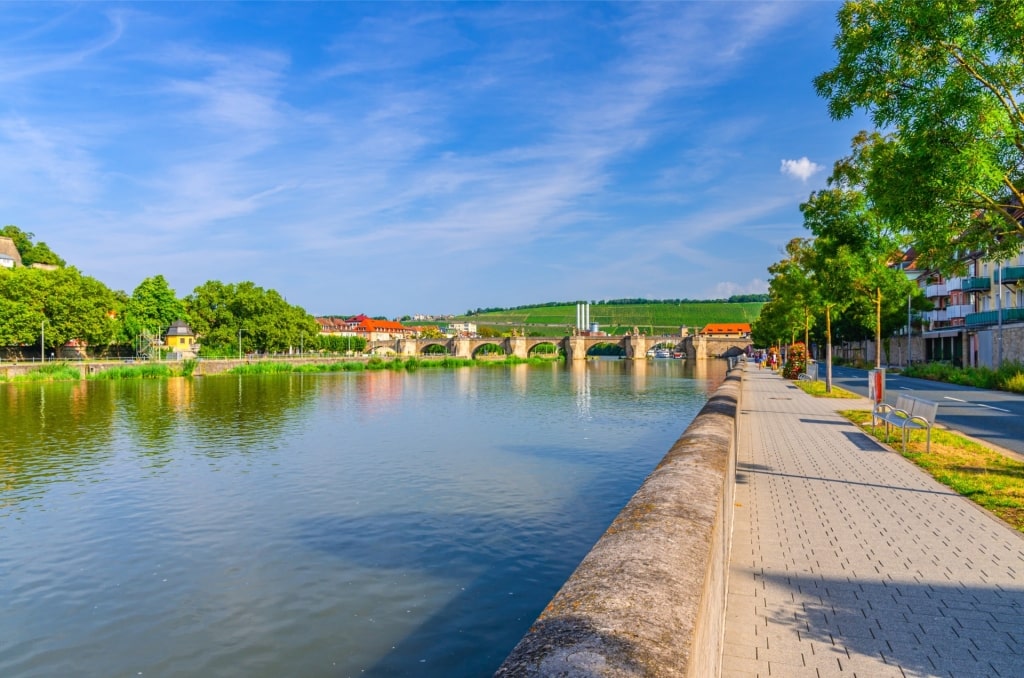
Old Town
Since Würzburg is best explored on foot, make sure to dress comfortably and pack a pair of sturdy walking shoes. For hiking or biking, consider wearing sneakers or proper hiking boots to ensure good traction in case the weather turns rainy. Even in spring or autumn, the weather can feel chillier as you reach the nearby vineyards, so pack a sweater or light jacket just in case.
Speaking of vineyards, it is a good idea to book tastings and tours in advance to secure your spot. Many of the area’s most famous wineries, such as Bürgerspital, Juliusspital, or Staatlicher Hofkeller, offer guided cellar tours and tastings that tend to fill up quickly during harvest season and in summer.
Things to Do & Attractions in Würzburg
Tour the Würzburg Residence
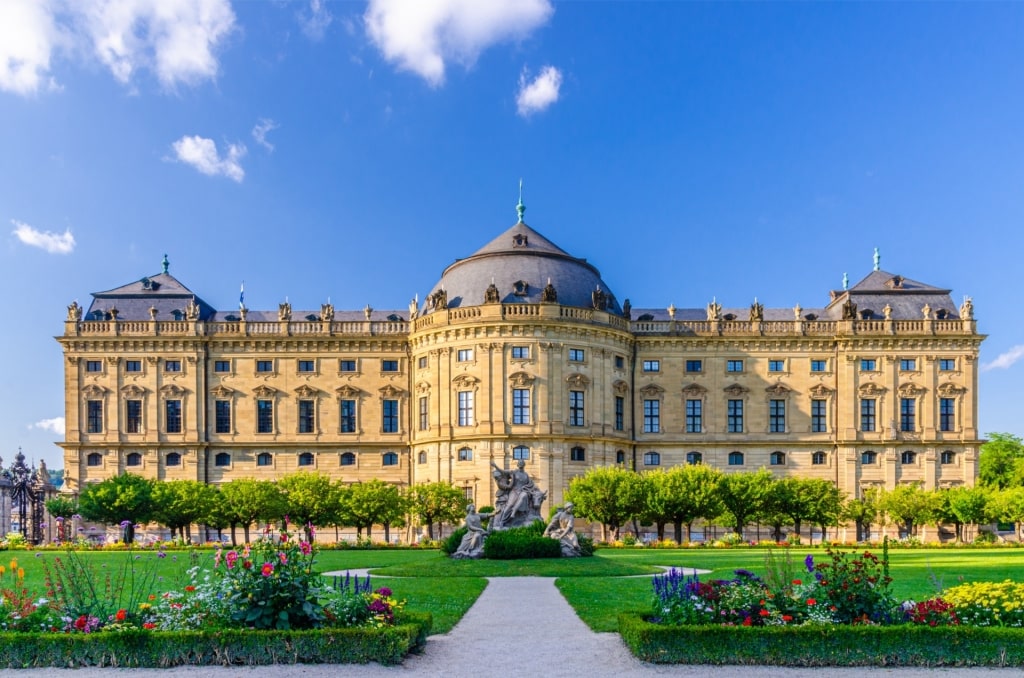
Würzburg Residence
For first-time visitors to Würzburg, a visit to the Würzburg Residence is an absolute must. Built in the 18th century for the Prince-Bishops of Würzburg, the Residence, a lavish Baroque palace, is a UNESCO World Heritage Site. It’s considered to be one of the most impressive examples of Baroque architecture in Europe.
There are more than 40 rooms to explore within the Residence, so block off a few hours for this visit. One of the biggest highlights is the Grand Staircase Hall, where you can view a large fresco by famed Venetian painter Giovanni Battista Tiepolo. The Mirror Cabinet is also spectacular, and despite being destroyed during the 1945 bombing raids, it has been recreated to showcase the Würzburg Rococo style.
Read: Best Places to Visit in Germany
Head Up the Hill to Marienberg Fortress
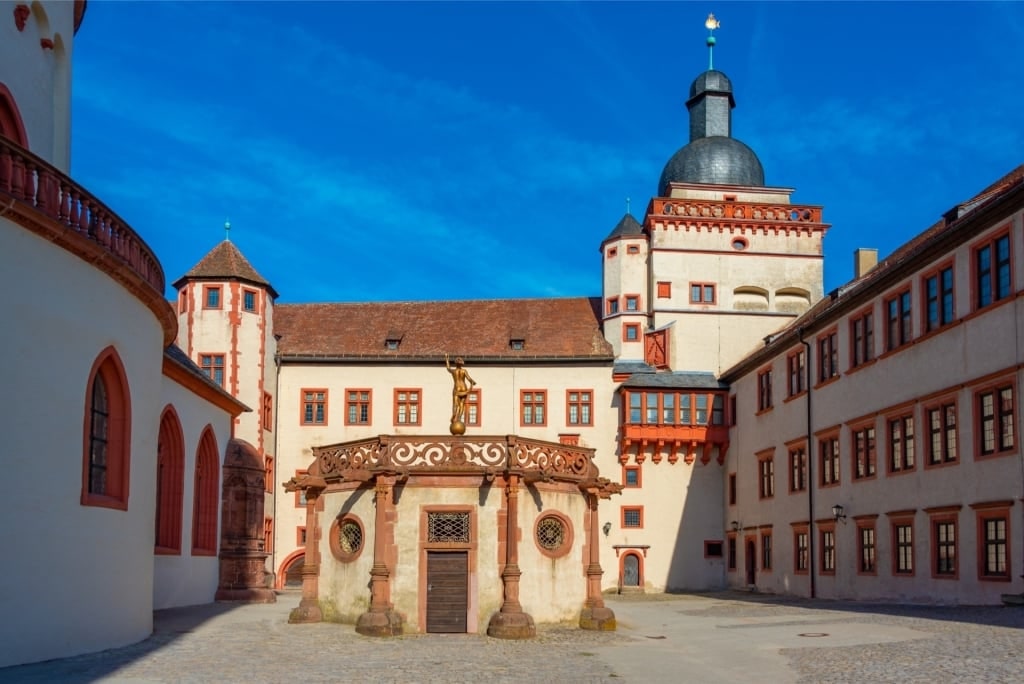
Marienberg Fortress
Next up, head to the Marienberg Fortress, which is set high above the Main River. Historians estimate that a fortress stood here as early as 1000 BCE, originally built as a refuge castle for the Celts.
By the 13th century, however, a more recent version served as the residence for the Prince-Bishops of Würzburg, and most of what remains today are structures built during both the Renaissance and Baroque periods. Highlights include the panoramic views from the top, the two on-site museums that walk visitors through the city’s history, and the beautiful Princes’ Garden featuring terraces, balustrades, and pavilions.
Visit Würzburg Cathedral and Neumünster Church
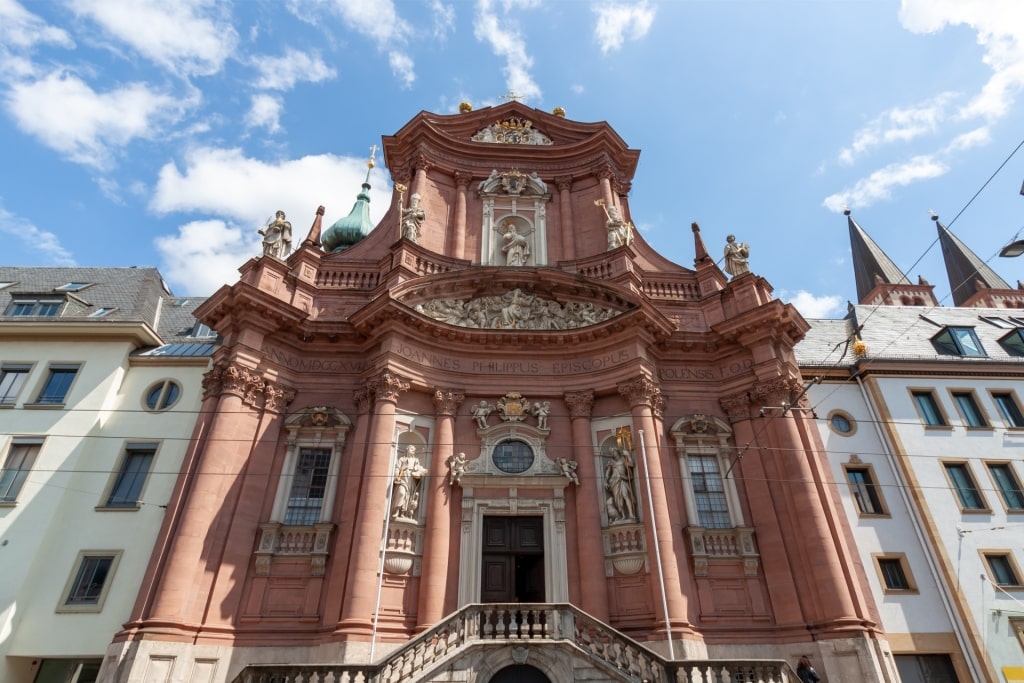
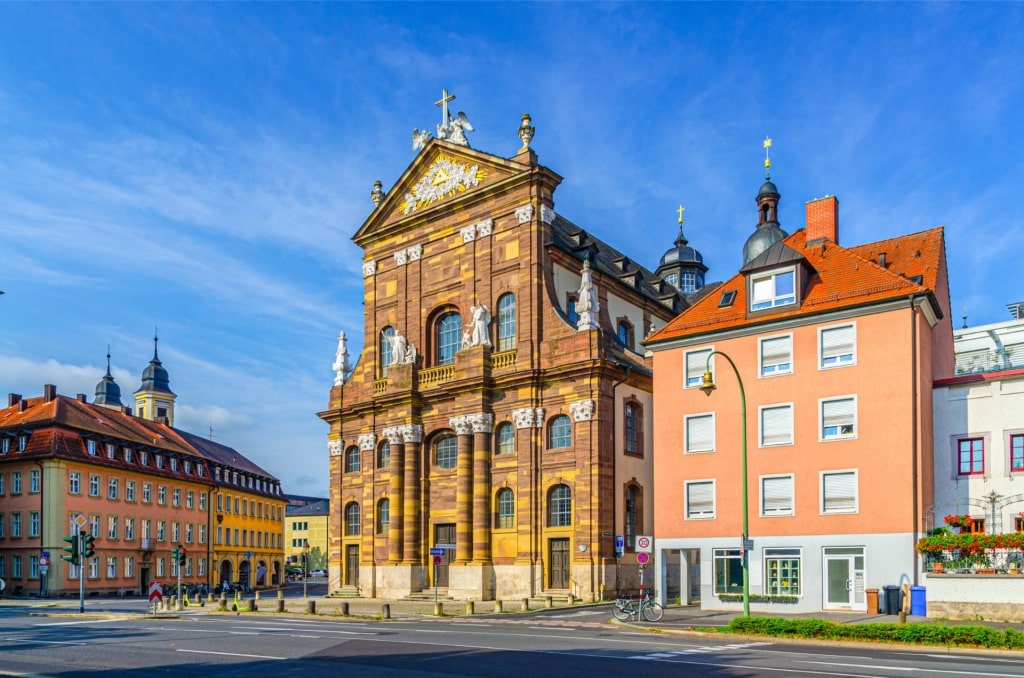
Neumünster Church
Back in the Old Town, you’ll find two separate attractions located right next to each other. The first is the Würzburg Cathedral, one of the largest Romanesque churches in Germany and a fine example of Romanesque-style architecture. The second is Neumünster Church, with its pink Baroque façade. Since Würzburg Cathedral and Neumünster Church are located right next to each other, it’s worth visiting both. Admission is free, and both are open daily.
While you’re in the Old Town, make your way to the bustling Marktplatz. Here you’ll find the famous Marienkapelle, a church designed in Gothic style and built in red sandstone, as well as the historic Falkenhaus with its bright yellow Rococo façade.
Tour a Local Winery

Franconian winery
Touring a winery in Franconia is an immersive way to experience the region’s landscape and winemaking traditions.
A guided tour at Juliusspital Weingut takes visitors through the wine production process and concludes with a private wine tasting in the historic cellar. If you’re lucky, your tasting might include one or more limited-edition wines or even a rare vintage.
Similarly, Bürgerspital Weingut offers guided tours and tastings, as well as seasonal wine-themed events throughout the year. To take a few bottles back home with you, stop by the wine shop on your way out.
Food & Drink

Bratwurst
With so much sightseeing and walking in Würzburg, you’re bound to work up an appetite. Luckily, Franconian cuisine is typically both filling and flavorful, with many restaurants opting for locally sourced ingredients and featuring a rotating seasonal menu.
For a bit of a kick, order Fränkische Bratwurst. These spiced sausages are usually grilled and served with either potato salad or sauerkraut. While bratwurst is common throughout Germany, in Würzburg, it features a unique blend of regional spices. Schäufele, a roasted pork dish with crispy skin, is another popular meat option to try, especially during the colder months.
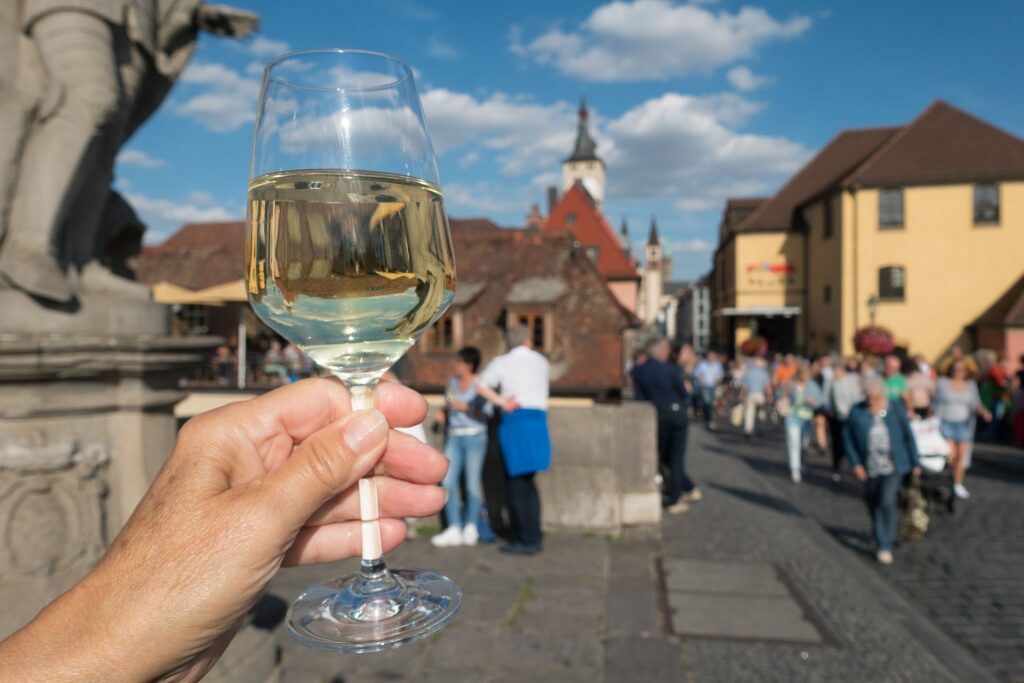
Wine
As for wine, there are three varietals that the Franconian wine region is best known for. The first is Silvaner, a crisp white wine often paired with pork dishes. The other two are Riesling and Müller-Thurgau, both refreshing white wines to enjoy on a hot summer day.
Best Time to Visit Würzburg
Old Town
When to visit Würzburg really comes down to personal preference, as the city is lively year-round. That said, many travelers choose to time their trip sometime between late spring and autumn, typically from May through September.
For warm weather and outdoor festivals, plan to visit in June or July, when there are various wine-themed events. If you’re hoping to experience the wine harvest season, an autumn trip allows plenty of opportunity to visit surrounding vineyards and see grapes on the vines.
Don’t completely count winter out. The city is especially enchanting in the weeks and months leading up to Christmas, when several festive markets appear, where you can shop for handmade crafts and decorative ornaments, and sip on Glühwein, Germany’s spiced, mulled wine.
Old Town
Are you ready to discover Würzburg for yourself? Browse Celebrity’s river cruises to Germany and book your European adventure today.