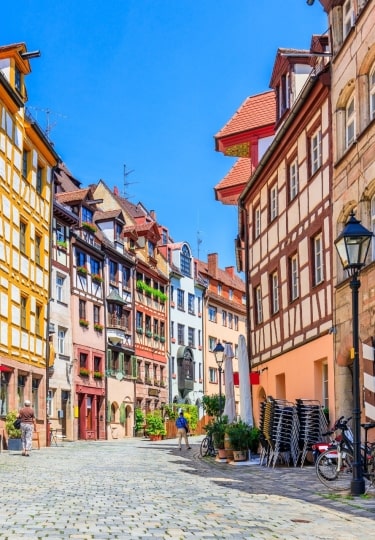
For decades, the vision of Germany pushed on the world by German tourism boards and agencies is really one of Bavaria. It’s hard to blame them. The image of fairytale castles, lakes, and alpine meadows is certainly an easy sell.
While cartoonish Oktoberfest celebrations take place on just about every continent nowadays, the beer halls and gardens here in Munich and other Bavarian cities are a very different experience. They’re less about heavy drinking here and more about good food and company. Here’s what you need to know about visiting Bavaria, Germany.
Why Visit Bavaria?
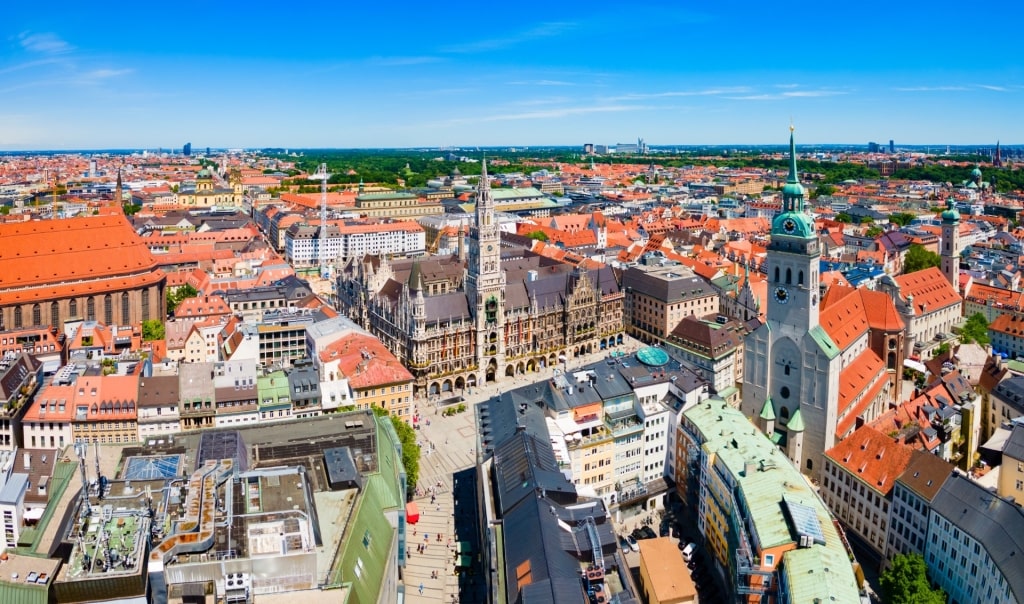
Marienplatz, Munich
From grand palaces to world-class art museums, beer gardens to scenic lakes, Bavaria really has it all. Whether you’re looking for natural splendor, culture, or cuisine, you’ll find it here.
Above all, Bavarians know how to enjoy life. The concept of Gemütlichkeit—an untranslatable word for a cozy, warm feeling—is central here. That might mean sitting in a café in Munich’s Viktualienmarkt on a sunny afternoon or sipping glühwein on a chilly evening. After even just a short time here, it’s easy to get into the convivial spirit of it all.
History & Culture
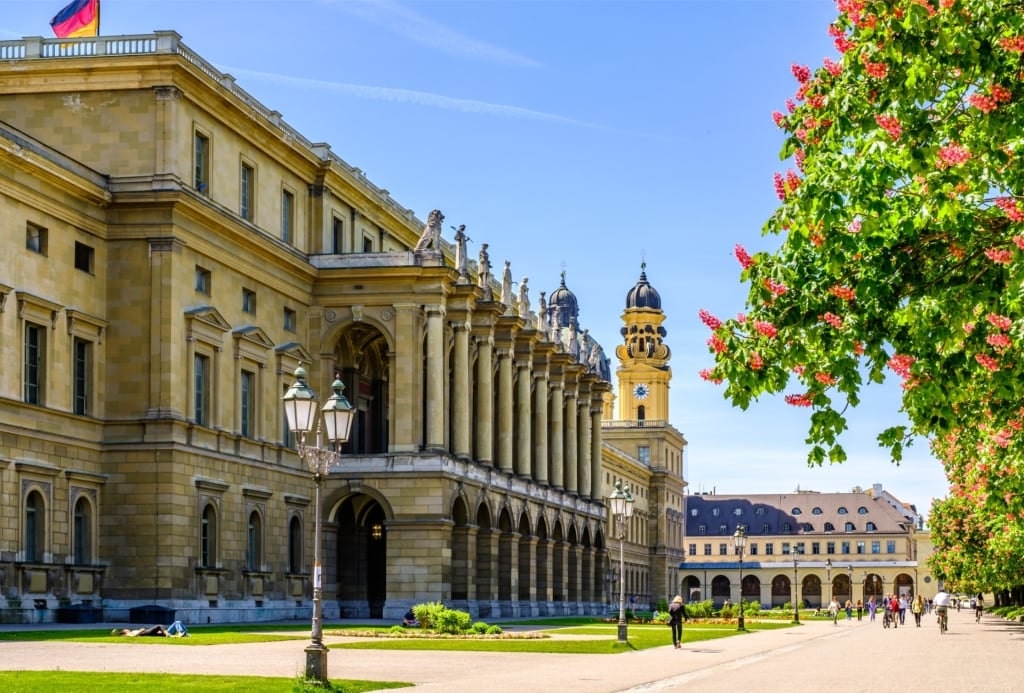
Munich Residenz
Bavarians have a strong sense of identity. From the sixth century, the state was a dukedom and later, until 1871, an independent kingdom before it became part of a unified Germany. Even today, it has its own anthem and its own flag. Bavaria is the largest of Germany’s 16 federal states and is an important economic center in its own right, as well as a highly successful tourist destination.
While just about every German region is proud of its own specific culture and traditions, perhaps nowhere is this more true than Bavaria. Bayerisch, or Bavarian dialect, is still widely spoken, especially outside of major urban areas. Expect to be greeted with a friendly Grüß Gott—literally “God bless,” but effectively “good day”—or a more informal Servus.
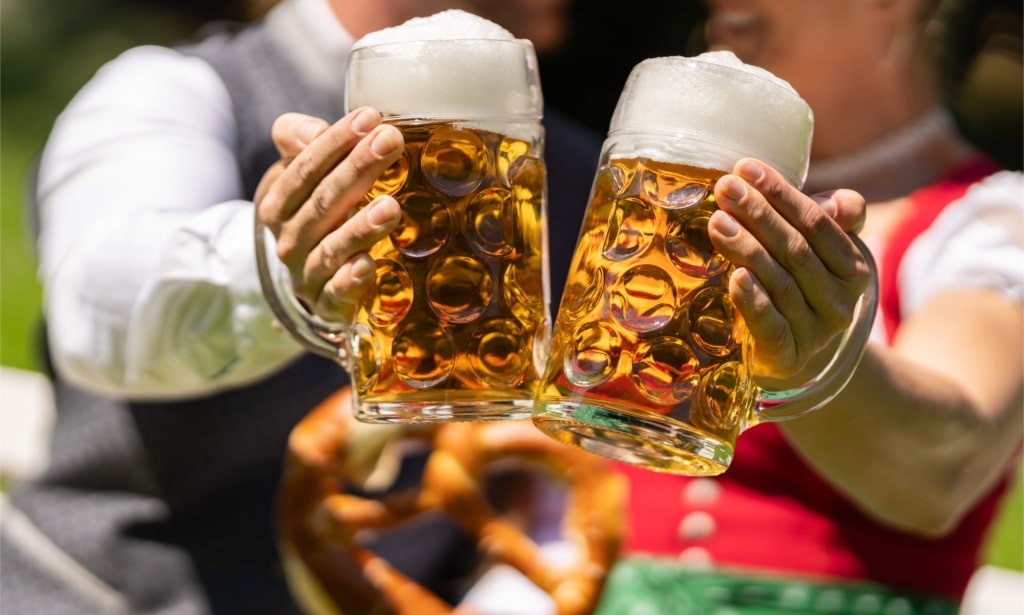
Dirndls and lederhosen
Bavarians also take their traditional clothing seriously. In some parts of the world, dirndls and lederhosen are treated like campy beer hall costumes—not so here. These particular looks first became fashionable in the 1800s. Local nobility such as Prince Regent Luitpold, an avid hunter, popularized lederhosen, while dirndls were worn by ladies at all levels of society.
In its place of origin, Trachten, or traditional garments, are still very much in style with all generations. Just about any Bavarian will have a high-quality set or two in their closet. Handsewn versions by modern fashion labels typically go for hundreds or even thousands of euros.
Wildlife & Nature
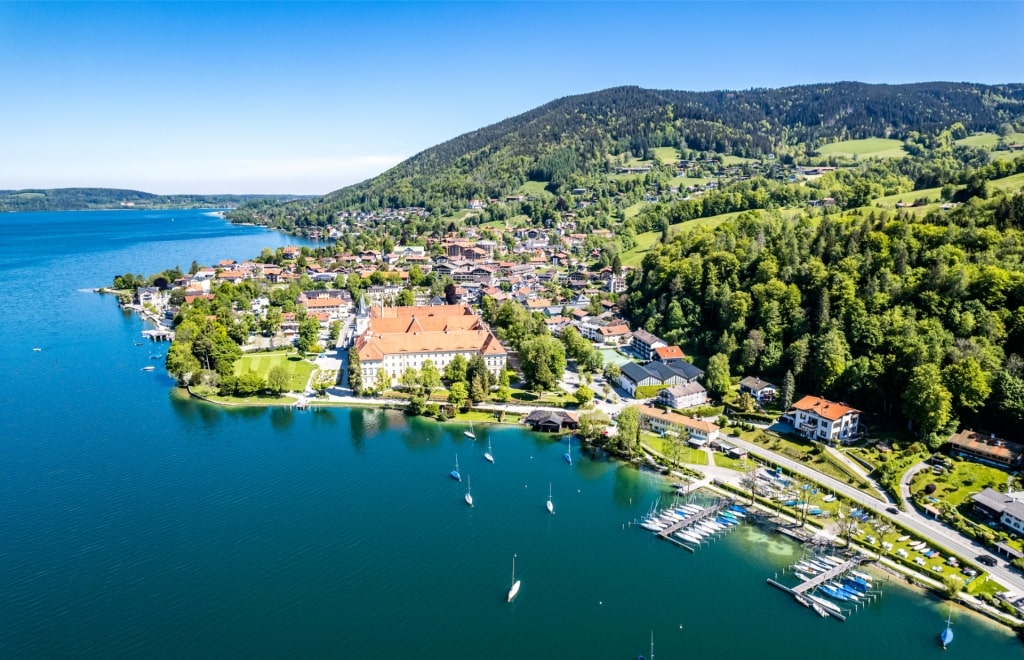
Tegernsee
With its emerald forests and fields framed by the Bavarian Alps, Bavaria is one of the most naturally beautiful places in the land. Even Bavarians who live in Munich or other cities often make a beeline for the great outdoors on the weekends. Wandern, or hiking, is something of a way of life here, thanks to the vast network of well-maintained trails in the mountains. Serious trekkers often go for days, bunking in Hütte—huts, or small inns—along the way. There are also plenty of shorter options for casual outdoor enthusiasts.
Aside from the mountains, one of the loveliest things about Bavaria’s countryside are its lakes, many of which are an easy day trip from Munich. The Regionalbahn—RB—or S-Bahn will take you to most of them, although it’s faster to use a rental car or car sharing app. Starnberger See, Ammersee, and posh Tegernsee, home to thermal spas and upscale eateries, are all easy visits.
Tips for Visiting Bavaria
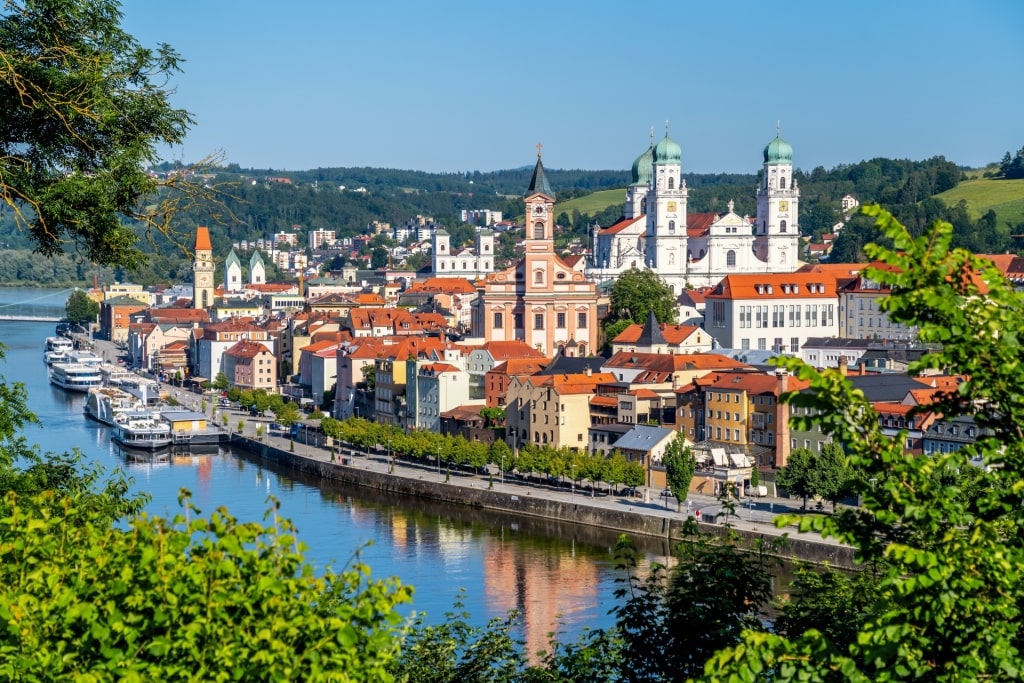
Passau
In general, Bavaria is a breeze to visit. Clean, safe, and well-organized, it presents international visitors with relatively few logistical hurdles. This is one of the wealthiest parts of Germany historically, which is part of why the public transportation and infrastructure are all excellent. In Munich, the U-Bahn—essentially, the subway—and the S-Bahn, the overground urban trains—are both easy to use.
Pack comfortable shoes, since you’re likely to want to walk a lot. If you plan to take a daytrip into the Bavarian Alps, bring layers, as temperature can shift at higher altitudes. The weather here tends to be mild, although an umbrella is never a bad idea in spring or fall.
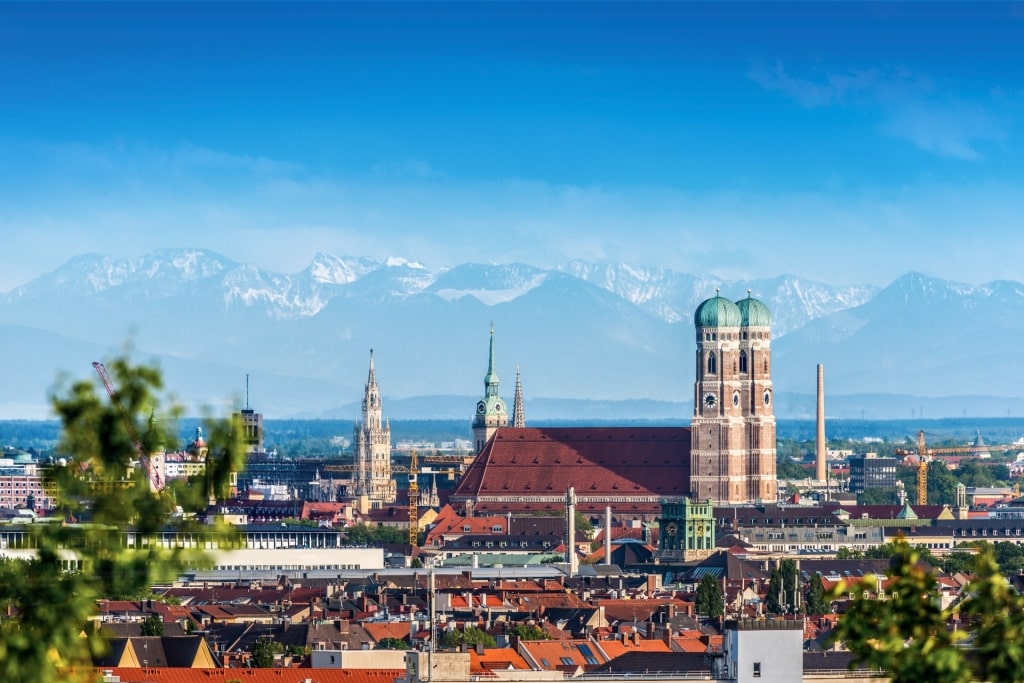
Munich
Note that Bavaria is one of the more socially conservative regions of Germany, as well as one of the more religious. That means many places of business are closed on Sundays. While it’s not a hard rule, it’s better to err on the side of politeness here.
Yield your seat on the U-Bahn, hold open doors for strangers, and be sure to make eye contact when you say Prost at a beer garden.
Things to Do & Attractions
Gaze at Fairytale Neuschwanstein Castle
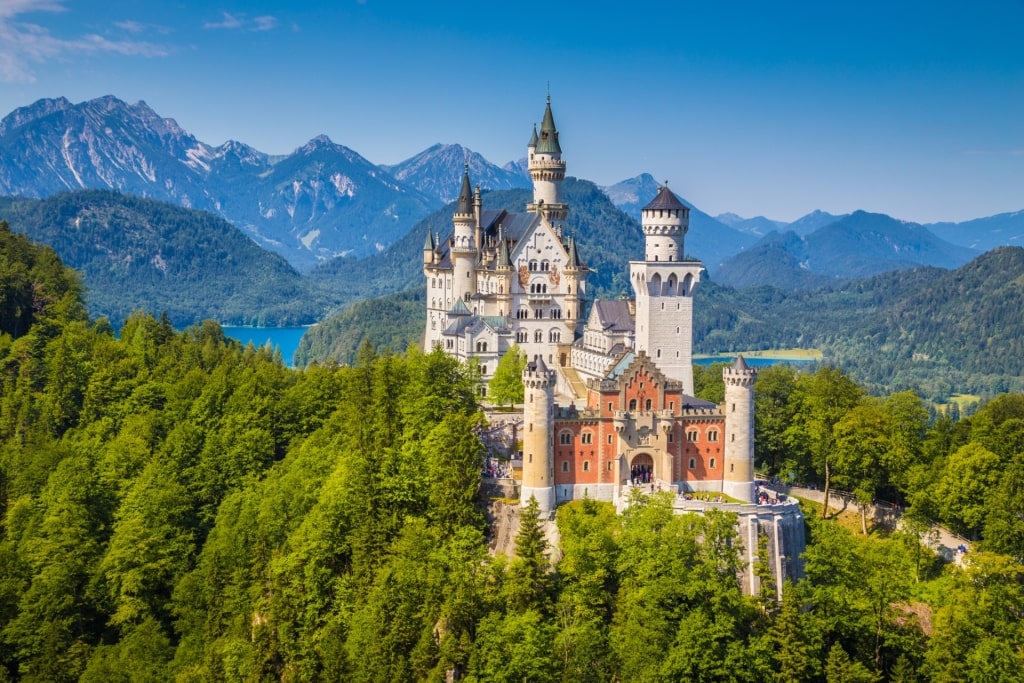
Neuschwanstein Castle
Arguably the single most popular attraction in Bavaria is Neuschwanstein Castle—and with good reason. Set in the foothills of the Bavarian Alps, this stately Schloss was famously the inspiration for Walt Disney’s Cinderella Castle.
With its striking Romanesque turrets and facade, it truly looks the part of a fairytale castle. The somewhat bizarre origin story of this German castle only adds to its allure. King Ludwig II, Bavaria’s notorious “mad king,” paid for this fantastical retreat out of his own pocket. Tragically, he died before he was able to see the finished work.
Explore Historic Regensburg
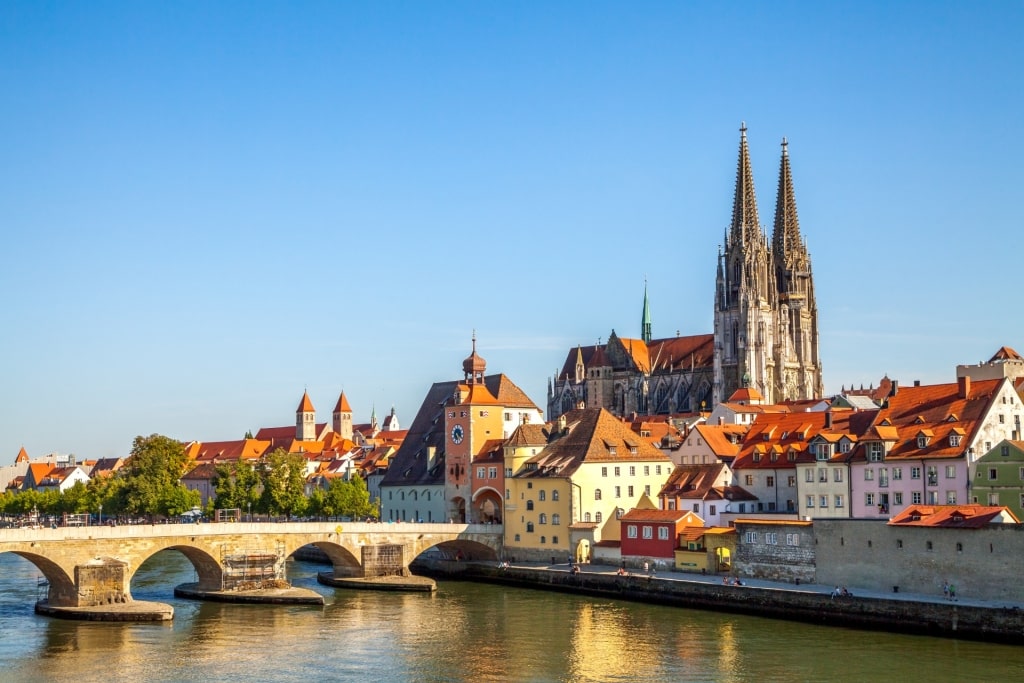
Regensburg
For anyone fascinated by history, a visit to Regensburg is a must. The entire jewel-box city center is a UNESCO World Heritage Site, thanks to its well-preserved medieval architecture. The Regensburg Cathedral in particular is a magnificent piece of Gothic architecture.
Relax at the Starnberger See
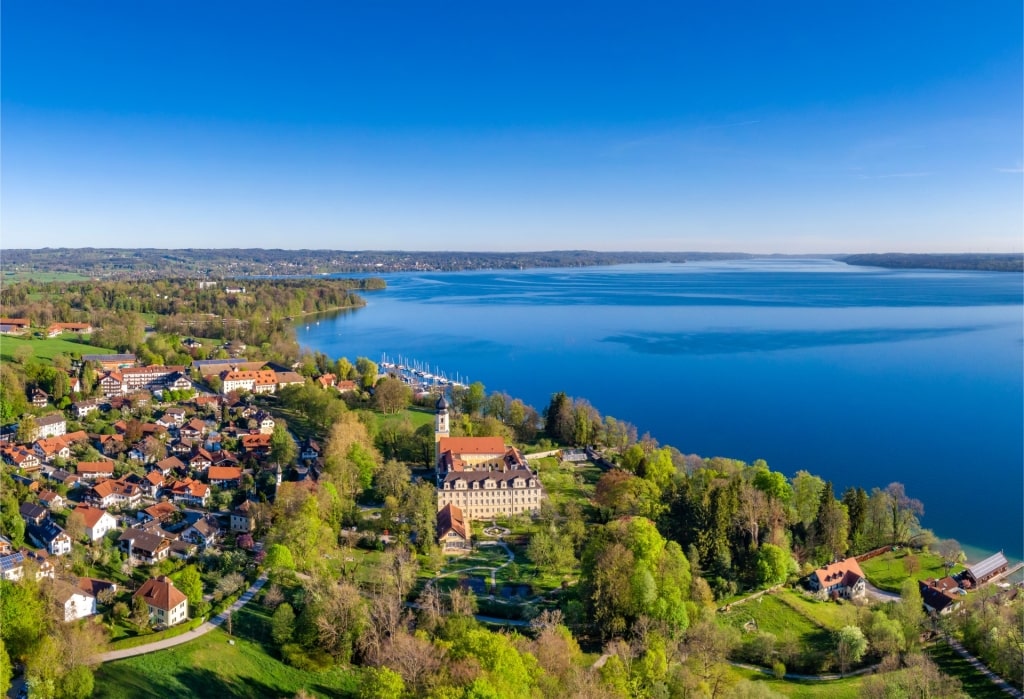
Starnberger See
Starnberger See, located a 40-minute drive from the city, was the favored summer haunt of King Ludwig II—and the lake in which he drowned. There’s a charming town, Starnberg, plus the nearby Museum der Phantasie, with an array of Expressionist art.
Because of its proximity to Munich, Starnberger See is where city dwellers come to escape and enjoy kayaking, paddleboarding, and hiking.
Swim in the Ammersee
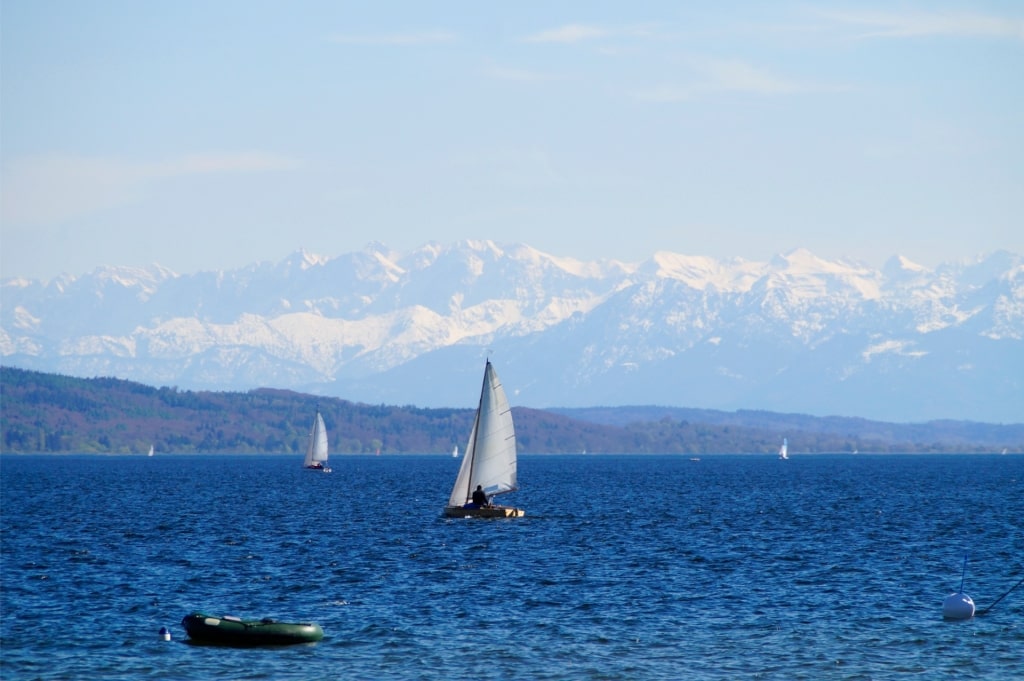
Ammersee
Ammersee, near the S-Bahn-accessible German town of Herrsching, is perfect for anyone who loves to kayak, windsurf, or just hang out on a sunlounger at Strandbad Seewinkel, a manmade beach. Kloster Andechs, a centuries-old monastery and brewery located nearby, is a must-visit.
Get a Culture Fix in Munich
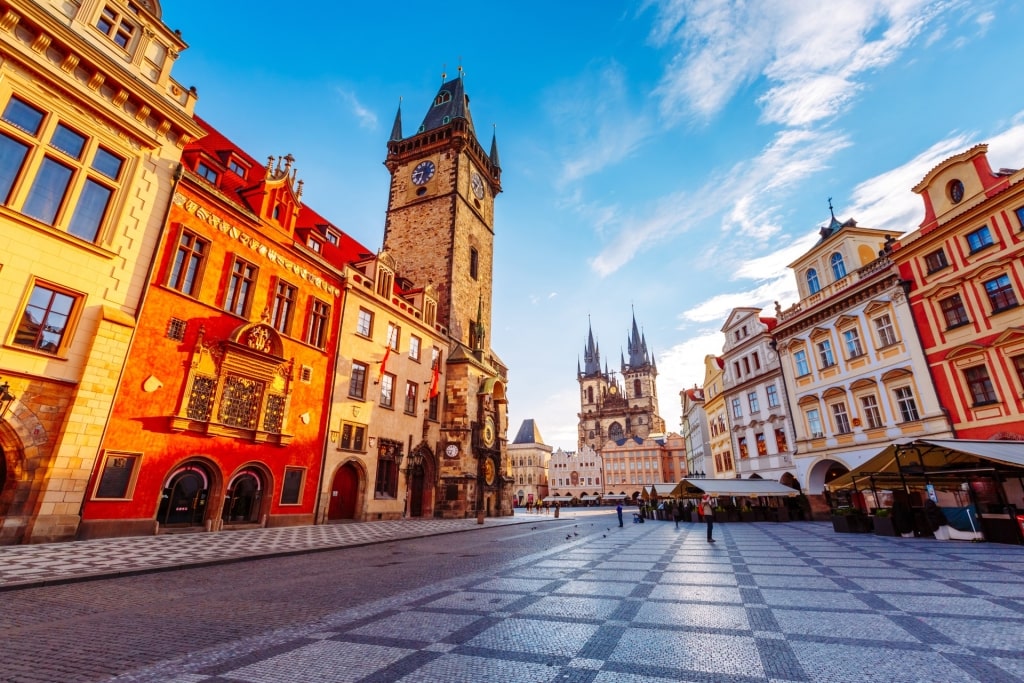
Marienplatz, Munich
In the Bavarian capital, see the famous Rathaus-Glockenspiel, a remarkable mechanical clock with 43 bells situated in the historic square of Marienplatz. Two or three times a day, depending on the season, 32 life-size human figurines act out real historical events from the city’s past.
You can also check out the art in the Alte Pinakothek, Pinakothek der Moderne, and Haus der Kunst.
See Where Three Rivers Meet in Passau
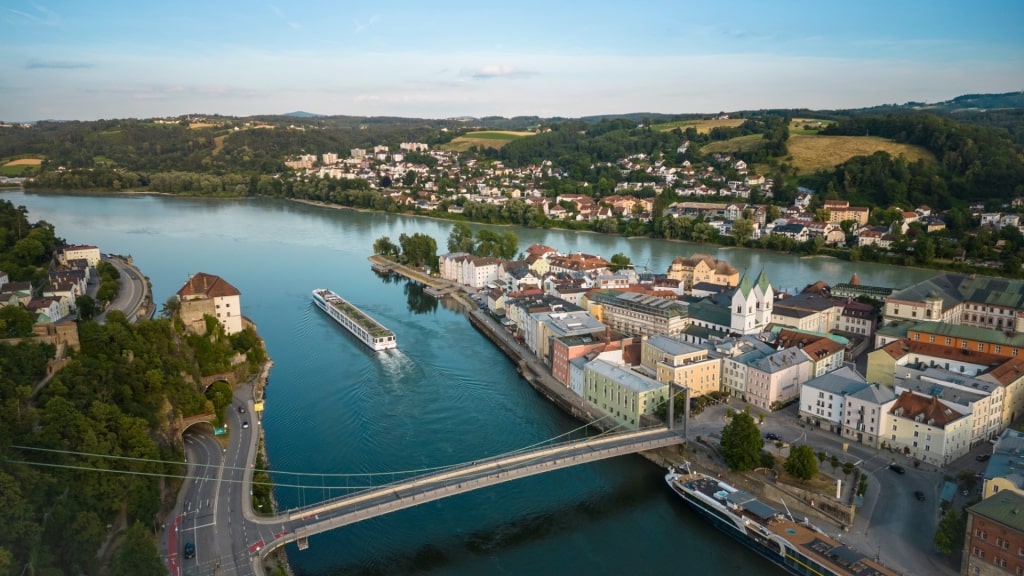
Passau
Historic Passau, the “City of Three Rivers,” as it’s sometimes known, sits at the intersection of the Inn, Danube, and Ilz rivers and as such, has enjoyed an important strategic position on a vital trade route throughout history.
Be sure to visit St. Stephen’s Cathedral, a well-preserved architectural masterpiece in the Italian Baroque style and one of the most famous churches in Germany. Wander around the Altstadt, the old center, which is crammed onto a peninsula that overlooks the confluence of the three rivers.
Learn About History in Nuremberg
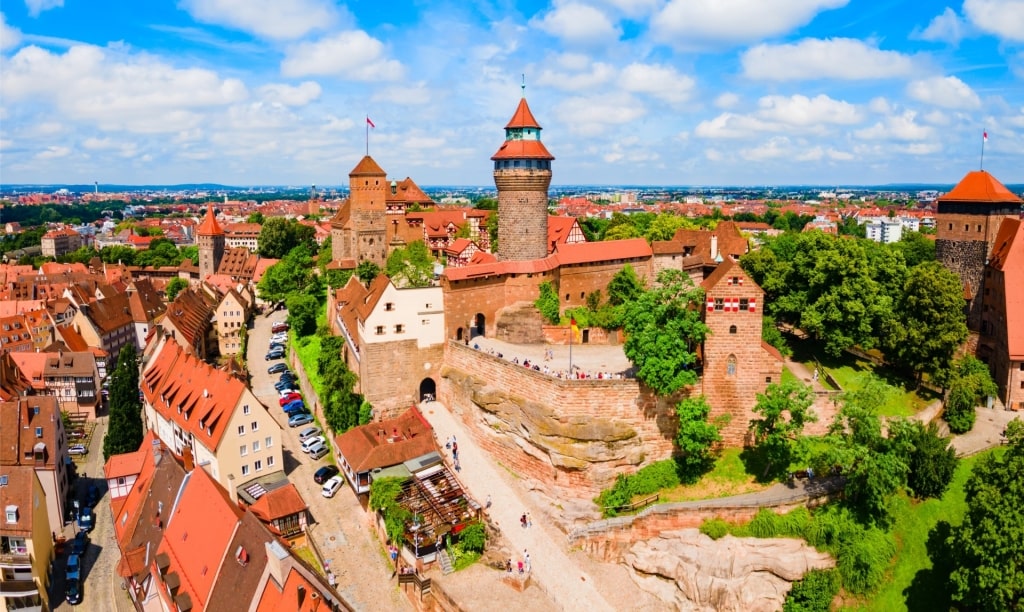
Nuremberg
See the impressive Imperial Castle of Nuremberg that presides over the historic old town center. Visiting the Documentation Center Nazi Party Rally Grounds is a somber experience, but an important one.
Nuremberg was once the site of rallies and book burnings as the Nazi Party rose to power. This thoughtfully laid-out museum explores the factors that led to the Third Reich, with the hope that visitors will learn from history.
Food & Drink
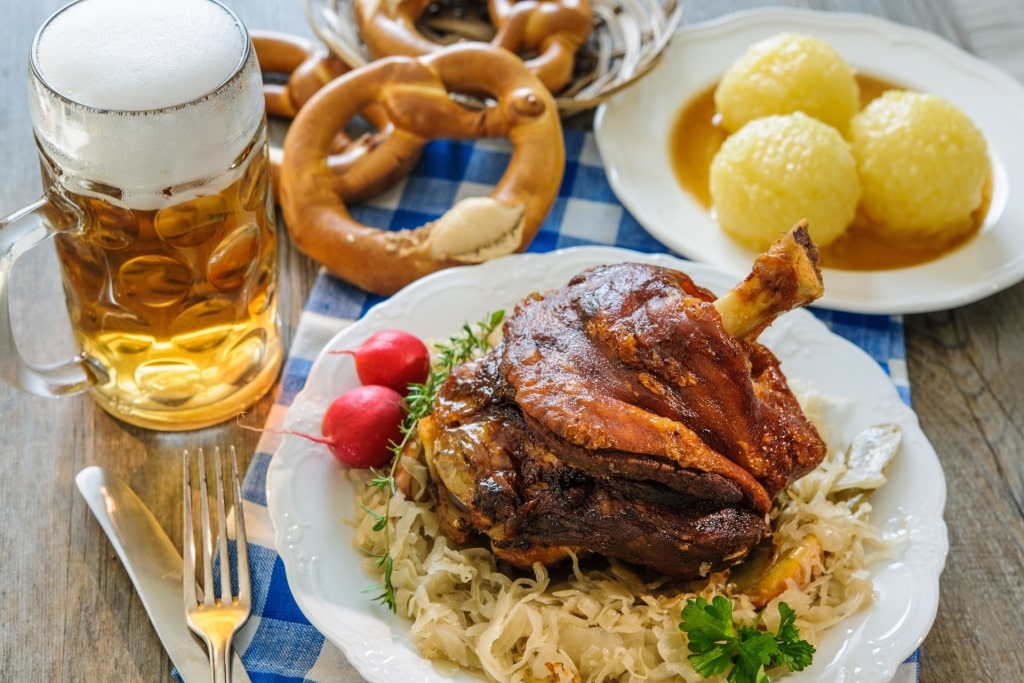
Schweinshaxe
Bavarians are justifiably proud of their cuisine, which errs heavily on the meat and potatoes. The most famous example is, of course, the Schweinshaxe, or pork knuckle. This hulking, bone-in cut of meat is cooked for hours until handsomely browned and tender.
While it’s arguably the best-known German food, even in Bavaria this is more of a special occasion dish. It’s a staple at Hofbräuhaus and other beer halls, along with Oktoberfest. It usually comes accompanied by Bratkartoffel—pan-fried potatoes—or boiled potatoes and sauerkraut.

Knödel
Knödel are a key staple in Bavarian cuisine. The term covers a rather wide range of both sweet and savory dumplings. On the sweet side, Germknödel are made with an airy, yeasted dough, filled with fruit preserves, usually plum, and typically served in a pool of crème anglaise.
Kartoffelknödel are bouncy, savory dumplings made from mashed potatoes and served alongside roasted meats. Semmelknödel, on the other hand, are made with leftover stale bread rehydrated with milk and cream.
A Konditorei, Germany’s answer to a patisserie, is all about exquisite pastries and cakes. Kaffee und Kuchen, or the afternoon ritual of coffee and cake, is still borderline sacred to many locals in Bavaria, particularly of the older generation. As a result, you’ll find a wonderful assortment of cakes and tortes in just about every town and city.
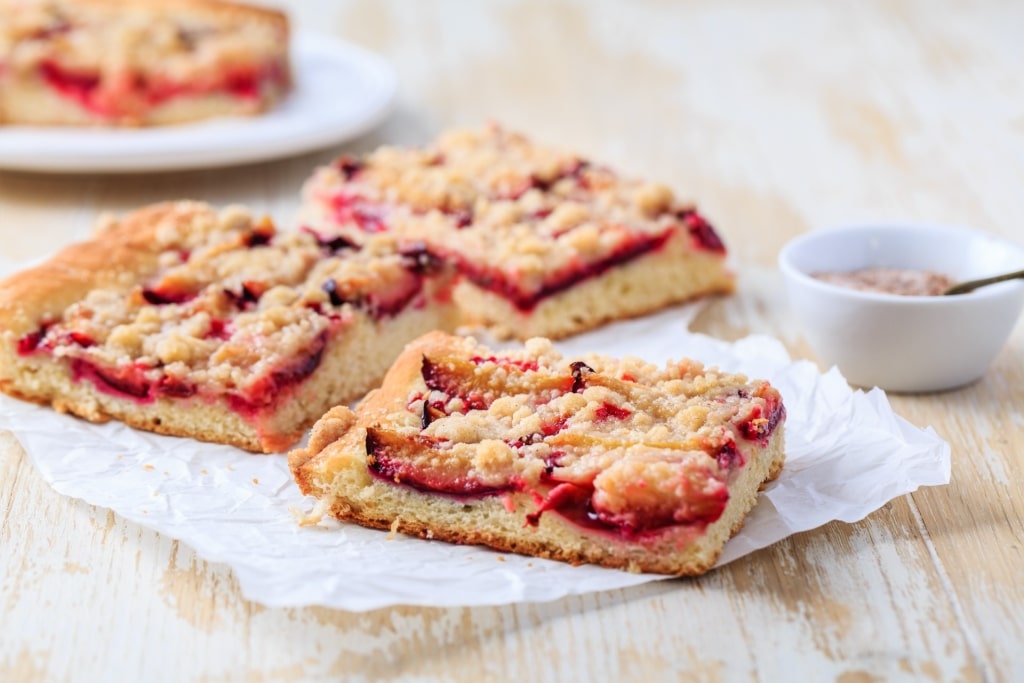
Zwetschgenkuchen
In particular, keep an eye out for seasonal specials like Zwetschgenkuchen, a dimpled yeasted cake made with plums in summer and early fall. In the spring, Rhabarberkuchen, a streusel-topped rhubarb cake with a vanilla bean-flecked custard layer, is wonderful.
It’s impossible to speak of Bavaria without mentioning its beer culture. This is, after all, the place that created the Reinheitsgebot, or Beer Purity Law, in 1516. The law decreed that beer could only consist of water, hops, and barley. Yeast wasn’t specified, but was later added to the list. To this day, Bavarians are fiercely proud of the legacy and of their lagers that still adhere to it (even if they’re no longer legally obligated to do so).
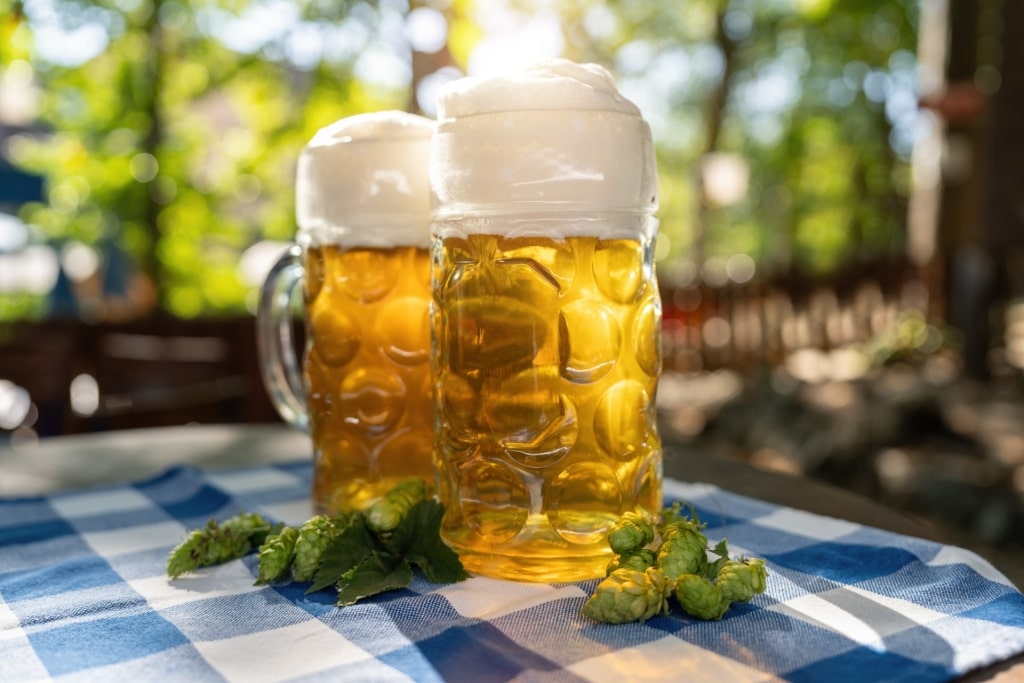
Beer
Beer gardens are very much a way of life here, particularly when the weather is nice. Munich has more than 180 of them. These family-friendly spaces are more about enjoying pleasant weather and good company than about heavy drinking. All of them have good non-alcoholic options, including good quality NA beers.
Read: Tipping in Germany
Best Time to Visit
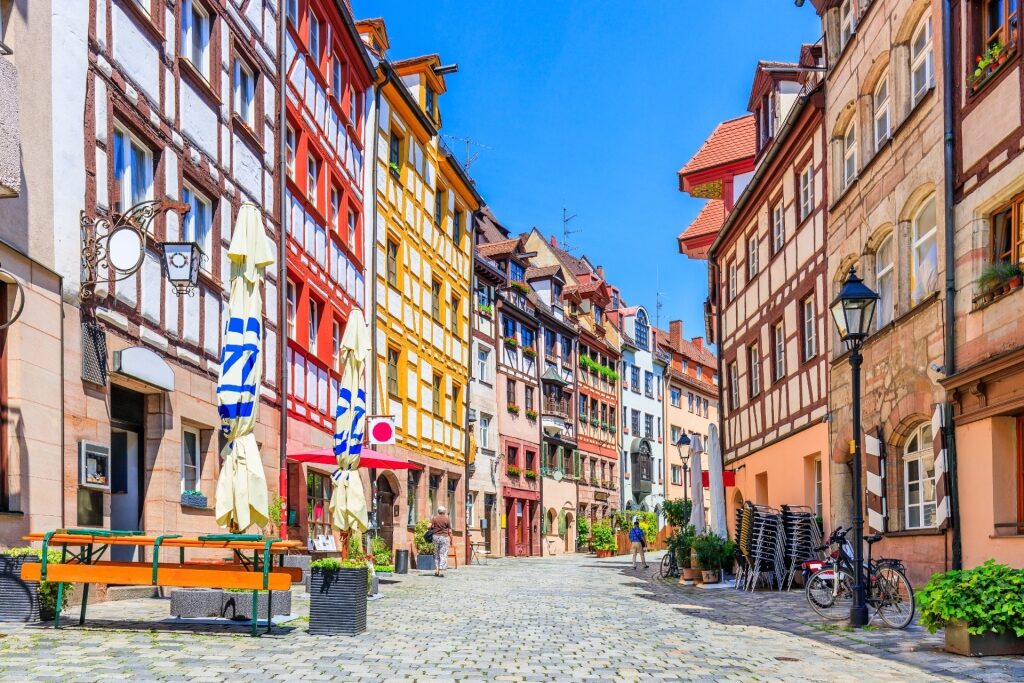
Nuremberg
One of the great things about Bavaria is that there isn’t really a bad time to visit. It all depends on what you’re looking for in a holiday. Winters tend to be cold, but with bluer skies than the northern part of the country. For the entire month of December, practically every public square smells of candied almonds and glühwein, thanks to all the Christmas markets.
Summers are magical, with long, sunny days lasting past 9 p.m. This is the season when much of Munich’s population heads to the nearby lakes and mountains for swimming and hiking. Those who stay in Bavaria’s main cities can often be seen sipping Aperol spritzes in outdoor cafés. Summer is also the high season, which means that museums and other attractions tend to be the most crowded.
Arguably the shoulder seasons of spring and fall are equally lovely here, if not more so. September, October, and early November are often cool and pleasant here. The month of September is, of course, the busiest time of year for Munich specifically. Each year, more than 6 million revelers go auf der Wiesn, or to what is internationally known as Oktoberfest.
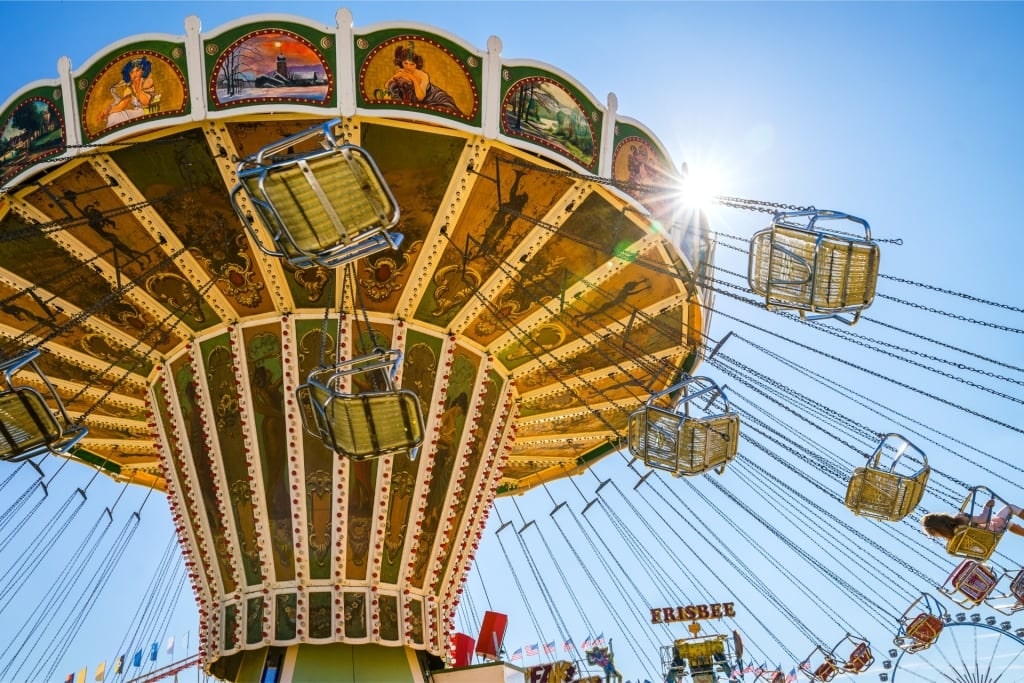
Theresienwiese
Spring ushers in an abundance of wildflowers across alpine meadows, along with pleasantly cool, sunny afternoons. This is also when Munich celebrates Frühlingsfest, the less internationally famous counterpart to Oktoberfest. Much like its autumnal sibling, this Bavarian spring festival takes place on Theresienwiese. There’s a great deal of singing and day-drinking, as well as family-friendly carnival rides and the like.
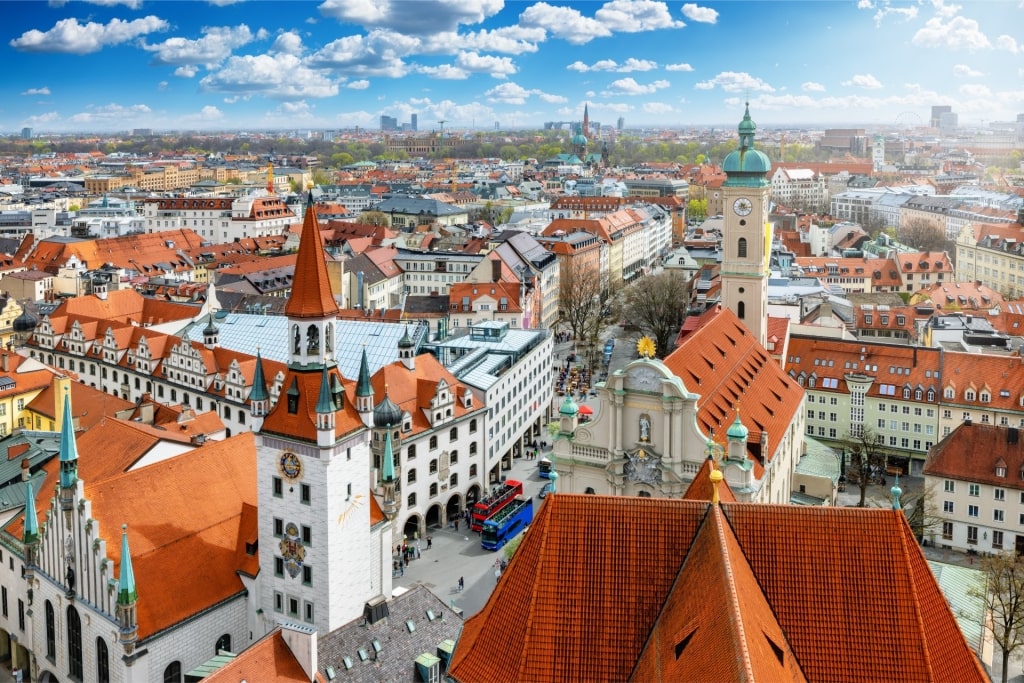
Munich
Discover the delights of Bavaria for yourself. Browse Celebrity’s river cruises and book your next adventure today.