From Cologne Cathedral to the Rhine gorge, there are many incredible landmarks in Germany to discover. With 55 World Heritage sites recognized by UNESCO, the country has the third-highest number in the world after Italy and China.
Man-made landmarks range from the fairytale fortress of Neuschwanstein Castle to medieval towns such as Bamberg. Natural wonders include the Black Forest and the Passau Three Rivers Confluence. Here are some of Germany’s most incredible landmarks.
Cologne Cathedral, Cologne
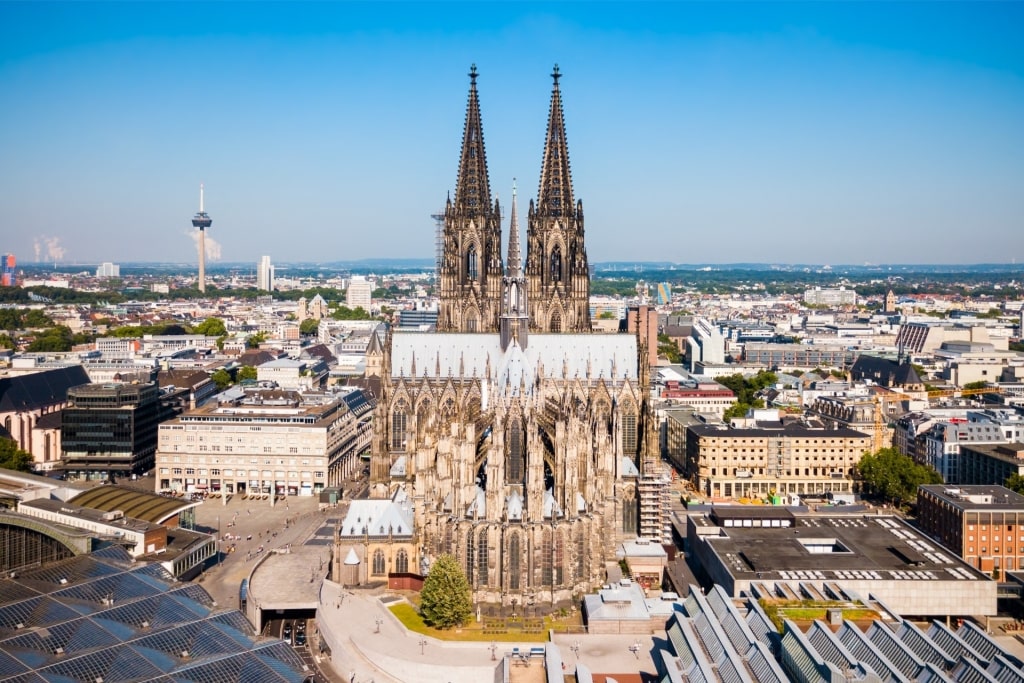
Cologne Cathedral, Cologne
Sitting by the Rhine, Cologne Cathedral miraculously survived World War II despite the German city being heavily bombed. Post-war photos show its twin spires amid a desolate sea of rubble.
Those spires were the world’s tallest manmade structure until the Washington Monument was finished in 1884. The cathedral itself was completed in 1880, more than 600 years after construction started in 1248.
Now a UNESCO World Heritage site, it is said to house the remains of the Three Wise Men who witnessed the birth of Jesus. The Gothic cathedral’s stained glass windows are as impressive as its spires, covering 107,000 square feet.
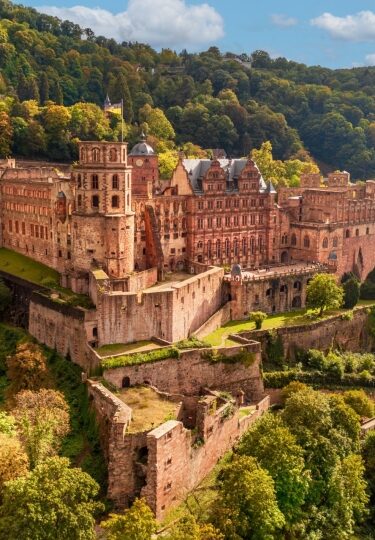
Heidelberg Castle, near Frankfurt/Speyer

Heidelberg Castle, near Frankfurt/Speyer
High above the Neckar River, Heidelberg Castle blends medieval and Renaissance in a remarkable mix. Originally built as a fortress in the 13th century, its present dramatic appearance owes much to a fire in 1693.
Highlights include the panoramic views over Heidelberg Old Town, and the Heidelberg Tun. Dating to 1751, this is still the world’s largest wine barrel with a capacity of nearly 60,000 gallons.
Writer Mark Twain spent part of 1878 in Heidelberg, where he wrote about the castle in A Tramp Abroad. Its romantic setting has inspired many other writers and painters, from France’s Victor Hugo to England’s JMW Turner.
Neuschwanstein Castle, near Munich
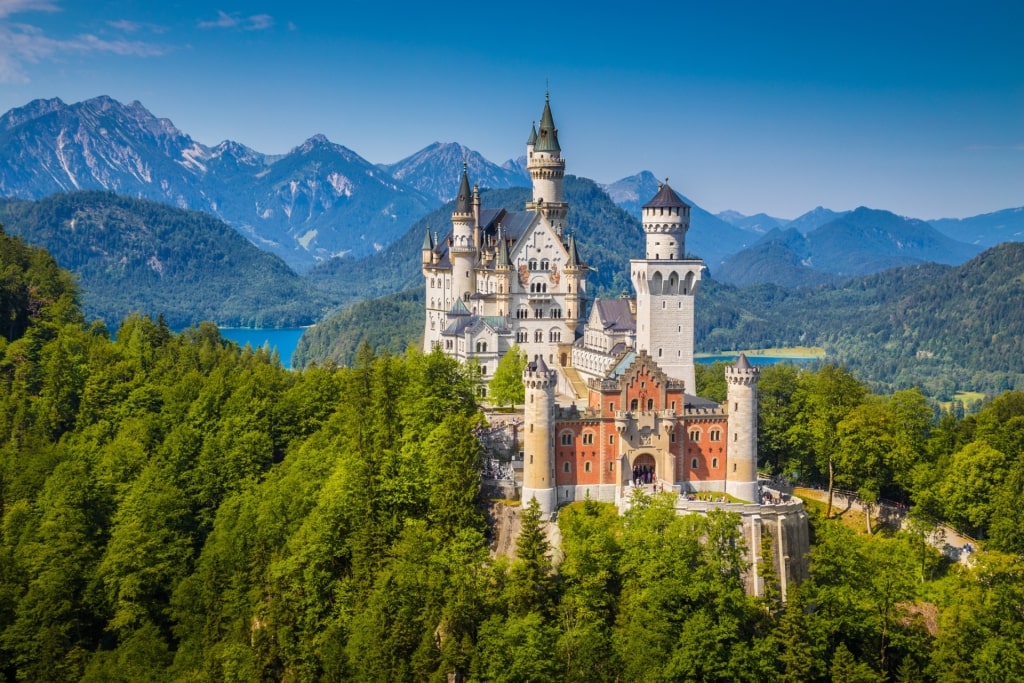
Neuschwanstein Castle, near Munich
Used by Walt Disney as the inspiration for Sleeping Beauty‘s castle, Neuschwanstein may be the world’s most recognizable castle. Built in the 1870s during the Romantic era, it is also steeped in the medieval mythology of composer Richard Wagner.
The castle was originally a retreat for King Ludwig II of Bavaria but he died before it was finished. It had many features unusual for the time, including central heating, running water, and flush toilets.
Sitting near the Austrian border in Bavaria, the castle is one of the most visited landmarks in Germany. Highlights include an awesome Grand Hall decorated with scenes from Wagner’s operas.
Regensburg Old Town, Regensburg
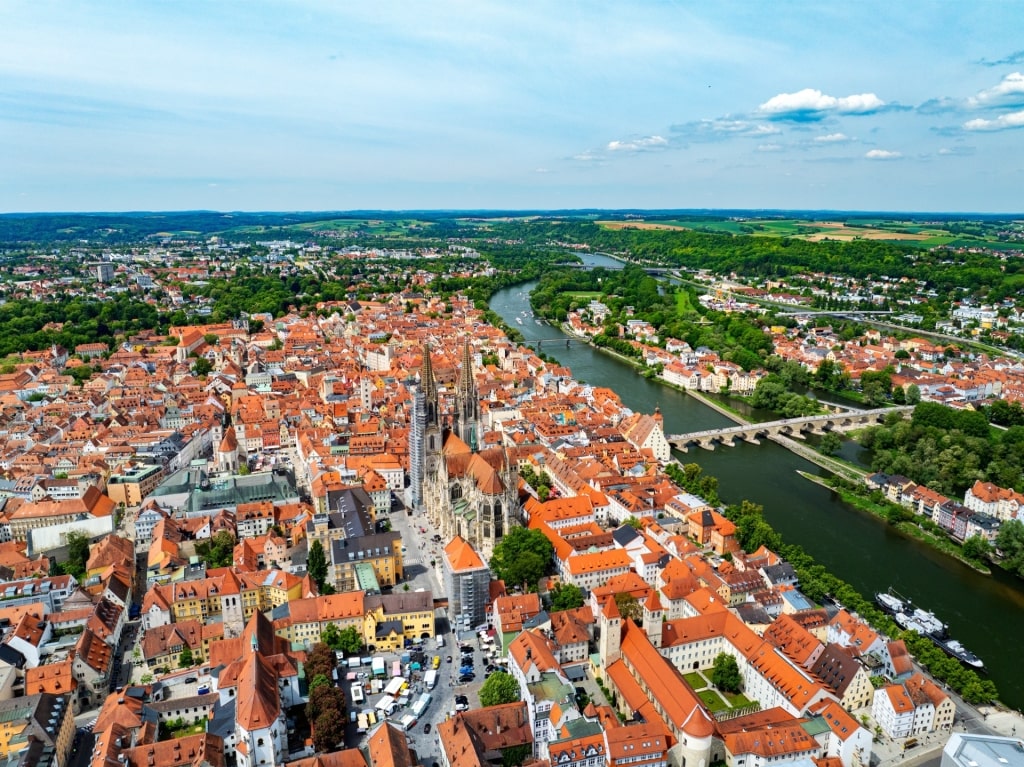
Regensburg Old Town, Regensburg
Regensburg’s Altstadt or Old Town is among the best-preserved medieval city centers in Germany. It has more than 1,500 listed buildings from a span of over 2,000 years.
Among them is the Stone Bridge of 1146, an engineering marvel of its time. Crossing the Danube at a place of strong currents, it was the model for London Bridge and the Pont d’Avignon.
Many others are merchant houses with impressive towers, symbols of wealth and power. The Wurstkuchl, or sausage kitchen, claims to be one of the world’s oldest continuously open public restaurants serving authentic German cuisine.
Black Forest, near Breisach
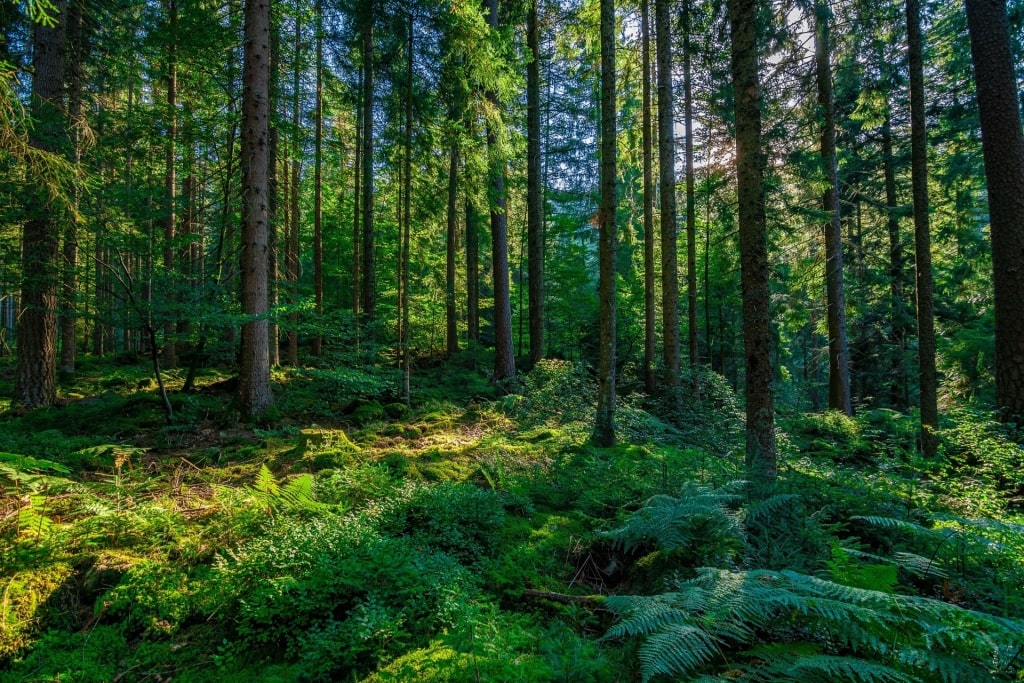
Black Forest, near Breisach
The Schwarzwald, or Black Forest, covers more than 2,320 square miles in southwest Germany. It’s a picturesque part of a mountain range that’s the source of both the Danube and Neckar rivers.
The forest does have open meadows and many lakes, but the denser stands of evergreen trees do appear black at a distance. That atmosphere inspired many of the spine-chilling fairy tales of the Brothers Grimm, such as Cinderella and Little Red Riding Hood.
The Black Forest is also famous as the birthplace of the cuckoo clock and Black Forest cake. Its distinctive half-timbered houses are also instantly recognizable with their steep roofs designed to shed winter snow.
Würzburg Residence, near Frankfurt
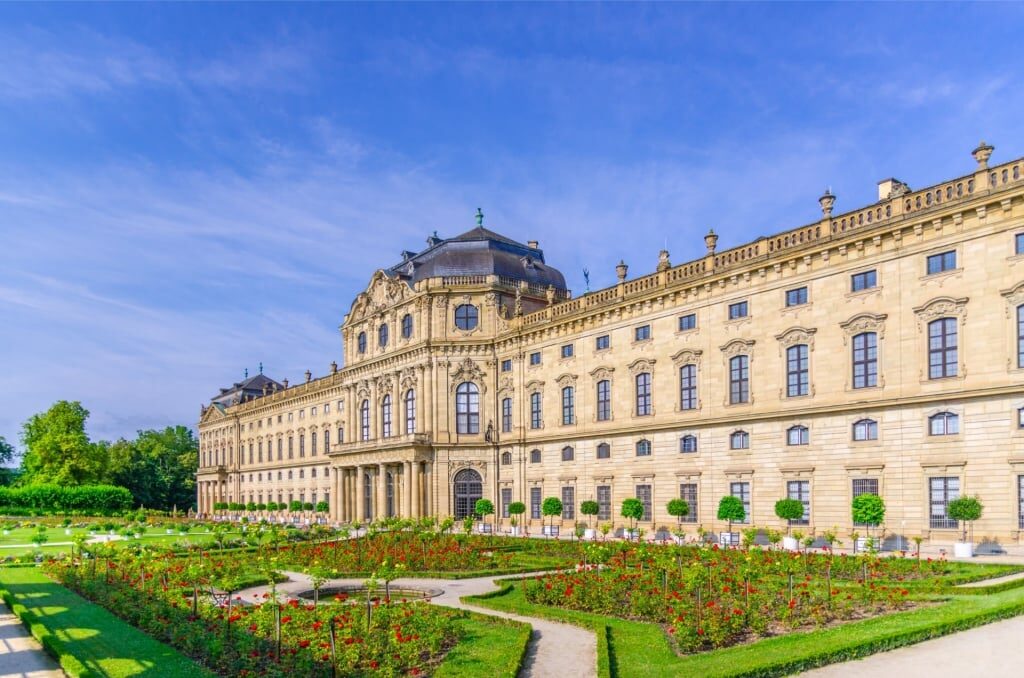
Würzburg Residence, near Frankfurt
This magnificent Baroque palace, built between 1720 and 1744, is one of Europe’s finest. Although badly damaged in a World War II air raid, along with most of the Old Town, it has been lovingly restored.
A palace staircase has the world’s largest ceiling fresco, showing four continents. The depiction of Europe as a continent of art and culture has Würzburg at its center.
Along with its Court Gardens and Ring Park, the residence has been listed by UNESCO. Stroll around the fountains and sculptures outside to admire the palace’s French-style architecture.
Read: What Is Frankfurt Known For?
Bamberg Old Town, near Nuremberg
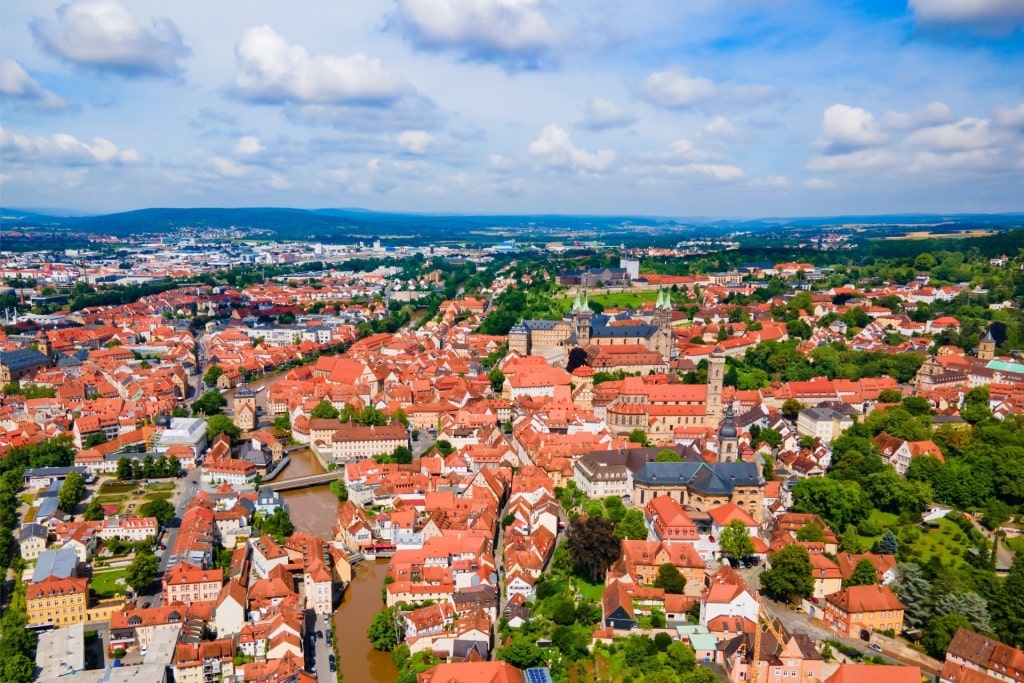
Bamberg Old Town, near Nuremberg
Known as one of Germany’s most beautiful towns, Bamberg has 1,300 listed historical buildings. Many are medieval half-timbered houses and there are also several medieval churches.
Highlights include the Town Hall, which holds Europe’s largest private porcelain collection and stands on its own island in the River Regnitz. “Little Venice” nearby is a former fishing village with picturesque boat moorings.
The 13th-century cathedral, with the Bamberg Rider statue, is another must-see. The town is famous for its smoked beer—Rauchbier—made with malted barley dried over beechwood fires.
Rothenburg ob der Tauber, near Nuremberg
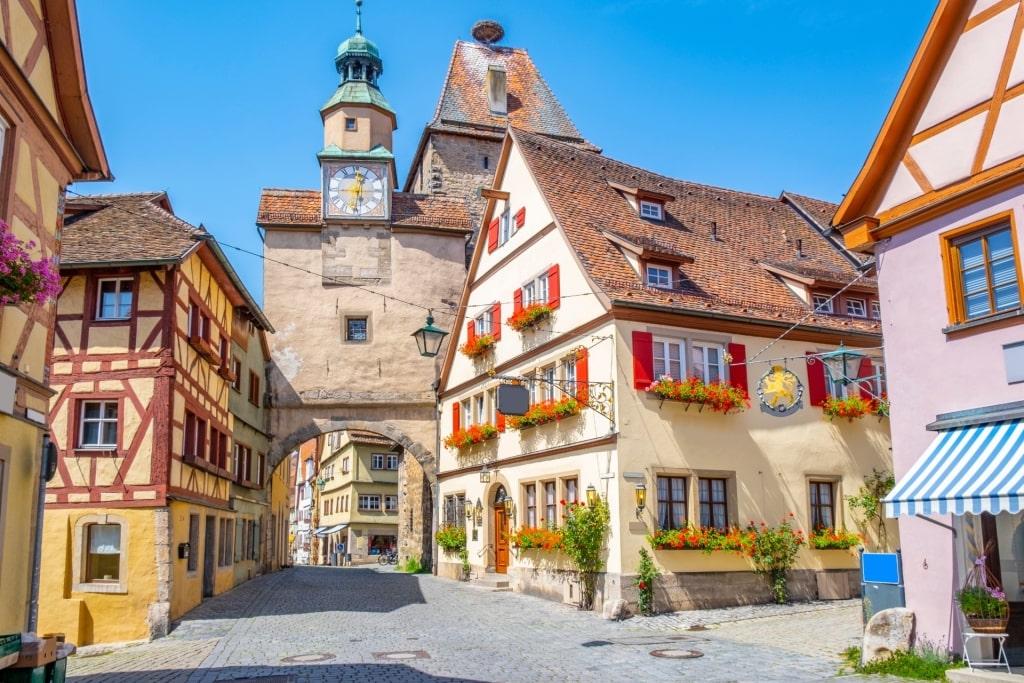
Rothenburg ob der Tauber, near Nuremberg
Another well-preserved medieval old town, full of colorful half-timbered buildings, Rothenburg ob der Tauber is one of only four towns in Germany still to have its 14th-century city walls.
The town hall has a tower that gives excellent views. St. Jakob’s Church is a must-see for its Holy Blood altarpiece by medieval wood-carver Tilman Riemenschneider.
The Medieval Crime Museum holds torture instruments such as scold’s bridles, a device that would prevent a woman from speaking. A Doll & Toy Museum and a Christmas Museum are also popular.
Rhine Gorge, near Koblenz/Rüdesheim
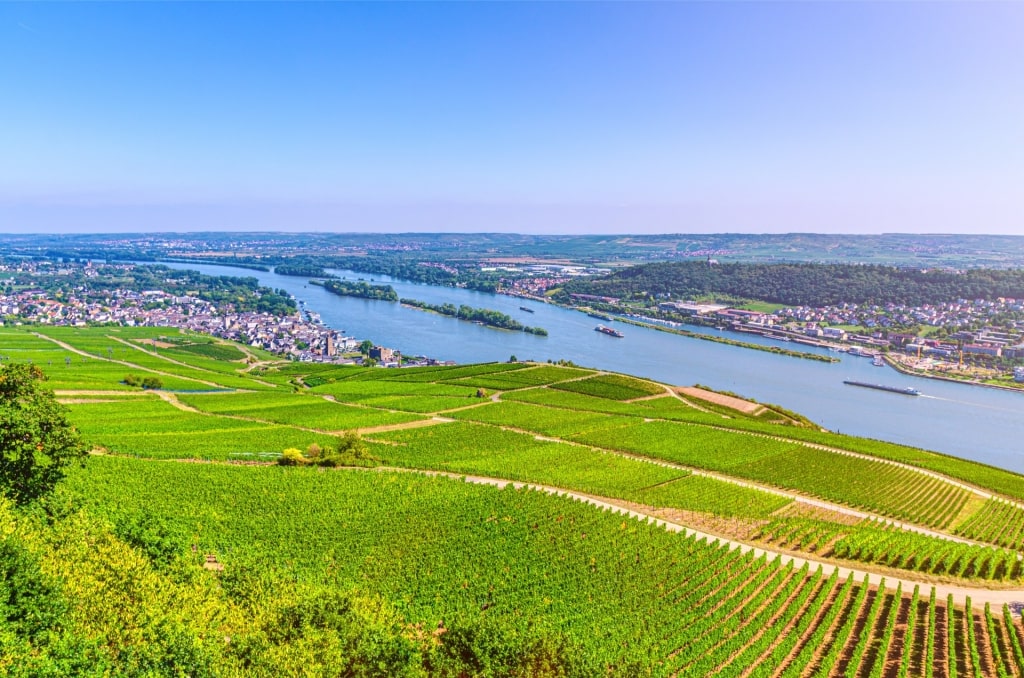
Rhine Gorge, near Koblenz/Rüdesheim
The Rhine Gorge is a dramatic river valley with more than 40 hilltop castles and fortresses built during a span of 1,000 years. Its history, natural beauty, and dramatic features such as the Lorelei Rock make the whole gorge one of the most photographed German landmarks.
Many of the castles were built to collect tolls from passing cargo ships. Because of its strategic importance, the gorge was a focus for continual regional power struggles over many centuries.
The steep hillsides around the gorge still produce a wealth of fine Riesling wines. This Mittelrhein wine region benefits from the shelter of the gorge and the temperature moderating influence of the Rhine.
Deutsches Museum, Munich
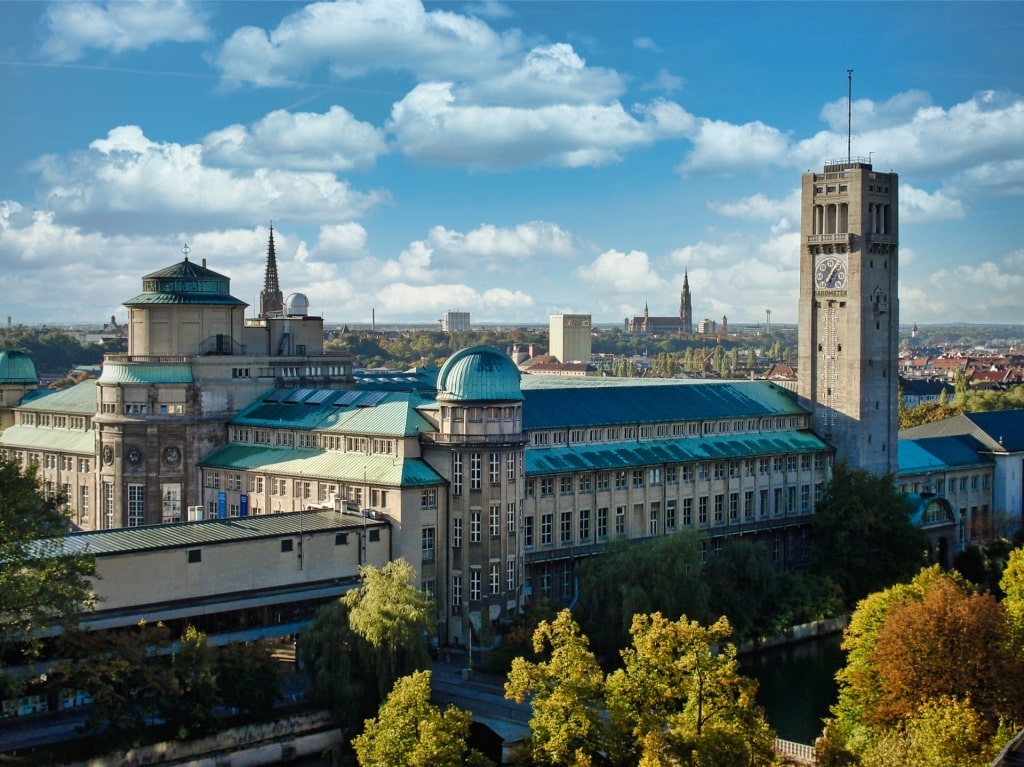
Deutsches Museum, Munich
The Deutsches Museum in Munich is one of the world’s largest science and technology museums. Its main site—Museumsinsel—showcases energy, astronomy, and historic machinery on an island in the Isar River.
Impressive exhibits such as a replica coal mine or the aerospace collection will enthrall any visitor. Equally impressive sights at the Transportation Museum—Theresienhöhe–include the first German diesel engine.
The aviation branch is at the historic Schleissheim airfield, once a US Airbase. It displays planes that include early gliders, helicopters, and WWII jets.
Speyer Cathedral, Speyer
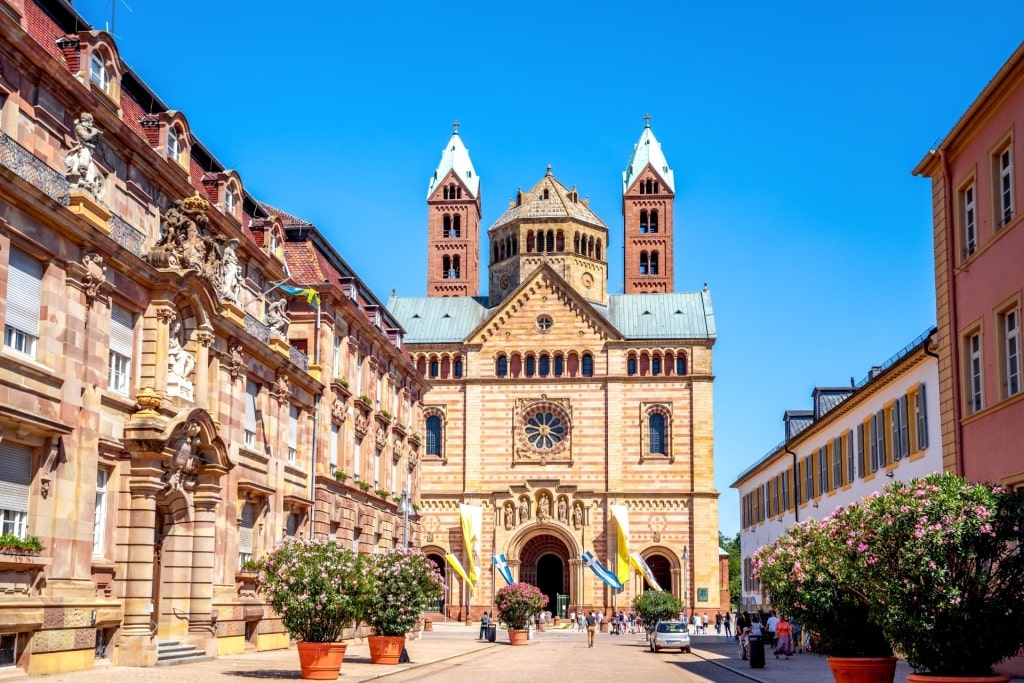
Speyer Cathedral, Speyer
When Speyer Cathedral was consecrated in 1061, it was the largest church in the Western world. Its striking Romanesque design influenced church architecture throughout Europe for several centuries.
The most notable external feature is the west facade, topped by two towers and an octagonal dome. Four Holy Roman Emperors and four German kings are buried in its crypt.
Outside the main door is a massive “cathedral bowl”, which holds more than 300 gallons. It’s traditionally filled with wine to celebrate special events, such as a new bishop.
Burg Eltz, near Cologne/Koblenz
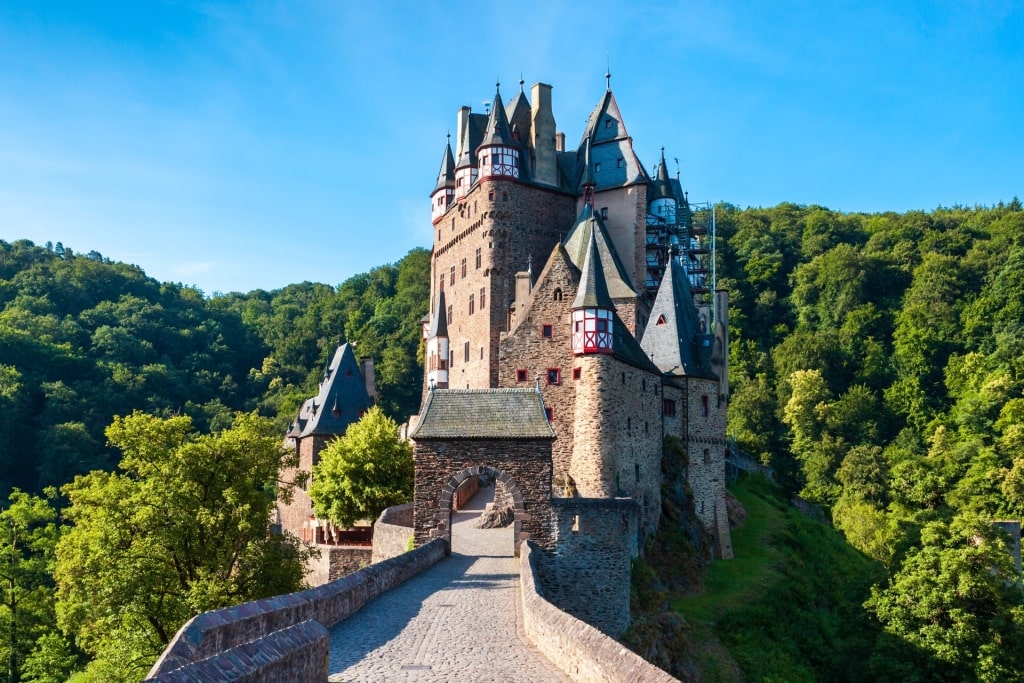
Burg Eltz, near Cologne/Koblenz
Burg Eltz is such a famous German landmark that it formerly appeared on the country’s Deutsche Mark notes. This remarkably preserved medieval castle has been in the same family for 33 generations.
One of only three castles in this Eifel region to have never been destroyed, it dates to at least 1157. It stands on a dramatic 230-ft-high rock around which flows the River Elzbach.
Parts of the castle are still in family use but visitors can see the rich Treasury and Armory. Walking paths in the surrounding Eltz Forest, now a nature reserve, offer spectacular views.
Nymphenburg Palace, Munich
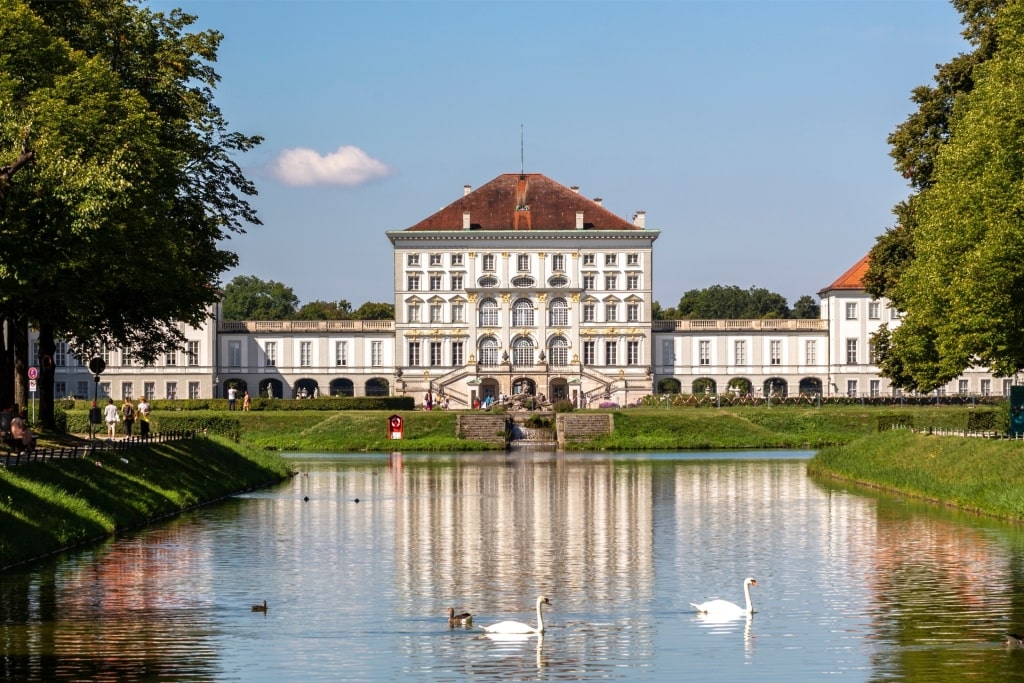
Nymphenburg Palace, Munich
Nymphenburg was the summer residence of the Bavarian rulers from 1664. Taking its name from Greek nymphs—associated with spring, nature, and fertility—it is a place of gardens and water.
The 500 acres of formal gardens, rich in lakes and fountains, surround a delightfully Baroque palace. Behind the 2000-foot-long facade are endless rooms full of beautiful furniture, tapestries, paintings, and sculpture.
The former royal stables house a carriage museum with one of Europe’s finest collections of coaches. Other buildings in the gardens include the Amalienburg hunting lodge whose hall of mirrors rivals that of Versailles.
Aachen Cathedral, near Cologne
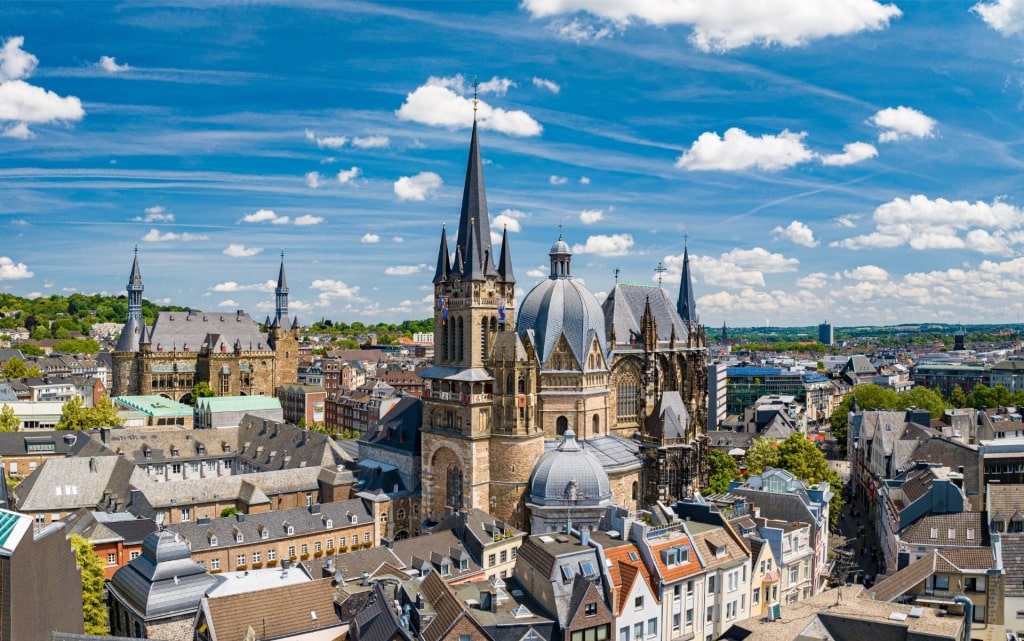
Aachen Cathedral, near Cologne
Aachen Cathedral is where Charlemagne, the first emperor of the Holy Roman Empire, is buried. He began its construction around 790 CE and died the year after it was completed in 813.
Charlemagne’s marble throne and the Shrine of the Virgin Mary holding Jesus’s swaddling clothes are highlights. The chandelier given by Emperor Frederick Barbarossa is one of the largest in Europe.
The bronze doors, weighing 4.5 tons, were cast in 800 CE and are called the “Wolf’s Doors” for their ornate handles. The cathedral’s architecture is a blend of Byzantine, Greco-Roman, and Gothic styles.
Walhalla Memorial, near Regensburg/Kelheim
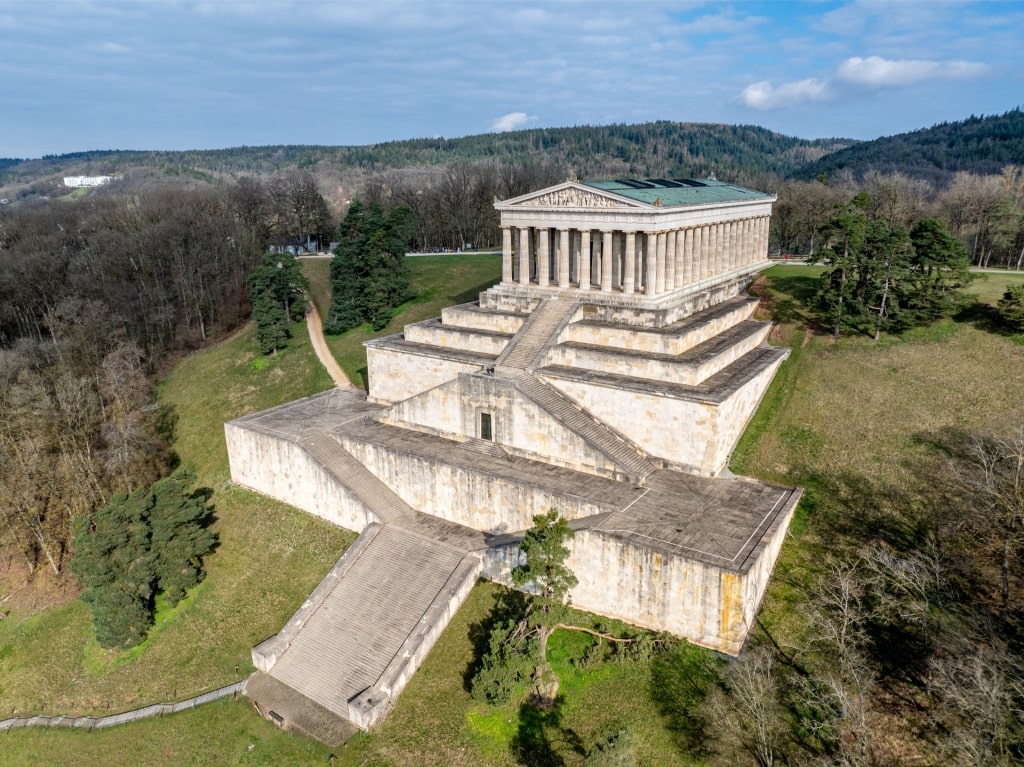
Walhalla Memorial, near Regensburg/Kelheim
This neoclassical monument was built in 1842 to honor German-speaking notables and help create a German national identity. It’s modeled after the Greek Parthenon, with 99 massive white marble columns.
Inside are busts of major names from the worlds of politics, arts, sciences, and the military. Early figures included Johannes Gutenberg, Jan van Eyck, and Ludwig van Beethoven.
Busts continue to be added honoring figures such as Albert Einstein and chancellor Konrad Adenauer. High above the Danube, reached by imposing stairs, the memorial has panoramic views.
Bavarian Forest National Park, near Deggendorf/Passau
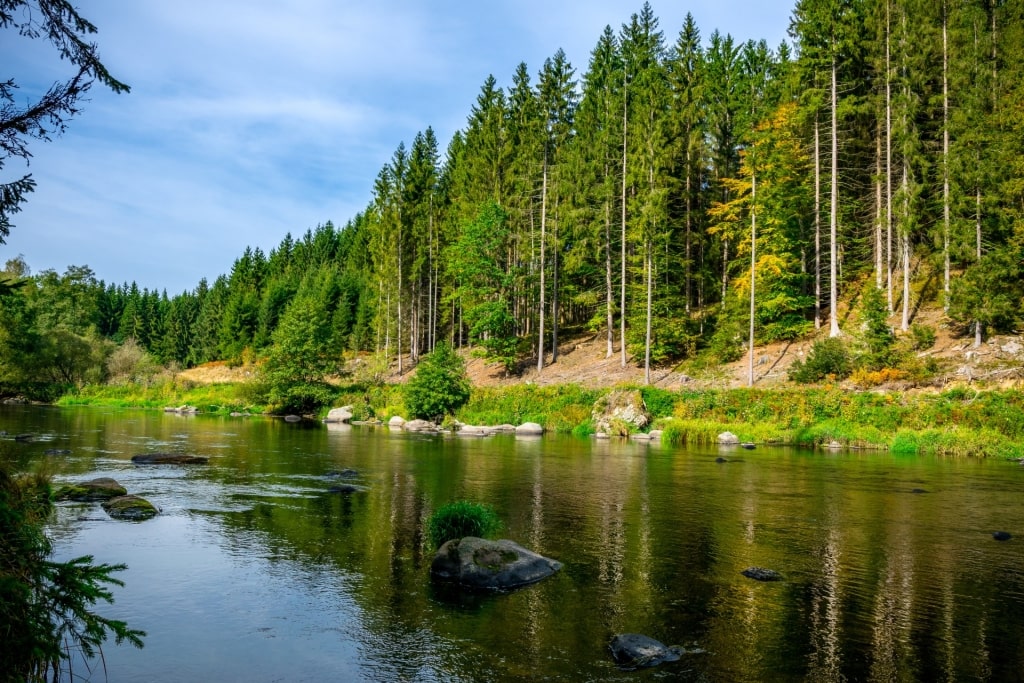
Bavarian Forest National Park, near Deggendorf/Passau
Germany’s first national park covers a vast spread of mountains along the Czech border. It is paired with the Czech Bohemian Forest across the frontier to make Europe’s largest contiguous woodland.
The ancient spruce, fir, and birch forests here are home to lynx, wolves, and hundreds of other animal species. You can explore it on exciting treetop walkways, hiking and biking trails, and one of Europe’s longest wooden boardwalks.
The region has a 700-year glass-making history which can be seen on the Bavarian Glass Route. Running from Waldsassen to Passau, it has a number of glassworks, museums, and other attractions.
Passau Three Rivers Confluence, Passau
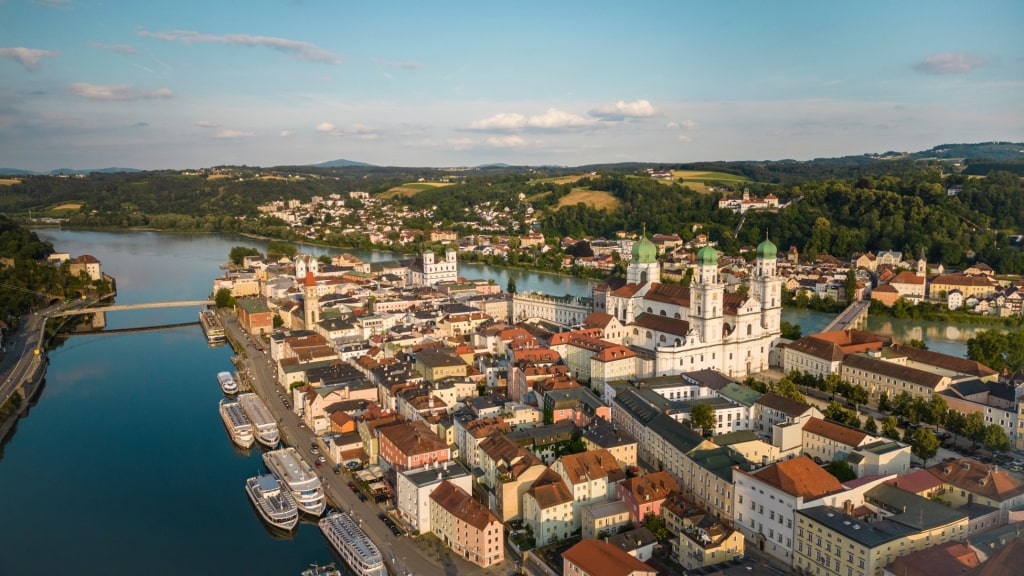
Passau Three Rivers Confluence, Passau
Passau is known as Dreiflüssestadt, the “City of Three Rivers”. It stands where the Danube, Inn, and Ilz meet below Niederhaus Castle.
The Inn, coming directly from the Alps, has green water, while the water from the Ilz, flowing through moorland, is black. Where they meet the blue water of the Danube, you can see the three colors for a short distance.
During major floods, water levels can rise more than 30 feet in the town. A marker on the old town hall shows floods dating back to the 16th century.
Marksburg Castle, near Koblenz
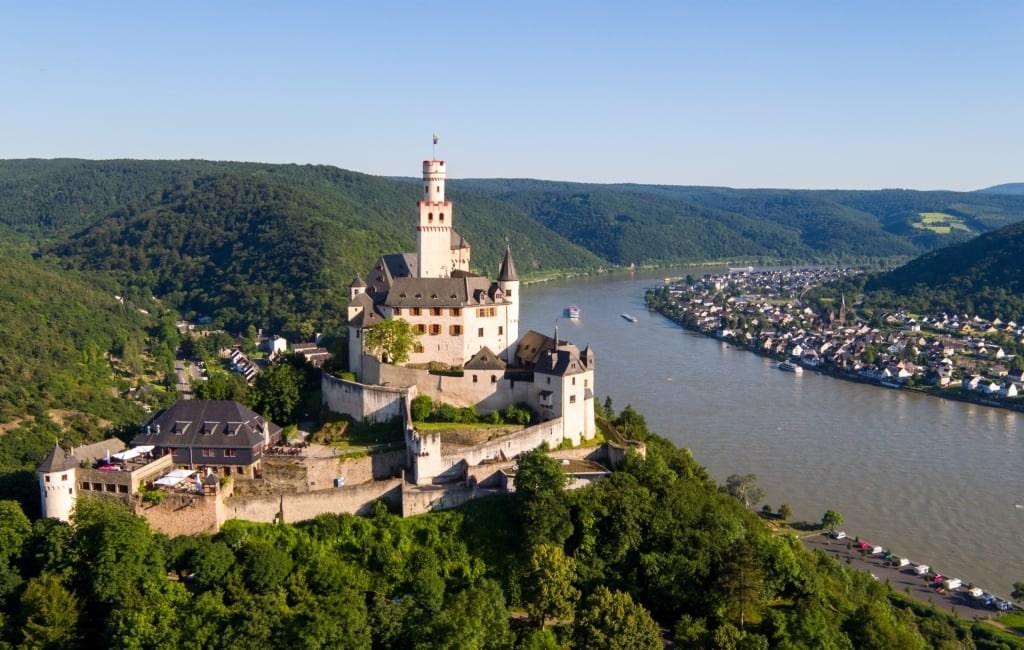
Marksburg Castle, near Koblenz
Marksburg is the only hilltop castle of 40 in the Rhine region that has never been captured or destroyed. It has dominated the skyline of the pretty medieval town of Braubach since the early 12th century.
The castle took its present appearance in the 15th and 16th centuries. It was enlarged, with round turrets added during this age of gunpowder.
Visitors can tour the rooms and admire a display of suits of armor and weaponry. A faithful copy of the castle is in the Ueno German Culture Village in Miyakojima, Japan.
Weltenburg Abbey, near Kelheim
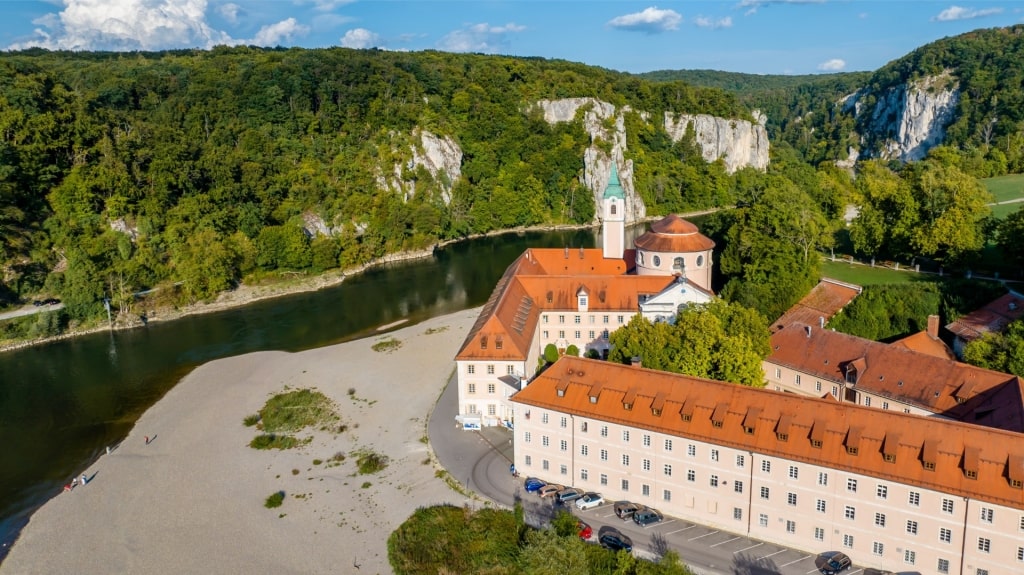
Weltenburg Abbey, near Kelheim
Founded in 620 AD, Weltenburg is perhaps the world’s oldest monastery brewery, dating to 1050. The landing by boat, passing through the Danube Gorge, is a scenic delight in itself.
Central to the Benedictine monastery is a Baroque church with wonderful frescoes and intricate stucco. It was designed in the 18th century by the Asam brothers, Bavaria’s most notable architects and artists of that Baroque era.
Of course, any visit should include tasting the monastery’s award-winning dark beer. There is a large restaurant facing the Danube that also specializes in Bavarian cuisine, as well as a summer beer garden.
Dachau Concentration Camp Memorial, near Munich
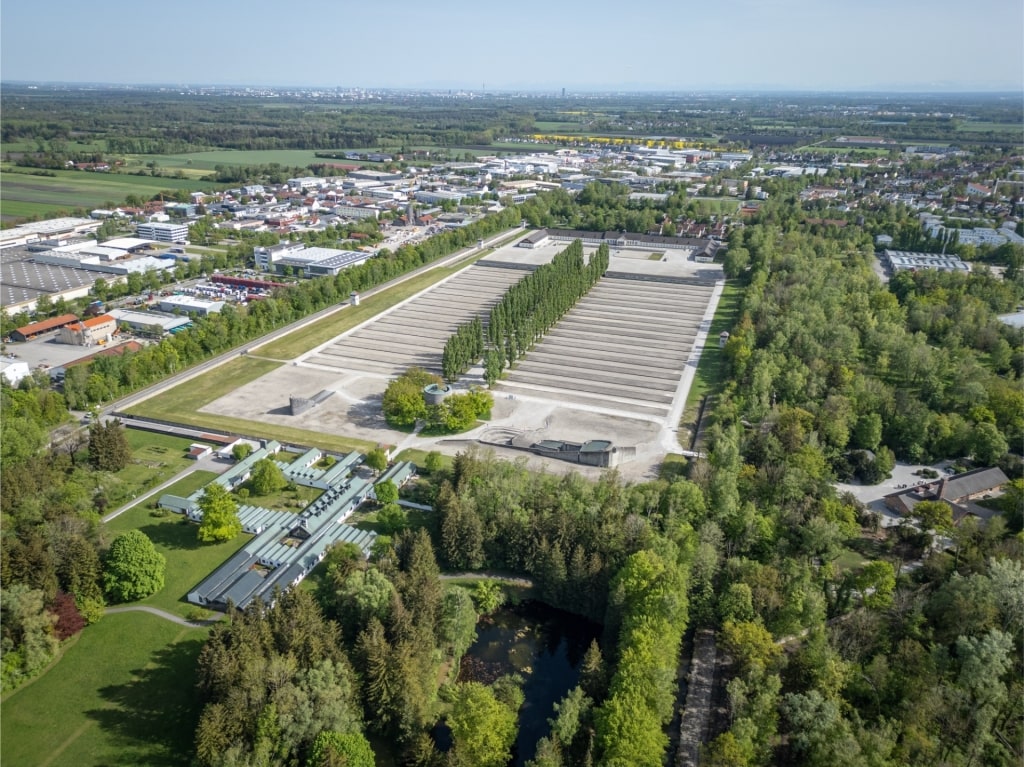
Dachau Concentration Camp Memorial, near Munich
Dachau, the first Nazi concentration camp, was set up in 1933. Its infamous gate bore the slogan “Arbeit macht frei”—“Work sets you free”.
The camp is now a moving memorial, remembering the 200,000 imprisoned here, and the 41,500 documented deaths. Original buildings include prisoner barracks, the gas chamber, and the crematorium.
Although not a typical attraction, many visitors say Dachau is a life-changing experience. It’s a vast site, so wear comfortable shoes ready to walk long distances on gravel.
Read: Best Places to Visit in Germany
Munich
Has this list of incredible German landmarks tempted you to add any to your bucket list? Browse Celebrity’s river cruises and discover the perfect itinerary for you.