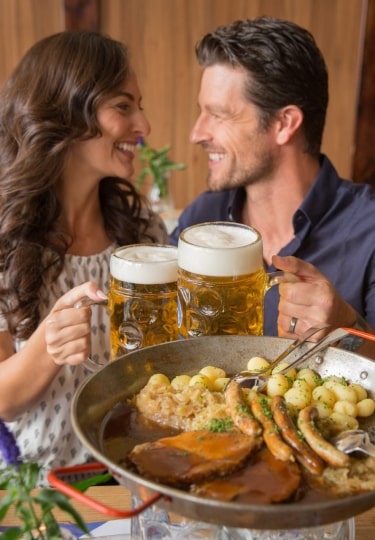
German food has a reputation for consisting of heaping portions of meat and potatoes and little else. And while there’s some truth to this stereotype, it has more to do with the Oktoberfest-style beer halls around the globe than how Germans eat on a daily basis. The truth is a lot more nuanced, with dishes that vary quite a bit by region and by season.
The best food in Germany is very much in the vein of the Slow Food movement. This might include sourdough bread made with heritage grains, or intricately layered pastries and cakes. Many of the nation’s most famous meat dishes take days to marinate and prepare. Increasingly, German food also encompasses dishes from the many diasporic populations that live here. Turkish, Syrian, Vietnamese, Lebanese, and other groups have all left their mark on the larger cuisine.
Here are just a few of the traditional German dishes to seek out on your next visit.
Sauerbraten
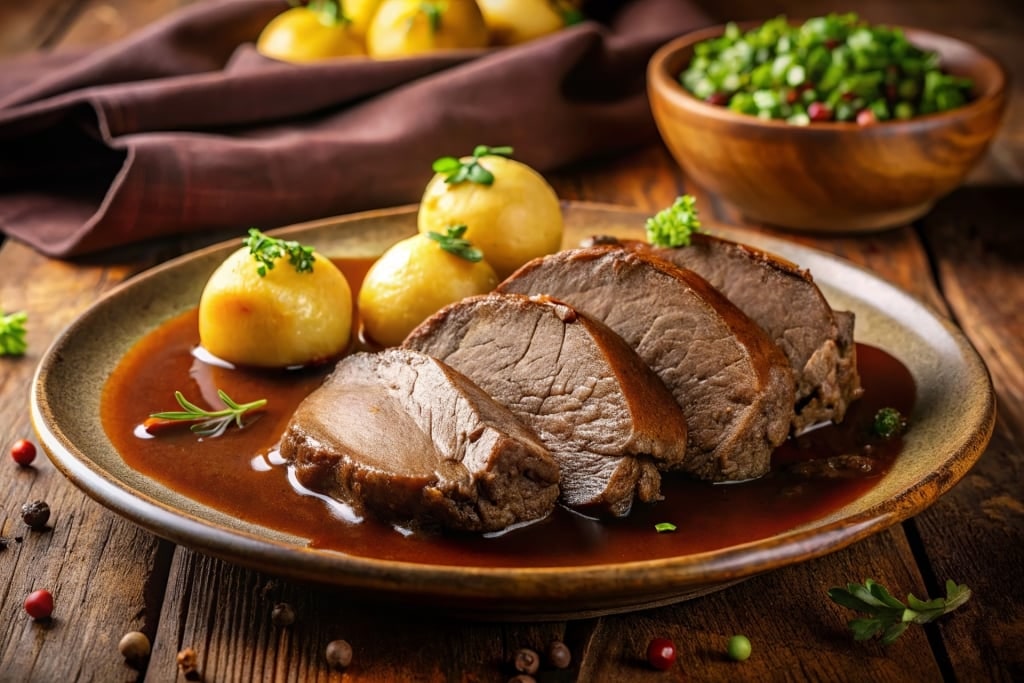
Sauerbraten
Virtually any traditional Wirtshaus, or German tavern, worth its salt will serve some iteration of this kingly cut of meat. The word Sauerbraten literally means “sour roast,” in reference to the fact that the meat here is half-pickled in an acidic marinade for days. Although beef is usually the meat of choice here, some lesser-known versions use pork, lamb, or even horse.
The key to the whole dish is the interplay of sweet and sour flavors. Regional variations abound, but it often includes red wine and either red or white wine vinegar as a base. Sugar and spices such as cloves, juniper berries, mustard seed, black peppercorns, and nutmeg are then added. Cooks braise the meat until tender, then reduce the liquid and thicken it with flour or crushed lebkuchen to form a rich gravy.
Read: A Beginner’s Guide to German Wine
Knödel
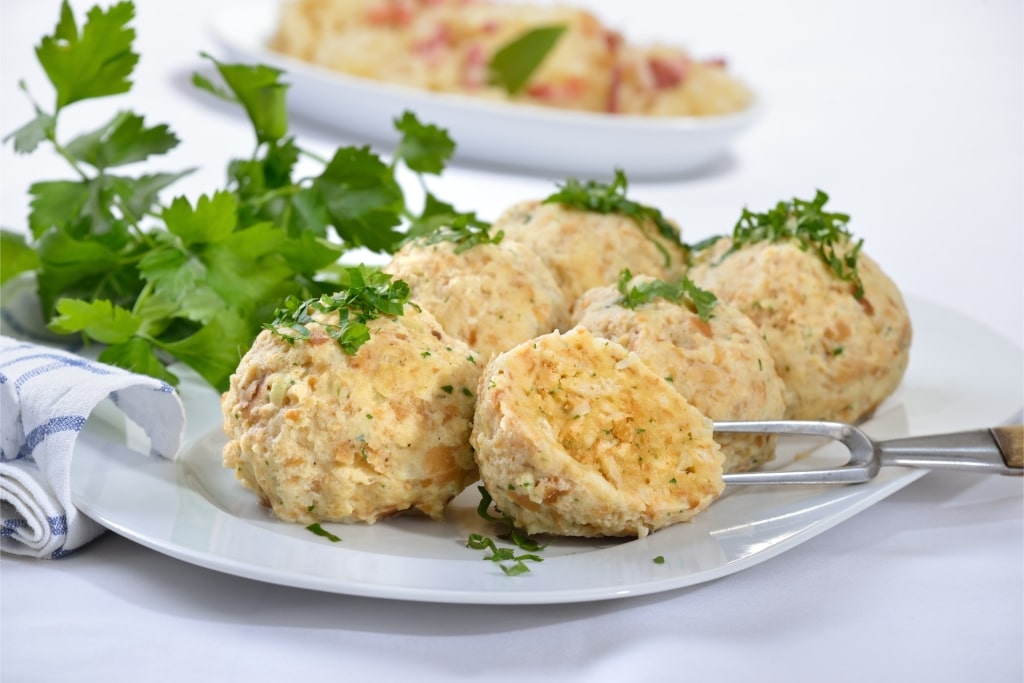
Semmelknödel
If you order a Sauerbraten—or any other hefty, saucy cut of meat—it’s likely to come accompanied with one or more large, starchy orbs. While not strictly regional, Knödel are especially common in Bavaria and throughout southern Germany. These supremely comforting dumplings take several forms and were historically a handy way of using up leftovers.
Semmelknödel are made with bits of day-old bread soaked in milk and bound together with eggs and herbs. Semmel is the Bavarian term for a roll, which is more commonly called a Brötchen elsewhere. To the uninitiated, these enormous globes of bread might at first seem dense, but they’re absolutely wonderful for soaking up gravy.
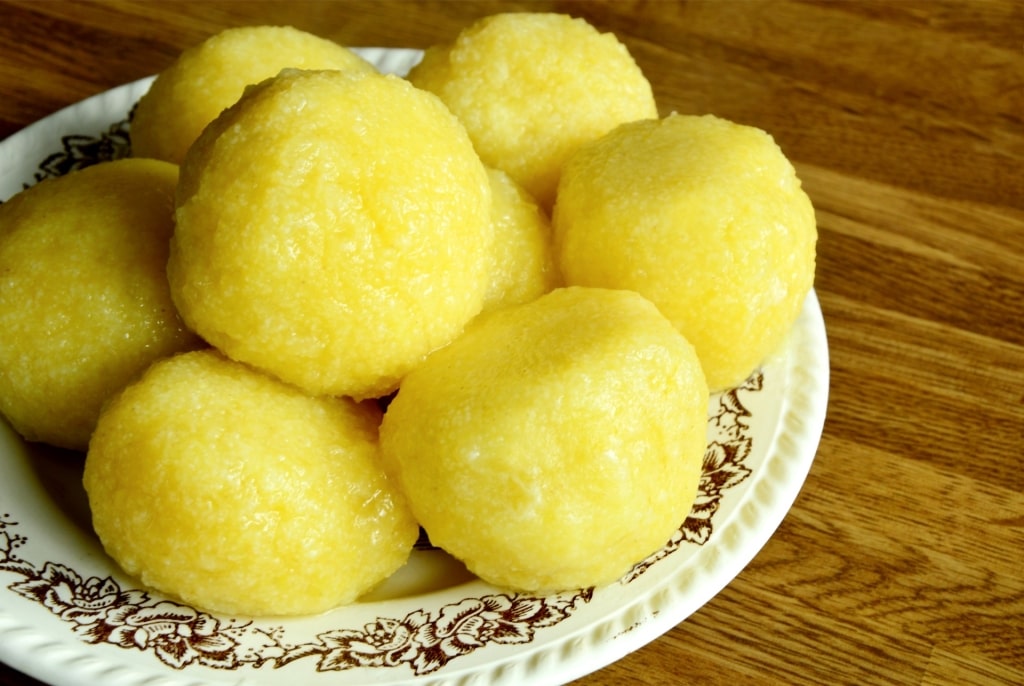
Kartoffelknödel
Kartoffelknödel, on the other hand, are made with mashed potatoes. They’re sometimes referred to as Kartoffelklöße or Erdapfelknödel in Austria. Springier and a touch lighter than Semmelknödel, they’re also an optimal foil for braised dishes. On occasion, cooks may stud them with speck, sauerkraut, or other flavorful fillings.
Käsespätzle
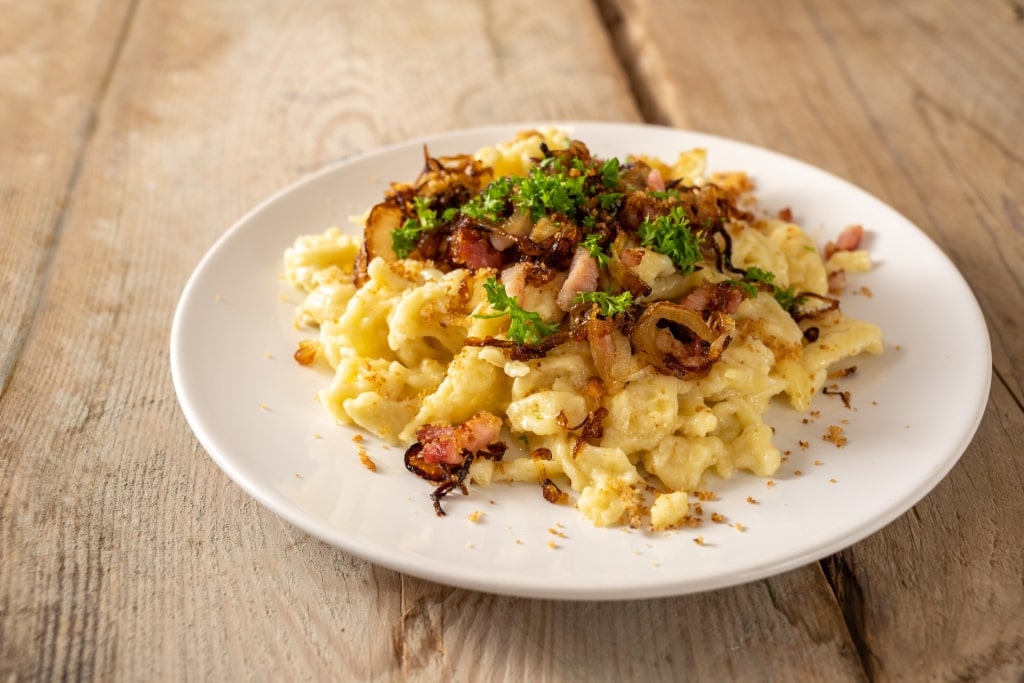
Käsespätzle
Think of this as Germany and Austria’s answer to mac ‘n’ cheese. Spätzle are thumb-sized dumplings that almost veer into noodle territory. They’re made by running a thin, eggy batter through a specialized colander into boiling water. You can eat them as-is—and indeed, they’re often served as an accompaniment to stews and braised dishes.
But if you’re looking for the ultimate indulgent winter food, order them smothered in molten Bergkäse, or “mountain cheese,” and topped with crispy fried onions. Käsespätzle is both creamy and incredibly rich, making it ideally suited for sharing.
Pretzels

Pretzels
No one in Europe can quite agree who invented the pretzel, although historians are confident it dates back to the Middle Ages. Many believe the distinctive shape is a reference to priests’ hands in prayer, implying that these twisted breads were first baked in monasteries. Whoever came up with the idea first, it’s clear that the Germans now lay claim to them.
In addition to the standard Laugenbrezel, which is boiled in lye-water for a handsomely browned crust then salted, there are dozens of variations. A Butterbrezel is a regular pretzel sliced in half, buttered, then reassembled, while a Käsebrezel is covered in cheese. Pretzels at beer gardens are often the size of steering wheels and best suited for sharing.
Obatzda
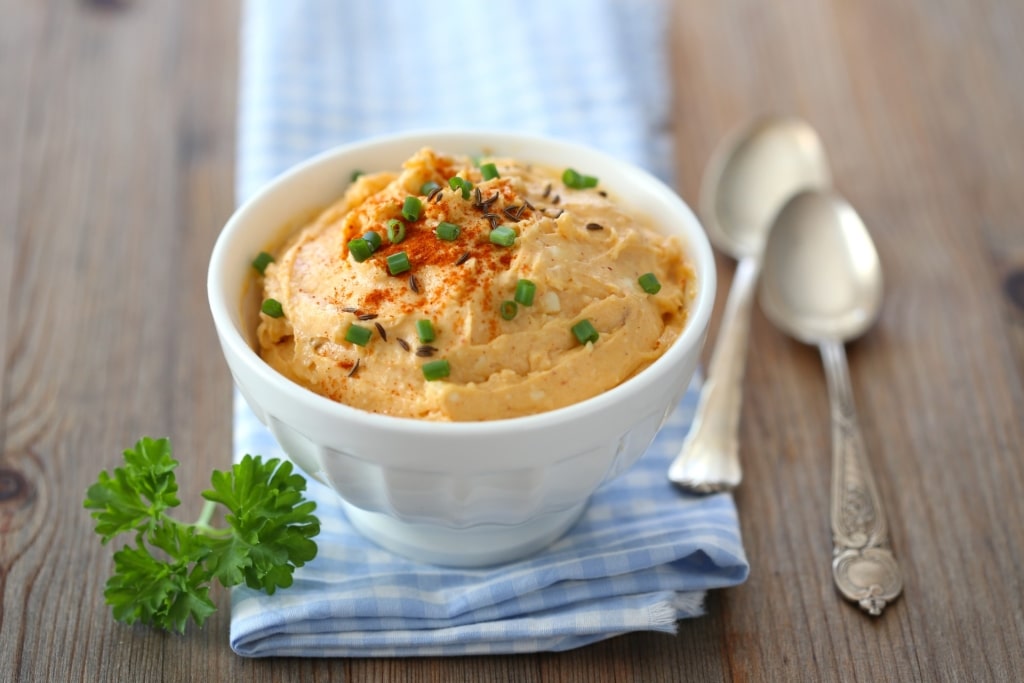
Obatzda
While there’s nothing wrong with eating a plain pretzel, it’s much better with condiments and spreads. You could keep it simple with sweet mustard and salted butter, or if you’re in a Bavarian beer garden, opt for this rich, textured cheese spread.
Obatzda is typically a mix of softened butter and a ripe cheese such as Camembert. Paprika, caraway seeds, chives, and other seasonings may be added for a bit of extra oomph and color. It goes great with just about any sort of bread.
Maultaschen
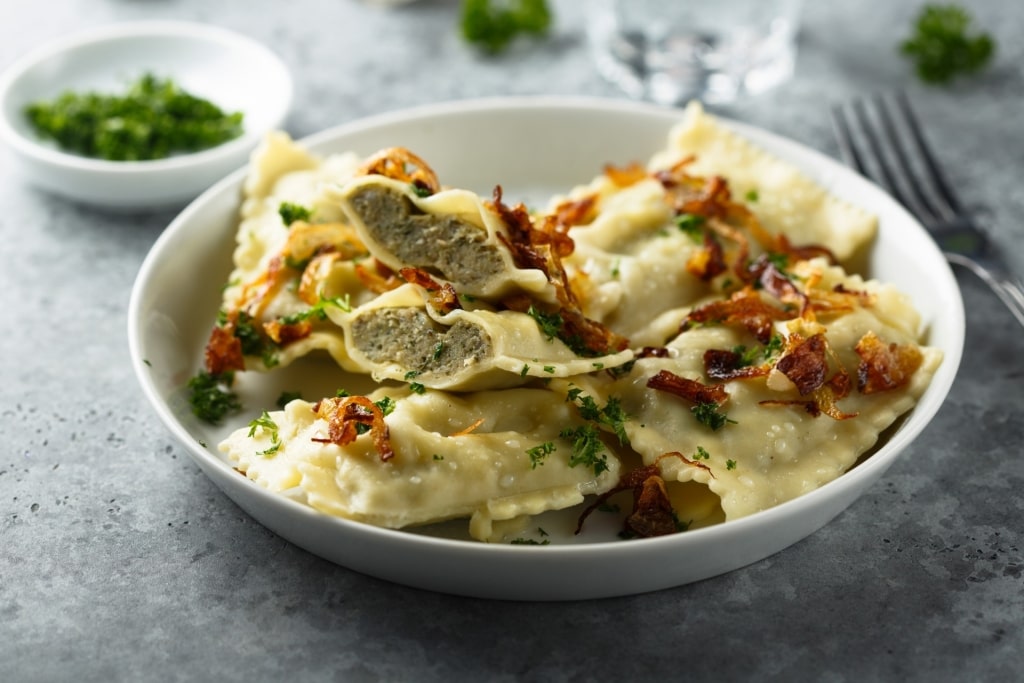
Maultaschen
These Swabian dumplings are often likened to oversized ravioli. Traditionally, they’re filled with ground meat and served in a light, clear broth. Nowadays, all sorts of variations exist, including vegetarian versions with spinach, mushrooms, or cheese.
Maultaschen may be eaten all year long, but they’re especially associated with the Lenten fast. According to lore, the Cistercian monks of Maulbronn Abbey used them as a clandestine means of sneaking meat—generally verboten—into their diet before Easter.
The name Maultaschen literally translates as “mouth pocket.” Thanks to their supposed monastic origins, however, they also have a less polite nickname: Herrgottsbscheiserle. This roughly translates as “Lord God cheaters.” It’s a playful reference to the fact that the pasta dough conceals the taboo filling within.
Schweinshaxe
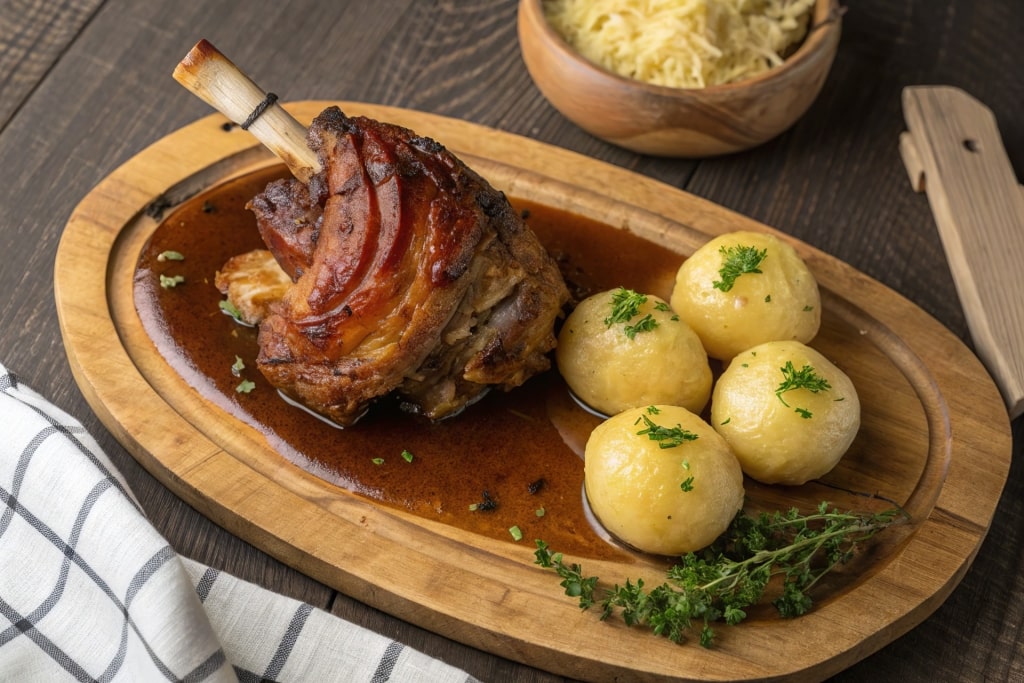
Schweinshaxe
Visit any German-style beer hall or garden in any corner of the globe and they’re likely to serve pork knuckles, or Schweinshaxe. In their home country, however, these hulking cuts of bone-in roast pork aren’t the kind of dish one eats on a regular basis. Part of that has to do with the fact that they’re too much work for the average home cook. A typical Schweinshaxe is marinated for days, then roasted at low temperatures for hours.
If you’re looking for that classic Oktoberfest experience though, it’s worth ordering one of these, ideally with a dining companion to help you out. They’re typically served with either sauerkraut or Rotkohl—pickled, sautéed red cabbage—and Bratkartoffel, crispy, pan-fried potatoes.
Gebratene Ente
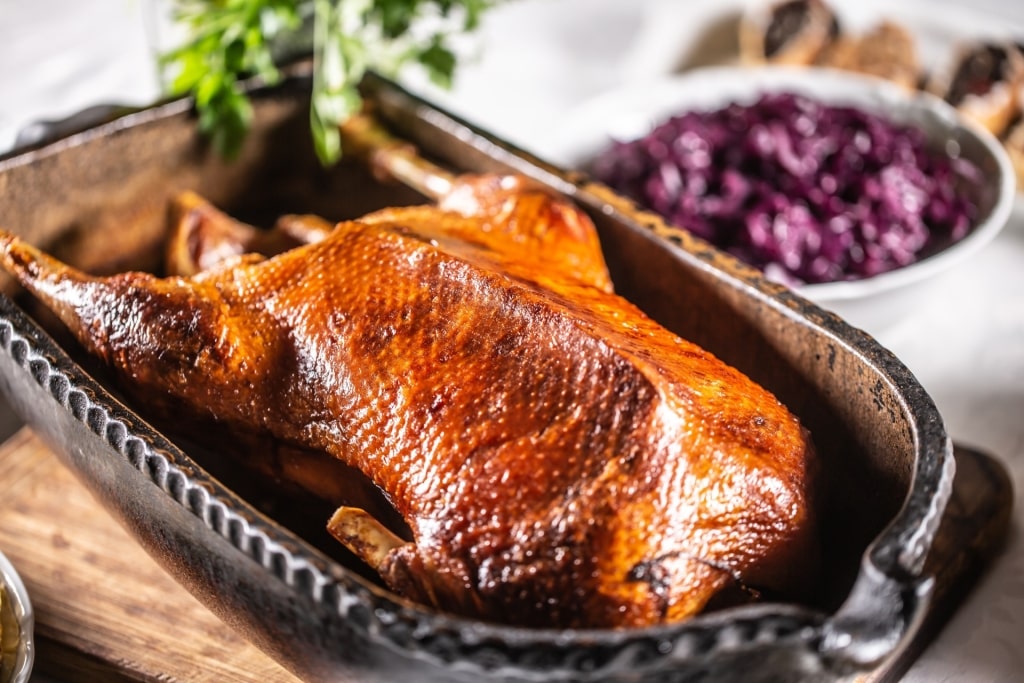
Gebratene ente
Roasted duck, or gebratene Ente, is another classic tavern staple found throughout Germany. A bit more sophisticated than a pork knuckle, it’s also common at white-tablecloth eateries.
The traditional German-style duck is slow cooking at its finest. It’s often braised first to ensure tender, well-seasoned meat, then finished in an oven for crispy skin.
Rotkohl, or red cabbage, is the traditional accompaniment here, as the acidity helps balance out the duck. Especially if you’re in Bavaria, Knödel—either bread or potato—are typically served to soak up the sauce, although spätzle, mashed potatoes, or pan-fried potatoes work as well.
Wiener Schnitzel
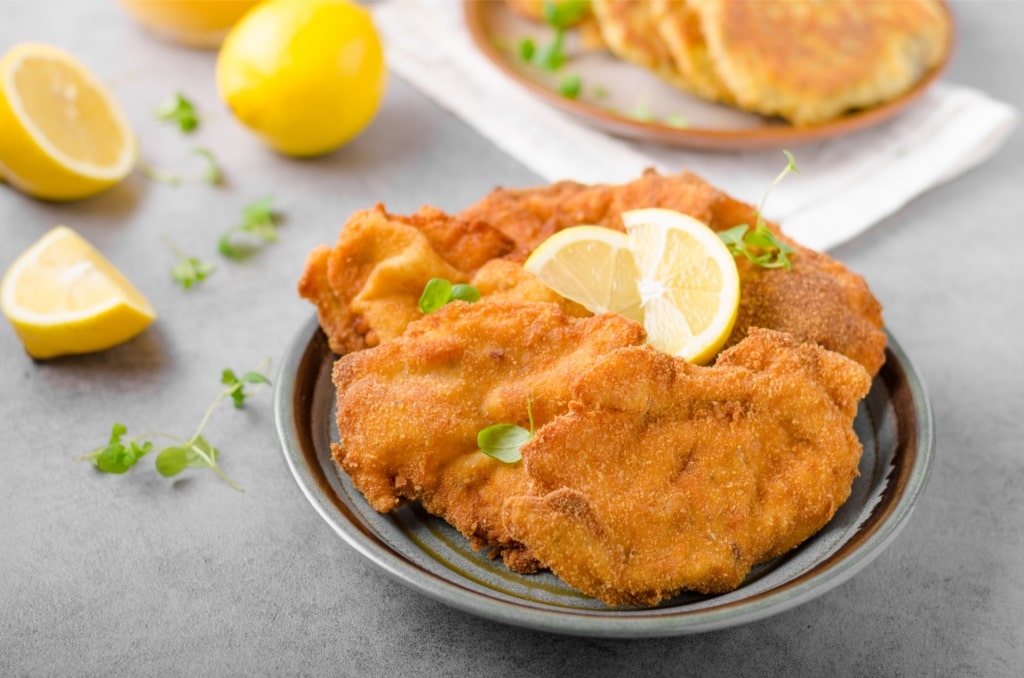
Wiener schnitzel
A number of the most famous “German” dishes are really Austrian, including the iconic Wiener, or “Viennese,” schnitzel. A classic Wiener schnitzel is made with veal pounded thin until large enough to hang off a dinner plate. The cutlet is dredged in flour, eggs, and breadcrumbs, then fried in clarified butter until it develops a gorgeous, golden brown crust.
The accompaniments are critical with Wiener schnitzel. A dollop of tart-sweet lingonberry jam is a must. While schnitzel may sometimes be served with roasted or pan-fried potatoes, a vinegary cucumber-potato salad is the way to go. Part salad, part condiment, this bright, zingy side helps cut through all that richness.
Bratwurst
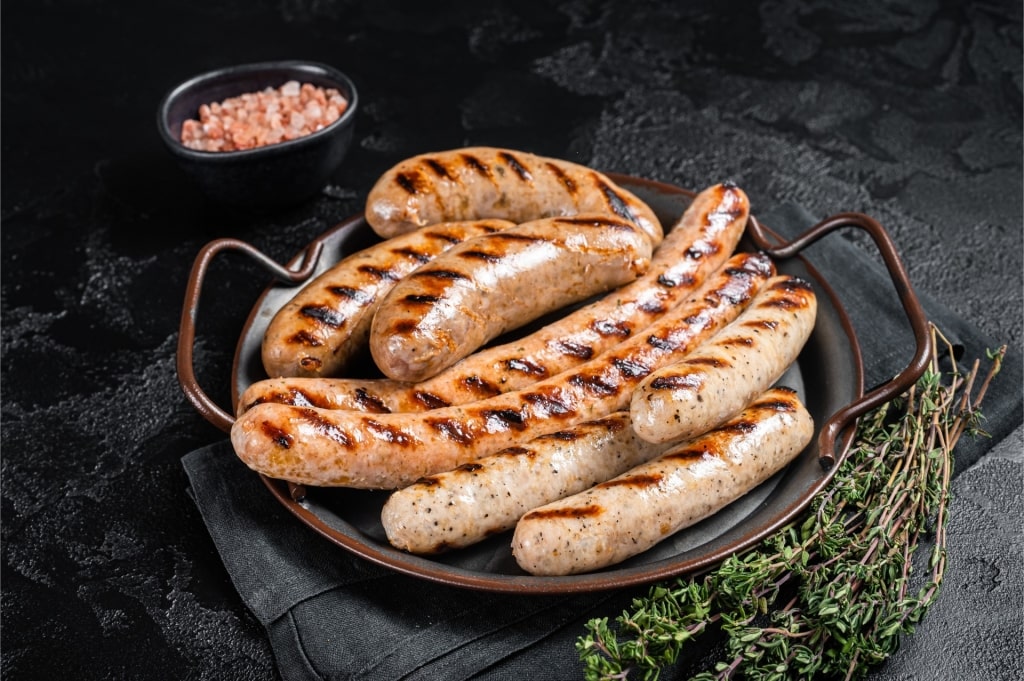
Bratwurst
Germany has more than 1,200 kinds of sausage and the term “bratwurst,” which means a roasted or grilled sausage, can refer to dozens of regional variations. There are the slender, finger-sized Nürnberger Rostbratwurst, often served by the half dozen. Or head to just about any fairground and you’re likely to find a hefty Thüringer Rostbratwurst.
In general though, a bratwurst is a well-seasoned pork sausage, although it may also include veal or beef. It pairs brilliantly with sauerkraut, either on a plate alongside some form of potato or on a crusty roll. Either way, mustard is obligatory.
Weisswurst
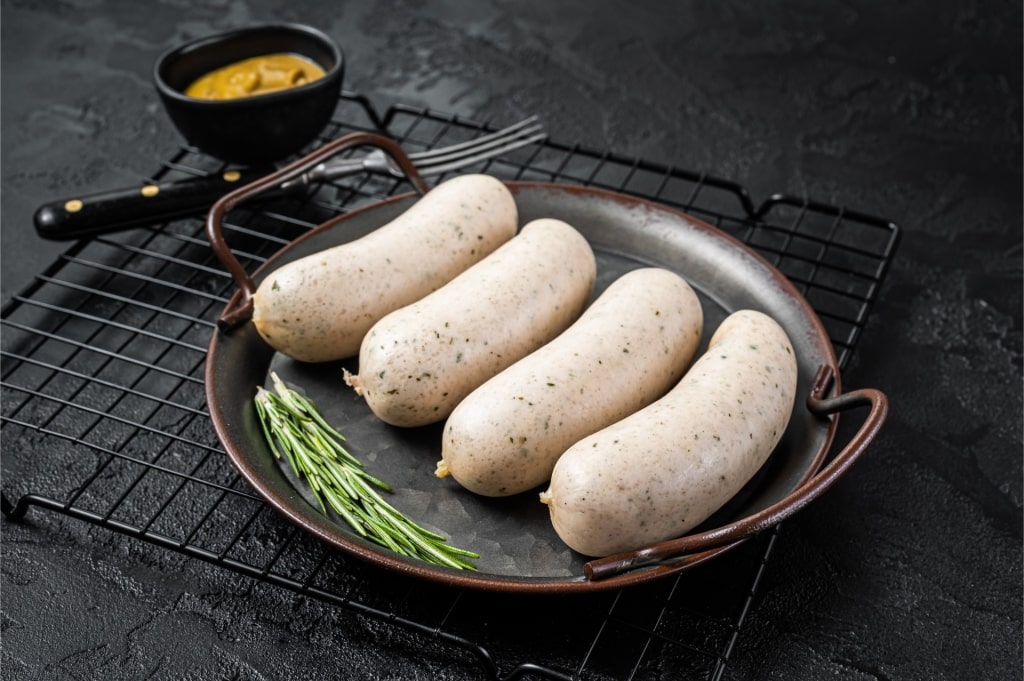
Weisswurst
Ask locals in Munich what their favorite breakfast is and there’s an excellent chance they’ll say weisswurst.
In contrast to American or British breakfast sausages, these pale, delicately seasoned pork Wurst Munich is famed for are simmered rather than pan-fried. More curiously, the traditional way many prefer to consume them is “ohne Darm”, or without their casing. Expect to see fellow diners neatly removing the exterior skin with a fork and knife.
As far as accompaniments go, süßer Senf, or sweet mustard, is mandatory. A pretzel is optional, but an excellent choice. And if you’re looking for the full Bavarian experience, order a Weissbier, or wheat beer—yes, for breakfast. Although this practice has fallen somewhat out of fashion in more health-conscious times, it’s both acceptable and encouraged here.
Franzbrötchen
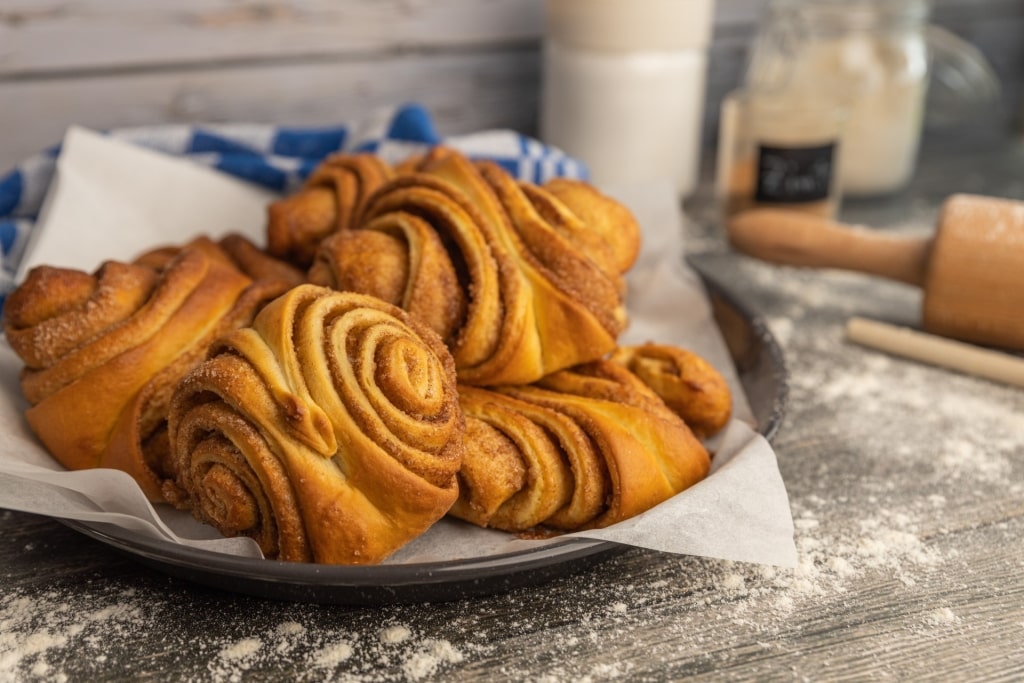
Franzbrötchen
At first glance, this pastry native to Hamburg looks like someone ran over a croissant with a bicycle. The word “Franzbrötchen” refers to the fact that the roots of this confection are French. It’s thought to have been invented right around the time Napoleon’s army occupied northern Germany. The French troops may have left, but locals acquired a taste for their baked goods.
Certainly, the laminated dough feels similar to something in a Parisian bakery, although the cinnamon-sugar filling feels more akin to a cinnamon roll. It’s absolutely delicious, and well worth seeking out should you see it in the pastry case.
Käsekuchen
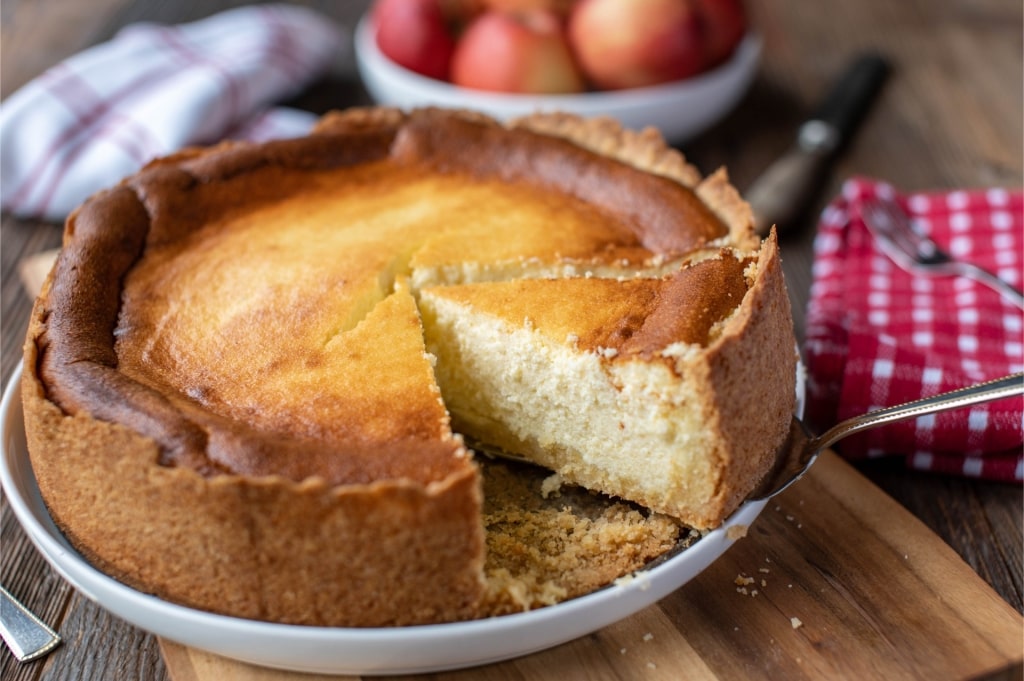
Käsekuchen
German-style cheesecake, or Käsekuchen, is entirely different from its New York-style counterpart. For starters, it has a far lighter, almost fluffy texture than the Big Apple rendition.
That’s because the dairy of choice here is quark, a strained, fermented product somewhat similar to Greek yogurt, rather than cream cheese. Most versions here also feature a cookie crust—or no crust at all—in lieu of the American graham cracker crust.
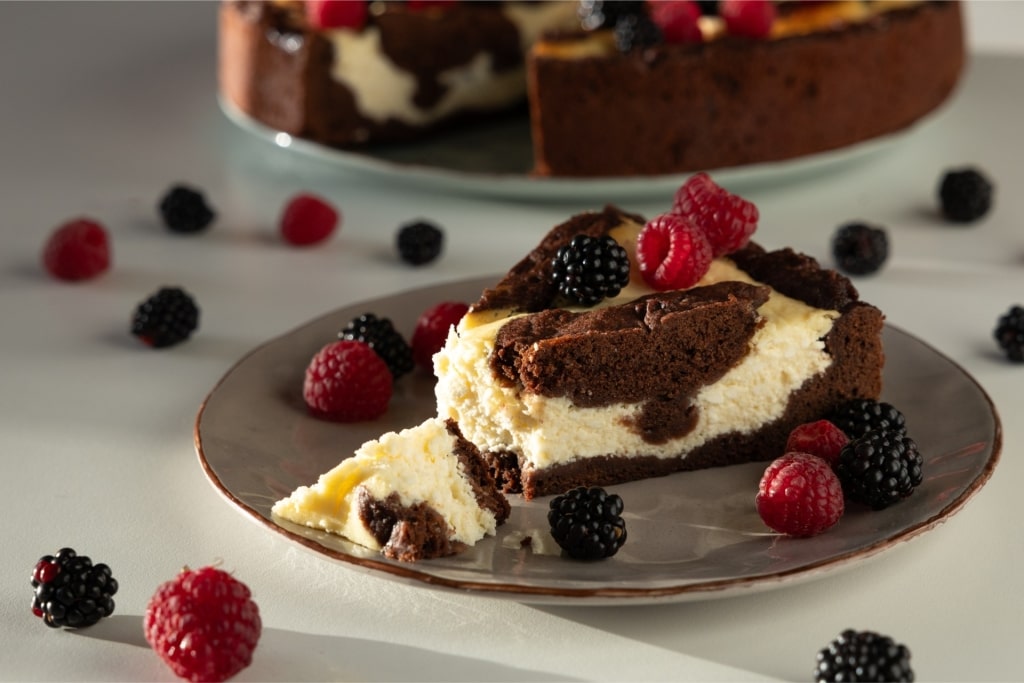
Zupfkuchen
Although the classic plain version is most common, you’ll also see variations here with toppings or fruit compotes. One of the best variations by far is Zupfkuchen, which is made by marbling dollops of chocolate batter into the cheesecake.
Käsekuchen is a popular choice for the afternoon German ritual of Kaffee und Kuchen, or coffee and cake. Particularly among the older generation, this pause for conversation and a little treat is practically considered sacred.
Apfelstrudel
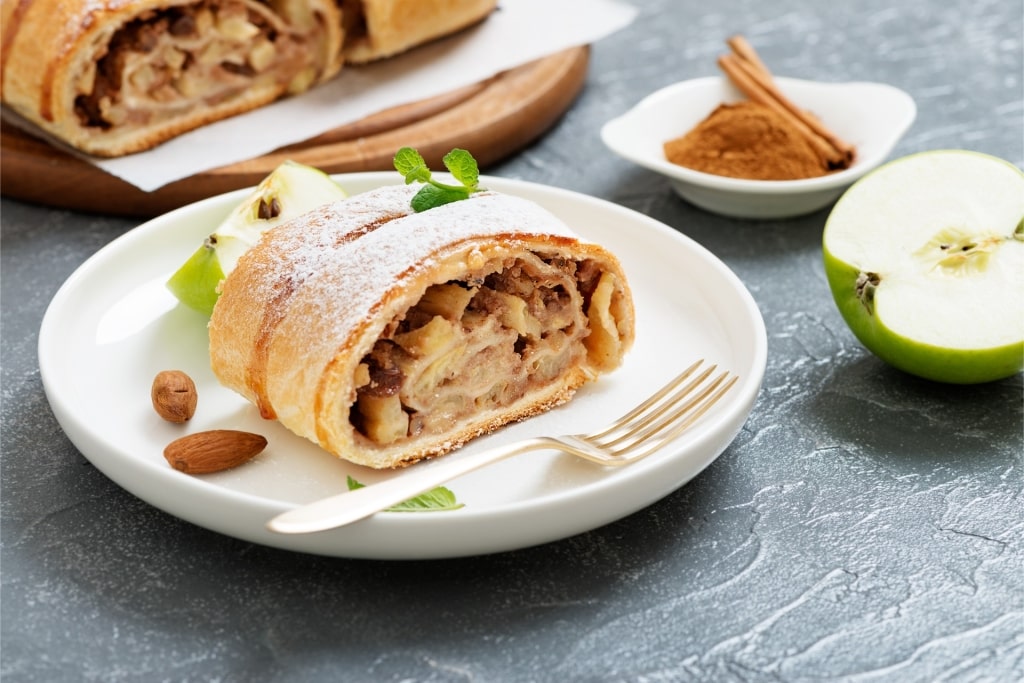
Apfelstrudel
Perhaps the most famous of all German desserts, the mighty apple strudel sits in a category of its own. Making it is a real art, which is part of why it’s more commonly found in bakeries and upscale cafés than it is at home.
The best renditions contain tender, but never mushy, apples gently spiced with cinnamon. Raisins, sometimes soaked in liqueur or some sort of spirits, are a common addition, as are toasted walnuts. The dough is traditionally rolled out by hand so thin that you can read a newspaper through it, then brushed with ample butter before being wrapped around the filling.
In the indulgent spirit of the dish, apple strudel is almost always served with one of two accompaniments. You can either opt for a tuft of whipped cream or a puddle of warm, vanilla-scented creme anglaise. Either is a delicious way of gilding the lily.
Kaiserschmarrn
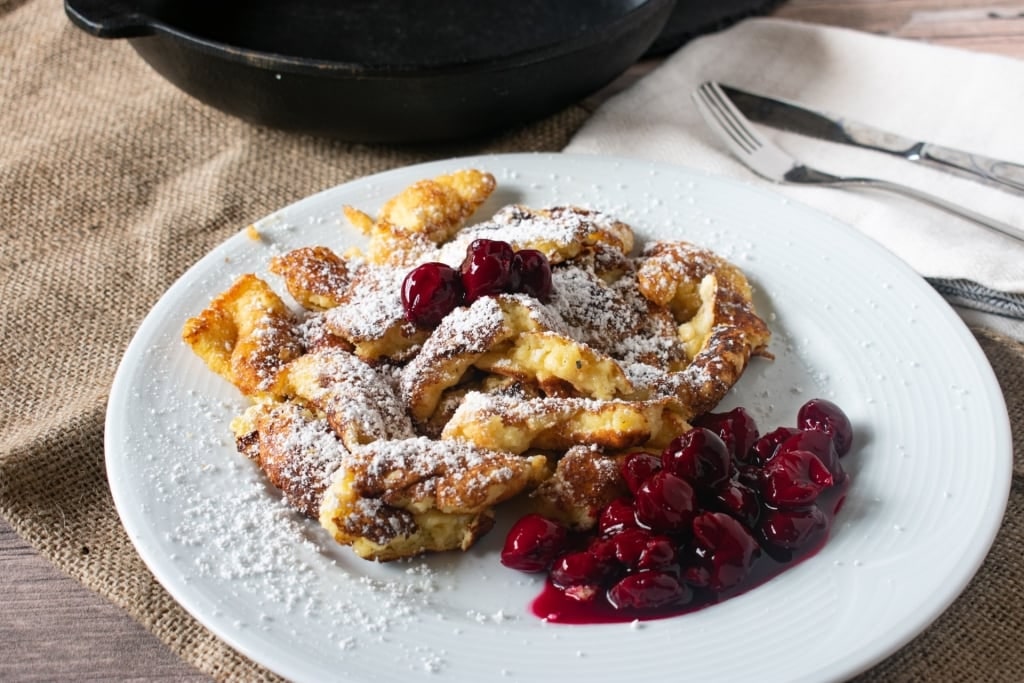
Kaiserschmarrn
At first glance, Kaiserschmarrn looks like an unholy mess—that’s by the design. This Austrian dessert quite literally means “the emperor’s mess.” To make it, cooks start with a very eggy, rich pancake batter in a skillet. Before the pancake sets, however, they slice it into bits and stir-fry it around with plenty of butter. As it sizzles, the edges crisp and brown, while the interior of each piece remains custardy and light.
Typically, some sort of fruit preserves—plum or apple are common—are added to the whole mess. A dusting of powdered sugar rounds it all off. This is one dessert that tends to be served warm in generous portions. It’s almost invariably meant to be shared and is all the more enjoyable for it.
Read: Best Places to Visit in Germany

Restaurant in Germany
Germany is full of delicious things to eat and it’s impossible to appreciate them all without traveling through different regions of the country. A river cruise offers the greatest chance to sample different German pastries, braises, breads, and other dishes. Browse Celebrity’s river cruises and book your next culinary adventure today.