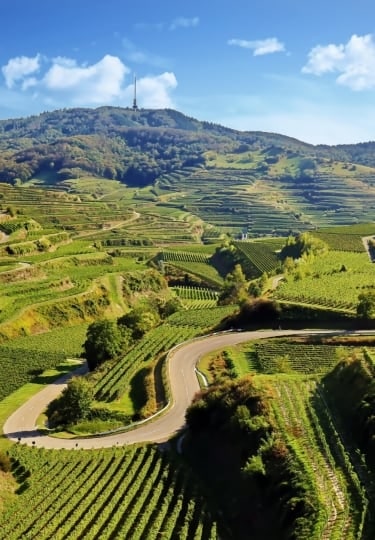
Although the country is known for its world-class Rieslings and elegant Pinot Noirs, the distinctive German wine regions concentrated along the river valleys in the west offer so much more variety than what is found on the export market.
From the steep slate vineyards of the Mosel to the sunny slopes of Baden, each region has its own unique climate and terroir shaping distinct wine styles. Whether you prefer crisp, mineral whites or silky reds, Germany’s wineries will draw you in with their picturesque landscapes, charming villages, and lively wine festivals.
History
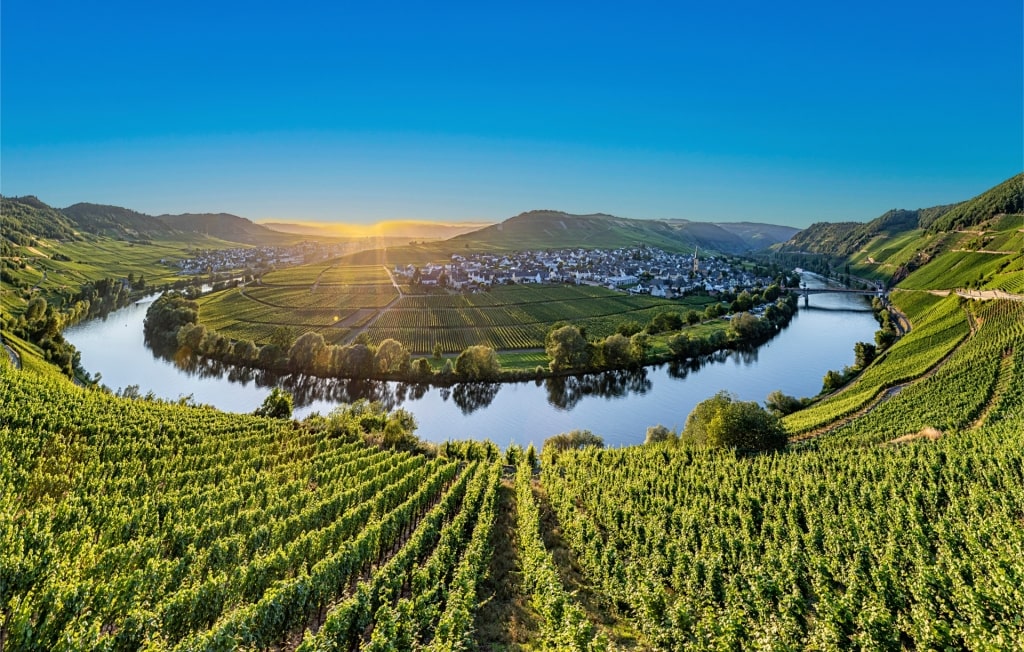
Moselle River
German winemaking tradition traces back to the Celts and Roman reigns, with the earliest surviving wine tools dating back to the first century AD. The Romans brought Greek and Etruscan viticulture to Germany and converted the banks of the Mosel River into steep vineyards, as is documented in Ausonius of Bordeaux’s 370 AD text Mosella.
Charlemagne is credited with greatly consolidating German viticulture by introducing regulations to wine production and commerce, expanding the wine production region from western Germany and the Rhine shores to eastern Germany, following the spread of Christianity. Viticulture was overseen by monks and monasteries, with the royal monastery Lorsch owning over 900 vineyards by the ninth century.

Riesling grape
Riesling emerged as Germany’s most famous grape in the 1400s, but climate change, enduring wars, and a shift to beer production in the late Middle Ages marked a decline in German viticulture for a few centuries. By the 18th and 19th centuries, however, the star of German wines had risen again, with wines of Mosel and Rheingau gaining great popularity in European royal courts and selling at higher prices than Champagne and Bordeaux.
In the late 1800s, the tradition of cooperative wine production and cellars began consolidating in Germany, with small growers joining associations to produce better quality wine by pooling resources. Today, cooperatives produce about one-third of Germany’s total wine harvest.
In the 1970s, strict regional appellation control was introduced to regulate wine origin and quality, and Riesling re-emerged as Germany’s most prized fine wine on the domestic and international viticulture scenes.
German Wine Regions
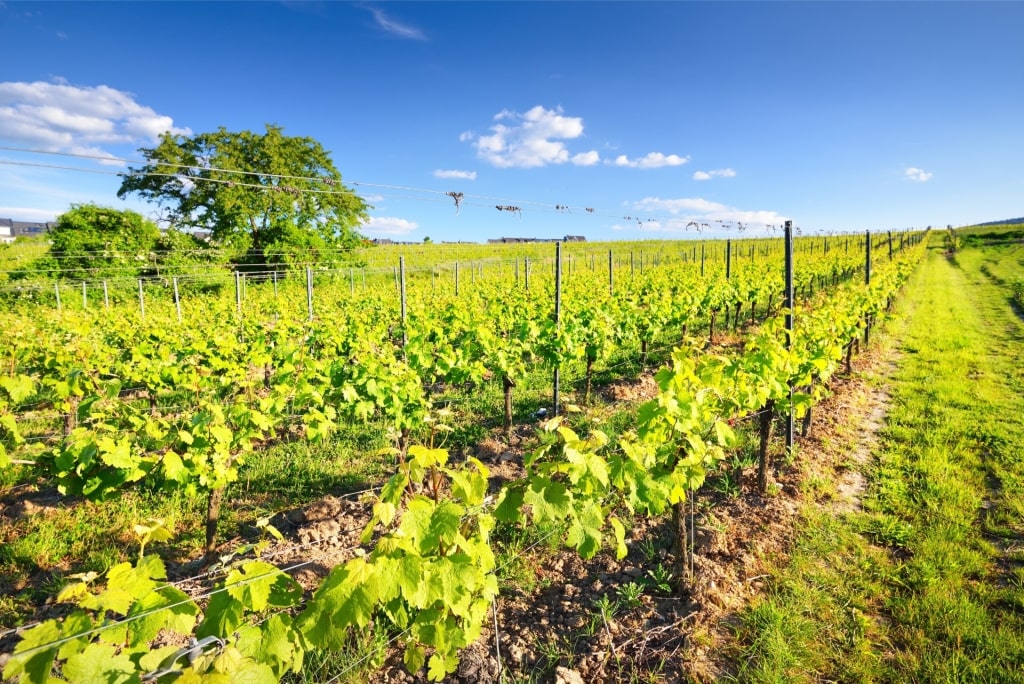
Vineyard in Pfalz
Historically, the production of German wine was concentrated in western Germany, along the Mosel River and the Rhine. Today, Germany’s 13 officially recognized wine-growing regions are primarily spread along western and southern Germany, where the climate is warmer and more hospitable to viticulture.
Mosel
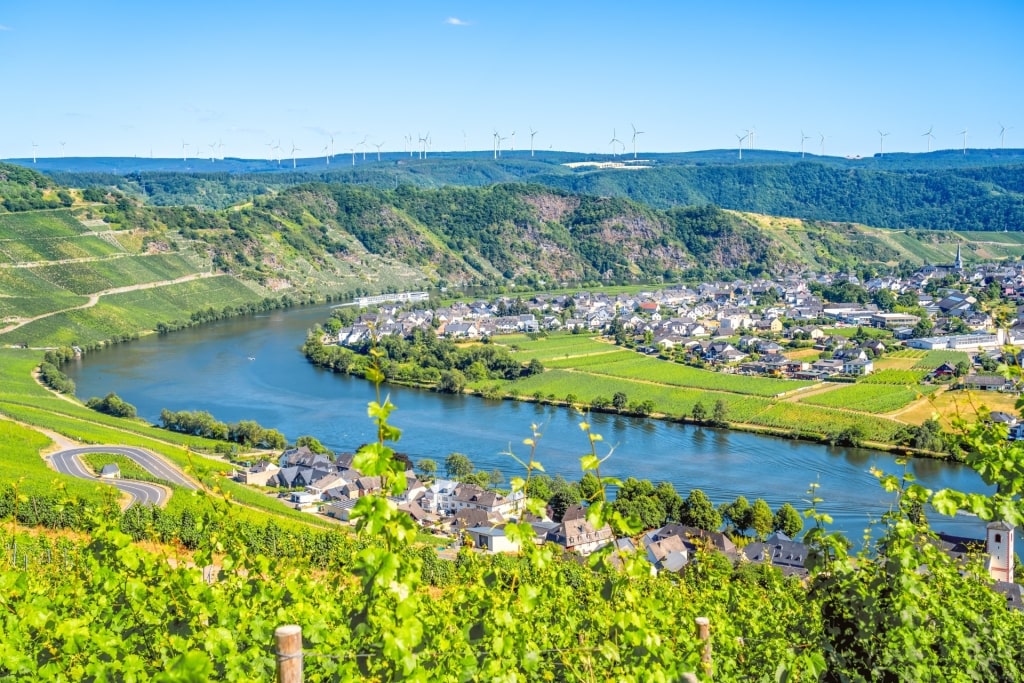
Mosel
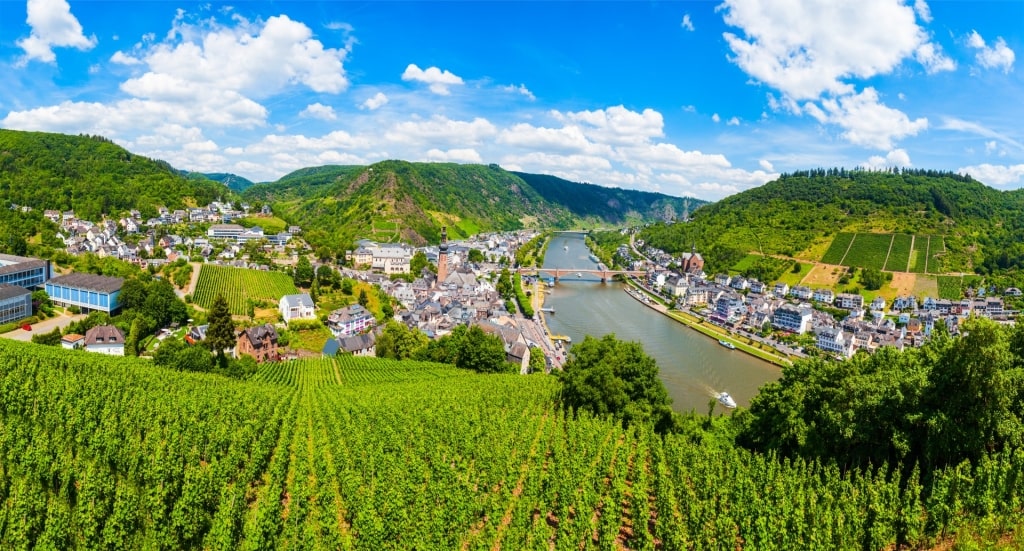
Picture rows of vines growing along steep hillsides, along a valley overlooking the snaking green Mosel River. Known as one of the most beautiful German wine regions for its terraces of vineyards, Mosel is known for its refined Riesling, which grows despite the relatively cool continental climate, yielding a delicate, low-alcohol wine with remarkable acidity.
The wines from Mosel often have a mineral tinge due to the slatey soil, and are mostly dry and off-dry, with some sweet wines as well. Due to their locations on steep slopes, the vines require intensive manual labor as mechanical harvesting tools are difficult to operate on the hill flanks.
Rheingau
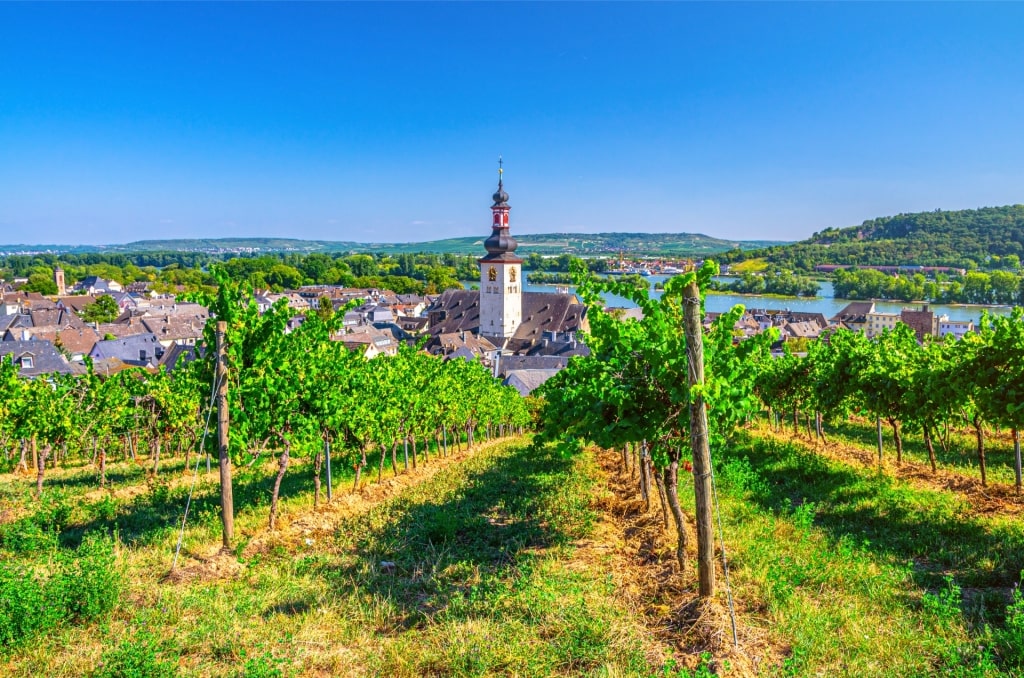
Rheingau
Located in the state of Hesse, the Rheingau wine region stretches along the Rhine River and benefits from a moderate climate and gentle hilly vineyards facing south, allowing for long-ripening grapes that make for a famed Riesling with mineral qualities and a heftier body. The Rheingau Riesling Road is a stunning 120 km route winding through vineyards, heritage estates, monastery domains, and homey wine taverns.
Rheingau is most known for its Riesling and includes wineries known as the noblest in German winemaking history, notably Schloss Johannisberg and Kloster Eberbach. It is also home to the wine village of Hochheim, which the popular British term “hock” derives from, designating German white wine that is fruity and off-dry.
Read: Best Places to Visit in Germany
Baden
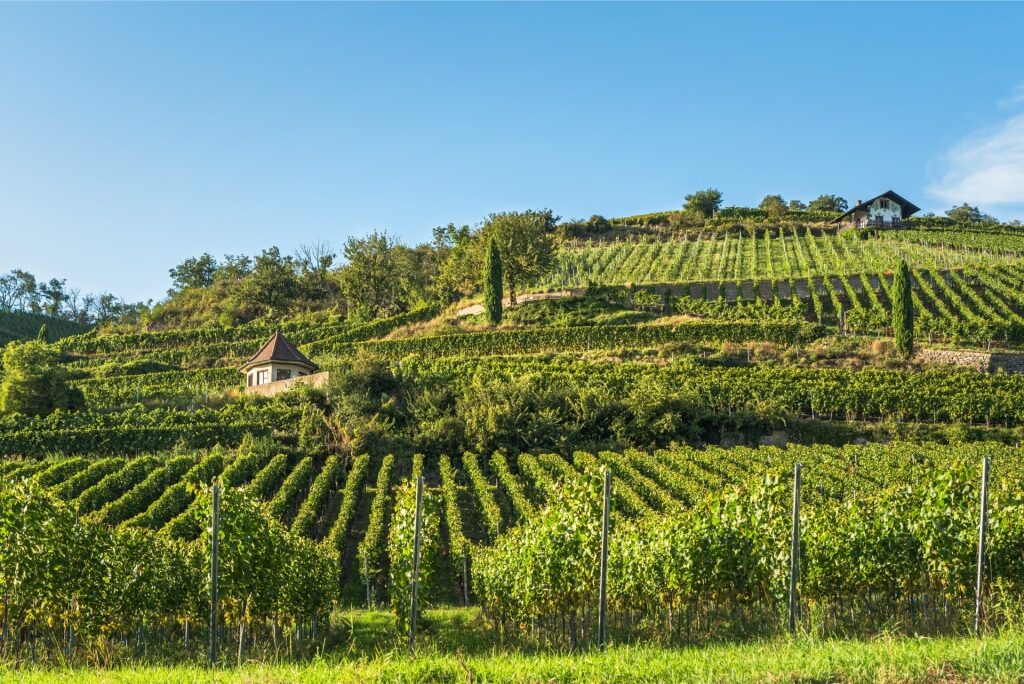
Kaiserstuhl
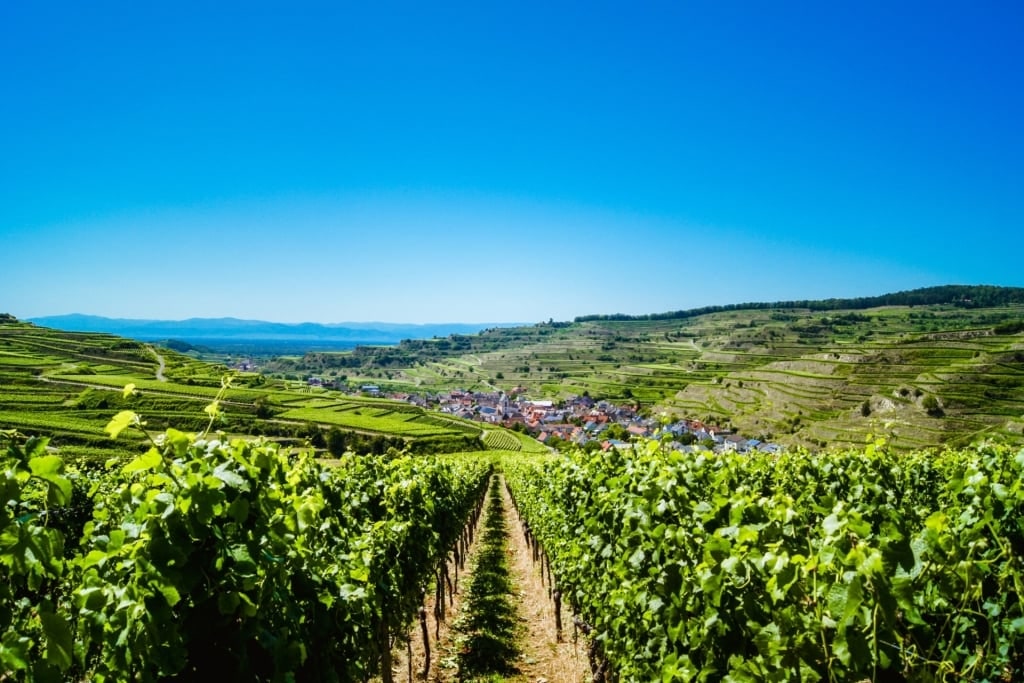
Baden is the German wine region that lies farthest south, and is a narrow strip of land wedged between the Rhine River and the Black Forest that benefits from a sunny climate. It is known for its wines of the Pinot variety including Spätburgunder, or pinot noir, Grauburgunder, or pinot gris, and Weissburgunder, or pinot blanc.
The region is uncommon in Germany for its relatively equal split between red and white wine production, and is especially notable for Pinot Noir from areas such as Kaiserstuhl, where volcanic soil gives the wine a distinctive flavor. Due to the warm temperatures in Baden, its wines are generally full-bodied and higher in alcoholic content than other German wines.
Nahe
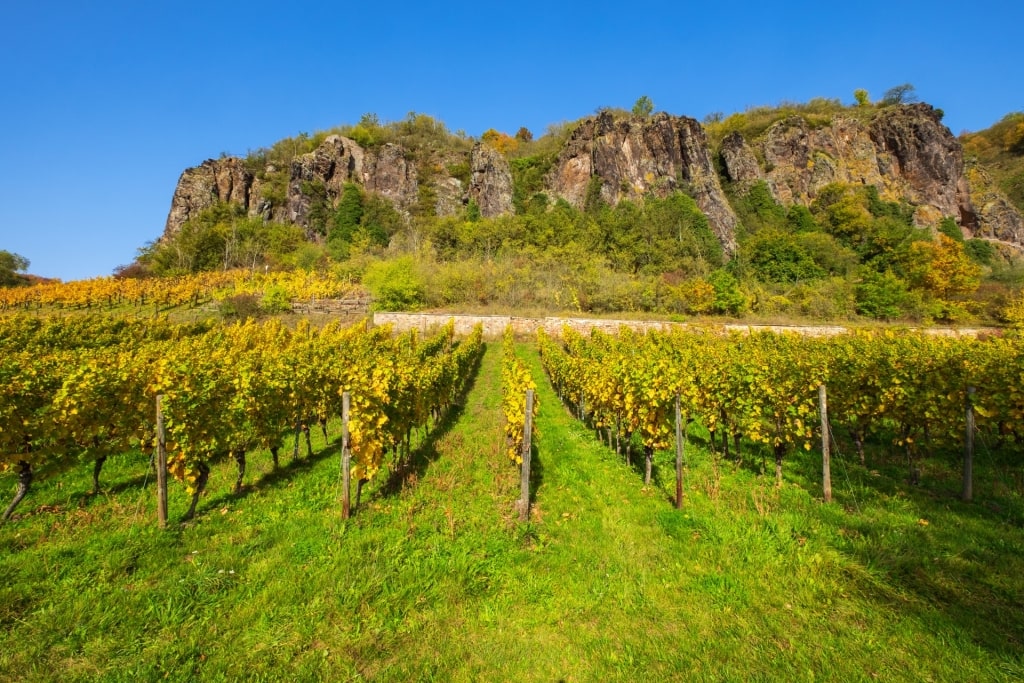
Nahe
Lodged between the Mosel and Rhine rivers, this small but renowned region boasts a variety of terroirs, ranging from volcanic to quartzite to slatey soils. Small but mighty, the Nahe produces an impressively diverse array of wines from just a handful of grape varieties.
Its microclimates produce complex Rieslings high in minerality and light spice. The undulating valleys, gentle river banks, and charming orchards and meadows of the Nahe make it a lovely, relatively off-the-radar area for wine tourism.
Pfalz
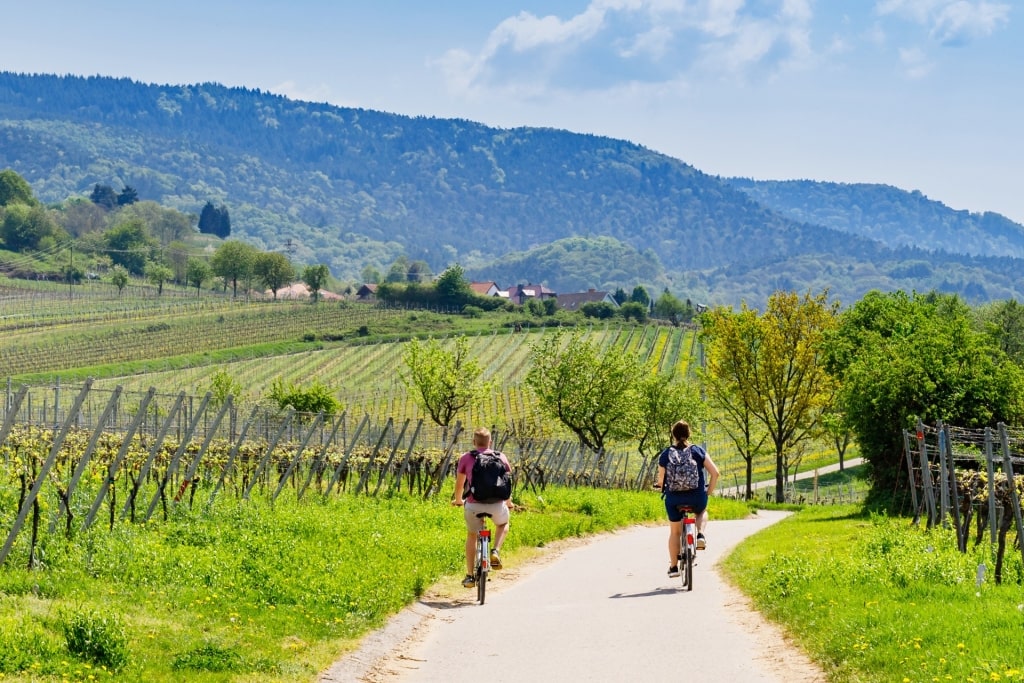
Pfalz
Under two hours from Frankfurt, Pfalz is the second-largest wine region in Germany. Its sunny climate makes it an excellent producer of both white and red wines, including Riesling, Pinot, and the signature red Dornfelder, known for its deep ruby color and complexity.
The well-established German Wine Road weaves through Pfalz, taking visitors through both historic wineries and new cooperatives with daring new wines by young, dynamic producers.
Grape Varieties in Germany
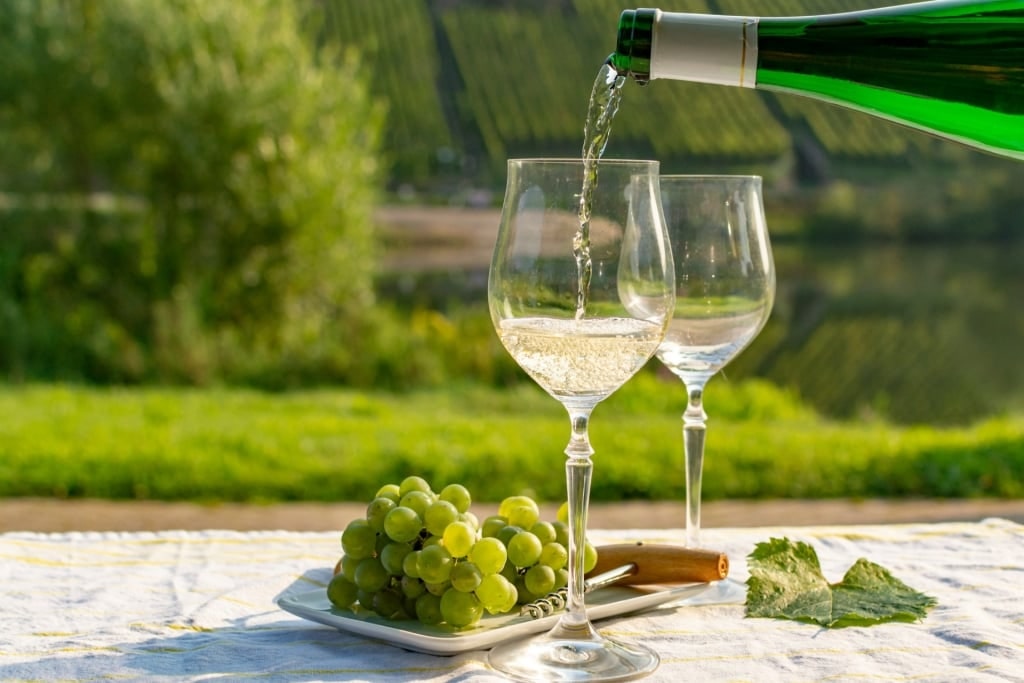
Riesling wine
The most famous grape variety in Germany is, without a doubt, Riesling, but the country is also home to well-appreciated wines from the Pinot family as well as hybrid varieties such as Müller-Thurgau and new varieties such as Dornfelder, a red grape created in the 1950s.
Riesling
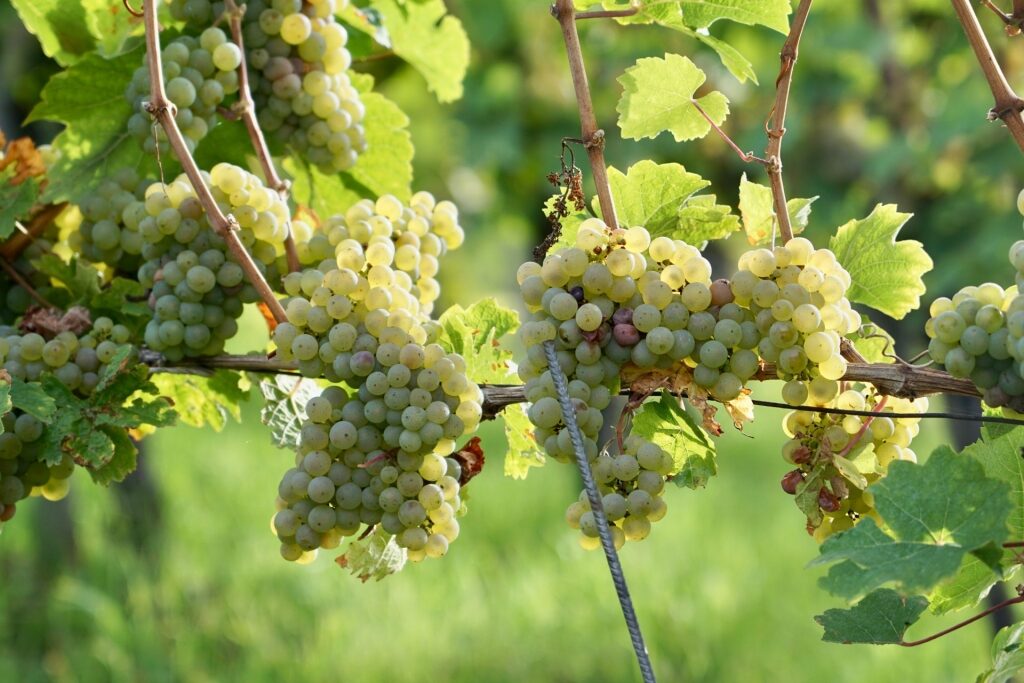
Riesling grapes
Riesling accounts for an important share—estimated at 20%—of wine production in Germany and can range from dry to off-dry to sweet, but with distinctive acidity and great aging potential. Rheingau and Pfalz tend to produce the driest Rieslings, while Mosel is known for its lighter, more off-dry Riesling variety.
German Riesling tends to be lower in alcohol, with fruity notes of apple and citrus. A good rule of thumb for assessing the sweetness of Riesling is that bottles with an ABV of 11.5% or above are more likely to be dry, while those of 11.5% or below are most often off-dry or sweet.
Spätburgunder
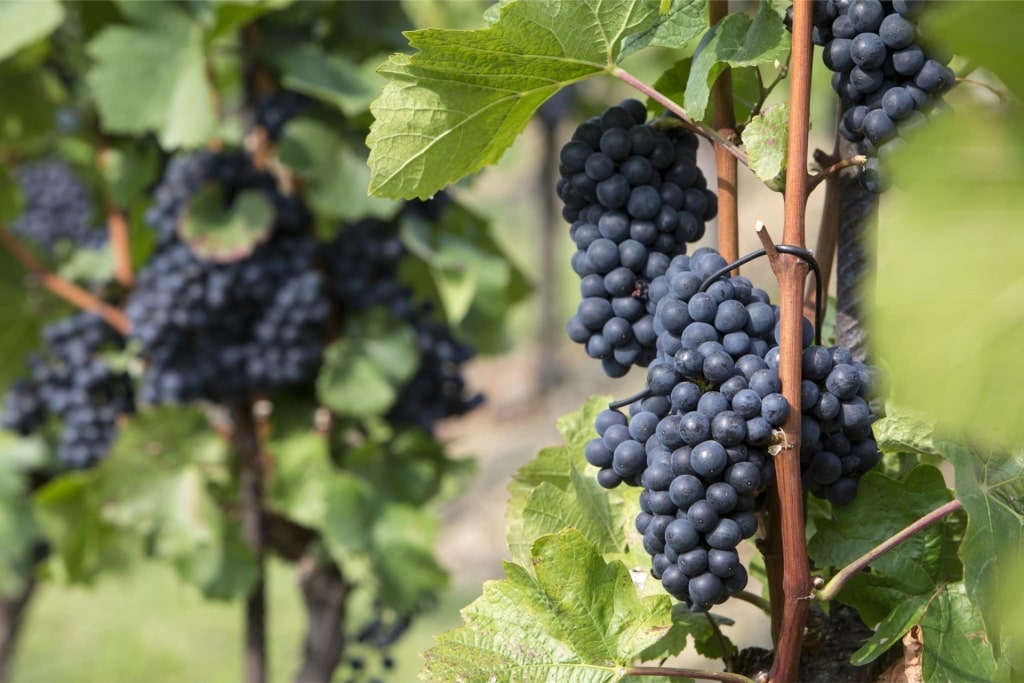
Pinot Noir grapes
Spätburgunder is what Germans call Pinot Noir, of which Germany is the third largest producer in the world. Most German Spätburgunder is from Baden, Pfalz, and Ahr, and it represents the largest variety of red wine grapes in Germany. This German wine is known for its elegance, lighter in color and with more fruitiness and acidity than most Pinot Noir wines from France or the U.S.
“Spät” means “late” in German, referring to the late-ripening timeline of the grapes, and “burgunder” is a nod to Burgundy, the French region where the varietal originates from. Today, wine connoisseurs count Spätburgunder among the finest exports of German viticulture, and the wine is especially praised for its soft, silky tannins.
Silvaner
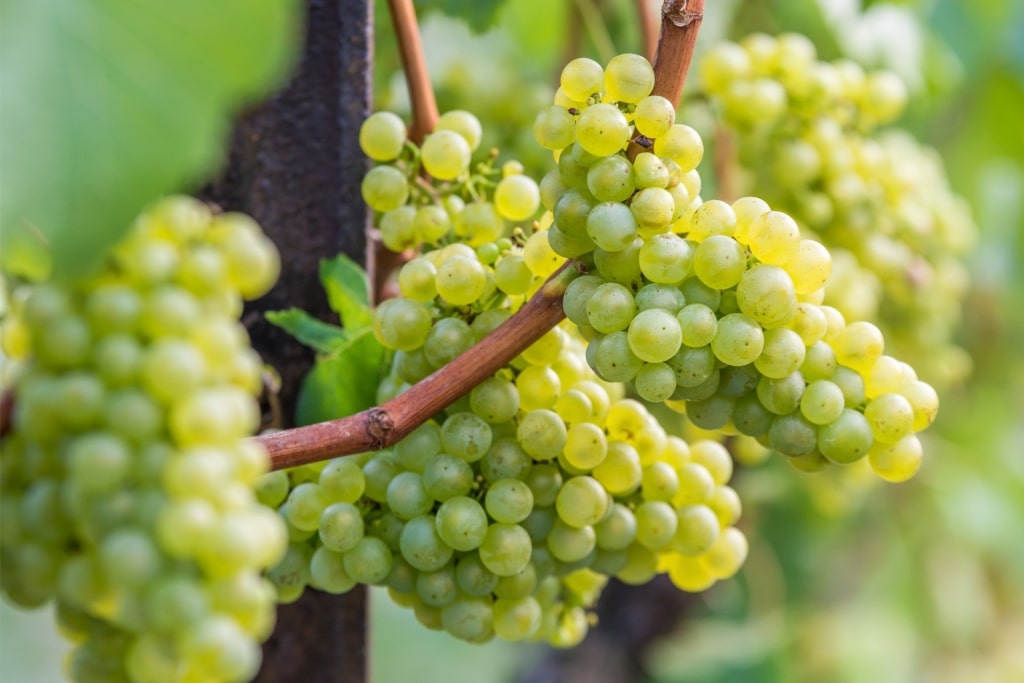
Silvaner grapes
Silvaner grows in the limestone terroir of Franken, and is a white wine that, despite being under the radar for centuries, is gradually gaining popularity in a country where Riesling is king.
Silvaner is lower in acidity, and has notes of peaches, passionfruit, and orange blossom and subtle herbal undertones. It pairs well with fruit, salads, and dishes with aromatic herbs.
Müller-Thurgau
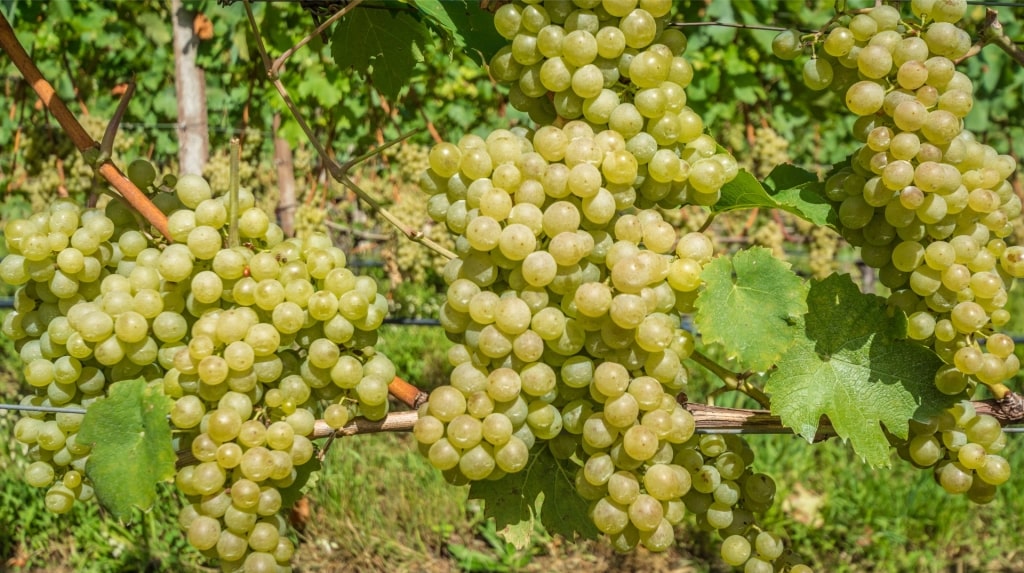
Müller-Thurgau grapes
This crossing between Riesling and Madeleine Royale is mild, low in acidity, and one of the most planted “new breeds” in Germany. It was created in the 19th century by Swiss doctor Hermann Müller at the Geisenheim Grape Breeding Institute, and became popular due to its adaptability to varied climates and soils.
While this fruit-forward white wine surged in popularity in the 1970s and 1980s, its lack of acidity led connoisseurs to conclude it an easy-drinking choice lacking in character and finesse. Today, German wine producers are reclaiming the grape variety and making bottles noted for their fresh floral notes and improved structure.
Dornfelder
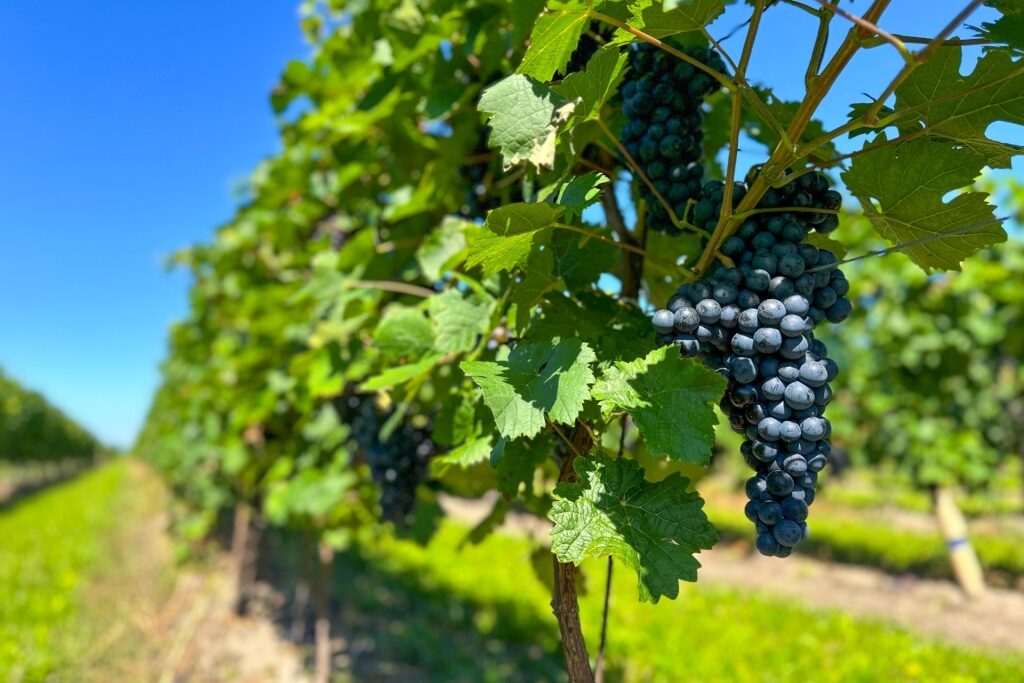
Dornfelder grapes
Dornfelder is a new red wine variety developed in the 1950s in Germany and yields a fruity, easy-drinking red with a velvety mouthfeel, akin to a Beaujolais. The wine is fuller-bodied and deeper in color than other German reds, notably those in the Pinot family, and has a stronger tannin flavor.
High-end Dornfelder is made in smaller batches and kept in oak casks and have notes of plum and cherry, and at times a slight sweetness. It is the second most important red wine variety in Germany after Spätburgunder, and is commonly grown in the Pfalz and Rheinhessen regions.
It pairs beautifully with poultry, pork, and lighter meats. As a relatively “young” wine, it is harder to find Dornfelder outside of Germany, so make the most of your German wine touring by sampling this fruity wine straight from the source.
Wine Styles & Classifications
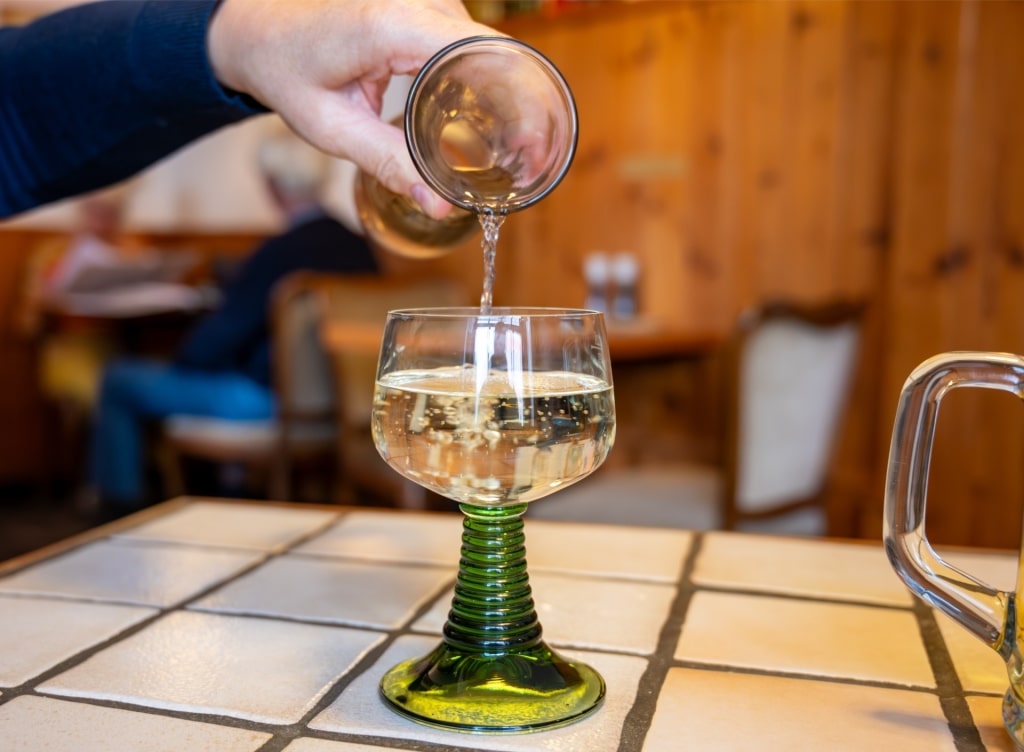
Riesling wine
Germany’s unusual wine classification system largely maps onto the harvest stage of the grape, which corresponds to the spectrum of dryness to sweetness of the wine. They include the following:
- Kabinett: light, crisp, dry or off-dry wines
- Spätlese: late harvest, more ripeness and intensity
- Auslese: select harvest, made with extra-ripe grapes, concentrated and sometimes sweet
- Beerenauslese, or BA: berry harvest, sweet wine from selected berries
- Eiswein: ice wine, grapes harvested and pressed while frozen, sweet and acidic.
In general, look for “trocken” on labels to denote dry wines, “halbtrocken” to denote off-dry, and “süss” to denote sweet wines. “Sekt” is a term used to label sparkling wines in Germany, so look out for the word if you’re hankering for some festive, bubbly Riesling.
Where to Go
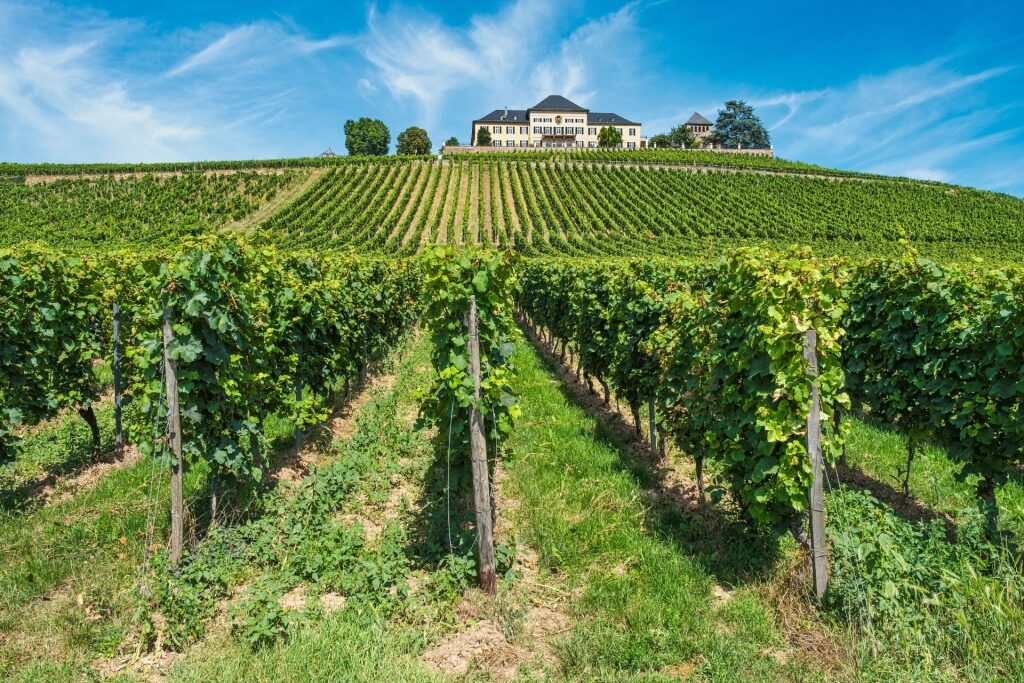
Rheingau
The Rheingau is perhaps the most prestigious German wine region, with splendid estates and historic vineyards dedicated to the cultivation of quality Riesling. Located in western Germany, close to Frankfurt and stretching along the northern shore of the Rhine, the region is also known for its riverside castles and picturesque villages like Rüdesheim, a hub for wine tourism that hosts the Rüdesheim Wine Festival in late summer.
For those looking for breathtaking landscapes alongside their wine tasting, Mosel is the perfect combination of scenic and historic, with steep hillside vineyards offering dramatic views and some of the most famous Riesling producers in Germany, including Egon Müller and Joh. Jos. Prüm. Many small towns here host wine festivals called Weinfeste in summer or early fall, replete with live music, food vendors, and traditional costumes.
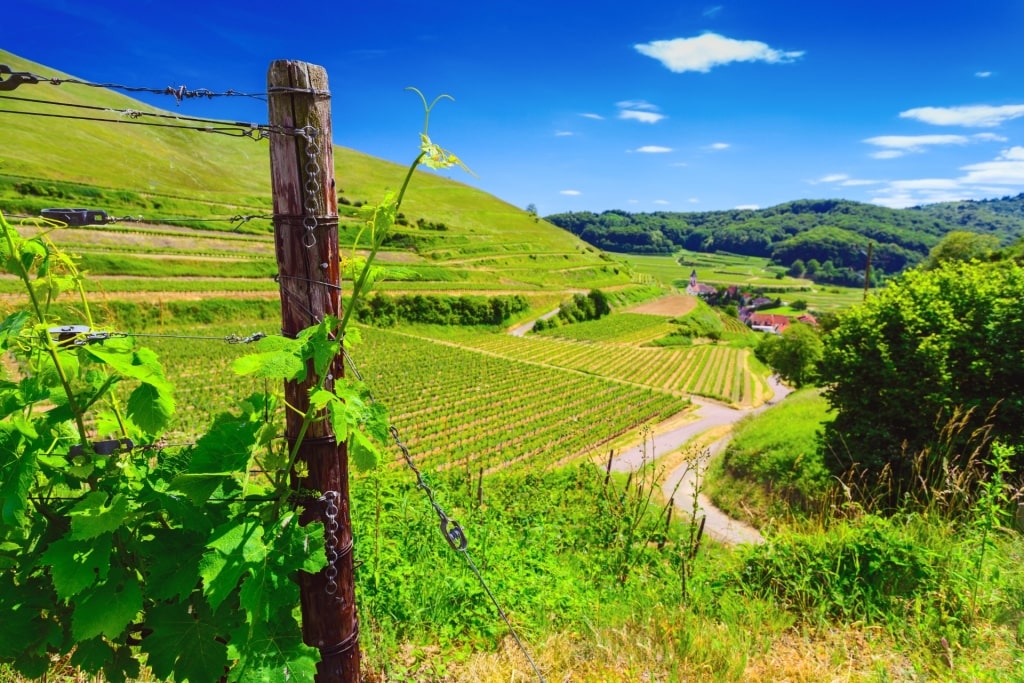
Baden
Baden, a long, narrow region in the foothills of the Black Forest, is the go-to destination for fans of red wine in Germany. Sample silky, earthy Spätburgunder at family-run wineries before heading to a tour of medieval German castles among rolling hills.
Tasting Tips for Beginners

Wine tasting
Observe and smell before you taste: pay attention to the wine’s clarity and hue. German whites like Riesling are usually pale gold with green tones. Swirl gently to release the bouquet, then inhale deeply. Notice fresh fruit, floral, or even petrol notes common in aged Rieslings.
When tasting, let a small sip linger in your mouth. Is it dry or off-dry? German wines, especially from the Mosel or Pfalz, often balance sweetness and acidity.
At a tasting, you’ll most likely begin with sparkling, like Sekt, then dry whites, moving to fuller styles or reds like Spätburgunder, ending with sweet wines. Don’t feel pressured to finish. Spitting is normal and expected—it helps you stay sharp and savor more wines.
FAQs
What are the main wine regions in Germany?
Baden
Germany officially has 13 wine regions: Ahr, Baden, Franken, Hessische Bergstraße, Mittelrhein, Mosel, Nahe, Pfalz, Rheingau, Rheinhessen, Sachsen, Saale-Unstrut, and Württemberg.
Of these, those most worth a visit include Mosel, famous for its breathtaking river views and exceptional Rieslings, and the Rheingau, known for historic estates along the Rhine. Baden offers warm climes and delightful red wines, while the Nahe region offers mineral-rich Rieslings and beautiful hiking.
Which wine region is best for Riesling?
Mosel
For many, Mosel is the undisputed producer of the world’s most celebrated Riesling. Thanks to a temperate climate and slatey terroir, the region’s Riesling is aromatic and mineral. The region also happens to be incredibly scenic, with steep hills framing the Mosel river valley.
Are German wines sweet or dry?
Riesling wine
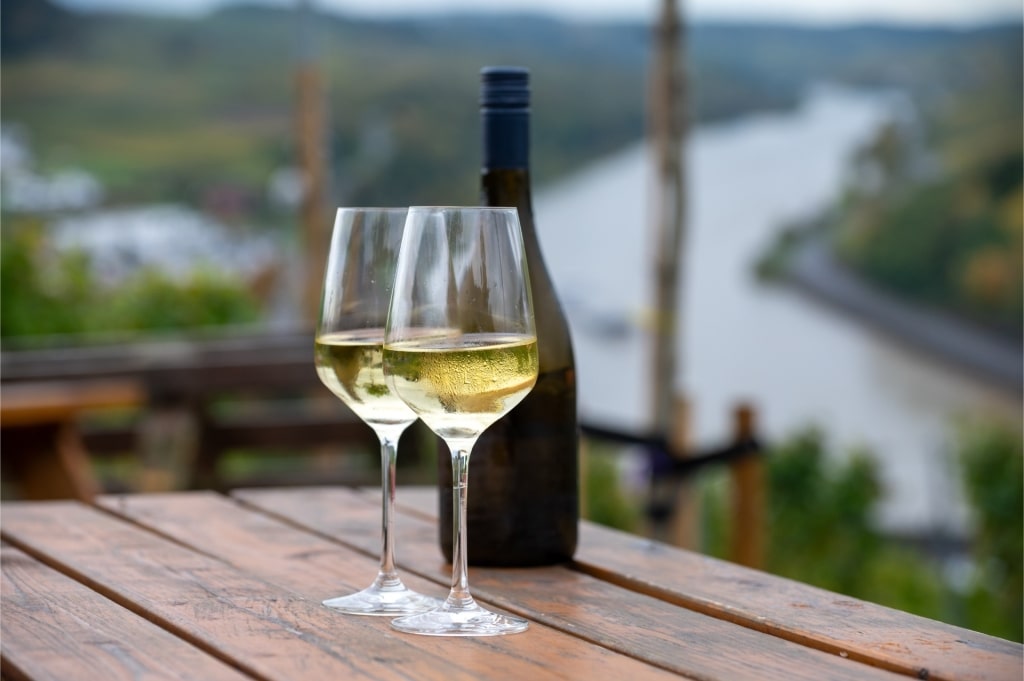
German wines range the full spectrum from sweet to dry. You’ll find crisp, dry Rieslings alongside off-dry, semi-sweet, and sweet variants of the same grape.
Although traditionally German wine had garnered a reputation for being on the sweet side, today, many German producers emphasize “trocken” wines, which are very dry, in their offerings.
German reds tend to be fruity, juicy, and easy-drinking, but are overall well-balanced and also come in a range of styles.
What food pairs best with German wine?
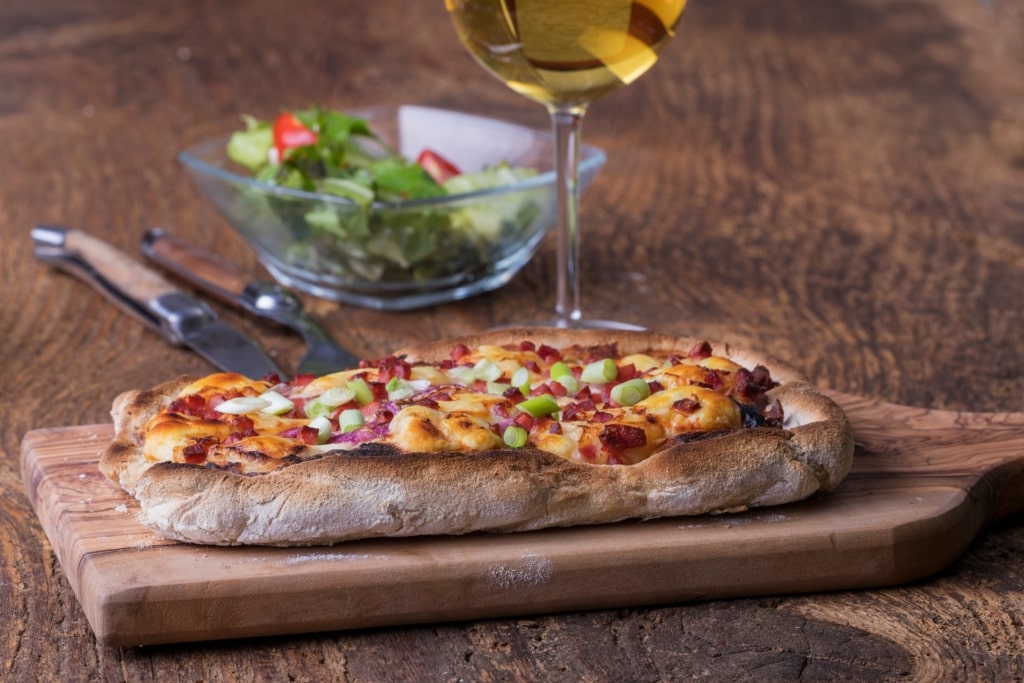
Flammkuchen
While you’re visiting Germany, why not try some classic German dishes? Sauerbraten, or pot roast, pairs beautifully with dry Riesling, while Bratwurst or Weisswurst sausages are complemented by a fruity, acidic Spätburgunder.
Flammkuchen, an Alsace-style thin pizza, often made with smoky bacon and crème fraîche, is well-complemented by an off-dry Riesling, while schnitzel can be enjoyed with just about any German wine, from a Riesling to a Pinot Noir.
When is the best time to visit Germany’s wine regions?
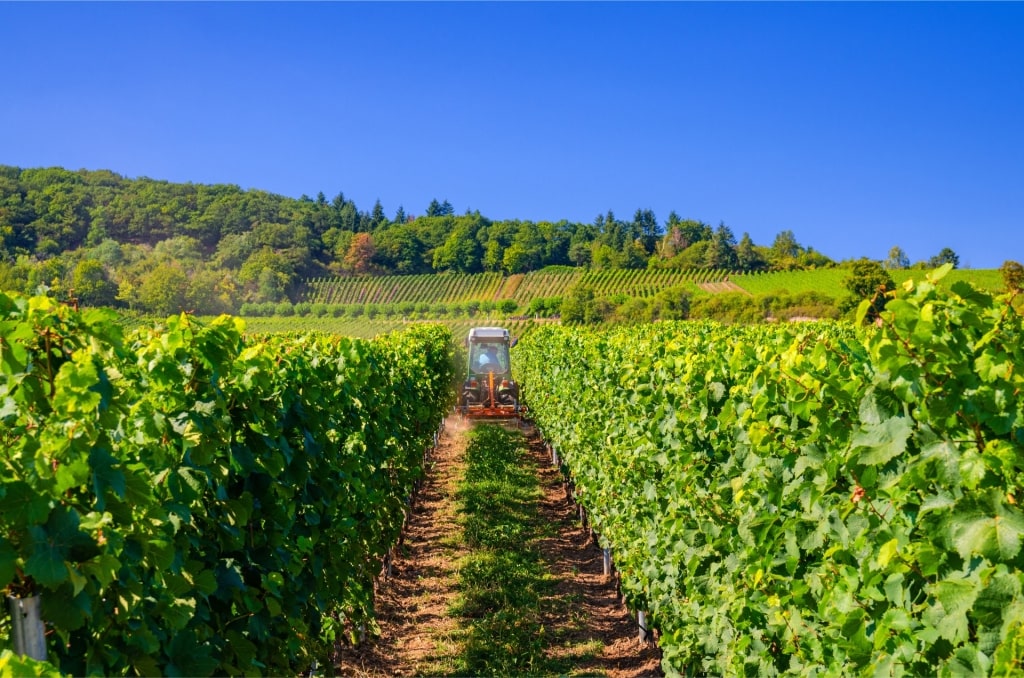
Rheingau
Spring through fall is an ideal time to visit Germany’s wine regions, though September and October are prime months if you want to partake in harvest festivities along with fiery autumn colors in the vineyards.
For those looking for a more relaxed time with fewer crowds, late spring offers the perfect window for vineyard strolls in pleasant weather, just as the vines are turning verdant green.
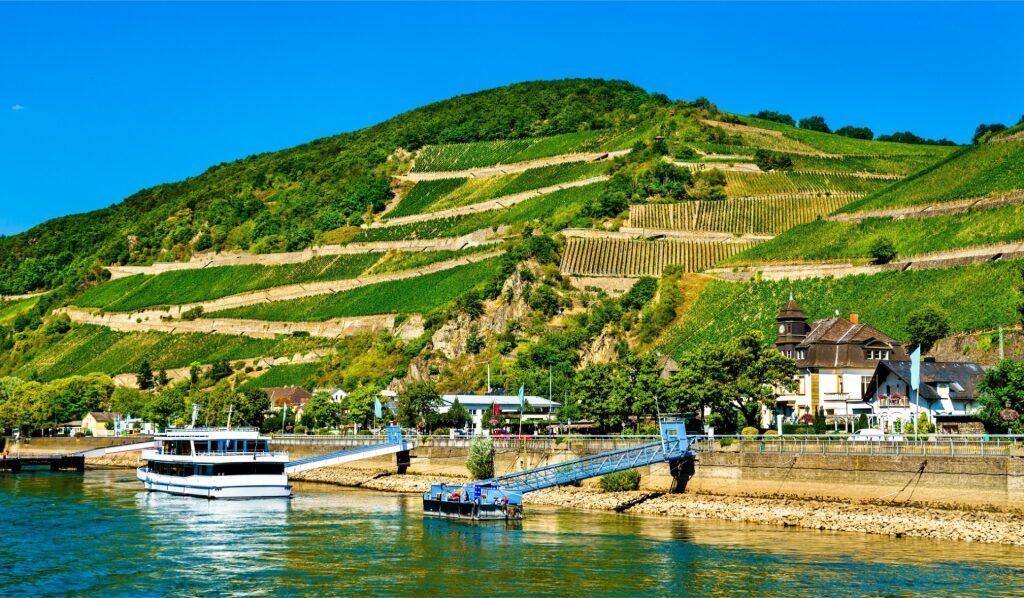
Rudesheim
Discover the crisp Rieslings of the Mosel, the elegant Spätburgunders of Baden, and the steep vineyards of the Rhine as you immerse yourself in Germany’s rich wine culture. Browse Celebrity’s river cruises and book your dream vacation today.