Compiling a list of the best cities to visit in Germany is inherently a subjective exercise. After all, what constitutes “best” depends on what you seek. If rowdy beer halls serving family-sized pretzels are your speed, Munich is likely to be your favorite spot. If rolling vineyards and afternoons drinking chilled white wines appeal, you might love Breisach. And if you want to meander through beautifully preserved architecture, Regensburg could be for you.
So consider this something of an introductory collection of the best cities in Germany to visit rather than a definitive list. The main takeaway is that many of the country’s smaller cities contain underrated, often unexpected gems.
Munich
Munich
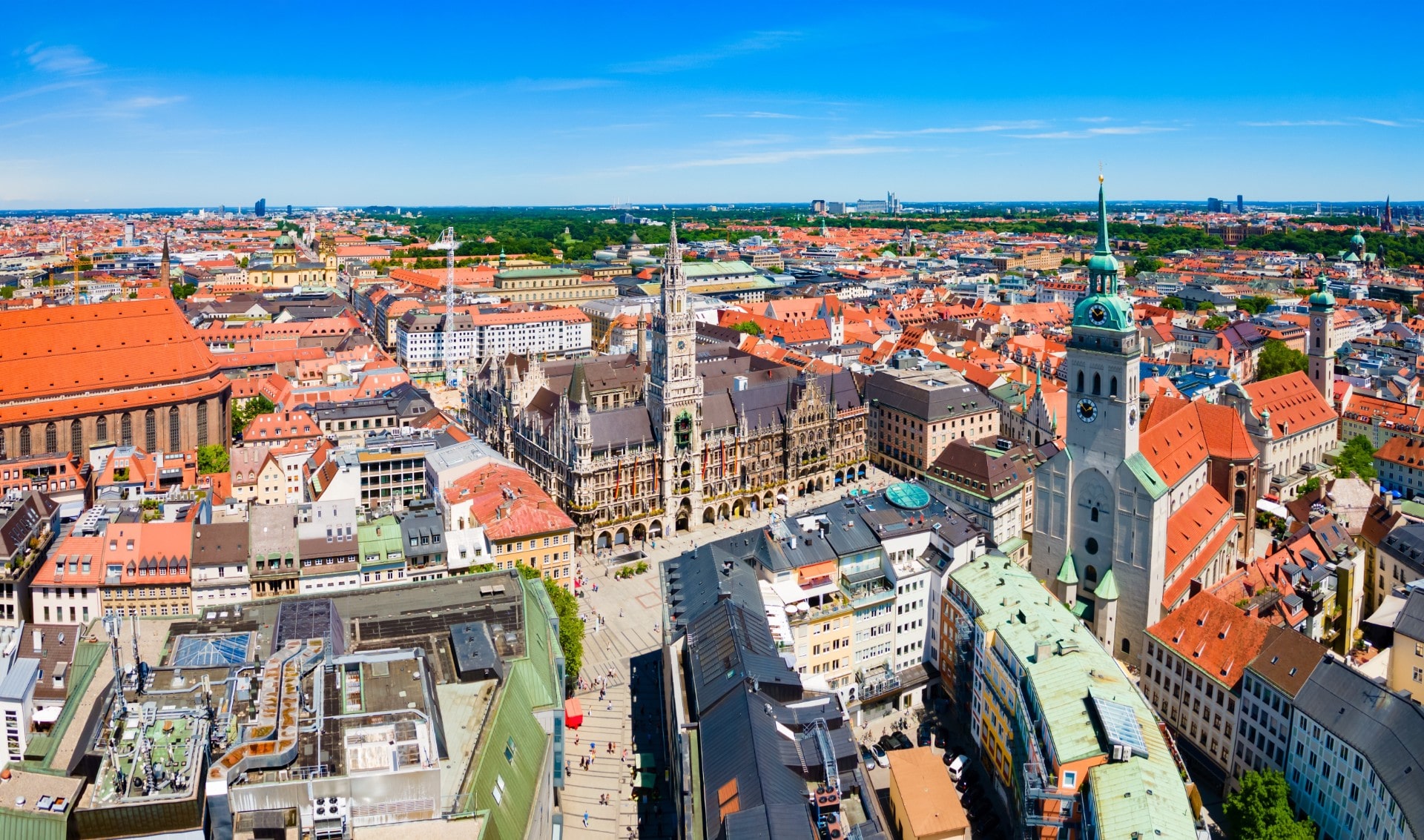
Ask someone just about anywhere in the world to describe Germany and they’re likely to mention beer gardens or beer halls staffed by women wearing dirndls. They might mention liter-sized glasses of lager and enormous pork knuckles. Or perhaps they’ll describe verdant fields with snow-capped mountains in the background.
The reality is that particular image is not so much German as Bavarian. Yes, other cities have beer gardens, but Munich has more than 180 of them. Here, local designers produce handcrafted, high-end lederhosen and dirndls that can easily cost hundreds of euros. Hofbräuhaus and other famous beer halls cater to a fiercely loyal local clientele as well as international visitors.
Lenbachhaus in Munich
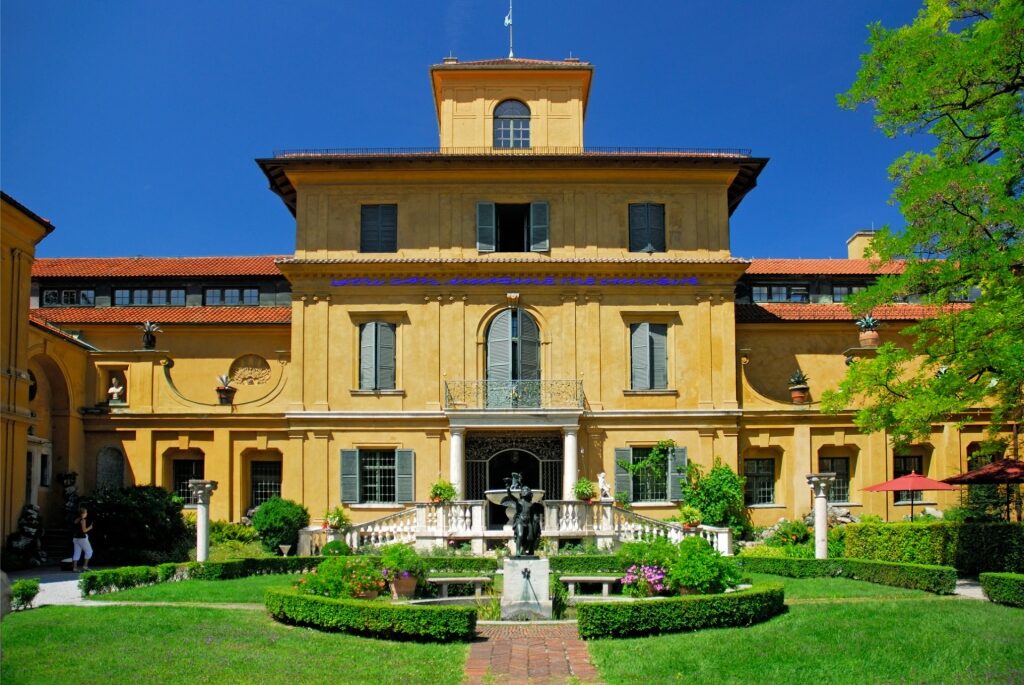
But there’s much to love about Munich beyond these tropes. There are more than 80 museums, including the Haus der Kunst and the Lenbachhaus, with a Norman Foster-designed wing. It also has one of the loveliest parks in all of Europe. The Englischer Garten, or English Garden, was created in 1789 with meticulously landscaped grounds.
Bavarians are also justly proud of their cuisine, which very much epitomizes the concept of “slow food.” Many of the roasted meats served in a typical Wirtshaus, essentially a tavern, are cooked for hours until wonderfully tender. Bratente, or roasted duck typically served with red cabbage and Kartoffelknödel—round dumplings made with potatoes—is just one example. Although locals hardly eat Schweinshaxe, or pork knuckles daily, they’re certainly plentiful.
Breisach
Breisach
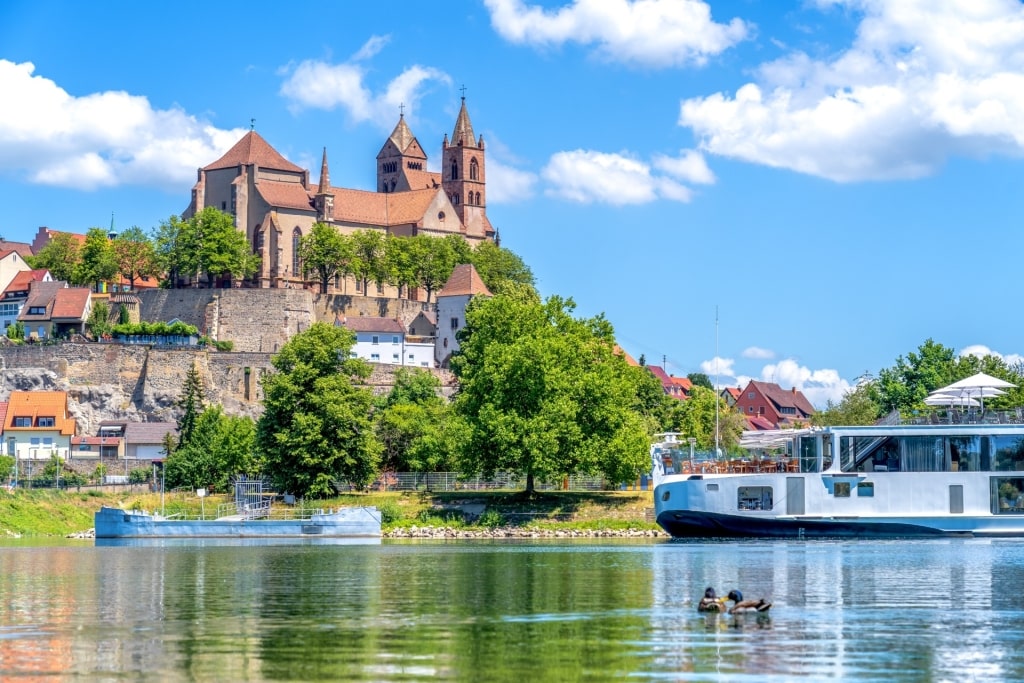
Wandering around the colorful buildings and cobblestoned streets of Breisach, it’s hard to believe that roughly 85 percent of the city was bombed to rubble in World War II. Much like Dresden, the ruined city center was fastidiously rebuilt to resemble its former self. Today, it’s as pretty as can be, an eminently charming city by the Black Forest.
In case the vineyards around the city didn’t tip you off, this is wine country. Few things are more pleasant than sitting outdoors overlooking the Rhine River and sipping a chilled Weißburgunder. The food here is also exceptional, in part since Breisach is a stone’s throw from Alsace. Try the Flammkuchen, a thin, crispy flatbread traditionally topped with creme fraiche and lardons.
For dessert, there’s always Schwarzwälder Kirschtorte, or Black Forest cake. This layered confection of chocolate cake, whipped cream, and cherries is as moreish as it gets. Chocolate shavings on top and Kirsch soaked into the cake layers amp it up a notch.
Cologne
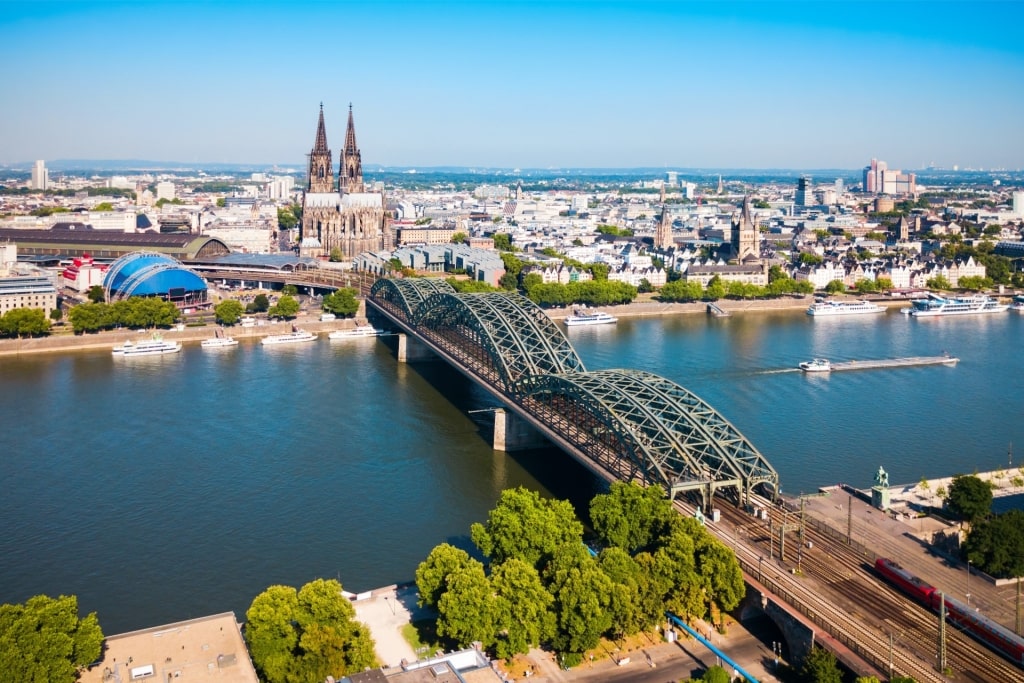
Cologne
Although hardly the largest city in Germany, Cologne is often considered one of the liveliest. The city itself has a population of just over a million inhabitants, but a wealth of cultural spaces. Much of this has to do with the fact that Cologne has been a university town for centuries. The large student population keeps the city’s 60-odd music venues full.
Here, one can catch everything from world-class orchestral performances to minimal techno. There’s also a thriving contemporary art gallery scene, not to mention more than two dozen museums.
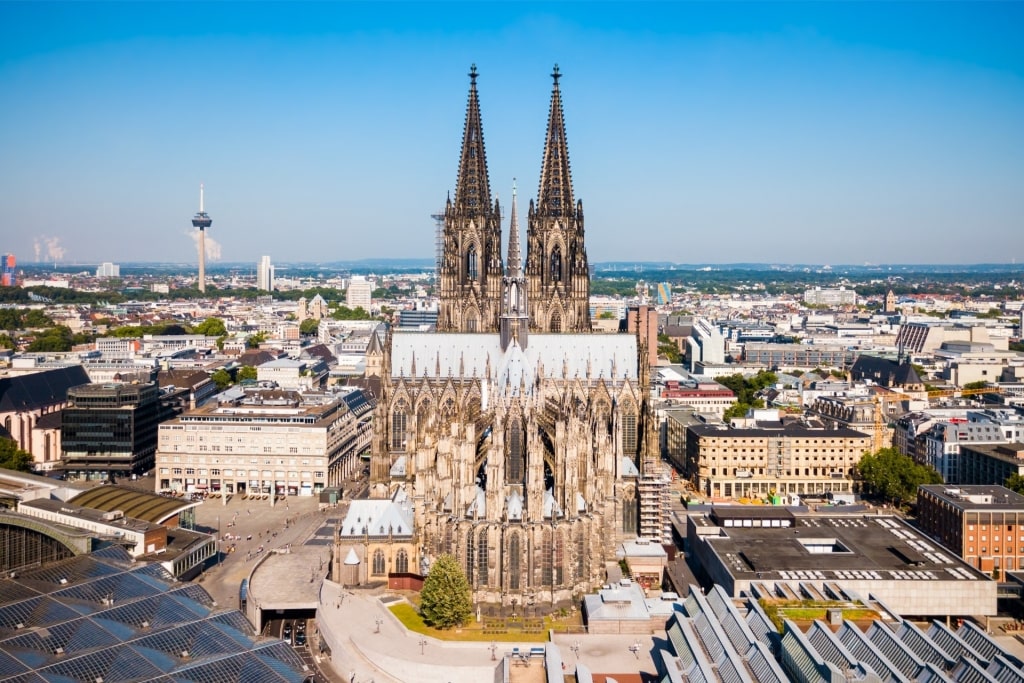
Cologne Cathedral
For visitors, much of Cologne’s allure lies in its architecturally spectacular historic city center. At the heart of it all lies the Kölner Dom, or Cologne Cathedral, one of the famous churches in Germany. Construction on this UNESCO World Heritage Site began back in 1248, although it took centuries to actually complete. Supposedly, the Gothic cathedral houses relics from the Three Magi of the nativity story.
Another unmissable thing to do in Cologne is to sample some of the local gastronomic specialties. In particular, keep an eye out for the whimsically named Himmel un Ääd, or “Heaven and Earth.” The “heaven” here is represented by apples, which are closer to the sky. The “Earth” comes from mashed potatoes. Blood sausage, apple compote, and fried or caramelized onions make for a wonderful sweet-savory contrast. Wash it all down with a Kölsch beer.
Frankfurt
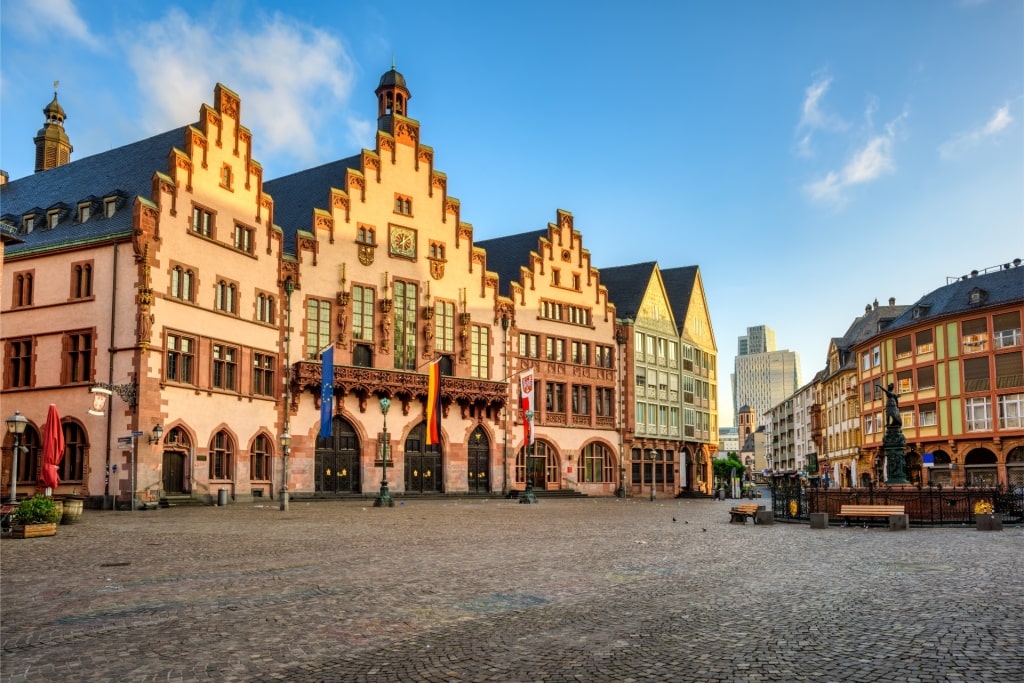
Frankfurt
For years, Frankfurt am Main, as it’s properly known—not to be confused with Frankfurt an der Oder–has been plagued by a reputation for being rather boring and stuffy. Perhaps because it’s the banking center of Germany, locals have often been accused of being a bit uptight, especially in comparison with those from party-loving Cologne. Historically, travelers would pass through the transportation hub en route to other destinations without leaving the airport or central train station.
All that has started to shift in recent years though, thanks to buzzy dining and bar scenes that Frankfurt is known for. There’s also quite a bit to see and do here, including the Städel Museum, a sweeping art museum spanning centuries of works, and the Palm Garden, a lush botanical garden. Start your journey here at Römerplatz, the main city square, then wander from there.
Koblenz
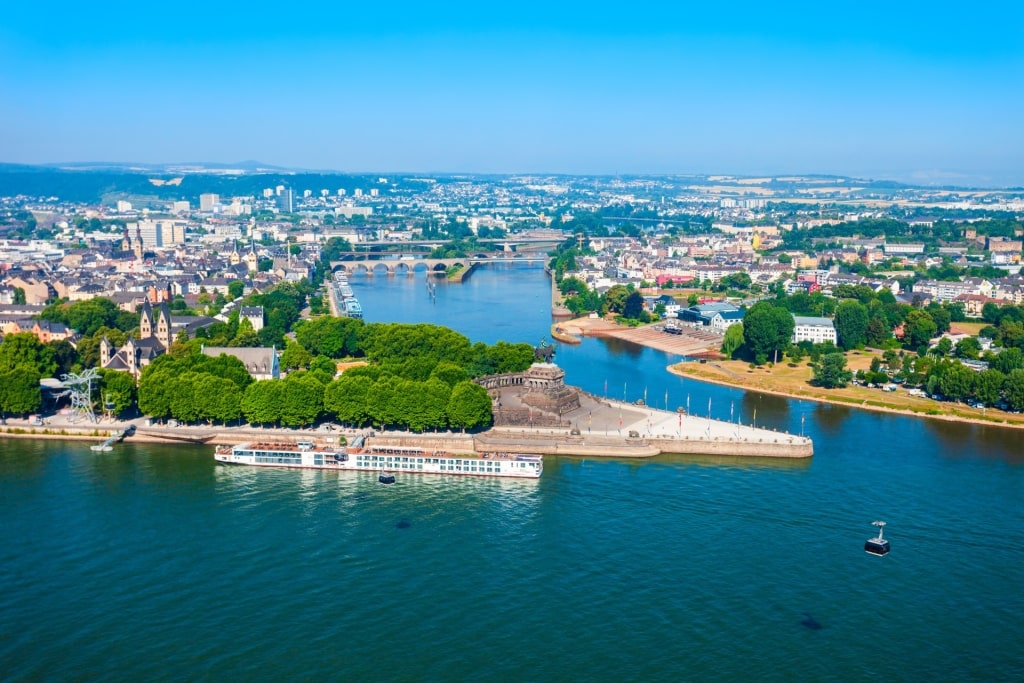
Koblenz
Situated on the Rhine and Moselle rivers, this former stronghold of an order of Teutonic Knights is as pretty as it gets. Visitors can stand at the Deutsches Eck, the so-called “German corner” where the two rivers join. Given its prime location a stone’s throw from the rolling vineyards of the Moselle Valley, it should come as no surprise that this is an excellent place for wine-lovers. The entire Rhineland takes its gastronomy seriously, so Koblenz has plenty of excellent food to accompany that wine.
Sauerbraten, a kind of sweet-sour, slow-cooked pork, is a specialty here, although it’s also found in other parts of the country. To make it, cooks half-pickle the meat in a vinegary marinade with plenty of sugar. In the Rhineland, the accompanying sauce is often thickened with crushed gingerbread cookies.
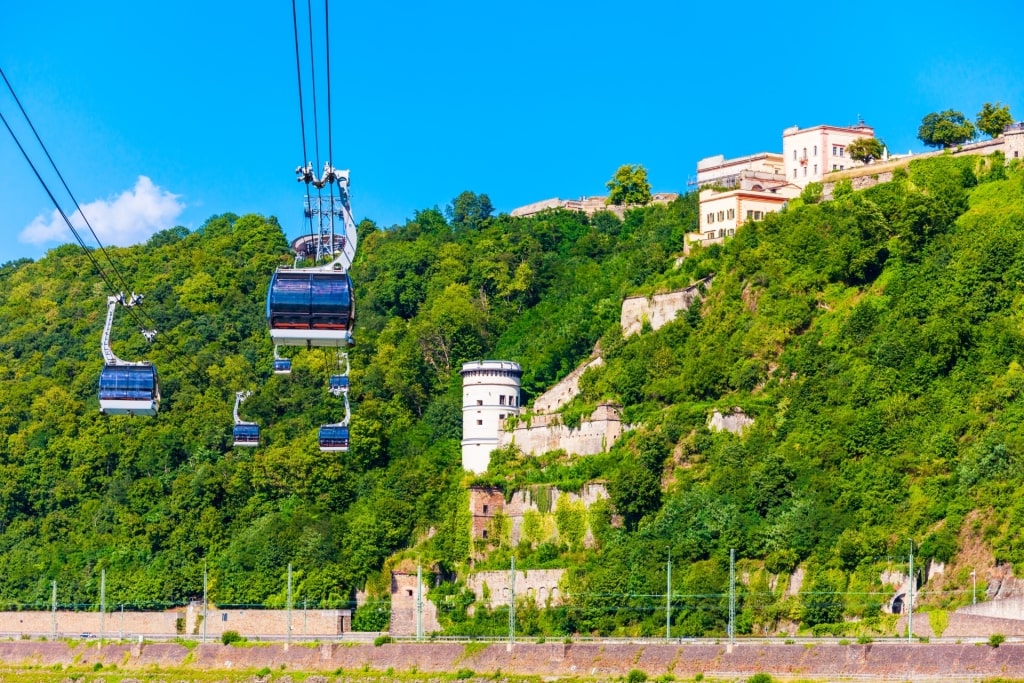
Koblenz Cable Car
While you’re in Koblenz, take the cable car over the river to the colossal Ehrenbreitstein Fortress. The views during the ride are magnificent and the fortress itself is worth exploring.
A fortress has stood here for more than 1,000 years but the last iteration was destroyed by Napoleon’s troops in 1801 and rebuilt by the Prussians. Today, it’s one of the biggest historical fortresses in Europe. Inside, the Koblenz State Museum has sections on archaeology, photography, wine, and history.
Mainz
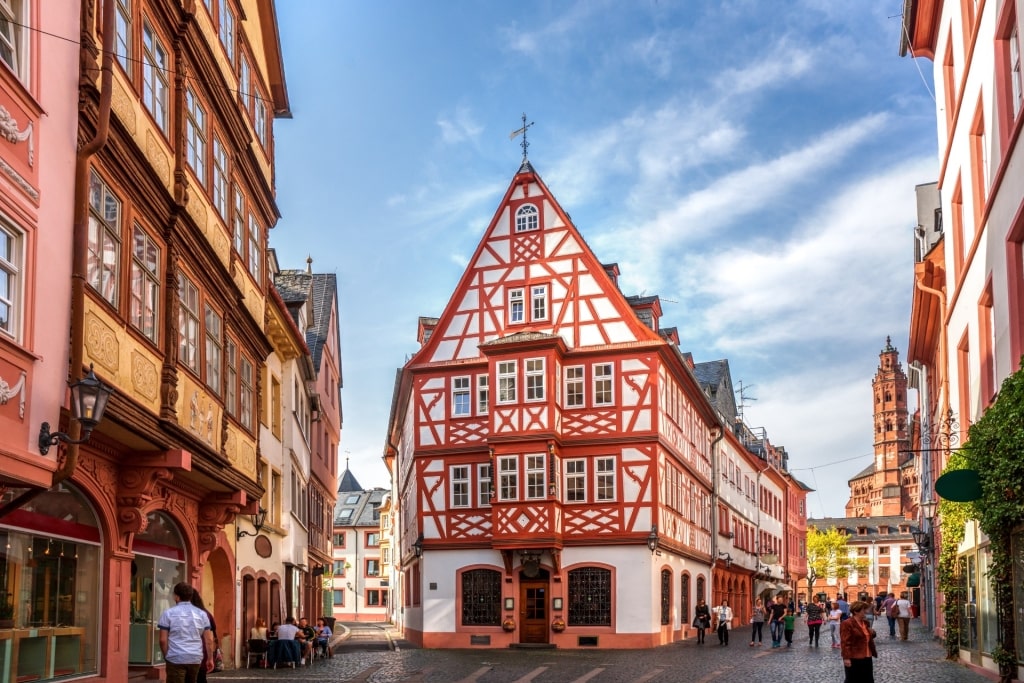
Mainz
History buffs are sure to enjoy their visit to Mainz, a city that has existed on this spot on the Rhine River since ancient Roman times. Roman general Nero Claudius Drusus is responsible for founding what is now Mainz. The remnants of an ancient aqueduct, Roman gate, and other ruins can still be seen to this day. Both the Romano-Germanic Central Museum and the Museum of Ancient Seafaring delve into centuries worth of ancient history.
Visitors should also check out the Gutenberg Museum, a celebration of Johannes Gutenberg, inventor of the printing press, who was born in Mainz. Afterward, be sure to stroll along the scenic Kaiserstraße to the striking main cathedral.
When in Mainz, be sure to try the crisp, white Rheinhessen wines made from grapes within the region. Locals are particularly fond of their “Weck, Worscht un Woi,” a traditional worker’s lunch consisting of a sausage, roll, and a glass of table wine. A chilled glass of dry Riesling or Silvaner makes for the perfect accompaniment.
Nuremberg
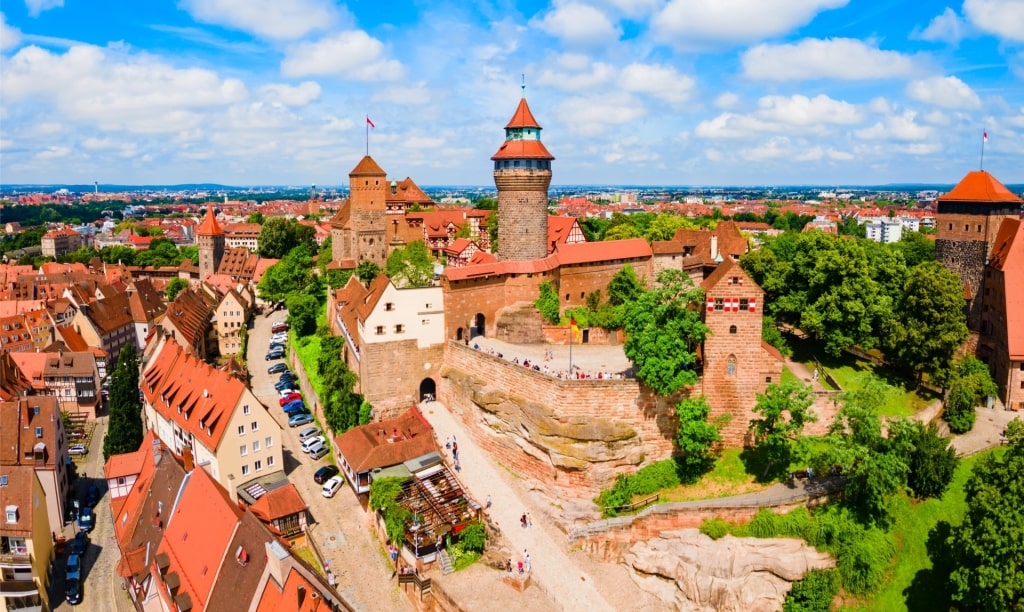
Nuremberg
Spread along the Pegnitz river, this city has a wonderfully atmospheric medieval historic center. The towers and fortified walls of the Imperial Castle of Nuremberg still loom over the old city. Inside, visitors will find impressive Gothic and Romanesque architecture, along with exhibits on the castle’s importance to the Holy Roman Empire.
It’s impossible to speak of Nuremberg without thinking of the Third Reich and the city’s role in both the rise and end of the fascist regime. Although the Nazi Party held rallies in other cities, most notably Munich, the Nuremberg rallies and book burnings left a mark on history. More than a million people participated. The Documentation Center Nazi Party Rally Grounds offers well-organized exhibits on how National Socialism gained power.
After the end of the war, the Nuremberg Palace of Justice carried out trials for war crimes and atrocities. Travelers seeking to learn from this dark chapter of history so that it may never be repeated can visit the courtroom where the Nuremberg Trials took place.
Passau
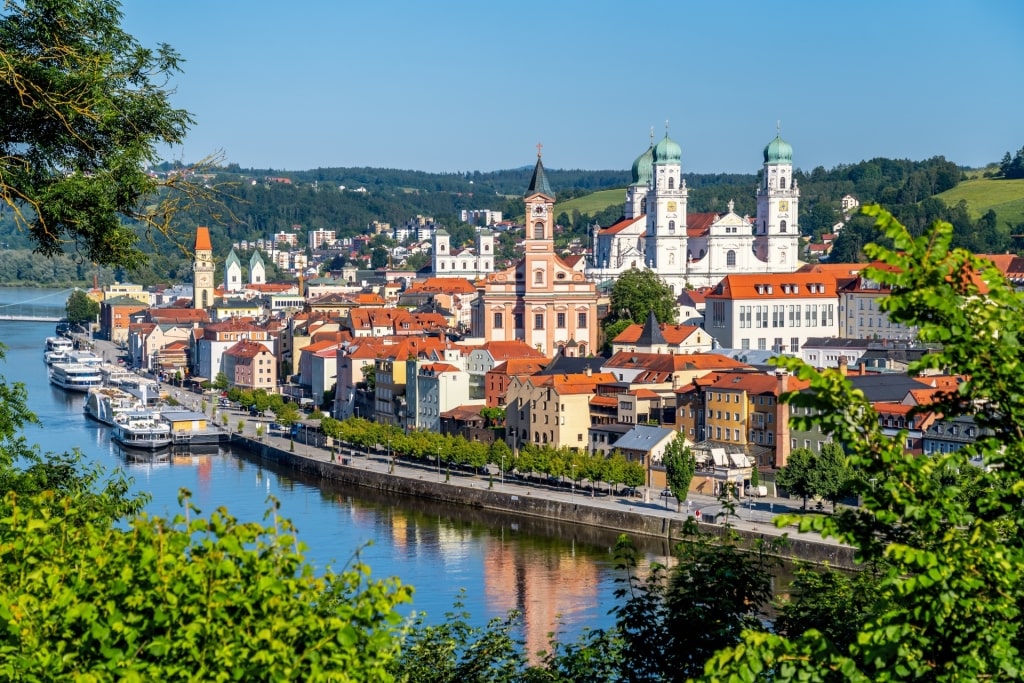
Passau
This picturesque Bavarian city near the Austrian border is sometimes known as the “City of Three Rivers.” The nickname comes from its unique position at the confluence of the mighty Danube, Ilz, and Inn rivers. Because of this strategic location, there has been a settlement here since ancient Roman times.
By far the most famous sight in Passau is the St. Stephen’s Cathedral, a stunning work of Baroque architecture designed by Carlo Lurago. This masterpiece rests on the central Domplatz—literally “Cathedral Square”—in the heart of the old city.
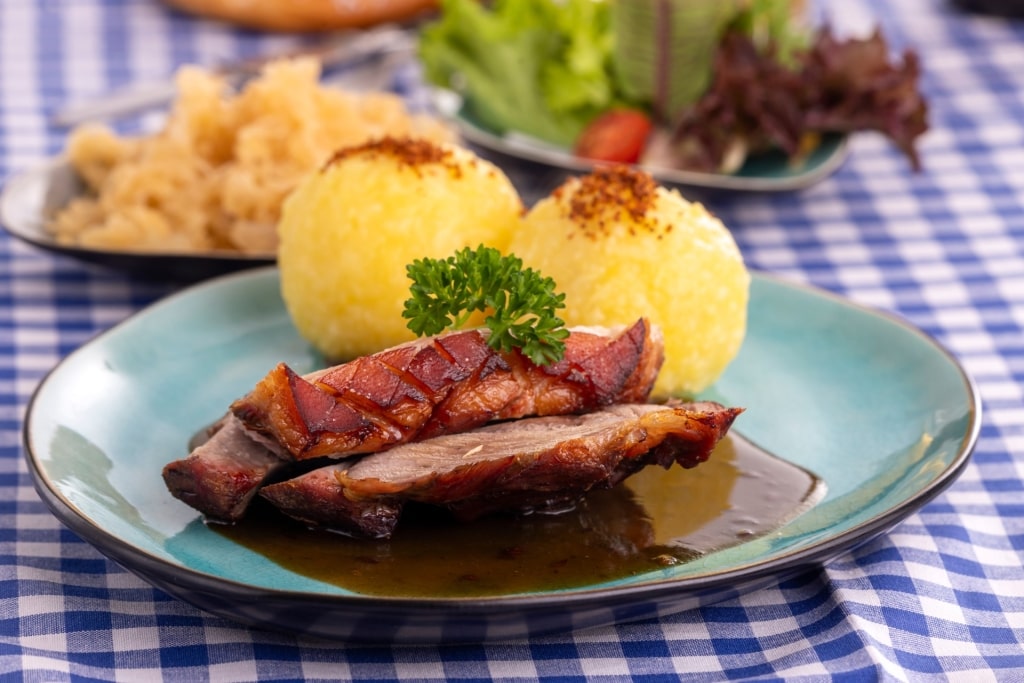
Schweinebraten
Since this is Bavaria, expect hearty specialties such as Schweinebraten, or roast pork, and Semmelknödel. The latter are baseball-sized dumplings invented by thrifty cooks as a way of using up stale bread.
You may also find that your pretzels come accompanied by sweet mustard or obatzda, a creamy spread of Camembert or Brie and softened butter. Paprika, caraway seeds, horseradish, or other seasonings may be added. Supposedly, a Bavarian innkeeper devised the recipe to use up bits of old cheeses in the 1920s and it’s been popular ever since.
Regensburg
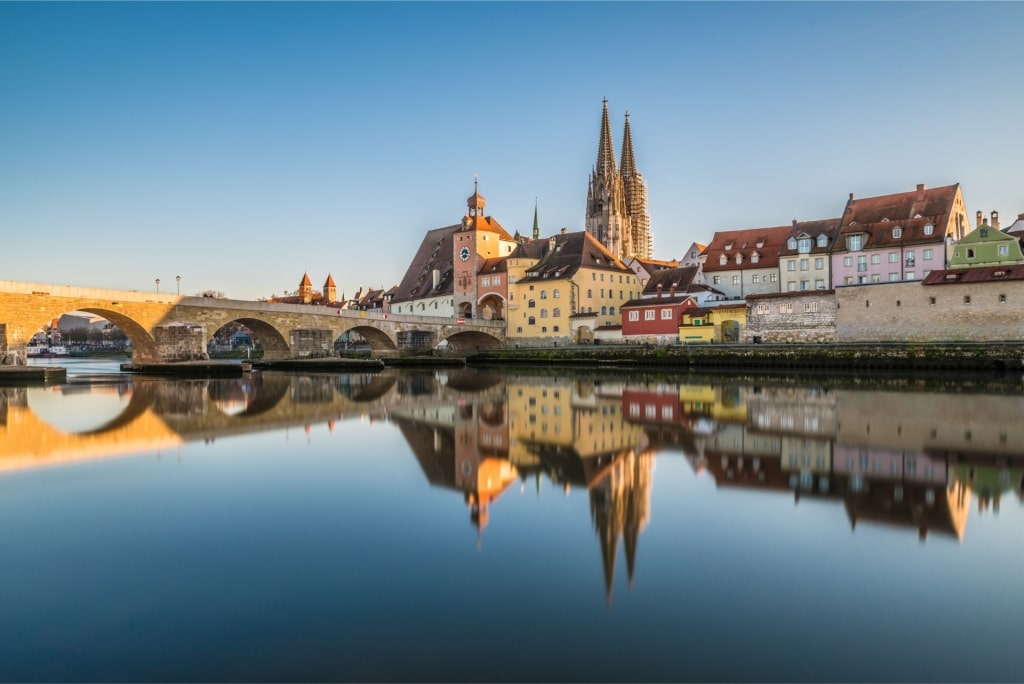
Regensburg
Ever want to pretend that you’re living in the Middle Ages? Welcome to Regensburg, one of the best cities to visit in Germany for medieval architecture.
The entire city center is a UNESCO World Heritage Site. It’s home to some of the best preserved medieval buildings this side of the Alps. Almost 1,500 buildings are protected historical landmarks. During the Middle Ages, Regensburg was both a cultural and financial powerhouse on the Danube. In particular, its craftsmen were renowned for their masterful goldwork.
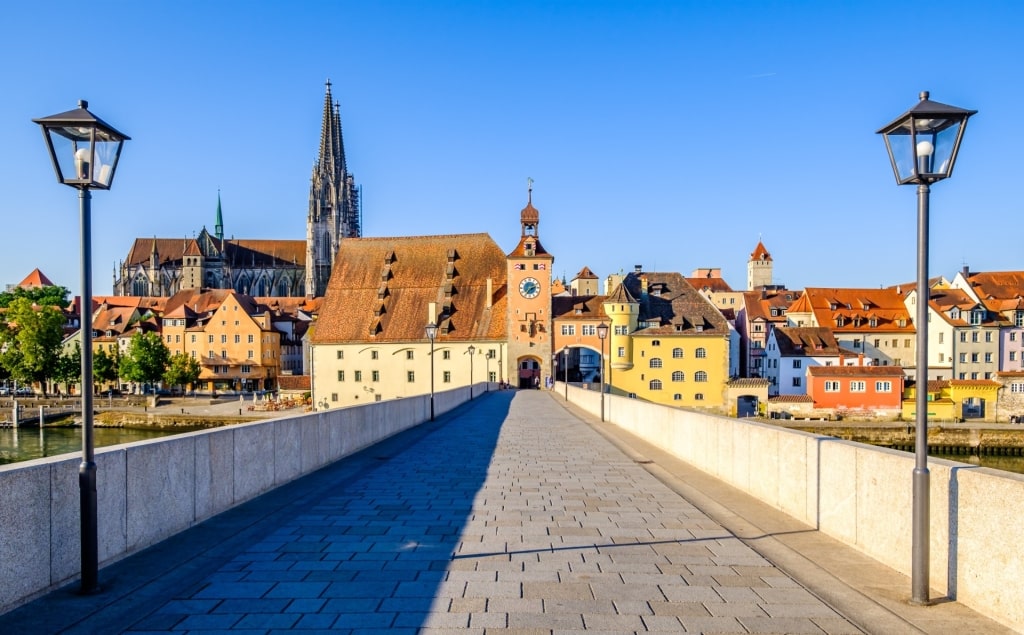
Stone Bridge in Regensburg
Simply walking around the center of Regensburg is lovely. Be sure to check out the Steinerne Brücke, or Stone Bridge, a 12th-century architectural marvel spanning the Danube. The Regensburg Cathedral, which was founded in 1275, is a masterpiece of the Gothic style. Intricate stone carvings decorate its facade and heaven-reaching spires.
Regensburg also has a rather unexpected claim to fame: according to some estimates, it is home to the oldest continuously operating restaurant in the world. Granted, there are several other restaurants that make the same claim in other cities. But a restaurant has been serving food on the site of Historic Sausage Kitchen of Regensburg since the 12th century.
Berlin
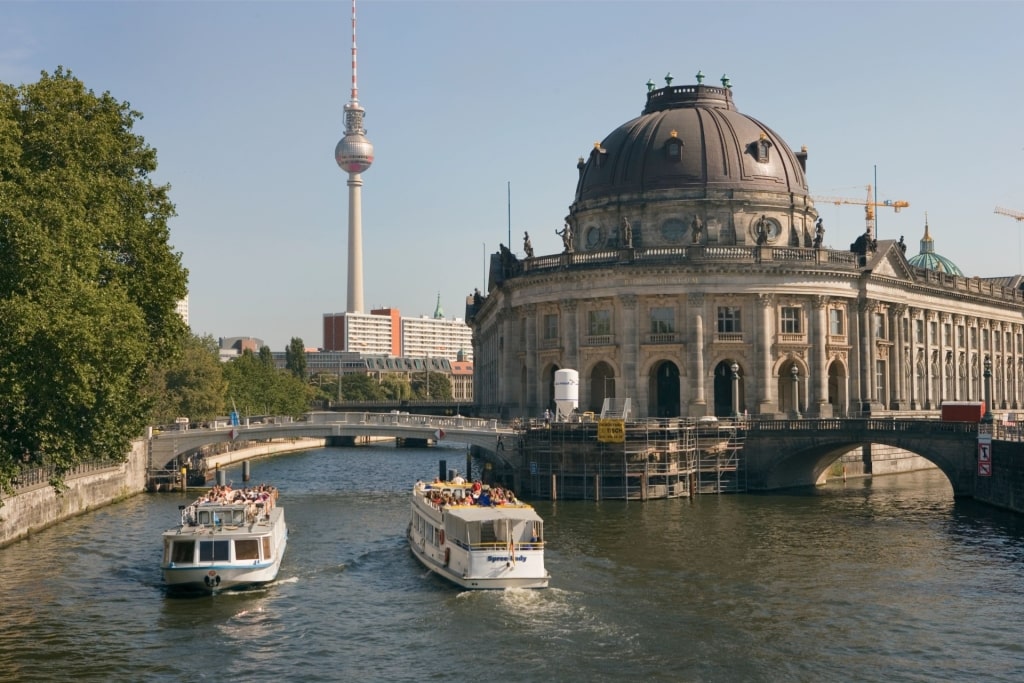
Berlin
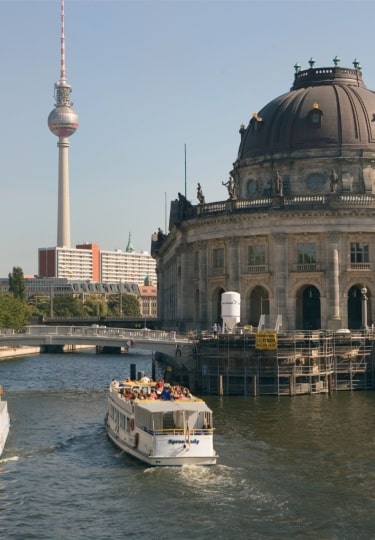
Berlin’s former mayor Klaus Wowereit famously coined the phrase that the city was “poor, but sexy.” These days, that’s only half true. Thanks to a buzzy start-up scene—and rising rents—the German capital is more flush than it once was, but retains its aura of gritty cool. Much has been said about the nightlife scene here, which often runs throughout the daytime as well. It’s true that you can still find thunderous techno at any hour, but that’s only one piece of Berlin’s puzzle.
Visions of graffiti-covered formerly industrial spaces overlook the fact that Berlin is an incredibly green city. Tempelhofer Feld, on the site of the city’s former airport landing strip, is one of the largest urban parks in the world. In Mauerpark, you can check out the weekend flea market or watch artists spray paint murals on a section of the Berlin Wall in real time. Tiergarten, which was once an exclusive royal hunting ground, is also a wonderful place in which to get lost.
FAQs
What’s the prettiest city to visit in Germany?
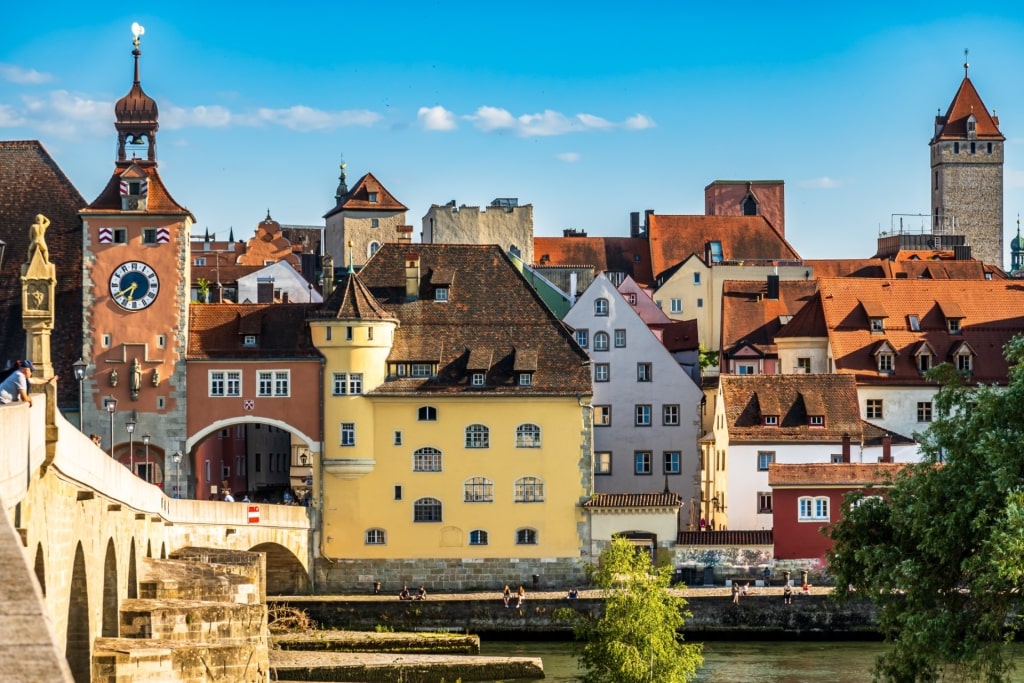
Regensburg
There’s really no right answer to that question. Regensburg is beautiful, as are the historic centers of Cologne and Munich. Berlin is rarely considered the most aesthetically appealing, but I would argue that for Bauhaus-buffs and street art lovers, it is more interesting.
Which is best for first-timers?
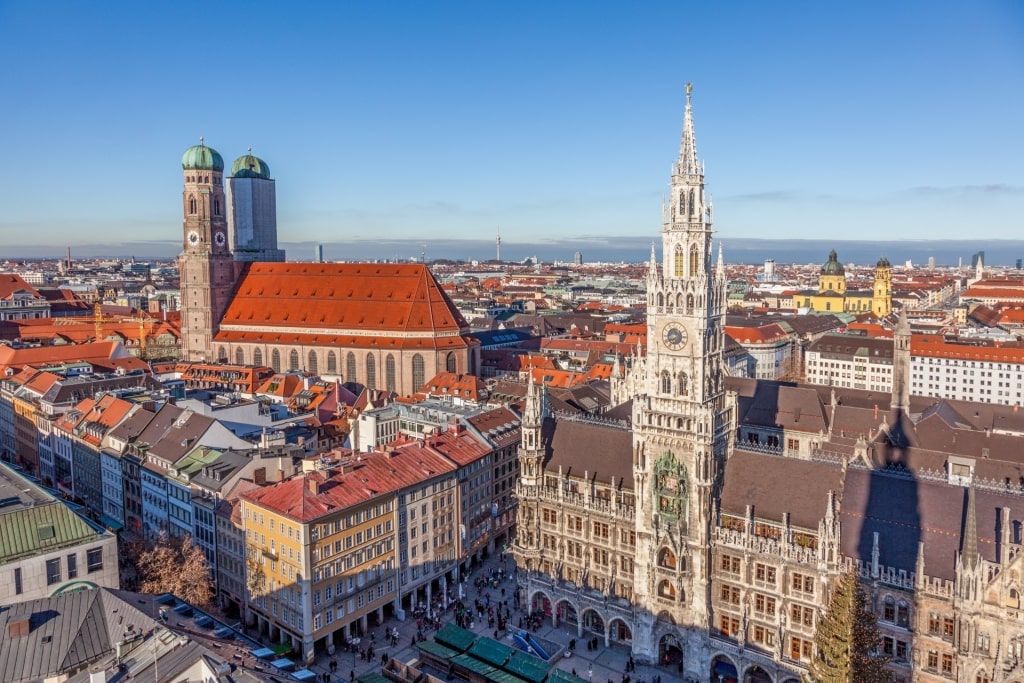
Marienplatz in Munich
That depends on you! In general, thanks to its top-notch infrastructure, Germany is a pretty easy destination to navigate. Munich, with its excellent public transportation, walkable center, and multitude of green spaces, is easy to like and has lots to see and do. It’s one of the best cities in Germany to visit for a combination of urban buzz and outdoor living.
Which city is most walkable?
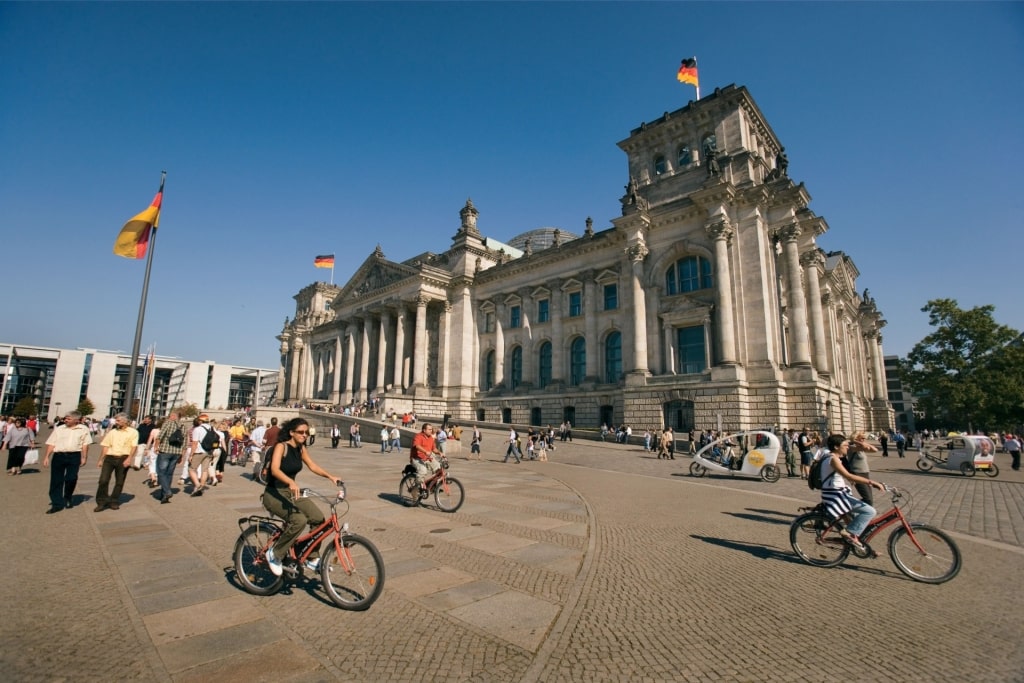
Berlin
All of these cities are pretty walkable. In particular, Munich and Cologne have approachable historic centers that are easy to tackle on foot. Smaller cities such as Regensburg are also ideal for travelers. Berlin, while still walkable, is much more spread out and easier to approach with a bicycle.

Berlin
Discover all that Germany has to offer on one of Celebrity’s river cruises. Browse itineraries and book your European adventure today.