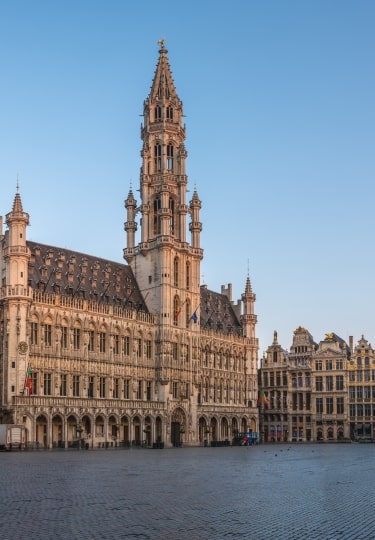
Grand Place Brussels—the historic central square of the Belgian capital—has the rare ability to stop people mid-stride. Step into the square, and suddenly the buildings around you seem to compete for attention. The Gothic Town Hall rises above the rooftops, gilded details catch the light, and elaborate guildhalls crowd the edges of the cobbled square. This is the Grand Place, the historic heart of Brussels and a UNESCO World Heritage Site that brings centuries of the city’s story into one remarkable destination.
Also known as Grote Markt in Dutch and Grand Square in English, the Grand Place has been a marketplace, a center of civic life, and a stage for some of Brussels’ biggest celebrations. For travelers visiting the Belgian capital on a river cruise, it is an especially rewarding introduction to the city. The city’s historical center is a short walk from the ship, and you take it in by standing directly in the middle of it, head tilted back, camera out.
Grand Place: The Historic Heart of Brussels
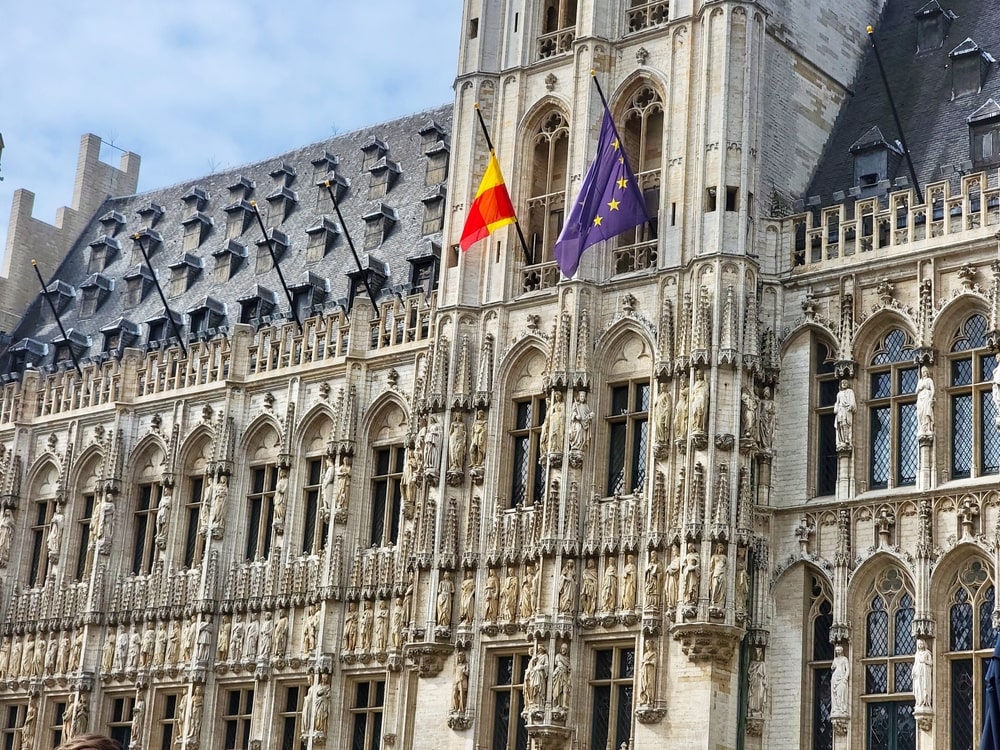
Intricate Brabantine Gothic carvings and vibrant flags adorn the facade of Brussels Town Hall on the Grand Place.
Grand Place is the kind of square that makes an ordinary city plaza seem rather underdressed. Set in Brussels’ historic center, its cobbles are surrounded by an extraordinary collection of public buildings and former guildhalls, each with its own façade, gable, sculpture, emblem, or flourish.
The square began as a medieval marketplace and gradually became one of Brussels’ most important commercial and civic spaces. Merchants came here to trade, guilds established their headquarters around the square, and the city’s political life unfolded nearby. Centuries later, Brussels remains a compelling stop and one of Europe’s top river cruise destinations, with Grand Place at the heart of the experience. As you wander, save time to sample some of Europe’s best food, from handmade chocolates to classic Belgian specialties.
Start with the three landmarks that immediately grab your attention:
- Town Hall/Hôtel de Ville: The Gothic showpiece, topped by a tall tower and a statue of St. Michael.
- King’s House/Maison du Roi: Facing Town Hall, this ornate building houses the Brussels City Museum. Its Dutch name, Broodhuis, means “Bread Hall,” a nod to its history as a marketplace building.
- Guildhalls: The former headquarters of Brussels’ trade corporations surround the square with a wonderfully eccentric collection of façades, symbols, sculptures, and gilded decoration.
Spend an hour or two simply walking the perimeter, finding details you missed on the first lap. If you visit the museum or arrive during a major event, give yourself longer. You can also explore the surrounding neighborhoods or plan a day trip from Brussels to cities like Ghent to explore its Gravensteen castle, or Antwerp, to view the Scheldt River from its Het Steen medieval fortress.
Keep Exploring: A Short Walk Opens Up More of Historic Brussels
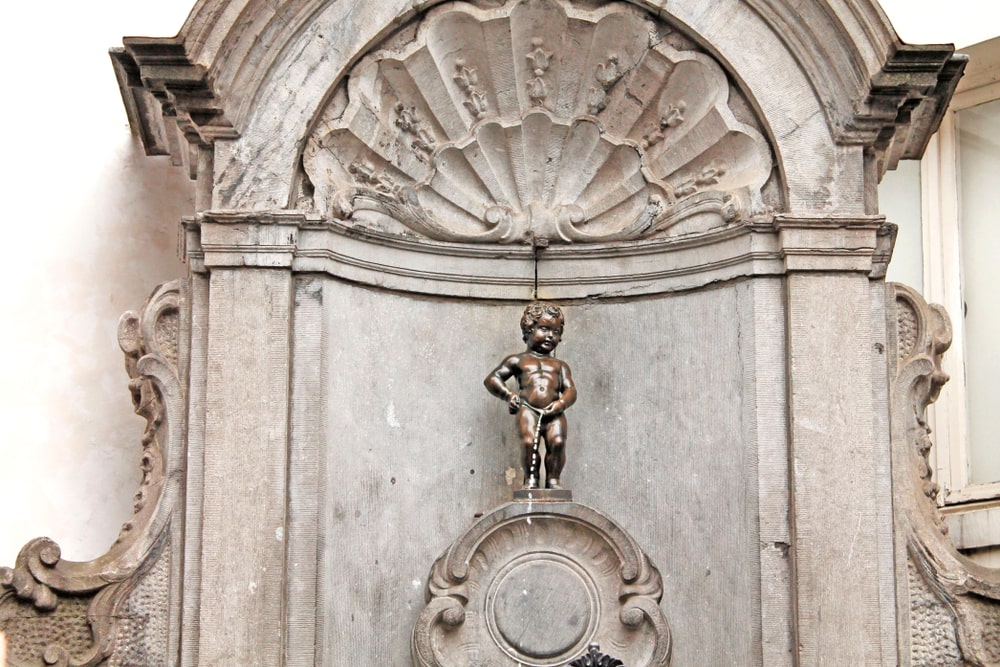
Brussels’ famous Manneken Pis fountain stands nestled within its ornate stone niche in the heart of the city.
The best part of Grand Place may be what happens after you leave. You’re already in the heart of Brussels, so many of the city’s best-known sights are within an easy walk.
- Galeries Royales Saint-Hubert: Step into this elegant, glass-roofed shopping arcade that helps Brussels earn the title of one of Europe’s best shopping cities.
- Manneken Pis: Meet the famously tiny bronze fountain sculpture of a little boy urinating into a basin.
- Chocolate shops and cafés: Sample pralines, browse bean-to-bar boutiques, or settle in with something warm and chocolatey—what Belgium is known for.
- Historic streets: Wander beyond the square into the Lower Town, where the narrow lanes like Rue des Harengs lead to cafés and glimpses of everyday Brussels.
From here, you can easily turn Grand Place into the starting point for an afternoon in one of Europe’s most romantic cities.
Explore the History and Architecture of the Grand Place
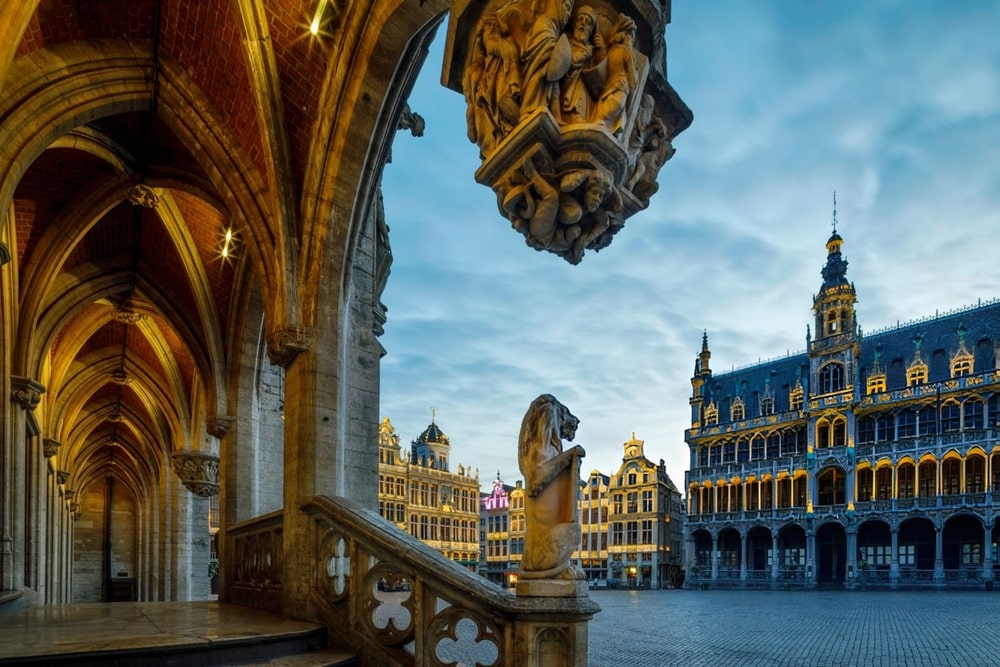
Ornate stone archways and a carved lion statue frame a view of Brussels’ Grand Place, surrounded by historic buildings dating from the 15th through the 17th centuries.
The history of Grand Place is written directly into its buildings.
The square grew from a medieval marketplace into an important commercial and political center. Then came one of the most destructive moments in its story. In August 1695, French forces under Louis XIV bombarded the city, and fire swallowed most of the buildings around the square. Only the Town Hall’s façade and tower survived the fire, and the rebuilding happened quickly, in less than five years.
The guilds reconstructed their headquarters, and new façades rose around the square in the late 17th century. Gothic elements from earlier buildings stood alongside the Baroque style, favored by the rebuilders. This combination explains the square’s seemingly split personality.
The Architecture Behind the Grand Place’s UNESCO Status
UNESCO inscribed Grand Place as a World Heritage Site in 1998, but no single building earned the status.
The square in its entirety is recognized as an exceptional architectural ensemble that reflects Brussels’ importance as a European commercial and political center. What makes the place striking is seeing them together. Civic architecture, guildhalls, a mix of styles, and the square’s historic role show how important Brussels was as a European commercial and political center. One detail that may surprise—unlike many celebrated historic European squares, it has no church or other place of worship. Its identity is rooted in commerce and civic life.
Stand in the middle and take a slow look around. Start at street level, then follow the façades upward. The Gothic Town Hall feels formal and vertical, while the surrounding guildhalls pile on decorative details. The longer you look, the more the square gives you.
Grand Place Shines During Brussels’ Biggest Events
Grand Place remains one of Brussels’ great public spaces, and several major events completely change its appearance.
The Flower Carpet: Turning the Square Into Temporary Art
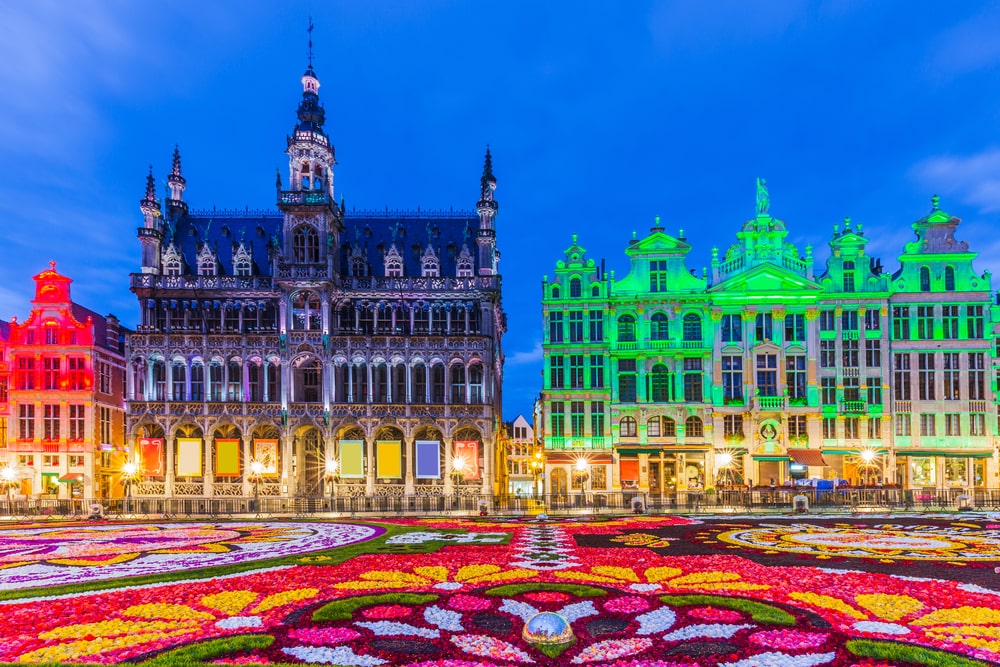
Vibrant colors illuminate the Maison du Roi and surrounding guildhalls as the famous Flower Carpet transforms Brussels’ Grand Place into a living mosaic.
Every two years around mid-August, flowers take over Grand Place for the famous Flower Carpet. Thousands of blooms blanket the cobblestones in a temporary, large-scale floral artwork.
The installation lasts only a few days, so timing matters. Check the official event calendar before planning a visit if seeing the Flower Carpet is on your wish list.
Ommegang: Honoring Brussels’ Historic Traditions
Ommegang brings centuries of Brussels tradition into the modern city. The historical procession and cultural festival traces its roots to the 14th century, when it began as a religious event honoring Our Lady of Sablon. Today, historical pageantry, costumes, performances, and processions bring that long history to life.
Winter Wonders: A Celebration of Light, Sound, and Seasonal Atmosphere
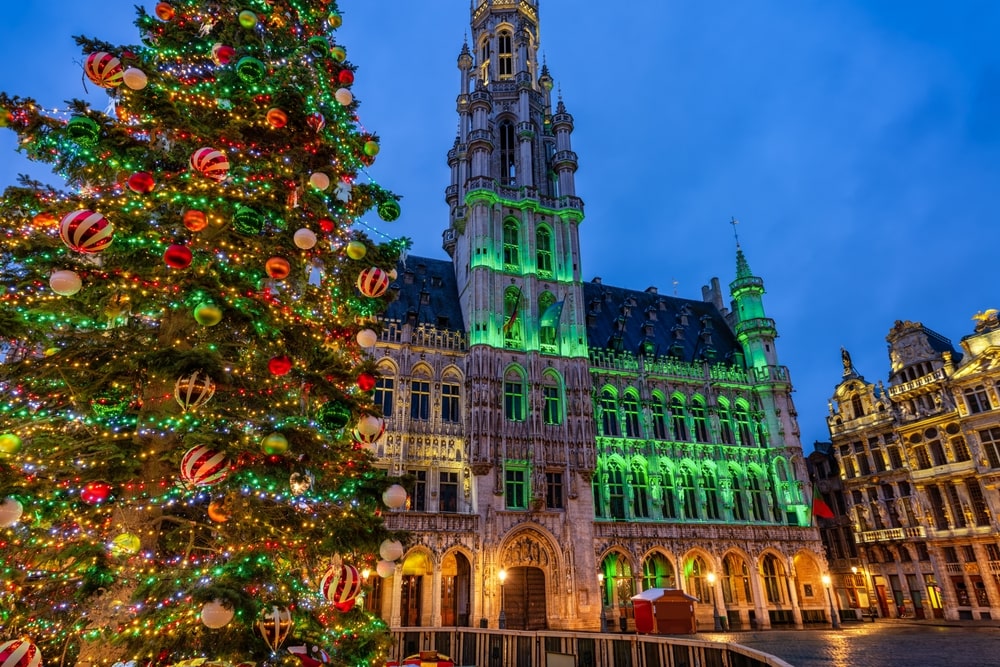
A towering Christmas tree adorned with sparkling lights illuminates Brussels’ Grand Place, standing against the ornate Gothic façade of the historic City Hall in Belgium.
During Winter Wonders, Grand Place glows with seasonal lighting, a Christmas tree, and sound-and-light programming. The ornate façades take on a new character after dark, making an evening visit particularly festive.
Grand Place: A Captivating Highlight of a Brussels River Cruise
A river cruise to Brussels is a smart way to experience the city. Unpack once, explore Brussels’ historic sites and local culture by day, and, if you’re travelling by river cruise, you’ll wake up somewhere new tomorrow.
Make Grand Place your first stop to experience Brussels’ story firsthand. Admire centuries-old architecture, duck into a chocolate shop, wander medieval streets, and watch the city buzz around you.
On a European river cruise, Brussels adds a distinctive cultural stop to a journey through the continent’s historic cities and scenic waterways. Sailing the river with Celebrity River Cruises℠, you can continue your trip beyond the sights on shore.
From leisurely meals and drinks on board to daily shore excursions, a river cruise includes plenty of ways to savor the journey, whether you’re sailing the Rhine River or the Danube.
How To Make the Most of Your Time at Grand Place
You don’t need a complicated plan for Grand Place. Some planning before your river cruise can make your visit even better:
- Go early for quieter photographs: Morning light flatters the façades while the square is calm.
- Return after dark: Lighting changes the details and gives the square an entirely different atmosphere.
- Look above street level: Gables, statues, guild emblems, and gilded details reward anyone willing to look up.
- Allow one to two hours—or more: Enough time for a full loop and photographs. Add time if you want to visit the Brussels City Museum.
- Check the event calendar: Flower Carpet, Ommegang, Winter Wonders, concerts, and other programming can dramatically change your photo ops.
- Wear practical footwear: Cobblestones are charming but unforgiving, so comfortable walking shoes are a sensible choice.
- Build in nearby sights: Use the square as your anchor point, then walk toward the Galeries Royales Saint-Hubert, Manneken Pis, and the surrounding Lower Town.
- Plan around your river cruise schedule: Check how much time you have in Brussels and put Grand Place first.
- Consider a pre- or post-cruise stay: Extend your trip with a Before and After Stays package in Amsterdam, roughly two hours away by train.
Booking a Before and After Stays package is one of the best ways to immerse yourself even further in the destination. Not only does it include premium or ultra-premium hotel accommodations in the heart of each city, but guests also receive daily breakfast, transfers to/from their cruise ship, and one excursion per day—led by a Destination Insider℠ or Local Storyteller℠. They’ll take you where the guidebooks can’t, helping you understand the culture like only a local can.
FAQs About Grand Place, Brussels
What is the Grand Place in Brussels?
Grand Place is Brussels’ historic central square, also known as Grote Markt or Grand Square. Major landmarks include Brussels Town Hall, the King’s House, former guildhalls, and other historic buildings.
Is the Grand Place in Brussels worth visiting?
Yes. First-time visitors get major landmarks, history, and architecture in one place.
Why is the Grand Place in Brussels famous?
Grand Place is famous for its remarkable architectural ensemble, UNESCO World Heritage status, and the late 17th-century rebuilding that followed the 1695 bombardment of Brussels.
Why is Grand Place a UNESCO World Heritage Site?
UNESCO recognizes Grand Place as a World Heritage Site because its architecture and history illustrate Brussels’ importance as a major European commercial and civic center.
What are the main landmarks around Grand Place?
The main landmarks include Brussels Town Hall/Hôtel de Ville, the King’s House/Maison du Roi, the Brussels City Museum, and the guildhalls.
What is the history behind the Grand Place in Brussels?
Grand Place began as a medieval market before becoming an important commercial and civic center. During the 1695 bombardment of Brussels, much of it was destroyed, then rebuilt in the late 17th century, and designated a UNESCO World Heritage Site in 1998 for its exceptional architectural and mercantile ensemble.
From River to Radiance: Discover Grand Place, the Heart of Brussels
Grand Place is not only the historic heart of Brussels but also a lively, modern public square. Plan your visit around events like Flower Carpet, Ommegang, or Winter Wonders, to experience the history and culture that make Brussels unique.
Arriving by river puts the square and the city’s history within easy reach, making the next step simple—explore river cruises to Brussels, Belgium, for a unique glimpse into European history.