A Budapest food tour is like a culinary treasure map for any kind of diner. You’ll find Michelin-starred restaurants offering multi-course tasting menus, historic eateries offering the best of traditional Hungarian cooking, and cozy taverns serving up homestyle favorites. Then, there are food markets and street kiosks that will lure you with the smell of a freshly baked chimney cake.
If you’re wondering what to eat in Budapest given all the city has to offer, here’s a guide of the most iconic dishes in the Hungarian capital, including a rich array of desserts born from the city’s thriving café culture.
Gulyás
Gulyás
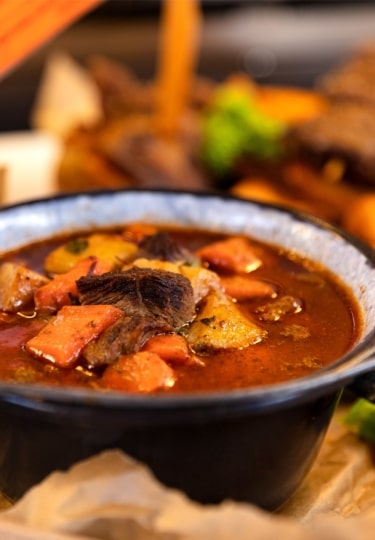
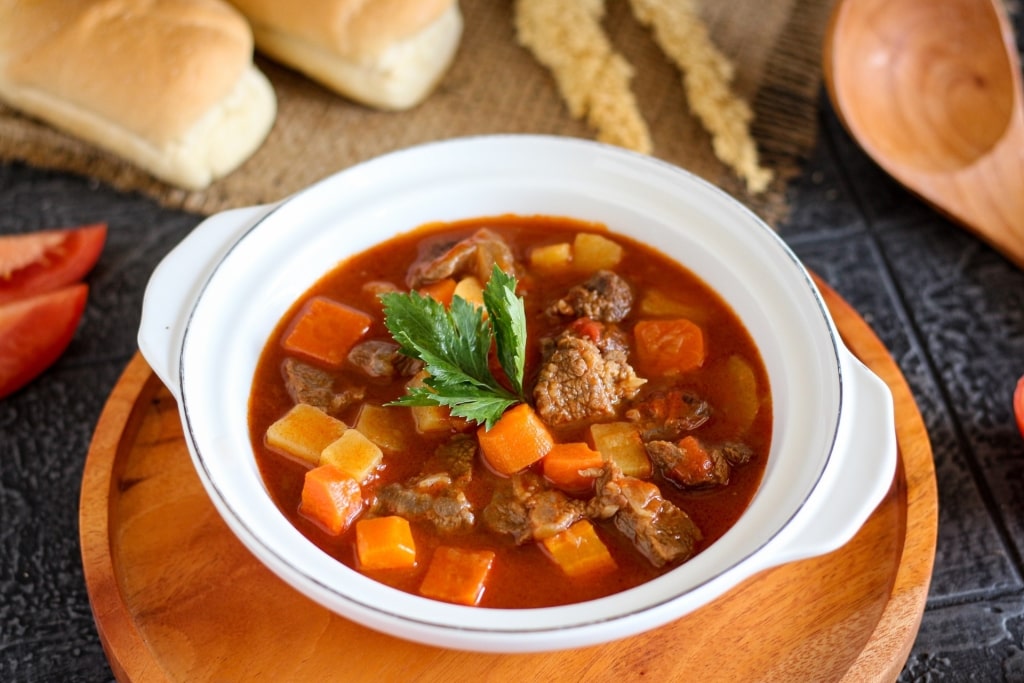
Also known as goulash, this rustic soup is perhaps the best known dish in Hungarian cuisine. The broth, crimson from paprika, comes replete with cubed beef, potatoes, onions, and carrots. The soup is simmered with caraway seeds and can be made heartier by small, pinched noodles called csipetke.
The name Gulyás originated from the herding culture of the Great Hungarian Plain, where cattlemen traveled long distances and cooked goulash over open-fire cauldrons as far back as the Middle Ages. The soup kept the herdsmen warm and was easy and flavorful to prepare, and has become a symbol of Hungary’s pastoral history, though today it is ubiquitous in restaurants, inns, and home kitchens.
Paprikás Csirke
Paprikás Csirke
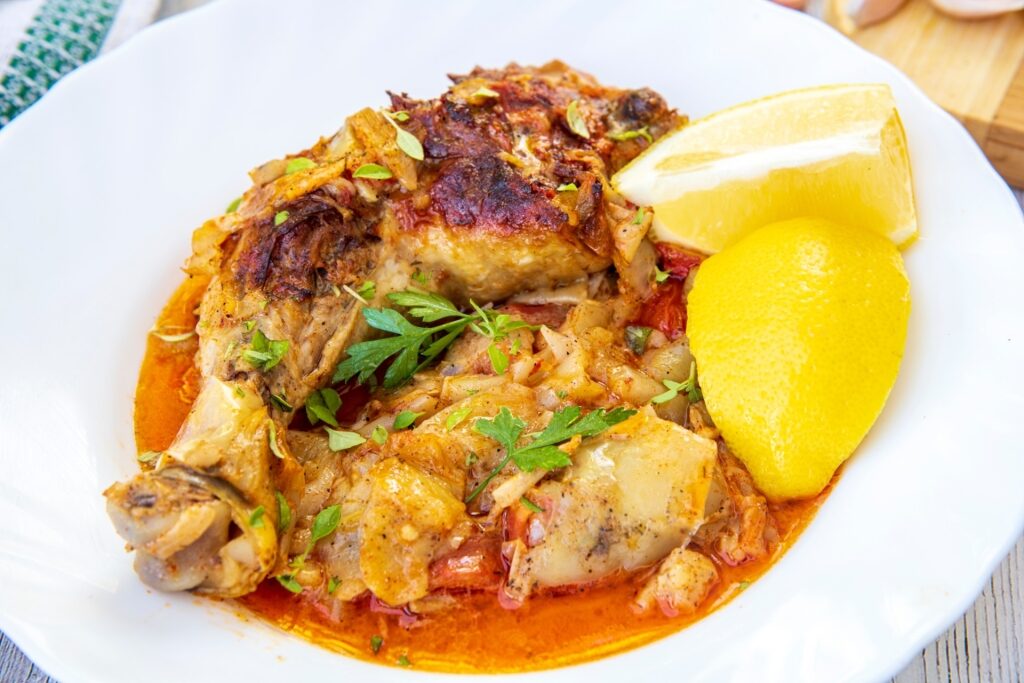
Chicken paprikash is one of Hungarian cuisine’s unique offerings. Paprikash refers to a creamy, paprika-laden stew that most traditionally features chicken, but can come in other meat varieties. The meat is browned, then cooked with onion, garlic, tomatoes, and thickened with sour cream for a silky finish.
Spoon the golden sauce over a side of nokedli, small noodle dumplings that will usually come buttered and hot with the paprikash. This is a dish where paprika as an ingredient truly shines. Notice whether it’s on the sweeter or hotter side, as paprika varieties can carry different notes, and savor the velvety, spiced flavor it gives this celebrated dish.
Nokedli
Nokedli
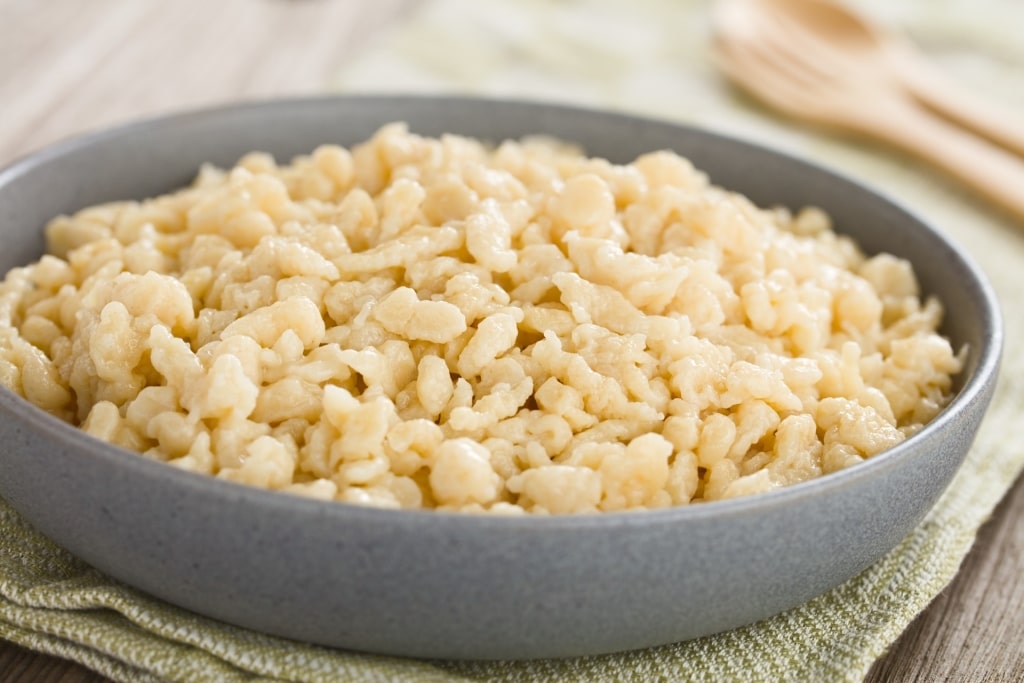
Nokedli deserve some attention on their own, as they are a beloved noodle dish similar to German spätzle and among the most popular Budapest food items for visitors of all ages. Think buttered noodles, except the noodles are small, chewy dumplings made from eggs, salt, flour, water, and oil, boiled to pillowy perfection.
If in doubt, order nokedli as your main starch to accompany any soups or stews: the dumplings are perfect for soaking up the flavors of rich sauces.
Túrós Batyu
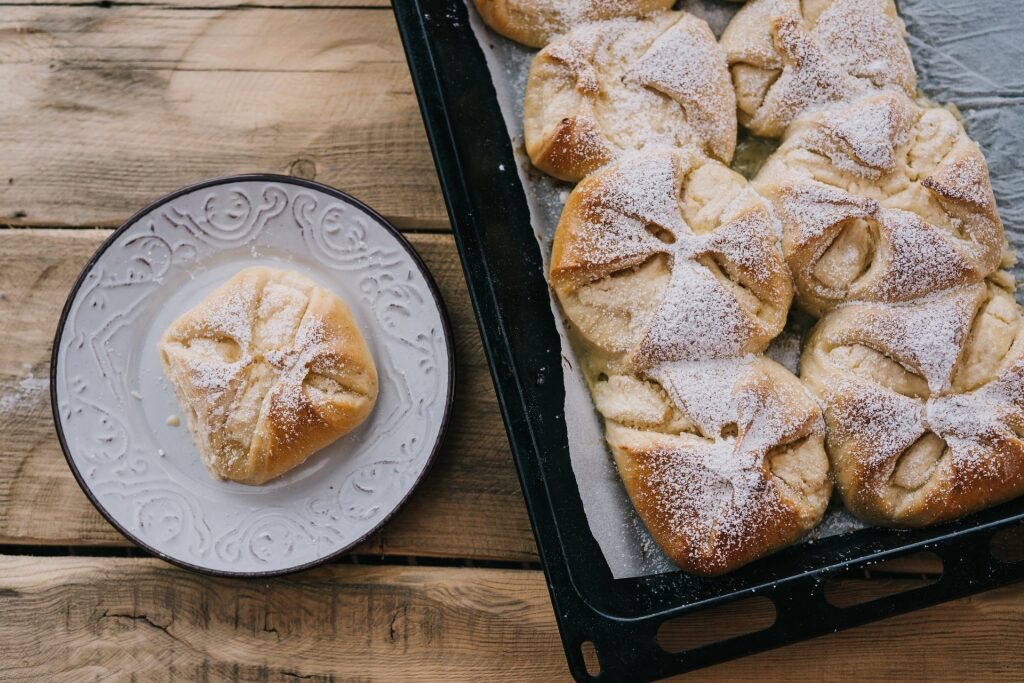
Túrós Batyu
If you’re pondering what to eat in Budapest to start out your day, look no further than Túrós Batyu, a classic Hungarian breakfast staple of curd cheese-filled pastry. The small parcel is filled with a mixture of farmer’s cheese, eggs, semolina, lemon zest, and sometimes raisins or sultanas.
Kolbász
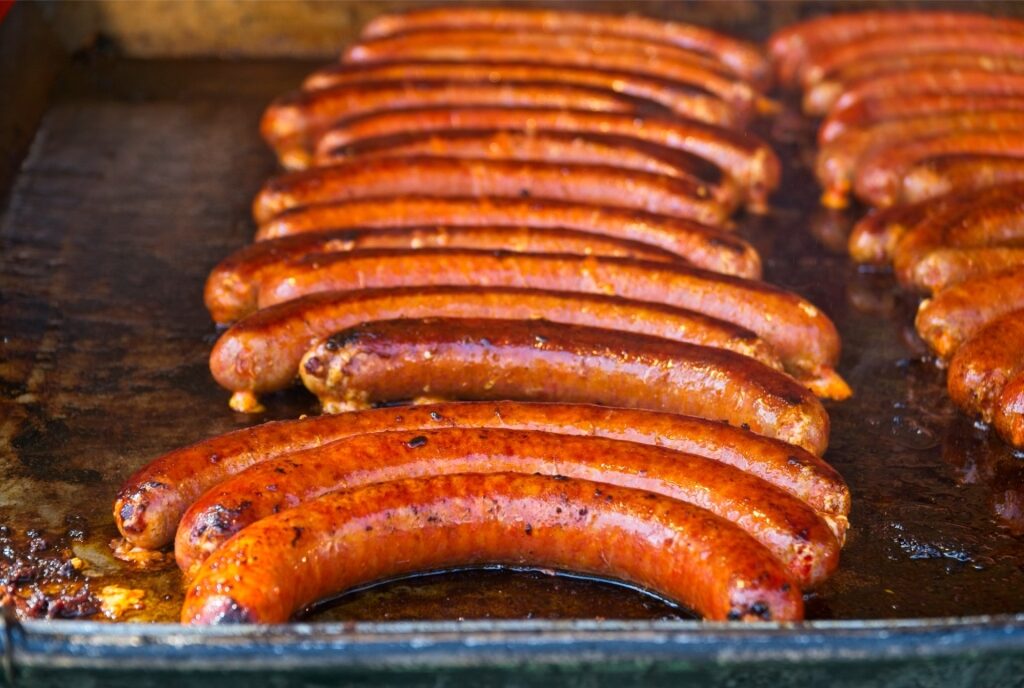
Kolbász
A traditional Hungarian smoked sausage seasoned with both hot and sweet paprika, Kolbász is a bright red, rustic sausage that is first cold-smoked for 12 hours, then air dried. Ground pork, pork belly, garlic, and paprika are mixed with caraway seeds and pepper to give the sausage its rich, smoky flavor.
Kolbász comes with many regional variations, some with protected geographical indication to honor culinary heritage: Gyulai sausage, from the town of Gyula, is made with bacon fat, slow-cooked, and smoked with beech wood, while Csabai sausage is spicy and heavy on the paprika.
Pörkölt
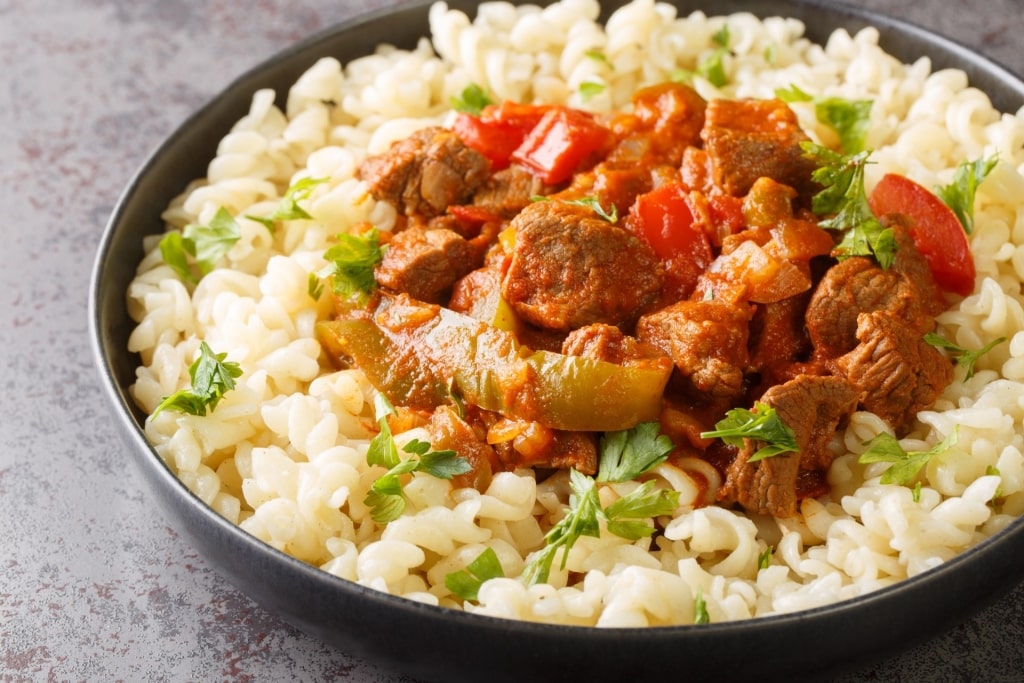
Pörkölt
If you’re wondering what to eat in Budapest and are craving a savory, rich, nourishing stew, pörkölt is the dish for you. Thicker and more concentrated than goulash, this meat stew is usually made with beef or pork, and a base of onion rendered in lard. Green peppers, tomatoes, and a dash of paprika add a hint of brightness.
Pörkölt originated as a peasant dish from the farm laborers and herdsmen, meant to sustain energy for a long day of work starting the next day at dawn. Served with noodles, potatoes, or a slab of bread, pörkölt can also vary depending on the region: pork pörkölt dominates in western Hungary, while variants with more spice and cured sausages are common in the northeast.
Libamáj
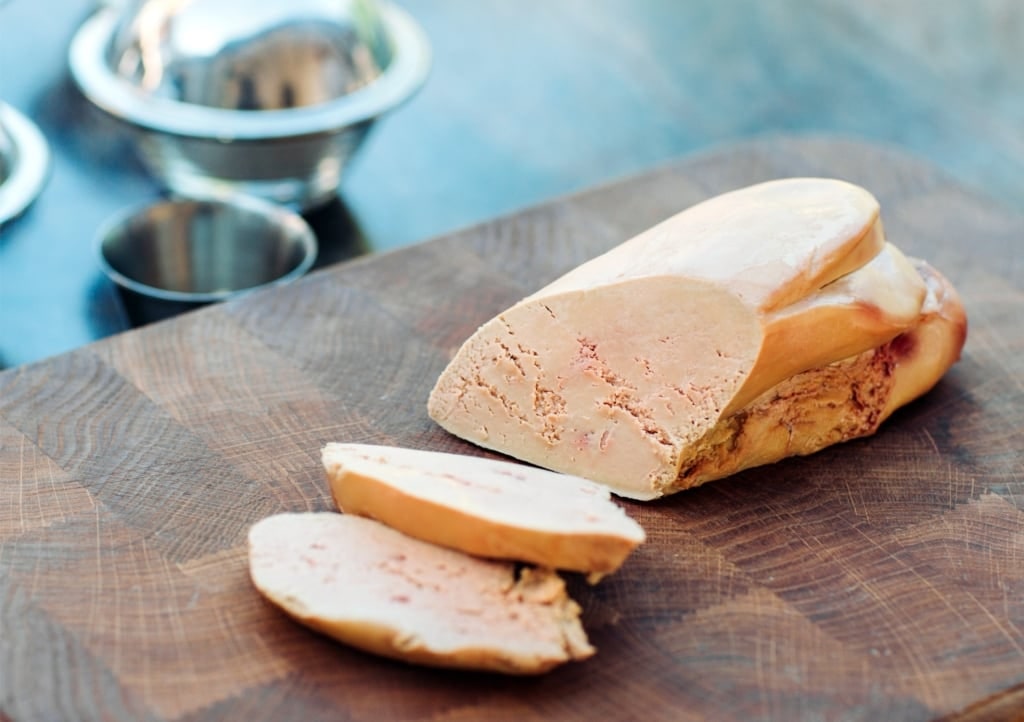
Libamáj
Did you know that Hungary is one of the world’s largest producer of foie gras, or Libamáj in Hungarian, right on the heels of France? This rich goose liver is often served as a terrine in the French style, but the Hungarian spin is to pan-sear it slightly and spread hot over a brioche.
The indulgent, buttery delicacy is much more affordable in Hungary than in France, and is served at many family-style restaurants as well as upscale establishments in the city.
Töltött Káposzta
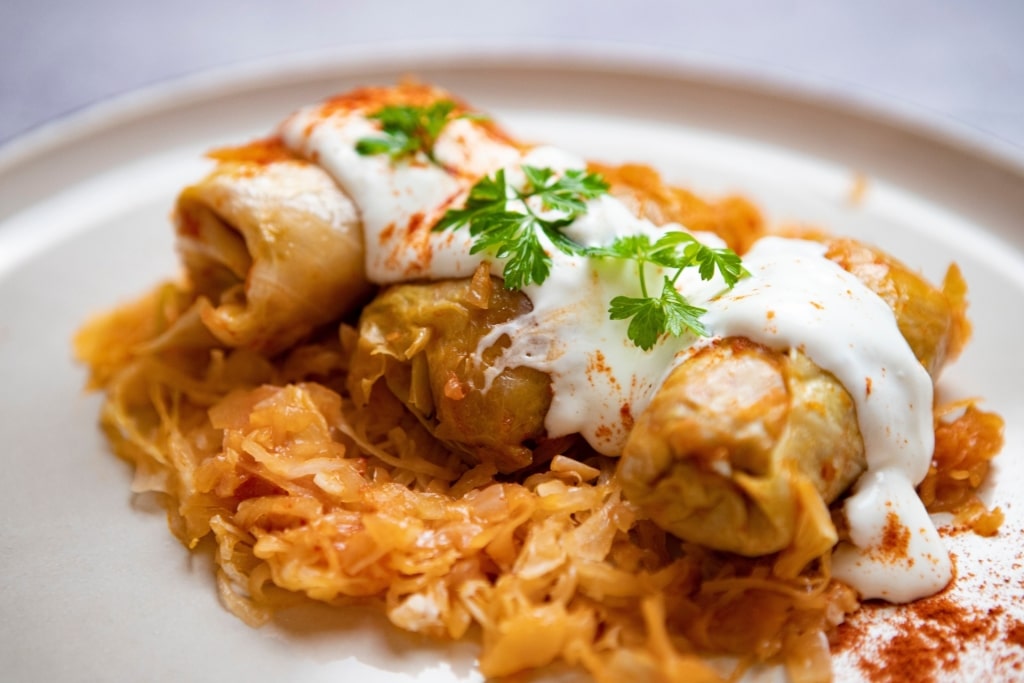
Töltött Káposzta
This traditional dish of stuffed cabbage rolls dates back to the Ottoman occupation of Hungary, when the Turkish culinary practice of stuffing meat in vegetable leaves was introduced.
Pickled cabbage leaves are stuffed with pork shoulder, pork belly, and long-grain rice, and seasoned with garlic, caraway seeds, and paprika, among other spices. In Budapest, you’ll find these rolls served on a bed of sauerkraut and topped with a generous dollop of sour cream.
Stuffed cabbage rolls are a winter staple in Hungary, as well as a classic wedding course and Christmas Eve dinner. For an extra fancy version, look for cabbage rolls with tomato sauce and smoked sausage.
Sólet
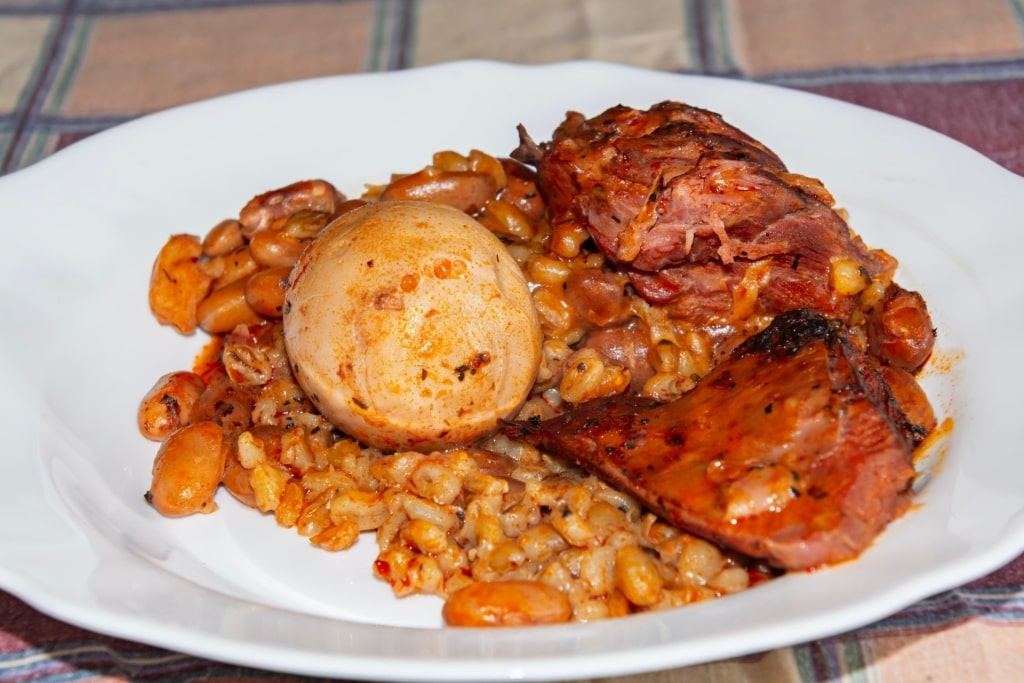
Sólet
Sólet is Hungary’s take on cholent, the traditional Jewish Shabbat stew, and a cornerstone of Jewish-Hungarian cuisine. Prepared Friday before sundown to cook slowly overnight, it’s ready by Saturday lunch, in keeping with Sabbath customs.
The stew combines kidney beans, barley, onions, and garlic with smoked meats like goose leg, goose neck, or beef brisket, often crowned with a hard-boiled egg.
Introduced to Hungary by Jewish communities in the Middle Ages, sólet was later embraced more broadly, blending Jewish tradition with Hungarian flavors such as paprika and smoked meats.
Kürtőskalács
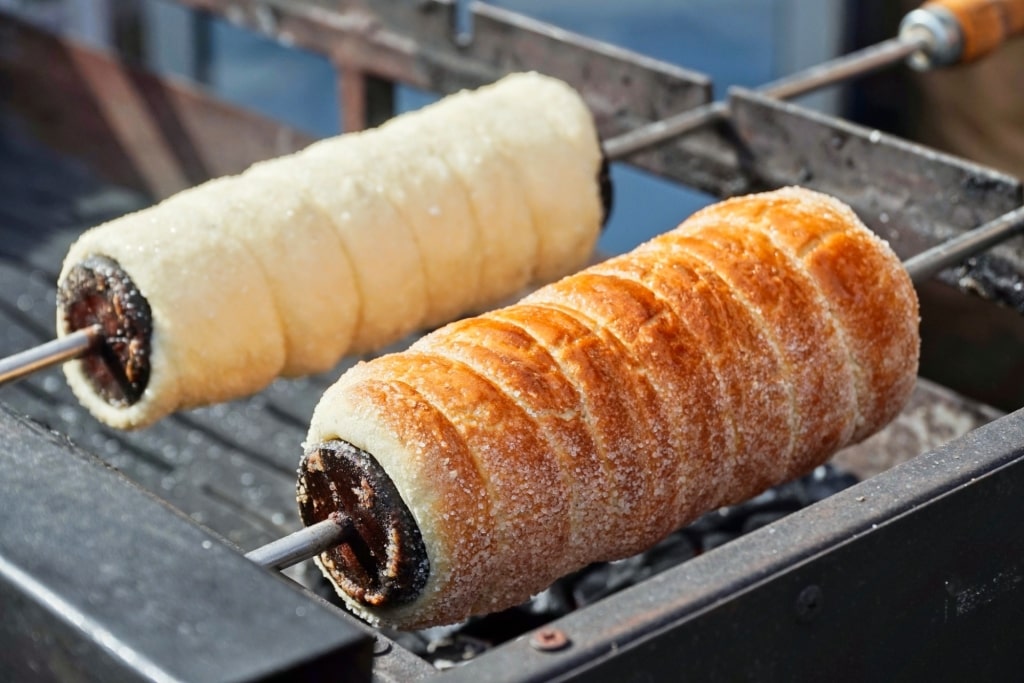
Kürtőskalács
Also known as chimney cakes, kürtőskalács are an emblematic street food in Budapest, sold in kiosks where vendors bake the cylindrical pastries over a pit of hot coals. Originally a treat from Transylvania, chimney cakes have gained popularity throughout Hungary, especially during the winter Christmas market season.
Chewy and hot on the inside while crispy with caramelized sugar on the outside, chimney cakes can be enjoyed pulled apart into strips, dusted with cinnamon and walnuts, and even filled with ice cream. To find a kiosk selling chimney cakes, just follow your nose for the sweet aroma of freshly baked pastry dough.
Gundel Palacsinta
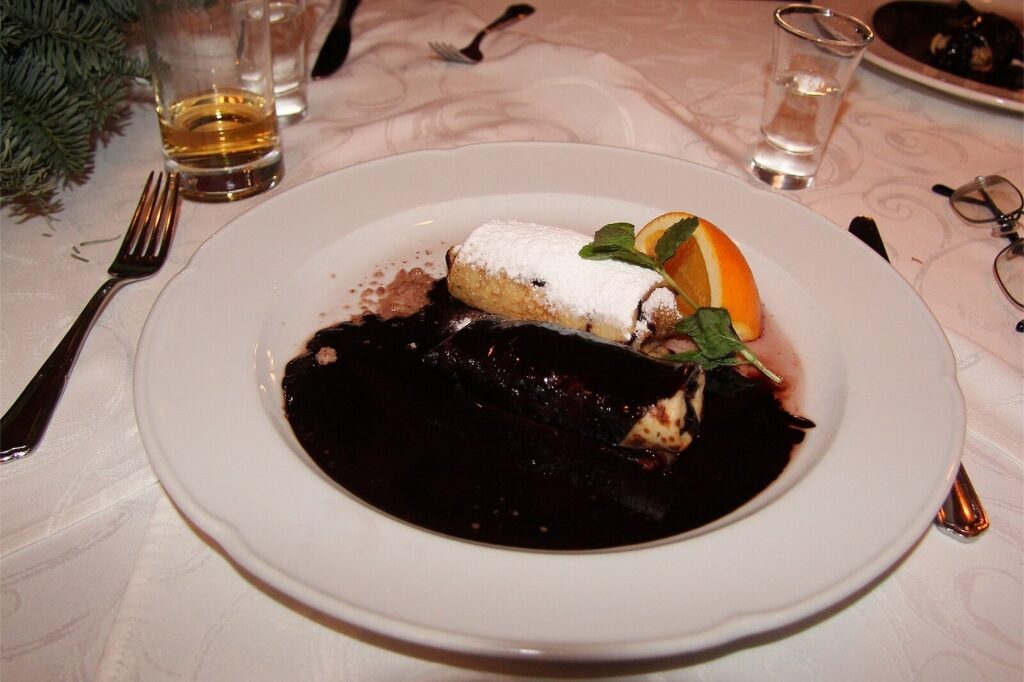
Gundel Palacsinta Photo by Karl Gruber on Wikimedia Commons, licensed under CC BY-SA 3.0 AT
Palacsinta are a well-known Hungarian dessert of thin, rolled pancakes that resemble French crêpes. When in Budapest, sample the most famous iteration of these crêpes straight from the source: at the historic Gundel restaurant by City Park. The crêpes here are filled with raisins and ground walnuts soaked in rum, and served flambéed alongside a chocolate sauce.
Károly Gundel, a famous 20th-century restaurateur, is widely credited for first serving this iconic dessert at his restaurant, but rumors are that he obtained the recipe from Ilona Matzner, the wife of renowned writer Sándor Márai. Gundel serves over 25,000 of these desserts a year. Make a reservation at the restaurant’s lovely garden terrace for a refined traditional meal or afternoon tea.
Dobos Torte
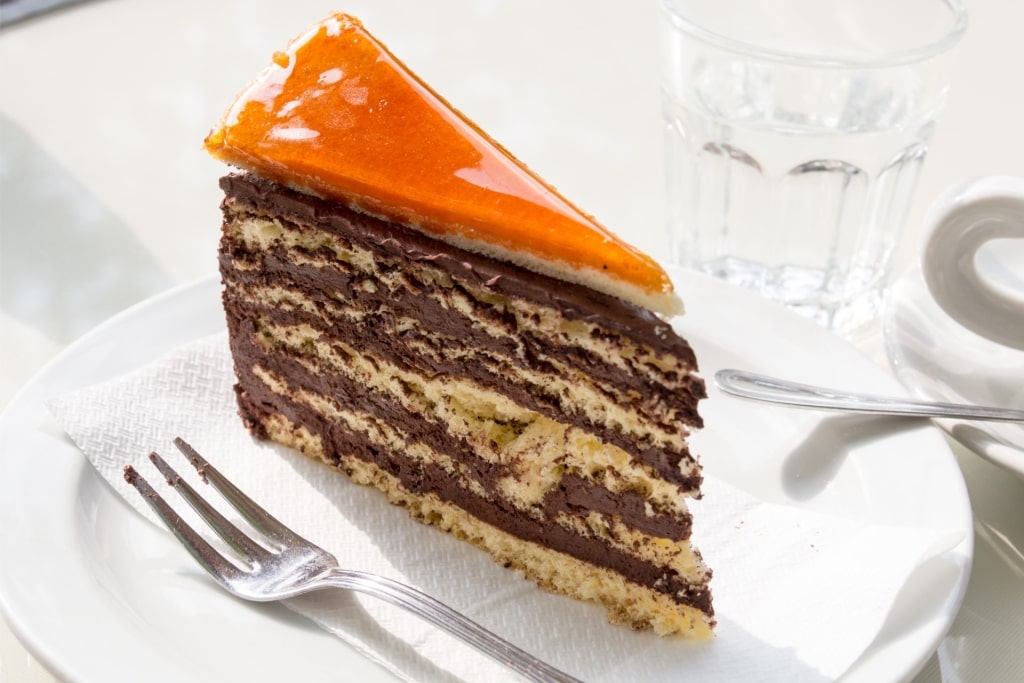
Dobos Torte
Immerse yourself in the coffeehouse culture that Budapest is known for by ordering a slice of Dobos Torte at a café. This decadent cake is visually stunning, consisting of fine layers of sponge cake and chocolate buttercream, finished by a caramel glaze crusted with ground hazelnuts, chestnuts, walnuts, or almonds.
The cake was invented by József C. Dobos, a confectioner who ran a delicatessen in Budapest in the late 1800s. It was formally introduced at the National General Exhibition of Hungary in 1885, and became a sensation with aristocrats and commoners alike. Today, you can sample a slice at historic Budapest cafés such as Gerbeaud and Auguszt.
Somlói Galuska
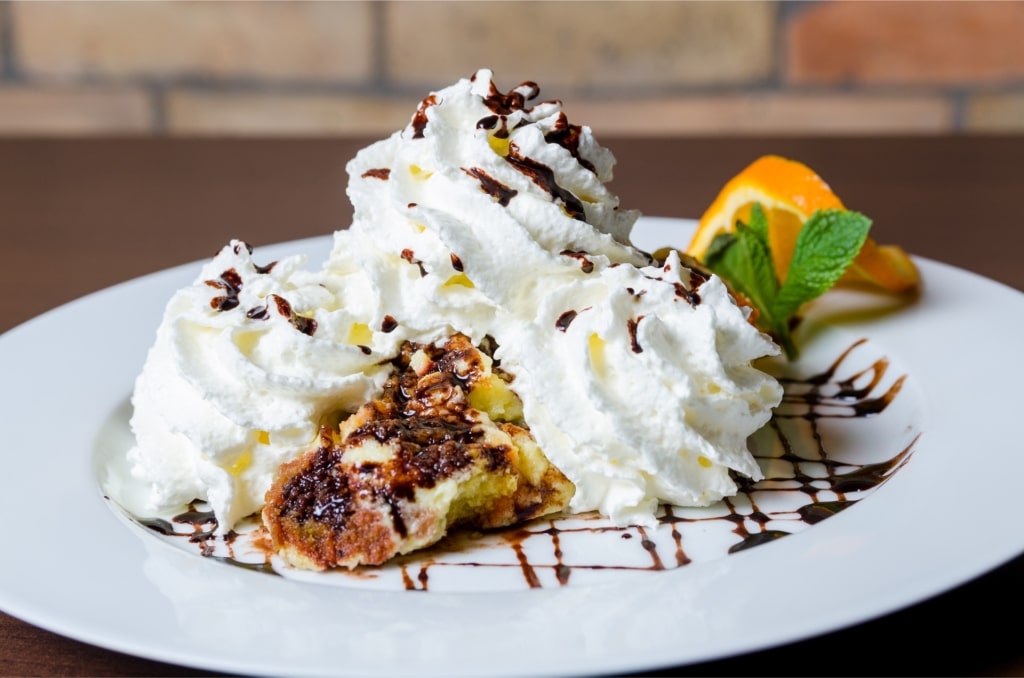
Somlói Galuska
This indulgent trifle dessert is made with three flavors of sponge cake: walnut, chocolate, and plain, soaked in rum simple syrup with citrus zest. It is layered with vanilla pastry cream, chocolate sauce, and sprinkled with walnut, raisins, and extra cocoa powder.
It originates from the Somló region of Hungary and is usually served as three generous scoops in a bowl. Created in the 1950s, this trifle is a mainstay at Budapest cafés and a favorite treat among locals— head to Café Kör for one of the most beloved versions in the city.
Read: Best Places to Visit in Budapest
Flódni
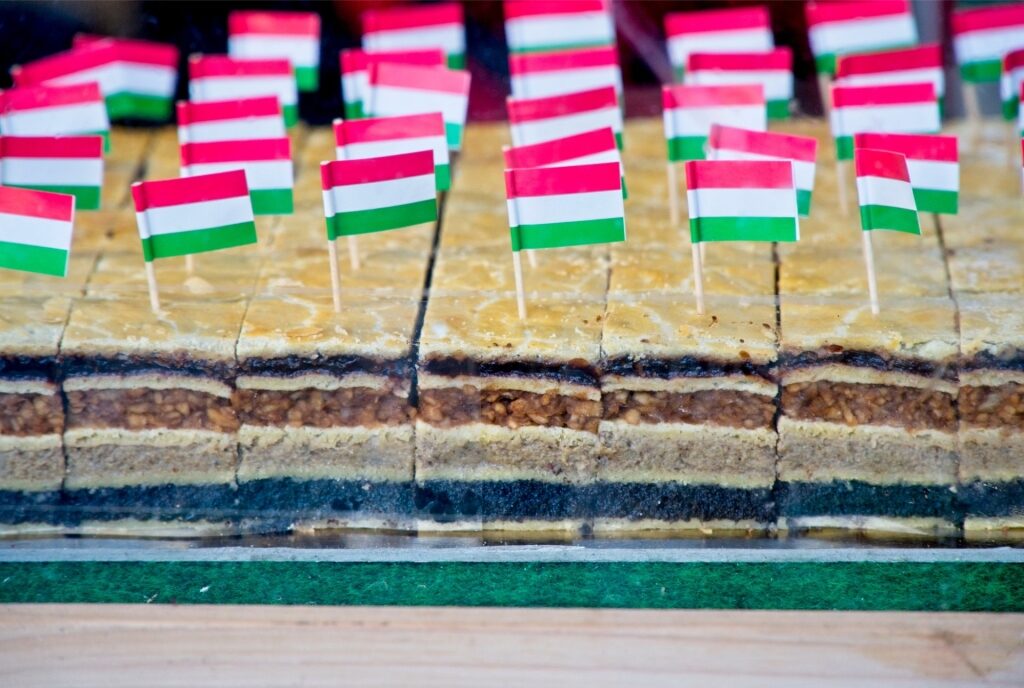
Flódni
This cake is a traditional Hungarian Jewish dessert made on the occasion of Purim. The meticulously layered pastry consists of five sheets of sweet dough separated by layers of walnut, poppy seed, apple, and plum jam. The sweet, bitter, buttery, and tart flavors are said to symbolize people of different faiths coming together in different layers to form a harmonious whole.
FAQs
Is Budapest a good food city?
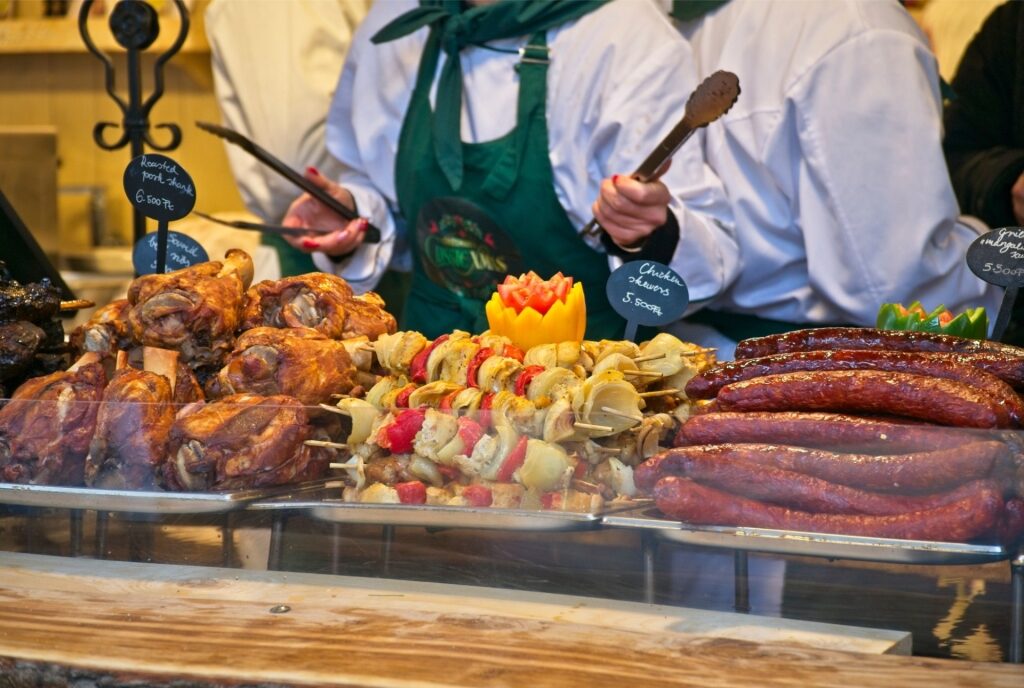
Food market in Budapest
Budapest is a city with an extraordinary culinary heritage, melding Ottoman, Jewish, Transylvanian, and Balkan influences, among others.
Ingredients like paprika, goose liver, and smoked sausages give Hungarian food a distinct culinary heritage to work with, and Michelin-starred restaurants such as Costes and Borkonyha have become destinations for those wishing to explore inventive, fine-dining spins on Hungarian cuisine.
What dish is Budapest most famous for?
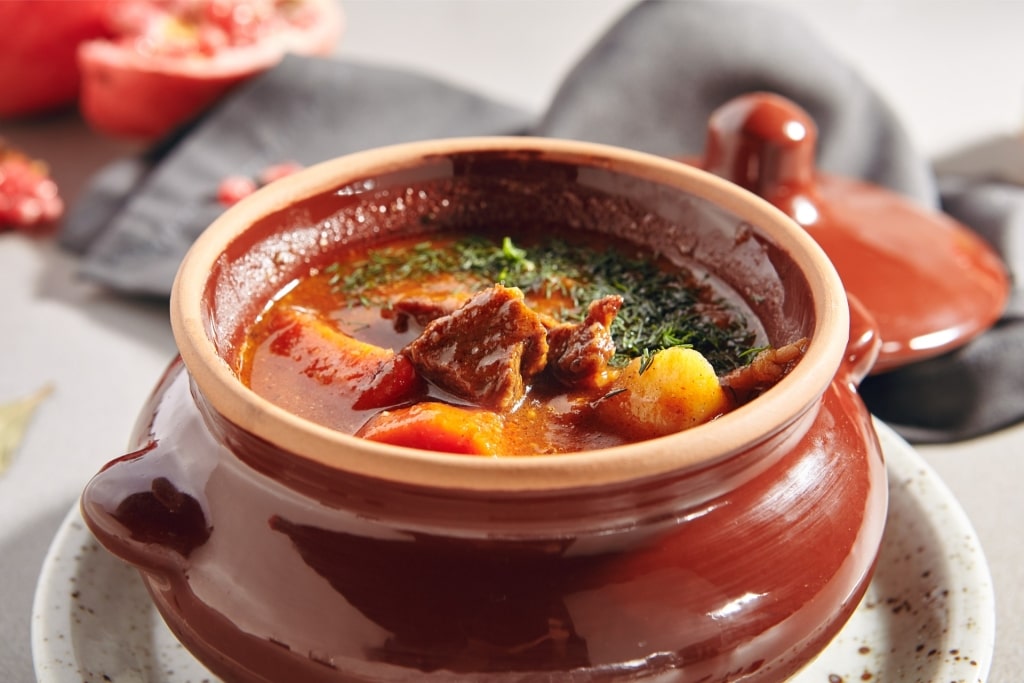
Gulyás
If there’s one dish that’s iconic of not only Budapest but Hungary as a whole, it is gulyás, or goulash. The beef and paprika soup that once nourished the Great Plain’s herdsmen is now a symbol of Hungarian national identity.
If you are looking for a food item that’s uniquely tied to Budapest, rather than the whole country, you can’t go wrong with a slice of Dobos Torte.
What time does dinner typically start in Budapest?
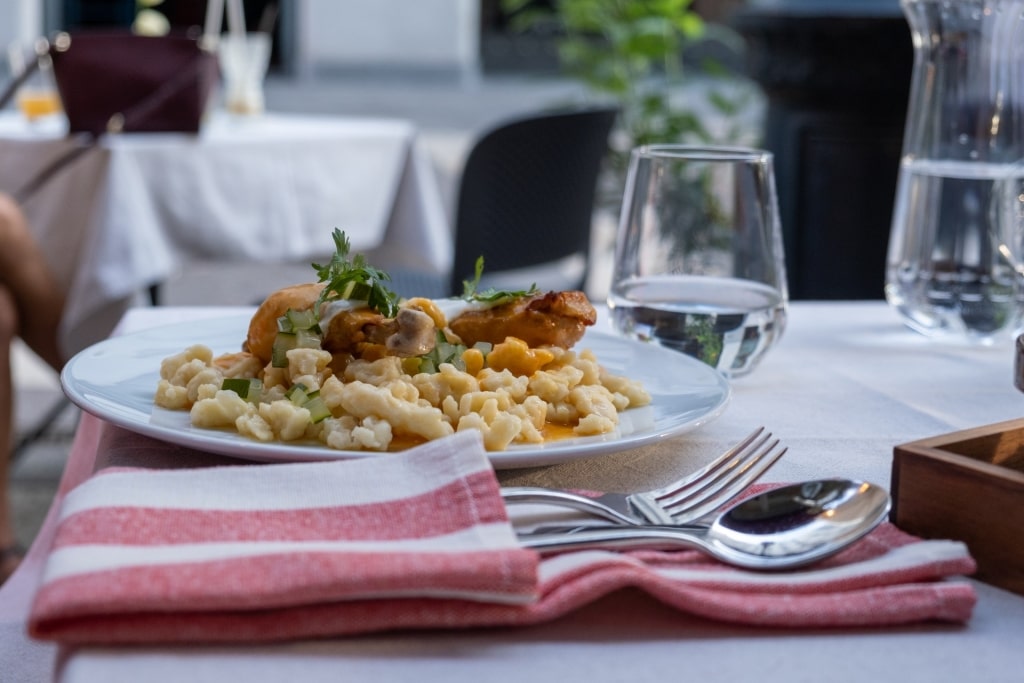
Restaurant in Budapest
Dinner in Budapest starts on the earlier side. You’ll find that many local families start dining at 6 p.m. As a visitor, you’ll be on time for dinner if you visit most restaurants between 6:30 and 9:30 p.m.
Are there any food customs I should know about?
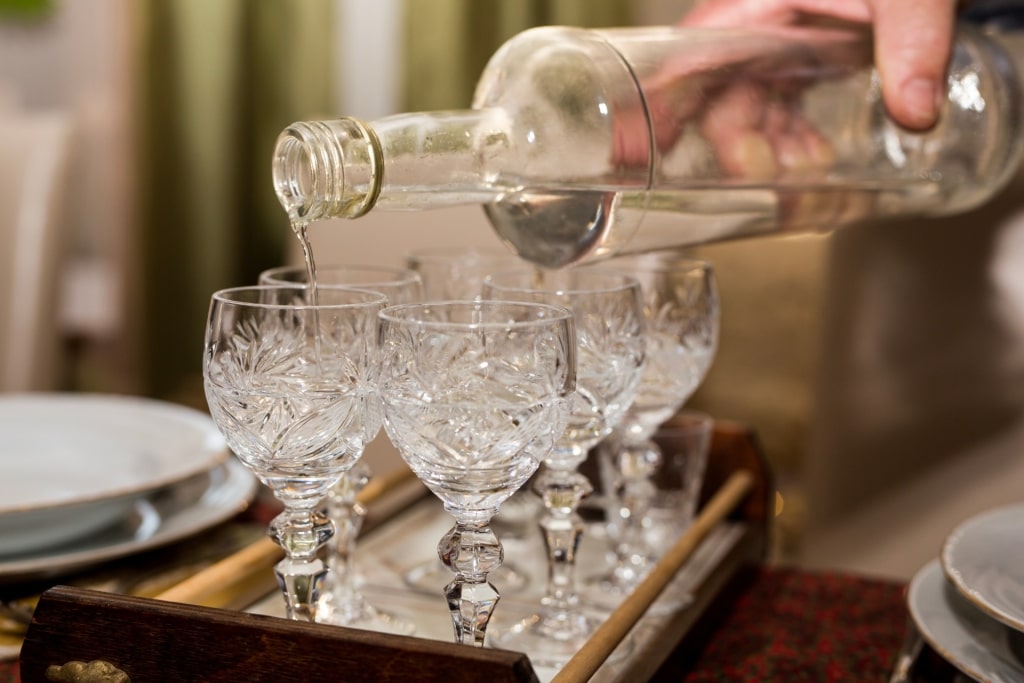
Palinka
It is a faux pas to clink beer glasses in Hungary, as Austrian generals cheered the execution of Hungarian rebels in 1849 by toasting with beer. Also note that pálinka, the fruit spirit often offered as a digestif at restaurants, is meant to be sipped and not taken as a shot.
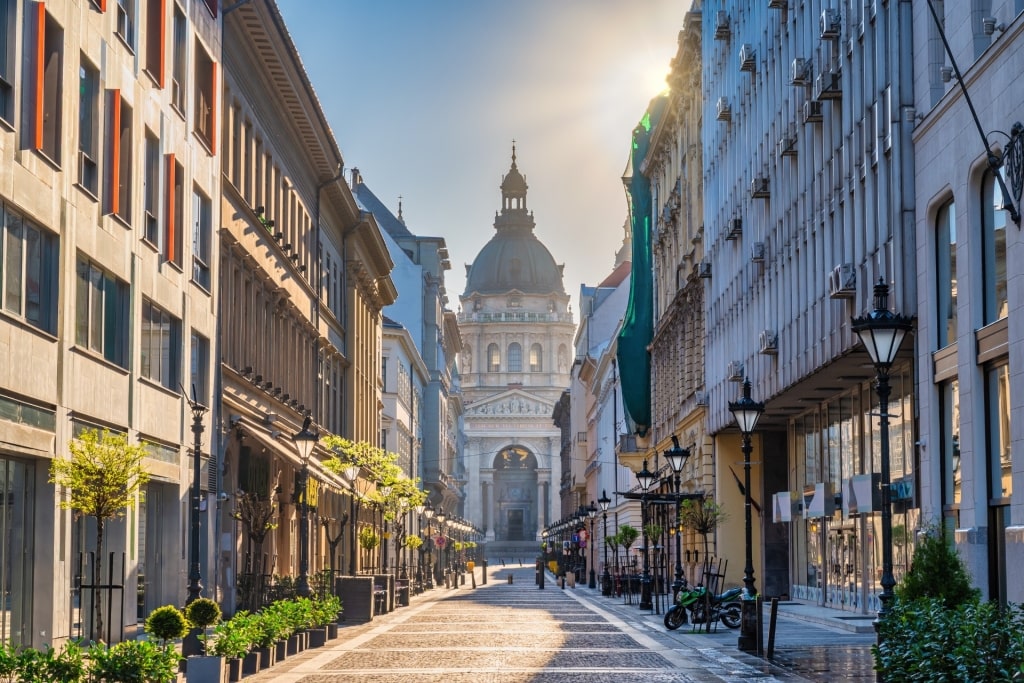
Street in Budapest
Ready to explore Budapest and its iconic dishes on a gourmet adventure? Browse Celebrity’s river cruises to Budapest and plan your dream vacation today.