The delightful appeal of small towns in Germany is evident across the country’s different regions, from Bavaria to Baden-Württemberg. The nation’s diverse character shines through its small to medium-sized municipalities, all of which are well worth visiting.
Villages in Germany have their individual histories, landscapes, and charm, ranging from vine-covered valleys to wooded hills. Strolling through market squares, exploring old castles, or sipping Riesling by a riverside are just some of the wonderful things you can do as you become better acquainted with Germany’s countryside.
Gengenbach
Gengenbach
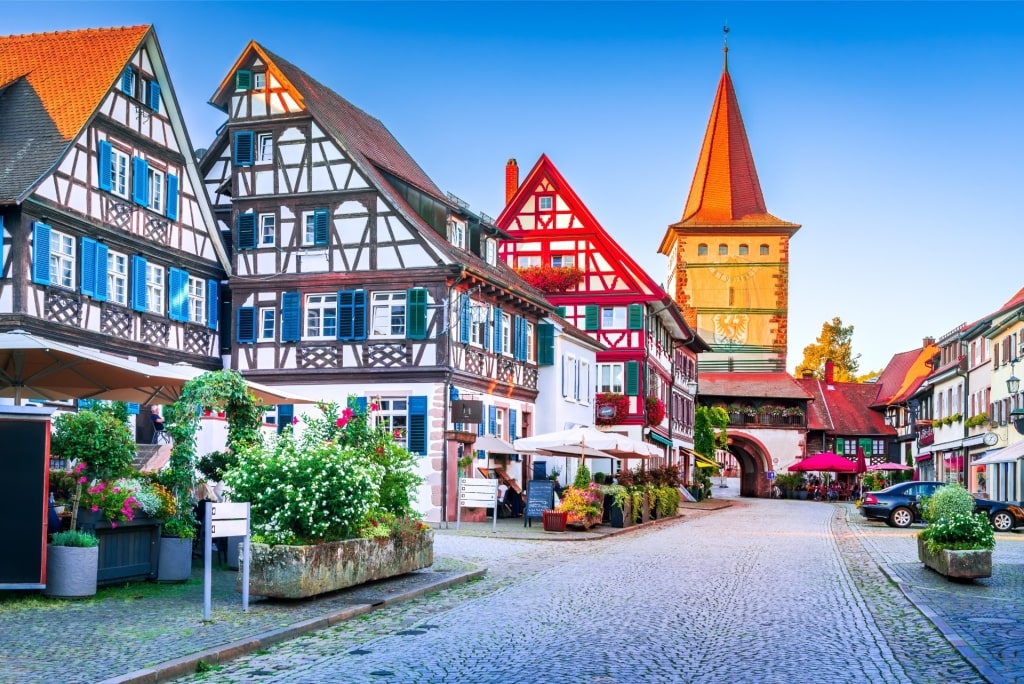
Gengenbach is a Black Forest town that, like many smaller German towns, has a lovely fairytale aspect to it. This hamlet is renowned for its half-timbered homes and narrow cobblestone streets, and the vineyards that surround it, not to mention the charming bakeries, local craft shops, and walks along the Kinzig River promenade.
As you walk through the old town, located in the lower Kinzig valley, you’ll see that practically every corner is primed for a postcard or social media photograph, with flowers cascading over windowsills, while the hum of cafés offers a calming atmosphere.
If you’re interested in puppets and art, swing by the Haus Löwenberg merchant’s house to take in a variety of creative puppet-related accoutrements on display.
The Narrenmuseum, situated in the former Niggelturm prison tower, features exhibits related to the town’s Mardi Gras festivities, as well as a bird’s-eye view of the picturesque town.
Cochem
Cochem
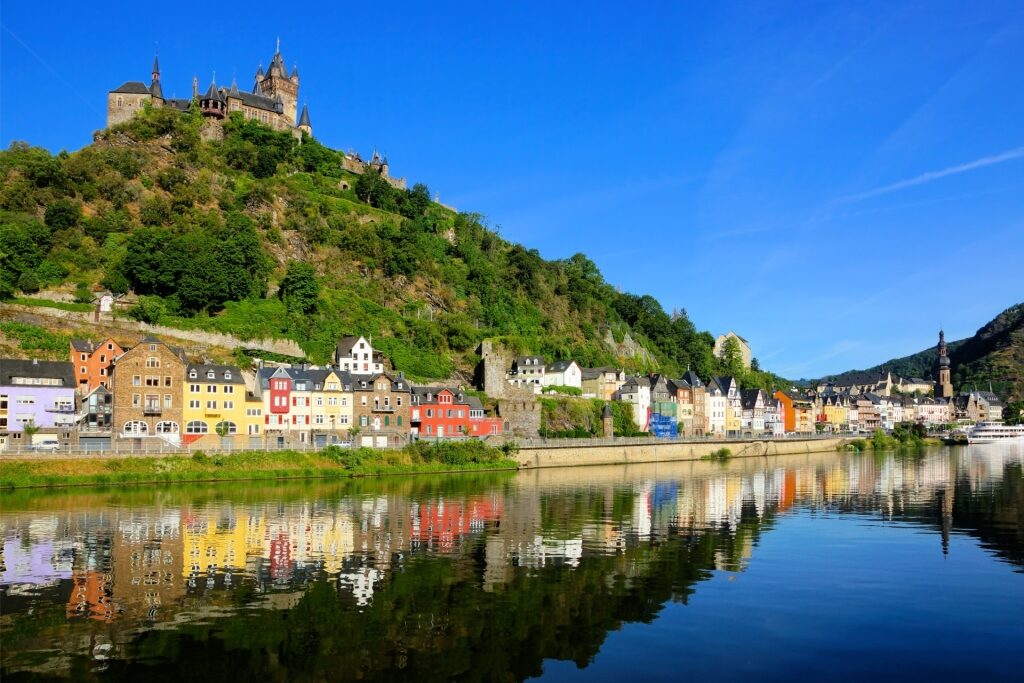
Cochem is a village in Germany that isn’t shy about offering its guests romantic views, thanks to its idyllic location on the Moselle River.
Additionally, the imposing Gothic Reichsburg Castle, which overlooks the town, offers panoramic vistas of the river and valley below, along with four turrets that help define the town’s skyline.
Old Town Cochem
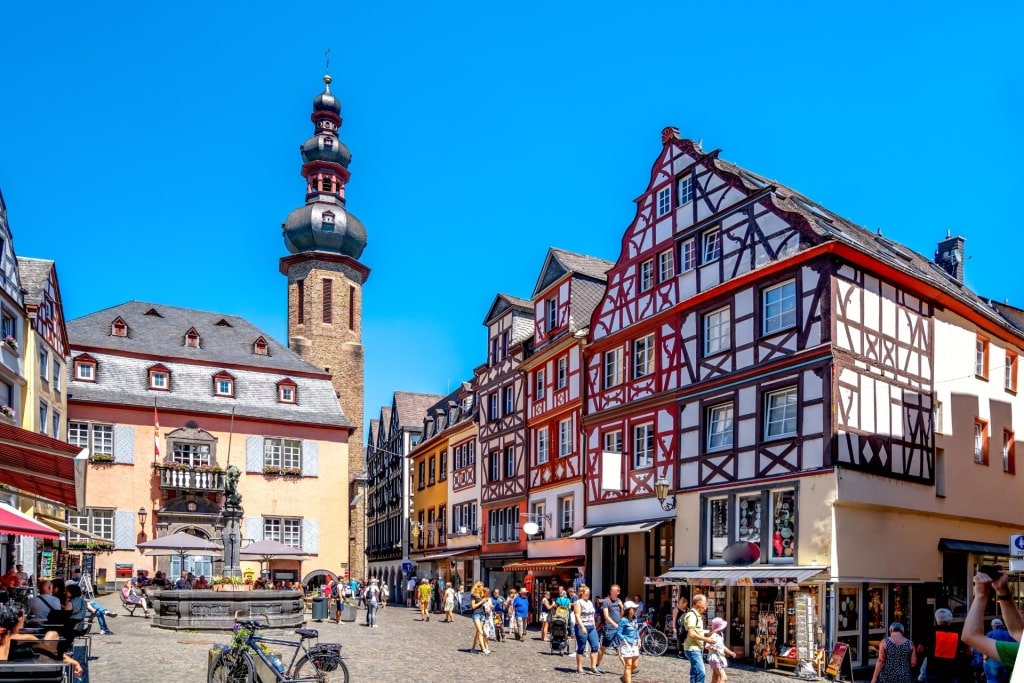
Cochem’s Altstadt, or Old Town, offers a quaint mix of half-timbered buildings, narrow streets, and the stone Enderttor gate, which was part of the original medieval walls, as well as snug wine bars serving local Riesling, harvested from nearby slopes.
The riverside promenade is great for a gentle stroll. If you’re a cyclist, you can opt for the Moselradweg route, which extends for miles along the Moselle River. Time appears to stand still here, letting you savor every moment.
Wertheim
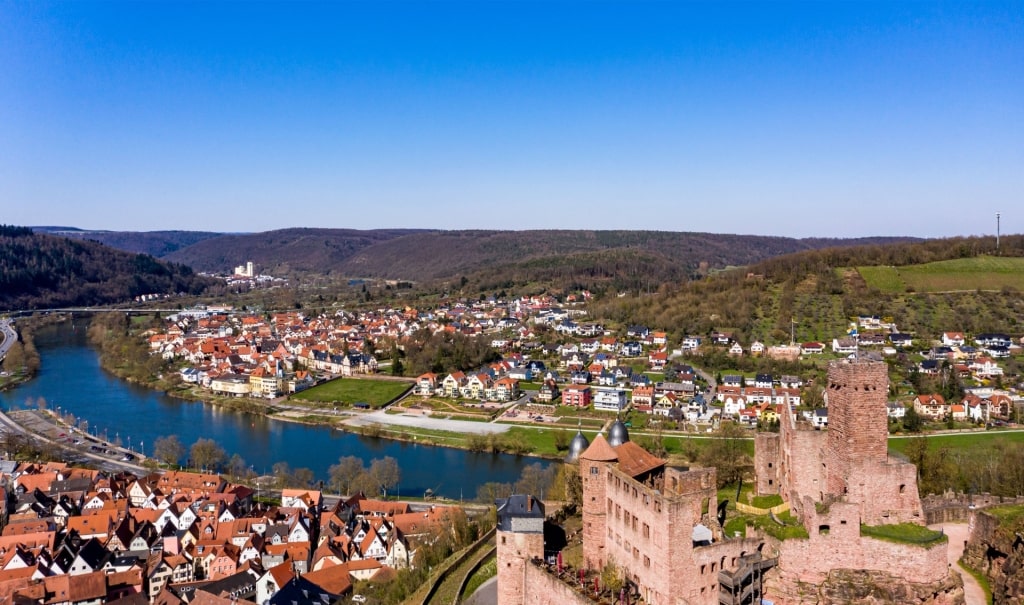
Wertheim
Wertheim, situated at the confluence of the Main and Tauber rivers in southwestern Germany, is known for its houses painted in an array of appealing colors, as well as tranquil squares perfect for savoring coffee or sampling local patisseries.
The semi-ruined Wertheim Castle, surrounded by trees, sits above the town, with broad views of both rivers and the rooftops below. The German castle, which dates back to the 1100s, is accessible on foot or by shuttle.
Wertheim has several museums, including the Glass Museum, which explores the artistic and scientific aspects of glass production, for which the town is famous. If you love to shop, take heart, as this cute German town also happens to be overflowing with designer boutiques.
Kelheim
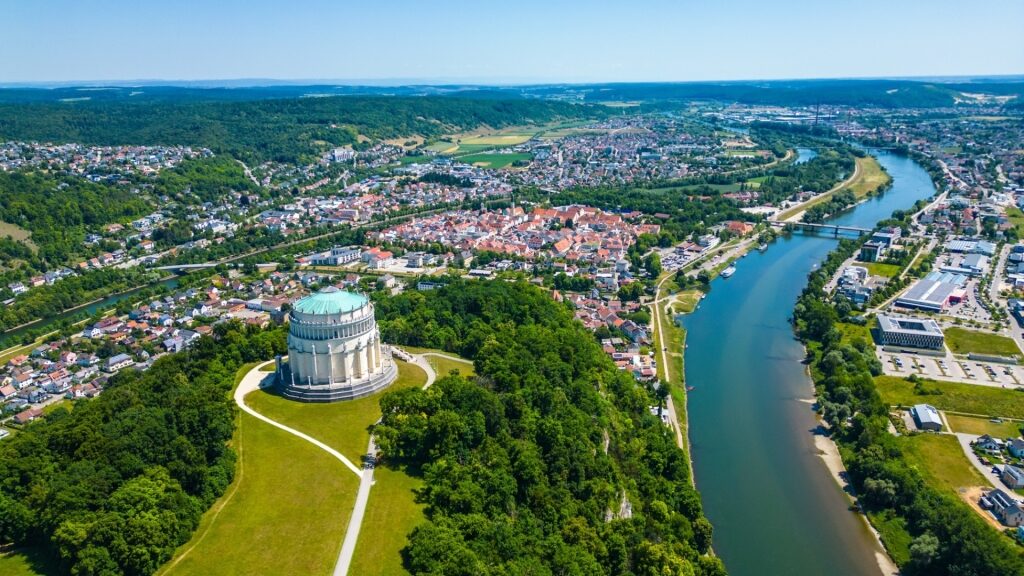
Kelheim
Kelheim, in Bavaria, is a pretty waterside town, lying at the confluence of the Altmühl and Danube rivers.
The Befreiungshalle, or the Liberation Hall, is the star attraction here. It’s a fascinating, large, rotunda-shaped building that marks victories won against Napoleon, as well as the coming together of Germany’s many tribes.
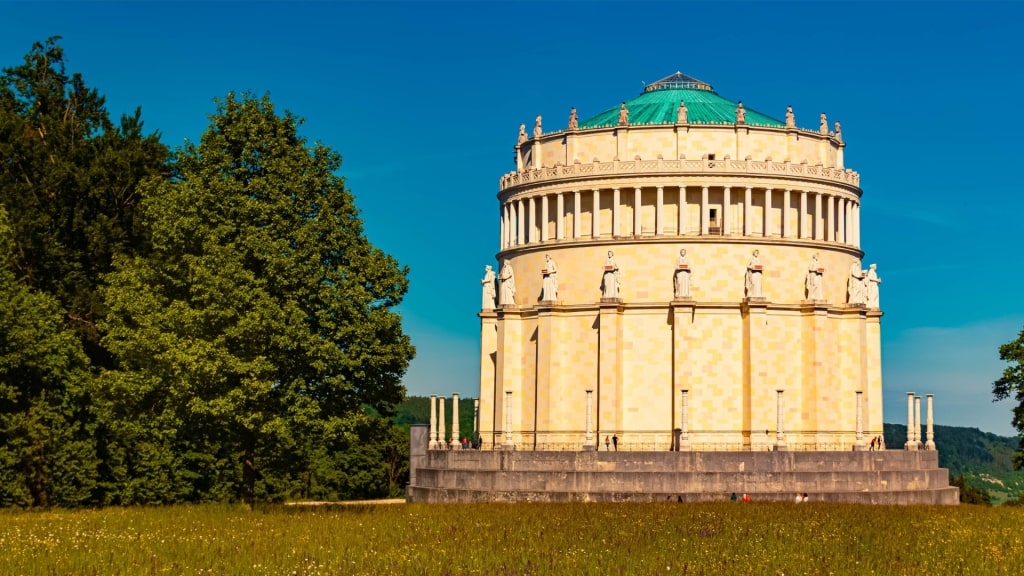
Befreiungshalle, Kelheim
With 34 marble Goddesses of Victory statues surrounding the hall, stepping inside this grand, open space should leave quite an impression.
Another Kelheim highlight is the nearby Weltenburg Abbey, with its distinctive river beach.
This Benedictine monastery, pressed up against wooded cliffs, has stood here for centuries and is home to the world’s oldest monastic brewery. Sample the monks’ dark beer and classic Bavarian dishes in the abbey’s beer garden.
Mittenwald
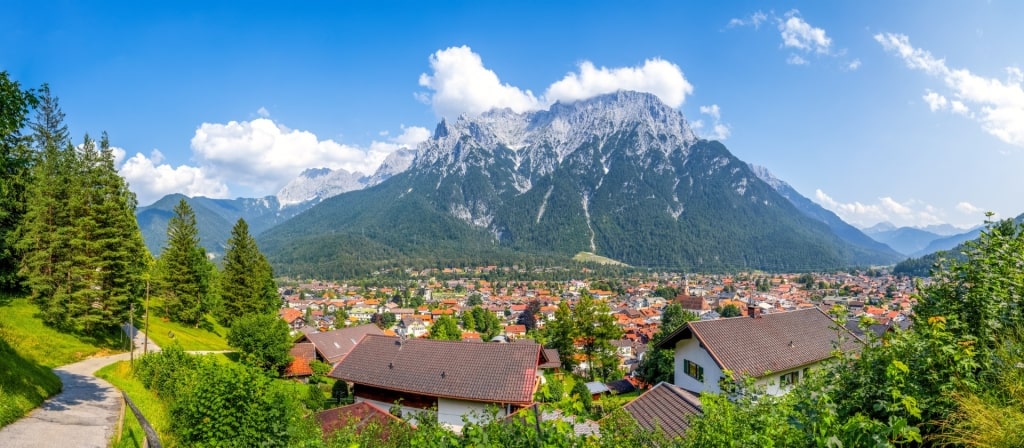
Mittenwald
In the Bavarian Alps, you’ll find Mittenwald near the Austrian border. The town has the nickname “Violin Village” due to its centuries-old tradition of violin production.
This alpine town, about an hour and a half’s drive from Munich, has superb mountain vistas, as well as Lüftlmalerei-painted houses with murals depicting religious and local mythological scenes.
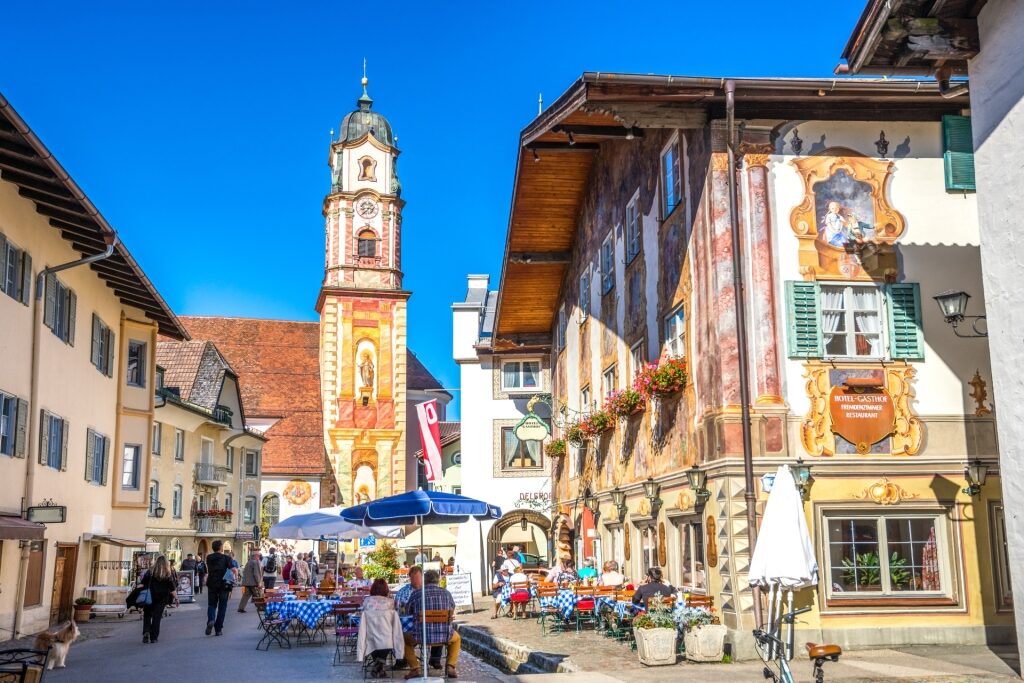
Mittenwald
Drop by the Geigenbaumuseum, Violin Making Museum, to learn more about the town’s centuries-old tradition of producing stringed instruments.
Mittenwald also serves as a center for outdoor adventures. Enjoy incredible views from the Karwendel cable car, taking you to the summit of the Karwendel mountain, or explore nature trails on an elevated, suspended metal walkway over the rushing waters of the Leutasch Gorge.
Dinkelsbühl
Dinkelsbühl
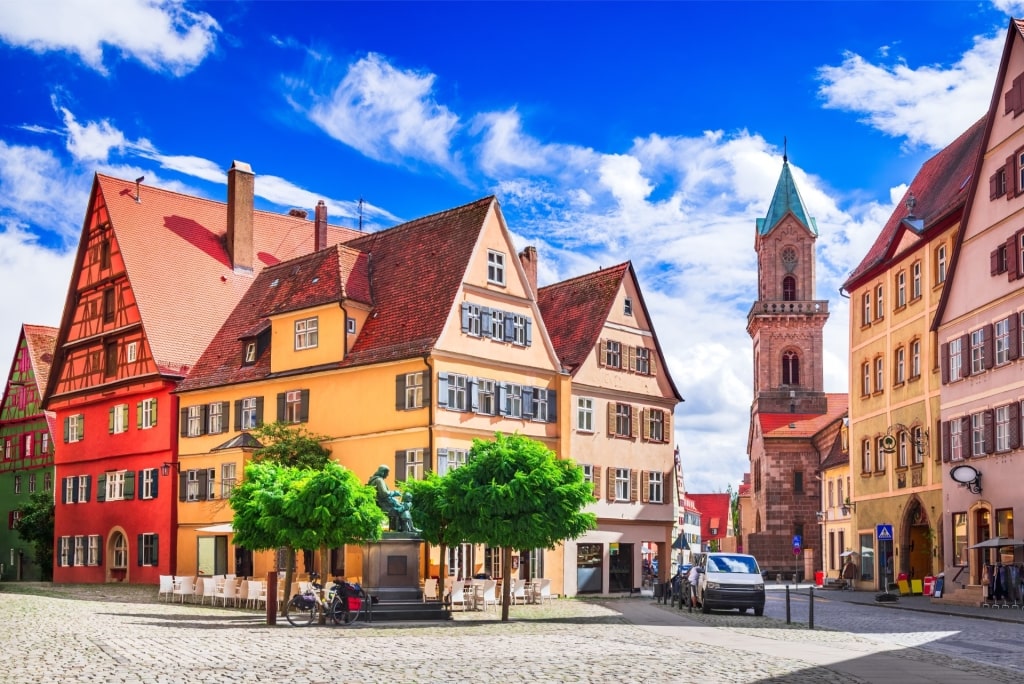
In Bavaria’s Franconian region, a little over an hour’s drive from Nuremberg, you will stumble across one of those small feudal towns in Germany that this nation is known for, with intact medieval walls, watchtowers, and brightly painted, half-timbered gabled houses.
Dinkelsbühl’s central square is bordered by the arresting buildings of St. George’s Minster, a Gothic cathedral, and the red, ornate Deutsches Haus hotel. The small cafés and craft shops here feature all manner of goods, from traditional toys to handcrafted candles.
It’s a fun town to explore on foot, and it also happens to be part of Germany’s Romantic Road, or Romantische Straße, a 220-mile route that offers a chance to explore small towns, castles, and other historical sites, as well as the scenic Bavarian countryside.
Monschau
Monschau
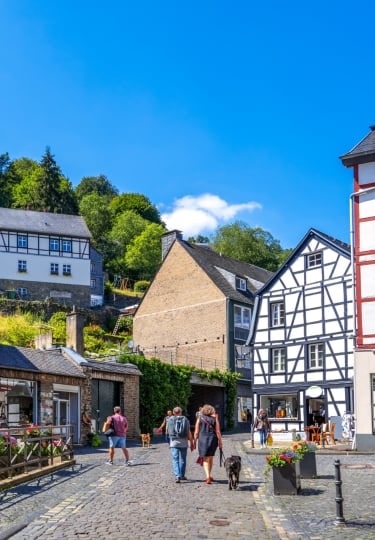
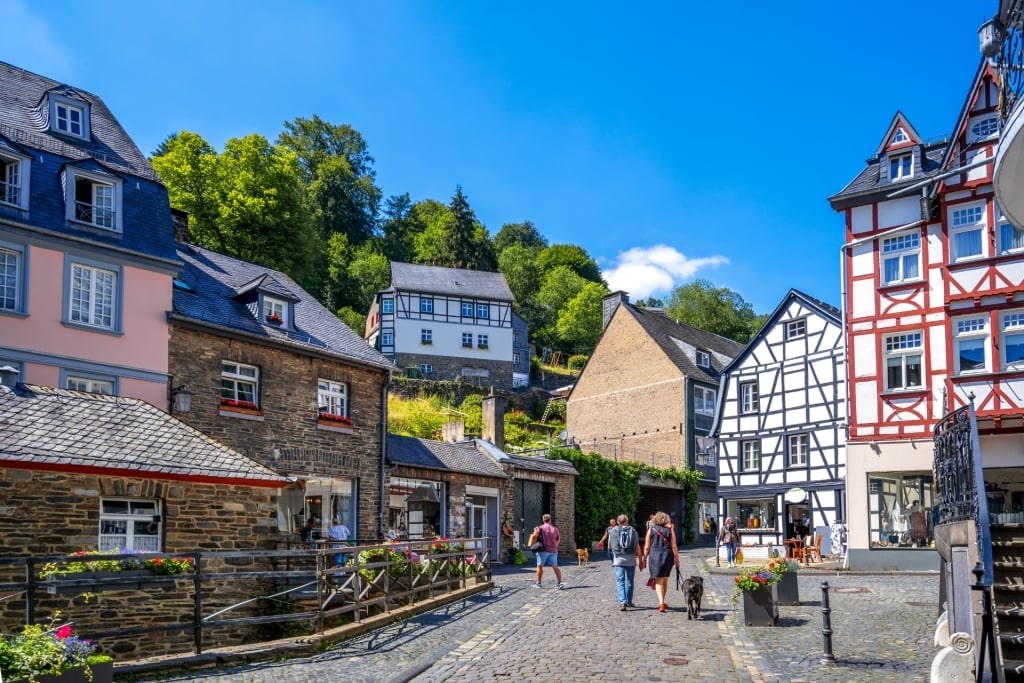
One of the best places to visit in Germany is Monschau. Located in the Eifel region near the Belgian border, it is surrounded by forest and is a quintessential example of villages in Germany filled with pretty, narrow cobbled streets.
Visit the Red House, or Rotes Haus museum, to learn more about the town’s history of cloth manufacturing and impressive Louis XVI, Empire, and Rococo period furniture styles.
Next up, stop for a German pilsner, or perhaps a Hugo Spritz, made with elderflower syrup and sparkling wine, before wandering around this village’s laid-back streets.
Monschau
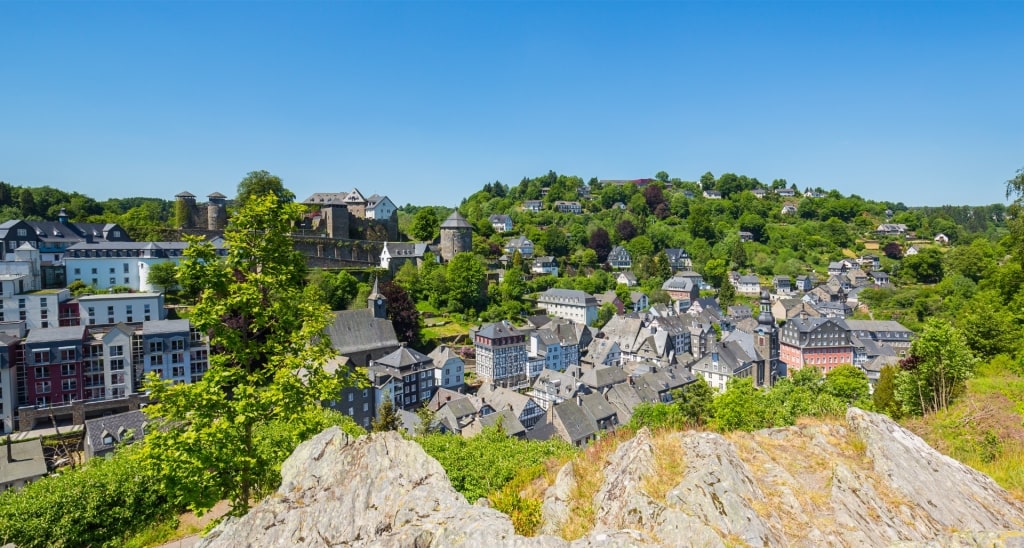
You can also hike up to the medieval castle perched above the town, which now serves as a venue for summer concerts, or take a stroll through the hills and nature trails of the Eifel National Park, an excellent spot for hiking and cycling.
Burghausen
Burghausen
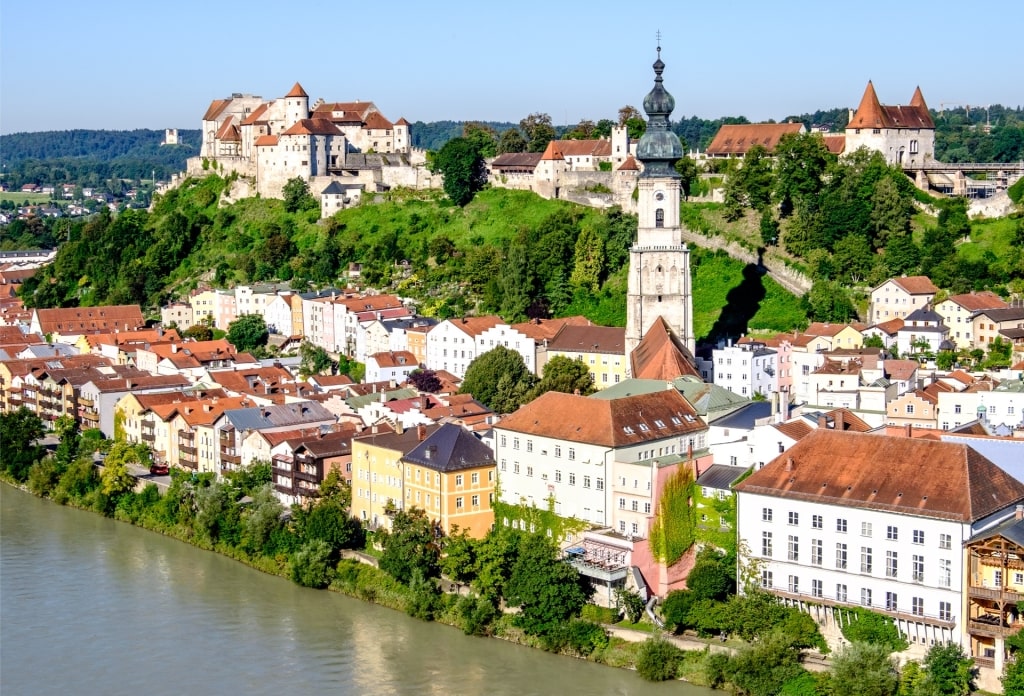
If you’re fascinated by castles, Burghausen is the place to be. This Upper Bavaria town hosts the longest castle complex in the world.
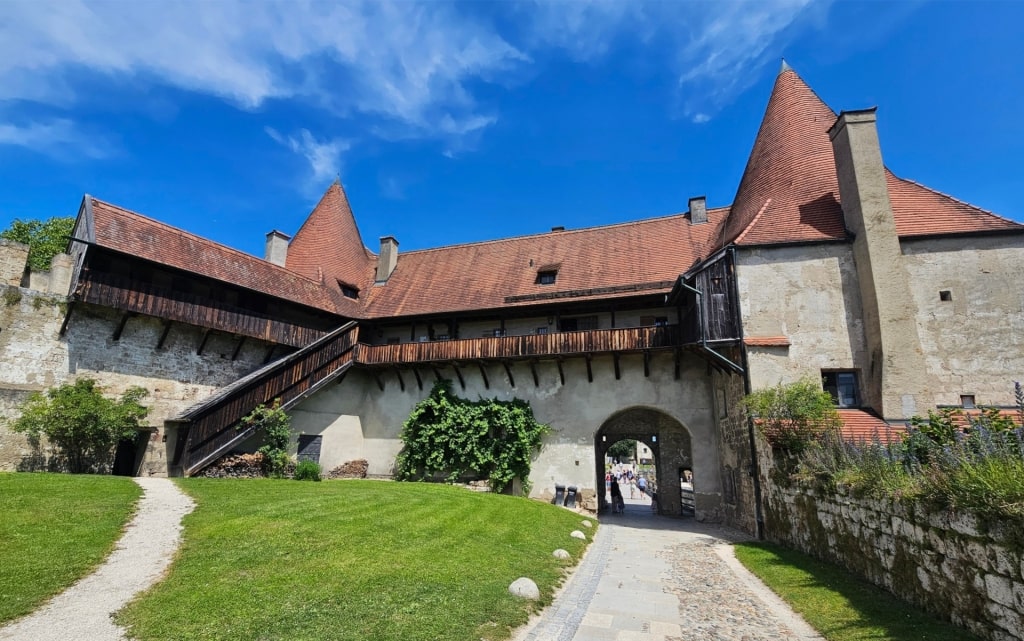
Burghausen Castle stretches for a full kilometer, which is well over half a mile, along a ridge above the Salzach River, providing stellar river views and a hefty dose of medieval history.
Burghausen Castle
The town of Burghausen, situated on the border with Austria, is characterized by painted multi-hued facades and serene streets huddled beneath the fortress.
A castle tour includes six inner courtyards, art exhibitions, and panoramic vistas. And, if you adore jazz, you should be aware that this little town hosts the International Jazz Week Burghausen, which was founded in 1970, and takes place every spring, attracting performers and jazz enthusiasts from around the world.
Rüdesheim am Rhein
Rüdesheim am Rhein
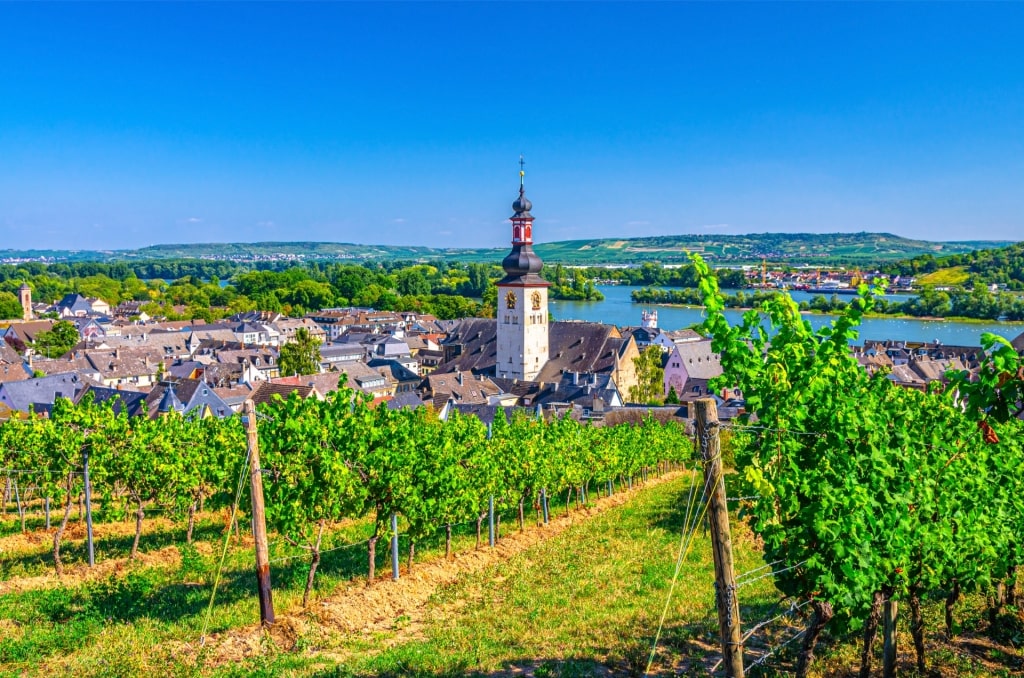
If you’re a wine lover, head for Rüdesheim am Rhein, which lies only 30 to 40 minutes from Mainz and is one of the most famous villages in Germany for wine connoisseurs.
Located in the scenic Rhine Gorge, this town is celebrated for its terraced vineyards, where Riesling grapes are grown.
You’ll also want to visit the famous Drosselgasse in Rüdesheim, a narrow cobbled pedestrian road lined with pubs and wine bars, situated alongside half-timbered houses, which are often adorned with flowers.
Rüdesheim am Rhein cable car
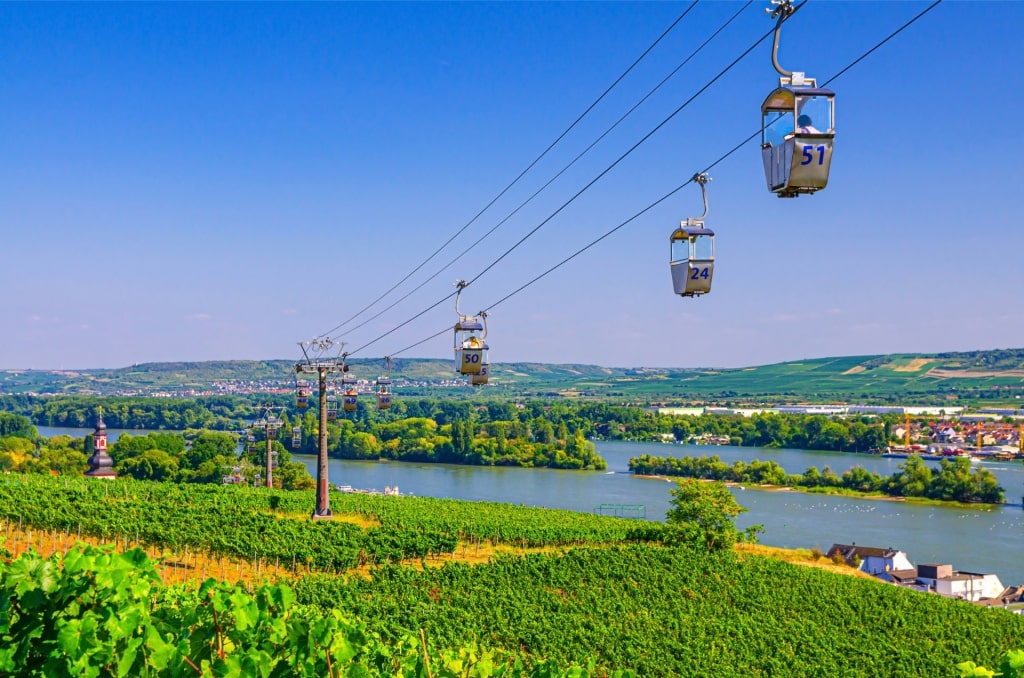
After dropping by a German wine tasting room, you can hike or ride the Rüdesheim cable car up to the Niederwald Monument, which was built to mark the formation of a unified Germany, and will offer you a bird’s-eye view of the valley and river below.
Visit Siegfried’s Mechanical Music Cabinet to witness a quirky collection of antique automata and musical instruments from past centuries. Then, head out to the nearby vineyards and forests for more wine-themed experiences, including wine cellar visits, vineyard treks, and Niederwald forest trails.
Ladenburg
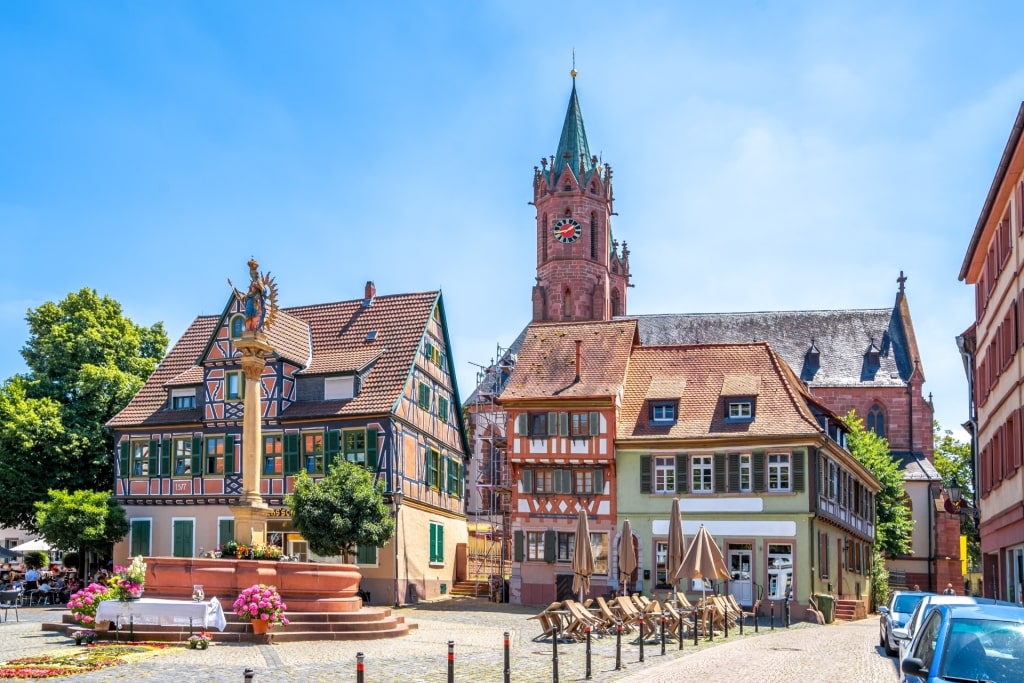
Ladenburg
Ladenburg’s old-world appeal unfolds before your eyes, revealing its long history and serene beauty. Germany’s ancient heritage comes alive in this town, situated next to the Neckar River and dating back to Roman times.
As you walk along the streets, the past will reveal itself through sections of the surviving Roman walls, along with archaeological Roman fort remains at the Lobdengau-Museum.
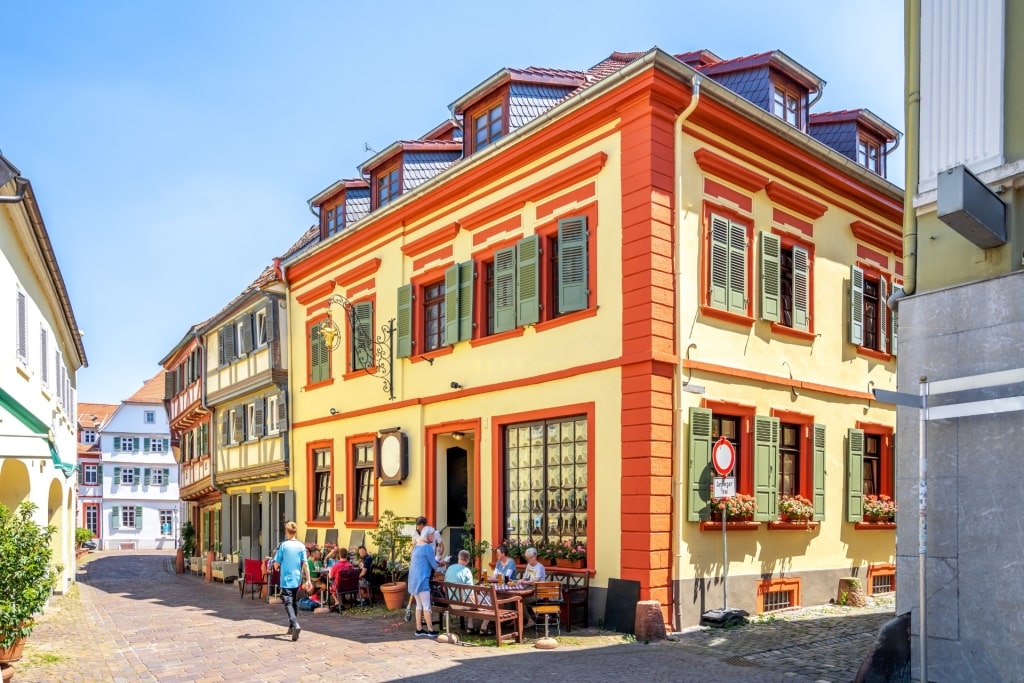
Ladenburg
The Marktplatz, with its central fountain, is picturesque, filled with houses painted in warm colors, as well as surrounding cafés, such as Café am Markt, where you can spend a restful afternoon outside.
Ladenburg also holds a special place in automotive history, as Carl Benz once lived here. You can visit the Benz Garage Museum, located in an Art Nouveau building, to learn more about the history of the Benz automobile company.
Deggendorf
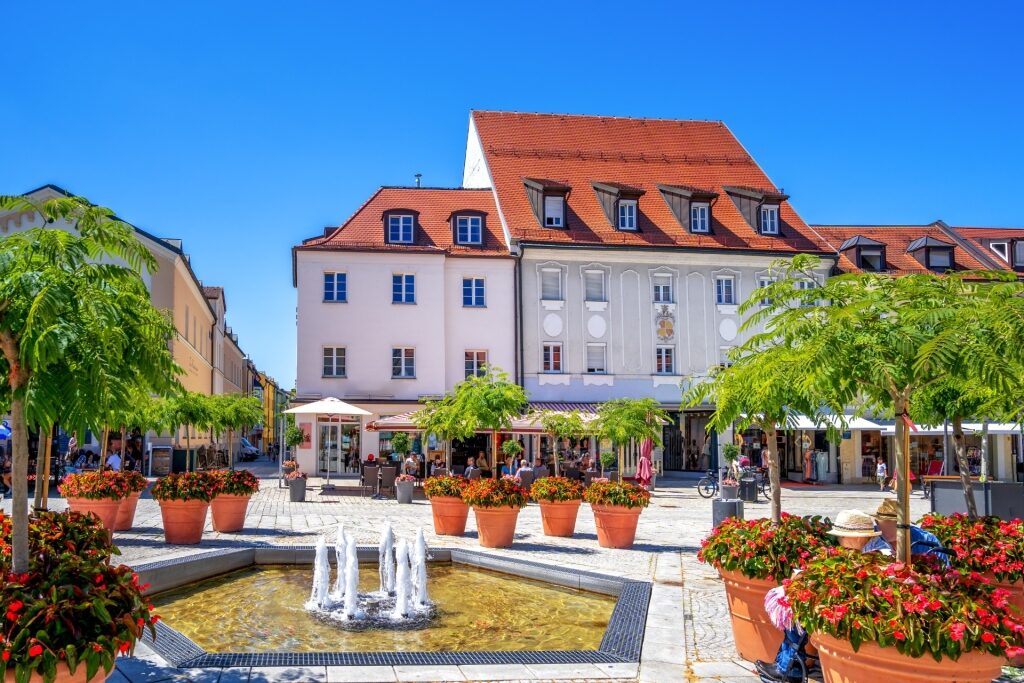
Deggendorf
Deggendorf, on the left bank of the Danube River, sits at the edge of the Bavarian Forest, making it an attractive river and university town for outdoor pursuits. At the town center, the broad, pedestrianized Stadtplatz square is flanked by pastel-colored buildings and shops, as well as the characteristic half-timbered houses.
The center also contains St. Peter and Paul’s Church of the Holy Sepulchre, with its gorgeous Baroque steeple, as well as the Alte Rathaus, or Old Town Hall. The Handwerksmuseum, or Crafts Museum, showcases local craft and trade traditions.
Deggendorf is home to the Deggendorf Institute of Technology, which contributes to its vibrant student culture and youthful vibe.
Bamberg
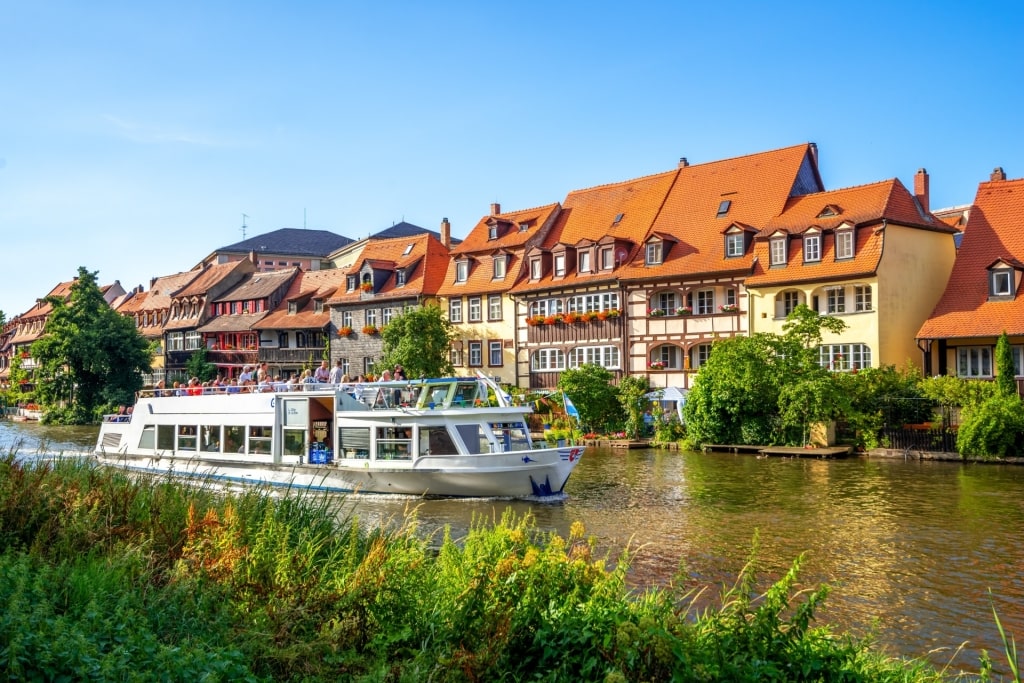
Bamberg
Bamberg, a UNESCO World Heritage Site due to its beautifully preserved medieval center, feels like a living museum, with cobblestone streets and pastel-colored houses lining the banks of the Regnitz River.
It’s one of the best-known small towns in Germany, partly for the location of the Altes Rathaus, or the Old Town Hall, which lies on a small island in the river, connected to the banks by stone bridges.
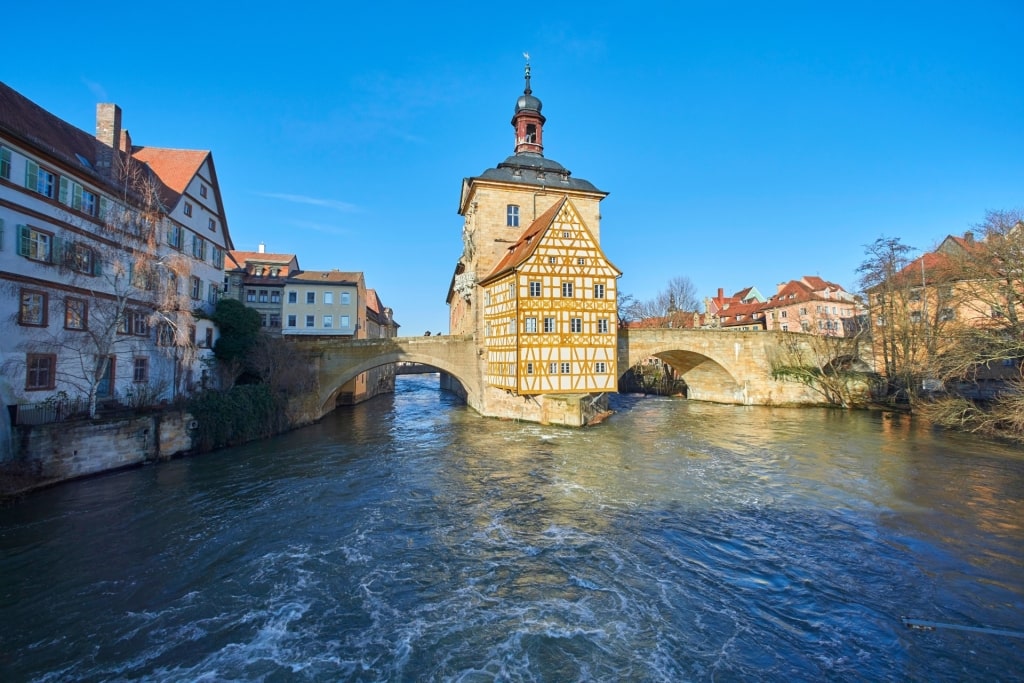
Bamberg
A walk around Bamberg reveals layers of culture and history. Bamberg Cathedral, with its four towering spires, houses the remains of Pope Clement II. The rose garden of the 17th-century Baroque Neue Residenz is a peaceful oasis.
During the summer, the combination of boat traffic and flower stands makes the river scene especially beautiful. Bavarian Bamberg is also celebrated for its beer, particularly Rauchbier—a distinctive smoked beer, which you should try when you’re in town.
Vilshofen an der Donau
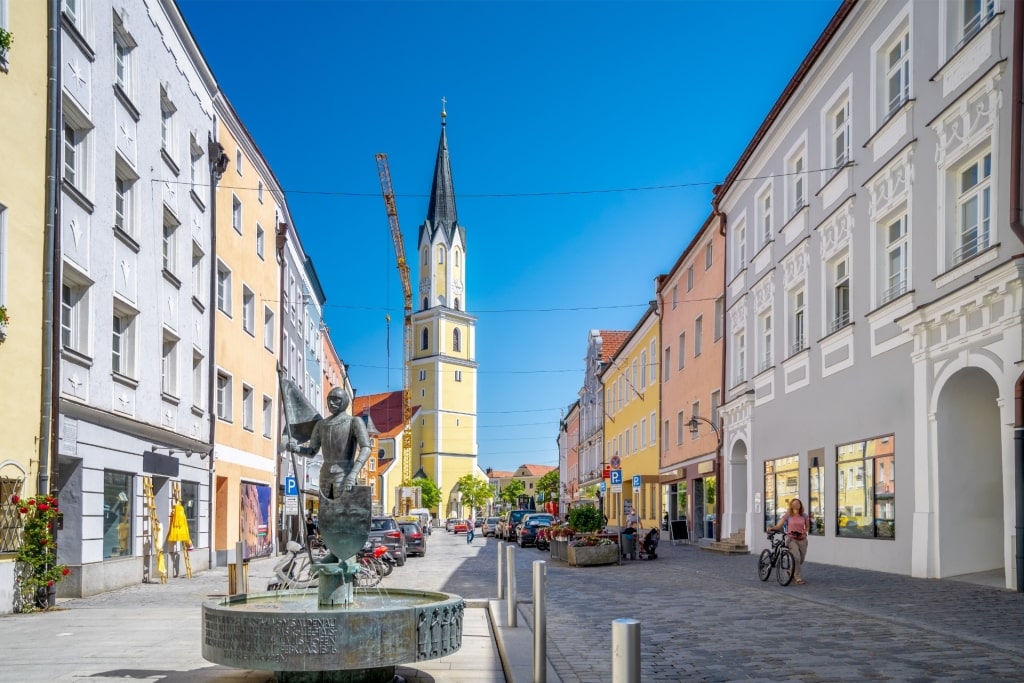
Vilshofen an der Donau
With its colorful buildings, old churches, and a surplus of hearty local dishes, including pork knuckle, Weisswurst sausage, and pretzels, Vilshofen is a classic Bavarian town. Located in the district of Passau in Lower Bavaria on the Danube, the town has a leafy riverside promenade where you can watch boats pass by and relax in riverside beer gardens.
The town, located at the confluence of the Vils, Pfudrach, and Wolfach streams, which all flow into the Danube, has earned the nickname “three-river city.”
On the cultural side, carve out some time to visit the 20th-century Baroque and Art Nouveau Schweiklberg Monastery, as well as the medieval castle and its two museums, which focus on modern art and local hunting traditions.
Regensburg
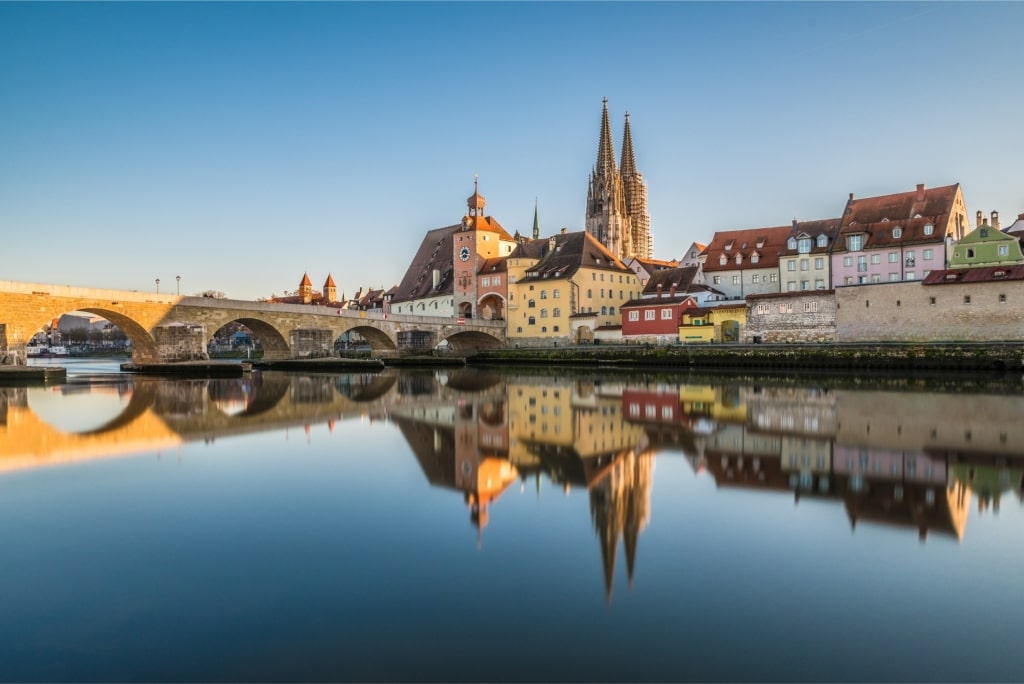
Regensburg
Regensburg is a fine-looking medieval city, with the bonus of being a UNESCO World Heritage Site. Built on the confluence of the Danube, Naab, and Regen rivers, the town bursts at the seams with lovely courtyards, squares, and ancient merchant houses.
Here, you will find the twin spires of the 13th-century Regensburg Cathedral piercing the sky, as well as the medieval 12th-century Stone Bridge spanning the Danube.
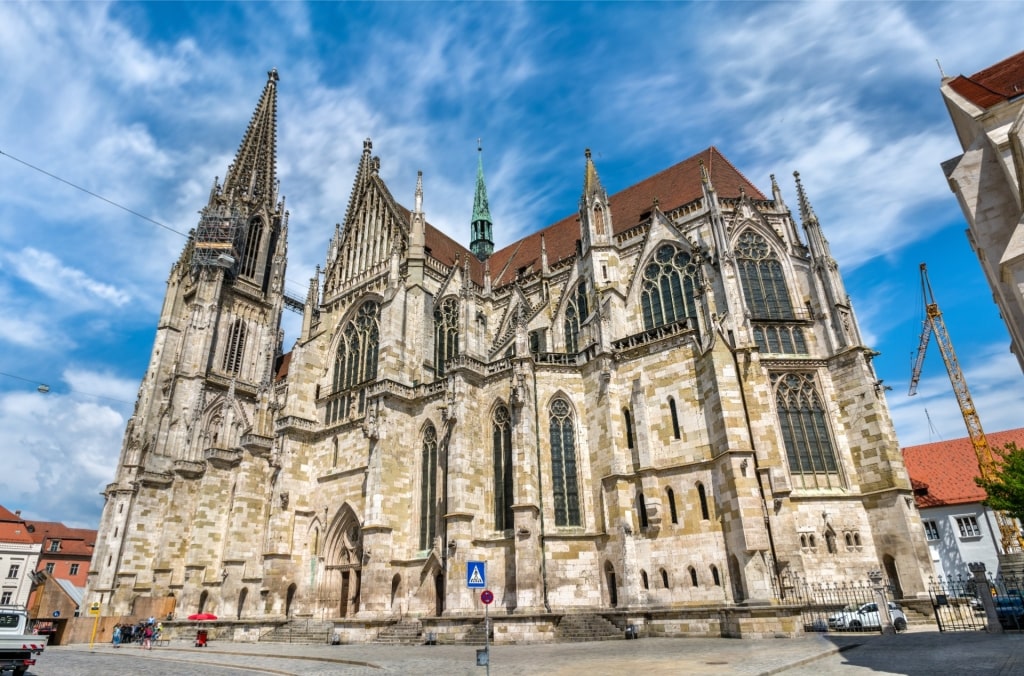
Regensburg Cathedral
The second-century Porta Praetoria Roman gate hints at the city’s ancient roots. Regensburg also feels lively due to its student population and vibrant café culture, which complements its storied history and historic Old Town.
And if you enjoy a grilled sausage, stop by Historic Wurstkuchl, one of the world’s oldest continuously operating sausage kitchens. Feast on wurst smothered in mustard, accompanied by a beer, then sit outside and watch the world go by.
Bad Wimpfen
Bad Wimpfen
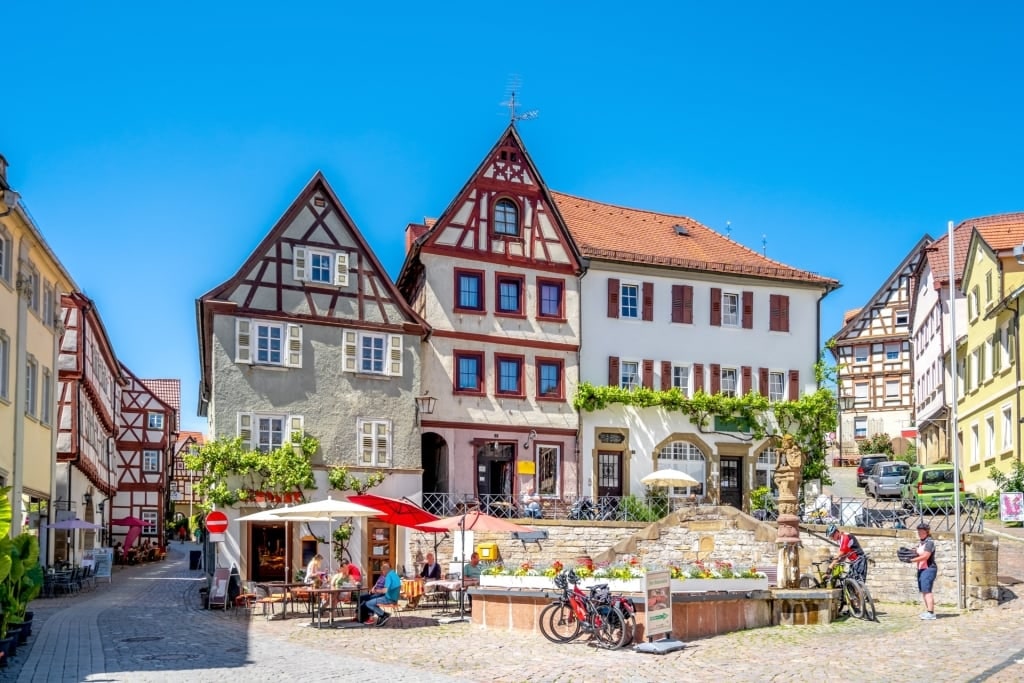
The spa town of Bad Wimpfen, in the Neckar Valley, is home to the Blauer Turm, or the Blue Tower, which dates back to the 12th century and serves as a prime example of Staufer-era Gothic and Romanesque architecture.
The tower, noted for its blue shell limestone roof, shapes the town’s silhouette and offers sweeping views. You can also visit the rest of the Kaiserpfalz, or the Imperial Palace, which offers historical information about the region in its two museums.
Bad Wimpfen
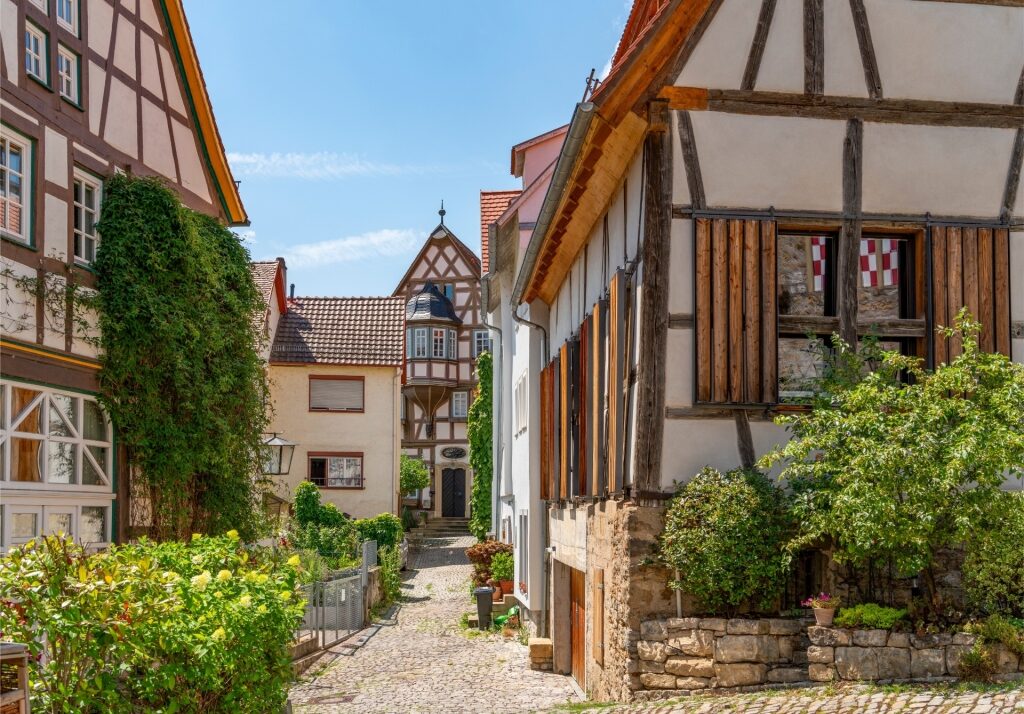
The half-timbered houses in the historic center are meticulously maintained in their original state, which lends the entire area an authentic character.
As you walk the cobblestone streets, spotting Romanesque churches, city gates, and small shops, keep in mind that Bad Wimpfen was once an imperial city of the Holy Roman Empire.
Bad Wimpfen is also an excellent destination for spa lovers, thanks to its mineral-rich thermal saltwater springs and brine baths.
Lindau
Lindau
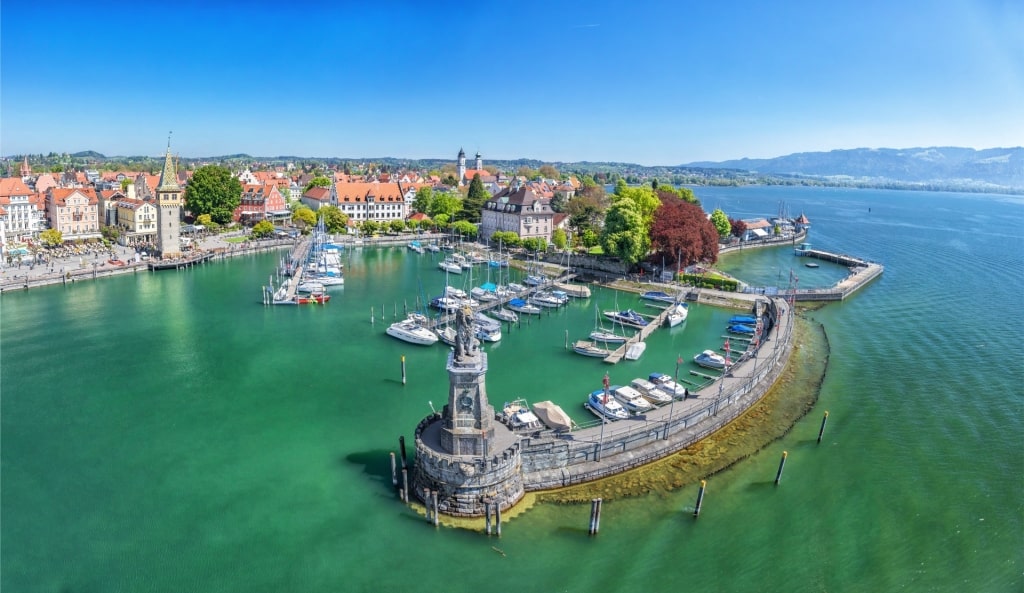
On Bodensee, or Lake Constance, in Bavaria, you’ll encounter a small island that hosts the exquisite German town of Lindau, connected to the mainland by a bridge.
The moment you enter Lindau, you will be greeted by its charming harbor entrance, featuring a magnificent Bavarian lion statue and an attractive lighthouse, built in 1856.
Lindau
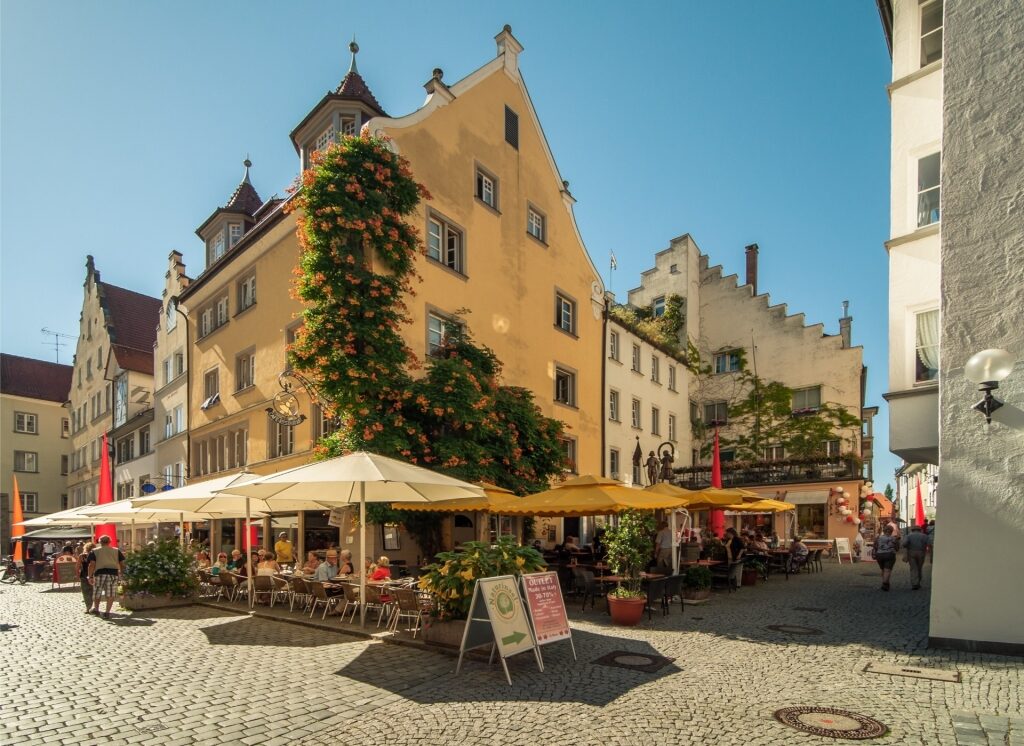
Wandering around this historical town is the best way to take in colorful buildings, animated plazas, and walking paths with stunning lake views. The stone medieval watchtower, the Mangturm, situated by the water’s edge, contributes to the romantic atmosphere.
The town’s streets are lined with galleries, boutiques, and restaurants, making for a lovely day by the lakeside. Lindau is also an excellent starting point for boat cruises to Austria and Switzerland, which are just across the lake, on opposite shores.
Read: Best Cities to Visit in Germany
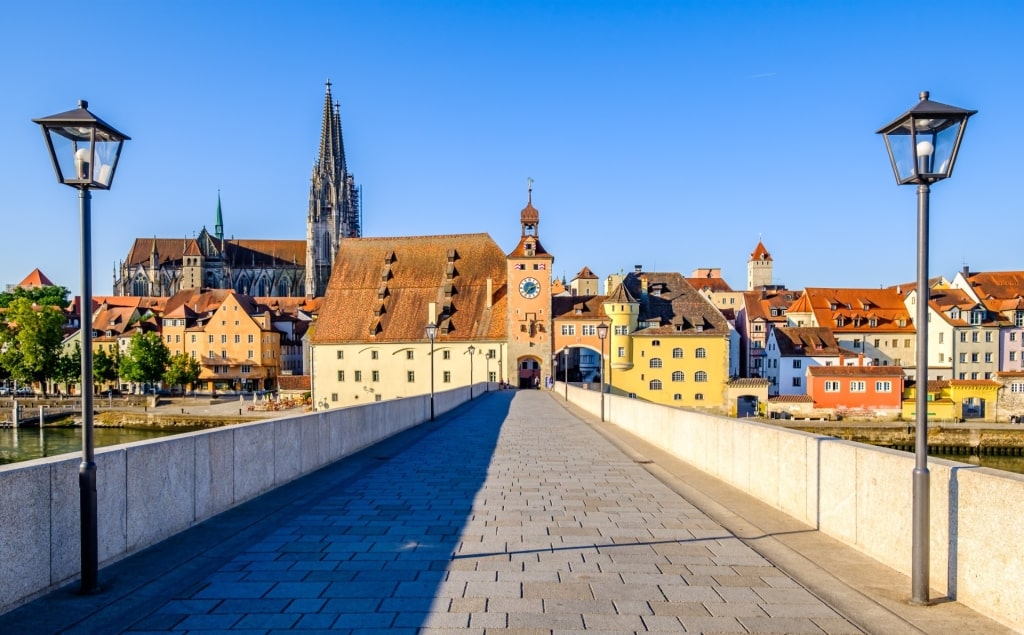
Regensburg
Discover some of the loveliest small towns in Germany on a river voyage. Browse Celebrity’s river cruises and plan your dream vacation.