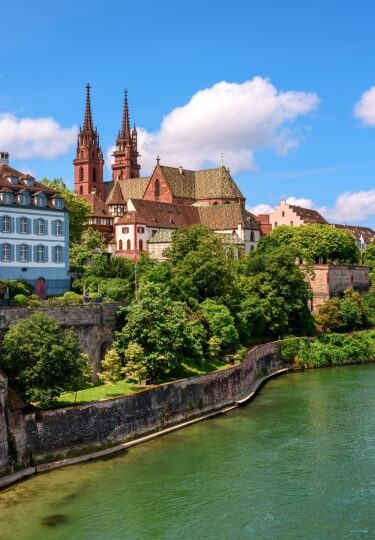
There’s a long list of things to do in Basel, Switzerland. Known as the Swiss capital of art and culture, with some 40 museums and galleries, it is also home to the annual Art Basel fair.
Switzerland’s third-largest city sits on the Rhine on the border of both France and Germany. This setting has made it an important center of commerce for centuries, with a wealth that’s obvious in its public buildings, busy shops, and new skyscrapers.
With the oldest university in Switzerland, Basel’s streets see a great mix of students, business travelers, and other visitors from around the world. It may work hard but knows how to have fun with its cosmopolitan mix of languages, food and culture.
Here are some of the best things to do in Basel, Switzerland.
Explore the Old Town
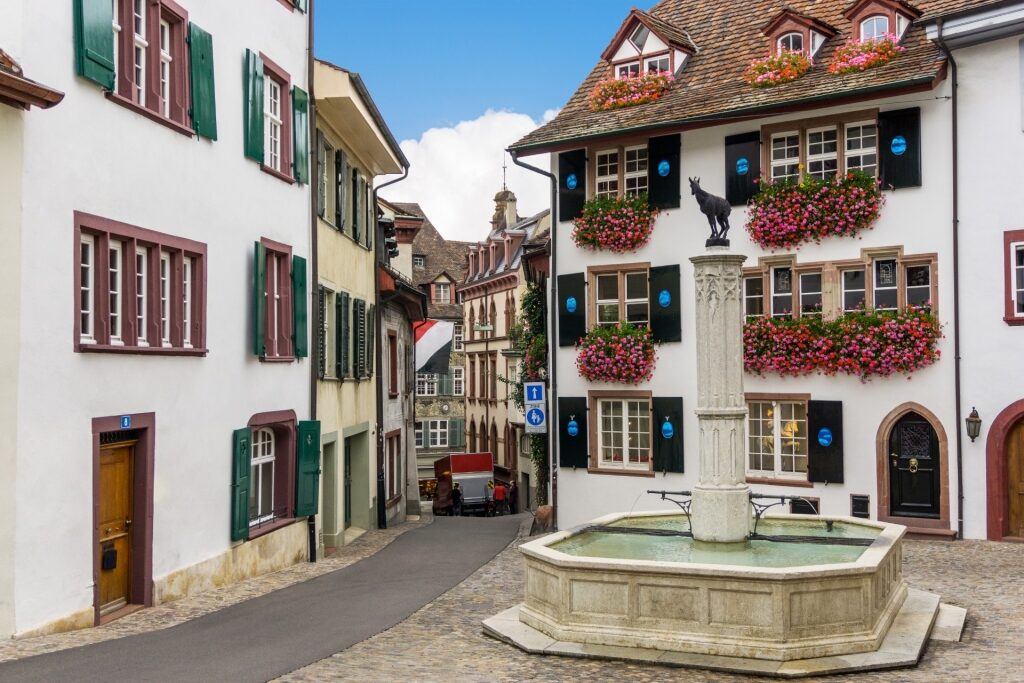
Old Town
On the higher land outside a bend in the Rhine is Altstadt, the original center. It’s an atmospheric mix of stone-flagged streets, fountains, medieval churches, half-timbered buildings, and the old Spalentor city gate.
Its core is the pedestrianized Freie Strasse, which takes its name from being made free of tolls in the Middle Ages. Already a major thoroughfare in Roman times, it boomed after the Middle Bridge—the first Rhine crossing—opened in 1226.

Freie Strasse
A wide street, still dotted with handsome guild houses, “Free Street” is now a place to spend lots of money. You’ll find major brands here from Breitling and Cartier to Swatch and Lindt Chocolate.
The north end runs into Marktplatz, while Münsterberg, about halfway, takes you up the hill to Münster. Near the southern end is the Kunstmuseum and Tinguely Fountain.
Linger in the Marktplatz
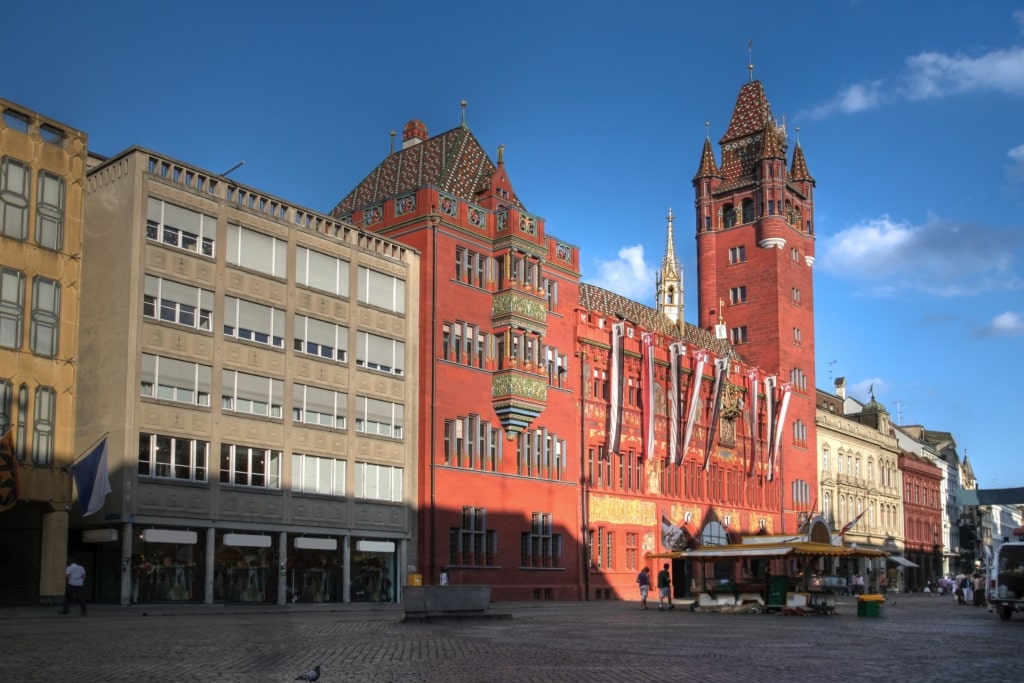
Marktplatz
The Market Place, or Marktplatz, is the heart of Basel, a central square where farmers and other sellers still set up stalls. You’ll find them there every morning except Sundays.
This is a good place to taste local cheese, hot sausage, or Basel’s famous Läckerli cookies. You’ll also see people shopping for fresh bread and flowers.
The Rathaus, or Town Hall, built in 1501, is still used by the town administration, but you can walk around its courtyard. The murals on the walls show coats of arms and local legends.
Climb the Münster Spires
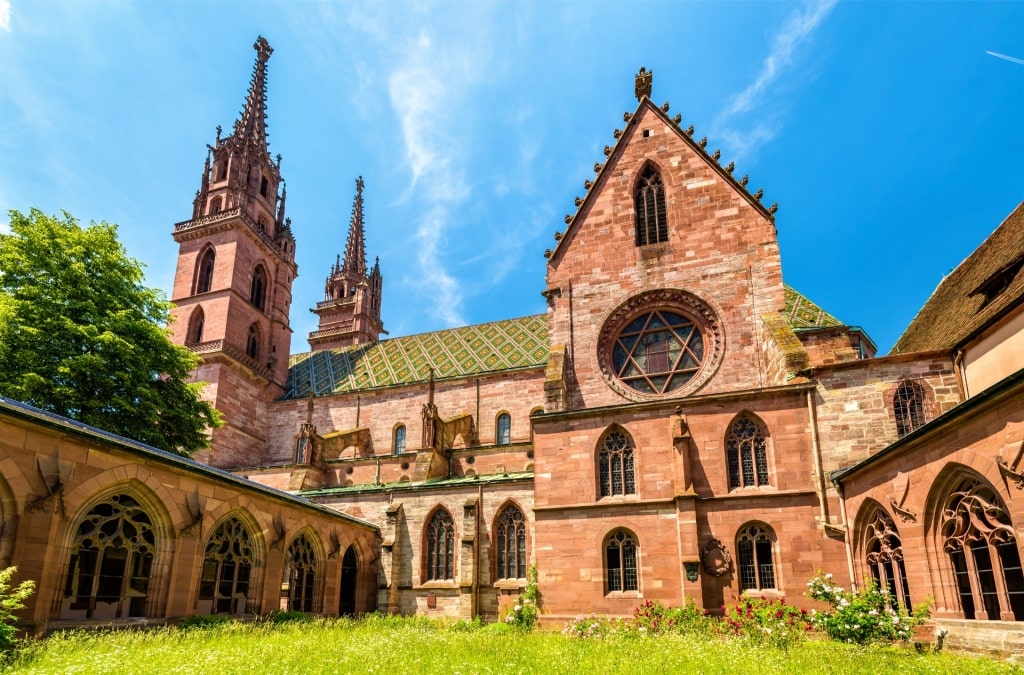
Basel Münster
Basel’s cathedral sits on a 2,000-year-old site that was once a Roman temple. The present Romanesque structure dates to the 13th century, with some reworking after a 1356 earthquake.
It’s a landmark building, sitting on a small hill to dominate the town center. Its twin spires, red sandstone walls, and diamond-patterned roof make it a memorable sight.
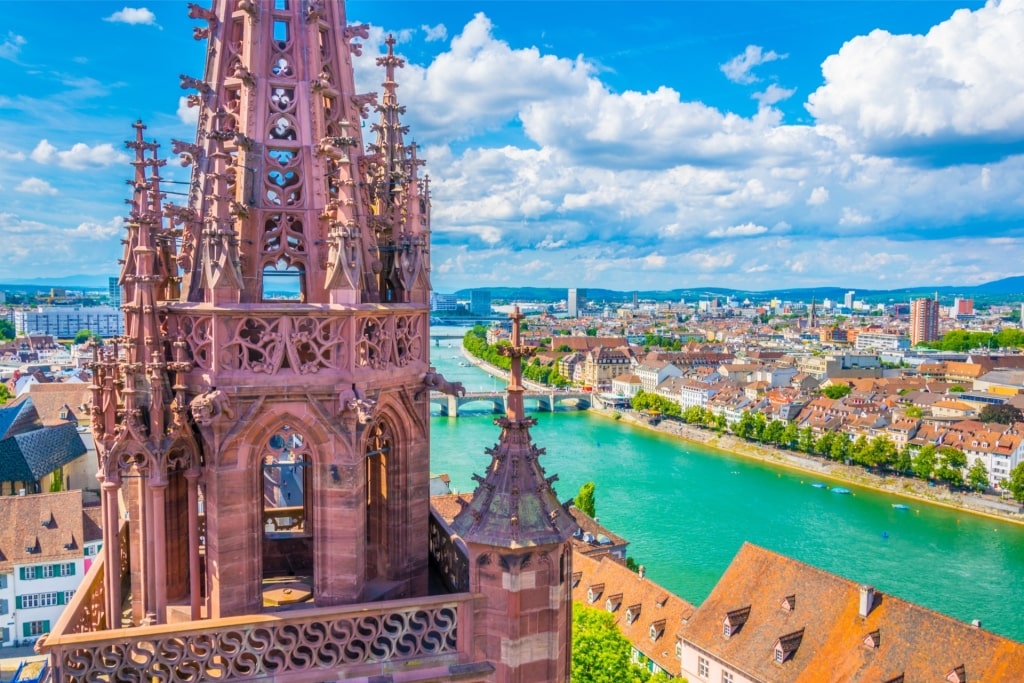
Basel Münster
Entry is free, with a small charge to climb the 242 steps to the south spires. As well as bird’s-eye views of the city and the Rhine, you’ll be looking at three countries: Switzerland, Germany, and France.
Enjoy a Rhine Panorama
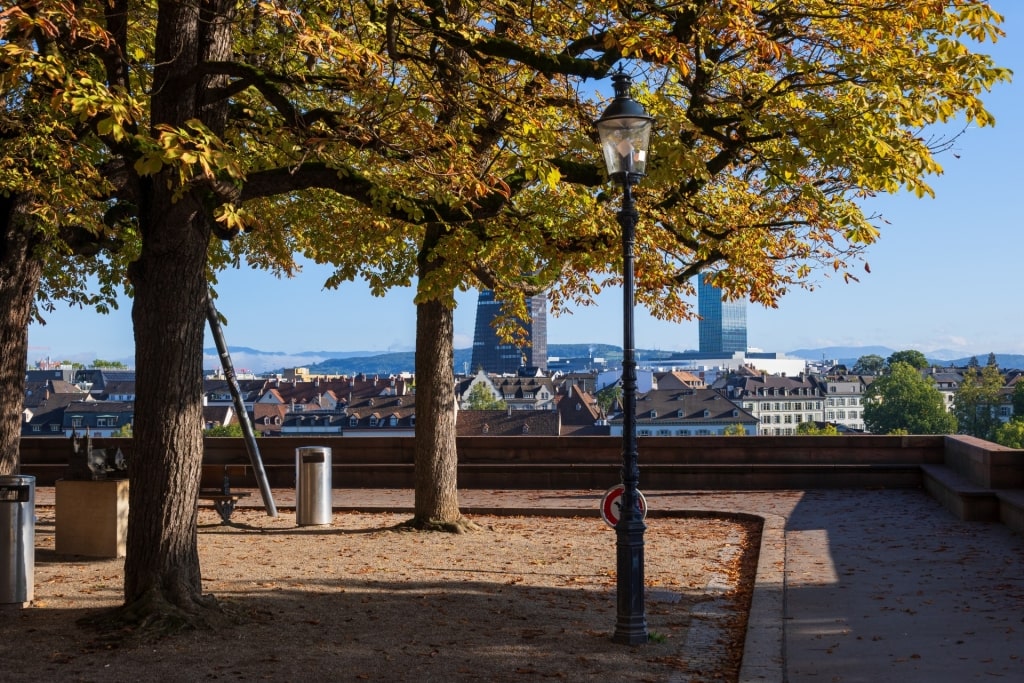
Pfalz
Explore the cloisters behind the Münster and you’ll come to the riverside Pfalz. This terrace has much-photographed views of the river and its bridges.
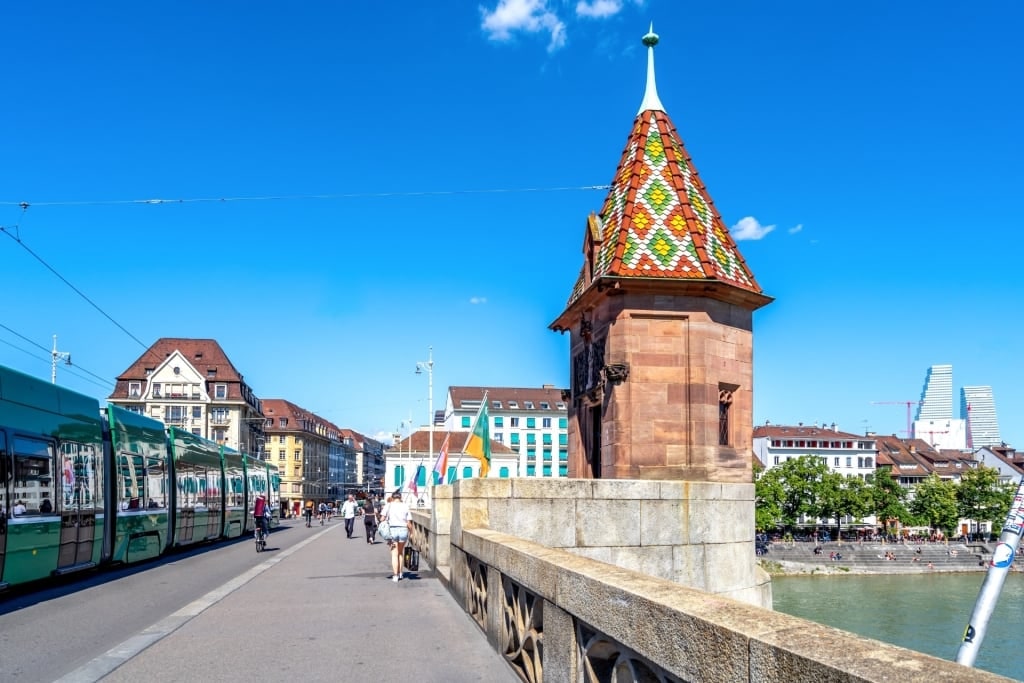
There are six city center bridges and the oldest is right in front of you. The pedestrian-friendly Mittlere Brücke, or Middle Bridge, dates to 1226 but was rebuilt in 1905.
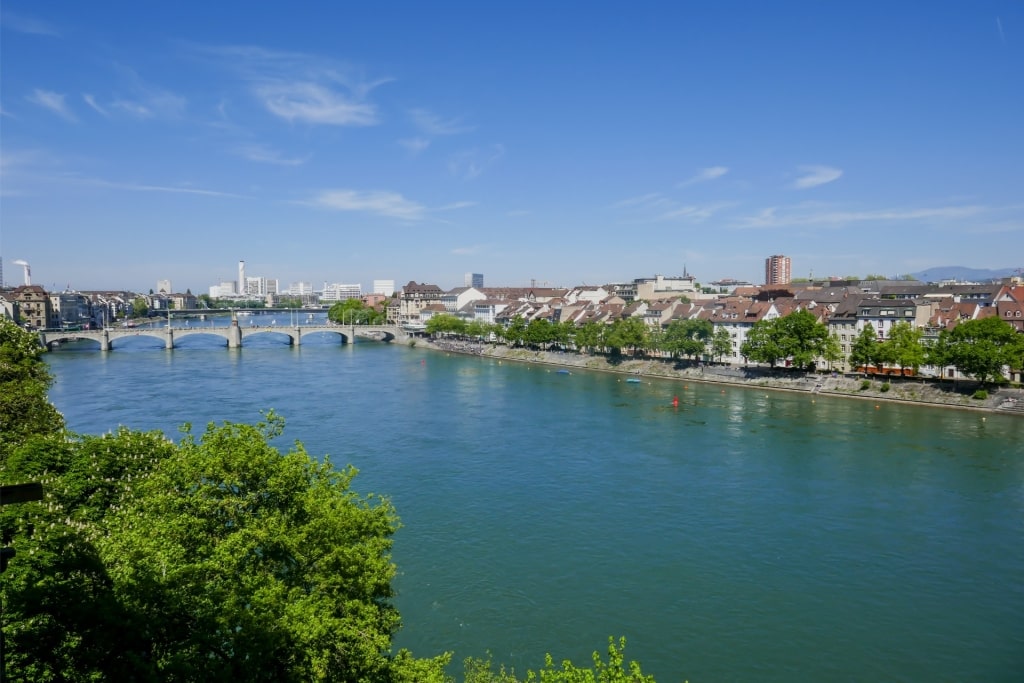
View from Pfalz
The original bridge was once the only safe crossing between Lake Constance and the North Sea. That chokepoint helped make Basel a powerhouse of medieval trade.
There’s a tiny Gothic chapel on the bridge, a faithful reproduction of the 15th-century original. A place for a quick prayer, it was also the site of public punishments.
The far bank is Kleinbasel—“Little Basel”—which lies on lower ground and hence was historically a district for poorer people. It’s now a hip area, full of trendy bars and imaginative street art.
Browse Some Art
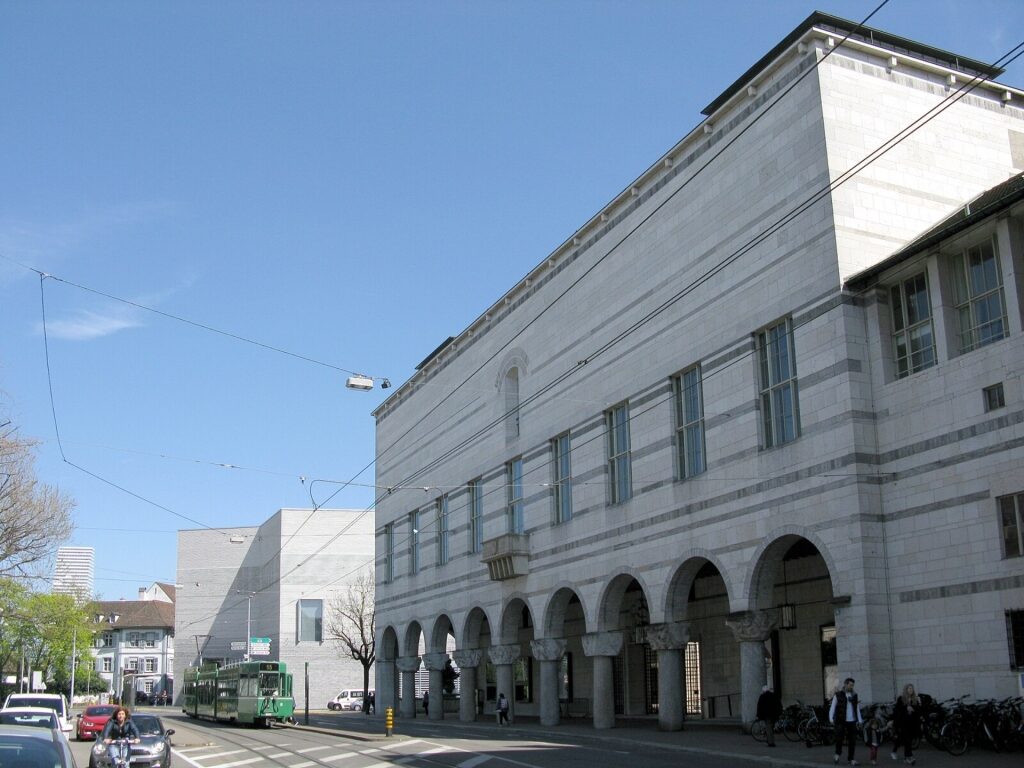
Kunstmuseum Photo by Andreas Schwarzkopf on Wikimedia Commons, licensed under CC BY-SA 3.0
Basel’s Kunstmuseum—“Kunst” means art, or skill—holds the world’s oldest public art collection, dating to 1661. In the many centuries since, it has evolved into the largest art collection in Switzerland.
The significant number of works by Holbein include his Portrait of Erasmus of Rotterdam, from 1523. Other artists on show include Picasso, Gauguin, Van Gogh, Cézanne, Chagall, and Max Ernst.
The modern Gegenwart wing by the Rhine houses contemporary art. Here you’ll find works from names such as Joseph Beuys, Rosemarie Trockel, and Robert Gober.
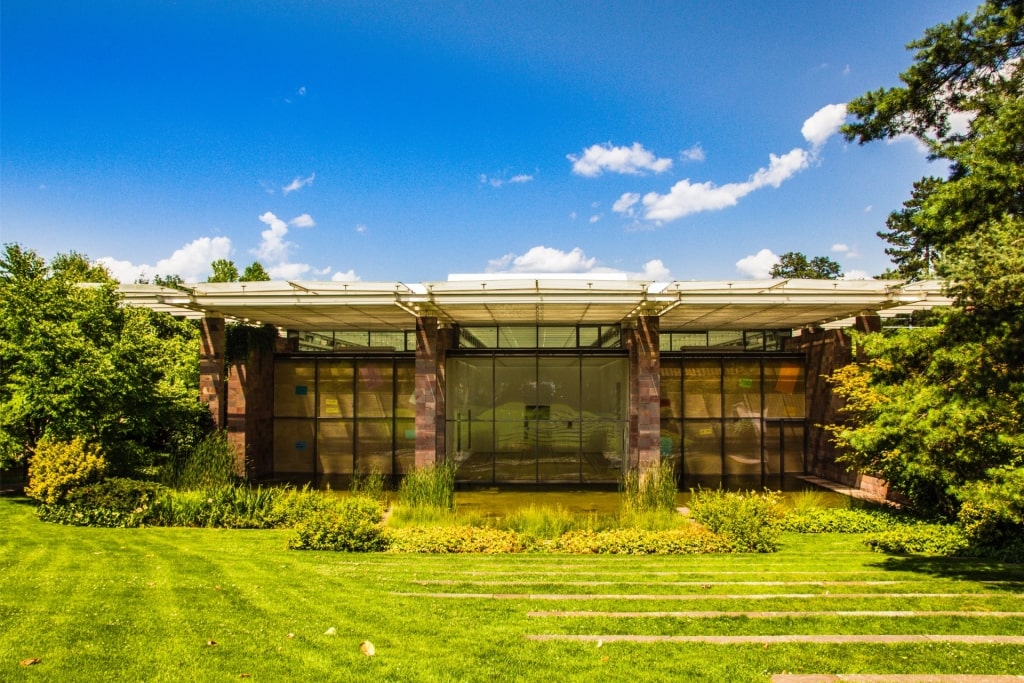
Fondation Beyeler
There’s more modern art at the Renzo Piano-designed Fondation Beyeler just outside Basel, in Riehen, reached by Tram #6. The gallery is known for its masterpieces by Picasso, Monet, Matisse, and Giacometti, among many others.
Discover the Tinguely Museum
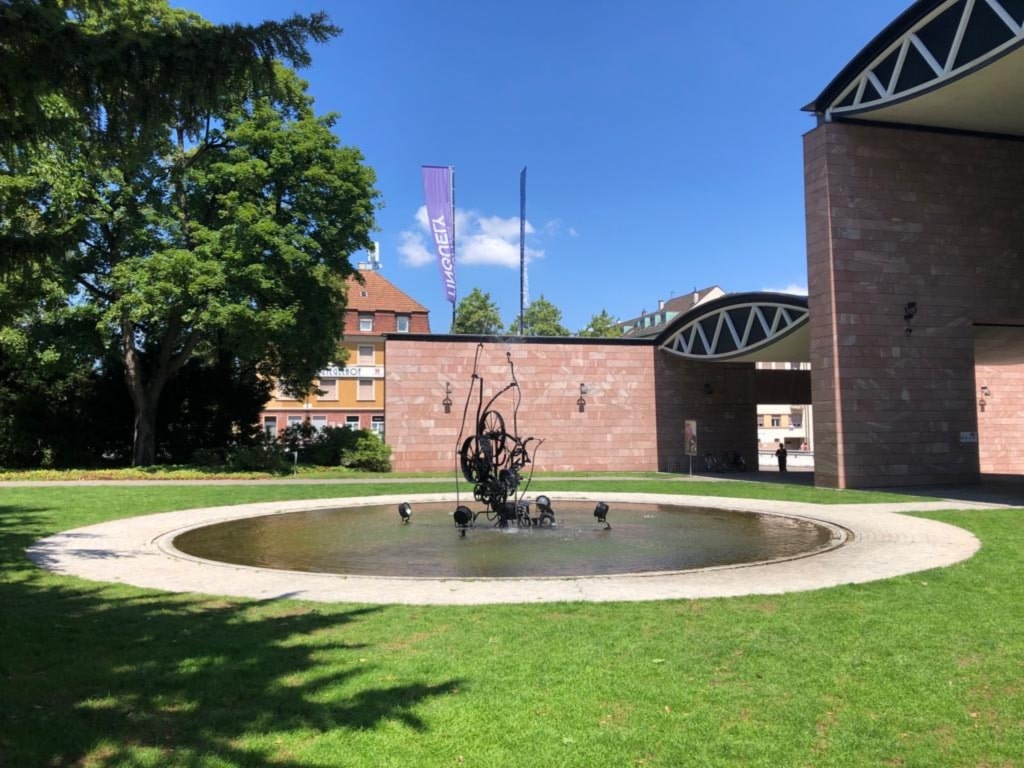
Tinguely Museum Photo by Lantina on Wikimedia Commons, licensed under CC BY-SA 4.0
Artist Jean Tinguely died in 1991 but his work lives on in this striking museum by Swiss architect Mario Botta. It’s full of his kinetic sculptures that move in intriguing, sometimes unsettling ways but are always interesting.
Tinguely grew up in Basel but was much influenced by the French avant-garde. He was a Dadaist whose post-WWI belief in absurdity was a counter to warfare and capitalism.
Fundamentally, however, his work is there to be enjoyed for what it is. The Tinguely Fountain outside Theatre Basel will give you a real flavor of the fun he evokes.
Swim in the Rhine
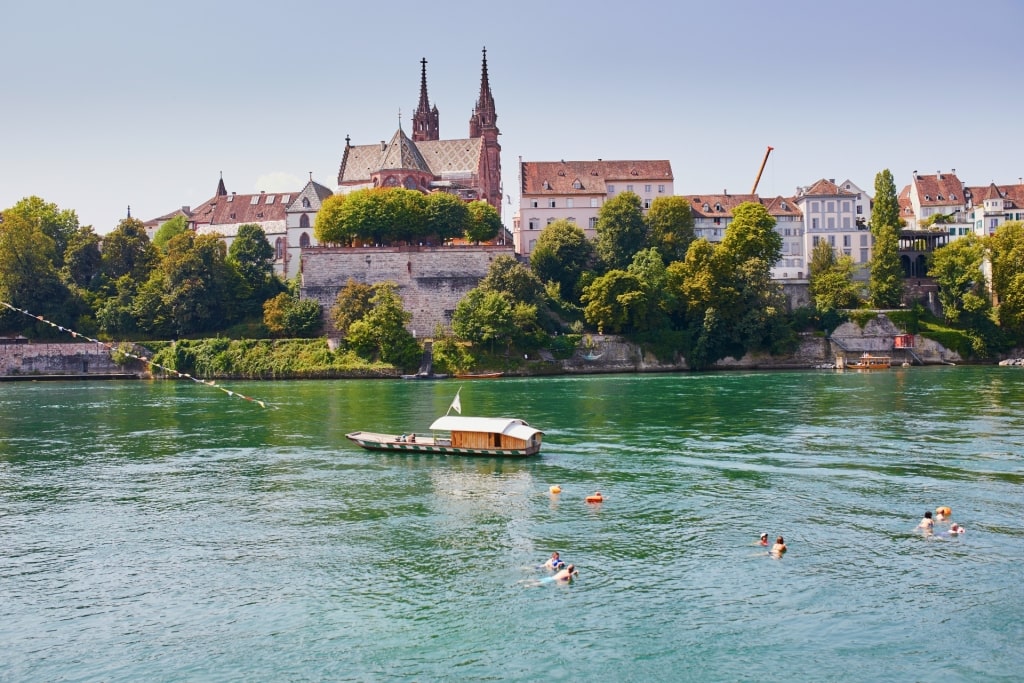
Rhine River
In summer, floating down the Rhine has become one of the most popular things to do in Basel. You pack your belongings into a fish-shaped dry bag—a Wickelfisch—that also serves as a float as you go with the current.
You can rent a Wickelfisch from the Basel Tourism Office or buy them in various shops as an unusual souvenir. Free outdoor showers let you wash off before you change back into your dry clothes.
The river flows strongly, so nervous first-timers might want to join a guided group. You can also just take a dip in Rheinbad St. Johann beside the Johanniterbrücke, which even has a pool for non-swimmers.
Drink in a Buvette
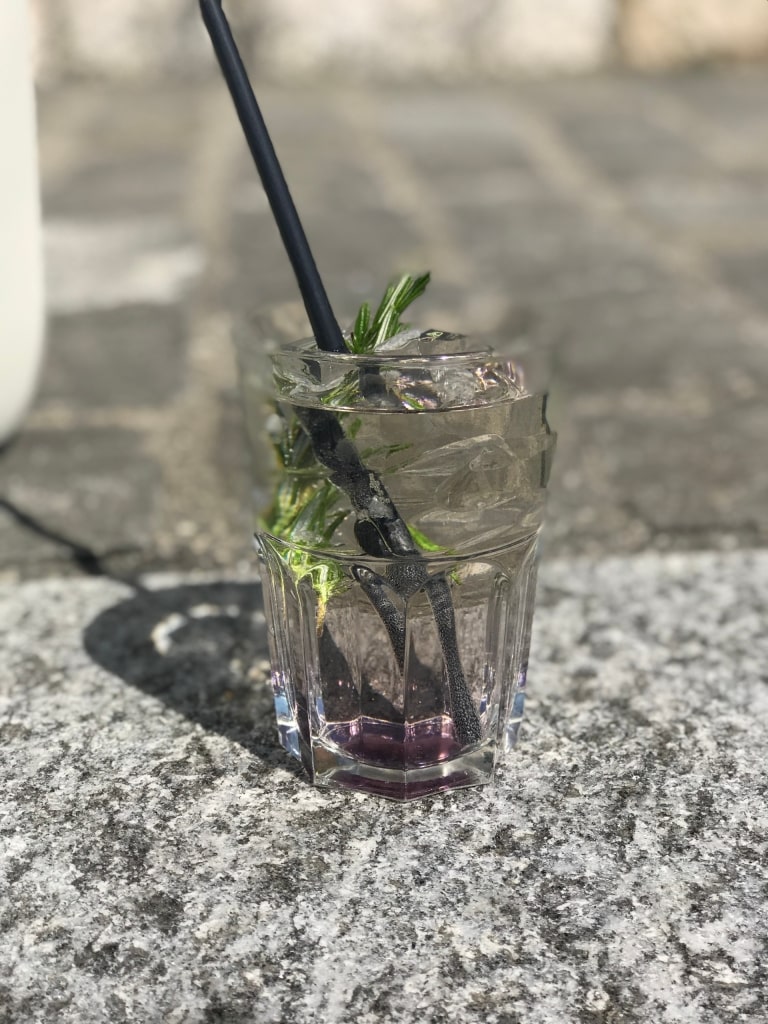
Cocktail
Celebrate your dip in the Rhine—or a fountain—with the traditional post-swim “Panache”: beer with lemon soda. The Rhine bank has a number of pop-up bars in summer.
These buvettes offer basic Basel food, such as sandwiches or burgers, and plenty of drinks, from coffee to cocktails. They open for lunch and stay busy until late, up to 11 p.m., perfect for lazy sunny afternoons.
The buvettes work on a deposit—or “depot”—system of a few Swiss francs for every glass or plate, so do bring some cash to speed that up. The depot is returned when you bring your glasses and crockery back, a simple system that keeps the bars tidy.
Ride a Ferry
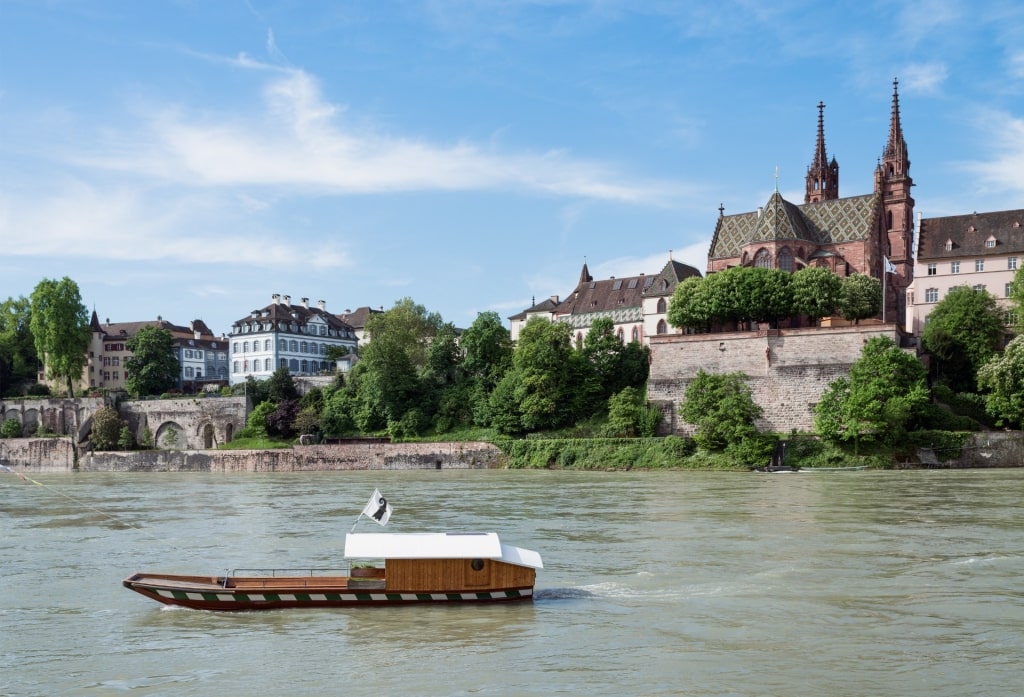
Rhine River
The usual way to cross the Rhine is by one of the bridges, perhaps on a tram. However, there are four small, current-powered pedestrian ferries to offer a fun alternative.
For only a few Swiss francs, you can experience the short crossing in what’s technically called a ”reaction ferry”. Without a motor, the ferryman—or ferryfrau—angles the boat on its cable to use the power of the river itself.
These ferryfolk have a reputation for entertaining passengers with stories, often embellished. There’s a local expression—“Verzell du das em Fährimaa!”, or “Tell that to the ferryman!”—that implies skepticism.
Have a Sausage
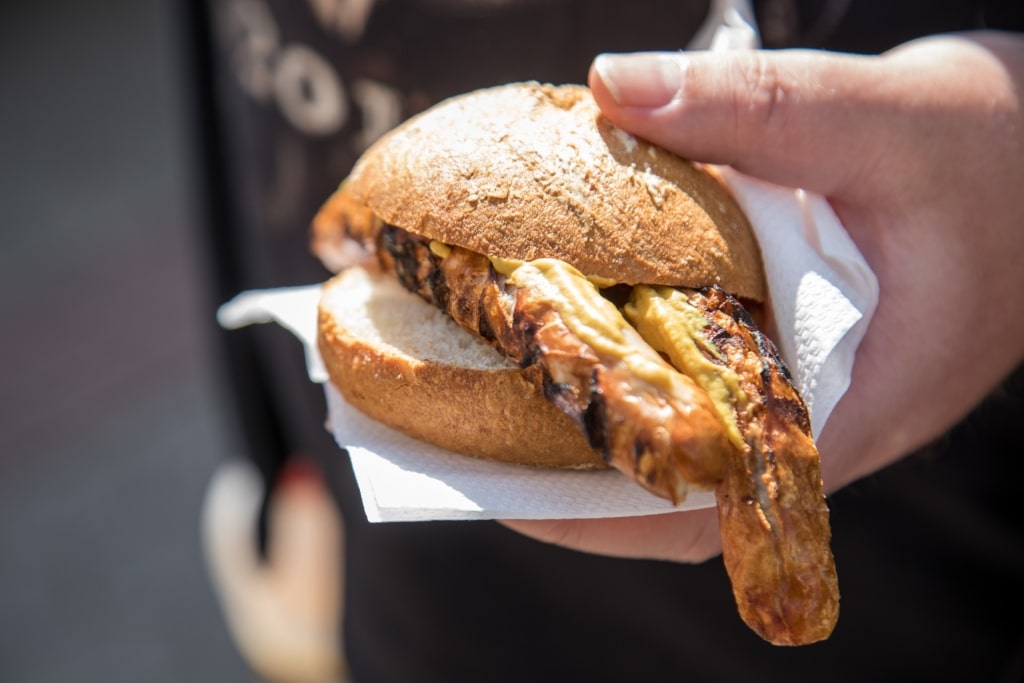
Sausage
Cheese may be the food most associated with Switzerland and not without reason. Fondue or raclette—melted cheese on boiled potatoes, with pickles—are both popular winter dishes in Switzerland.
In summer, the snack of choice is a hot, fresh bratwurst from a street stall. These tasty pork and beef sausages are usually served on paper plates with a brötli, or bread roll, and mustard.
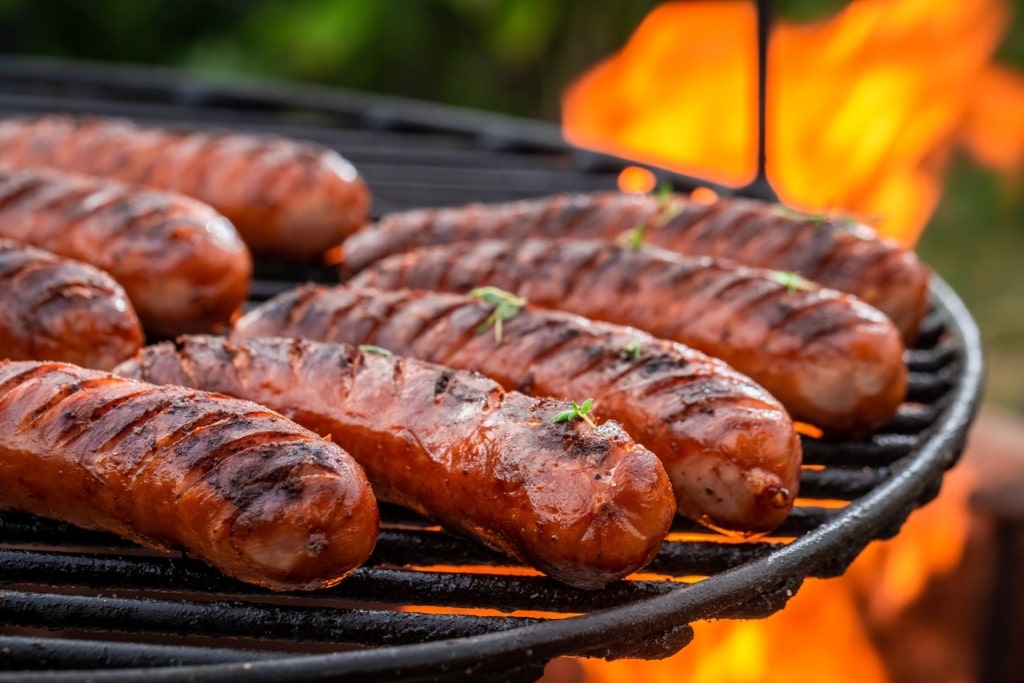
Grilled sausage
Walk along the Rhine on a summer’s day and the smell of grilled sausages is a constant. Locals bring disposable charcoal barbecues down to the riverside to do their wurst.
Vegetarians will enjoy the fact that the street food scene in Basel has many other options. You’ll find everything from German pretzels and Middle-Eastern falafels to Mexican tacos and Indian curries.
Snack on a Cookie
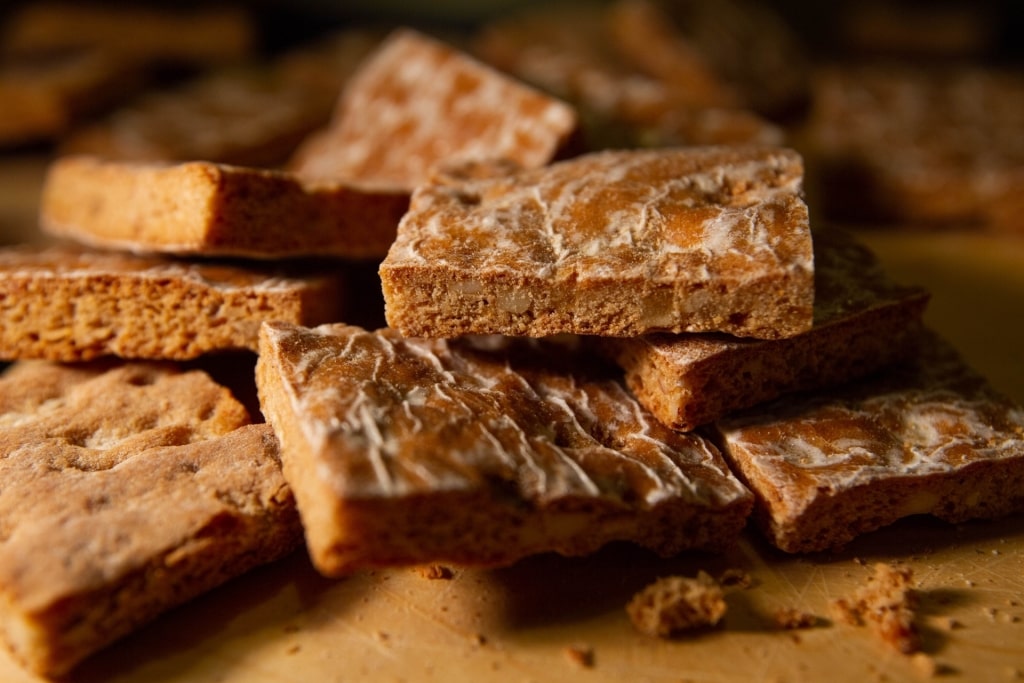
Basler Läckerli
Among the essential things to do in Basel is sample a traditional Basler Läckerli. These rectangular spiced cookies, rich with almonds, have a complex, chewy taste, blending sweetness and spice.
Ingredients include honey, candied fruit, nuts, cinnamon, cloves, and nutmeg. Every bakery sells its own variety and, as you’re in Switzerland, a chocolate coating is an option.
Two major Swiss manufacturers have their home in Basel. Läckerli Huus is the biggest, while Jakob’s is the oldest, founded in 1753, and makes a thicker, handmade biscuit.
Have Fun in the Toy Museum
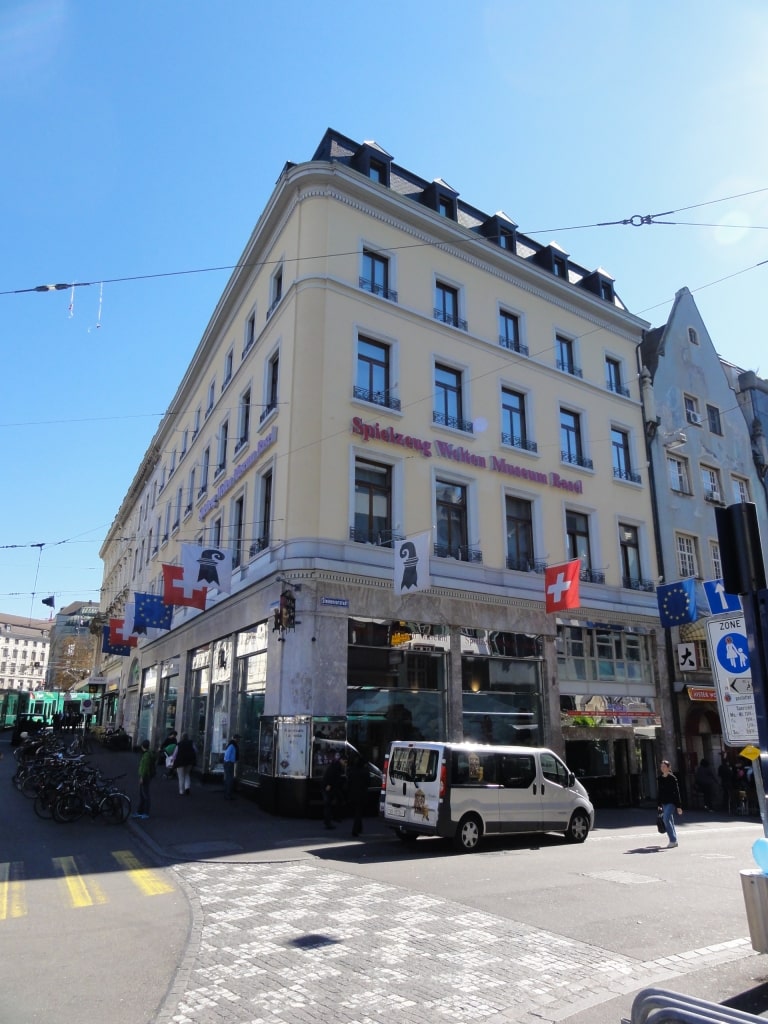
Spielzeug Welten Museum Basel Photo by Mattes on Wikimedia Commons, licensed under CC BY 2.0 DE
Spielzeug Welten Museum Basel on Barfüsserplatz might look small outside but is almost overwhelming inside. Countless dolls supplement what’s claimed to be the world’s largest collection of teddy bears.
There are dolls from around the world, as well as doll houses and other toys such as train sets. Many dolls are arranged in fascinating tableaux such as a schoolroom, a hospital, or a Victorian shop.
Step Into History
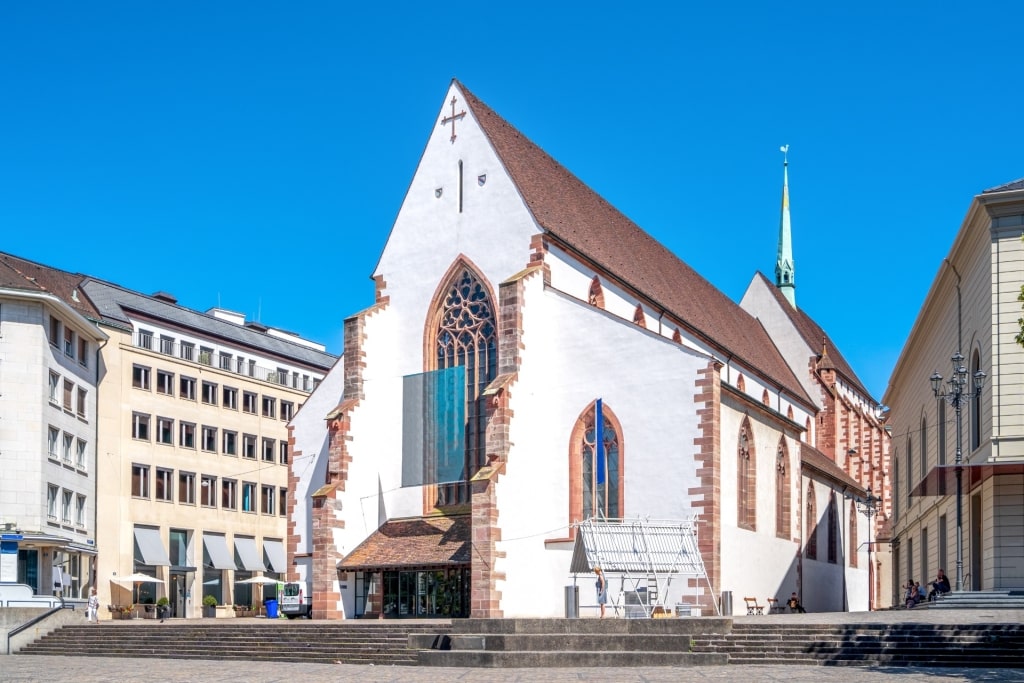
Barfüsserkirche
The Historisches Museum Basel is set in several buildings across the city, each a gem in its own right. The two major ones are essentials for anyone with an interest in understanding Basel.
The main museum site is the beautiful Barfüsserkirche, a 14th-century Gothic church. The soaring stone arches inside are a background for everything from Roman artifacts to Renaissance treasures.
Highlights include painted wooden religious sculptures and medieval tapestries. Cabinets of curiosities from 16th- and 17th-century collectors are also fascinating.
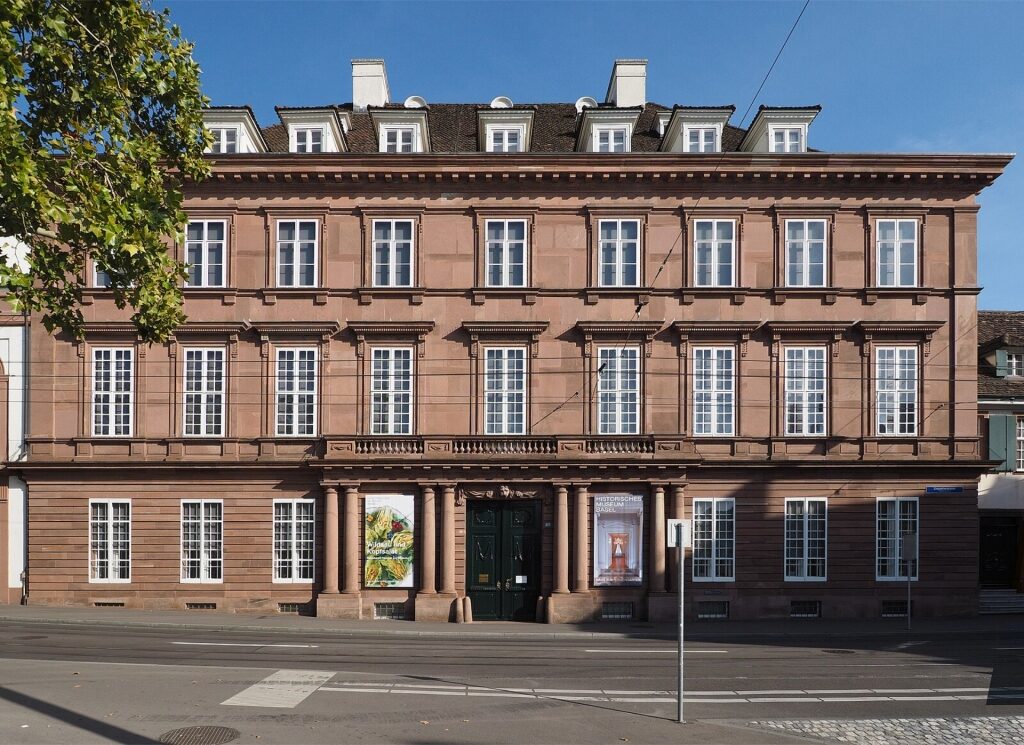
Kirschgarten Photo by Dr. Nachtigaller on Wikimedia Commons, licensed under CC BY-SA 4.0
A key satellite location is Haus zum Kirschgarten, built as a private mansion in the 1770s. It shows off the lifestyle of a rich merchant of the time, when Basel was wealthy from the manufacture of silk ribbons.
As well as the house itself, and the cherry garden for which it’s named, all its original furnishings are preserved. You’ll find handmade wallpaper, Chinese porcelain, and a beautiful collection of dollhouses.
Visit Three Countries
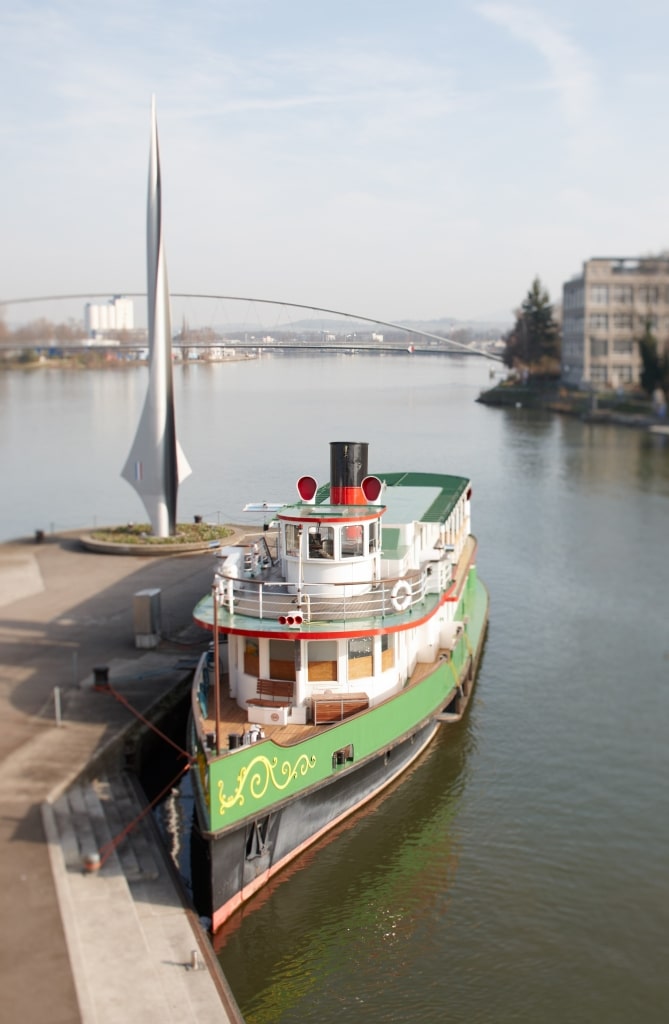
Dreiländereck
On the end of a large pier jutting out into the Rhine is the Dreiländereck, or “Three Land Corner”. This is symbolically where the borders of Switzerland, Germany, and France meet—the real point is impractically in the middle of the river.
A tall monument, looking something like a rocket, represents peace between the three countries. You can walk around it in under a minute, passing the flag of each nation.
In summer, this artificial island has a bar whose terrace enjoys a nice river view. There’s even a small city beach, complete with palm trees.
Make Your Own Paper
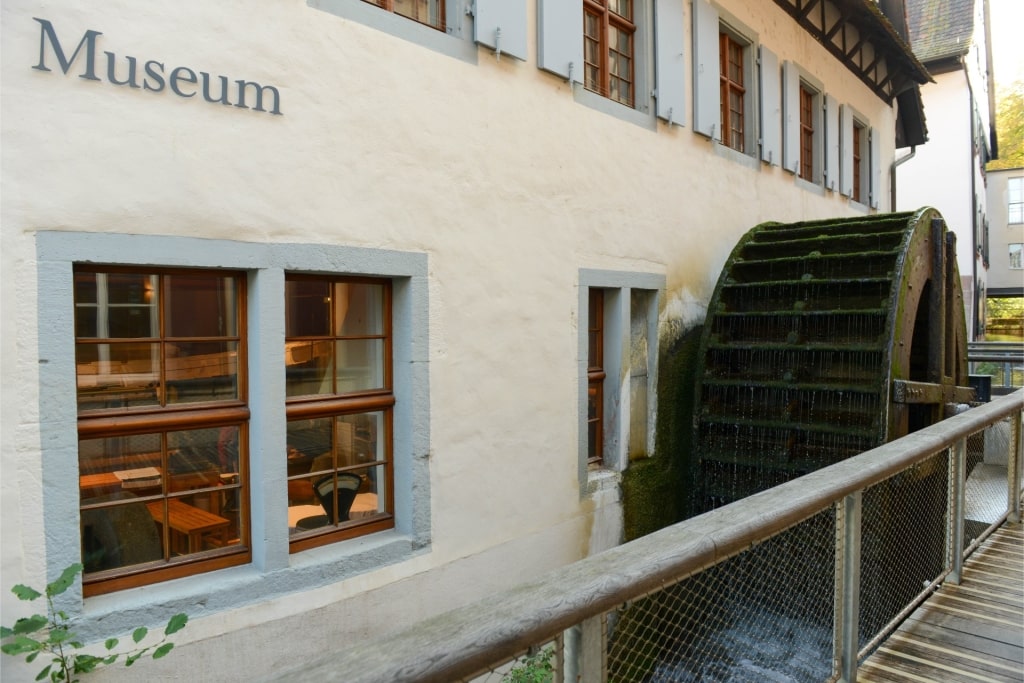
Paper Mill Museum
The south side of the Rhine, with its pharmaceutical towers, remains more industrial than the northern, commercial side. You can see part of that history in the still-functioning 15th-century Papiermühle, now the Paper Mill Museum.
In this hands-on museum you follow the whole process from pulp to printing, including making your own paper. The mill sits in the beautifully preserved medieval St. Alban neighborhood.
Basel was once a major printing center, with its university founded in 1460, and huge demand for paper. The Rhine powered the mills, while textile waste for pulp flowed in from all over Europe.
Basel
Has this guide to the best things to do in Basel tempted you to visit? Browse Celebrity’s itineraries and find the perfect cruise for you to discover the charms of this delightful Swiss city.