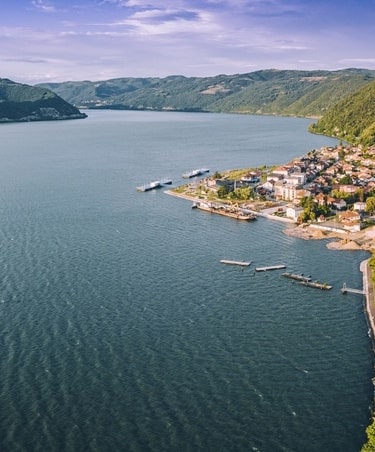
Donji Milanovac, Serbia, isn’t a place one visits for famous cafes, world-renowned museums, or extraordinary shopping experiences. No, it’s not a run-of-the-mill tourist town. It’s a place of dramatic landscapes. A town within a national park. Where the river meets the mountains. The gateway to the Iron Gates Gorge and Lower Danube region. A place filled with history, just minutes from a prehistoric site holding the secrets of Europe’s oldest urban settlements.
From Djerdap National Park to the Golubac Fortress, to the nearby archaeological site, Lepenski Vir, Donji Milanovac is the perfect stop on a Danube River cruise.
Donji Milanovac at a Glance
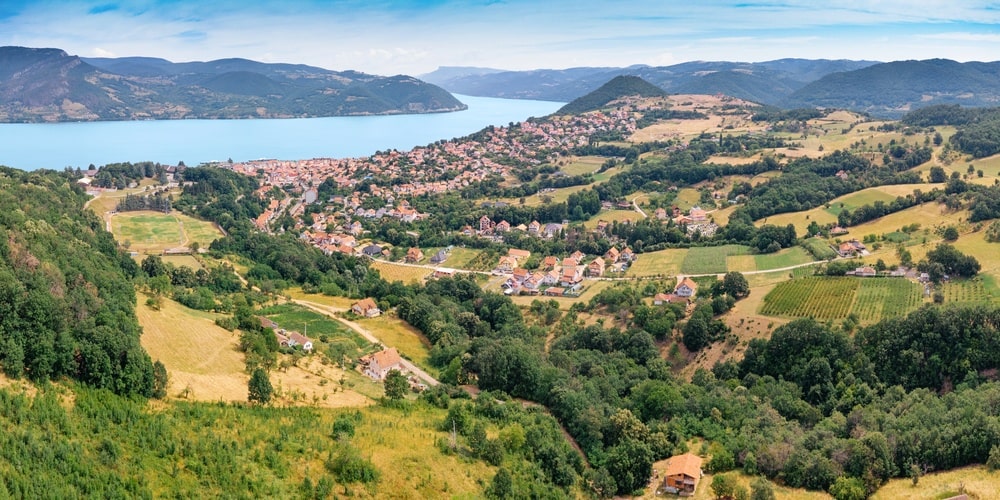
Rolling green hills and patchwork fields slope gently down toward Donji Milanovac, overlooking the expansive waters of the Danube River in Serbia’s Đerdap National Park.
An outlier to major cities like Budapest and Belgrade so beloved by Danube River cruise guests, Donji Milanovac has a declining population, now sitting at about 2,000 people. Yet it’s a highlight for river cruise travelers.
Located on the banks of the Danube, the Iron Gates are a series of gorges sitting just across the river from Romania. But it’s not only the river that brings the beauty; Donji Milanovac sits within Djerdap National Park, offering opportunities to get up close to nature on hiking trails teeming with wildlife.
Only 15 minutes away, visitors can explore the prehistoric site of Lepenski Vir, whose culture developed over thousands of years.
The Iron Gates Divide and Connect Two Countries
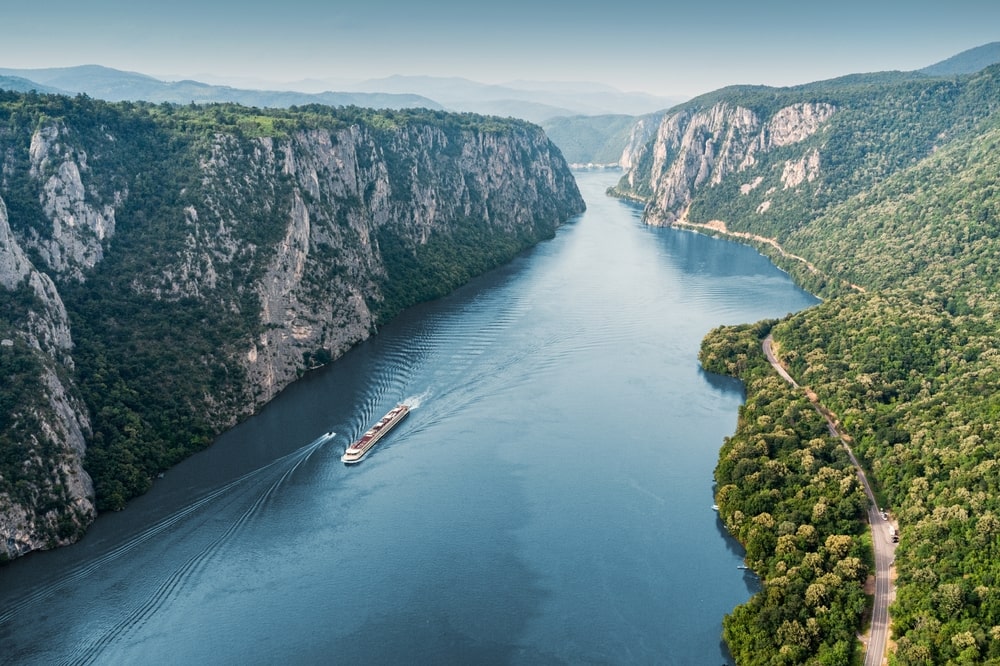
Aerial view of a cruise ship traveling through the Danube River’s Iron Gate between Serbia and Romania.
What are the Iron Gates and why are they important? Known as the Ðerdap gorge system in Serbian, the Iron Gates are a series of narrow, winding gorges stretching 83 miles along the Danube River. Only 492 feet across at their narrowest, they’re also considered the official gateway between the Middle Danube and Lower Danube regions.
The Iron Gates are more than just beautiful. They solidified their importance in 1972 when one of the largest hydroelectric projects of its time was completed. A joint project of Romania and the former Yugoslavia, the Iron Gates now have two dams and two hydroelectric power plants that generate power for both Romania and Serbia.
The project also made navigating the river less dangerous and allowed for more traffic and larger ships to pass through. Previously, underwater boulders, whirlpools, and strong currents created challenging conditions for sailors daring to navigate this area. The locks at the Iron Gates Dam provide a more controlled setting, deepening the water for ships and controlling currents.
The Natural Beauty of Djerdap National Park, Serbia
Donji Milanovac sits inside Serbia’s largest national park, Djerdap National Park, which stretches 62 miles along the Danube and spans over 63,000 hectares. With opportunities for hiking and biking (bring your own, as rentals are not currently available), this is a chance to enjoy a different side of Serbia.
Djerdap National Park’s mountains, valleys, and canyons are covered in hundreds of species of herbs, trees, and shrubs, which include Turkish hazel, hackberry, walnut, lilac, silver linden, field maple, and downy oak. Visit in the springtime to see the multicolored wildflowers set against the vibrant green mountains. Autumn rewards hikers with surroundings of bright reds, golds, and oranges.
Keep your eyes out for the abundance of wildlife, which includes deer, lynx, wolves, jackals, golden eagles, Eurasian eagle-owls, and black storks.
Those interested in geology will surely appreciate the Geointerpretative Center, which offers a geological interpretation of the area by combining geomorphology and geoheritage to help better understand the past while using nature responsibly in the future.
As a former tour guide for national parks tours, one of my favorite things to do when visiting a national park is stopping at visitor centers. Djerdap is no different. Besides offering information about park roads, hiking trails, and activities, the Visitor’s Center shares the geological history, as well as plant, animal, and cultural interests within the park. Multimedia, text, and visual displays raise awareness about environmental protection. For those with disabilities, text descriptions are available in braille, and tactile displays, including one with fossils, enhance the experience.
Golubac Fortress Guards the Gorge
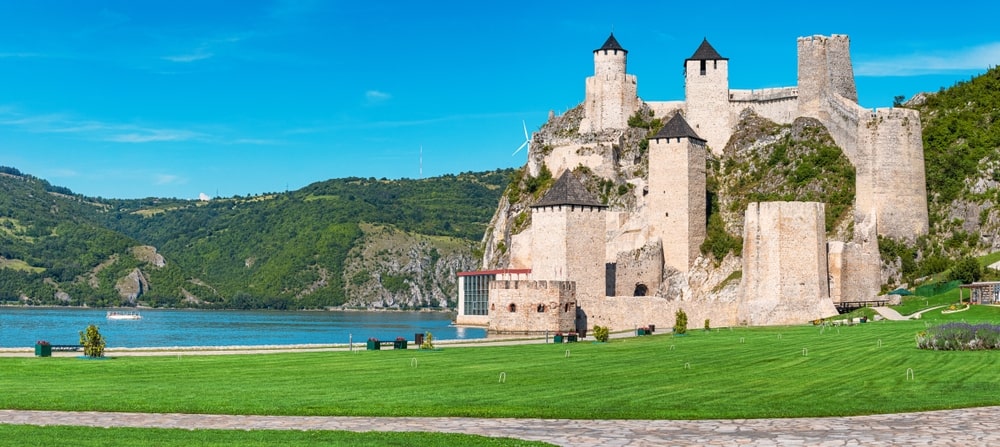
Discover the historic Djerdap Gorge and Golubac Fortress in Serbia, where medieval stone towers and walls stand against a backdrop of scenic river views and lush green hills.
Known as the Guardian of the Djerdap Strait, Golubac Fortress rises from the rocks along the water at the entrance of Djerdap National Park, its 10 towers connected by ramparts evoking images from “Game of Thrones.” Though first mentioned in 1335, the exact dates of construction and who ordered it remain a mystery.
Claimed by the Ottomans in 1389 after the Battle of Kosovo, control of the fortress shifted two years later between the Ottomans, Serbians, and Hungarians. In 1428, Hungary attacked the fortress in the Siege of Golubac, but the Ottomans were victorious in the end. Throughout the centuries, battles continued to be fought, and the fortress changed hands multiple times.
Reopened to visitors in March 2019 after an EU-funded restoration (2014–2019), the fortress welcomes visitors to exhibitions such as The Knights of the Golubac Fortress, War Equipment and Armaments, and cannons.
One tower houses panels, page translations, and replicas of Miroslav’s Gospel, “Divine Inspiration.” The oldest preserved Serbian Cyrillic manuscript, it was written and painted by Serbian monks in the last quarter of the 12th century. The original document, added to UNESCO’s Memory of the World Register in 2005, is housed along your river cruise route at the National Museum of Serbia in Belgrade, but is only occasionally on display to protect it from light and environmental damage.
The Fortress also guards a connected archaeological area holding a medieval lime kiln, a hammam, and a Roman house.
Visit Lepenski Vir To Learn About the Ancient Cultures of This Area
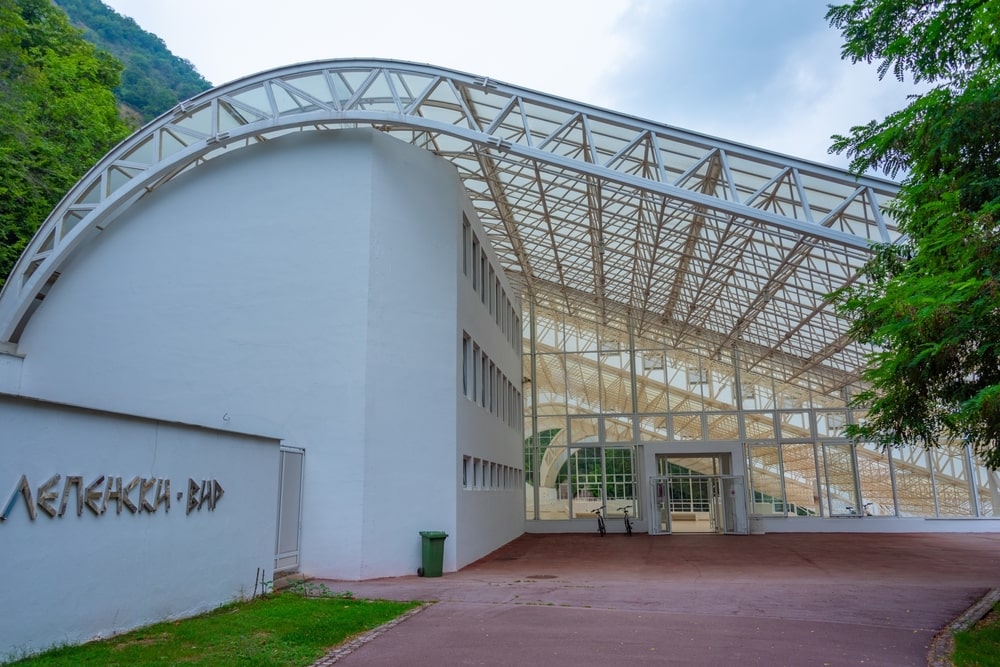
Modern glass-and-steel architecture spans the protective dome of the Lepenski Vir Visitor Center in Serbia, housing one of Europe’s most significant Mesolithic archaeological sites.
Just 15 minutes down the road from Donji Milanovac sits one of the largest and most significant prehistoric archeological sites from the Stone Age, Lepenski Vir.
Discovered in 1960 and excavated by archaeologist Dragoslav Srejović from 1965 to about 1970, Lepenski Vir was a settlement on the bank of the Danube River occupied during the Mesolithic and Neolithic periods. With 136 buildings discovered during excavations indicating planned construction of houses and shrines, it’s the first urban settlement discovered in Europe.
Artifacts found at Lepenski Vir include needles, hooks, spatulas, tools, amulets, and jewelry made of bones. Its inhabitants were, without a doubt, fishermen, due to their location along the river and the numerous fish sculptures with human-like faces.
Lepenski Vir is truly a must-visit location for a peek into long-gone human settlements.
FAQs
While river cruises include well-known cities like Budapest, Vienna, and Bucharest, they also offer some lesser-known locations that surprise and delight guests. Here are a few quick answers to questions you might have about visiting Donji Milanovac on a Danube cruise.
Where is Donji Milanovac?
Donji Milanovac, Serbia, sits on the banks of the Danube River nearly in the center of the Iron Gates, which is widely accepted as the dividing point of the Lower and Middle Danube. River cruise stops immediately before and after are normally Belgrade, Serbia, and Vidin, Bulgaria.
What are the Iron Gates of the Danube?
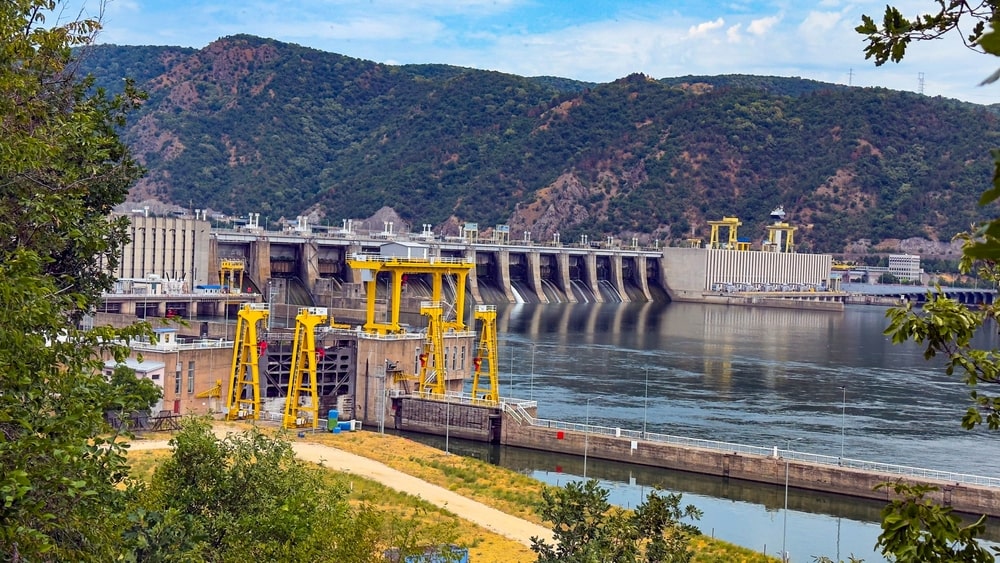
The massive Iron Gate I Hydroelectric Power Station spans the Danube River, serving as a vital energy hub and border crossing between Serbia and Romania.
The Iron Gates are a series of narrow gorges along the Danube River where it flows between Serbia and Romania. Known for their stunning scenery, archaeological sites, and a national park, they also have two hydroelectric dams and power stations, supplying power to both countries.
Why do Danube River cruises stop in Donji Milanovac?
While the town itself is quite small, without much urban development, Donji Milanovac is surrounded by great natural beauty, offers access to Lepenski Vir archaeological park and the impressive Golubac Fortress, and is the perfect stop to explore Djerdap National Park.
How do you visit Lepenski Vir from Donji Milanovac?
Only 15 minutes from Donji Milanovac, the quickest and easiest mode of transportation to view the incredible archaeological finds at Lepenski Vir is a taxi. There’s a local bus that generally departs three times per day, but that takes about an hour and includes 45 minutes of walking. There are also tours available.
Donji Milanovac: The Secret Town on the Danube You Shouldn’t Miss
From striking scenery to historic battle sites and ancient civilizations, this lesser-known stop along the Danube River holds surprises at every bend in the river. With Celebrity River Cruises℠, you can visit this must-see destination and many more like it across Europe.
Explore river cruises to Donji Milanovac, Serbia, and start your journey today.