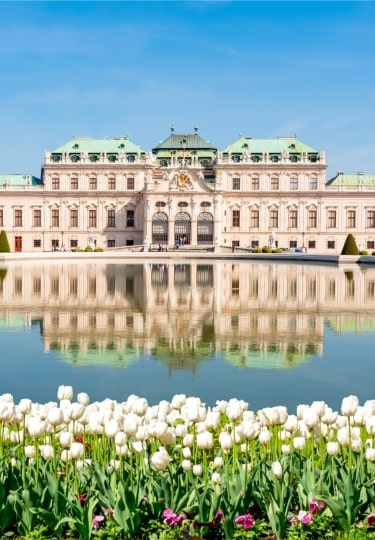
Asking what is Vienna known for will give you a long list of answers. From coffee and cakes to its music and architecture, this elegant city has had an outsized impact on the world.
Much of that is because of its history as the capital of the powerful Habsburg Empire that ruled from this crossroads of Europe for nearly 600 years. In Vienna, the emperors cultivated a luxurious lifestyle that has left a major mark on many walks of life.
Imperial Grandeur
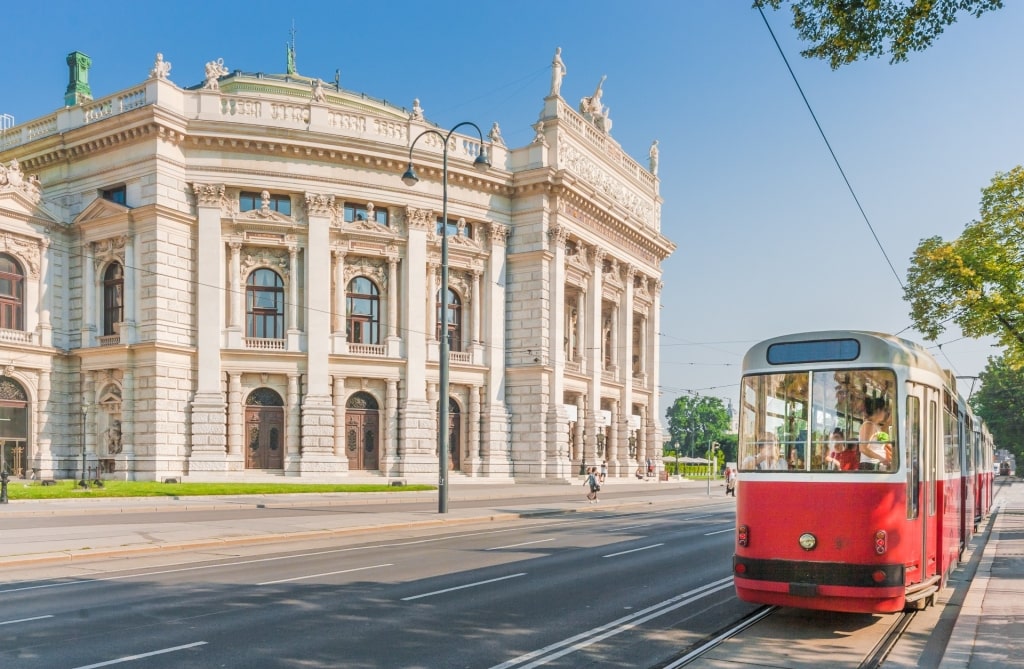
Ringstrasse
The Habsburg dynasty’s most obvious legacy is seen in Vienna’s architecture. From 1278 to 1918, its imperial grandeur was expressed through luxurious palaces, handsome boulevards, and imposing public buildings.
The city walls were cleared in the mid-19th century and replaced with the circular Ringstrasse. This boulevard was laid out with ornate buildings, including the Vienna State Opera, the Parliament Building, City Hall or Rathaus, and the University of Vienna.
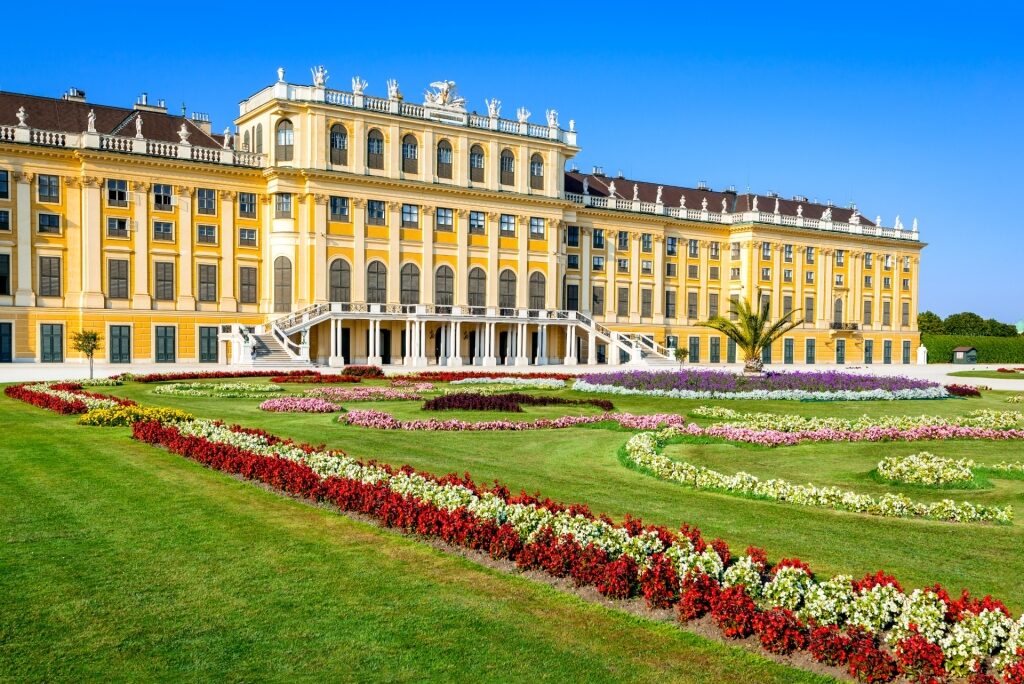
Schönbrunn Palace
Other key sights start with Schönbrunn Palace, former summer residence of the Habsburg rulers. Its 1,441 rooms include the Mirror Room where Mozart performed for Empress Maria Theresa at the precocious age of six.
The Habsburg winter residence was Hofburg Palace, a massive complex that now holds the Spanish Riding School and several museums. Among them is the Imperial Treasury, which has treasures such as the Holy Lance—said to have pierced Christ’s side.
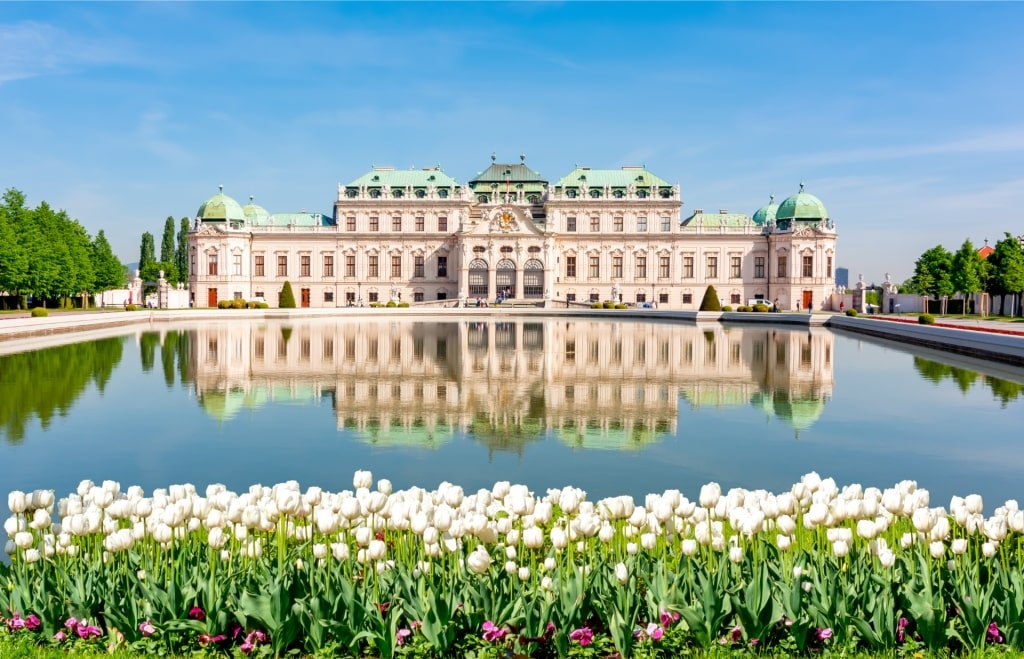
Belvedere Palace
The Belvedere Palace is actually two baroque palaces, joined by a formal French garden. Inside is a vast collection of Austrian art, including the world’s largest collection of works by Gustav Klimt.
Stephansdom, the awe-inspiring Gothic St. Stephen’s Cathedral, was completed in 1578 after several centuries of work. Its south tower, affectionately called “Steffi” by locals, is 446 feet high and has a great view of Vienna—although you have to climb 343 steps to see it.
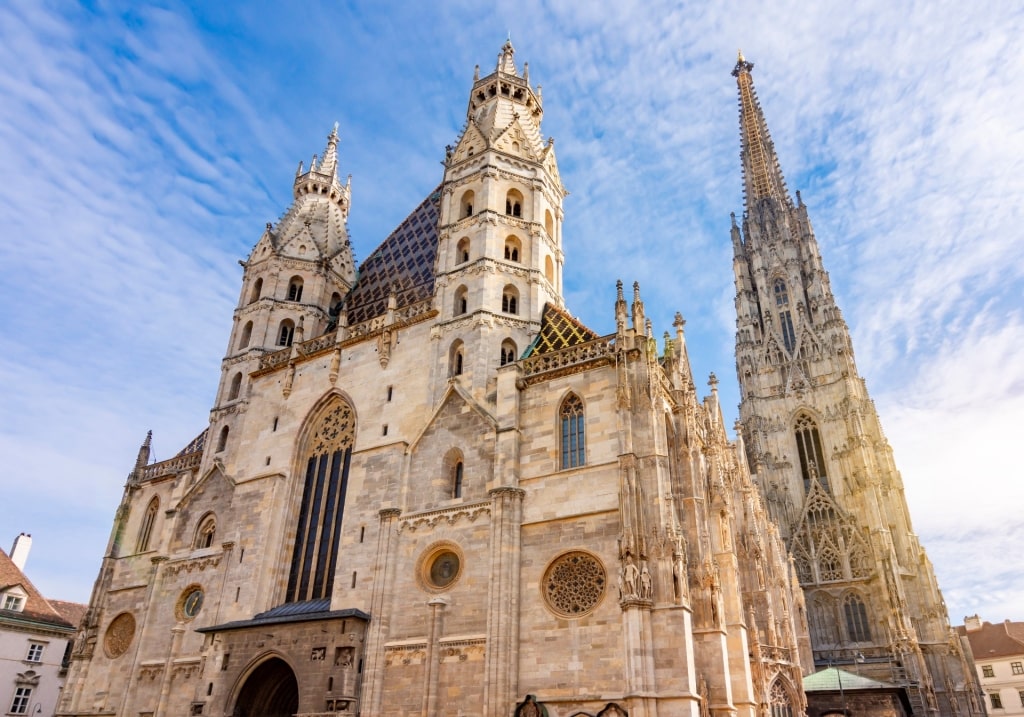
St. Stephen’s Cathedral
The roof has 230,000 glazed tiles forming a colorful mosaic of the Habsburg double-headed eagle. The cathedral’s 23 bells include Europe’s second-largest free-swinging church bell in the north tower.
Among many other churches, Karlskirche stands out. Its highlights include a magnificent dome and two carved columns with scenes from the life of St. Charles Borromeo.
Art and Museums
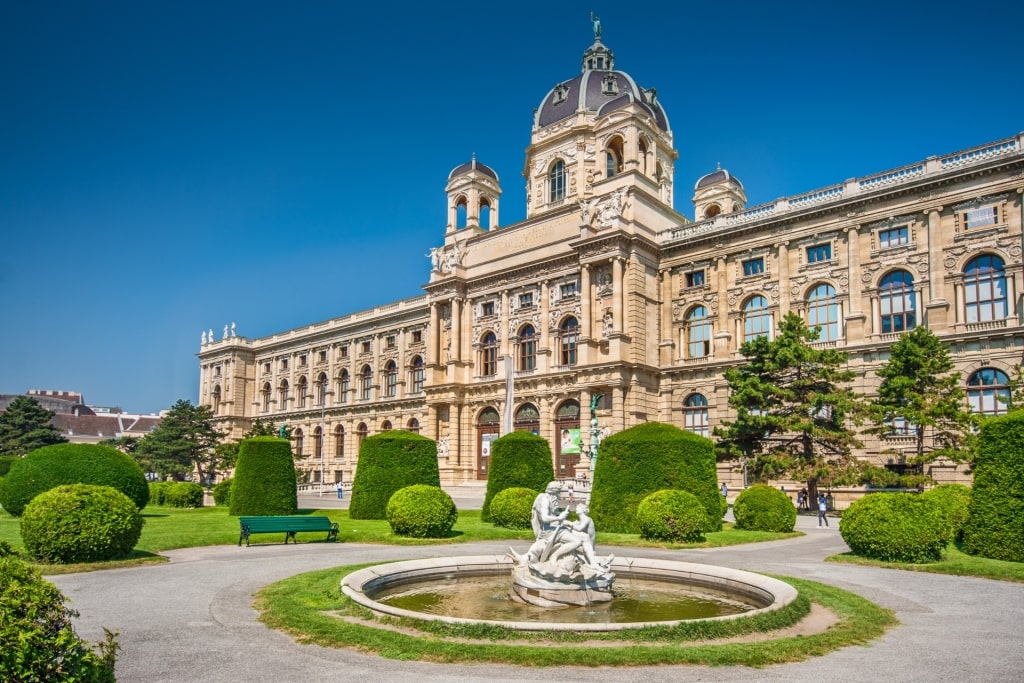
Kunsthistorisches Museum
Vienna’s history as an imperial capital has left it with around 100 museums in total. Many of these would each take days to explore, with the Albertina alone having one million prints and 60,000 drawings.
If time is short, start with the Kunsthistorisches Museum, one of the world’s most important fine arts museums. Highlights include masterpieces by Bruegel, Raphael, Vermeer, and Titian.
A Rembrandt Self Portrait from 1652 and Caravaggio’s David with the Head of Goliath are among the most famous works. You’ll also recognize The Hunters in the Snow by Pieter Bruegel the Elder and Johannes Vermeer’s The Art of Painting.
Another famous painting, Gustav Klimt’s The Kiss, is at the Belvedere Museum, which also holds major works by Egon Schiele and Oskar Kokoschka.
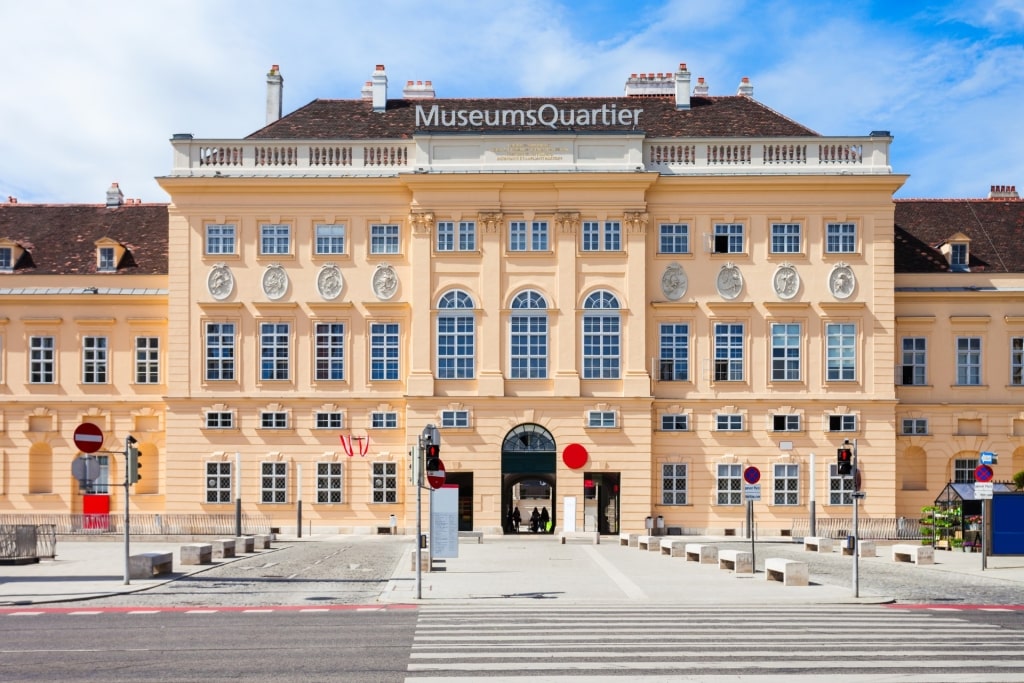
MuseumsQuartier
The sprawling MuseumsQuartier houses the Leopold Museum, the MUMOK Museum of Modern Art, and the contemporary art Kunsthalle Wien. This latter is in the former imperial stables, well worth a look on their own.
Anyone with an interest in warfare or history has to see the Museum of Military History, set in an ornate former arsenal. Extraordinary exhibits include the car in which Archduke Franz Ferdinand and his wife were murdered in 1914, an incident which helped to spark World War I.
Music
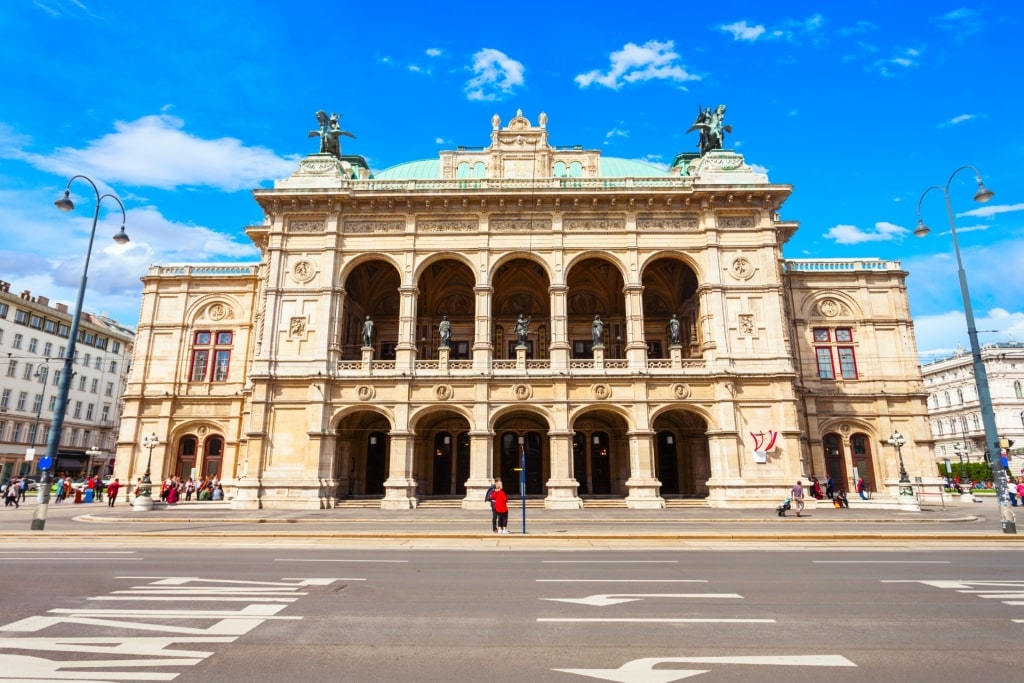
Vienna State Opera
What is Vienna famous for? Classical music is embedded in the culture here, the city where Mozart, Beethoven, Schubert, Brahms, Mahler, and the Strauss family all lived. The patronage of the Habsburg court left a lasting legacy in institutions such as the Vienna Philharmonic Orchestra and the Vienna Boys’ Choir.
With many thousands of events annually, you can attend a concert on any given day. While classical music dominates, there is also a healthy number of more contemporary works.
The Vienna State Opera is one of the world’s leading opera houses. Known for its exceptional acoustics, it has some 350 performances annually.
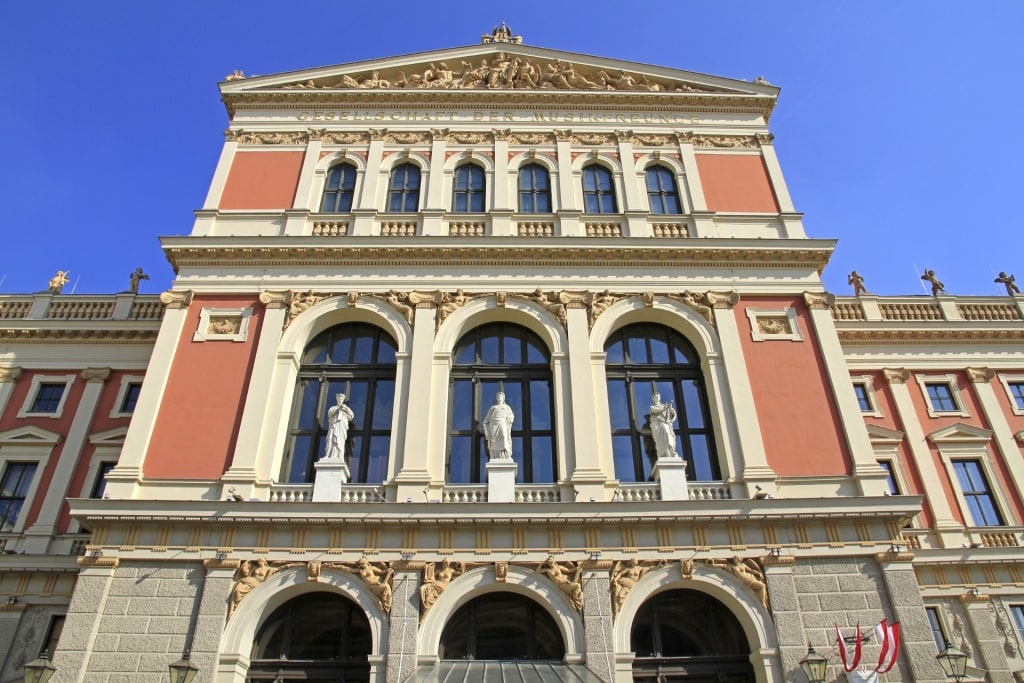
Musikverein
The opulent Musikverein is also known for the outstanding acoustics of its Golden Hall. Home to the Vienna Philharmonic Orchestra, it opened in 1870 with a design based on ancient Greek temples.
Music lovers will also want to visit Mozart’s Residence, where the composer lived in the 1780s. As well as his restored apartment, the Viennese museum gives an entertaining view of fashionable life at the time.
The picturesque Zentralfriedhof—Central Cemetery—holds the graves of Beethoven, Schubert, Brahms, and members of the Strauss family. It’s the second-largest cemetery in Europe and locals quip that it’s “half the size of Zurich, but twice as much fun”. The cemetery has its own lively café for temporary visitors.
Vienna Modernism
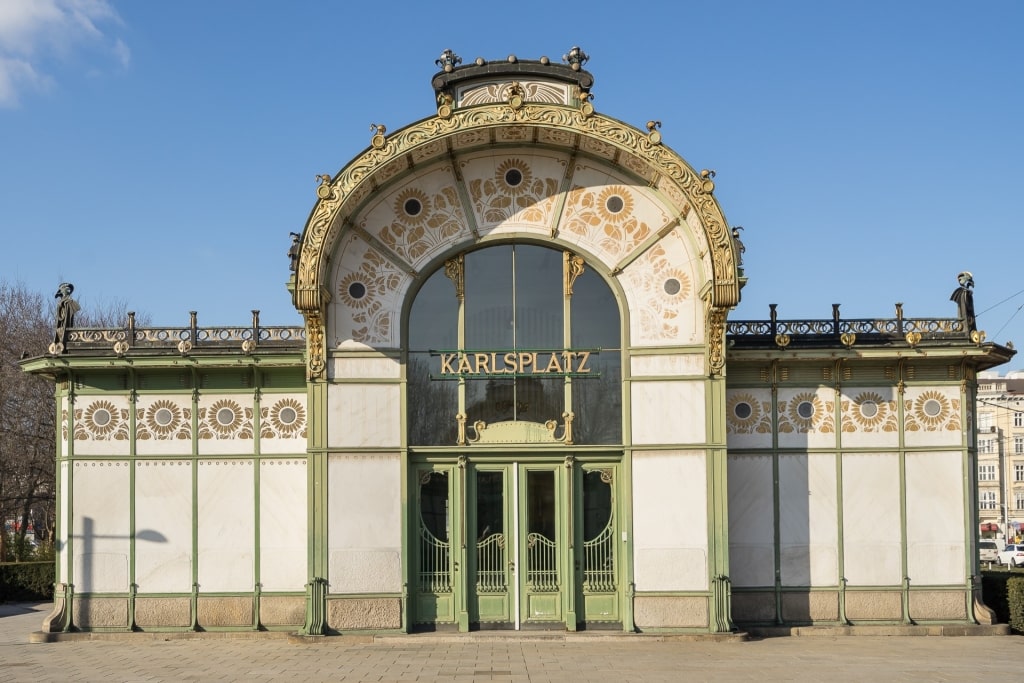
Stadtbahn station
The turn of the 20th century was a time of extraordinary creativity in Vienna. This era of Vienna Modernism saw revolutionary changes in art, architecture, literature, music, philosophy, and science.
Among artists, a key figure was Gustav Klimt whose work broke away from Habsburg tradition. He embraced symbolism, natural forms, and stylistic freedom.
Major architects included Otto Wagner, Josef Hoffmann, and Adolf Loos, all key figures in the growth of modern architecture. Their modernist ideas in turn influenced the decorative arts from furniture and textiles to innovative household objects.
Of course, Sigmund Freud was meanwhile producing work that transformed psychoanalysis. In philosophy, Ludwig Wittgenstein challenged how we think about language and its meaning.
Key Modernist buildings in Vienna include several by Otto Wagner, including the Postal Savings Bank and the Stadtbahn stations. He also designed the Art Nouveau Steinhof Church, whose copper dome can be seen from many places in Vienna.
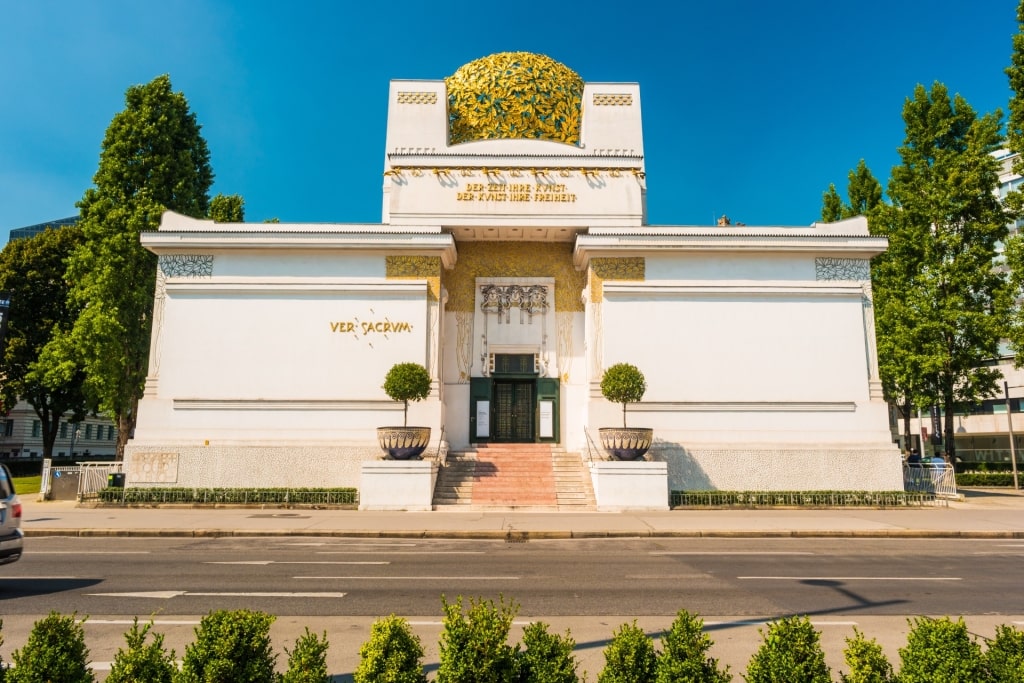
Secession Building
The Secession Building has Klimt’s Beethoven Frieze, created for a 1902 exhibition in honor of the composer. At MAK, the Museum of Applied Art, you can find an extensive display of modernist-style objects and examples of interior design.
The Hundertwasserhaus also has to be mentioned as a continuation of the Modernists’ groundbreaking attitudes. This quirky 1985 apartment building with undulating floors and trees sprouting from terraces is now a popular city landmark.
Parks and Woodlands
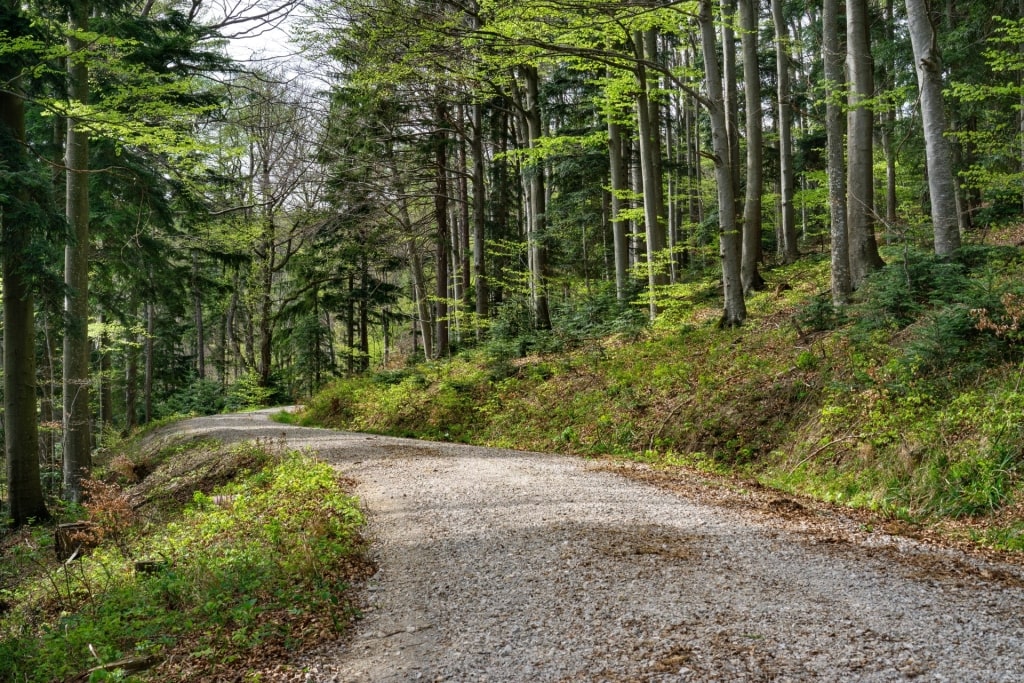
Vienna Woods
Imperial hunting grounds and leisure gardens have left Vienna with some 100 parks and woodlands. These make up almost half its total area, making Vienna one of the world’s greenest cities.
The Vienna Woods are the most extraordinary, with beech and oak forests and vineyards covering a large expanse of hills. It’s a great place for walking, or biking, or just relaxing in one of the many heurigen, or wine taverns.
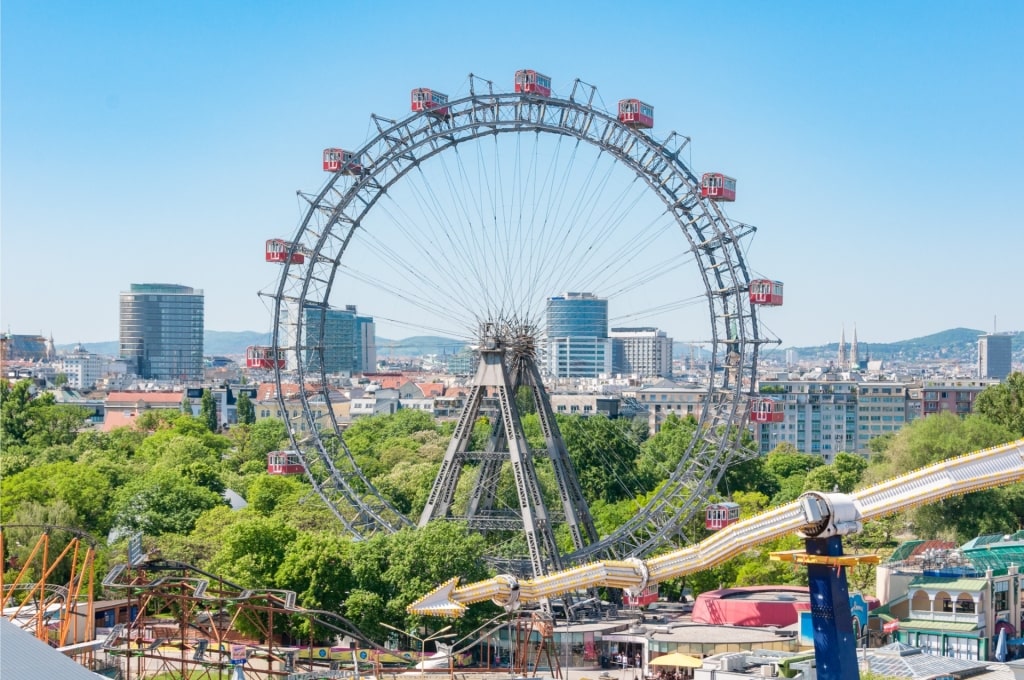
The Prater
Nearer the center, The Prater is a vast area with fairgrounds, sporting facilities, and more woodland. Opened to the public in 1765, it’s famous for having the world’s oldest surviving Ferris wheel, which was the biggest of its kind when it was built in 1897.
The gardens of the Schönbrunn Palace are another popular place to stroll or relax in. The Stadtpark, modeled after an English garden, is where Johann Strauss II gave his first public concert in 1868.
Along the Danube, flood control projects have created several large recreation areas. These include the 12-mile-long Danube Island, which has beaches, restaurants, and sports facilities.
Cafés
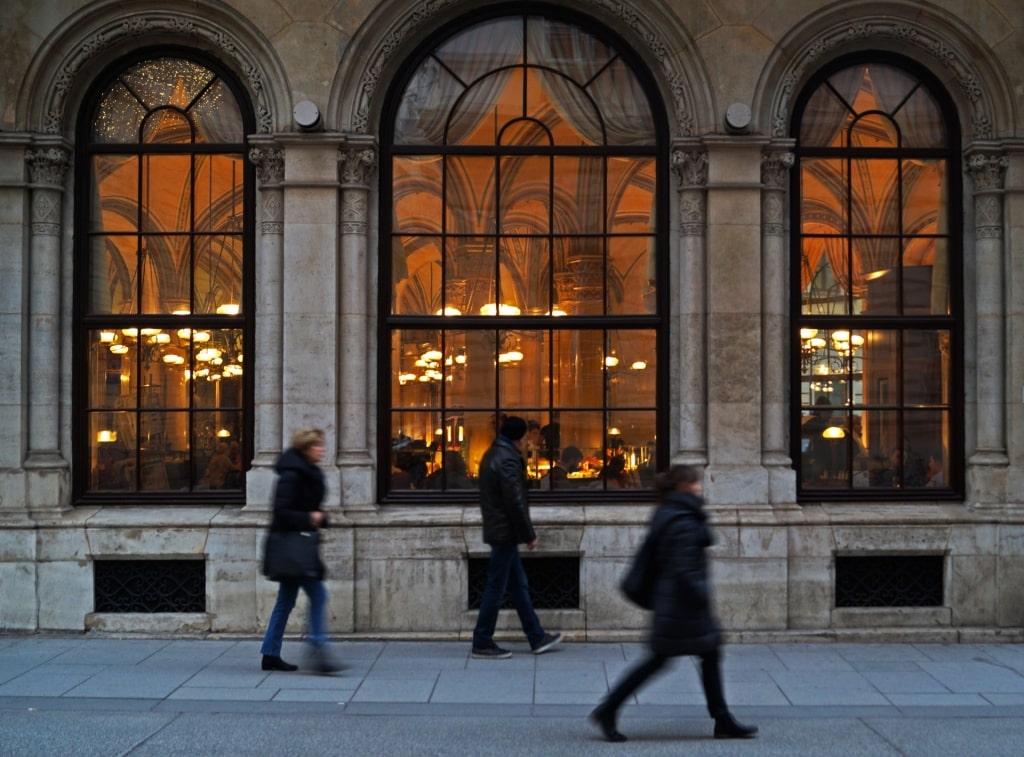
Café Central
Vienna’s coffee fixation is said to trace back to the 1683 Ottoman siege of the city. When the Ottomans withdrew after losing the Battle of Vienna, they abandoned many sacks of Turkish coffee beans.
Whatever the legend, Viennese coffee houses had firmly established themselves as a central part of local culture by the late 19th century. They remain a welcome place to socialize in a city of cramped apartments.
Famous patrons included writers such as Arthur Schnitzler, Franz Kafka, and Stefan Zweig, and revolutionary thinkers Leon Trotsky and Sigmund Freud. Every coffee is still served with a glass of water, a tradition that once proved the quality of its base ingredient.
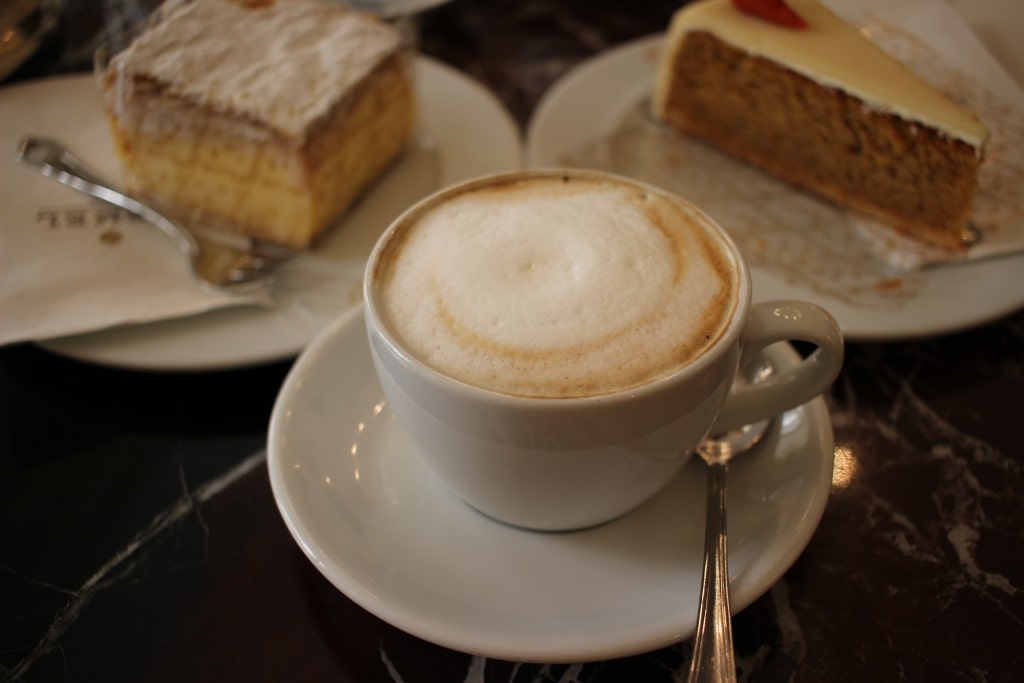
Wiener melange
Local specialties start with Wiener Melange, made of equal parts espresso and steamed milk with a frothy top. An Einspänner is a shot of espresso topped with whipped cream, served in a glass.
Notable spots include Café Central, with its vaulted ceiling and grand piano. The plush red velvet seats and ornate chandeliers of Café Sperl are equally historic.
Café Prückel has a more modern look, albeit the Art Nouveau, style of art that flourished between about 1890 and 1910. In contrast, charming Café Mozart is one of the oldest, dating to 1794.
Cuisine
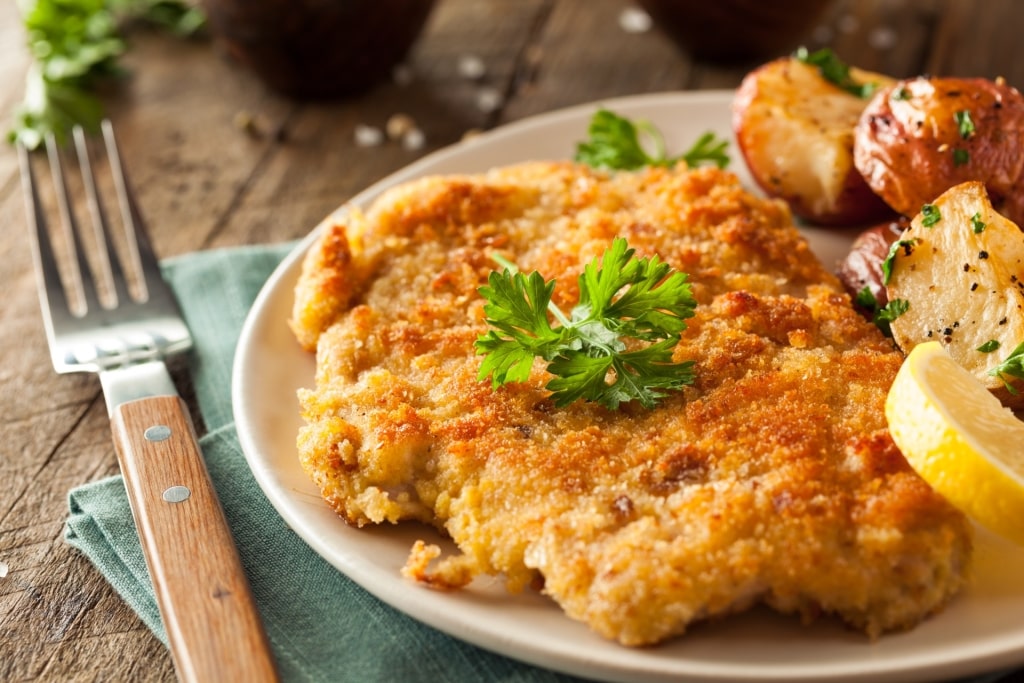
Wiener schnitzel
The vast reach of the Habsburg Empire certainly had its effect on Vienna’s food. With outside influences from Hungary and Italy to the Balkans, it’s a rich, meat-heavy range of European dishes.
Among the many things Vienna is famous for, one that stands out is the Wiener schnitzel. This breaded and fried thin veal cutlet, garnished with a slice of lemon, is traditionally eaten with potato salad.
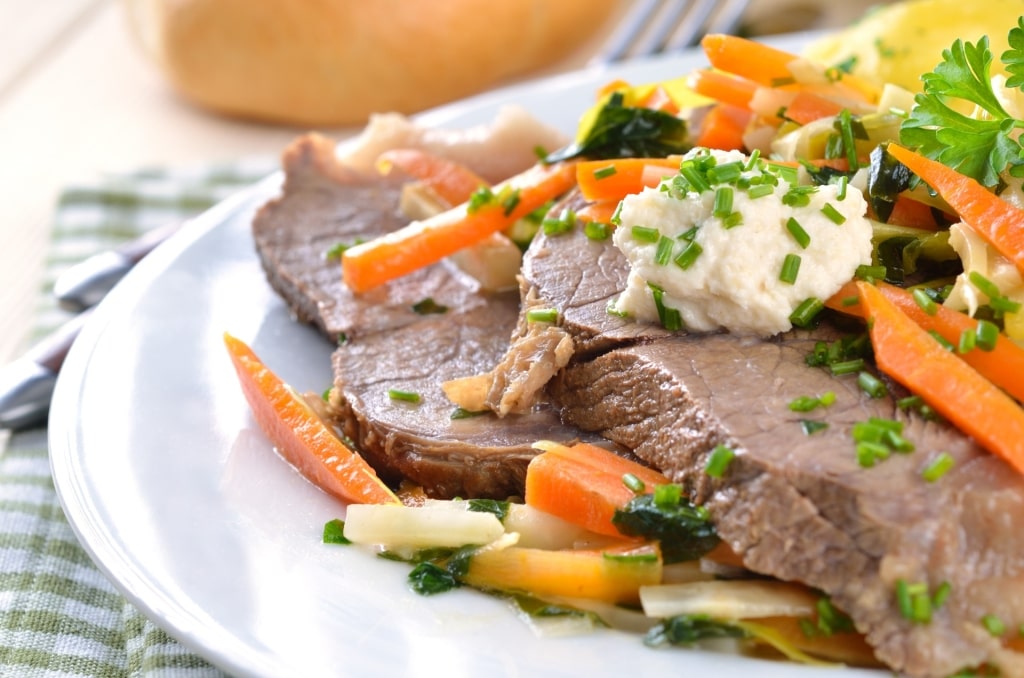
Tafelspitz
Tafelspitz is boiled beef with vegetables, served with an apple and horseradish sauce or chive sauce. Eaten with roast potatoes, it was Emperor Franz Joseph’s favorite dish.
A common street food, Viennese sausages include käsekrainer, filled with cheese, and debreziner, spiced with paprika. They are normally made with a mix of smoked beef and pork.
Food-lovers will enjoy Naschmarkt, the “snack market”, Vienna’s largest produce market, whose origins are in the 16th century. Almost a mile long, it has plenty of stalls offering a tempting choice of local and international foods.
Pastries
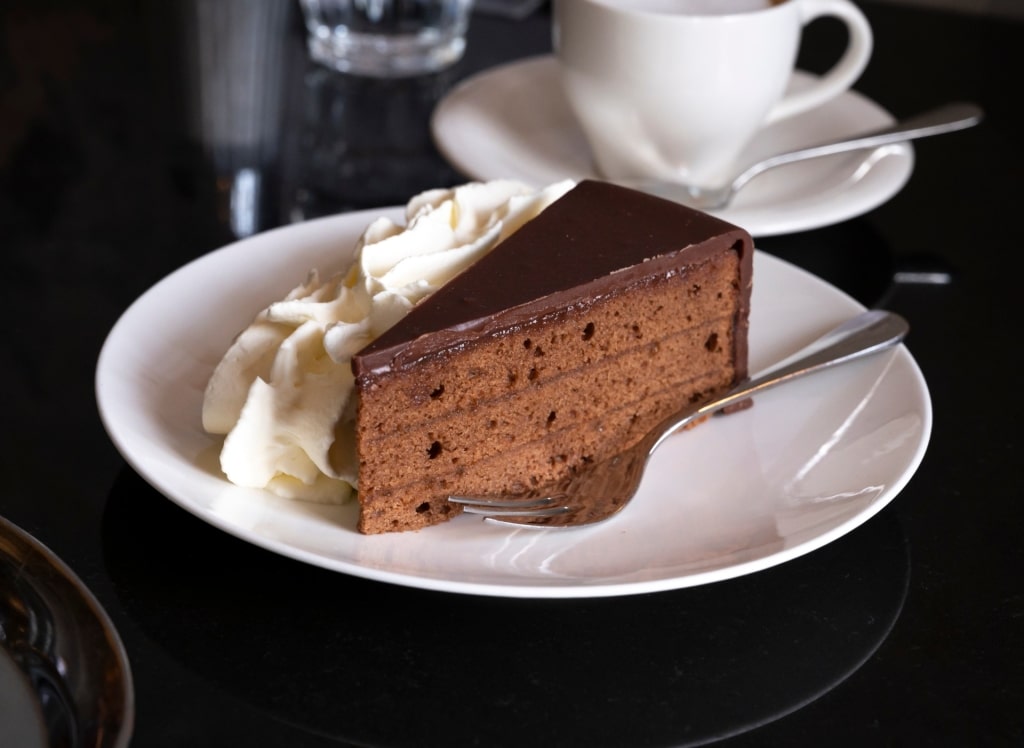
Sachertorte
Vienna is as well known for its pastries as for its coffee, the perfect pairing. Another legacy of imperial kitchens, the sophisticated cakes and desserts remain as decadent as ever.
The most famous is Sachertorte, a chocolate cake with apricot jam filling and a dark chocolate glaze. It was created in 1832 by chef Franz Sacher, who later founded the Hotel Sacher—still a popular place to try it.
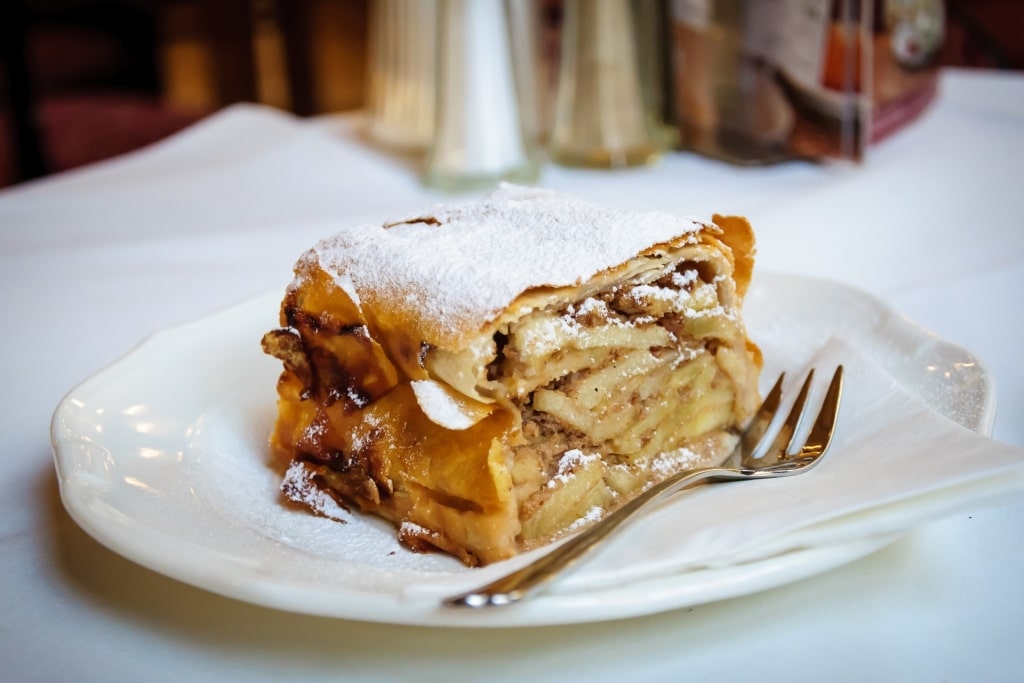
Apfelstrudel
Other familiar treats include apfelstrudel, layered puff pastry filled with diced apples, raisins, roasted breadcrumbs, and cinnamon. Kardinalschnitte, or “cardinal’s slice”, is a fluffy sponge cake, filled with a creamy custard and topped with a layer of sweet meringue.
Vienna’s coffeehouses and konditoreien—pastry shops with a sit-down section—have a wide range of these and other sweet treats. Famous konditoreien include Demel, Aida, Gregors, L. Heiner, Sluka, Oberlaa, and Gerstner.
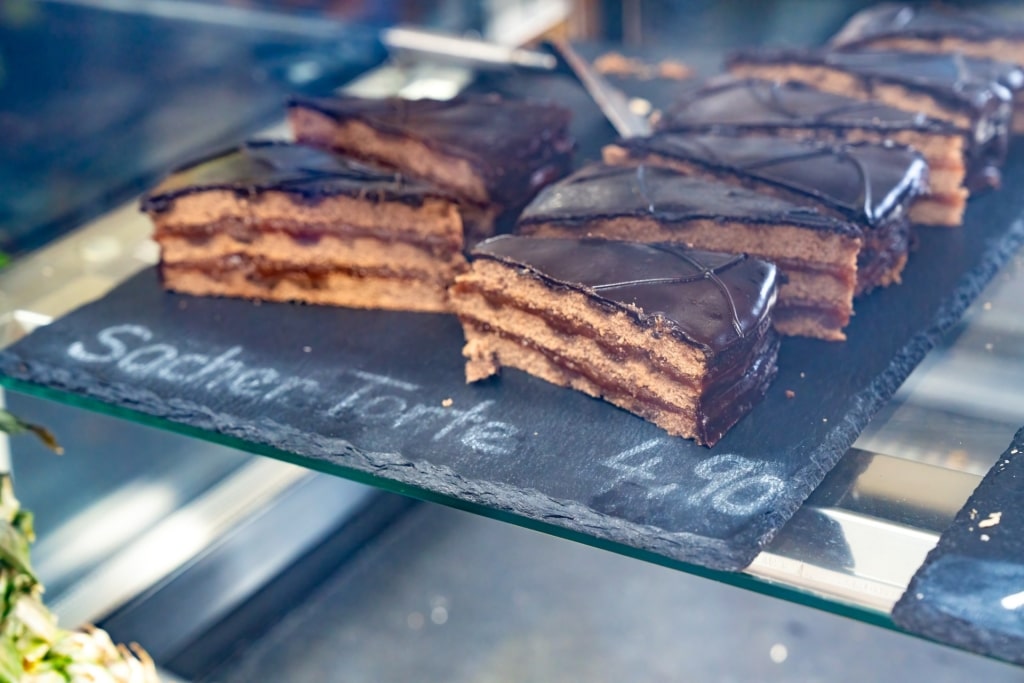
Pastry shop in Vienna
Traditionally, a konditorei was an alternative for women to the all-male environment of a Viennese café. You’re still more likely to see female staff in a pastry shop but male waiters in cafés—one way to distinguish them when many konditoreien also call themselves cafés.
Gerstner is famous for its apfelstrudel, while L. Heiner first made the kardinalschnitte. The Aida franchise is associated with doughnuts, due to its popularity with US troops during the immediate postwar period.
Gregors is a good place to try Sachertorte, as an alternative to the often crowded Café Sacher. Café Sacher and Café Demel had a long legal battle over which first made Sachertorte, but you can reach your own verdict.
Cosiness and Melancholy
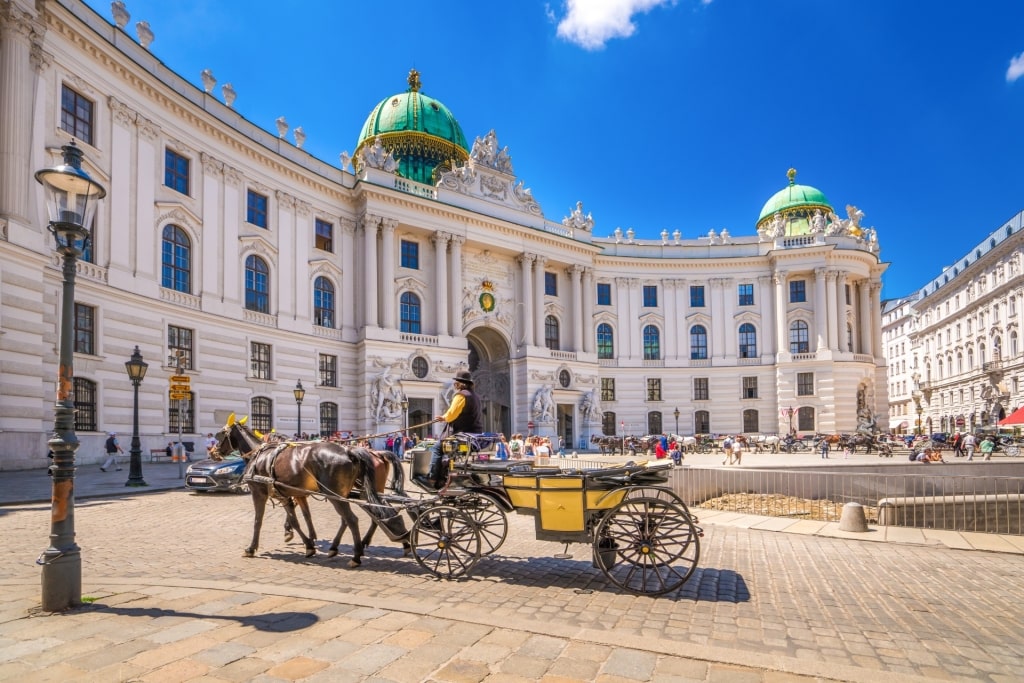
Fiaker
The Viennese attitude to life can be seen as a reflection of having lost an empire. Tradition and an appreciation of quality are tinged with an awareness of how quickly everything can change.
An essential word is gemütlichkeit, a sense of coziness and comfort such as is found in the best of the old Viennese cafés. There’s a love of simple pleasures, such as good clothing, with leisurely meals and quiet Sundays being sacrosanct.
That contrasts, or is perhaps reinforced, by a sense of the fragility of life. The melancholic attitude and dark humor of many Viennese—often including wait staff—can give visitors a false impression of their underlying charm.
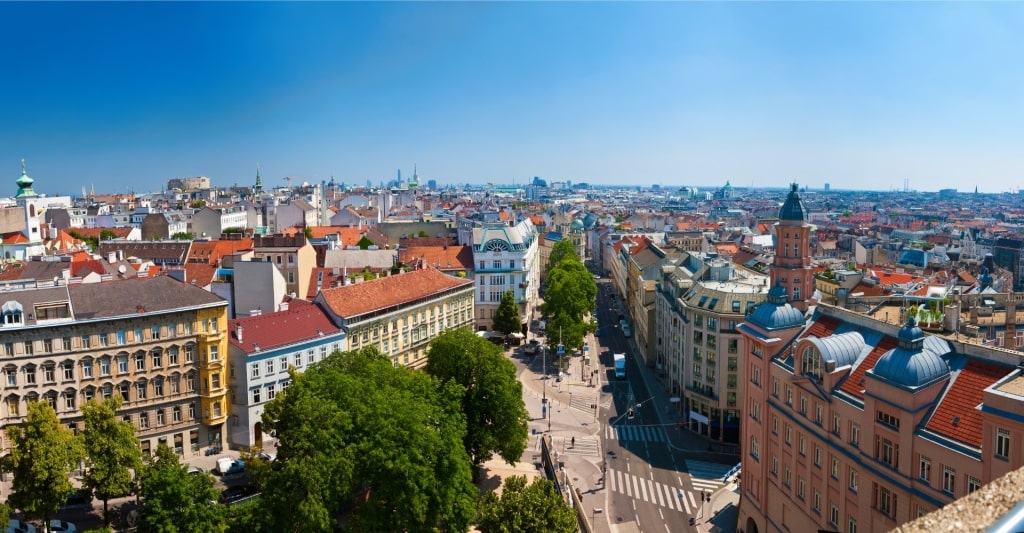
Vienna
This gloominess can hang over any conversation with the culture of complaining known as sudern. It’s an “us against the world” attitude that keeps outsiders at a distance.
The city’s formality adds to this, with people staring at you if you speak too loudly on public transport, for example. One way to defuse this is to be very formal and polite yourself, but certainly do not take it personally.
Take a ride in a horse-drawn Fiaker to experience the city at its traditional pace. A traditional heuriger wine tavern, as found in outlying districts such as Grinzing and Nussdorf, will show you the Viennese at their most relaxed and humorous.
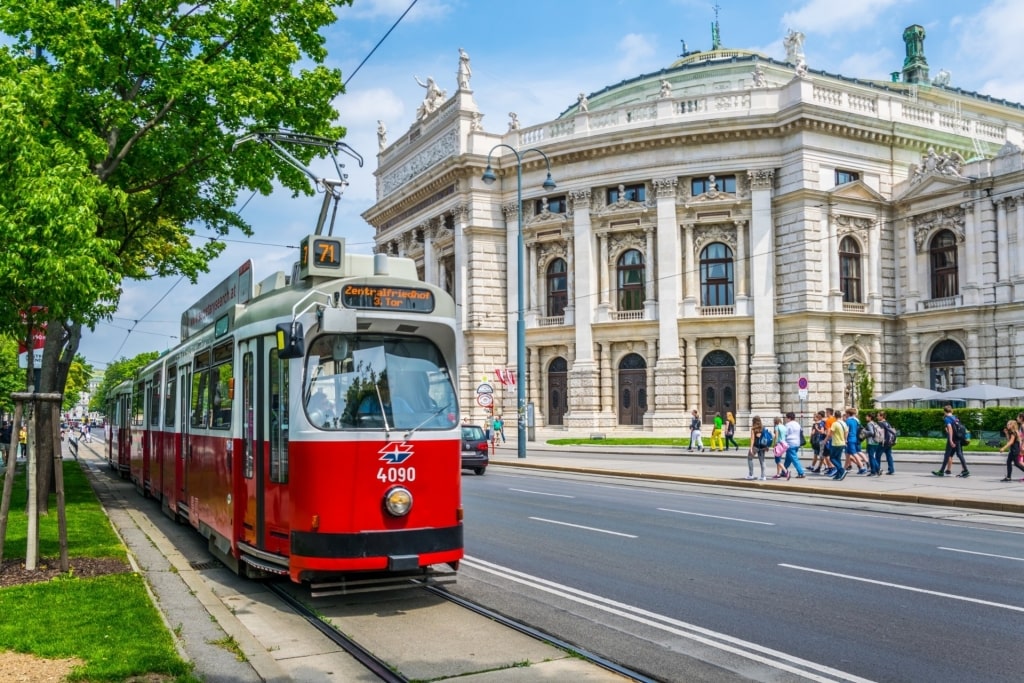
Ringstrasse
Has this guide to Vienna encouraged you to visit? Browse Celebrity’s river cruises to Vienna and find the perfect itinerary for you and your loved ones.