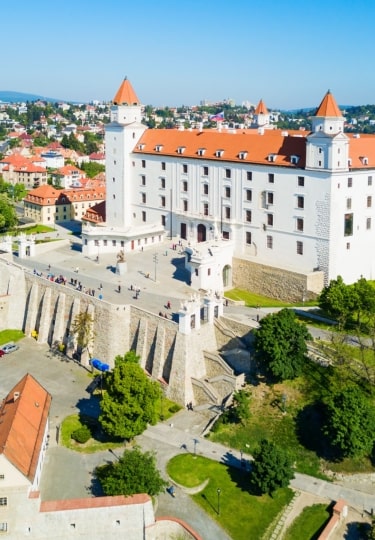
What is Bratislava known for? Ask 10 people and you might just get 10 different answers. Some will refer to the mighty Danube, others, the unique hilltop castle that dominates the skyline, or the fact that you’re just a stone’s throw from both Austria and Hungary here.
Others still will talk of quirky statues, the UFO-shaped observation deck, or a culinary scene where traditional comfort food is washed down with contemporary-style beers brewed right in the city.
Whatever their answer, one thing is for sure: the Slovak capital is a city with surprising depth where medieval history meets the modern, cutting edge. Visit to follow in the footsteps of kings and queens, take in some of Europe’s best contemporary art, or head off on a statue scavenger hunt, all in the same afternoon.
The Danube
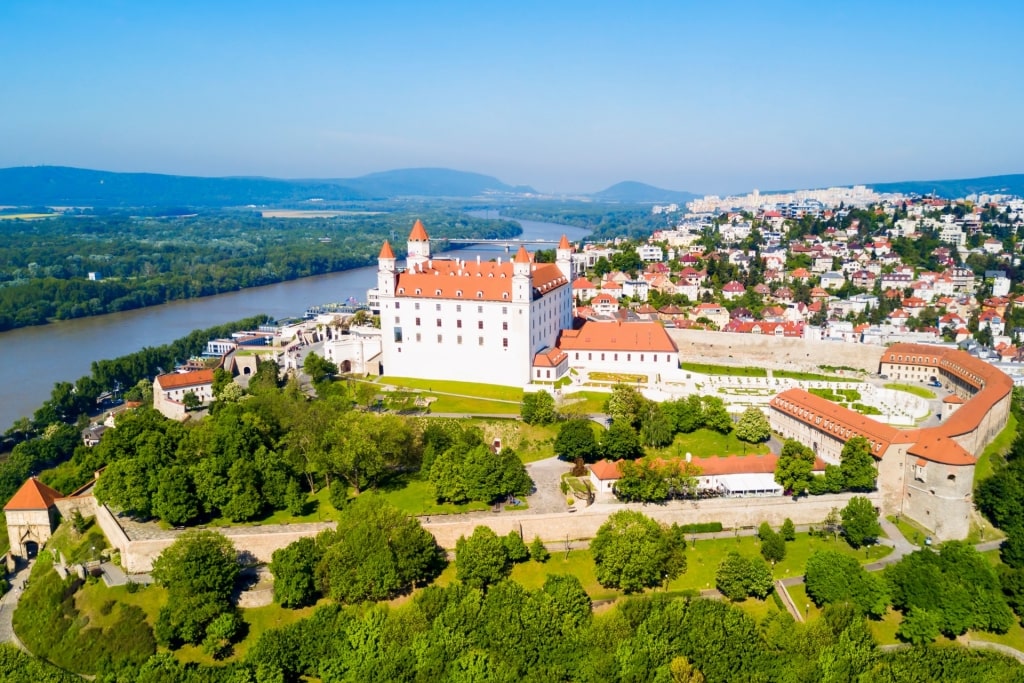
Bratislava Castle
When it comes to the question “What is Bratislava famous for?”, one of the first things that comes to mind is the Danube River. This mighty waterway winds its way through 10 countries in Central Europe and four capital cities including, of course, Bratislava.
You can walk or cycle its banks, or float serenely along its waters—but the Danube is more than just a pretty natural addition. It shaped the Slovak capital’s history, bringing trade, riches, invaders, and empires.
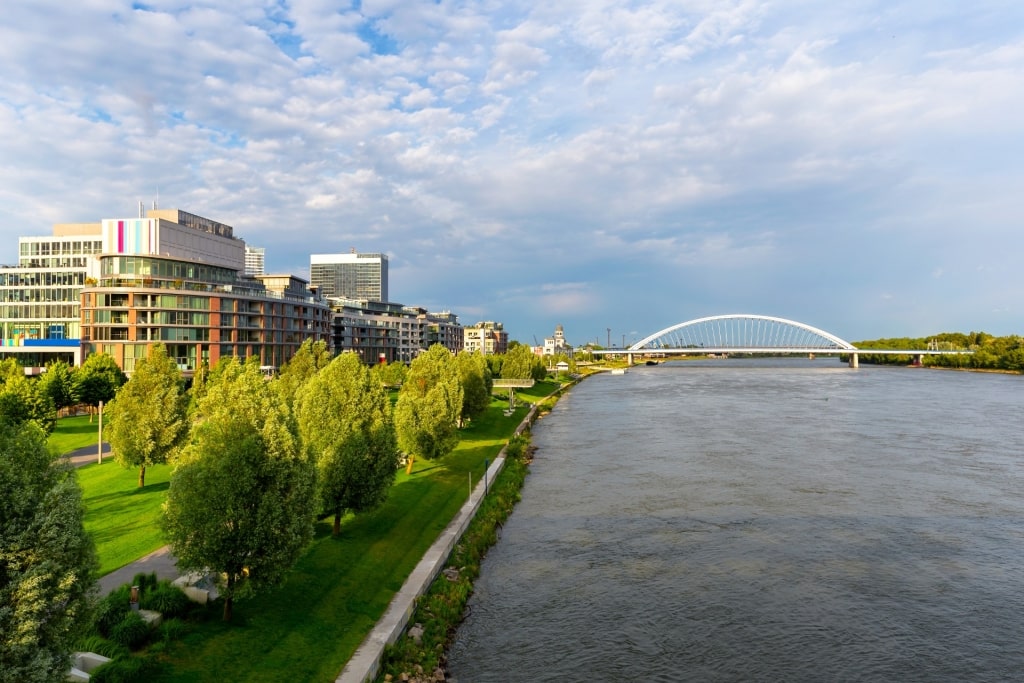
Eurovea waterfront
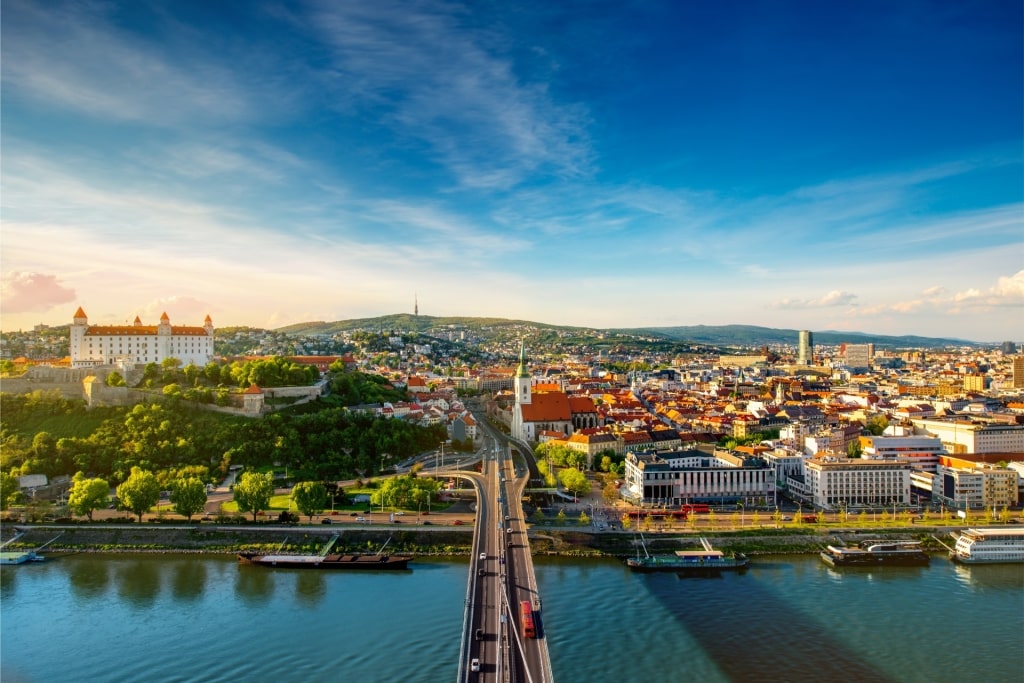
Today it pretty much separates the Old Town from more modern parts of the capital such as the Eurovea waterfront and the Petržalka district. The latter has many green spaces but is largely residential—it’s the most densely populated residential district in Central Europe.
Eurovea, meanwhile, is a standout place to visit: modern and buzzy thanks to the cafés and shops that line its banks. It’s also home to a huge shopping center with more than 250 global brands under its roof. Shopaholics beware!
Iconic Bratislava Castle
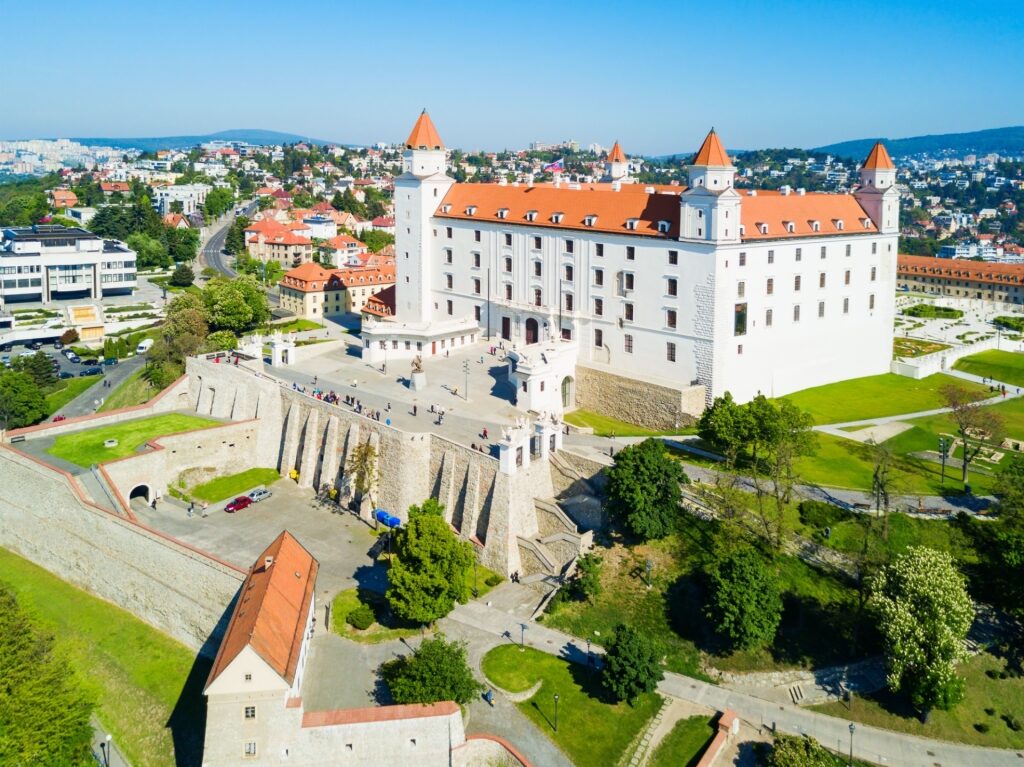
Bratislava Castle
Sitting on a rocky outcrop just west of the Old Town, Bratislava Castle is the historic and symbolic heart of the city. Its distinctive shape—a huge rectangle with a tower at each corner—earned it the nickname “the upside-down table,” also making it one of the city’s icons, seen on everything from postcards to logos.
The castle is more than just an elegant building, though. Dating from the ninth century, it’s been destroyed and rebuilt several times and has spent time as a seat of power, a royal residence, a barracks, and now a museum. It takes about 15 minutes to get there from the city center and it’s worth the walk, especially if you then climb to the turrets for panoramic views over the city and into neighboring Hungary and Austria.
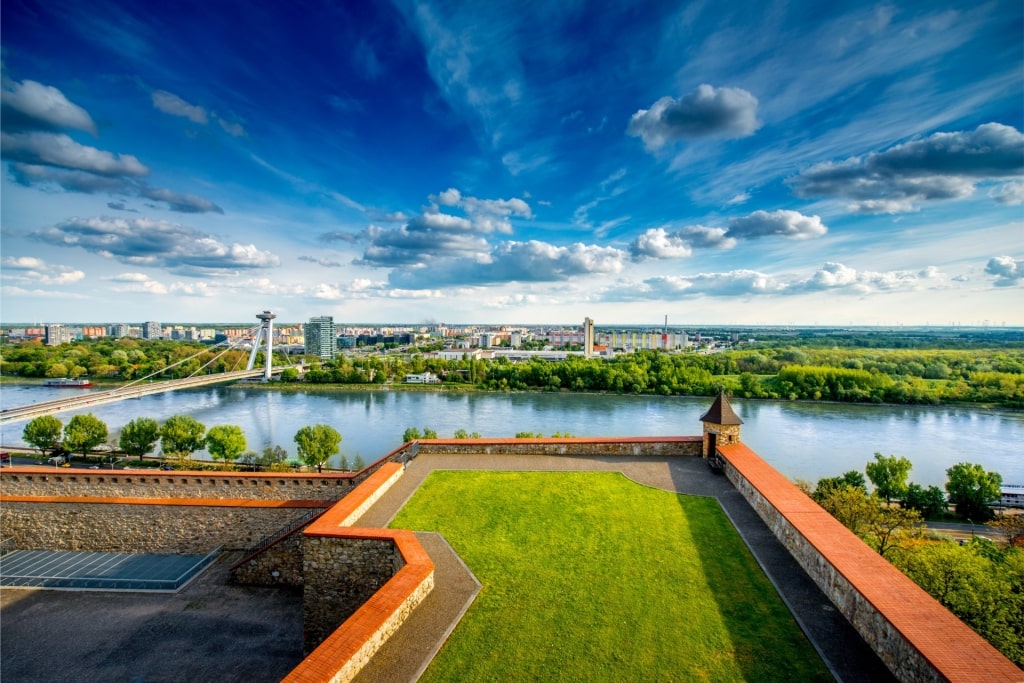
View from Bratislava Castle
Inside, parts of the castle host exhibitions from the Slovak National Museum, with the ornate Honorary Hall well worth a visit. Outside, there are baroque gardens that provide the setting for concerts, festivals, and other events in summer.
Read: Best Things to Do in Bratislava
Old Town Charm
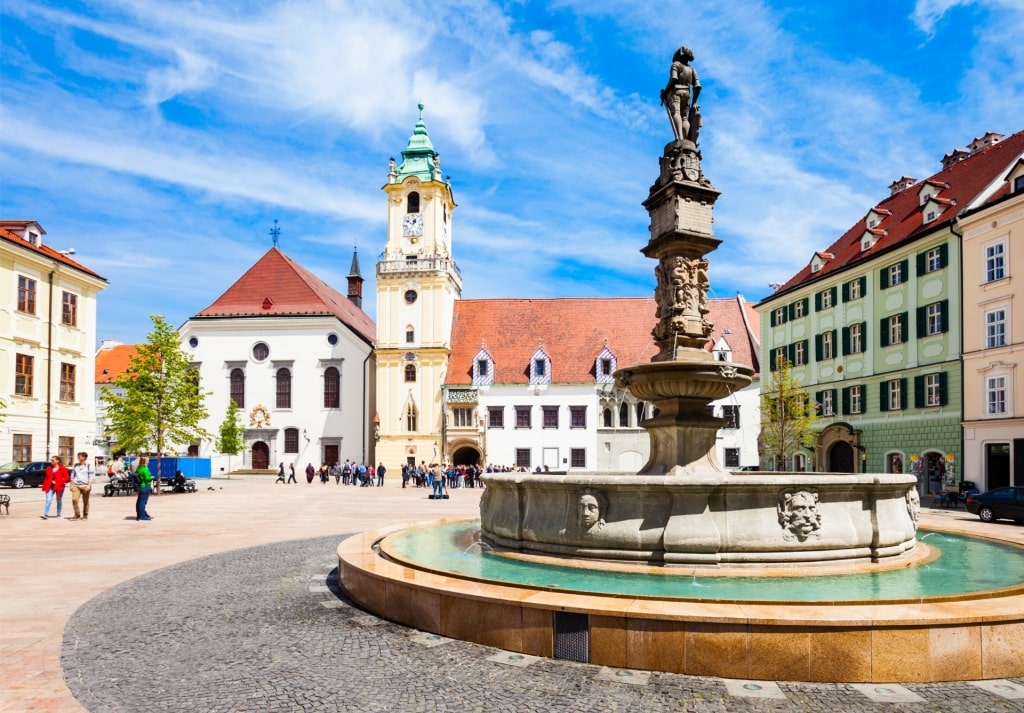
Old Town
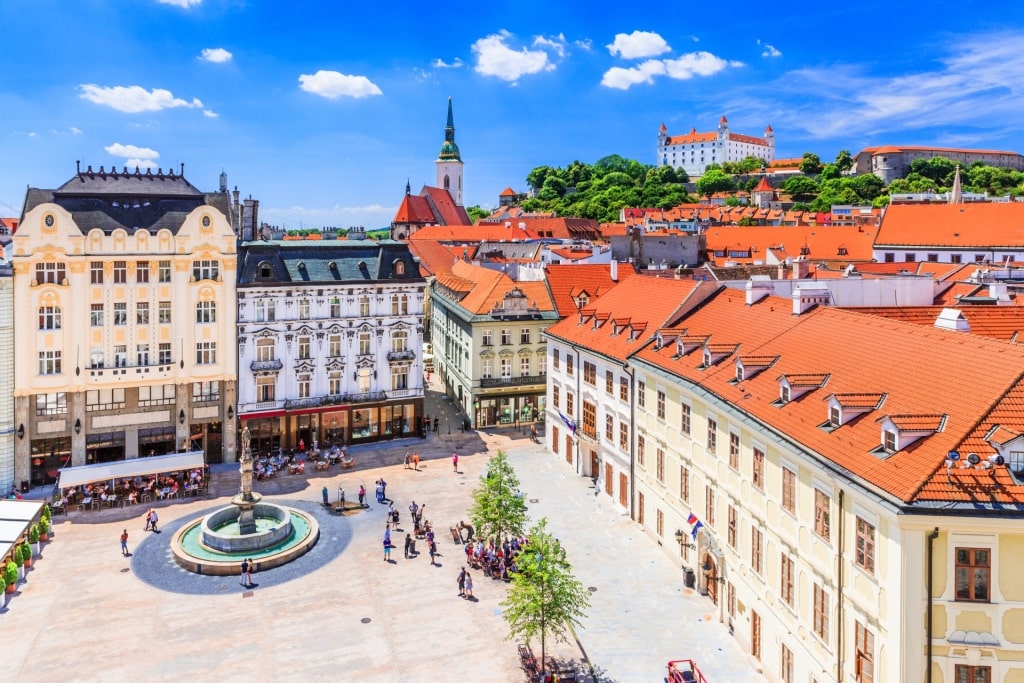
A stroll around Bratislava’s Old Town, the “Staré Mesto”, feels like walking around a movie set. The city’s historic core dates from medieval times, a heady mix of cobbled lanes, pastel facades, hidden courtyards, and centuries-old buildings that tell the story of the city’s past as a royal capital, Habsburg outpost, and trading hub.
Sitting on the north bank of the Danube, with Bratislava Castle looming above, this is a natural starting point for visitors to begin their explorations. Be prepared to wear out some shoe leather in doing so, as the area is packed with attractions including Michael’s Gate, the last remaining medieval entrance to the city.
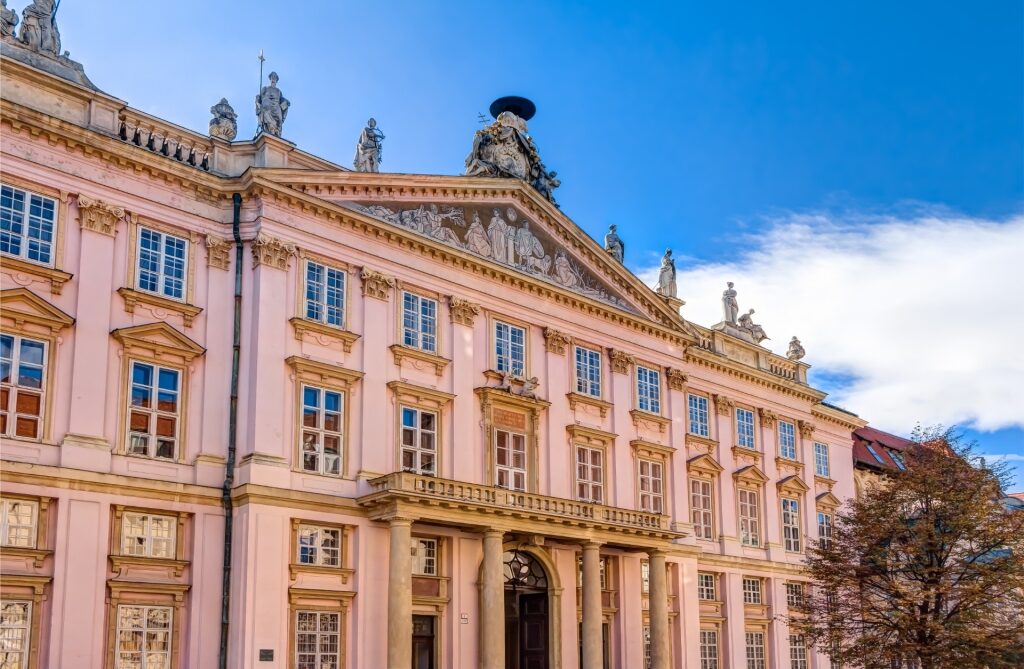
Primate’s Palace
The picturesque main square, Hlavné námestie, Old Town Hall, Primate’s Palace, and Reduta concert hall are other highlights. But even if you’re not box-ticking the icons, there are plenty of churches, museums, and hidden courtyards to discover. Along the way, you’ll also hit some super cool cafés and a host of street artists and musicians.
The UFO Tower
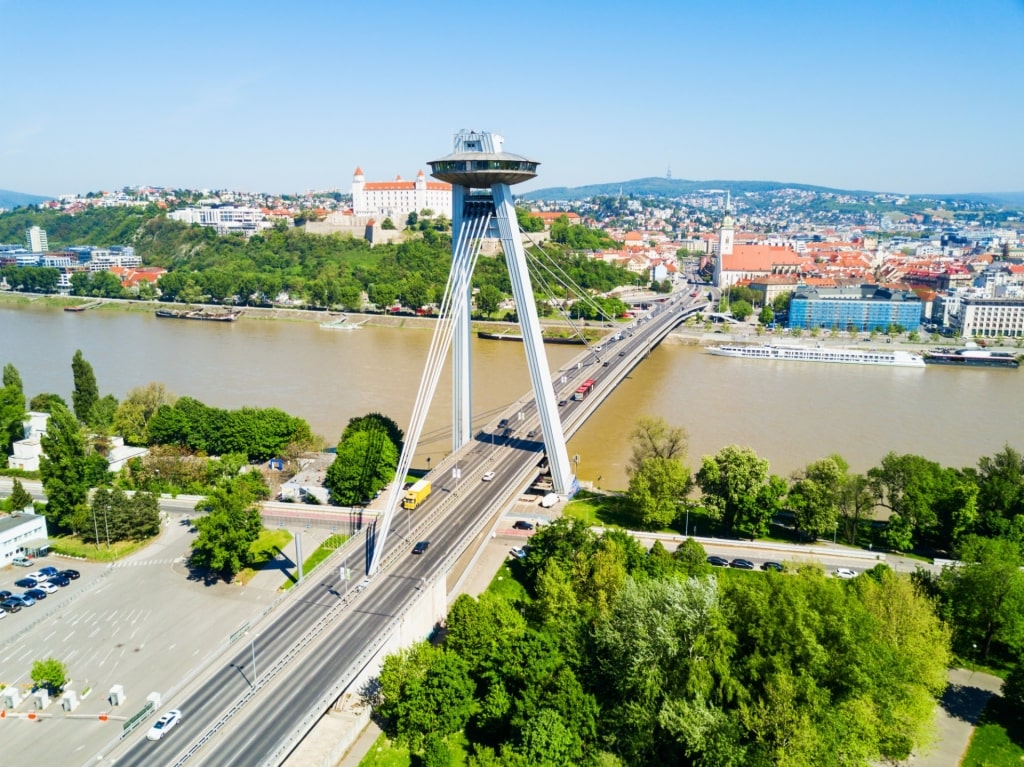
UFO Tower
In a city so laden with medieval charm, it’s somewhat ironic that one of the main things Bratislava is known for is the UFO Tower, Most SNP. This flying saucer-shaped tower, observation deck, and restaurant sits on the SNP Bridge that connects the Old Town with Petržalka.
While now a much-loved icon, it wasn’t always this way. A symbol of the austere years under Soviet rule, the tower was built in 1972, its construction causing quite a stir as an Old Town synagogue had to be destroyed in the process.
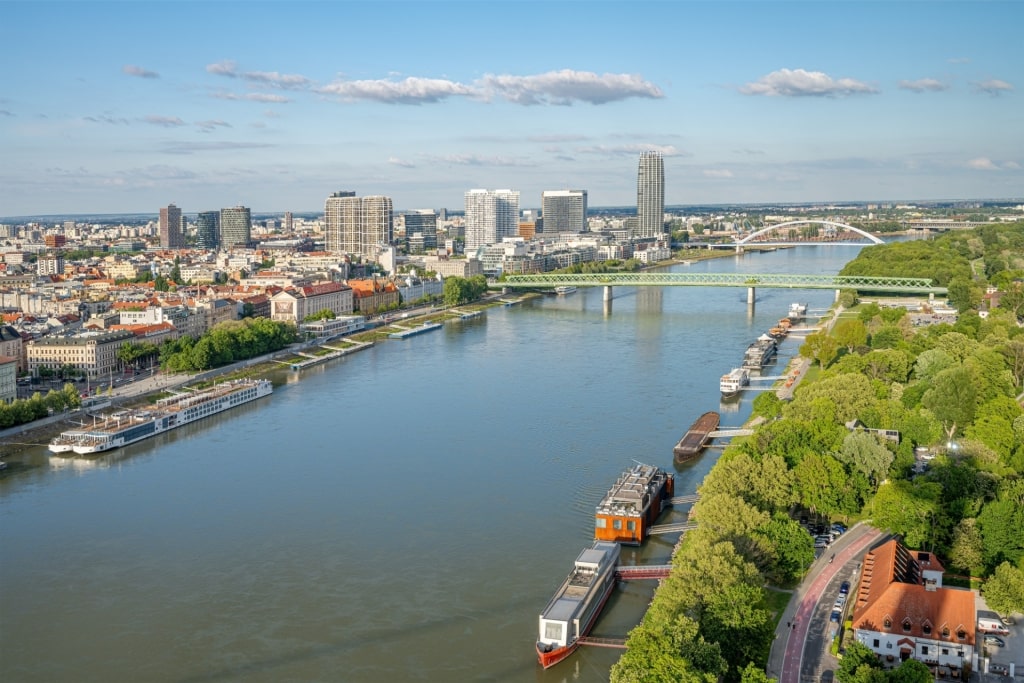
View from the UFO Tower
Over the years, it was first tolerated before being adopted as a quirky symbol of the city—and not without reason. The views from the observation deck are truly next level: the castle, the winding Danube, and Austria all come into view. The restaurant is suitably space-age themed, and for the daring, there’s an outdoor skywalk experience.
Hungary’s Alternative Capital
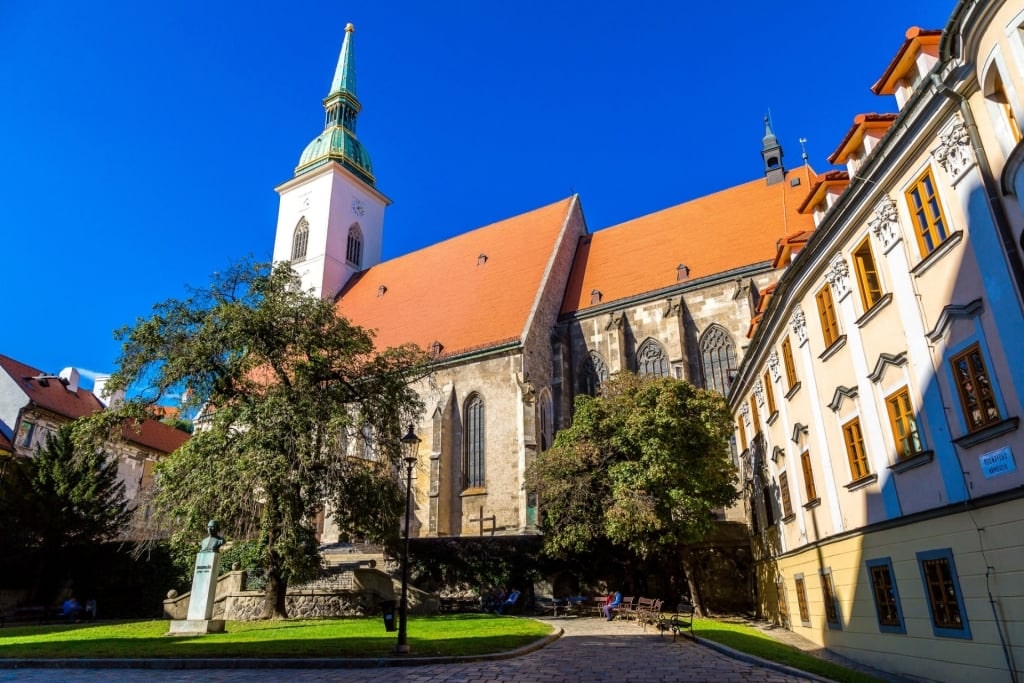
St. Martin’s Cathedral
For some 250 years, between 1563 and 1830, Bratislava, or Pressburg, as it then was, served as the capital of the Kingdom of Hungary after Budapest was occupied by Ottoman invaders. This capital displacement means that Bratislava played a role in the coronation of 11 Habsburg monarchs—and you can walk in their footsteps on a historic Coronation Route through the city.
The self-guided walk follows the route of their coronation processions, starting at St. Martin’s Cathedral near the edge of the Danube and finishing near the riverfront. Follow the 178 brass crowns embedded in the pavement, which guide you past Michael’s Gate, the main square, and other grand old streets and buildings.
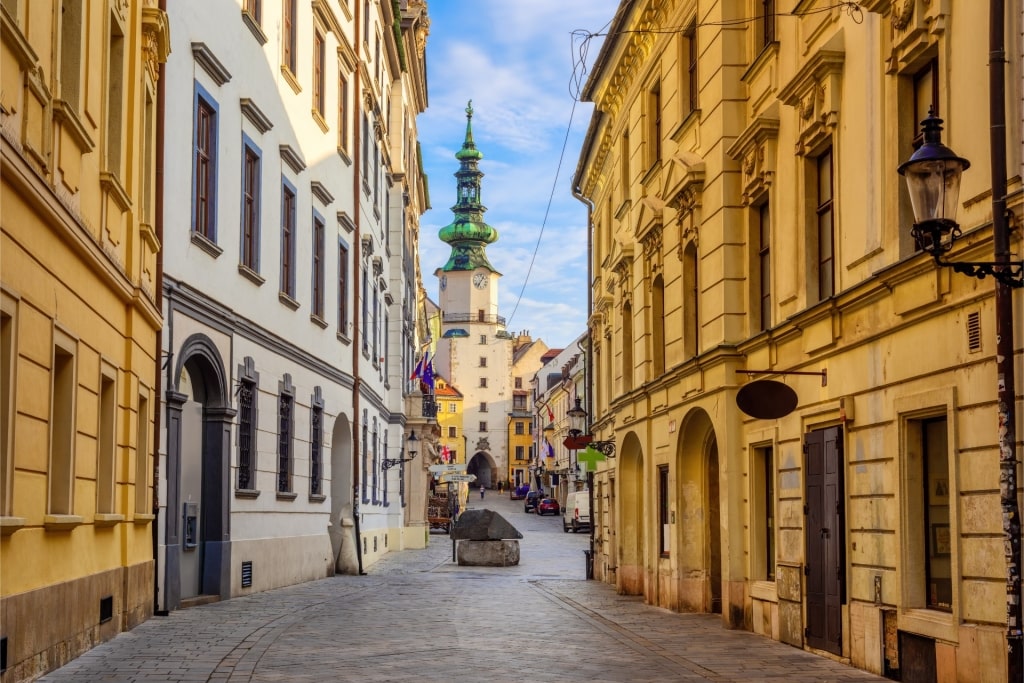
Michael’s Gate
It’s a great way to get a feel for the city, with St. Martin’s being one of the key highlights of a visit. The largest and one of the oldest churches in Bratislava, it was built between the 13th and 15th centuries and stands as a towering Gothic masterpiece, its thick walls forming what was once part of the original town defenses. Visitors in late June can also take in the Coronation Days Festival with historic reenactments.
Devín Castle
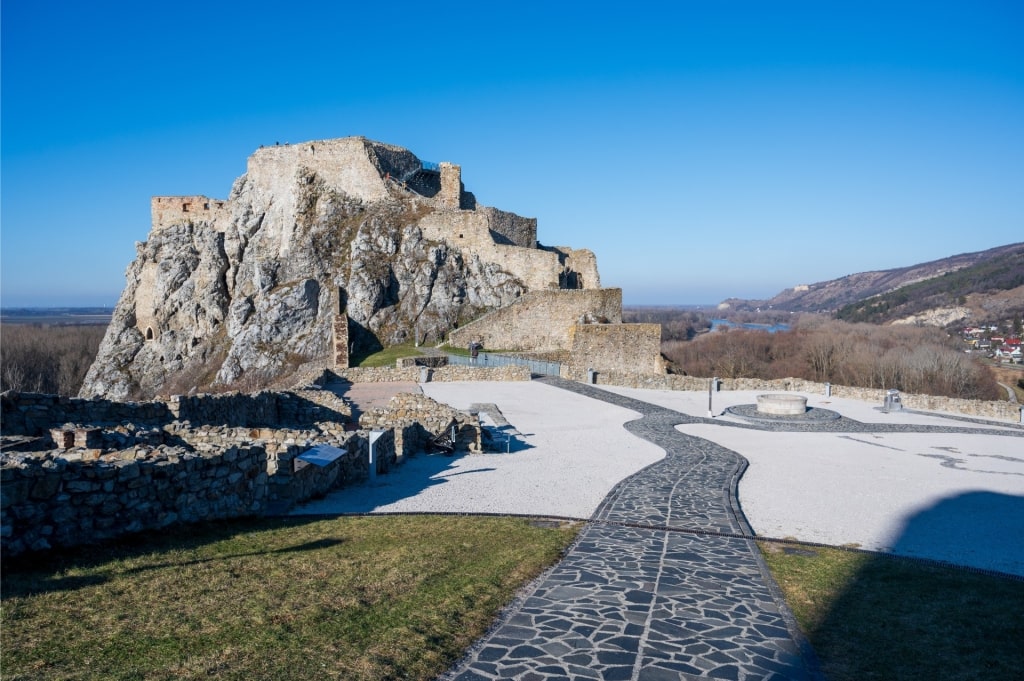
Devín Castle
If Bratislava Castle is like a medieval movie set, Devín is its ruined Dark Ages equivalent. Sitting on a hilltop at the confluence of the Danube and Morava rivers just outside the city center, the striking ruin oozes history, being the site of Neolithic settlements, Celtic camps, and Roman forts.
Construction of the castle is thought to have been between the ninth and 15th centuries, with it being blown up and abandoned during the Napoleonic Wars of 1809. The setting is pure storybook: craggy ruins on a 600-foot-tall limestone cliff with the river passing below. There’s a small museum onsite displaying artifacts from the castle’s history.
If the weather is nice, there are several picnic spots in the grounds, as well as summer reenactments. While here, the nearby village of Devín is known for its bold blackcurrant wine that’s well worth a sample if time allows.
Statue Scavenger Hunt
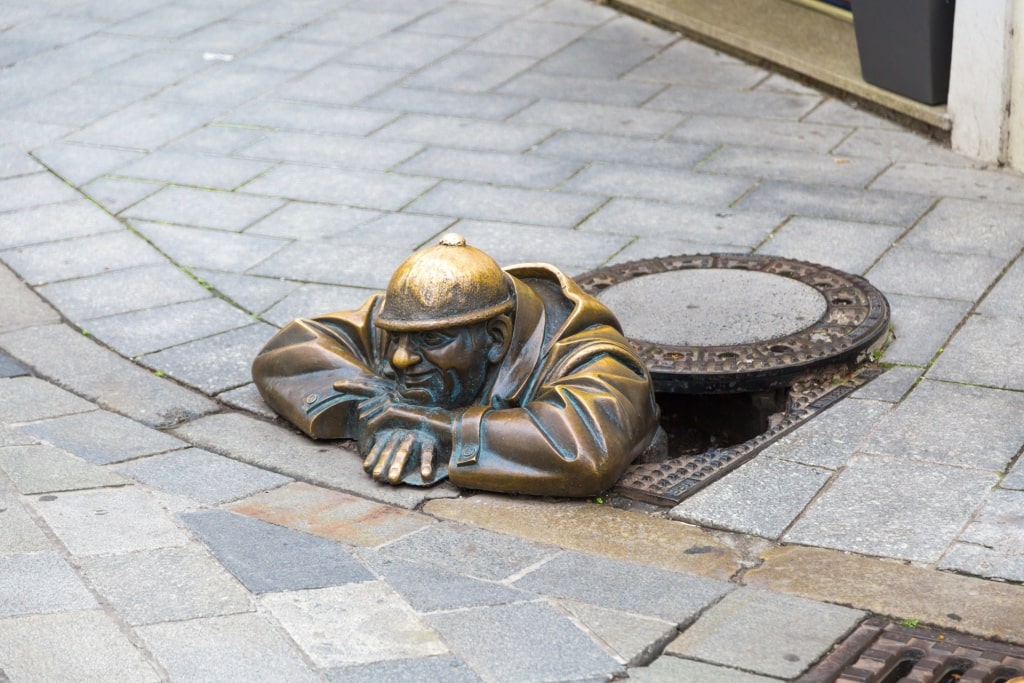
Cumil
What do you do when you want to revitalize a capital city after the austere years under the Soviets? Scatter a series of quirky bronze statues around the town and create an impromptu walking trail. That’s what happened in Bratislava in the 1990s, and you can find playful figurines all over the place—from main squares to side streets, and hidden corners.
A couple of the most famous to note include Čumil, aka The Watcher, a cheeky character popping out of a manhole cover with a grin on his face; possibly the most photographed resident of the city. There’s also a Napoleonic-era soldier leaning on a bench as though ready for a chat, and a paparazzo, frozen mid-snap. All have a backstory and discovering them can turn into a quirky scavenger hunt.
Comfort Foods
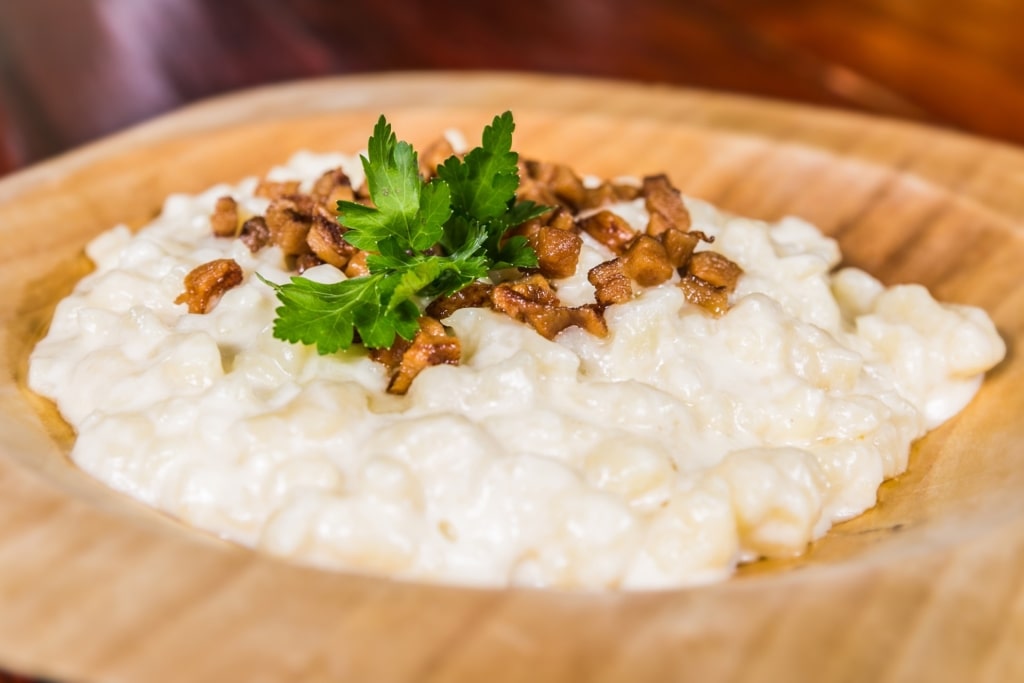
Bryndzové Halušky
Slovak cuisine today is a product of both the country’s geography and its history. Given that it sits at the heart of Central Europe—and that history is somewhat checkered—there’s little wonder many dishes are influenced by nearby neighbors. Austria, Hungary, former Eastern Bloc bedfellows such as the Czech Republic, and even Poland have left their mark.
From a geographical point of view, food is shaped by mountain and country life as well as harsh, cold Central European winters. You’ll find traditional Slovak dishes in most of the Old Town restaurants, pubs, and cafés, all with a focus on hearty ingredients: potatoes, cabbage, flour, pork, and cheese can all feature heavily.
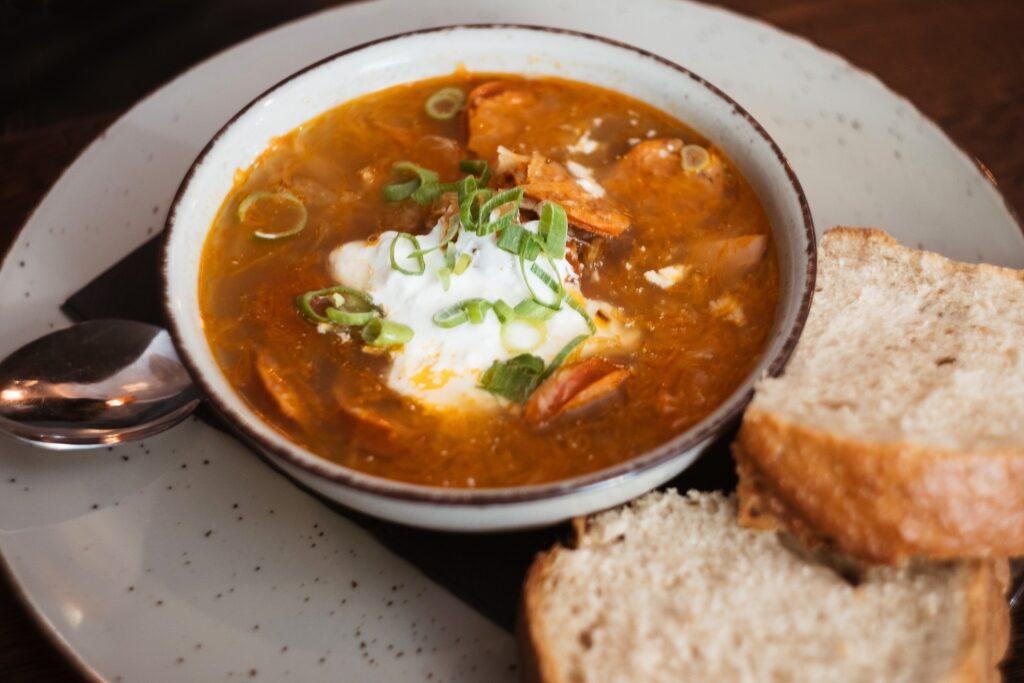
Kapustnica
Classic comfort food dishes in Bratislava include Bryndzové Halušky, potato dumplings topped with tangy fermented sheep cheese, and Kapustnica, a cabbage soup with smoked sausage and mushrooms.
For breakfast, lock into Bratislavské Rožky, a crescent-shaped sweet pastry with walnut or poppy seed filling. Originating in Pressburg, the city’s former name, they have protected status in the European Union and can only be made in Slovakia to be truly authentic.
Craft Beer Scene
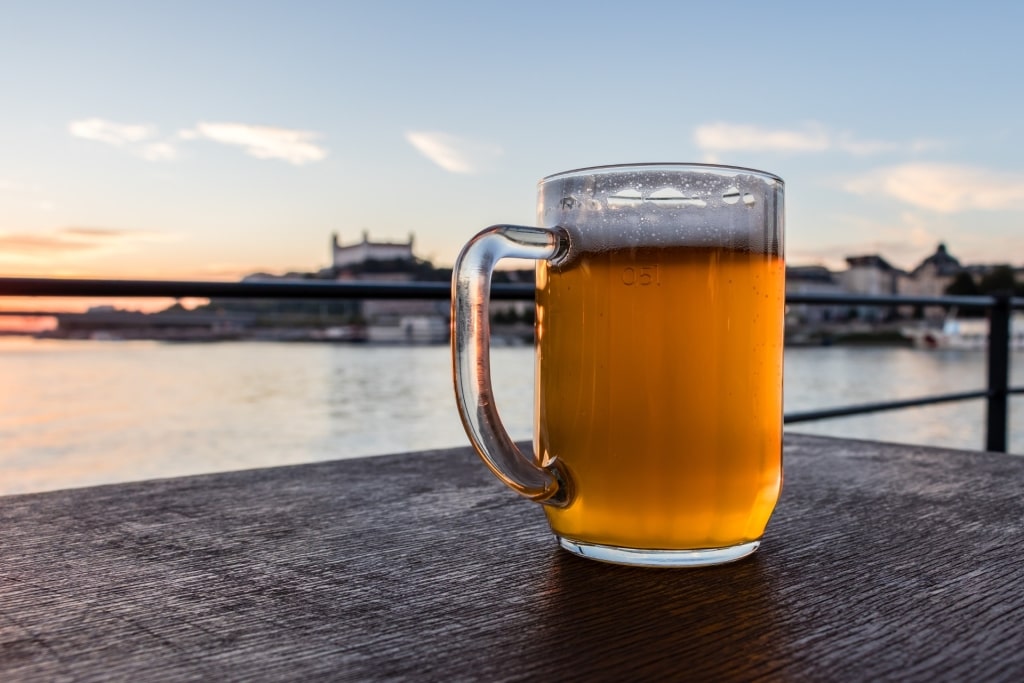
Beer
What is Bratislava known for? Beer, for sure. They’ve been brewing beer in Bratislava since at least the 15th century and the post-communist era opened the door to independent brewers. The uniform fizzy lagers—low on alcohol and low on taste—that became homogenized in the 1970s and ’80s have given way to a new wave of experimental microbreweries and taprooms, influenced by trends in the US, UK, and Germany.
Expect to find Czech-style lagers and Slovak Pilsners sitting beside hoppy IPAs, rich porters, sours, saisons, and experimental small-batch brews. Beer lovers will enjoy a wander around the Old Town with its classic brewpubs tucked into historic buildings and modern side-street bars.
Top spots include Bratislavský Meštiansky Pivovar—a blend of old-school beer hall and modern brewpub—and Richtár Jakub, known for rotating taps and serious beer knowledge. For beers with a view, try Dunajský Pivovar, a floating brewery on the Danube.
Modern Art
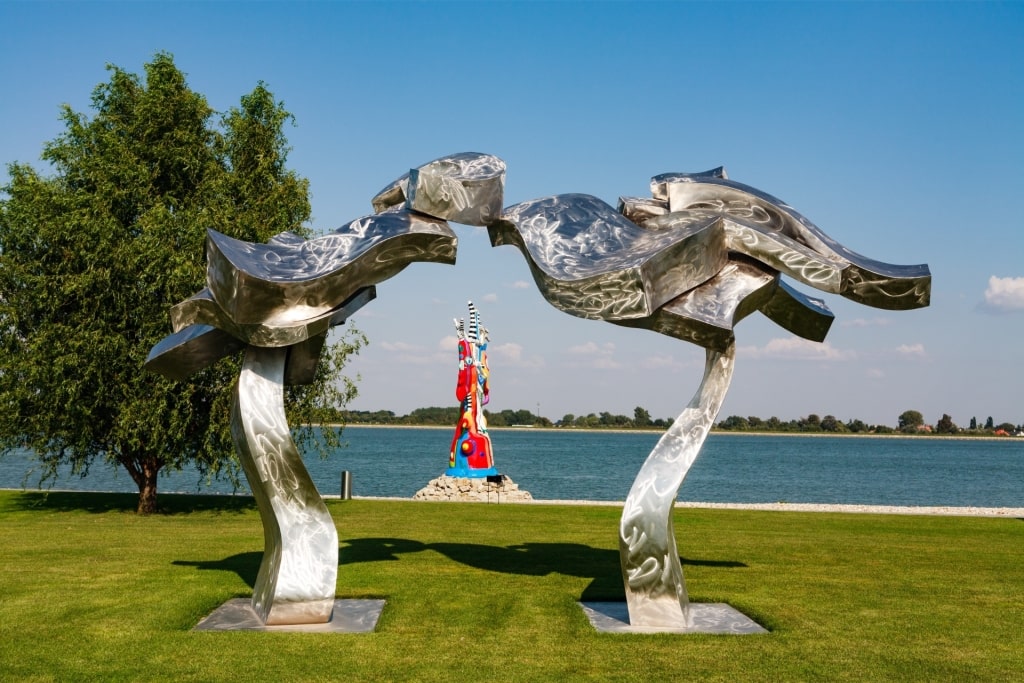
Meulensteen Art Museum
While Bratislava can at first seem like quite a traditional city, its heritage is underpinned by a modern, contemporary vibe. While less hyped than in Vienna or Prague, there’s quite the modern art scene going on, with the Danubiana Meulensteen Art Museum at its heart.
Sitting on a peninsula in the middle of the Danube, Danubiana is one of Europe’s most striking modern art museums thanks to its show-stoppingly sleek, curved walls and elegant sculpture gardens. It’s set around 30 minutes south of the city center, and you can get there by cab, car, or bicycle—but however you do it, it’s worth the effort.
Inside, there’s everything from abstracts to conceptual works, and photography to kinetic art, all by a selection of Slovak, Central European, and international artists.
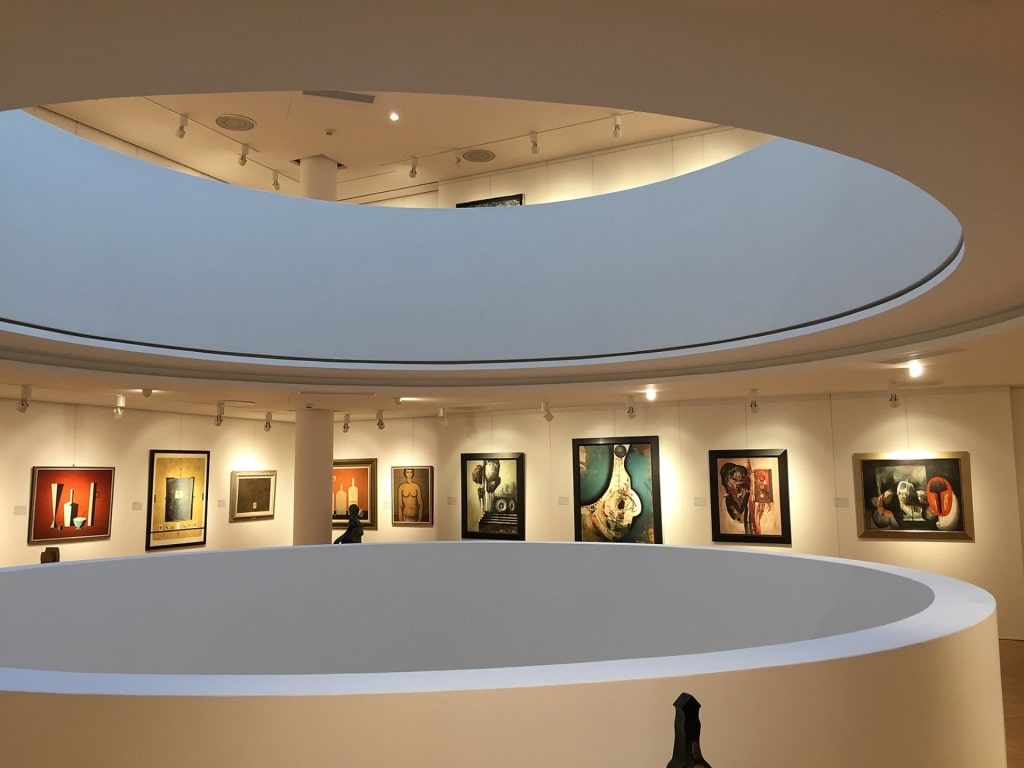
Nedbalka Gallery Photo by Austernfischer ry on Wikimedia Commons, licensed under CC BY-SA 4.0
Beyond Danubiana, Bratislava also has smaller contemporary spaces like Nedbalka Gallery, inspired by the Guggenheim in New York, and Kunsthalle Bratislava, which focus on Slovak modernism, post-war art, and new artists.
Remembering World War II
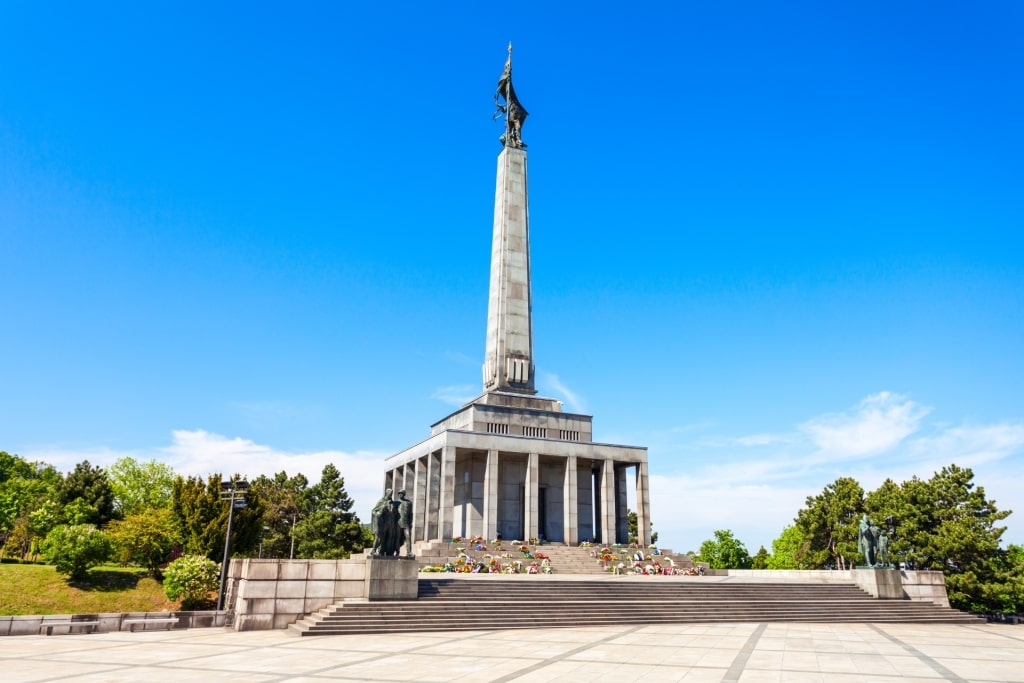
Slavín Memorial
While the years under Communist rule are not remembered fondly in Bratislava, the sacrifices made by some 7,000 Soviet soldiers in liberating the city from the Nazis in 1945 take pride of place. Perched on Slavín Hill—the highest point of the Old Town—and surrounded by upmarket homes and embassies, sits the Slavín Memorial that honors those who sacrificed their lives so Slovaks could be free as the war came to an end.
The site is home to six mass graves and 278 individual ones, with a 120-foot-high obelisk at its heart. Atop this, sits a bronze soldier carrying a flag. The memorial offers both a peaceful spot at which to contemplate the events that took place here, as well as incredible views of the city, the Danube, and the Little Carpathian Mountains in the distance.
The Heart of Europe
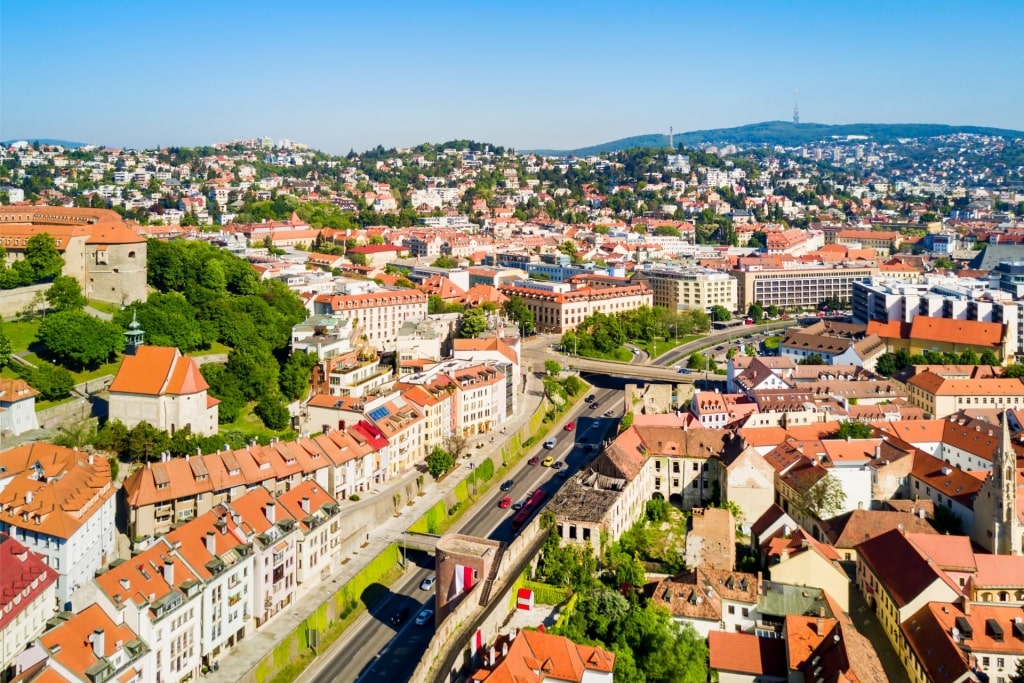
Bratislava City
Bratislava may sit by the confluence of the Danube and the Morava rivers, but it also sits firmly at the heart of Europe. It’s the only national capital in the world that borders two other countries—Austria and Hungary—and the Czech Republic and Poland are also close, cementing the city as a crossroads between East and West.
The city’s location is more than a geographical quirk; it’s part of Bratislava’s identity. You’ll find Baroque architecture with Habsburg roots, Hungarian-style goulash and paprika dishes, and a long history of Slavic, German, Jewish, and Hungarian influences coexisting.
Old Town
The multi-border heritage explains the city’s multilingualism and the quirks of its history. To the Germans it was Pressburg, to the Hungarians Pozsony, and is now Bratislava to Slovaks—three names, one city.
Europe’s Schengen border system means you don’t need to pass through border controls between Slovakia, Hungary, and Austria either. As such, for those looking to add to their list of countries visited, it offers the chance to strike off three in just a couple of hours.
Bratislava
Discover Bratislava for yourself on a European river cruise with Celebrity. Browse itineraries and plan your next big adventure.