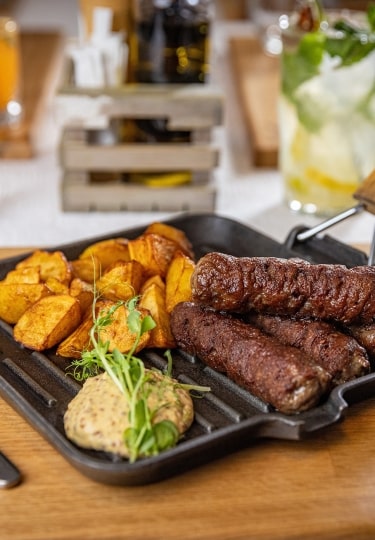
Grilled Romanian mici served with golden roasted potatoes and mustard.
Romania’s kitchens dish up influences from Ottoman rule, Austro-Hungarian bakeries, and generations of farmhouse cooking on a single plate. A cruise down the Lower Danube River takes you through a rotation of these fresh, inspired Romanian flavors as you wake up each day.
This guide explores the best Romanian dishes to try during your cruise, what to order first, and how they blend into a Lower Danube itinerary.
A Quick Look at the Best Romanian Dishes and What To Try First
If it’s your first time cruising to Romania, use this list of delectable local bites and sips as a roadmap to guide your taste buds once you arrive at the riverside restaurants:
- Sarmale: Pickled cabbage rolled around pork and rice, simmered in tomato sauce, is one of the best local mains to try. Sarmale holds the title as Romania’s national dish.
- Ciorbă de burtă: One of Romania’s sour soups, featuring tripe and thickened with egg, sour cream, and vinegar.
- Salată de vinete: Fire-charred eggplant blended smooth with olive oil, much like baba ganoush.
- Papanași: Crispy on the outside and soft on the inside, papanași is a fried cheese donut topped with sour cream and fruit compote.
- Țuică: Try this clear plum brandy in a small shot poured before meals.
Sailing the Romanian stretch of the Danube is one of the best European river cruises for those who love a good combination of Eastern Mediterranean and Central European flavors on their plate.
Romanian Cuisine: History and Influences
Like many of Europe’s culinary capitals, Romanian cooking largely emerged from farm kitchens, incorporating fresh ingredients from the land such as pork, cabbage, corn, and dairy. While the core of Romanian cuisine has always followed pastoral and rustic traditions, today, it has become a melting pot of varied cultural influences.
Sour soups, like ciorbă, are a staple in Romanian cooking, introduced by Slavic migrants from south of the Danube between the third and 12th centuries AD. Ottoman rule, beginning in the 14th and 15th centuries, exerted massive influence over Romanian principalities, introducing grilled meats, stuffed vegetables, and eggplant. Centuries later, corn arrived from the Americas and slowly replaced medieval millet as the base for mămăligă (which is why you’ll find a strong case for polenta in many Romanian dishes), alongside tomatoes, bell peppers, and other New World staples that Ottoman and European trade routes carried into the region by the 16th and 17th centuries.
From the 18th century onward, Austro-Hungarian influence added breads and stews, much closer to Central European cooking styles. Bucharest lies at the intersection of these cooking traditions, and many of its dishes take on a local spin as you cruise along the Danube River cities.
Common Ingredients in Romanian Food
Today, you’ll be hard-pressed to find a Romanian meal that isn’t based around one or more of the following ingredients:
- Sour cream
- Cabbage
- Minced meat
- Bell peppers
- Tomato sauce
- Eggplant
- Cheese
- Polenta
While plenty of these ingredients were historically introduced, you’ll find local farmers now produce each—many of them within the regions you’ll visit during your cruise.
Signature Romanian Dishes
Sarmale (Meat-Stuffed Cabbage Rolls)
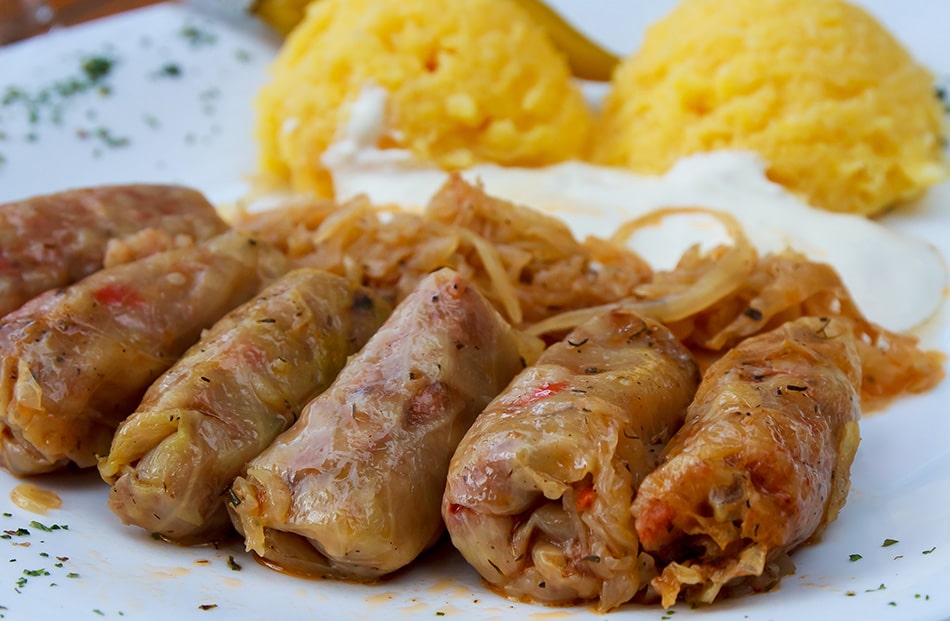
A plate featuring mămăligă and sarmale—pickled cabbage rolls served with a side of hearty polenta.
Sarmale (sar-ma-leh) is one of the best local mains to try on a river cruise. It’s made from pickled cabbage leaves rolled tightly around minced pork and rice ovals, then simmered for two hours in a light tomato sauce. The pickling gives the cabbage a tang that farm-fresh cabbage just can’t compete with, and it’s traditionally served with a dollop of sour cream and a side of mămăligă.
Many Romanians claim sarmale as their national dish; others say the same about mici.
Mici or Mititei (Skinless Sausages)
If you’re into European sausages, you’ll love this garlic-heavy, skinless grilled sausage made from ground beef and pork, hand-rolled into small cylinders before it meets the grill. Imagine a patty shaped like a sausage.
Chefs use baking soda to keep the meat tender and juicy as it heats. You’ll likely see mici (meech) served fresh off the grill with mustard and bread, much like in Germany, Austria, Hungary, and the Czech Republic.
Ciorbă (Beef Tripe Soup)
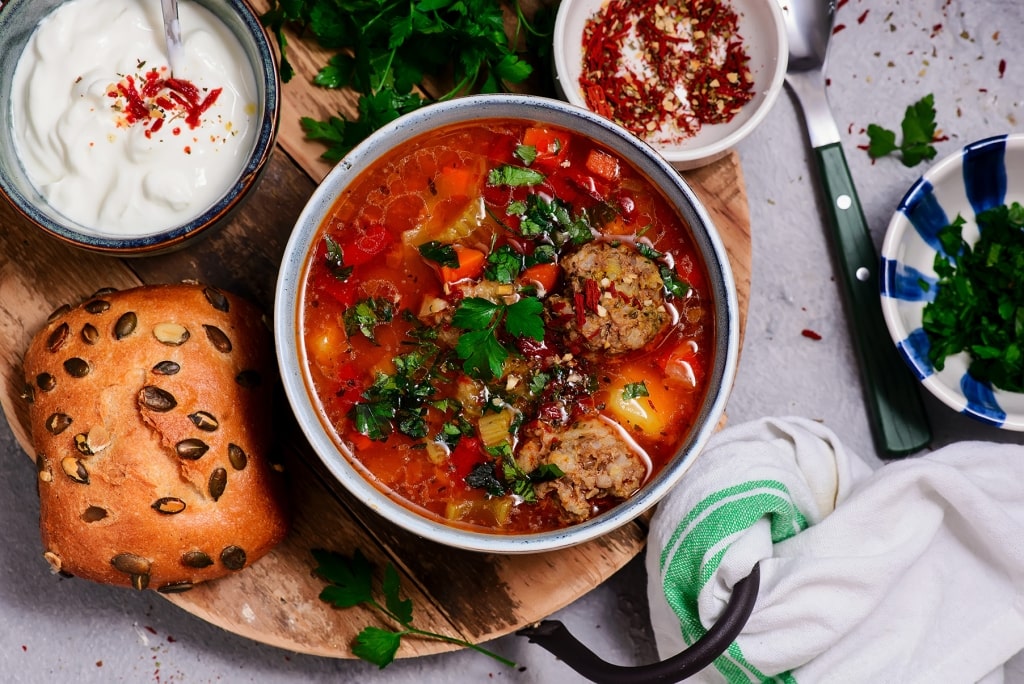
Hearty Romanian ciorbă de perișoare meatball soup served with fresh bread.
The word ciorbă (choor-buh) refers to any Romanian soup soured with vinegar, lemon juice, or fermented wheat bran. These soups are nearly always laden with veggies and some form of meat. Ciorbă de burtă is a classic, and if you like tripe, you’ll want to try this one first.
Beef tripe and bones simmer for hours to develop a rich stock, which gets strained before the tripe returns to the pot in pieces. Sour cream, egg yolk, vinegar, and garlic whisk in at the last minute to gently thicken and flavor the soup. You’ll often see locals turn to ciorbă de burtă the morning after a night of drinking țuică or pălincă, local fruit liqueurs.
Mămăligă (Polenta Bread)
Romania’s version of polenta, mămăligă (ma-muh-lee-guh), consists of cornmeal stirred into boiling water until it thickens into a dense porridge. When it sets, it’s sliced with a string, replacing bread in traditional Romanian cooking. Enjoy it alongside sarmale, layered with cheese and sour cream, or topped with a fried egg.
Romanian Soups and Comfort Foods
Ciorbă de Fasole (Bean Soup)
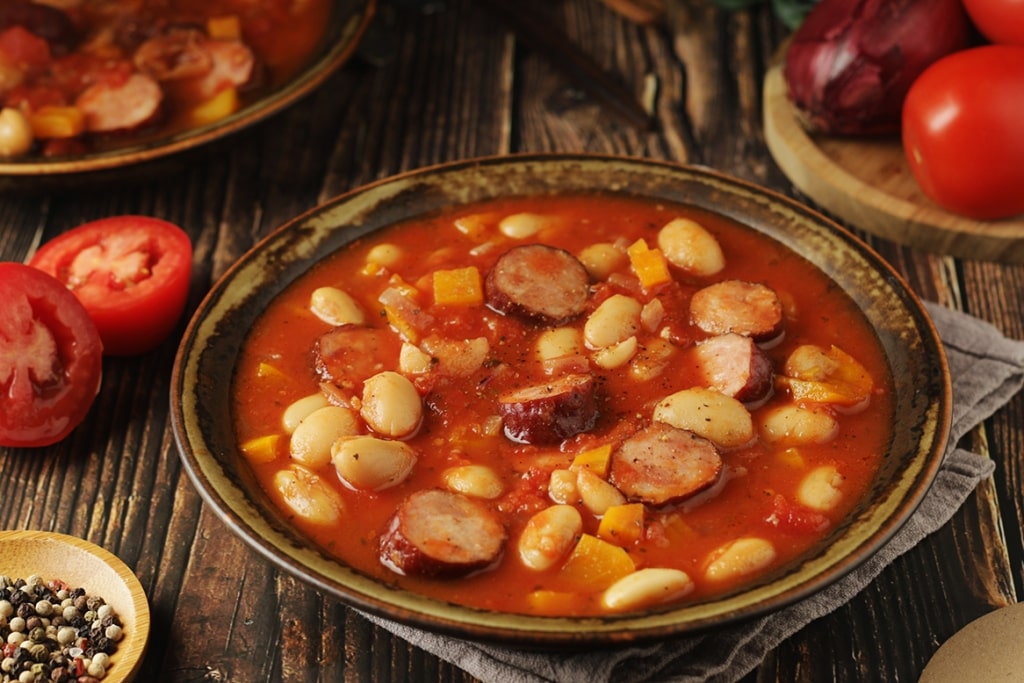
A bowl of homestyle ciorbă de fasole, a savory bean soup presented in a classic, rustic fashion.
Similar to ciorbă de burtă, ciorbă de fasole is a sour soup made with dried beans, smoked pork, and root vegetables. Its sour qualities come from a splash of vinegar added at the end, which offsets the richness of the pork. This is a traditional homestyle dish, so if you want to try it, look out for family-run kitchens along the Danube River.
Tochitură (Pork Stew)
Onion, garlic, and paprika brown first for tochitură (to-kee-tu-ra). This cubed pork stew slowly reduces with white wine, garlic, and spices until the meat becomes tender. It’s typically served over mămăligă, with a fried egg added just before it reaches the table.
Ardei Umpluți (Stuffed Peppers)
Ardei umpluți (ar-dey oom-ploots) borrows sarmale’s meat-and-rice filling and places it in a different vessel: bell peppers. The peppers then simmer in a sweet, smooth tomato broth. This is a beautiful, light dish to enjoy alfresco along the riverbanks in mid-to-late summer, when peppers are at their ripest.
Bulz (Polenta-Based Dishes)
Bulz pushes mămăligă a step further: a hollowed ball of set polenta stuffed with cheese, dotted with butter, and roasted until the cheese melts and the top lightly browns. You eat it like a loaded baked potato, with sides like smoked bacon, a fried egg, or traditional sausages.
Appetizers and Spreads in Romania
Salată de Vinete (Eggplant Spread)
This one’s Romania’s answer to baba ganoush. Whole eggplants, charred directly over an open flame until the skin blackens and the flesh softens, are blended with olive oil to become salată de vinete (sa-la-tah deh vee-neh-teh). The direct fire gives the spread its smoky edge, ideal for spreading on thick, crusty bread as a starter.
Zacuscă (Roasted Vegetable Spread)
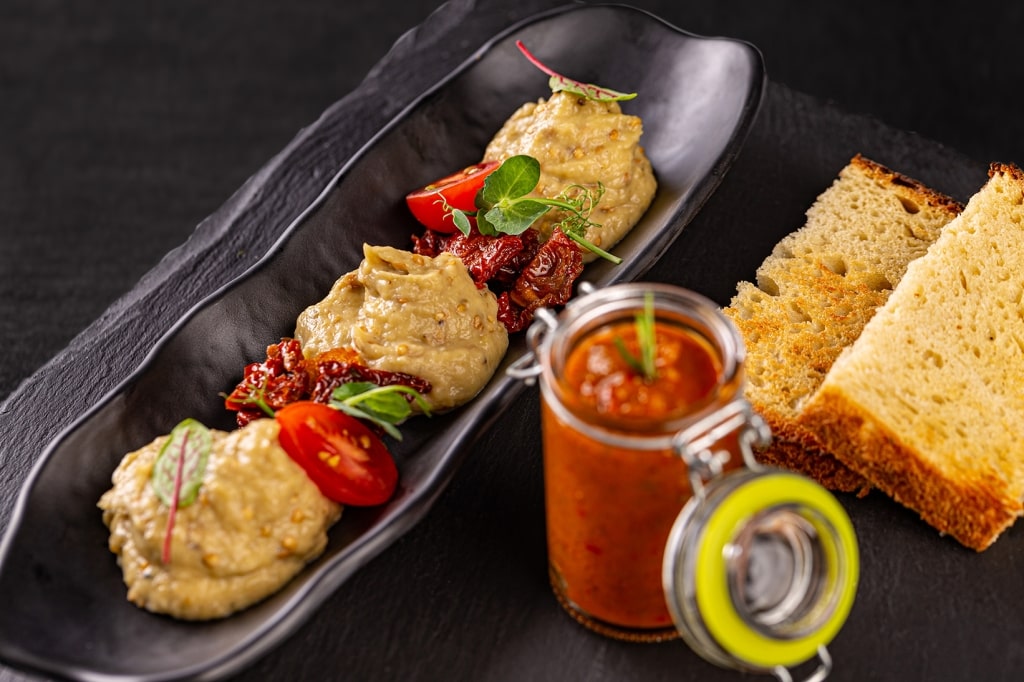
Transylvanian zacuscă spread and truffle eggplant cream served with toasted bread.
Roasted peppers, eggplant, tomatoes, onions, and occasionally mushrooms simmer long and slow into zacuscă (zah-coos-kuh), a thick vegetable spread. In September and October, when eggplants and peppers are ripe and abundant, local families char the vegetables over an open wood fire and peel them by hand before simmering and preserving the zacuscă for winter.
Covrigi (Romanian Pretzels)
Street carts across Bucharest sell covrigi (kov-reej), Romania’s take on the pretzel. Its dough is baked soft and salted rather than crisp like German pretzels.
Plăcinte (Pastries)
Bucharest bakeries stock savory, golden-baked pies called plăcinte (pluh-chin-teh) filled with cheese, minced meat, or cabbage. They make for an easy bite on the go between meals.
Romanian Desserts and Drinks
Papanași (Fried Cheese Donuts)
Papanași (pah-pah-nash) is a dough of soft cheese, flour, and sugar, shaped into rounds with a hole in the center and fried or boiled until golden. Sour cream and a fruit compote—usually plum or sour cherry—are served on top. The cheese keeps the inside dense while the fried exterior turns crispy.
Cozonac (Sweet Braided Bread)
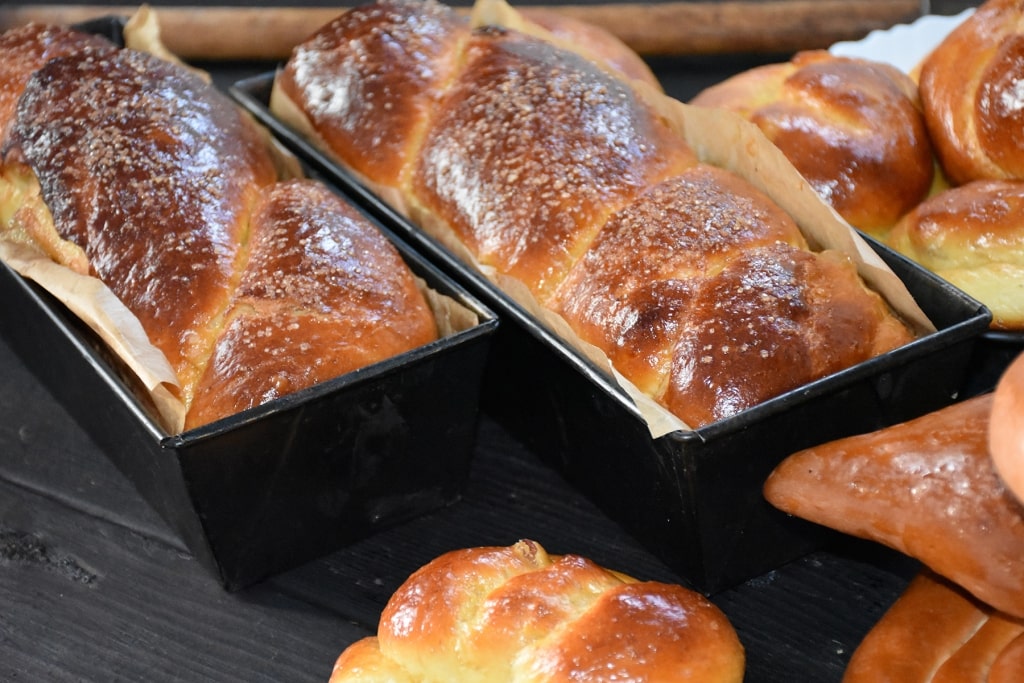
Golden, freshly baked cozonac sweet braided bread in traditional loaf pans.
Sweet, egg-enriched dough gets braided around walnuts, cocoa, or Turkish delight for cozonac (ko-zo-nak), then baked into a tall, fragrant loaf. It’s a common sweet during Easter and Christmas, and the longer a chef kneads the dough, the softer the crumb.
Țuică and Pălincă (Fruit Brandies)
Țuică (tswee-kuh) is a clear brandy, made both at home and commercially across the country by fermenting plums in a still. Pălincă (pah-lin-kah, also popular in Hungary) follows the same process with other fruits blended in—and it’s often at a higher proof. Either one is typically poured in a small glass before a meal to stimulate the appetite.
The Best Ways To Explore Romanian Cuisine
In my experience, the best way to savor a meal in Europe is slowly. In the same vein, the ideal way to uncover Romania’s cuisine, layer by layer, is in a setting where you have the space and time to connect with the local culture and cultivation techniques that go into Romania’s most prized dishes.
Cruising along the Lower Danube provides the perfect backdrop to appreciate the history, context, and flavors Romania has to offer. Many of the farmlands producing fresh local ingredients are more visible along the Lower Danube than along the Rhine River. Experiencing the place where your food is cultivated is often as easy as stepping out on deck.
Many of the restaurants lining the river favor smart casual dress, so there’s no special effort required as you step from the cruise ship into the local culinary scene.
FAQs: Tasting Romania’s Cuisine
What is Romanian food known for?
Romanian food uses a base of pork, cabbage, and cornmeal, imbued with centuries of rustic traditions and Ottoman, Slavic, and Central European influence.
What are the best Romanian dishes to try first?
Start with sarmale (stuffed cabbage rolls), mici (grilled meat), and ciorbă de burtă (sour tripe soup). These will give you a taste of Romania’s predominant flavors in one sitting.
What is the national dish of Romania?
Sarmale, stuffed cabbage rolls simmered in tomato sauce, is widely considered Romania’s national dish, though mici holds a competing claim.
Is Romanian food similar to Greek food?
Both cuisines grill meat and stuff vegetables using Ottoman techniques, but Romanian cooking uses cornmeal, sour cream, and pickled cabbage more than Greek cooking.
What desserts and drinks should travelers try in Romania?
Try papanași and cozonac for dessert, then taste țuică or pălincă, which are plum and fruit brandies. Romanian locals typically serve these before a meal rather than after.
What foods might travelers encounter in Bucharest and on a Lower Danube trip?
Expect sarmale, mici, zacuscă, and mămăligă on menus throughout Bucharest, with regional soups and pastries adding their own twist at each port along the Lower Danube.
Taste Your Way Through Romania’s Cuisine on the Lower Danube
A slow river cruise through the Lower Danube is the perfect entry point to the flavors and textures you’ll find on Romanian plates. Discover cultural context and visually stunning scenery to immerse yourself in as your taste buds explore the multitude of delicacies waiting for you in Romania.
View Danube cruises to Romania—and come hungry.