Tipping in Austria is certainly not as theatrical as in some parts of the world but is still very much part of the culture. Rather than performative verbal high-fives from staff who live for tips, tipping is more a quiet nod to good service: expected but discreet, appreciated but not demanded. In fact, part of the charm of tipping in Austria is how unspoken it is. Low on drama, high on function—you could say typically “Austrian”, in fact.
The tipping culture shares similarities with other European nations but stands on its own somewhere between the precision seen in Germany and Italian informality. Whether you’re grabbing coffee in Krems, taking a taxi through Linz, or enjoying a massage in Mauthausen, here’s everything you need to know, from what to tip and when, to how to hand it over. No awkward guesswork and no calculator needed.
General Etiquette

Market in Vienna
Like in much of continental Europe, tipping in Austria isn’t mandatory—and general rules will follow those seen in neighboring countries. It is, however, woven into the social fabric, but in a pretty low-key way.
There’s one simple rule to follow over any other: if someone gives you decent service, show some appreciation by rounding up the check or leaving a few euros. Think less about mathematical precision and more about good manners.
Cafe in Vienna
One thing is for sure: there’s no need to start adding the sometimes eyebrow-raising figures you might see in the USA. In Europe, tips are seen as a welcome addition to a wage, rather than a significant part of someone’s earnings, so it helps to see the tip as a bonus to the recipient rather than a financial lifeline.
Don’t expect a song-and-dance when tipping from the receiver, especially in Vienna; service tends to be polite but subtle. While tipping might not be a legal requirement here, skipping it altogether can come across as careless or rude, especially in places where there is a high level of personal touch. Note, too, when looking at prices that they come with a comma rather than a period in Austria. So when you see €3,50 that means three euros and 50 cents.
Viennese Reserve
Restaurant in Vienna
It’s worth managing expectations about service in Austria before moving on to tipping itself. If you’re used to your server telling you their name, recommending the specials menu, or offering their opinion on their favorite dessert, brace yourself. Austria plays by different rules, especially in Vienna.
That’s not to say staff are rude, but service tends to be efficient rather than effusive. People are professional and courteous but without going over the top. Don’t mistake that for frostiness, it’s just the culture. A lack of small talk isn’t about a lack of care, it just means they are focused on getting the job done rather than trying to charm you. In Austria, politeness is expressed through smooth service, not chit-chat.
Service Is Almost Never Included
Cafe in Vienna
Whether enjoying schnitzel washed down with a crisp glass of Grüner Veltliner at Loibnerhof restaurant near Dürnstein, or going for something more elevated at the Herberstein in Linz, a service charge is almost never added to a bill in Austria. In fact, some online reports suggest there was revolutionary fervor in the air when one restaurant tried it back in 2023.
This means that restaurants, cafés, and bars typically present the amount due, then it’s up to you to add something extra for your server if you wish. The exception to the rule is super high-end restaurants such as a three-Michelin-star Restaurant Amador in Vienna.
Bedienungszuschlag vs Servicepauschale
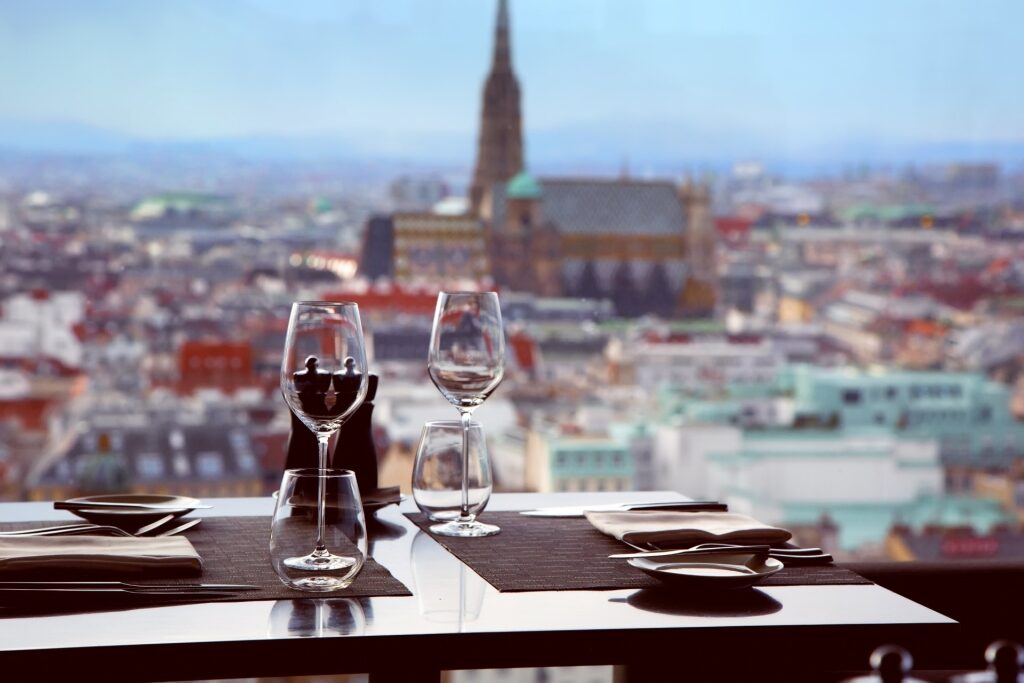
Restaurant in Vienna
Where service charges are included on menus, you may see the terms “bedienungszuschlag” or “servicepauschale”. Both refer to service charges but it can be unclear whether these are mandatory charges such as processing or bank fees, or if they include an actual tip.
It’s always best to ask for clarification. If they do include the tip, there is no need to add extra unless you feel the service has gone above and beyond.
Tip in Cash Where Possible
Market in Salzburg
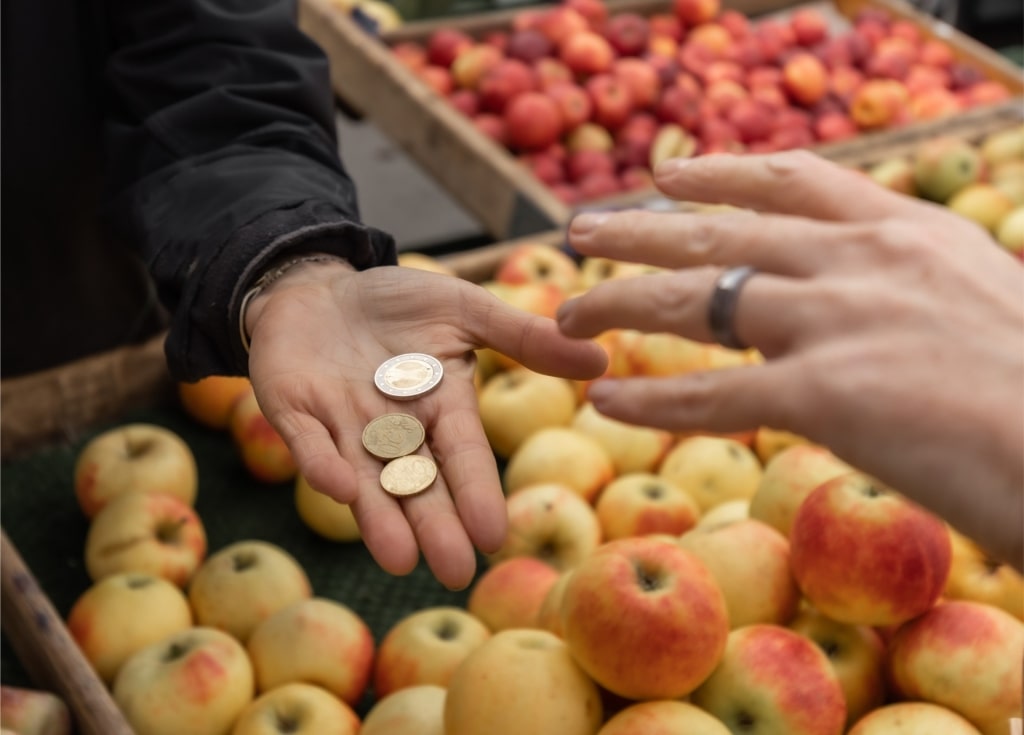
While debit and credit cards are widely used in Austria, you’d be surprised at how much need there still is for cash. Many smaller cafés, independent shops, market stalls, and public restrooms tend to not accept cards. Look out for the phrase “Nur Barzahlung”—cash only—on signs and menus.
Elsewhere, some card machines have no option for adding a tip, and even if they do, that tip might not end up in the hands of your server. Bottom line: it pays to carry cash around with you both to pay for things and to tip. If you want to be sure, ask before you order: “Kann ich mit Karte zahlen?”, which means “Can I pay by card?”, then have a few euros in change or notes for the tip as well.
What to Aim For
Wachau Valley
Forget those 20-25% amounts you might see in the United States. When it comes to tipping in Austria, you are looking at between 5% to 10% of the bill for most services. In fact, that just about covers most things from a relaxed riverside lunch in Ybbs to a guided walking tour around Linz.
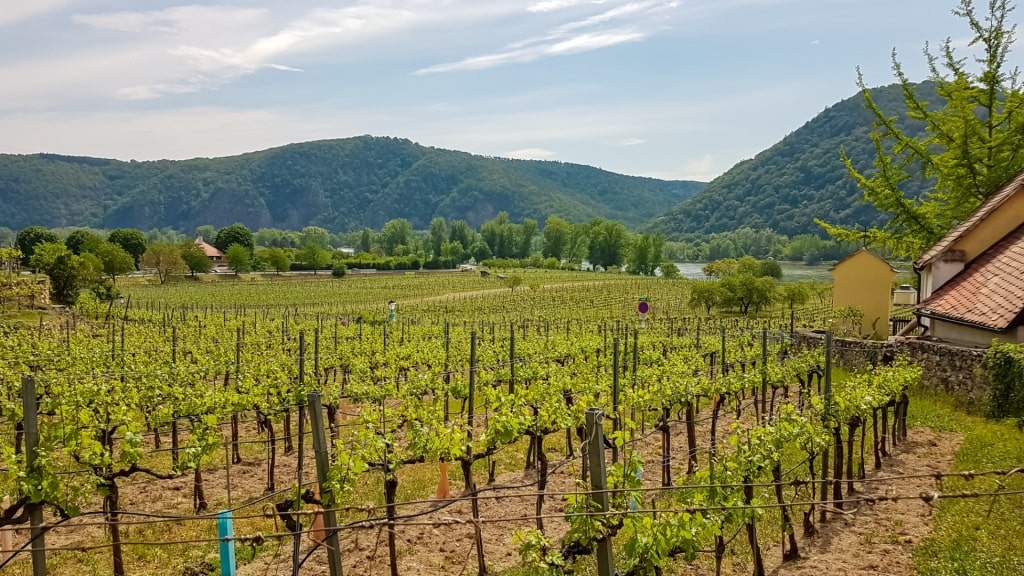
For truly outstanding service—a private wine tasting in the Wachau Valley, or a brilliantly informative Melk tour guide, you might push up to 15% but it’s by no means expected.
For a quick espresso or a sandwich in casual settings like bakeries, cafés, or heuriger-style taverns, simply rounding up to the nearest euro is fine.
Round It Up
Cafe in Vienna
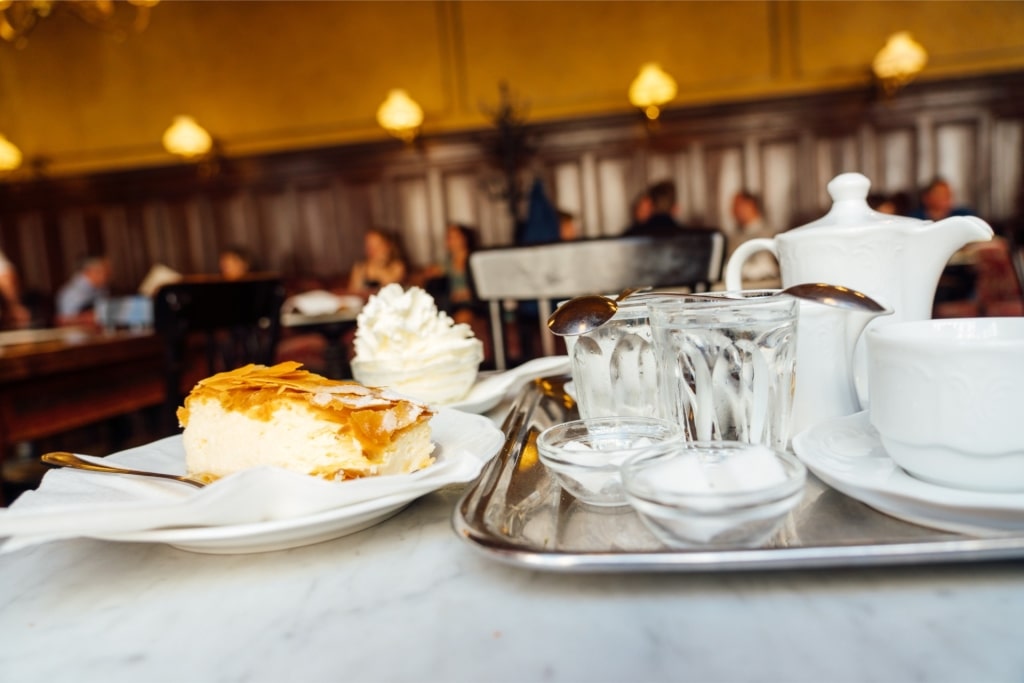
In Austria tipping is much less about percentage points and calculators and more about common sense and simple math. The solution? Round up with confidence. If your coffee and cake cost, say €9, hand over €10 and say “Stimmt so”. Literally, it means “it’s correct like that” but it’s really a way of saying “keep the change” and is used everywhere from taxis to taverns.
It’s a technique that plays perfectly into central European efficiency: no digging out 20-cent coins, no calculator, no awkward wait by the tip jar, no leaving coins on the table.
Say the Total
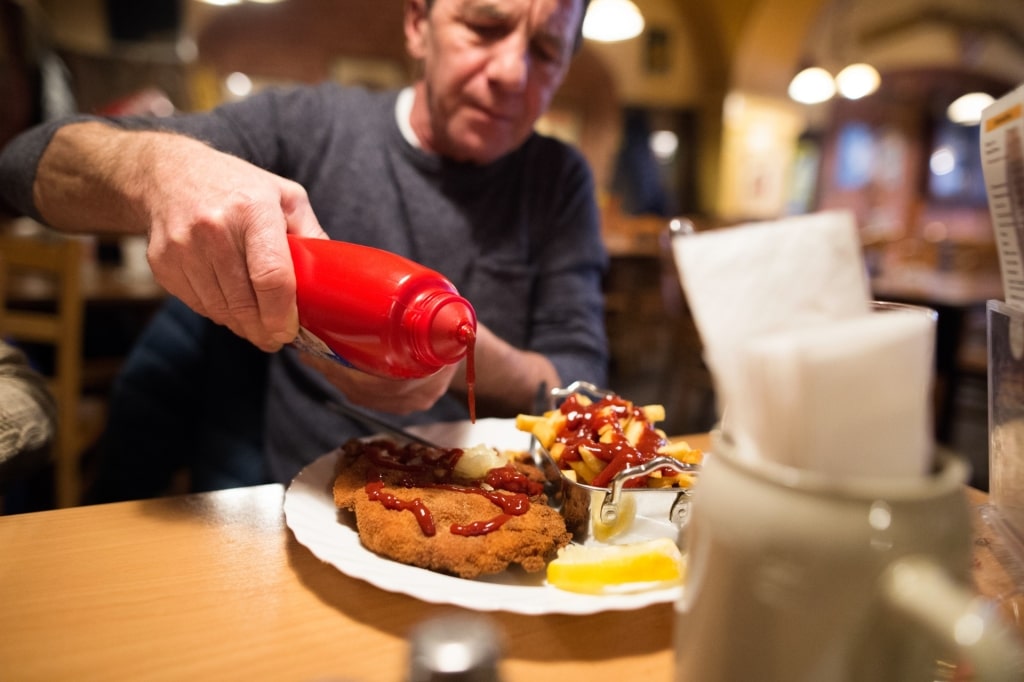
Restaurant in Austria
Another useful tip for tipping in Austria is to say the total. Again, it plays into local standards of efficiency, if you simply say what you want to pay when you hand over cash or your card. Let’s say the bill comes to €18.60, if you want to round it up, you can simply say “Zwanzig, bitte”, or “twenty, please”. It’s quick, it’s clear, avoids the handover of change only for it to be handed back—and key, it’s how the locals do it.
It’s worth noting that this is a useful halfway house if you have no cash and want to leave something by card. As many card machines in Austria don’t have a tip function, saying the total you wish to pay aloud allows the cashier to plug it straight into the machine for ease.
Cafés & Bars
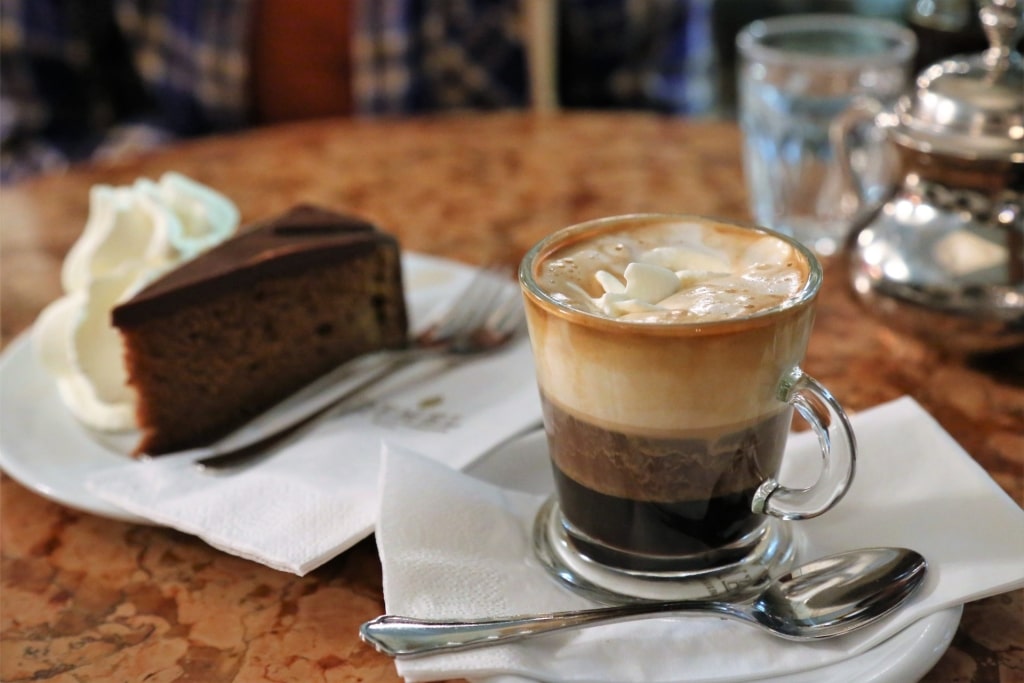
Cafe in Vienna
In Austria coffee culture is serious business, especially in Vienna where sitting in a café is more than just a caffeine fix, it’s a civic duty. Whether sipping a Wiener Melange coffee in the capital’s elegant Café Central, or sampling a verlängerter, which is espresso with added hot water, at the Gerberei in Linz, the tipping expectation is clear. Leave something, even if it’s a moderate amount.
No one’s expecting a big gesture and you won’t see tip jars at the counter, but even if you’re sipping a simple espresso, a euro will be welcomed by the staff, especially if you’ve had table service.
For drinks at bars, especially in more traditional towns like Grein or Ybbs, rounding up is enough. In more modern or upscale spots, a euro or two per round of drinks is appreciated—particularly if the bartender’s gone the extra mile to make you a custom cocktail.
Taxis
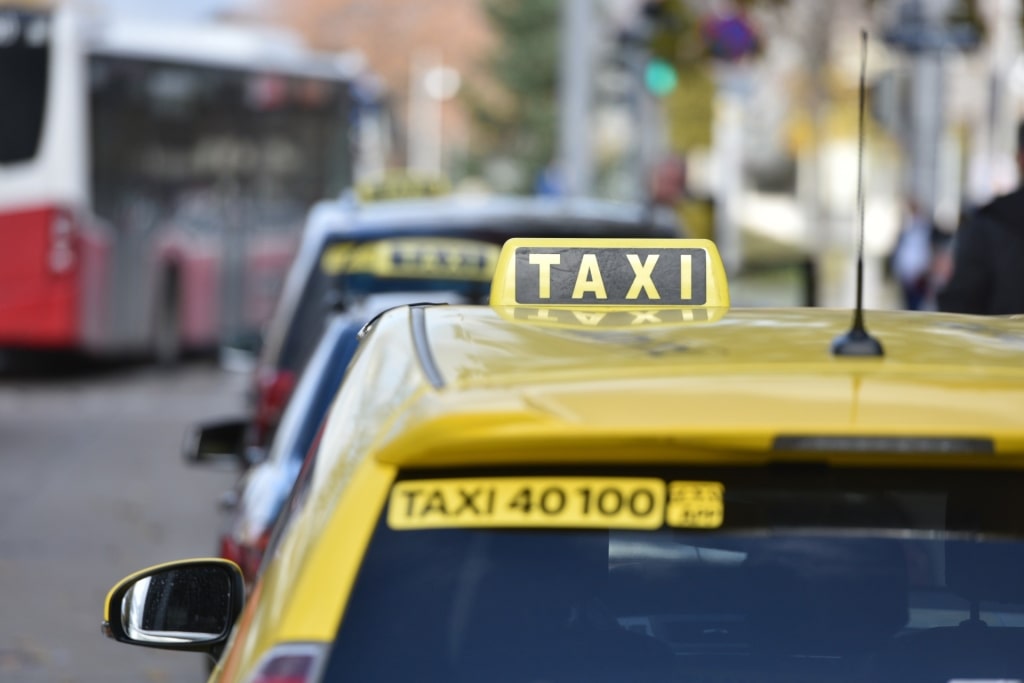
Taxis in Vienna
Tipping your taxi driver in Austria isn’t a grand affair but will always be appreciated, especially in smaller villages and towns such as Grein or Engelhartszell where the cab service is often run by owner-drivers.
The standard move is to round up to the nearest euro for shorter journeys, or to add a simple 10% if your driver has been especially helpful in getting you somewhere special, has assisted with luggage, or if the journey has been a long one.
As above, it’s best to state the total you want to pay before handing over cash. While card terminals in taxis are increasing, you still may find rides are cash-only in smaller Austrian towns, so make sure to ask before getting in. You can always direct the driver to stop at an ATM if need be.
Guided Day Tours

Melk Abbey
Whether you’re looking for the best insight into the baroque grandeur of Melk Abbey, or walking through the medieval streets of Krems, a good guide can elevate a pleasant day out into the unforgettable.
If that’s the case, the norm is around €5 per person for a half-day tour, or €10 for a full day’s outing, maybe a little more if your guide went above and beyond with good humor, historical insight, or negotiating discounts in stores on your behalf. Cash is best, handed directly to the guide at the end of the tour. It doesn’t need an envelope or a speech, just a quiet “thank you” and a well-placed note or two.
Free Walking Tours
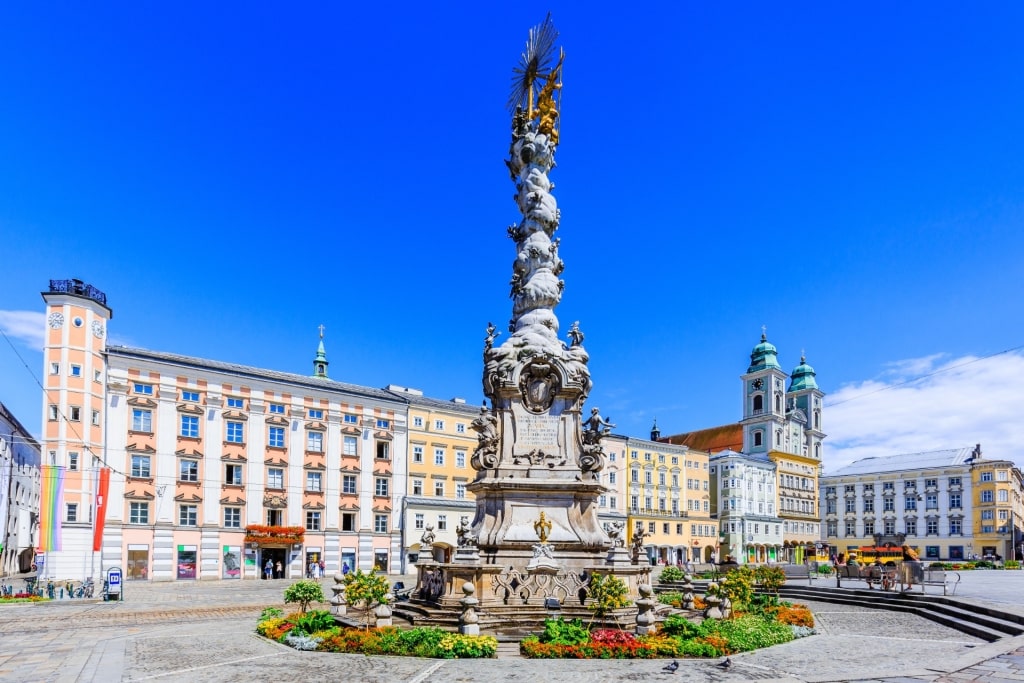
Holy Trinity Column, Linz
Especially in Vienna, there are numerous free walking tours for visitors with different themes and in different languages. They may be free by name but “pay as you feel”—also known as tipping in disguise—is how the guides make a living.
Free walking tours tend to be shorter than guided excursions, usually around 90 minutes, and somewhere between €5 and €10 per person is standard in the capital, perhaps a little more if the guide has been particularly engaging.
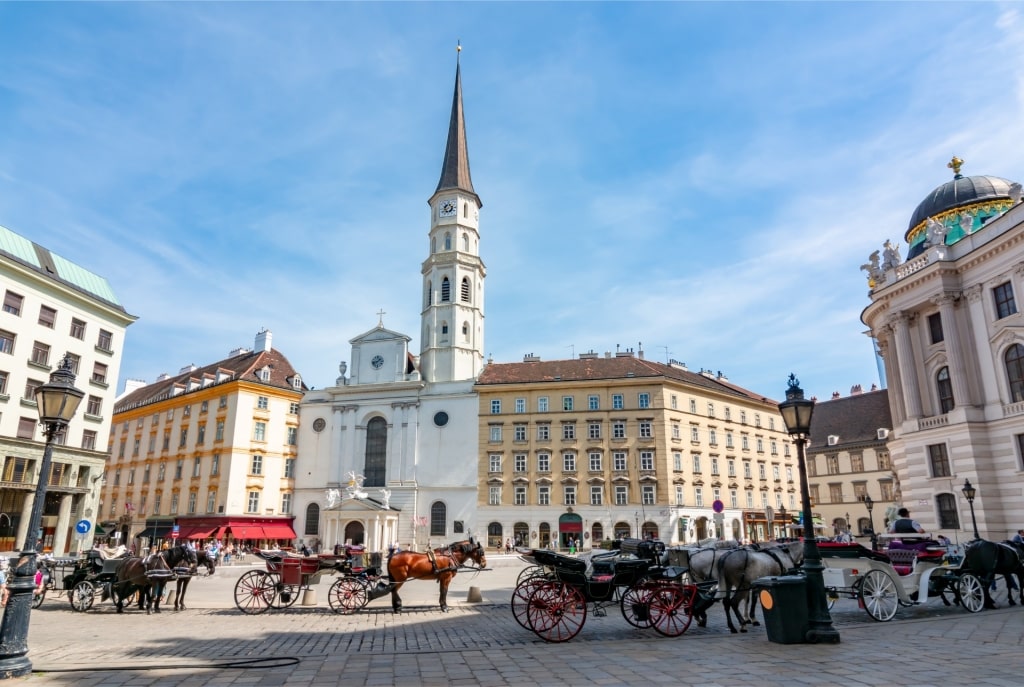
Michaelerplatz, Vienna
“Free” tours tend to be informal and can add extra stories or insight, so there’s plenty of scope to increase the amount if it feels right.
Visitors are usually prompted to tip by the guide at the end of the tour with a polite speech. And while tipping or not is a personal choice, unless the tour was genuinely terrible, offering nothing is a bit of a faux pas. Cash is king here. While coins may be acceptable, it can feel a little stingy. Notes are a better option.
Read: Best Places to Visit in Austria
Spa, Massage & Hair Salons
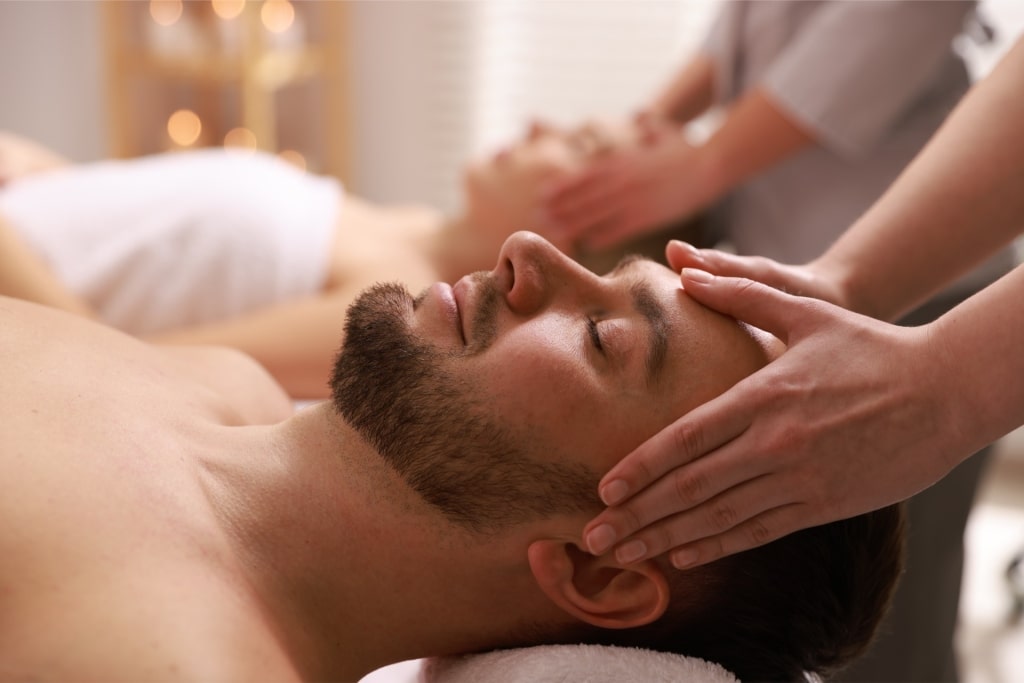
Spa
Austrians take wellness extremely seriously—this is a country where thermal baths, saunas, and spa treatments are part of everyday life, not just an indulgence for those on vacation.
If you decide to book a treatment, whether a massage in a day spa in the capital or a wellness session in a resort near Mauthausen, it’s polite to tip the therapist with around 10% of the treatment cost.
Some spa facilities may include a service charge in the price. If in doubt, ask for clarity. Hand the money in cash to the therapist directly. If someone’s cutting your hair, doing your nails, or treating your feet after a day of sightseeing, a tip of 5–10% is standard—especially if you’re thrilled with the result.
Hotels

Vienna
Tipping in hotels is still not obligatory, but in higher-end establishments in Vienna, it does tend to be expected, whether you are an overnight guest or not. For hotel restaurants, bars, and spas, follow the same conventions as above.
Concierges, as in all major cities, can be a goldmine of information. For any booking of last-minute tickets, private tours, restaurant reservations, or sending you to a great rooftop bar, a small denomination note of €5 or €10 is appropriate.
For simple requests like directions or a taxi call, no tip is needed. If you are staying overnight and a bellhop carries your luggage, €1–€2 per bag is appropriate.
Public Restrooms
In stations, squares, and other tourist areas, some public restrooms still have attendants. A small tip of €0.50 or €1 in coins is appropriate per visit, assuming the place is clean and well maintained.
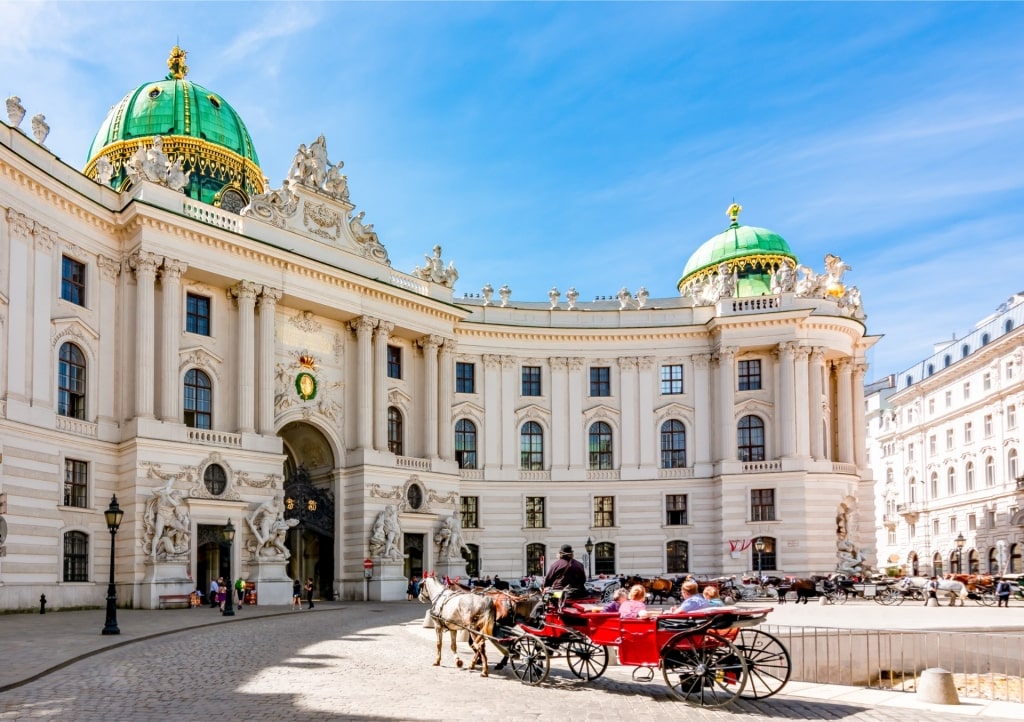
Hofburg Palace, Vienna
Discover the welcoming culture of the country for yourself on one of Celebrity’s river cruises.