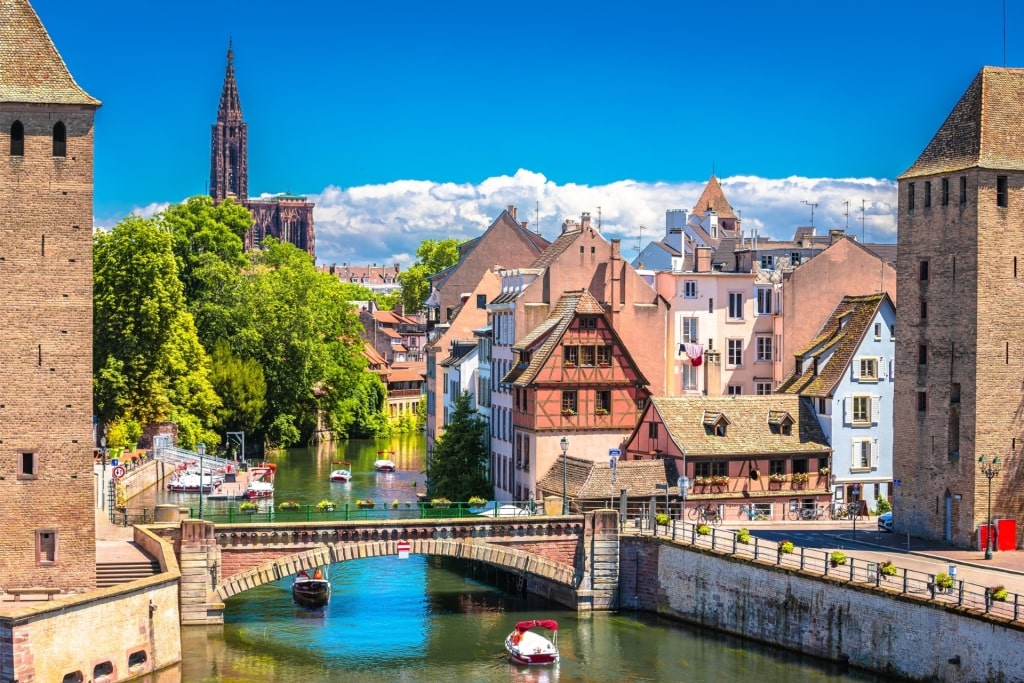
If you’re wondering what to eat in Strasbourg that you can’t easily find in Paris or at a French restaurant at home, you’ve come to the right place. Strasbourg, the capital city of France’s Alsace region, is known not only for its majestic Gothic cathedral, German influence, and legendary Christmas markets, but also its rustic, hearty gastronomy.
Alsatian cuisine offers a wealth of unique, multicultural, and historic recipes to discover at the city’s many restaurants and bakeries: butter, cream, and pork are celebrated ingredients here, as well as a generous dash of Riesling. Here are some dishes not to miss on your next visit to Strasbourg.
Choucroute
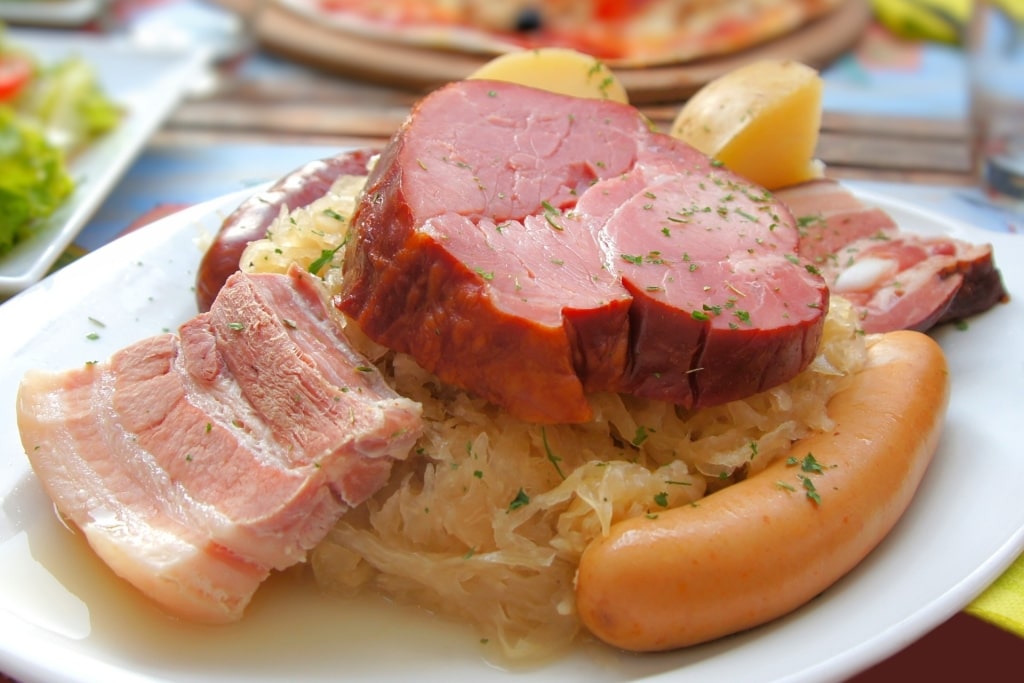
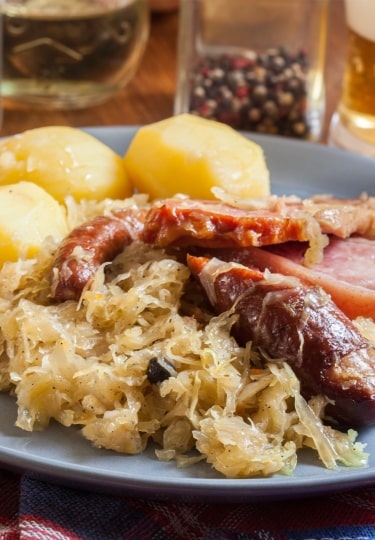
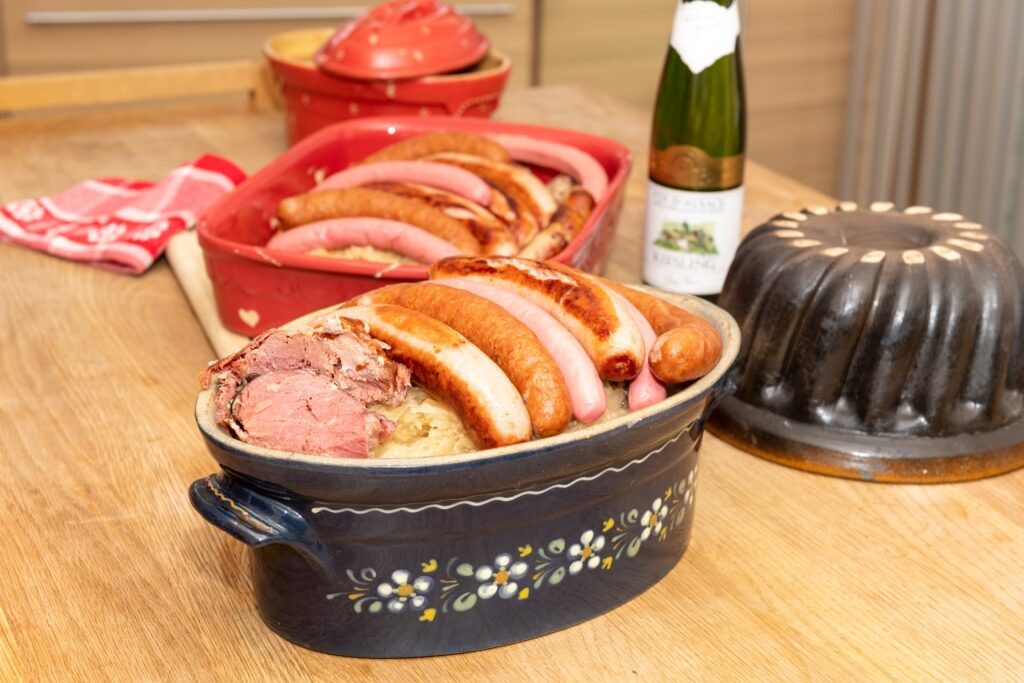
Choucroute garnie
The most iconic dish from the Alsace region of France is choucroute, or sauerkraut. The base of choucroute is always made with thinly sliced fermented cabbage, cooked multiple times over with fat and then braised with wine or beer in order to soften its acidity. Aromatic spices and herbs such as cloves, bay leaves, and juniper berries are also added to add depth to the stock.
Choucroute comes in several varieties: a choucroute garnie, also known as choucroute royale, will be accompanied by Strasbourg sausages or smoked Frankfurt sausages, as well as lard and potatoes. Don’t be surprised to find seafood choucroute on the menu as well, which often features sauerkraut topped by different kinds of freshwater fish, shrimp, and scallops.
Tarte Flambée
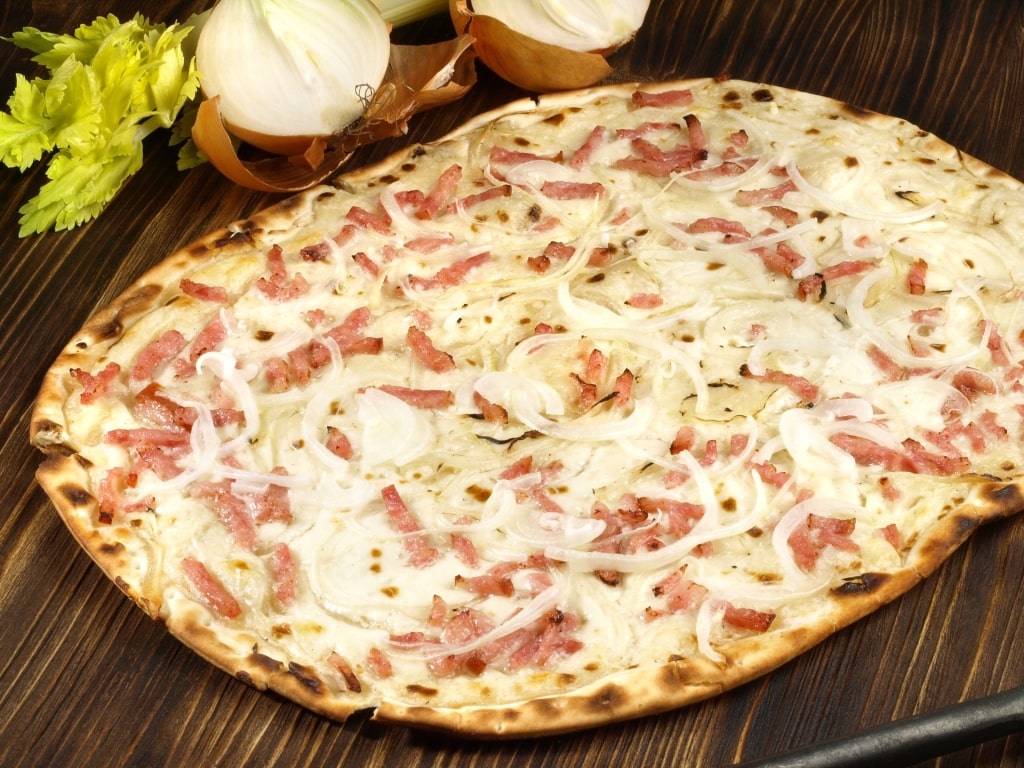
Tarte Flambée
Better known as Flammekueche throughout France, this emblematic Alsatian flatbread is a deceptively simple creation: thin dough topped with fromage blanc or crème fraîche, caramelized onions, and crispy, fatty lardons, baked in a wood-fired oven. Unlike pizzas, which are often ordered as individual pies in France, tarte flambée is meant to be shared by the whole table in convivial style. When it comes to what to eat in Strasbourg, this is the perfect lunch.
The tarte flambée was considered a home-cooked recipe that was ubiquitous in farming households until the 1960s, when pizza’s mounting popularity in France made flammekueche a more frequent listing on restaurant menus.
Much like pizza and other flatbreads, the customization possibilities are endless: common ones include a tarte forestière, where the creamy, oniony, bacon-y base is garnished with mushrooms, or gratinée, which comes with an extra crispy layer of gruyère cheese on top.
Baeckeoffe
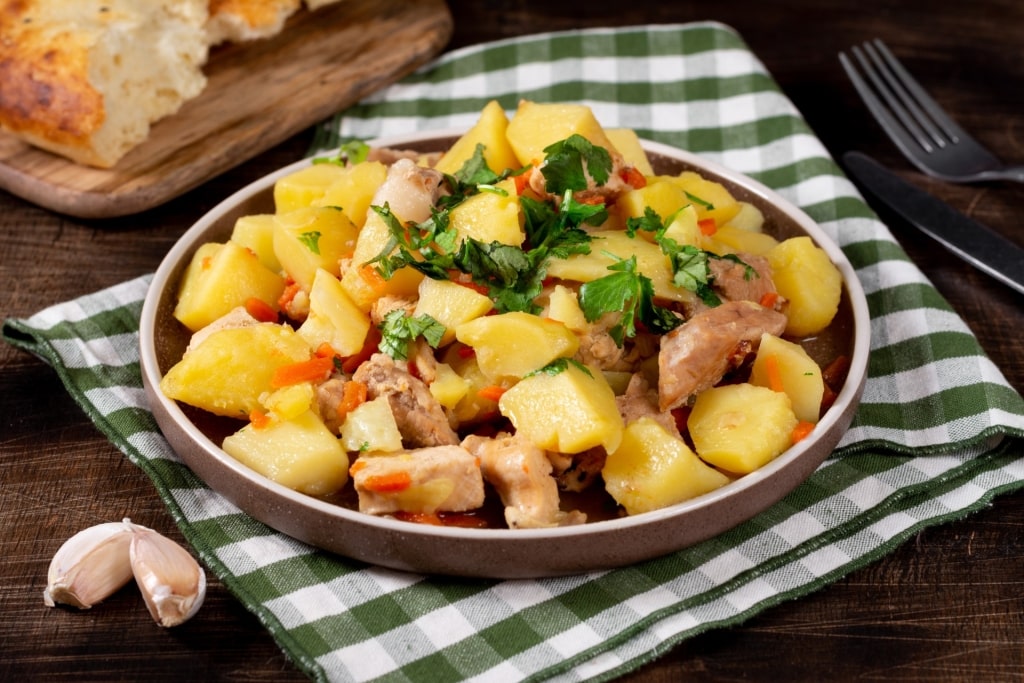
Baeckeoffe
Baeckeoffe translates to “baker’s oven” in Alsatian dialect, and is a stew of mutton, beef, and pork, slow-cooked with onions and potatoes, and traditionally made in a terracotta casserole. What makes baeckeoffe distinct from other stews is that the meat is marinated overnight in Alsatian white wine, usually prepared on a Saturday for a lengthy Sunday morning baking session in the baker’s oven, with the lid sealed with a ring of dough to preserve moisture.
The dish is said to be inspired by the Jewish Shabbat dish of cholent, and its preparation time and ritual are reflective of the Lutheran observance of the Sabbath in the Alsace region. Today, you’ll find it as a nostalgic dish served at many Strasbourg food institutions any night of the week, with tender meats enhanced with silken leeks, garlic, marjoram, and thyme.
Waedele
Waedele
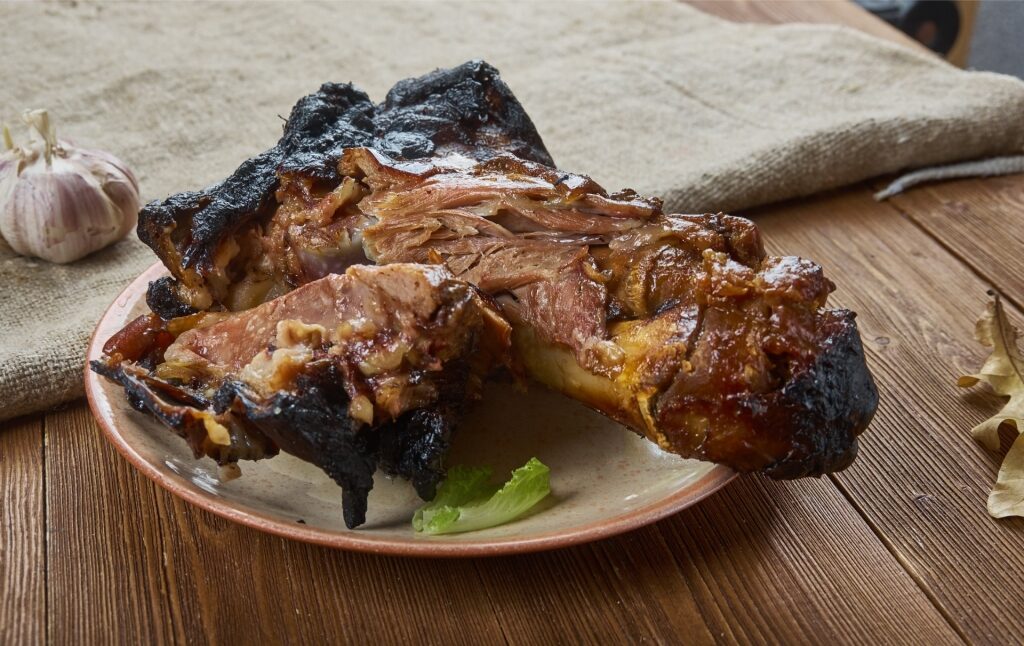
This salted pork knuckle is also known as jarret de porc or jambonneau in French, and is a favorite dish at the ubiquitous Alsatian breweries, or “winstubs.” The pork is braised in court-bouillon or beer until it falls off the bone. Waedele is usually served with potatoes, choucroute, and a side of mustard. It can be topped with a slice of Munster cheese for extra indulgence.
Coq au Riesling
Coq au Riesling
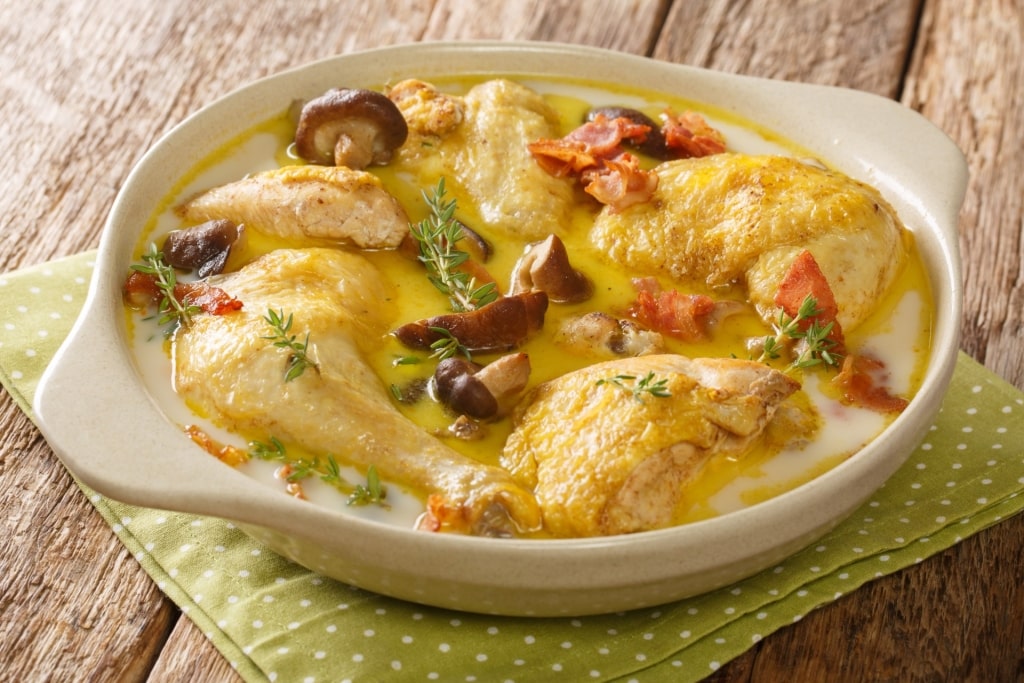
In Strasbourg, the French classic of coq au vin becomes coq au Riesling, naturally! Instead of red wine, a more delicate, aromatic Riesling wine is used to braise the chicken, resulting in a creamier, lighter version of the dish. Chicken is browned and crisped up alongside mushrooms and onions in bacon fat, then braised with Riesling and chicken stock and finished off with crème fraîche.
With a squeeze of lemon juice to add a dash of brightness and a sprinkle of tarragon for an herbaceous hint, coq au Riesling is delicious with noodles, potatoes, bread, or spätzle, the local egg dumpling perfect for absorbing the sauce of the rich chicken stew.
Spätzle
Spätzle
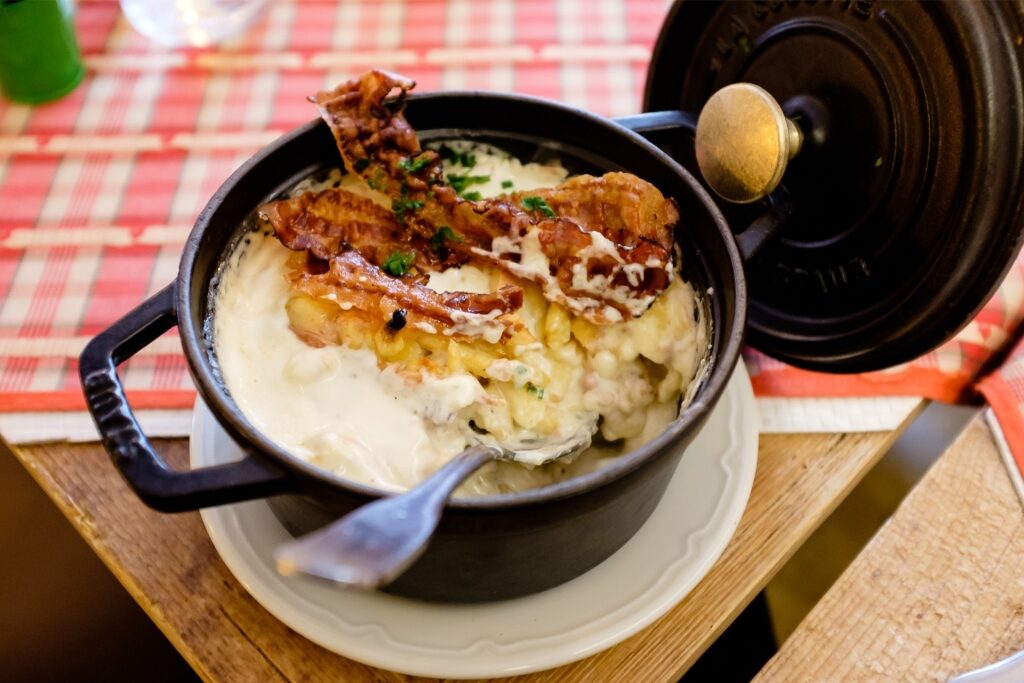
Spätzle is well-worth its own introduction as a staple of Alsatian cuisine. These small, rustic dumplings are made by grating an egg, flour, and salt batter into boiling water. Sometimes the dough is enriched with cream or nutmeg, resulting in irregularly shaped, hearty egg noodles.
Very similar to the German variant across the border, Alsatian spätzle are often finished in butter so they are chewy on the inside and golden and crisp on the outside. They are commonly served with coq au vin, waedele, or even a non-Alsatian French dish like boeuf bourguignon.
Cordon Bleu
Cordon Bleu
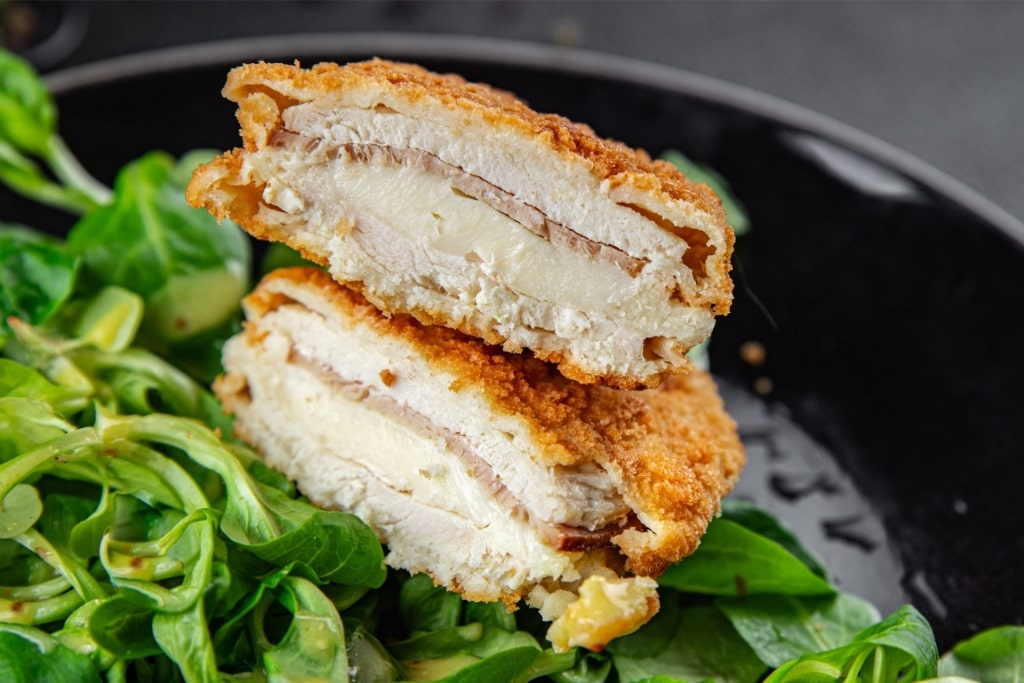
This popular Strasbourg offering was originally imported from Switzerland, but became a local favorite among Alsatians: it is a meat cutlet, usually chicken or veal, stuffed with ham and cheese, then breaded and deep-fried.
Many local restaurants make a version stuffed with Munster cheese, and Restaurant Le Schnokelock is well known for its Cordon Bleu topped with a ladle of mushroom cream sauce. Other Alsatian adaptations include enhancing the fried cutlet with caraway seeds and serving it with spätzle or a side of fries.
Bretzel
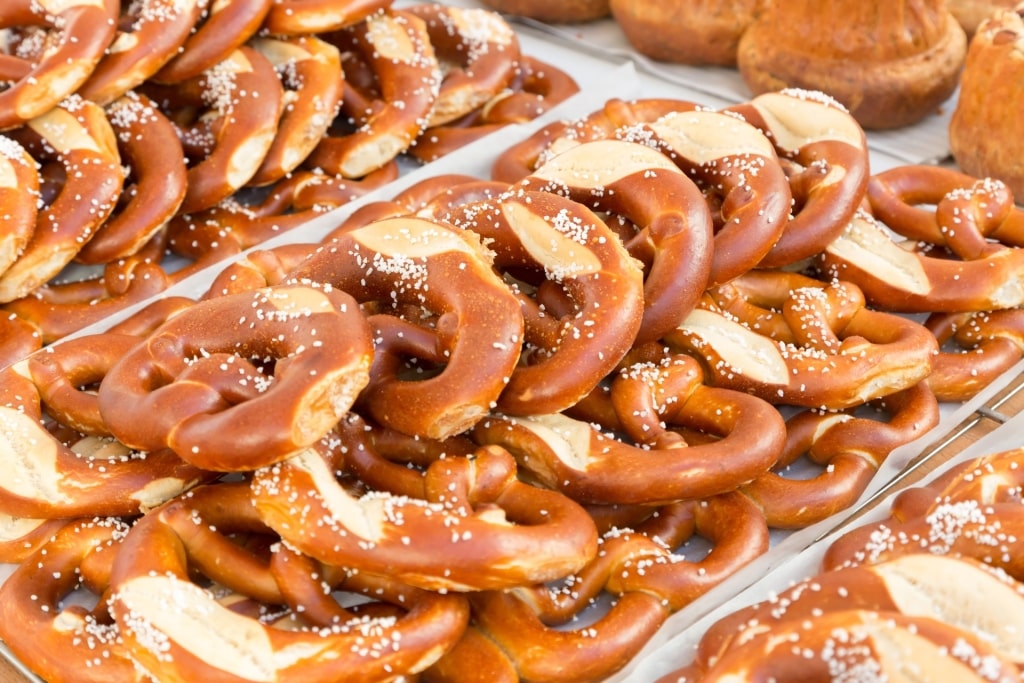
Bretzels
The German influence in Alsace means that pretzels—subject to debate in Alsace as either un or une bretzel—are a common offering in boulangeries in Strasbourg. Poached in salted water, the knotted brioche dough is then sprinkled with coarse sea salt. They are usually eaten as a snack, or to accompany a cheese or charcuterie board.
Knack
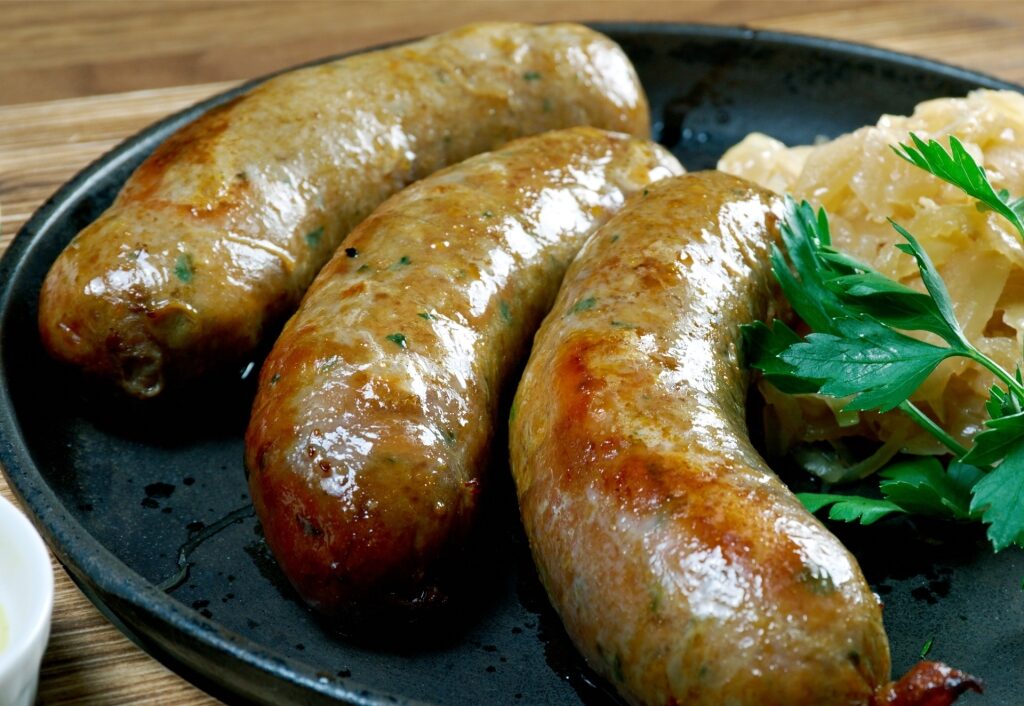
Knack
Knack is the famous Strasbourg sausage you’ll find sold at stands at every street fair or outdoor market in the city. These slightly curved, pale pink sausages are made with pork and veal, traditionally smoked in birchwood. The sausages are delicate in flavor because the meat stuffing inside is emulsified instead of simply ground, and seasoned with garlic, nutmeg, white pepper, and coriander.
“Knack” is the sound made when biting into the casing of the firm sausage. Every year, at the European Fair in Strasbourg, a new “Knack d’Or” is crowned as the best knack sausage and is made available for sale at the Porcus charcuterie for the next 12 months.
Tarte à l’oignon
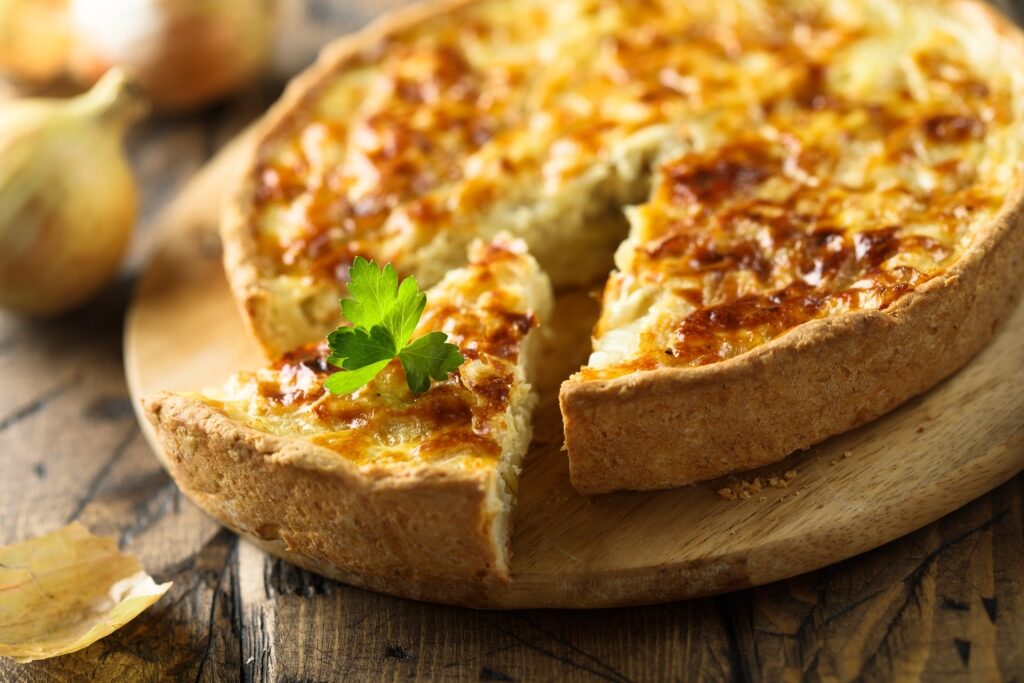
Tarte à l’oignon
Also known as Zwiebelkueche, this caramelized onion tart is a rustic Alsatian dish you’ll also find across the German border. A buttery crust becomes a vessel for what is so much more than an average onion tart filling. The Alsatian method calls for onions slowly caramelized in butter and local white wine, which tends to be sweeter, perfect for coaxing out the onions’ natural sugars.
The caramelized onions are then bathed in a mixture of eggs, milk, and heavy cream, with a notable sprinkle of caraway seeds, a staple spice in Alsatian cuisine. This tarte à l’oignon is a beloved offering at winstubs, the traditional Alsatian pubs where a slice of tart and a pint of beer are the perfect dinner for a wintry day.
Bouchée à la Reine
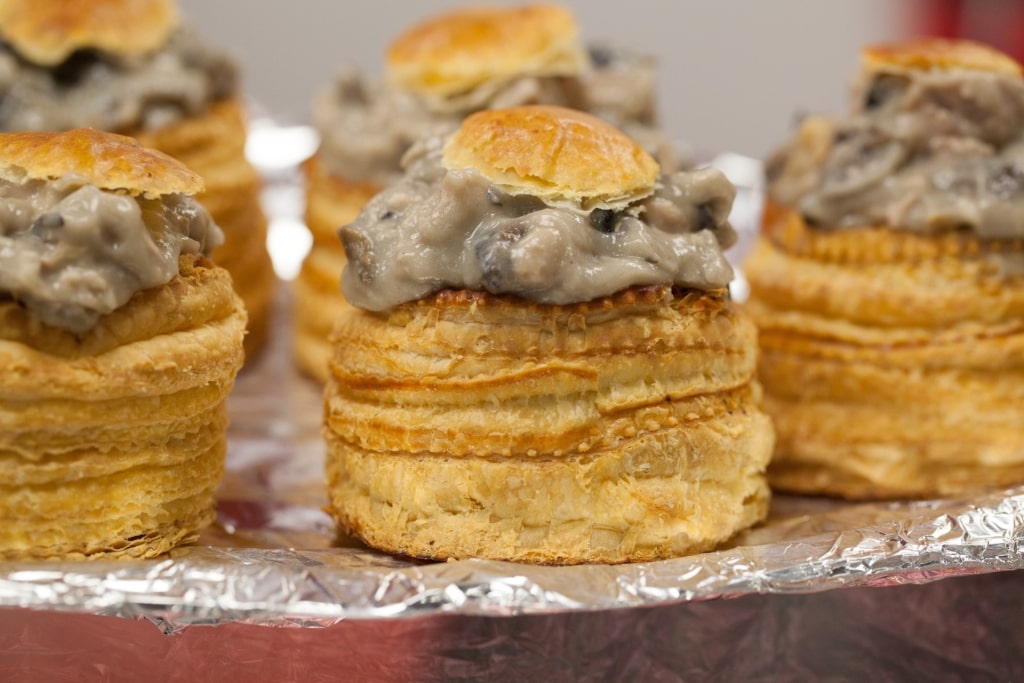
Bouchée à la Reine
This version of a vol-au-vent puff pastry comes filled with chicken, veal, mushrooms, and a creamy, savory sauce suprême made with cream, butter, eggs, flour, chicken stock, and Riesling.
The name of the dish translates to “Queen’s mouthful”; it was created in Versailles at the behest of Queen Marie, married to Louis XV, when the queen asked her pastry chef, Nicholas Stohrer, to create a savory pastry with aphrodisiac qualities that would help her regain her husband’s good graces.
Stohrer hailed from Alsace and gave this vol-au-vent an Alsatian twist with the inclusion of the off-dry white wine of his birthplace. Fun fact: Stohrer is even better known as the inventor of baba au rhum, a dessert also inspired by his native land of Alsace.
Fleischschnacka
Fleischschnacka
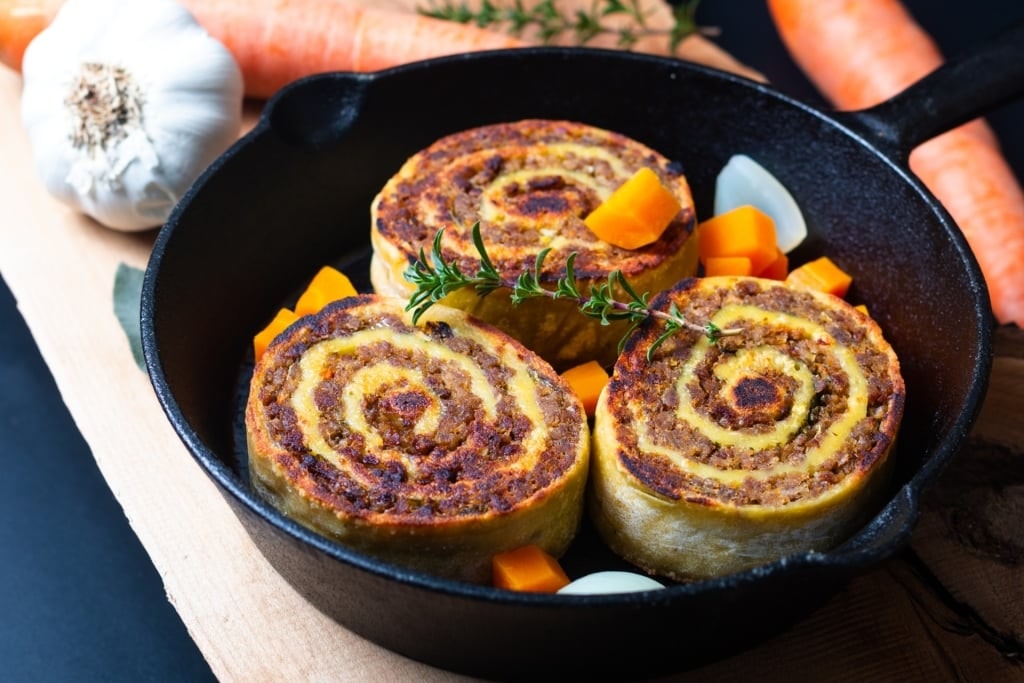
Don’t let the name—”meat snail” in Alsatian—put you off. This typical Strasbourg dish is reminiscent of a spiral-shaped lasagna, in which meat stuffing is rolled in a sheet of egg pasta dough and then served sliced in discs, revealing an elegant pinwheel cross-section.
If you expect the stuffing to be lasagna-style beef and tomato sauce, think again; with Fleischschnacka you’ll be biting into the remnants of a pot-au-feu stew, with the boiled meats browned and braised with onion, parsley, and other aromatic spices.
This dish is a common next-day meal after a home-cooked pot-au-feu dinner to reuse stew leftovers; in restaurants you’ll find it adapted with pork shoulder, turkey, mushrooms, or even duck confit for extra decadence.
Kougelhopf
Kougelhopf
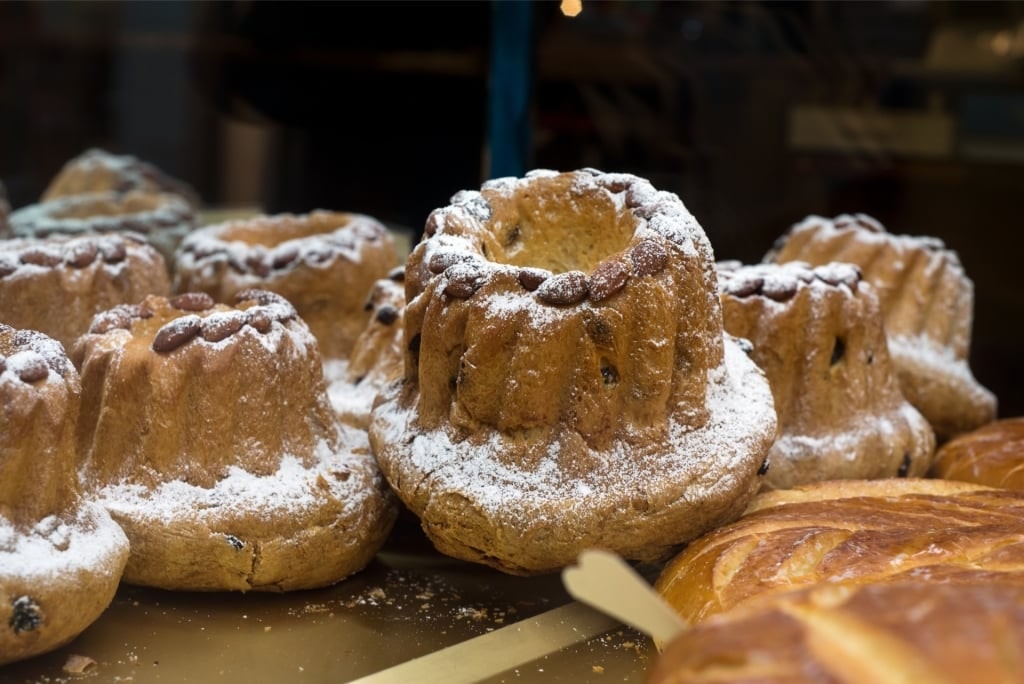
This small, ring-shaped brioche cake is unmissable at any Christmas market in Strasbourg: brown and doughy on the outside, it’ll surprise you with its airy, pudding-like interior stuffed with rum-soaked raisins, almonds, and other dried fruit.
Since kougelhopf is neither too sweet nor too heavy, it can be served as breakfast or a midday snack, and isn’t strictly speaking dessert. It also comes as a savory treat, usually containing bacon bits and nuts.
Torche aux Marrons
Torche Aux Marrons
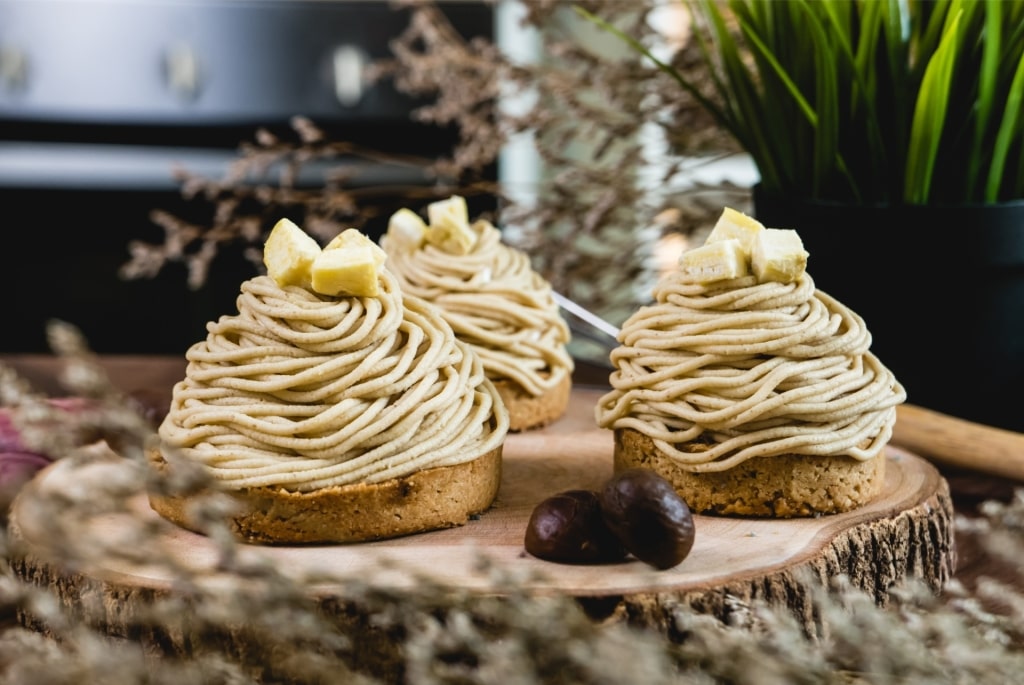
If you’re wondering what to eat in Strasbourg and have a sweet tooth, don’t miss Torche aux Marrons. Also known as Mont-Blanc in neighboring countries, this dessert takes its name from its shape: a mound of chestnut cream with a pointy tip, topped with a snowy cap of meringue or whipped cream.
The Alsatian version reimagines the iconic alpine peak as a torch lit with a frosty white flame. The chestnut cream is made from puréed chestnuts and chestnut paste mixed with cold melted butter, icing sugar, cream, and sometimes a dash of prune liqueur.
Tarte à la Rhubarbe
Tarte à la Rhubarbe
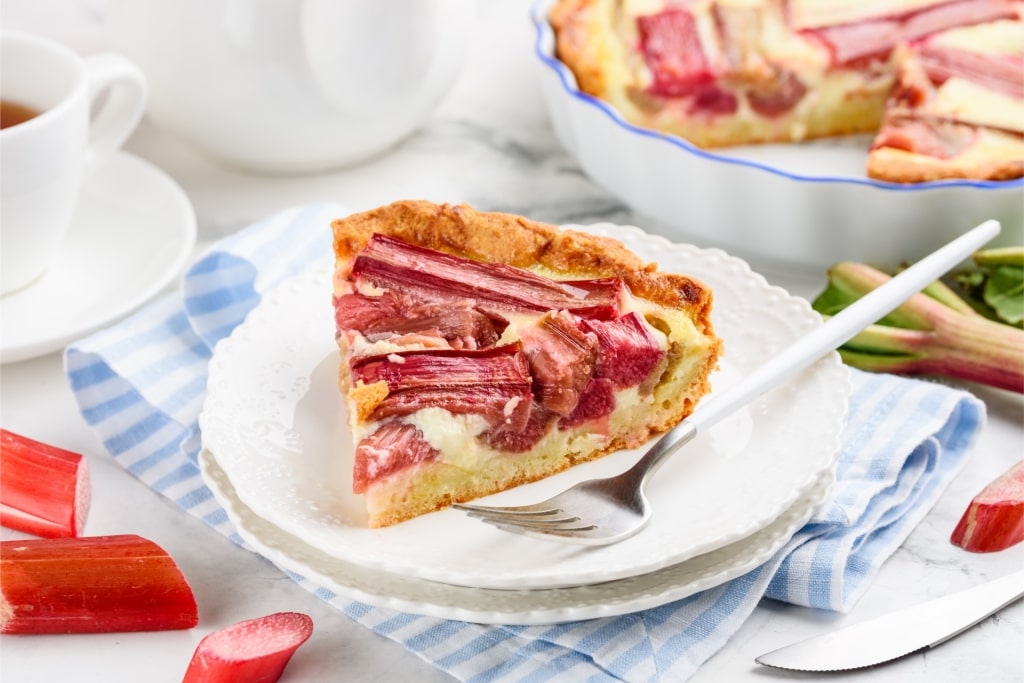
This rhubarb meringue pie marvelously honors its star ingredient, rhubarb, an important crop of the Alsace and Lorraine regions in France. Though the pie’s filling is similar to that of a classic rhubarb pie, the Alsatian twist here is the generous peaks of meringue coating the top of the pie, providing a sweet, airy crunch to complement the rhubarb’s tart flavor.
The tart usually first appears in bakeries and on menus in spring, heralding the rhubarb harvest season and summer days to come.
Read: Best Things to Do in Strasbourg
Bredele
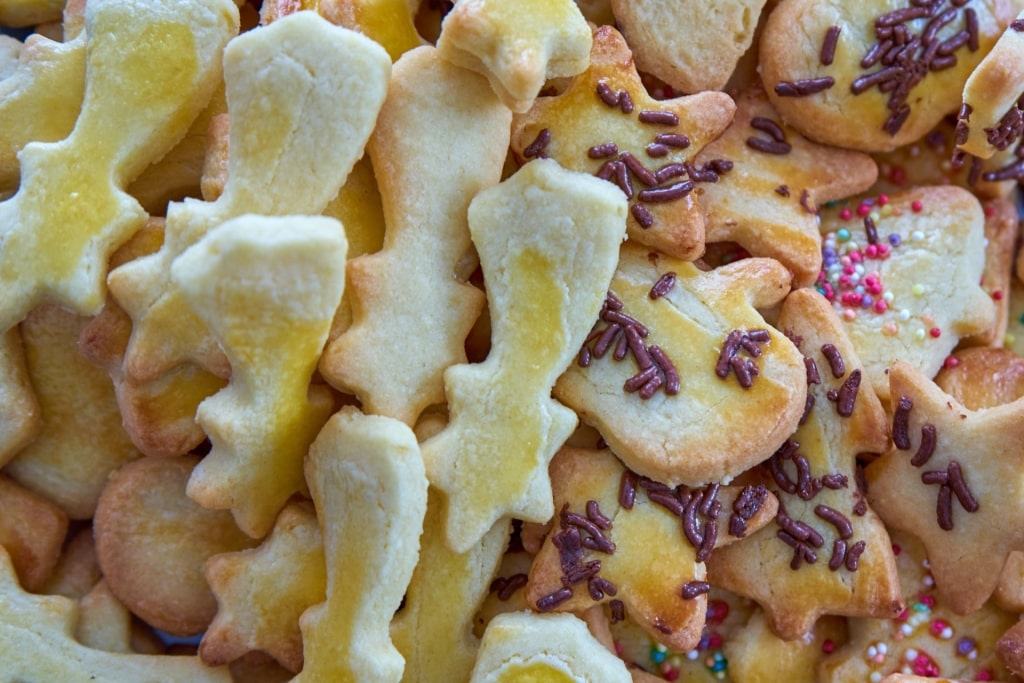
Bredele
Bredele are Christmas biscuits from the Alsace and Moselle region of France and date back to the 14th century, to which the first cookie molds and recipes have been traced. It’s customary to bake these sweet treats at home around the holiday season in Alsace and exchange them with neighbors, meaning each family can customize their variations.
Often, the biscuits are simply buttery shortbread, but some come with anise flavor, others with nutmeg and orange, gingerbread, lemon glaze, or chocolate and nuts.
Buy these star-shaped butter cookies or gingerbread men if you’re visiting a Christmas market in Strasbourg, and indulge in the holiday spirit by bringing a box home to your own neighbors.
FAQs
Is Strasbourg a good food city?
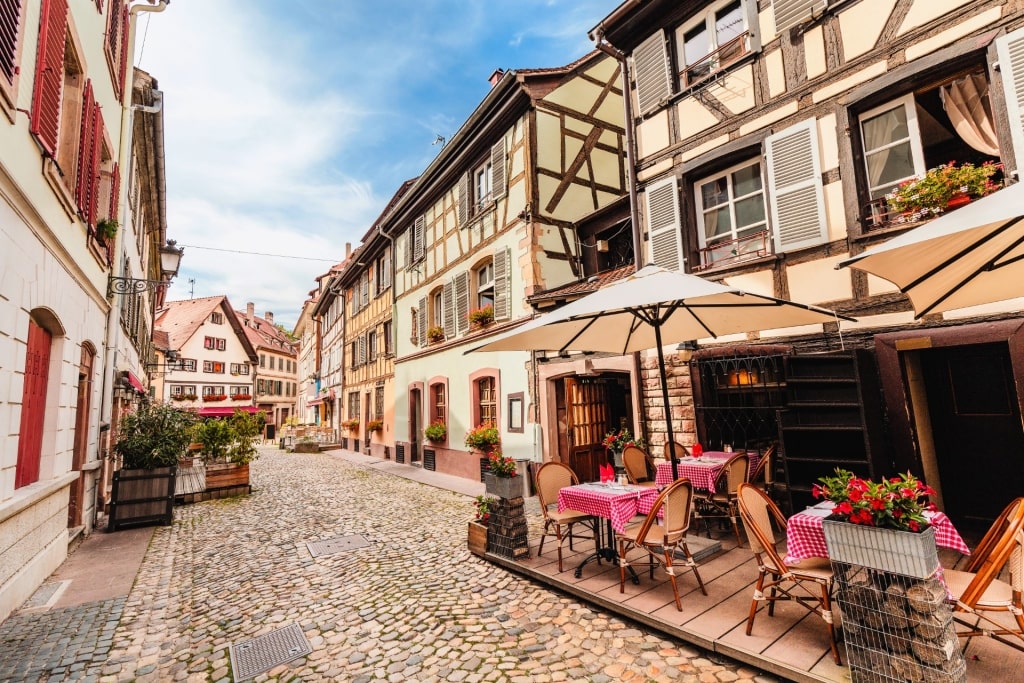
Strasbourg
Strasbourg is known as an exceptional food city, with lots of Alsatian regional pride in its gastronomy as well as a wealth of influences stemming from its position as a cultural crossroads along the German border.
You’ll be sure to find plenty of Germanic dishes, from bready pretzels to pork knuckles to sauerkraut, known here as choucroute, as well as Alsatian twists on French classics: coq au vin becomes coq au Riesling, and leftover pot-au-feu is turned into a pinwheel pasta reminiscent of lasagna.
What dish is Strasbourg most famous for?
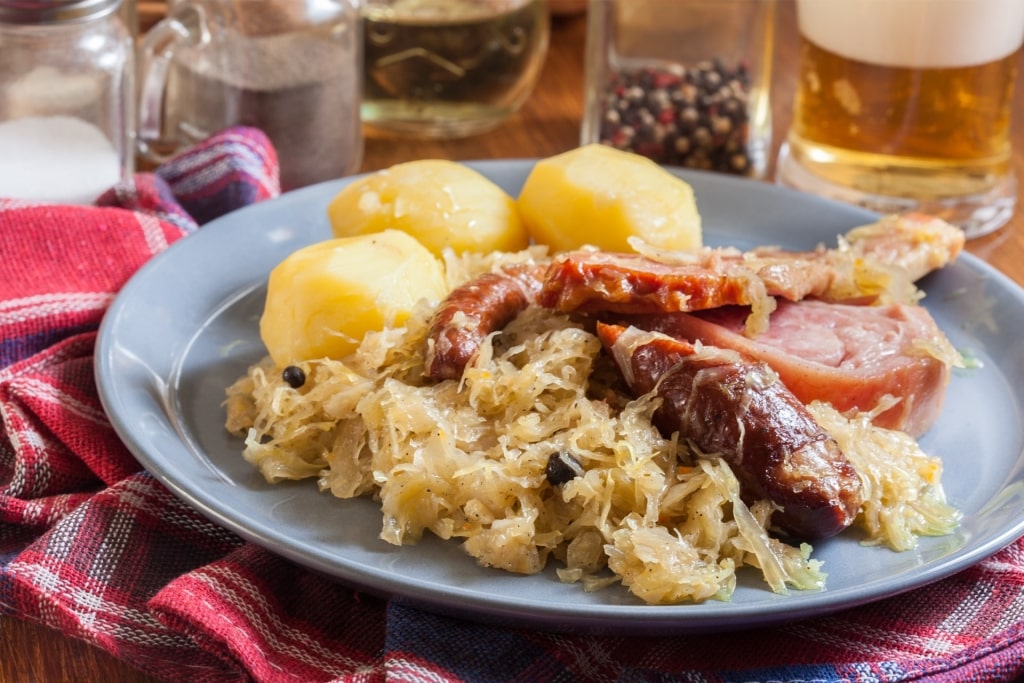
Choucroute garnie
Few Alsatians will disagree that a choucroute garnie is the one dish that you must try in Strasbourg: a bed of fermented cabbage braised with juniper and white wine, served with an array of cured and smoked meats and steamed potatoes.
What time does dinner typically start in Strasbourg?
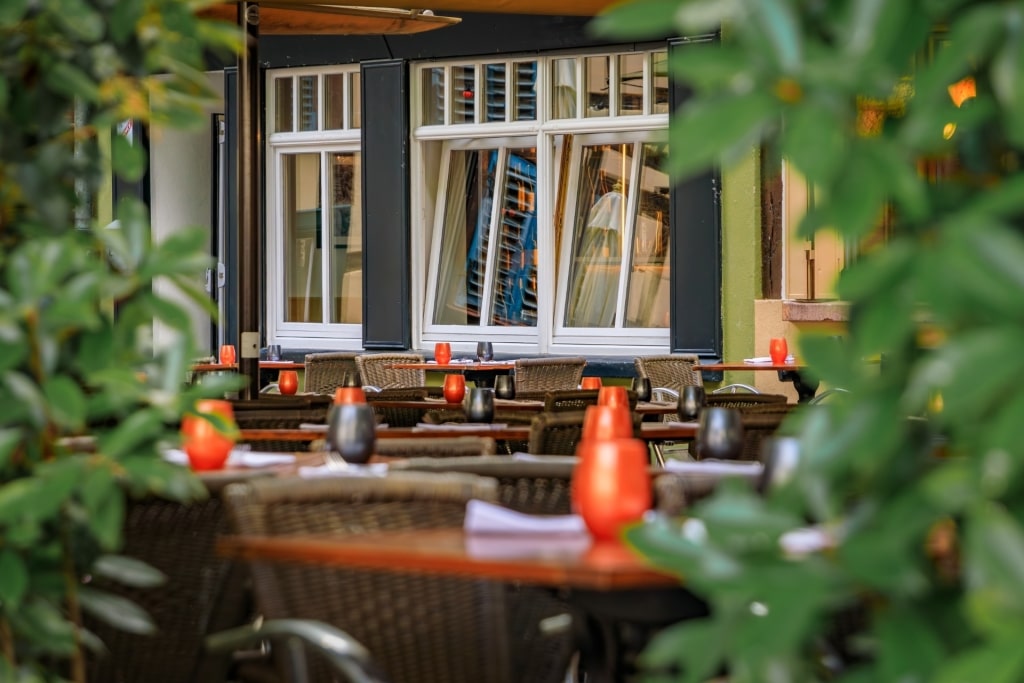
Restaurant in Strasbourg
Because of the city’s history of Germanic influence, dinner here does start earlier than in the rest of France, typically at about 7 p.m. or 7:30 p.m. Winstubs and restaurants fill quickly around that time, so 7 p.m. is a good time to head out if you’re looking to snag a table.
Are there any food customs I should know about?
Choucroute garnie
All over the city, you’ll find traditional Alsatian pubs known as winstubs, which serve up the best comfort food after a day of walking around the historic city. Don’t miss out on ordering a pint of local beer or white Alsatian wine; the region is equally proud of its breweries and its viniculture.
Strasbourg
Now that you’ve read about the wealth of Strasbourg food offerings, start planning your dream vacation. Browse Celebrity’s river cruises to Strasbourg and book your gourmet adventure today.