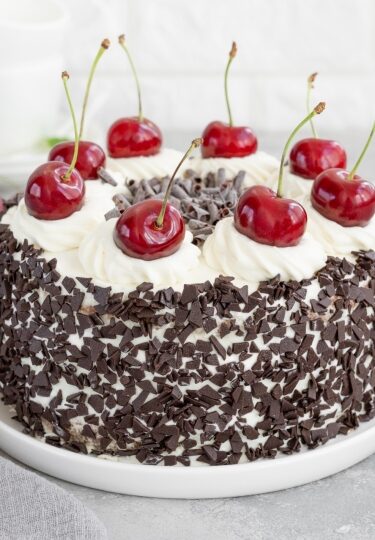
Germany has its own answer to England’s afternoon tea—it’s kaffee-kuchen, or coffee and cake, a venerable afternoon ritual and a copious meal in its own right, perfect for sampling German desserts and sweets.
Whether it’s at a café with a slice of seasonal torte or in a family home around tea and a fresh-out-of-the-oven apple strudel, sweet treats are a German pastime that goes well beyond a dessert course after a long meal.
Here’s a list of some of my favorite German cakes, desserts, and sweet treats—best enjoyed by a fireplace and with a dusting of snow on pines, or on a sunny afternoon at a sidewalk café table.
Bienenstich, or Bee Sting Cake
Bienenstich
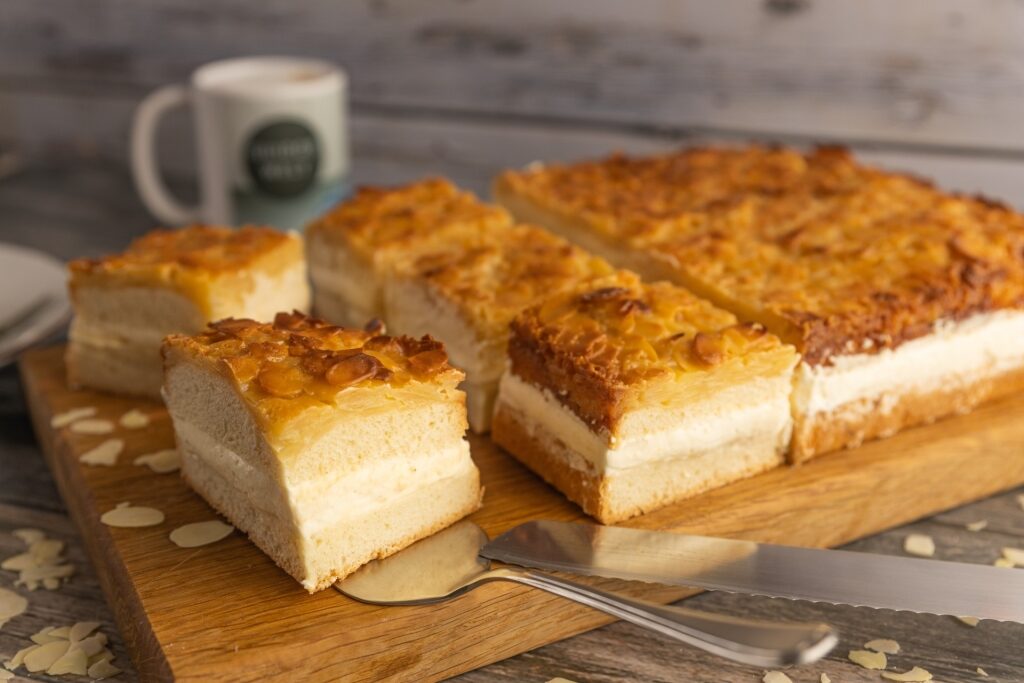
According to legend, two baker apprentices from the town of Andernach fended off invaders in the 15th century by hurling beehives from the city wall at the enemy, who got stung mercilessly and retreated. To celebrate this victory and honor the ingenious tactic, the bee sting cake was born.
The cake is made from a thick base of yeasted, fluffy dough similar to brioche. Prior to baking, the dough is topped with a layer of honey, sugar, butter, and slivered almonds, which forms a golden, caramelized crust. It is then sliced lengthwise and filled with a generous layer of vanilla custard or buttercream.
Schwarzwälder Kirschtorte, or Black Forest Cake
Schwarzwälder Kirschtorte
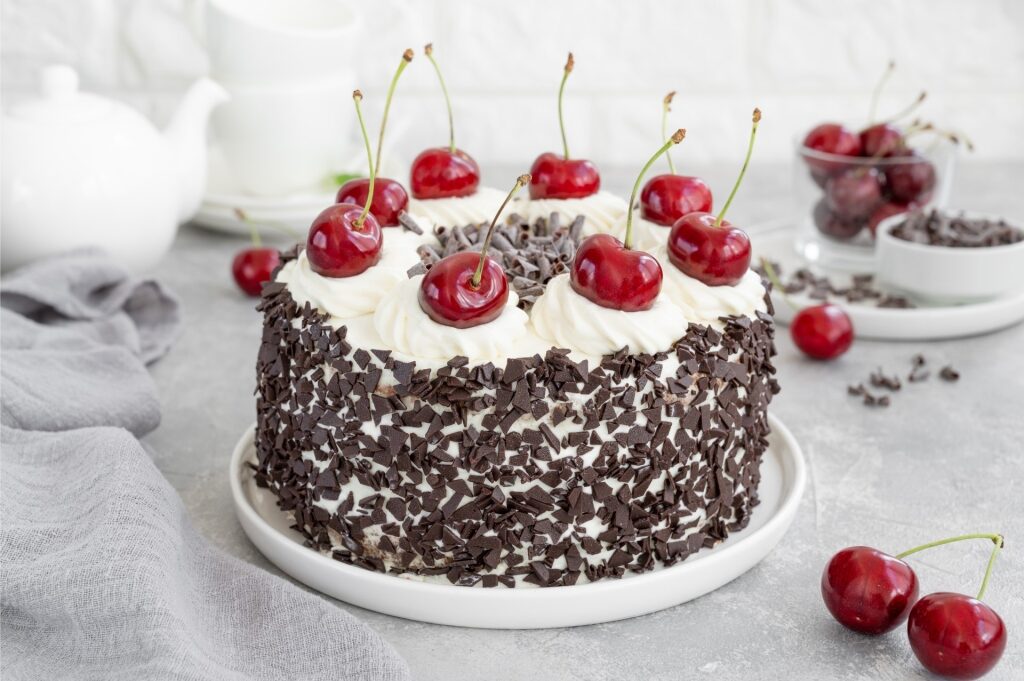
Black Forest cake has regaled legions since its popularization in the 20th century, for good reason—this decadent dessert has it all, from chocolate to liquor to fruit to cream.
A fluffy cocoa sponge cake is layered with whipped cream and sour cherries in syrup, soaked in a cherry brandy called Kirsch, then adorned with more whipped cream, cherries, and chocolate shavings.
The Kirsch is what gives the cake its distinct boozy flavor, and many purists insist the brandy must be made with cherries harvested in the Black Forest region. For non-drinkers, versions substituting brandy for syrup and cherries also exist.
The recipe was spread outside of Germany by German immigrants and refugees fleeing the Nazi regime and WWII, and gained traction as a dessert item in restaurants and coffee shops in the U.S. and Europe.
It is also a national favorite in Trinidad, Chile, Pakistan, and Nepal. All countries have put their own spin on it, but the heavenly combination of chocolate, cherries, and cream remains the cake’s essential soul.
Käsekuchen, or German Cheesecake
Käsekuchen
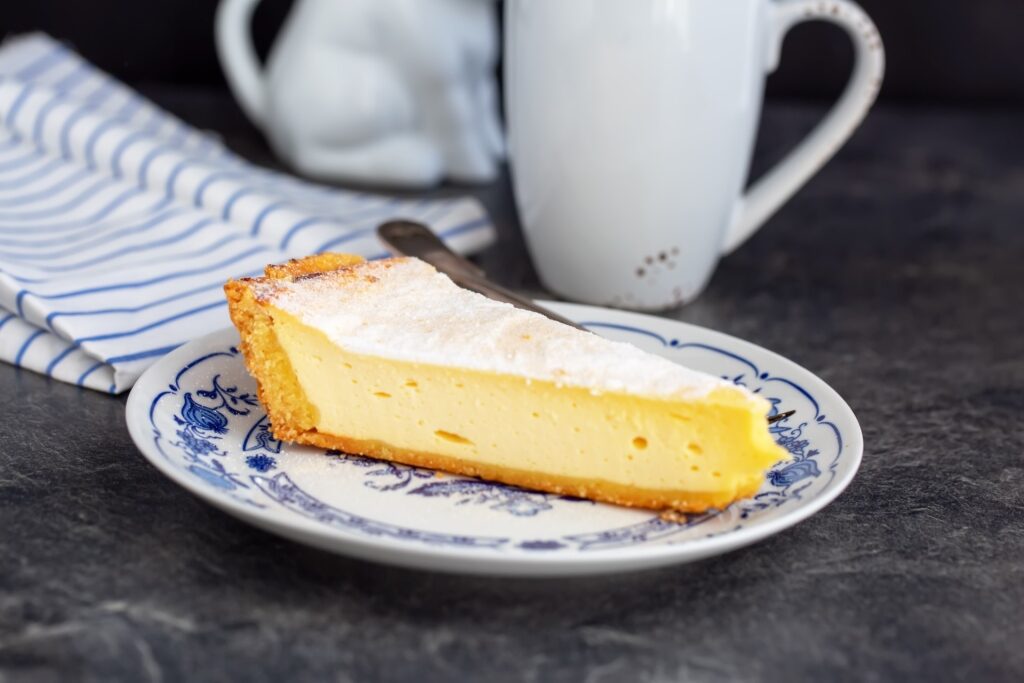
At first glance, German cheesecake might look identical to its American counterpart: a creamy, pastel yellow, a moist and uniform interior, a cracker crust. But upon first bite, you’ll notice how käsekuchen has a significantly lighter, fluffier texture than its dense and rich American cousin.
The cloudlike consistency comes from the incorporation of stiffened egg whites as well as the use of quark cheese. This German dairy product resembles whole milk ricotta more than it does cream cheese, with a tangier and airier texture.
There are other subtle differences. The crust in Käsekuchen tastes more like shortbread than graham crackers. Traditional recipes lean more heavily on adding vanilla flavor via vanilla sugar and vanilla pudding powder, two distinctly German ingredients.
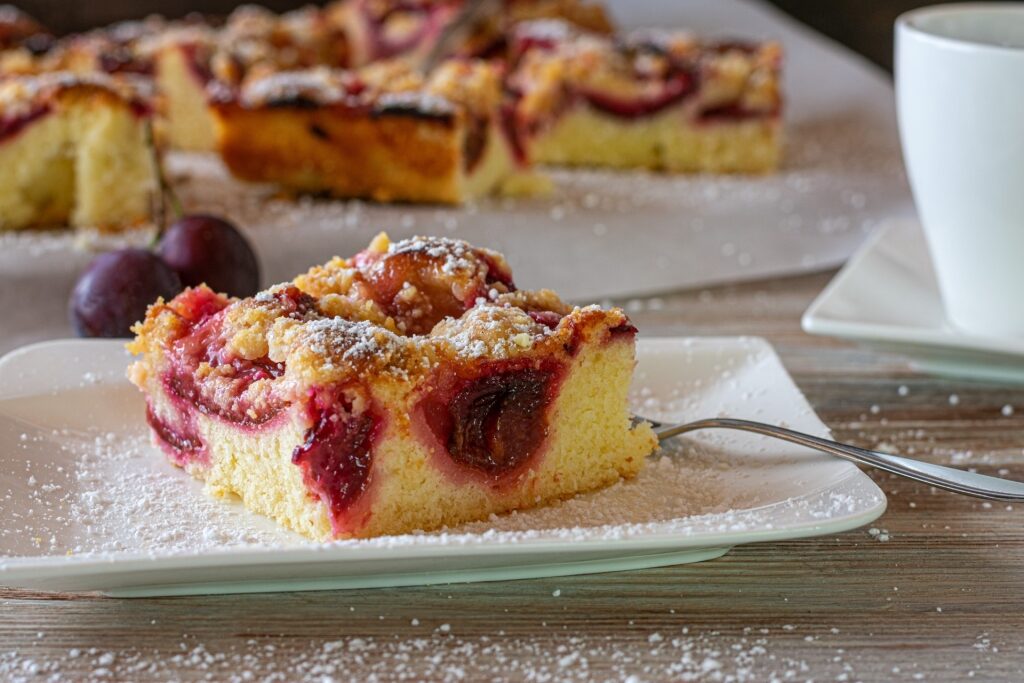
Zwetschgenkuchen, German Plum Cake
Zwetschgenkuchen
This sweet and tart cake is all the rage during the short-lived Italian plum season, when Germans make the most out of this fruit that’s perfect for baking. Compared to Asian plums, Italian plums are firmer and lower in moisture, meaning the resulting cake is moist but not mushy.
The base of this cake is made with yeast dough, spread across a sheet pan and then packed with a thick layer of sliced plums, occasionally sprinkled with cinnamon sugar—though never too much in keeping with the tradition of German desserts not being overly sugary.
Some recipes add a layer of crunchy, buttery crumble to top off the cake. If you are visiting Germany in September or October, look out for freshly baked plum cakes at cafes or bakeries.
Windbeutel
Windbeutel
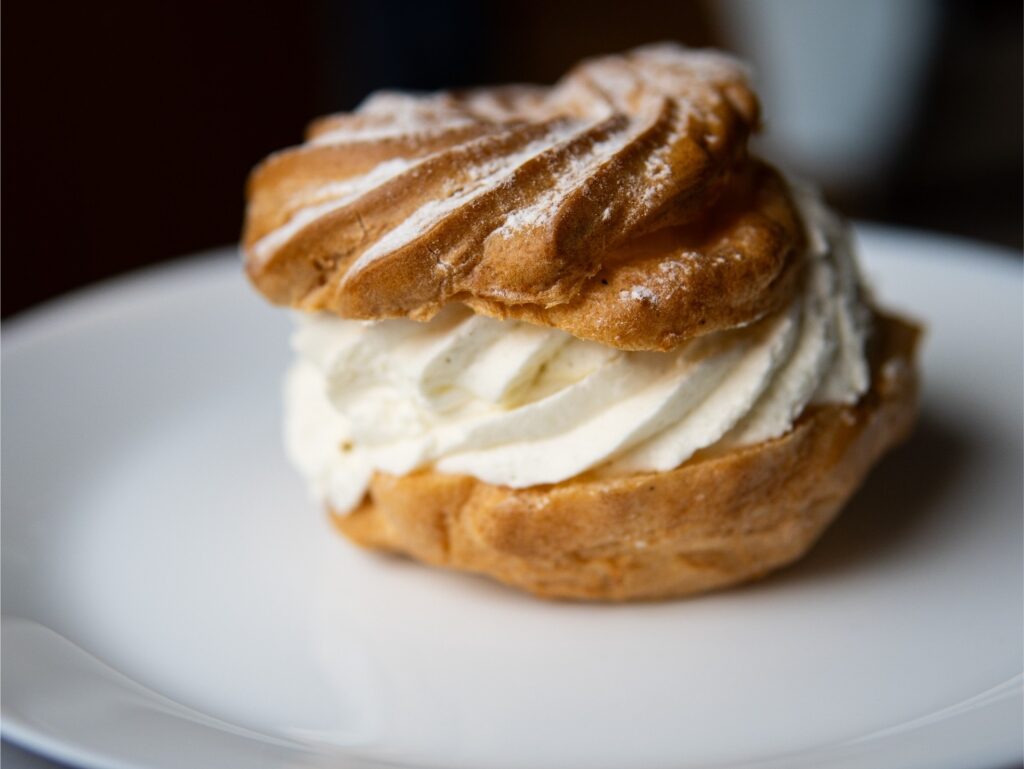
With classic German lyricism, these light cream puffs are known in Germany as “windbags”—surely to denote that they are small parcels of delicious airiness.
Slightly larger than their French counterparts, windbeutel are similarly made with choux dough, which is piped onto a sheet pan and puffs up in the oven. Windbeutel are most classically filled with homemade whipped cream, though they make an excellent ice cream sandwich on a summer day.
Apfelstrudel, or Apple Strudel
Apfelstrudel
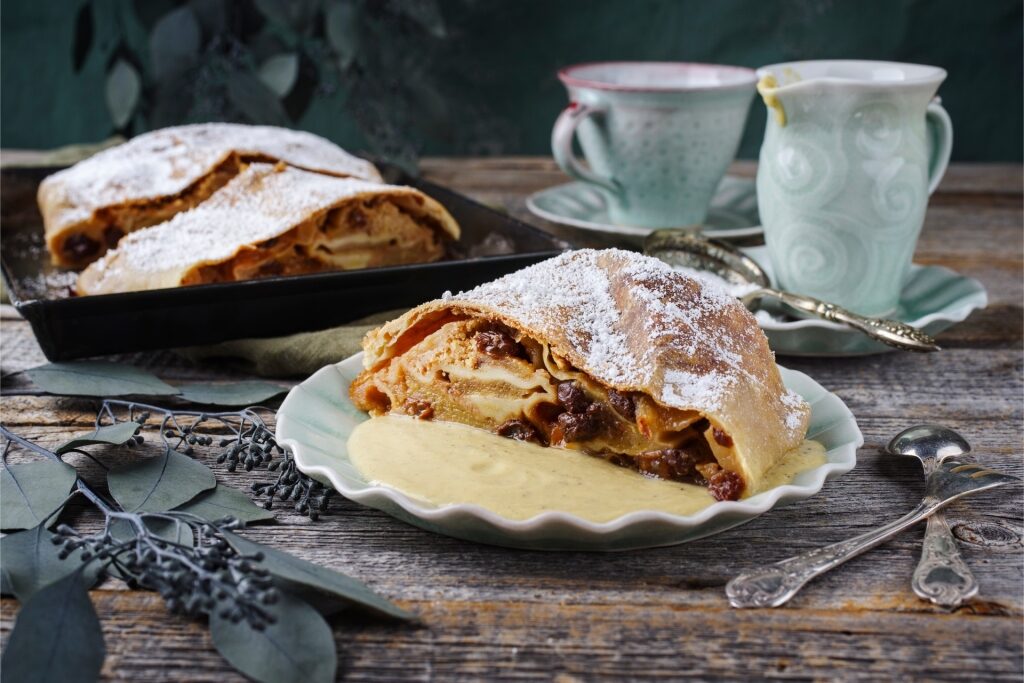
Apfelstrudel is a classic German dish that requires unleavened pastry dough to be hand-stretched to translucent thinness.
The dough is covered with a layer of breadcrumbs browned in butter, then piled with slices of tart apple, cinnamon sugar, and rum-soaked raisins before being carefully rolled into a log, baked, and served as slices.
The dessert traces its origin back to baklava—notable in that paper-thin dough—thought to be imported by Ottoman Empire Turks in the 15th and 16th centuries.
Apple strudel became immensely popular with the royal court and coffeehouse culture in Austria and Germany during the Habsburg dynasty, and remains so today, especially in Bavaria. It is best enjoyed with a thick dollop of whipped cream in a bed of vanilla sauce.
Lebkuchen Cookies
Lebkuchen
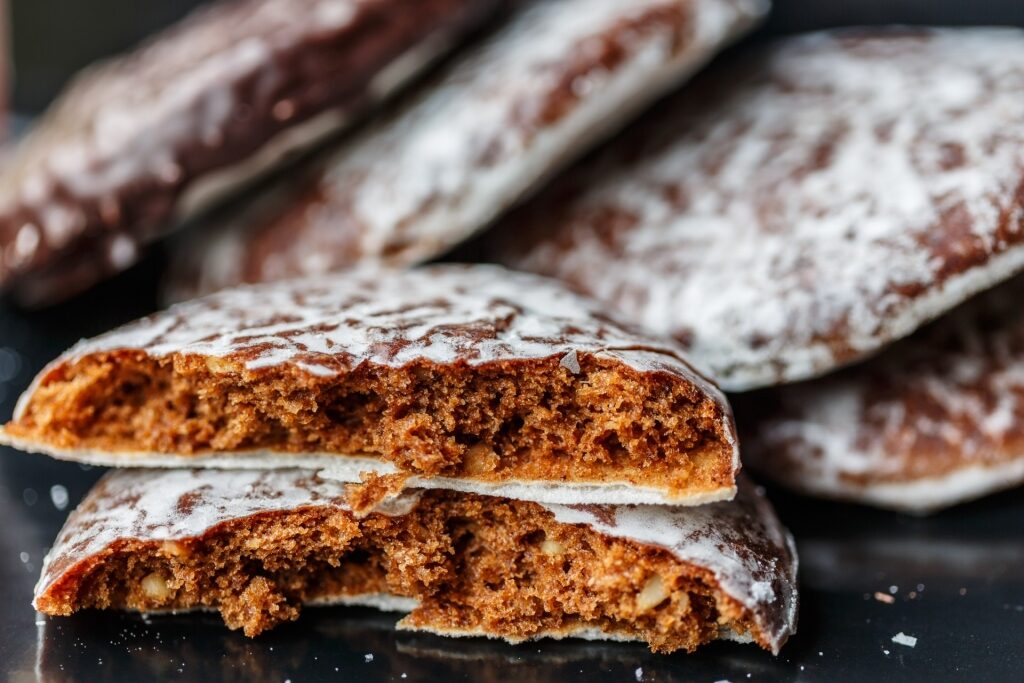
If you are visiting Germany over the winter holidays, chances are you’ll be offered a selection of traditional Christmas cookies known in Germany as Lebkuchen.
While it may be tempting to categorize them as gingerbread, lebkuchen cookies come in a wider range of spices: nutmeg, cloves, cinnamon, enriched with honey and nuts, and sometimes coated in lemon or chocolate icing. These cookies are so thick, soft, and crumbly that they are essentially little hot cakes.
Lebkuchen were invented in the 13th century by Franconian monks as “holy bread” for religious rites. These cookies not only had a long shelf life, but were a filling food to have between long fasts.
Over centuries, the city of Nuremberg became especially well known as a purveyor of Lebkuchen, thanks to the city’s geographical position as a hub where several spice trade routes converged.
Apfelpfannkuchen, or German Apple Pancake
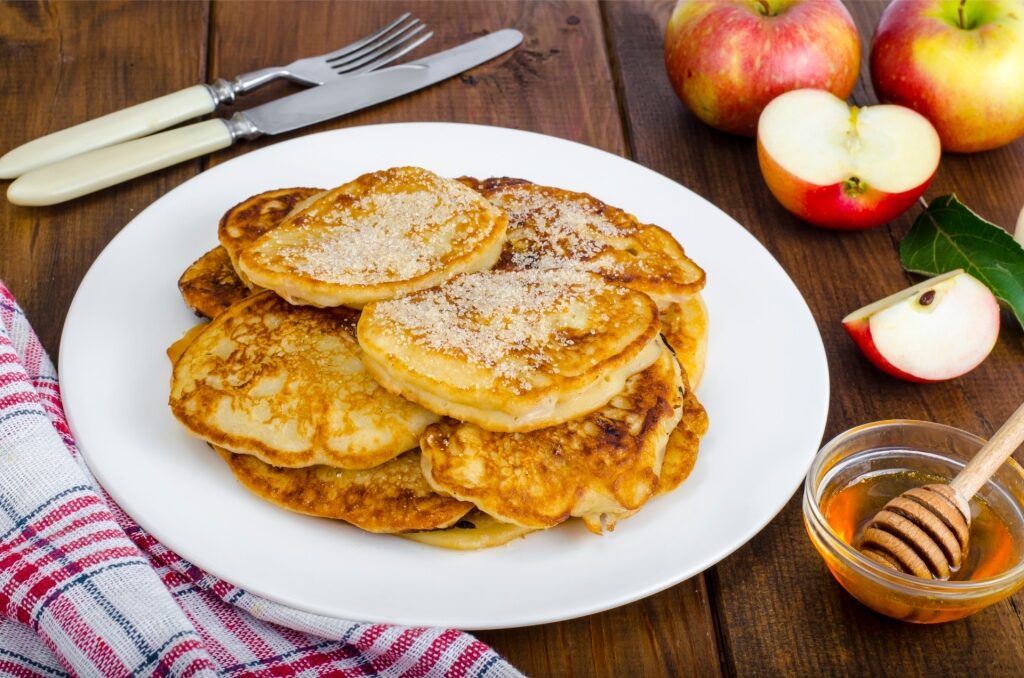
Apfelpfannkuchen
This thick, oven-baked pancake has many names: apple soufflé pancake, Bismarck, or Dutch Baby in its German-American variant, a misappropriation of the German word “deutsch”.
But for German households, especially in its birthplace of Bavaria, it is simply known as Apfelpfannkuchen, or German apple pancake.
A plain version will let the tartness of the apples and the custardy, rustic texture shine, but you can also opt to have it with a dusting of sugar, vanilla cream sauce, or a scoop of ice cream.
Read: The Ultimate Bavarian Food Guide
Baumkuchen, or German “Tree Cake”
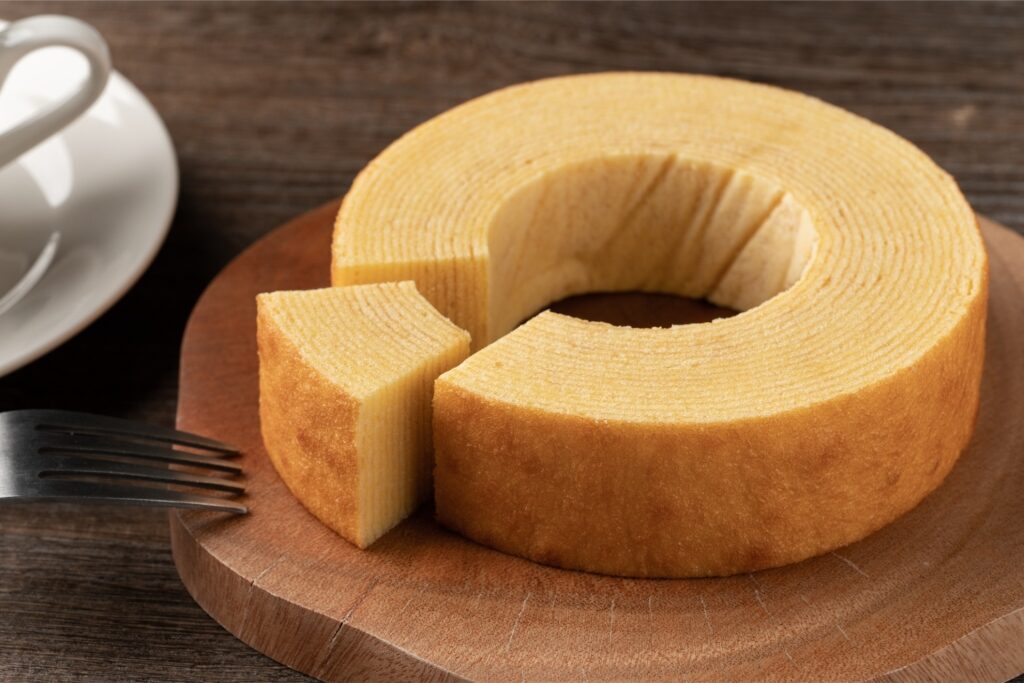
Baumkuchen
Nicknamed the “king of cakes,” this elaborate cake requires great technique and finesse to bake. It’s roasted on a rotating spit, layer by layer, yielding an O-shaped dessert revealing a cross-section resembling tree rings when sliced.
The name “tree cake” may also refer to the dimensions and thickness the cake’s “trunk” can take on in the hands of ambitious bakers. Some Baumkuchen, made as wedding cakes, can be 25 layers deep and weigh over 100 pounds.
The batter of Baumkuchen is a rather simple egg, butter, vanilla, and flour base, which can be garnished with marzipan, spices, nuts, honey, or rum. The cake is usually finished with a rich chocolate glaze or, alternatively, a simple dusting of sugar.
Spaghettieis
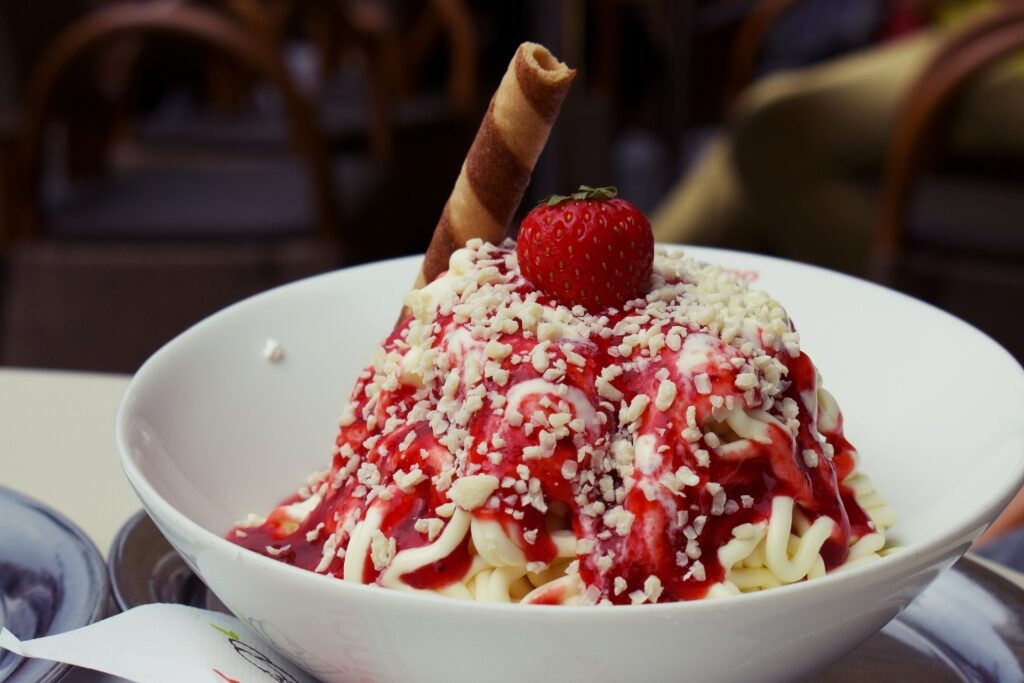
Spaghettieis
You’d be forgiven for thinking, from afar, that Spaghettieis looks like a red sauce pasta sprinkled with parmesan—that is exactly what this humorous dessert is meant to evoke.
This trompe-l’oeil dessert is, in fact, strands of thin vanilla ice cream topped with strawberry sauce and white chocolate or coconut shavings.
Spaghettieis was invented by a Mannheim ice cream shop owner, Dario Fontanella, in the 1960s, inspired by the strand-like Alpine chestnut dessert called Mont Blanc. It’s reported that when children were first served the spaghettieis sundae, they burst out in tears as they thought they were receiving pasta instead of ice cream.
Later, as the dessert gained popularity both within Germany and internationally thanks to social media, Fontanella was awarded a medal of honor from the city of Mannheim in 2014.
FAQs
What is Black Forest cake and why is it famous in Germany?
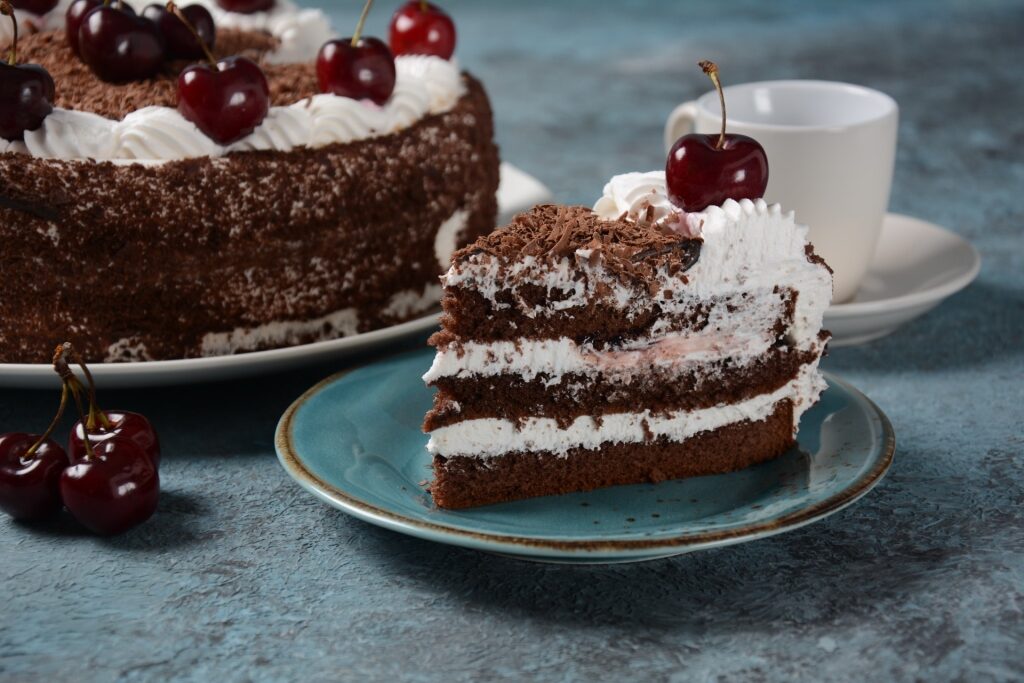
Schwarzwälder Kirschtorte
Black Forest cake is a chocolate sponge cake layered with whipped cream and cherries soaked with a cherry brandy called Kirsch. The dessert takes its name from the birthplace of Kirsch, the southwestern German province of Schwarzwald, known for its pine forests and cherry production.
Though first created in the 1930s, the cake became hugely en vogue in Germany after WWII, when key ingredients like chocolate and whipped cream became more widely available. It became especially popular as an international export thanks to its propagation by German émigrés and refugees fleeing the war.
What ingredients are commonly used in German desserts?
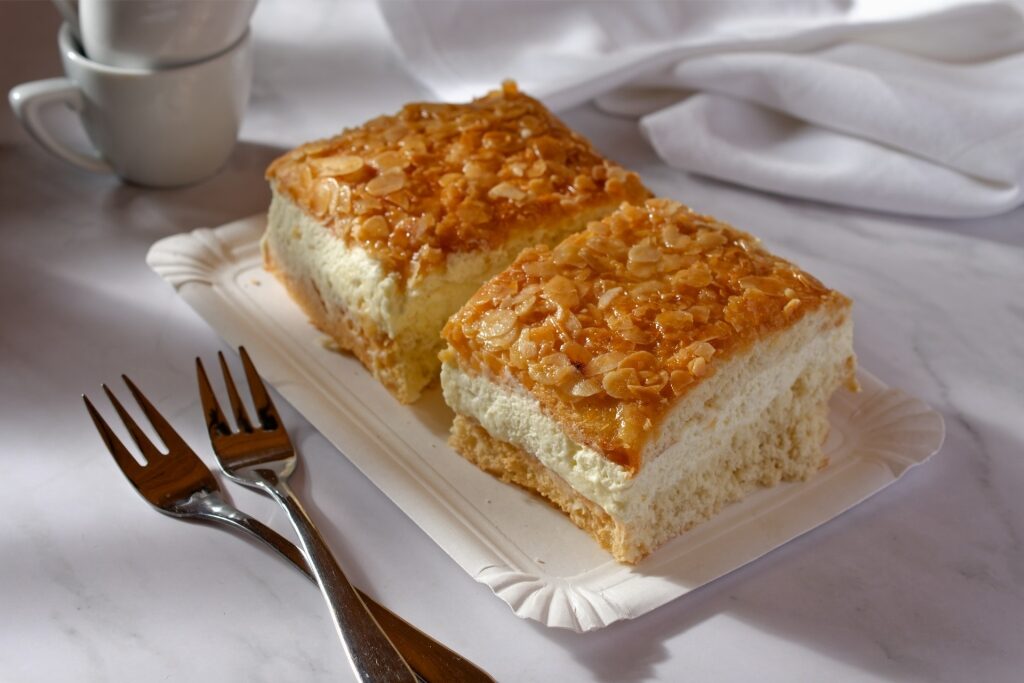
Bienenstich
Many German cakes utilize yeasted dough made with flour, sugar, butter, eggs, salt, and yeast, giving cakes such as bee sting cake, plum cake, and braided bread a lighter, chewier texture than dense sponge cakes.
German desserts also emphasize seasonal produce: apples are popular in strudel and pancakes, while fall signifies the arrival of Italian plums. Other common ingredients include honey, nuts, and spices, as well as a splash of rum or brandy.
What desserts are typically eaten during German holidays like Christmas?
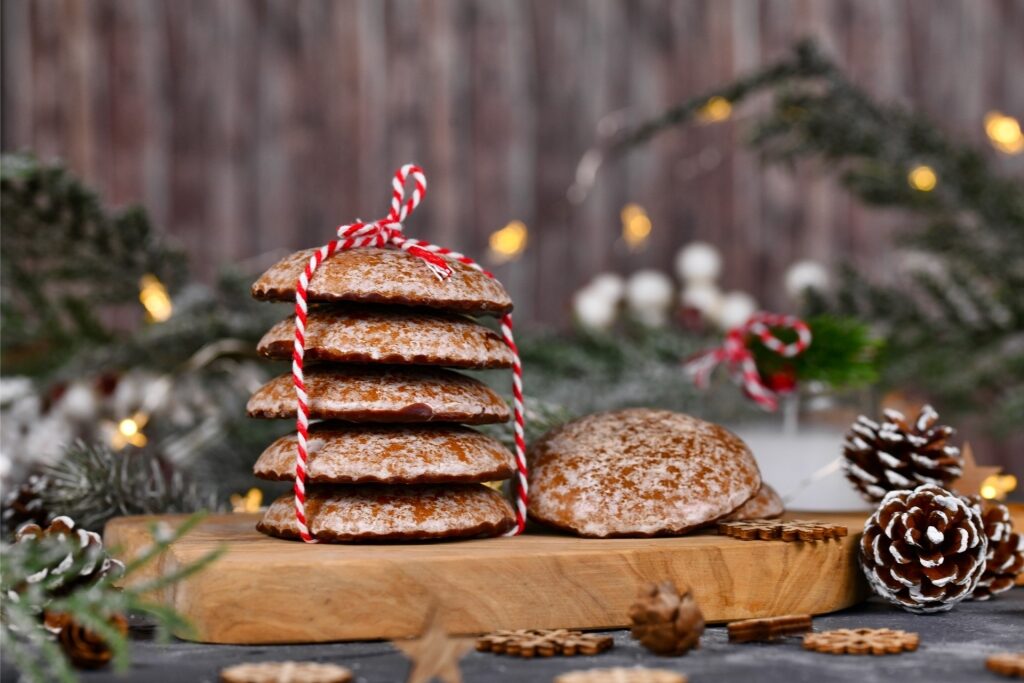
Lebkuchen
Christmas in Germany is at the heart of many traditional baking recipes, from the festive fruit loaf known as Stollen to Lebkuchen, the thick, hot-cake-like Christmas cookies. Marzipan, or almond paste, is shaped into adorable miniature fruit and pigs to celebrate the holidays in northern Germany.
Where can I try authentic desserts in Germany?
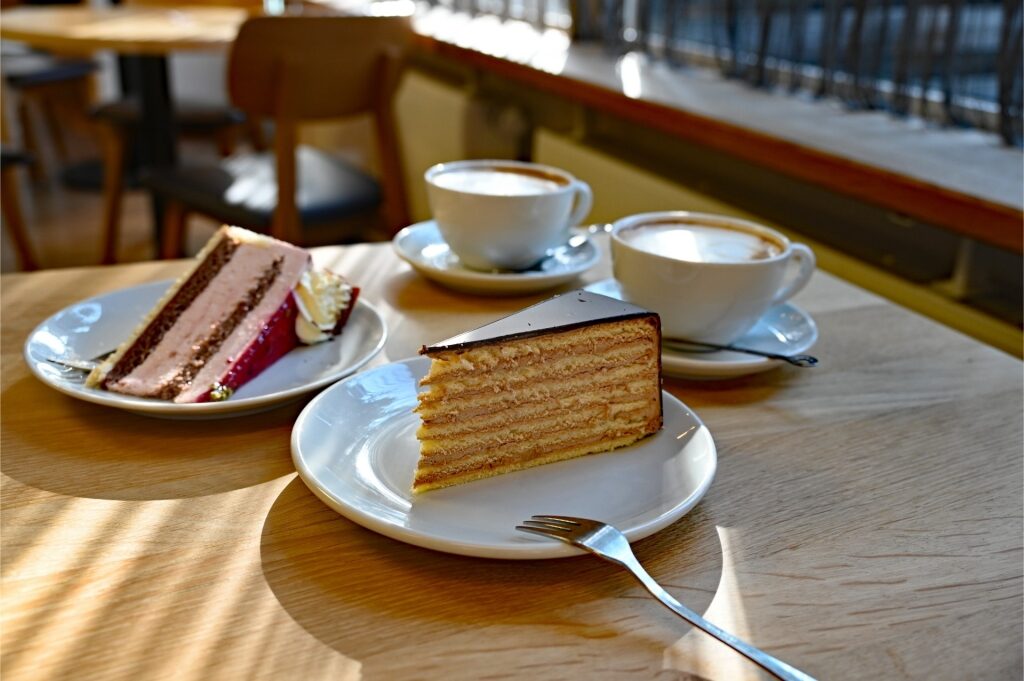
Café in Germany
The best way to try authentic desserts while in Germany is to stroll into a coffeehouse during kaffee-kuchen hour for a cup of coffee or tea and a handsome slice of cake.
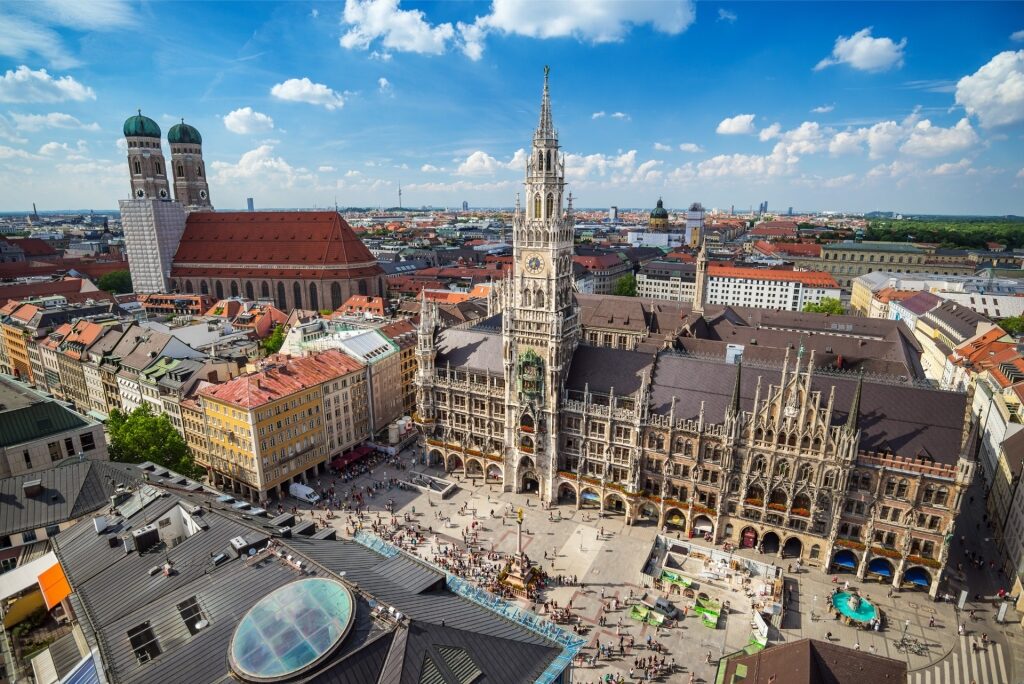
Munich
Now that you’ve had a sampling of the most famous desserts in Germany, it’s time to taste those brandy-soaked cherries, honey-nut loaves, and chocolate layers in their country of origin, freshly baked at a warm, inviting café. To start your dream tour of German cities and desserts, take a look at Celebrity Cruises’ river cruises in Central Europe.