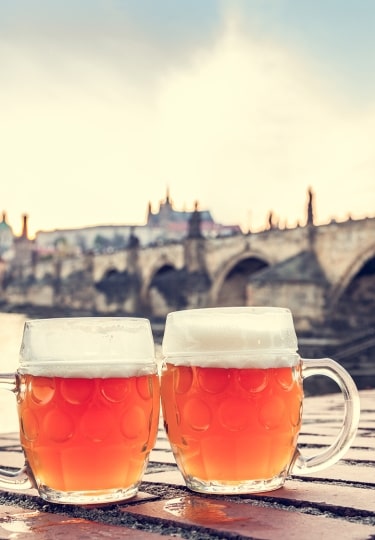
What do you imagine when you think of Czechia (the Czech Republic)? Maybe it’s architecture or fantastic castles. Or maybe you think of famous composers, playwrights, or hockey and soccer players. Or maybe it’s Czech beer.
In some countries, beer is just a drink to enjoy with friends or to relax while watching sports. In Czechia, it’s an art. If you’re going to Prague, Czech beer offers just as much to explore as its Gothic and Baroque cityscape.
Traditional Czech beer consists of bottom-fermented lagers renowned for their golden clarity, crisp finish, and dense, pillowy head of foam. Czechs boast centuries of brewing mastery, from historic cellars in Old Town Prague to neighborhood taverns along the Vltava River. Beer in Prague is not merely a refreshment. It’s a cultural institution.
What Is Czech Beer Known For?
In beer terms, Czechia is best known for the pale lager style, specifically golden pilsners. These refreshing beverages balance a rich malt body with aromatic hops. Iconic brands such as Pilsner Urquell and Budweiser Budvar set the global gold standard for bottom-fermented brewing. Czech brewmasters craft their offerings for drinkability, balance, and social enjoyment.
Standout traits of Czech beer include:
- Golden clarity and creamy foam: Czech beers typically have a thick, wet head of foam that seals in carbonation, temperature, and natural aromas.
- Saaz hops: These “noble” hops are delicate, floral, and contain a hint of spice. They’re native to the Žatec region of Czechia.
- Soft local water: You can’t brew great beer without great water. Plzeň, the birthplace of pilsner, has naturally low-mineral water that creates an exceptionally smooth, clean palate.
- Triple decoction mashing: Czech brewers use a traditional boiling process that develops deep malt character.
Why Czech Beer Is Famous
Czech beer achieved global fame thanks to a mix of natural geography, centuries of monastic brewing, and strict quality standards.
The traditional region of Bohemia, which now comprises the largest area within the modern-day Czech Republic, possesses excellent agricultural conditions for brewing. These include soft water aquifers and fertile soil that produce world-class spring barley. Furthermore, the Žatec region produces Saaz hops, which are celebrated worldwide for their refined herbal aroma and gentle bitterness.
Beyond ingredients, Czech beer culture emphasizes extreme freshness. Traditional beer halls serve tank beer (tankové pivo). This beer is unpasteurized, delivered directly from the brewery in temperature-controlled tanks, and served within days of brewing. When combined with specialized pouring techniques that help preserve natural carbonation, the result is a lager that beer enthusiasts routinely regard as among the finest in the world.
The Czech Republic’s Pilsner Heritage
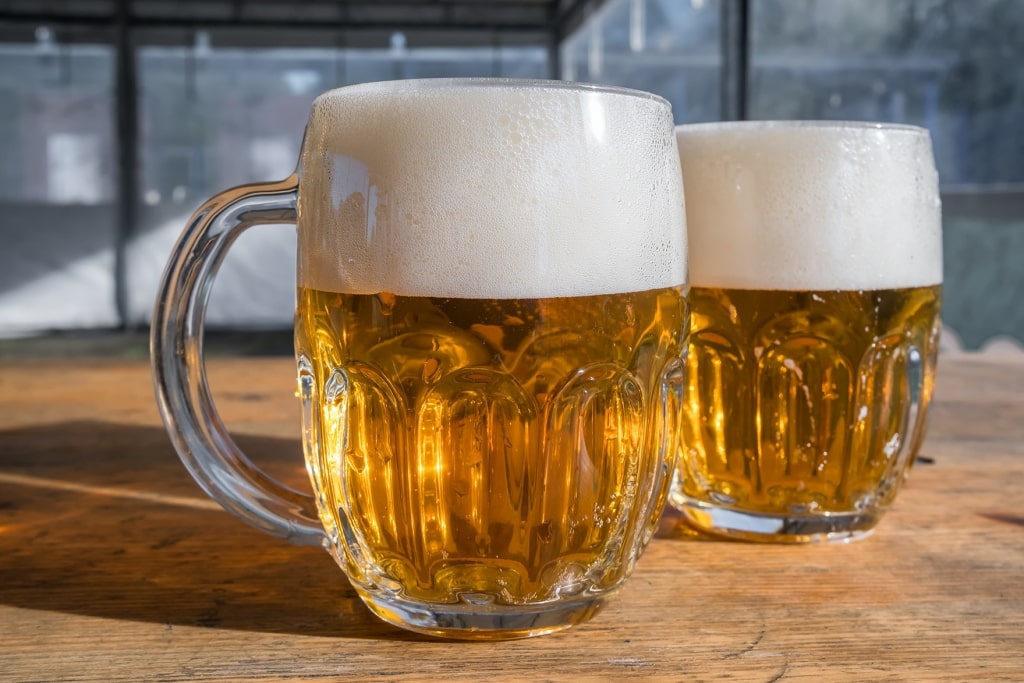
Sunlight illuminates two heavy glass mugs of crisp, golden Czech lager topped with thick, creamy foam on a rustic wooden table.
Have you ever wondered why Czechia’s most famous lager is called “pilsner”? It’s named after the country’s fourth-largest city, Plzeň (“Pilsen” in English).
Up to the mid-19th century, European beers were typically dark, cloudy, and top-fermented. Then came October 5, 1842. It was on that date that Bavarian brewmaster Josef Groll, hired by the burghers of Plzeň, brewed the first batch of Urquell. In doing so, Groll created a new bottom-fermented lager using local soft water, pale malt, and Saaz hops.
The resulting golden-tinged elixir gave rise to one of the most popular beer styles on the planet. People traveling throughout Europe often discover that while pilsner is copied worldwide, the original Bohemian style remains unmatched in depth and craft. When selecting a Czech pilsner beer brand to try, look for regional Bohemian options to taste the full, authentic tradition.
The Most Famous Czech Beers to Try
Navigating a Prague beer menu can feel daunting for first-timers. But once you learn a little about the most iconic names in the game, the task gets easier (and more interesting). There are several names you’ll see consistently, including:
- Pilsner Urquell
- Budweiser Budvar
- Staropramen
- Kozel
Each brand offers distinct flavor profiles, ranging from crisp pale lagers to caramel-sweet dark offerings. And, as Groll’s Bavarian roots suggest, many of these beers blossom at the intersection of Czech and German culture—both of which you can explore on a Rhine or Danube River cruise.
What makes Czech beer special?
Czech beer is special for its balance of rich malt flavor, aromatic Saaz hops, soft local water, and traditional brewing techniques. It’s especially known for crisp golden pilsners, dense creamy foam, and fresh tank beer served in Czech pubs. Distinctive pouring styles also play an important role in the experience, making beer as much a part of Czech culture as it is a drink.
Pilsner Urquell
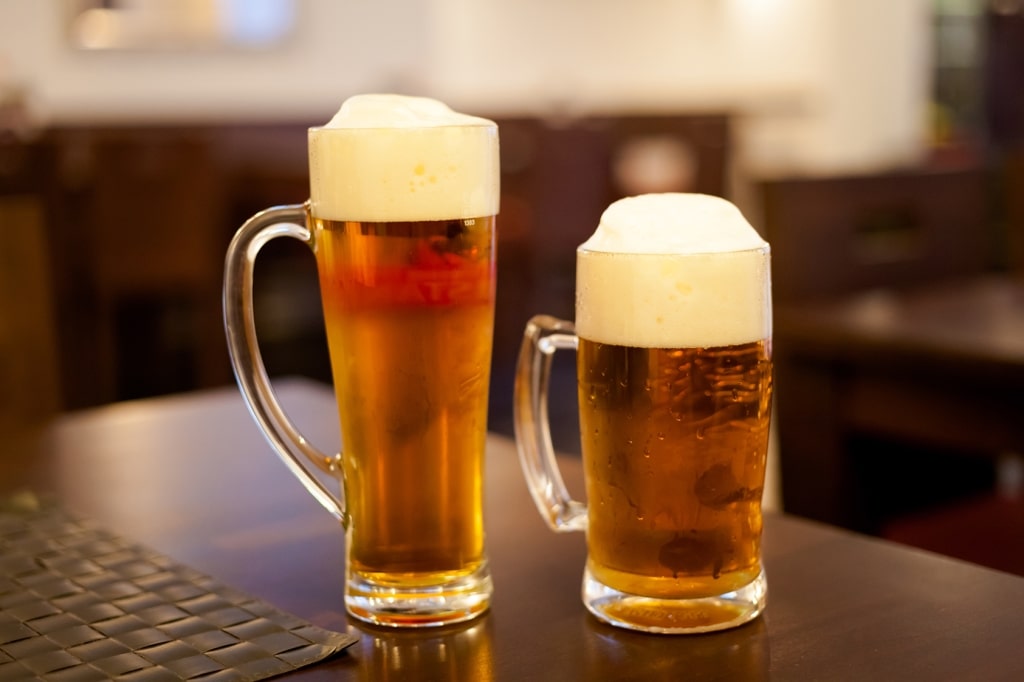
A golden Czech beer crowned with thick foam sits ready on a wooden table inside a traditional Czech tavern.
Pilsner Urquell is the benchmark of Czech beer. It features a bright, clear golden color, a rich caramel-malt backbone, and a lingering bitterness from Saaz hops. It’s a must-try for anyone seeking the definitive taste of Bohemia.
Budweiser Budvar
I’ve been fortunate enough to visit many countries, and in just about all of them, you’ll find Budweiser beer. But if you order a Budweiser in Prague, you may not get the St. Louis-born American-style lager.
The Budweiser Budvar Czech beer (“Budějovický Budvar”) is quite distinct from the Bud with which you may be more familiar. Sold as “Czechvar” in other parts of the world due to a trademark dispute, Budweiser Budvar comes from the South Bohemian city of České Budějovice. This state-owned brewery ages its beer for up to 90 days in cold cellars to produce a smooth, highly balanced pale lager. It offers a subtle malt sweetness and milder hop bitterness than Pilsner Urquell.
Other Czech Beers to Know
Staropramen has been brewed in Prague’s historic Smíchov district since 1869. It delivers a crisp, well-rounded urban lager. Velkopopovický Kozel is best known for its golden pale lager, though its dark variant, Kozel Černý, is also widely popular for its gentle caramel-sweet notes. Visitors exploring European destinations will also find regional craft breweries serving unfiltered amber lagers and seasonal brews.
How to Order Czech Beer Like a Local
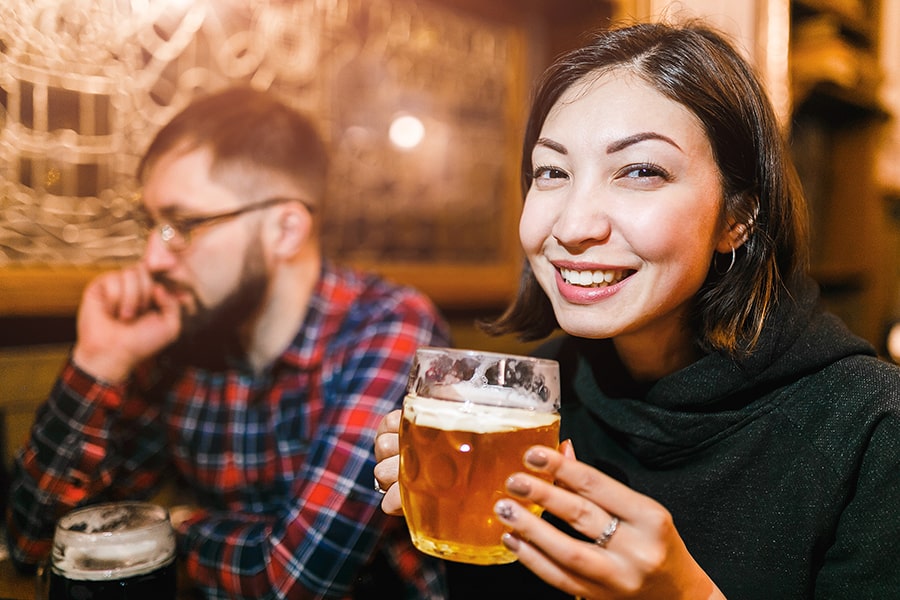
A smiling woman holds a mug of golden, freshly poured Czech lager inside a cozy, dimly lit Prague tavern.
As I mentioned earlier, I’ve visited many countries. And I’ve made a fool of myself in all of them. And that’s OK; people in popular destinations such as Prague are used to tourists not knowing local customs. You don’t have to know how to order beer like the Czechs do to get yourself a refreshing pint.
But that’s not to say locals don’t appreciate visitors who make an effort. So, when you sit down in a traditional Prague pub, know that the server will likely ask you if you want a beer (pivo), assuming you desire the house pale lager on tap.
Rather than ordering by brand name as you might at home, you can actually specify the draft style and pour type. Adopting this particularly Czech ordering style when visiting Prague can give you a more memorable pub experience. And it may even elicit a nod of approval from the server.
Why the Pour Matters
In Czech pub culture, how a beer is poured can be just as important as how it was brewed. A proper pour creates a dense, creamy head of micro-foam that acts as a natural seal, preserving carbonation, aroma, and temperature.
Traditional Czech pour styles include:
- Hladinka (the standard smooth pour): Half a glass of beer topped with two to three fingers of thick, creamy foam.
- Šnyt (the cut or split): A smaller measure of beer in a full-sized mug with roughly equal portions of beer and foam.
- Mlíko (the milk pour): A glass filled mostly with velvety foam; works great as a dessert drink.
Is Czech Beer Worth Trying if You Only Have One Day in Prague?
Yes, trying Czech beer is a great way to experience local culture on a short visit. Stepping into a traditional establishment for a quick break allows you to observe neighborhood life and taste fresh tank lager. You can even book a relaxing treatment at a local Czech beer spa.
Yes, that is what it sounds like: a place where you soak in warm oak tubs filled with beer ingredients while enjoying draft pours. Whether you’re that adventurous or just want to enjoy a nice pint, sampling Czech beer is a great inclusion anytime you take a trip to Prague.
That said, if you want more time to explore Prague, you can always book a pre- or post-cruise extension with Celebrity River Cruises℠. With a Before and After Stay, guests can extend their time in the city with a premium hotel stay, daily breakfast, small-group tours with local hosts, and two days to explore Czech beer culture at its finest.
Should You Book a Guided Beer-Tasting Tour or Explore on Your Own?
A guided beer-tasting tour is great if you want a structured experience featuring expert commentary on brewing science and guaranteed seats at certain pubs. A self-guided exploration suits independent travelers who enjoy a flexible pace and want to soak in the atmosphere organically.
The Best Prague Neighborhoods to Experience Czech Beer Culture
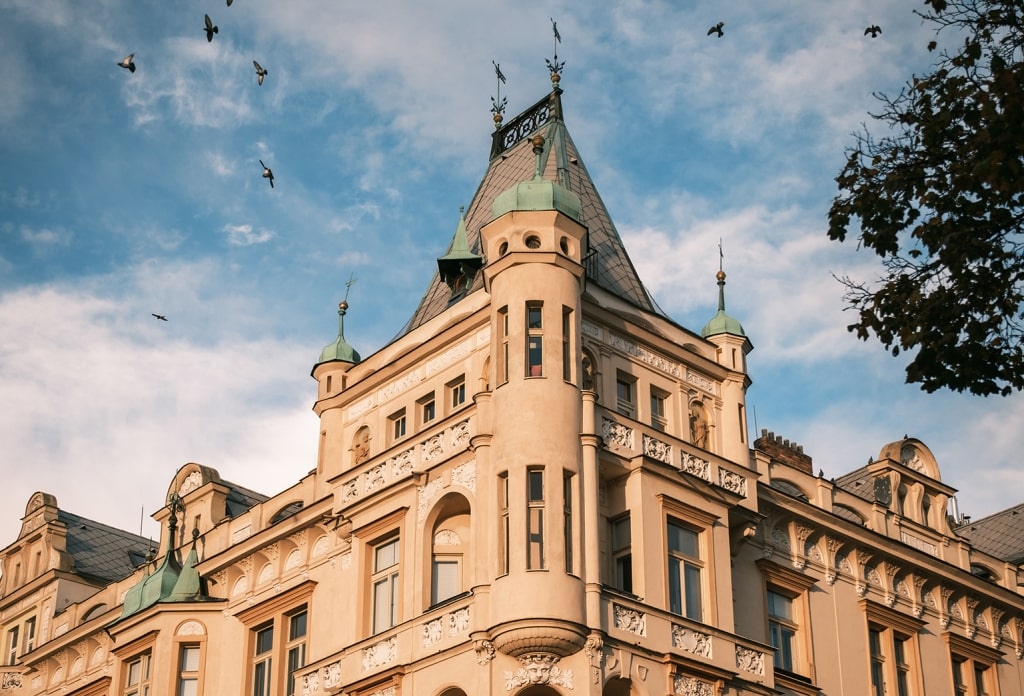
A flock of birds swoops through the sky above the ornate turrets of an elegant historic building in Prague’s Žižkov district.
Prague features neighborhoods that offer distinct aspects of Czech beer culture. Vinohrady and Žižkov are two of Prague’s top neighborhoods for experiencing authentic Czech beer culture. Each area features local pubs and craft taps.
Holešovice is an emerging region on the Prague beer scene, hosting modern craft beer taprooms and post-industrial brewpubs. Exploring these offers a glimpse into local life and regional Danubian culture.
What to Eat With Czech Beer
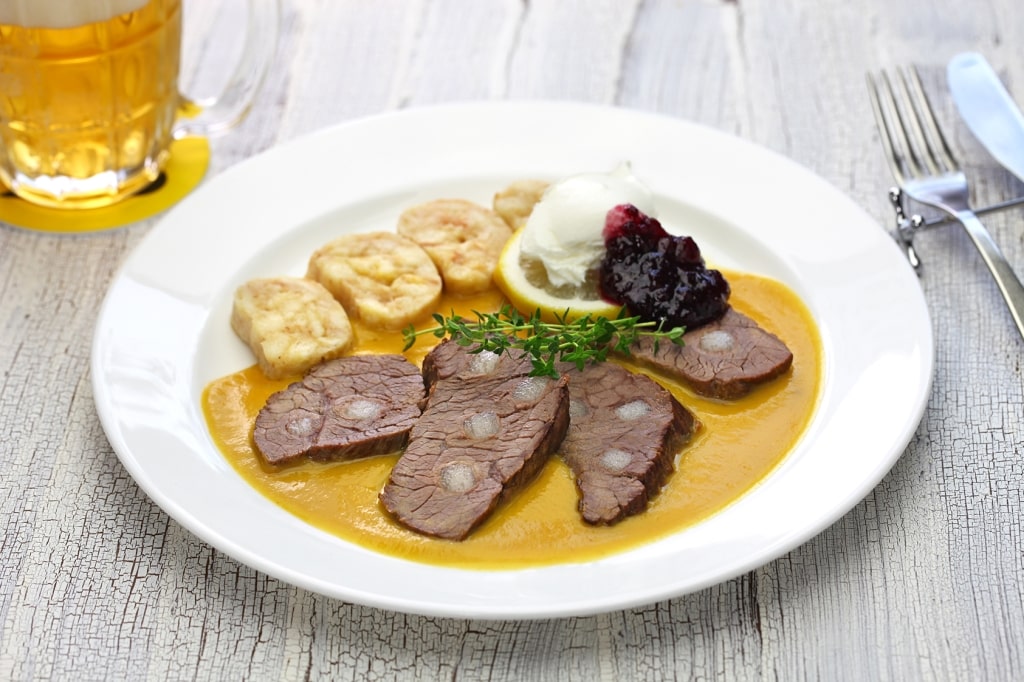
Tender slices of beef in a rich, creamy root-vegetable sauce are paired with soft bread dumplings, cranberries, and a cold glass of golden Czech beer.
Traditional Prague cuisine features many savory dishes that pair well with Czech beer. Classic tavern pairings include Svíčková (tender beef in cream sauce with bread dumplings), Vepřo knedlo zelo (roast pork with sauerkraut), and slow-cooked beef goulash. All in all, Prague offers some of the best European food.
How Czech Beer Fits Into a Danube Trip
A visit to Prague can be a wonderful experience before or after cruising the Danube River. A short journey from Danube port cities like Nuremberg or Budapest, Prague provides travelers with an opportunity to explore Bohemian history, Gothic architecture, and world-class brewing traditions.
For more time in Prague, consider adding a Before and After Stay to your Celebrity River Cruises vacation. The package gives guests extra time to experience the city, with your choice of premium or ultra-premium hotel accommodations, daily excursions, and much more.
View Danube River cruises and discover Czech beer culture on a trip to Prague.
FAQs About Czech Beer
What makes Czech beer special?
Czech beer is special for its balance of rich malt flavor, aromatic Saaz hops, soft local water, and traditional brewing techniques. It’s especially known for crisp golden pilsners, dense creamy foam, and fresh tank beer served in Czech pubs. Distinctive pouring styles also play an important role in the experience, making beer as much a part of Czech culture as it is a drink.
What’s the bar culture like in the Czech Republic?
Bar culture in Czechia is relaxed, social, and unpretentious. Pubs and beer halls serve as neighborhood gathering places where multi-generational crowds socialize over pints, hearty food, and casual hospitality.
Can you bring Czech beer home?
Yes, you can bring bottled or canned Czech beer home in your checked luggage, provided you pack it securely. However, unpasteurized tank beer should be enjoyed fresh on tap, as it does not retain its signature foam and flavor profile in bottles.
Where are the best bars in Czechia?
The best beer venues range from historic medieval cellars in Prague’s Old Town to traditional brewery taprooms in Plzeň and České Budějovice. For an authentic experience, look for establishments displaying the “Tankové Pivo” sign, indicating fresh, unpasteurized lager.