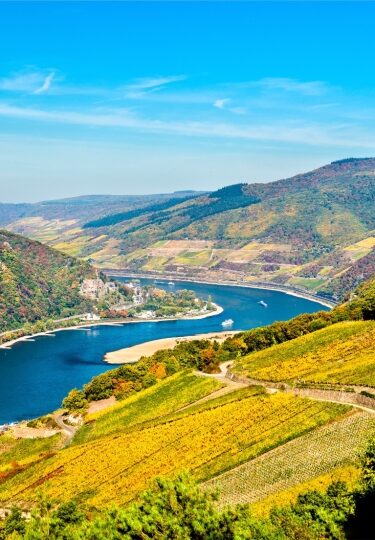
When it comes to comparing Rhine vs Danube cruises, both rivers have so much to offer that the ultimate decision on which to choose comes down to personal choice. These mighty waterways run neck and neck as the two most popular European routes for a river cruise vacation. Similarly, they are steeped in history and lined by gorgeous countryside, vineyards, cultural cities, and picture-postcard villages.
But before you decide, take time to get a detailed overview of both rivers, their respective highlights, and what to expect.
Statistics & Facts
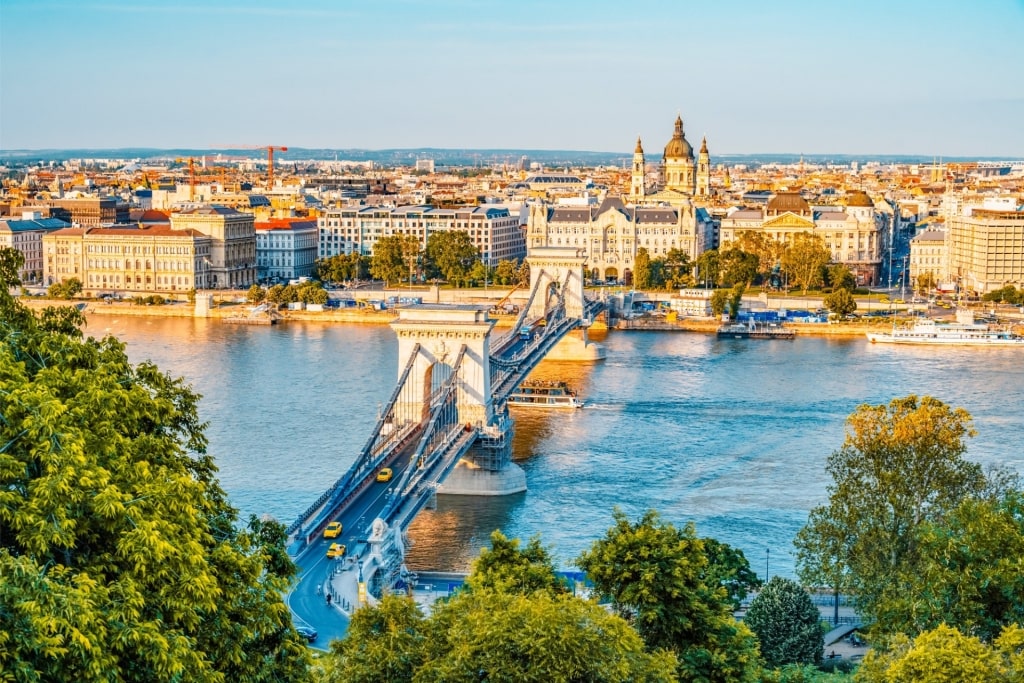
Budapest, Hungary
To set the scene, the Danube is the second-longest river in Central and Eastern Europe after the Volga and flows 1,770 miles through 10 countries–primarily Germany, Austria, and Hungary–from Germany’s Black Forest all the way to the Black Sea in Romania. Longer cruises visit lesser-known nations, such as Slovakia, Serbia, and Bulgaria. While it won’t have any impact on your choice of river cruise destination, it’s also an interesting fact that the Danube is the only major European waterway running from west to east.
Among the many cities on the Danube are four capitals: Vienna in Austria, the Hungarian capital Budapest, Bratislava in Slovakia, and Belgrade in Serbia.
Moving to the Rhine, this river–the second longest in Central and Western Europe after the Danube–stretches for nearly 800 miles from the Swiss Alps to the Netherlands. Germany is the main focus on the majority of itineraries, and the Rhine also passes through Austria, France, and the tiny independent principality of Liechtenstein, sandwiched between Switzerland and Austria.
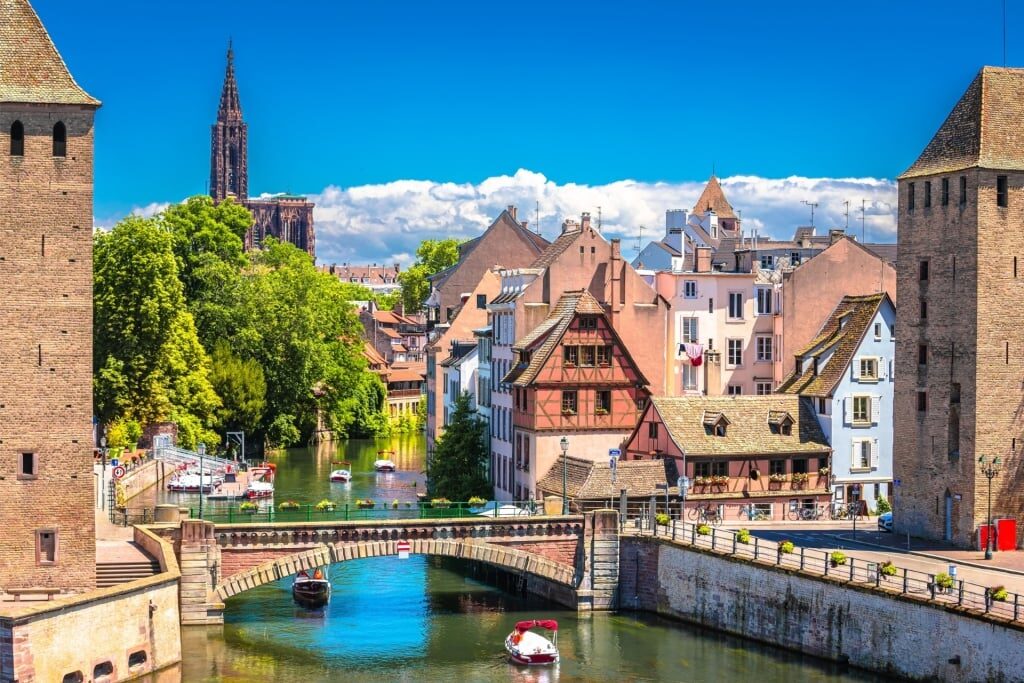
Strasbourg, France
While the Rhine does not have any capitals on its banks, it flows through several major cities such as Basel in Switzerland, Cologne in Germany, and Strasbourg in France. However, some cruises sail the 45-mile Amsterdam-Rhine canal to reach Amsterdam, the cosmopolitan capital of the Netherlands. Other sailings feature the pretty Moselle, a tributary which joins the Rhine at Koblenz in Germany.
Ports
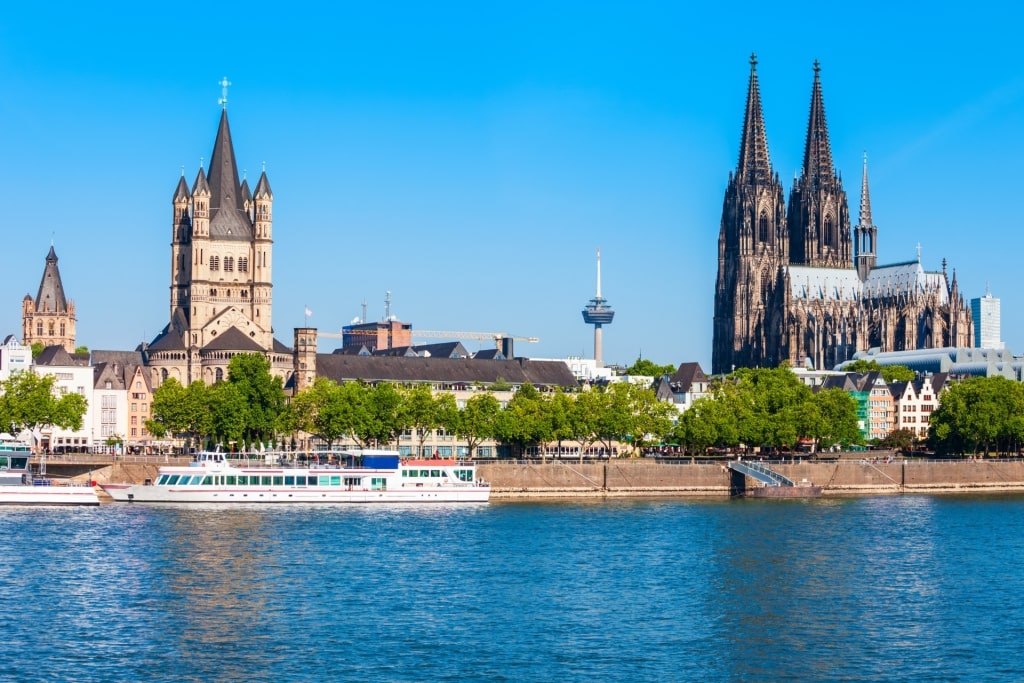
Cologne, Germany
Rhine and Danube cruises stop at ports in large cities, small towns, and charming, picture-postcard villages. The main difference is the Rhine doesn’t have any capital cities on its banks, and will likely have fewer places you have heard of, while the Danube is home to grand historic cities that shaped European history. It’s down to personal preference whether you want to be surprised by some new destinations or prefer to explore big-name cities.
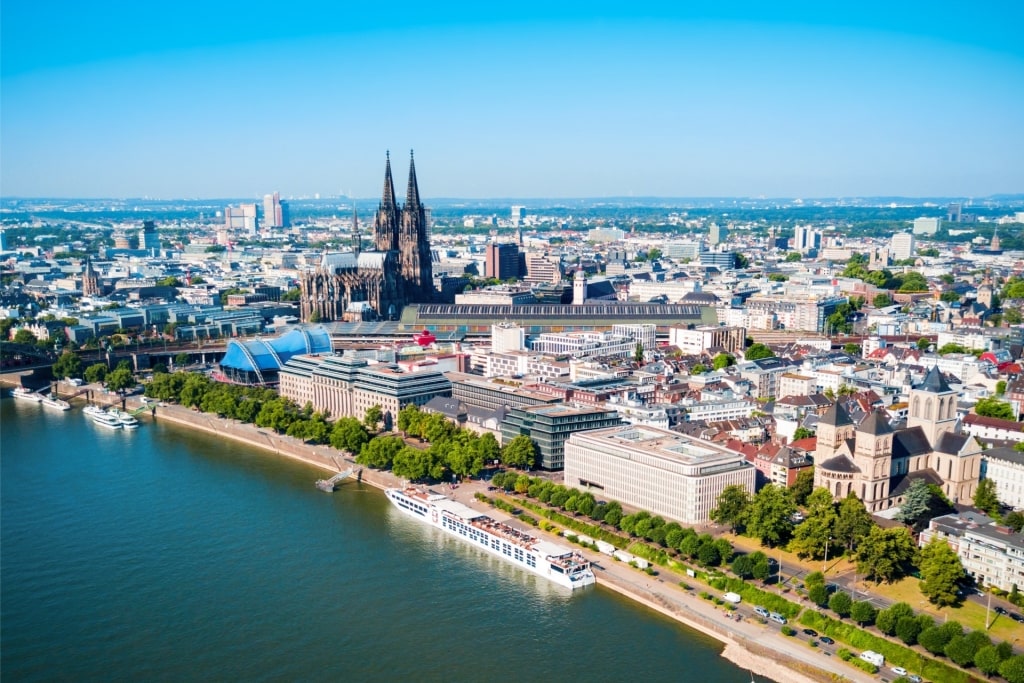
Cologne is the largest and most significant city on the Rhine. Its most visible landmark is the cathedral, Northern Europe’s biggest Gothic church, which took more than 600 years to construct. Other notable cities include Strasbourg, where the enchanting Petite France neighborhood is criss-crossed by canals and a maze of cobbled streets with half-timbered houses. Once part of Germany, it’s now the capital of Alsace, which is the smallest region in France.
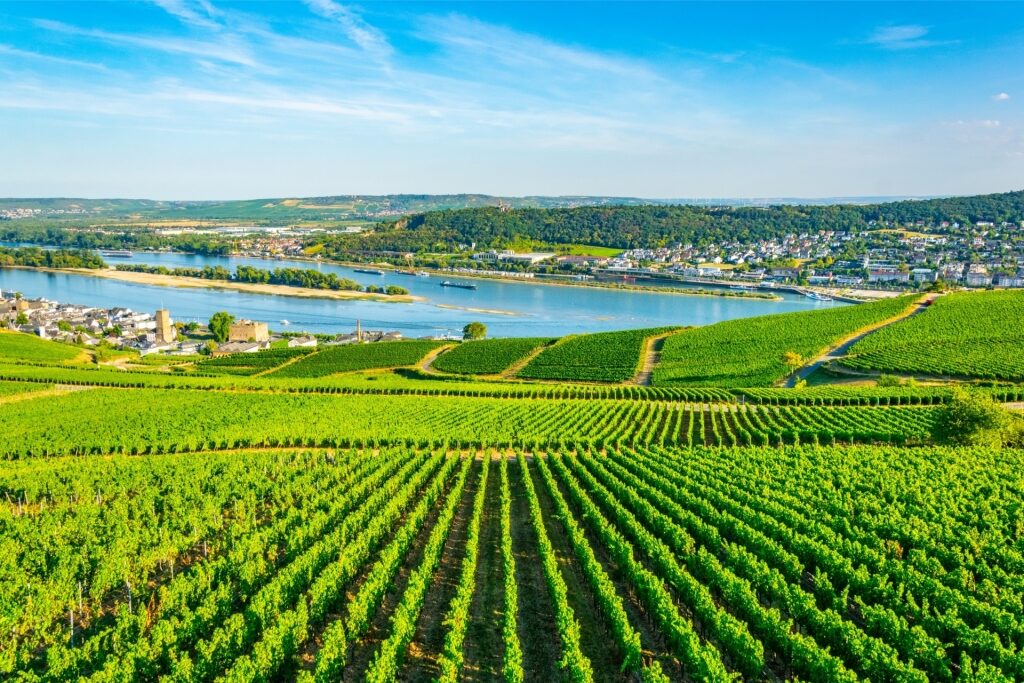
Rüdesheim, Germany
While both rivers are renowned for their wine-growing regions–producing mostly white wine–there are more wine-growing ports of call on Rhine cruises. Notable examples include Rüdesheim, where the narrow Drosselgasse street is lined with cozy wine bars, and Bernkastel-Kues, on the Moselle, where vines run right down to the banks of the river.

Vienna, Austria
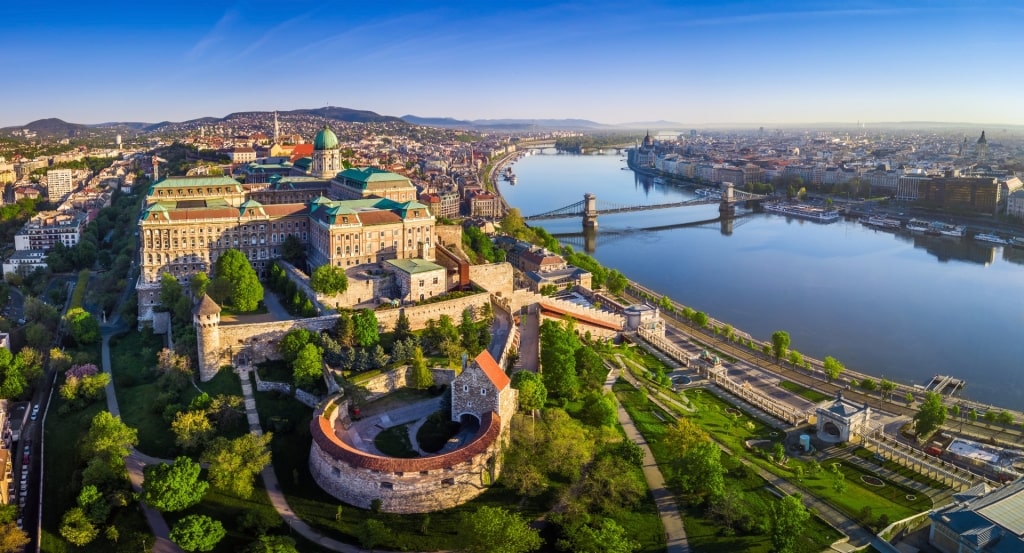
On the Danube, you’ll stop in elegant Vienna. This is where the Habsburg dynasty ruled Austria for 700 years from the splendor of Hofburg, one of the world’s biggest palace complexes. There’s also the Hungarian capital, Budapest, where the main boulevard Andrássy Avenue, with impressive buildings such as the Hungarian State Opera House, is just a short walk from your mooring spot.
You’ll find smaller ports on the Danube, too. Krems is one of the oldest towns on the Danube with a city gate dating back to the 15th century.
Aside from a few exceptions on both rivers, such as Vienna and Strasbourg where the river doesn’t actually flow through the city center, your ship will always dock in the heart of the port. If you want to explore independently, you will usually be in the center of downtown, close to shops, cafés, and attractions. If the ship moors out of the town, there will be regular complimentary shuttle buses to and from the city, or a choice of tours to get you there.
Read: Ocean vs. River Cruises: Which One Is Best?
Cultural & Historical Highlights
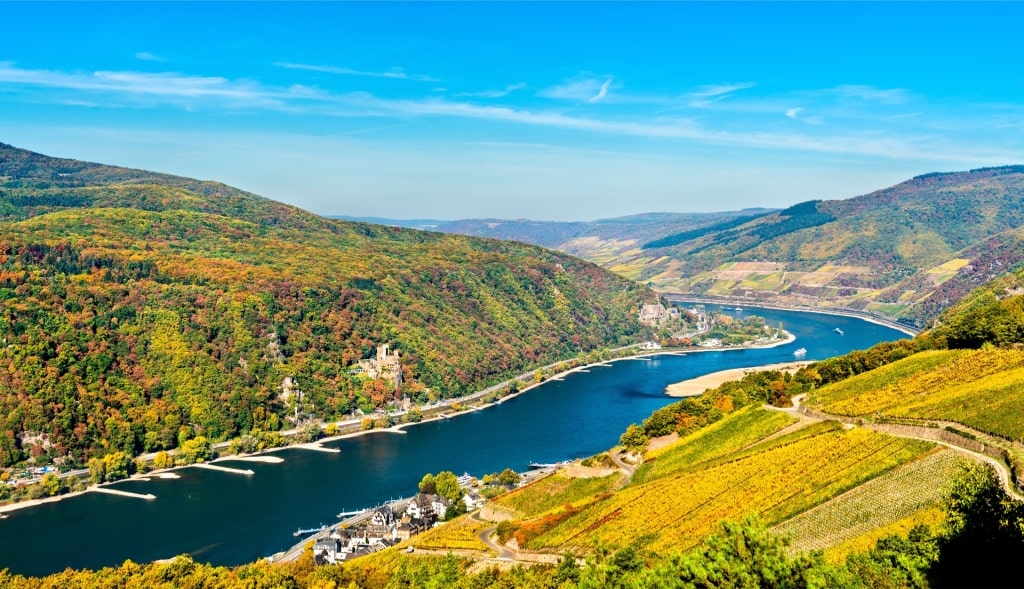
Middle Rhine Valley
You will be wowed by the number of dramatic and enriching highlights everywhere you sail. Comparing Rhine vs Danube river cruises, if you want to see an array of fairytale castles, then pick the Rhine. It has the highest number in the world and most of them are concentrated along the UNESCO-listed Middle Rhine Valley.
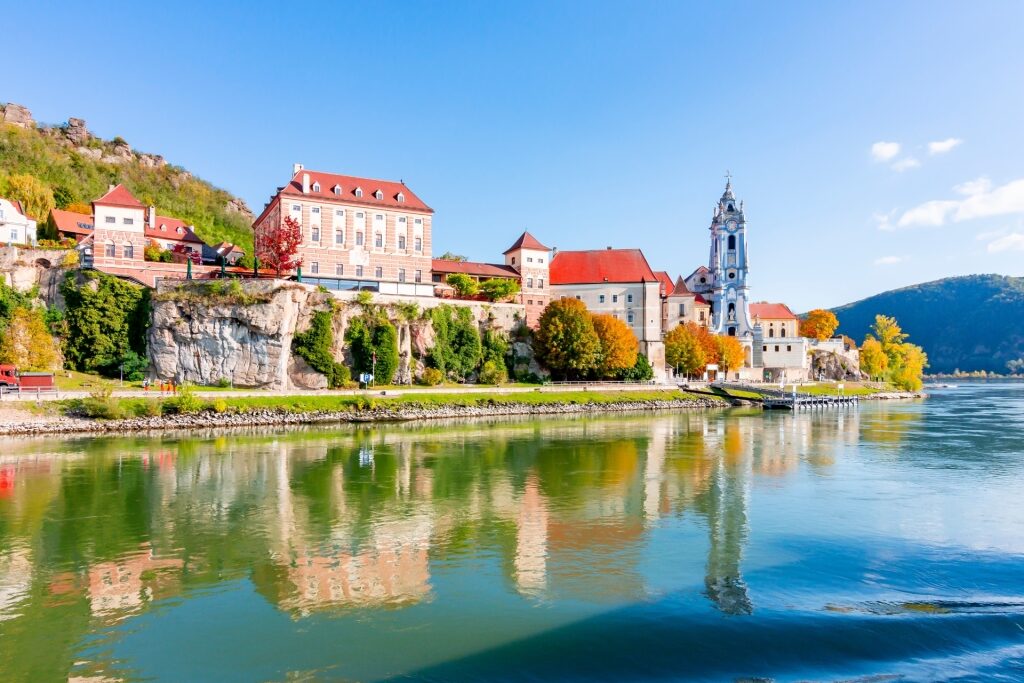
With its breathtaking landscapes of vineyards and apricot orchards, the Danube’s Wachau Valley is also a UNESCO World Heritage site. Here you’ll find Melk Abbey, built between 1702 and 1736 and one of Europe’s largest monasteries. Another standout building in the valley is Dürnstein’s blue and cream abbey.
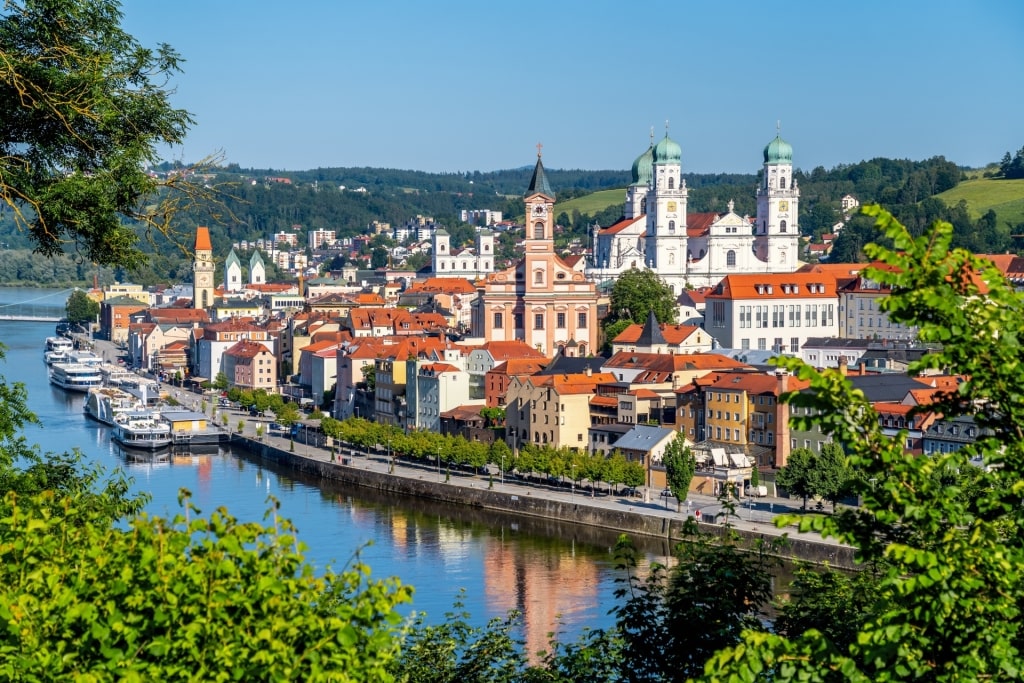
Passau, Germany
You’ll see plenty of impressive cathedrals on both rivers. In Passau, which is often the starting point for Danube sailings, St. Stephen’s Cathedral has Europe’s largest organ, and there are recitals every lunchtime. Over in Strasbourg, the façade of Notre-Dame Cathedral is adorned with hundreds of sculptures depicting figures from the Middle Ages.
Both rivers bordered the Roman Empire and significant remains from this period can be discovered in places including Cologne, Mainz, and Koblenz on the Rhine, and Regensburg, Vidin and Belgrade on the Danube. In fact, the Roman military camp Vindobona grew into Vienna, and remains are still visible.
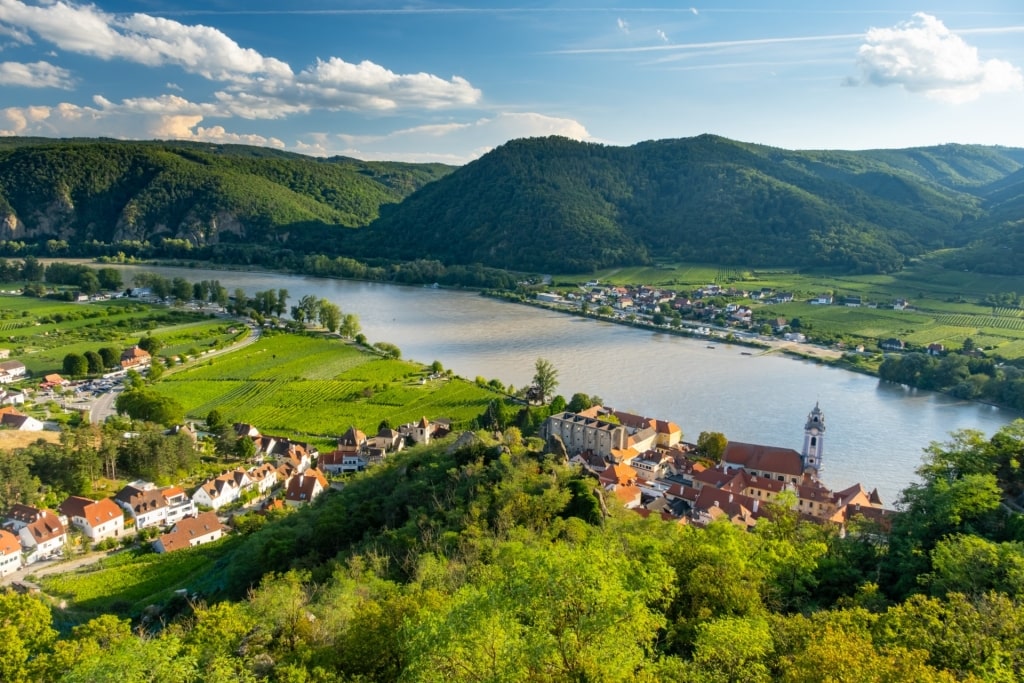
Wachau Valley, Austria
The Danube has plenty to offer music-lovers. Johann Strauss I and his namesake son were born in Vienna. Mozart lived there for much of his life, while Beethoven spent some 35 years in the city. The interactive House of Music museum celebrates this legacy, and there are daily classical recitals in atmospheric and historic concert halls throughout the city.
If you’re interested in Second World War history, the Rhine is the gateway to poignant sights including the Amsterdam home where teenage diarist Anne Frank and her family hid from the Nazis. Elsewhere, you can visit Colmar, where the last major battle of the war was fought on French soil and Audie Murphy subsequently received the Medal of Honor, the highest US military decoration, before becoming a movie star.
Activities & Excursions
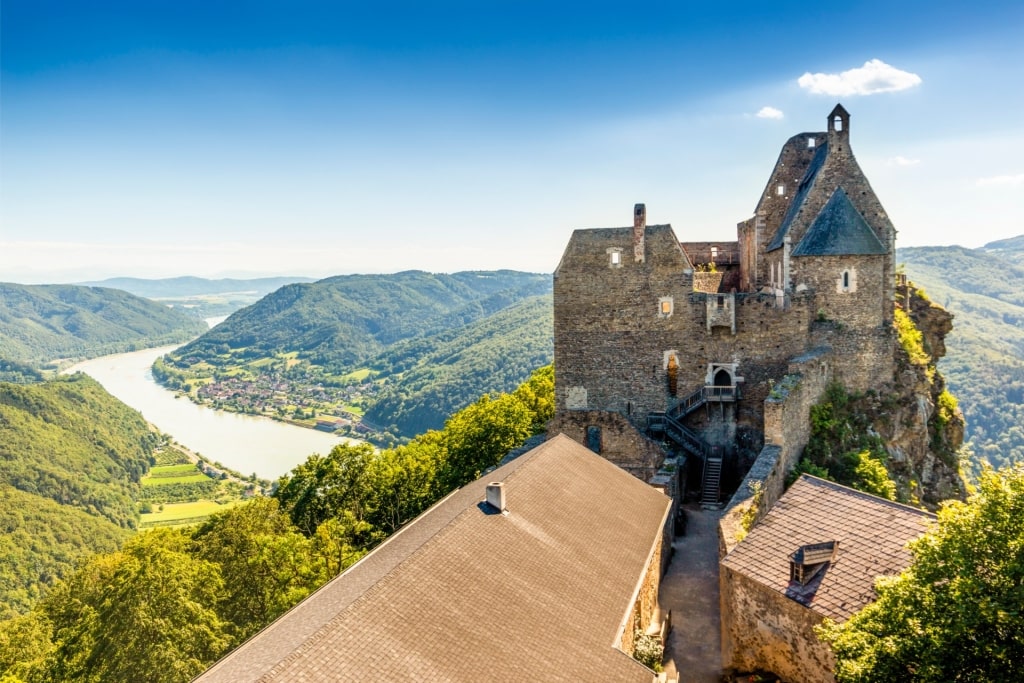
Aggstein Castle, Austria
Each day will bring a choice of insightful shore excursions led by hand-picked local guides who will share their wealth of knowledge. Walking tours are a great introduction to the cities, towns, and villages on the banks of both rivers.
There will also be motorcoach trips to panoramic highlights and places of interest, such as castles, museums, cathedrals, and vineyards. One day, you might be tasting local Riesling, Grüner Veltliner, or Tokaji wine, the next taking part in a hands-on cooking demonstration to make a local specialty such as apple strudel.
To enjoy the scenery from a different perspective, active cruisers can embark on organized or independent bike rides and hikes. There are flat, well-established cycle paths along the banks of both rivers, some running through the lower sections of vineyards.
Food & Drink

German sausages
Discovering new cuisines is always a vacation highlight. Even more so on Rhine and Danube river cruises, where you can visit up to four countries in a week and sail through different wine regions.
If you’ve chosen the Rhine, you can savor all manner of German sausages; it’s said there are more than 1,500 varieties, usually served with sweet mustard and accompanied by a refreshing glass of beer. Order a refreshing Kölsch, brewed in Cologne, or Bamberg’s smoked beer made with barley that’s been dried over an open fire. In Strasbourg, try flammkuchen, a type of thin pizza topped with bacon and onion. To finish, a slice of Black Forest gateau laced with cherry brandy is a must.
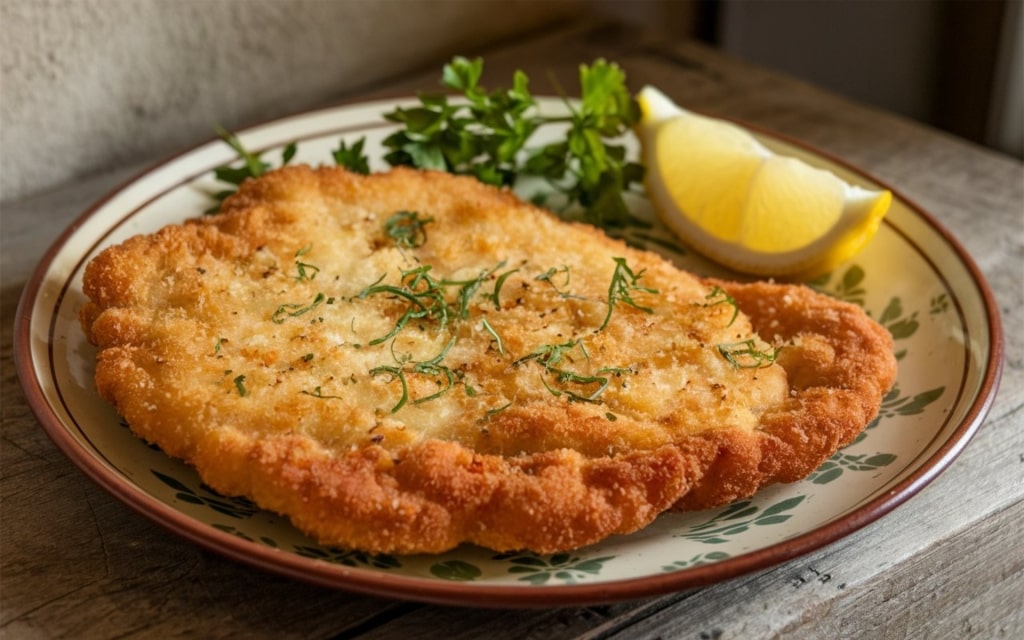
Wiener schnitzel
On the Danube, Vienna is famous for rich chocolate Sachertorte, creamy melange coffee, and Wiener schnitzel, the thin, breaded veal cutlet which is an Austrian national dish. Succulent Wachauer Marille apricots, grown only in the Wachau Valley, are used in everything from hearty dumplings to chocolate, jam, and brandy. When you reach Hungary, meanwhile, you’ll find rich dishes such as goulash flavored with paprika.
Culinary delights continue back on your ship with a changing menu of fresh, seasonal dishes reflecting the destinations you’re visiting.
Accommodations
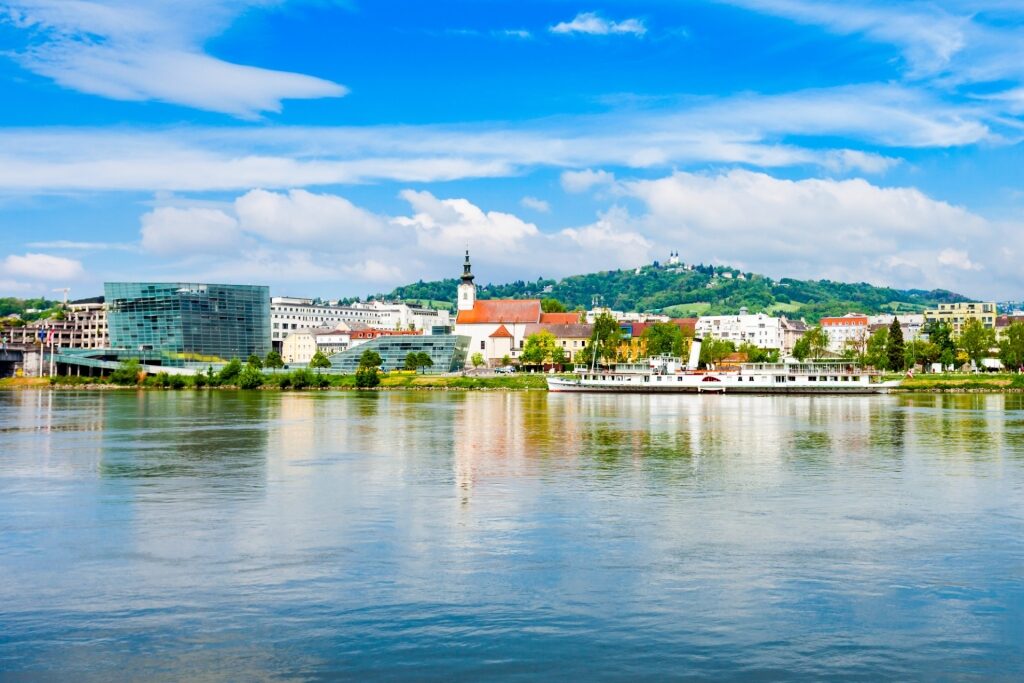
Linz, Austria
Be it the Rhine or the Danube, your comfortable river cruise stateroom will provide a front-row seat on an ever-changing panorama as you wake up somewhere new most days. Unlike ocean vessels, there are no inside rooms, so you will always have a view.
Similarly, you don’t need to worry about whether it’s best to book accommodations on the port or starboard side. On some of the most beautiful stretches of the rivers–such as the Middle Rhine Valley and Danube’s Wachau Valley, which are both UNESCO-listed–you’ll have equally scenic vistas on both sides.
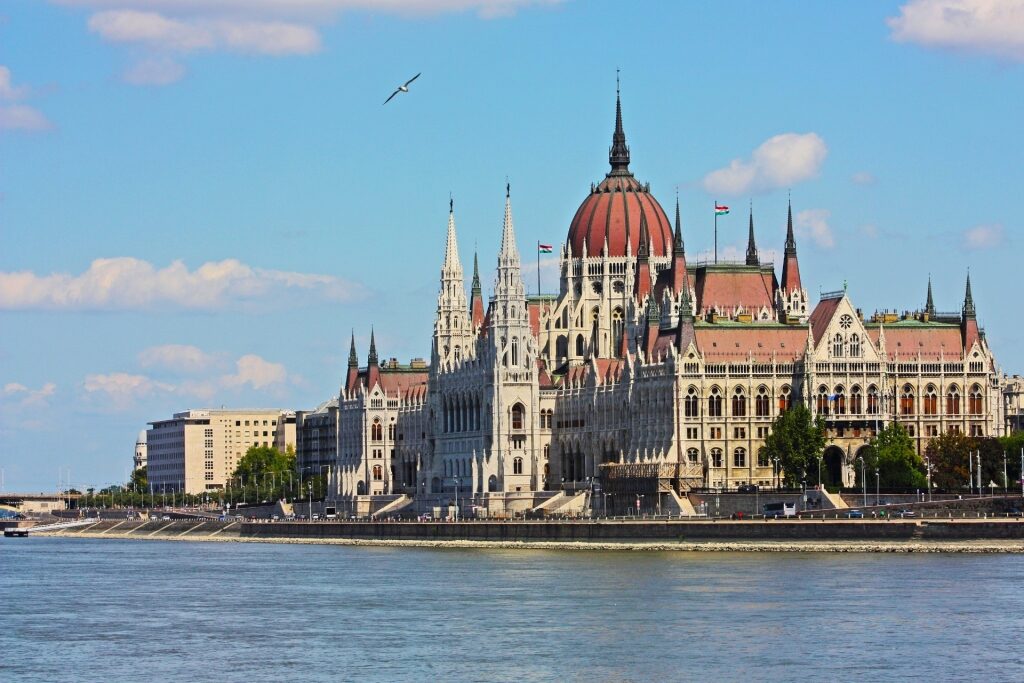
Hungarian Parliament Building in Budapest, Hungary
If you’re in your stateroom when you’re passing a particular highlight, such as the legendary Lorelei Rock on the Rhine or Budapest’s Hungarian Parliament Building on the Danube, you can be out on deck within a minute to get a close-up view.
Accommodations don’t differ on either river. You’ll have a variety of stateroom categories to choose from and your floating home will be equipped with blissful beds, configured as singles or doubles, and all the amenities you would expect to find in the best hotel rooms. These include well-equipped bathrooms, ample storage and seating areas, which are all cleverly designed to maximize space.
Onboard Activities
Rhine vs Danube river cruises share exactly the same onboard activities. On both rivers, the passing scenery and a busy program of shore excursions are the stars of the show. As such, the entertainment is low-key and geared toward cultural enrichment and relaxation.
When you’re sailing during the daytime, you can take it easy in the lounge or up on the sun deck to enjoy a nap or read your favorite book. Expect daily activities such as early morning yoga, cooking demonstrations, and trivia.
Cocktail
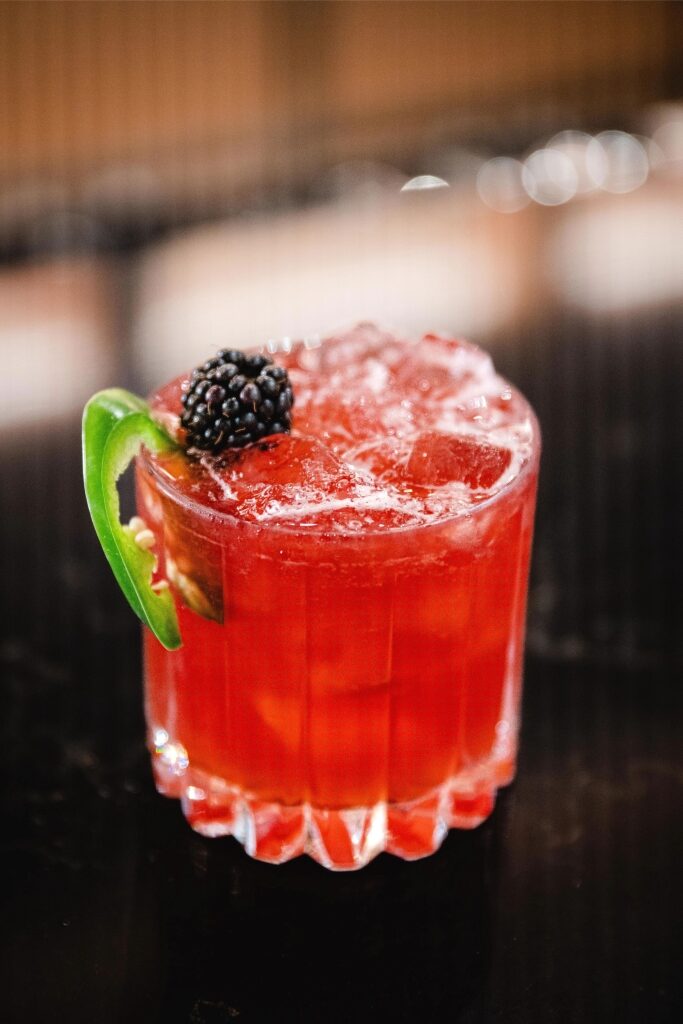
After a day exploring, most guests gather in the lounge bar for cocktails and to listen to a talk about the upcoming port of call. After dinner there will be music in the lounge from the resident entertainer and visiting musicians, singers, and dancers from local towns and cities.
On the Danube you’ll hear the stirring Radetzky March by Johann Strauss and the melodic notes of The Blue Danube Waltz composed by his son Johann Strauss II. On the Rhine, expect to clap along to a rousing recital by a German oompah–or brass–band.
Itinerary Length
Cologne, Germany
Both rivers offer itineraries of varying lengths to fit in with your vacation time. The most popular and plentiful sailings are seven-night cruises which begin and end in two different ports or sail round-trip from gateway cities such as Cologne on the Rhine and Passau on the Danube. Shorter trips, of less than a week, are festive market sailings from mid-November through December.
Being the longer of the two rivers, the Danube offers opportunities for lengthier cruises that travel all the way to the Danube Delta and back. With the Rhine, extended sailings combine the best of both worlds on the Rhine and Danube, with longer sailings between Amsterdam and Budapest.
Climate
Dürnstein, Austria
There’s little to differentiate Rhine vs Danube river cruises in terms of weather. Both have a temperate climate with four distinct seasons—spring, summer, fall, and winter—and while part of the Rhine is further north, the Danube also has snowfall in winter.
In spring and fall there are pleasant temperatures, which are ideal for river cruising, especially if you plan to do a lot of walking and want to avoid the hottest months of July and August. Like anywhere in Central and Eastern Europe the weather can be unpredictable, so even in summer, pack layers and light waterproofs.
Read: What to Wear on a River Cruise in Europe
Budapest, Hungary
Now that you know the differences between the two rivers, you can start planning your vacation. Browse Celebrity’s Rhine and Danube itineraries and find your perfect river cruise.