Find a Cruise
Alaska Inside Passage: Seattle to Vancouver 9 Nights • Seattle, Washington to Vancouver, British Columbia • Celebrity Edge
75% Off 2nd Guest
Get Up to $700 Onboard Credit
Cruise & Land Package
Popular Itinerary
Itinerary & Excursions
Cruise Overview
Seattle, Washington
Day at Sea
Ketchikan, Alaska
Endicott Arm
Juneau, Alaska
Skagway, Alaska
Sitka, Alaska
Icy Strait Point, Alaska
Inside Passage (Cruising)
Victoria, British Columbia
Vancouver, British Columbia
Cruise Overview

As you journey into Alaska’s stunning landscapes, surrounded by towering mountains, untouched forests, and magnificent glaciers, you'll encounter a rugged beauty found nowhere else on Earth. An Alaskan cruise with Celebrity promises an unforgettable adventure, allowing you to experience wildlife up close, immerse yourself in the great outdoors, and explore the rich culture and history of the Last Frontier.
A friendly reminder
Make sure to review documents needed to travel to all destinations included in this cruise.Learn more about required travel documents here
A cruising experience with us provides access to a range of destinations. Specific ports of call are subject to change due to weather, safety or operational considerations.
Seattle, Washington
The Space Needle is usually the first landmark to catch the eye, rising above a skyline framed by Puget Sound on one side and the Cascade Mountains on the other. Pike Place Market is worth braving the crowds for, with fishmongers tossing salmon overhead and local vendors selling everything from fresh flowers to handmade crafts. This is also where modern coffee culture first took root, so a cup here feels a bit like a small pilgrimage.
On clear days, Mount Rainier looms over the skyline from nearly anywhere in the city, a quiet reminder of how close the wilderness sits to the urban core. Between the ferries crisscrossing the sound and neighborhoods built into rolling hills, Seattle has a layered, working-city energy that rewards a bit of extra time before or after the cruise. The city's tech-driven growth over the past few decades has reshaped much of its skyline, but older neighborhoods like Ballard and Fremont still hold onto a distinctly local, unpolished charm.
On clear days, Mount Rainier looms over the skyline from nearly anywhere in the city, a quiet reminder of how close the wilderness sits to the urban core. Between the ferries crisscrossing the sound and neighborhoods built into rolling hills, Seattle has a layered, working-city energy that rewards a bit of extra time before or after the cruise. The city's tech-driven growth over the past few decades has reshaped much of its skyline, but older neighborhoods like Ballard and Fremont still hold onto a distinctly local, unpolished charm.
Travel Tips
1
Seattle is well served by public transportation, from buses to the Link Light Rail, the Seattle Center Monorail, the Seattle Streetcar, and a network of ferries. There are taxis, ride-sharing with Uber and Lyft, and rental bikes and scooters. The city center is pleasant to explore on foot, too.2
Ships dock at Pier 91 in Smith Cove Cruise Terminal—an old naval base about two miles north of downtown Seattle. You’re close to the Magnolia neighborhood here, where you’ll find independent boutiques and gift shops, while the downtown area, with a much wider variety of options, is around 10 minutes’ drive by taxi.3
Seattle has the same tipping culture as the rest of the U.S. Expect to tip 15% to 20% in restaurants, 10% to 15% in bars, and around 15% in taxis. A suitable tip for a good tour guide is 10% to 20% of the total cost of the tour.Day at Sea

A friendly reminder
Make the most of your day at sea by enjoying our Wi-Fi, beverage, and Specialty Dining Packages. These services are available at an additional costWhile at sea, indulge in some well-deserved relaxation before your next adventure. Unwind by the pool, pamper yourself at the spa, savor exquisite cuisine, or discover the unique venues on board. Your next incredible destination awaits.
Learn more about the shipDay at Sea Highlights
Ketchikan, Alaska
Ketchikan has earned its nickname as the Salmon Capital of the World many times over. Salmon run right through the creek in town, often visible from the historic Creek Street boardwalk, once the town's red-light district, now home to charming shops and galleries built on pilings above the water. Just outside town stands the largest collection of standing totem poles anywhere in the world, carved by the Tlingit, Haida, and Tsimshian peoples whose heritage runs generations deep here.
Rain is practically part of the local identity, with well over 100 inches falling each year, but it's exactly what keeps the surrounding rainforest so lush and the rivers running high with fish. The town's fishing heritage runs deep, and it shows in everything from the working boats lining the harbor to the seafood served in nearly every restaurant downtown. Zipline through the rainforest canopy, cast a line for salmon, or simply wander the misty streets, Ketchikan has a way of lingering in memory long after the ship sails on.
Rain is practically part of the local identity, with well over 100 inches falling each year, but it's exactly what keeps the surrounding rainforest so lush and the rivers running high with fish. The town's fishing heritage runs deep, and it shows in everything from the working boats lining the harbor to the seafood served in nearly every restaurant downtown. Zipline through the rainforest canopy, cast a line for salmon, or simply wander the misty streets, Ketchikan has a way of lingering in memory long after the ship sails on.
Travel Tips
1
Ketchikan has an efficient transportation network. During the summer months (May to September), free shuttles run between the port terminals and various key locations in downtown Ketchikan. The local bus service through town runs year-round, stopping at popular destinations including Saxman Park, Totem Bight, and Ward Cove. Taxis are also available, as are rideshare services.2
Ketchikan has a creative, artistic atmosphere and offers some excellent shopping. Creek Street has several galleries where you can pick up an original piece, whether it’s a small, hand-carved totem pole, a beautiful painting or photograph, or a hand-woven cedar bark basket. There are multiple jewelry shops, many of them selling pretty silver earrings and necklaces made with blue mother-of-pearl or items made from locally sourced jade. For a luxury gift or souvenir, look out for items made from qiviut, the ultra-soft fleece of the musk ox. If you want to take some salmon home, it’s available smoked, canned, as a spread, or as jerky. Finally, curved ulu knives, traditionally made by the Inuit, are a popular buy. Just remember that a purchase like this would have to travel home in your checked luggage. To make sure you buy authentic Alaskan goods, be sure to look for the easily-recognizable official “Made in Alaska” symbol. You’ll also find the well-known “Silver Hand” emblem on many items, signifying that they were handcrafted by an Alaskan Native.3
The official currency in Ketchikan is the United States dollar. ATMs can be found in various places in the port and around town. All major credit cards are widely accepted, even for small transactions. Tipping is in line with what you’d expect elsewhere in the U.S.; up to 20% in restaurants, 10% in taxis, and 10% of the tour cost for a good guide.Endicott Arm
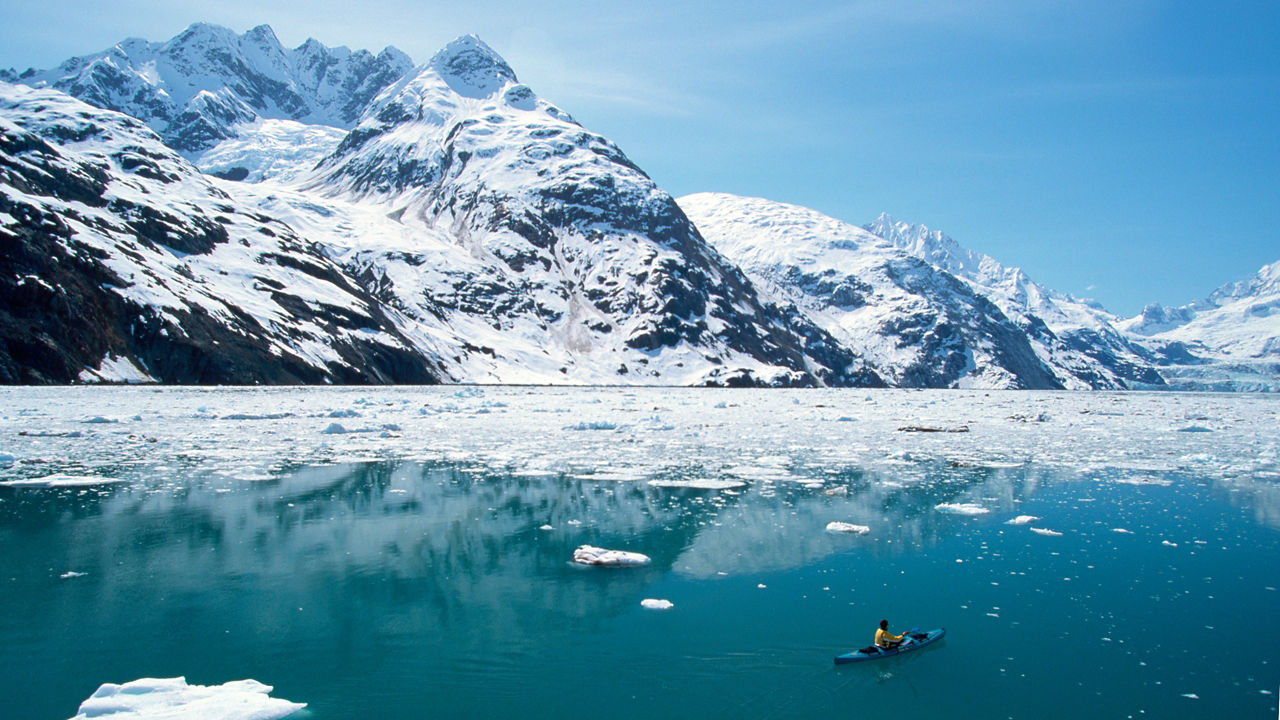
Thirty miles into the Tongass National Forest, the fjord narrows and the scenery turns dramatic: granite walls rising over 3,000 feet, carved smooth by glaciers that finished their work centuries ago. Waterfalls spill down from the snow line in delicate ribbons, some visible from more than a mile away. At the far end, Dawes Glacier makes its presence known. Ice breaks free with a crack that echoes across the water well before the splash follows, while seals rest calmly on drifting ice floes, unfazed by the spectacle around them.
The water often takes on a milky turquoise hue near the glacier, tinted by fine rock sediment carried out in the meltwater, and mornings can bring low cloud that lifts quickly, transforming the fjord's mood within minutes. Because there's no port infrastructure here, Endicott Arm remains one of the more untouched corners of southeast Alaska, visited almost exclusively by cruise ships passing through on scenic days. That relative isolation is part of its appeal, offering a glimpse of wilderness that has changed remarkably little since long before ships began sailing these waters.
The water often takes on a milky turquoise hue near the glacier, tinted by fine rock sediment carried out in the meltwater, and mornings can bring low cloud that lifts quickly, transforming the fjord's mood within minutes. Because there's no port infrastructure here, Endicott Arm remains one of the more untouched corners of southeast Alaska, visited almost exclusively by cruise ships passing through on scenic days. That relative isolation is part of its appeal, offering a glimpse of wilderness that has changed remarkably little since long before ships began sailing these waters.
Travel Tips
1
Alaska uses the U.S. dollar as its official currency. You’ll be cruising during your time through Endicott Arm, but if you do sign up for the shore excursion, you can tip your tour provider anything from 15% to 20% of the total cost of your tour.Juneau, Alaska
No roads lead to Juneau, only boats and planes, a fitting detail for a capital city that still feels genuinely wild. Mountains rise on one side, water stretches out on the other, leaving little room in between for anything but a compact, character-filled downtown. Mendenhall Glacier sits just 12 miles from the city center, close enough for an easy afternoon visit, its brilliant blue ice framed by waterfalls and forest trails, while black bears occasionally appear fishing in nearby streams and humpback whales surface in the surrounding channel.
Downtown is easy to explore on foot, lined with weathered wooden storefronts, excellent seafood spots, and a state capitol building tucked in almost casually among them. It's a rare case of a capital city that feels more like a frontier outpost than a seat of government. That isolation has also shaped Juneau's identity in unexpected ways, from a strong local arts scene to a genuine sense of community among residents who choose to live somewhere so remote, character that comes through quickly even on a short visit.
Downtown is easy to explore on foot, lined with weathered wooden storefronts, excellent seafood spots, and a state capitol building tucked in almost casually among them. It's a rare case of a capital city that feels more like a frontier outpost than a seat of government. That isolation has also shaped Juneau's identity in unexpected ways, from a strong local arts scene to a genuine sense of community among residents who choose to live somewhere so remote, character that comes through quickly even on a short visit.
Travel Tips
1
Juneau is a compact city and most places can be reached in about 15 minutes on foot. Most of the shops and restaurants are stretched out along South Franklin Street. Taxis pick up from the cruise terminals, and rideshare services operate here, too. The local bus company, Capital Transit, is a good option for getting around the downtown area if your mobility is limited. The Goldbelt Mount Roberts Tramway is right opposite the South Cruise Ship Berth.2
Shoppers will find plenty of choice in Juneau, from logo wear and printed T-shirts to vacuum-packed smoked salmon, cookbooks, pottery, and hiking gear. There are dozens of galleries and jewelry shops, some selling Alaskan-made jewelry and designs, as well as herbal remedies, scented candles, and soaps. Head up the Goldbelt Mount Roberts Tramway to Raven Eagle Gifts & Gallery for some of the best Native Alaskan artwork, from masks to carvings and framed prints. Always look for the “Made in Alaska” mark to make sure you’re buying a genuine piece.3
The currency in Juneau is the U.S. dollar (USD), with ATMs widely available. Credit cards are accepted in most places. Carry some cash for tips; while tipping isn’t mandatory, it is as much a part of the culture here as it is elsewhere in the U.S. Standard amounts are 15-20% in restaurants, 10-15% in bars and taxis, and from 10-20% of the tour cost for local guides.Skagway, Alaska
Walking down Skagway's main street feels like stepping back into 1898, with wooden boardwalks, false-front buildings, and gold rush-era signage still intact. The White Pass and Yukon Route Railway is the highlight for most, climbing through dramatic mountain passes once crossed on foot by hopeful prospectors, past waterfalls and gorges that never lose their appeal.
At the height of the gold rush, Skagway's population briefly rivaled Seattle's, before nearly emptying out once the easy gold ran dry. Today's much smaller year-round population is part of why the town has kept such a tight, well-preserved historic core rather than sprawling outward over the decades. Many of the original buildings along the main street are still standing, now serving as shops, saloons, and small museums that keep the gold rush story alive in a hands-on way, it's easy to spend an entire afternoon here without ever leaving the historic district.
At the height of the gold rush, Skagway's population briefly rivaled Seattle's, before nearly emptying out once the easy gold ran dry. Today's much smaller year-round population is part of why the town has kept such a tight, well-preserved historic core rather than sprawling outward over the decades. Many of the original buildings along the main street are still standing, now serving as shops, saloons, and small museums that keep the gold rush story alive in a hands-on way, it's easy to spend an entire afternoon here without ever leaving the historic district.
Travel Tips
1
Local transportation can be found through the Skagway Municipal and Regional Transit (SMART Bus). This operates a regular shuttle from the pier when a ship is in town, as well as a service to the Gold Rush Cemetery and Dyea. Skagway is a very small, easy-to-navigate place if you prefer to explore on foot, laid out in a simple grid system with most points of interest either on or close to Broadway. There is no rideshare service here, and just a couple of private taxi operators.2
You’ll find ample places to shop in the town of Skagway. Simply stroll down the main street in town and you’ll see locally-owned stores and small boutiques selling warm outerwear, unique Alaskan handcrafted treasures, jewelry, and more. A few favorites include the Aurora Yarns of Alaska, Klothes Rush, and Duff’s Backcountry Outfitters. Look out for the “Made in Alaska” mark, a guarantee of authenticity.3
The currency in Skagway, and all of Alaska, is the U.S. dollar (USD). You’ll find an ATM at the Wells Fargo Bank at 6th and Broadway. Tipping for service at restaurants and bars as well as other service-oriented businesses is customary in Alaska. It’s also appropriate to tip tour guides for good service around 10% of the cost of the tour.Sitka, Alaska
History layers together in interesting ways in Sitka. Onion domes top St. Michael's Cathedral, a remnant of the town's days as capital of Russian America, standing just blocks from centuries of Tlingit tradition that predates it by far longer. Sitka National Historical Park showcases an impressive collection of totem poles set against coastal rainforest, while sea otters drift lazily in nearby kelp beds and brown bears roam the surrounding woods.
Facing the open Pacific rather than tucked behind sheltering islands, Sitka experiences a different rhythm of light and weather than most inside ports, brighter skies on clear days and bigger swells rolling in from offshore. The transfer of Alaska from Russian to American hands in 1867 actually took place right here in Sitka, and reminders of that pivotal moment are woven throughout the town's museums and historic sites. For history-minded travelers, walking these streets means tracing a turning point that shaped the entire state's future.
Facing the open Pacific rather than tucked behind sheltering islands, Sitka experiences a different rhythm of light and weather than most inside ports, brighter skies on clear days and bigger swells rolling in from offshore. The transfer of Alaska from Russian to American hands in 1867 actually took place right here in Sitka, and reminders of that pivotal moment are woven throughout the town's museums and historic sites. For history-minded travelers, walking these streets means tracing a turning point that shaped the entire state's future.
Travel Tips
1
Sitka has an effective public transportation system called the RIDE, which operates three routes covering the downtown area. The city center is compact, though, and most of the major sights can be reached on foot. Mountain bikes and e-bikes are also available for day rental. There are a couple of local taxi companies, but you should book in advance. Car rental is available, too.2
Most of the shopping in Sitka is along Lincoln Street, where you’ll find souvenir shops, galleries, and jewelry shops. Many souvenirs from Sitka have a decidedly Russian flavor. Alongside Tlingit carvings, woven baskets, silverware, herbal soaps, and masks, you’ll find Russian lacquer boxes, nesting Russian dolls, and recreations of Russian icons. There are plenty of edible gifts, too, from smoked salmon to berry preserves. Spend time browsing the local galleries; this is a very creative community, and you’ll find original paintings, photographic art, prints, mosaics, and ornaments. Buying from a gallery supports local artists, but always look for the “Made in Alaska” mark to ensure the authenticity of goods.3
Currency used in Sitka is the U.S. Dollar. Tipping is not mandatory, but it is customary in Sitka, just as it is throughout Alaska and all of the U.S. Typical amounts include up to 20% in restaurants, around 10% for taxis and bartenders, and for a good tour guide, 10% or more of the cost of the tour. There are several ATMs in the downtown area, and credit cards are widely accepted.Icy Strait Point, Alaska
Just outside the Tlingit village of Hoonah sits a beautifully restored 1930s salmon cannery, now reimagined as part cultural landmark, part adventure destination, offering a quieter alternative to Alaska's larger, busier ports. Adventure seekers can take on one of the longest ziplines in the world aboard the Icy Strait Point ZipRider, while those looking for a gentler pace can enjoy storytelling and dance rooted in generations of Tlingit tradition. Offshore, the whale watching is some of the best in the state, thanks to particularly rich humpback feeding grounds nearby.
Hoonah remains an active fishing community, and it's common to see local boats coming and going with the day's catch just steps from where cruise passengers explore. The cannery building itself once processed millions of pounds of salmon each season before closing in the 1950s, and much of its original equipment and structure has been preserved as part of the visitor experience, offering a tangible link to the industry that shaped so much of coastal Alaska's early economy.
Hoonah remains an active fishing community, and it's common to see local boats coming and going with the day's catch just steps from where cruise passengers explore. The cannery building itself once processed millions of pounds of salmon each season before closing in the 1950s, and much of its original equipment and structure has been preserved as part of the visitor experience, offering a tangible link to the industry that shaped so much of coastal Alaska's early economy.
Travel Tips
1
A shuttle bus runs from Icy Strait Point to nearby Hoonah; purchase your tickets at the ticket booth by The Cannery at the port itself or in town, at Huna Outfitters/Longbottom Coffee Shop next to City Hall. There are also two gondolas. The SkyGlider whisks you over the forest from the Wilderness Landing up to Sky Peak, while the Transporter links Wilderness Landing and Ocean Landing. There are clearly marked walking trails along the beach and through sections of the rainforest, but these could be closed if bears have been spotted. There are no taxis and no rideshare operators available.2
The historic Cannery complex has been turned into a shopping emporium filled with stores that are all 100% Alaskan-owned, with profits going back into the local community. Look out for smoked Alaska salmon, preserves made from locally grown berries, hand-made crafts like paintings, wood carvings, glassware, and authentic silver jewelry. You’ll also find all the usual branded clothing, water bottles, mugs, and bags that are sold all over Alaska.3
The currency in Icy Strait Point is the U.S. Dollar (USD). There is no bank in Icy Strait Point, although there is one in Hoonah, a mile and a half from the dock. Most vendors will accept credit cards, but it is a good idea to keep some cash on hand for small restaurants or local boutiques that may only accept cash. Tipping here is the same as it is elsewhere in the U.S.; 15 to 20% in restaurants, and for a good guide, around 10% of the cost of the tour, per person. You don’t need to tip the park rangers; they are government employees and don’t expect it.Inside Passage (Cruising)
Some days on an Alaska itinerary skip the port entirely, and that's very much the point. The ship simply glides through the scenery, forested coastline, granite cliffs, and glacier-carved inlets unfolding for hours at a time. Onboard naturalists often spot wildlife before passengers do, a whale surfacing here, an eagle circling there, and most people find themselves at the rail with a coffee, taking it all in quietly.
There's no schedule to follow on a day like this, no excursion to catch or meeting point to remember. The pace is set entirely by the coastline, which for many travelers turns out to be exactly the kind of unhurried break they didn't know they needed. Without a port pulling attention toward shops or excursions, the focus shifts entirely to the landscape itself, which for many becomes the most memorable part of the entire trip. Ask returning guests what stands out most from an Alaska cruise, and a scenic cruising day often comes up before any single port does.
There's no schedule to follow on a day like this, no excursion to catch or meeting point to remember. The pace is set entirely by the coastline, which for many travelers turns out to be exactly the kind of unhurried break they didn't know they needed. Without a port pulling attention toward shops or excursions, the focus shifts entirely to the landscape itself, which for many becomes the most memorable part of the entire trip. Ask returning guests what stands out most from an Alaska cruise, and a scenic cruising day often comes up before any single port does.
Travel Tips
1
You’ll be cruising during your time through Alaska’s Inside Passage. However, Alaska does use the U.S. dollar as its official currency. Alaska’s main sources of economic growth and revenue are fishing and tourism. Don’t forget to tip tour providers, bartenders, and restaurant servers during your Alaska cruise.Victoria, British Columbia
Victoria carries the charm of an English countryside town, gracefully set down along the edge of the Pacific. The Inner Harbour does much of the visual work, with the Parliament Buildings and the ivy-draped Fairmont Empress glowing warmly once the evening lights come on, while just outside the city, Butchart Gardens spans more than 55 acres of vibrant blooms and easily justifies the trip on its own.
Back downtown, traditional afternoon tea remains a beloved ritual, boutique-lined streets invite easy wandering, and whale watching tours head out regularly, with orcas and humpbacks making frequent appearances. The city's mild, temperate climate has earned it a reputation as one of Canada's most pleasant year-round destinations, and that same climate is part of what allows Butchart Gardens to bloom so reliably, making Victoria a rewarding stop no matter what time of the cruise season it's visited.
Back downtown, traditional afternoon tea remains a beloved ritual, boutique-lined streets invite easy wandering, and whale watching tours head out regularly, with orcas and humpbacks making frequent appearances. The city's mild, temperate climate has earned it a reputation as one of Canada's most pleasant year-round destinations, and that same climate is part of what allows Butchart Gardens to bloom so reliably, making Victoria a rewarding stop no matter what time of the cruise season it's visited.
Travel Tips
1
It’s pretty easy to see plenty of downtown Victoria on foot, but many rent bikes to get around the city since there are an abundance of biking trails. There’s also a shuttle available to take cruise passengers from the port to downtown, and taxis are available on your cruise to Victoria, BC.2
The closest shopping to the Ogden Point port is the Beaver Gift Shop. It’s open during peak season from April to October and offers many of the souvenir items you might need, including handy items like umbrellas, hats, and gifts for back home. In downtown Victoria, go shopping at the Bay Centre on Government Street, which is just off the shuttle bus route. Bay Centre has higher-end items like jewelry, fine chocolates, clothing boutiques, and more.3
In Victoria, the Canadian dollar is the official currency. Credit and debit cards are almost universally accepted, and ATMs are widespread. Tipping in Canada follows these best practices: tip 15% for waitstaff at a restaurants, 15% for taxi drivers, and tip a dollar per drink to your bartender.Vancouver, British Columbia
We're sorry, but this content is currently unavailable.
Our team is working hard to resolve this issue and we appreciate your patience. Please check back soon for updates.Celebrity Edge
Celebrity Edge® marks a turning point in our approach to ship design. From the very first sketches to experiencing those designs in a virtual reality setting, every step was done in 3-D. From the incredible new Magic Carpet® to the private plunge pools in our new 2-story Edge Villas, we could design the most refined ship at sea.
Inaugural dateDec 9, 2018
Occupancy2918