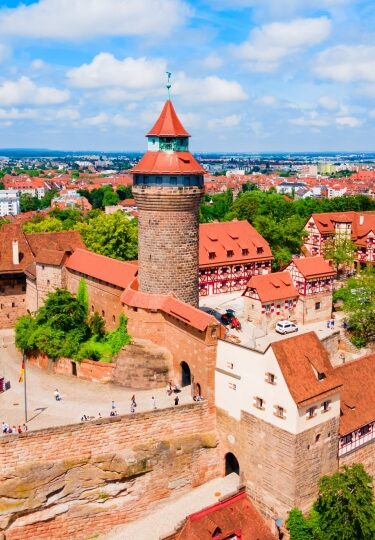
Germany’s Nuremberg Castle (Kaiserburg) deserves a place on your itinerary for its imperial history, medieval architecture, and panoramic views over the Old Town. The fortified medieval complex reflects both the power of the Holy Roman Empire and the city’s resilience after World War II. Holy Roman Emperors stayed here, World War II left much of the complex damaged, and postwar reconstruction restored its historic character. Today, you can explore its towers, courtyards, and chapels, all while discovering the role it played in German history.
History buffs, architecture fans, and skyline lovers will all find something to enjoy at the Imperial Castle of Nuremberg. Sail with Celebrity River Cruises℠ along the Rhine-Main-Danube Canal, then climb Sinwell Tower for panoramic views over Old Town’s rooftops. The castle is a symbol of the city, rebuilt after heavy bombing in 1945.
Why Nuremberg Castle Was Important
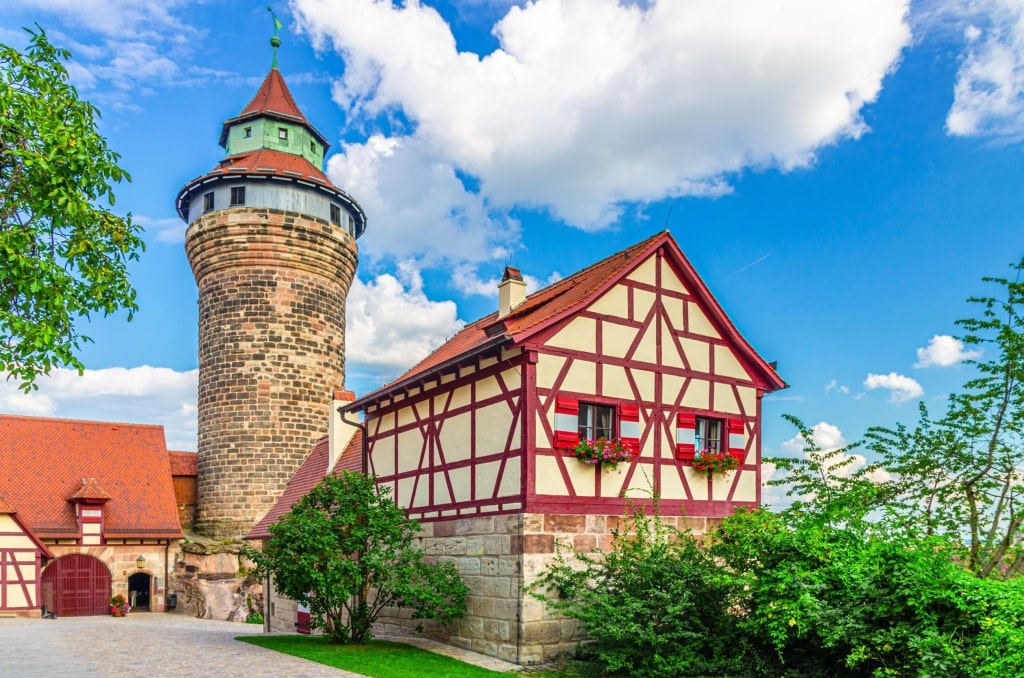
The circular, stone Sinwell Tower rises beside the half-timbered Deep Well building in the outer courtyard of the Imperial Castle in Nuremberg, Germany.
The castle’s significance begins in 1050, when Holy Roman Emperors used it as a resting point on their journeys through the realm. Court assemblies and Imperial Diets were held here, and eventually the property expanded. In the second half of the 13th century, the Sinwell Tower was built as a defensive stronghold and symbol of status. The top provides 360-degree views of Nuremberg’s skyline.
The castle was known as one of the best-located structures for defense and monitoring of trade, something guests can witness by climbing to the top. A Danube or Rhine River cruise connects you to the waterways that link Nuremberg to other European destinations, offering a different perspective on the region’s history.
In 1945, World War II attacks left much of the castle badly damaged, and some original Romanesque and Gothic sections survived. The castle was reconstructed for “creative conservation,” and a redesigned permanent exhibition, completed in 2013, now tells the story of the emperors and the city.
Guests can view artifacts in glass cases, ranging from weapons and armor to a 1540 model of Nuremberg. Statues and informational placards are also laid out, filling in the historical gaps. Outside, the walls show what the castle once was, making it a satisfying visit on a Rhine (or Danube) River cruise.
The Best Things To See at Nuremberg Castle
Sailing to Nuremberg transports you to a time when long-distance trade drove the local economy and royal visits were the heartbeat of politics. The castle grounds show where emperors slept, assemblies met, and water supply came from. From Sinwell Tower, its best-known landmark, to the Deep Well, you can see the castle was more than a place to rest. It was a self-sufficient village above the city.
Sinwell Tower
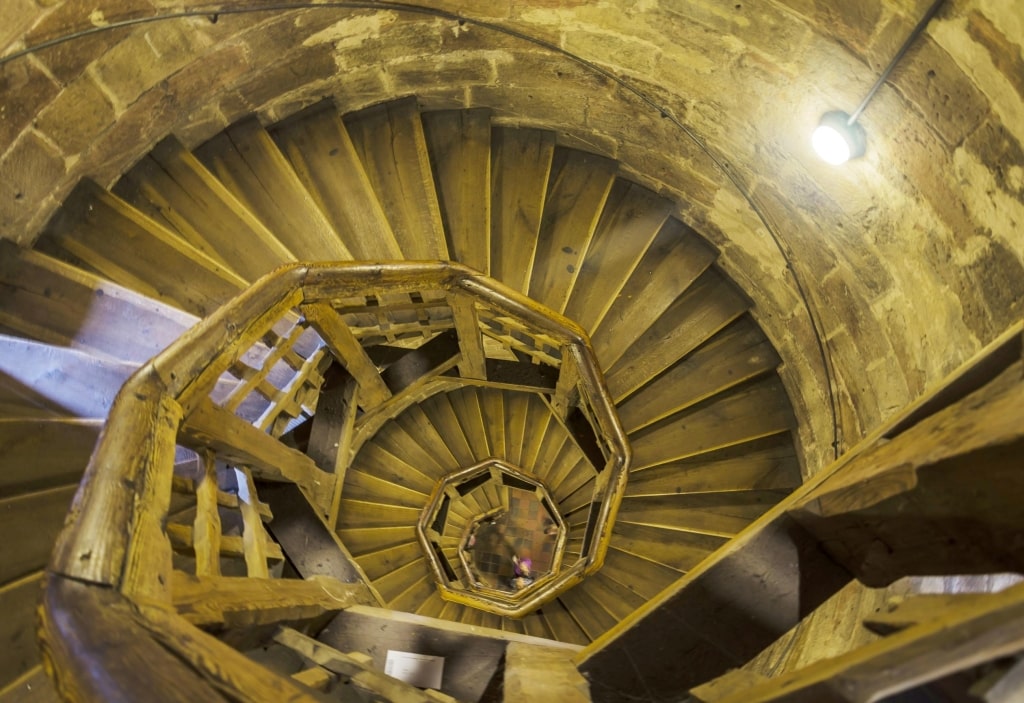
A downward view reveals the intricate wooden spiral staircase descending through the circular stone core of the Sinwell Tower (Sinwellturm) at Nuremberg Castle.
Once you’re in Old Town, just look up. Sinwell Tower rises above the city and is the castle’s most recognizable piece. Its name means “extremely round” in German, which fits the tower’s cylindrical shape. Built in the second half of the 13th century, the tower’s height helped defenders spot approaching threats, while its solid-stone construction reinforced the castle’s status.
Today, visitors can climb 113 steps to the viewing platform for sweeping views across the Old Town. Inside, an exhibition of photographs documents the destruction of the castle and city during World War II and their reconstruction. It’s a useful stop for understanding Nuremberg’s historical transformation.
Imperial Chapel
The Romanesque Imperial Chapel was built around 1200. Its unique construction consists of two chapels stacked on top of each other. The upper part of the structure is home to the emperor’s gallery, made for the ruler to worship separately.
The layout allowed worshippers on both levels to hear religious services while also reflecting the medieval court’s hierarchy.
Deep Well
The Deep Well provided the castle with an independent water supply, even during a siege. It plunges about 164 feet (50 meters) into the rock and was built so a defended castle never ran dry.
Inside the two-story well house, you can see the shaft cut through sandstone, and if you look down, it drops away beneath the castle. It’s a quick stop that shows how the Kaiserburg could hold out when the outside world couldn’t.
Other Notable Sights
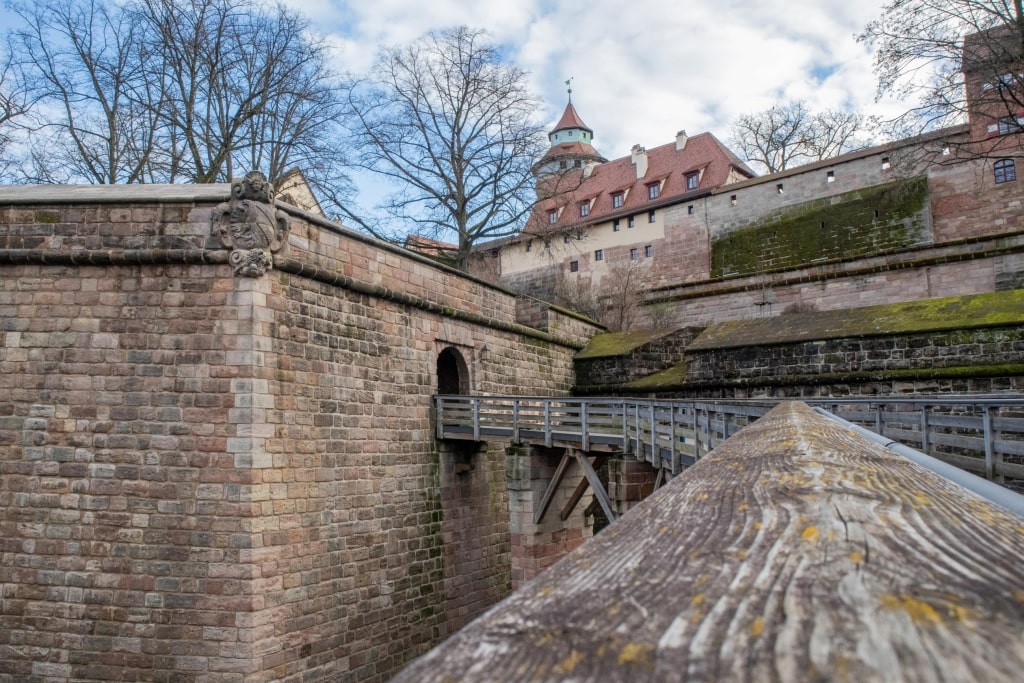
A timber footbridge crosses the moat into the formidable stone bastions and ramparts of Nuremberg Castle in Germany.
The Sinwell Tower, Imperial Chapel, and Deep Well aren’t the only sights to explore. Other notable spots illustrate the castle’s history and help make Nuremberg a standout port on the best river cruises in Germany.
Some other castle highlights include:
- Palas/Imperial Residence: Former imperial living and reception areas
- Castle Courtyards and Gardens: Open spaces around the complex
- Castle Walls and Fortifications: Defensive structures surrounding the castle
- Panoramic Views of Nuremberg: Viewpoints overlooking the Old Town
- Castle Museum/Exhibitions: Displays explaining the castle’s history and architecture
Nuremberg Castle: Tickets, Opening Hours, and More
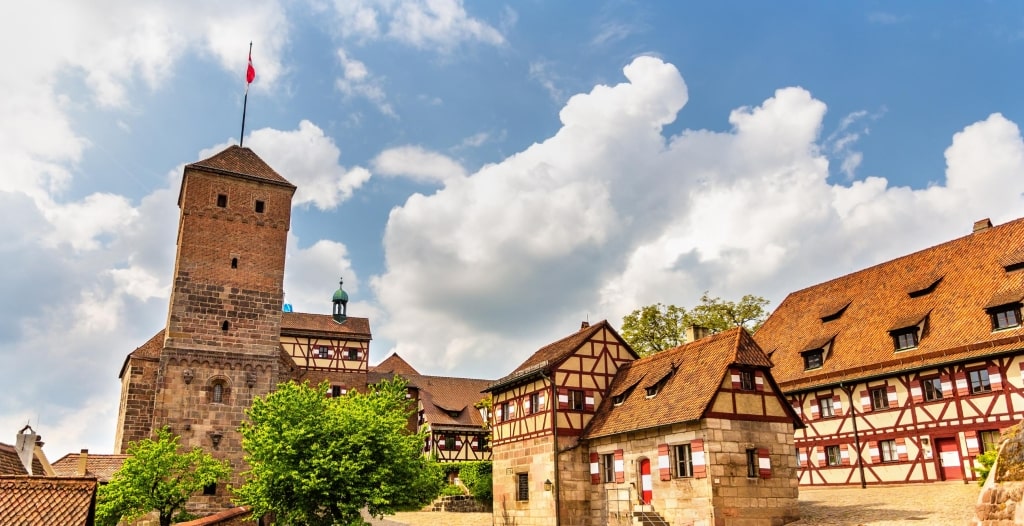
The square Romanesque Heathens’ Tower looms above the courtyard and timber-framed castellan buildings of Nuremberg Castle in Nuremberg, Germany.
It’s always a good idea to plan ahead on a European river cruise, so you can step off the ship and follow your itinerary. Put the castle near the top of your list. It’s about a 20- to 25-minute drive from the cruise port, making it an ideal starting point before the afternoon crowds. The castle sits on a hill at the northern edge of Old Town.
Start at the ticket booth and climb the tower for impressive scenery and a bird’s-eye view of the property. Then wander the courtyards, chapel, and museum spaces. The visit should take about two hours, leaving time for the rest of the city. Wear comfortable walking shoes for the cobblestone streets and tower steps. Don’t forget your camera; you’ll want to capture the epic skyline from above. Hours and ticket options change by season, so confirm current details before you go.
Visiting Nuremberg Castle on a Port Day
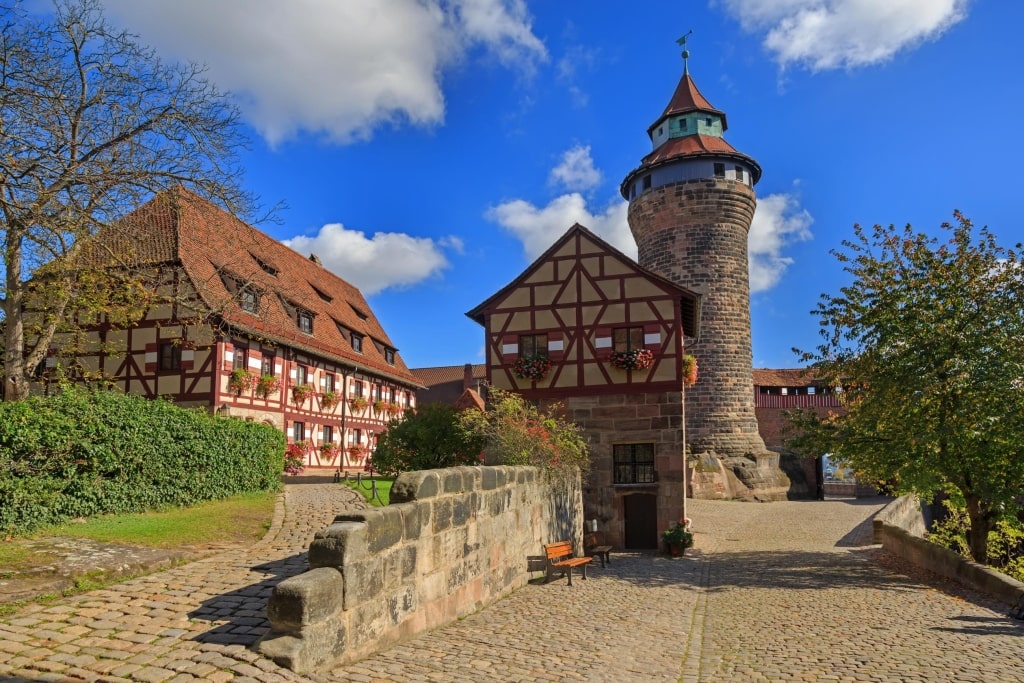
Vibrant summer foliage frames the cylindrical stone Sinwell Tower rising beneath a bright blue sky at Nuremberg Castle in Germany.
Nuremberg is a mid-sized city in Franconia. The Old Town is compact enough to see its highlights in one port day.
Your guide for Nuremberg, Germany, should begin at the castle before heading into the historic center. Explore the tower, visit the exhibitions, and take in the surrounding architecture. Time in port varies by itinerary, so plan around your ship’s schedule. With a full day, the castle takes about two hours, leaving the rest for Old Town.
Head to Hauptmarkt, the central market square, and admire the Schöner Brunnen, a nearby Gothic fountain. Grab a Nuremberg bratwurst and continue to the Germanisches Nationalmuseum. Learn about the city’s history, or take a guided underground tour and see historic rock-cut cellars. Check available excursions during your pre-cruise planning.
Gothic churches and riverside walks line the city, giving you plenty to do if you extend your trip before or after a Danube (or Rhine) River cruise. Itineraries with Nuremberg also visit other German cities, like Regensburg, and travel to destinations in Austria.
If you’re comparing a Rhine vs. Danube river cruise, make sure Nuremberg is on the itinerary to get a deeper understanding of the city and its role in Germany’s history.
Frequently Asked Questions
Should guests visit Nuremberg Castle?
Yes. Its medieval architecture, imperial history, and panoramic views over the Old Town appeal to visitors interested in the Holy Roman Empire and Nuremberg’s reconstruction after World War II.
What is Nuremberg Castle (Kaiserburg)?
Nuremberg Castle (Kaiserburg) is a medieval castle complex that served as an important residence for Holy Roman Emperors. Today, visitors can explore its historic buildings, museum exhibitions, and defensive structures while learning about the city’s imperial past.
What is Nuremberg Castle known for?
Nuremberg Castle is known for its imperial history, fortified towers, medieval architecture, and views over Old Town. Bombing in 1945 damaged much of the complex, and its reconstruction is part of what makes a Rhine or Danube River cruise stop in Nuremberg so memorable.
Can you go inside Nuremberg Castle?
Yes, you can explore parts of the castle’s interior, the chapel, the Deep Well, and the Sinwell Tower. Check current hours and admission before you go.
What are the main highlights at Nuremberg Castle?
The main highlights of Nuremberg Castle include the Sinwell Tower, the Imperial Chapel, and the Deep Well. The tower’s viewing platform is appealing for panoramic city views, while the photographic exhibition inside the tower illustrates the impact of World War II.
How much time should you allow for a visit?
Plan to spend around two hours at the castle to cover the main sights. Add some time if you want to linger at the museum spaces or take photos.
Let the River Lead You to Nuremberg
Franconia’s half-timbered buildings, Gothic churches, and cultural museums fill a port day on their own, but Nuremberg’s castle adds another layer. Its towers, imperial history, and skyline views make the stop cultural, historical, and scenic all at once. Guests can explore Old Town, then head up the hill to a fortified complex that hosted generations of emperors of the Holy Roman Empire. The exhibits tell the story, but standing on the ramparts makes you feel it.
From the Rhine-Main-Danube Canal, the city center is a short drive from the dock, and everything there is walkable once you arrive. Leave time to return to the ship and continue your journey on board.
Explore river cruises to Nuremberg to walk where royals once walked.