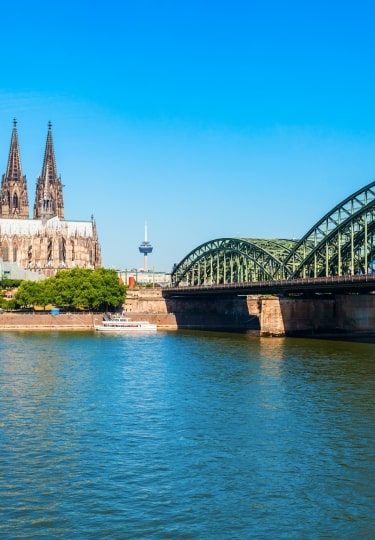
The first time I cruised through Germany, I remember standing on the top deck, wondering how the scenery could keep getting prettier. Just when one hilltop castle disappeared, another appeared around the bend. There were steep vineyard terraces and tiny villages with cathedral spires dotting the landscape, and I could walk off the ship into medieval town squares just feet from the river.
What makes Germany so good for river cruising is how effortless it feels. You’re not dragging luggage through train stations or checking into a new hotel every other night. Instead, you unpack once and watch the landscape change from your balcony or the sun deck with a coffee or glass of wine in hand.
The rivers themselves each have a completely different personality, too. The hardest part isn’t deciding whether to take a German river cruise; it’s deciding which river to choose.
A Journey Through Germany’s Great Rivers
One of the reasons cruises in Germany work so well is the variety. You can sail past castle-covered hillsides on the Rhine, spend afternoons tasting wine along the Moselle, or follow the Danube through Bavaria’s historic cities. Some itineraries focus heavily on Germany itself, while others combine several countries into broader itineraries that showcase the appeal of river cruises.
If you’re trying to decide between routes, understanding the personality of each river makes the decision much easier.
The Rhine: Germany’s Most Iconic River Cruise
If you picture a classic European river cruise, chances are you’re imagining the Rhine. This is Germany’s most famous river cruise route and often the best choice for first-time river cruisers. The route takes you through the Rhine Gorge, a UNESCO World Heritage Site, where medieval castles rise above vineyard-covered slopes.
Cruising through this section between Koblenz and Rüdesheim is often the highlight of the itinerary. Ships typically slow down so passengers can take in the scenery and famous landmarks, such as the Lorelei Rock and centuries-old fortress ruins.
Most Rhine itineraries begin in Amsterdam and continue south toward Basel, Switzerland, passing through Western Germany along the way. Cologne is usually one of the major stops, giving you time to see the massive Gothic cathedral and lively Old Town. Koblenz is another standout with its Deutsches Eck monument and fortress views, while Rüdesheim is one of the river’s most popular wine towns. You can wander narrow lanes filled with taverns and wine bars before taking gondolas above the valley for river views and vineyards.
The Rhine also tends to offer more itineraries if you’re interested in short river cruises in Germany. Many seven-night sailings cover the river’s highlights without feeling rushed. For many, this is the river that defines what it means to cruise through Germany.
The Moselle: Germany’s Most Beautiful Wine Route
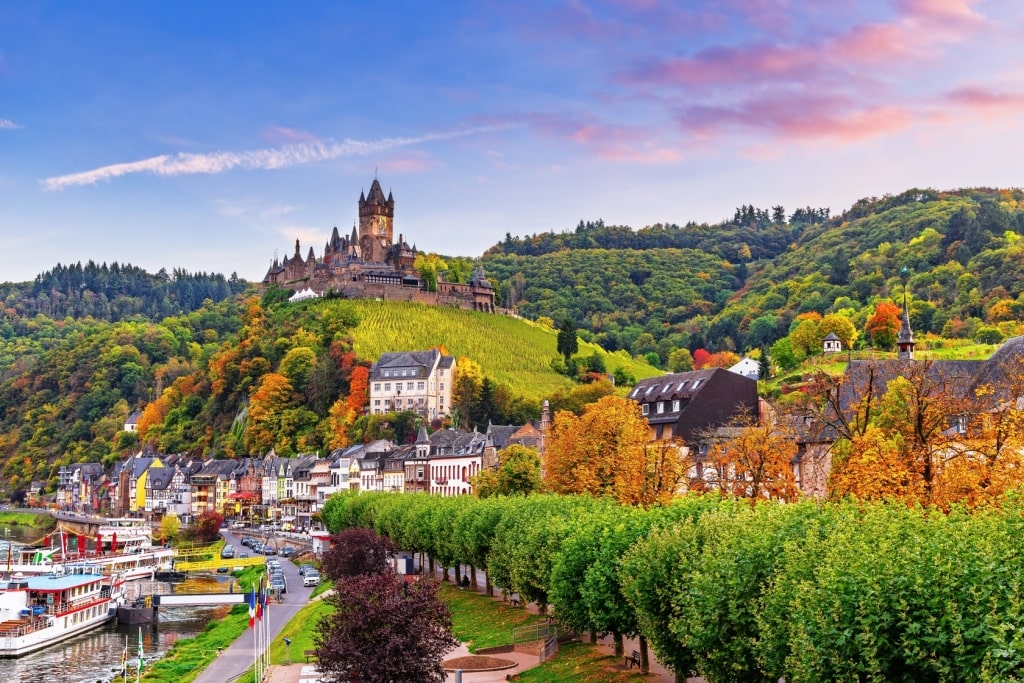
Hilltop Reichsburg Castle and colorful buildings gracing the Cochem, Germany, riverfront.
The Moselle offers a completely different pace from the Rhine. While the Rhine is busier and filled with larger cities, the Moselle feels quieter, narrower, and far more intimate. This is Germany’s wine country, particularly known for Riesling. Vineyards climb steep hillsides, and many excursions focus on local wine production, tastings, and family-run wineries. Autumn on the Moselle is particularly beautiful as it is harvesting season and the vineyards turn shades of gold and green, and you can find wine festivals in many villages.
Cochem is often the town travelers remember most. Its colorful buildings and hilltop Reichsburg Castle give it a fairytale-like atmosphere. Bernkastel-Kues feels equally charming, with medieval squares lined by half-timbered buildings. Meanwhile, Trier, which was founded by the Romans, contains some of Germany’s best-preserved Roman ruins, including the Porta Nigra gate and sprawling ancient bathhouses.
While the Rhine is often considered the classic first river cruise, the Moselle tends to become a favorite for those who have already sailed in Germany and seek an even slower pace.
The Danube in Germany: Bavaria’s Cultural Corridor
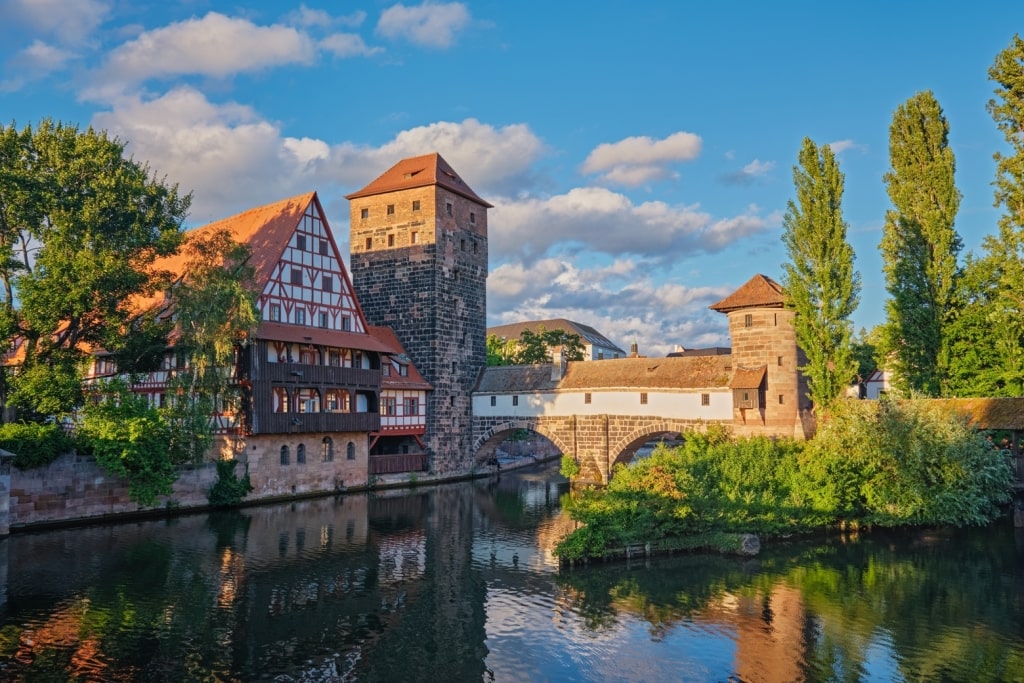
Historic Bavarian half-timbered architecture and medieval stone towers framing calm sunlit river waters.
The German section of the Danube introduces you to a different side of the country. Instead of vineyards and castle ruins, this region focuses more on Bavaria’s historic cities, baroque architecture, and Central European culture.
Many itineraries continue beyond Germany into Austria, Slovakia, and Hungary, making the Danube one of the most internationally connected river cruising routes in Europe. The Danube also overlaps with Main River cruises in Germany, since many routes use the Rhine-Main-Danube Canal to connect to multiple river systems.
Passau is often one of the first major German ports on Danube itineraries. Known as the “City of Three Rivers,” it sits where the Danube, Inn, and Ilz rivers meet. Regensburg is another standout as one of Germany’s best-preserved medieval cities. It features Gothic towers, Roman ruins, and a 12th-century stone bridge. Nuremberg really shines at Christmas, when its famous markets welcome thousands.
If you’re interested in culture and history, the Danube offers one of the best experiences in Germany. This route is especially good for planning extra time before or after the cruise to explore some of the best cities to visit in Germany beyond the river ports themselves.
Choosing the Right Germany River Cruise
There’s no single “best” Germany river cruise because the experience varies so much depending on the river, season, and itinerary length. For some, the appeal is in the scenery; for others, the wine or Christmas markets. The key is matching the itinerary to your travel style.
Best for First-Time Cruisers
The Rhine is the most popular introduction to river cruising. The route combines scenery, historic cities, castles, vineyards, and easy logistics into one itinerary. There’s enough variety that first-time cruisers rarely feel repetitive days. If you’re curious about seven-day river cruises in Europe, Rhine itineraries are often the most well-rounded options.
Best for Wine Lovers

Traveler sharing a red wine toast celebrating regional wine culture
The Moselle is hard to beat for travelers interested in wine culture. This is Riesling country, and the experience centers around vineyard landscapes, local wine taverns, and small towns in Germany. Excursions often include wine tastings and cellar visits.
Best for Culture and History
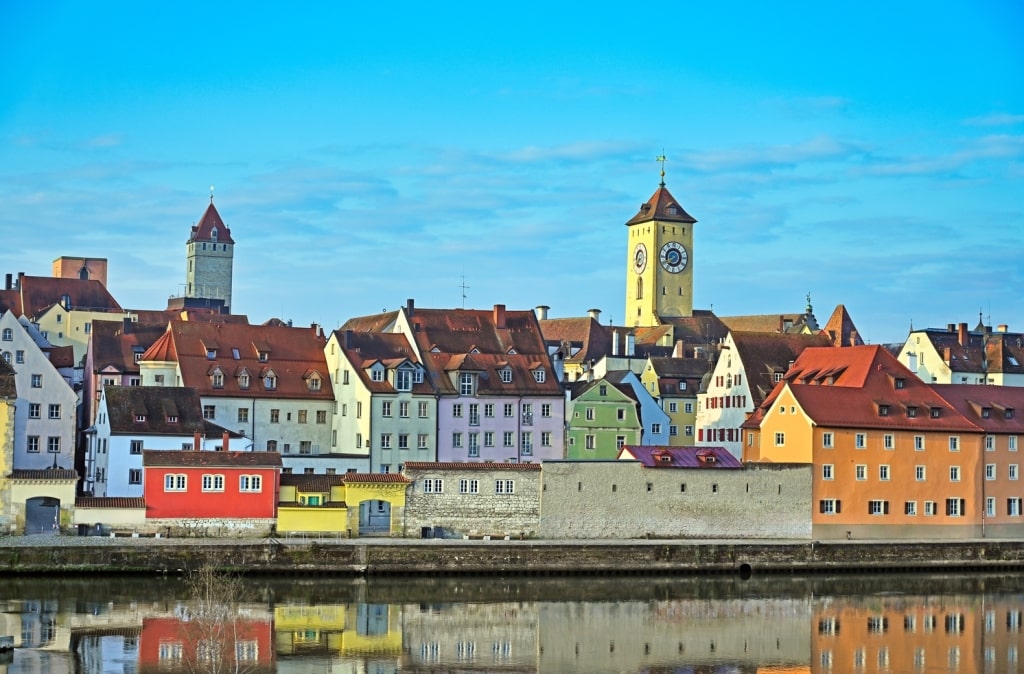
Colorful well-preserved medieval Bavarian architecture gracing the reflective Danube riverfront.
The Danube is ideal for those looking to combine Germany with countries in Central Europe. Bavarian cities provide a distinctly German atmosphere, while itineraries often continue toward Vienna and Budapest for a taste of Austria and Hungary.
Best Season for Cruising Germany
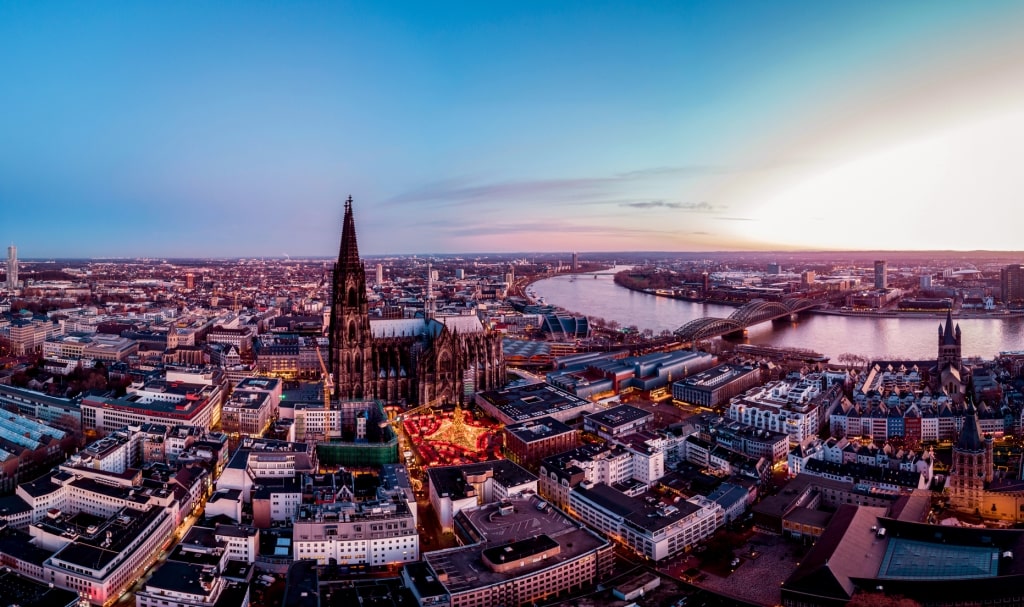
Cologne Cathedral’s twin ornate spires and glowing Christmas market dominating the twilight Rhine riverfront.
Germany’s river cruise season changes dramatically depending on the time of year. Late November and December are especially popular for Christmas market cruises with cities along the Rhine and Danube transformed with festive lights, holiday markets, and mulled wine stands.
Best Itinerary Length in Germany
Most Germany-focused river cruises start around seven nights, which is enough time to see multiple cities without feeling overly rushed. Longer itineraries of 10 and 14 nights often extend farther into Europe. Understanding what a river cruise is can help you clarify how these trips differ from larger ocean cruises.
Best River Cruises in Germany FAQs
What is the best German river cruise?
The Rhine is often considered the best overall German river cruise for first-time travelers because it combines castles, vineyards, historic cities, and beautiful scenery.
Which river is best for cruising in Germany?
The best river depends on the type of experience you want. The Moselle is especially popular with wine lovers, while the Danube attracts travelers interested in Central European culture.
When is the best time of year to do a river cruise in Germany?
Spring and autumn are often considered the best seasons due to temperate weather and fewer crowds. Late November and December are especially popular for Christmas market cruises.
Planning Your Germany River Cruise
Germany’s rivers provide a slower-paced vacation, and some of the most memorable moments happen in places you might not have initially planned to visit. That’s part of what makes river cruising so appealing. The journey between destinations becomes just as important as the stops themselves.
If you’re interested in viewing available itineraries, explore German river cruises today.