Given Austria’s compact size and excellent train network, there are all kinds of day trips from Vienna to think about, should you wish to explore outside the culture-packed capital. There are vineyards within the city limits and the sun-dappled Vienna Woods curve around the city, so you don’t have to travel far for a day out immersed in nature. You can even be in the Alps within an hour.
Also within easy reach of Vienna are romantic cities like Salzburg and Linz, and even Bratislava, for an international day trip. Hop on a train, rent a car, or join a guided tour and you can reach historic monasteries, castles, dreamy riverside villages, and wine growers within a couple of hours. These are some of the best day trips from Vienna.
Salzburg

Salzburg
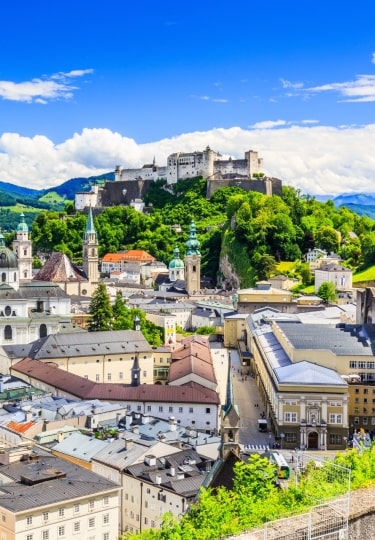
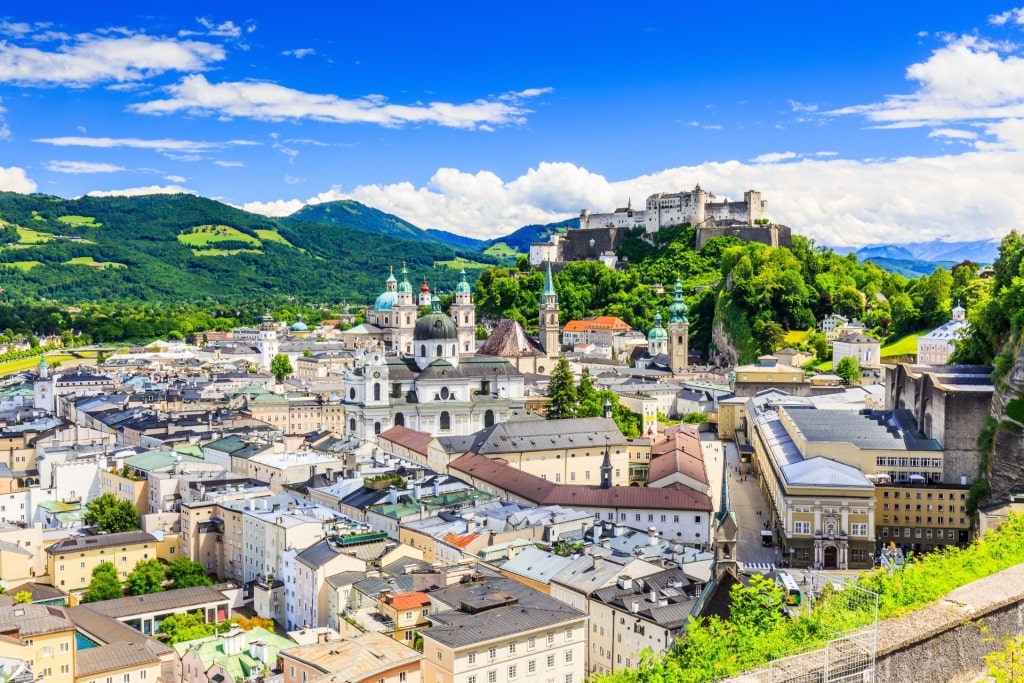
One of the best places to visit in Austria, beautiful, romantic Salzburg lies to the southwest of Vienna, two hours away by train, on the edge of the Alps. The city is, of course, world-famous as the birthplace in 1756 of Wolfgang Amadeus Mozart. You can visit the house where he was born on Getreidegasse, still displaying furniture, family memorabilia, and a collection of the young composer’s early instruments.

Mirabell Palace and Garden, Salzburg
Salzburg is also inextricably linked with the von Trapp family and you can visit locations where their story was brought to life for the silver screen. Don’t miss the Mirabell Palace and Garden, where Maria and the von Trapp children sang Do Re Mi, or the St. Peter’s Cemetery, where the family hid from the Nazis.
Another important sight in Salzburg is the Festung Hohensalzburg, a fortress, 900 years old and still dominating the city. The current fortress dates back to the late 15th century and is filled with curiosities, from artifacts dating back to the Holy Roman Empire to the royal apartments of the Prince-Archbishops who expanded the castle using the spoils of silver and salt mining.
Read: Salzburg vs. Vienna: Which Should You Visit?
The Vienna Woods
Vienna Woods
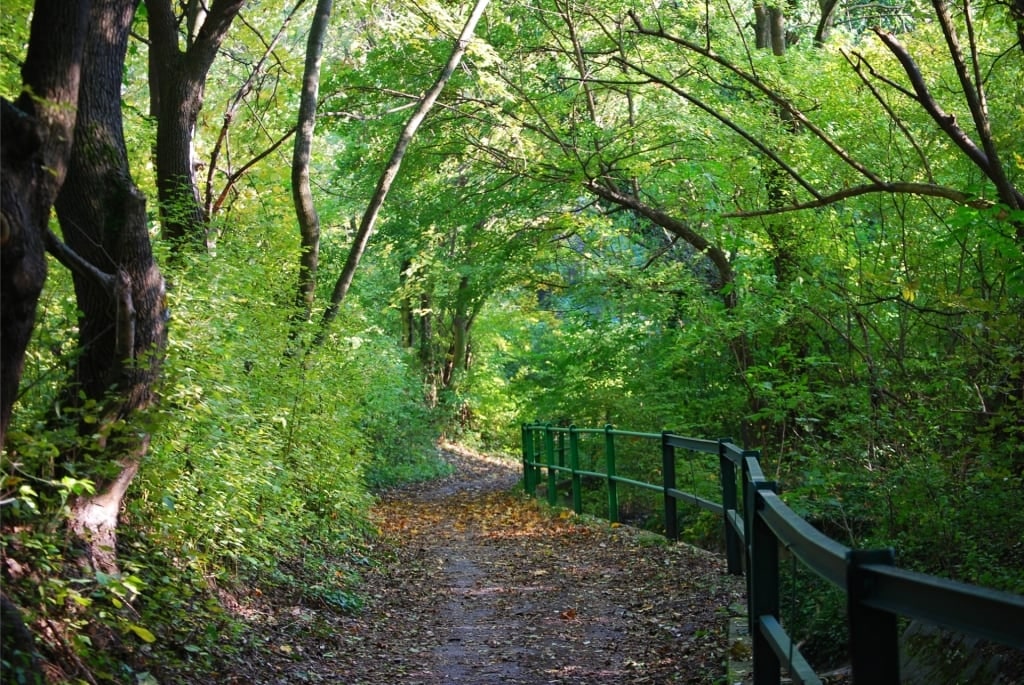
The glorious Vienna Woods, which curve for 28 miles around the west of the city, are an extension of the foothills of the Alps. The whole area is protected as a UNESCO Biosphere Reserve and actually encompasses seven districts of the city. The woods, immortalized in music by Johann Strauss in his “Tales from the Vienna Woods” waltz, are also the home to more than 2,000 plant species and 150 bird species.
Come to this leafy paradise for hiking on 11 marked trails and cycling, and visits to vineyards and village heurige, or wine taverns. All the walking trails are efficiently marked so you can plan how to get to the start, usually with a ride on one of the tram routes that criss-cross the city. Whichever hiking trail you choose, you will be rewarded with sweeping views down over the city and the snaking Danube.
Bratislava
Bratislava
There’s a certain novelty in saying that you’ve popped into another country for the day. But this is easily done in compact Austria. In fact, plenty of people live in neighboring Slovakia, in the capital, Bratislava, where property prices are lower, and commute on the Twin City Liner, a fast catamaran, to Vienna, a journey of 75 minutes.
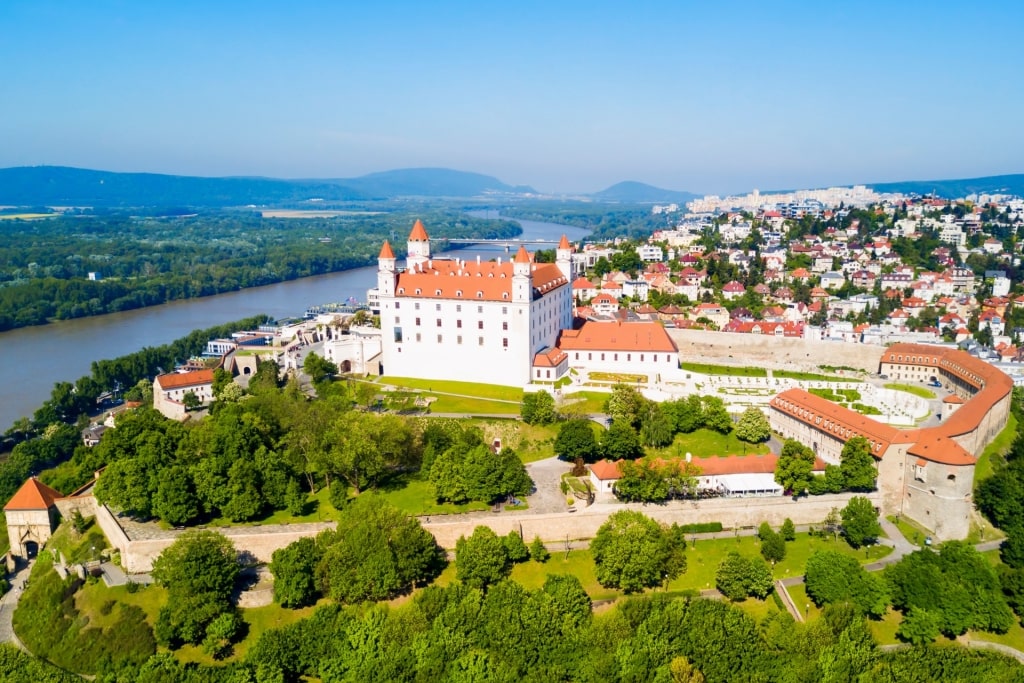
Bratislava is easy to explore in a day. The city is dominated by a chunky Renaissance castle, its four corner towers making the building look for all the world like an upturned table. Spend your time exploring the old city center, where architectural styles range from medieval to Soviet-era brutalist.
Hlavné nám, Bratislava
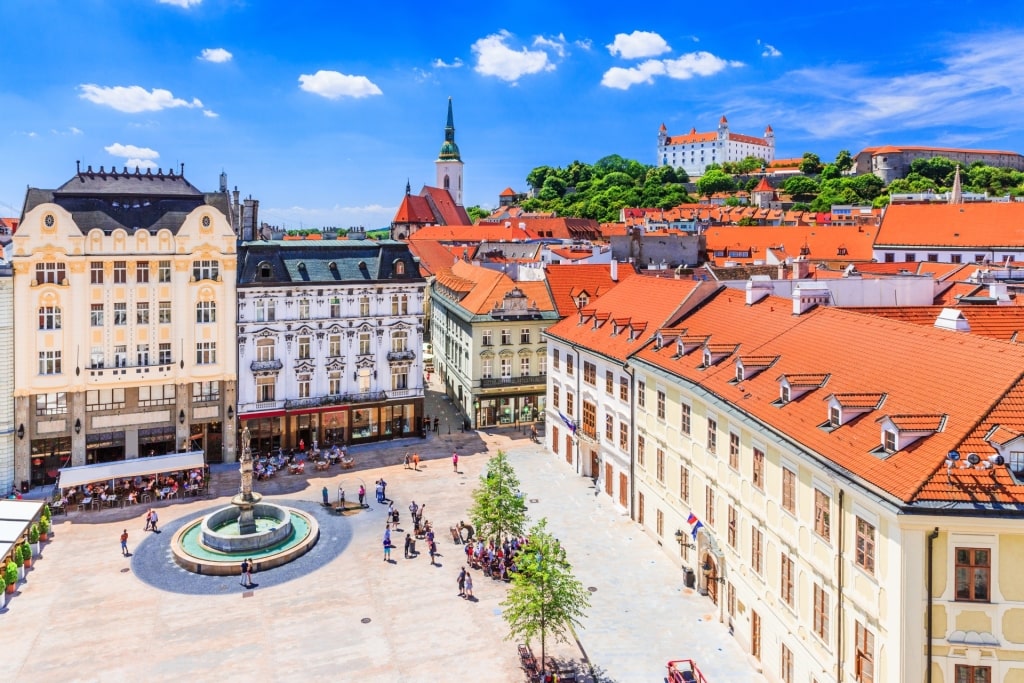
Everything centers around Hlavné námestie, the main square, surrounded by fine 14th- and 15th-century Gothic buildings and overlooked by the Town Hall. You’ll find beer gardens and pubs dotted all over the city; beer culture is big here, with plenty of locally brewed beers to try.
Burgenland
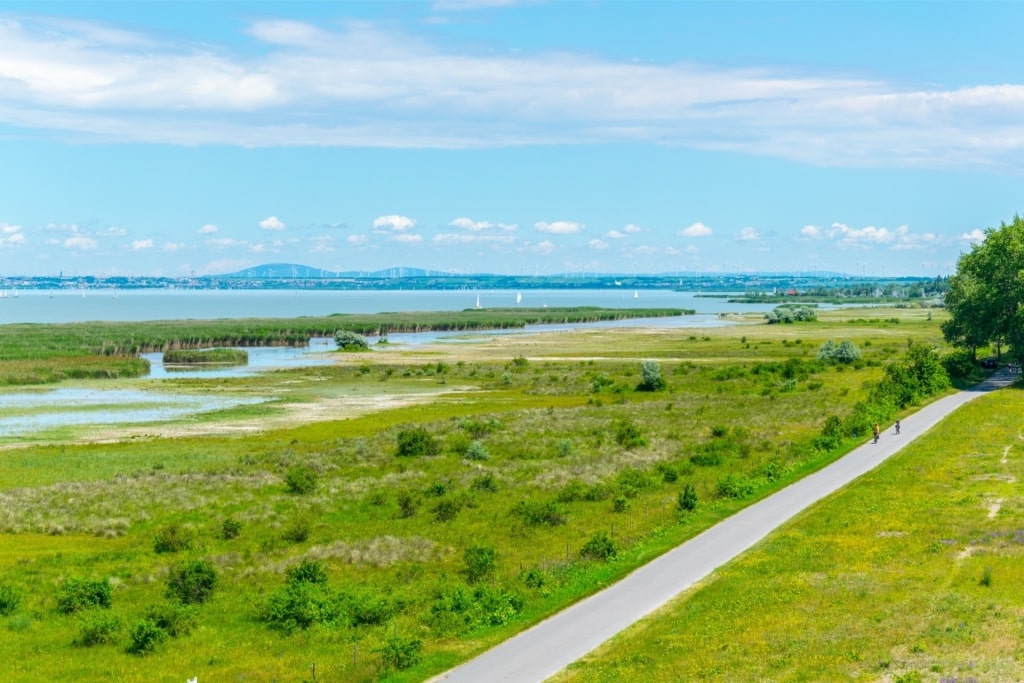
Lake Neusiedel
Lake Neusiedel, or Neusiedlersee, is a vast steppe lake that straddles the border between Austria and Hungary. Despite its size—22 miles long and around seven miles wide—the lake is shallow, just over three feet deep on average. Reed beds surround its shores, while hills, striped with immaculate vineyards, roll gently to the horizon.
The Viennese come here in summer for lakeside lunches, hiking, paddleboarding, sailing, kite surfing, and wine buying. There are wineries all around the lake and heurige, or wine bars, in villages and on the waterfront. You can swim, as well, from the various seasonal lidos.
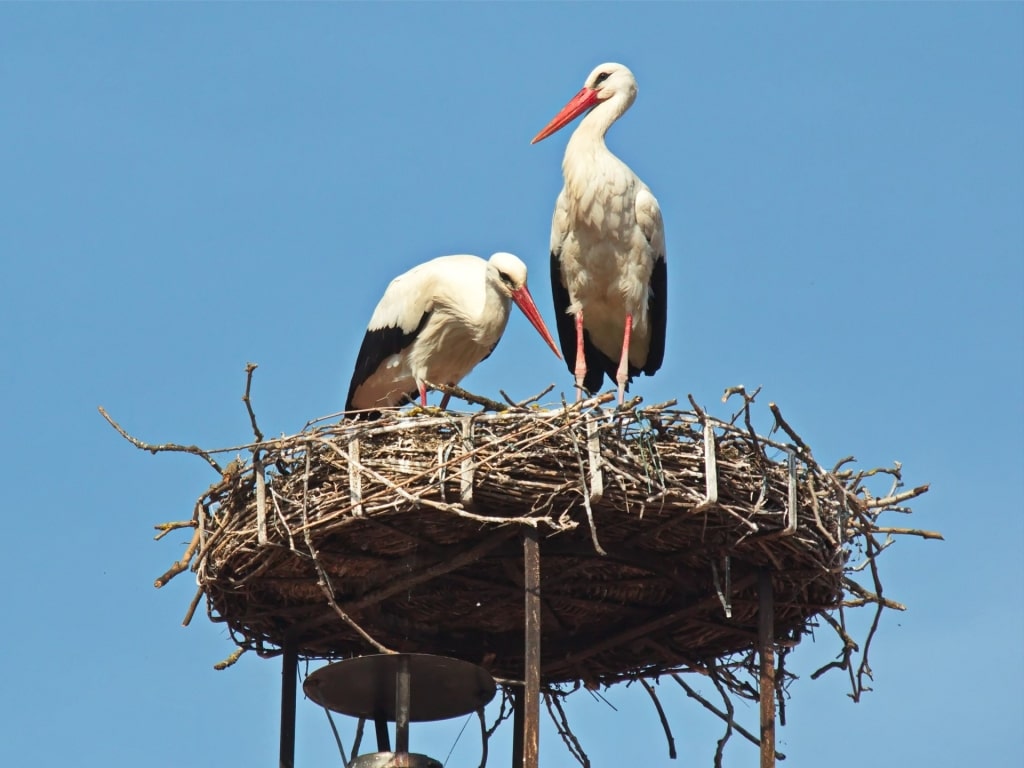
Storks
The birdwatching in the national park here is spectacular; lapwings nest in the reed beds and storks take up residence in the chimneypots of Rust, a tiny lakeside village. You could spot bee-eaters, spoonbills, and the chunky great bustard, which weighs more than any other flying bird, at up to 35 lbs.
Trains from Vienna to the lakeside Austrian town of Neusiedl am See take around 40 minutes, while the drive is a little longer. A fun way to spend your day is to take the train and then rent bikes on arrival; the trails around the lake and through the vineyards are easy and flat.
The Wachau Valley
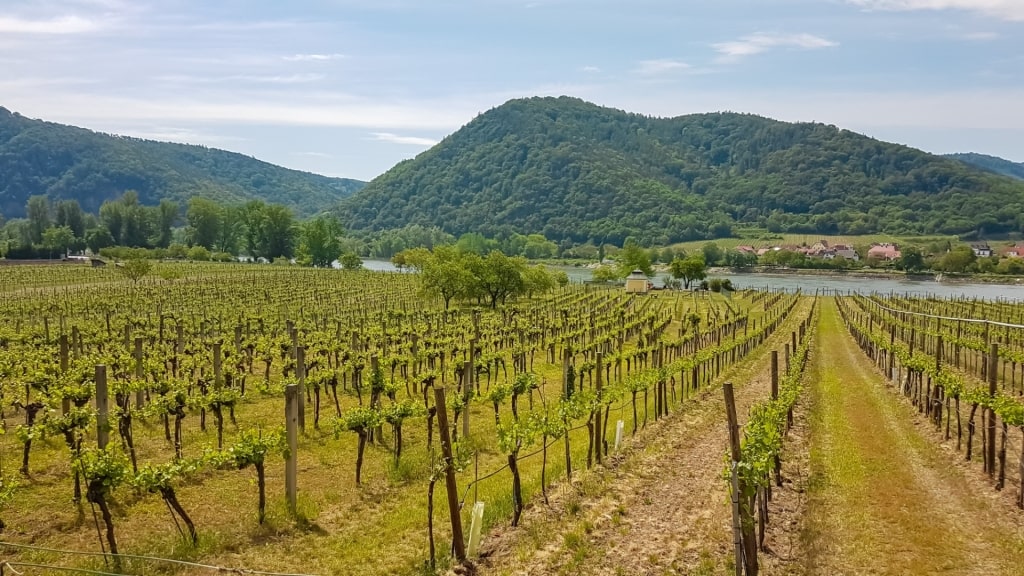
Krems an der Donau
Before it reaches Vienna on its journey from the Black Forest to the Black Sea, the Danube carves its way between the steep, green hills of the Wachau, a region of Austria that’s exceptionally beautiful at any time of year. In spring, flowers are bursting into bloom, the vineyards covered in a soft green fuzz and the thousands of apricot trees draped in pink blossom. In summer, the vines are rich and green and the apricot harvest begins. Fall brings a kaleidoscope of colors as the trees turn scarlet and umber.
One of the best day trips from Vienna, especially if you’re an active kind of traveler, is to take the train to Krems an der Donau, at one end of the Wachau Valley, rent a bicycle and pedal the 10-mile riverside trail to Spitz.
En route, you’ll pass through Dürnstein, defined by the blue and white baroque tower of Dürnstein Abbey, which lies on the riverside, and the craggy remains of Kuenringerburg, the castle in which the English king Richard the Lionheart was incarcerated in 1192.
There’s no shortage of riverside heurige, or wine taverns, for refreshment before the return leg of the journey. The train from Vienna takes around one hour and 15 minutes.
Melk
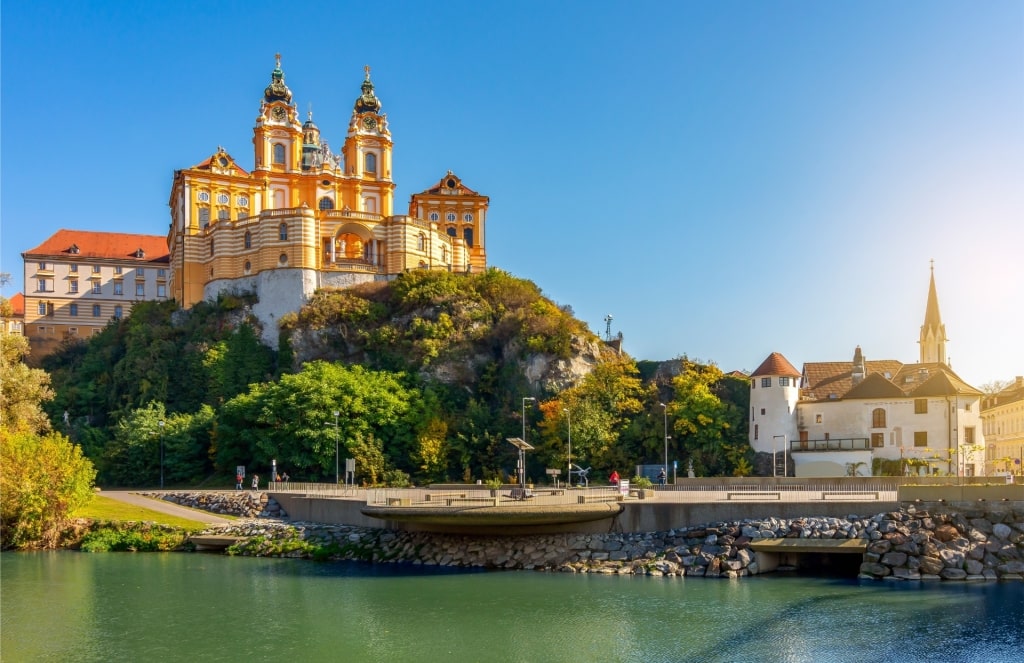
Melk
The small riverside town of Melk is only around 45 minutes from Vienna by train. It’s an easy day trip from Vienna and the main reason to come here is to marvel at the opulent Stift Melk. This baroque Benedictine abbey, painted a distinctive yellow and white and clinging to a rocky outcrop overlooking the Danube, dates back to the 18th century, although an abbey or castle has stood here for more than 1,000 years.
Inside, the abbey is lavishly adorned, to say the least, with gleaming marble, trumpeting cherubs, ornate columns, and gold. Don’t miss the ravishingly beautiful library, ancient books lining the shelves and a dreamy trompe d’oeil ceiling.
After your visit, stop by the gift shop, which has a fantastic array of edible and drinkable souvenirs. These include herbs grown by the monks, wines from the monastery’s vineyard, herbal liqueurs, apricot jams and brandy from the monastery’s own orchard, and handmade chocolates.
Semmering
Semmering
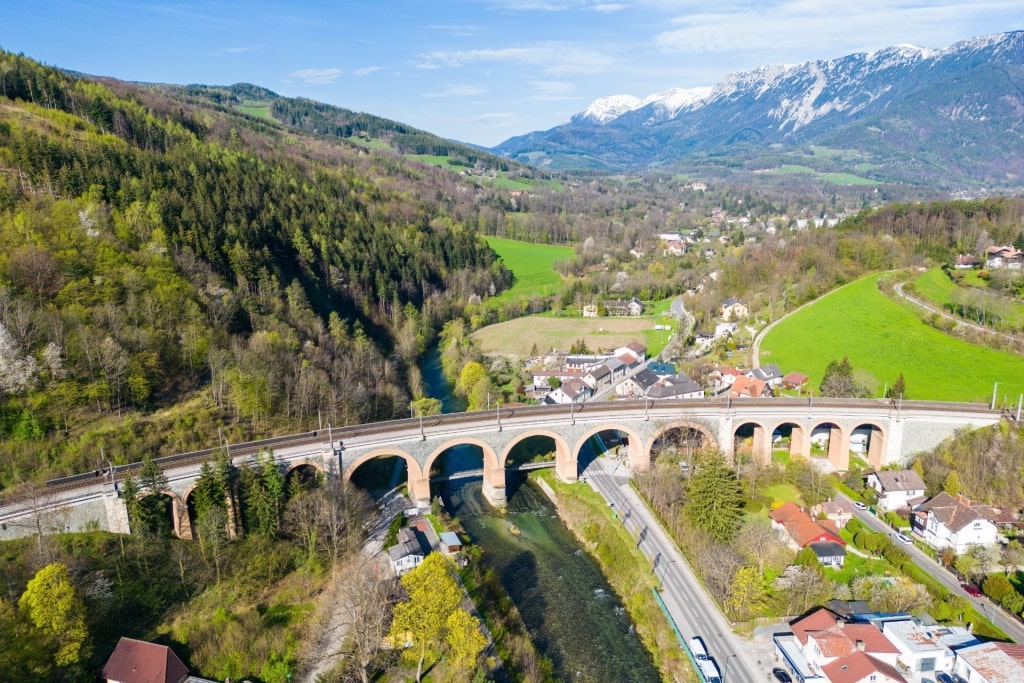
An hour and a half’s drive south of Vienna, Semmering is the closest point to the city where you can ski in winter. In summer, it’s where city dwellers come for hiking and mountain air; the Hirschenkogel stands at 4,296 feet above sea level, with magnificent views of the higher Alps, still snow-capped in summer.
This area was also a popular retreat for the aristocracy, especially after the construction of the Semmering Railway, which was completed in 1854. This was the world’s first mountain railway and today it’s protected as a UNESCO World Heritage Site.
A ride on the railway is a must, for the views and the fact that it’s a sheer feat of engineering. The track runs 25 miles over a mountain pass from Gloggnitz to Mürzzuschlag through an impressive 15 tunnels, over 16 viaducts, and across 100 stone bridges, with an average gradient of 2%.
Linz
Linz
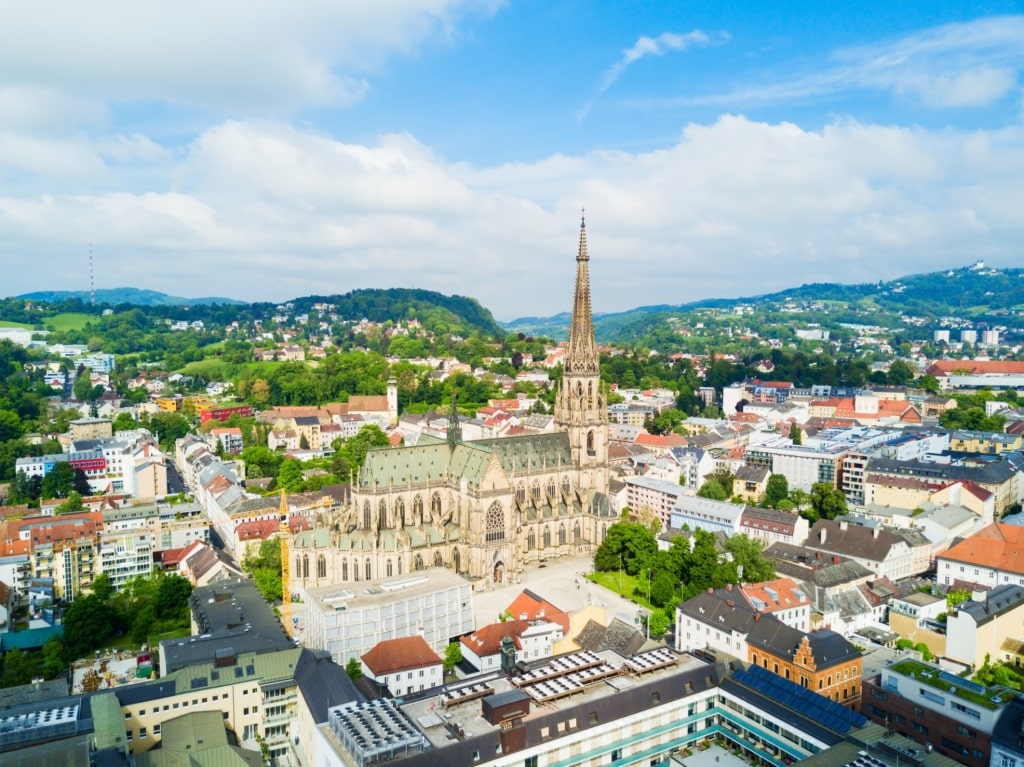
The third-largest city in Austria, Linz lies on the Danube in Upper Austria, west of Vienna. While the drive is long, the fast train will get you there in less than 90 minutes.
Linz is a fascinating mixture of the typical Austrian baroque architecture and cobblestone streets and the avant-garde. Check out the 19th-century Mariendom, the city’s cathedral, a neo-Gothic confection of slender pinnacles and flying buttresses, the interior a rainbow of color thanks to dazzling stained glass windows.
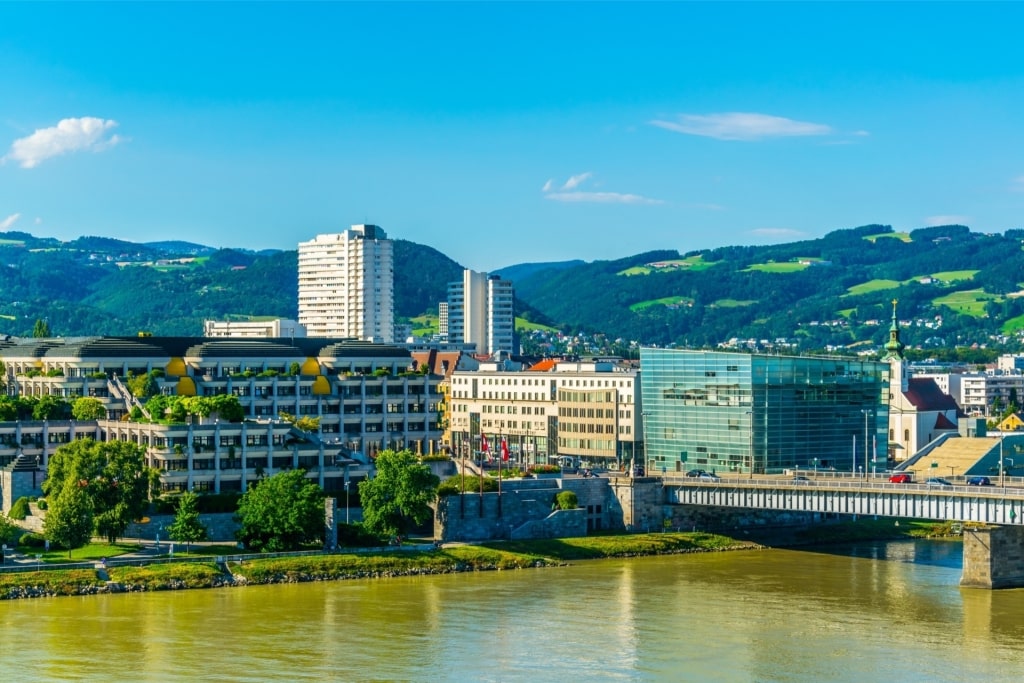
ARS Electronica Center, Linz
Step into the future at the ARS Electronica Center, a contemporary structure on the river, housing the Museum of the Future. Here, you can program a robot, learn about AI, print in 3D, and have your mind blown by Deep Space 8K, a multi-sensory virtual reality journey into space.
While in Linz, sampling the famous Linzer Torte is practically obligatory. This tasty tart is a shortbread base topped with nuts and tangy redcurrant jam, with a criss-cross lattice pattern of pastry on the top. It was invented here and you’ll find it in every café and patisserie.
Laxenburg Castle
Laxenburg Castle
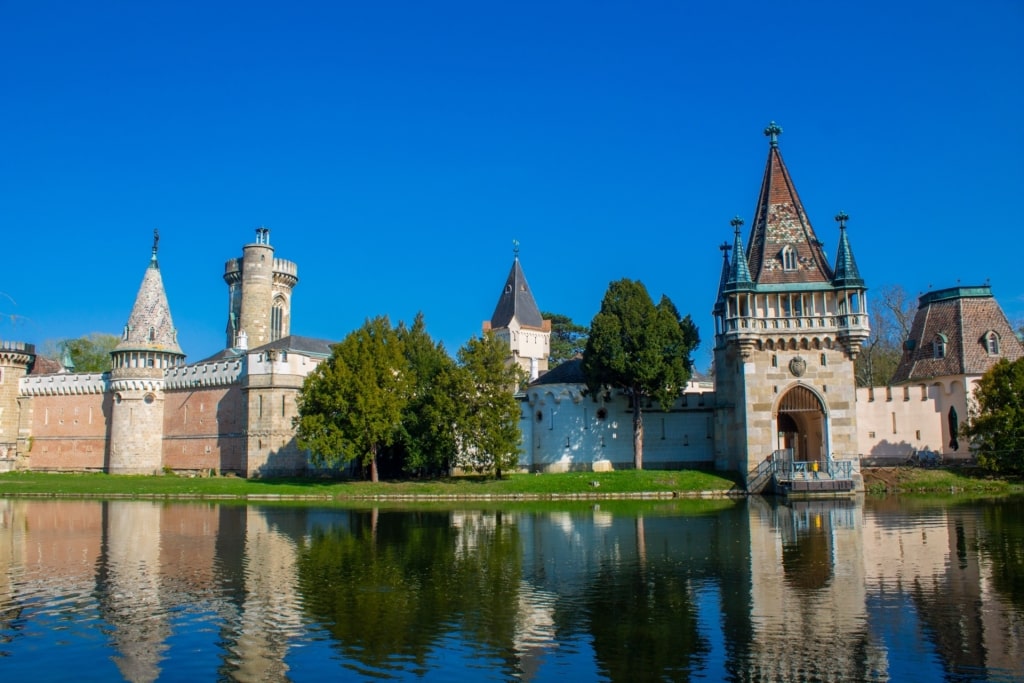
If you’re looking for an easy day trip from Vienna—and a glimpse into how the nobility used to live—Schlosspark Laxenburg is only a 30-minute drive from the city. This romantic castle lies in Austria’s largest landscaped garden, a riot of follies, splashing fountains, elaborate statues, and secret grottoes covering 280 acres.
The present form of the Austrian castle dates back to the 18th and 19th centuries, when the Empress Maria Theresia expanded and cultivated the park. Emperor Franz Joseph and Empress Elisabeth, or Sisi, honeymooned here in 1854.
One of the most distinctive structures within the castle grounds is Franzensburg, a small castle built in the medieval style on an artificial island in one of the lakes. While the castle was built in the early 19th century, it resembles something out of a Grimms’ fairytale.
Baden Bei Wien
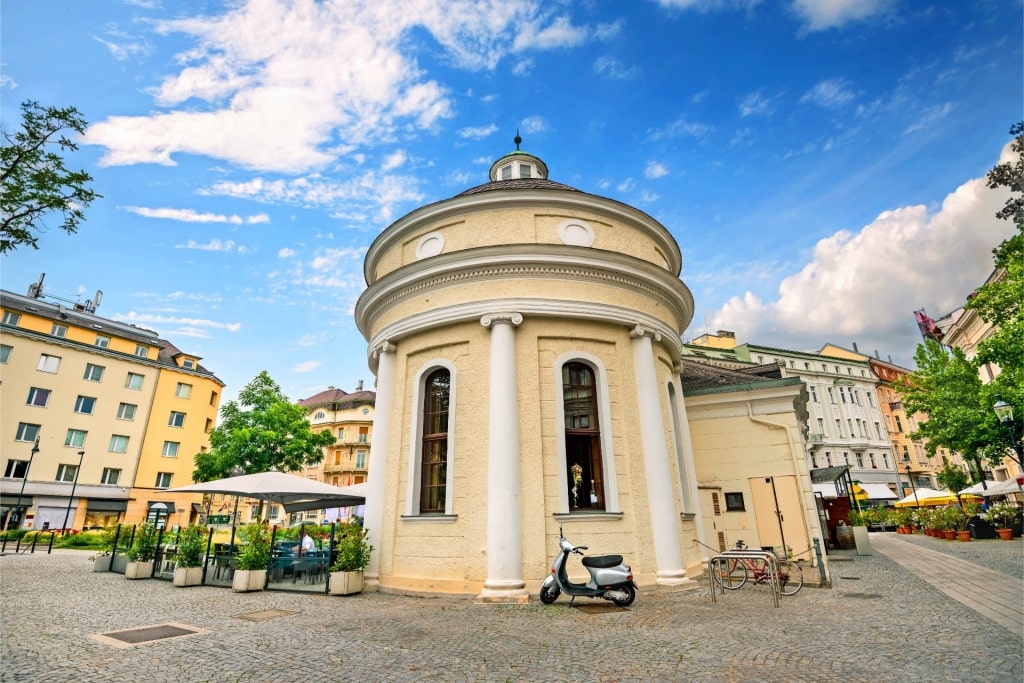
Baden Bei Wien
Baden bei Wien is a pretty spa town some 16 miles from Vienna, built around 14 natural hot mineral springs. The Romans, who loved a spa, established a settlement here, and centuries later, when the railway link to Vienna opened in the 19th century, city dwellers would flock here in summer to take the waters. Many of the nobility built lavish summer villas.
Ludwig van Beethoven stayed here in the summers of 1821, 1822, and 1823, and his house is now a museum. There’s a poignant exhibit where you can experience what it was like for the composer to be losing his hearing—and yet still able to compose exquisitely beautiful music.
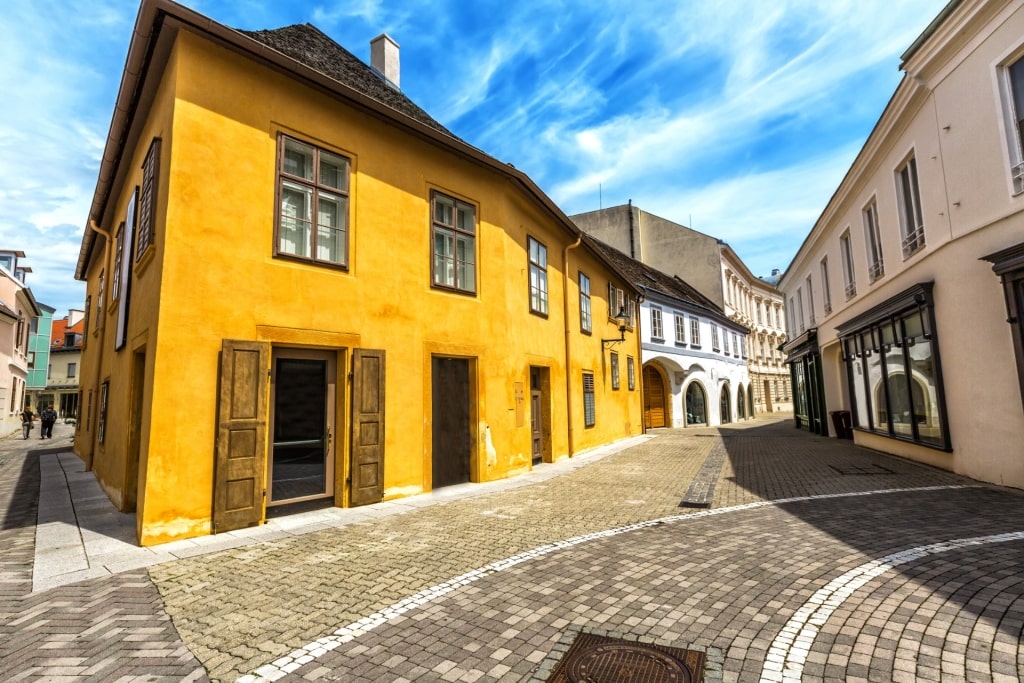
Baden Bei Wien
Wander through the center, where baroque buildings line cobblestone streets. A rose festival runs all summer long, so you can smell the luscious fragrance on the breeze. Stop at one of the many patisseries for local specialties; the Beethoven Praline, for example, is a confection of white chocolate, caramel liqueur, and sea salt.
Salzburg
Ready to discover the beautiful countryside and inviting towns around the Austrian capital? Browse Celebrity’s river cruises to Vienna and plan your dream vacation.