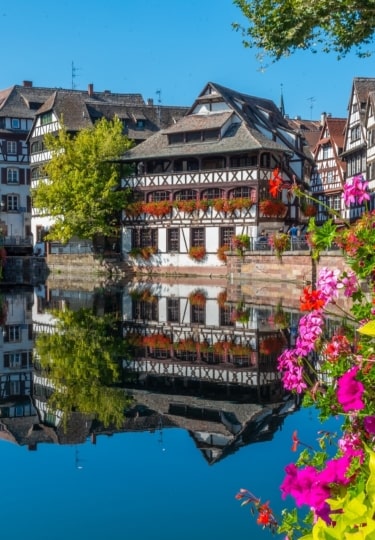
Many of the best things to do in Strasbourg stem from its blend of French and German influences. Changing hands between both nations for centuries, it is now firmly part of France but has its own Alsatian identity.
The remarkably preserved medieval old town, impressive Gothic cathedral, and picturesque canals are recognized by UNESCO for their historic beauty. As one of the European Union’s capitals, Strasbourg has also added universities and powerful modern architecture to its mix.
Here are the best things to do in this remarkable crossroads of European history.
Slow Down in La Petite France
La Petite France
Strasbourg stands on a series of islands, formed where the River Ill splits into multiple channels before rejoining to flow into the Rhine. The largest island, Grande Île, holds the city’s UNESCO-listed historic center.
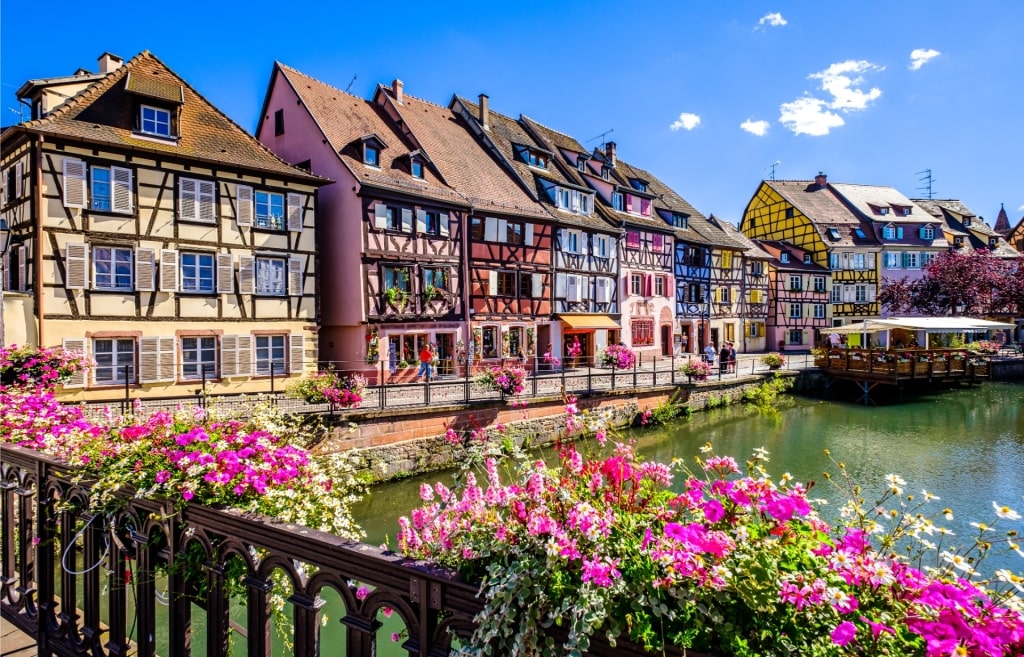
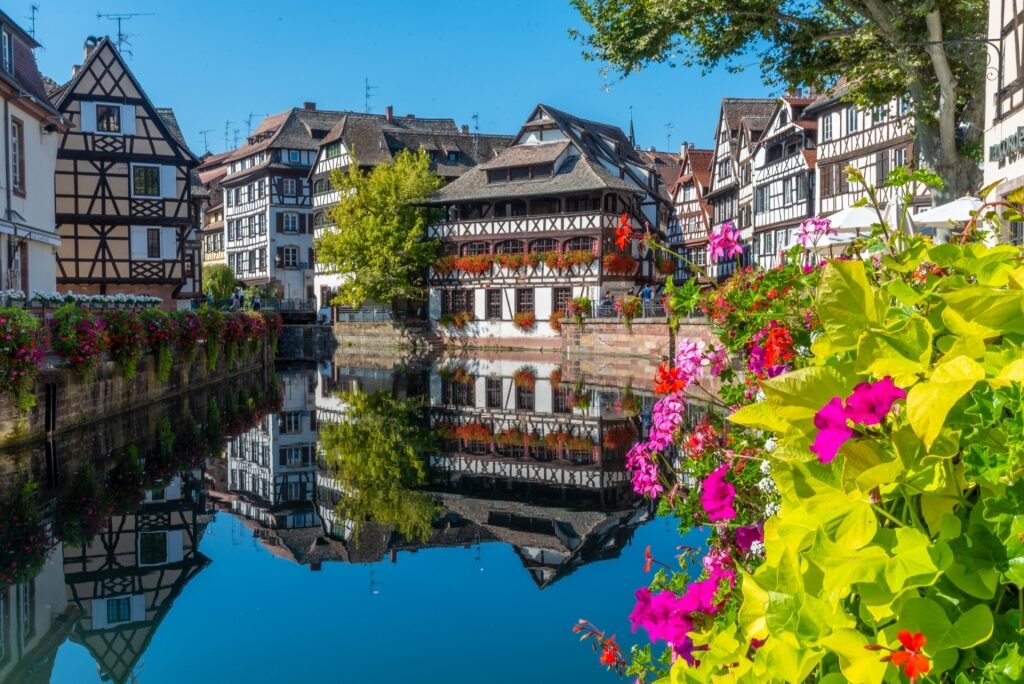
At the western end of the Grande Île is a picturesque neighborhood—once home to the city’s tanners, fishermen, and millers—known as La Petite France. Its well-preserved, half-timbered houses, dating to the 16th and 17th centuries, lean over narrow cobblestone streets and canals.
The pastel-colored walls and flower-filled balconies reflected in the water make La Petite France a remarkably beautiful place. It’s somewhere to slow down, take lots of photos, and just enjoy.
Be Awed by Strasbourg Cathedral
Strasbourg Cathedral
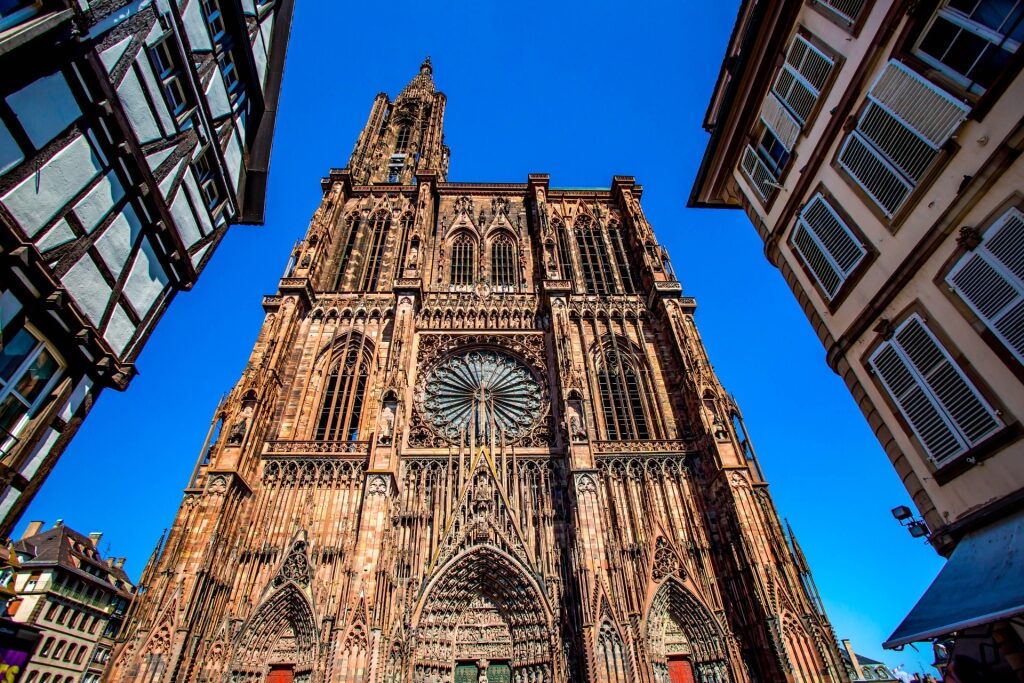
Dominating the city skyline, Strasbourg’s Cathédrale Notre-Dame is one of the finest examples of Gothic architecture in Europe. Built in local reddish-brown sandstone between 1176 and 1439, it is the world’s tallest surviving building from the Middle Ages.
The distinct asymmetrical facade has only one spire, with a proposed twin never built. You can climb its 332 spiral steps for amazing views as far as the Black Forest and Vosges Mountains.
A highlight of the awesome interior is a 60-ft-high Renaissance-era astronomical clock. Various mechanical figures are associated with certain chimes but you can see them all perform at 12:30 p.m.
Cross the Covered Bridges
Ponts Couverts
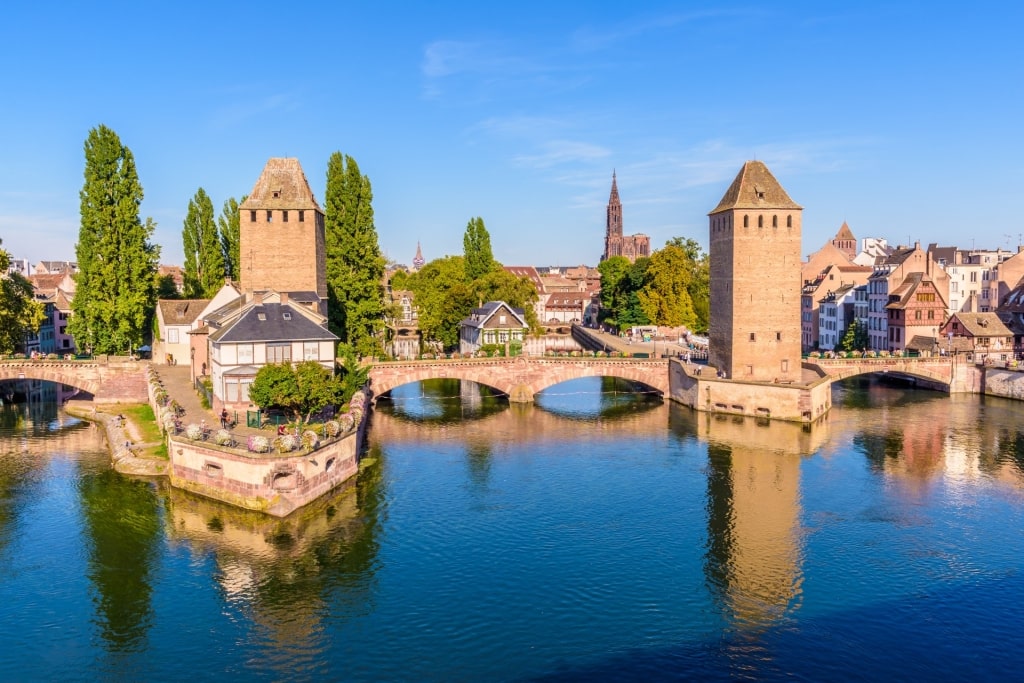
At the western edge of La Petite France you’ll find the three Ponts Couverts—“Covered Bridges”. The original wooden roofs, designed to protect defenders, were removed in 1784 but the name remains.
These three bridges span four channels of the River Ill and made up part of the 13th-century city walls. With their four sturdy towers, they are an interesting and very photogenic sight.
Downstream is the historic Barrage Vauban, a 17th-century weir designed to flood the immediate area in case of attack. Its roof terrace offers a pretty view of La Petite France, the Ponts Couverts, and Cathédrale Notre-Dame.
Visit the Museums in Palais Rohan
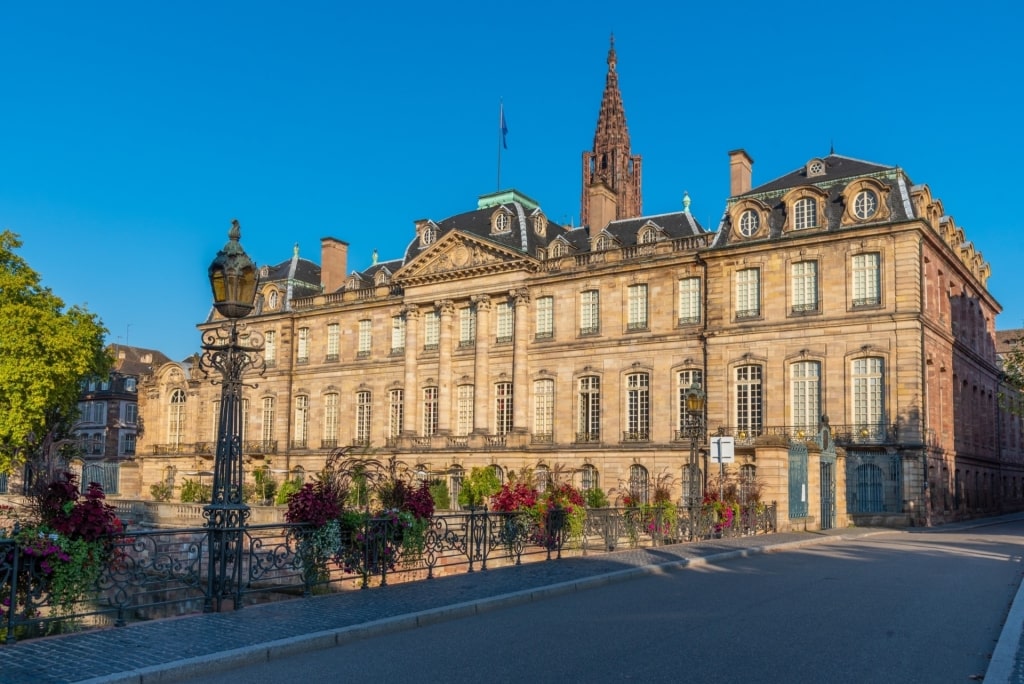
Palais Rohan
The 18th-century Palais Rohan is nicknamed “Strasbourg’s Versailles” for its refined French baroque architecture. This magnificent riverside palace has hosted King Louis XV and Marie Antoinette, as well as Napoleon Bonaparte.
Today, the palace holds three important museums: the Archaeological Museum, the Museum of Decorative Arts, and the Museum of Fine Arts. Artists in the latter include Rubens, Botticelli, Raphael, El Greco, and Goya.
The original royal apartments are part of the Museum of Decorative Arts. The palace’s elegant courtyard and formal gardens also offer hints of the grand royal lifestyle.
Go Back in Time at the Alsatian Museum
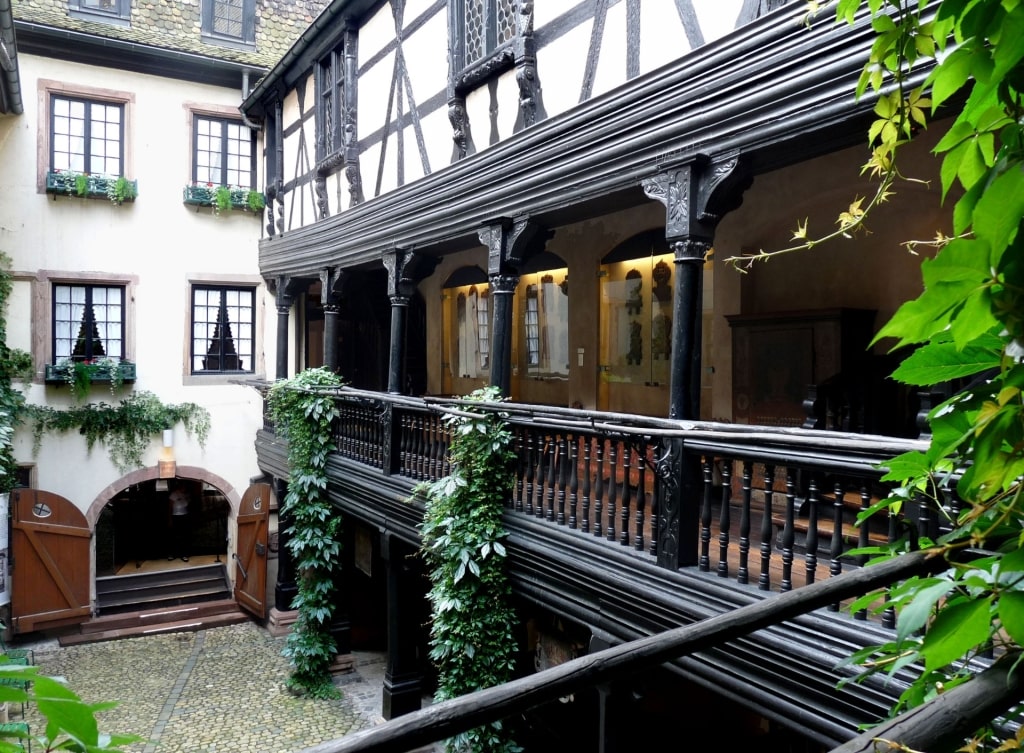
Alsatian Museum Photo by Ji-Elle on Wikimedia Commons, licensed under CC BY-SA 3.0
The Musée Alsacien is housed in three interconnected 16th and 17th-century half-timbered buildings. With their creaking wooden floors and winding staircases, these houses are a perfect setting for the story of the traditional way of life in the Alsace region.
A series of rooms each recreate Alsatian domestic interiors from the 18th and 19th centuries. You can see a farmhouse kitchen, bedrooms, workshops, and rooms decorated for festivals.
Among thousands of artifacts are carved furnishings, elaborate folk costumes, handmade tools, and traditional toys. This walk through both French and German cultures shows vividly how the region developed its own unique identity.
Hop on a Boat Tour
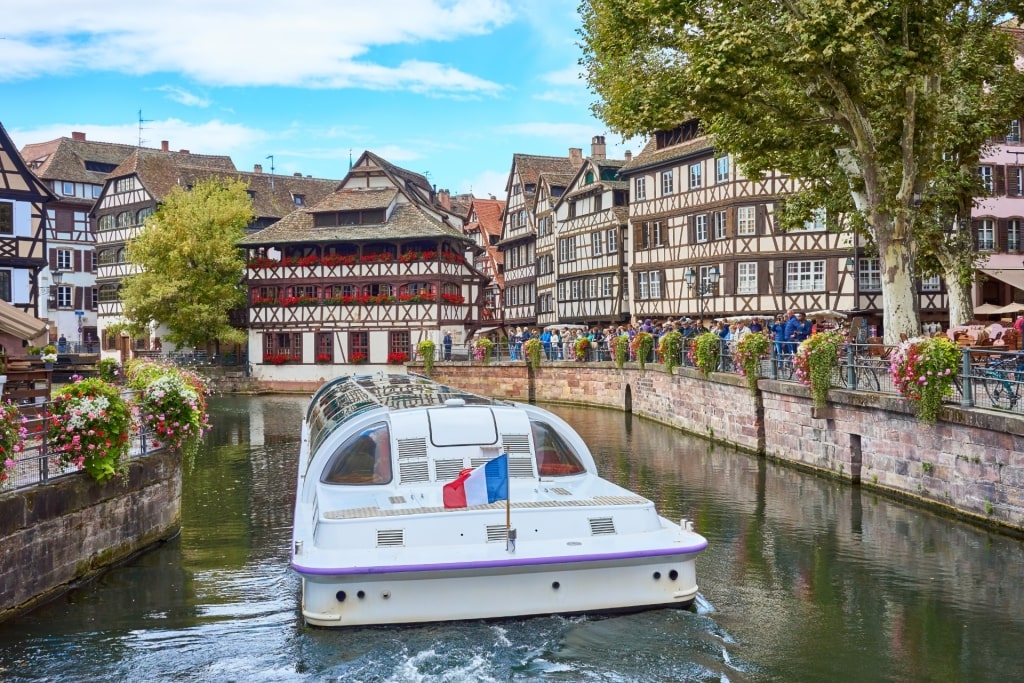
Boat tour
The River Ill, a tributary of the Rhine, is central to the character and history Strasbourg is known for. A glass-covered boat tour, especially with a good guide, brings that all to life.
The most popular tours focus on the many centuries of history found around La Petite France and the majestic Cathedral. They come right up to date, passing the modern architecture of the European institutions.
A less well-known tour—partly because it’s French-only—will take you through Strasbourg port, France’s second-largest river port. It covers everything from the import of flour and fuel to the export of the city’s household waste and recycling.
Learn about The European Parliament
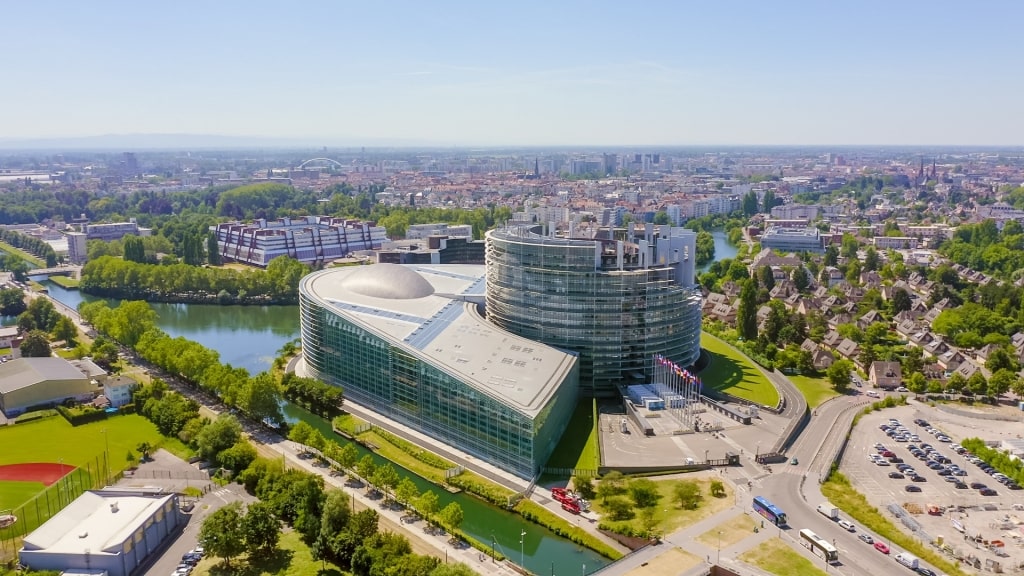
European Parliament
Strasbourg is one of the official seats of the European Parliament, which it hosts in a striking contemporary building. The distinctive egg-shaped main chamber is backed by a tower that’s partly unfinished to symbolize the European Union, or EU, as a work in progress.
The curving glass main facade, reflecting the River Ill and the Marne-Rhine Canal, represents democratic transparency. The main chamber holds 720 MEPs—Members of the European Parliament—for their monthly four-day meetings.
You can take a guided tour when parliament is not in session to learn more about the building. These free visits last about an hour and are available in all the 24 official languages of the EU.
Have a Coffee in Place Kléber
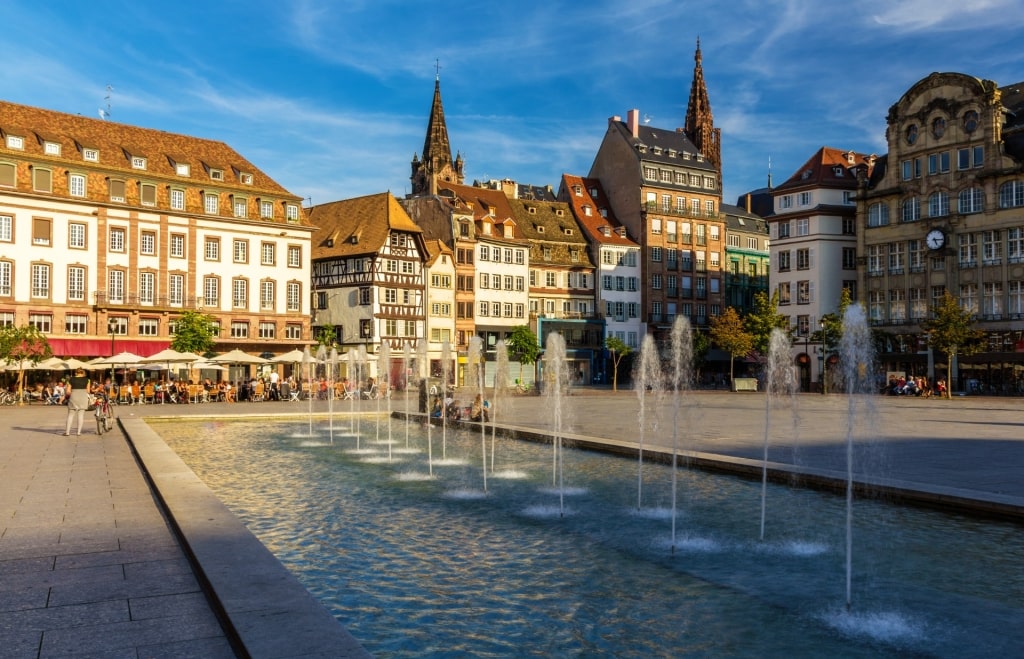
Place Kléber
Place Kléber is the main square of modern Strasbourg and a meeting point for several shopping streets. It’s named for General Jean-Baptiste Kléber, a Napoleonic-era hero, whose statue stands at its center.
Around the square are several significant buildings, including the neoclassical Aubette, dating to the 18th century, and the sandstone Maison Rouge. The square is also well known for its cafés, many with outdoor terraces.
During December, the square is the site of a towering Christmas tree, a traditional feature of Strasbourg’s famous Christmas market. In summer, it’s commonly used for concerts and other events.
Tour the Tomi Ungerer Museum
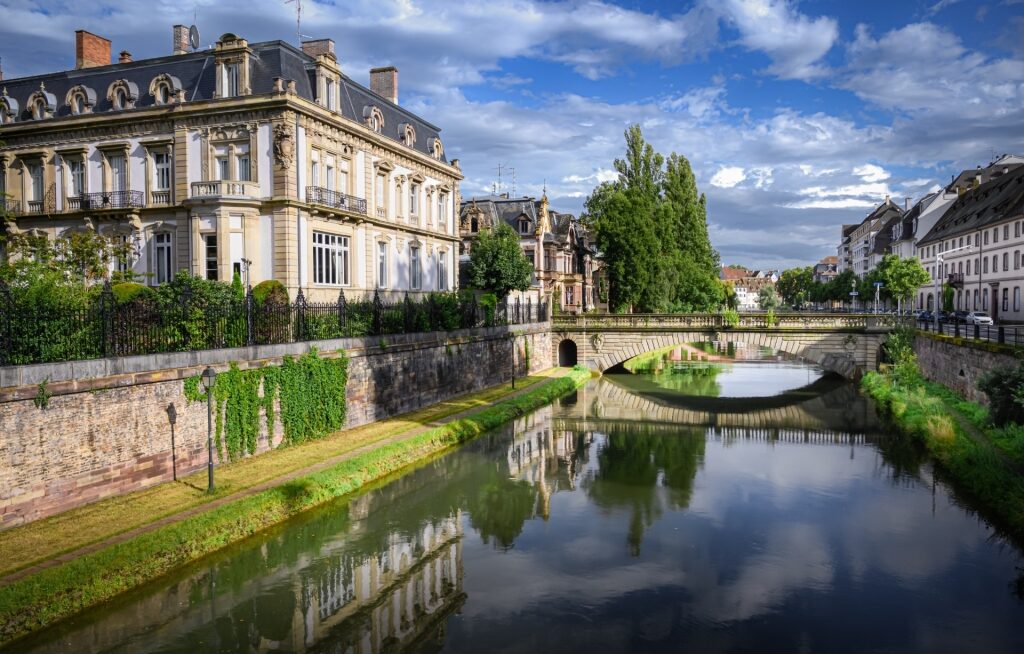
Tomi Ungerer Museum
The Musée Tomi Ungerer is the only museum in France dedicated to an illustrator. The Strasbourg-native artist, author, and satirist is best known for his children’s books such as The Three Robbers.
Set in a handsome 19th-century villa, the museum displays rotating selections from its vast collection. That totals around 11,000 drawings, sketches, collages, sculptures, and manuscripts donated by the late artist.
As well as his books, Ungerer produced advertising campaigns, political satire, and erotic art. The museum details how he was influenced by his upbringing in Nazi-occupied Alsace and later life in the US, Canada, and Ireland.
Stroll in Orangerie Park
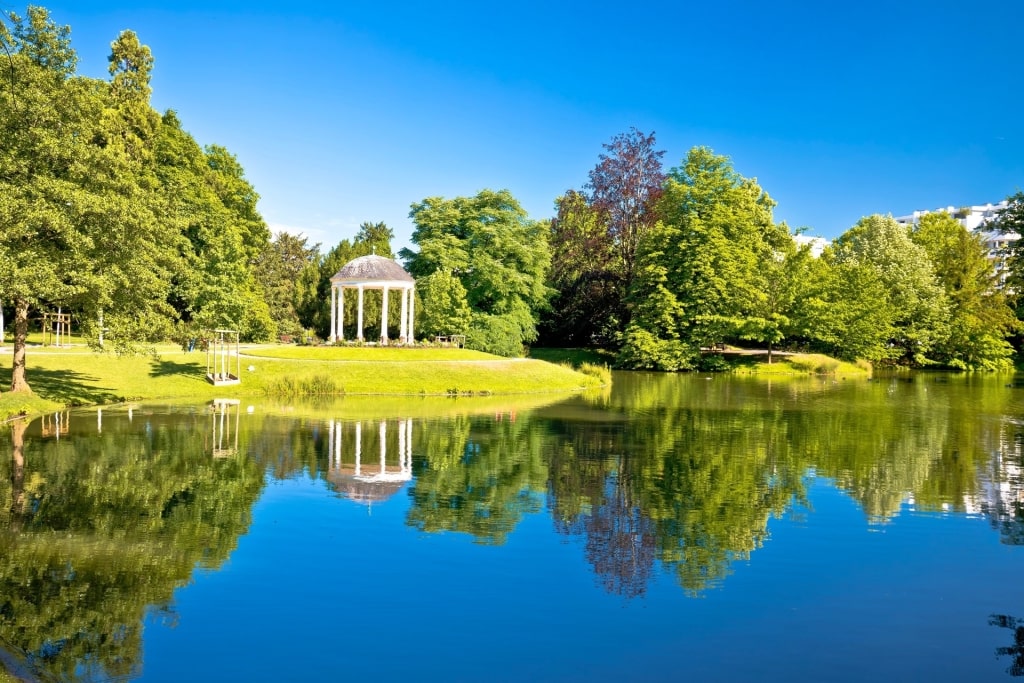
Orangerie Park
Strasbourg’s oldest public park was created in the 17th century and expanded by Napoleon’s wife, Joséphine. The central pavilion named after her holds the orange trees from which the park takes its own name.
A geometric, French-style layout dominates in the central tree-lined promenade. Later English-style planting added wilder areas with winding paths that are more natural in look.
With its centuries-old trees and thousands of tulips in bloom in the spring, the park is always popular. Take a rowboat out on the lake, or visit the restaurant to join Strasbourg’s locals at play.
Explore the Historical Museum
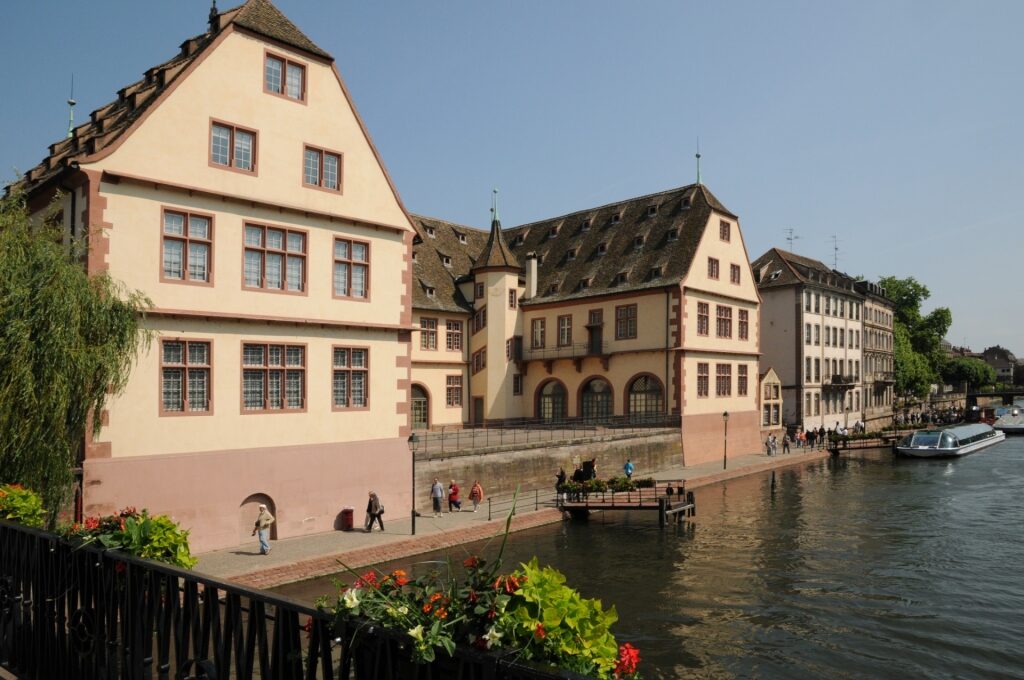
Historical Museum
The Musée Historique is in a former Renaissance-period slaughterhouse. It tells the city’s story from the Middle Ages to the arrival of its European institutions.
The extensive collection of paintings, sculptures, militaria, scale models, multimedia, and more has something for everyone. It should be a first stop for anyone wanting to understand Strasbourg’s complex position between France and Germany.
A highlight is a 1727 relief map of the city, showing it in incredible detail. The section on World War II, detailing its impact on the city, is also fascinating.
See the View from MAMCS
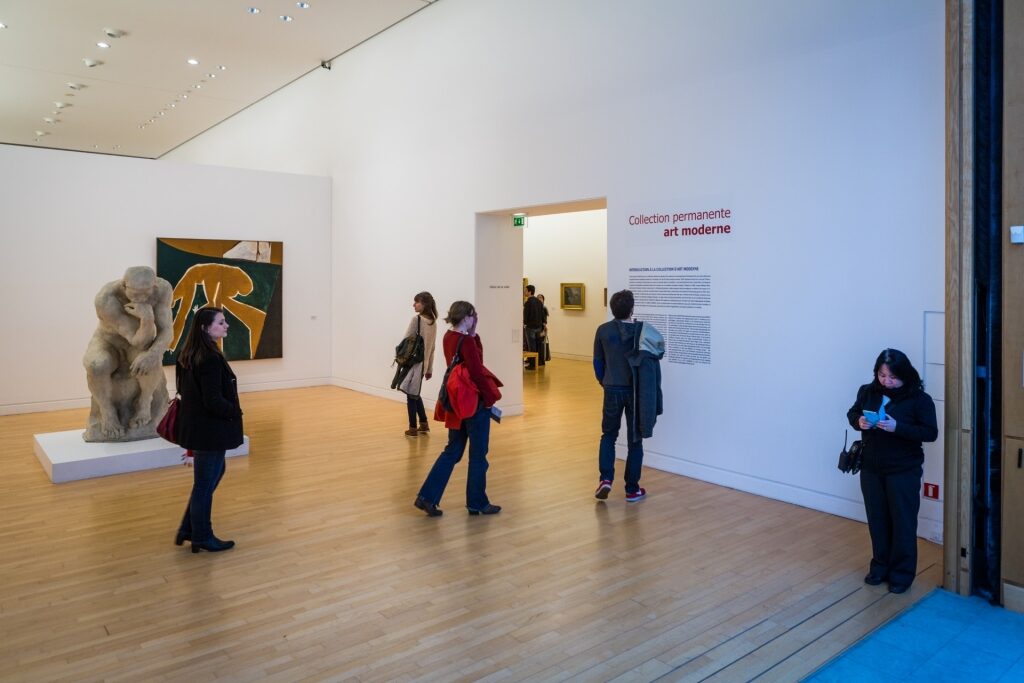
MAMCS Photo by Claude Truong-Ngoc on Wikimedia Commons, licensed under CC BY-SA 3.0
There are two reasons to visit the Musée d’Art Moderne et Contemporain, or MAMCS. The first is obviously to see one of France’s largest collections of contemporary and modern art.
Including works from artists such as Monet, Picasso, Kandinsky, and Ernst, there are some 18,000 pieces. These feature a significant collection of Art Nouveau decorative objects, reflecting Strasbourg’s importance to the movement.
The second reason is the rooftop terrace, where you have scenic views of the pretty Petite France district. Sitting on the Ill River, the museum’s lovely glass building is a sight in itself.
Ride the Petit Train
An easy way to have an overview of two key areas of Strasbourg is to take the “Little Train”. This electric road train runs guided 40-minute tours through the streets of either the Petite France or the Neustadt district.
Petite France is all about its narrow streets, colorful buildings, and the Covered Bridges. The impressive Vauban dam and majestic Cathedral are also on the route.
A second tour takes in the Neustadt, or “New Town”, built after the annexation of Alsace in 1871. A wonderful example of 19th-century German design, it features delights such as the Art Nouveau Egyptian House.
Photograph Art Nouveau Neustadt
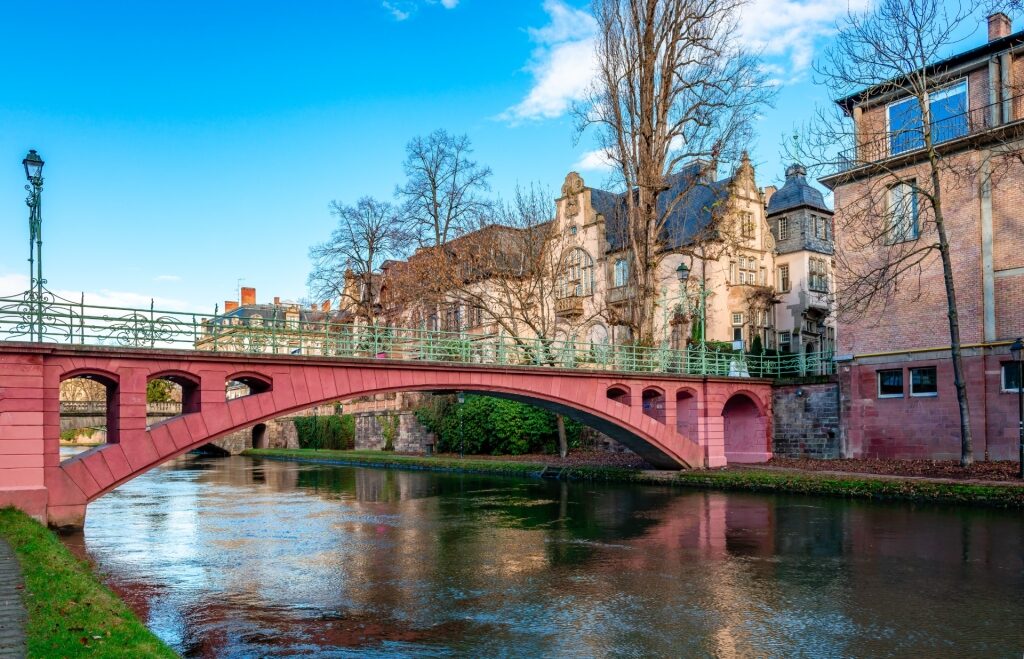
Neustadt
North of the medieval center lies the Neustadt dating to the German Imperial period from 1871 to 1918. This was when Alsace was annexed by the German Empire after the Franco-Prussian War.
This district was designed on a deliberately imposing scale, with wide avenues, grand public buildings, and elegant mansions. The style blends German monumentality with French elegance, creating a distinctive cityscape.
Its heart was the Kaiserplatz, now the Place de la République, and the grand buildings around it. However, the residential streets radiating off it feature many gorgeous houses in Art Nouveau or Jugendstil style.
Shop on Rue des Grandes Arcades
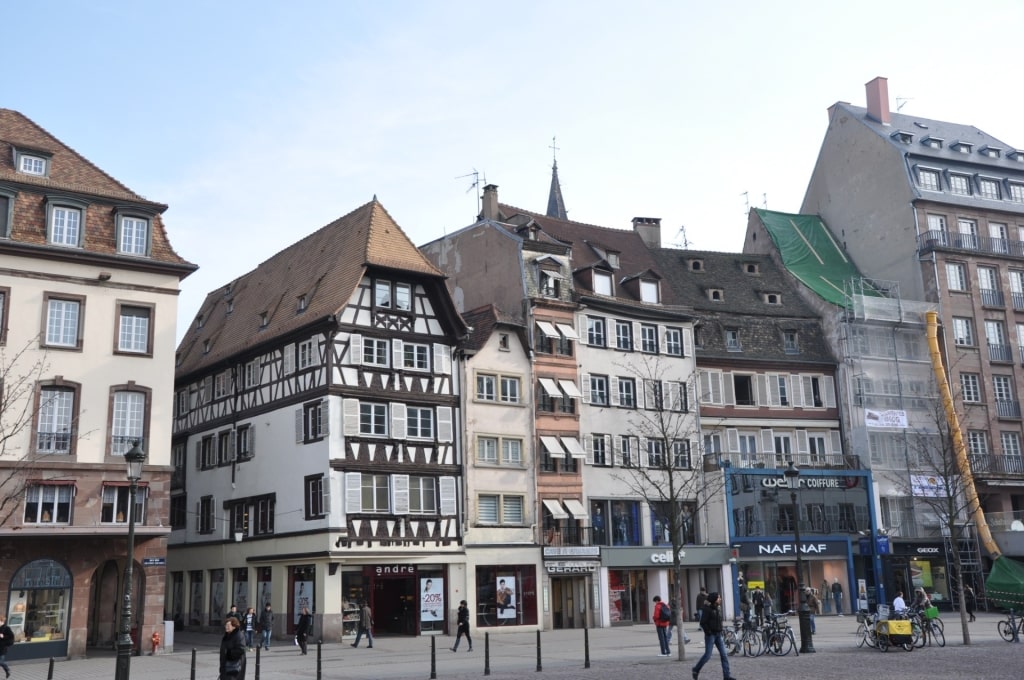
Rue des Grandes Arcades Photo by M.Strīķis on Wikimedia Commons, licensed under CC BY-SA 3.0
Rue des Grandes Arcades is a major center of Strasbourg’s modern shopping, with its namesake arches offering shelter in any weather. You’ll find everything from international brands to artisan shops specializing in Alsatian crafts and other souvenirs.
The medieval buildings make a photogenic contrast to some familiar modern branding. Now pedestrianized, it’s busy at any time of day with its shopping, restaurants, and cafés.
At one end of the street is Place Gutenberg, which honors local hero Johannes Gutenberg and his printing press. His 19th-century bronze statue is surrounded by reliefs telling the history of printing.
Eat Choucroute and Tarte Flambée
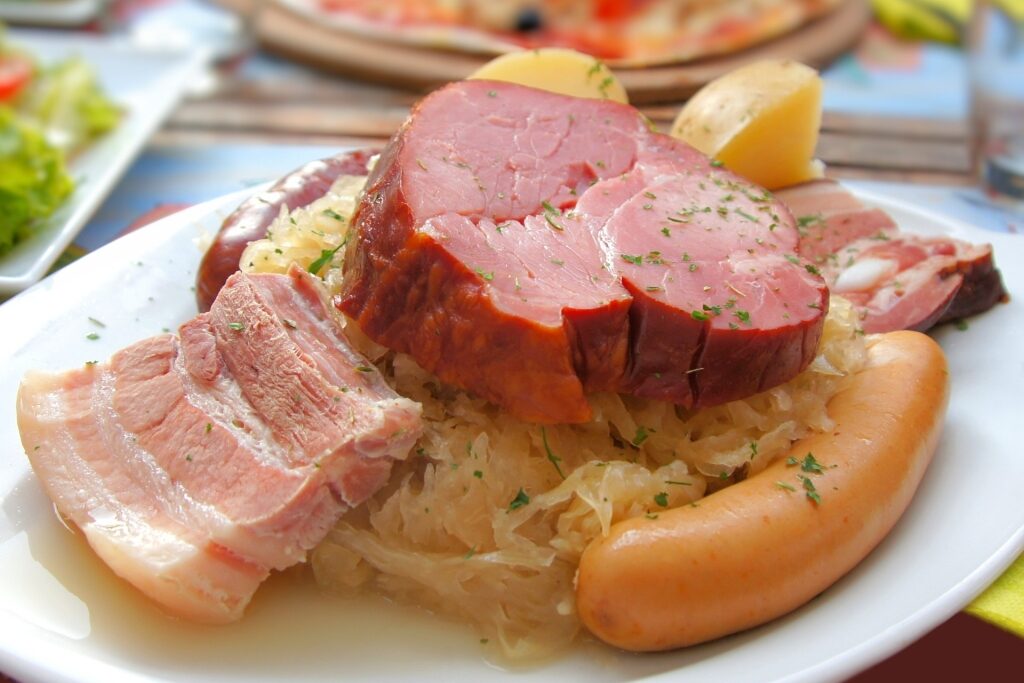
Choucroute
Alsatian cuisine mixes German and French influences for some unique dishes. The most famous is choucroute, or sauerkraut, which is fermented cabbage traditionally served with pork sausage or roast duck.
Originally a communal festive meal, enjoying choucroute in good company is still one of the best things to do in Strasbourg. Traditional winstubs—wine bars—each offer their own variations of this hearty dish.
Tarte flambée, or Flammekueche in Alsatian, is a simple dish of crème fraîche, onions, and bacon on a pastry base. Best cooked in a wood-fired oven, it is topped with the likes of cheese and mushrooms—or apples and whipped cream for a sweet variation.
Drink Alsatian wine
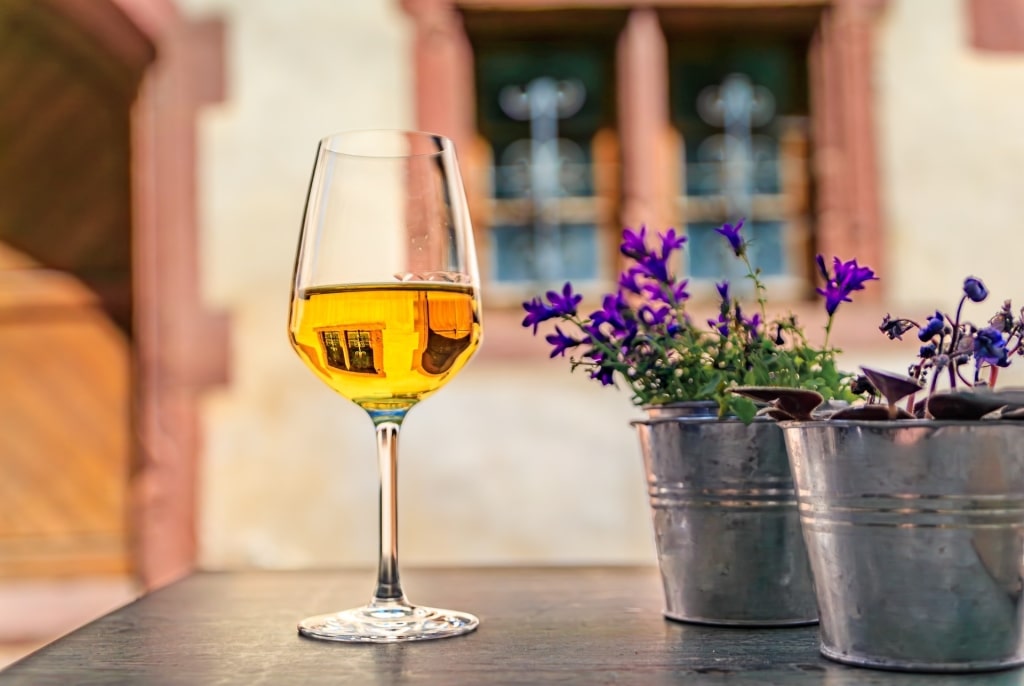
Alsatian wine
Alsace is famous for its crisp Riesling and floral Gewürztraminer. Both are perfect pairings for the complex sour but spicy flavors of choucroute.
Many local wineries offer tours with tastings where you can learn more about their products. The many winstubs, with their cozy wooden interiors, are also places to pair local wines and food.
Wine-lovers should also seek out the Historic Wine Cellar of Strasbourg Hospital, which holds the world’s oldest white wine. The cellars date to the Middle Ages, when patients often paid their doctors in kind—which included wine or other perishable produce.
Discover Krutenau
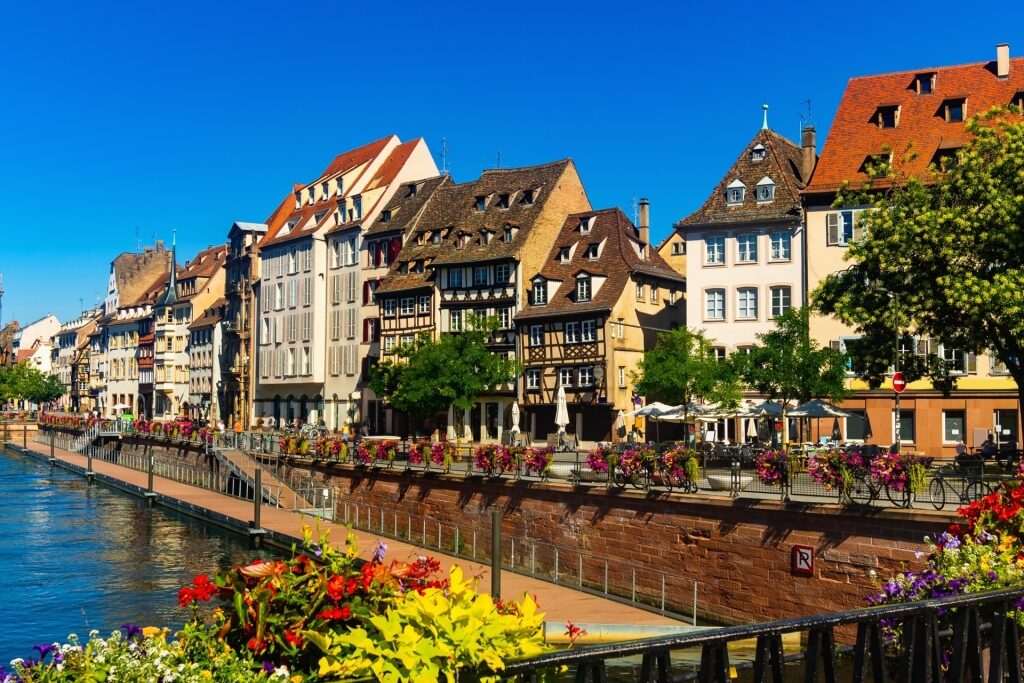
Krutenau
Krutenau—nicknamed “La Krut”—is a historic district in Strasbourg full of Gothic and Baroque architecture. It’s an area that’s undergone a resurgence, with cozy cafés and trendy boutiques springing up along its cobblestone streets.
Stretching along the Ill, this is one of the oldest parts of Strasbourg, once home to fisherfolk and then a tobacco factory. Once run down, it has been coming back into its own since the 1970s, with its old buildings renovated for students, artists, and start-ups.
Landmarks include the lopsided Saint-Guillaume Church, with its surprisingly rich interior, and the Art Nouveau Haute École des Arts du Rhin. The Quays—Quai des Bateliers and Quai des Pêcheurs—are great places to enjoy a walk or a drink with views of Grande Île and the Cathedral.
Strasbourg
Are you tempted to visit Strasbourg? The best way is on one of Celebrity’s Rhine cruises. Browse itineraries and plan your European adventure.