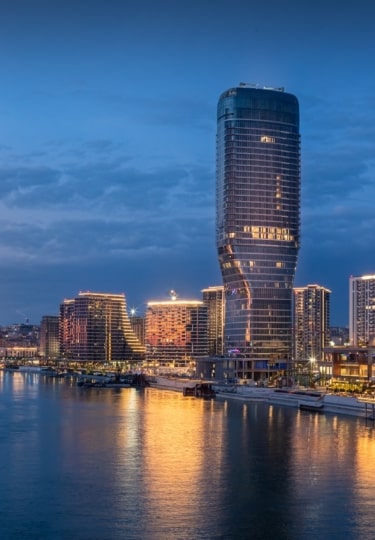
Sitting at the confluence of the Danube and Sava rivers, Belgrade’s long history combines with a contemporary culture that mirrors that meeting point. This embrace of ancient and modern is just one reason this city is so unique.
Continuously inhabited for 7,000 years, Belgrade, the capital of Serbia, is also the largest city. The Serbian name Beograd literally translates to “White City,” taken from the white ridge on which the landmark Belgrade Fortress was originally built. The fortress stands in the middle of the city, which has built up around it, making historic and cultural sites, restaurants, and shopping centrally located and easily accessible. Splavovi, the floating river clubs, line parts of both rivers, while the 2,000-year-old Belgrade Fortress sits at the meeting point of the rivers.
Belgrade, perfectly situated in the Middle Danube region just above the Iron Gate, is a gateway to both the Upper and Lower Danube regions, and one of only four capital cities sitting directly on the river’s banks.
Top sites to see in Belgrade include:
- Belgrade Fortress
- Kalemegdan Park
- Nikola Tesla Museum
- Church of St. Sava
- Skadarlija
- Knez Mihailova Street
Explore 2,000 Years of Historical Empires at the Belgrade Fortress
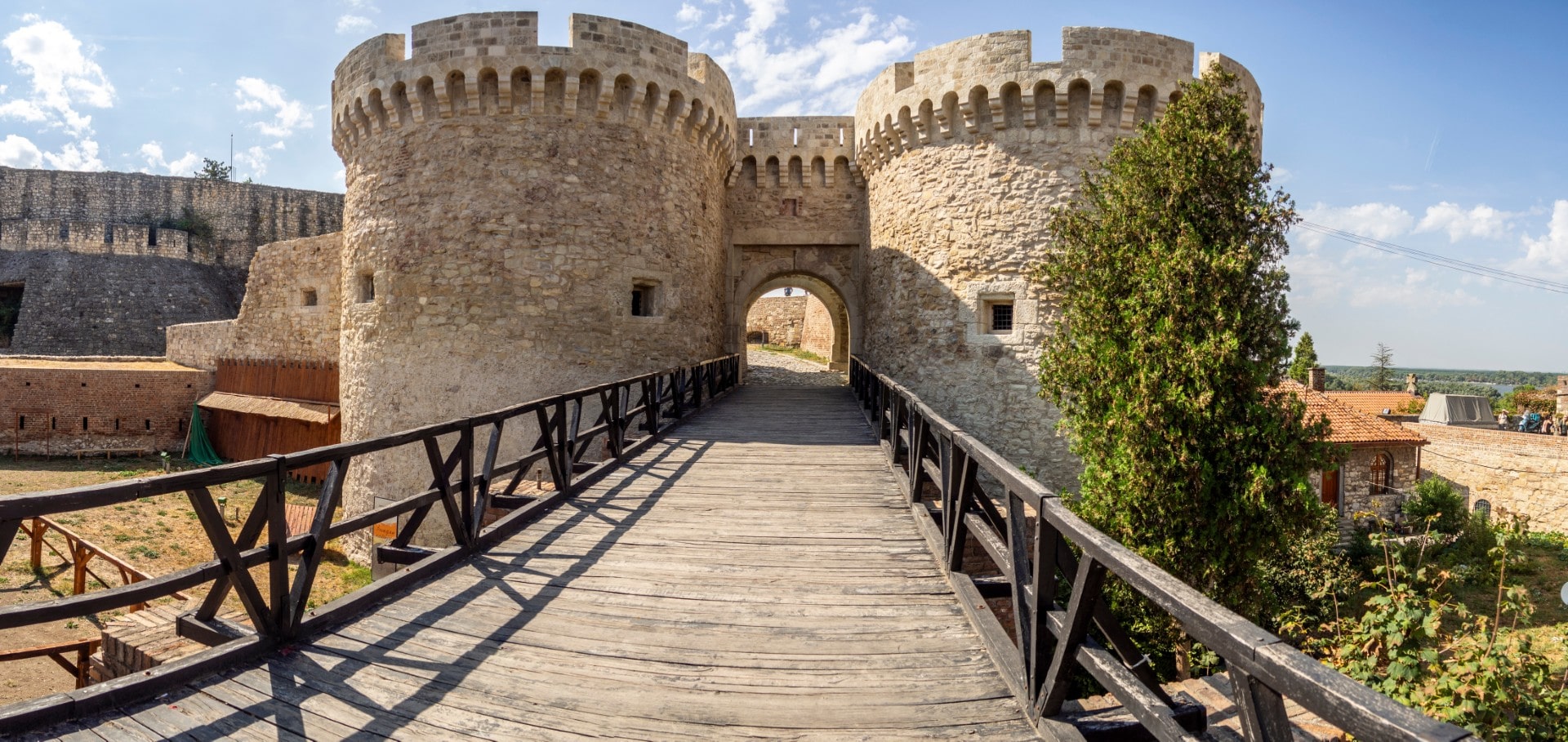
The wooden bridge leading to Zindan Gate (Zindan kapija) flanked by two round towers in the Belgrade Fortress (Kalemegdan).
Just steps from Belgrade’s cruise port stands the mammoth Belgrade Fortress. Built, rebuilt, and added to over its 2,000-year history, the Belgrade Fortress puts the “star” in Stari Grad (Belgrade’s Old Town). Serving as a strategic defense stronghold for empires including Goths, Huns, Turks, Austro-Hungarians, Romans, and Serbs, the fortress was not only used to house armies, but was also an actual city named Singidunum.
Today, you can visit the place where emperors ruled, and empires fell, on a Belgrade river cruise. With individual admissions for various areas within the upper and lower towns inside the fortress, visitors can pick and choose which sections and rooms are most interesting to them.
The following are four locations inside the fortress I recommend you visit.
Military Museum
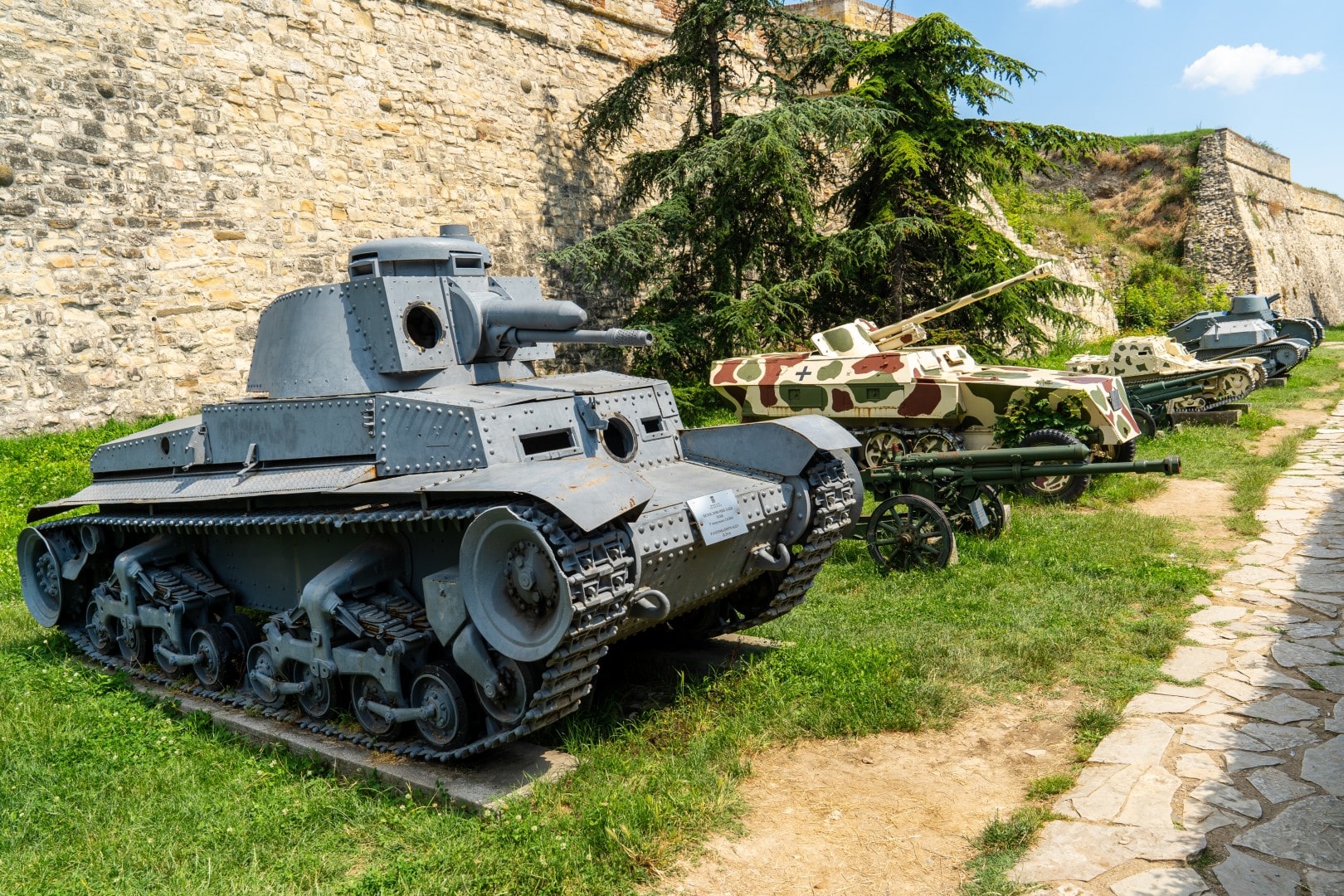
Open-air military museum inside Belgrade Fortress in Kalemegdan Park, displaying historic military equipment, including tanks and cannons from World War II.
With the fortress key to thousands of years of defense, the Military Museum, originally housed in an Ottoman-era building destroyed in World War I, now sits in the Institute for the Protection of Cultural Monuments inside the fortress.
Sharing 14 centuries of Serbian military history, the lower floor covers everything through World War I, while the upper floor shares the military history from World War II and the 1989 revolution. Visitors can see weapons, photographs, uniforms, artwork, tools, jewelry, and other artifacts in the permanent exhibition.
Big Gunpowder Magazine (Warehouse)
Built within the rocks of the fortress on the Danube Slope between 1718 and 1720 to protect gunpowder from enemy artillery, it was reinforced with a protective wall in the mid-18th century. Today, visitors to the Big Gunpowder Warehouse see Roman stone monuments, sarcophagi, and altars. If you’re lucky, there might be a concert or theater performance scheduled inside the warehouse while you’re in town.
Sahat Tower (Clock Tower)
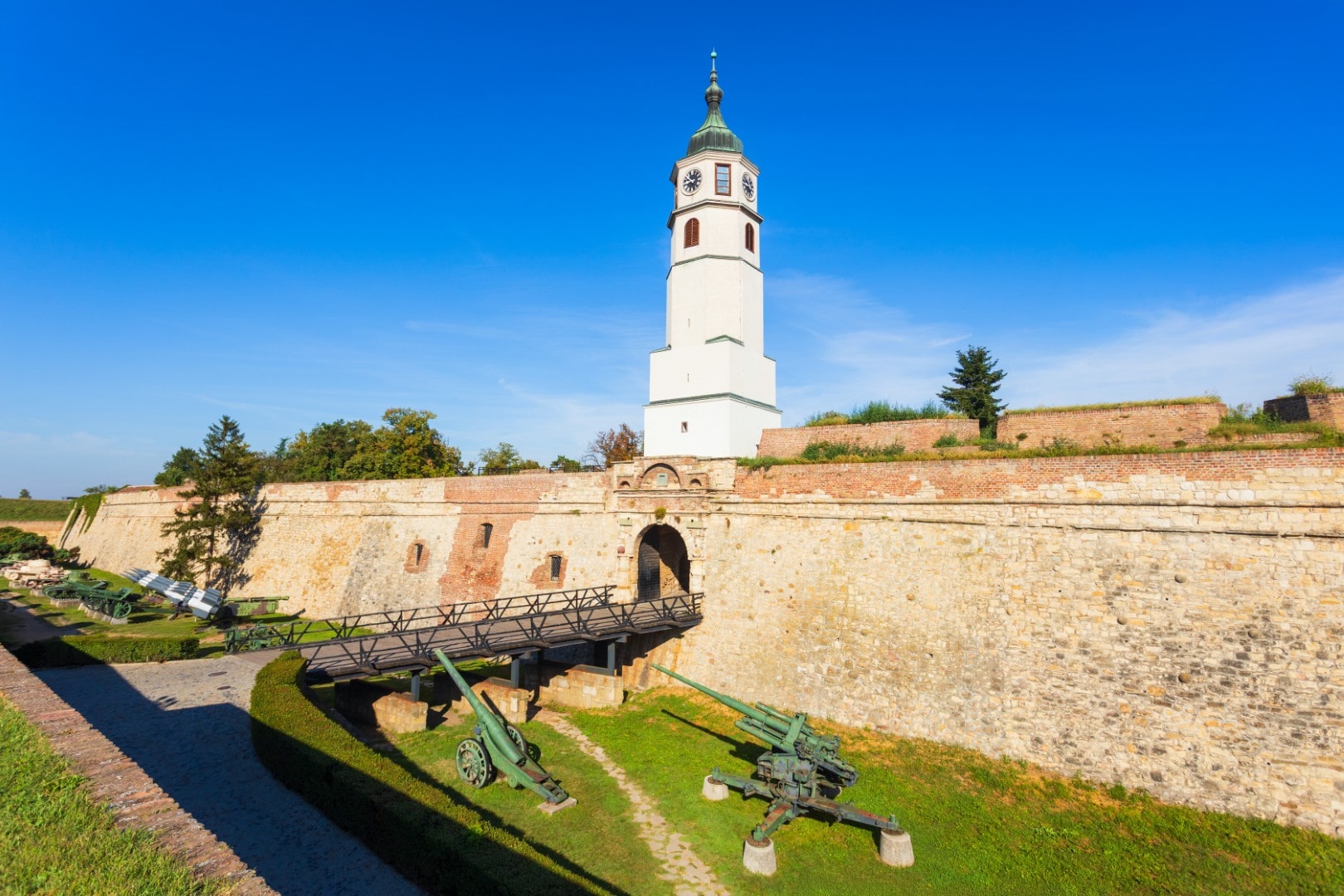
The Sahat Tower (Clock Tower) rising above the Sahat Gate and military museum display inside the historic Belgrade Fortress.
Towering high above the Sahat Gate, the main entrance to the Upper Town of the Belgrade Fortress, the 90-foot-tall tower was built in the mid-18th century under Ottoman rule. More often appearing in town squares and Turkish bazaars, this clock tower in a fortress is a rarity. Instead of bells, time is marked with hammers striking gongs. Gravity, pendulums, and gear trains keep it running, though it needs to be manually wound every week.
Roman Well
Completed in 1731, it was simply called the Big Well until the 19th century, when it was renamed the Roman Well due to myths that the Romans created it. At 180 feet deep, it’s believed to have been designed to carry water from the Sava River to the fort, but the tunnel connecting it to the river remained unfinished. Ultimately, they simply used it as water storage.
Still, many gruesome legends surround it, including being used as a dungeon, a place to throw prisoners, and a spot for spy executions.
Take a Walk in Kalemegdan Park
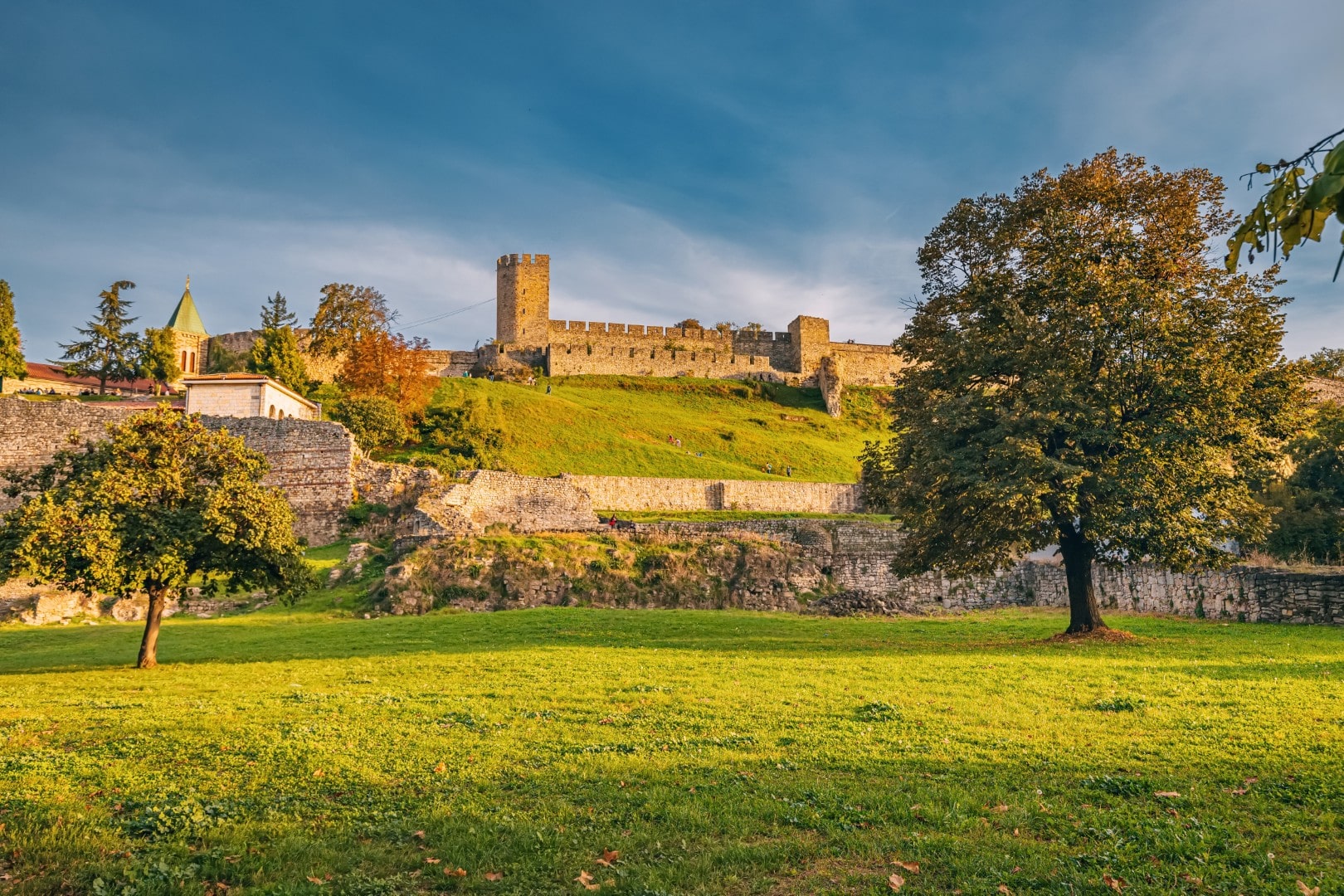
The Despot Stefan Tower and stone ramparts of the Upper Town in the Belgrade Fortress (Kalemegdan), overlooking green lawns.
Not so much into the history of the Belgrade Fortress? Kalemegdan Park, where the fortress stands, is still worth your time. The largest park in Belgrade, it holds not just the fortress, but museums, galleries, cultural and historical monuments, and the 90-year-old Belgrade Zoo.
Walk down the Veliko stepenište, or Grand Staircase, leading from the upper to lower terraces for fantastic views of the Danube and Sava rivers, where you can get a photo of both in one shot. Stroll along tree-lined paths, browsing monuments and war memorials. Museum lovers will enjoy the Natural History Museum Gallery.
Kalemegdan Park is the perfect place for families with young children. Stop by Dino Park Jura Avantura to see your favorite dinosaur, and ADRIA Fun Park (aka Luna Park) to ride the kiddie Ferris wheel, bumper cars, and the carousel. Visit some of the 2,000 animals at the 90-year-old Belgrade Zoo.
Head to Vračar, a Neighborhood Honoring a Scientist and a Saint
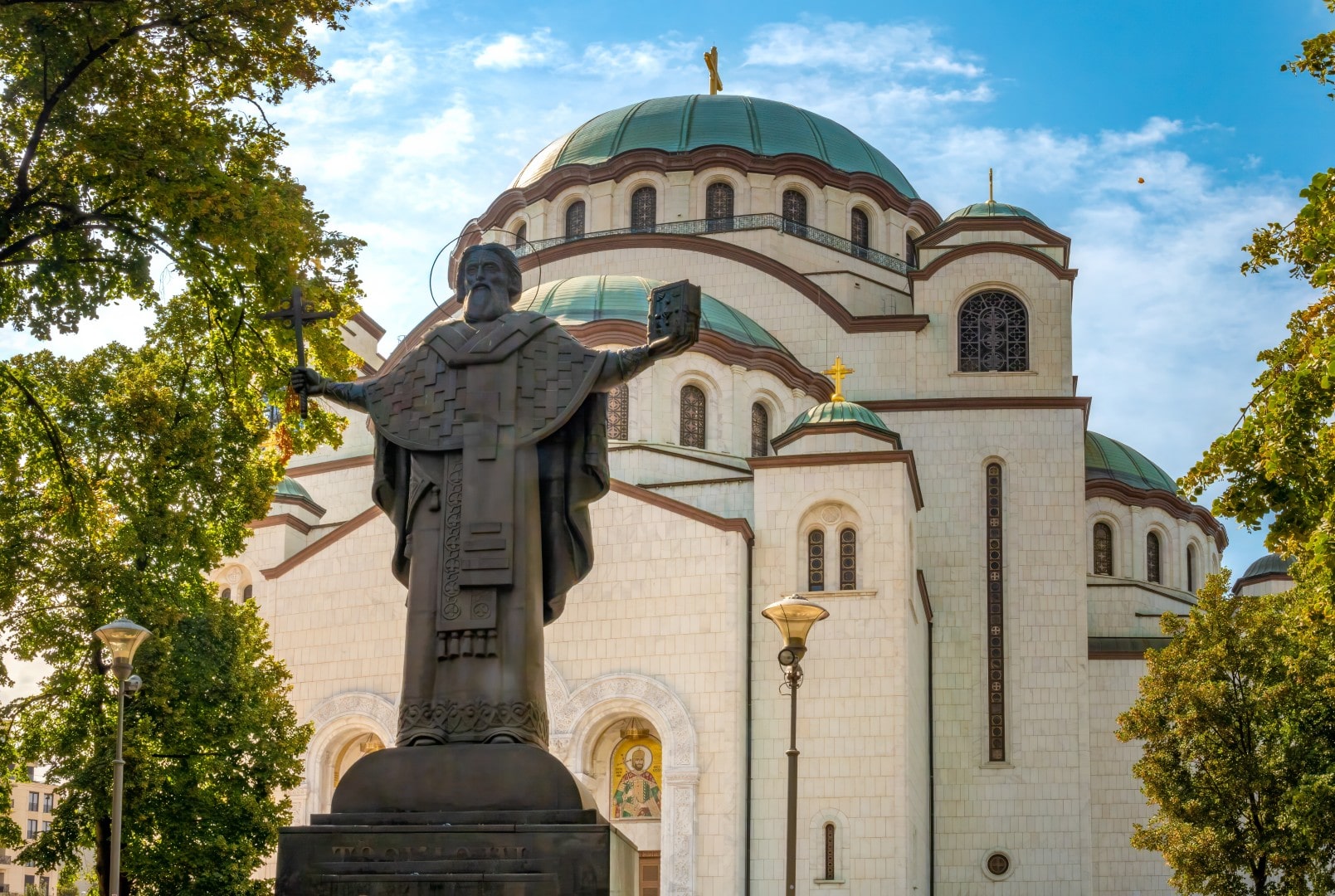
The Church of Saint Sava (Hram Svetog Save) with the bronze statue of Saint Sava standing in the foreground park.
For a bit more of a local feel, take a 15-minute taxi ride, or a 25-minute bus-walk combo from the river cruise port, and head to Vračar. The smallest municipality in Belgrade, Serbia, packs a big punch when it comes to things to do and see. And by big, that’s both literal and figurative.
Beginning with the literal, head to the Church of St. Sava. One of the largest Orthodox churches in the world, it stands nearly 82 meters high, holds 10,000 people, and the largest of its 49 bells weighs over six tons. Named after Serbia’s first archbishop, and standing in the spot where the Ottomans burned St. Sava’s relics in an effort to quash morale when Serbs rose against Ottoman rule, the church is filled with bright red and blue mosaics depicting biblical events and Serbian religious leaders, offset by a background of gold leafing throughout the walls and into the towering dome.
Just a 10-minute walk from the church is the 100-year-old Kalenić Green Market. Shop among locals at Belgrade’s largest market to purchase local honey, baked goods, fruits and vegetables, flowers, and new and used clothing.
From here, continue another 10 minutes to the Nikola Tesla Museum. Holding artifacts from the fascinating history of Serbia’s native son, demonstrations of some of Tesla’s inventions help visitors understand his influence on today’s technology, while his clothing, papers, and art humanize this icon.
Streets Filled With Serbian Food, Shopping, and Atmosphere
Searching for interesting streets to soak up the local atmosphere is one of my favorite pastimes when traveling; I found great opportunities for that while visiting Danube River cities.
Serbians love their meat, and while the city is filled with fantastic restaurants serving Ćevapi, small, grilled minced meat rolls, Pljeskavica, a spiced grilled meat patty, and Karađorđeva šnicla, a rolled veal or pork cutlet fried and filled with a dairy spread, I explored and found myself enjoying these local foods, smells, and music along the cobbled streets of Skadarlija, a quirky, bohemian historic quarter offering restaurants, cafes, and drinking establishments.
For food, shopping, and more, head to the pedestrian-only Knez Mihailova Street, offering a mix of restaurants, coffee shops, interesting architecture, street musicians, and galleries.
Tips on How To Experience Belgrade
Here are a few helpful tips to ensure you make the most of your time exploring Belgrade.
- Most sites are very close to the cruise port. If you’re on a river cruise and visiting the fortress, or any site within Kalemegdan Park, is a priority, plan on making it your first or last stop of the day since it’s only a short, seven-minute walk from the port.
- Each building within the fortress has a separate, minimal admission fee, so you only need to spend time in the area that interests you.
- Though credit cards are widely accepted, it’s good to have a small amount of Serbian dinar with you, since there are some exceptions, including the Nikola Tesla Museum.
- While walking is easy and interesting, as of 2025, public transportation is free for all, making Belgrade the first European city with more than 500,000 inhabitants to offer free public transportation. So hop on a bus, tram, trolleybus, or BG Voz (suburban commuter trains) to expand your exploration of Belgrade.
Cruise the Danube To Visit Belgrade, and So Much More
With its location at the crossroads of two rivers, the waterways have played an important part in the history and development of this fascinating city. Arriving by boat harkens back to its past, making a visit all the more memorable. It also offers a chance to explore so many more fascinating places.
Explore Celebrity River Cruises℠ itineraries and discover Belgrade on a Danube River cruise.