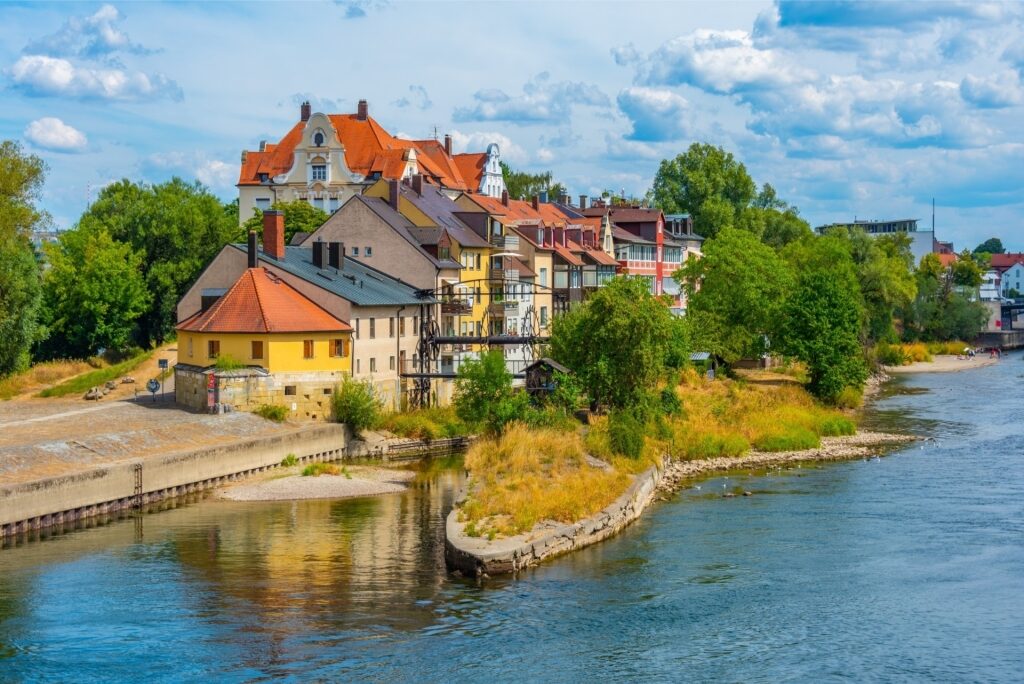
Regensburg is situated at the confluence of the Danube, Naab, and Regen rivers in southeastern Bavaria. Arriving here is like stepping into an open-air museum. These three waterways played a key role in the city’s prosperity as an international trade center in the Middle Ages, and resulted in many of the beautiful buildings you see today.
Here’s a guide to what you can see and do during a stay in this timeless city, which is a medieval masterpiece waiting to be explored.
Why Visit Regensburg?
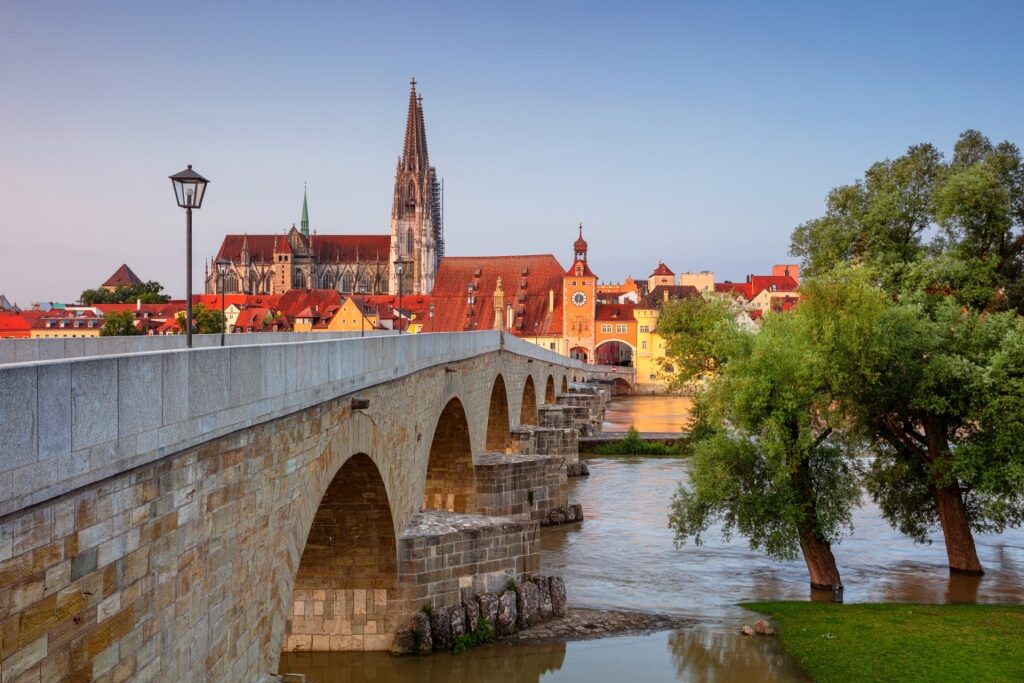
Regensburg
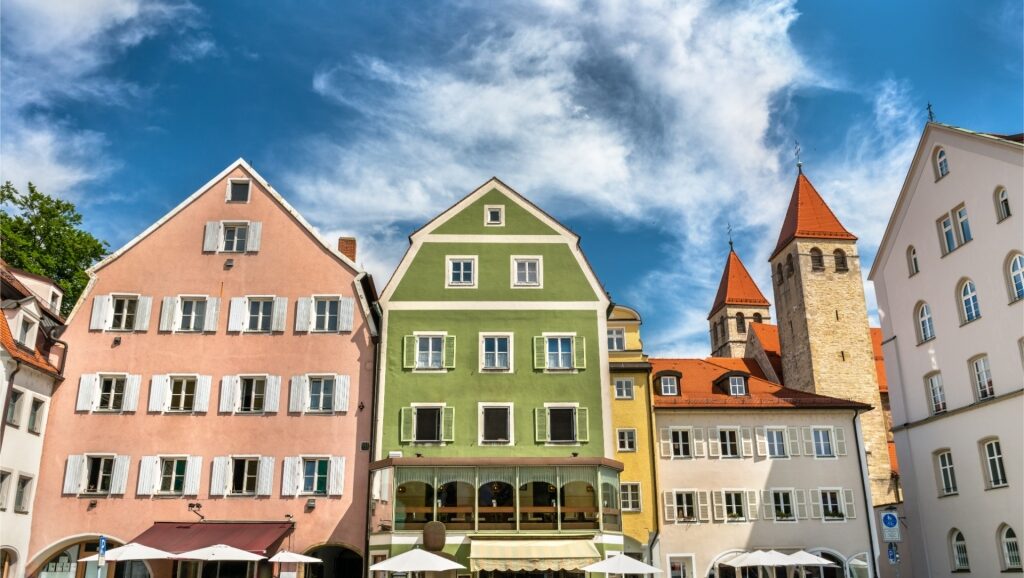
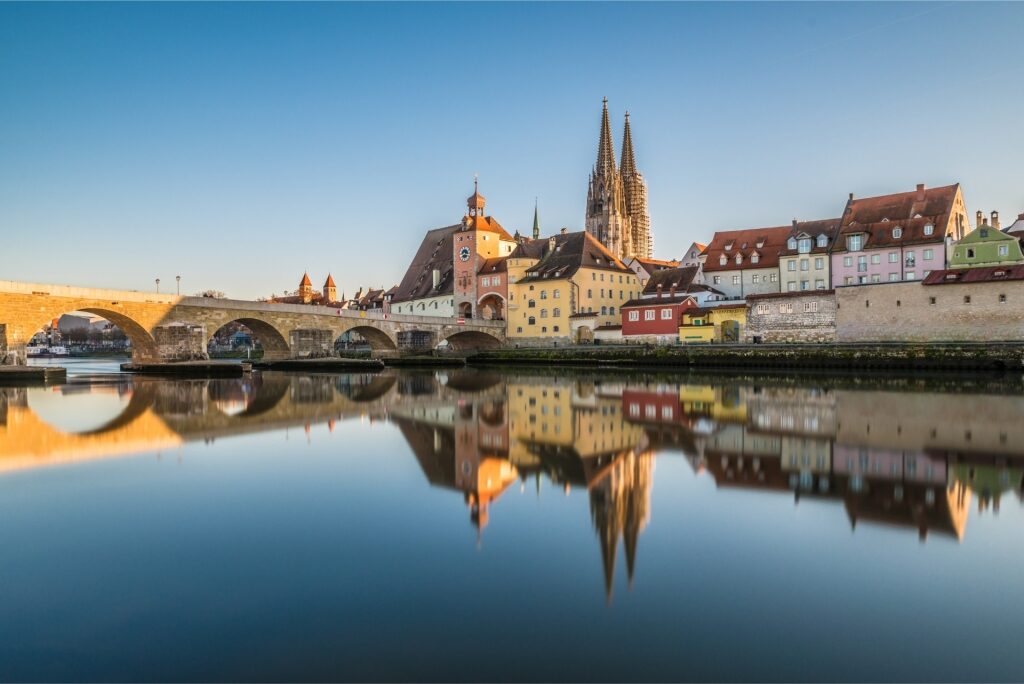
Regensburg is one of Europe’s most magnificently preserved medieval cities. Spared from extensive damage during the Second World War, its skyline is filled with soaring towers and spires. Back at ground level, the ancient stone bridge leads to the UNESCO-listed old town, a labyrinth of narrow, traffic-free, cobblestone lanes filled with centuries of history.
You don’t need to worry about getting lost, as the twin spires of St. Peter’s Cathedral serve as a constant waymark as you discover some of the city’s many historic buildings.
When it’s time to unwind, you won’t have far to look. Regensburg is said to have the highest concentration of bars in the whole of Germany, and you can expect a warm Bavarian welcome as you stop at a beer garden for a refreshing locally brewed weissbier, or wheat beer. Or try a bratwurst or two from the world’s oldest sausage kitchen.
History & Culture
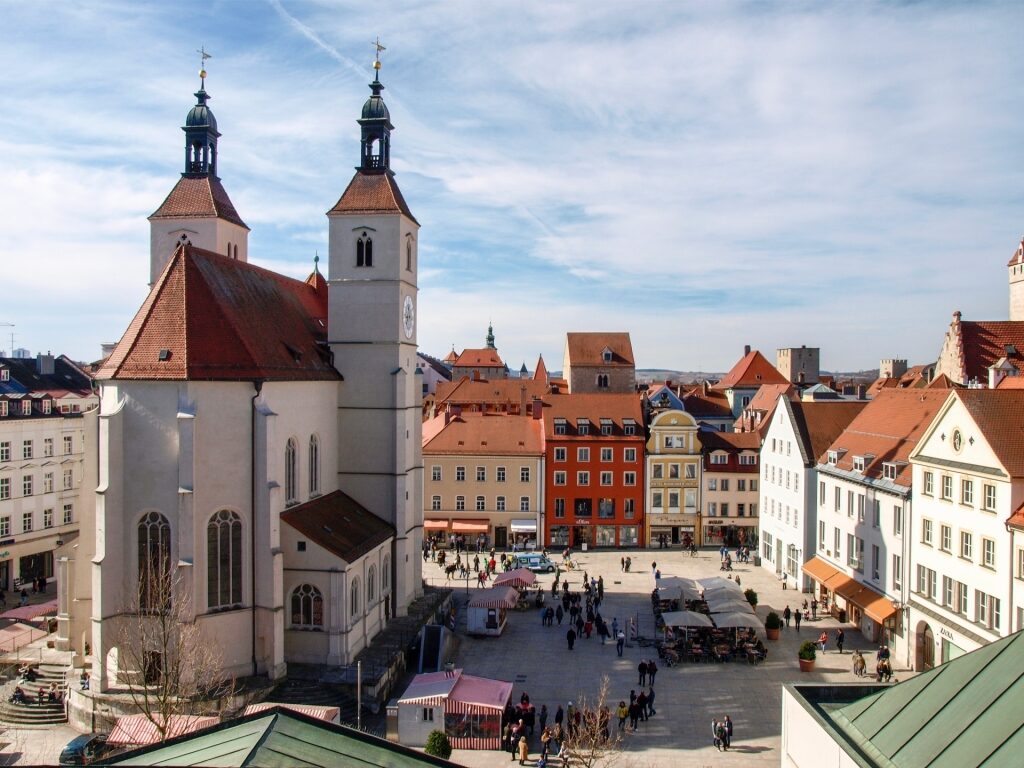
Regensburg
Regensburg has a rich history spanning nearly two millennia. It can trace its roots back to Roman times, when a military fort, Castra Regina, was founded in a strategic location at the meeting point of three rivers. It was part of the northern frontier, called the Danube Limes, and an important garrison town marking the Roman Empire’s most northerly outpost on the Danube River.
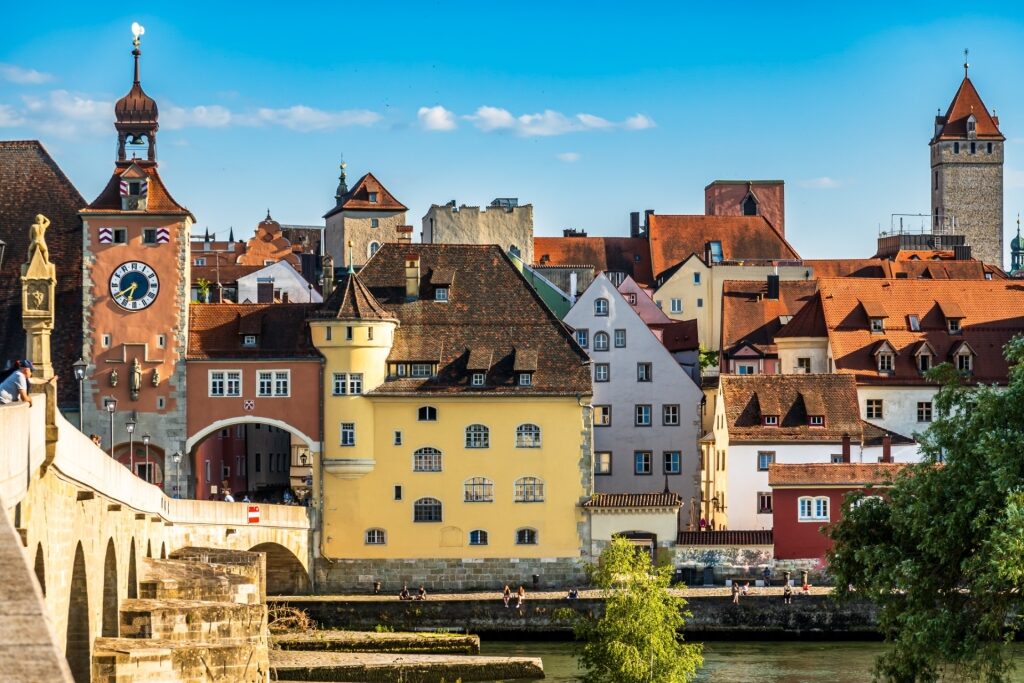
Building its wealth from waterborne trade routes, Regensburg became the capital of the Duchy of Bavaria, a medieval German state, and was the seat of the noble Agilolfing family that ruled the duchy. Between 1135 and 1146, the celebrated stone bridge was constructed across the Danube, and when it opened, it cemented Regensburg’s position as a major commercial hub.
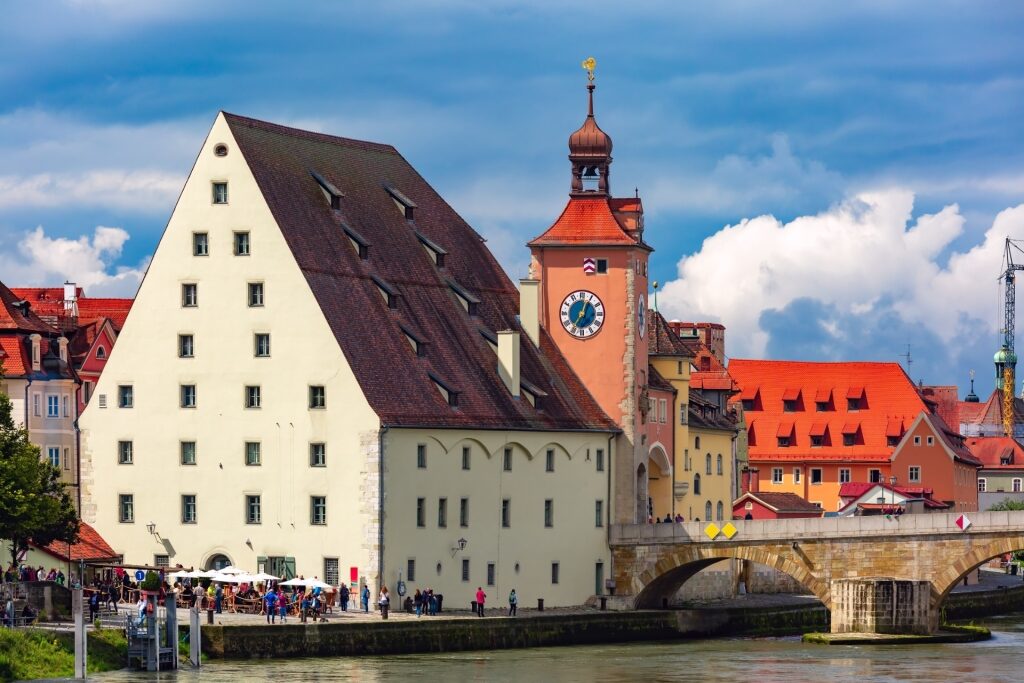
Regensburg
Wealthy families built tall towers, both as a display of their prosperity and to keep them safe from invaders, and these early skyscrapers led to Regensburg’s nickname as the “Manhattan of the Middle Ages.” Around 20 of the original 60 still exist today.
From 1663 through 1806, Regensburg was the seat of the Perpetual Imperial Diet of the Holy Roman Empire, a powerful governing body. In 2006, large parts of Regensburg were designated as a UNESCO World Heritage Site in recognition of outstanding architecture representing different eras from Roman remains through the Romanesque and Gothic periods.
Wildlife & Nature

Mallard
Regensburg occupies a scenic spot at the foot of the Bavarian Forest, surrounded by rolling hills. As such, there are plenty of green spaces to stretch your legs.
Dörnbergpark, a landscaped park dating back to the 19th century, is a tranquil oasis around 15 minutes from the Old Town. Winding paths lead past impressive beech trees, some more than 150 years old.
Alternatively, take a leisurely stroll along the Westbadweiher circular trail around a large pond that begins on the western edge of Regensburg. It’s less than a mile and a half, so you’ll complete it in 30 to 45 minutes. Look out for waterfowl such as mallards, coots, graylag geese, and occasional egrets.
Tips for Visiting Regensburg
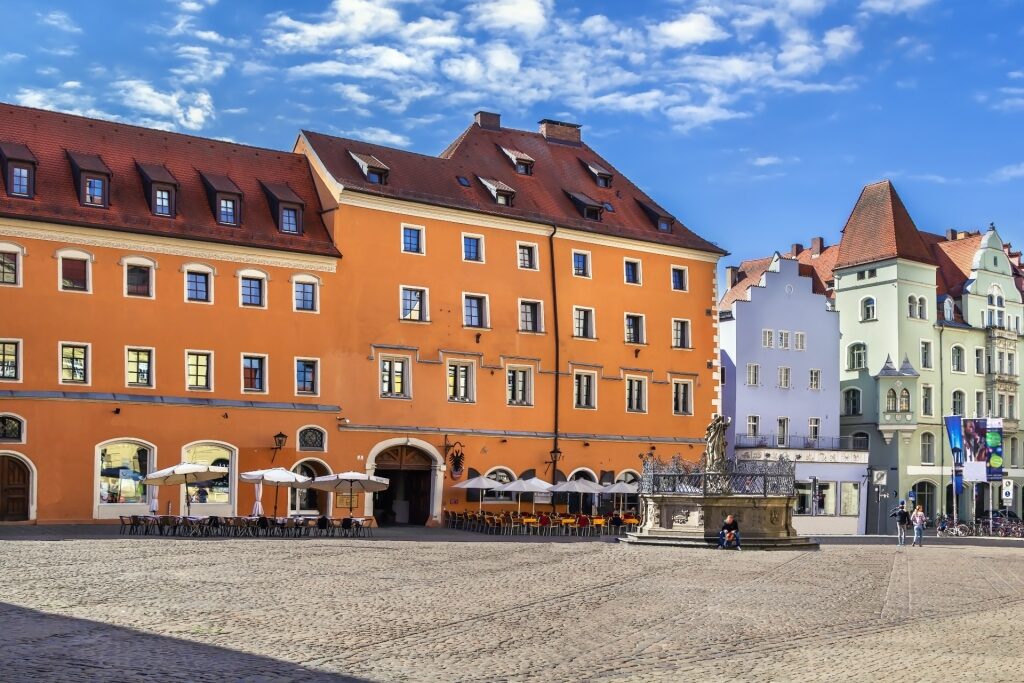
Old Town
Regensburg is one of the most walkable and easy-to-reach cities along the Danube, and from the waterfront, you’ll be in the heart of the Old Town within about 10 minutes.
However, bear in mind that Regensburg is among the most well-preserved places you’ll visit in Germany, so the majority of streets and sidewalks are original and have never been replaced. You’ll have to negotiate cobblestones and uneven surfaces, so be sure to wear comfortable, flat shoes.
A couple of blocks from the river, in the historic center, is the 13th-century town hall. Although it’s an attraction in itself, inside, you’ll also find the tourist information office where you can pick up maps and guidebooks, and get advice to help make the most of your time in the city.
Things to Do & Attractions in Regensburg
Stone Bridge
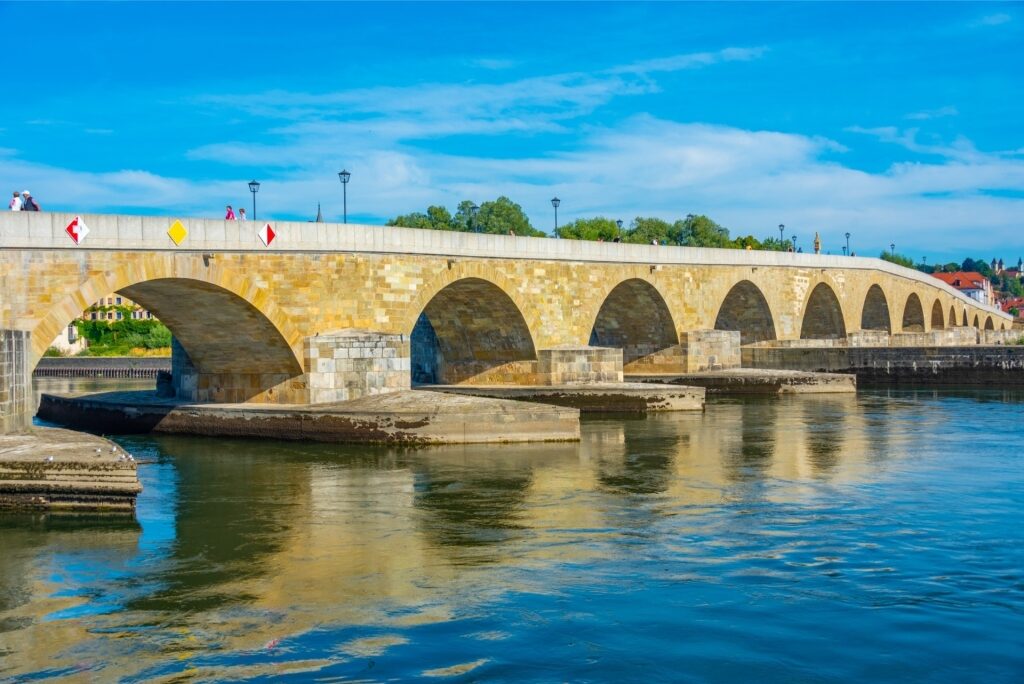
Stone Bridge
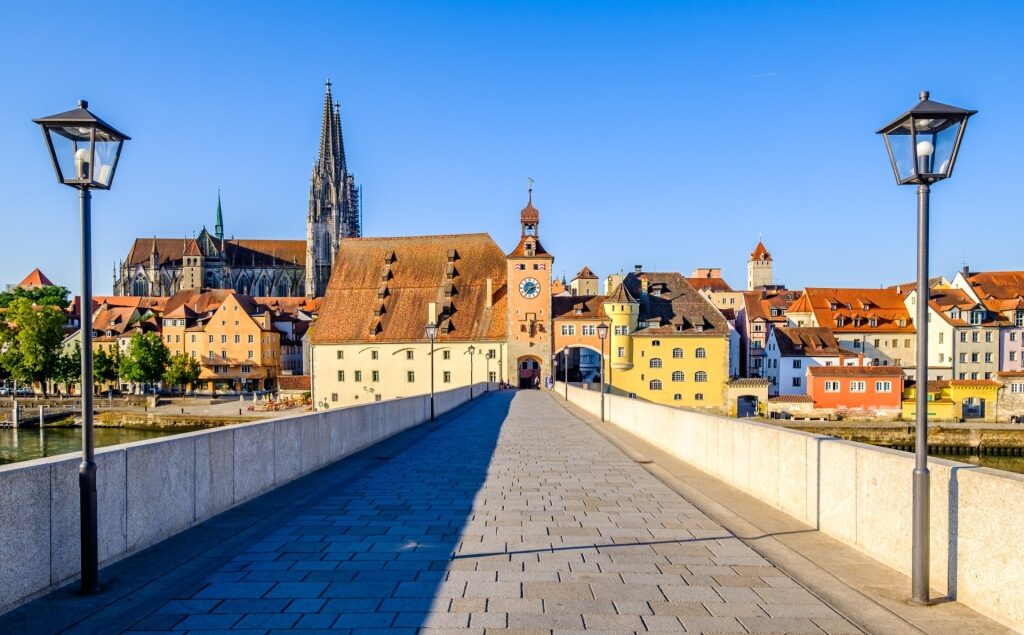
This legendary 12th-century bridge is likely the first thing you’ll see when you arrive in Regensburg. One of the oldest preserved bridges in Germany, with 14 of the original 16 arches, for more than 800 years it was the only river crossing in the city.
It’s said the architect made a pact with the devil to complete the bridge ahead of Regensburg’s cathedral and promised to give Satan three souls in return. He was successful, but the devil might have been disappointed, as instead of humans, he got a dog, a rooster, and a hen.
St. Peter’s Cathedral
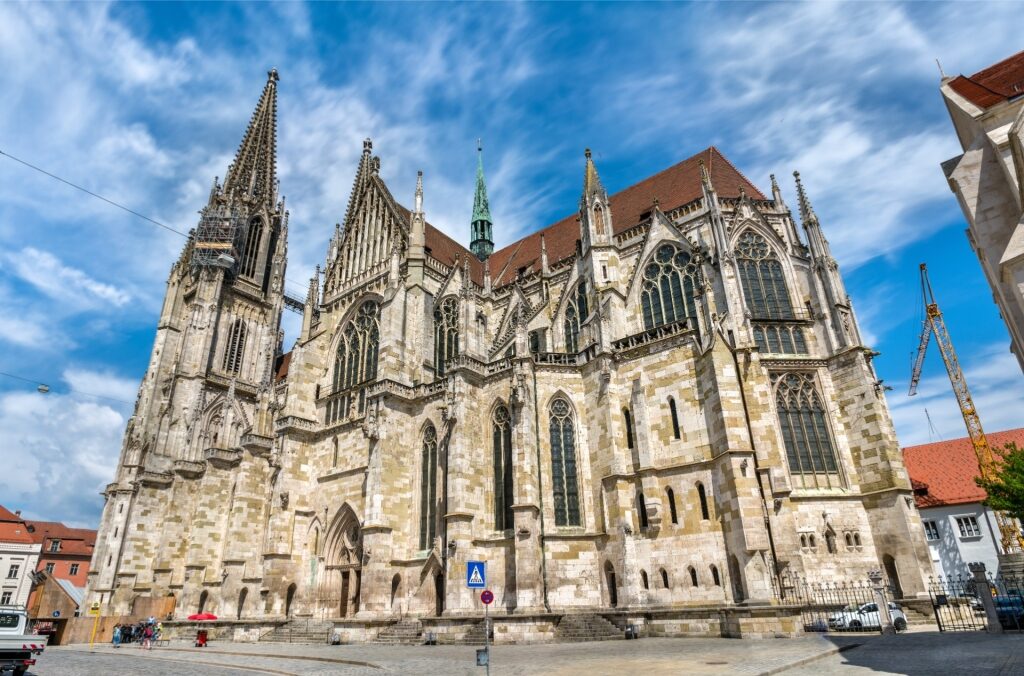
St. Peter’s Cathedral
The only Gothic cathedral in Bavaria, this impressive building is the towering centerpiece of the UNESCO World Heritage district. Equally remarkable are the jewel-bright stained glass windows, which you can admire when you step inside.
When construction work began in the 13th century, it was planned to build a cathedral as high as the sky. Money ran out, and for more than 350 years the cathedral only had two stumpy towers which were half the height of today’s lofty 344-foot spires. St. Peter’s did, however, go on to become the burial place of bishops and prominent local citizens.
Roman Gate
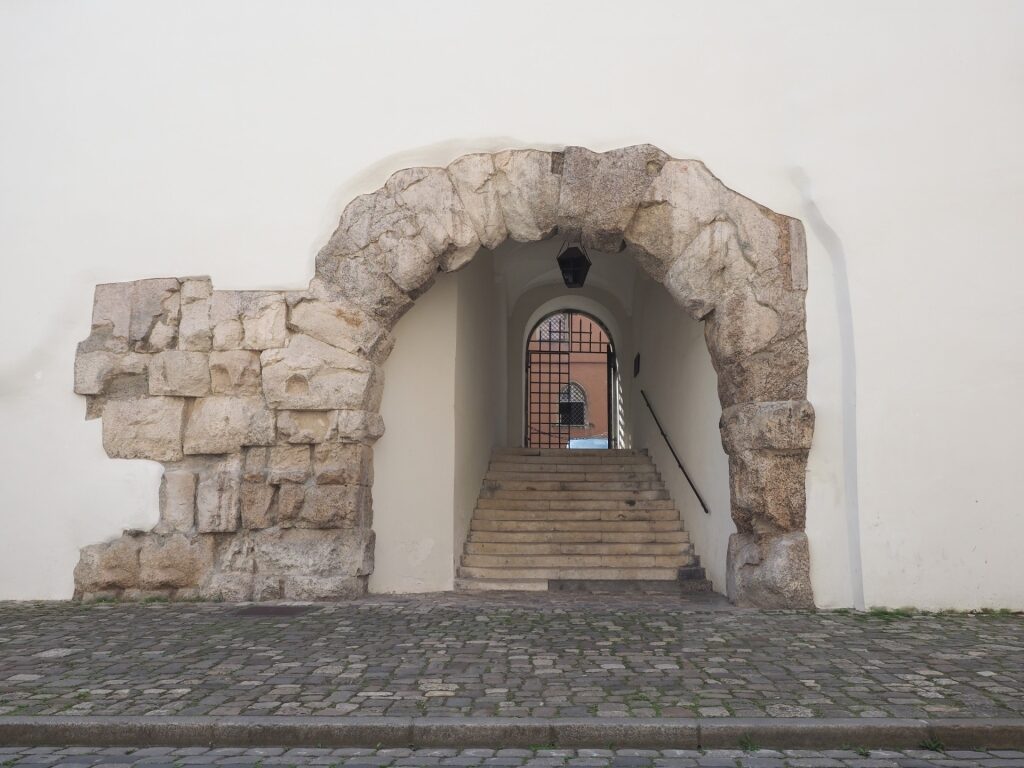
Roman Gate
A legacy of Regensburg’s origins, the Porta Praetoria is one of only two surviving Roman gates in Germany; the other is the Porta Nigra in Trier. Once the northern gateway to the city’s Roman fort, it has been integrated into the surrounding architecture near the cathedral.
Town Hall
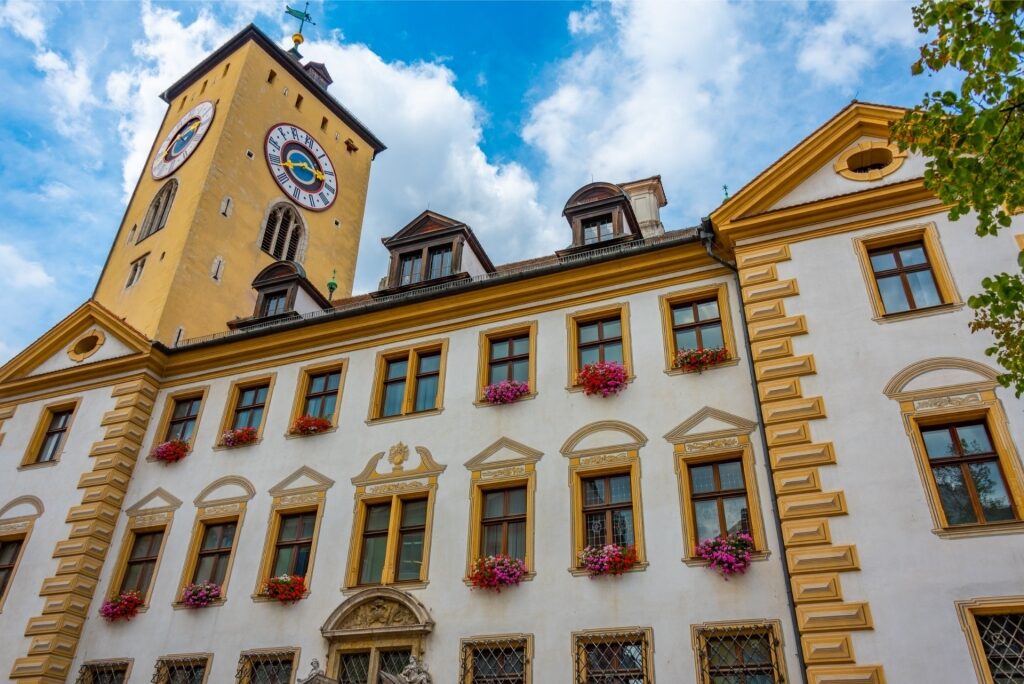
Town Hall
The mustard-colored town hall, topped by a 14th-century clock tower, was once the meeting place of the Perpetual Imperial Diet. You can visit the room, with its high wooden ceiling and decorative paintings, on guided tours, which also take in the prison cell and chilling torture chamber.
St. Emmeram’s Palace
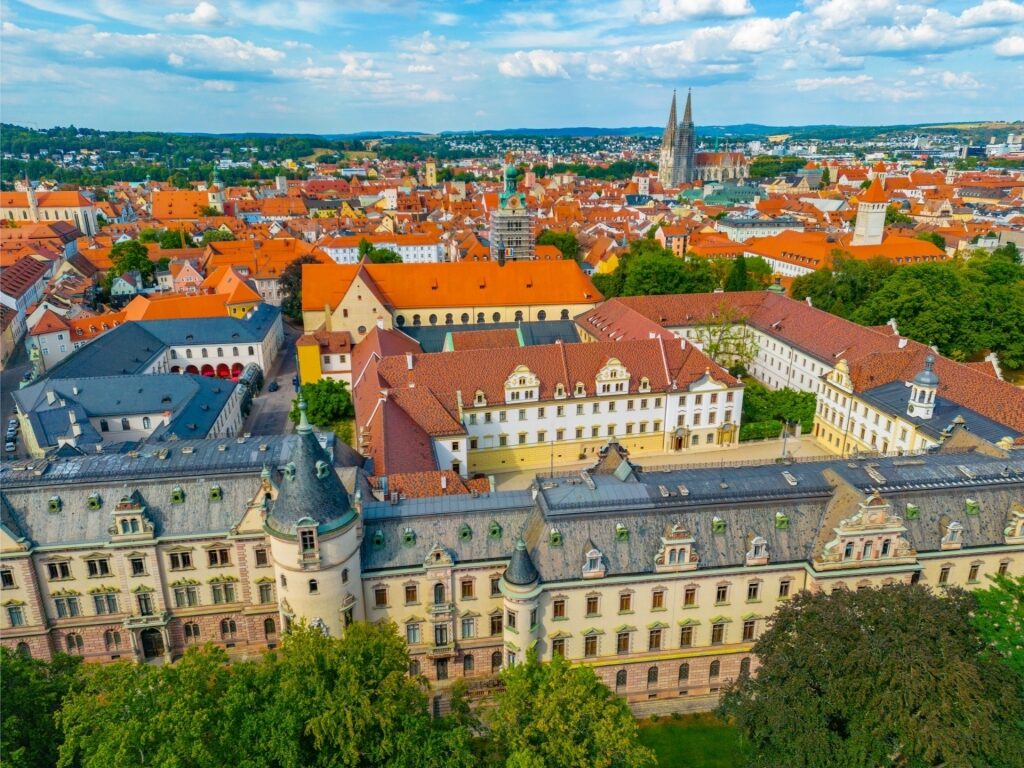
St. Emmeram’s Palace
Also known as Thurn and Taxis Castle after the family that lives there, this vast building with more than 500 rooms is Germany’s largest private inhabited palace. Located south of Regensburg’s Old Town, and built on the site of a Benedictine abbey, the oldest parts of the palace date back to the 12th century.
Guided tours take in select grand rooms, the cloister, stables, and treasury, and in the museum, you will discover how, in the 15th century, the Thurn and Taxis family founded Europe’s first postal system.
The Golden Tower
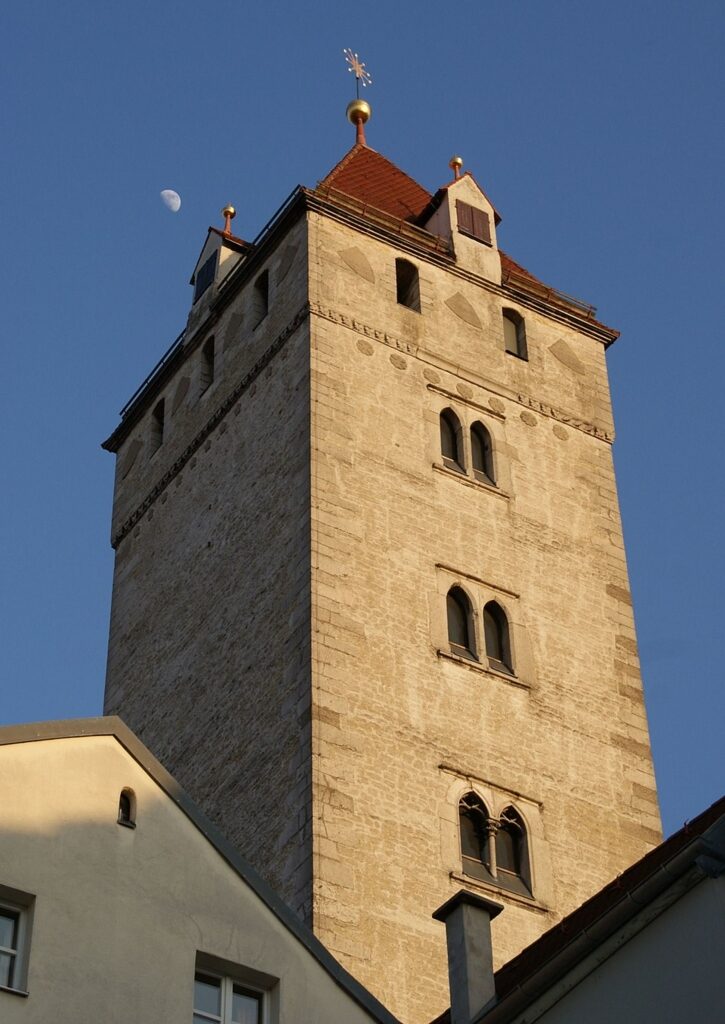
Golden Tower Photo by Johanning on Wikimedia Commons, licensed under CC BY-SA 3.0
This is Regensburg’s finest example of the patrician towers built as status symbols by wealthy local families. This nine-story residential tower in the Old Town is almost 165 feet tall, and while you cannot go inside the tower, you can visit the 13th-century courtyard.
The House of Bavarian History
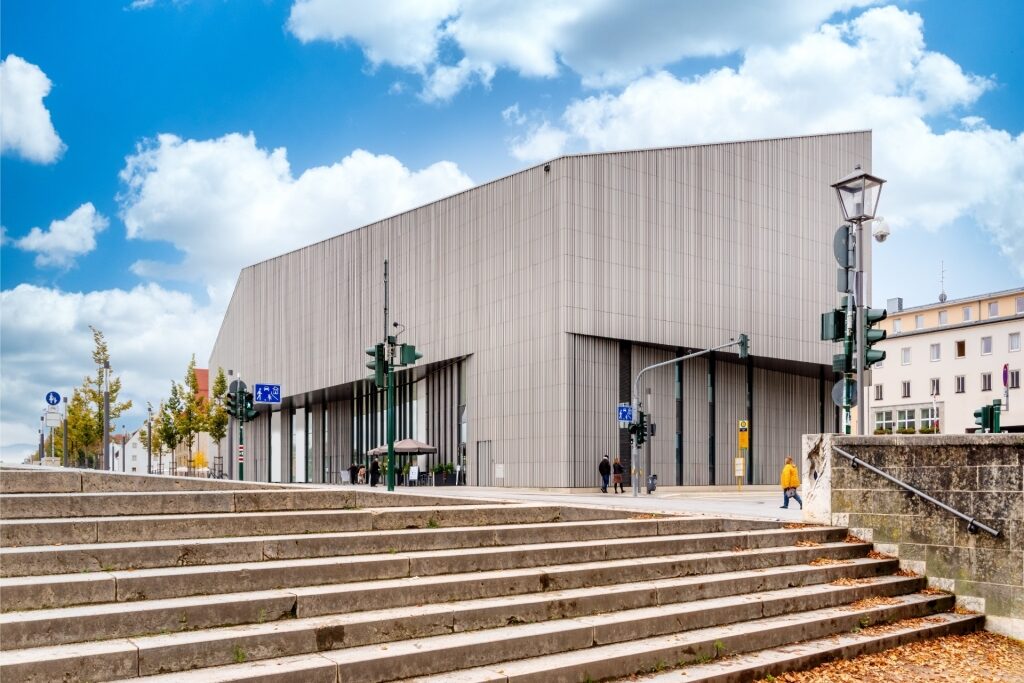
House of Bavarian History
In striking contrast to Regensburg’s medieval architecture, this museum occupies a distinctive modern building alongside the Danube. Opened in 2019, it provides an interesting and interactive insight into regional history.
Here, you can discover the origins of lederhosen—the leather breeches still worn throughout Bavaria—and see models of German castles, such as King Ludwig II’s fairy-tale Neuschwanstein, the inspiration behind Walt Disney’s Sleeping Beauty Castle at Disneyland.
Food & Drink

Weisswurst
Germany is renowned for sausages, and you’ll find the most historic place to eat them in Regensburg. The Wurstküche—sausage kitchen—has been serving them up since the 12th century, when it first opened to serve stonemasons working on the nearby bridge.
It’s worth waiting in line for these juicy pork sausages served in portions of six, eight, ten, or 12—they are relatively small—with a side of tangy sauerkraut and mustard.
Another Bavarian sausage specialty is weisswurst, or white sausage, usually only served before noon. This tradition goes back to the time when there was no refrigeration, and the sausages had to be eaten fresh. Bavarians typically eat them with their hands, dipping them into mustard, but it’s not obligatory.
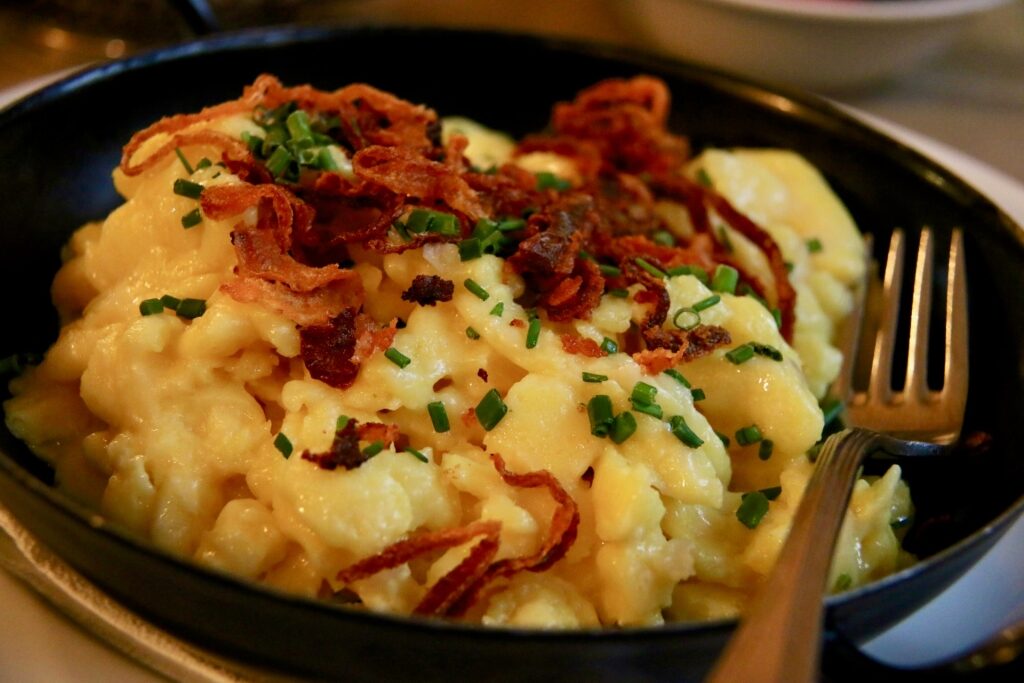
Käsespätzle
Bavaria shares a border with Switzerland across the waters of Lake Constance, and cheese features in many classic Regensburg comfort dishes, such as käsespätzle, where a creamy sauce flavored with onion and chives is mixed with small, round noodles.
For dessert, try kaiserschmarrn, literally translated as emperor’s mess, comprising fluffy, caramelized pancakes made with rum-soaked raisins. They’re then torn into bite-sized pieces and served with a side of apple or cherry purée.
There are more breweries in Bavaria—where the capital Munich is home to the world-famous Oktoberfest beer celebration—than anywhere else in Germany. Breweries with beer gardens in Regensburg include Spitalbrauerei, Bischofshof, and Alte Linde.
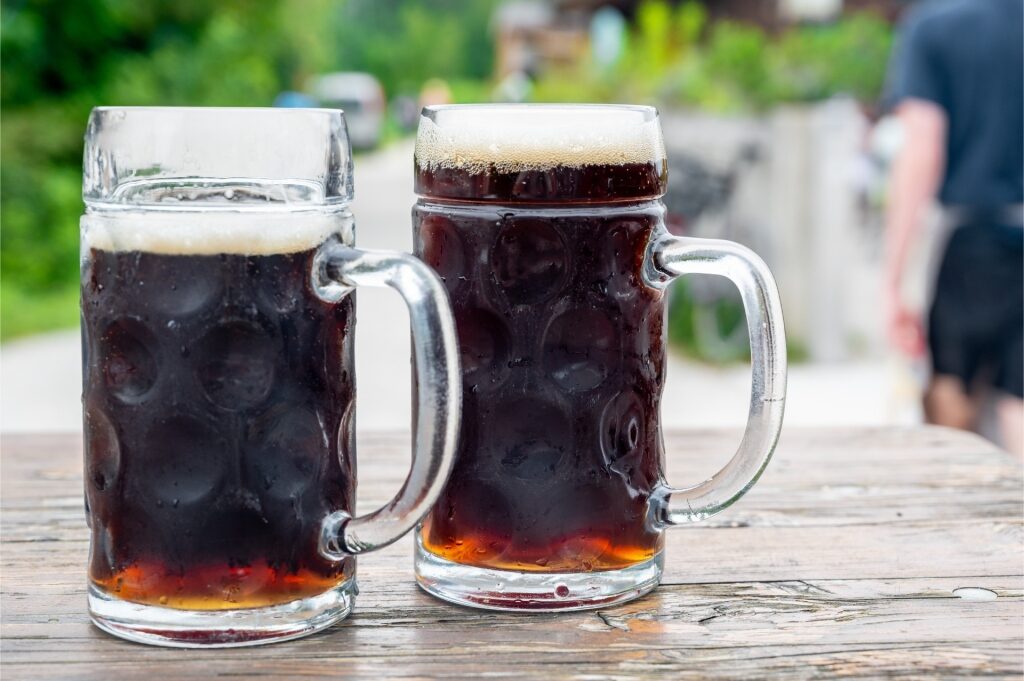
Dunkel
In addition to the weissbier wheat beer, other styles to try include helles, a light beer, and the darker dunkel. If you prefer a strong German beer, order doppelbock, and for something unusual, there’s the smoky rauchbier, made with malt dried over a wood fire.
Best Time to Visit Regensburg
Old Town
Regensburg is virtually a year-round destination. The main vacation season runs from spring through fall, and there are also seasonal Christmas markets in Regensburg to explore.
The best time to visit is down to your personal preference. The hottest summer months are June, July, and August. In spring, April and May, the water meadows along the Danube are filled with wildflowers, while the forests assume their dazzling fall colors later in the season.
Remember, weather can be variable, so always pack layers–appropriate to the time of year you visit–and take a light rain jacket.
FAQs
Is Regensburg, Germany, worth visiting?
Old Town
Widely regarded as the best-preserved medieval city in Germany, Regensburg is a top place to visit on the Danube River. It combines history, culture, and charm, and is an unforgettable destination.
Why is Regensburg famous?
Regensburg
Unlike many other German cities that suffered widespread and devastating bombing during the Second World War, Regensburg survived largely intact. It has more than 1,500 listed buildings of historical interest, so most of what you see is original.
What to do in Regensburg in one day?
Stone Bridge
Start your visit at the 12th-century stone bridge, and walk to the middle to take scenic photos of the river and city. When you are feeling hungry, a stop at the Wurstküche sausage kitchen is a must.
Then delve further into the city’s history in the Old Town, scheduling time to visit the cathedral before strolling around the streets to admire the Golden Tower and Town Hall. If time allows, take a look at some of the attractive small boutiques and pick up some German souvenirs.
Is Regensburg a walkable city?
Regensburg
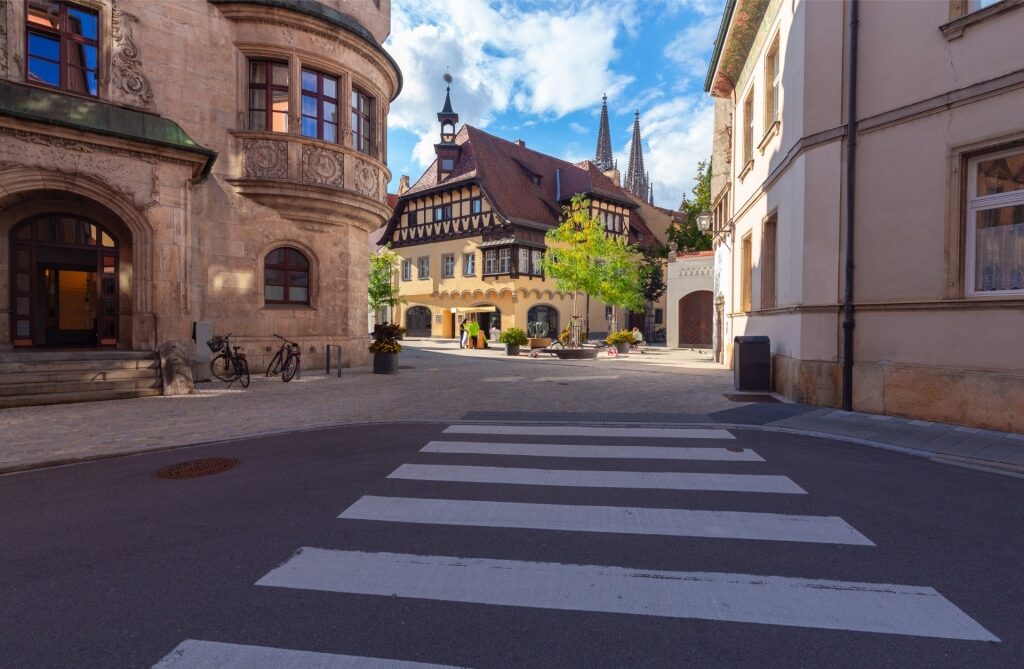
Compact and pedestrian-friendly, Regensburg is a very walkable city, especially its UNESCO-listed Old Town. All the main sights are situated within walking distance of each other, and many areas are car-free.
Regensburg
Discover the delights of the medieval city on one of Celebrity’s river cruises to Regensburg. Take a look at Celebrity’s itineraries today and book your unforgettable European vacation.