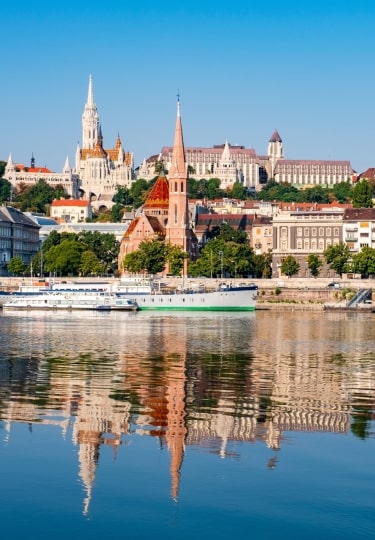
What is Budapest known for? Its perfect blend of history, culture, and old-world charm—for a start—makes Hungary’s capital city a destination that suits every type of traveler. Whether you’re exploring the cobblestone streets of the Buda Castle District, strolling along the Danube River, or cooling off with a cold brew at a ruin bar, the city has plenty to offer.
From thermal baths housed in Art Nouveau buildings with colorful mosaics and stained glass to panoramic views of Buda and Pest, Budapest is one city you won’t soon forget.
Parliament
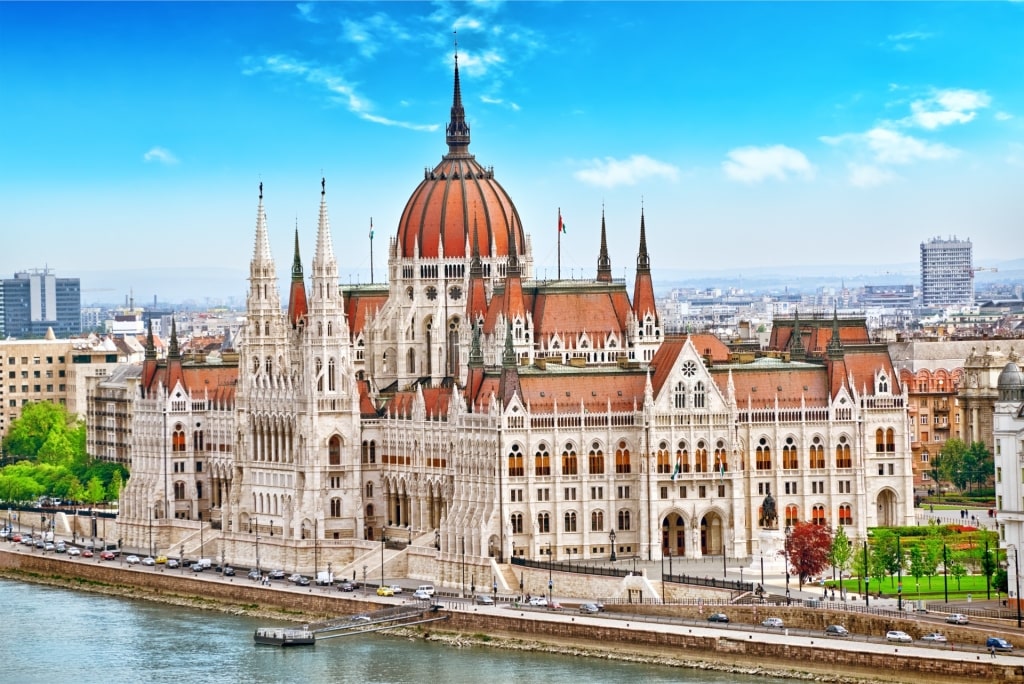
Hungarian Parliament Building
Set along the banks of the Danube River, the neo-Gothic Hungarian Parliament Building is one of Budapest’s most recognizable landmarks. It’s also the largest building in Hungary, completed in 1904 after nearly two decades of construction.
As impressive as its exterior is, the interior is also worth checking out. Guided tours take visitors through the gilded central staircase, the Dome Hall where the Hungarian Crown Jewels are displayed, and several exhibition areas.
The Buda Castle District
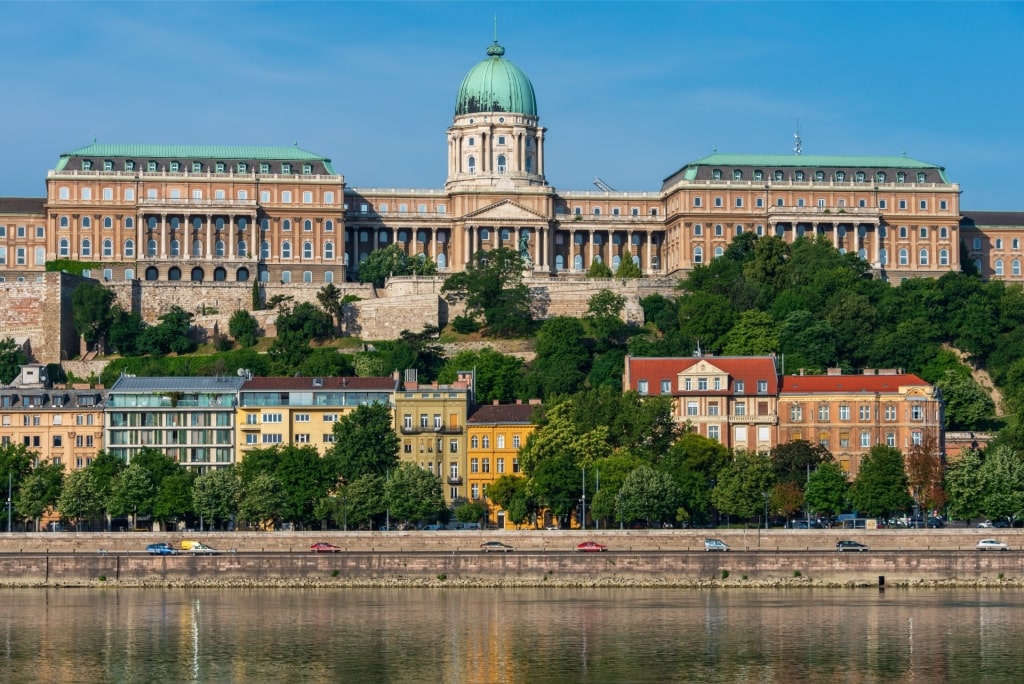
Buda Castle District
Located on the Buda side of the city and perched atop Castle Hill, the Castle District is Budapest’s historic center, filled with medieval architecture and cobbled streets.
To explore the district, start at the Royal Palace, also known as Buda Castle. Once the residence of Hungarian kings, it now houses the National Széchényi Library, the Budapest History Museum, and the Hungarian National Gallery. The palace and its open grounds offer sweeping views of the Danube and the Pest side of the city. There’s a lot to see and do here, so block off a few hours to explore if you can.
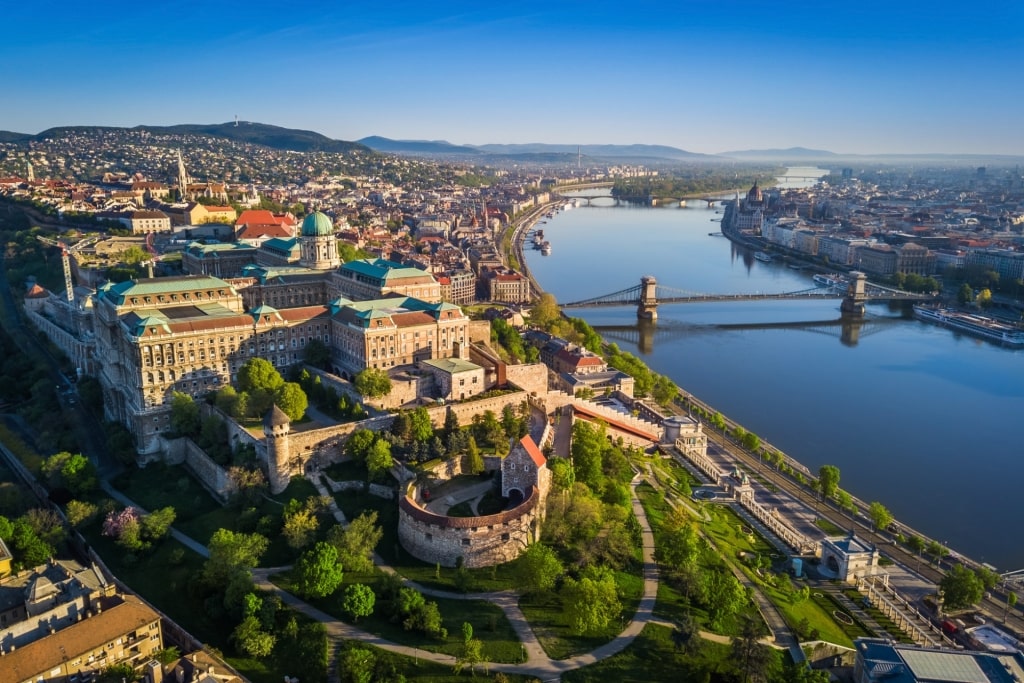
Buda Castle District
Among the many museums in Budapest, the Hungarian National Gallery, located within the Royal Palace, is especially worth a visit. It showcases centuries of Hungarian art, from Gothic altarpieces and Baroque masterpieces to contemporary works by artists such as Mihály Munkácsy.
Fisherman’s Bastion
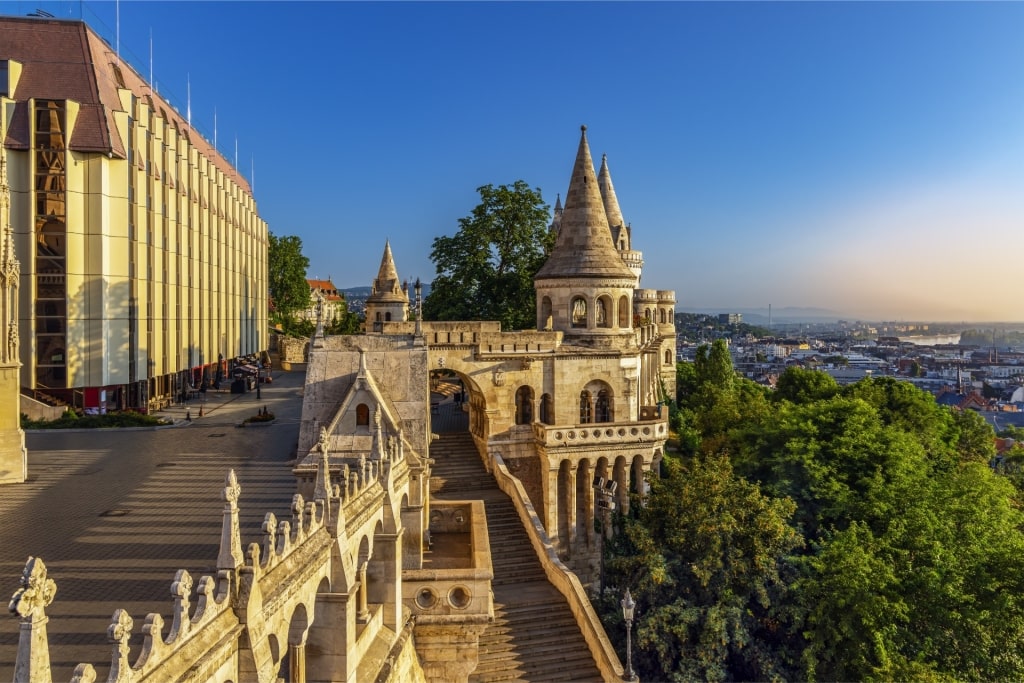
Fisherman’s Bastion
Also located within the Buda Castle District, Fisherman’s Bastion is one of the most recognizable historical monuments in Budapest. Fairytale-like in appearance, the Bastion was built in the 19th century and named after the fishermen who defended this stretch of the city wall during the Middle Ages.
There are seven towers, each representing one of the Magyar tribes that settled in the country in the ninth century. It’s an easy stop to include while exploring the Buda Castle District, and entry to most areas is free.
Don’t leave without taking in the panoramic views of Pest from the upper towers; it’s one of the best shots of the city you will capture.
Thermal Baths & Spas
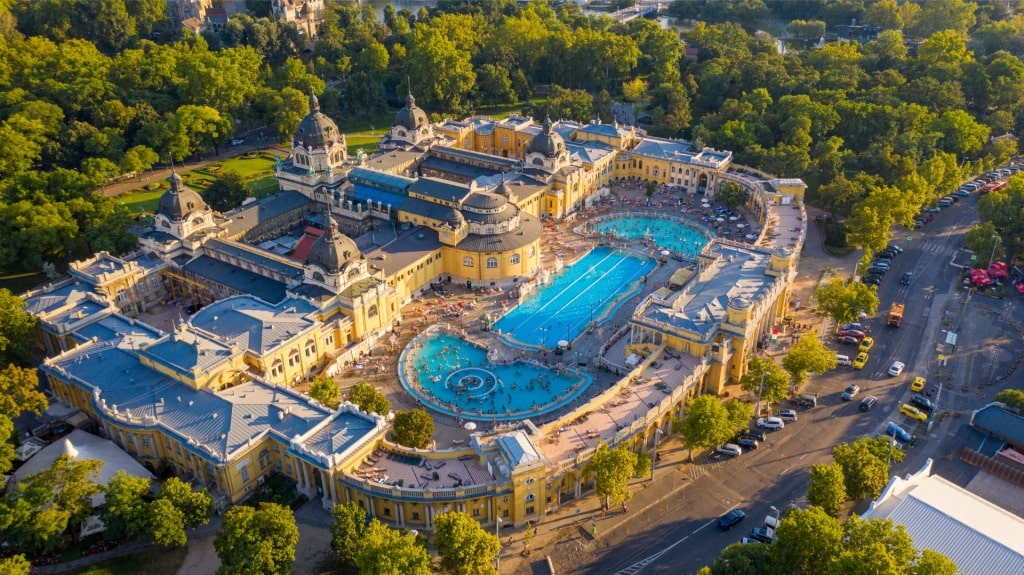
Széchenyi Thermal Baths
Nicknamed the “City of Spas” because of its natural thermal springs, spa culture is something Budapest is famous for. The Romans were the first to discover these therapeutic waters and built baths for healing and relaxation. Today, the city is home to more than 100 thermal springs, and Hungary has over 1,000 in total.
The most visited of Budapest’s baths is the Széchenyi Thermal Baths, located in City Park. It features 15 indoor pools of varying temperatures and three large outdoor pools, all of which are fed by two natural hot springs.
The mineral-rich water contains calcium, magnesium, and sulfate, all of which are believed to help alleviate joint pain, arthritis, and improve circulation. The outdoor pools offer a unique experience of bathing in steamy water surrounded by neo-Baroque architecture.
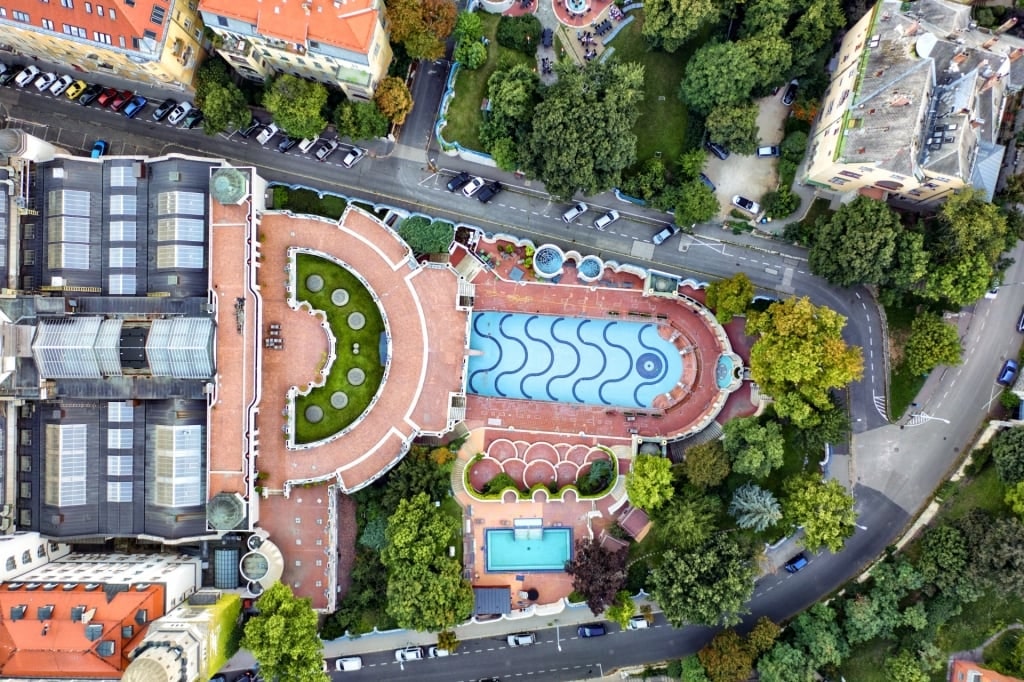
Gellért Baths
Another top choice is Gellért Baths, located on the Buda side of the Danube. Known for its ornate Art Nouveau interior, including mosaic-covered walls and stained glass windows, Gellért offers a quieter and less crowded experience than Széchenyi. If you’re looking for a peaceful soak in elegant surroundings, Gellért is your go-to.
As a general tip, it’s recommended to bring your own towel and flip flops to the thermal baths, as rentals are not commonplace. You will also need a swimming hat to enter some of the pools, and men are required to wear “proper” swimming trunks; board shorts are not permitted. There are lockers to store your personal belongings while you enjoy the baths.
Chain Bridge
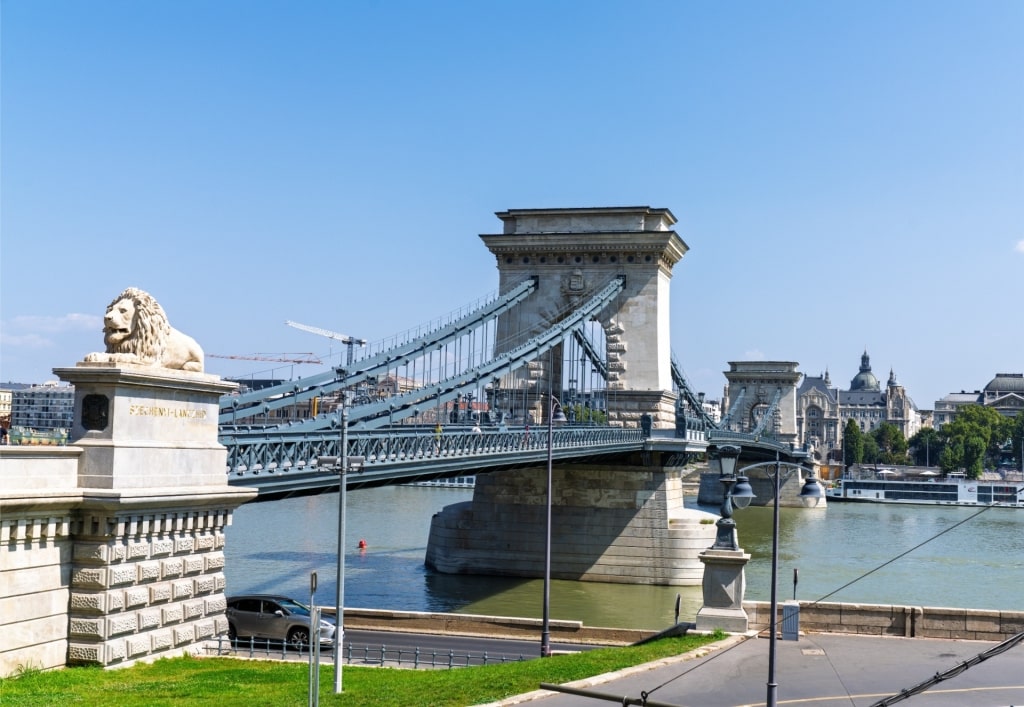
Chain Bridge
Completed in 1849, the Széchenyi Chain Bridge was the first permanent bridge across the Danube in Hungary. It became a powerful symbol of unity between Buda and Pest. Designed by English engineer William Tierney Clark and built by Adam Clark, the bridge was destroyed during World War II but later rebuilt.
Today, Chain Bridge remains one of the city’s most iconic landmarks. If you’re exploring on foot, a walk across the bridge offers postcard-worthy views of the Parliament building, Buda Castle, and the riverbanks on both sides.
St. Stephen’s Basilica
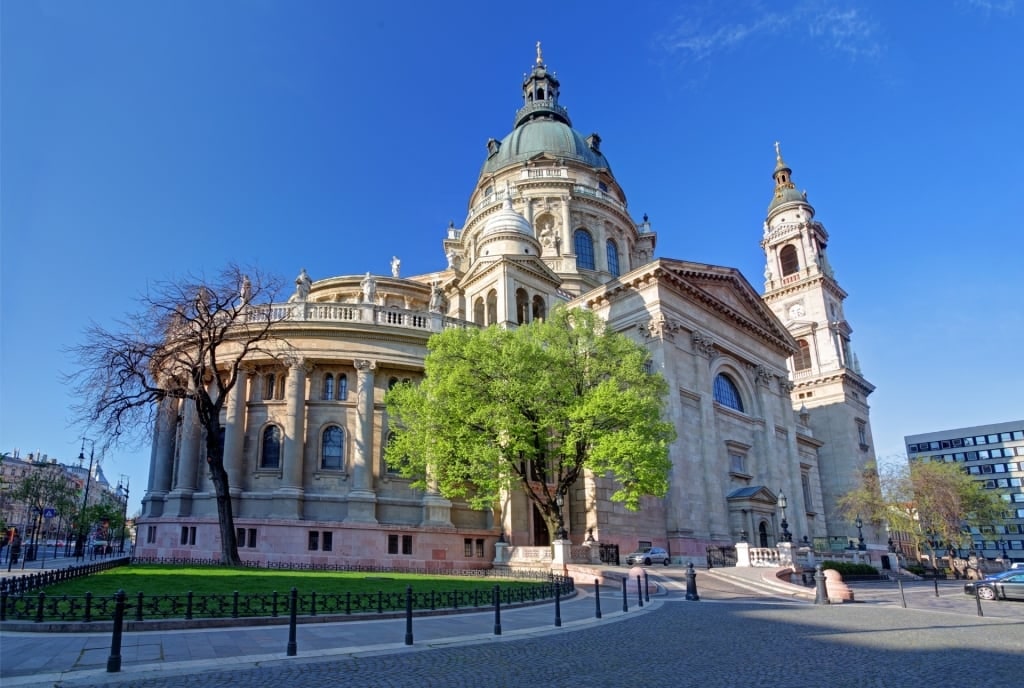
St. Stephen’s Basilica
Named after the first king of Hungary, St. Stephen’s Basilica is one of the tallest buildings in Budapest and the third-largest church building in the country. This Roman Catholic basilica is built in a neoclassical style and is open to the public. Modest attire is recommended.
The church is most famous for housing the mummified right hand, called the Holy Right, which belonged to Saint Stephen I of Hungary. After taking in the ornate interior, head to the top of the basilica for panoramic views of the city.
Danube River Life
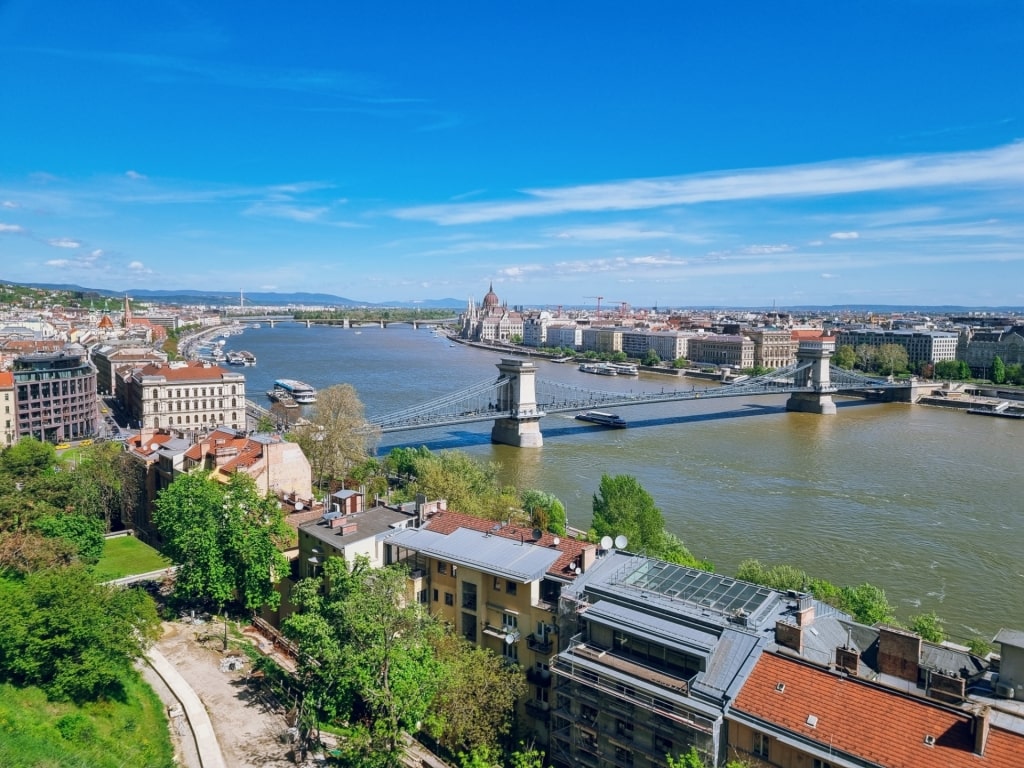
Danube River
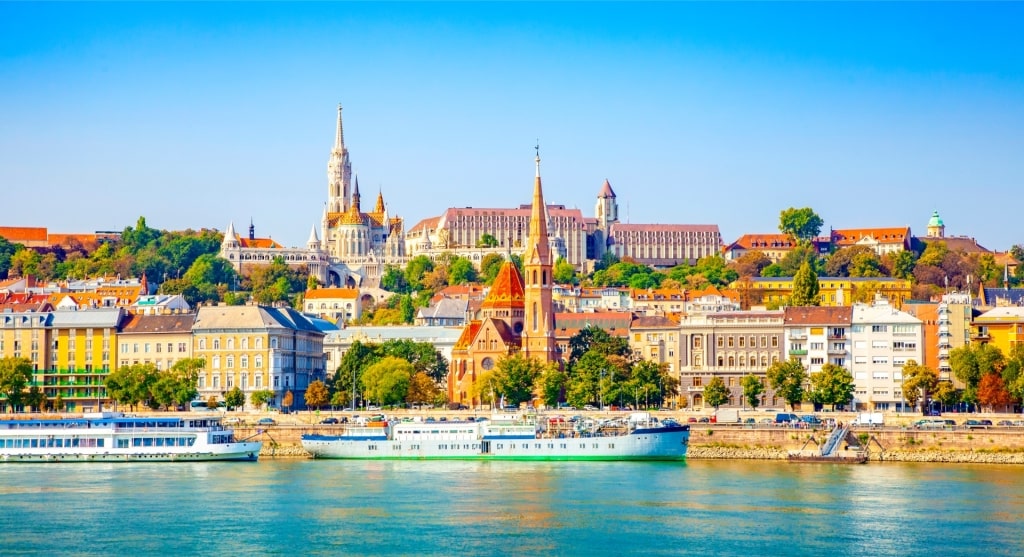
The Danube River divides Budapest into its Buda and Pest halves and is a popular gathering place. Several of the city’s most important buildings and landmarks are located along its banks, including the Hungarian Parliament Building, Buda Castle, and the Széchenyi Chain Bridge.
On any given day, you’ll find people walking, cycling, or simply relaxing along the riverfront. Throughout the year, the area hosts several festivals and events, such as the Budapest Wine Festival, the Danube Carnival, and New Year’s Eve cruises.
Many bars and restaurants are situated along the waterfront, making it an ideal place to enjoy lunch with a view of the city’s most impressive monuments.
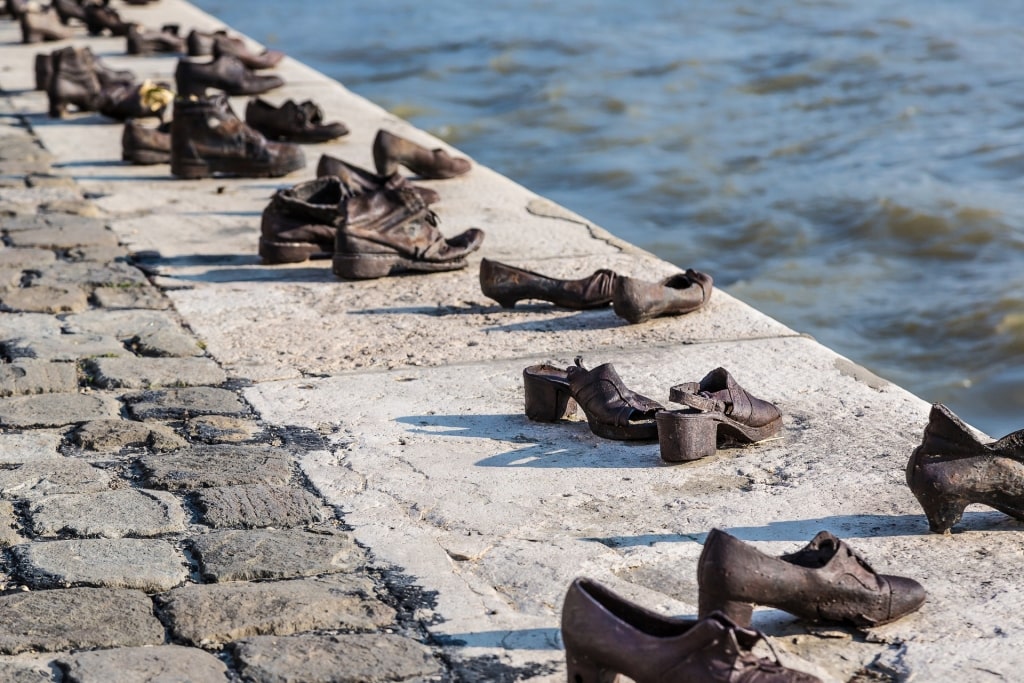
Shoes on the Danube Promenade
If you’re strolling the riverbank near the Parliament Building, look out for the Shoes on the Danube Promenade installation. Some 60 pairs of old-fashioned shoes that look as though they’ve been abandoned by men, women, and children are scattered along the waterfront. They’re made of rusted iron and are actually embedded in the concrete.
The shoes are a memorial to the Hungarian Jews who were shot on the banks of the river in 1944 and 1945 by the violently antisemitic Arrow Cross Party. The memorial was installed here in 2005 and is a poignant reminder of the persecution of Jews in Hungary.
Ruin Bars
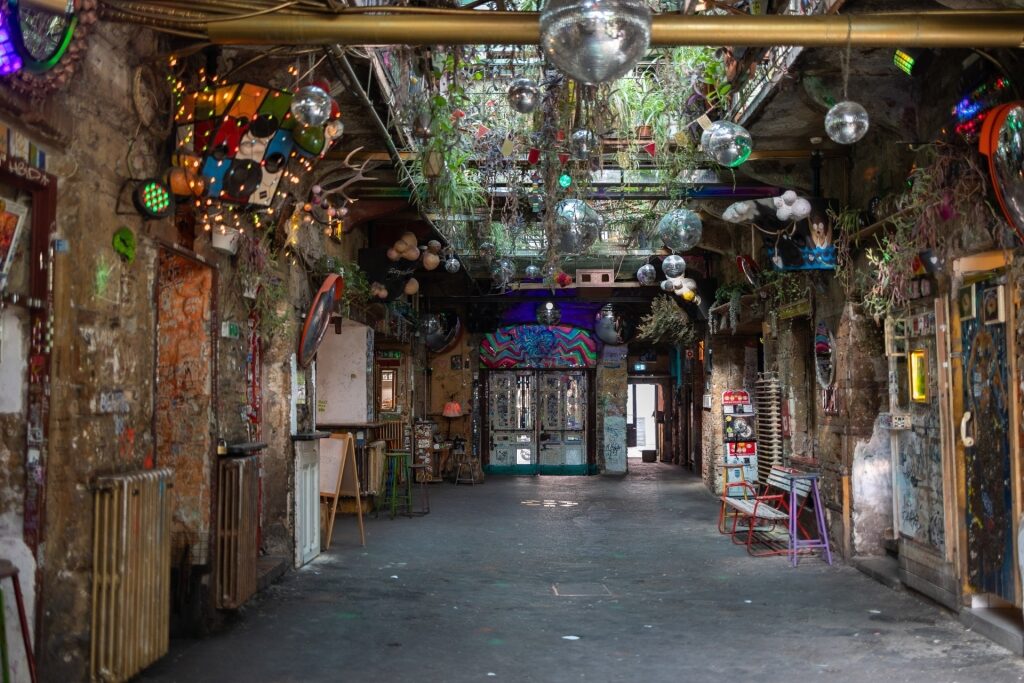
Szimpla Kert
What is Budapest famous for? If you’re into a lively urban bar scene, ruin bars is the answer. These eclectic bars are a unique phenomenon in Budapest. They are situated in abandoned buildings and courtyards throughout the city, with the majority concentrated in the Jewish Quarter. They began opening up in the early 2000s and quickly gained popularity as casual, creative spaces for friends to meet.
Many retain a grungy feel, which is intentional. Perhaps the most iconic of them all is Szimpla Kert, which is known for its mismatched furniture and vintage decor.
Although famous for their nightlife, ruin bars are also open during the day and offer a fun way to decompress after sightseeing. Many double as cafés in the afternoon, offering a more relaxed atmosphere where you can take in the quirky design without the evening crowds.
Margaret Island
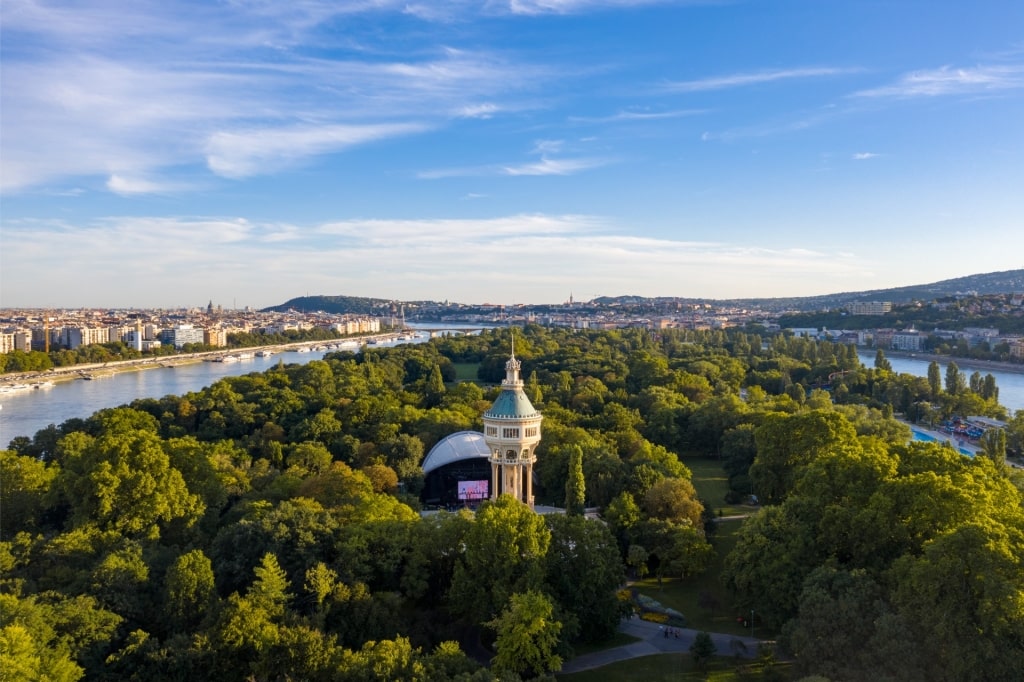
Margaret Island
Located in the middle of the Danube River, between Buda and Pest, Margaret Island is a green, car-free retreat that feels worlds away from the city even though it’s just a short walk or tram ride from either side. On weekends especially, the island comes alive; visitors stroll along shaded paths, rent bikes, or settle in for a riverside picnic.
There’s something for just about everyone here, from a musical fountain and Japanese garden to the ruins of a 13th-century Dominican convent, a small zoo, and even thermal baths.
Hungarian Wine
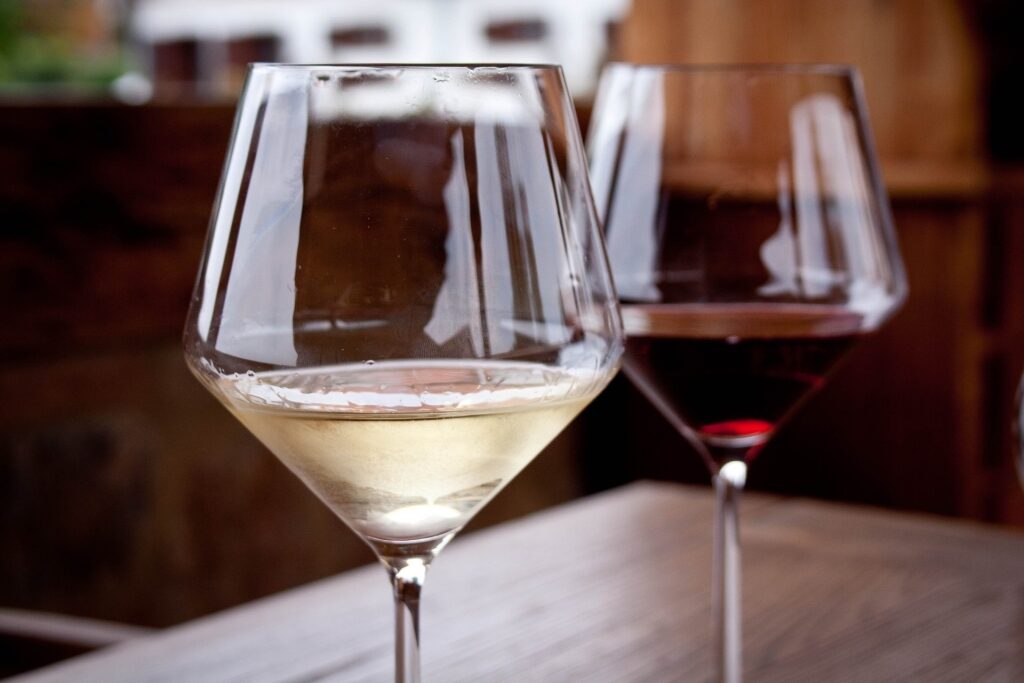
Hungarian wine
Hungary has a deep-rooted winemaking tradition that stretches back over a thousand years. Tokaji Aszú, a sweet wine from northeastern Hungary, is perhaps the most renowned, while Villány in the south produces bold reds, such as Cabernet Franc and Merlot. Crisp white wines made from Olaszrizling and Juhfark grapes are produced in regions near Lake Balaton, including Balatonfüred and Badacsony.
The beauty of Budapest is that you can explore wines from all 22 of Hungary’s wine regions without ever leaving the city center. Tasting rooms and wine bars, such as DiVino and Kadarka Wine Bar, offer the chance to sample lesser-known varietals, including Furmint, Hárslevelű, and Kékfrankos.
Coffeehouses
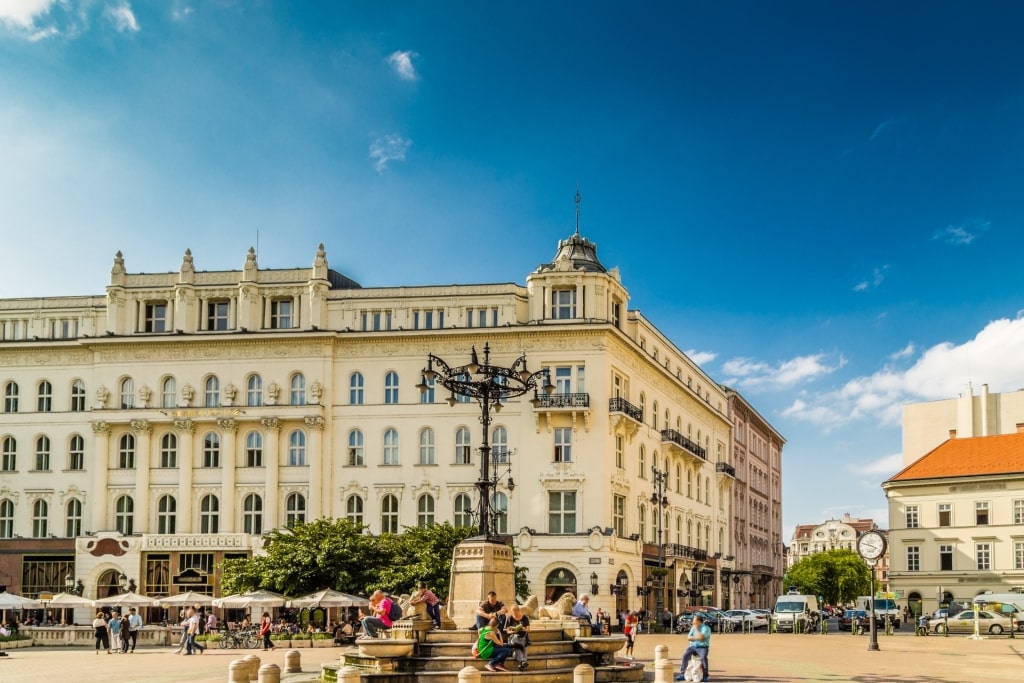
Café Gerbeaud
Like Vienna, Budapest is known for its café culture, a unique blend of old-world elegance and modern-day coffee trends. In the late 19th and early 20th centuries, grand coffeehouses emerged as popular gathering places for writers, poets, and revolutionaries. Many of these historic cafés still operate today as cultural landmarks.
Among the most well-known is Café Gerbeaud, which has been open since 1858 on Vörösmarty Square. The café features marble tables, gilded ceilings, and a refined atmosphere that make it easy to imagine what it was like to be a patron in the 1800s. In the Buda district, Hadik Café was once frequented by literary figures such as Frigyes Karinthy and still maintains a creative, bohemian vibe.
For a more modern take on Budapest’s coffee scene, try specialty cafés like Espresso Embassy, Madal Coffee, or My Little Melbourne.
Gellért Hill and Citadella
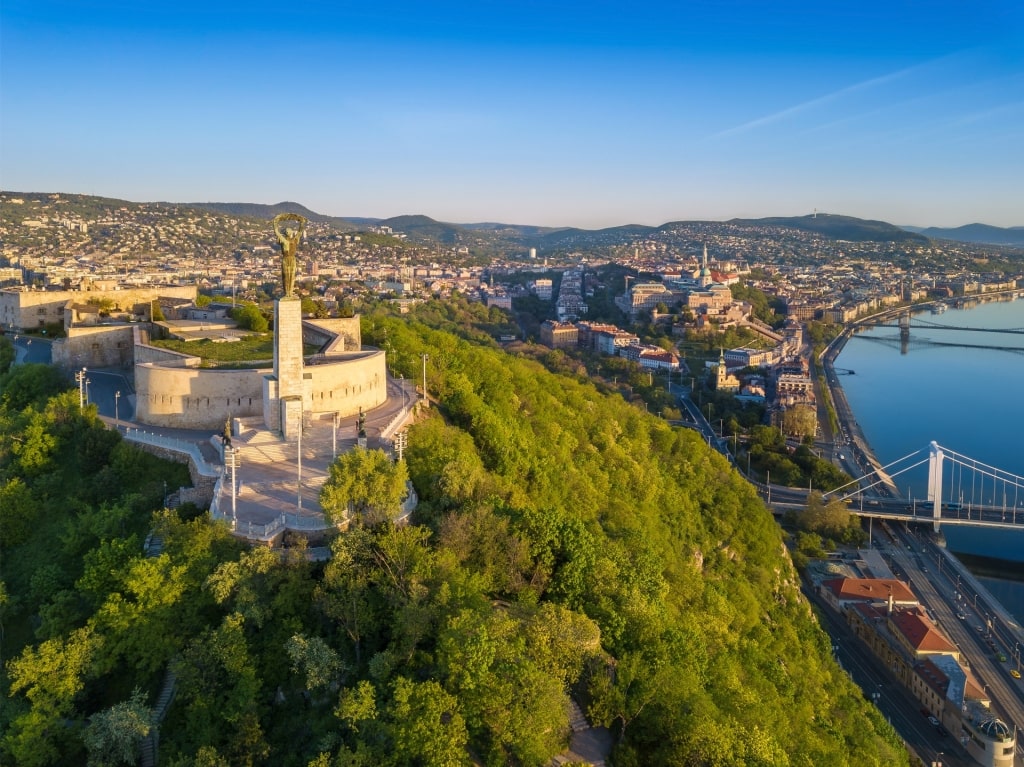
Gellért Hill
For panoramic views of Budapest, Gellért Hill is a must-visit. The uphill walk is steep but rewarding, offering sweeping views of the Parliament, Buda Castle, and the Chain Bridge. The hill is named after Saint Gellért, a 10th-century bishop who was martyred by being thrown from the cliffs.
At the summit stands the Citadella, a fortress built by the Habsburgs in 1854 following the Hungarian Revolution of 1848. Built initially to suppress potential uprisings, the fortress is now a peaceful lookout point. Nearby, you’ll also find the Liberty Statue and several walking paths.
Andrássy Avenue
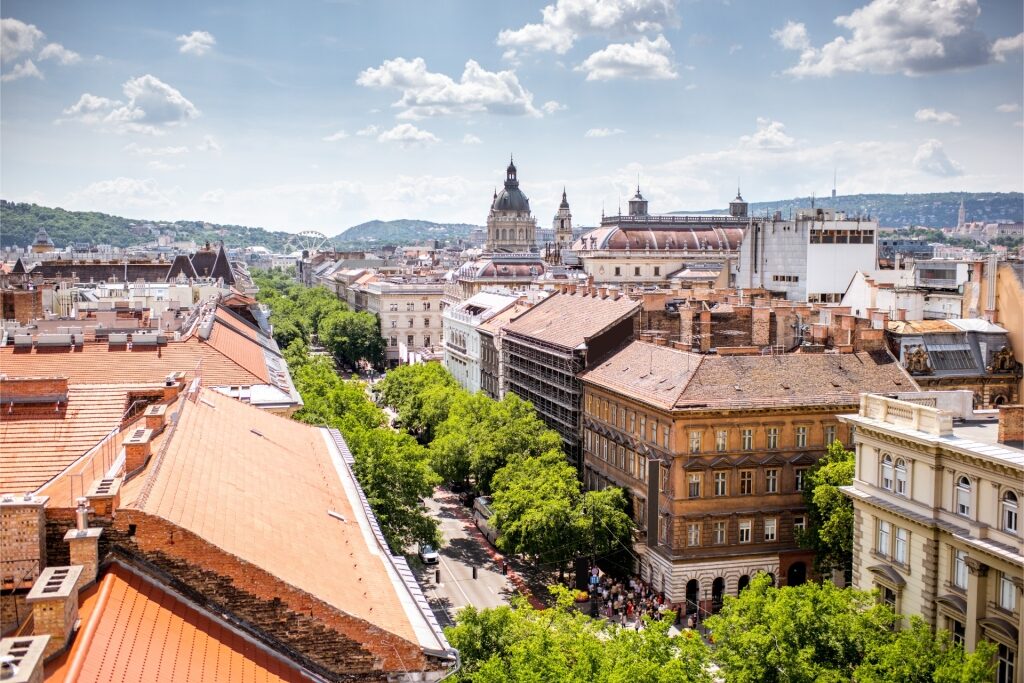
Andrássy Avenue
A UNESCO World Heritage Site since 2002, Andrássy Avenue is one of Budapest’s most iconic boulevards, connecting the city center to Heroes’ Square and City Park.
Built in 1876, the avenue features grand, neo-Renaissance architecture. It is home to embassies, townhouses, and cultural institutions along its length. The Hungarian State Opera House is a highlight, along with several art galleries, theaters, and some of the best luxury shopping in Budapest.
If you’re short on time but want to experience Budapest’s architectural evolution, a walk along Andrássy Avenue offers a perfect snapshot. Along the way, stop at a museum, browse local boutiques, or grab a coffee and enjoy some people-watching from one of the nearby cafés.
Gothic Legends
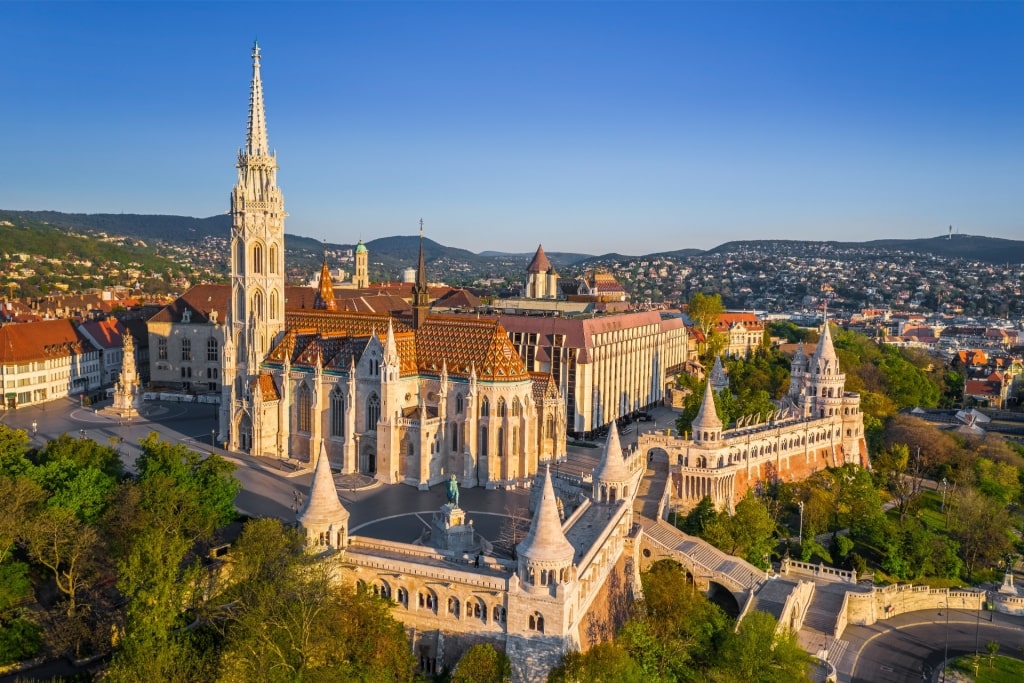
Matthias Church
Storytellers and historians have long filled Budapest’s history with Gothic legends and mysterious tales. Nowhere is this more apparent than in the Castle District, with its narrow alleyways and centuries-old buildings. Many believe that Matthias Church contains secret chambers and hidden relics.
Nearby, the Labyrinth under Buda Castle features an extensive underground cave system that has served as everything from a prison to a wine cellar. Other legends go even further back, with stories of vampire-like figures, rogue alchemists, and haunted ruins contributing to the city’s shadowy folklore.
Art Nouveau Architecture
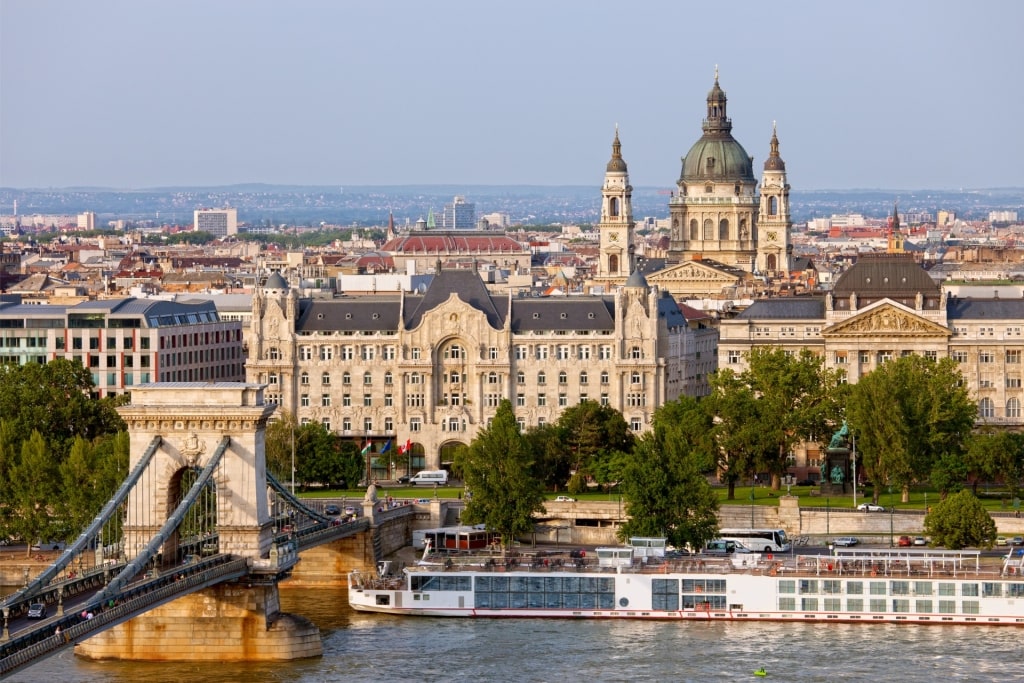
Gresham Palace
Budapest’s architecture makes it one of the best places in Central Europe to explore Art Nouveau. In Hungary, the style is known as Szecesszió, and it really took off in the late 19th and early 20th centuries. What makes Hungarian Art Nouveau unique is its fusion of international design elements with traditional local folk art.
One of the most striking examples is Gresham Palace, now a luxury hotel and a popular watering hole, day and night. Even non-guests can step inside to admire its stained glass, colorful mosaics, and ornate ironwork.
Another important landmark is the Museum of Applied Arts, which features a distinctive green Zsolnay tile roof. Equally notable is the Postal Savings Bank, designed by Ödön Lechner and often referred to as “the Hungarian Gaudí.”
Budapest
Ready to explore the beauty of Budapest? Browse Celebrity’s river cruises to Budapest and plan your European adventure.