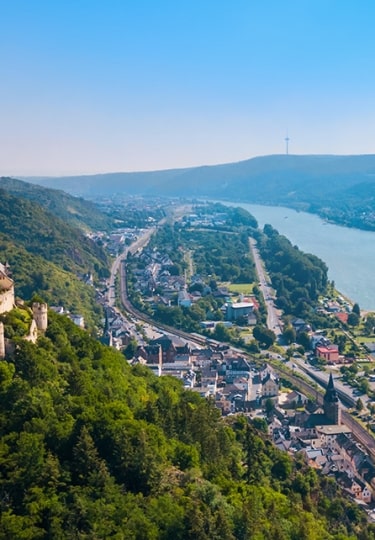
Germany’s Rhine River has no shortage of castles. But Marksburg Castle has something its neighbors don’t: an unbroken history.
Perched above the red-roofed town of Braubach, this medieval fortress is the only hilltop castle on the Middle Rhine that has never been destroyed. While other castles were reduced to ruins and later rebuilt, Marksburg has stood for more than 800 years, preserving a remarkable collection of fortified gates, stone passageways, and historic rooms.
Beyond its castle walls, there’s plenty to discover. A guided tour takes you from cannons overlooking the Rhine to a medieval kitchen, herb garden, and armory, revealing what life was really like inside a working fortress.
Marksburg Castle Stands Apart From Other Rhine Castles
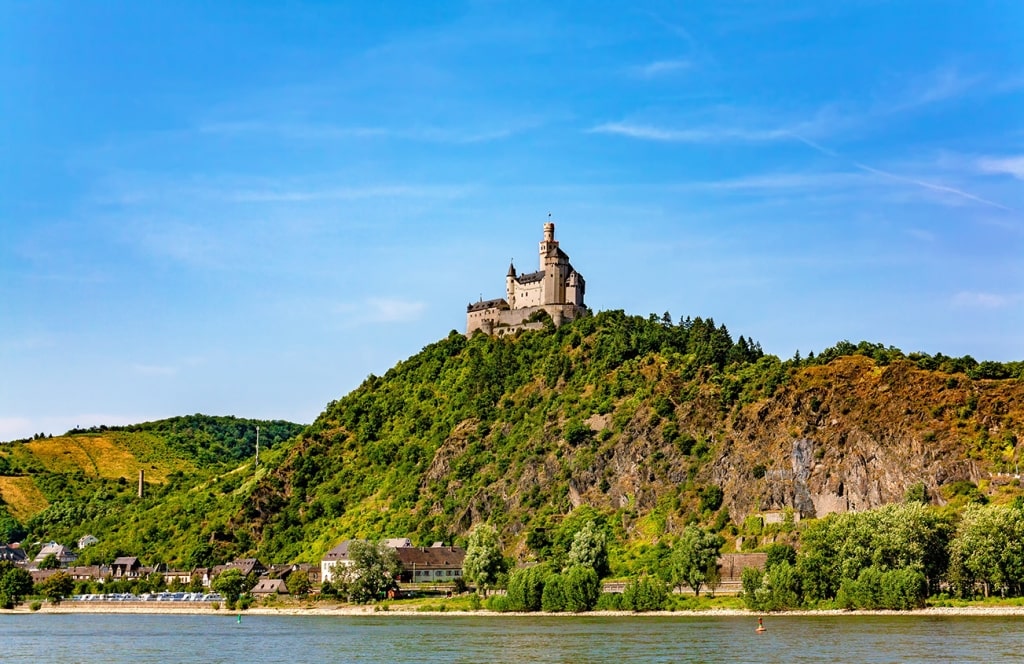
The medieval Marksburg Castle sits atop a hill overlooking the Rhine River, standing as the only undestroyed hill castle in the Middle Rhine region.
Castles are part of the scenery along the Rhine, appearing above vineyards, villages, and bends in the river. Some are romantic ruins, while others were rebuilt or transformed over the centuries. Marksburg Castle gives you something different: the chance to explore a medieval castle that has survived remarkably intact.
Built on a steep castle rock above Braubach, the hill castle was designed with defense in mind. Its elevated position provided sweeping views across the Rhine Valley, while its outer wall, fortified gates, battlements, and ramparts helped protect the people living inside.
That defensive character is still easy to read in the architecture today. Rather than an ornate palace created primarily for show, Marksburg feels like the impressive fortress it was meant to be. Following its stone passageways and fortified entrances gives you a better sense of how medieval architecture responded to the realities of life in the Middle Ages.
That makes Marksburg an intriguing counterpoint to the many other castles on the Rhine River. Each has its own story, but few preserve the feeling of a working medieval stronghold quite like this one.
It’s one of the most distinctive castles on the Rhine River, particularly for travelers interested in understanding what life behind those formidable walls was really like.
Marksburg Castle’s History Spans Centuries
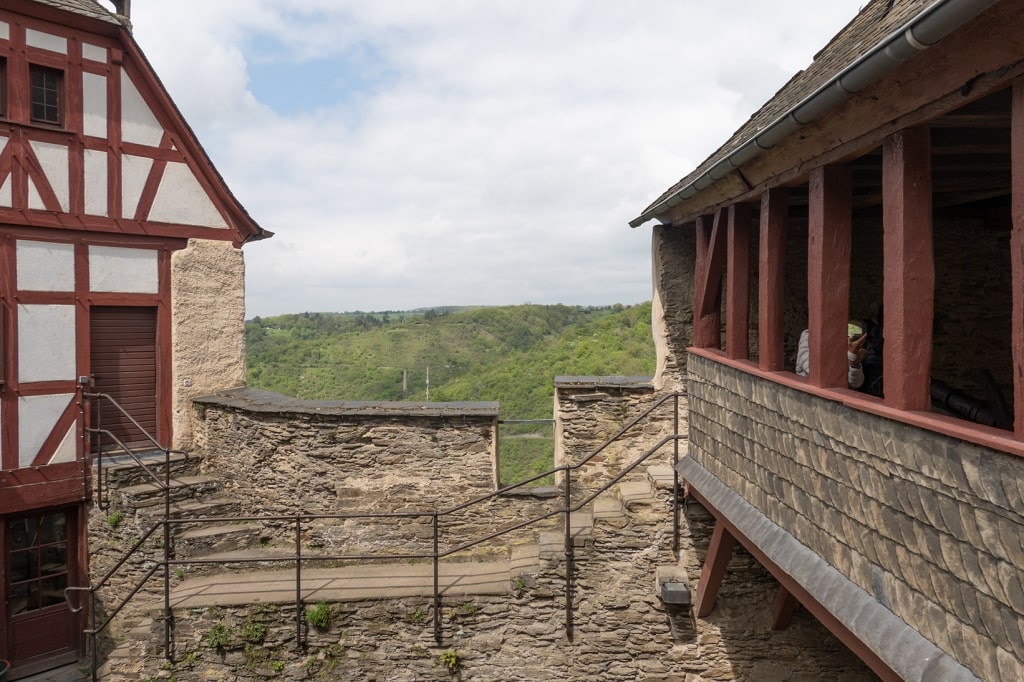
A view from inside the upper courtyard and stone fortifications of the historic Marksburg Castle, looking out over the surrounding hills of the Rhine Valley.
Marksburg Castle didn’t arrive at its present shape all at once. Its story stretches back to the 12th century, when the Lords of Eppstein established a fortress high above Braubach. Over the centuries, each generation left something behind, turning the original castle into the complex of towers, walls, gates, and living spaces you see today.
The castle later passed to the Counts of Katzenelnbogen, a powerful noble family that expanded both its residential areas and defenses. During the Middle Ages, additions included the Gothic Great Hall and other structures that made Marksburg as much a home as a stronghold. Later owners, including the Landgraves of Hesse, continued to adapt the castle as military technology changed.
That evolution is part of what makes Marksburg so interesting to explore. Medieval fortifications sit alongside later bastions and artillery positions, allowing you to see how a castle built for one era was modified for the next. Yet despite centuries of change, Marksburg escaped the widespread destruction that left many other Rhine castles in ruins.
By the 19th century, the castle had served several purposes beyond its original role as a noble residence, including time as a prison. In 1900, it was acquired by the German Castles Association, or Deutsche Burgenvereinigung, which continues to preserve Marksburg and its medieval architecture today.
The result isn’t a castle frozen at one moment in history. It’s a place where centuries of change are still visible in the stonework.
A Guided Tour Reveals Life Inside Marksburg Castle
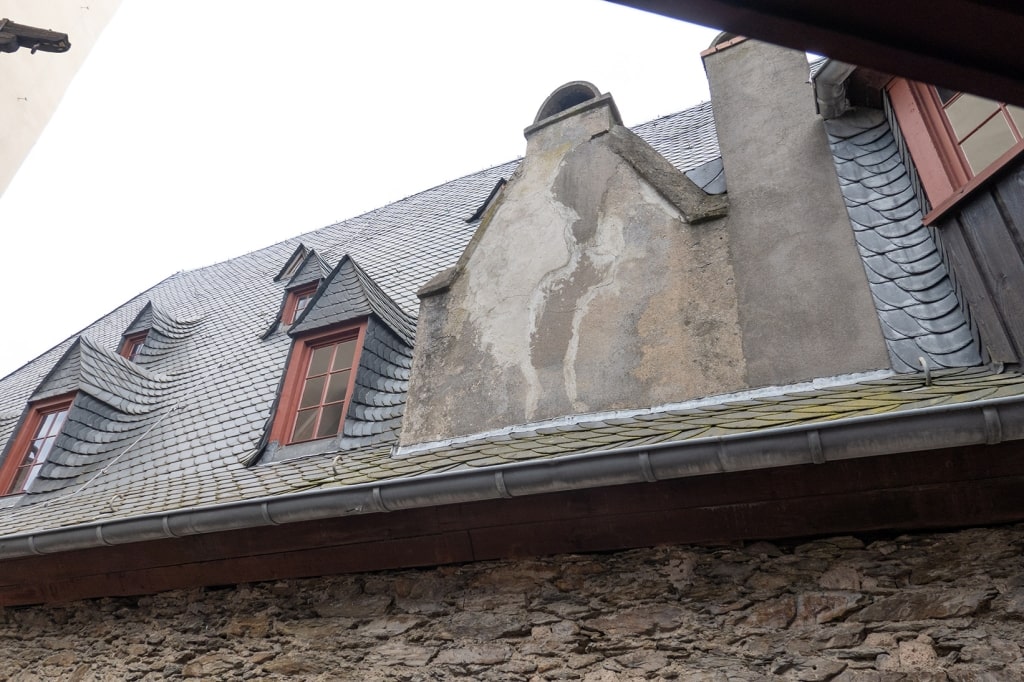
A detailed view of the slate tile roof, gables, and dormer windows of the historic Marksburg Castle complex.
Marksburg Castle becomes considerably more interesting once you step through the gates. Interior visits are by guided tour, following a route through the fortress’s defensive structures, living quarters, and working spaces. Along the way, you’ll discover that medieval castle life involved considerably more than knights and battles.
Fortified Gates and the Great Battery
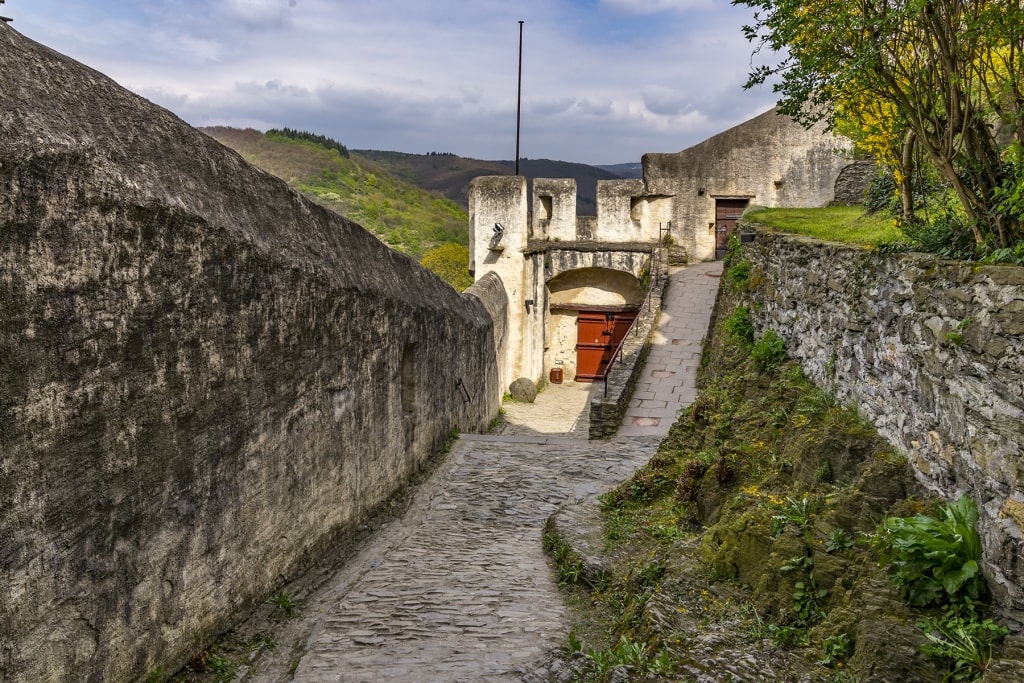
A cobblestone ramp leads through the fortified stone walls and outer gates of Marksburg Castle.
The defenses make the first impression. Passing through fortified entrances such as the Drawbridge Gate and Fox Gate, you get a sense of just how difficult an uninvited arrival would have been in the Middle Ages.
Farther along, the Great Battery and its cannons show how the castle’s defenses evolved as warfare changed. The elevated position also puts Marksburg’s strategic location above the Rhine into perspective.
The Medieval Kitchen, Wine Cellar, and Great Hall
Not everything inside Marksburg was about keeping enemies out.
The castle kitchen brings you into the everyday world of medieval life, where meals had to be prepared for the household. The wine cellar reveals how provisions were stored, while the Great Hall served as an important gathering space.
Together, these rooms tell a more personal story about the people who lived and worked behind the castle walls.
The Medieval Herb Garden
An herb garden might seem an unexpected feature in such an impressive fortress, but it served a practical purpose. The plants grown in medieval gardens were traditionally used for cooking and medicine, making this a quieter but revealing stop on the tour.
It’s a reminder that running a castle required more than sturdy battlements and a well-stocked armory.
The Chapel of St. Mark
The chapel offers another perspective on daily life inside the fortress. Dedicated to St. Mark, it reflects the importance of religion to the castle’s medieval occupants.
It’s also one of the details that makes Marksburg feel less like a military monument and more like a place where people built their lives.
The Armory and Gimbel Collection
The armory brings the story back to Marksburg’s military past. Displays of weapons and protective equipment reveal how warfare evolved, while the Gimbel Collection features figures wearing armor from different historical periods.
It’s a chance to look beyond the familiar image of a knight in shining armor and examine the equipment associated with centuries of combat.
By the end of the tour, Marksburg feels less like a collection of stone walls and towers and more like what it once was: a place where people cooked, gathered, worshipped, worked, and kept a close eye on who was coming up the hill.
Planning Ahead Makes Marksburg Castle Easier to Explore
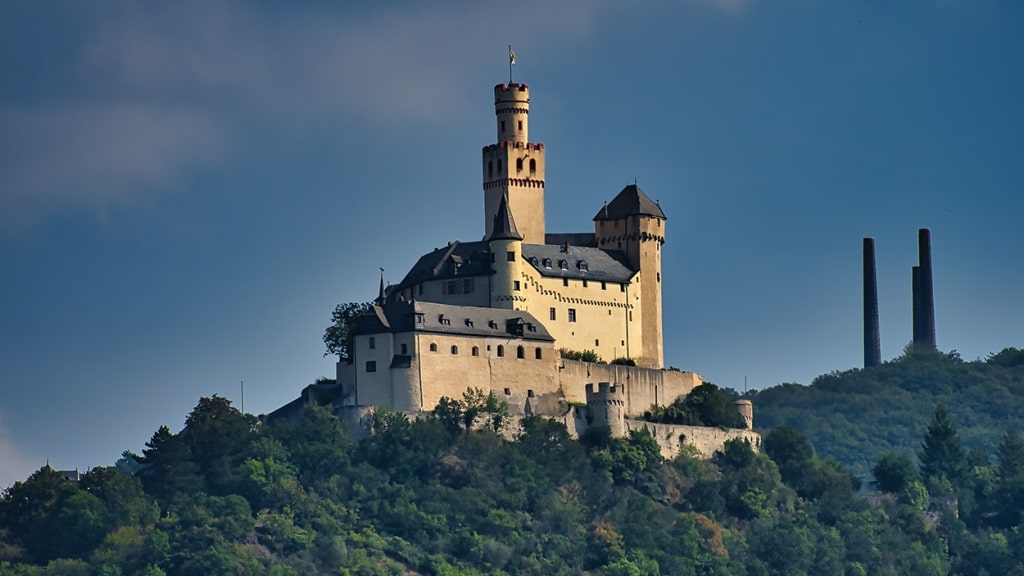
A beautiful view of Marksburg Castle on the top of a forested mountain.
Marksburg Castle is about nine miles (14 kilometers) from Koblenz, the nearest major river-cruise stop, making it roughly a 15- to 20-minute drive. But getting to the castle is only part of the journey. Perched high above Braubach, Marksburg requires a little uphill walking to reach the entrance.
The medieval setting also means uneven stone pathways, narrow passages, and stairs once you’re inside. Comfortable walking shoes are a must, and it’s worth allowing a little extra time for the climb.
Here’s what else to know before you go:
- Tour format: You can only explore the castle interior as part of a guided tour.
- Tour duration: Standard tours take approximately 50 minutes.
- English-language tours: These are offered at designated times during the summer season.
- Opening hours: Check the castle’s current visitor information, as hours vary seasonally.
- Access: Expect an uphill approach from Braubach or the parking area, followed by uneven surfaces and stairs inside the castle.
The historic layout can make parts of Marksburg challenging for visitors with limited mobility, so checking current accessibility information in advance is a good idea.
It’s also worth building a little breathing room into your plans. Marksburg is the kind of castle where the details matter, from the centuries-old castle walls to the views across the Rhine Valley. Giving yourself time to look around makes the climb up the hill much more rewarding.
Braubach and the Middle Rhine Add to the Experience
Marksburg Castle may command the hilltop, but Braubach deserves some attention below.
Set on the eastern bank of the Rhine, the small town sits beneath the castle’s wooded hillside, with half-timbered buildings and narrow streets adding another layer of history to a visit. Philippsburg Palace, built below Marksburg in the 16th century, is another reminder that Braubach’s story didn’t stop with the Middle Ages.
The setting also helps explain why Marksburg was built here in the first place. From its castle rock, the fortress could keep watch over the Rhine Valley and the traffic moving along one of Europe’s most important waterways. The river’s geography has shaped the region for centuries, influencing everything from trade routes to the placement of its castles. Discover more facts about the Rhine River to put that history into perspective.
Zoom out a little farther, and the landscape becomes even more impressive. Braubach lies within the Upper Middle Rhine Valley, a UNESCO World Heritage Site known for its steep vineyard-covered slopes, historic towns, and remarkable concentration of Rhine castles. Nearby, Stolzenfels Castle rises above the river closer to Koblenz, one of the best cities on the Rhine River to explore for its history, architecture, and riverside setting.
Koblenz itself sits at the meeting point of the Rhine and Moselle rivers, making it a natural base for exploring this history-rich stretch of Germany. Discover more of the region with Koblenz river cruises.
Marksburg Castle Fits Naturally Into a Rhine River Journey
Spend any time along the Middle Rhine, and you quickly understand why castles are such a defining part of the landscape. They hint at the centuries of trade, territory, and power that played out along the water below.
Marksburg Castle helps put that scenery into context. Exploring its gates, ramparts, living quarters, and defenses makes it easier to understand that the Rhine castles weren’t simply built for dramatic views. Their positions above the river were strategic, giving their occupants a vantage point over one of Europe’s most important waterways.
That history is part of what makes traveling the Rhine so interesting. One moment you’re passing vineyard-covered hillsides; the next, a medieval castle appears above the trees or a historic town comes into view at river level. The scenery and the stories behind it are closely connected.
Celebrity River Cruises℠ provides a way to experience more of this historic landscape, connecting destinations along the river and offering a broader perspective on the places that shaped it. Explore more things to do on a Rhine River cruise or discover upcoming Rhine River cruises.
Marksburg Castle FAQs
What is Marksburg Castle?
Marksburg Castle is a medieval hilltop castle overlooking Braubach in Germany’s Rhine Valley. Dating to the 12th century, it is the only hilltop castle on the Middle Rhine that has never been destroyed. Its preserved medieval architecture includes fortified gates, residential rooms, defensive walls, and artillery positions.
Why is Marksburg Castle famous?
Marksburg Castle is best known for surviving centuries of conflict without being destroyed. While many other Rhine castles were damaged, left in ruins, or later reconstructed, Marksburg retains architectural features from different periods of its long history. Today, the German Castles Association preserves the fortress and welcomes visitors on guided tours.
Where is Marksburg Castle located?
Marksburg Castle stands above the town of Braubach in Rhineland-Palatinate, Germany, on the eastern bank of the Rhine River. It lies within the Upper Middle Rhine Valley, a UNESCO World Heritage Site, south of Koblenz.
Can you tour the inside of Marksburg Castle?
Yes. Visitors can explore the interior of Marksburg Castle on a guided tour, which typically takes about 50 minutes. The route includes highlights such as the Drawbridge Gate, Fox Gate, Great Hall, castle kitchen, wine cellar, chapel, armory, and Great Battery. English-language tours are available at designated times during the summer season.
Is Marksburg Castle worth visiting?
Marksburg Castle is particularly interesting if you enjoy medieval history, architecture, or exploring the Rhine Valley. Unlike a reconstructed castle or romantic ruin, it preserves the character of a working medieval fortress, from its castle walls and defensive gates to the rooms used for everyday life.
Explore the Rhine With Celebrity River Cruises
Marksburg Castle is more than a striking silhouette above the Rhine. Step inside, and its fortified gates, medieval rooms, and centuries-old defenses reveal how people lived, worked, and protected this strategic stretch of river.
And that’s part of the pleasure of exploring the Rhine: the scenery comes with stories. Castles rise above vineyard-covered hillsides, historic towns line the riverbanks, and centuries of European history are never far away.
Celebrity River Cruises brings these places together in one journey, with opportunities to experience the culture, history, and landscapes along the river.
Browse European river cruises and explore Rhine River cruises to start planning your trip.