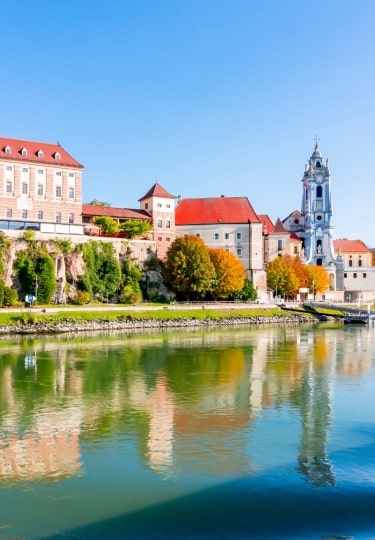
Rounding a bend on the Danube and seeing Dürnstein for the first time is like sailing straight into the pages of a fairy-tale book. It’s no surprise to learn this gem of a town is known as the “pearl” of Austria’s UNESCO-listed Wachau Valley.
Here is an overview of what to expect in quaint Dürnstein, and how to make the best use of your time while you’re there.
Why Visit Dürnstein?
Dürnstein
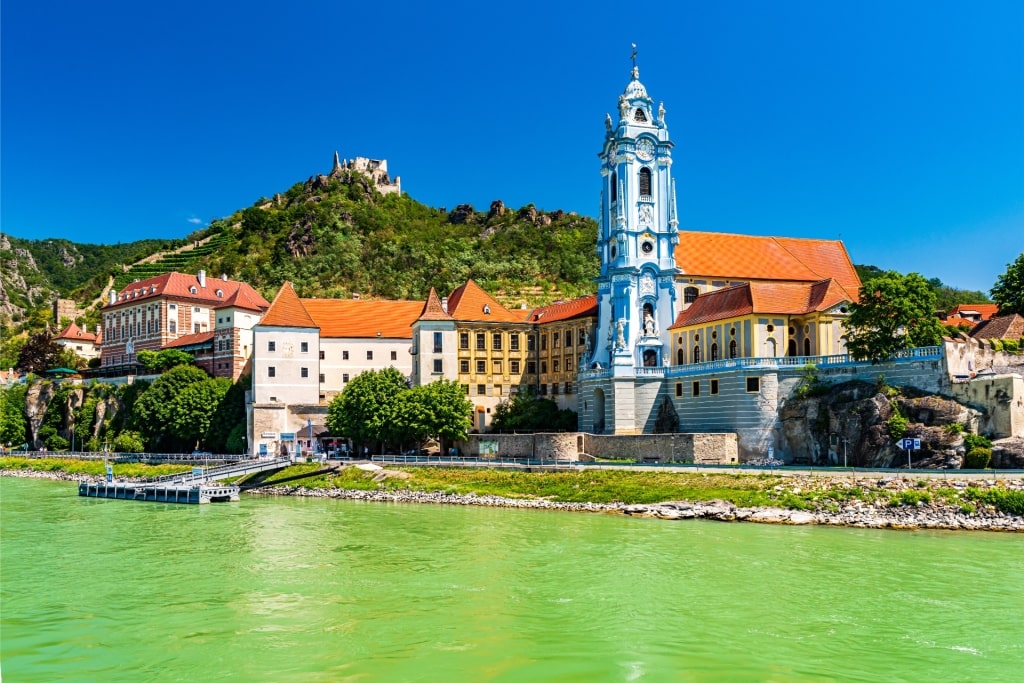
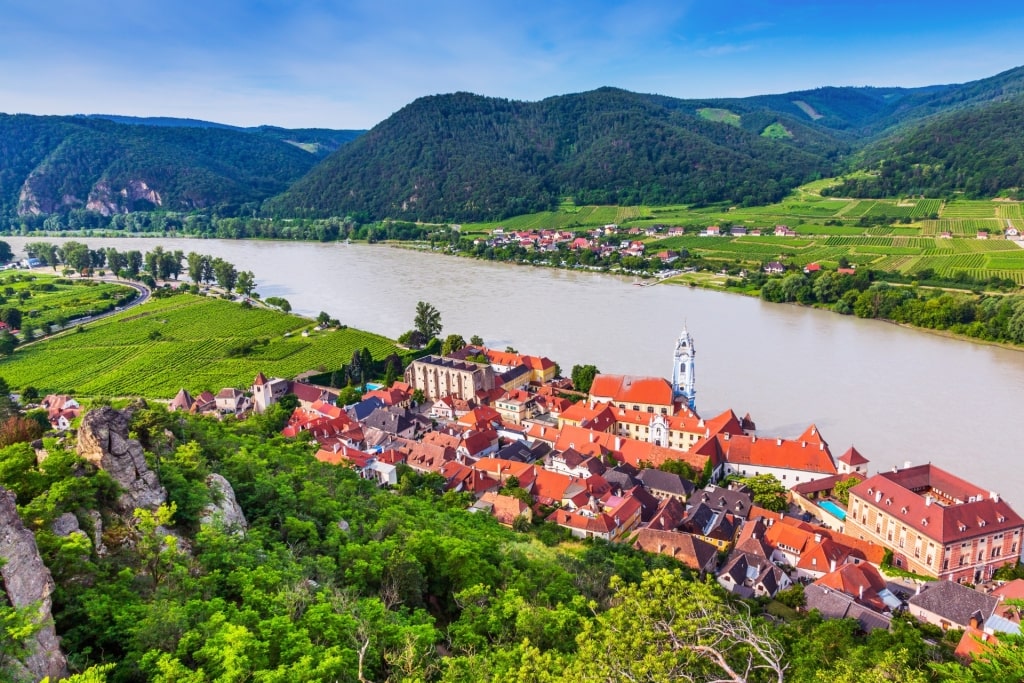
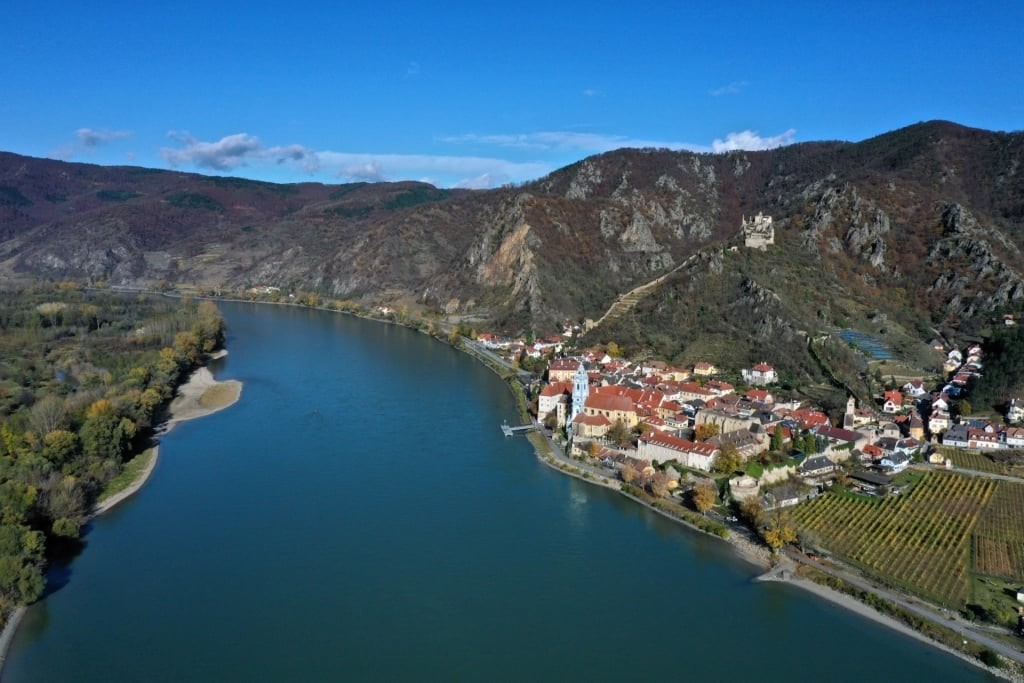
Perched on a curve of the river, between green hills, vineyards, and apricot orchards, Dürnstein might be tiny–with just 900 inhabitants–but it is one of the biggest draws along the Danube in Austria, overlooked by the craggy ruins of a 12th-century hilltop castle.
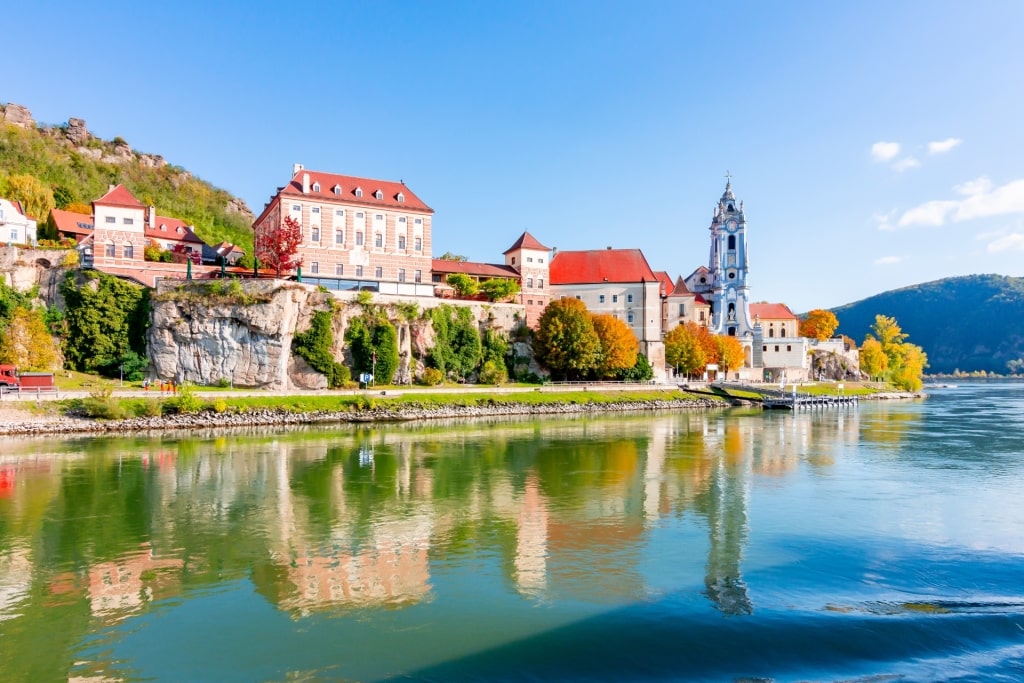
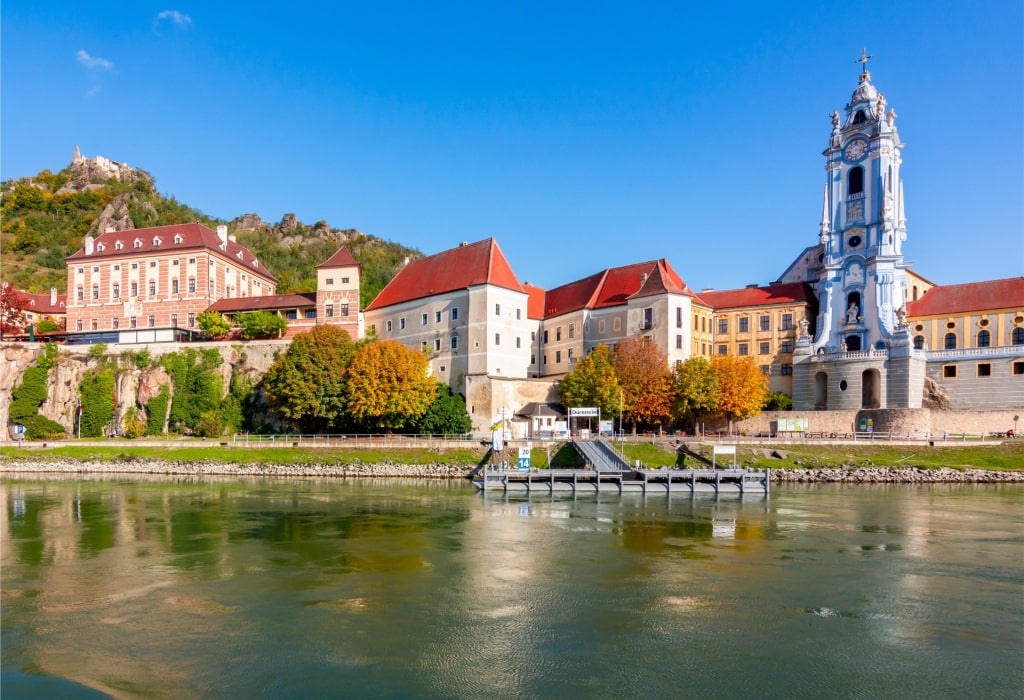
Close to the waterfront is Stift Dürnstein, the town’s other distinctive landmark. This eye-catching Baroque Augustinian abbey has a beautiful blue-and-cream bell tower that’s topped with a golden cross that glitters in the sunlight.
As you enter the ancient city gate, you will feel as if you are walking into a movie set. If you decide to hike up to the castle, which has links to the legendary British king Richard I—better-known as Richard the Lionheart—your efforts will be more than rewarded as you take in panoramic views over the cityscape and the Danube far below.
History & Culture
Dürnstein
Dürnstein takes its name from the castle situated in a commanding position overlooking the town and the river. A derivation of the German words dürr and stein, meaning dry and rock, the fortress was never in any danger of flooding due to its high, and therefore dry, position above the banks of the Danube.
The Austrian castle was built between 1140 and 1250 by the powerful and noble Kuenring family to control shipping along the river and protect the town which grew up beneath it. It is famously known as the castle where Richard the Lionheart was imprisoned in 1192. In 1645 the castle was destroyed by Swedish soldiers during the Thirty Years’ War, a major conflict involving multiple countries across Europe, and was never rebuilt.
Dürnstein
The town you see today grew up from the small settlement that was founded at the foot of the castle. In 1410 the abbey was built, replacing what was originally a small chapel on the site, and medieval Dürnstein thrived as a center of trade and winegrowing. In 2000 it became part of the UNESCO World Heritage Site covering the cultural landscape of the spectacular valley between Melk and Krems.
Wildlife & Nature
If you’re a keen walker, take a look at the Höhereck nature reserve, which is located east of Dürnstein. It takes around 15 minutes to get there and then you can follow a three-mile circular trail with far-reaching views across terraced vineyards and the river.
Höhereck, which means higher ground, is flanked by forests and is the largest dry grassland area in the eastern Wachau region. This untouched meadowland provides a habitat for wild flowers and around 100 species of butterflies, and is typified by the long and graceful Steinfeder feather grass, which moves with the breeze.
Tips for Visiting Dürnstein
Dürnstein
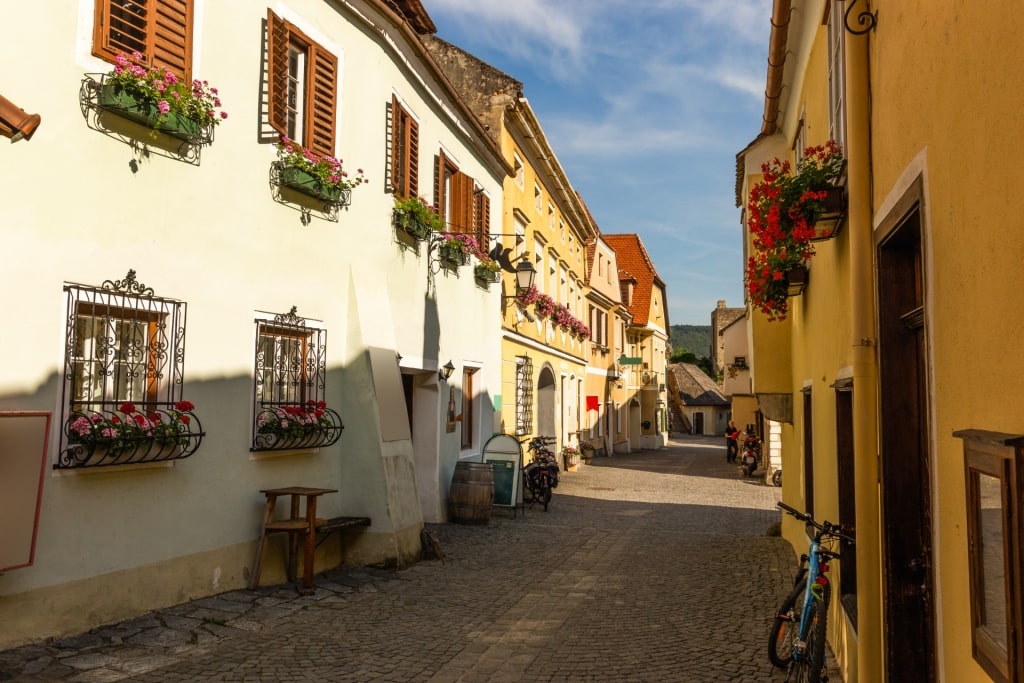
Dürnstein may be small but you are going to be doing a lot of walking, particularly if you plan to hike up to the castle. Comfy sneakers or shoes—preferably with closed toes if you are heading up the rocky hill—are an absolute must.
If you are going to climb up to the castle then make it the first thing you do when you arrive. This way, you will avoid the midday heat, particularly if you are traveling in summer, and you’ll be able to pace yourself. Also, wear or take a couple of layers in case you get hot or cold, depending on the time of year you visit, and consider using walking poles as the terrain is steep and uneven in places; remember to take water.
Dürnstein
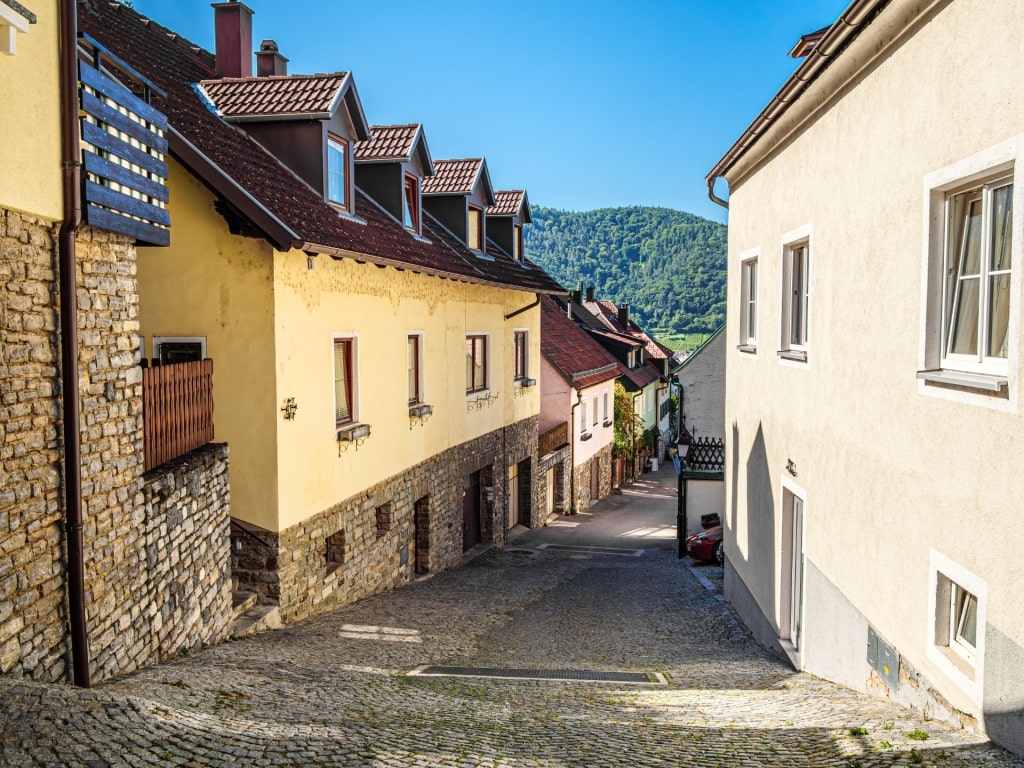
Use any spare time to simply wander at leisure, with no particular plan, and dive down some of the streets off the main Hauptstrasse. Unlike some of the big towns and cities on the Danube, it’s impossible to get lost in Dürnstein. You can see the top of the abbey everywhere you go, so use it as a handy way marker to find your way back to where you started.
Things to Do & Attractions
Krems Gate
Krems Gate
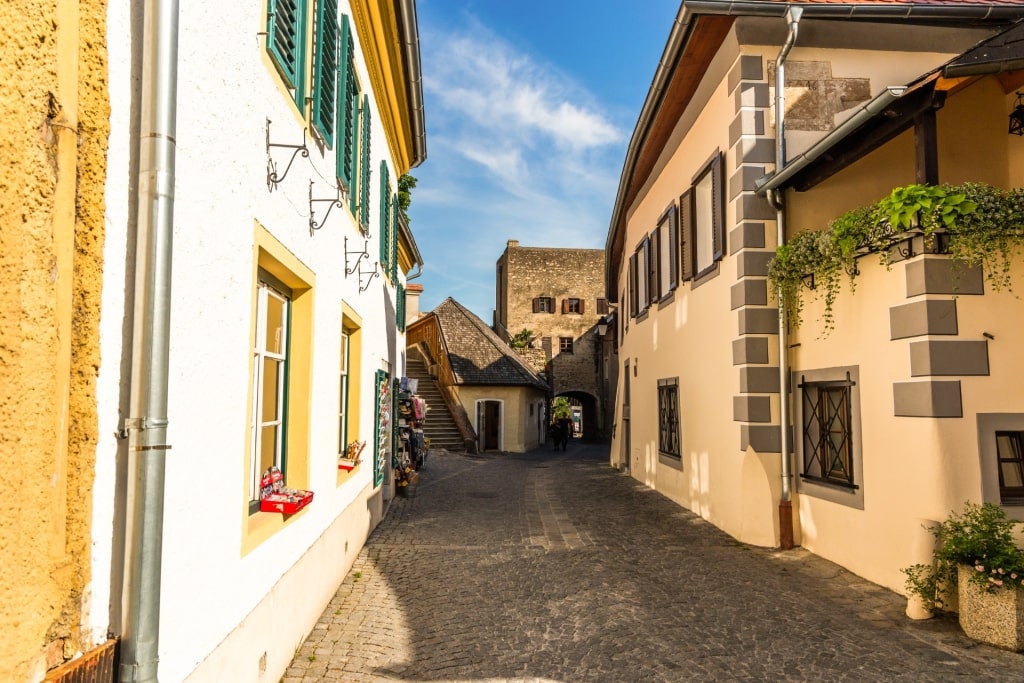
You’ll feel as if you are stepping into a timewarp as you pass through the 15th-century Krems Gate, part of the town’s fortified city wall. It’s the obvious starting point for a visit and leads into the historic heart of Dürnstein.
Located on the eastern side of town, a short walk from where riverboats dock, the imposing four-story gate is part of a tower that’s now a private residence.
Hauptstrasse
Hauptstrasse
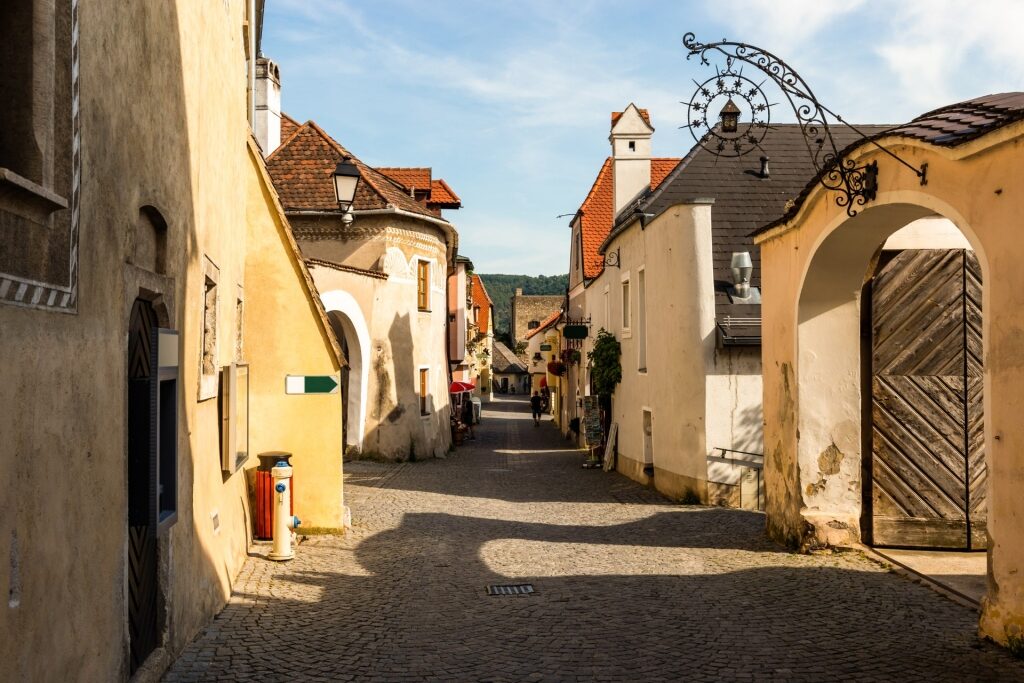
Once you’re inside the pedestrianized old town, make your way to the Hauptstrasse, which is the main street. The narrow thoroughfare is lined with cute buildings, decorated with floral window boxes, and it’s a lovely spot to stop for a coffee.
From here you can wander down adjoining cobbled streets or make your way up to the castle.
Dürnstein Castle
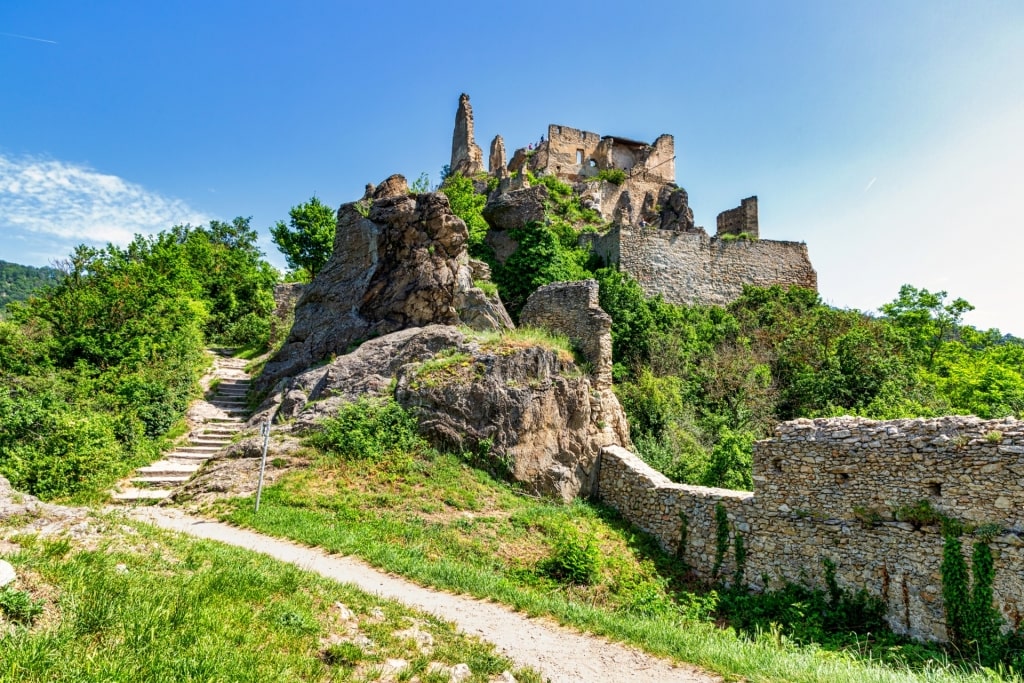
Dürnstein Castle
Signposts from the town center point the way to the steep and narrow track leading to the castle ruins. The winding trail is a mix of pathways, steps, and stones, with some sections through wooded areas. There are plenty of viewpoints looking out across the river where you can pause and catch your breath along the way.
In 1192 Richard the Lionheart was on his way back from the Crusades, a series of religious wars, when he was captured by his rival Duke Leopold V, who was enraged when Richard tore down the Austrian flag. The king was released a year later after England paid a large ransom to set him free. Dürnstein guides tell many colorful tales—a mix of fact and legend—about this period.
Stift Dürnstein
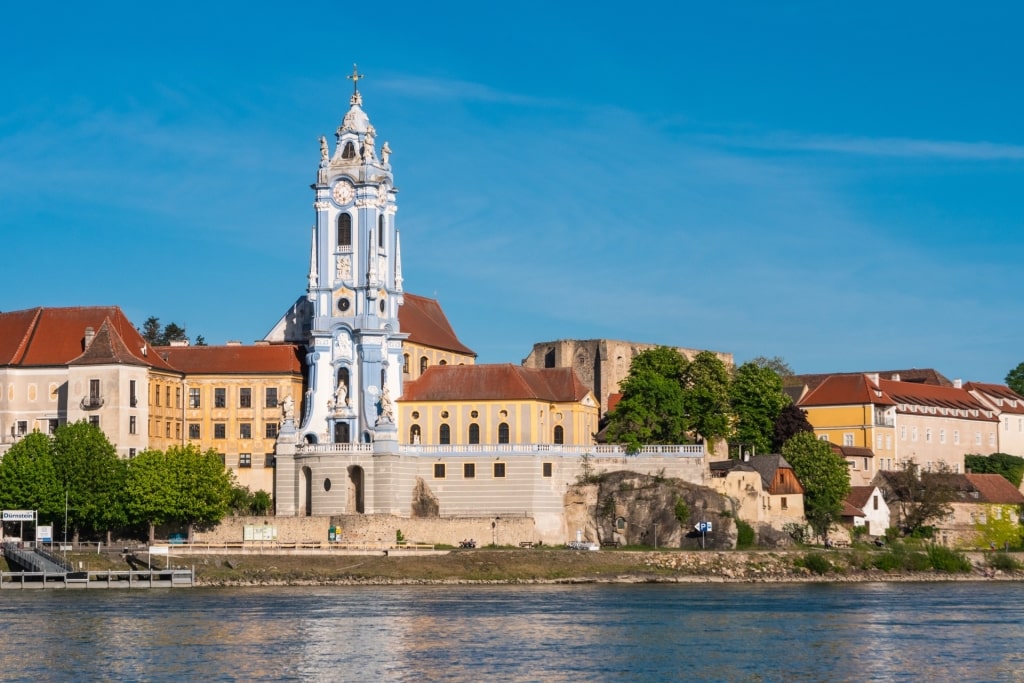
Stift Dürnstein
If you decide to stay downtown, it won’t take long to reach the abbey, which was built in 1410 on the site of an earlier chapel. In 1710, the abbey was extended and rebuilt as the remarkable building you see today.
Entering through a gate in the monastery walls, you can stroll around the tranquil old cloisters before going into the abbey to admire the magnificent high altar, frescoes, and exhibition of religious artifacts. If you are not part of a tour, rent an audio guide to get the most out of your visit.
Town Hall
A meander through the center of Dürnstein will bring you to the small town hall set in a courtyard. Built in 1547, the arched entrance is reached by a picturesque stone stairway framed by trailing plants and flowers.
While you can’t go inside, it’s worth dropping by to take a photo of the exterior.
Hotel Schloss Dürnstein
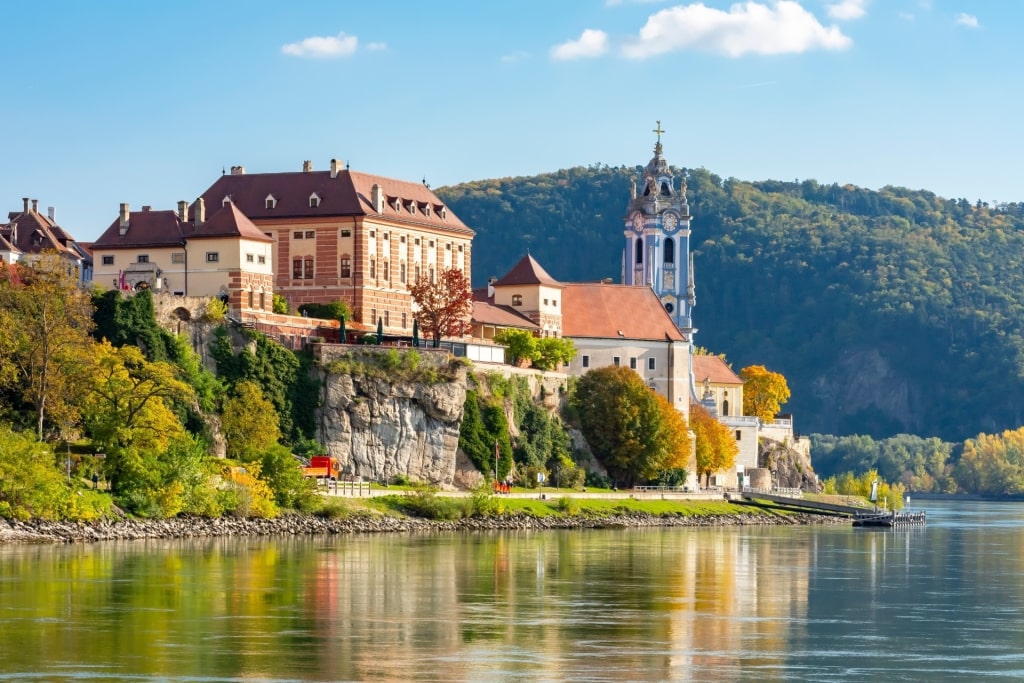
Hotel Schloss Dürnstein
Dürnstein’s so-called new castle was built next to the abbey in 1622 by Christoph Wilhelm von Zelking. A residence, rather than a fortress, the golden building sandwiched between two towers was also used as a hunting lodge.
In the 1960s it became a five-star hotel and the restaurant has a lovely al fresco terrace overlooking the river. You can make a reservation for lunch or afternoon tea.
Read: Tipping in Austria
Oberloiben and Unterloiben
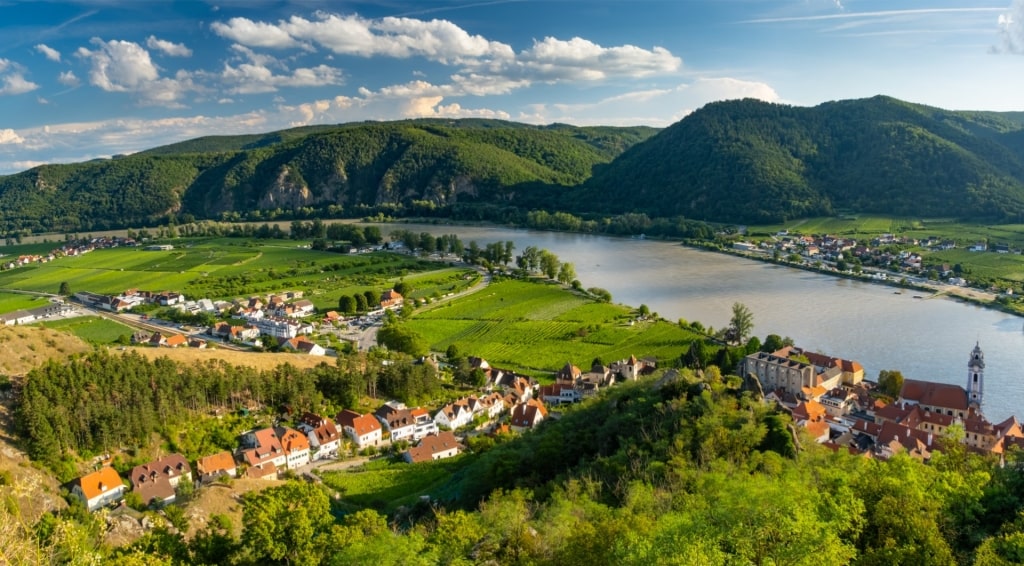
Oberloiben and Unterloiben
If you fancy stretching your legs a little further, just over a mile east of Dürnstein are the two small Loiben wine villages of Oberloiben—upper Loiben—and Unterloiben, or lower Loiben. In 1971 they were merged with Dürnstein and are technically part of the Austrian town.
It will take you around 20 minutes to get there along the riverside path next to the vineyards. When you arrive you can enjoy a refreshing glass of wine and some Austrian snacks at one of the wineries.
Kunigunde Church
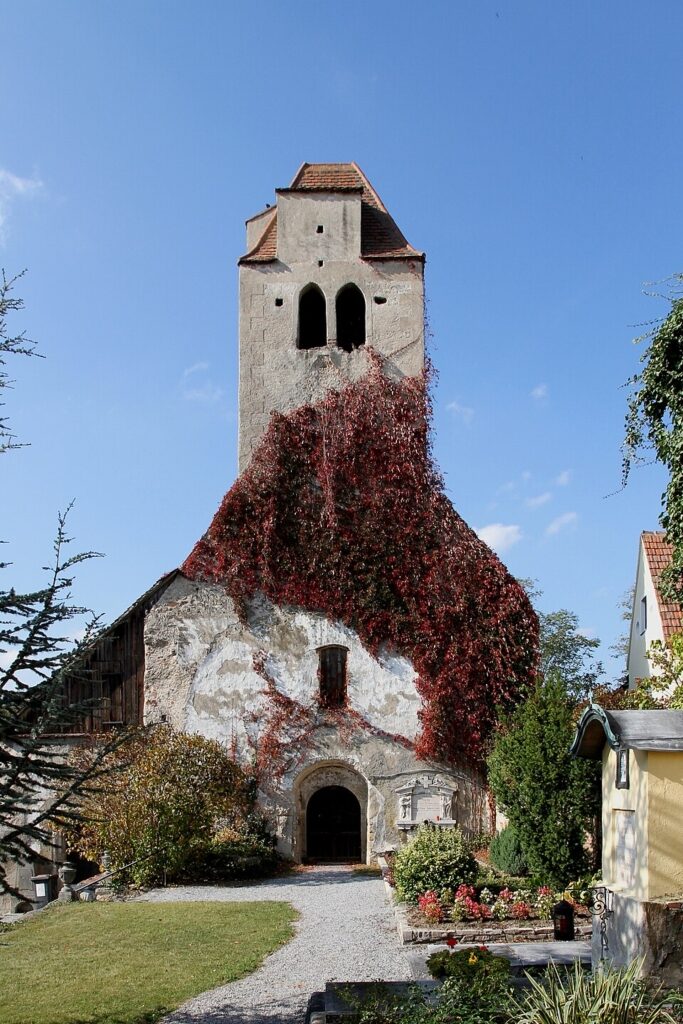
Kunigunde Church Photo by C.Stadler/Bwag on Wikimedia Commons, licensed under CC BY-SA 3.0
If time permits, you can take a quick look at the remains of Kunigunde Church, which dates back to the 12th century and was the first church in Dürnstein. Only the tower and part of the church remain, and the rest of the site is now a cemetery.
Food & Drink
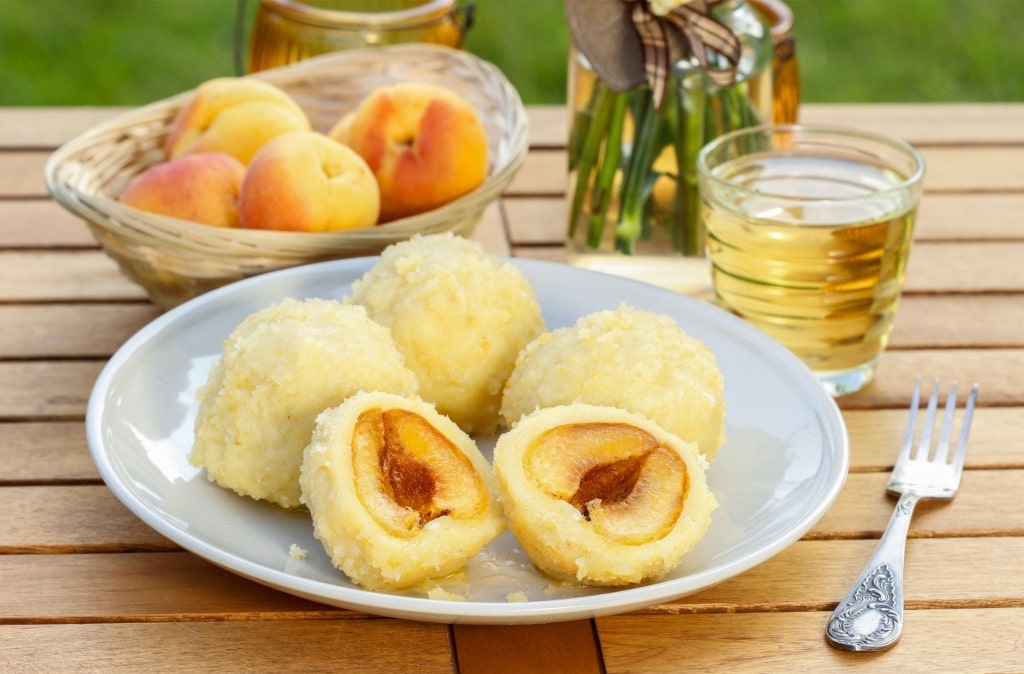
Marillenknodel
Apricot lovers are really in for a treat. Dürnstein is located in the heart of the Wachau Valley apricot-growing region, where orchards line the banks of the Danube. The plump, aromatic, and sweet Wachau apricots—or Wachauer Marillen—have been grown in the valley since Roman times.
The climate and rich soil of the valley provide exactly the right conditions to produce the prized, juicy fruits. Indeed, they are one of only a few Austrian products awarded Protected Designation of Origin (PDO) status. Similar to French Champagne, this designation legally ensures that only apricots grown by some 200 farmers in the valley can be called Wachau apricots.

Apricots
Apricots are harvested by hand in July and sold fresh in stalls lining the streets. However, don’t worry if you’re not visiting Dürnstein in the summer. Inventive townsfolk have come up with all manner of recipes for fresh and dried apricots which can be enjoyed and eaten year-round.
A popular dish is marillenknödel, or fluffy apricot dumplings, which are sprinkled with cinnamon and served with a side of apricot jelly. Try them at Hotel-Restaurant Sänger Blondel, where another specialty is apricot strudel with vanilla and—you’ve guessed it—apricot sauce. In the summer you can sit in the hotel’s shady garden with views overlooking the abbey.
At restaurants and shops throughout the town you can taste and buy delicious apricot cake, chocolate, mustard, chutney, ice cream, and sweet apricot brandy, to name just a few.
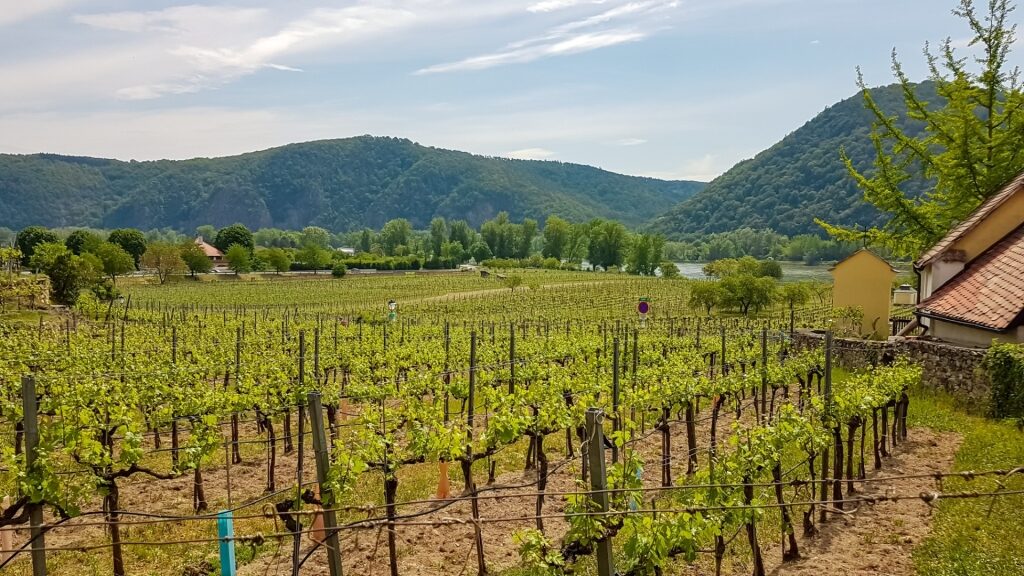
Wachau Valley
Dürnstein is also renowned for the wine produced in 124 steeply terraced vineyards spread across 3,300 acres in the Wachau Valley. The most popular varieties are the crisp and spicy Grüner Veltliner and the more aromatic and fruity Riesling.
Sample them in a rustic, cozy heuriger, or wine tavern. The Altes Presshaus is inside a wood-beamed 18th-century building with a wooden wine press, one of the oldest in the Wachau region, dating back to 1752. Another atmospheric spot to linger over a glass of Austrian wine is the Alter Klosterkeller, an old vaulted monastery cellar which is next to a small vineyard with views over the river.
Best Time to Visit
Dürnstein
The best time to visit Dürnstein is between March and September, and each season has a distinctive character.
In springtime the 100,000 apricot trees blossom and cloak the Wachau Valley in a blanket of pink and white flowers. This natural spectacle runs from the end of March through April and is a wonderful sight to behold. At the same time, the vineyards start to bloom. Temperatures are also mild and pleasant.
July and August are the hottest and busiest months with temperatures going up to around 82°F. The long, sunny days and light evenings are good for maximizing sightseeing.
Wachau Valley
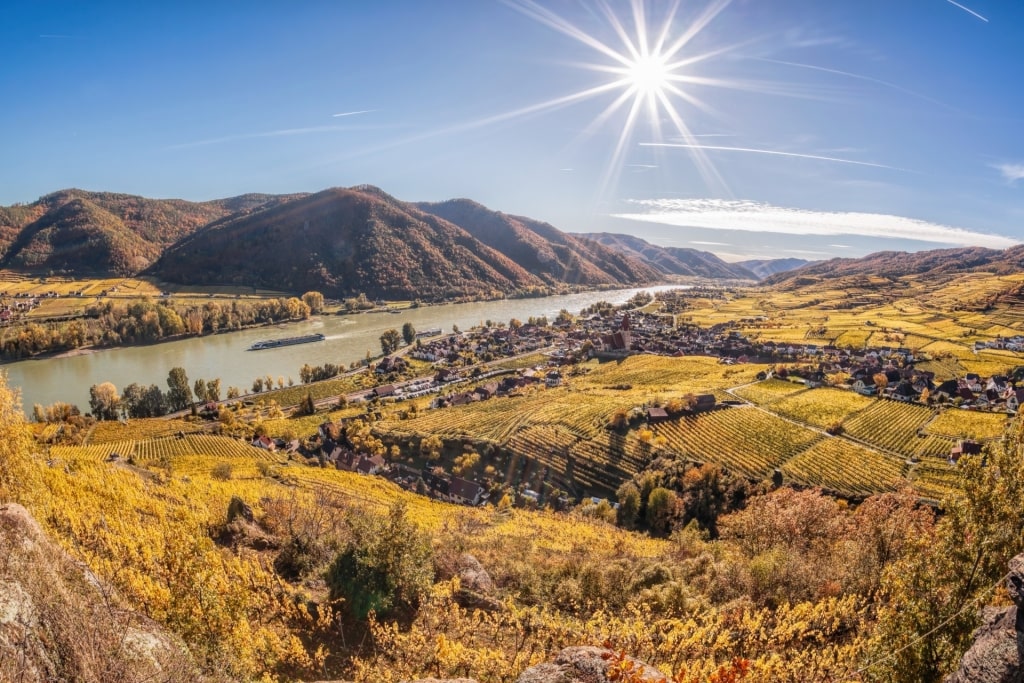
Fall is another beautiful season. During harvest time the vineyards around Dürnstein are suffused with a golden glow and trees turn breathtaking shades of red, russet, and yellow. Temperatures are also mild, and ideal for outdoor activities such as hiking and biking.
Of course, this beautiful scenery can’t survive without water. Be prepared for some rain, particularly in April and May, and September through November. Showers are usually short, and you can always dive into a café until it passes.
Dürnstein
Discover Dürnstein for yourself on one of Celebrity’s Danube river cruises. Browse itineraries and book your dream vacation.