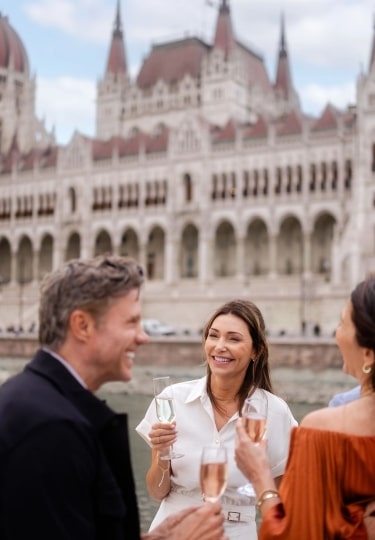
Many of Europe’s most iconic cities are tucked along mighty rivers—which is no coincidence. If you’ve ever admired the Neo-Gothic architecture of the Hungarian Parliament building while strolling the Danube, glimpsed the twinkling Eiffel Tower while cruising down the Seine, or spotted castles while sailing the Rhine, you might have wondered why these cities are clustered around Europe’s rivers.
One of the best ways to experience Europe is by river cruise, skipping crowded trains, discount airlines, and stuffy buses for sipping champagne as you pass tiered vineyards, docking just a few minutes’ walk from historic city centers, and getting the chance to spend the night in the heart of Europe’s capitals. Discover how these waterways shaped European history, which European capitals are situated on the continent’s most noteworthy rivers, and why river cruises are a great way to discover these enchanting metropolises.
Which European Capitals Are Located on the Danube?
Four European capital cities are tucked along the Danube River. These include the Danube River cities of Vienna, Bratislava, Budapest, and Belgrade. A journey down the Danube is one of the best river cruises for first-timers, offering the chance to see not only major European cities, but also four countries with distinct cultural traditions. It’s possible to explore these Danube River cities on one dedicated cruise, making them even more accessible.
Vienna
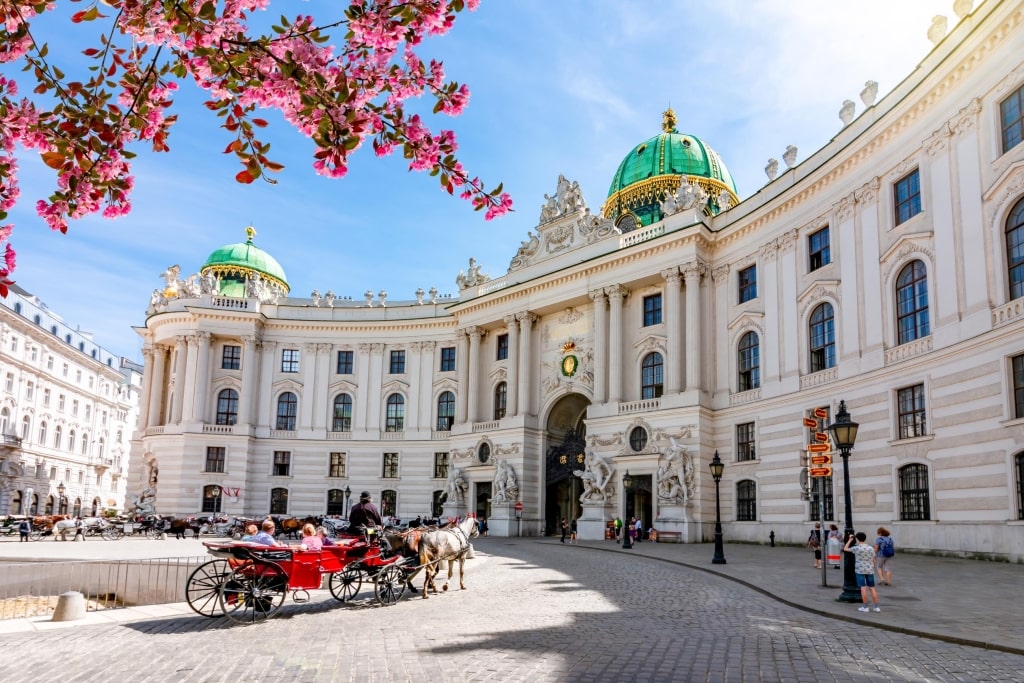
A horse-drawn carriage passes through St. Michael’s Square (Michaelerplatz) framed by pink spring blossoms in front of the Hofburg Palace in Vienna.
Vienna is Europe’s music mecca and home to some of the most elegant opera houses on the continent. If you’re looking for a European capital doused in elegance with sprawling palaces, grand architecture, and charming coffeehouses with delicate pastries, this is the perfect river cruise destination for you.
The City of Music has had a contentious relationship with the Danube River for most of its lifetime. The section of the Danube near Vienna was essentially vast wetlands that caused catastrophic flooding. Because the river wasn’t concentrated, it frequently moved, making trade and travel difficult. In the 19th century, engineers created the Donaukanal, building a separate channel to control the flow of water that would become one of several arms of the river. A secondary project, called the Neue Donau, was completed in 1988, further helping to protect the city from flooding.
Bratislava
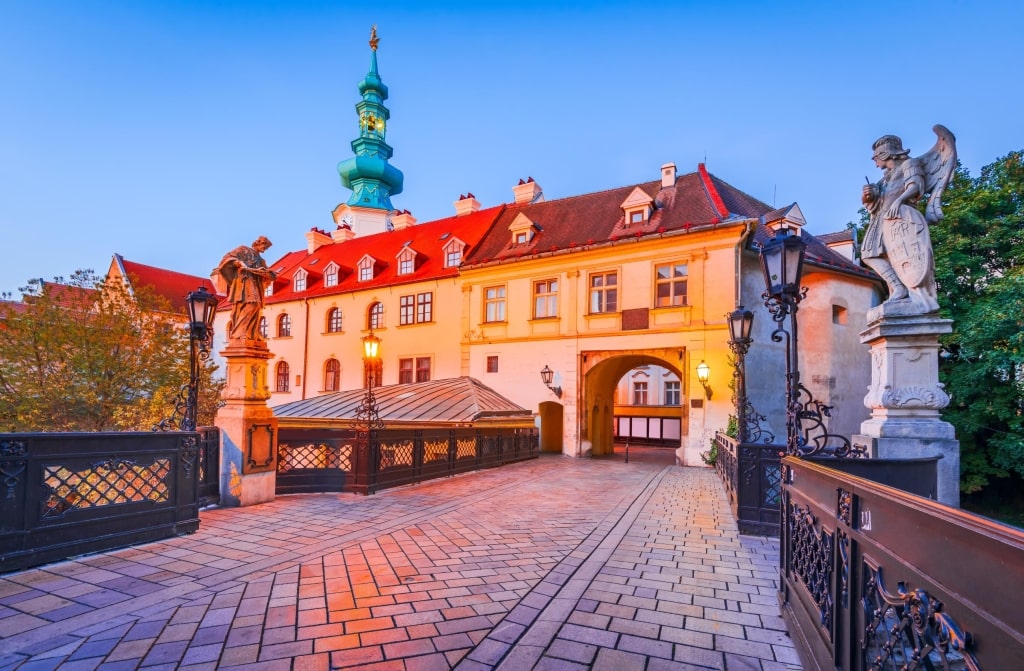
A street in the Old Town of Bratislava (Pressburg) leading to Michael’s gate tower.
The capital of Slovakia, Bratislava, is often overlooked for more popular cities like Vienna and Budapest. Nonetheless, it deserves just as much attention. Once the Hungarian capital, Bratislava offers a sleepy stretch of the Danube for cruisers, with the impressive Bratislava Castle peering over the city from its perch on a hill high above the river.
Because the Danube was the lifeblood of Central Europe, Bratislava grew into a multicultural capital, welcoming influences from Germany, Hungary, and countries further afield. As the Danube runs straight through the center of Bratislava, European river cruisers can walk into the historic Old Town in just five to ten minutes from the dock, discovering impressive architecture left over from the Habsburg monarchy.
Budapest
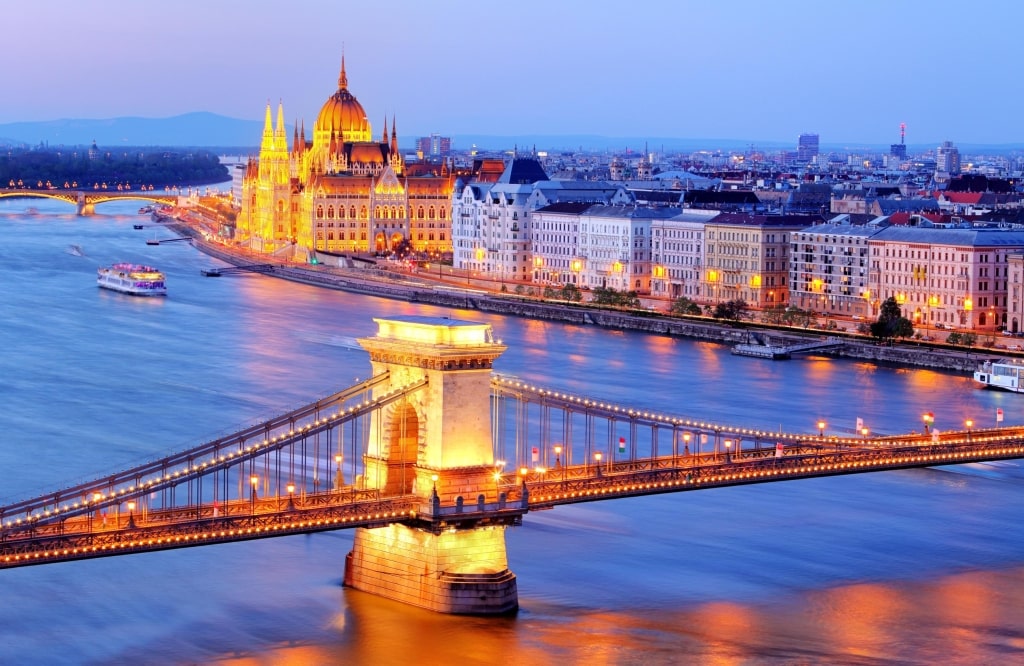
The illuminated Széchenyi Chain Bridge spans the Danube River leading toward the glowing Hungarian Parliament Building at twilight.
Budapest is the crown jewel of European river cruise destinations. The capital of Hungary, this portion of the Danube River is mighty, flowing right through the core of the city, past gorgeous highlights like the Hungarian Parliament Building, beneath the iconic green Liberty Bridge, and below the towering hills of Buda. The river cuts the city of Budapest into two distinct sections, Buda and Pest, on the west and east banks, respectively. Originally a Roman settlement, the city grew up along the riverbanks, becoming the gem it is today through centuries of trade, cultural influence, and political upheaval traveling down the river.
The Danube and Budapest are intertwined more than most cities, with fault lines in the river providing geothermal water to the capital’s iconic bathhouses, a must-visit for travelers. There are also plenty of fun day trips from Budapest that are tied to the river, including the Danube Bend, a section of the country situated along the river that features storybook towns like Szentendre.
Belgrade
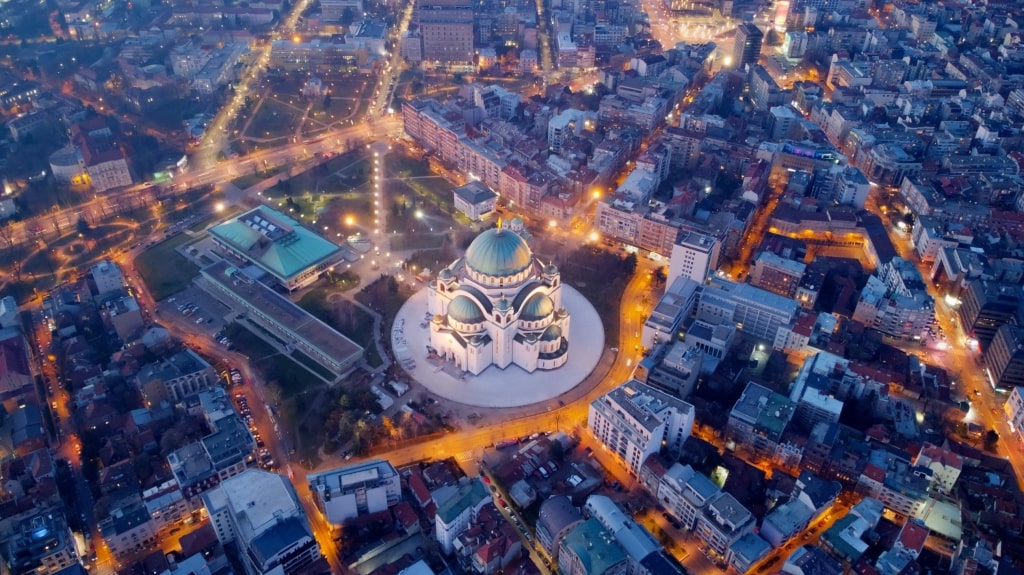
An aerial night view of the illuminated Church of Saint Sava surrounded by glowing city streets.
One of the more undiscovered capitals along the Danube is Belgrade, the capital of Serbia. Located where the Danube meets the river Sava, the Danube serves as a meeting point in more ways than one. Belgrade is strategically located along the Danube, with access to the Black Sea and large cities upriver, making its trade access incredibly diverse.
Visitors can spot where the rivers meet from Belgrade’s Kalemegdan Fortress, a third-century BC fortification. The city’s nightlife is another highlight for river cruisers, as floating river barge clubs, bars, and restaurants, known as splavovi, make for a unique place to spend an evening on the water.
How Is Amsterdam Connected to the Rhine River?
Amsterdam is a popular river-cruise destination for travelers sailing down the Rhine River. The city of Amsterdam sits along the Amstel River, not the Rhine, although the two are connected via the Amsterdam-Rhine Canal. Spanning 45 miles, the canal also passes through the Dutch city of Utrecht, providing yet another beautiful destination to discover via cruise.
Amsterdam has always been deeply connected to its waterways. In fact, the city’s access to water and plentiful canals transformed it into a global port town during the Dutch Golden Age. As a port city, Amsterdam’s maritime heritage was integral to the city’s growth.
The opportunity to visit Amsterdam might be the deciding factor if you’re trying to choose between a Rhine or Danube river cruise. Many Rhine River cruises begin or end in Amsterdam. Discovering this captivating city by canal and its plethora of museums are just a few of the many enticing things to do on a Rhine River cruise.
Other European Capitals and Their Rivers
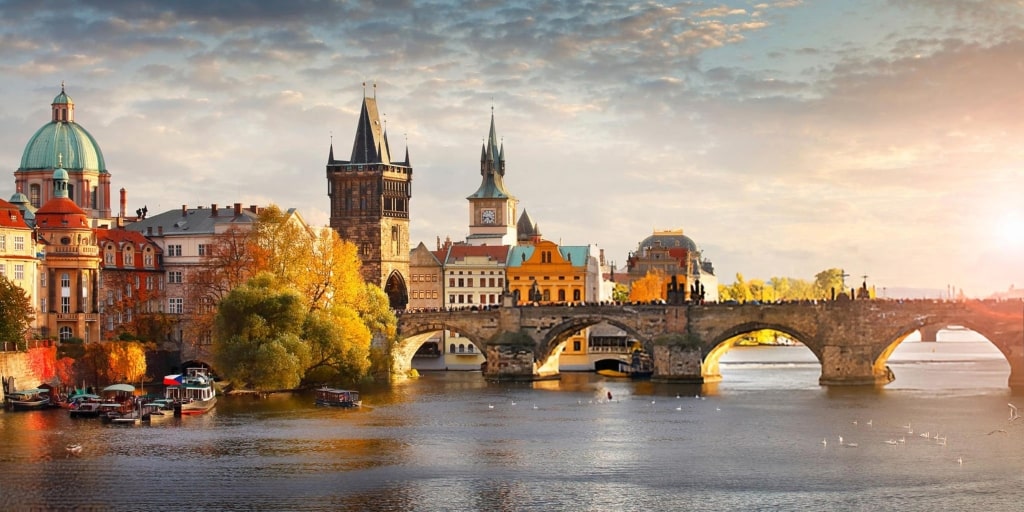
Panoramic view of the Vltava River and Charles Bridge in Prague, capital of the Czech Republic
While you might be busy choosing between a Rhine or Danube river cruise, there are plenty of other European capitals on major waterways to discover. Here are a few capital cities and the beautiful rivers they’re located on:
Paris: Seine
The Seine is the lifeblood of Paris, cutting the city almost perfectly in half and dividing it into the Right and Left Banks. Many of Paris’ most famous monuments are tucked along the Seine, including the Eiffel Tower and Notre Dame Cathedral.
London: Thames
Much like Paris, the Thames runs directly through London, flowing past important sites like the Tower of London and Westminster. The Romans were among the first people to travel this river, establishing Londinium in 43 AD. The Thames is a tidal river, meaning tides from the North Sea affect its lower reaches through London, even though its source lies far inland at Thames Head in Gloucestershire.
Prague: Vltava
Known for its leafy islands that are favorite spots of travelers and locals alike, the Vltava River carves its way through the heart of Prague. Cruising the Vltava provides a beautiful perspective on the city and its exquisite bridges, including the Charles Bridge.
Rome: Tiber
Woven through Roman mythology, the Tiber River connected Italy’s capital to the Tyrrhenian Sea (part of the Mediterranean), providing an ideal trade route. The river flows through the western side of the city.
Berlin: Spree
Running straight through the center of Berlin, the Spree River provides shady spots to lounge along its banks. Linking the city to other settlements throughout Germany, the Spree allowed Berlin to grow rapidly. Following WWII, the river formed part of the boundary of East and West Berlin. The sprawling Museum Island sits in the heart of the river and city today and is a UNESCO World Heritage Site worth seeking out.
Lisbon: Tagus
The longest river on the Iberian Peninsula, the Tagus River begins in the mountains of Eastern Spain before making its way into the Atlantic Ocean near Lisbon. The terminus of the river, where it meets the sea, is where several Portuguese explorers left to discover the New World.
Warsaw: Vistula
Like Paris, the Vistula River divides the Polish capital of Warsaw into a Right and Left Bank. The Vistula served as a dividing line, both during the Warsaw Uprising and the Battle of Warsaw. As the longest river in Poland, Warsaw’s location allowed the city to grow into the capital it is today. Promenades flank both sides of the river, offering the perfect place to relax.
Dublin: Liffey
The River Liffey splits the city of Dublin into two halves, the Northside and Southside. Originating in the nearby Wicklow Mountains, the River Liffey flows into the Dublin Bay after traveling about 82 miles, despite its terminus and headwaters only being 20 miles apart as the crow flies.
How Rivers Influenced the Development of European Capitals
Are you planning to travel Europe by river? Start your personal river cruise 101 by pondering how these waterways influenced the development of the continent’s cities.
For most European capitals, being situated along a major body of water was a choice made thousands of years ago out of necessity. Primitive settlements were often built along rivers, as they were a source of fresh water and the surrounding land was typically fertile. As time went on, people used rivers as a means of travel, with boats being the main transportation for centuries.
As each city developed, rivers offered an ideal trade route between nearby (and faraway) cities and countries. Goods like wine and timber were transported at a fraction of the cost of overland methods along these rivers and eventually sold in Europe’s capital cities, providing a nearly endless source of wealth. Possibly even more important, rivers also acted as a natural defense mechanism against invaders, often providing high ground and other protections.
With the dawn of the Industrial Revolution, rivers were even more important, as water provided a source of power for mills and manufacturing plants. Cities like Paris and London in particular used the power of their rivers to their advantage.
Frequently Asked Questions
Why are so many European capitals located on rivers?
Many European capitals are located on rivers or other major bodies of water because these waterways provide a source of fresh water for drinking and irrigation and a means of transportation, as overland travel was dangerous and long. As the cities began to grow, rivers were a source of trade and natural defense against invaders, further helping to establish one-time villages into thriving capitals.
Is Amsterdam on the Rhine River?
No, Amsterdam is located on the Amstel River, although the Rhine River can be accessed from the Amsterdam-Rhine Canal.
Which European capitals can you experience on a river cruise?
The most popular European capitals to see by river cruise include Amsterdam, Budapest, Vienna, Bratislava, and Belgrade.
What river flows through four European capitals?
The Danube River flows through Vienna, Bratislava, Budapest, and Belgrade.
Discover Europe by River Cruise
Whether you’ve always dreamt of watching German castles slip by while cruising the Rhine or you’re a savvy explorer who wants to check off multiple European capitals in one trip, a European river cruise is a great way to do it.
Explore Europe’s capital cities by river with Celebrity River Cruises℠.