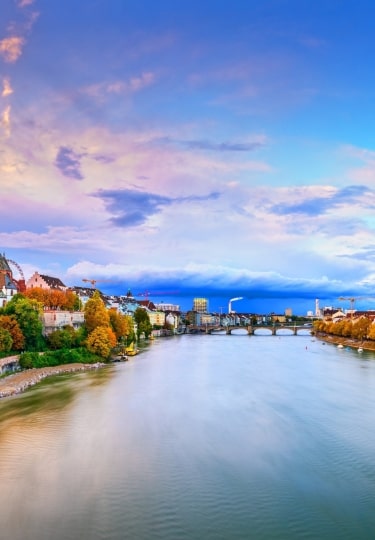
The Rhine River connects some of Europe’s most historic and visually striking destinations across Switzerland, France, Germany, and the Netherlands. From Amsterdam’s canal-lined streets to Cologne, Germany’s massive Gothic cathedral, and from Strasbourg, France’s storybook half-timbered neighborhoods to the vineyard-covered hills surrounding Rüdesheim, Germany, the river links cities and towns that have shaped Europe for centuries.
A Rhine River cruise is filled with great scenery between destinations, but it’s the cities themselves that make each stop feel different from the last. One port may center around Roman history, while the next introduces you to wine taverns. That variety is one of the reasons Rhine River cruises remain among Europe’s most popular itineraries. If you’re interested in sailing along the Rhine, there are eight cities and ports you shouldn’t miss.
What It’s Like to Cruise the River
River cruising offers one of the easiest ways to experience Europe, especially along the Rhine. Ships dock directly in or near the center of many cities during Rhine River cruise stops, so you can walk straight into historic districts filled with market squares, museums, and cathedrals.
On Rhine River cruises, the pace feels noticeably slower than if you were to travel by plane or train. Ships navigate stretches of the river with panoramic lounges and open-air decks to keep the scenery constantly in view. You’ll find yourself looking up from your book, your lunch, or whatever conversation you’re having because the scenery keeps changing.
For travelers new to the experience, a river cruise along the Rhine offers one of Europe’s easiest introductions to multi-country travel.
Top Rhine River Cities & Cruise Ports
Many Rhine River cruise destinations pass through Switzerland, France, Germany, and the Netherlands, with each offering its own distinct history, architecture, and culinary traditions. The River Rhine follows a route between Basel and Amsterdam, though the exact ports vary by sailing.
1. Basel, Switzerland
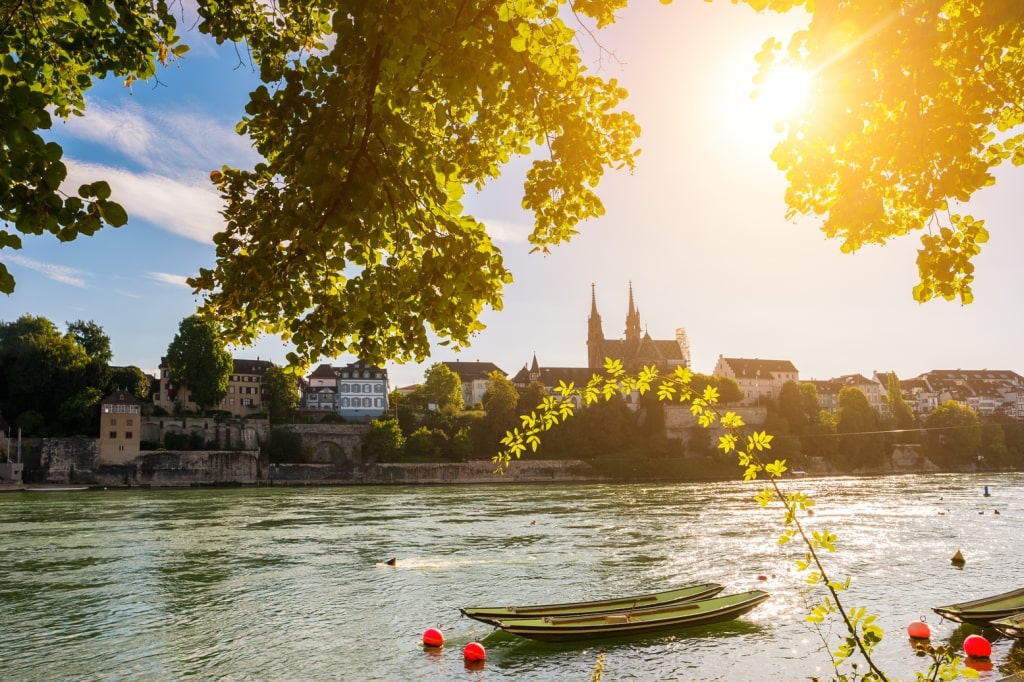
Basel Minister’s twin spires and moored boats gracing the sunlit Rhine River.
Basel is one of the Rhine’s most common embarkation ports and sits where Switzerland, France, and Germany meet. Because of its location, many travelers spend extra time before their cruise begins, using Basel as a gateway into the surrounding region.
Most visitors eventually make their way toward the Old Town and Basel Minster, whose twin spires overlook the Rhine from above the city center. Nearby, the deep red Rathaus stands out immediately when you reach Market Square, where outdoor cafes and local vendors keep the area busy throughout the day. Basel also has a strong art scene, with museums ranging from major fine art collections to contemporary galleries.
2. Breisach, Germany
Breisach is smaller and quieter than many Rhine ports, but that’s part of the appeal. Sitting above the river near the French border, Breisach offers excursions into Germany’s Black Forest or the wine villages of Alsace. The pace here feels slower. Vineyards surround the town, and many streets are calm enough that you’ll hear church bells more than traffic.
For many travelers, Breisach ends up being less about the town itself and more about the surrounding countryside and its winding vineyard roads, local wineries, and bakeries selling pastries that somehow smell impossible to walk past.
3. Strasbourg, France
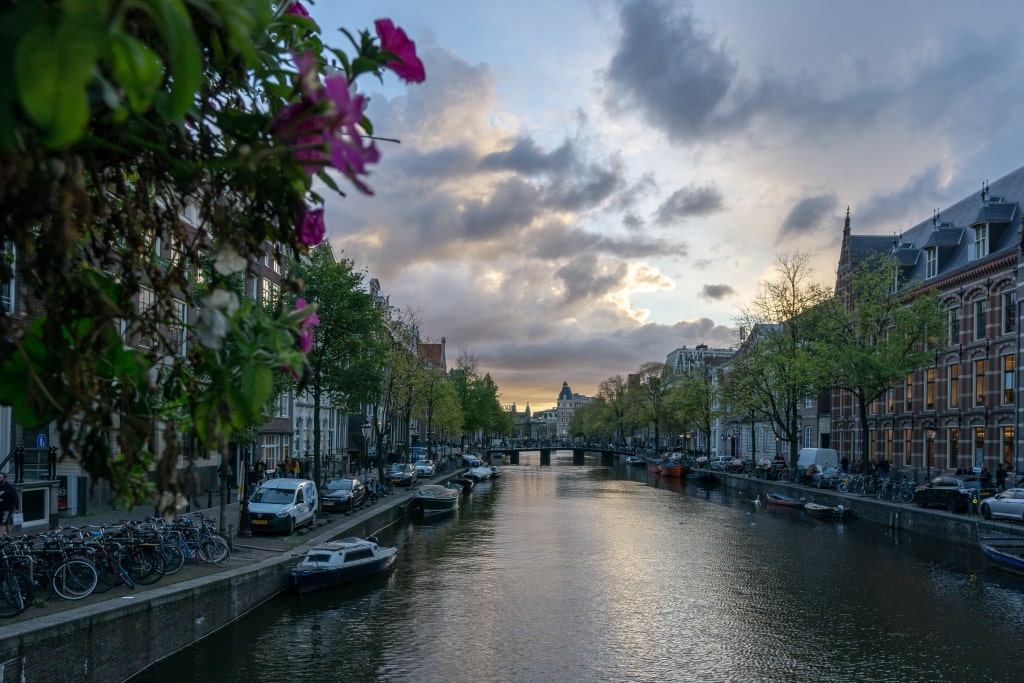
Strasbourg La Petite France half-timbered houses on a sunset-lit canal.
Located in the Alsace region near the German border, Strasbourg blends French and German influences and is known for canals, half-timbered houses, and its walkable historic center.
The district of La Petite France is famous for its cobblestone streets, flower-lined waterways, and the Strasbourg Cathedral, one of Europe’s most recognizable Gothic churches, with its intricate façade and astronomical clock. Around it, streets are filled with wine bars, bakeries, and shops selling Alsatian specialties that represent the city’s mix of French and German influences, which make up the iconic Strasbourg dining destinations.
The city also serves as a political center of the European Union, giving it both historic and modern significance. The city feels lived in, not frozen in time for tourists. Trams move through the city, locals crowd café terraces, and students fill the squares around the cathedral.
4. Speyer, Germany
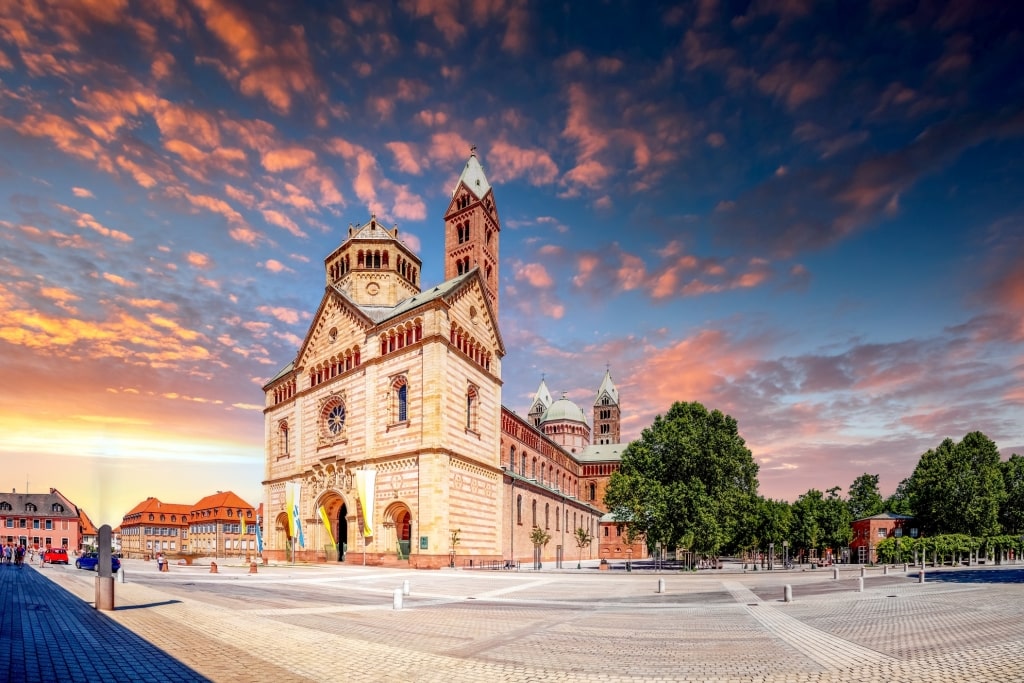
Massive Romanesque Speyer Cathedral dominating a vast stone square facing a colorful sunset sky.
Founded by the Romans nearly 2,000 years ago, Speyer is one of Germany’s oldest cities. Its centerpiece is Speyer Cathedral, a UNESCO World Heritage Site and one of the largest Romanesque churches in Europe. Even travelers who aren’t especially interested in architecture end up impressed by its scale once they see it in person.
Away from the cathedral, Speyer is a relaxed city to explore. Narrow streets open into lively squares lined with cafes, while pastel-colored buildings, small shops, and old gates feel distinctly old-world Germany.
5. Rüdesheim, Germany
Rüdesheim is the kind of Rhine town many travelers picture before they even arrive, with vineyards climbing the hillsides. The busiest area is Drosselgasse lane, which is packed with live music, wine bars, beer gardens, and restaurants that stay lively well into the evening during cruise season.
Many excursions here focus on Riesling, whether through vineyard visits, tastings, or cable-car rides above the Rhine Valley. This stretch of the river also marks the beginning of some of the Rhine’s most scenic sailing.
6. Koblenz, Germany
Koblenz sits where the Rhine and Moselle rivers meet, and the city has been important for centuries because of its location. Today, it’s best known for Deutsches Eck, or the German Corner, where the two rivers meet beneath a huge equestrian statue overlooking the riverfront.
This part of the Rhine feels noticeably more dramatic than many stretches farther south. Castle ruins sit high above the riverbanks, vineyard terraces cover the hillsides, and small villages appear between bends in the river. It’s also great for exploring the Upper Middle Rhine Valley, home to the Moselle wine region, known for producing some of Germany’s best Rieslings.
7. Cologne, Germany
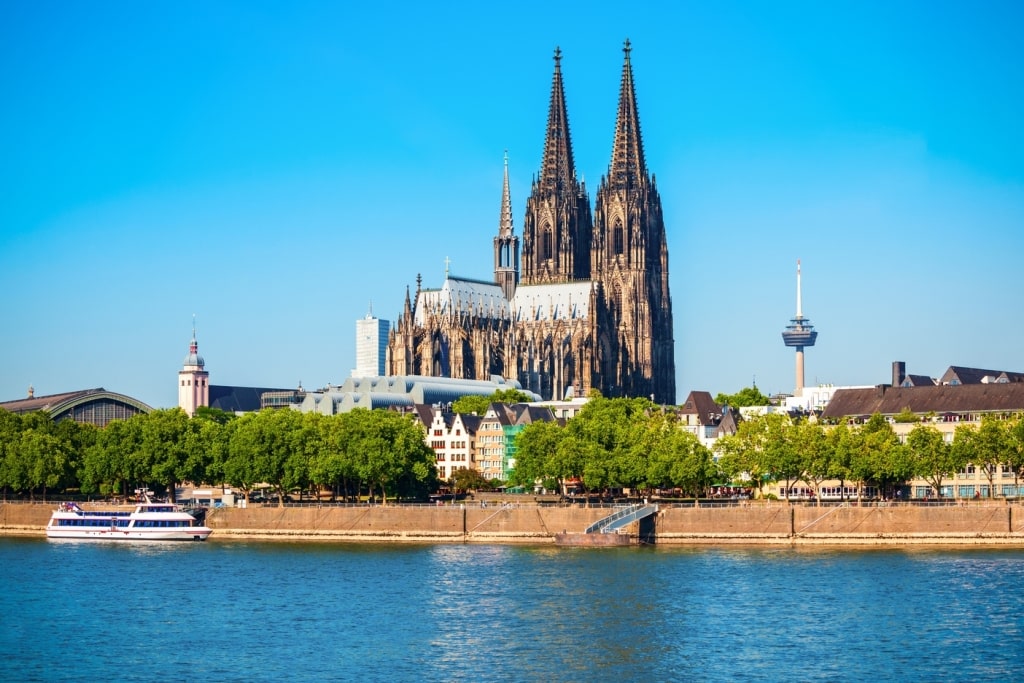
Cologne Cathedral and Hohenzollern Bridge across the Rhine River.
One of the Rhine’s largest cities, Cologne’s skyline is dominated by Cologne Cathedral, a UNESCO World Heritage Site whose twin ornate spires rise dramatically above the riverfront. You don’t really need a map to find it because you can see the spires from all over the city. Around it, the atmosphere feels less storybook Rhine and more everyday Germany, with locals biking home from work, packed pubs pouring Kölsch, shopping streets filled late into the evenings, and Roman ruins tucked between modern buildings.
That contrast is part of what makes Cologne memorable on a Rhine itinerary: it feels less preserved and more like a city where people actually live.
8. Amsterdam, Netherlands
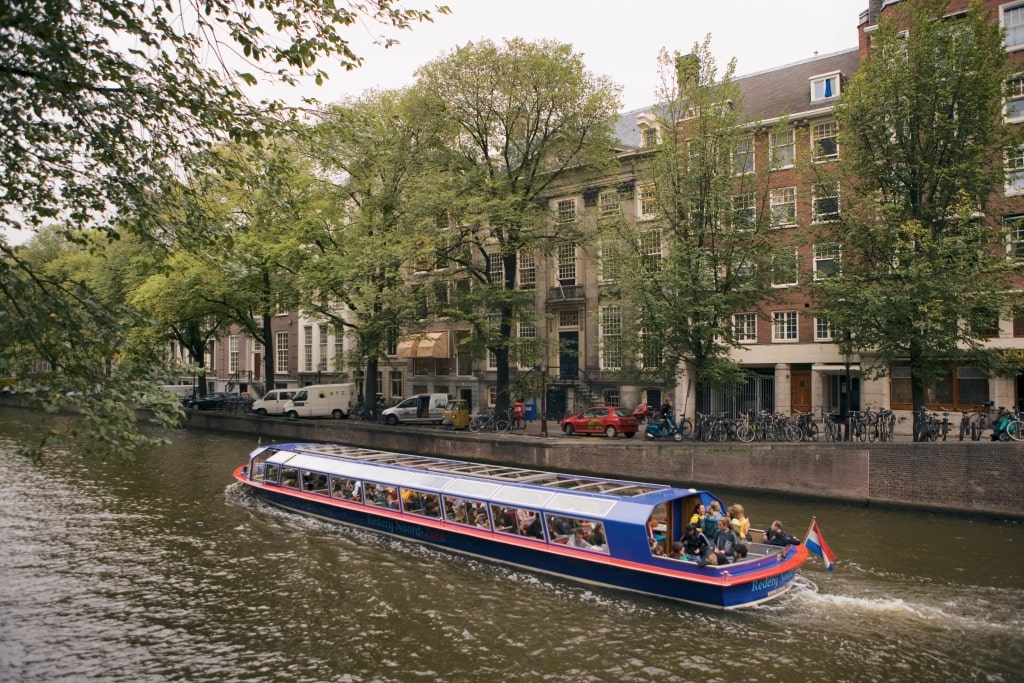
Glass-roofed tour boat cruising a wide Amsterdam canal facing historic brick houses and numerous bicycles.
Amsterdam is often where Rhine cruises begin or end, and it immediately feels different from the German and French towns farther south. The canals are wider, the streets busier, and bikes seem to outnumber cars.
The city’s major museums, including the Rijksmuseum, the Van Gogh Museum, and the Anne Frank House, draw huge crowds. Still, many travelers end up enjoying Amsterdam most by simply wandering its neighborhoods without much agenda.
Beyond the Cities: Scenic Highlights Along the Rhine
Some of the Rhine’s best moments happen when the ship is moving between ports. The Upper Middle Rhine Valley, which stretches between Koblenz and Rüdesheim, is often considered the highlight for its scenery.
Of course, the Rhine changes depending on the season. Spring brings green hillsides and blooming vineyards, while summer means long evenings and crowded café terraces along the waterfronts. Fall is especially beautiful because of grape harvest season, when vineyard towns become even livelier, and then winter introduces another side of the river, with many cruises focusing on Europe’s famous Christmas markets filled with wooden stalls, mulled wine, holiday lights, and seasonal food.
Experience the Rhine River Cruise
The Rhine connects many of Europe’s most important historic cities while also displaying vineyard landscapes, medieval towns, and centuries of cultural history along the way.
Explore Rhine River cruises here to experience several countries and cultures in a single journey.