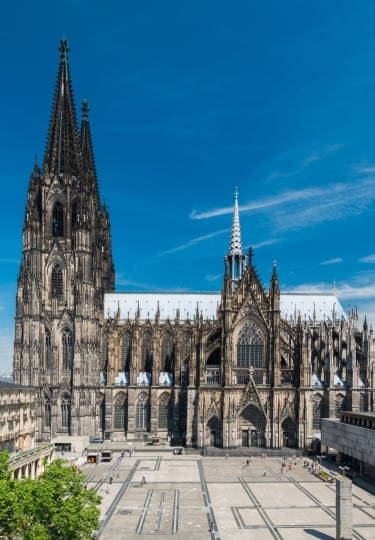
Famous churches in Germany are some of Europe’s oldest and most historically significant. Once a strategic middle point of the Holy Roman Empire, from 962 to 1806, Germany flourished with the construction of several grand cathedrals reflecting imperial power and religious authority. German cities such as Mainz, Cologne, and Speyer were once seats of archbishops or prince-bishops who competed for prestige and power through building such monumental, ornate worship sites.
Cathedrals in Germany are now focal points of civic pride and local life. These sanctuaries are strongholds of cultural and historical importance. Many of these churches, spanning historic areas from Upper Bavaria to the Rhine River heartland, are treasure troves of impressive architecture, from Romanesque to Gothic to Renaissance and Baroque to Rococo. Thanks to post-World War II preservation and restorative upkeep, many exist today in quite splendid condition.
From UNESCO-designated World Heritage Sites to brewery monasteries, record-setting cathedrals and Reformation churches, these are 12 famous churches in Germany to appreciate.
St. Stephansmünster, Breisach am Rhein
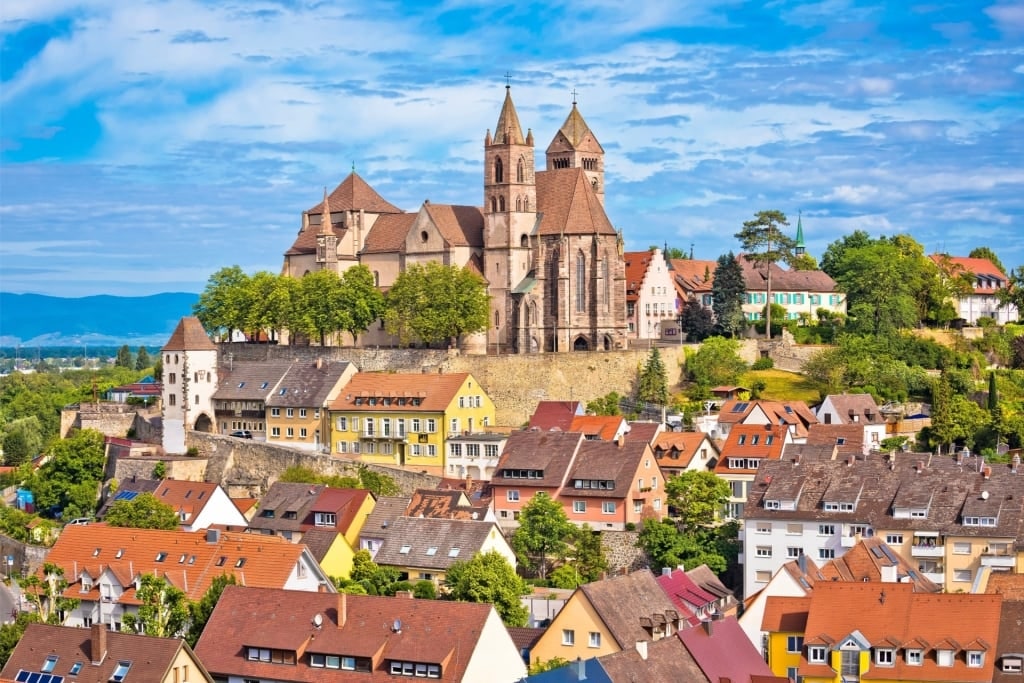
St. Stephansmünster, Breisach am Rhein
Lying in the heart of Germany’s renowned Kaiserstuhl wine region, Breisach on the Rhine is where the Black Forest meets French Alsace. The most iconic symbol of Breisach and its historical significance to the area is St. Stephansmünster, or St. Stephen’s Cathedral.
St. Stephansmünster is more than just a religious site. Poised around 150 feet above on the Münsterberg, or “Cathedral Hill”, St. Stephansmünster provides a constant reminder of Breisach’s historical importance as a key fortification between France and Germany during the Holy Roman Empire.
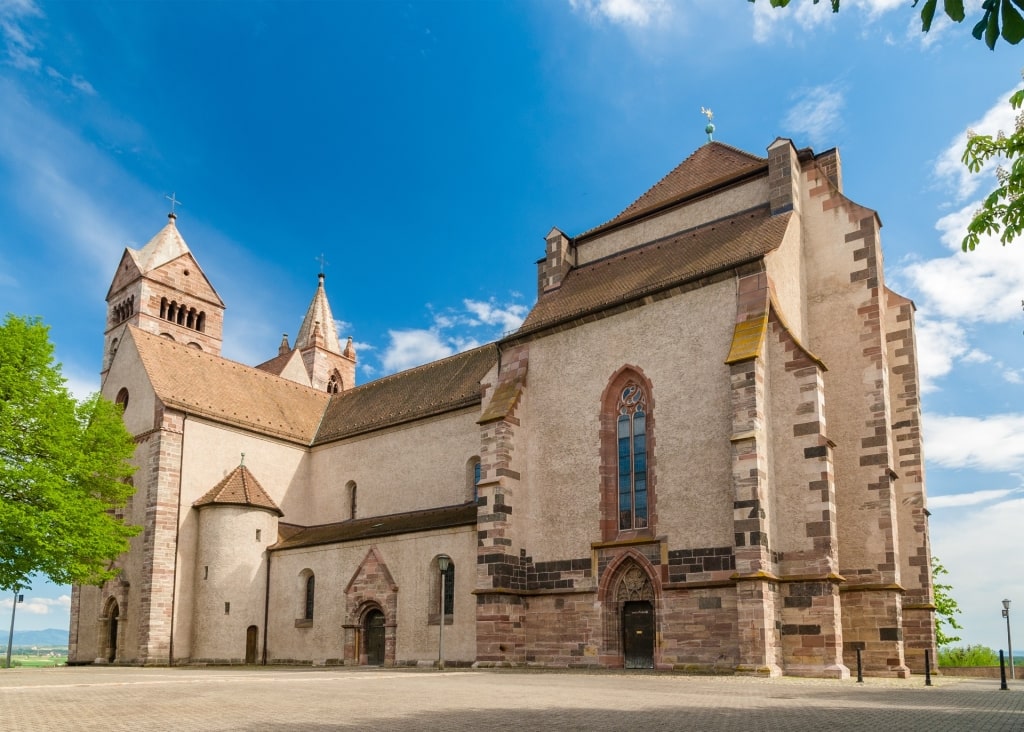
St. Stephansmünster, Breisach am Rhein
The cathedral’s facade, a mix of Romanesque and Gothic elements, reflects its evolving political and artistic impulses throughout a 300-year construction span enduring regional wealth and influence.
A steep walk up the cathedral grounds is essential to fully understand St. Stephansmünster’s historical resonance. Look for Martin Schongauer’s epic The Last Judgment mural, a magnificent, linden wood-carved altar triptych, and, outside, the Gutgesell Gate where, in 1415, Pope John XXIII was scandalously caught fleeing the Council of Constance.
Stadtpfarrkirche Mariä Himmelfahrt, Landsberg am Lech
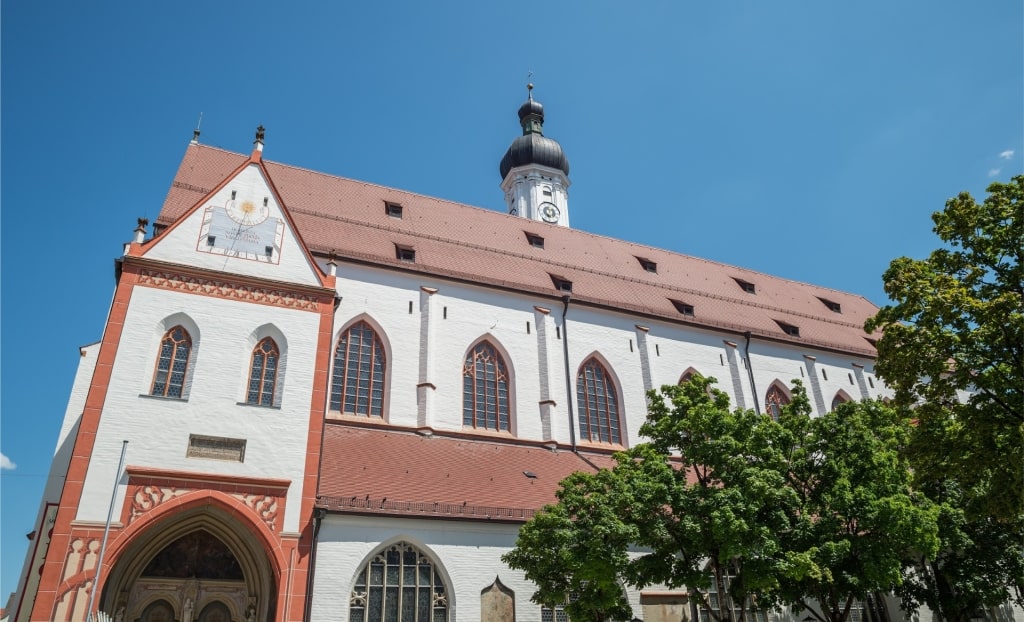
Stadtpfarrkirche Mariä Himmelfahrt, Landsberg am Lech
In Landsberg on the Lech River, an hour southwest from Munich, the Stadtpfarrkirche Mariä Himmelfahrt—Parish Church of the Assumption of Mary—is a bastion of southern German identity and post-Reformation history. Landsberg, an old, rural Bavarian village, is dominated by the huge, 15th-century basilica once grandly built from Salt Road wealth.
The parish, easily one of the most beautiful churches in Bavaria, is a treasure trove of Gothic, Baroque, and Rococo art. There are ceiling frescoes and other architectural elements, elaborate sculptures and saint-adorned stuccos, and rainbow stained-glass mosaics.
Highlights include a beautiful, slender bell tower built by Bern Cathedral’s architect Matthäus von Ensingen, as well as the priceless Madonna with Child sculpture inside.
Kloster Andechs, Andechs
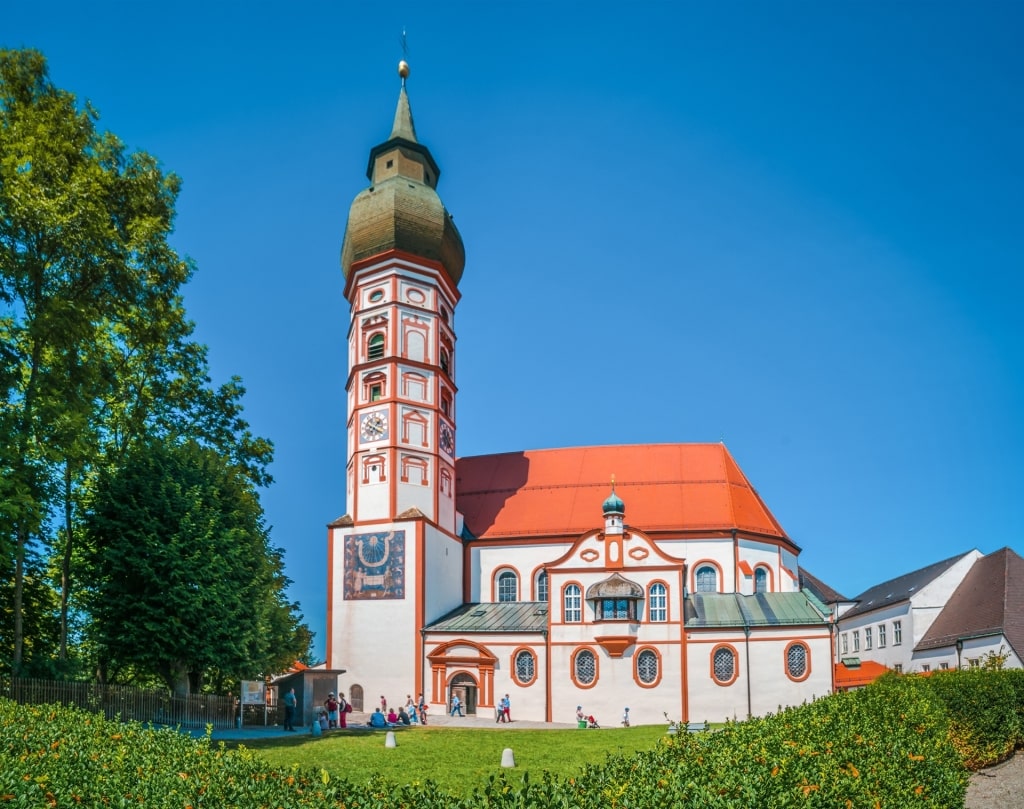
Kloster Andechs, Andechs
Kloster Andechs, known in English as Andechs Abbey, is beloved by many Bavarians as a weekend excursion. The Benedictine monastery, now a priory but formerly an abbey, is a one-hour drive from Munich and lies between two of the most popular lakes—Ammersee and Starnberger See—within Bavaria’s Five Lakes Region.
The beautiful, 10th-century hilltop monastery is a well-known pilgrimage site mostly, these days, for its brewery and Bräustüberl, the traditional tavern and beer garden. Come here to sip one of seven brews mastered by Benedictine monks to accompany Bavarian specialties like Schweinshaxe, roasted pork knuckle with a heap of potato salad. The best tables are on the Bräustüberl terrace offering sweeping views of Alps, forested hills and nearby lakes.
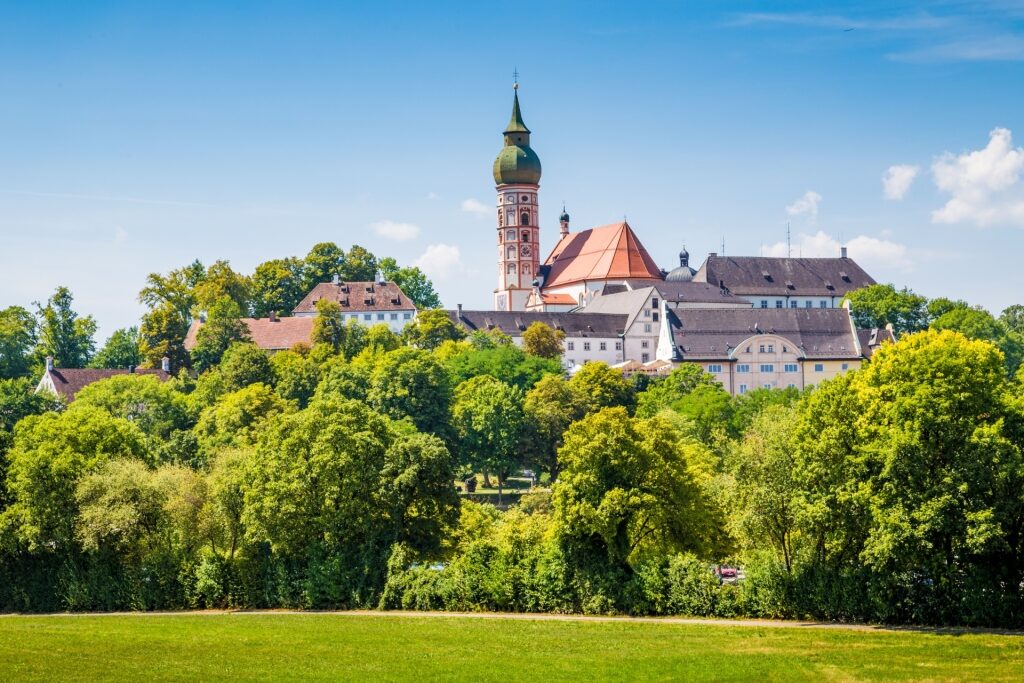
Kloster Andechs, Andechs
Fantastic hiking trails abound around the monastery. Visiting the on-site Holy Chapel at Andechs is also a must. The church is home to fascinating, evocative relics. You’ll find votive candles, standing over three feet tall, among some of Germany’s oldest. Carmina Burana composer Carl Orff is buried here. Charlemagne’s victory cross and branches believed to be from Christ’s crown of thorns are two more treasures.
Cologne Cathedral, Cologne
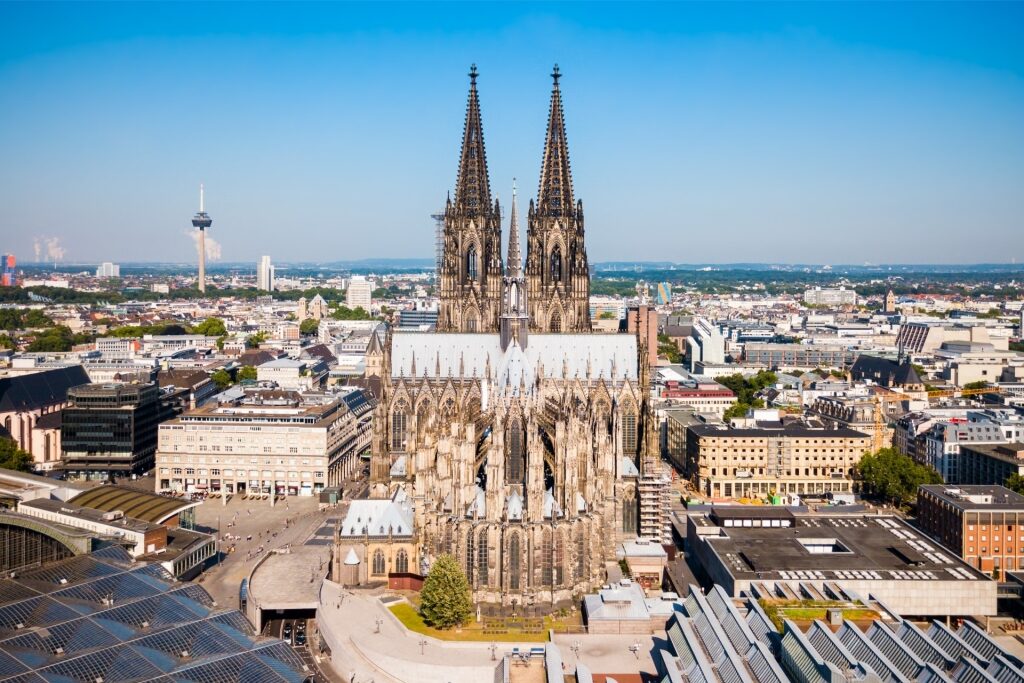
Cologne Cathedral
Cologne is home to one of the most famous churches in Germany: the country’s largest cathedral. The Kölner Dom, or Cologne Cathedral is a gigantic, medieval Gothic wonder which is certain to take your breath away from inside out.
Of around some 150 cathedrals in Germany, the Cologne Cathedral is considered western Germany’s most iconic religious landmark. It is also a historical symbol of the Archdiocese of Cologne, one of the oldest, largest and still today most influential Catholic dioceses in Germany and also Europe.
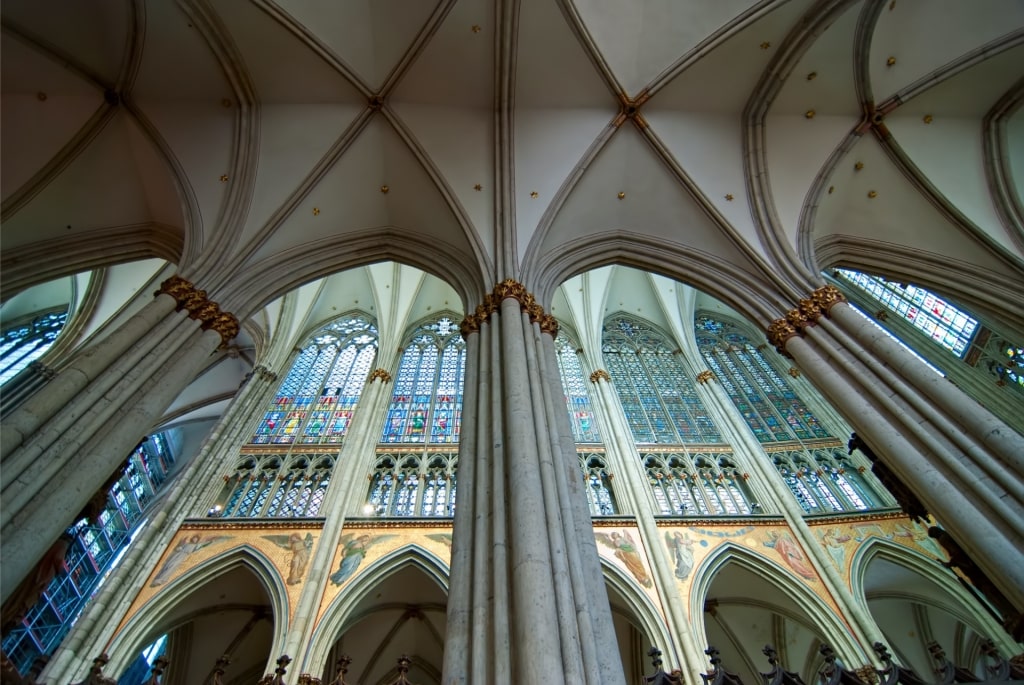
Cologne Cathedral, Cologne
The Cologne Cathedral, a UNESCO World Heritage Site, keeps a full spread of fabulous treasures, ancient and modern. Visit the subterranean treasury, holding some of Europe’s oldest liturgical objects. Upstairs, the Cathedral Window, unveiled in 2007, is a stained-glass, abstract-mosaic masterpiece by Germany’s most important living artist, Gerhard Richter.
The modern Cathedral Window is offset with an invaluable relic, the Shrine of the Magi, a basilica-shaped sarcophagus supposedly containing remains from the three kings who arrived at Jesus’ birth.
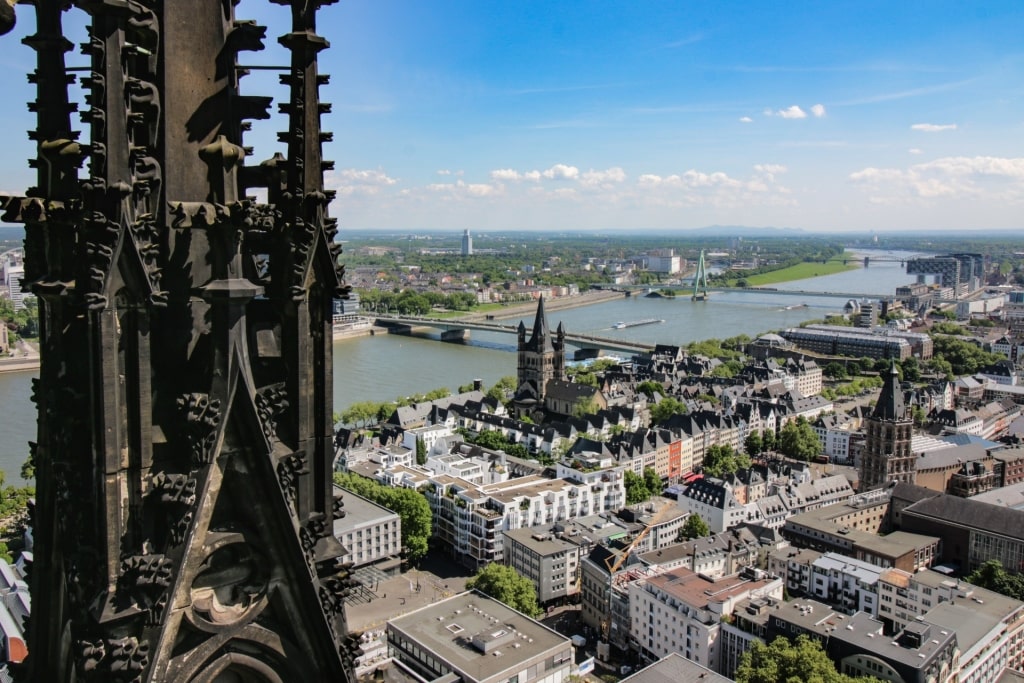
View from Cologne Cathedral, Cologne
Finally, climb the tower of Cologne Cathedral, once, briefly, the world’s tallest building before the Washington Monument usurped the title. Ascending 533 stone steps reveals a 300-ft-high viewing platform for unparalleled views. The sprawling bird’s-eye panorama is a true parallel to what was once the endless horizon of Cologne’s Holy Roman seat of seemingly unlimited power.
Kaiserdom, Frankfurt am Main
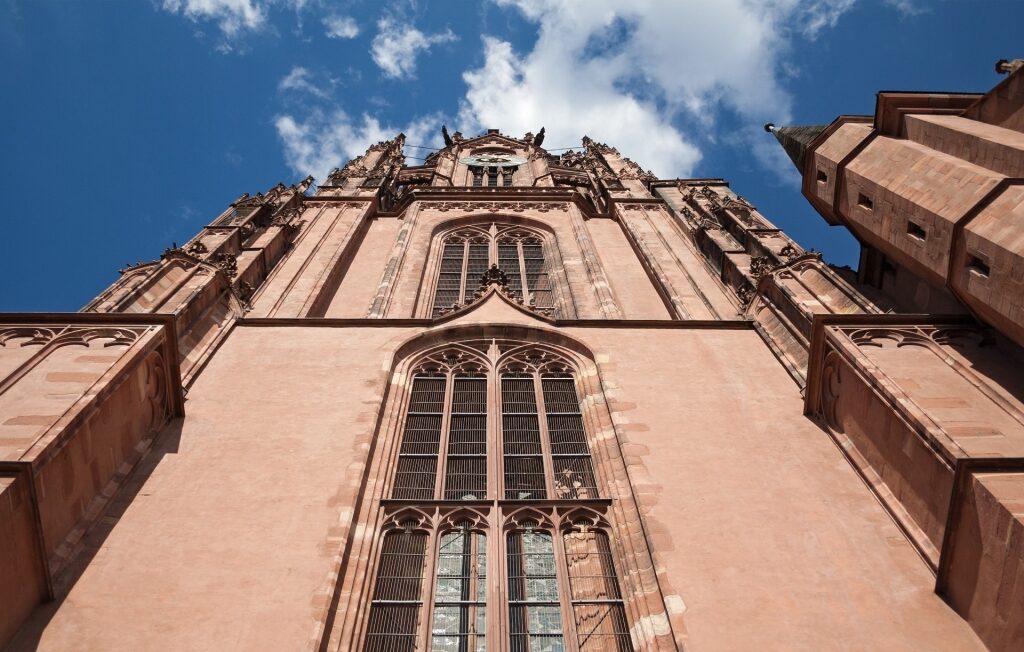
Kaiserdom, Frankfurt am Main
Frankfurt am Main played a critical role in the pomp and circumstance of the Holy Roman Empire. Today, the Kaiserdom St. Bartholomäus—the Imperial Dome of St. Bartholomew—is the landmark which portrays Frankfurt’s unique German-European Roman history to a tee.
The Kaiserdom, better known as Frankfurt Cathedral, was famously where Roman kings and emperors were elected, consecrated, and crowned into power. Today, you can see the exact spot, the Elector’s Chapel, where these events took place.
Through such lofty initiations, the church earned its “cathedral” status—although, unlike other German “cathedral cities”, Frankfurt never held a bishop’s seat.
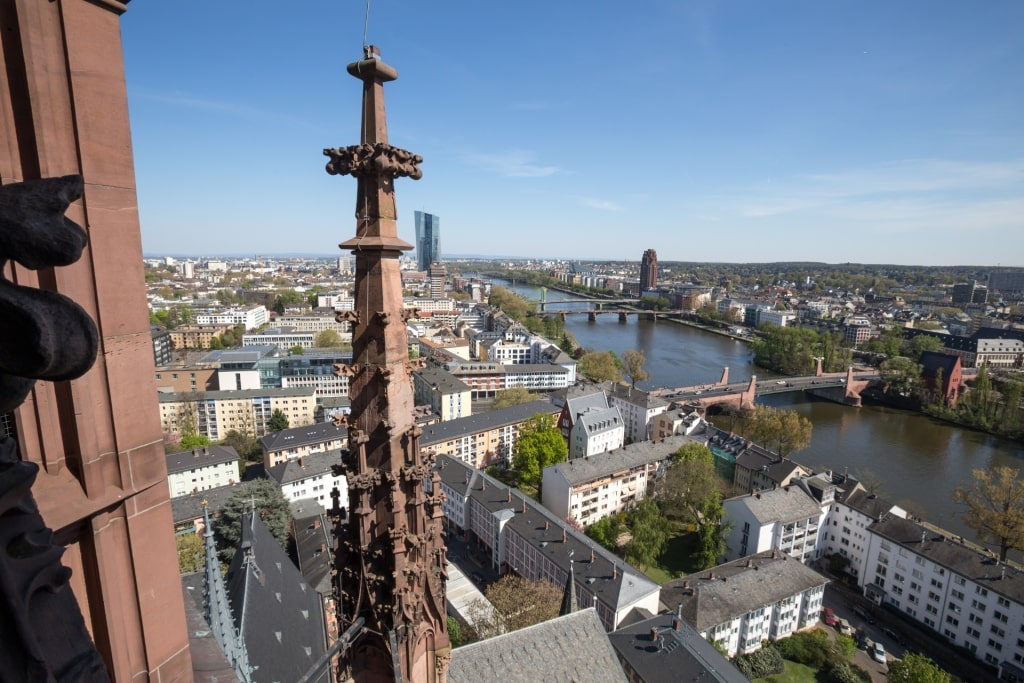
View from Kaiserdom, Frankfurt am Main
The gorgeous, red-sandstone church was rebuilt twice, first, after an 1867 fire and then after 1944 bombings destroyed the interior. On a guided tour, you can also visit an on-site museum and go up the 310 ft-high tower spire. Organ recitals are also regularly hosted here.
Basilika St. Kastor, Koblenz
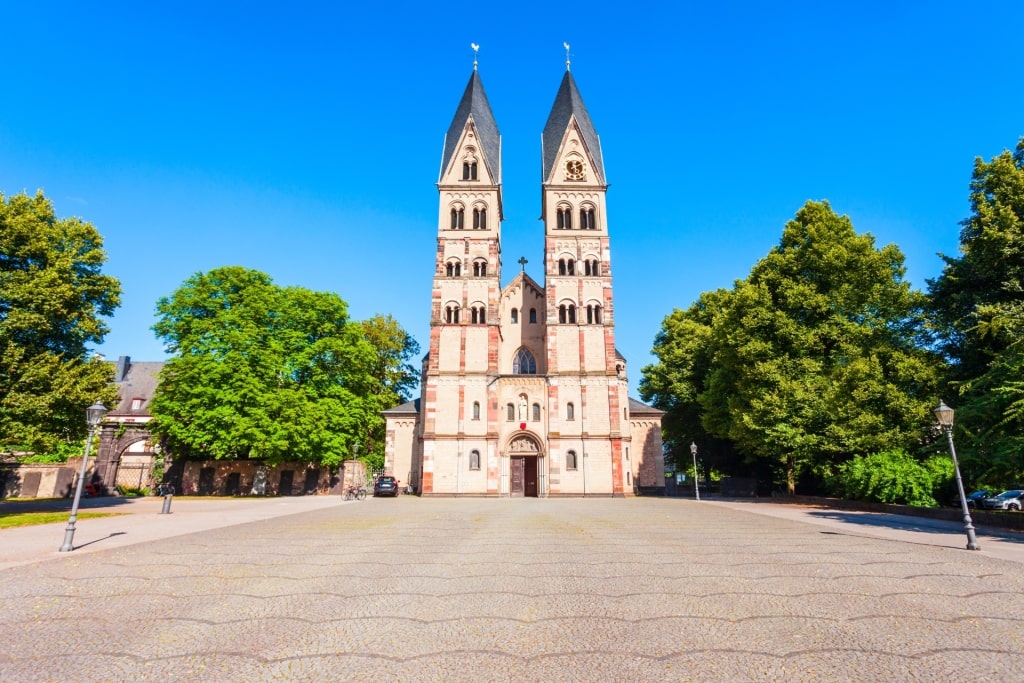
Basilika St. Kastor, Koblenz
Tucked between the Romantic Rhine Valley and Moselle Valley, two illustrious vineyard regions, Koblenz is a fantastic visit in the Middle Rhine. The city’s oldest church, Basilika St. Kastor, is also one of the important Romanesque churches in the region.
The basilica’s historical significance lies in how it contributed to medieval diplomacy, an era not well-associated with peaceful resolution. In 842, the basilica hosted Emperor Louis the Pious’ sons for negotiations which led to the Treaty of Verdun.
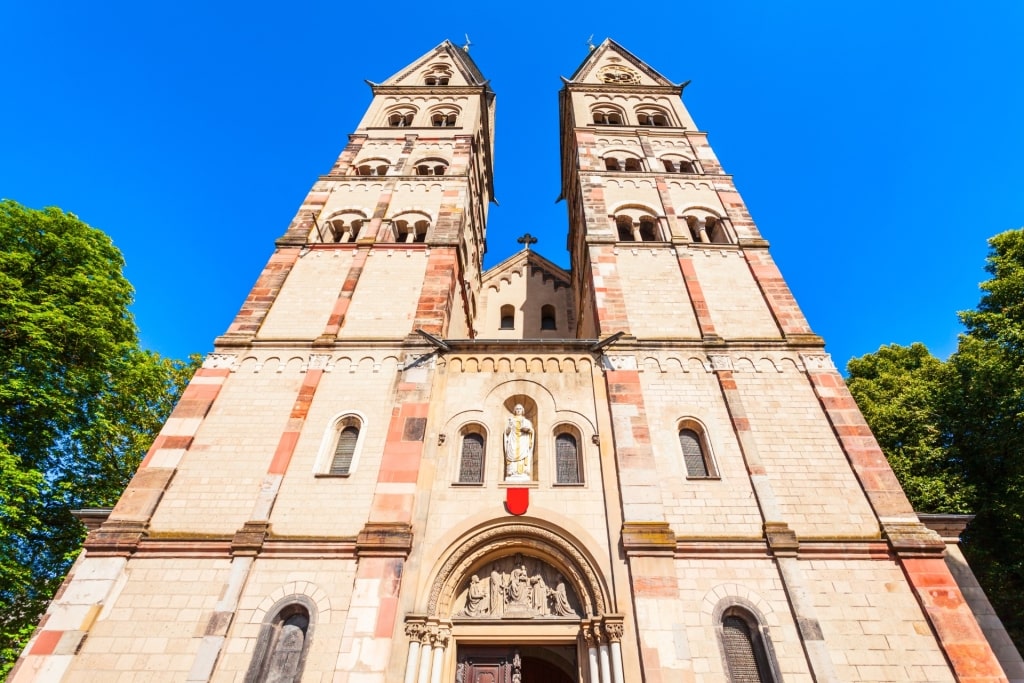
Basilika St. Kastor, Koblenz
Through the deal, the Carolingian Empire was formally divided into what became parts of modern Germany, France, and Italy—a historical turning point marking the distinct creation of Western European kingdoms.
For this reason, and also because it’s a well-preserved example of early medieval ecclesiastical architecture, Pope John Paul II raised St. Kastor’s status to a minor basilica in 1991.
Mainzer Dom, Mainz
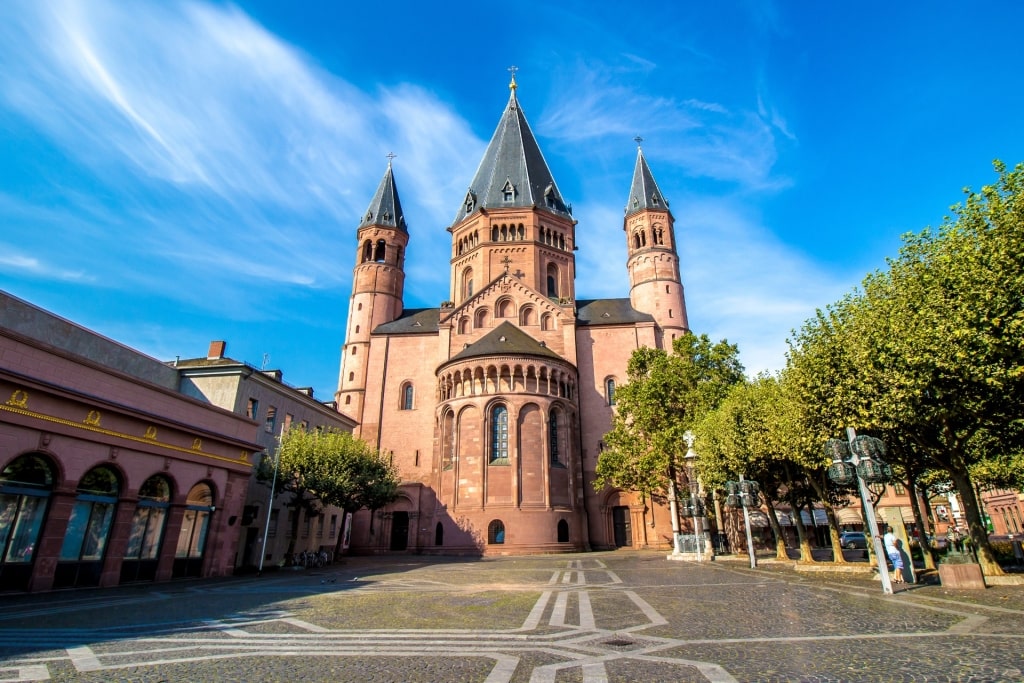
Mainzer Dom, Mainz
Mainzer Dom, officially known as Mainz Cathedral and also St. Martin’s Cathedral, was once the seat of the Archbishop of Mainz, in Roman-era Germany, the highest of the highest ecclesiastical powers.
Once upon a time, Mainz Cathedral was the spiritual and political heart of medieval Germany. From the 11th to 14th centuries, several German kings were crowned within its red-sandstone walls. The Archbishop of Mainz was also Archchancellor of Germany and one of seven prince-electors who chose the Emperor.
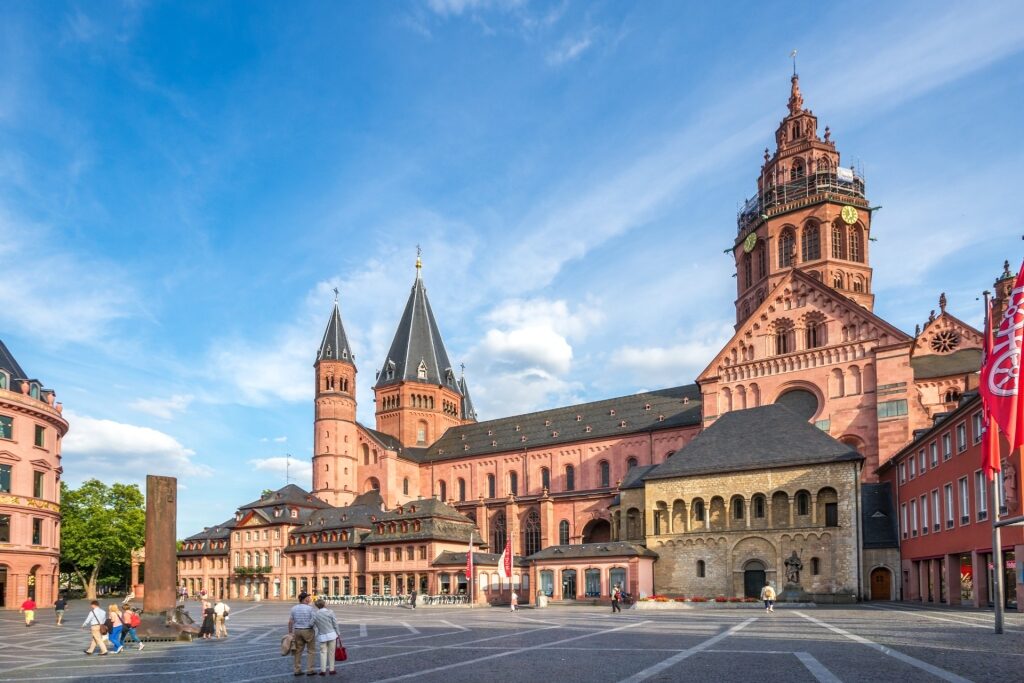
Mainzer Dom, Mainz
The cathedral’s massive Romanesque features—stone vaults, high ceilings topped with an octagonal tower, and a long nave—are prized for their fantastic acoustics. Come here to enjoy one of the Mainzer Dom’s famous classical concerts, including performances from its cathedral choir and a 6,000-pipe cathedral organ, both of which are nationally renowned.
Frauenkirche, Munich
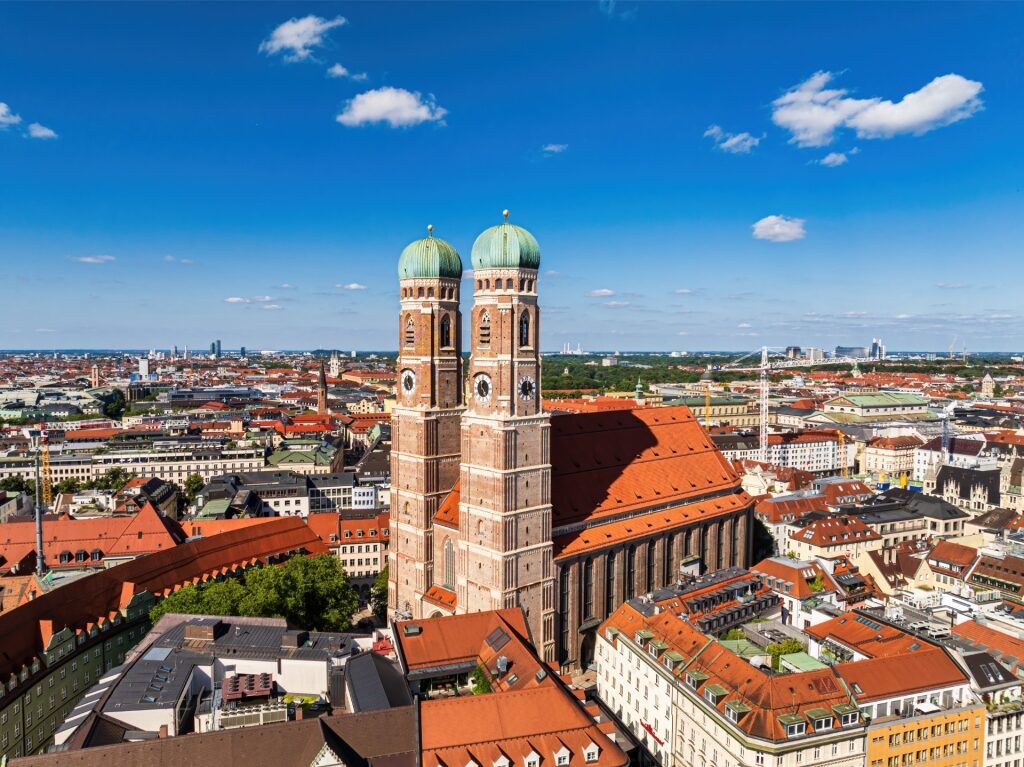
Frauenkirche, Munich
Of famous churches in Germany—not to mention Bavaria’s cornucopia of beautiful religious sites—the Frauenkirche, or Cathedral of Our Dear Lady in Munich is among the most culturally and historically revered in Europe.
According to law, no other building in downtown Munich may stand taller than the Frauenkirche’s 325-foot-high, onion-domed twin towers. As such, these towering spires are quintessential to the skyline. You might find your attention drawn here often, thanks to the church’s historic, 10-bell ensemble ringing regularly overhead.
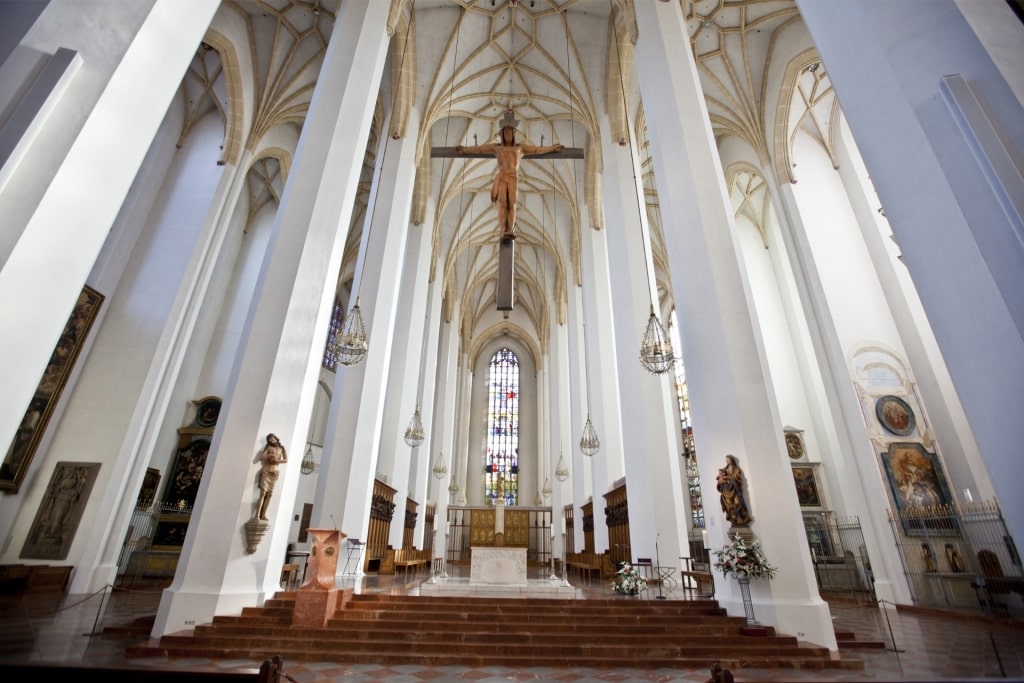
Frauenkirche, Munich
Frauenkirche has become symbolic of postwar recovery and national unity for Germans. The church sustained heavy bomb damage in WWII with only the twin towers and outer walls left standing. Its restoration, which has taken several decades to complete, has been highly praised for upholding the building’s authenticity.
St. Sebalduskirche, Nuremberg
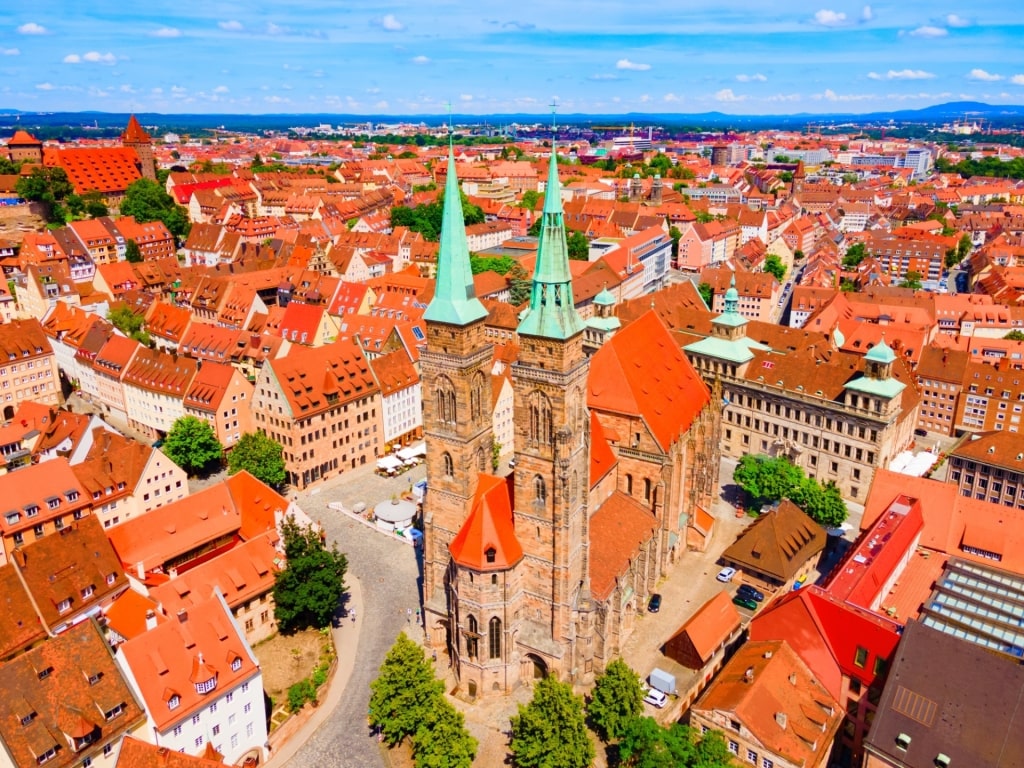
St. Sebalduskirche, Nuremberg
Nuremberg’s oldest parish church, dedicated to St. Sebaldus, was a major pilgrimage site during medieval times. Devotees appeared in droves to kneel, stand, and walk around the church’s bronze shrine, appealing to St. Sebaldus for help with illness, fertility, or other debilitating problems, often, allegedly, as a last resort.
Nuremberg, the second-largest city in Bavaria and also the de facto capital of Franconia, also counts St. Sebaldus, a local hermit and missionary, as its own patron saint. St. Sebaldus has often been invoked to protect Nuremberg from the likes of plague, fire, and famine—perhaps, also, he has even safeguarded the city through its remarkably peaceful Reformation.
In 1525, Nuremberg’s council officially adopted Lutheranism, making it one of the first imperial cities and major churches to do so, and without the violence and turbulence Protestantism came with elsewhere. St. Sebaldus remains a key Evangelical Lutheran worship place today.
Passau Dom, Passau
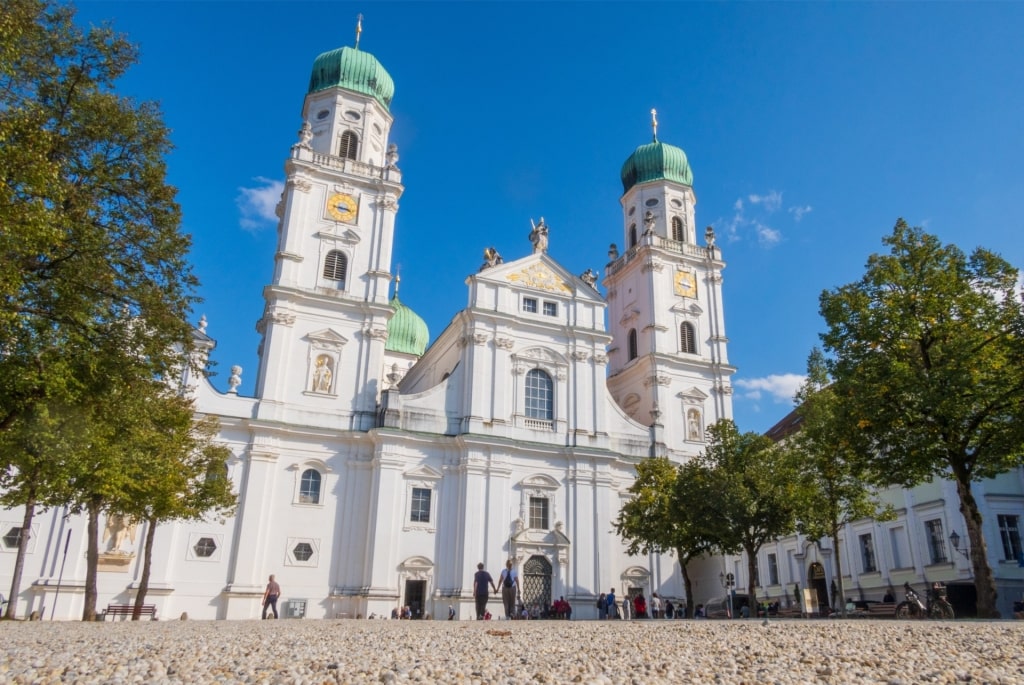
Passau Dom, Passau
The Passau Dom, officially known as St. Stephen’s Cathedral, is perhaps the most beautiful Baroque church in southern Germany. The cathedral is an Italian Baroque masterpiece full of artistic and architectural flourishes to behold—saints, cherubs, and other biblical figures, elaborately crafted in swirling golden plaster. Painted murals adorn what seems like every corner.
Passau Cathedral is most famously home to the world’s largest cathedral organ. The massive instrument—designed out of five separate organs to sound like a single one—comprises almost 18,000 pipes and over 200 registers. Catch its exquisite sound during recitals from May to October.
Dom St. Peter, Regensburg
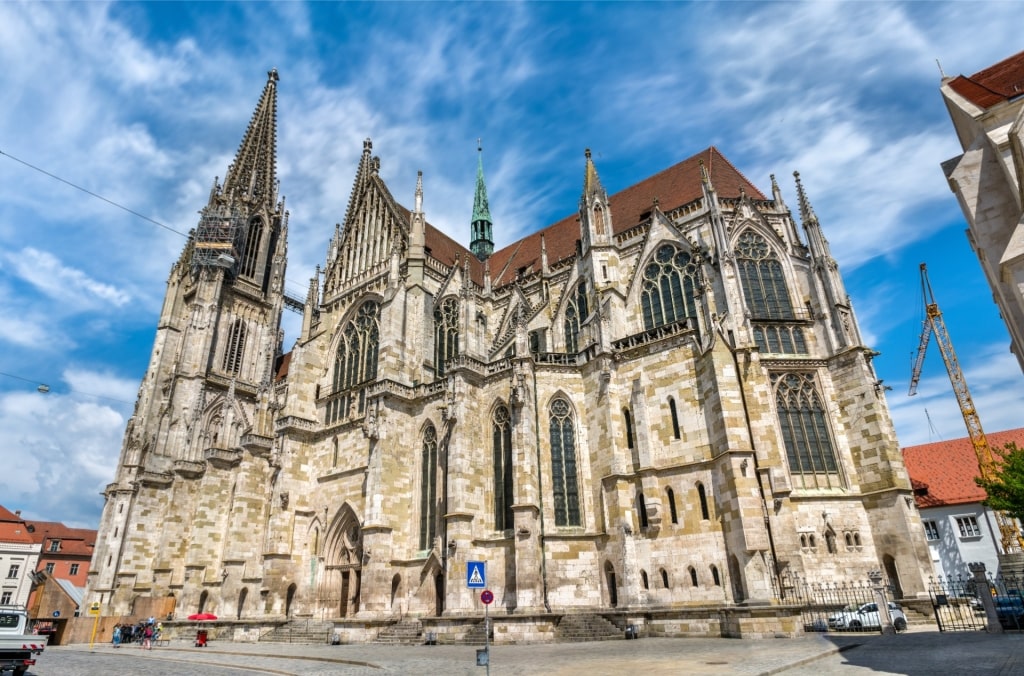
Dom St. Peter, Regensburg
Dom St. Peter, or St. Peter Cathedral, is one of Bavaria’s most awe-inspiring Gothic sanctuaries. Of famous churches in Germany, the soaring landmark of Regensburg—a former Roman imperial city and the first capital of Bavaria—is definitely among the most opulent in the Gothic style, which tends to be more restrained than Baroque-era architecture.
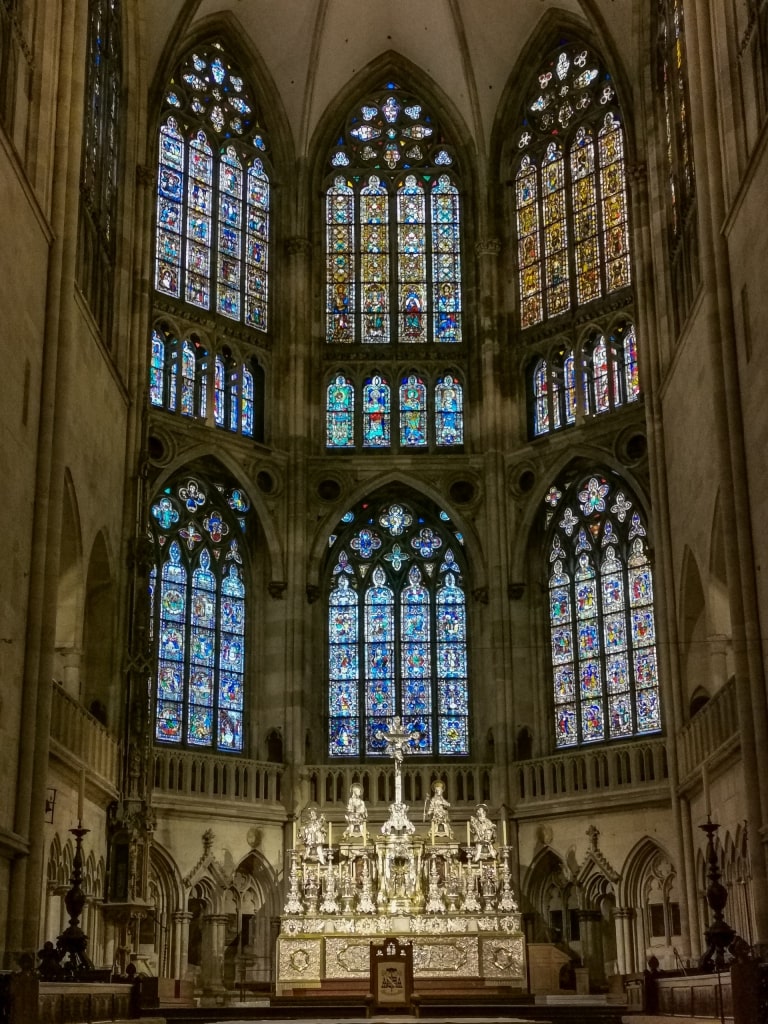
Dom St. Peter, Regensburg
Notable ornaments include St. Peter’s brilliantly hued stained-glass windows, which are some of the oldest and best-preserved medieval stained-glass collections in Europe. Many of such decorative windows were victims of Reformation iconoclasm and wartime. The extravagant main altar is crafted in white marble and silver accents. Similarly, the Cathedral Treasury overflows with bejeweled church treasures.
The cathedral is the home turf of the Domspatzen, or “Cathedral Sparrows”, a 1,000-year-old boys’ choir which performs during Sunday services.
Kaiserdom, Speyer
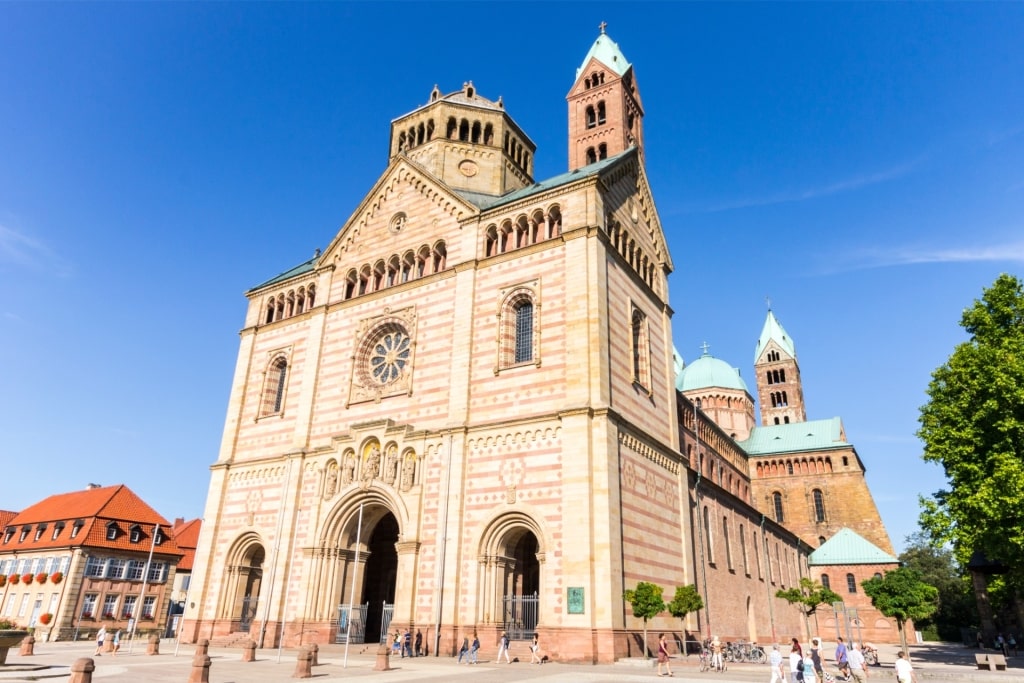
Kaiserdom, Speyer
The Kaiserdom Speyer, or Speyer Cathedral, is one of Germany’s best-known UNESCO World Heritage Sites, for good reason. Officially known as the Imperial Cathedral Basilica of the Assumption and St. Stephen, Speyer is the largest Romanesque church in the world.
The Kaiserdom has held this title ever since its 11th-century completion. A gargantuan vision spanning square red towers and “floating” green copper domes and roofs, Speyer is an arresting, modern-day symbol of medieval imperial power along the Rhine. Its sheer size alone was once an important political statement; the Roman Emperor’s supremacy came before the Pope and Church.
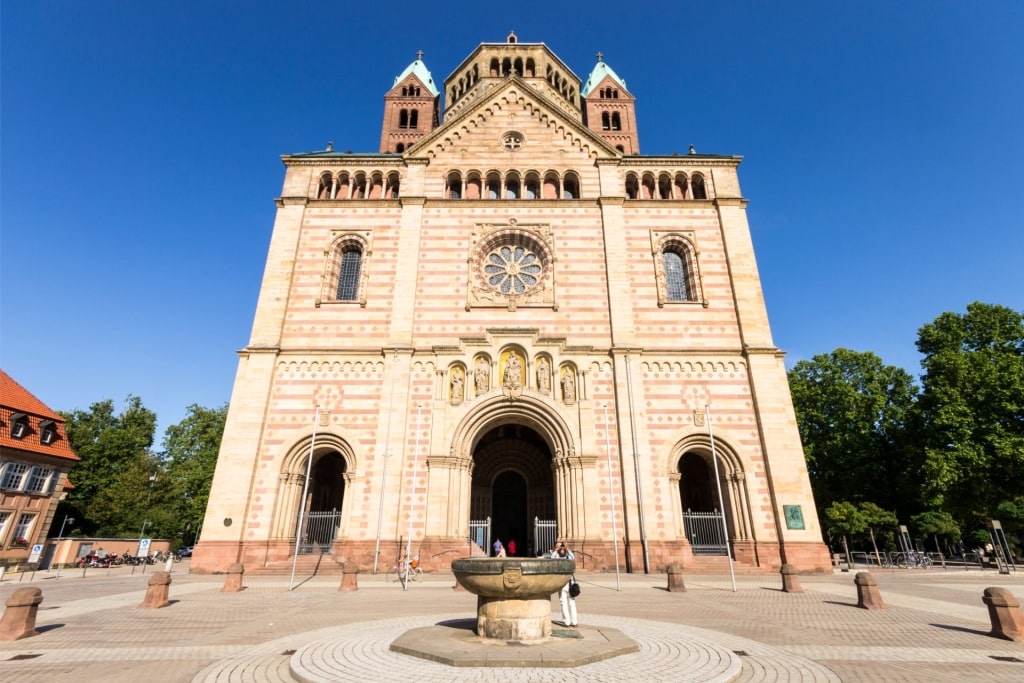
Kaiserdom, Speyer
Climb the 304-step cathedral tower to reach a viewing platform making the German city of Speyer appear tiny. Other highlights include the imperial crypt, where eight rulers are laid to rest, as well as 19th-century paintings in the Imperial Hall.
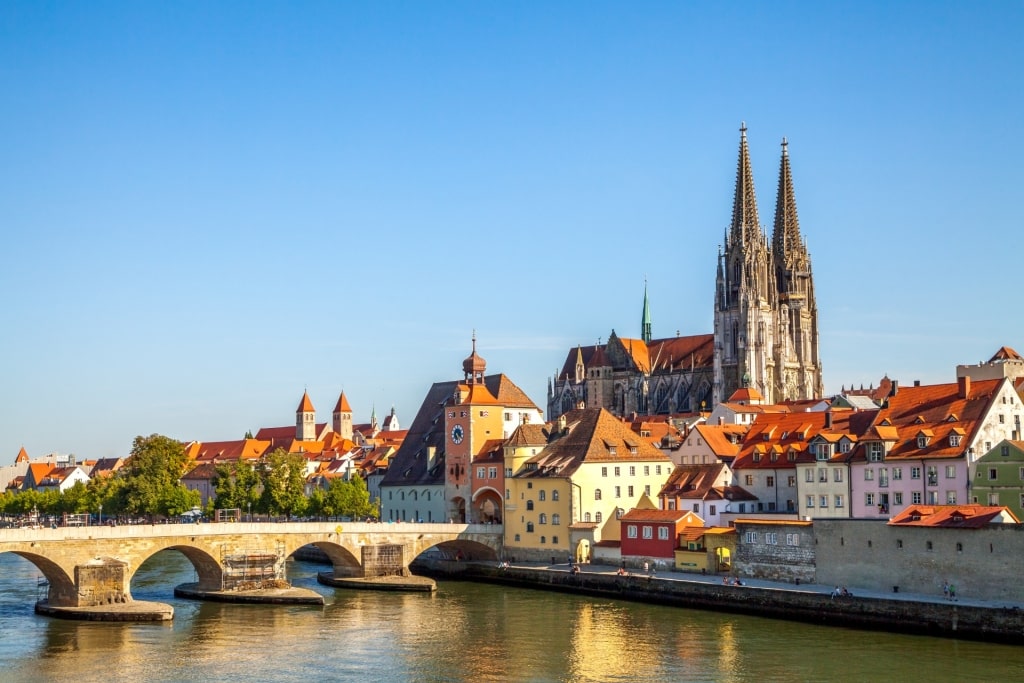
Regensburg
Marvel at these famous churches in Germany on one of Celebrity’s river cruises. Browse itineraries and plan your dream vacation.