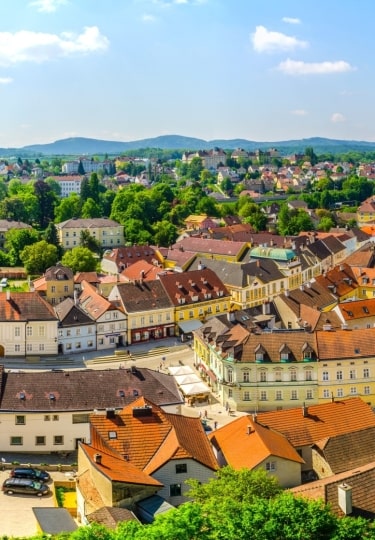
Beauty might be in the eye of the beholder, but towns in Austria are hard to see as anything short of magical. While visiting big cities like Vienna and Salzburg makes for a great introduction to Austrian culture, spending a day exploring the countryside or a small town in the Wachau Valley offers something that sprawling urban centers can’t replicate.
Whether you’re eager to sample local wines from the Wachau Valley or hike your way through Austria’s lush forests, adventure awaits. From cities dotted along the Danube River to castles perched on hilltops, here are 15 of Austria’s most beautiful towns to visit on your trip.
Melk
Melk
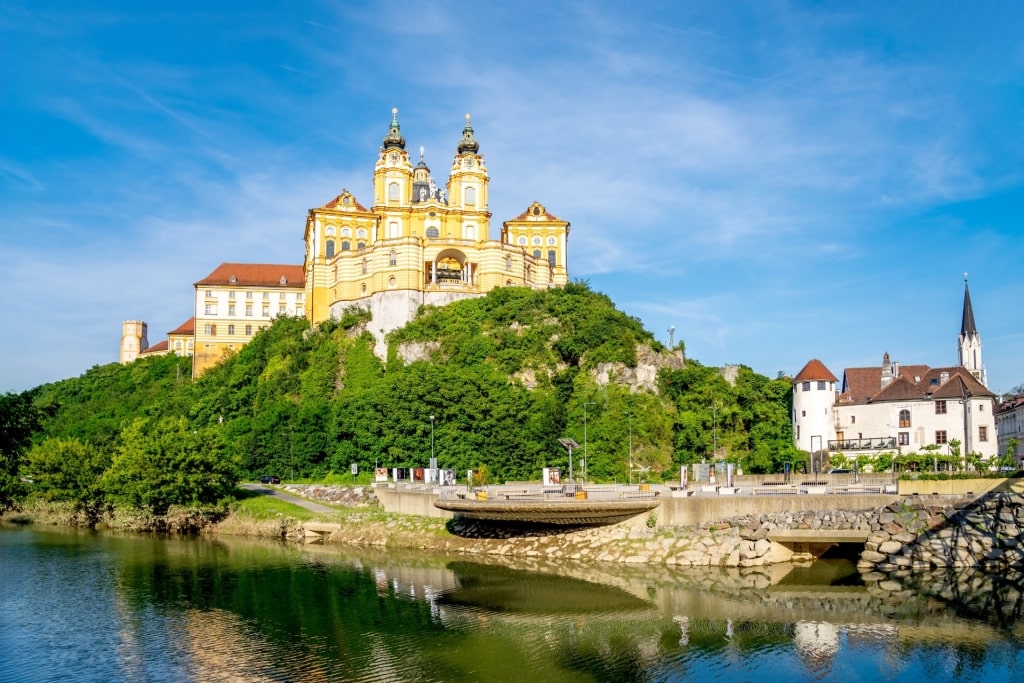
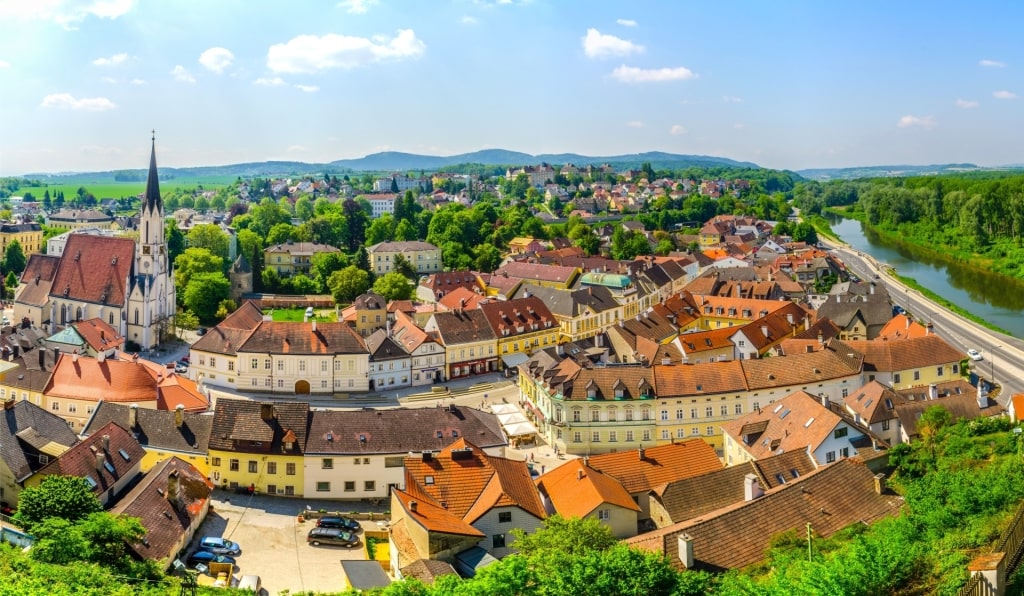
The main attraction in Melk is Melk Abbey, a Baroque monastery with an ornate church, frescoed ceilings, and a historic library.
After taking in the abbey’s interior, spend some time walking through the outdoor gardens, which offer picturesque views over the Danube and Wachau Valley.
In the old town, you’ll wander through cobblestone streets, pass historic buildings, and find plenty of little shops for handcrafted souvenirs. If time permits, take a stroll along the Danube Promenade, a riverside walkway that connects Melk to nearby towns.
Spitz
Spitz
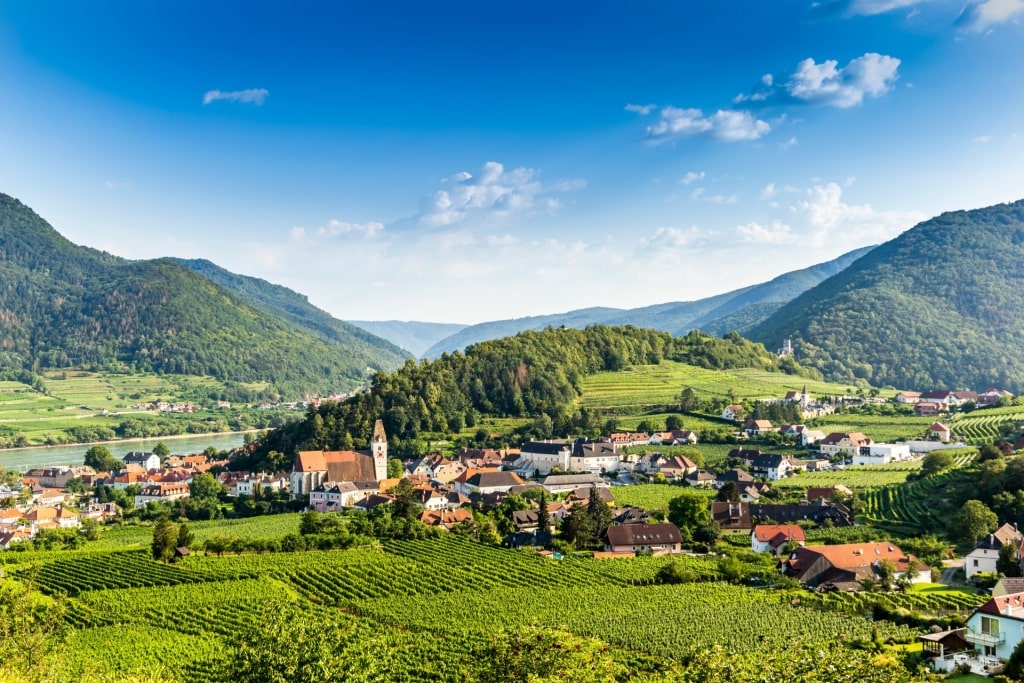
Spitz is famed for its Tausendeimerberg Vineyard, known for its terraced slopes that produce some of Austria’s top-ranked wines. Naturally, you’ll find several family-run Heuriger wine taverns where you can sample local wines and traditional Austrian snacks. Grüner Veltliner is the main grape in the Wachau Valley.
While wine preferences are personal, most visitors appreciate the crisp, fresh flavor of Grüner Veltliner, especially on a warm day or after hiking through the valley.
Dürnstein
Dürnstein
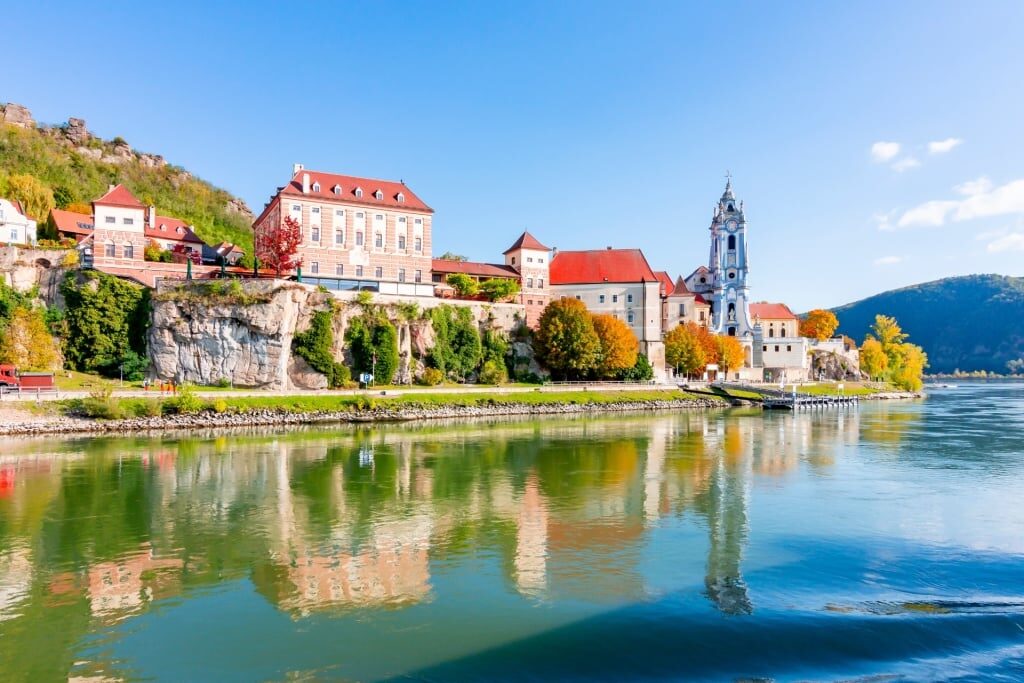
Unlike Spitz, which leans toward wine culture, Dürnstein is better known for its castles and historic landmarks. The Dürnstein Castle is best known as the 12th-century prison of King Richard the Lionheart.
While only ruins remain, it’s still a must-see. The climb to the top is a bit of a trek—plan between 30-45 minutes—but is worth the effort for the panoramic views of the Danube River and Wachau Valley, far below.
Another highlight in Dürnstein is the Stiftskirche and its iconic blue-and-white tower. This monastery church, dating back to the 15th century, is one of the most photographed sites in the Wachau Valley.
Weißenkirchen
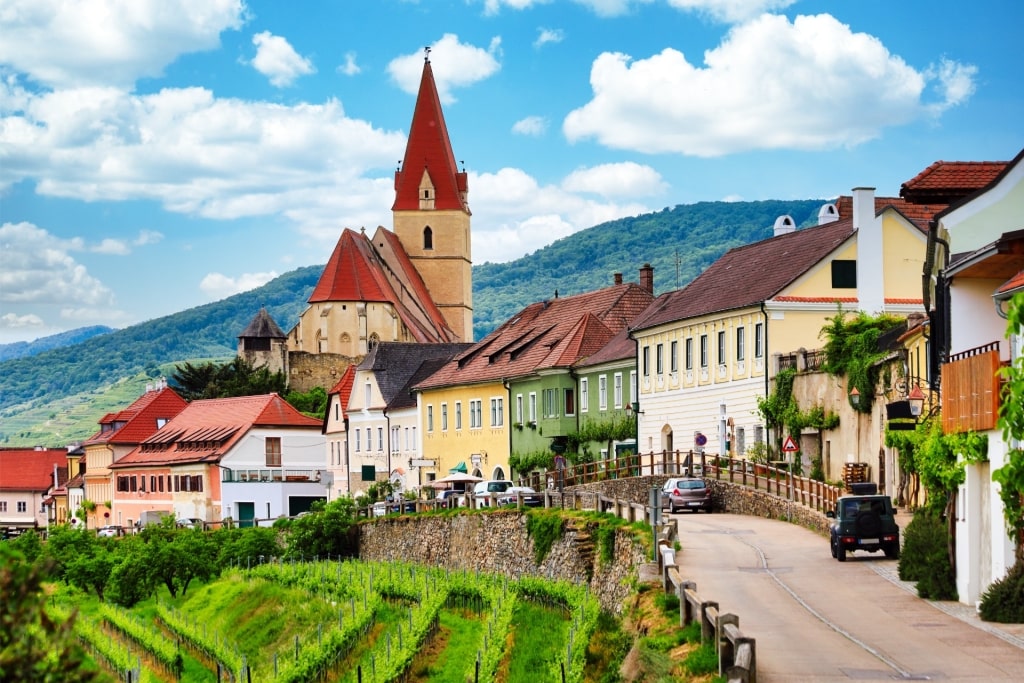
Weißenkirchen
Surrounded by terraced vineyards, Weißenkirchen is home to local vintners who offer Grüner Veltliner and Riesling tastings to visitors. The old town is especially charming, with its narrow cobblestone streets and colorful historic buildings. It’s perfect for a leisurely stroll, whether popping in and out of boutiques or sampling wines at different taverns.
Don’t miss St. Michael’s Church, which dates back to the 14th century and features vaulted ceilings, intricately carved wood altars, and magnificent stained glass windows.
Krems
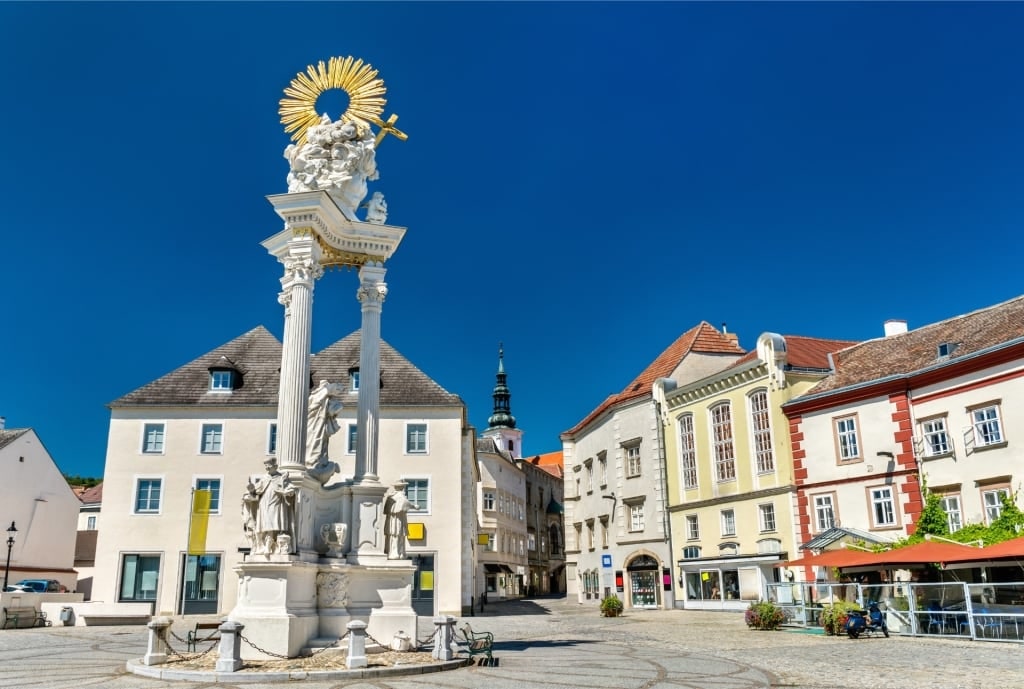
Hauptplatz, Krems
Like many small towns in Austria, Krems is a pedestrian-friendly old town, perfect for shopping or people-watching at a café. The Hauptplatz, or main square, is the lively heart of town, often hosting festivals, outdoor concerts, and local markets.
Krems also has a vibrant art scene. Visit the Kunsthalle Krems for rotating exhibitions of modern art from both Austrian and international artists. Nearby, the Karikaturmuseum Krems showcases caricature and cartoon art in a fun, lighthearted setting.
Grein
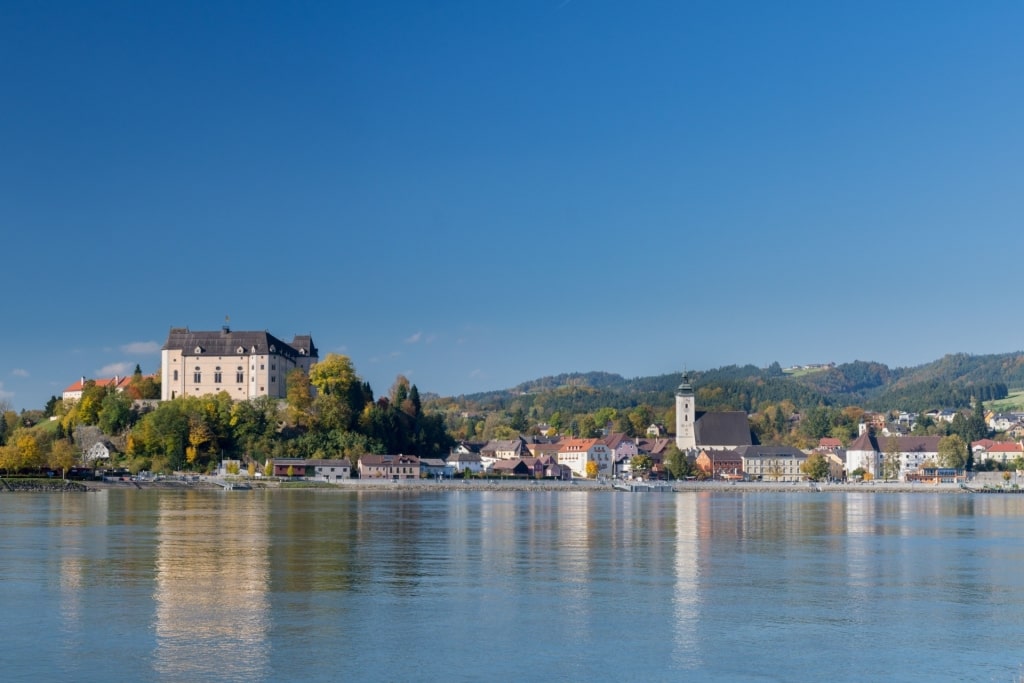
Grein
The biggest draw of Grein, in Upper Austria, is Greinburg Castle, the country’s oldest residential castle. It features grand halls, an arcaded Renaissance courtyard, and a shipping museum that explores the region’s history over the centuries. Don’t miss the Diamond Vault, named for its vaulted ceiling covered in diamond-shaped patterns.
Another highlight of Grein is the Stadttheater Grein. As Austria’s oldest functioning theater, it offers a glimpse into 17th-century culture and showcases an intricate wooden interior.
Aschach an der Donau
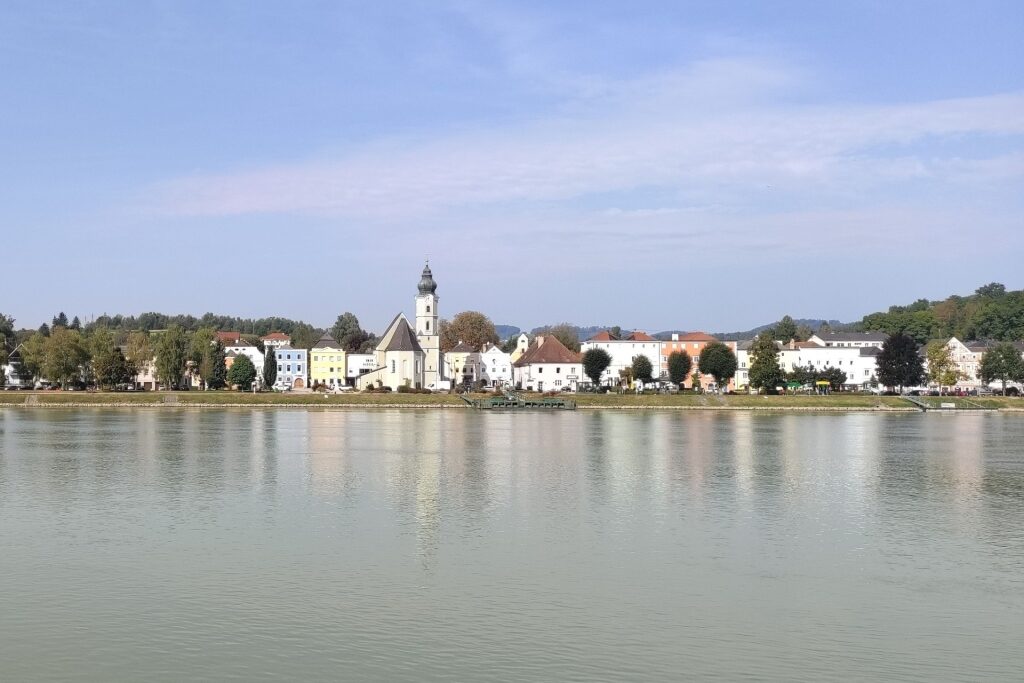
Aschach an der Donau
Like many Austrian towns, Aschach an der Donau is a charming old town with colorful façades and well-preserved merchant houses. Strolling along the main street feels like an interactive tour of Baroque and Renaissance architecture. It’s quite Instagrammable, with pastel-painted buildings and ornate window frames.
For a view of the river, head to the Danube promenade. Lined with trees, it offers shade in summer and is a perfect spot to enjoy a packed picnic.
Wallsee-Sindelburg

Wallsee-Sindelburg
Wallsee-Sindelburg offers a bit of everything, from nature trails to cultural sites. Many visitors start their day at Schloss Wallsee, a Neo-Gothic castle that was once the residence of Archduke Franz Salvator and is still owned by the Habsburg family. While the castle’s interior is only open for special events, the grounds are accessible.
If time allows, explore the nearby hiking and cycling trails winding through hills, forests, and farmland. The popular Danube Oxbow Trail typically takes between one and two hours to complete.
Freistadt
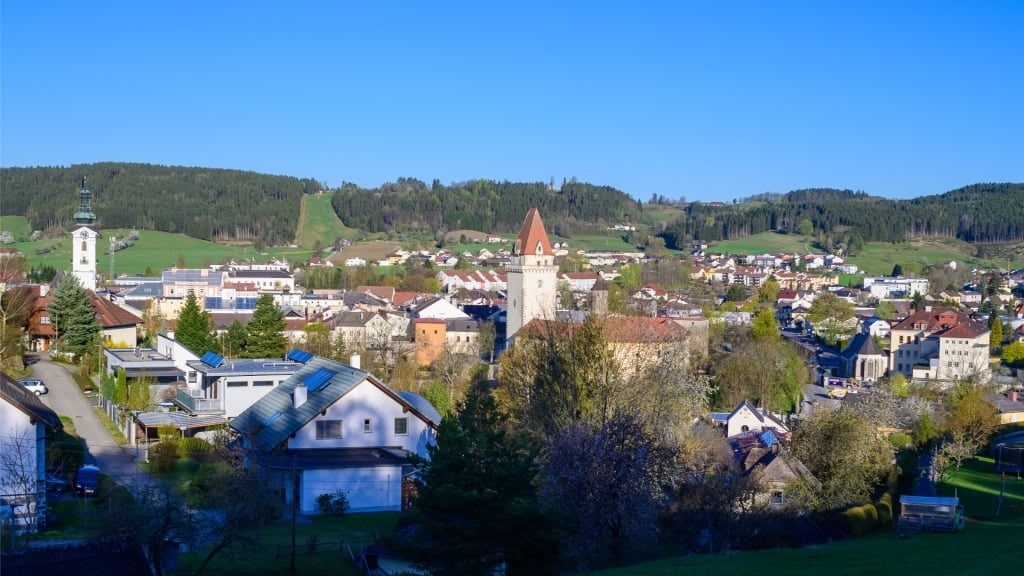
Freistadt
Freistadt is one of the best-preserved medieval towns in Austria. In addition to its original city walls, which remain intact, the historic old town features cobbled squares and townhouses with Renaissance-style architecture and arcaded façades. Be sure to walk down Waaggasse Lane, a narrow alley in the center, and visit the old Linzer Tor gate.
The Freistadt Castle and Museum is a great starting point, offering a cultural crash course in the 14th-century Austrian castle, the town’s medieval history, local folklore, and traditional handicrafts.
Brandstatt
Like Wallsee-Sindelburg and several other Austrian towns, Brandstatt is a stop along the scenic Danube Cycle Path. Many travelers opt to rent a bike here to enjoy the river views. Brandstatt is more rural and less touristy than many other towns along the river, offering a quiet reprieve from the busier stops along the route.
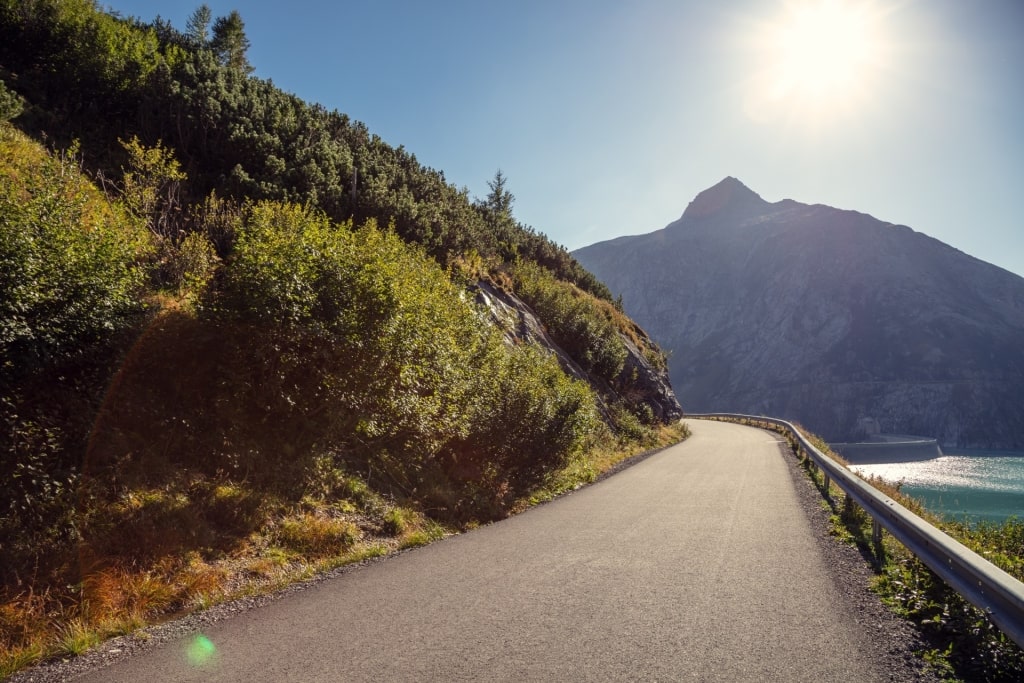
Danube Cycle Path
In addition to cycling, several easy hikes weave through the surrounding forest and countryside. Local farms in the area sell fresh dairy and honey products, and a few even offer schnapps tastings.
Engelhartszell
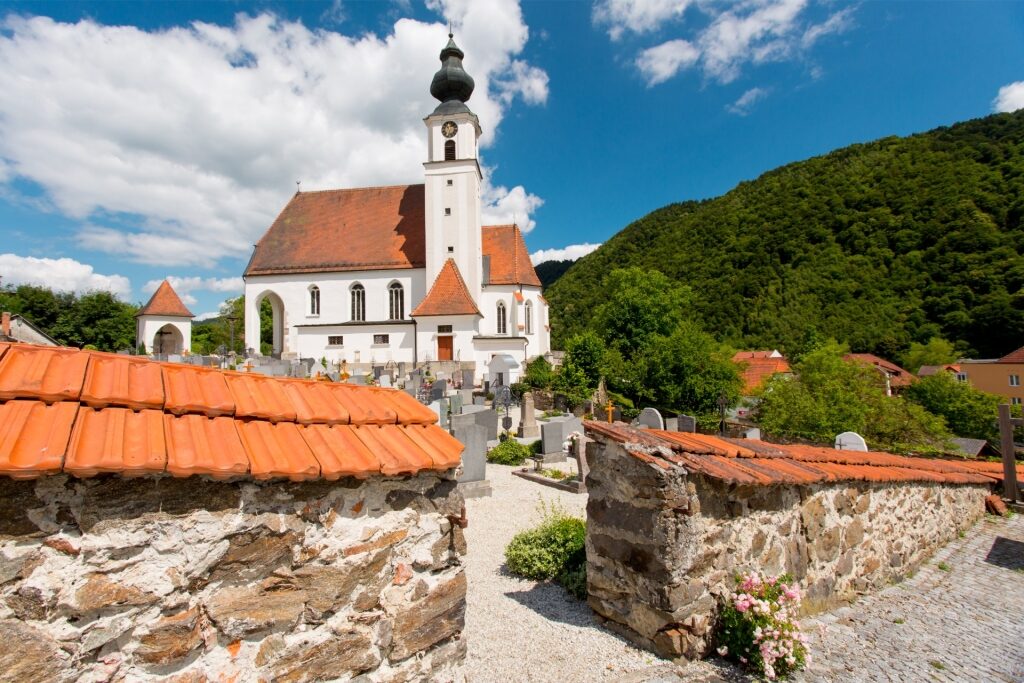
Engelhartszell
Engelhartszell is home to Austria’s only Trappist monastery, Engelszell Abbey. The church itself is impressive, particularly the 250-foot tower, built in the Rococo style between 1754 and 1764. Inside, you’ll find artwork by artists such as Johann Georg Üblher, Joseph Deutschmann, and Bartolomeo Altomonte. The abbey also sells artisanal products such as apple juice, cheeses, and liqueurs produced by the monks.
Another site worth visiting in Engelhartszell is the Römerburgus Oberranna. This former Roman fort offers a glimpse into the Roman era in Austria. Admission is free, and the site is open daily.
Linz
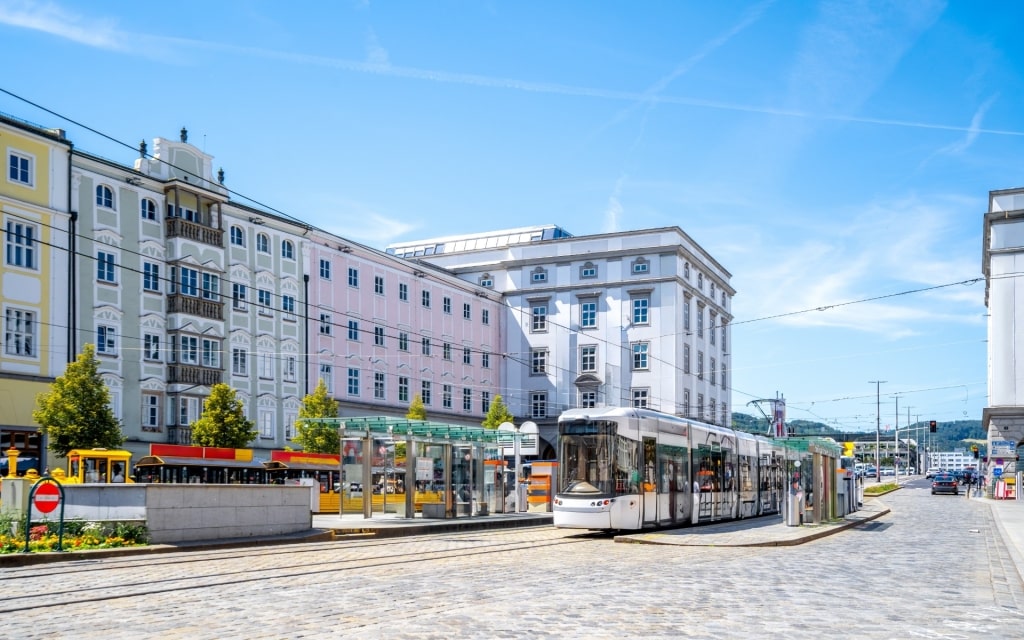
Linz
Although Linz is Austria’s third-largest city, it retains a small-town feel and offers one of the country’s finest art scenes. If you save Linz’s museums for a rainy day, you’ll be missing out. The city is home to the Ars Electronica Center, which includes the Future Museum and several exhibitions themed around art and technology. Another popular museum is the Lentos Art Museum, which focuses on modern art.
Like many Austrian towns, Linz has a vibrant historic center featuring pastel-colored buildings, cobbled streets, and a diverse array of shops and boutiques. If you pass by a bakery, ask for a Linzer torte, a pastry made with a nut-based dough and a jam filling. Other notable sites in the old town include the Old Cathedral and Hauptplatz.
Hainburg an der Donau
Hainburg an der Donau
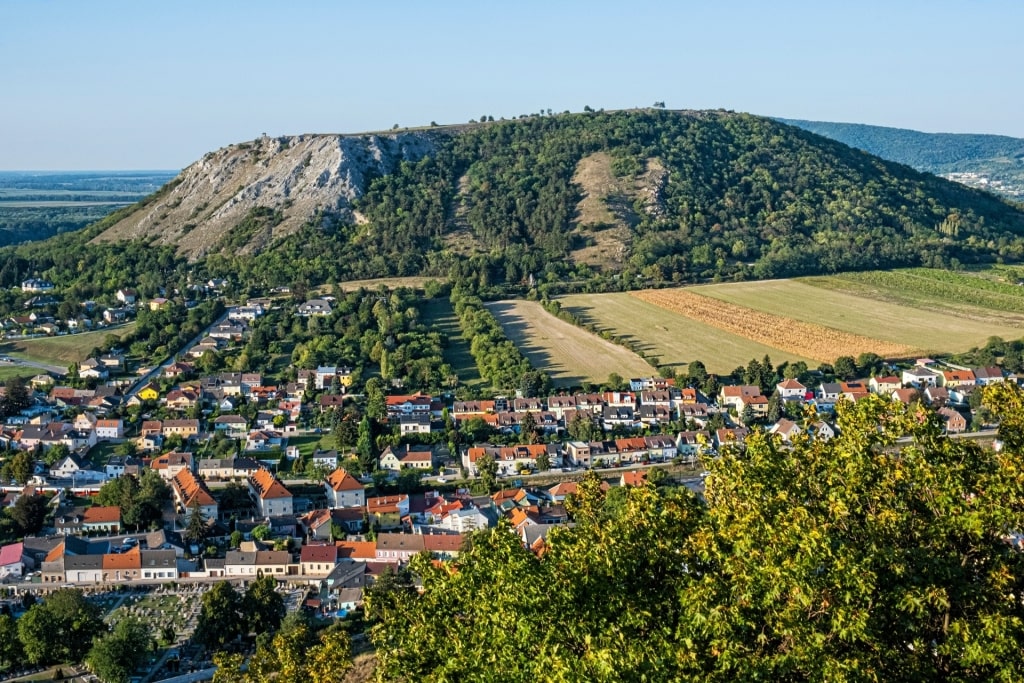
If you’re interested in both history and hiking, Hainburg an der Donau in Lower Austria is a happy medium. The short climb to the ruins of Hainburg Castle takes just under ten minutes for most visitors and offers 360-degree views of the surrounding area once at the top.
Hainburg also serves as a gateway to other outdoor excursions. The Donau-Auen National Park is ideal for walking, canoeing, and bird-watching. At the same time, Braunsberg Hill—a short hike or drive away—offers views that, on a clear day, stretch to Bratislava in neighboring Slovakia.
Ybbs an der Donau
Ybbs an der Donau
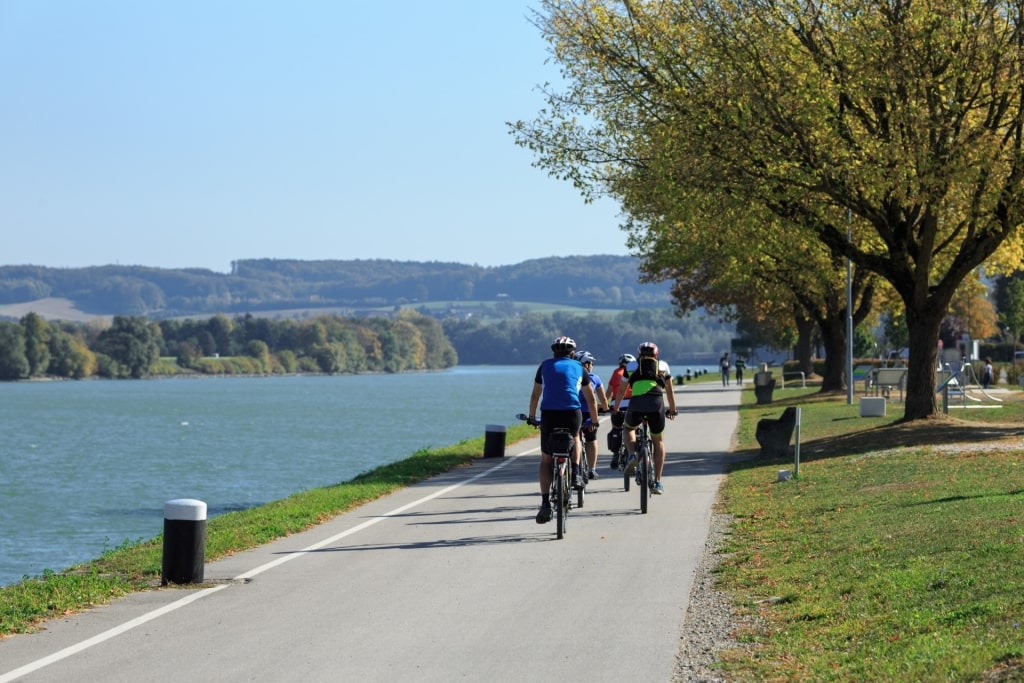
One of the best places to visit in Austria, Ybbser old town is a quaint riverside town with a laid-back atmosphere. You’ll find the same narrow streets and traditional buildings as in many smaller Austrian towns but with fewer crowds. Families will enjoy a stop at Motorikpark Ybbs, an outdoor activity park with a playground and fitness elements.
Although a little niche, the Ybbs-Persenbeug hydroelectric power plant is an interesting stop. Built as a post-World War II project, it stands today as the oldest Danube power station in the country. The visitor center includes information on how the plant operates and how it generates electricity.
Baden bei Wien
Baden bei Wien
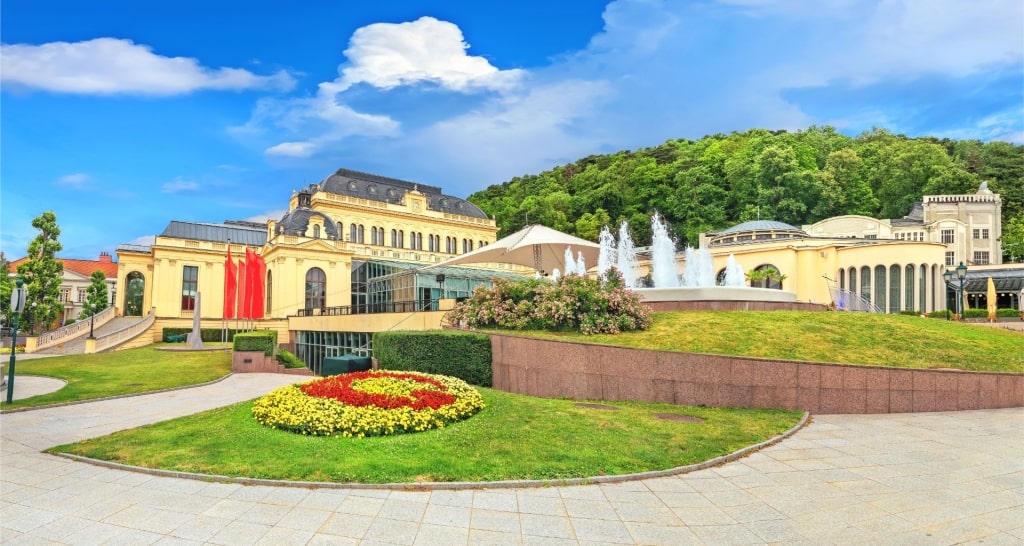
Just south of Vienna, Baden bei Wien is a historic spa town with ties to both Beethoven and Mozart. Travelers can visit what was once Ludwig van Beethoven’s summer residence. It was here that he composed parts of his famous Ninth Symphony. The museum recreates the setting from Beethoven’s time and includes several interactive exhibits.
For wellness, the Kurpark & Rosarium is a spa park featuring a rose garden with more than 30,000 roses and hundreds of varieties that bloom from summer through fall. Also worth a visit is the Römertherme, a modern spa complex built atop Roman ruins that features warm sulfur spring pools.
Melk
Experience as many of these enchanting towns as you can on one of Celebrity’s river cruises. Browse itineraries and book your next incredible vacation.