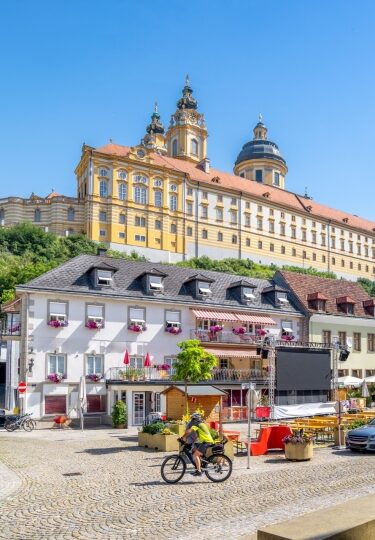
Pushing up against the Danube River’s right bank as the river flows from the Black Forest to the Black Sea, Melk, Austria, is a cute-as-a-button medieval town. Wrapped up in a UNESCO-listed, river-sliced landscape of award-winning vineyards and unspoiled forests, the historic hamlet lures you in with its picturesque pedestrian core before leading you back out into magnificent nature.
A staple stop along the dreamy Danube—Europe’s second-longest river—the town in Lower Austria’s Mostviertel region is most famous for the hulking and handsome Benedictine Melk Abbey. Though Melk is much more than its major landmark, with surroundings perfect for slowing down and savoring the Austrian countryside life at inns, wineries, and centuries-old castles.
Why Visit Melk, Austria
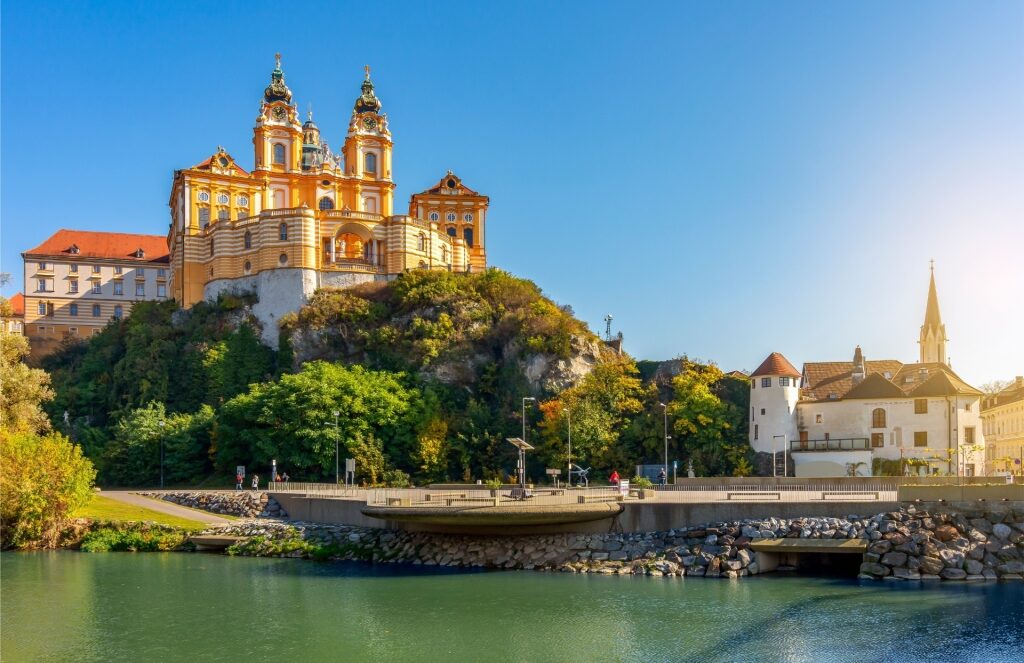
Melk Abbey
Bookending the Wachau Valley, along with Krems an der Donau further east, Melk’s appeal lies mainly in its scenic and serene setting. For a relatively small town, it has no shortage of manicured vines, tranquil trails for both amblers and cyclists, bucolic farmlands, wildflower-speckled meadows, and dense forests to feast your eyes upon.
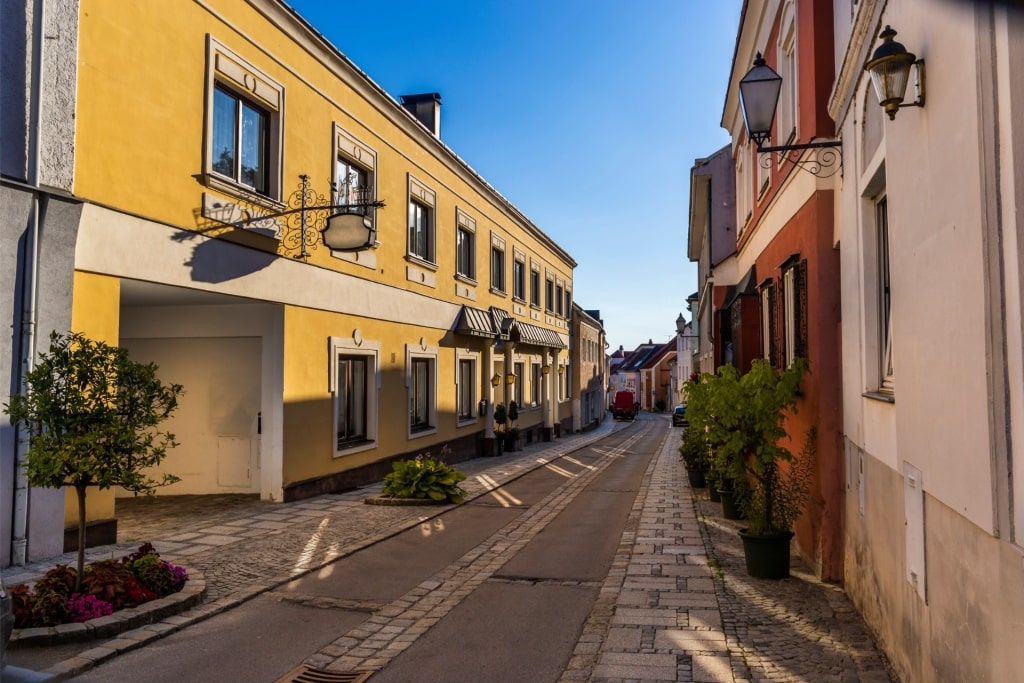
Then there’s the pint-sized Austrian town itself, quaint and charming. You could as easily while away a day as an hour ambling the flower-lined pedestrian streets that capture all the magic of Central Europe in miniature.
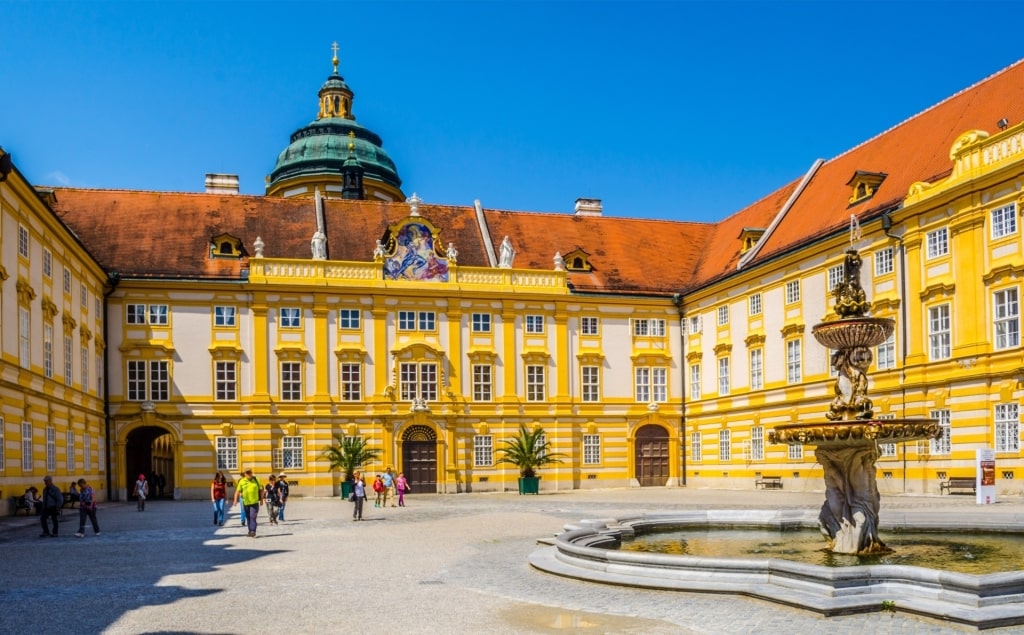
Melk Abbey
Still, most visitors arrive in Melk, Austria, to tour and marvel at the vast, rock-perched abbey that crowns the town.
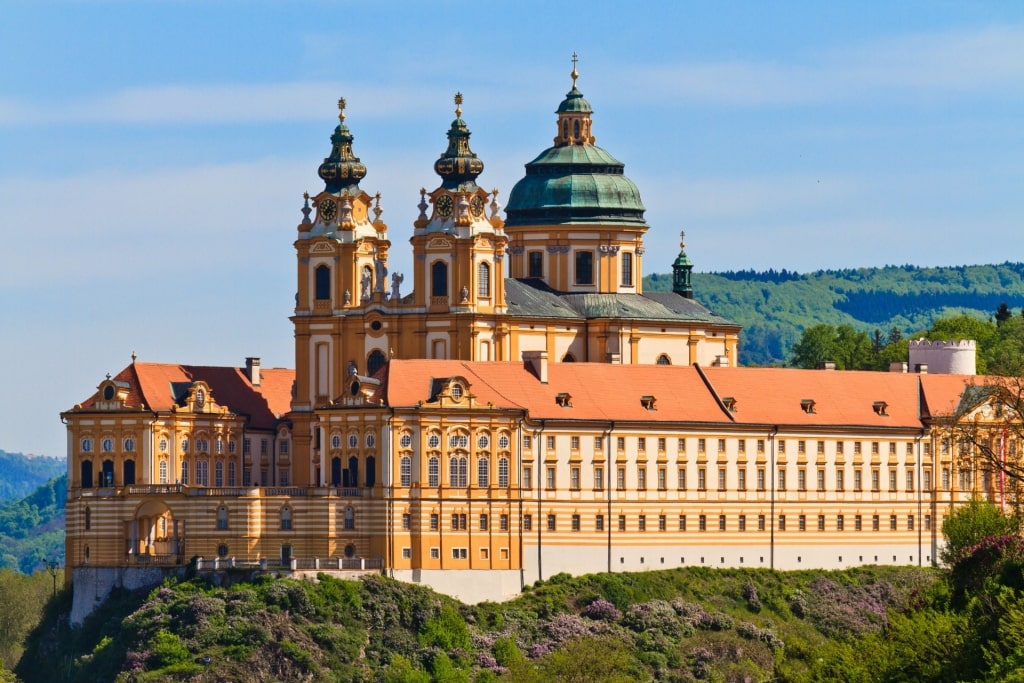
Recognized within Wachau’s larger UNESCO World Heritage Site for its “outstanding monumental features”, the 11th-century-founded edifice was reconstructed in the early 18th century and is brimming with Baroque elements. Now, it dazzles with its elegant grounds and opulent library, providing reason enough to visit Melk.
History & Culture
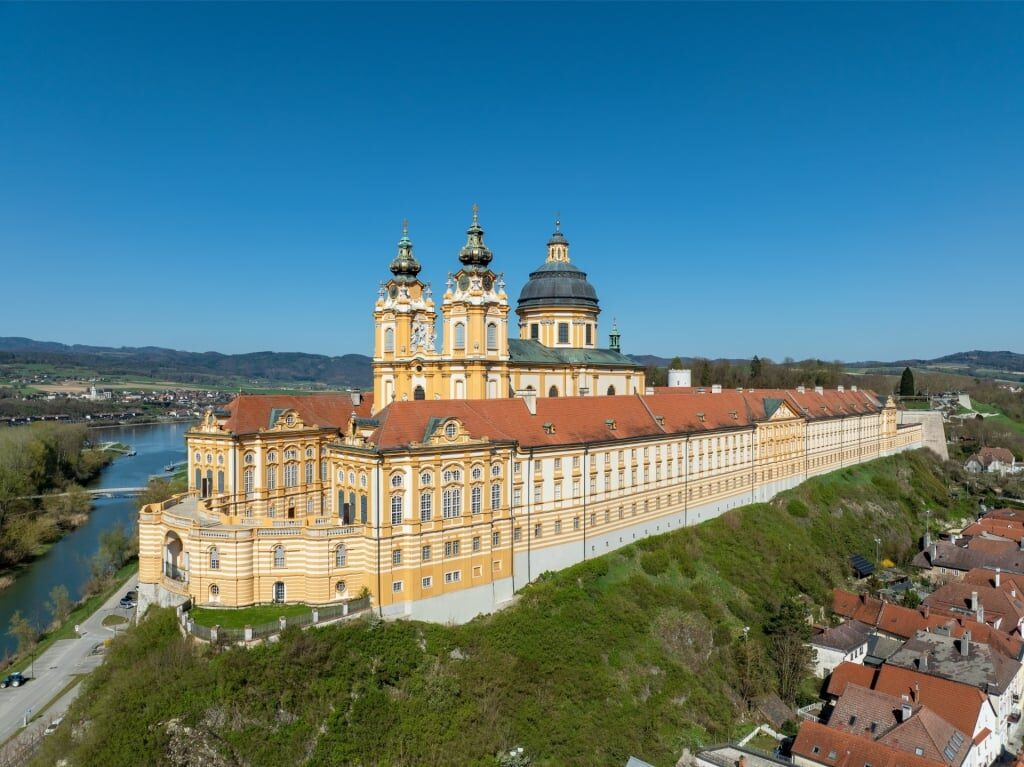
Melk Abbey
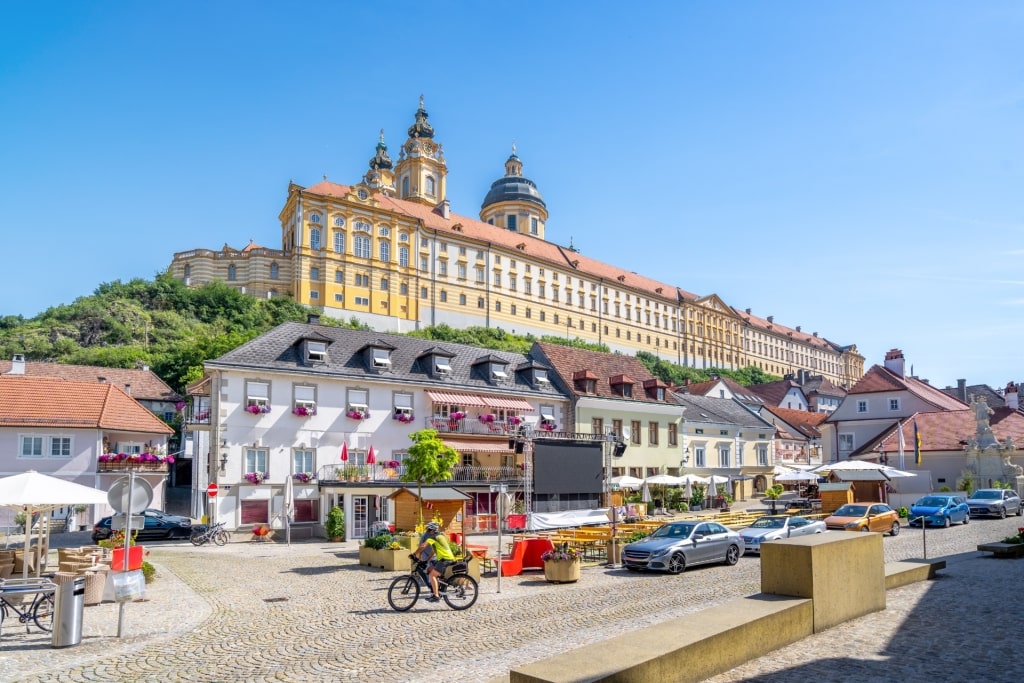
While the Wachau Valley has been inhabited since prehistoric times, Melk’s more recent history dates back to around the ninth century. First documented in 831 as Medilica, the settlement’s most significant milestone in the Middle Ages was the founding of the original Benedictine monastery in 1089. By 1256, Melk had gained market rights, setting it on course for a prosperous future.
Tragically, in the decades that followed, Melk was struck by a series of disasters. Fires consumed Melk Abbey in 1297, a devastating flood at the turn of the 16th century, and soon after, another blaze destroyed much of the town. Invasions and religious insecurity were also of concern. Then, nearly 300 years to the day after the second fire, another followed.
Thankfully, the latter didn’t harm the new Baroque Abbey, which began construction in 1701—though another fire did damage the new building in 1738—and gave Melk its new crowning glory.
Melk
Subsequently, Melk was elevated to a modern town in 1898, 40 years after the arrival of the Empress Elisabeth Railway, which linked Vienna to Salzburg.
During WWII, Melk’s military barracks bore witness to terrible evil as they were converted into a concentration camp, now a memorial to those who were executed.
Floods and further fires—this time seriously damaging the abbey enough to warrant an extensive reconstruction project—marred the mid-20th century. Though 2000 arrived with reason to celebrate: Melk, as part of Wachau, joined the UNESCO World Heritage List.
Nature
Melk
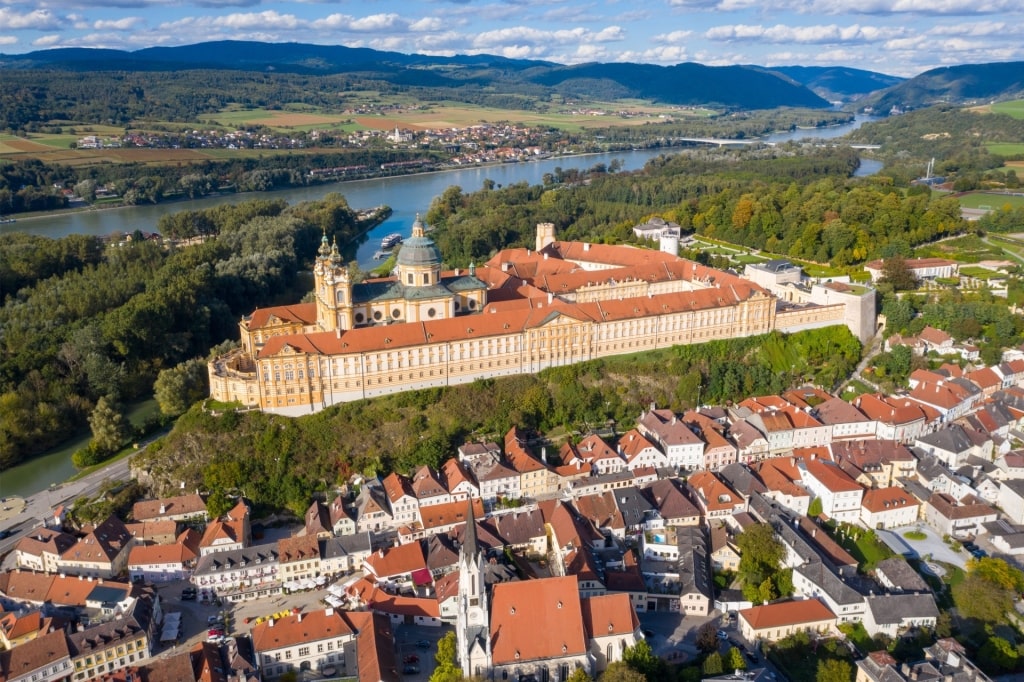
There’s no shortage of natural beauty near Melk, Austria’s gateway town to the Wachau Valley. Most prominent is the Danube River, a snaking, navigable waterway that starts from its source in Germany’s Black Forest and flows eastward to spill out in the Black Sea.
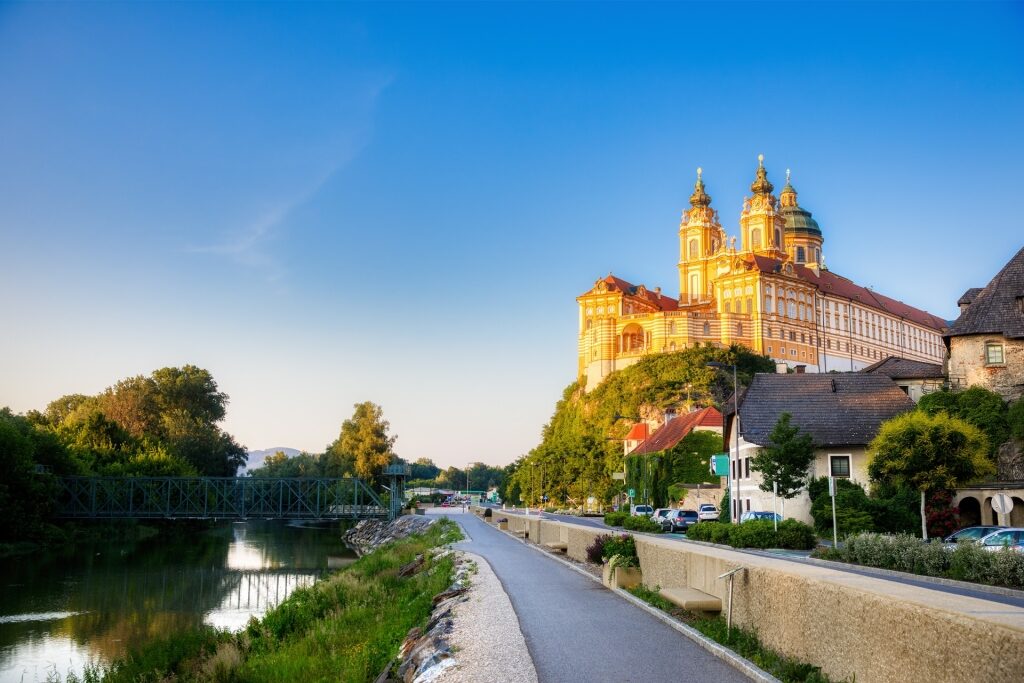
Whether you prefer to stroll or cycle alongside it, sail away to nearby villages while snapping countless photos of vines and ruins en route, or paddle at Luberegg Swimming Beach just across the river from Melk, the Danube will be the constant of any visit.
Danube Cycle Path
On land, Melk is flanked by the two verdant and fertile Mostviertel and Waldviertel regions. The perfectly manicured, sloping vines paint a panorama that will make your heart sing, but there are also abundant apricot orchards, bucolic meadows, and dense forests.
One of the finest green retreats near Melk is Jauerling Nature Park, a short drive north of town. Here you’ll find over 200 miles of trails often hemmed by orchids and over 80 species of butterflies. A selection of short, themed trails, under five miles, affords an easy introduction. There’s also a humble winter ski slope that tops out at 3,150 feet.
Tips for Visiting Melk
Melk
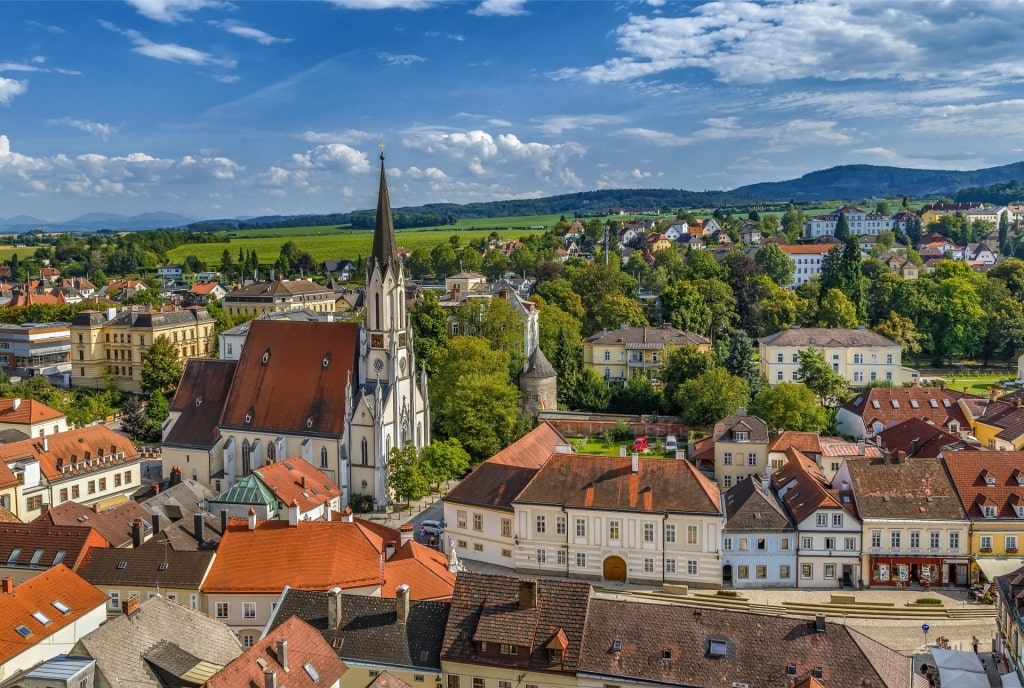
If you’re planning to spend a day in Melk, you won’t need to worry about public transportation or getting around. The town is button-sized, and even with a complete circuit all around the abbey and down to the river viewpoint, you won’t be exhausted. Just pack comfy shoes.
When visiting the abbey, prepare to spend at least two hours there. Being one of Austria’s most famous attractions—and easily reached from Vienna—it can often get crowded.
Melk
Most tours depart on the hour, and as such, if you wish to visit independently and avoid a bottleneck, it’s best to begin your visit at least twenty minutes before those scheduled sessions. If you prefer to join a highly informative tour, check the scheduled times in advance; there are usually only a couple of English-language guided visits per day.
When checking for train times along the Danube’s left bank scenic railway to places like Krems or Spitz, search from Emmersdorf Bahnhof—the station across the river—as connections from Melk travel via the regional capital, St Pölten, and take longer. Just keep in mind it’s around an hour to walk across the bridge, or just seven minutes by taxi, to Emmersdorf.
Read: Tipping in Austria
Things to Do & Attractions in Melk
Marvel at Melk Abbey
Melk Abbey
Melk’s most famous attraction is the gorgeous, opulent, and vast Benedictine Abbey and Gardens, which expands over an enormous rocky outcrop like a pop-up fairytale book.
Visitable either on a guided tour or a self-guided visit, the interior of the 18th-century edifice inspires even more than the jaw-dropping architecture.
Melk Abbey
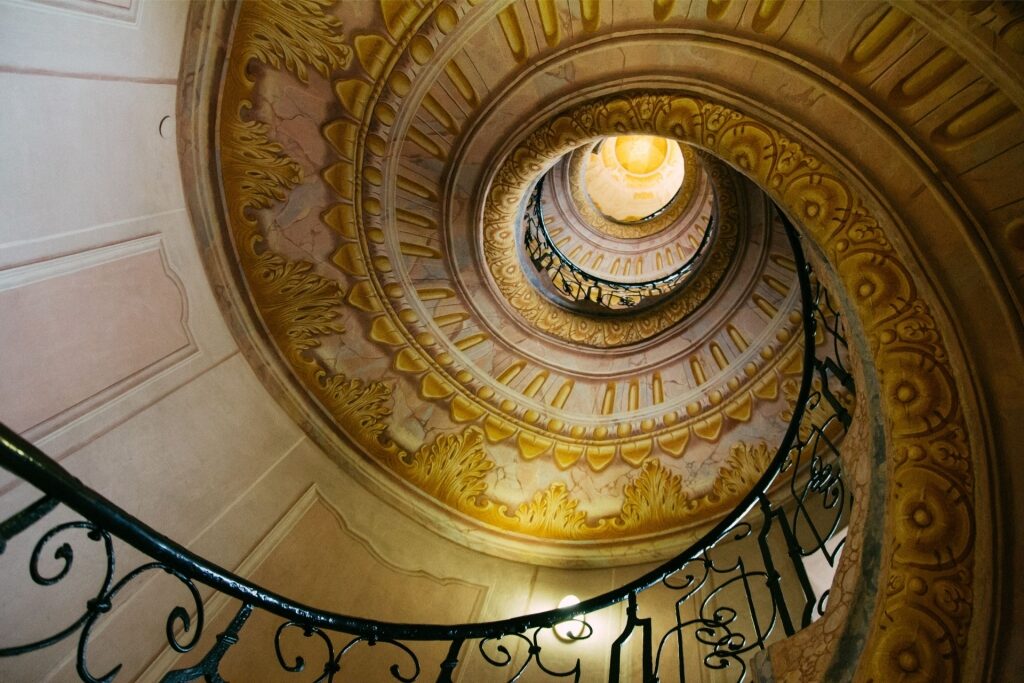
Stucco-rich staircases, portrait-lined palatial corridors, marble-carpeted floors reflecting storytelling frescoes, and ramparts with far-reaching views are just some of the highlights.
Still, for most visitors, the standout is the elaborate library rooms, where around 15 percent of the monastery’s 100,000-volume collection is displayed on dark wood and gold-embellished bookshelves. Just be warned that taking photos is strictly prohibited inside the abbey.
Walk the Medieval Streets
Melk
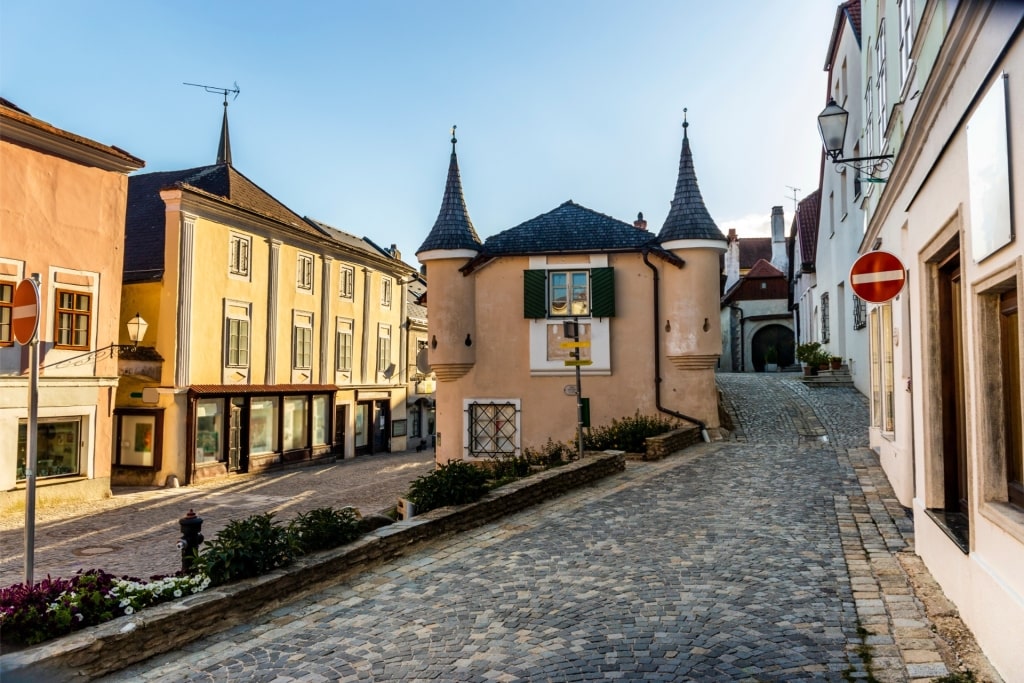
Melk’s small but pretty pedestrianized medieval center is a delight to ramble on foot. It doesn’t take too long to cover the highlights, such as Sterngasse 2, the oldest street, the Rathausplatz, and Zur Alten Post, arguably the most fetching post office in Austria.
Better still, take a deeper dive into the town’s history by tracing one of the four themed walking routes through the town and its surroundings.
Two of the trails are highlighted by blue or gold glass mosaics embedded in the floor; however, downloading the official audio guides from the tourism board’s website will further enhance your understanding.
Sail Along the Danube
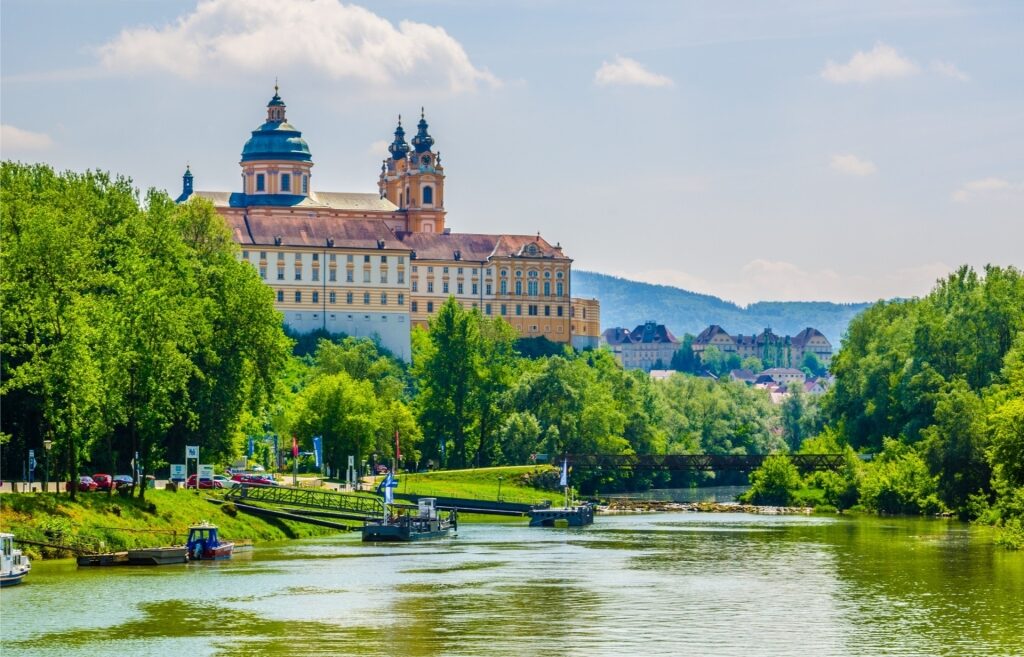
Danube River
Visiting Melk without cruising along the Danube is like heading to Paris and skipping the Eiffel Tower. This essential waterway has shaped—and on occasion destroyed—life in Melk and the surrounding towns for centuries. From the deck of a river boat, you’ll gain a gorgeous viewpoint of the valley’s wineries, castles, and religious structures along both banks.
Regular day trips depart from the peninsula piers located a short, forested walk from the monastery. Stops include Emmersdorf, Spitz, Dürnstein, and Krems, taking between 10 minutes and two hours, depending on your chosen destination. This can be an effortless way to reach the winery villages, and you can opt for a two-way sailing or return by train.
Taste Wachau Wines
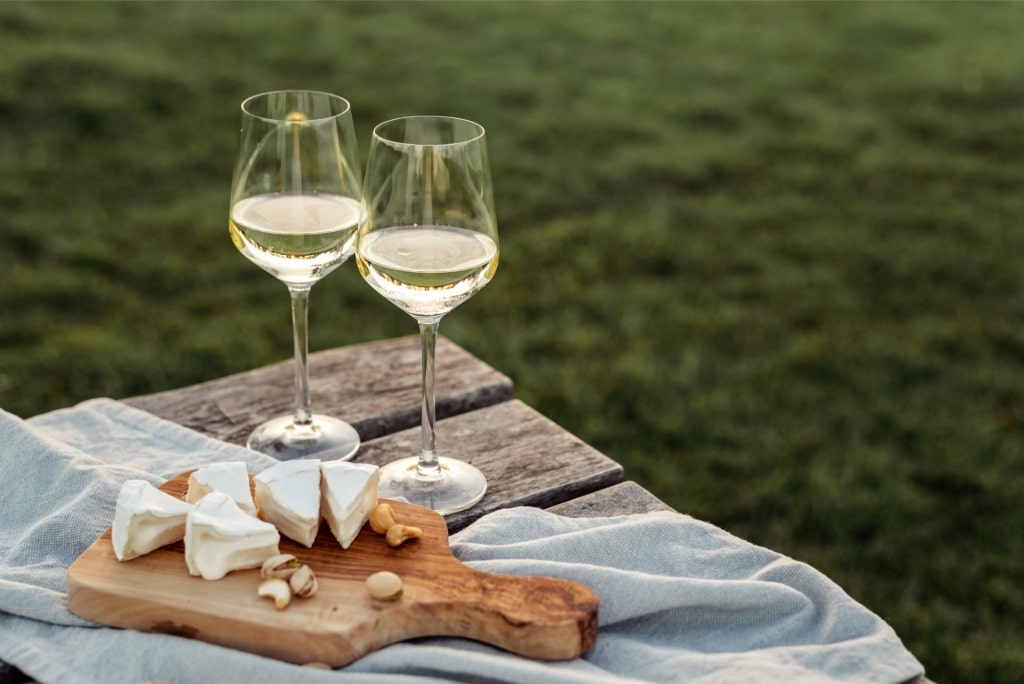
Wine
Records of Wachau’s winemaking and the planting of the spectacular, landscape-defining terraces date back at least a millennium, making a winery visit one of Melk’s most quintessential experiences.
Whether you prefer to tackle one of the vine-hugging trails or join a tasting or tour, there are plenty of scenic stops to choose from. Nearby Spitz is one of the easiest to reach and most impressive locations to start.
For a formal vineyard tour and tasting, you’ll need to reach out to Weingut, or winery, in advance, as it’s rare to be able to join a tour without prior notice. Still, many have onsite restaurants and bars, often with swoon-worthy views, which allow for a more spontaneous sip of the region’s acclaimed whites.
Visit Schallaburg Castle
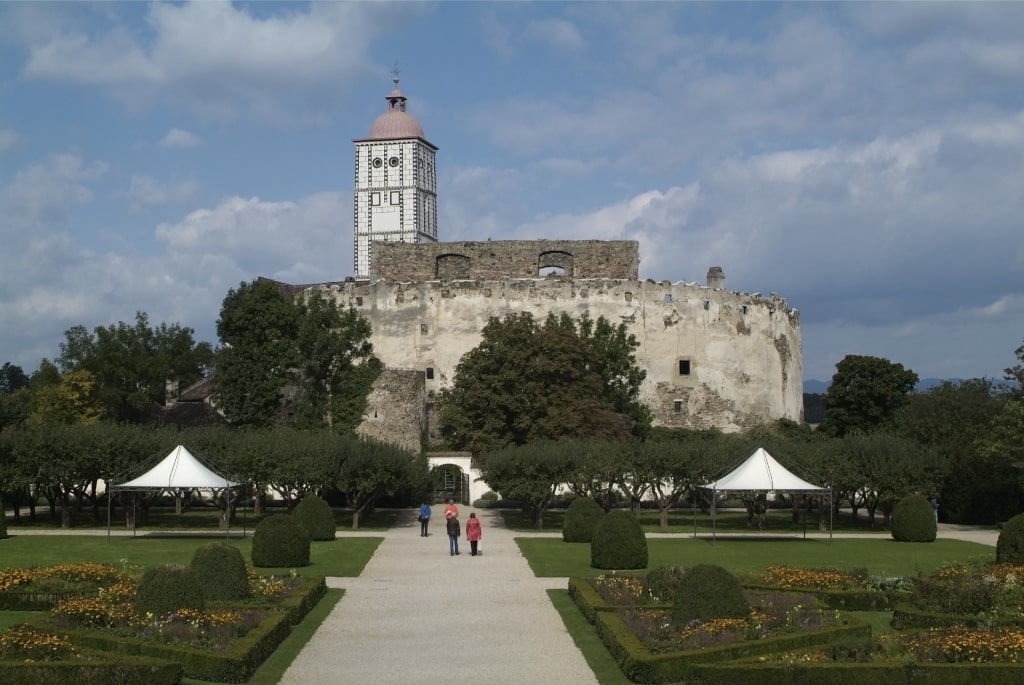
Schallaburg Castle
A 10-minute drive south of Melk will bring you to Schallaburg Castle, surrounded by countryside. While not as grand as Melk Abbey, the Italian-inspired stately home is also far less visited, allowing you to tour the Renaissance architecture and flower-scented gardens at a slower pace.
Schallaburg’s most unique feature is the courtyard, a gorgeous, two-story al fresco space embellished with over 1,000 terracotta sculptures depicting mythical creatures and myths from both the local region and ancient Rome and Greece.
Take it all in with a refreshing drink at the courtyard café; if it’s sunny and the parasols are up, ask for them to be lowered so you can fully appreciate views of the upper terrace.
Reflect at Melk Memorial
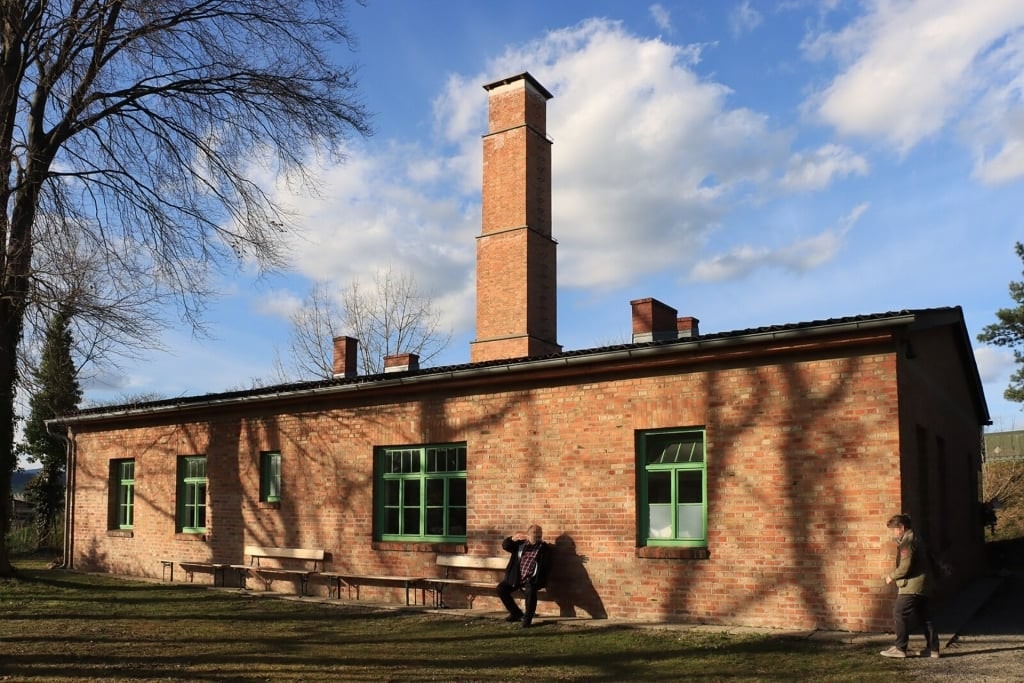
Melk Memorial Photo by Karl Gruber on Wikimedia Commons, licensed under CC BY-SA 4.0
For one year from April 1944, Melk’s Freiherr von Birago Pioneer Barracks became a place of unspeakable evil. Used as a satellite concentration camp of Mauthausen, it’s estimated that around 15,000 people were held here, and at least 4,884 were murdered.
In 1962, the former crematorium building was declared a public monument as the Melk Memorial. Should you wish to visit and pay your respects, access to the site can be arranged at the guard’s desk, for which you’ll need to deposit an ID to collect the key.
Roam Aggstein Castle’s Ruins
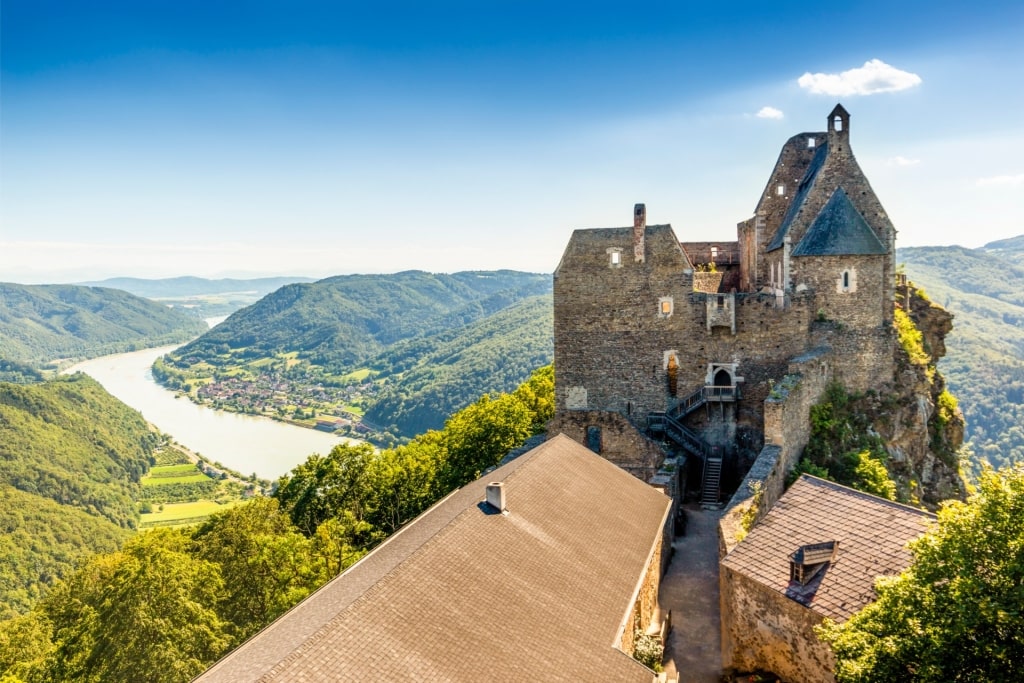
Aggstein Castle
Located a 20-minute drive from Melk, high above the Danube’s verdant right bank, the ruins of Aggstein Castle boast one of the finest views in the region.
The oldest section of the castle dates to the 12th century. However, the estate has changed hands and witnessed much destruction and reconstruction in the centuries since, including being torched to the ground in 1529 during an Ottoman attack.
Following an extensive renovation project completed in 2003, sections of the building have been restored, including the dark, exposed brick Knights’ Hall. Yet it’s the imposing exterior, even though heavily damaged, and the sweeping vistas that leave the most lasting impression.
Food & Drink
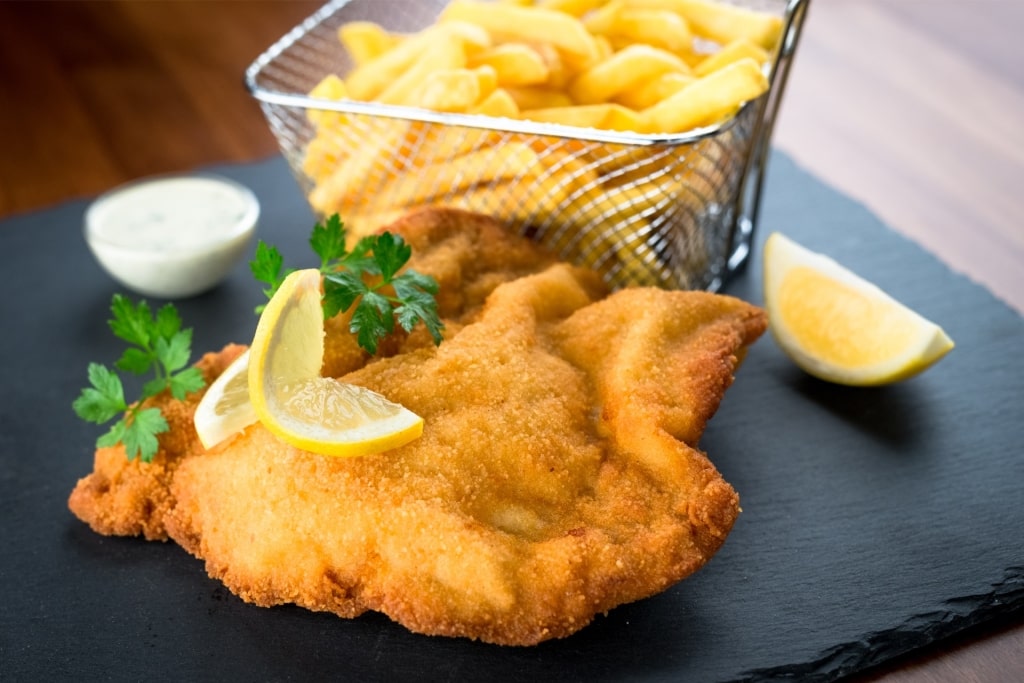
Wiener Schnitzel
In Melk, Austria’s culinary staples aren’t hard to come by. You’ll find many excellent, traditional restaurants serving typical plates such as Wiener Schnitzel, fried, breaded cutlets often served with potato salad, or an always-appreciated apfelstrudel.
More local is the cuisine of Lower Austria. Around Wachau, that’s specifically the plump and sweet regional apricots and Marillenknödel, a pastry wrapped around a whole apricot.

Marillenknödel
Hearty provincial dishes include Most, a plate of beef and dumplings with pear cider, named for the region, and carp from the neighboring Waldviertel.
For a truly local experience, look for a Heuriger, or wine tavern, and the green signs stating “Wirtshauskultur,” which recognize traditional countryside inns. In these, you can’t beat a Brettljause, a type of charcuterie board, often paired with some home-grown Austrian wines.

Riesling
Grüner Veltliner and Riesling are two of the region’s finest white wines, with fruity, mineral notes, though your best bet is to ask the inn owner for a personal recommendation.
Best Time to Visit
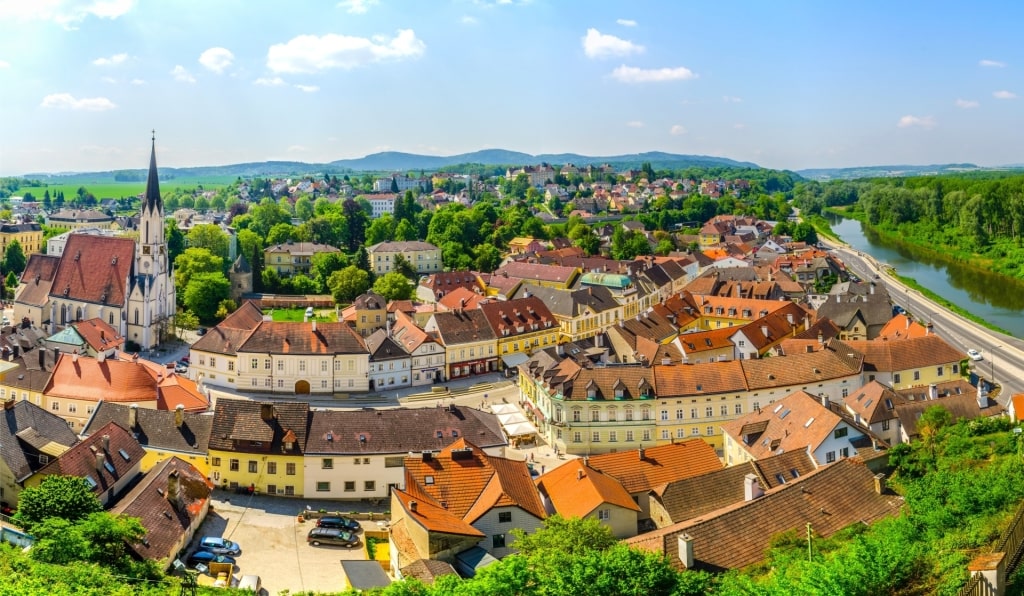
Melk
The best time to visit Melk, Austria, for warm temperatures and minimal chance of showers is between May and September. During the summer season, you’ll be treated to al fresco dining, tempting trails, and the opportunity to appreciate the abbey’s gardens basking in sunshine.
July and August are also when Wachau’s apricots are harvested, while the wine harvest usually commences in mid-September. Still, if you’d prefer a winter visit, Melk is magical in the lead-up to Christmas.
From the end of November, the pedestrianized center between the Main Square and Town Hall is transformed into an “Advent Village” with twinkling light stalls, plenty of glühwein, and a pop-up ice skating rink. Aggstein Castle also hosts another adorable Christmas Market full of festive cheer.
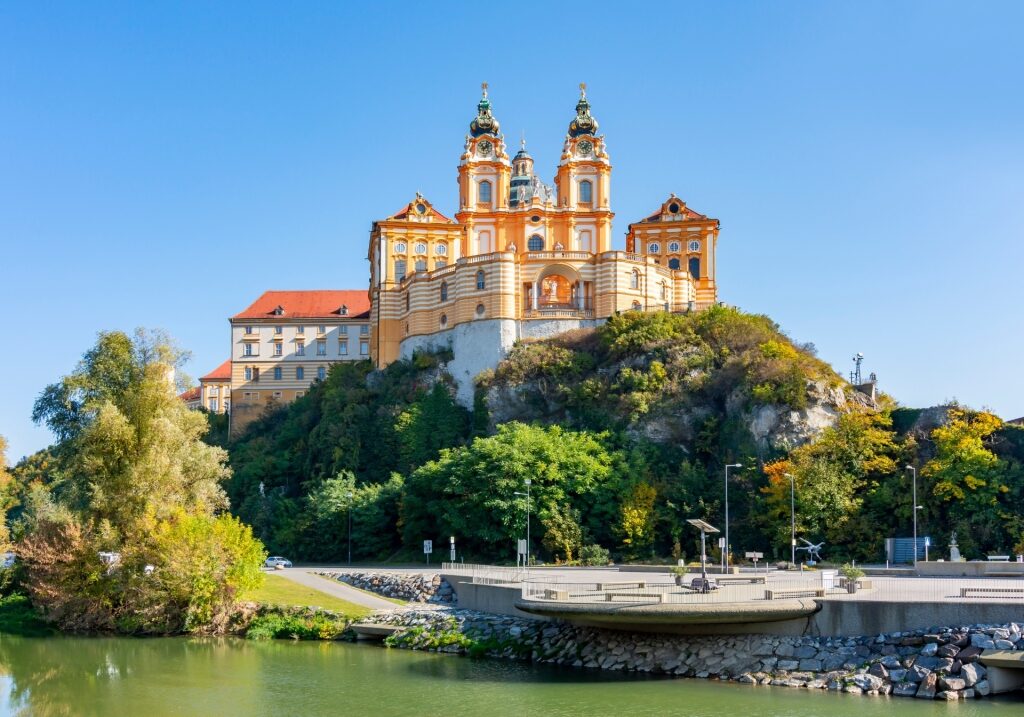
Melk Abbey
Excited to sail along the Danube and marvel at Melk Abbey in all its Baroque glory? Browse Celebrity’s river cruises to Melk and start planning your perfect vacation.