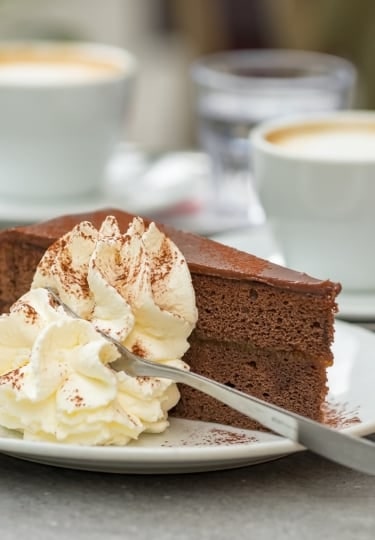
Austrian desserts are world-renowned for their decadence and finesse. There’s a reason why, even in pastry-obsessed France, a whole category of baked goods is known as viennoiserie, imported from the rich Viennese pastry tradition.
Coffeehouse culture in Vienna played a big role in making desserts and pastries a cultural centerpiece in the 18th and 19th centuries, when artists and intellectuals gathered at Viennese cafés that competed for clientele with elaborate dessert offerings.
The Austro-Hungarian Empire and its imperial courts also contributed to the pursuit of ever more exotic, impressive, and refined desserts to be served at lavish celebrations to guests, often inspiring creations from imperial confectioners that then set trends and spread throughout Europe.
A visit to Austria is the perfect time to sample the artisanship of pastry chefs in the Viennese tradition, and imagine yourself at a royal court or an intelligentsia gathering as you bite into a rum-soaked or apricot-filled delicacy.
Sachertorte
Sachertorte
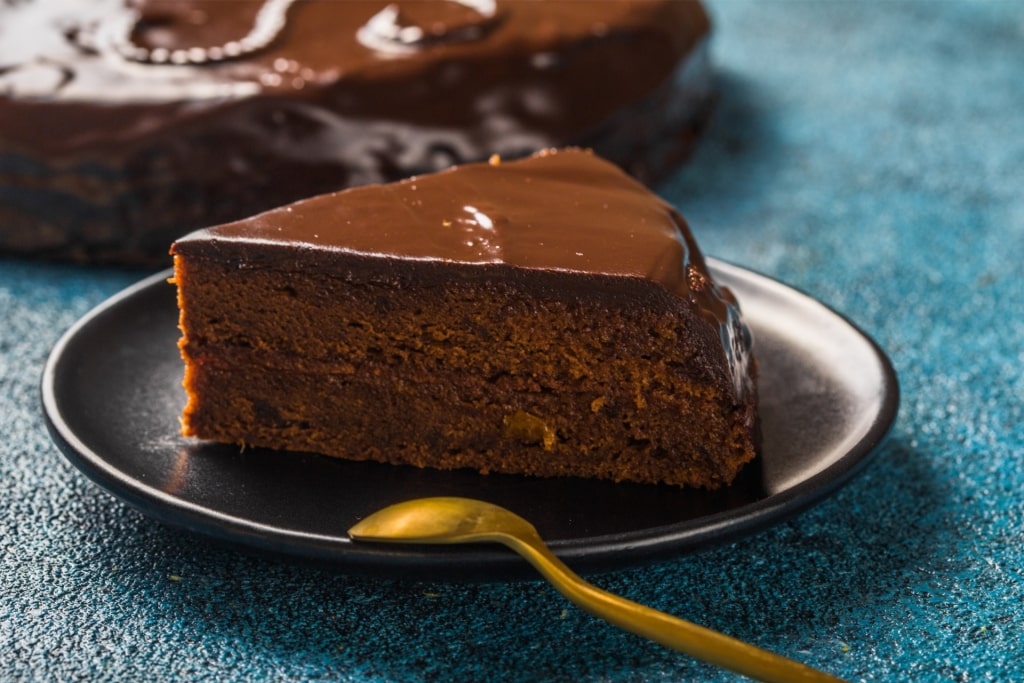
This classic Viennese dessert is a rich chocolate sponge cake filled with a layer of apricot jam and glazed on the top and sides with chocolate icing. The Sachertorte was reportedly invented in 1832, when the Austrian State Chancellor requested that his kitchen staff make a special dessert to impress the guests he was hosting for a formal dinner.
His head chef, unfortunately, fell ill, and the 16-year-old apprentice chef, Franz Sacher, rose to the occasion by concocting the delectable chocolate cake. It was such a hit that the dessert was introduced to the Austrian Imperial Court and gained popularity throughout Vienna.
Today, you can find the most iconic rendition of the Sachertorte at Hotel Sacher, opened by Franz Sacher’s descendants, where it is served with a dollop of fresh, thick whipped cream.
The pastry shop Café Demel also sells a legendary slice—so legendary that the Hotel Sacher and Demel have feuded over the recipe’s ownership and brought their claims to court in the 1950s. Verdict: Café Demel would sell their Sachertorte with one layer of apricot jam, and Hotel Sacher with two.
Apfelstrudel
Apfelstrudel
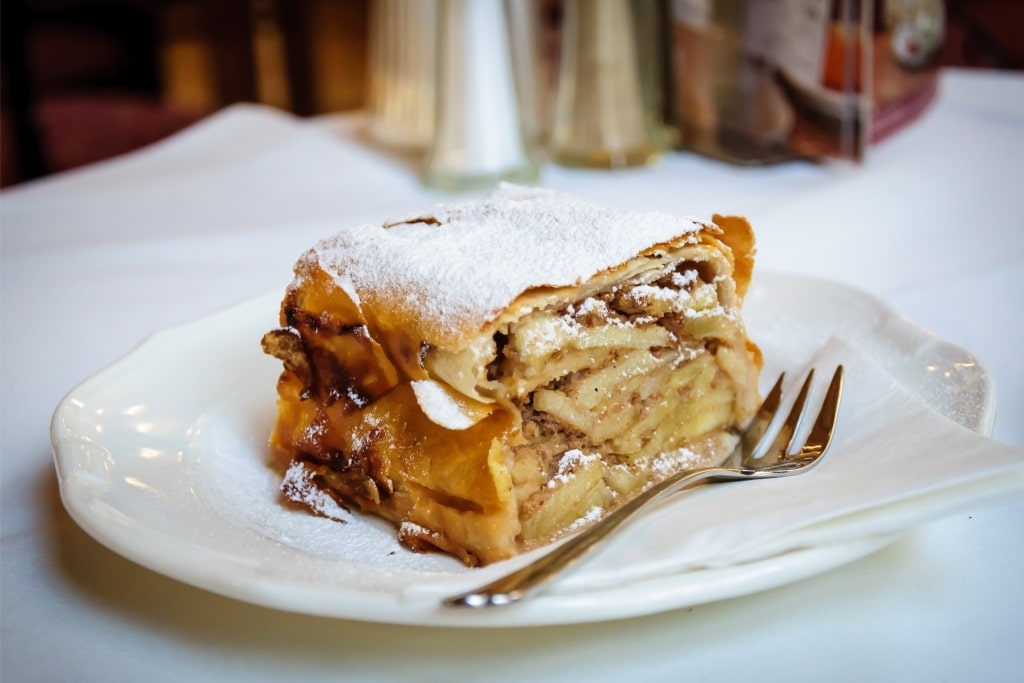
Apple strudel is a pastry popular in many regions formerly associated with the Austro-Hungarian Empire, including Germany and the Czech Republic. However, its historical birthplace is thought to be Austria, as the oldest record of apple strudel is a handwritten recipe from 1697.
The pastry dough is ideally buttery and thin, stretched to near-translucent before being layered with butter and cinnamon sugar breadcrumbs, sweet-tart apples, and rum-soaked raisins.
The whole is then rolled up into a tight log, brushed with butter, then baked until golden. “Strudel” means “swirl” in German, denoting the elegant cross-sections of dough and filling sold as individual strudels in bakeries around Austria.
Topfenstrudel
Topfenstrudel
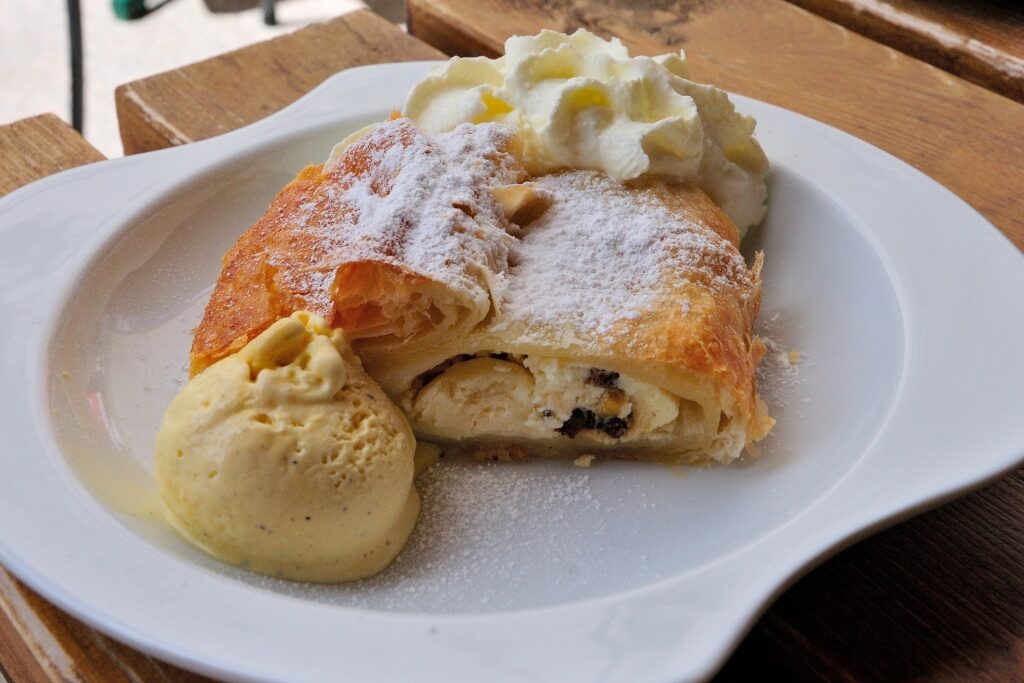
This flaky rolled pastry replaces apples with quark, a fresh farmer’s cheese typical of Central Europe. Quark is soft, creamy, and mild, made with cultured buttermilk and widely available at supermarkets and shops throughout the region.
A topfenstrudel is filled with quark mixed with vanilla extract, grated lemon peel, raisins, sugar, and eggs.
Topfenstrudel is lighter and creamier than apfelstrudel, with a delicate, tangy-sweet flavor that will remind you of ricotta or sour cream. In Austrian restaurants, it is typically served with a side of vanilla sauce or warm custard, and sometimes comes with apricots or peaches mixed in when they are in season.
Linzer Torte
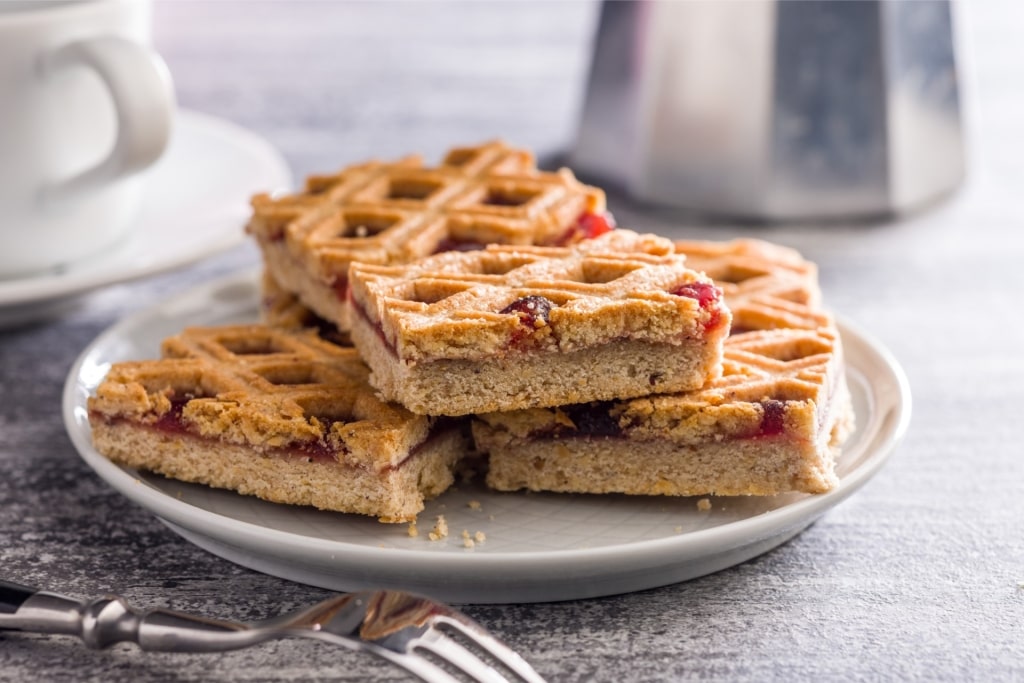
Linzer Torte
One of the most famous exports among Austrian sweets, Linzer torte translates to “tart from Linz,” a town in north-central Austria along the Danube. In torte form, it features a crumbly shortbread crust topped with a thick layer of redcurrant, raspberry, or apricot preserves, then covered with a lattice of shortbread dough.
The shortbread crust is mixed with ground hazelnuts, walnuts, or almonds, making it notably nutty. Easy to package and preserve, the Linzer torte is popular as a holiday treat during the Christmas season. It also comes in cookie form for bite-sized goodness.
The origin of the Linzer torte is subject to debate. Some maintain that the oldest recipe is from 1653, found in Countess Anna Margarita Sagramosa’s cooking manuscript, which is now preserved at Admont Abbey in Styria.
The torte was popularized by pastry chef Johann Konrad Vogel in the 1820s, when he began mass-producing the cake in his Linz bakery.
Kardinalschnitten
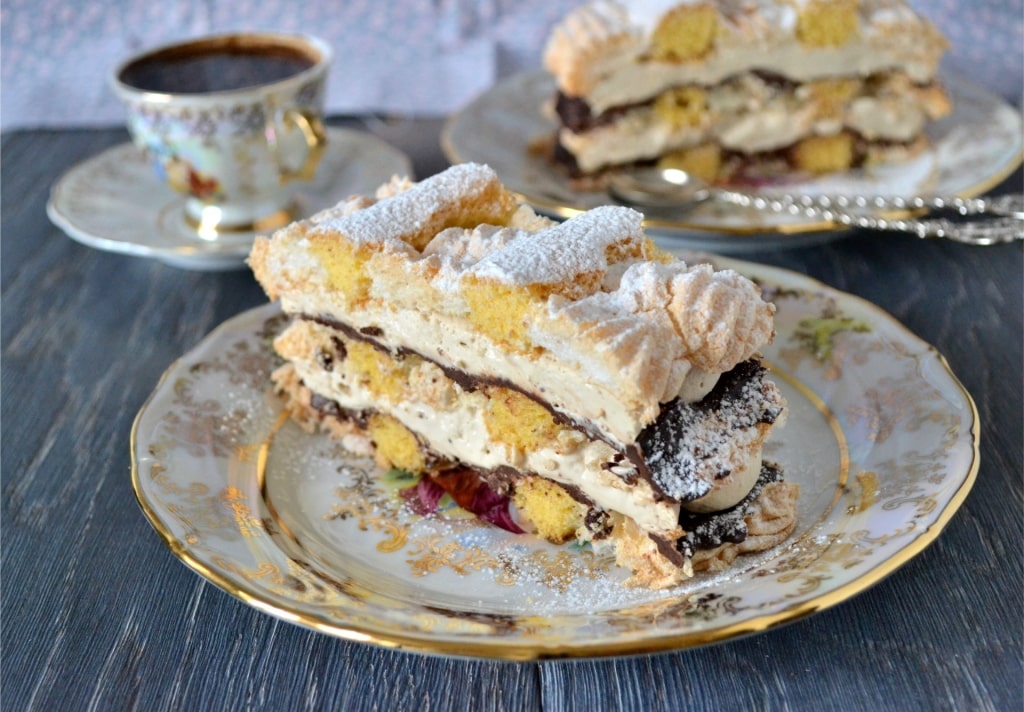
Kardinalschnitten
With a name translating to “cardinal slice,” this Austrian dessert is made of genoise sponge and meringue, with a fresh whipped cream filling and often a layer of tart fruit preserves. Its colors–white and gold–are thought to be an homage to the Catholic Church or the Vatican, giving the dessert its name.
Cardinal slices are airy and cloud-like on the inside, with a delicate creamy texture, and slightly crispy on the outside due to the meringue crust. It often comes with instant coffee powder mixed into its whipped cream filling, giving it a delightful hint of coffee flavor.
Germknödel
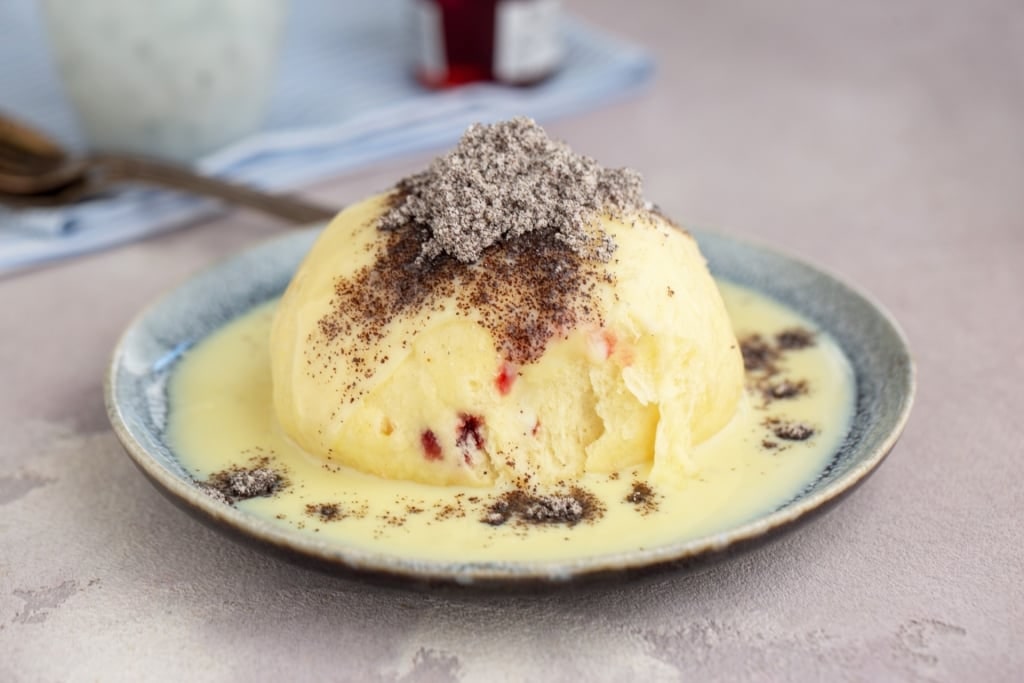
Germknödel
Found in both Germany and Austria, Germknödel is a yeast dumpling filled with a plum butter called Powidl–essentially a thick plum jam–and topped with melted butter, poppy seeds, and sugar.
The spherical dough dumplings are boiled or steamed, served plump and hot. One school of thought supports a melted butter topping, while another is partial to serving the dumpling in a bed of vanilla sauce.
Whichever the final presentation style, Germknödel are a staple at Austrian alpine resorts, a filling dessert known to warm up a chilly day and fuel skiers for the slopes.
Marillenknödel
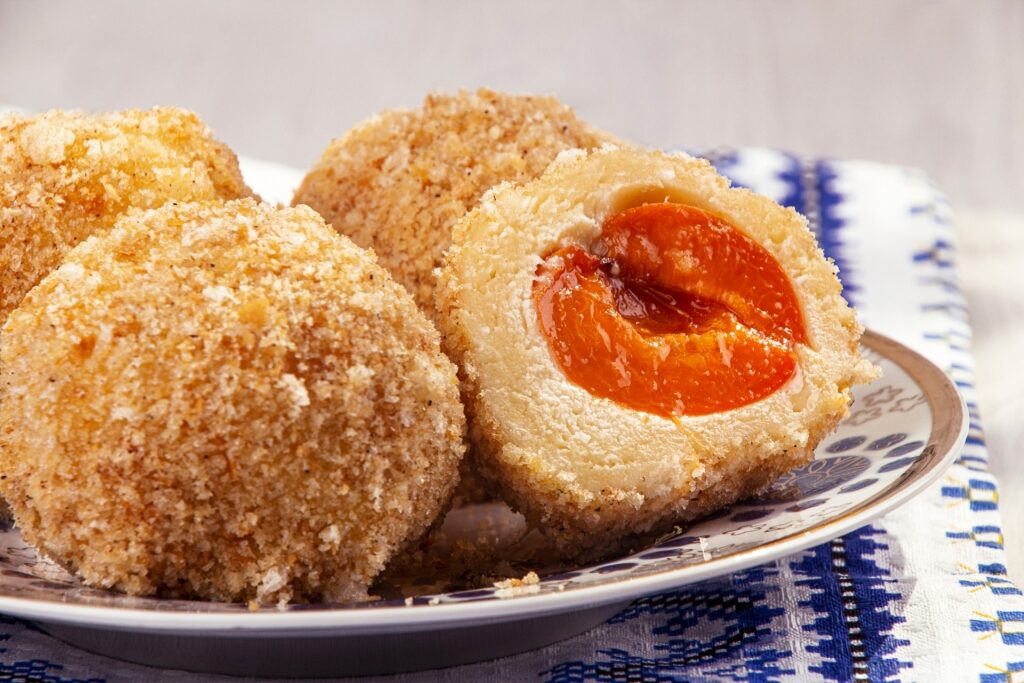
Marillenknödel
This Austrian dessert is a dumpling with apricot filling that traditionally hails from the Wachau Valley, a region known for its apricot orchards and sweet fruit.
These delightful dumplings contain a whole pitted apricot in their interior. They’re made from one of two styles of dough: one with quark, a fresh Austrian farmer’s cheese, and another with potatoes, cooked and puréed for a more starchy texture.
The marillenknödel are boiled, then seared until golden in butter and topped with cinnamon, sugar, and breadcrumbs. The dessert is not only emblematic of the Wachau region, but also a popular and nostalgic summer sweet associated with countryside holidays for many Austrian families.
Buchteln
Buchteln
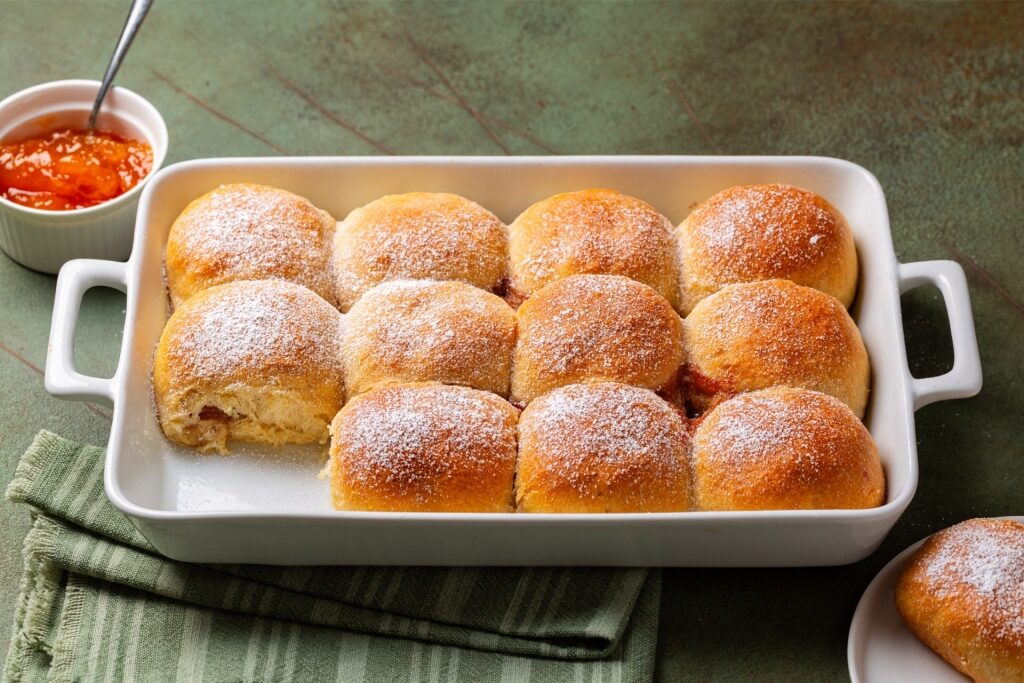
These small, sweet yeast buns are baked together in a honeycomb shape, then pulled apart, brioche-style. Originally a Bohemian treat, these buns became popular in the Austro-Hungarian imperial court and the coffeehouse culture of Vienna.
You’ll find them with a variety of fillings: apricot jam, plum jam, farmer’s cheese, and poppy seeds. The buns are bathed in butter and oven-baked, then dusted with icing sugar and served with a side of crème Anglaise.
Also known as “wuchteln,” the most famous buchteln in Austria are found at Café Hawelka in Vienna. The plum butter-filled Buchteln recipe has changed little since the café’s opening in 1939 as a gathering place for artists and intellectuals.
Powidltascherl
Powidltascherl Photo by Kobako on Wikimedia Commons, licensed under CC BY-SA 3.0
Powidl will pop up everywhere if you spend enough time around Austrian bakeries or studying menus for Austrian sweets. This jam is made by slow-cooking plums without any added sugar until they reach a deep, concentrated flavor.
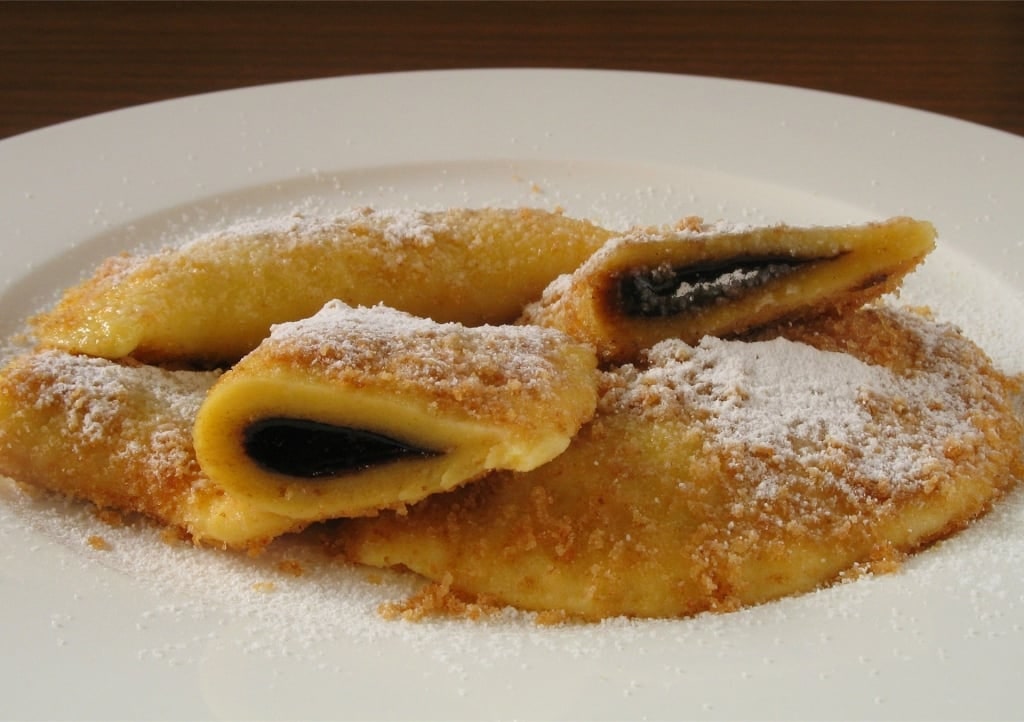
Powidltascherl are plum jam-filled dumplings, with a distinctive dough of cooked and mashed potatoes mixed with semolina, eggs, flour, and butter. The dumplings are boiled, then tossed with butter, breadcrumbs, and sugar in a pan until golden and crispy.
These plum dumplings are emblematic of the peasant cuisine of Lower Austria and trace their history to Bohemian and Moravian cuisines.
Powidl is usually made fresh each autumn after the plum harvest season, so powidltascherl is a perfect dessert if you’re visiting Austria in the fall.
Punschkrapfen
Punschkrapfen
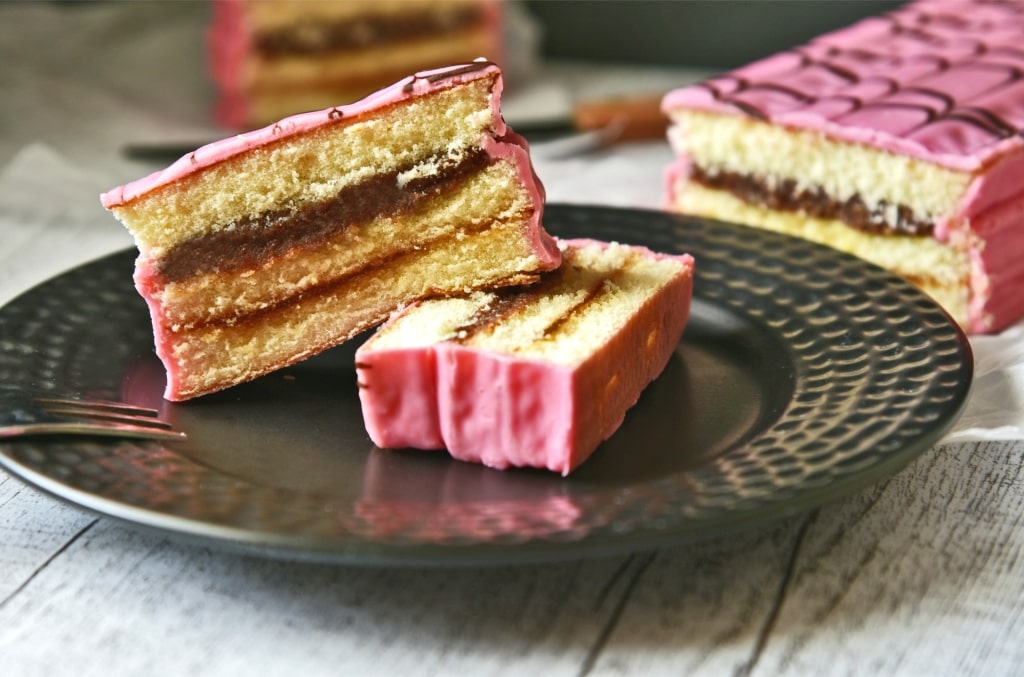
These iconic little pink squares are a beloved Austrian sweet representative of Viennese coffee culture for both their elegance and culinary decadence.
Also known as “punch cakes,” these desserts are made with sponge cake or cake crumbs layered with nougat, chocolate, and apricot jam, then soaked generously in rum and orange liqueur before being coated in the signature bubblegum-pink “punch icing.”
Similar to French petits fours, these boozy Austrian variants are thought to have been introduced by the Ottomans during the Turkish siege of Vienna in the 17th century. Others trace the punch cakes back to an imperial court confectioner.
They gained popularity during the Biedermeier period around the 19th century, when they became ubiquitous in coffee houses and bakeries around Vienna.
Esterházy Torte
Esterházy Torte
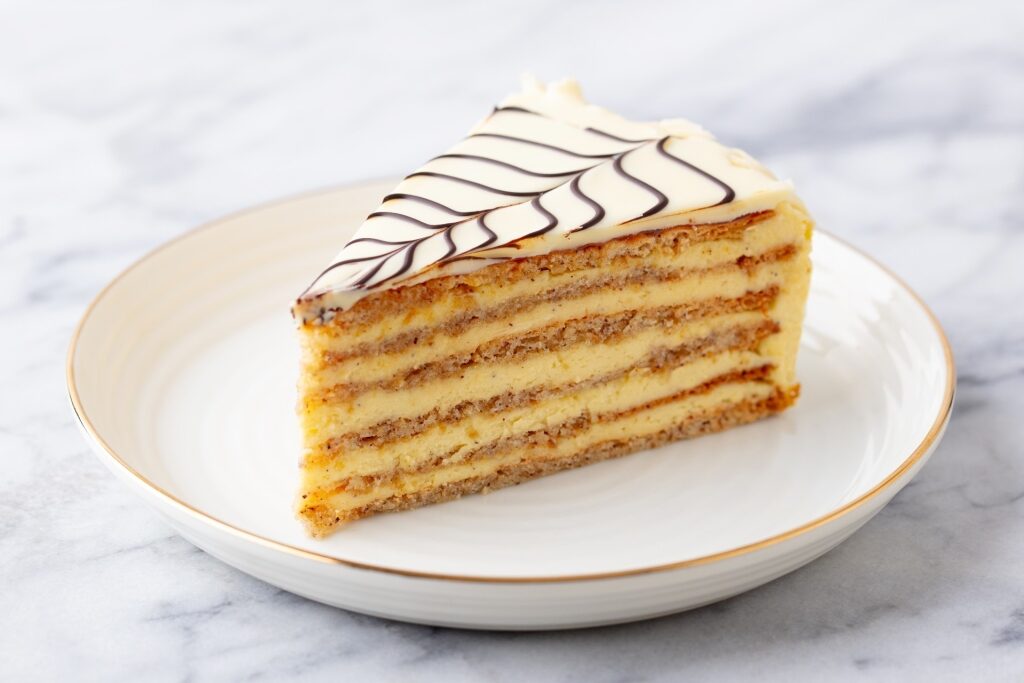
This decadent Austrian dessert is a cake named after Prince Paul III Anton Esterházy de Galántha, and was invented in the 19th century in Budapest in honor of the Austro-Hungarian diplomat.
Garnished with a top layer of marbled chocolate web icing, its interior consists of layered almond meringue dough and buttercream mixed with cognac, vanilla, and spice. The cake is finished with an exterior of sliced almonds, complementing its rich, nutty flavors.
The Esterházy cake is the height of Austrian pastry culture’s elegance and indulgence. This dessert is not easy to make at home, as it involves roasting fresh hazelnuts and making dacquoise for the cake’s internal layers, among other complicated steps.
A trip to Austria is the perfect time to sample this royal among Austrian desserts by simply pointing to a slice in the bakery window display.
Malakofftorte
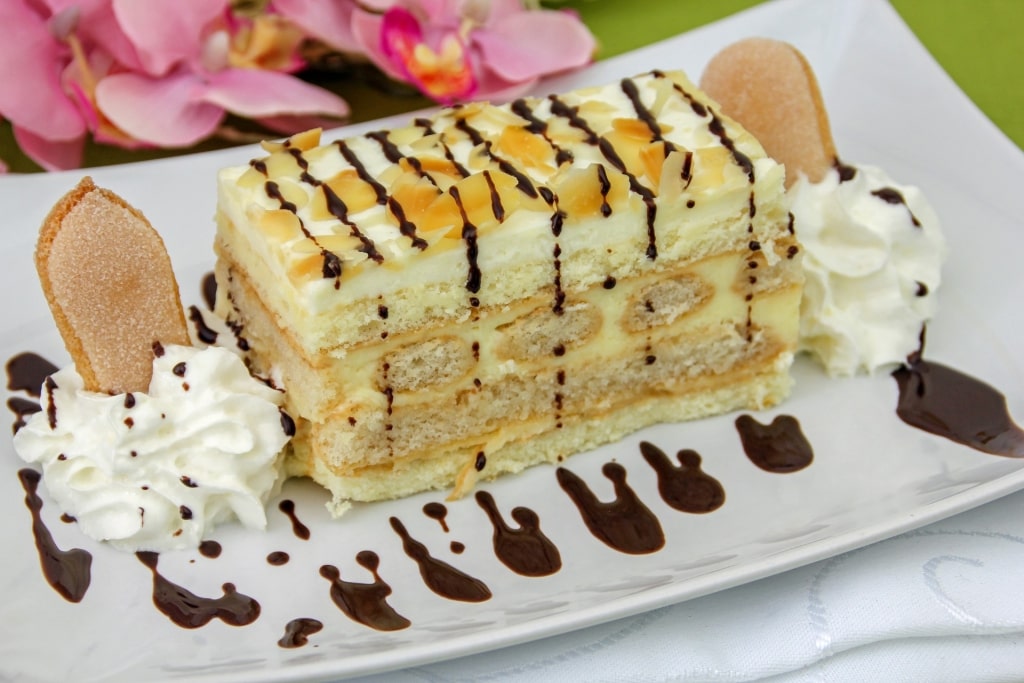
Malakofftorte
Named for the Battle of Malakoff of the Crimean War, this no-bake cake reflects the 19th-century Austrian fascination for decadent Parisian-style desserts. Instead of sponge cake layers, the Malakofftorte is made from ladyfinger biscuits soaked in a rum and milk mixture, and layered with ground almonds and buttercream.
One of its rumored origins is that French soldiers fighting in the Battle of Malakoff made this celebratory cake after their victory by using ingredients in their battlefield pantry.
Today, you’ll find Malakofftorte on offer at most Austrian bakeries as well as a dessert option at Austrian restaurants, rounding out a meal with the perfect combination of sweetness and rum.
Dobostorte
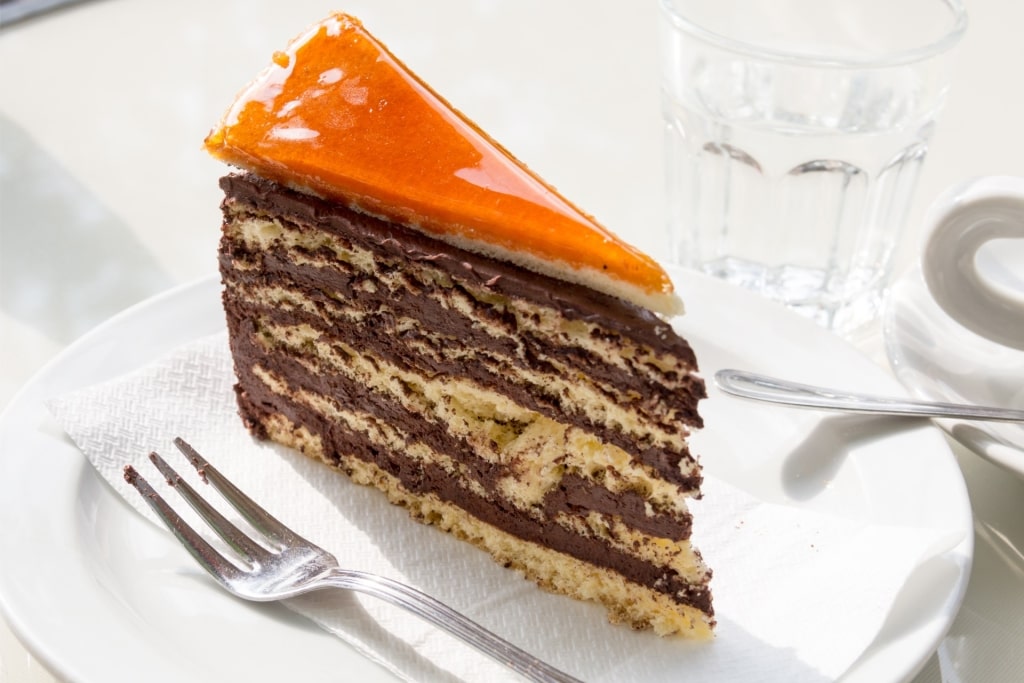
Dobostorte
Though technically a Hungarian cake, Dobostorte is representative of the pastry heritage that the Austro-Hungarian Empire exported throughout Europe. Made with layers of sponge cake, chocolate buttercream, and caramel, this rich cake is iced with a layer of ground hazelnuts, chestnuts, or almonds, sealed with another caramel glaze.
Emperor Franz Joseph I and Empress Sisi of Austria were among the first to taste the new creation at the National General Exhibition of Budapest in 1885. Their seal of approval meant the Dobostorte became a festive specialty cake shipped to aristocratic celebrations across the continent.
Palatschinken
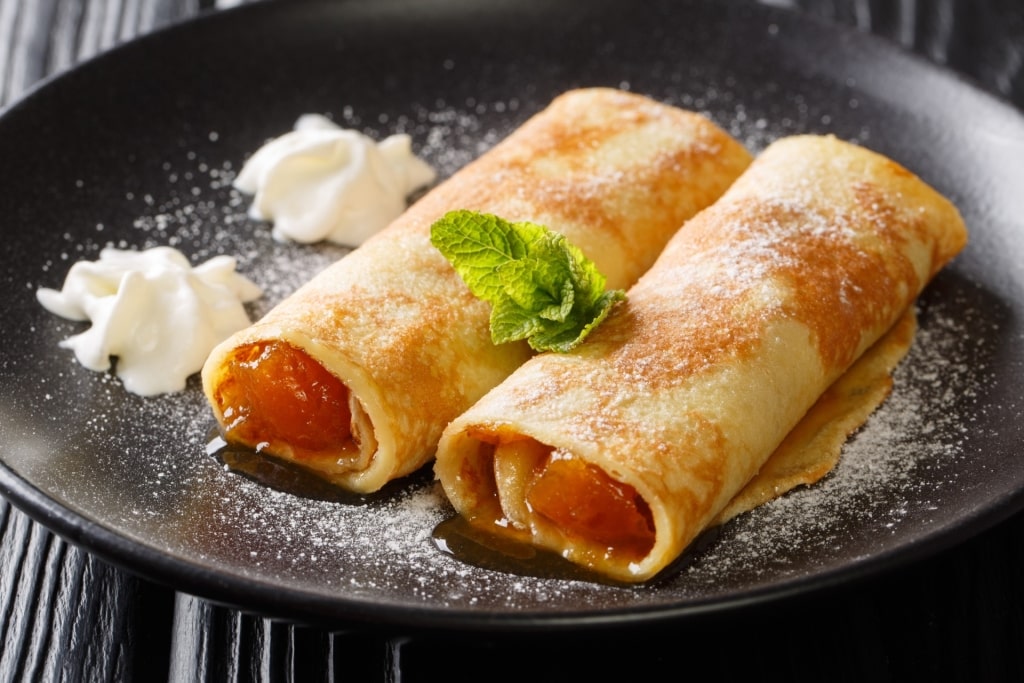
Palatschinken
This Austrian classic dessert consists of thin crêpes filled with jam, usually blueberry or apricot infused with brandy, then rolled and dusted with icing sugar. They are much closer in texture to French crêpes than American pancakes, and come served in generous portions that make them a popular lunch option.
In the summertime, Heidelbeer-Palatschinken is an especially delicious variant made with fresh blueberry jam gathered from Austrian forests. The crêpes can also be filled with fresh curd cheese or savory fillings and are a popular option in ski lodges for a wintry treat.
Cremeschnitte
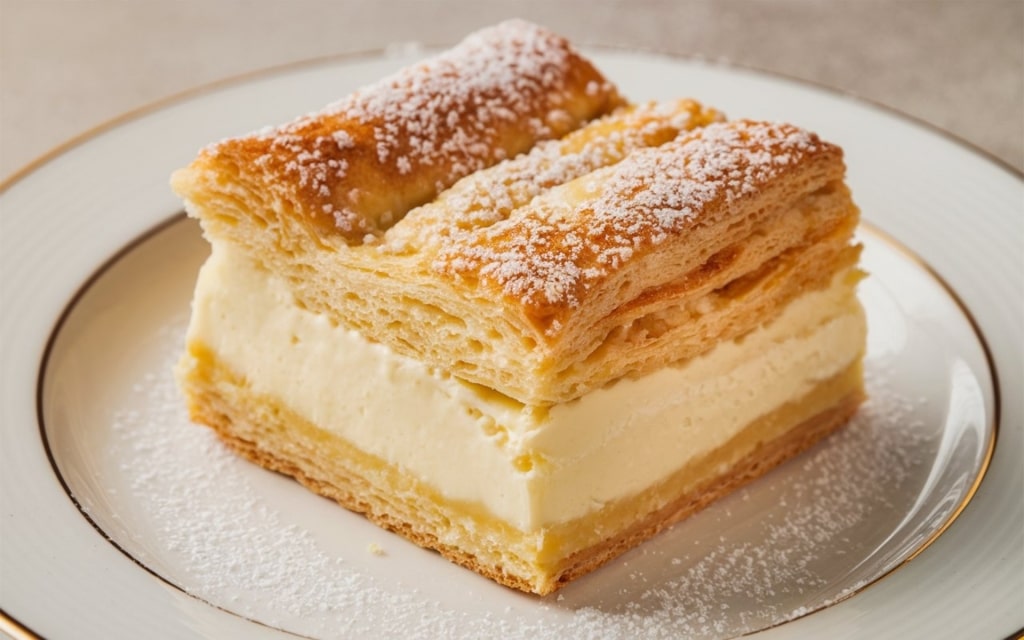
Cremeschnitte
Cremeschnitte translates to “cream slices,” which is an apt description of this Austrian dessert. It’s essentially a thick layer of vanilla custard sandwiched between crisp puff pastry.
The custard is sometimes complemented by thick whipped cream to add some airiness to the pronounced roundness of vanilla. Though it looks deceptively simple, this dessert is difficult to execute to perfection, ensuring the puff pastry layers are crisp and golden while the custard inside is perfectly light.
It is a Sunday favorite among many Austrian households, providing a comforting dessert at the end of a family meal. Many other former Austro-Hungarian regions or neighbors, including Slovenia and Croatia, have their own versions of cremeschnitte, experimenting with different ratios of custard and whipped cream.
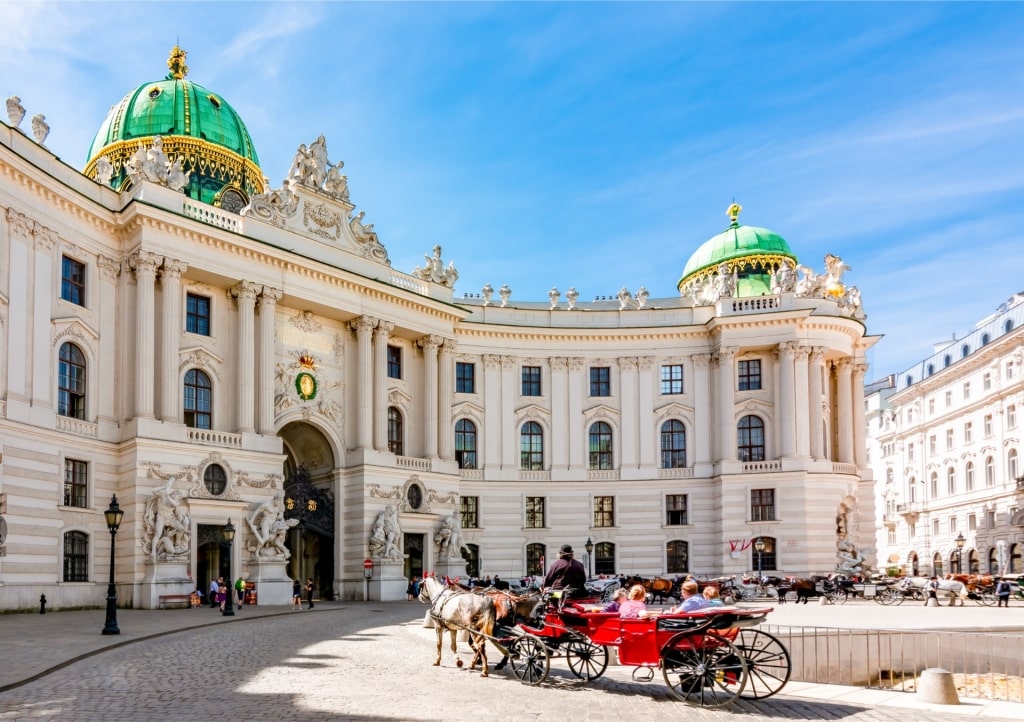
Vienna
Austria is a true haven for those with a sweet tooth or interest in the imperial courts’ food anthropology and the traditions of Bohemia. Explore the delights and traditions of Austrian sweets for yourself on Celebrity’s river cruises.