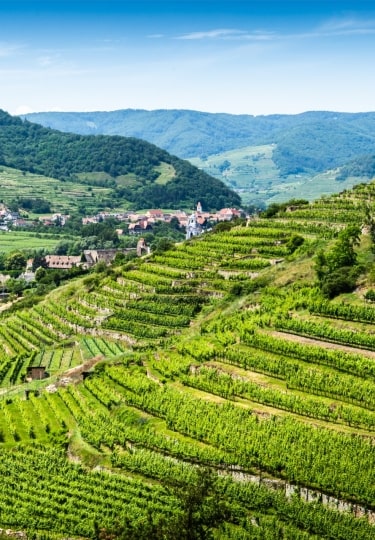
Beyond alpine landscapes, epic Christmas markets, and great classical composers, Austrian wine is a compelling reason to visit this European country. While Grüner Veltliner and Riesling are already world-renowned for their crispness and minerality, a trip to Austria will help you discover elegant reds such as Blaufränkisch and zesty rosé such as Schilcher. These are both sommelier favorites that are still relatively under the radar on the international market.
This guide to Austrian wine will take you through the history and traditions that define Austrian viticulture, and help you plan a visit to Austrian wine regions that range from terraced riverside vineyards to hilly microclimates producing refined gems.
History
Wachau Valley
Viticulture along the Danube River dates back thousands of years, as attested by grape seeds found in urns from 700 BC and wine vessels that survived from the fifth century BC Celtic period. Under Roman rule, winemaking in what is Austria today thrived as a practice, and the cultivation of Grüner Veltliner and Riesling had already begun.
In medieval times, wine production was greatly patronized by the church and monastic orders led the wave of viticulture by introducing new winemaking techniques and hiring local peasants to tend to the vineyards. Vienna established itself as a great trading center for wines, and the first official vineyards—Kremser Sandgrube and Steiner Pfaffenberg—began appearing in historical records from the 1200s.
Wachau Valley
Modern Austrian viticulture suffered a major scandal in 1985, when some winemakers were exposed for using diethylene glycol, a compound found in antifreeze, to sweeten their wines. Exports plummeted and the Austrian government swiftly introduced strict new regulations that now count among the world’s most stringent testing standards for wine quality.
The Austrian wine industry overall shifted to making drier, high quality wines with an emphasis on terroir rather than the sweet, mass-produced batched wines that had been at the center of the antifreeze scandal.
Today, Austria has restored its reputation as a major wine producer of quality vintages and an innovator in sustainability practices within viticulture.
Austrian Wine Regions
Wachau Valley
The most important wine-producing regions in Austria are located in the eastern part of the country, where the climate and soil quality are ideal for grape cultivation.
Niederösterreich
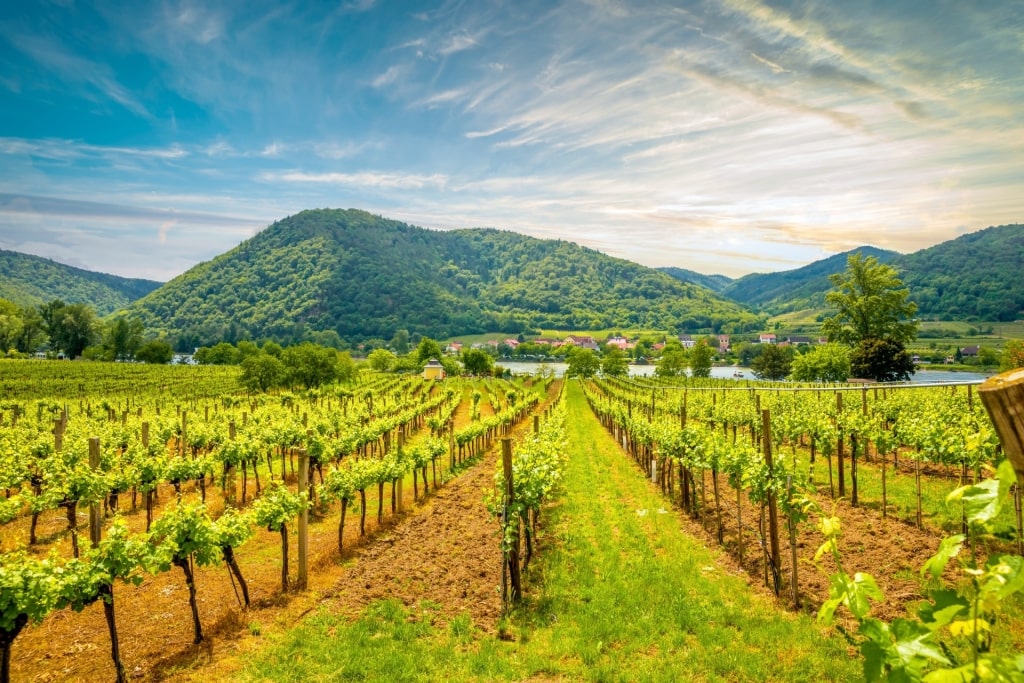
Niederösterreich
Niederösterreich, also known as lower Austria, is a large region occupying Austria’s northeastern corner, where the Danube river flows through. This riverside terroir has made Niederösterreich Austria’s primary wine region, accounting for over half of the country’s vineyards by landmass.
It is best known for crisp, mineral dry whites such as Grüner Veltliner and Riesling, and contains famous sub-regions such as Wachau, Kremstal, and Kamptal. Here, terraced vineyards and mineral soils yield elegant whites that are consistently acclaimed by sommeliers and international wine competitions.
Burgenland
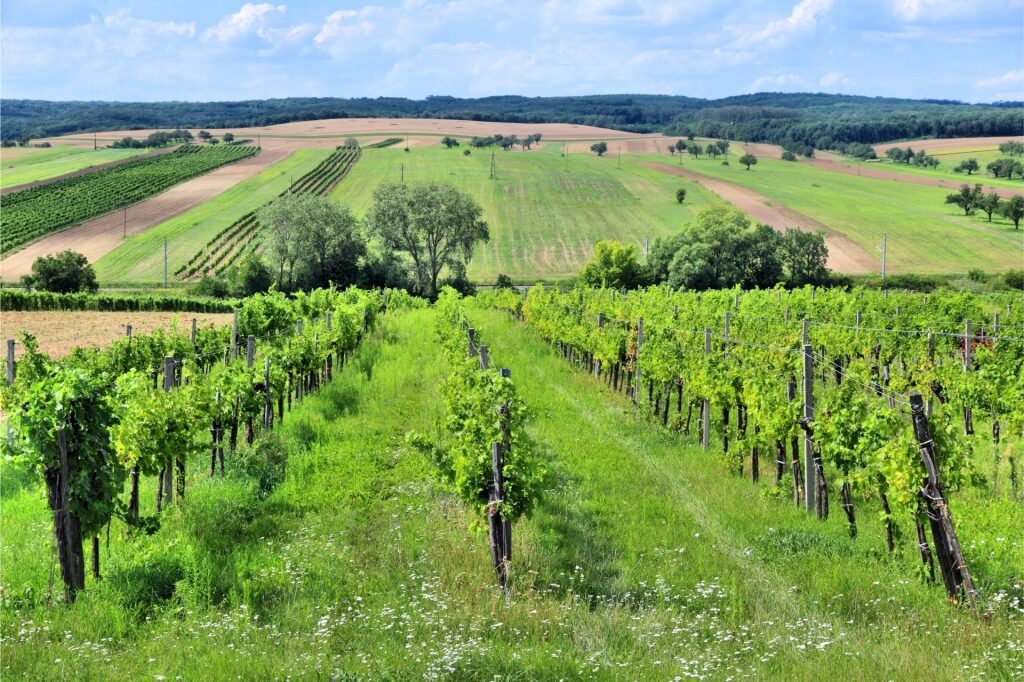
Burgenland
The easternmost of Austrian wine regions, Burgenland lies on the Austria-Hungary border and benefits from hotter climes known as the Pannonian climate. The continental heat makes for complex whites and bold, authoritative reds, but Burgenland is perhaps best known as a producer of fine dessert wines, especially around the Seewinkel area and around Lake Neusiedl.
There, morning mist and warm temperatures create microclimates with ideal conditions for “noble rot,” used for botrytized wines such as the famous Ruster Ausbruch, with complex, honeyed notes and remarkable aging potential.
Steiermark
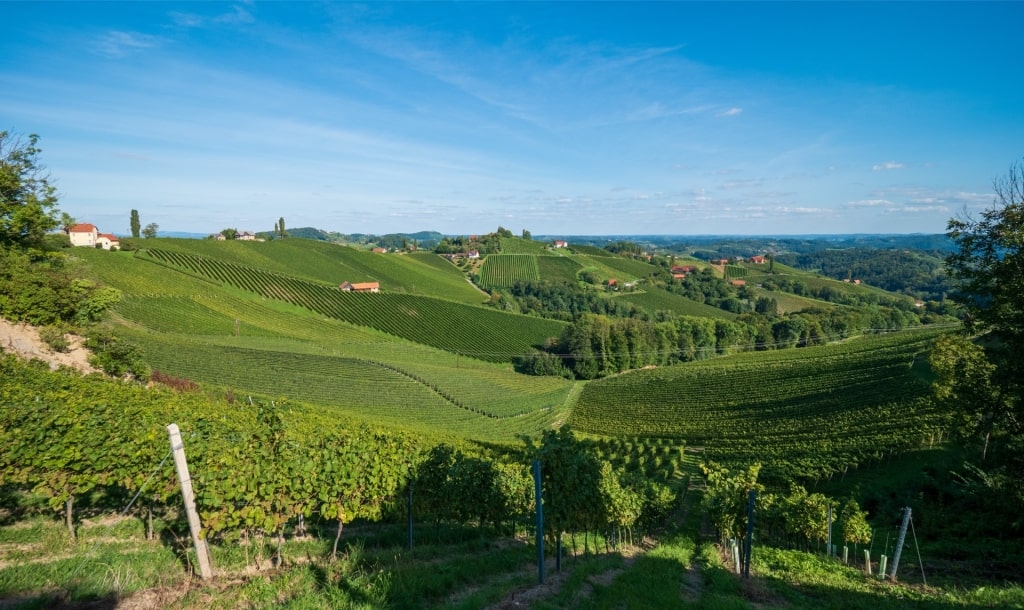
Steiermark
Also known as Styria, Steiermark is one of the prettiest Austrian wine regions to visit; its hilly landscape lies to the north of Slovenia, and has emerged as a top purveyor of world-class Sauvignon Blanc. It is one of the few wine regions in Austria where Grüner and Riesling don’t reign as white varietals.
Styria has also produced interesting, full-bodied whites in the Pinot Blanc family. But most unusual of all is Schilcher, a piquant, zesty rosé from western Steiermark with sour cherry tones and bright acidity.
Wien, or Vienna Region
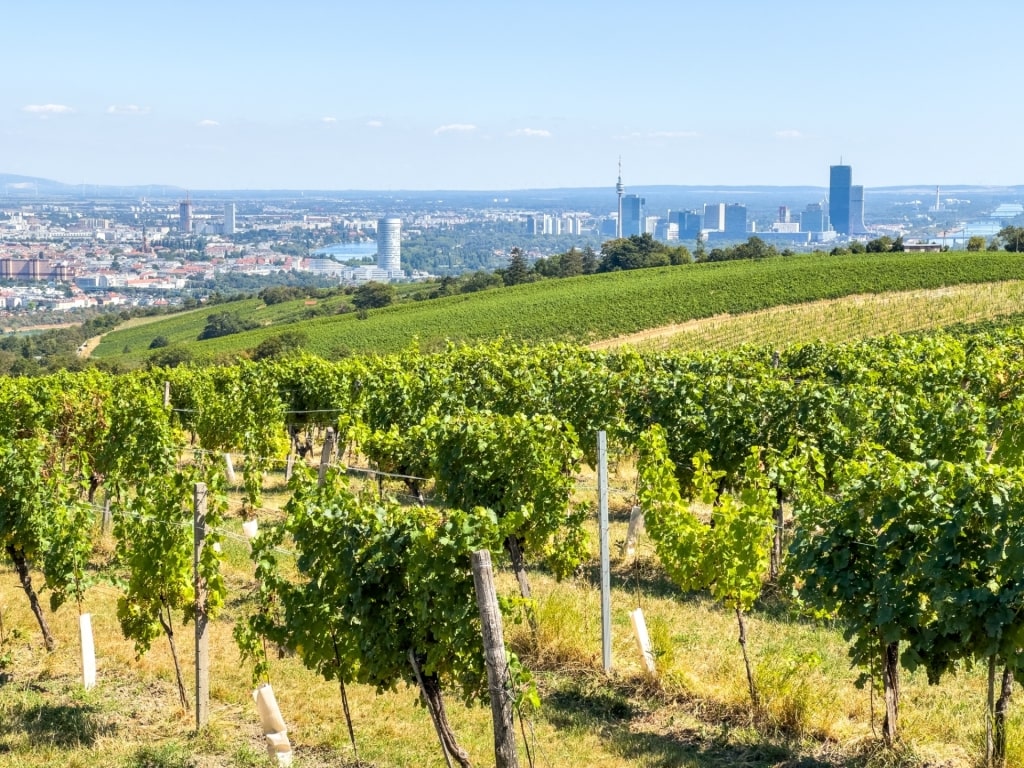
Wien
Yes, the city itself, and its surrounding 600 hectares of vineyards, also count as one of Austria’s most celebrated wine regions, making wine-tasting an easy activity for any visitor stopping over in Vienna.
Here, a traditional field blend called Gemischter Satz reigns over the green belt ringing around the city and results in complex white wines noted for their acidity and depth of aroma. Wine tourism here also celebrates Heurigers, local wine taverns that offer the freshest harvest of young wines to accompany hearty regional cuisine.
Grape Varieties in Austria
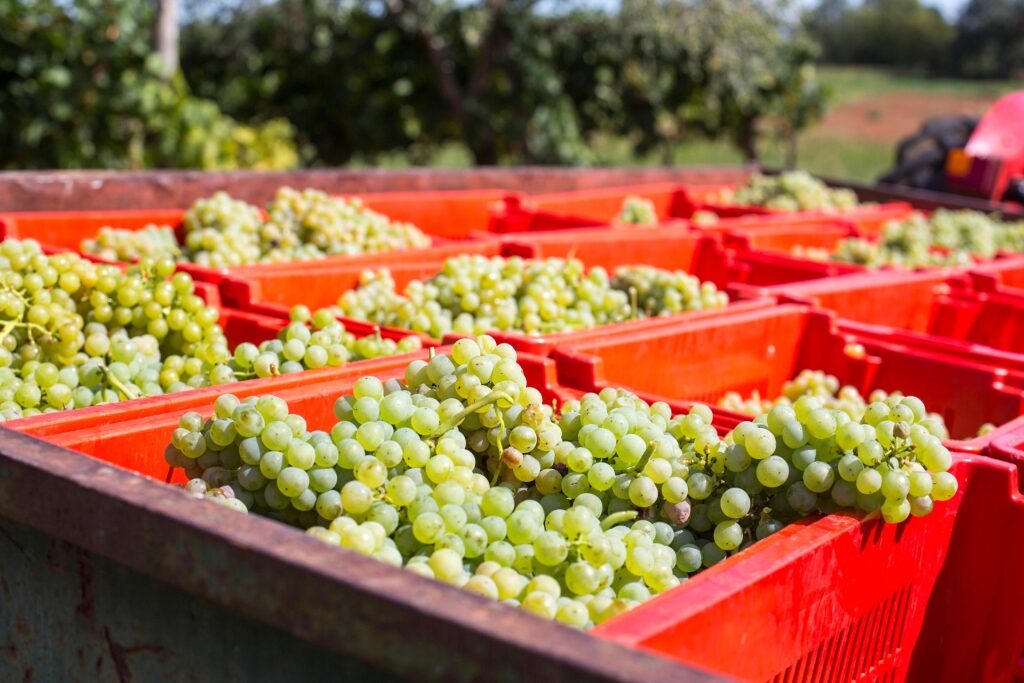
Grapes
Austria is home to some world-renowned indigenous varieties, the most notable being Grüner Veltliner, a zesty, green, crisp white wine with incredible versatility.
Other famous native grape varieties include Zweigelt and Blaufränkisch, and non-native classic grapes that also thrive in Austria include Riesling, Sauvignon Blanc, Chardonnay, and Pinot Noir, among others.
Grüner Veltliner
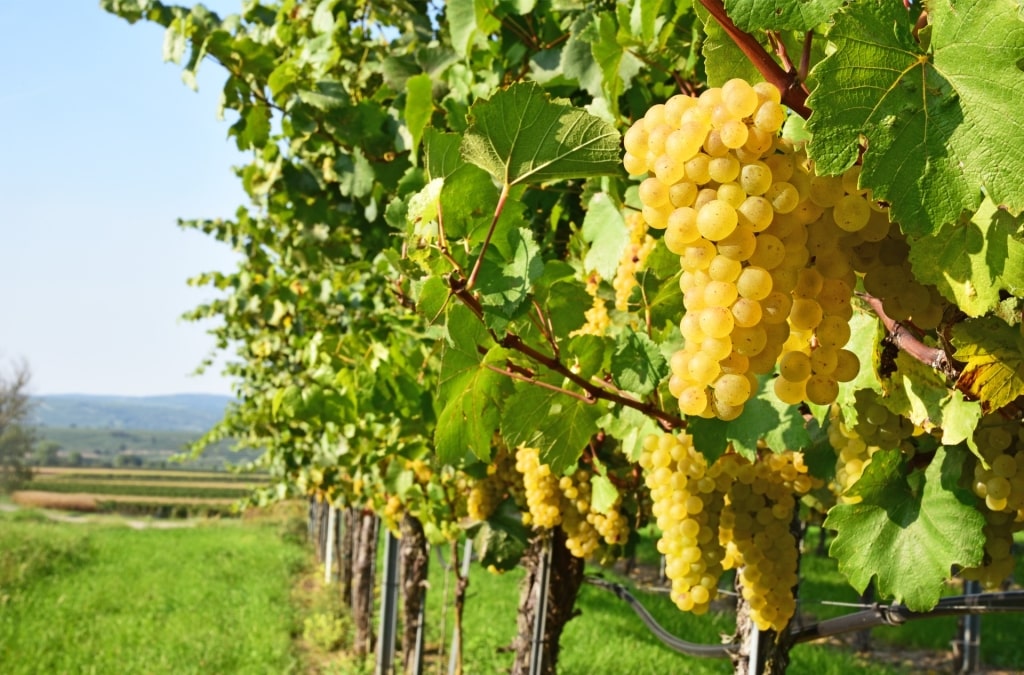
Grüner Veltliner
If you are wine-tasting in Austria, Grüner Veltliner is the grape you simply cannot miss. This grape variety is grown in over one-third of winemaking landmass in Austria, and is especially celebrated as a product of the Wachau, Kamptal, Kremstal subregions of Niederösterreich, or lower Austria.
As a wine, Grüner Veltliner comes along a versatile spectrum, from light-bodied variants with notes of crisp apple and fresh citrus to complex, fuller-bodied versions with hints of stone fruit and strong minerality, the latter usually grown from old vines and left to age in oak barrels.
Riesling
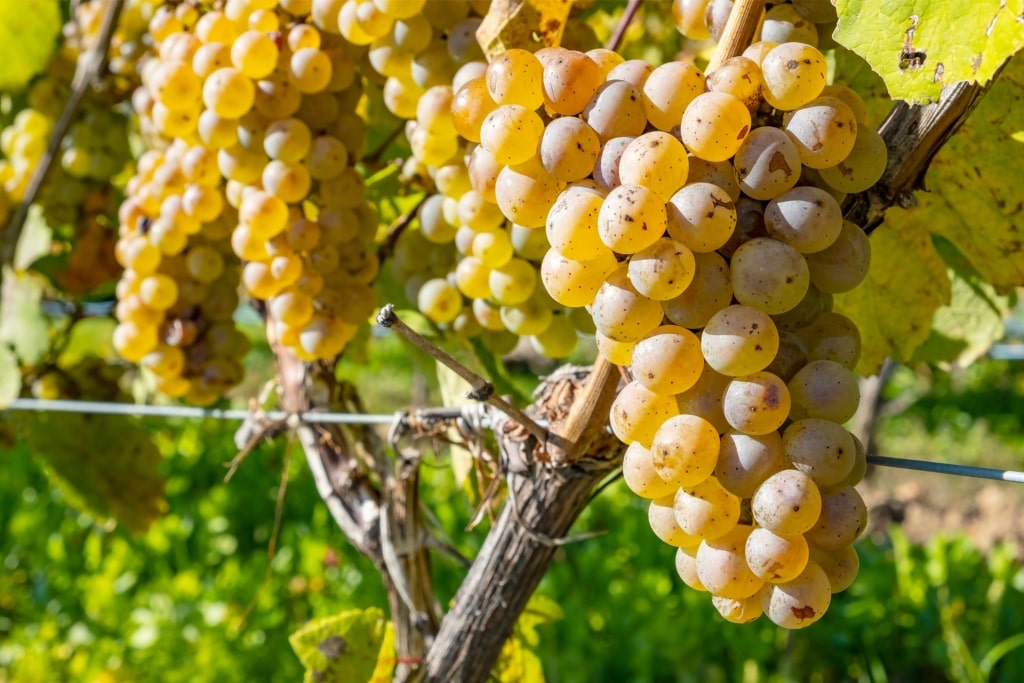
Riesling
After Grüner Veltliner, Austria’s second most famous grape variety for white wine is Riesling, which grows on the terraced vineyards and rocky soils of lower Austria, and is commonly found in the same regions where Grüner production thrives.
Unlike German Riesling, which can often be sweet, Austrian Riesling tends to be dry, mineral, and brightly acidic. It’s also a white wine that ages well and can gain additional complexity and structure with time, acquiring notes of honey, baked citrus, and stone fruit aromas.
The most important regions for Riesling production lie along the Danube west of Vienna. In areas like Wachau and Kamptal, you’ll find single-vineyard Rieslings with controlled appellations and bold, complex flavors, making the area a prime destination for sampling premium wines.
Zweigelt
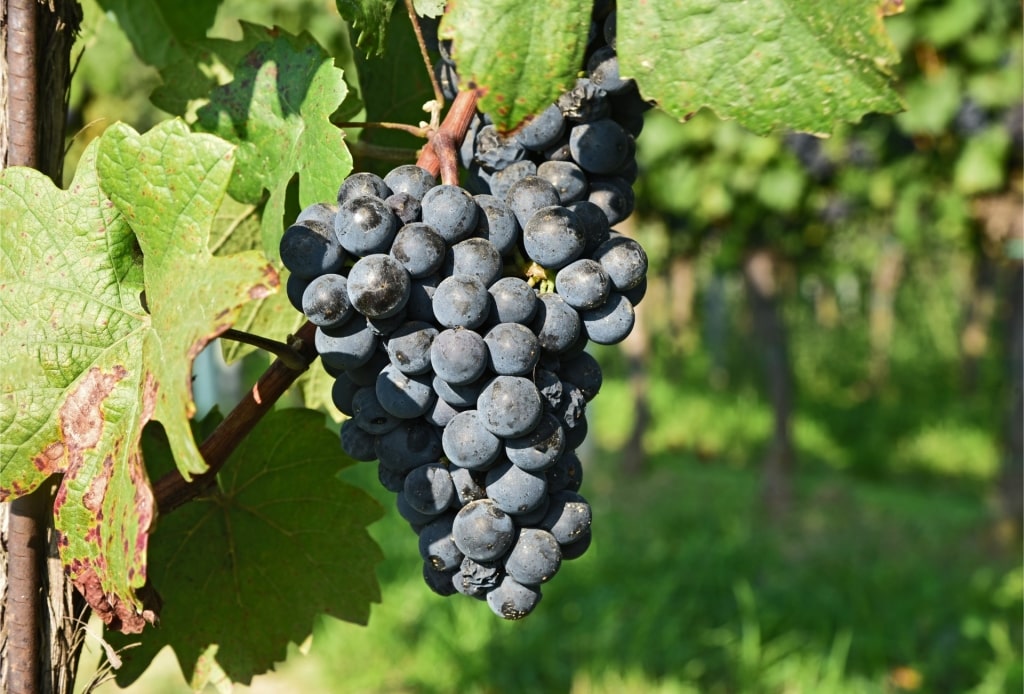
Zweigelt
Zweigelt is the most ubiquitous red wine grape in Austria, and yet it is a relatively new breed created by Dr. Fritz Zweigelt in the 1920s by crossing Blaufränkisch with St. Laurent. Zweigelt produces tannin-forward, medium-bodied reds that are nonetheless bright, juicy, and fruity, with silky cherry aromas, making them perfect picnic wines or accompaniments to grilled meats.
Burgenland is where you’ll find vineyards with the finest Zweigelt wines, with deep, spiced aromas and premium aged vintages.
Blaufränkisch
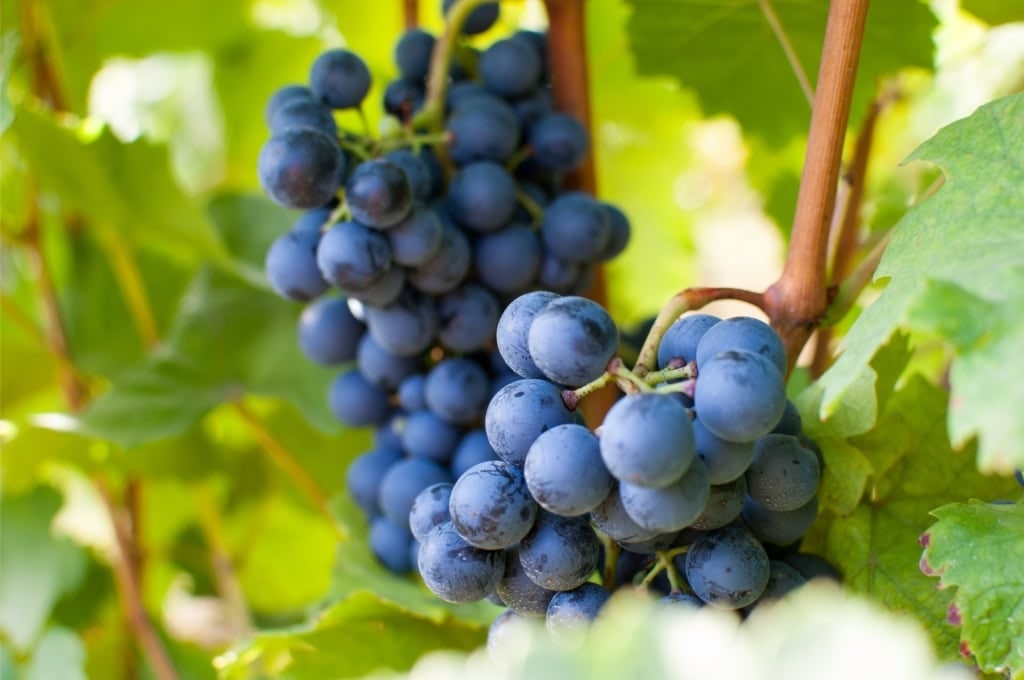
Blaufränkisch
Blaufränkisch is a dark-skinned, late-ripening variety native to Austria, and is the parent grape to Gamay and Zweigelt. Blaufränkisch is most similar in taste to a Pinot Noir or a Syrah, and is notable for its spice and notes of dark fruits such as blackberry and sour cherry. It sometimes carries notes of pepper, and yields well-aged fine wines when stored in oak barrels.
Burgenland is also the region where you’ll find most Blaufränkisch grapes, where it is second in harvest volume to Zweigelt.
St. Laurent
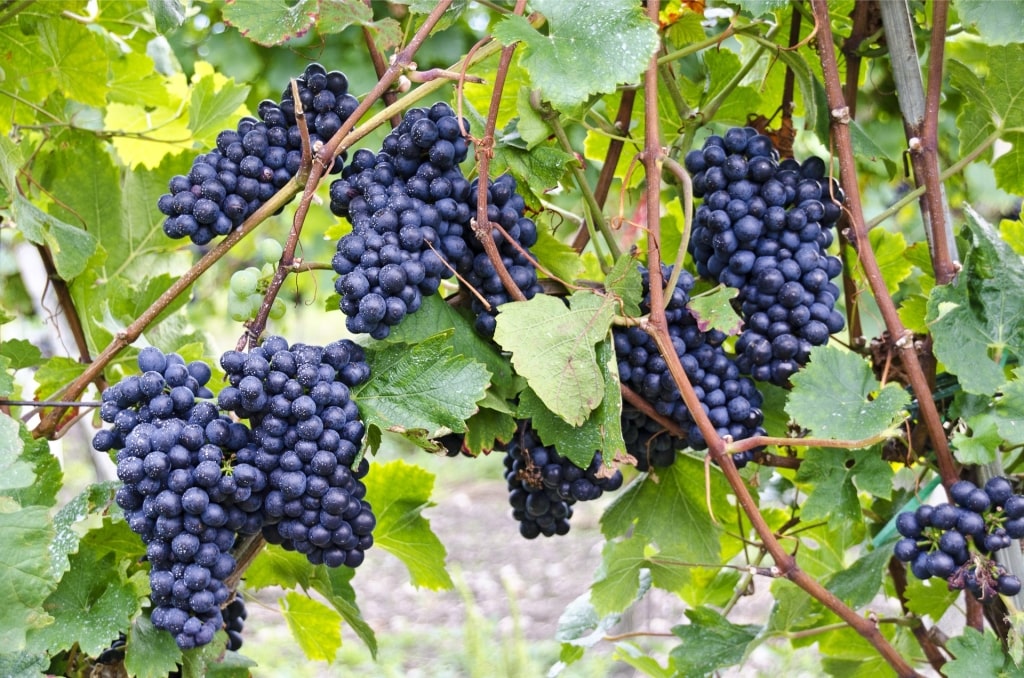
St. Laurent
St. Laurent, also known as Sankt Laurent in Austria, is named after Saint Lawrence day in mid-August, when the grapes’ coloration begins to change. This grape variety is native to northern Burgenland and produces rich reds with cherry notes. While often compared to Pinot Noir, St. Laurent is more robust and intense in character, and can contain aromas of sweet tobacco, spice, and chocolate. Its medium-high acidity makes it a great pairing for richer foods such as gamey meats.
Internationally, St. Laurent is less well-known as an Austrian export than Zweigelt and Blaufränkisch, but you’ll find that it is a favorite among Austrian sommeliers and wine connoisseurs. A trip to Austria is the perfect occasion to sample this underrated gem straight from its native terroir.
Wine Styles & Classifications
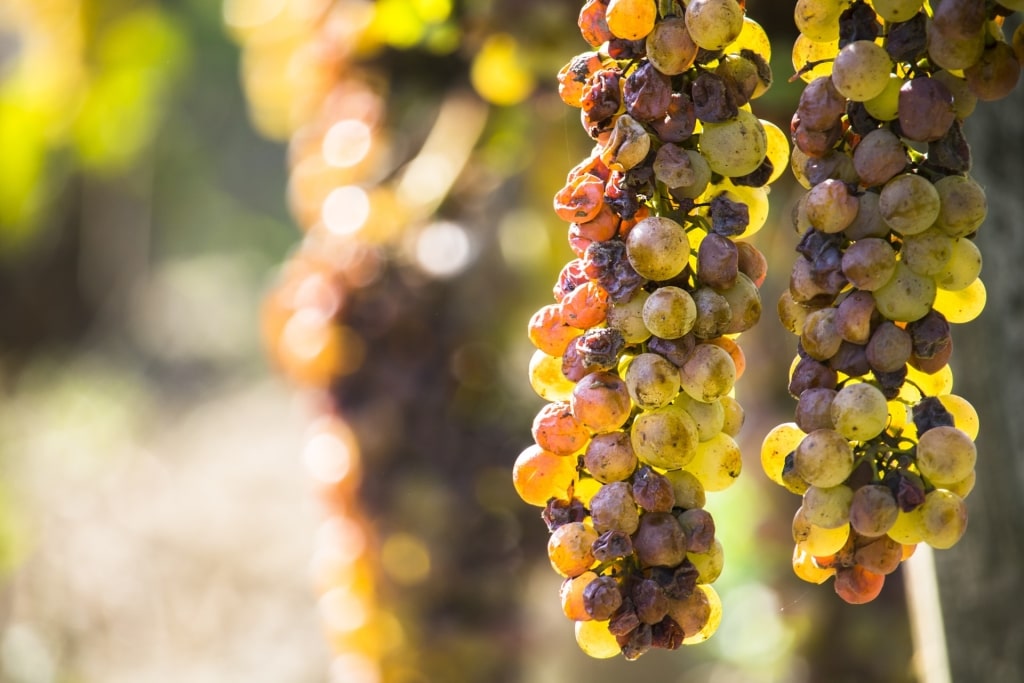
Noble rot process
There are three main categories of wine styles in Austria. These are dry whites exemplified by Grüner Veltliner and Riesling, reds such as Zweigelt, Blaufränkisch, and St. Laurent, and sweet, robust dessert wines, exemplified by Ruster Ausbruch. These are often made with grapes botrytized through the process of “noble rot.”
Look for labels with “Qualitätswein,” which translates to “quality wine,” meaning the wine has passed the stringent tests to be denoted a wine of official high quality. Like France’s AOC or Italy’s DOC, Austria also has its own controlled appellation system, called DAC, to recognize specific regions of origin.
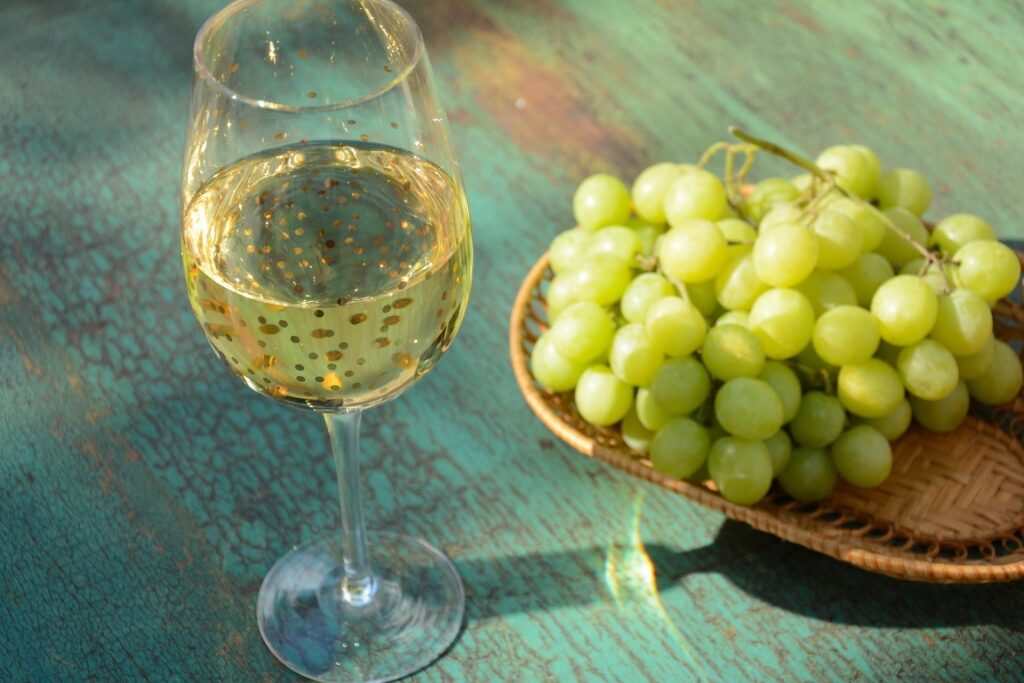
White wine
For example, Grüner or Riesling from the Kamptal region will be recognized as Kamptal DAC, while Blaufränkisch from the Leithaberg region will be denoted as Leithaberg DAC. Other notable DACs include Wachau DAC and Kamptal DAC for white wines of the Niederösterreich region.
Where to Go
Kamptal
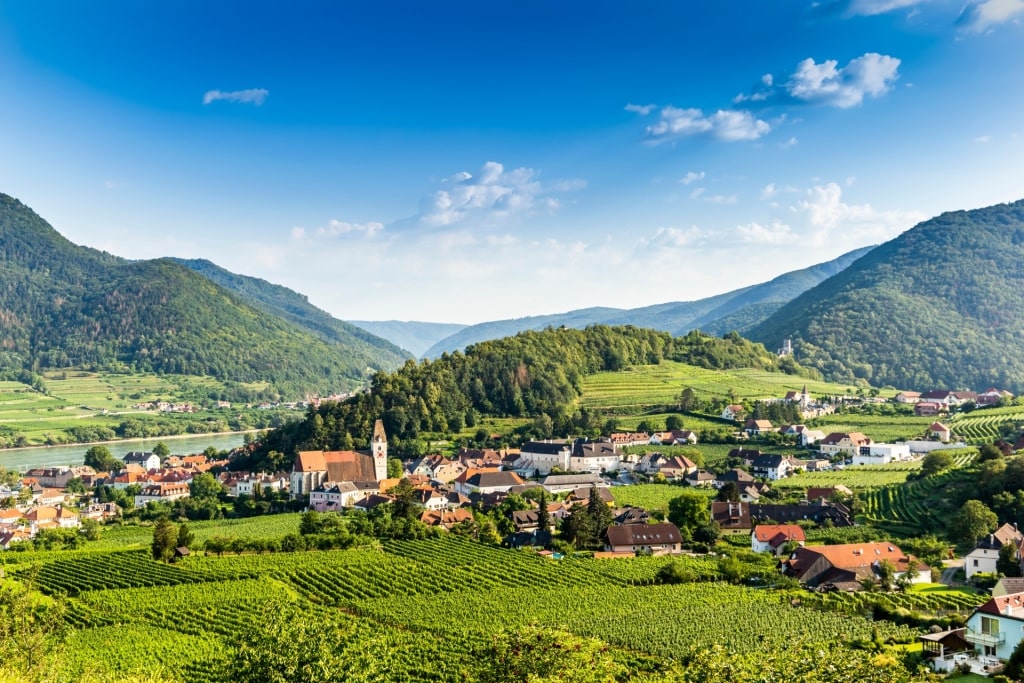
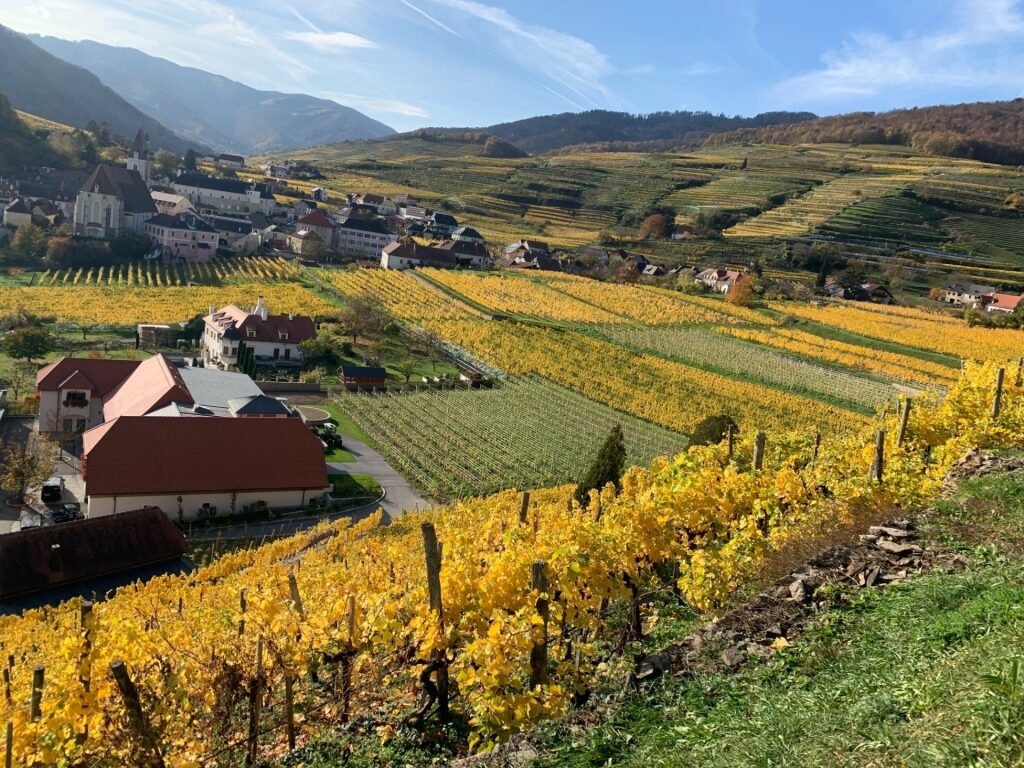
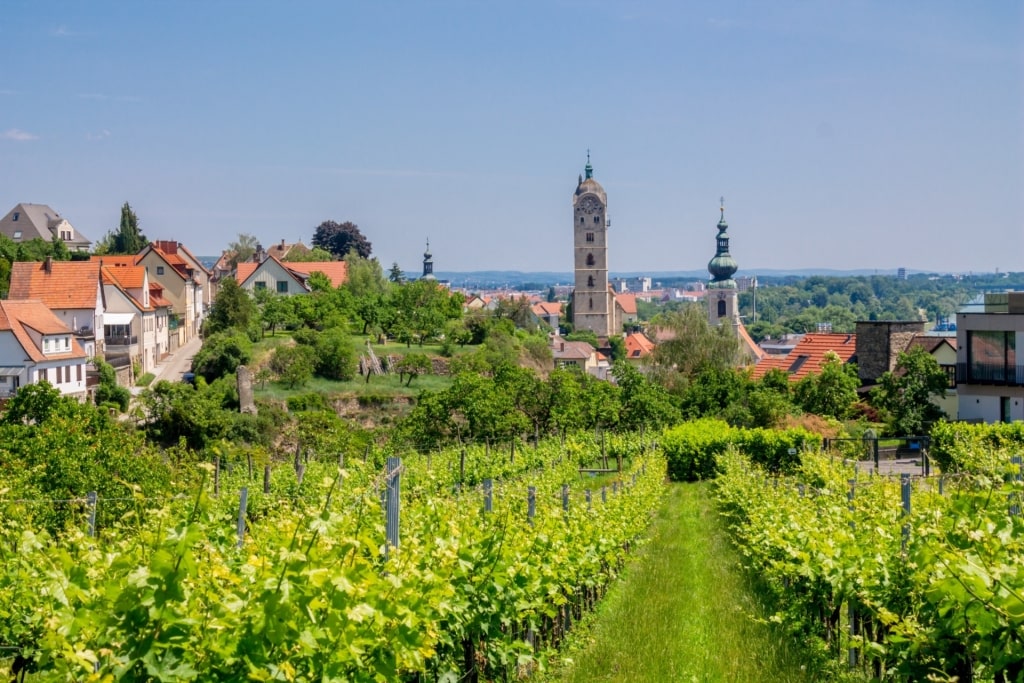
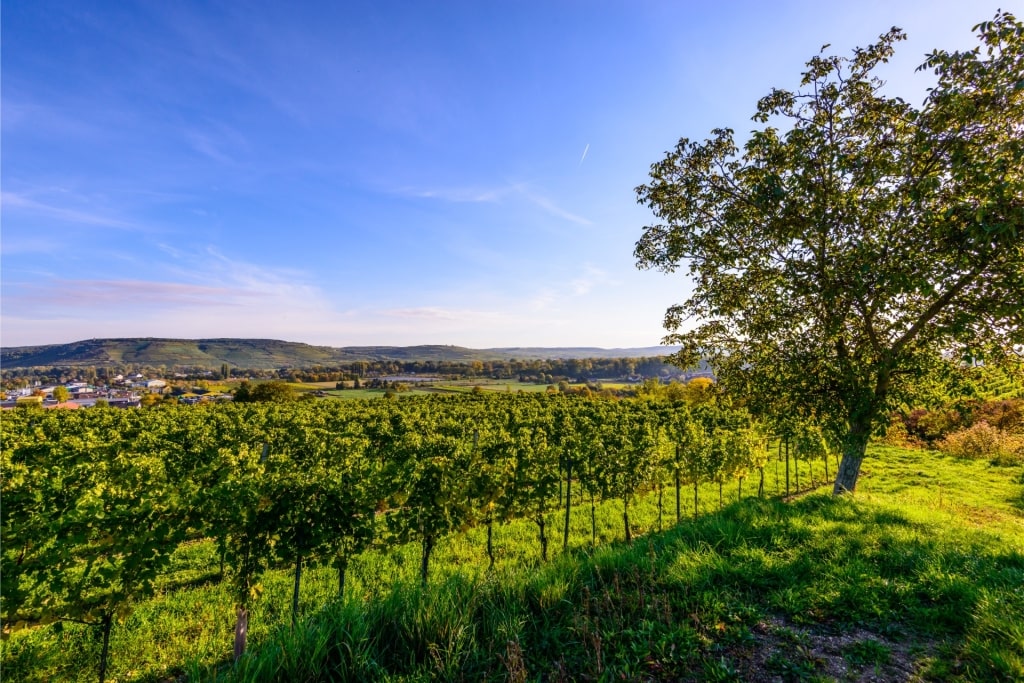
On the Danube River’s terraced banks are some of the most beautiful vineyards in Austria, spread through the expanse of land northeast of Vienna known as Lower Austria. In the Wachau Valley, you’ll find sweeping hills and historic villages along with top-notch estates like FX Pichler or Domäne Wachau. The Kamptal and Kremstal regions are replete with inviting wine taverns called Heurigen and many small-scale wineries.
Red wine enthusiasts should head to Burgenland, only an hour’s drive from Vienna. There, you can hop on a lakeside cycling ride before wine-tasting at historic estates, and sample fortified sweet wines in Rust, where Ruster Ausbruch hails from.
Steiermark
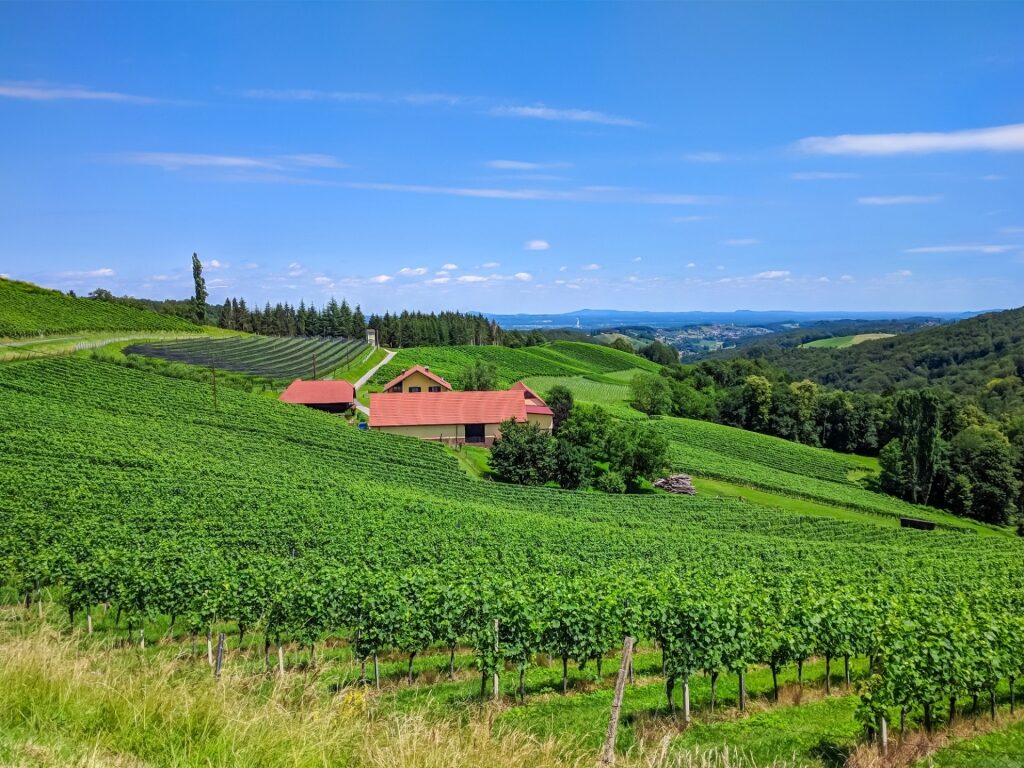
Steiermark, also known as Styria, offers delightful hilly scenery and fewer tourist crowds. It is two hours by car from Vienna, and an accessible side trip if you’d like to discover Austria’s Sauvignon Blanc offerings, other aromatic whites, and the iconic Schilcher rosé.
Last but not least, don’t forget that Vienna itself is a site of a thriving viticulture, with many estates and vineyards circling the city’s periphery and plenty of Heurigen taverns where you can enjoy a hearty meal and the year’s latest wine harvest.
Tasting Tips for Beginners
Wine
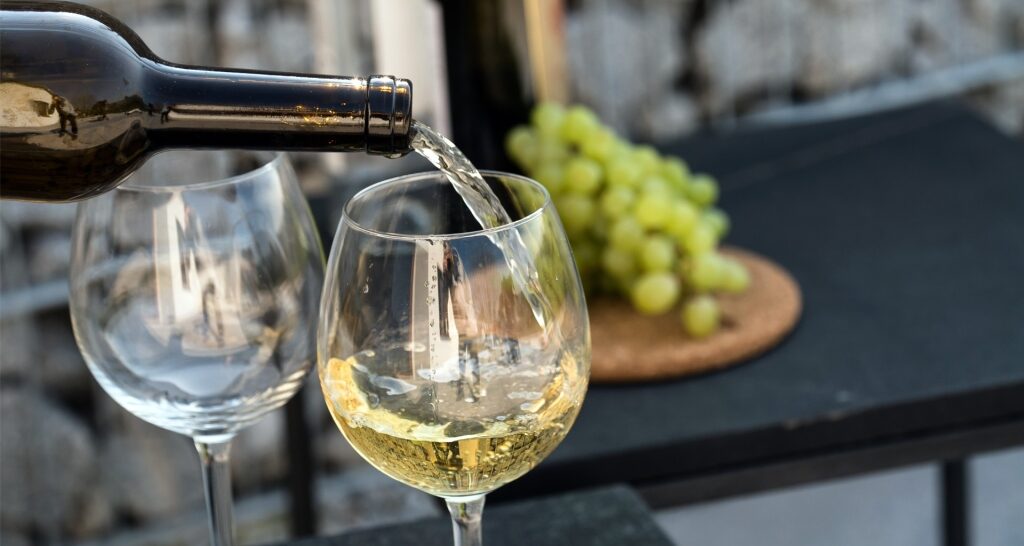
First, use other senses before your taste: observe the wine’s color and its consistency. Is it clear or opaque? Swirl it and notice whether it clings to the glass, noticing its “legs” or viscosity. The swirling also helps the wine release its aromas, so bring your nose to the glass and inhale. What notes do you notice? Perhaps it is white pepper in Grüner, or sour cherry in Zweigelt. Repeat a few more times, as the wine will begin to release its secondary and tertiary aromas.
Second, taste. Take a small sip and hold it in your mouth, letting it linger on your tongue. Is the wine sweet or dry? Is it soft and easygoing, or bold and structured? Is it acidic? What flavors come to mind, fruits, herbs, or minerality?
White wine
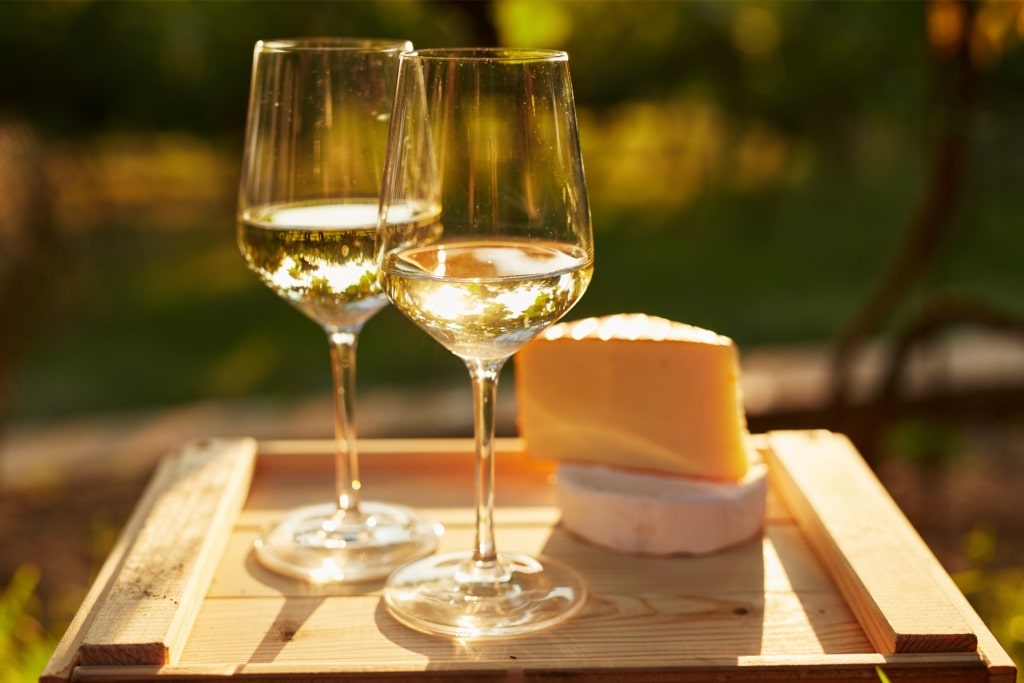
Third, order your tasting from lighter to bolder wines. Usually, the host serving you the wine will manage the tasting order, beginning with sparkling, then dry whites, then reds, then sweeter dessert wines.
Fourth, remember you do not have to finish each glass of wine at a tasting. A spittoon will always be available for you if you don’t wish to finish your mouthful or your glass, and doing so is not going to offend your host at all.
Read: Best Places to Visit in Austria
FAQs
What is Austrian wine known for?
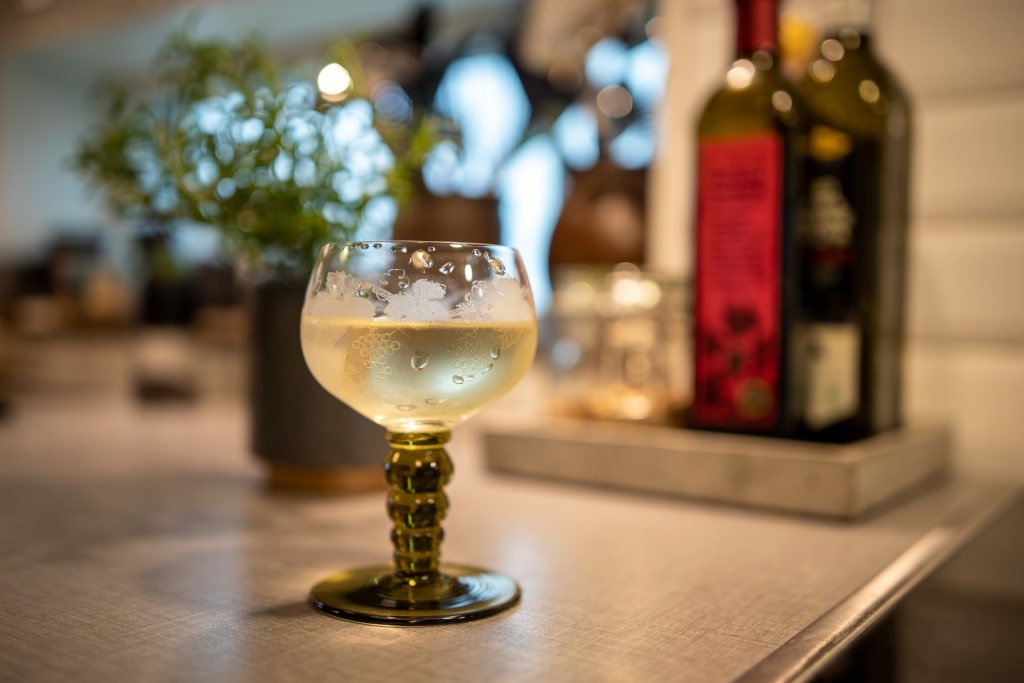
Grüner Veltliner
Austria is best known for its excellent dry white wines such as Grüner Veltliner and Riesling, and it also produces notable reds such as Blaufränkisch and Zweigelt in the Burgenland region.
Austrian viticulture is celebrated for its sustainability practices and, since the 1980s, is recognized for having some of the strictest wine quality regulations in the world.
Can I visit vineyards in Austria?
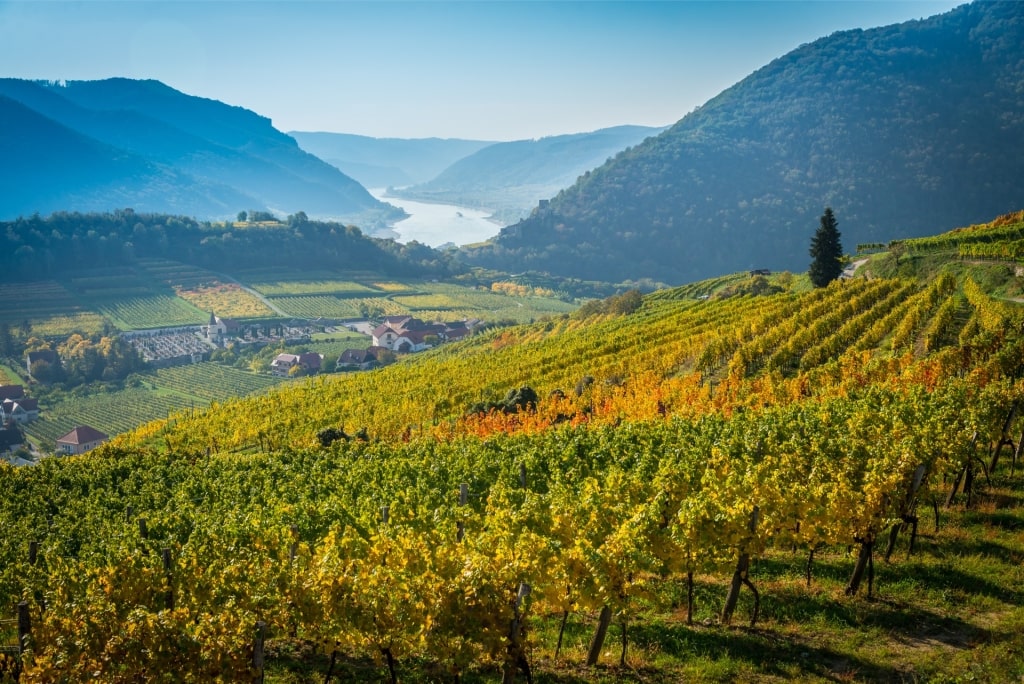
Wachau Valley
Yes! Austria is full of stunning vineyards and estates as well as small family-run wineries that welcome visitors year-round. Summer and fall are the busiest for wine tourism and some smaller wineries reduce their hours during the winter time, so it’s generally good practice to call ahead and confirm the time and booking for a tasting.
What should I keep in mind when visiting vineyards in Austria?
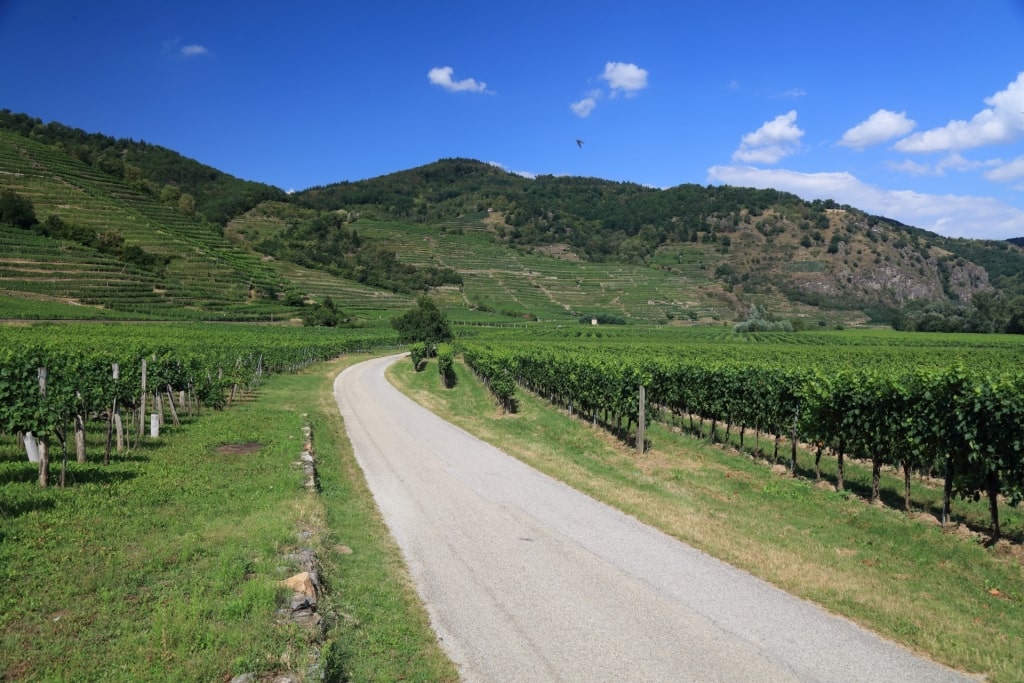
Danube Cycle Path
It is usually recommended to have a car or arrange transport when visiting vineyards in Austria, as most are in rural communities that are not easily accessible by public transit. Guided wine tours are excellent choices for those who wish to visit several estates in a day and not have to worry about renting cars, parking, or imbibing.
Don’t forget that many vineyards will offer delectable snacks such as cheese and charcuterie boards to accompany your tasting, so you don’t necessarily want to fill up on a big meal before the tasting.
What food pairs best with Austrian wine?

Schnitzel
Crisp, acidic Grüner Veltliner is best enjoyed with seafood, salad, vegetables, and citrusy, fresh dishes. A dry Riesling will make a good accompaniment for schnitzel, roasted meats, and more robust dishes, while the juicy red Zweigelt is the perfect choice to bring along for a picnic or outdoor grilled meal.
More robust reds such as Blaufränkisch or St. Laurent pair well with heartier, gamier meats as well as cheese and risotto, while sweet dessert wines like Ruster Ausbruch make for an iconic combination with Marillenknödel, a traditional apricot dumpling.
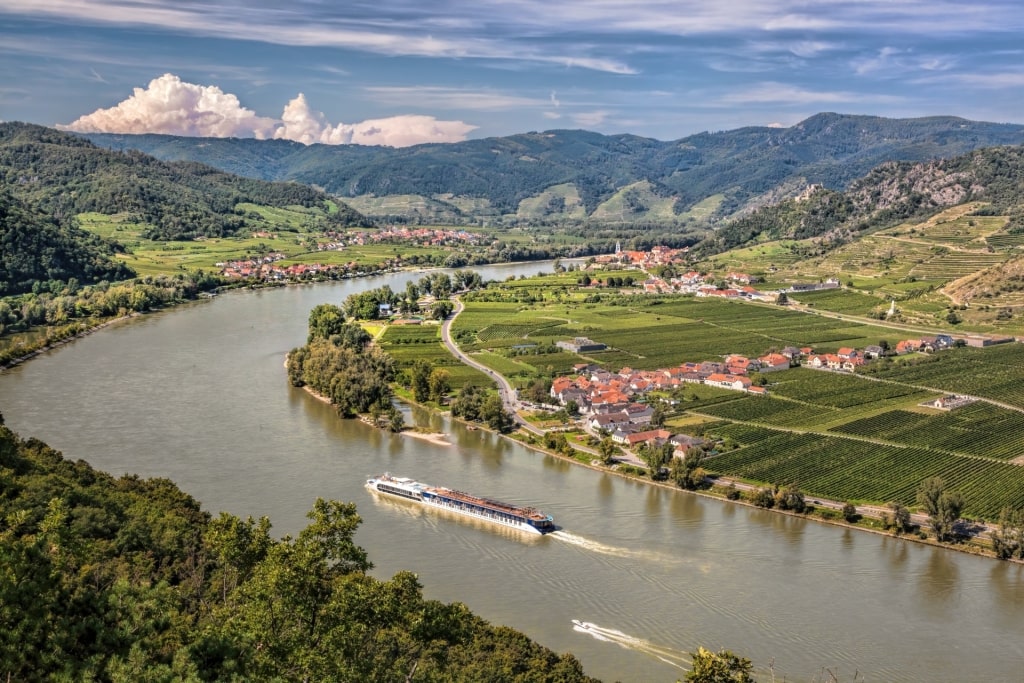
Wachau Valley
Ready to sample some Austrian wines, travel along the Danube, and soak in scenic Austrian wine regions to build your experience as a wine connoisseur? Browse Celebrity’s river cruises and plan your next wine vacation.