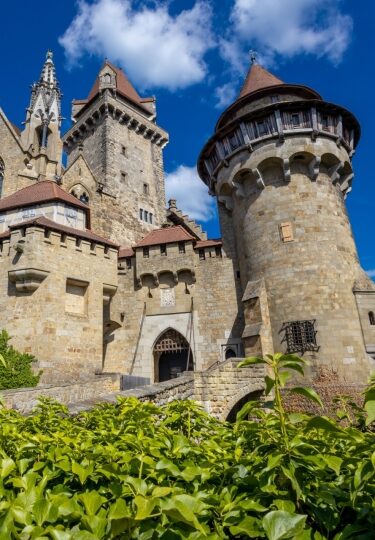
From clifftop ruins overlooking the Danube to opulent Baroque palaces fit for royalty, castles in Austria offer unique glimpses of the country’s rich history and vibrant culture. Some were once mighty fortresses protecting against invasion, while others served as lavish summer homes for emperors and archdukes.
Exploring castles in Austria feels like stepping into a living museum, one where Gothic towers, Rococo gardens, and Renaissance courtyards coexist. Whether you’re climbing to the top of castle ruins in the Wachau Valley or getting lost in the Hall of Mirrors at Schönbrunn, these castles are nothing short of magical.
Schönbrunn Palace
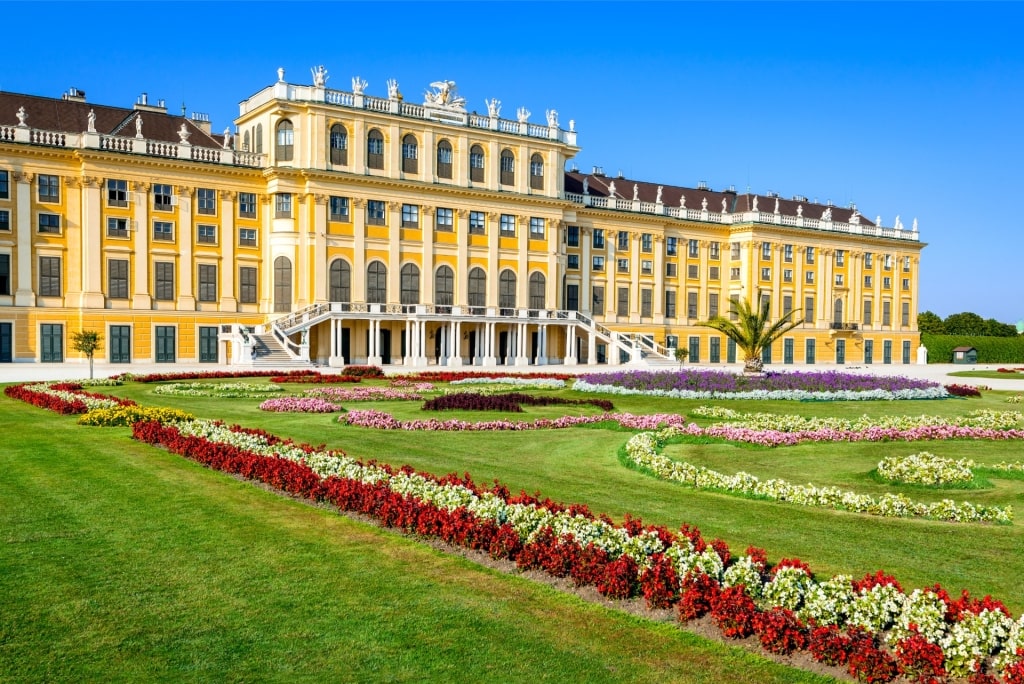
Schönbrunn Palace, Vienna
Often referred to as the “Versailles of Austria,” Schönbrunn Palace is a UNESCO World Heritage Site located right in Vienna. The palace was once the summer residence of the Habsburg emperors and is a shining example of Baroque architecture. In total, there are over 1,400 rooms in the palace, although only about 40 of these rooms are accessible to visitors.
Similar to Versailles in France, Schönbrunn’s Hall of Mirrors is a must-see, with its large mirrors and Rococo decor. Many historians believe that Mozart played in this hall for Empress Maria Theresa in 1762. Other notable rooms include the Chinese Cabinets, which showcase Asian influences, the Bergl Rooms, and the White-and-Gold Rooms, as well as several private apartments.
Dürnstein Castle
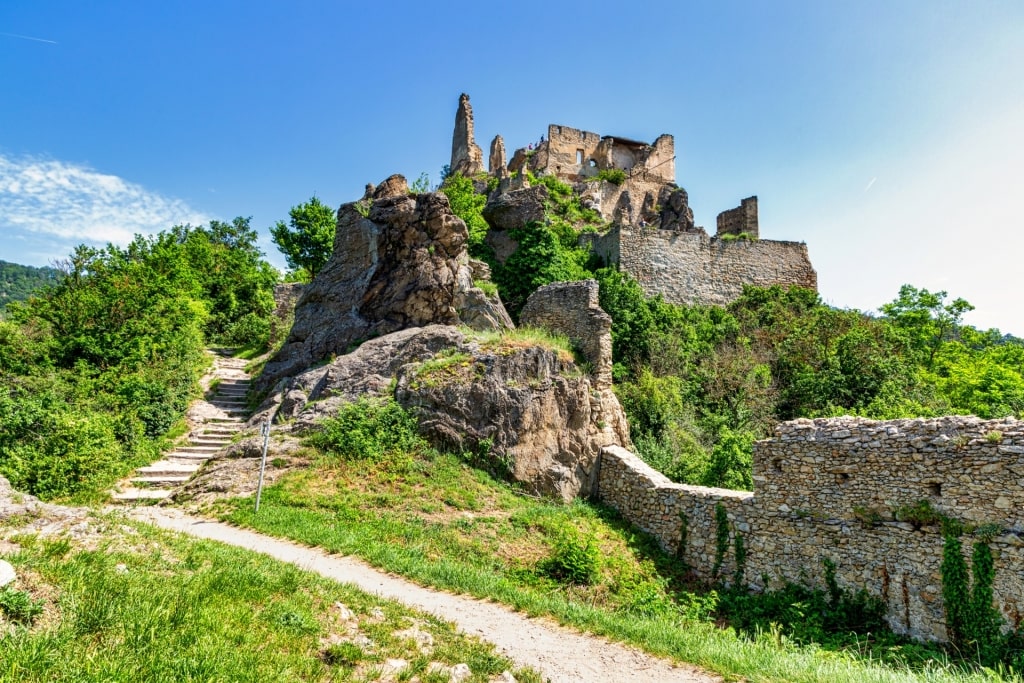
Durnstein Castle
Perched on a hill above the town of Dürnstein in the Wachau Valley, Dürnstein Castle is best known as the place where King Richard the Lionheart was imprisoned in 1192. It’s one of the most famous Austrian castles. Today, the castle is mostly in ruins, but it is still very much worth seeing. If you happen to visit between late spring and early fall, you’ll get to see the vineyards of Wachau Valley in full bloom.
To reach the castle ruins, there’s a scenic trail that leads directly from the riverside town of Dürnstein to the top of the hill. It’s not a strenuous hike and takes most travelers between 20 and 30 minutes. If you feel out of breath with the incline, make as many stops as you need. From the castle ruins, you’re greeted with picturesque views of the Danube and the valley below.
Aggstein Castle
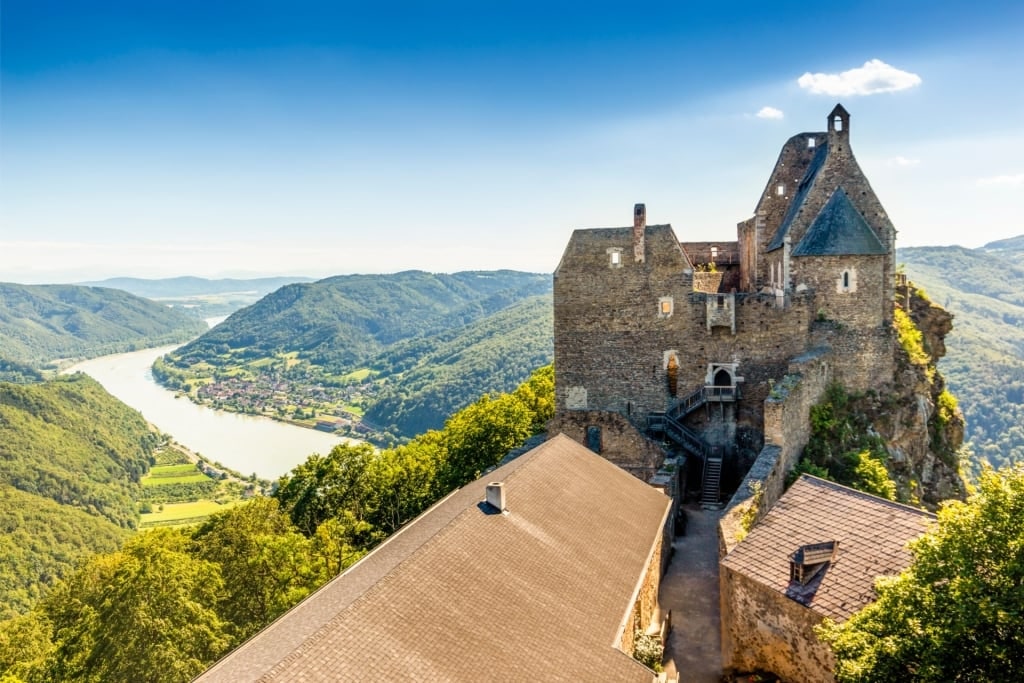
Aggstein Castle
Aggstein Castle, also located in the Wachau Valley, dates back to the 12th century and sits high above the Danube. Although mostly in ruins today, it was once a formidable fortress controlled by notorious “robber barons” like Jörg Scheck vom Wald. They used Aggstein to demand tolls from boats traveling along the river.
While many visitors head to Aggstein Castle for sweeping views of the Danube and Wachau Valley, there are a few other sights worth seeing. The Rosengärtlein, or little rose garden, is especially memorable; it’s not a garden at all, but something far darker. Instead, the garden is a ledge where captives were left to starve or forced to jump to their deaths. There are also a few restored rooms to visit, including the knight’s hall, the chapel, and the tower.
Schönbühel Castle
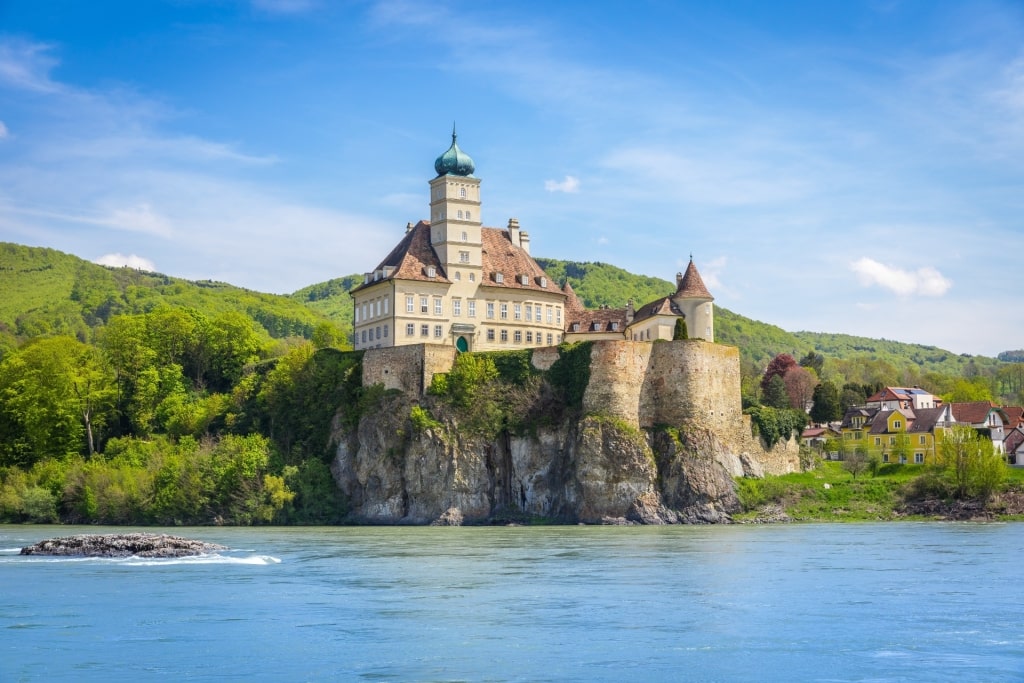
Schönbühel Castle
Yet another cliffside castle located along the Danube in Austria’s Wachau Valley, Schönbühel Castle dates back to the 12th century when it was a medieval fortress. While the castle’s initial purpose was to defend itself against invaders, Schönbühel has seen several expansions and renovations over the centuries, now reflecting a blend of medieval, Baroque, and Renaissance architectural styles.
One thing to note about Schönbühel Castle is that it is privately owned and not open for full public tours. However, you can still view the castle from the river and visit nearby sites such as the Servite Monastery and grotto chapel. The castle isn’t too far from Melk, and well-marked trails make it easy to explore the surrounding landscape.
Schallaburg Castle
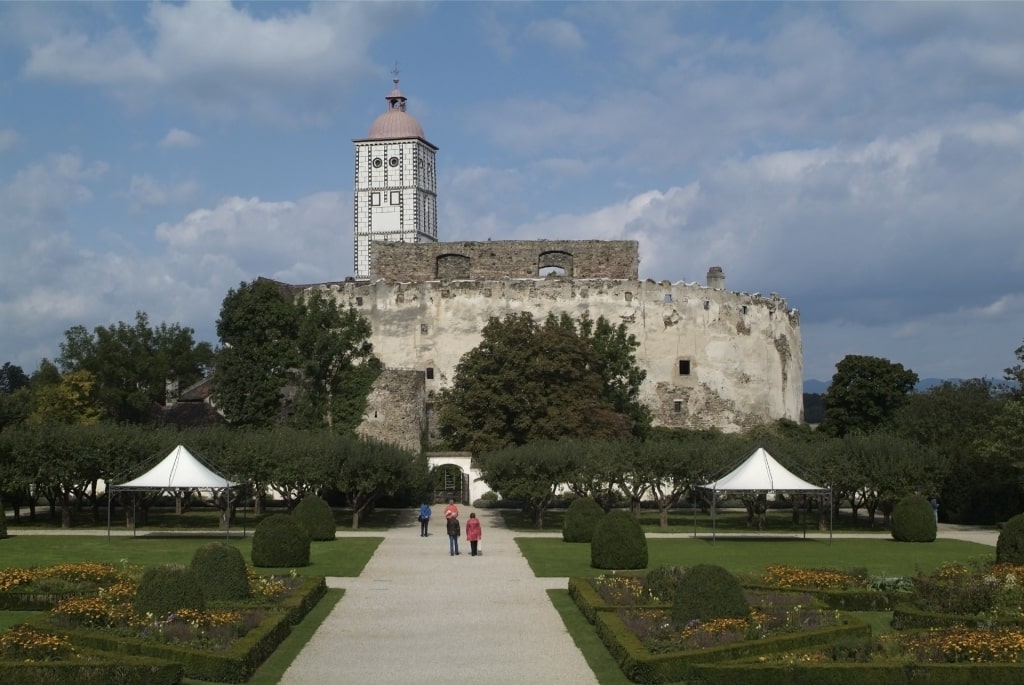
Schallaburg Castle near Melk
Schallaburg Castle, located just three miles from Melk in Lower Austria, is a great example of architecture that blends notable Italian Renaissance design alongside earlier Gothic elements. Originally built as a Romanesque structure, it was transformed into a Renaissance palace during the 16th century.
Today, the castle operates like a museum, hosting a variety of rotating exhibits each year that have explored topics from Vikings and the Renaissance to World War I. Be sure to explore the castle grounds, especially the beautifully restored Renaissance gardens and fountains.
Don’t miss the Terracotta courtyard, with its two-story arcades and 1,600 terracotta figures. Among them is the Hundefräulein, a mythical creature with a woman’s body and a dog’s head.
Linz Castle
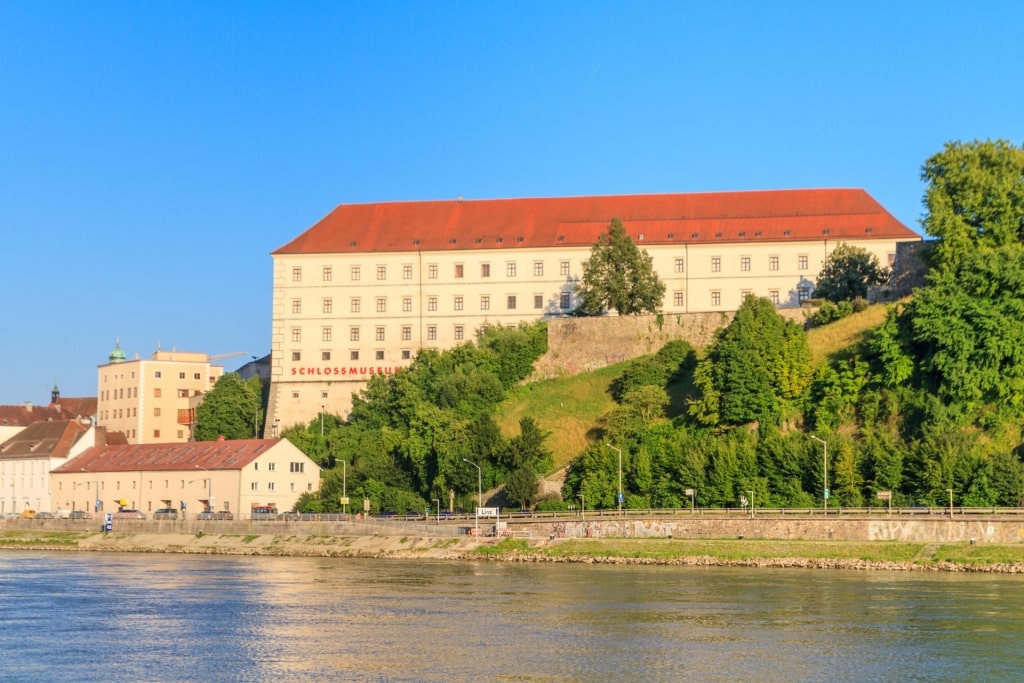
Linz Castle
Overlooking both the city of Linz and the Danube, the first known mention of Linz Castle was in the year 799. However, the castle has been rebuilt and expanded over the centuries. Its current form includes a contemporary wing added in 2009, and today it houses the Schlossmuseum Linz. Permanent exhibits here feature everything from historical weapons to old coins to musical instruments used throughout history.
You’ll also find the Upper Austrian Provincial Museum here, which tells the story of Upper Austria from Neolithic times right up to the 20th century.
Kreuzenstein Castle
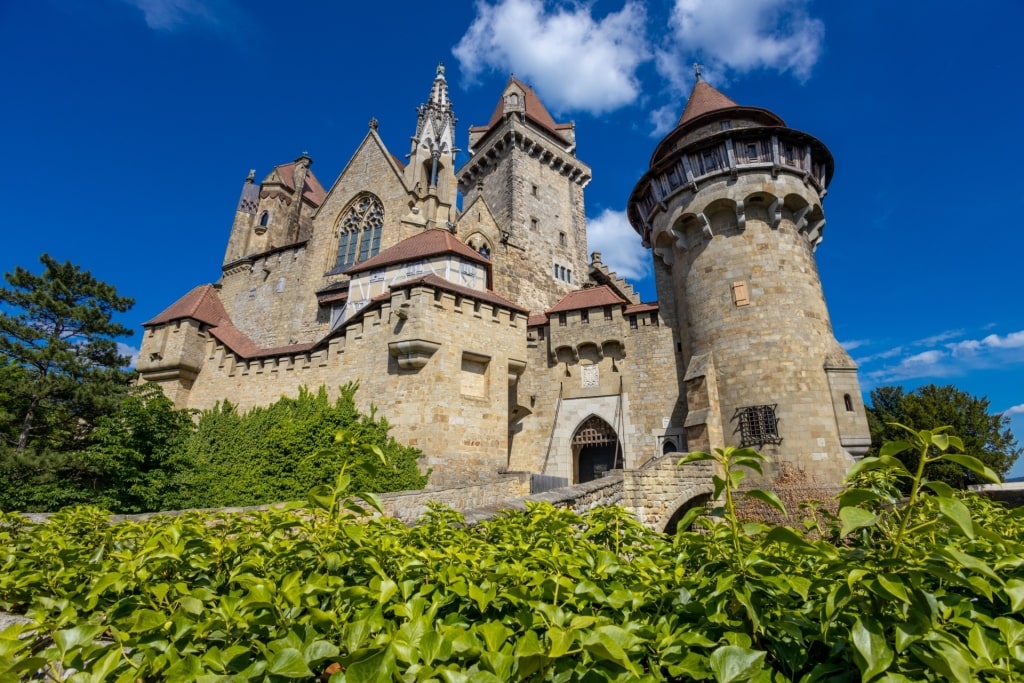
Kreuzenstein Castle, Vienna
Located just north of Vienna near Leobendorf, Kreuzenstein has a unique origin story among Austrian castles. Though it resembles a medieval fortress, it was actually rebuilt in the 19th century on the ruins of a castle destroyed during the Thirty Years’ War.
The builders used salvaged materials from historic sites across Europe to recreate what a medieval castle might have looked like. In essence, Kreuzenstein Castle is a modern reconstruction of a medieval castle.
The castle interior features various collections, from medieval armor like swords, crossbows, and catapults, to rooms furnished and decorated as they would have been during the Middle Ages. Visitors can walk in and out of the great hall, the castle kitchen, and the chapel. One highlight is the falconry shows held at Kreuzenstein Castle, which demonstrate the natural hunting behaviors of birds of prey.
Schloss Hof Estate

Schloss Hof Estate
Schloss Hof is one of Austria’s finest examples of Baroque estates, located in Marchfeld, Lower Austria, near the Slovakian border. Prince Eugene of Savoy first commissioned the estate in the early 18th century, and Empress Maria Theresa later acquired it. Today, the estate features grand halls, opulent rooms, and a staircase leading to ceremonial rooms located on the first floor. These recreations showcase the joie de vivre of the 18th century.
There are also several exhibitions to visit inside the castle, many of which offer glimpses into what life was like during the Baroque period as well as the Rococo period. Costumes and furniture from the time help to bring these exhibitions to life.

Schloss Hof Estate garden
Don’t miss the formal gardens, which were carefully restored in 2019. They showcase terraces, fountains, groves, and colorful flowerbeds, making them a picturesque highlight for photos and leisurely strolls.
Esterházy Palace
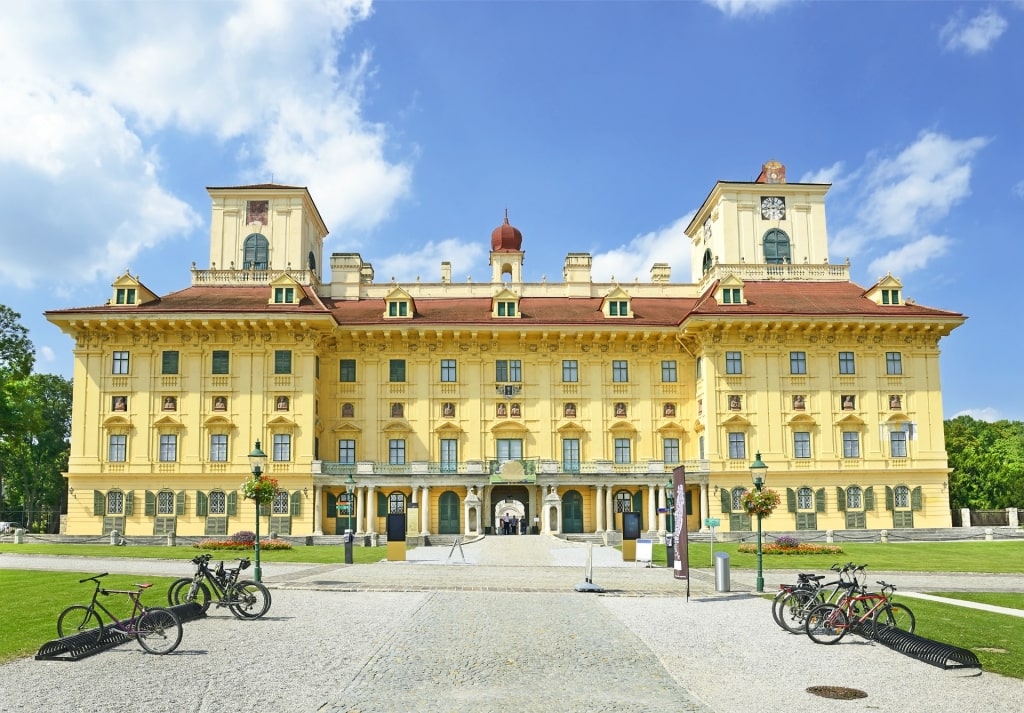
Esterházy Palace
Esterházy Palace was once home to some of Europe’s most powerful noble families, and today it operates as a museum where visitors can view stately rooms, a grand concert hall, and several exhibitions.
There’s a lot of ground to cover here, from music to history to outdoor scenery, and many visitors decide to make this a day trip from Vienna. If you’re big on wine, make sure to block off some time to explore the palace’s Wine Museum. Alternatively, enjoy a cup of coffee and a pastry at the courtyard café, set inside the palace courtyard.
Artstetten Castle
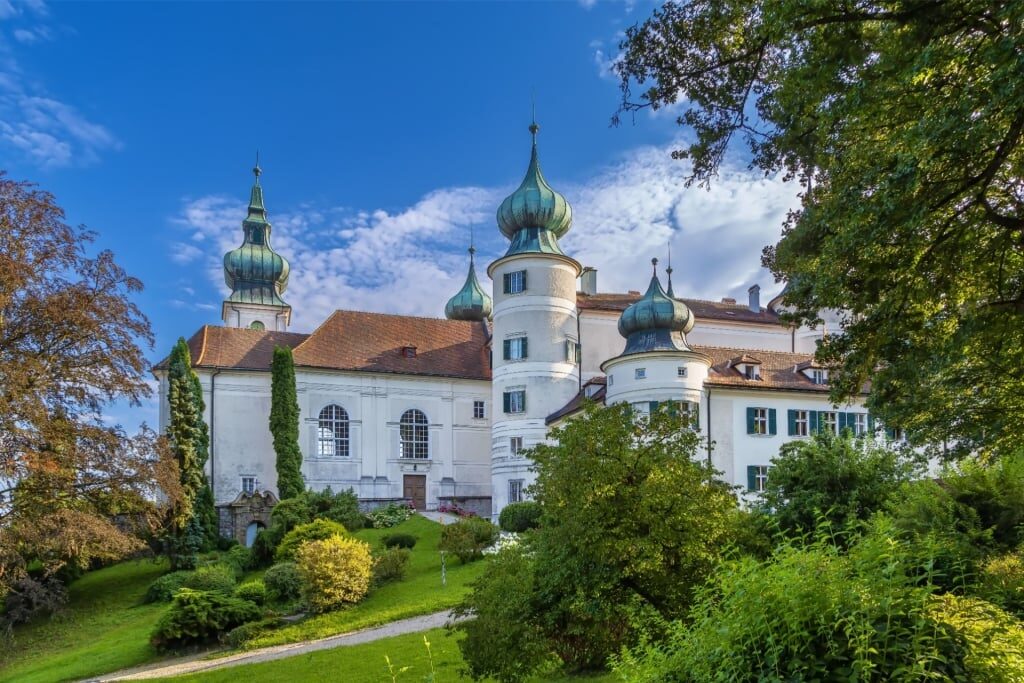
Artstetten Castle
Artstetten Castle is best known for being the final resting place of Archduke Franz Ferdinand and Sophie, Duchess of Hohenberg, who were both assassinated in 1914, an event which triggered World War I.
The castle is now privately owned but open to visitors who wish to learn more about their life and legacy. The Archduke Franz Ferdinand Museum features various historical documents and exhibits relating to his life and the events leading up to World War I.
Make sure to spend a bit of time exploring the grounds, which are extensive. It’s also an opportunity to take in the views of the Danube River and the surrounding countryside.
Rosenburg Castle
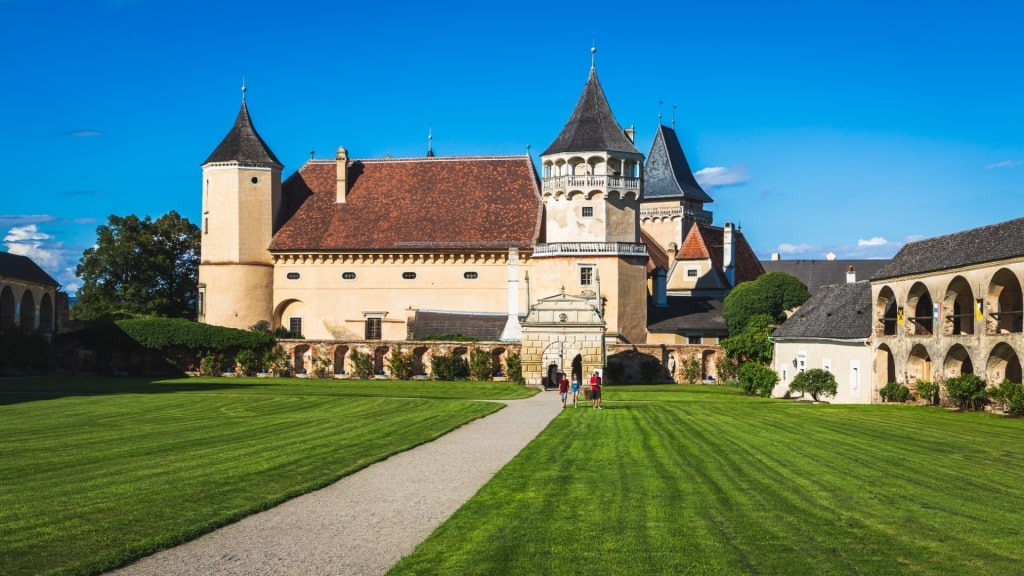
Rosenburg Castle
Located in Lower Austria on a cliff above the Kamp Valley, Rosenburg is the most visited Renaissance castle in Austria. Before being transformed into a hunting lodge in the 16th century, Rosenburg served as a medieval fortress and military stronghold.
In addition to viewing the living quarters, chapel, and armory, Rosenburg Castle also hosts 40-minute falconry shows held twice daily. During these shows, visitors can see falcons, eagles, and other large birds of prey up close.
Liechtenstein Castle
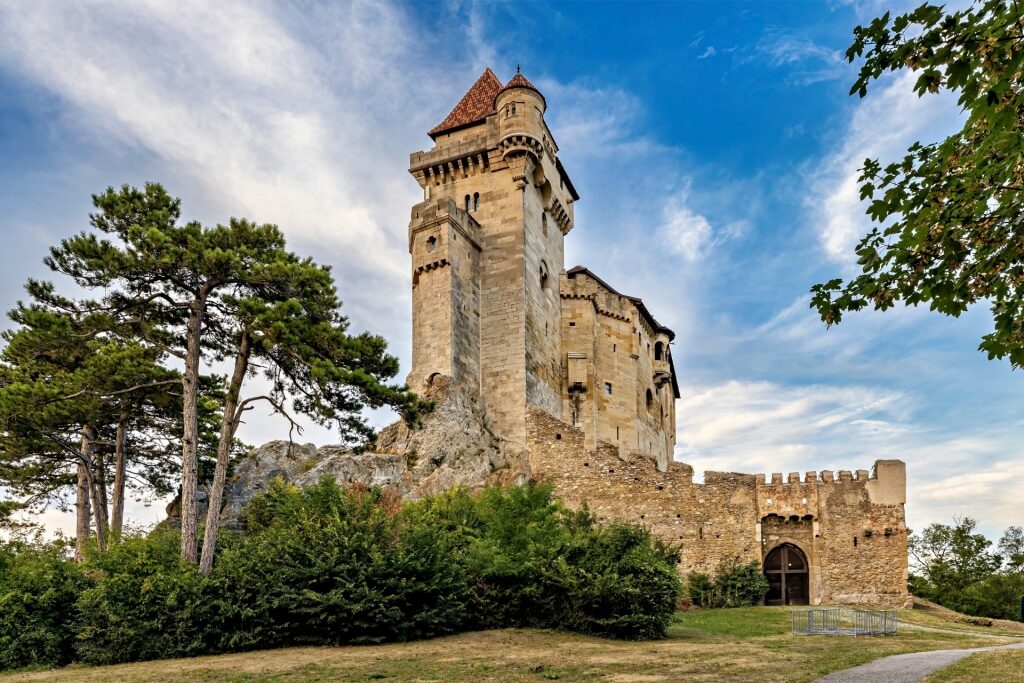
Liechtenstein Castle
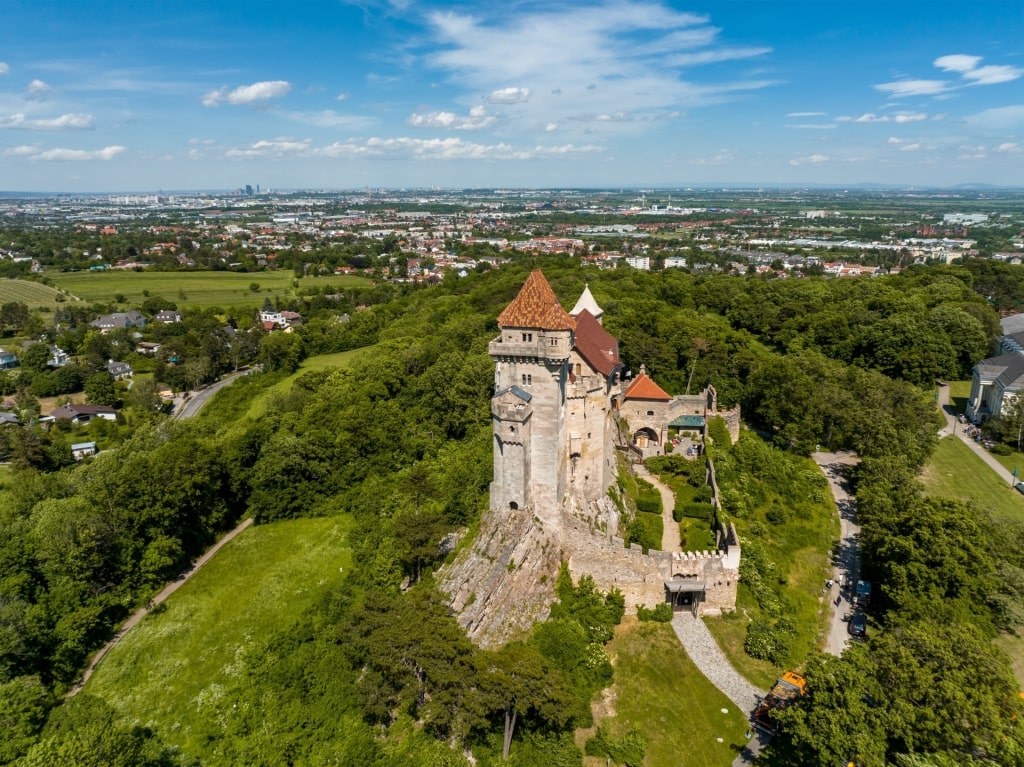
Originally built by the Liechtenstein family in the 12th century, Liechtenstein Castle served as one of their residences and a status symbol of sorts. Although it suffered damage during the Ottoman wars, it was later restored in the 19th century in a Neo-Gothic style.
One of the more distinctive ways to experience the castle is by booking a themed tour. The Treasury Tour includes a guided walk through the castle and access to its historic collection, while the Grand Tour goes further, adding the tower and the fireplace room, which is typically closed to the public. Visitors can also opt to purchase a general entrance ticket and explore selected rooms at their own pace.
Liechtenstein Castle
Thanks to its location on the southern edge of the Vienna Woods, Liechtenstein Castle is also a popular starting point for hikes, with options nearby for llama trekking through the surrounding countryside.
Read: Best Places to Visit in Austria
Grafenegg Castle
Grafenegg Castle
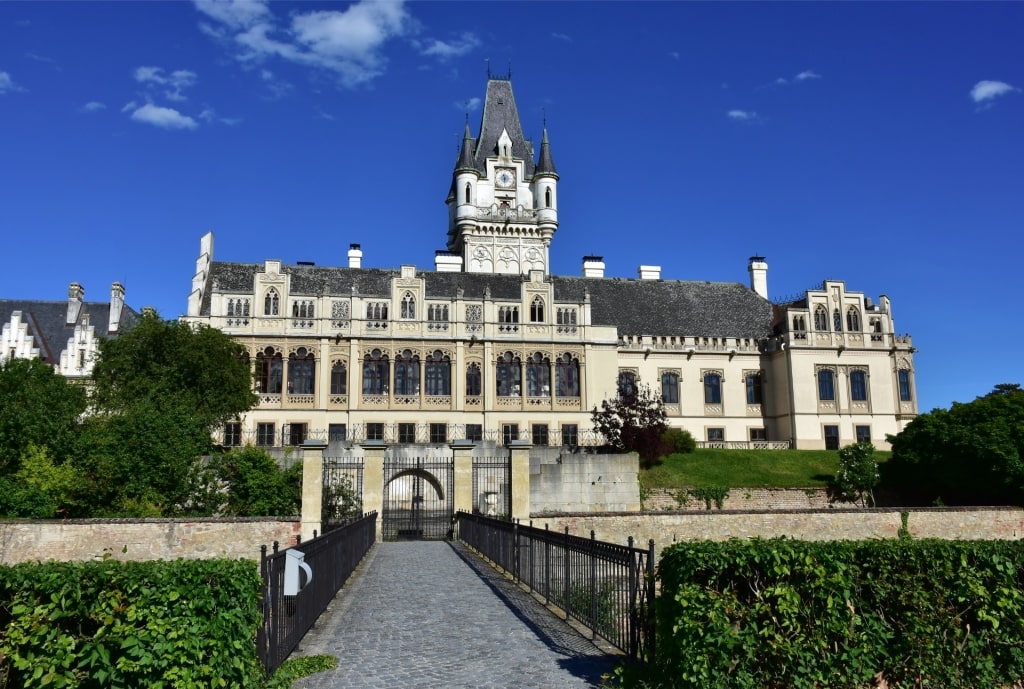
Grafenegg is a castle estate in Lower Austria and one of the country’s best examples of romantic historical architecture. The castle dates back to 1435 and has undergone many changes over the centuries. Today, it showcases a blend of architectural styles, from medieval and Baroque to 19th-century Gothic Revival.
Guided tours give access to the state rooms, each decorated with period furniture and featuring ornate woodwork. The Wolkenturm or Cloud Tower is also worth seeing. It’s an open-air stage that regularly hosts summer concerts, including the Grafenegg Festival, which consistently draws a large classical music audience.
Hinterhaus Castle
Hinterhaus Castle
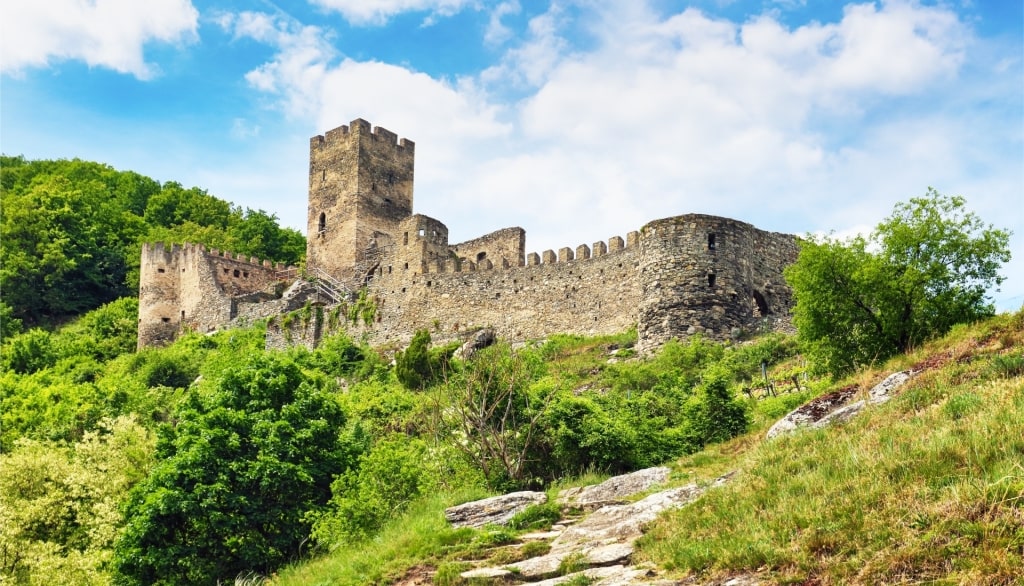
Offering expansive views over the Wachau Valley, Hinterhaus Castle was built in the 12th century as a defensive stronghold for the Kuenring family.
Similar to Dürnstein Castle, Hinterhaus is now a ruin and is reachable via a short uphill hike. Visitors can still see well-preserved defensive walls as well as a Romanesque palace structure.
There’s no entrance fee to view the castle ruins, so you can take your time and head up the hill at your own pace. For spectacular views of the Danube, the village of Spitz, and the surrounding vineyards, climb to the main tower.
Gobelsburg Castle
Gobelsburg Castle Photo by Clemens PFEIFFER on Wikimedia Commons, licensed under CC BY 3.0
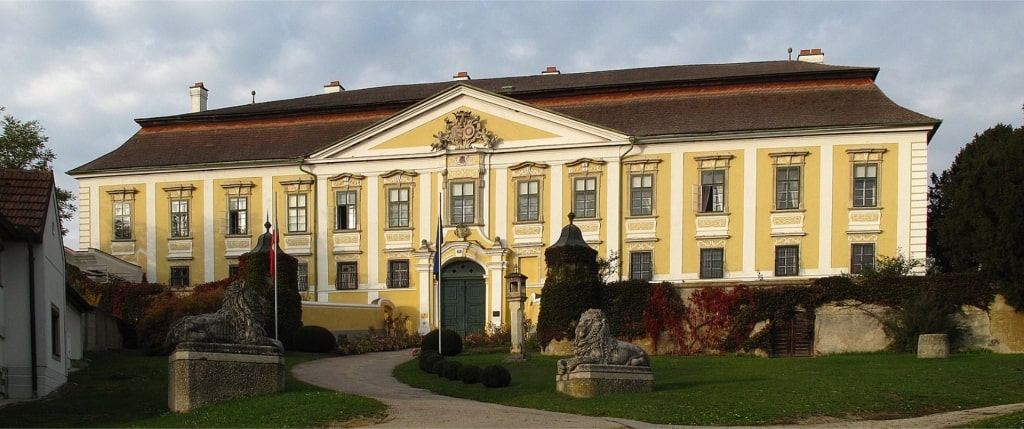
Both a historic castle and an active winery, Gobelsburg is not to be missed. The castle dates back to at least the 12th century and began as a fortified manor before evolving into a castle-like estate. The wine tradition at Gobelsburg started in the 18th century, when Cistercian monks from Zwettl Abbey acquired the property and played a significant role in shaping its wine-growing legacy.
Today, Gobelsburg Castle is home to the Schloss Gobelsburg Winery, one of Austria’s oldest and most respected wine producers. They specialize in Grüner Veltliner and Riesling, typical of the Kamptal region.
While you can’t walk through the castle like you would a museum, visitors can still see parts of the estate, including the historic cellars and Baroque rooms. Wine tastings and guided tours are also available.
Greinburg Castle
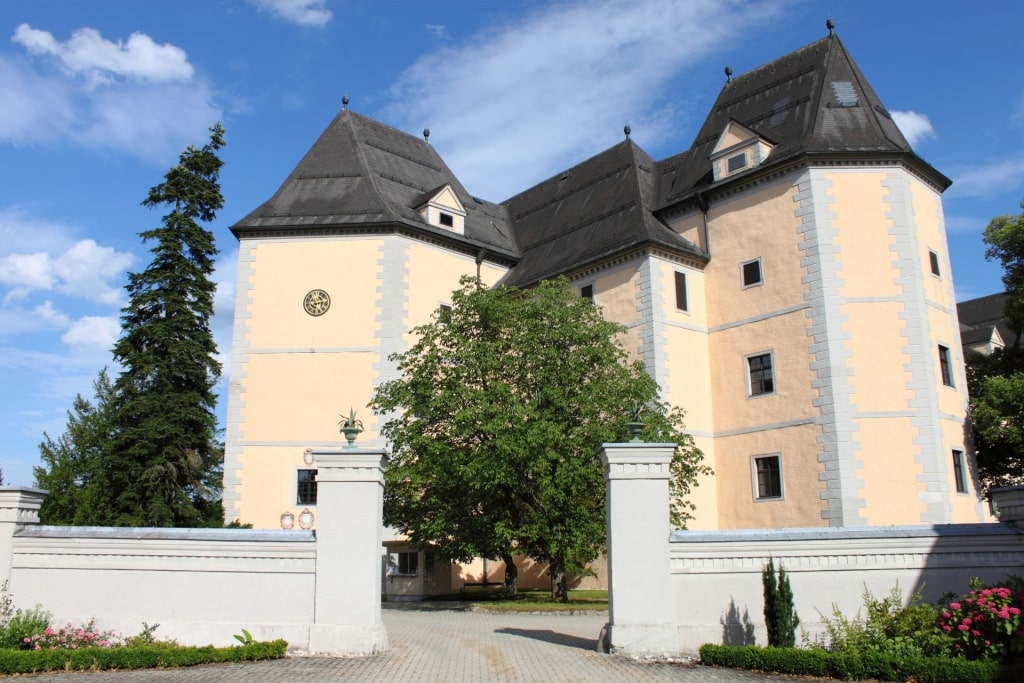
Greinburg Castle
As one of the oldest residential castles in Austria, Greinburg Castle in Upper Austria features an arcaded courtyard, a Rococo-style chapel, and the Knight’s Hall. The Shipping Museum is another highlight, offering insight into the history of navigation and trade along the Danube.
Summer is an enjoyable time to visit, with regular theater performances and concerts hosted at the castle. However, Greinburg Castle is worth seeing any time of year. Guided tours include access to the Sala Terrena, the banqueting rooms of the Ducal House of Saxe-Coburg and Gotha, the arcaded courtyard, and more.
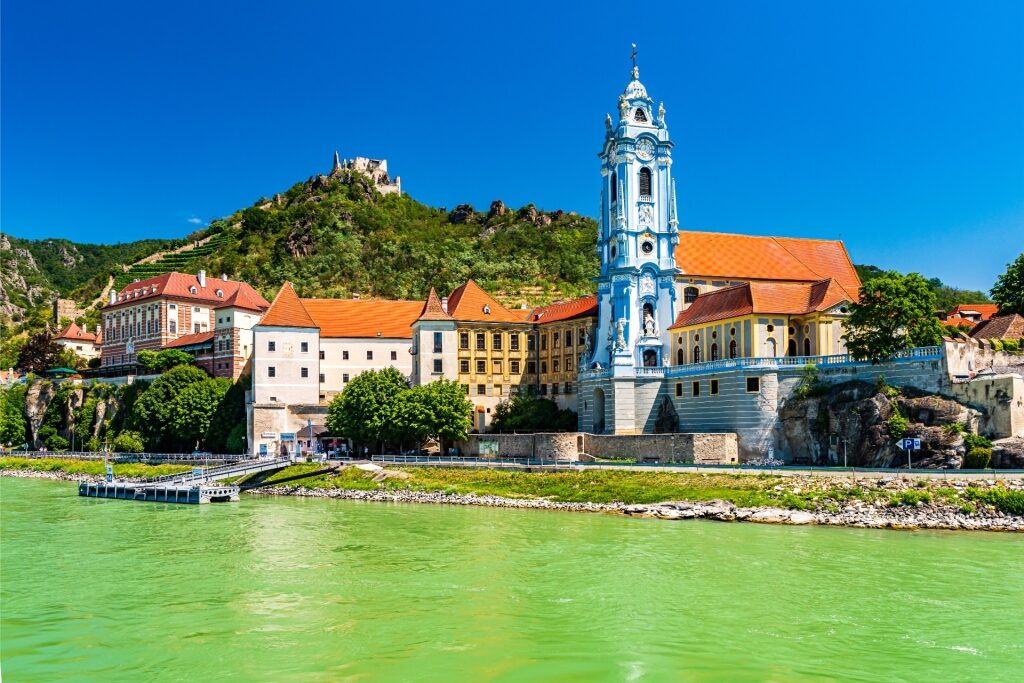
Durnstein
Ready to have your own fairy tale-worthy adventure? Browse Celebrity’s river cruises and plan your dream adventure today.