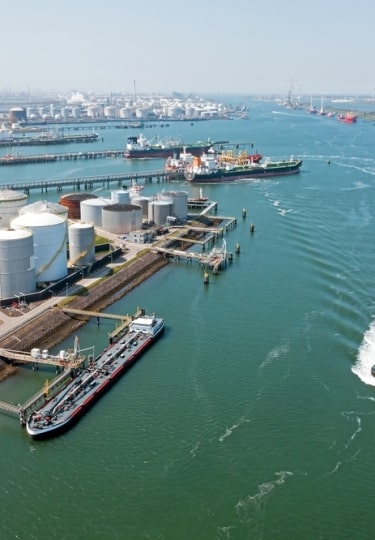
Bustling waterways, ships on journeys from around the world, and up-close glimpses of industry: this is the Port of Rotterdam, the largest port in Europe.
Located in the Netherlands, this busy hub brings together trading networks from across the globe. Spanning from historic Rotterdam to the North Sea, it’s also a popular stopover or destination for travelers journeying via water. In fact, the port is known as the gateway to the Rhine and Meuse Rivers. So if you’re taking a river cruise around the Rhine-Meuse-Scheldt delta, you’ll likely find yourself right here at this Dutch touchpoint—with deep waters, the Port of Rotterdam doesn’t have any trouble accommodating even the bulkiest ships.
As the busiest European harbor, this is one of the best Rotterdam attractions to visit if you’re fascinated by industrial innovation, love ships and all things nautical, want to learn more about modern-day trade, or just want to see one of the most important places in the Netherlands. And the best way to experience this destination is, by far, on the water.
Here’s everything you need to know before you go, including a guide to the Port of Rotterdam itself, the history of the hub, a list of what to pack, and so much more.
An Overview of the Port of Rotterdam
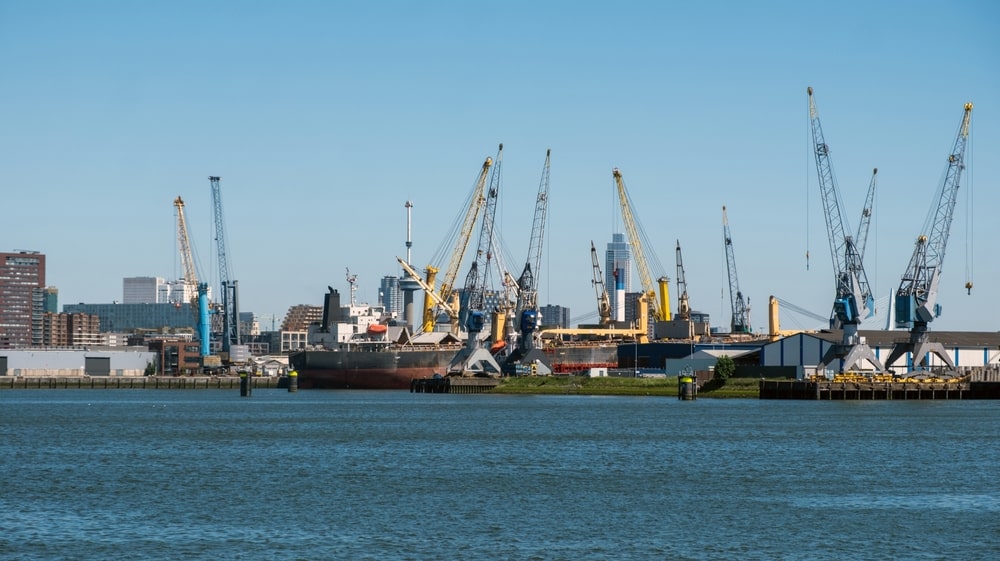
Heavy cargo cranes and industrial shipping vessels lining the harbor, with the iconic Euromast observation tower visible in the background city skyline at the Port of Rotterdam, Netherlands.
The Port of Rotterdam is not your average river cruise harbor in Europe. For one thing, it’s massive—at about 25 miles in length, it’s nearly as long as a marathon route. Able to accommodate the largest cargo ships, it’s more efficient than other ports, as a bigger vessel means it can carry more in one trip.
The port is also one of the most interesting Rotterdam attractions. Sail past towering cranes, stretching waterways, and endless megaships stacked with rainbow-hued shipping containers. In the winter, snow frosts the bridges and terraces. When the warmth and sun come back, watch the sunlight sparkle on the water as water taxis zip by. No matter when you visit, it’s a wonderland of color, commerce, and connection.
From the hyper-industrial outport section of the hub (called “Europoort”) to the maritime museums, there’s a lot to see on your next Rotterdam river cruise—it can feel like a floating city, and in a way, it is. Or, at least, it’s a floating extension of one. So, if you’re wondering, “What is Rotterdam known for?” you should start with the port.
Here are a few facts to put things into perspective:
- Length: 24.86 miles
- Area: 30,888.17 acres, or about the size of Boston
- Revenue: approximately €940 million (2025)
- Value: €23 billion, or 2.1% of the GDP of the Netherlands
- Vessels served: 93,680 inland vessels (like river cruises) and 27,384 maritime vessels (like seagoing cruises) annually
- Nearby cities: Hoek van Holland, Oostvoorne, Brielle
The History of the Port of Rotterdam
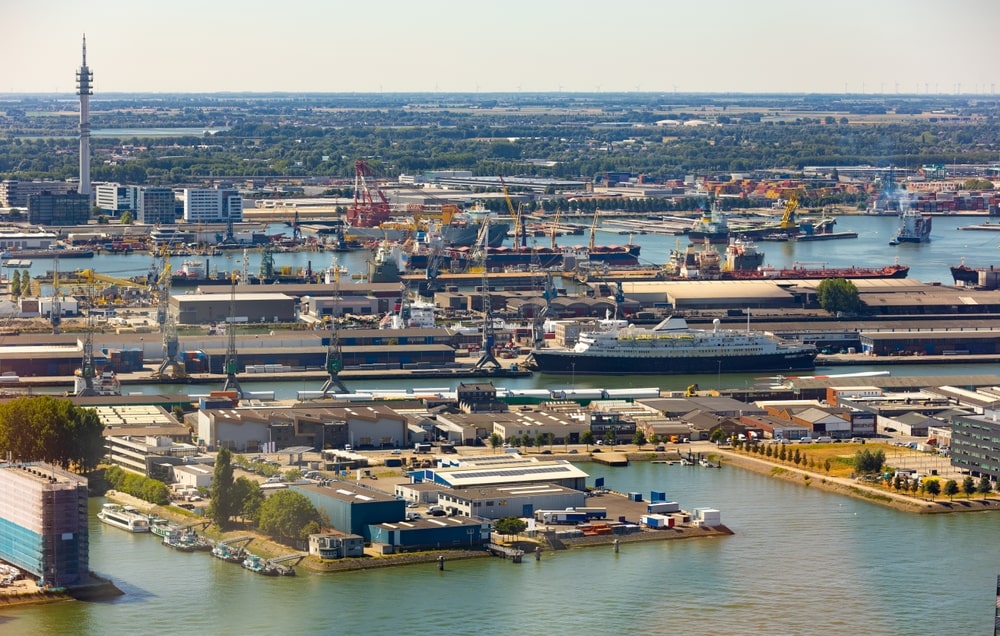
A panoramic high-angle view across the massive docks, industrial basins, and docked ocean liners at Europe’s largest seaport, the Port of Rotterdam, Netherlands.
The port is one of the most important and storied Rotterdam attractions to see on your next European river cruise or trip to the Netherlands. It’s been a vital trading hub since 1260 AD—if you were to trace the history of the Port of Rotterdam since then, you’d see it’s played a massive role in the trading, modernization, and international relations of the continent and abroad.
Rotterdam gets its name from a dam built across the Rotte River. The people of Rotte-dam, as the community was called, began welcoming traders from the wider world. Connecting river-bound boats and vessels that braved the northern seas, the port was a stopover for those transporting herring or other goods to or from the mainland. And in 1340, Count William IV of Holland granted Rotterdam city rights, confirming its rising status and importance in European trading networks.
In 1600, the Dutch colonial period ushered in a new age of seafaring. The Dutch East India Company made shipping an even more popular pursuit, and as a result, more ports were quickly needed. Rotterdam shared in this boom, but it was the 19th century that turned it into the Netherlands’ leading port. This pattern continued in the centuries to follow, with the hub always at the center of innovations sweeping the globe. By the time the Industrial Revolution took over, the Port of Rotterdam was supporting steel and coal. Between 1866 and 1872, the Nieuwe Waterweg (“New Waterway”) was dug through the dunes, giving Rotterdam a direct, deep-water link to the North Sea.
With petroleum powering the planet in the 20th century, the Port of Rotterdam expanded west to accommodate the incoming oil tankers and bulky storage containers. A range of development projects rolled out throughout the 1950s to support this influx of traffic, including the opening of radar stations and the expansion into the North Sea (which saw the construction of the aforementioned Europoort). Adding to this, between the 1960s and the 1970s, the port reclaimed land from the North Sea to build the Maasvlakte, creating space for deep-water terminals, supertanker docks, and petroleum storage.
Then, before the dawn of the 21st century, the World Port Days festival was established. First celebrated in 1978, it’s still observed today. Running for three days, this occasion is the Netherlands’ largest maritime festival, welcoming a parade of hundreds of vessels (literal floats).
None of this exists in a vacuum or solely on the waterway—each time the Port of Rotterdam has expanded, it’s added thousands of acres of coastline to the country itself. Next time you’re on a Rhine River cruise, look for signs of this significance in the harbor. Think back to Rotte-dam as you drink in the modern skyline, and marvel at the constructed land. And as you watch vessels across industries gather in the waterways, consider what it means for the world at large. Because what is Rotterdam known for, if not being at the center of global transformations?
The Best Way To See the Port of Rotterdam
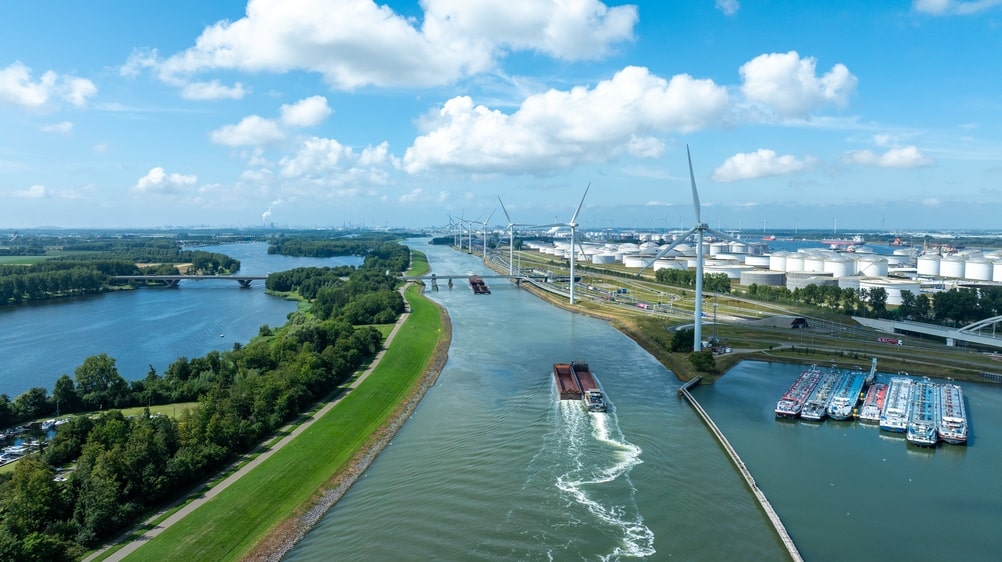
A freight barge gliding along the waterway past tall wind turbines, storage tanks, and lush green embankments at Europe’s largest seaport, the Port of Rotterdam, Netherlands.
The history of the Port of Rotterdam is fascinating, making the space more than just a waystation for cruisers or a hub for industrial players. It’s a window into the changing of the world.
To see it up close, you can book a harbor tour that includes the Port of Rotterdam—these bookings usually involve sailing around the waterways. But the best way to see it all is by cruising, especially if you appreciate a cinematic experience.
Take in the Dutch skyline, watch the ships slice through the currents, and immerse yourself in European trading traditions. You’ll find that the waterfront is always bustling, and in the evening, it all melts into twinkling lights and foghorns. In the mornings, watch the waterlogged landscapes on the edges of the infrastructure spring to life. It’s magic, and it’s one of the best parts of sailing to or from your river cruise destination.
Rhine to Rotterdam: Preparing for Your Next River Cruise
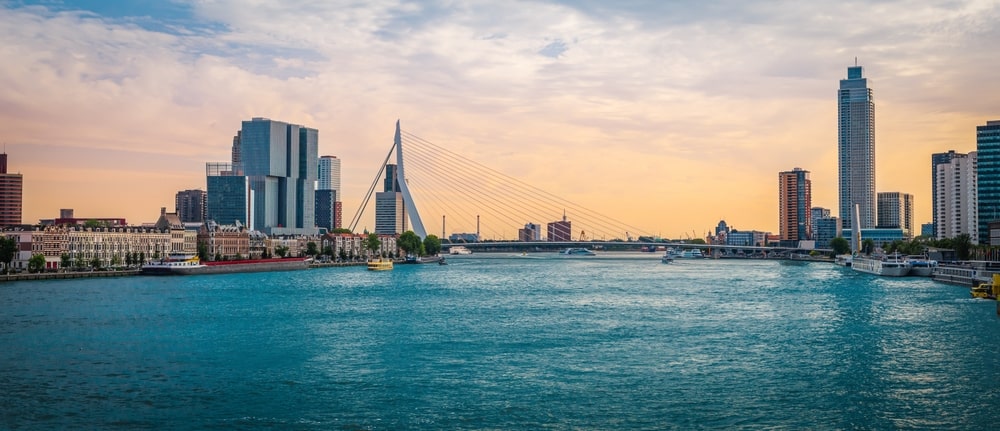
The sleek white cables of the Erasmus Bridge spanning the Nieuwe Maas river framed by modern skyscrapers along the city skyline in Rotterdam, Netherlands.
Stretching from the city center west to the North Sea, the port is its own world, and most of its industrial areas lie well downriver of the cityside attractions. And travelers tend to only come across it on the way to or way back from their destinations on Amsterdam river cruises. So not everyone is properly prepared or knows what to expect when it comes to scenery, layout, or weather.
In the Netherlands, it’s cold and wet in the winter. But with the rain and snow comes holiday magic, so it’s a lovely time to sail through the Port of Rotterdam if you love a festive trip. Spring, while also wet, offers milder temperatures and, much to the delight of gardeners and floral enthusiasts, famously stunning tulips. Summer isn’t too hot either, and it could still rain, but the breeziness makes for peak walking weather. As for autumn, potential rainfall and chillier temperatures delight anyone dreaming of cozy leaf-peeping amidst the vibrant foliage.
To extend your trip and enjoy the seasons in the Netherlands, consider booking a Before and After Stays package from Celebrity River Cruises℠. It includes hotel accommodations in the heart of Amsterdam, breakfast, transportation to/from the cruise ship, and tours led by a Destination Insider℠ or Local Storyteller℠. They’ll take you where the guidebooks can’t, immersing you in Dutch culture like never before.
You can also purchase an I Amsterdam City Card to unlock experiences across Amsterdam, from museum visits to bike rentals—pre-trip, make sure to learn some essential Dutch phrases so you can connect with locals while you’re exploring. Along the way, don’t forget to sample regional specialties, like stroopwafels, drop licorice, and ontbijtkoek, a cinnamon rye cake.
And before you even get to the Port of Rotterdam, you’ll want to be well-packed. Here’s what to bring with you on your river cruise to the Netherlands:
- Cash (euros)
- Good walking shoes
- Clothing layers
- Dutch dictionary
- Portable charger and European power adapter
- Reusable bags (for souvenirs—you’ll want the kind that can be folded up really small and fit into your day bag when not in use)
- Sunscreen
- Camera and/or mobile phone
- Waterproof outerwear
- Swimsuits
- Sunglasses
- Compact umbrella
- Binoculars (optional, but they’re handy for birdwatching in urban green spaces, like the Port of Rotterdam)
Going Dutch: Cruise Into the Port of Rotterdam
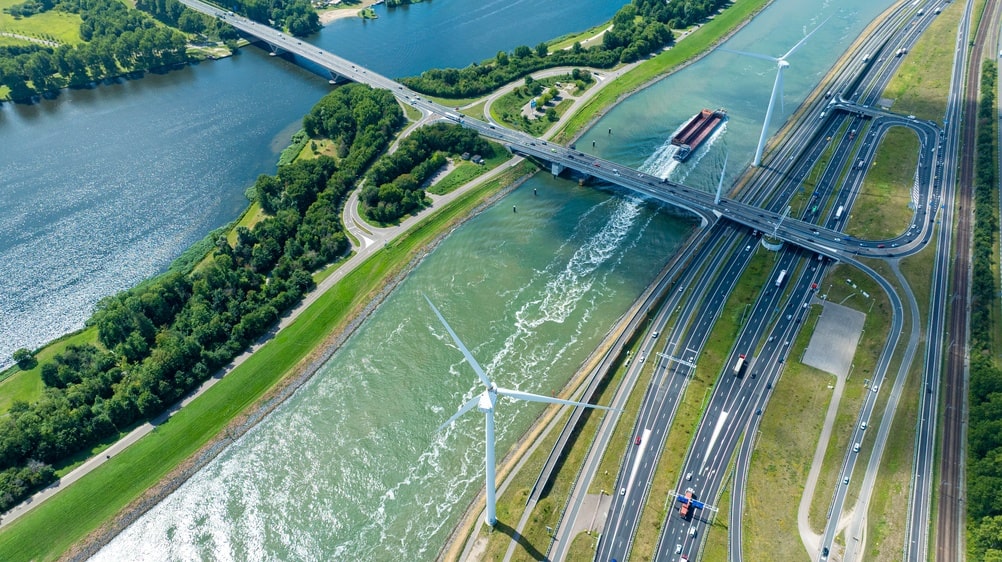
A stunning bird’s-eye view of the Port of Rotterdam, highlighting the vibrant intersection of wind power, busy highways, and shipping waterways.
There’s rich heritage embedded in the infrastructure, layout, and name of the port. To visit is to take a step both into the past and the future, into tradition and innovation. The Port of Rotterdam has always represented this balancing act, being a key player in some of the biggest global shifts in human history. It’s seen the world through the explosion of trading networks, political power grabs, and major energy transitions. What was once a sleepy village along a remote river is now the most important port in Europe.
The scale and immensity of the hub is hard to grasp unless you’re there in person. So, if you’re curious about European trading practices through the centuries, want to marvel at Dutch engineering, or just love a nautical destination, this is the place to be.
Explore Rotterdam river cruises and see it all up close for yourself.