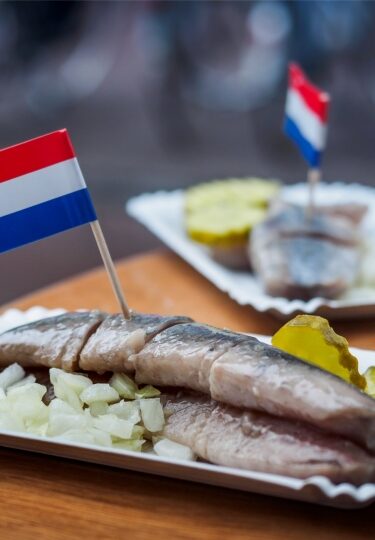
Street food in Amsterdam reflects the city’s long trading links with the rest of the world. However, it’s also built on the deep Dutch connection to farmland won from the North Sea.
From crisp potato fries to fresh herring, the country’s traditional foods are still celebrated. But you’ll also find equally popular foods from far-flung former colonies in Suriname or Indonesia.
Here’s everything you should try on your quest to find the best local street food.
Stroopwafels
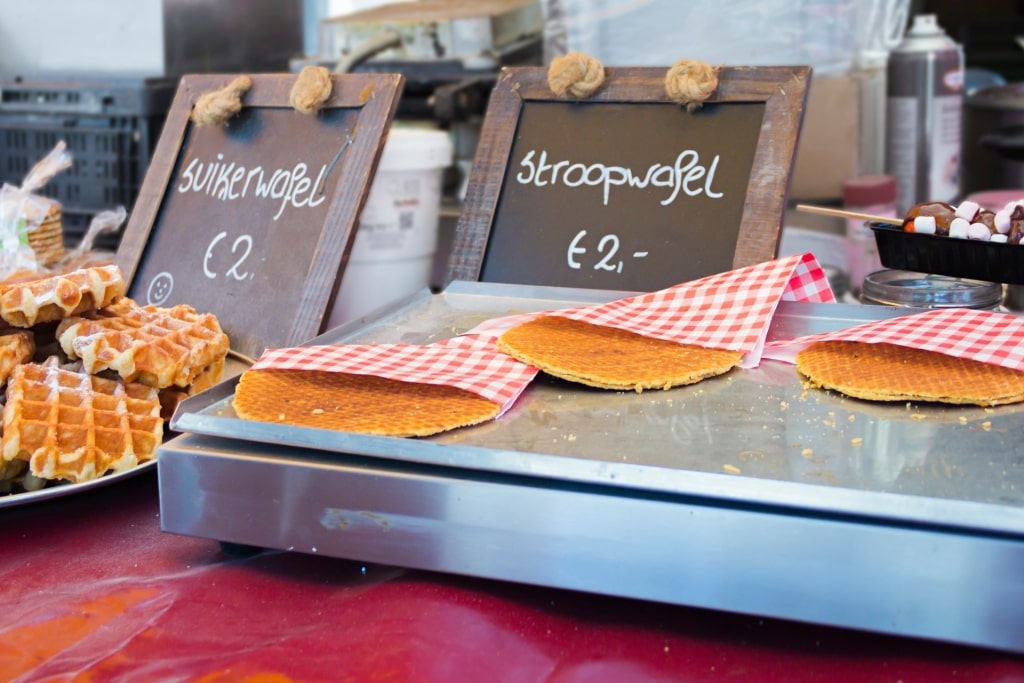
Stroopwafels
You may have seen stroopwafels before, commercially made and packaged. They are thin circular waffles with a sandwich filling of caramel syrup.
However, those versions—while tasty—simply can’t compare to the ones freshly made at every street market. Larger, warm, and with the caramel oozing out, they are a very different experience.
Watching the vendor pour the batter into the hot waffle irons and then spreading the caramel is a mouthwatering experience. The usual generous dipping of chocolate is a lip-licking bonus.
Poffertjes
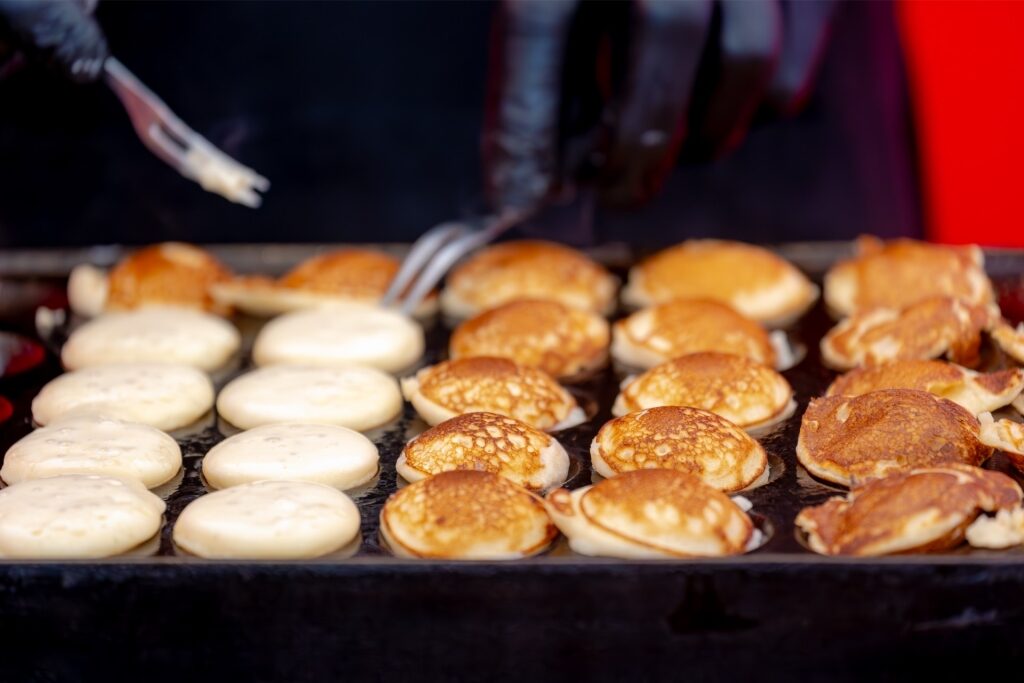
Poffertjes
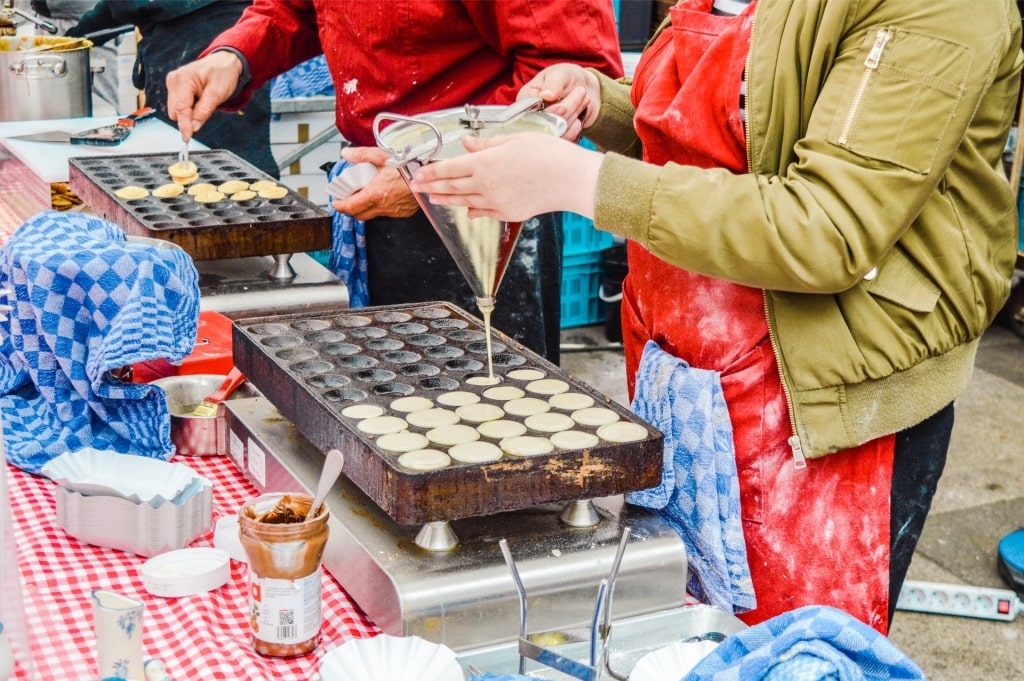
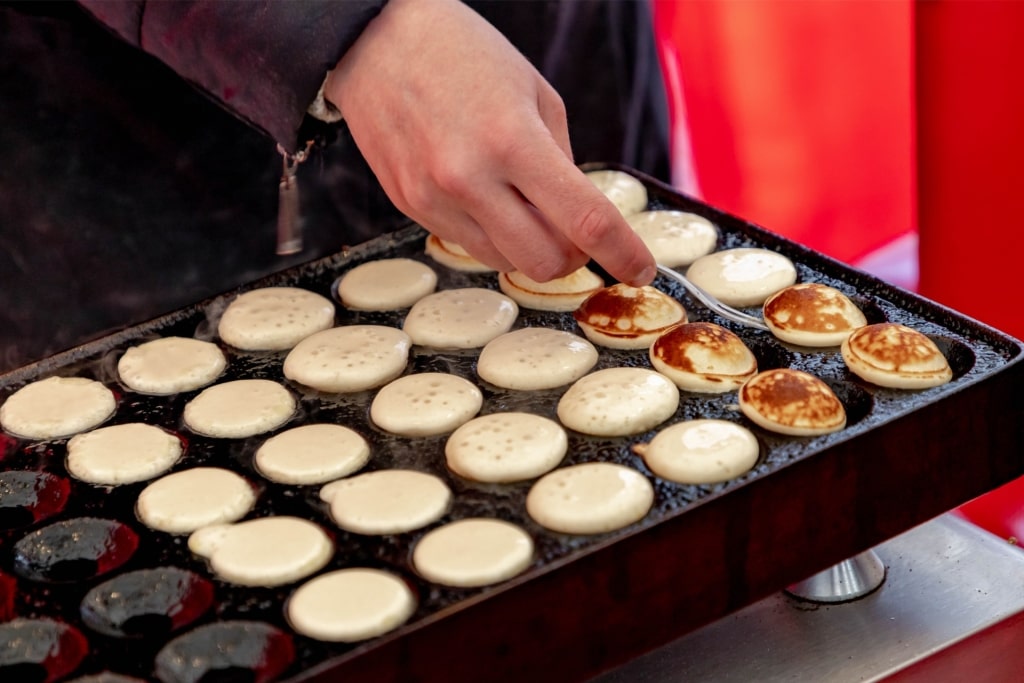
Poffertjes are tiny, crispy pancakes with a fluffy center, made with buckwheat flour and yeast. Bite-sized, they are a seductively moreish Amsterdam street food.
It helps that they are served with a golden pat of butter and a generous dusting of confectioners’ sugar. You eat them from a paper cone with a toothpick to prevent greasy fingers.
Once a heart-warming dish associated with winter and seasonal fairs, poffertjes are now popular year-round. The traditional pans made to cook them make a great Amsterdam souvenir.
Haring
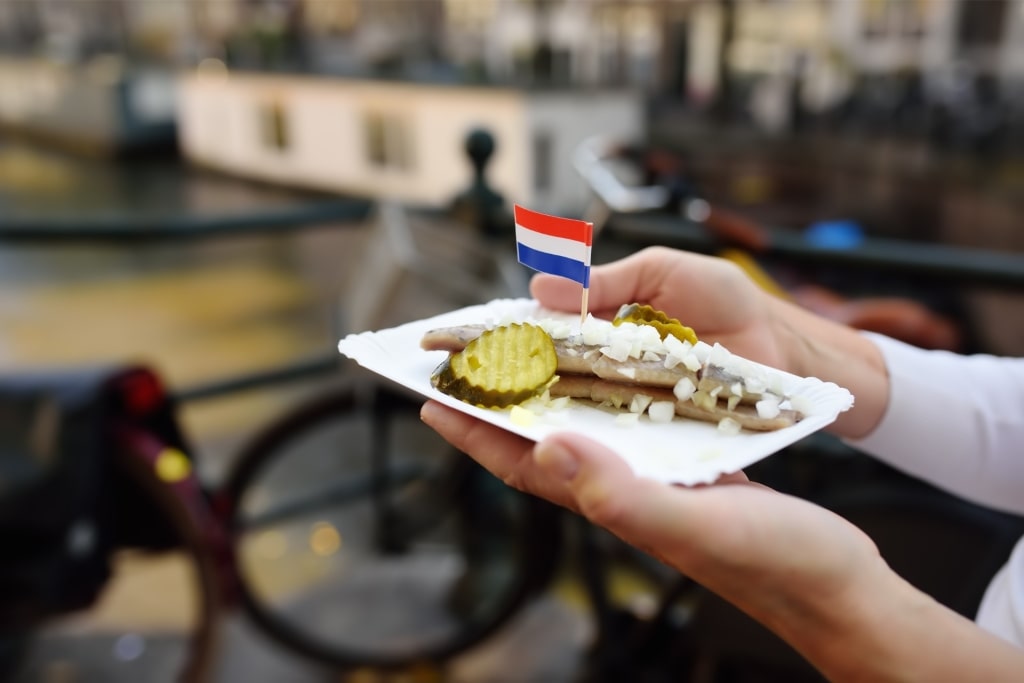
Haring
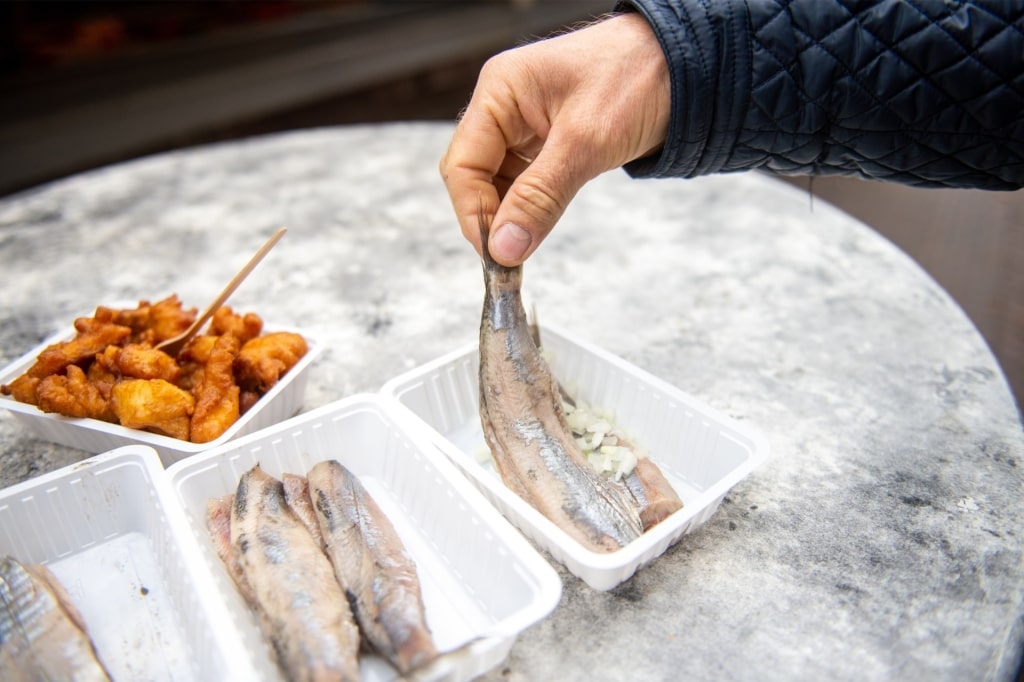
A rite of passage for anyone new to Amsterdam, herring, or Hollandse nieuwe, is very much a love-it-or-hate-it food. Traditionally, you’d find it on street stalls from spring through early winter, although it’s available year-round now, as according to EU and Dutch law, the fish must be frozen before consumption.
Although it might appear raw, the herring is actually pickled in salt. In Rotterdam, it’s traditional to eat the fish whole, holding it by the tail.
In Amsterdam, it’s more sensibly cut up and eaten with chopped onions and pickles using a toothpick. On a soft white bread roll, this dish is even more palatable.
Gerookte Paling
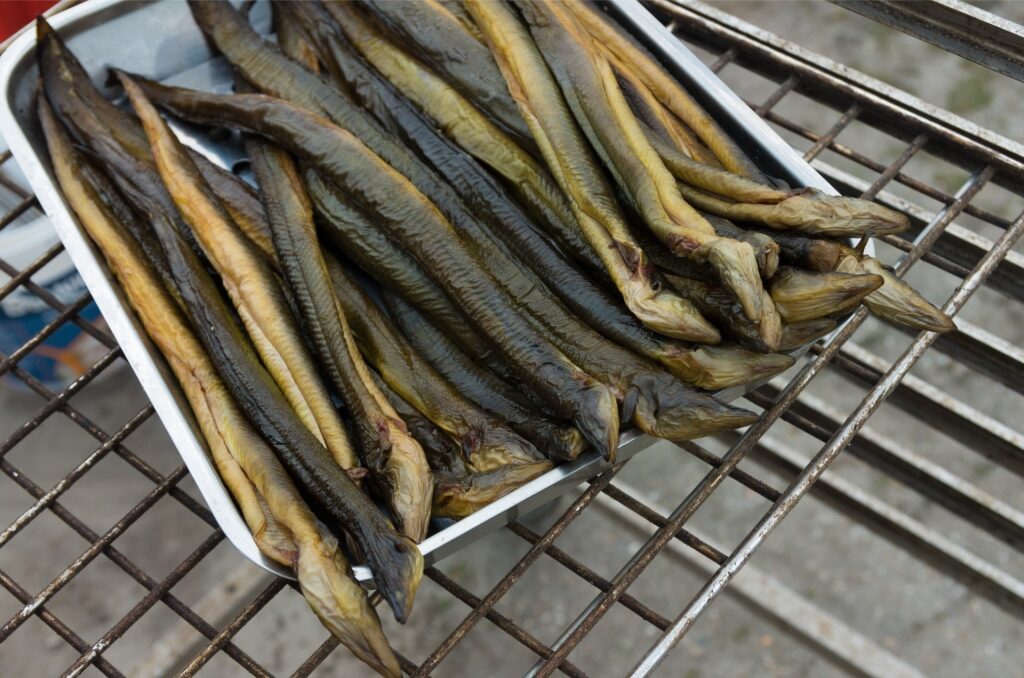
Gerookte Paling
Overshadowed by herring, smoked eel is another Dutch delicacy to look out for. Once common, North Atlantic eels have been overfished to the extent that much of what you eat now is sustainably farmed.
You’ll hopefully find it alongside herring in any Haringhuis, offered as whole eels in spring and as a fillet otherwise. It’s served up in a bread roll and has a rich buttery taste, enhanced by the smoking process.
Rookworst
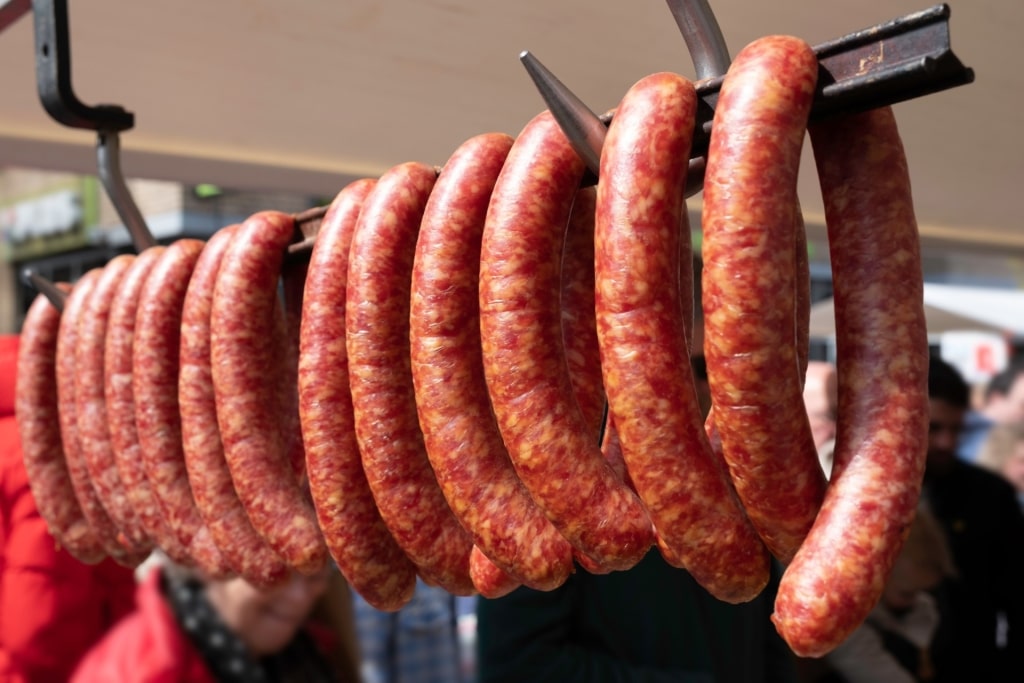
Rookworst
This distinctive U-shaped sausage is a delicious Dutch staple. You’ll find it served in stamppot—mashed potatoes with vegetables—or erwtensoep, a Dutch pea soup.
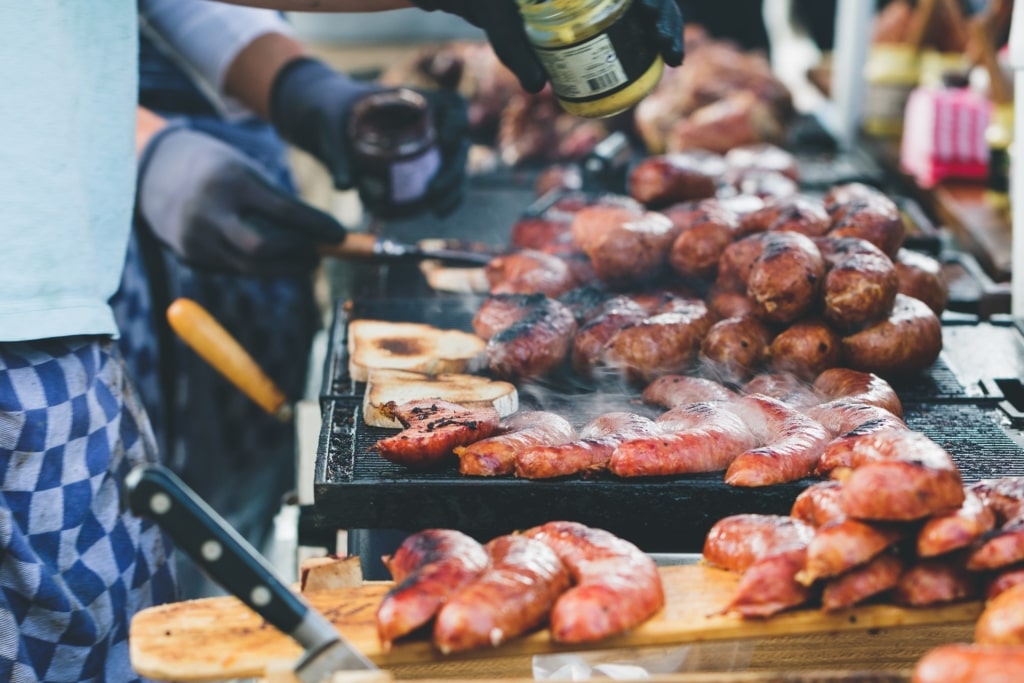
Rookworst means “smoked sausage,” and it is traditionally smoked with beechwood. You can taste the smoky flavor from the base of ground pork, sometimes mixed with beef and seasoned with spices.
As street food, rookworst is most often served like a hot dog, on a bread roll with mustard. The smell is very much part of winter markets and the HEMA department store, which sells 10 million sausages a year.
Braadworst
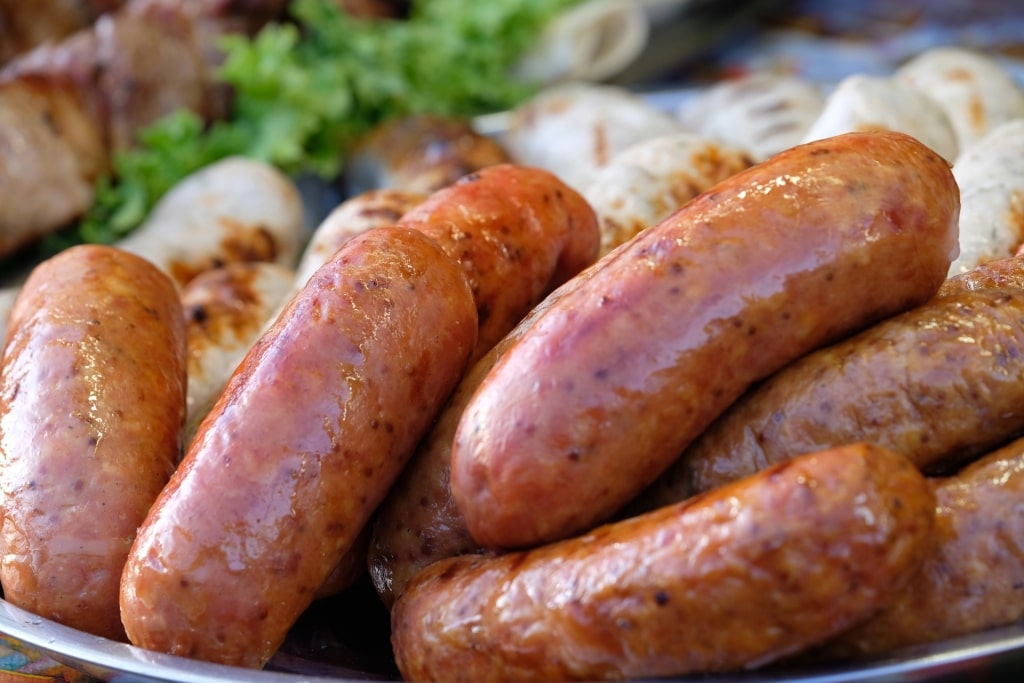
Braadworst
Wherever you find rookworst, you might also find braadworst. While the former is a smoked sausage, braadworst is a raw sausage that has to be grilled or fried.
You can compare rookworst to a hot dog, and braadworst to a more typical sausage. The major difference is that the Dutch versions place more emphasis on quality meat and less on strong flavorings.
Worstenbroodje
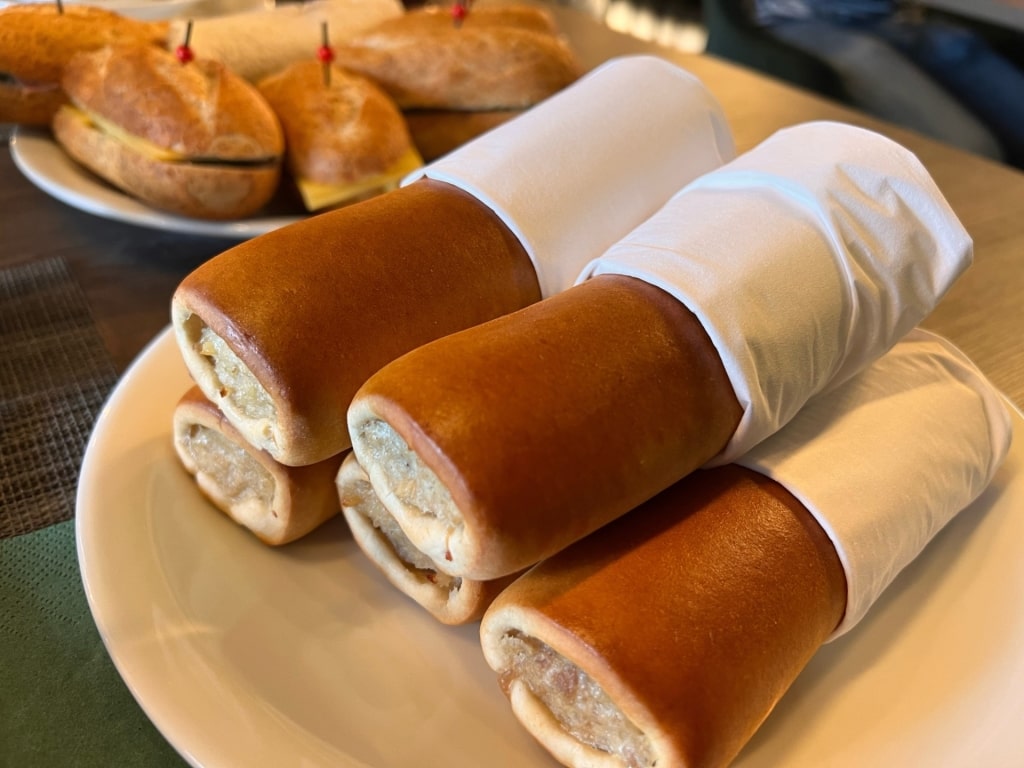
Worstenbroodje
Worstenbroodje is a sausage roll that removes all that effort of actually putting a sausage into bread. Made with puff pastry, it’s a lighter option that makes a great on-the-go snack.
Both the diced meat filling and pastry are seasoned with spices. Having said that, the Dutch prefer a milder spice kick than you might find in, say, the United Kingdom or North America.
Bitterballen
Bitterballen
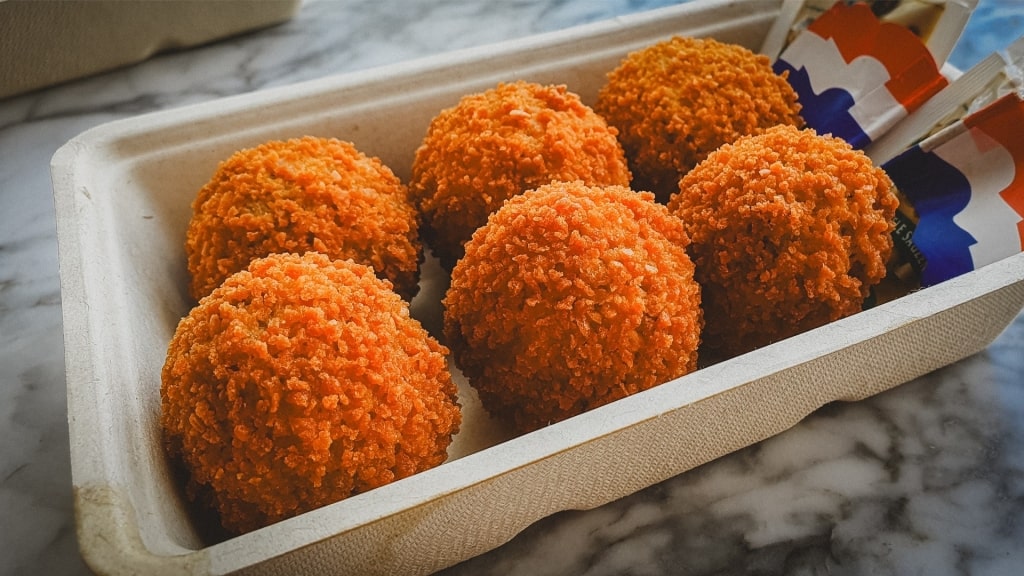
Bitterballen is the first food you’ll experience in any Dutch pub. A plateful is often ordered to share communally with a round of beers. The “bitter” in the name originally referred to spirits.
They are bite-sized, deep-fried balls of beef or veal ragout dipped in a breadcrumb coating. A dish of mustard is served as a traditional dip.
Be warned that the centers can be piping hot, which is not a problem when you have a cold beer on hand in a pub. Buying them freshly cooked from a street vendor, often as a longer cylindrical kroket, you need to be a lot more careful in letting them cool down.
Kroketten
Kroketten
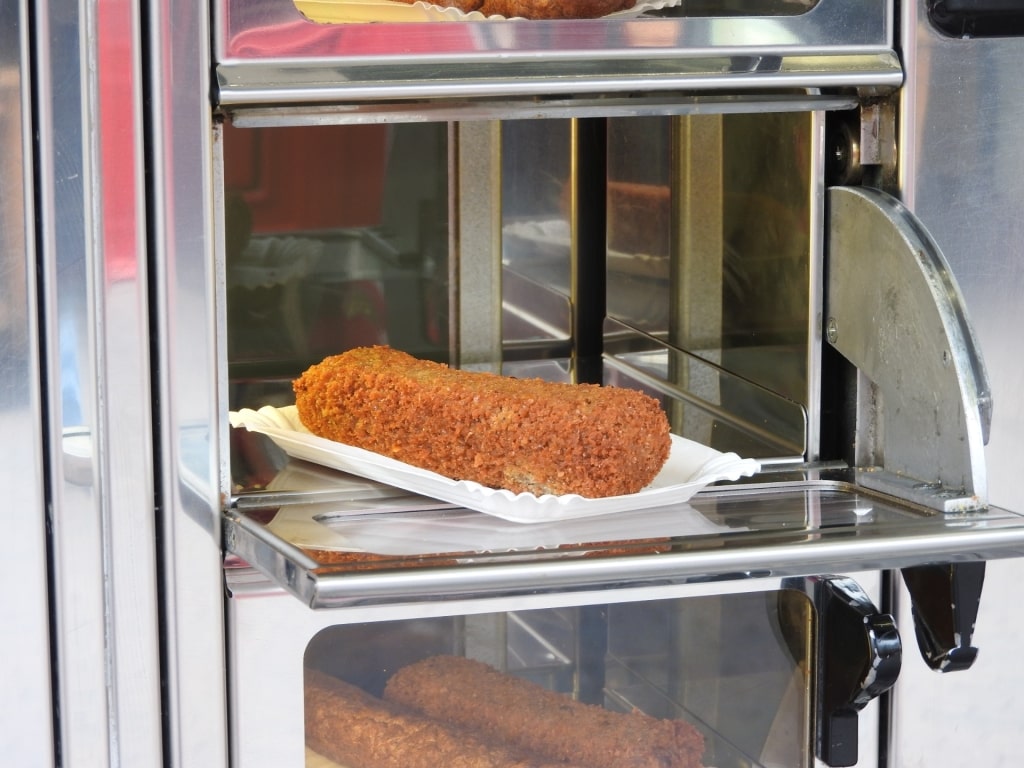
Kroketten or croquettes are the origin of bitterballen, but with a more generous, longer shape. Like bitterballen, they are nicely offset with a dash of mustard.
They are often eaten in a bread roll for a lunchtime snack. Even McDonald’s in Amsterdam has its own version of this “broodje kroket”.
The automat FEBO, a hot food vending machine chain, helped put kroketten on the Dutch snack map. Its many outlets remain great places to find an emergency kroket hit—and many other street foods.
Frikandel
Frikandel
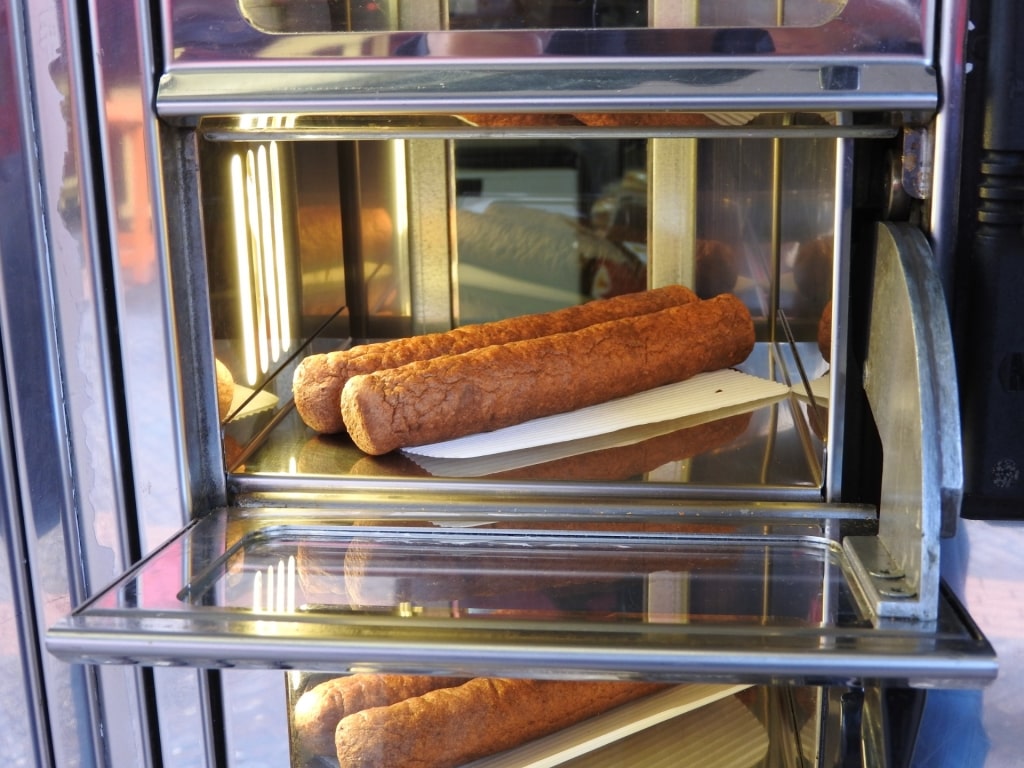
Frikandel is a skinless sausage, made with chicken, pork, and beef, the latter replacing the traditional horsemeat. It’s deep-fried to give it a crisp shell with a semi-burnt wrinkled appearance.
Don’t let that distinctive look put you off trying Amsterdam’s most popular snack. You can eat it on its own or in a bread roll, but either way, frikandel is best simply with mayo, or maybe mustard.
For a “Frikandel Speciaal”, the sausage is cut open and served in a bread roll with mayo, curry ketchup, and diced onion. The mix of flavors and textures, from crisp shell to gooey sauce, is a guilty pleasure.
Oliebollen
Oliebollen
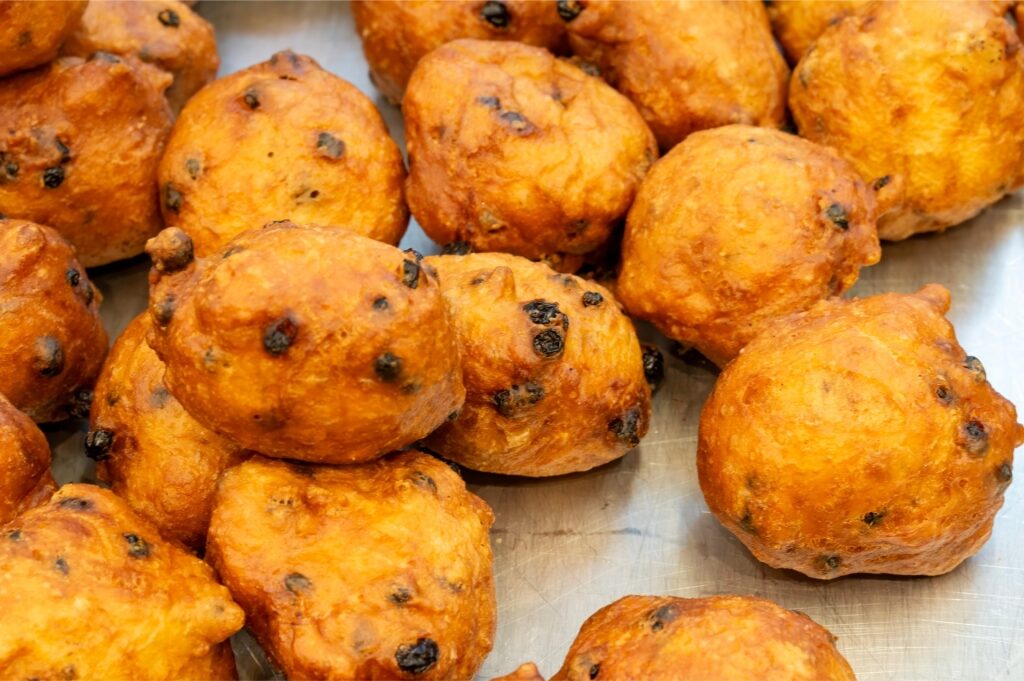
Oliebollen are strongly associated with winter and the New Year, when oliebollenkramen stalls pop up everywhere around Amsterdam. They are airy doughballs, rich with raisins and perhaps apple, and deep-fried.
They may remind you of donuts, or the bit cut out of the donut to make the hole. Canadians might compare them to Timbits for their similar size and appearance.
Oliebollen means “oil balls” from the oil they are fried in. Bite-sized and dusted with powdered sugar, a bagful will disappear in no time.
Kibbeling
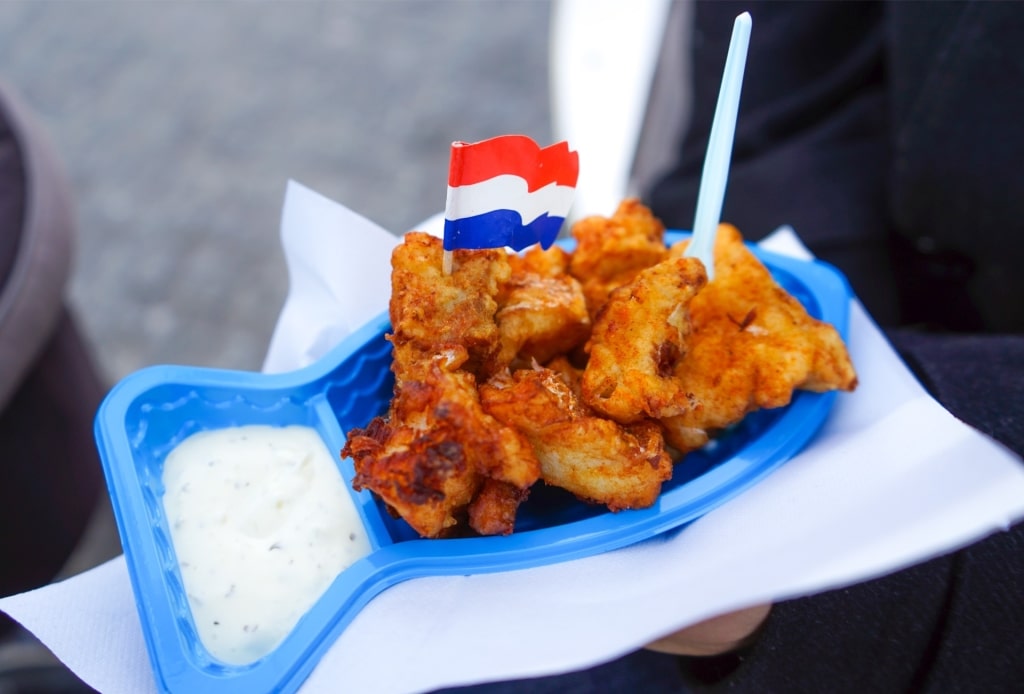
Kibbeling
Once a way for fishmongers to sell off waste cod cheeks, kibbeling has become an Amsterdam street food in its own right. It’s just small pieces of fresh cod or other white fish, battered and deep-fried.
The golden nuggets may remind you at first sight of a miniature fish & chips—without the chips. A key difference is that the kibbeling batter is enriched with spices such as paprika, nutmeg, or curry powder.
Garlic mayonnaise or tartar sauce are the usual accompaniments. The fish is served fresh and hot, so you’ll appreciate the small wooden forks available to help you eat.
Patat
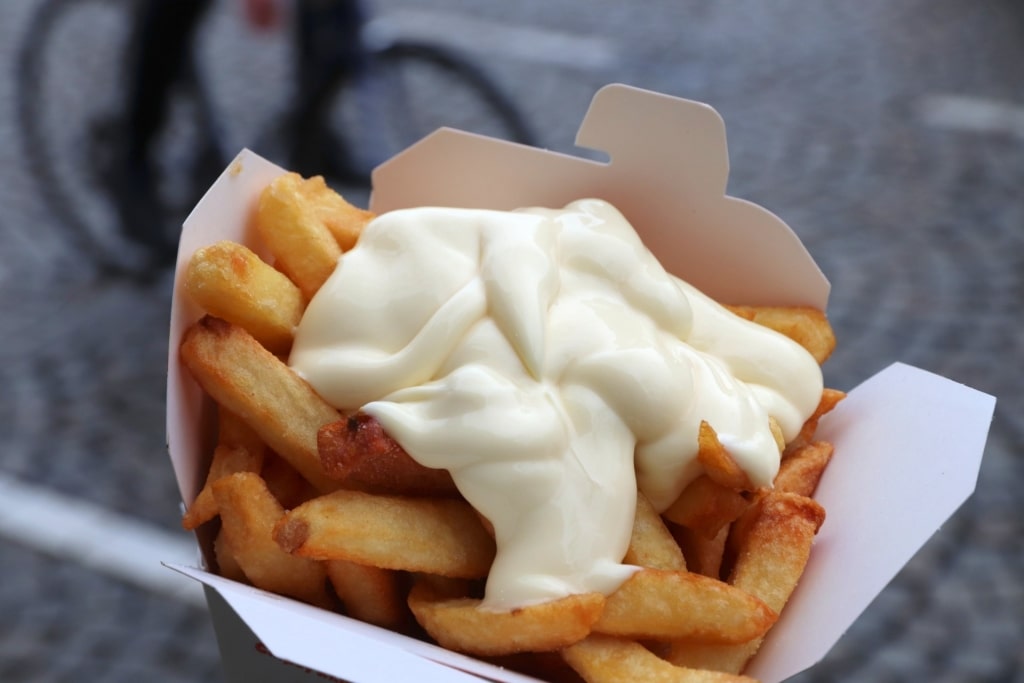
Patat
If you do want to add chips to your kibbeling, you won’t have to look far to find some. Fried potatoes are perhaps the most common and certainly most popular street food in Amsterdam.
“French” fries—called Vlaamse Frites or “Flemish Fries” in the Netherlands—are chunkier than those you might be used to. Fries are called patat in the Amsterdam region, and friet further south or in Dutch-speaking parts of Belgium.
Whatever they’re called, they are often eaten with a mayonnaise-like frietsaus, although many other sauces are available. Patatje oorlog—“War Fries”—is loaded with a battlefield of peanut satay, mayo, and chopped onions.
Kapsalon
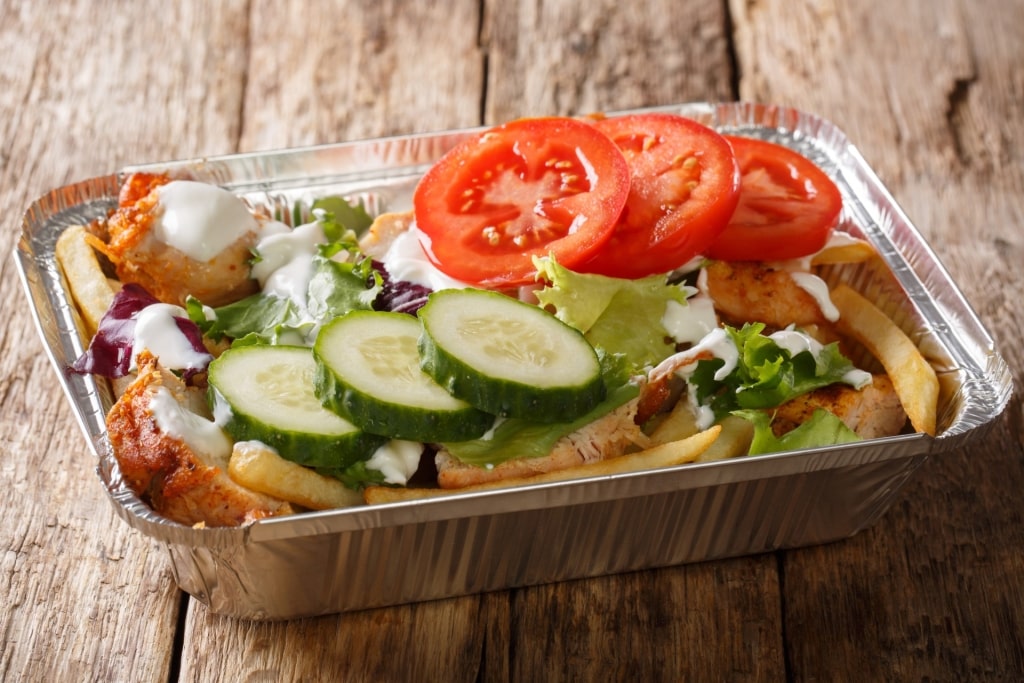
Kapsalon
If Patatje oorlog is not messy enough for you, try kapsalon. This is made from layers of potato fries topped with kebab meat, melted cheese—usually Gouda—salad, and sauces such as garlic sauce and hot sauce.
The dish was pioneered in Rotterdam by a café where a regular customer kept asking for this particular combo. Kapsalon means “Hair Salon” and, you guessed it, he was a barber.
You can choose the meat you want, including chicken, veal, beef, or pork. A vegetarian version made with falafel is also available.
Surinaamese Broodje
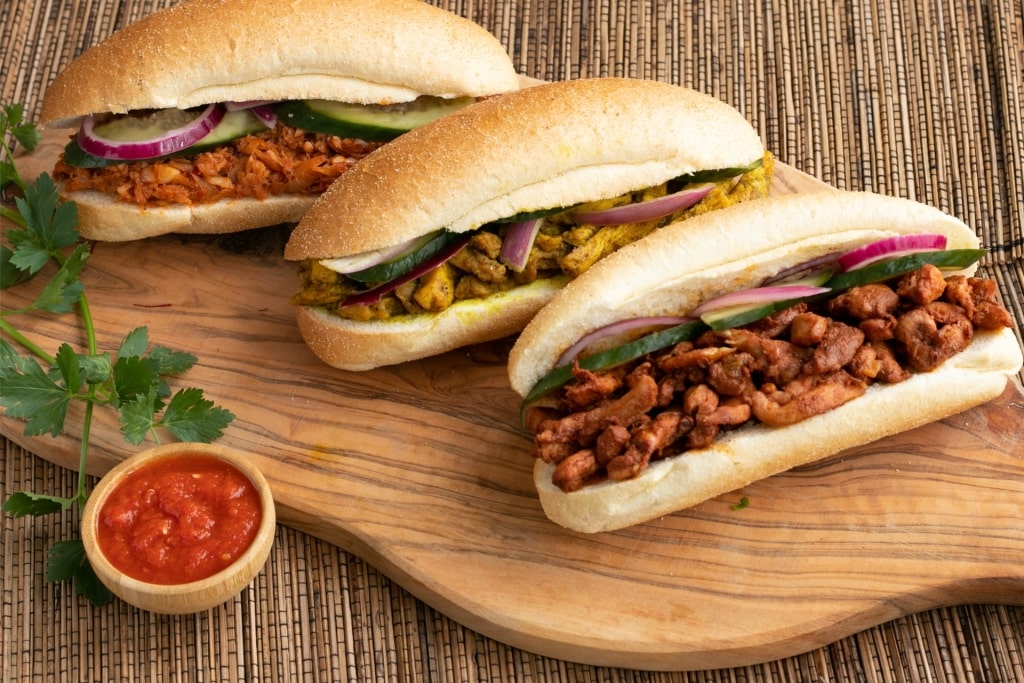
Surinaamese Broodje
A “Surinamese Sandwich” is a bread roll filled with Surinamese specialties such as Kipsate, or chicken satay. Other options include spiced beef, pickled fish, or a mix of chicken and pork.
Suriname is a former Dutch colony on the north coast of South America. A melting pot of Indigenous, African, Indian, Javanese, and Chinese influences, its cuisine is very popular in Amsterdam.
One dish you must try is pom, which has roots in a Portuguese-Jewish potato casserole. It’s a baked mix of tannia—a plant also known as elephant’s ear—chicken, citrus juice, and spices that’s delicious in a broodje pom.
Satay
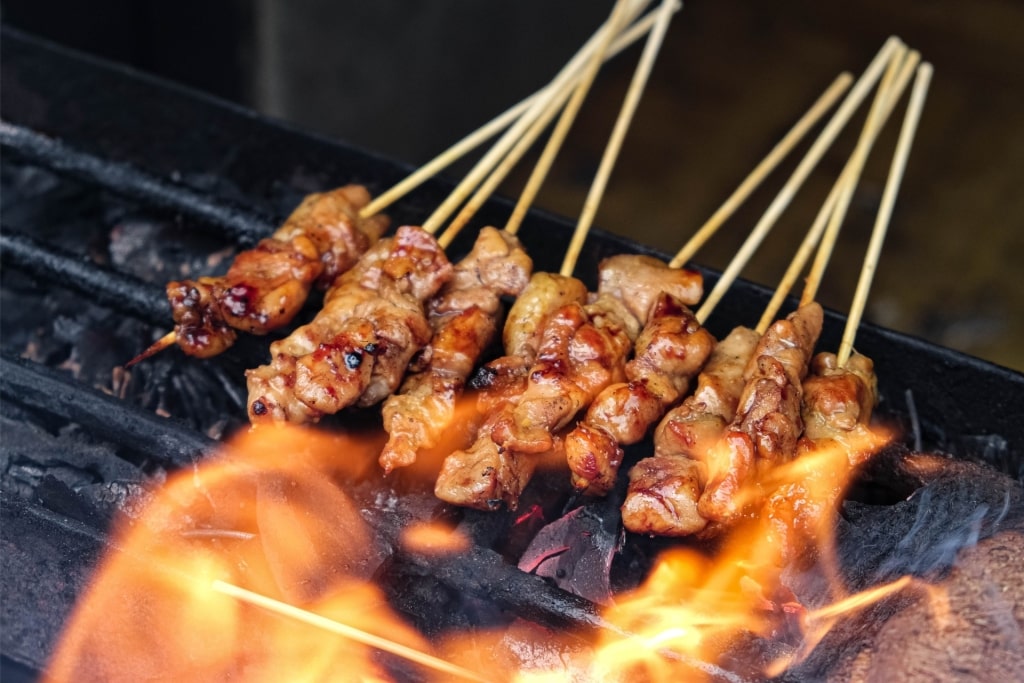
Chicken satay
Another former colony, Indonesia—once known as the Dutch East Indies—has had a significant influence on Amsterdam’s street food. Perhaps the most prominent example is satay, a skewer of grilled chicken or pork.
While still recognizable in influence, the Indo-Dutch version is milder to cater to the less adventurous Dutch palate. The use of pork is also not seen in Muslim Indonesia.
The traditional Indonesian peanut sauce for satay is also toned down in heat and up in sweetness. However, it has become ubiquitous in Amsterdam on everything from patatje oorlog to kapsalon or bitterballen.
Stamppot
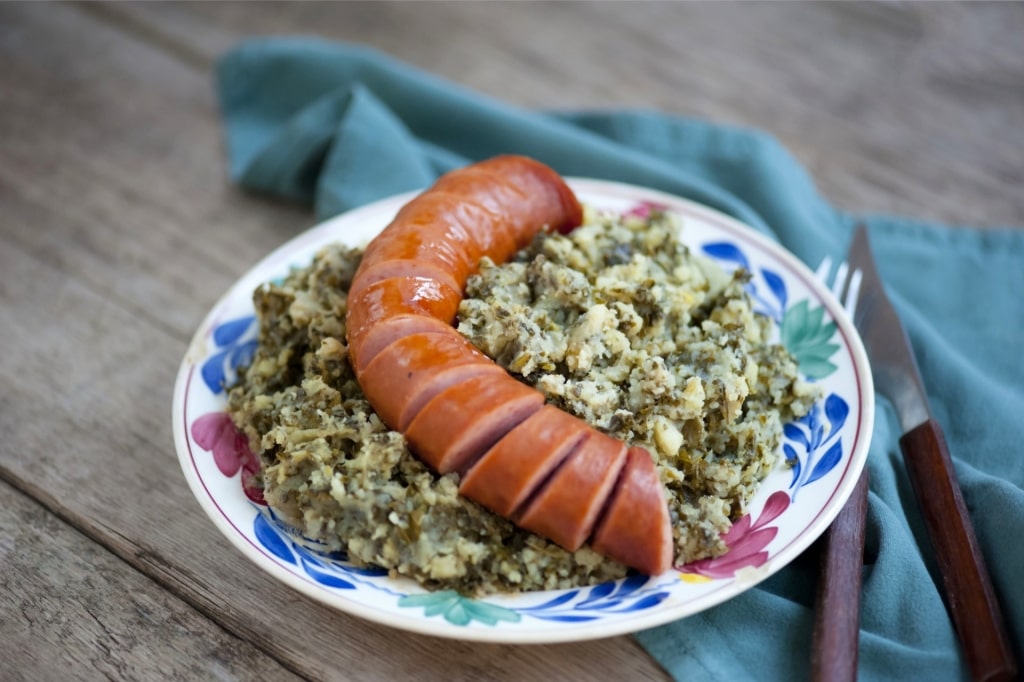
Stamppot
Stamppot, meaning “mashed pot”, is a very traditional Dutch dish based on mashed potatoes. They are mixed with vegetables such as kale, spinach, turnip, or sauerkraut.
When the potatoes are mashed with carrots and onion, it’s called hutspot. That’s a very popular combination, supposedly dating to the Spanish Siege of Leiden in 1574.
Stamppot, including Hutspot, is usually eaten with a side of rookworst or sometimes bacon. It’s a warming winter dish, popular at lunchtime.
Appelflap
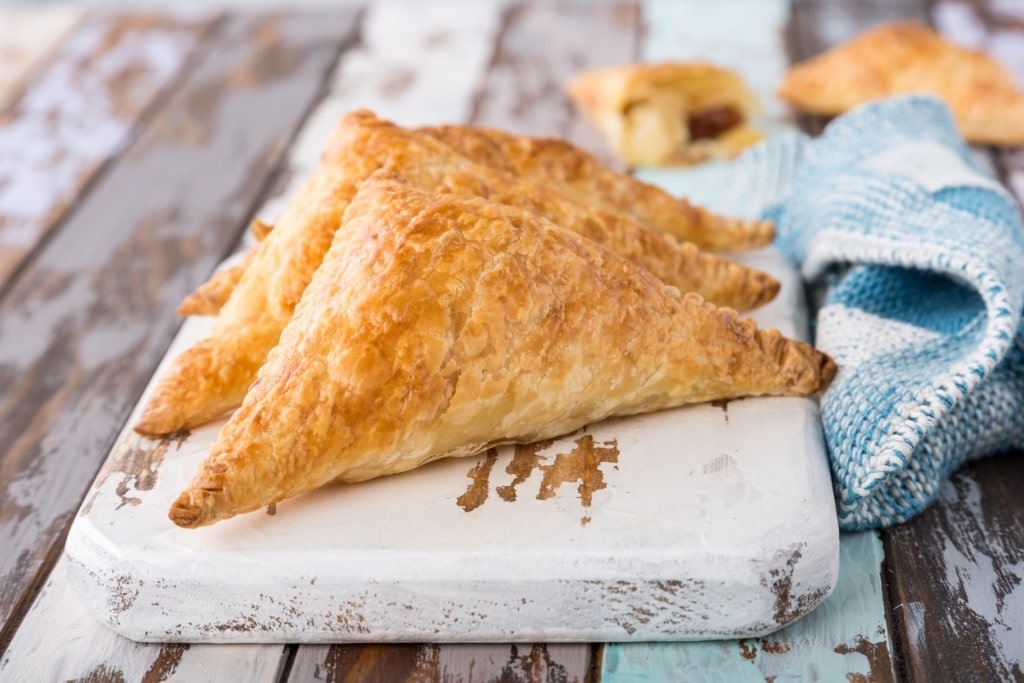
Appelflap
No one does apple pie like the Dutch, who played their part in giving the dish to America. While any bakery can sell you a slice, the best portable version is an appelflap.
This is a turnover-style triangle or rectangle of puff pastry with a spiced apple filling. Cinnamon, sugar, and currants add flavor and sweetness to the tart apples.
This “apple flap” is best eaten warm, especially in the colder season when apples are fresh. They are usually dusted in powdered sugar or cinnamon sugar for extra sweetness.
FAQs
What are the most popular street foods in Amsterdam?
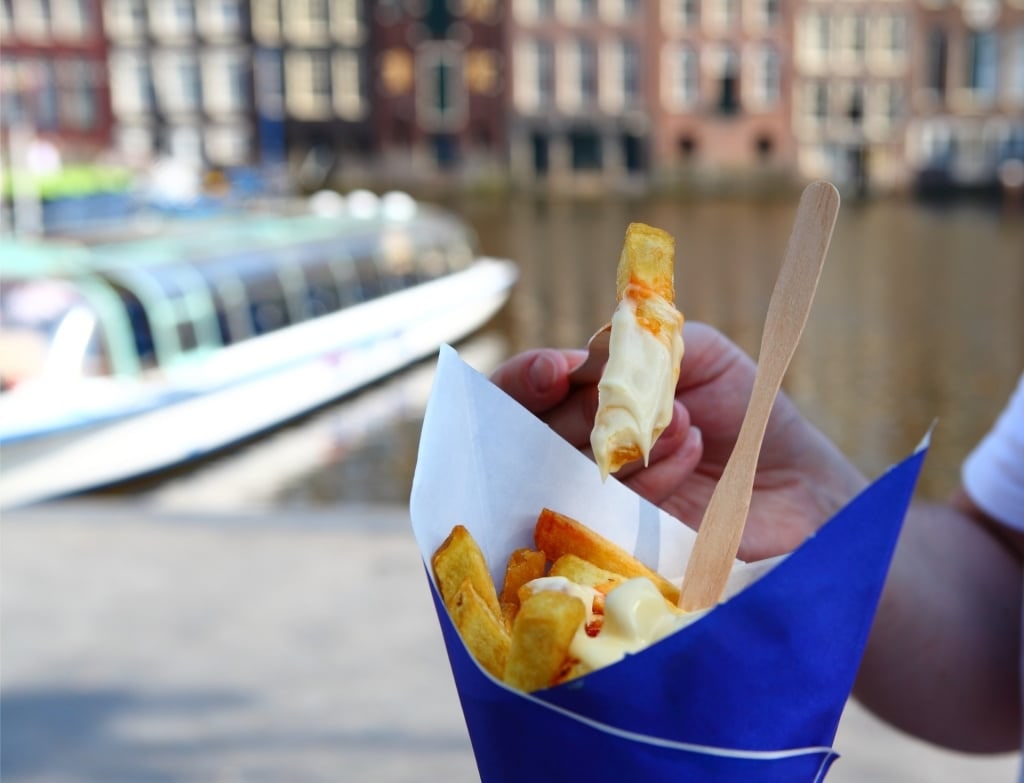
Patat
Herring, croquettes, and fries are probably the most popular Amsterdam street foods. Of course, everyone has their own favorites, and there is a wide choice.
Where can I find the best street food in the city?
Albert Cuyp Market
Street markets such as Albert Cuyp—famous for herring—and Noordermarkt are lined with food vendors offering a wide choice. The Dappermarkt, full of everything from Surinamese to Ghanaian cuisine, is currently in vogue for its kebabs.
Nieuwmarkt Square has a weekend market and permanent food stalls that specialize in traditional Dutch options. The Leidseplein is very visitor-friendly, with choices from stroopwafel to international favorites such as falafel and shawarma.
Amsterdam Foodhallen, situated in a former tram depot, has become famous on social media for its colorful, imaginative street food. With food offerings spanning the globe, it is a lively meeting place with regular live bands.
Herring
Once a working neighborhood, Jordaan has been gentrified but somehow retains a local vibe. You’ll find plenty of herring stands, cheese shops, and other traditional family-run food stalls.
From March through October, there are many food festivals in Amsterdam. Rollende Keukens—Rolling Kitchens—sees dozens of food trucks pop up in the Westergas area, normally in late May.
Is street food safe to eat in Amsterdam?
Sausages
Dutch standards of cleanliness are very high, and commercial food hygiene is very regulated. So you don’t need to have concerns about Amsterdam street food, especially in high-traffic areas.
Are there vegetarian options?
Poffertjes
There are plenty of vegetarian and vegan options, given the multicultural and progressive mix of people in Amsterdam. Frites and poffertjes are obvious choices, but you can even find vegetarian bitterballen.
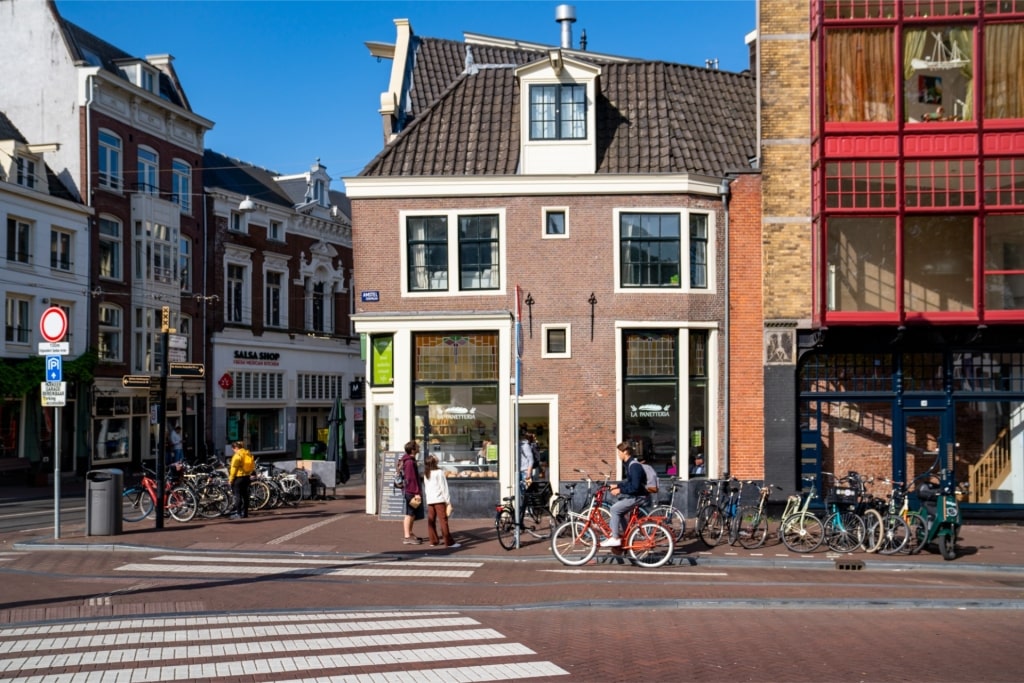
Amsterdam
Has this guide to Amsterdam street food whetted your appetite? Browse Celebrity’s river cruises to Amsterdam and book your foodie adventure today.